
Source: The Conversation – Africa – By Mziwandile Sobantu, Professor, University of Johannesburg
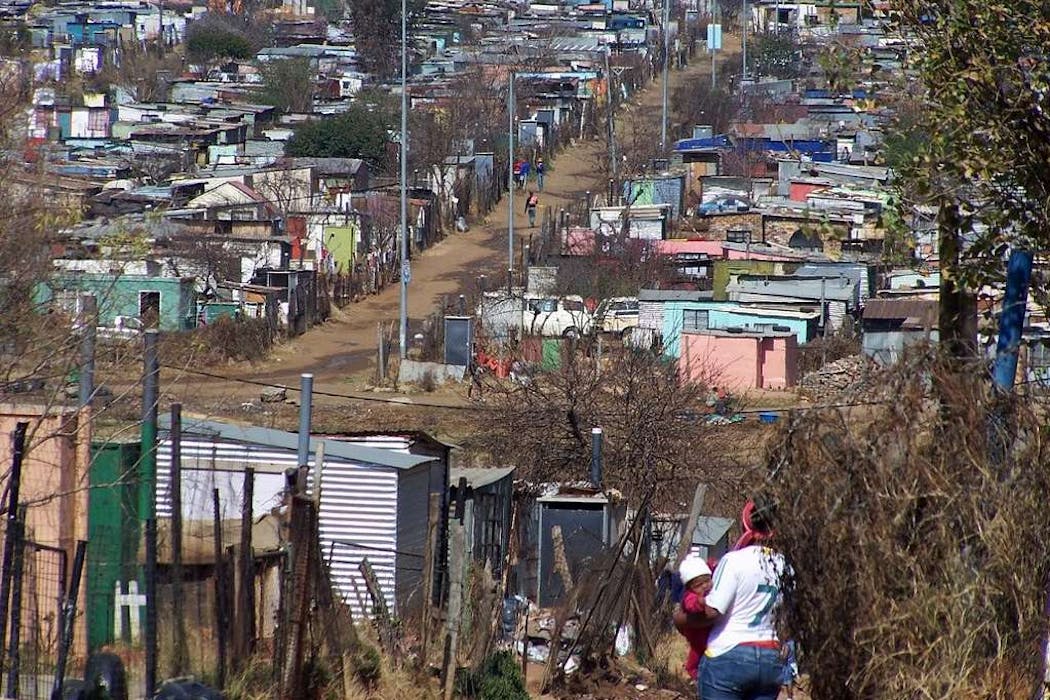
South Africa’s new democratic government inherited a 1.5 million housing backlog in 1994, which it has been struggling to close. The current national deficit stands at 2 million.
The 2025 White Paper for Human Settlements records that government has delivered 5.2 million houses and housing opportunities (units or subsidies) since 1994. But rapid urbanisation, population growth and the pace of housing provision by government have meant that there’s still a shortfall.
Many of the people who face housing challenges are women who bear full responsibility for childcare and families. In two of the province’s main metropolitan areas, Ekurhuleni and Johannesburg, four in ten families are headed by women. Many have to resort to inadequate housing in informal settlements and backyard dwellings.
We are social work research academics who recently explored what housing means to female-headed households living in a low-income community in Kathrada Park, Johannesburg. Rather than treating housing only as shelter or physical asset, the study examined how women experience and interpret their homes in the context of their everyday lives.
The findings show that housing is not just about having a roof overhead. It is also about dignity, control, emotional security and belonging. These meanings are shaped by women’s life histories, including migration, widowhood, divorce and caregiving roles. They also challenge narrow policy definitions of what constitutes adequate housing.
Understanding housing through people’s lived experiences is critical in a country where women increasingly shoulder the responsibility of sustaining families.
Housing is a basic right and human need which is enshrined in South Africa’s 1996 constitution. The International Bill of Rights cites adequate housing as a measure of social progress as well as a commitment to build the economy.
Women in Kathrada Park
In urban areas such as Kathrada Park in Johannesburg, women head households under conditions shaped by gender inequality, economic precarity and social responsibility. Unemployment, particularly for Black women, remains very high in the country.
Our study was based on interviews with eight female heads of households aged between 37 and 71. Qualitative research with smaller samples allows researchers to gain in-depth descriptions of whatever they are studying. All were single women heading households, had lived in Kathrada Park for at least two years, had their own accommodation, and were engaged in either formal or informal livelihood activities. Some were supporting children, adult dependants or grandchildren.
Rather than focusing only on material conditions, we asked a simple but powerful question:
What does a house mean to you?
Their responses revealed three closely connected themes: dignity and self-worth, safety and security, and livelihood.
Theme 1: Housing as dignity and self-worth
For many participants, having a house, however modest, was a source of pride. In a society where women heading households may be stigmatised or blamed for poverty, a home symbolised responsibility, achievement and resilience. One woman explained:
…you get dignity when you live in a house.
For her, housing was not only about protection from the elements, but also about being respected by her children and by others in the community.
Small acts of homemaking such as painting walls, planting a garden or keeping the space orderly carried deep emotional meaning. These practices were ways of asserting identity and self-worth in contexts marked by exclusion and hardship. Housing was not only about ownership or tenure; it was about being able to say: I am a capable woman, providing for my family.
All participants emphasised that, despite raising children on their own, their families had shelter and a home, could use flushing toilets, and had access to water and electricity. These basic services, often taken for granted elsewhere, gave them a strong sense of pride and self-respect.
Theme 2: Housing as safety for women and children
Safety emerged as a central concern in participants’ lives. South Africa experiences high levels of crime and gender-based violence. Participants spoke about fear of break-ins, violence and insecurity while also describing their homes as offering some degree of protection.
As one woman put it:
It’s a pity that our community is not safe. You just have to live and pray that nothing will happen to you till the next day. A good house is very important here.
For these women, housing represented a fragile but crucial buffer against exposure to danger. It provided a place where children could sleep behind locked doors, where families could retreat from public risk, and where a sense of control, however limited, could be maintained.
This highlights an important reality: even poor-quality housing can improve safety and wellbeing compared to homelessness or informal living arrangements. For female-headed households, the home often functions as the primary line of defence against vulnerability.
Theme 3: Housing as livelihood
Housing was also closely linked to livelihood and economic survival. Several participants used their homes to grow vegetables, support small-scale food production, or supplement household income in other ways.
One woman explained:
This garden is helping us so much. At least my kids at the creche get to eat greens every day, which is good. And it keeps us busy.
Her home enabled both food security and daily activity. Other participants highlighted the importance of location. Being close to schools, transport routes, or informal work opportunities made daily survival possible.
Housing was therefore not only a place to live, but a base from which women sustained their families economically. This reinforces the idea that housing cannot be separated from broader questions of poverty, care and economic inclusion.
Read more:
South Africa’s addressing system is still not in place: a clear vision is needed
Women and disadvantage
Across many societies, women remain disadvantaged in three interrelated dimensions: limited access to education, lower economic returns for heavier workloads, and persistent barriers to socioeconomic mobility. These inequalities have direct consequences for housing outcomes, often resulting in inadequate housing or, in some cases, the absence of stable shelter altogether.
Read more:
South Africa’s low-cost housing model is broken – study suggests how to fix it
For many female-headed households in South Africa, housing is the difference between vulnerability and survival. It is a place of safety in an often-unsafe world, a space of autonomy following loss or separation, and a foundation from which women care for children, elders and themselves. Yet access to quality housing and property has long been skewed against women in many developing societies, undermining not only their right to shelter but also their access to safety, security, piped water, electricity and sanitation.
Our findings show that for women who head households, housing is not simply about shelter. It’s about the possibility of belonging in a society marked by inequality and uncertainty.
Contributor Lydia Mmola was a postgraduate student when this study was conducted.

Mziwandile Sobantu works the University of Johannesburg, Auckland Park Campus
Emmison Muleya does not work for, consult, own shares in or receive funding from any company or organisation that would benefit from this article, and has disclosed no relevant affiliations beyond their academic appointment.
– ref. What does a house mean to you? We asked some women who head households in South Africa – https://theconversation.com/what-does-a-house-mean-to-you-we-asked-some-women-who-head-households-in-south-africa-275012