
Source: The Conversation – Canada – By Bailey Laforest, PhD student in Biology, Carleton University
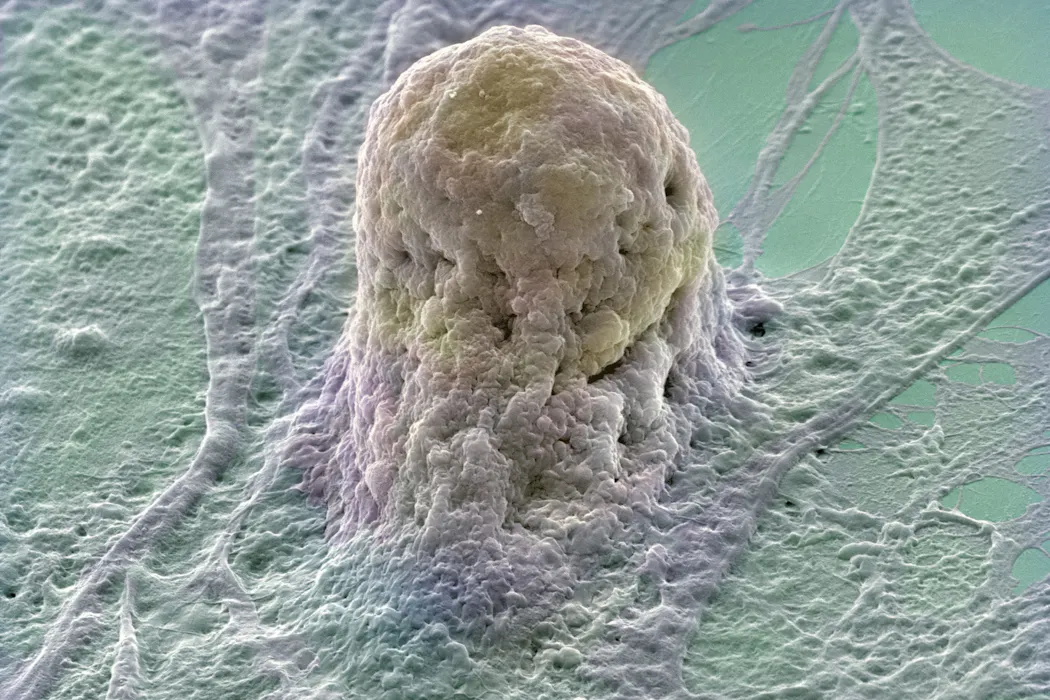
Humans have around 30 trillion cells in our adult bodies. Amazingly, each of these cells came from a handful of about 100 stem cells in the earliest days of development. The ability of these embryonic stem cells to turn into any cell type makes them pluripotent — something that researchers are harnessing in science and medicine today.
The use of human embryonic stem cells in research began in 1998, when several human embryos were donated from couples undergoing in vitro fertilization. From these embryos, scientists generated a virtually unlimited supply of pluripotent cells. Almost 30 years later, these embryonic stem cell lines are still used in many research labs today.
Another milestone in stem cell research came in 2007, when two labs — led by Shinya Yamanaka at the University of Kyoto in Japan and by James Thomson at the University of Wisconsin-Madison in the United States — separately published papers on how they had reprogrammed mature cells (like skin cells) back to a stem cell-like pluripotent state.
These are known as induced pluripotent stem cells. Their main benefit is that they carry a person’s own DNA, enabling more personalized disease-modelling and therapies.
How can stem cells be used for diabetes treatment?
In our research lab, we use embryonic stem cells to generate insulin-producing beta cells — the cell type that is destroyed by the immune system in people with Type 1 diabetes. The loss of these insulin-producing beta cells leaves patients dependent on insulin injections to control blood sugar levels and prevent severe complications like blood vessel and nerve damage.
Insulin therapy does not relieve the emotional load of living with Type 1 diabetes. It also does not fully replace the dynamic function of the body’s own beta cells, so many people with Type 1 diabetes still experience long-term health problems.
To overcome this, researchers are making lab grown stem cell-derived beta cells to try to restore the body’s ability to produce insulin. Recent clinical trials have shown promising results of transplanting these cells into individuals with Type 1 diabetes:
-
Vertex Pharmaceuticals transplanted beta cells derived from embryonic stem cells into 12 patients with Type 1 diabetes, and 10 (83 per cent) were able to stop insulin injections within six months.
-
A research team from China reprogrammed a Type 1 diabetes patient’s fat cells into induced pluripotent stem cells, turned the induced pluripotent stem cells into beta cells, and then transplanted them under the patient’s abdominal muscle. Remarkably, the recipient became insulin-independent 75 days after surgery and remained so for at least 12 months.
These early trials show that stem cell-derived beta cells can survive, mature and function after transplantation into patients. But challenges remain, including ensuring cells fully develop into the cell type of interest, producing cells safely and efficiently at large scales and preventing immune rejection.
How can stem cells avoid immune rejection?
Lab-grown cells have different genetics from the patient, so the patient’s immune system attacks the transplanted cells as “non-self.”
Researchers and physicians are hoping to overcome this problem by using induced pluripotent stem cells that carry the patient’s own DNA. However, even “self-derived” cells can behave unpredictably after months of reprogramming and growth in the lab, so immune rejection remains a risk.
And in diseases like Type 1 diabetes, the cells can still be destroyed by the same autoimmune response that caused the disease in the first place.
While immune-suppressing drugs are currently used to prevent rejection, they carry serious risks that outweigh the benefits for most patients.
Researchers are now exploring ways to prevent cell rejection without the need for immune-suppressing drugs, such as using protective capsules that shield the transplanted cells or introducing genetic changes that help the cells “hide” from the immune system.
The promise of immune-evasive genetically modified cells was recently demonstrated in a 2025 study when researchers transplanted gene-edited cells into a patient with Type 1 diabetes without using any immune-suppressing drugs. Remarkably, the patient showed no immune response to the transplanted cells, which survived, secreted insulin and improved blood sugar control over 12 weeks.
This breakthrough highlights the potential of immune-evasive cell therapies to overcome one of the biggest obstacles in regenerative medicine.
The road ahead
Stem cells offer an extraordinary toolkit for scientific research and medicine. Researchers are getting better at turning these pluripotent cells into specialized tissues and the first successful clinical trials are already here. However, these therapies are still experimental and not yet approved by Health Canada or the Food and Drug Administration in the United States.
Patients should be cautious of unapproved stem cell therapies and always consult their health-care professional before joining approved clinical trials. The progress made so far brings real hope that future stem cell therapies could improve the lives of people living with chronic diseases.

Jennifer Bruin receives funding from CIHR, NSERC, Canada Research Chairs Program, and the National Killam Program
Bailey Laforest does not work for, consult, own shares in or receive funding from any company or organisation that would benefit from this article, and has disclosed no relevant affiliations beyond their academic appointment.
– ref. Stem cells have potent potential for diabetes treatment – https://theconversation.com/stem-cells-have-potent-potential-for-diabetes-treatment-280003