
Source: The Conversation – UK – By Chris Sandbrook, Professor of Conservation and Society, University of Cambridge
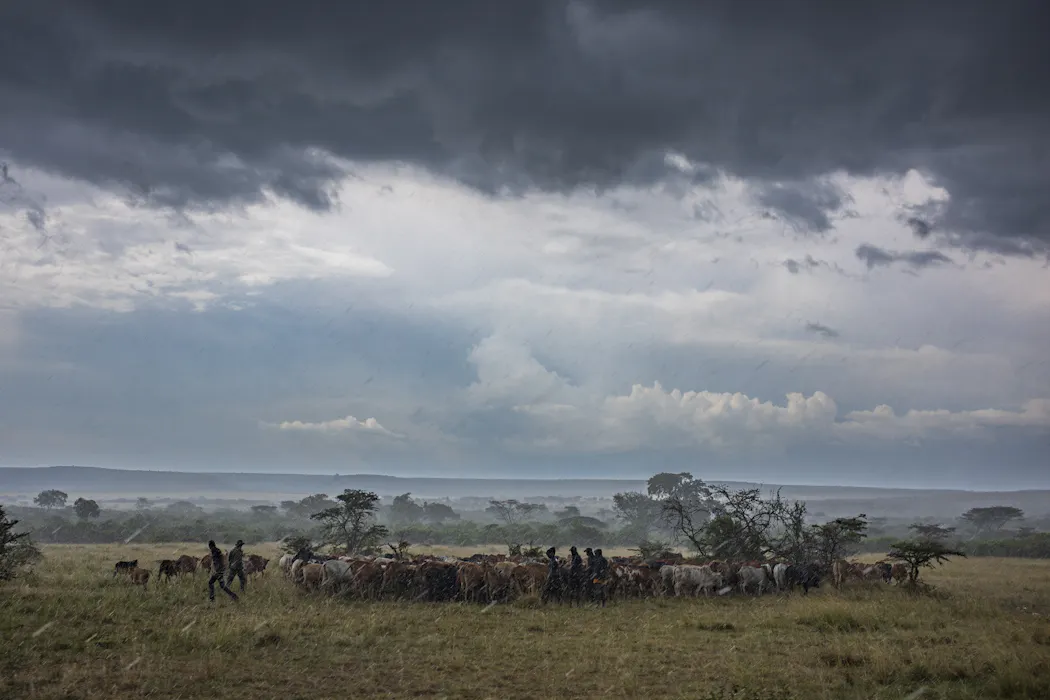
What do you see when you imagine a conservation area? Perhaps a remote rainforest, a towering mountain range or a coral reef teeming with life. But do you expect to see any people?
It would be understandable if you answered no. Most media coverage of nature ignores people. Many protected and conserved areas to date are classified as “high and far” – in places with rich biodiversity and relatively few people. Many actively exclude human presence.
Yet, people are central to conservation. Humans live with and use biodiversity almost everywhere on Earth. This relationship is becoming more important, as we’ve demonstrated in a new paper.
In 2022, 196 countries agreed to an ambitious UN target to conserve 30% of the planet by 2030. This so-called “30×30 target” will nearly double the global coverage of protected and conserved areas. Conservation will extend into areas of land and sea that are more inhabited and used by people than ever before.
This raises important questions about the social context at new conservation sites: how many people live there, how well off they are and how they make a living from the land. This information is crucial for understanding how people might be affected by 30×30 and implementing it successfully. However, very little has been known about these social dimensions of 30×30. Until now.
Our new study, published in Nature Communications, analysed three different ways to reach the 30% coverage globally, reflecting different conservation priorities. Together with a diverse international group of practitioners and researchers from multiple disciplines (including conservation science and political ecology), we found big differences in the social conditions between 30×30 scenarios.
In terms of population, an approach targeting the areas with highest unprotected biodiversity would directly affect over 3.5 billion people who live in or within 10km (6 miles) of new conservation areas. This represents 46% of the global population.
In stark contrast, an approach targeting biodiverse lands managed by Indigenous peoples and local communities would directly affect only around 300 million people. That might sound preferable. However, many of these people live in areas with lower levels of development and rely on nature for their livelihoods, making them particularly vulnerable to changes in access to nature.
The 30×30 target also intersects with global food production. In some approaches we analysed, around half of the areas identified for conservation overlap with farmland used for crop production. In others, large areas overlap with livestock grazing areas, including where people practice traditional herding. This raises questions about how to balance conservation with growing demand for food.

Javier Fajardo, CC BY-NC-ND
Our results demonstrate that wherever it happens, the 30×30 target will have profound social as well as ecological implications. Implementation will play a critical role in determining what these are for people and nature.
A whole menu of management and governance options is available, from strict government national parks (such as the iconic Serengeti or Yellowstone) to locally owned and managed areas where people live and use nature sustainably. The 30×30 target also includes places that are not formally protected areas but where existing ways of managing land and sea support conservation.
Choices at each site shape the social outcomes of conservation areas. These can be positive, negative or mixed. At the local level, these areas can support livelihoods and provide employment, while global benefits can include support for food systems and regulating Earth’s climate.
They may also be social costs, such as restricted access to land and resources, heightened conflict with wild animals or eviction from ancestral homelands. A critical challenge for 30×30 will be making sure that the choice of conservation area is appropriate for the social context in which it is being implemented – decisions that can be informed by the results of our study.

Javier Fajardo, CC BY-NC-ND
The good news
The wording of the 30×30 target is not just about biodiversity and spatial coverage. It also includes important social elements. The target calls for the rights and territories of Indigenous peoples and local communities to be respected and supports sustainable use of biodiversity, where appropriate. If fully achieved, this target should deliver significant benefits for local people and nature.
The 30×30 target is not just about conserving biodiversity. Our results suggest it should also be recognised as a highly ambitious social development target. This requires a shift in thinking and significant new funding for social programmes alongside traditional conservation activity.
The 30×30 target could be a big step forward for both conservation and society, but only if people are part of the plan.

Chris Sandbrook received funding for the research on which this article is based from the Science for Nature and People Partnership.
Javier received funding for the research on which this article is based from the Science for Nature and People Partnership, and ERC CONDJUST project.
– ref. Conserving 30% of the planet will only succeed if people are part of the plan – https://theconversation.com/conserving-30-of-the-planet-will-only-succeed-if-people-are-part-of-the-plan-278629