
Source: The Conversation – Africa (2) – By Rose Miyonga, Researcher, University of Warwick
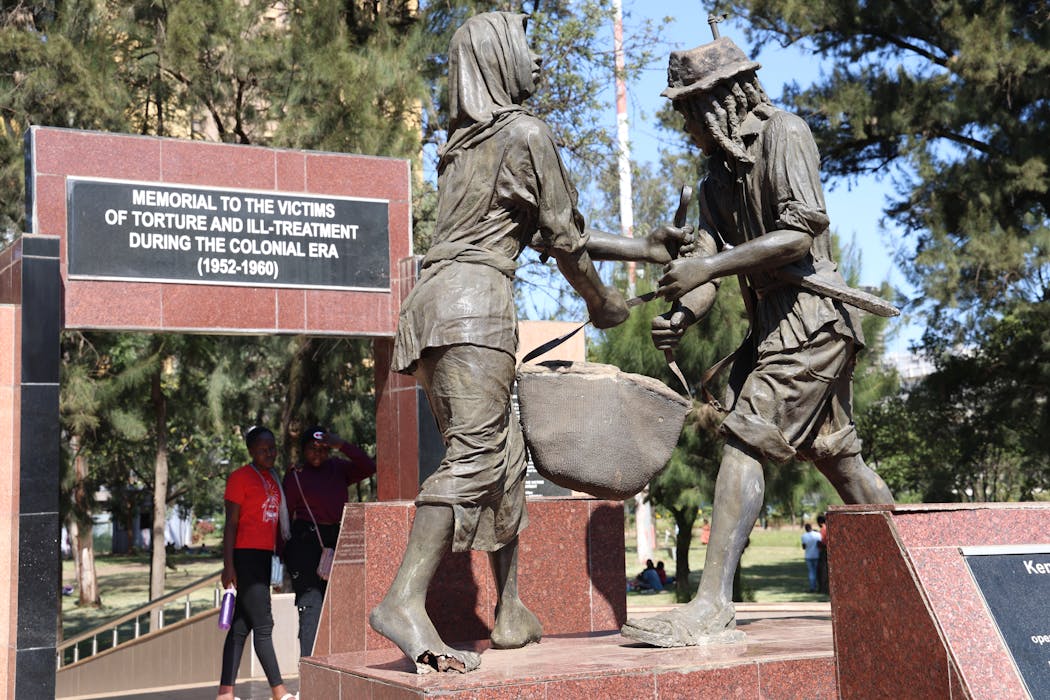
Between 1952 and 1963, Kenya experienced one of the most violent chapters in its modern history. The Mau Mau uprising, rooted in land dispossession and political repression under British colonial rule, escalated into a brutal counterinsurgency war.
An estimated 50,000 Kenyans died during the violent conflict between Mau Mau guerrillas and British forces, and from disease and starvation. Torture, sexual violence and forced detention were widespread. Over a million people were displaced into villages and detention camps in the 1950s.
Many victims of the uprising were buried in unmarked mass graves. Others survived, but were permanently scarred.
As Britain prepared to leave in the early 1960s ahead of Kenya’s independence in 1963, officials took painstaking efforts to hide the evidence of their brutality. They destroyed some archival material that described their violent conduct and secretly took other documents back to the UK.
Further, after independence, Kenya’s own government pushed Mau Mau survivors to “forgive and forget” the past.
This created a profound historical gap. So if archives were destroyed and public history suppressed, where else might the past be found?
As an oral historian, I set out to answer this question. I embarked on an oral history project, speaking to 60 Mau Mau survivors, visiting memory sites such as mass graves, and collecting material from archives in the UK and Kenya.
I set out my findings in a recent paper.
My research shows that many Mau Mau survivors are living with permanent wounds and disabilities, which serve as constant reminders of the past. During interviews, people were keen to show me their scars and wounds, using them to illustrate their painful histories. These included bullet wounds (and sometimes bullets still lodged in the body), scars from torture and amputations.
My study showed that the body can become evidence in contexts where written documentation is absent or contested. Physical scars authenticate memory. These injuries also ensure that the past is never fully forgotten. Chronic pain and disability materially shape everyday life, tying the present to wartime violence.
My research also included understanding the Mau Mau war through human remains. I visited memory sites where communities mourn and remember, such as mass graves. I also researched the contents of boxes at the National Museum of Kenya on Mau Mau victims.
Read more:
Kenya: the shameful truth about British colonial abuse and how it was covered up
By sharing their experiences, survivors reclaim agency over their histories. Rather than being passive victims of silence, they become active custodians of memory.
My findings suggest that archives are not limited to documents stored in state repositories. In post-conflict contexts where records are incomplete or destroyed, memory often persists through bodies and landscapes.
Custodians of memory
Through my study, I was able to observe how people use their bodies to tell their histories. I noticed this most powerfully in the 2002 BBC documentary Kenya: White Terror.
In one section, Mau Mau survivor Mwangi Kinyari goes with presenter John McGhie to a detention camp, and takes him to the cell where he was tortured and held for eight days during a three-year imprisonment.
Ignoring McGhie’s urges to be careful, Kinyari removes his jacket and insists on acting out a scene of torture, manoeuvring himself into a handstand position with his feet up on the wall and his hands on the dirt floor to demonstrate how he was hung upside down during torturous interrogations in that cell.
He then removes his belt and lifts his shirt to show the scars from the operation he had for the internal bleeding that resulted from beatings.
The descriptions of brutality he endured at the hands of white guards were powerful enough. Kinyari gives testimony of having his testicles beaten until he urinated blood, and his eyes seared with hot coals.
His words and descriptions communicate the facts of what happened, but there is something more that his body conveys through acting out the scene of his torture, using his body to write into the missing record of his experiences, and recentring himself in the frame of historical memory.
Aged 80, Kinyari seized an opportunity to speak back to the historical forces that had forgotten him. He used his entire body as a vehicle to do this.
Mass grave sites also deserve greater recognition as spaces of history and remembrance. These mass graves are a visceral reminder of Mau Mau history, countering attempts to silence and sanitise the past. They offer insights into the brutality and devastation of the war.
Even though they are not marked or honoured in an official capacity, community members have found ways to tend to them as sites of mourning and remembrance.
Violence has profoundly shaped the past and present of Mau Mau survivors. This is evident both in survivors’ bodies and in the remains of those who were killed. These are archives in their own right.
Unhealed wounds aren’t only symbolic. They continue to shape survivors’ economic opportunities, health and wellbeing decades later. Embodied memory also strengthens contemporary justice claims. Survivors seeking compensation rely not only on testimony but on visible physical evidence of abuse.
What should be done
Bodies have powerful stories to tell. Unhealed wounds have resonance in the present, materially affecting survivors’ lives, illustrating the legacies of war. They are also record-keepers, offering evidence for people who still hope to have their stories heard and maybe even get compensation for their suffering.
Tending to these wounds would be literally and figuratively healing for the Kenyan nation. Ignoring these embodied archives risks reproducing historical erasure.
First, there needs to be urgency in recording survivors’ testimonies through oral histories and community memory work. The Mau Mau generation is ageing, and embodied memory will not last indefinitely.
Second, mass grave sites and human remains deserve formal recognition as spaces of national history and mourning.
Third, continued engagement with reparations processes is essential as it allows survivors of Mau Mau traumas to seek justice and closure.
Acknowledging embodied suffering is central to meaningful justice. Addressing these wounds – both literal and historical – could contribute to broader national reflection in a country still shaped by colonial violence and inequality.

Rose Miyonga receives funding from the UK Arts and Humanities Research Council via the Midlands4Cities consortium.
– ref. Mau Mau: how Kenya’s history of colonial violence speaks through living bodies and graves – https://theconversation.com/mau-mau-how-kenyas-history-of-colonial-violence-speaks-through-living-bodies-and-graves-277118