La présidentielle brésilienne, en octobre prochain, se jouera sans aucun doute entre le sortant Lula (centre gauche), en lice pour un dernier mandat, et Flávio Bolsonaro, fils de Jair et, comme ce dernier, représentant de la droite dure.
Ce duel est suivi avec la plus grande attention dans de nombreux pays du monde, à commencer par les États-Unis.
Dans un scrutin qui s’annonce très serré, les soutiens étrangers (ou l’exaspération qu’ils peuvent susciter au sein de l’électorat brésilien) pourraient contribuer à faire pencher la balance en faveur de l’un ou l’autre candidat.
La campagne électorale brésilienne a officiellement commencé le 16 août. Le premier tour aura lieu le 4 octobre et le second, si nécessaire, le 25.
Derrière le duel entre les deux principaux candidats – le président sortant Lula et Flávio Bolsonaro, fils de son prédécesseur Jair Bolsonaro (condamné il y a quelques mois à vingt-sept ans de prison pour son rôle dans la tentative de coup d’État de décembre 2023 et autorisé depuis mars dernier à purger sa peine à son domicile pour raisons de santé) – se joue une bataille de réseaux politiques, médiatiques et diplomatiques internationaux.
Alexandre de Moraes, cible du camp Bolsonaro… et de Washington
Cette internationalisation a commencé à prendre forme en 2025, lorsque le frère cadet de Flavio Eduardo Bolsonaro, alors député fédéral de l’État de São Paulo depuis 2015 (il a depuis perdu son mandat en décembre 2025, à la suite d’une décision de la Chambre des députés), s’est installé aux États-Unis.
Selon The Guardian, Eduardo Bolsonaro aurait essayé de convaincre les responsables de l’administration Trump d’imposer des sanctions à Alexandre de Moraes, le juge de la Cour suprême chargé de l’enquête visant son père. Depuis mai 2025, Eduardo était aussi lui-même visé par la justice brésilienne, et a d’ailleurs été condamné en juin 2026 – en son absence puisqu’il se trouve toujours sur le territoire états-unien – à quatre ans de prison : il lui est reproché d’avoir cherché à obtenir de la part de Donald Trump qu’il prenne des sanctions économiques contre le Brésil afin de faire pression sur la justice brésilienne et de favoriser son père dans le cadre de son procès.
En février 2025, l’entreprise de médias de Donald Trump (Trump Media & Technology Group) et la plateforme vidéo Rumble ont déclenché des poursuites contre Moraes aux États-Unis, contestant ses décisions de blocage de comptes et de contenus. Le dossier brésilien se retrouvait ainsi directement lié à l’écosystème politique et technologique de Trump, rapprochant deux intérêts jusque-là distincts : la volonté des Bolsonaro de faire pression sur la justice brésilienne et celle des plateformes de contester les règles imposées à leurs contenus.
Capture d’écran d’un post de Donald Trump sur son réseau Truth Social : « Ravi d’avoir accueilli Flávio Bolsonaro au bureau Ovale de la Maison-Blanche – un jeune homme intelligent qui aime beaucoup son pays, le Brésil ! », 2 juin 2026. Truth Social
En avril, il a participé, à Barcelone, à la Global Progressive Mobilisation, aux côtés notamment du premier ministre espagnol Pedro Sánchez, de la président mexicaine Claudia Sheinbaum et du président sud-africain Cyril Ramaphosa, lors d’un rassemblement consacré à la lutte contre la montée de l’extrême droite.
« Espagne : Pedro Sánchez convoque la gauche mondiale pour une réunion progressiste à Barcelone », France 24, 19 avril 2026.
La polarisation internationale s’impose aux campagnes nationales
C’est dans ce climat que s’amorce la campagne électorale. La légère avance de Lula sur Flávio Bolsonaro dans les sondages s’est réduite, et les deux hommes sont désormais au coude-à-coude. Il est possible que, ces prochaines semaines, les déclarations et actions de l’administration Trump joueront un rôle déterminant dans l’issue du scrutin.
Le cas brésilien pourrait ainsi devenir un laboratoire d’une nouvelle géographie de la polarisation politique, dans laquelle les conflits électoraux nationaux sont de plus en plus connectés à des réseaux transnationaux. Pour la France et pour l’Europe, la question est peut-être moins de savoir si cette dynamique existe déjà que de comprendre jusqu’où elle pourrait s’étendre à nos propres démocraties.
Jorge Jacob ne travaille pas, ne conseille pas, ne possède pas de parts, ne reçoit pas de fonds d’une organisation qui pourrait tirer profit de cet article, et n’a déclaré aucune autre affiliation que son organisme de recherche.
Face au changement climatique, les forêts sont souvent présentées comme de salvateurs « poumons verts ». Pourtant, de plus en plus de forêts françaises émettent plus de CO₂ qu’elles n’en séquestrent.
Pour le comprendre, il faut savoir faire la distinction entre stocks et flux de carbone, mais également regarder la forêt dans son ensemble, au-delà des arbres qui la constituent.
Selon les essences présentes, le mode de gestion, l’utilisation faite du bois prélevé, les forêts peuvent être plus ou moins résilientes face au changement climatique.
Face au changement climatique, les forêts vont-elles pouvoir nous sauver ? L’idée est rassurante, mais elle repose sur une mauvaise compréhension du cycle du carbone et de ce qu’est véritablement une forêt, au-delà des arbres qui la constituent.
Le contexte actuel plus qu’inquiétant doit de fait nous obliger à remettre en cause ce mythe de la forêt salvatrice, voici pourquoi.
Qu’est-ce que la fixation de CO₂ ?
Commençons tout d’abord par démythifier une première chose : si les forêts et toutes les plantes de la planète peuvent stocker du carbone, ce n’est rien comparé aux océans et aux eaux de surface qui capturent chaque année 29 000 gigatonnes (Gt) de CO₂, contre 2 000 Gt pour les organismes photosynthétiques, dont beaucoup, soit dit en passant, vivent dans l’eau.
Quant à la photosynthèse, parlons-en. Cette faculté des végétaux chlorophylliens est souvent mal comprise. Elle permet aux plantes de produire des sucres nécessaires à leur développement en utilisant pour cela à la fois des molécules d’eau principalement puisées dans le sol par les racines et des molécules de CO₂ captées dans l’air par les feuilles.
Une photosynthèse intermittente
Ce processus n’est pas permanent : il peut fortement diminuer et même s’arrêter, notamment en période de sécheresse quand l’eau vient à manquer, la nuit lorsqu’il n’y a plus de lumière, en période de canicule (en été) ou de gel (en hiver) quand la température trop haute ou trop basse empêche l’activité métabolique.
Enfin, quand certains arbres perdent leurs feuilles à l’automne, ils perdent du même coup, la voie d’entrée du CO₂.
Fixation et séquestration du carbone
Une autre confusion est fréquente : la photosynthèse permet l’entrée du carbone dans la plante, c’est ce qu’on appelle la fixation du carbone. Ce n’est pas la même chose que la séquestration du carbone, qui s’inscrit dans la durée.
Pour que les forêts puissent être des auxiliaires à l’heure du changement climatique, il faut que, dans la durée, elles séquestrent davantage de carbone qu’elles n’en émettent. On pourra alors les qualifier de puits de carbone.
Les émissions de CO₂ de l’arbre
Ici, certains fronceront peut-être les sourcils. Comment ça, une forêt émet du CO₂ ? Tout à fait. Pour comprendre comment, il faut regarder ce qu’il se passe après la photosynthèse.
Ce processus permet donc à l’arbre de produire des sucres grâce à du CO₂ capté dans l’air et de l’eau puisée dans le sol. Ces sucres sont ensuite oxydés (grâce à l’oxygène O₂ de l’air) pour fournir l’énergie et fabriquer les tissus, nécessaires à sa croissance et à son développement, c’est ce qu’on appelle la respiration.
En consommant ces sucres, l’arbre rejette alors de l’eau et du CO₂. Dans certaines situations, l’hiver ou la nuit par exemple, un arbre continuera de respirer mais arrêtera sa photosynthèse, il émet donc plus de CO₂ qu’il n’en fixe.
PHOTOSYNTHÈSE ET RESPIRATION : DE QUOI PARLE-T-ON ?
Schématiquement, la photosynthèse chez les plantes est le processus qui utilise l’énergie solaire pour casser des molécules d’eau H₂O puisées dans le sol, en récupérer les atomes d’hydrogène (H) pour les fixer à des molécules de dioxyde de carbone (CO₂) captées dans l’air (en se débarrassant des atomes d’oxygène de l’eau sous forme d’oxygène, O₂) et, ainsi, produire des sucres CHO, base de la matière organique. Elle est réalisée par tous les organismes possédant de la chlorophylle : les plantes et les cyanobactéries.
Inversement, la respiration qui concerne tous les organismes vivants (à l’exception de quelques bactéries capables de se passer d’oxygène, chez qui la respiration est remplacée par la fermentation), y compris les plantes, correspond à la dégradation de la matière organique par oxydation, qui libère du CO₂, de l’eau et de la chaleur.
Le carbone stocké par l’arbre n’est pas éternel
Cependant, la part de CO₂ captée lors de la photosynthèse qui est respirée par l’arbre lui-même est faible. La plus grande partie du carbone puisé dans l’atmosphère est incorporée dans l’amidon, la cellulose, la lignine (constituant fondamental du bois, ndlr), les racines, le tronc, les branches, les feuilles et les fruits de l’arbre.
Ce carbone-là sera donc stocké dans l’arbre tant que celui-ci sera en vie. Mais si ce dernier brûle, le CO₂ sera relargué dans l’atmosphère.
Si l’arbre meurt de maladie ou autre, il sera décomposé lentement, ce qui libérera également une grande partie du carbone sur le long terme.
Le rôle crucial de la biodiversité des sols
Mais si l’arbre pousse dans un écosystème en bonne santé, alors bactéries, champignons, vers de terre et autres organismes décomposeurs pourront également se nourrir du bois mort et incorporer une partie de son carbone dans la matière organique des sols et dans leur propre biomasse. Eh oui, en forêt, tous les organismes participent au stockage du carbone, pas seulement les arbres, d’où l’intérêt d’une biodiversité élevée.
C’est également ce qu’il se passe quand une feuille ou une branche morte tombe. Le sol forestier constitue ainsi souvent un stock de carbone bien plus important que la partie aérienne des arbres.
Quand une forêt devient source de carbone
Mais si une forêt brûle, si elle subit une sécheresse trop longue ou que trop d’arbres dépérissent à la suite d’attaques de pathogènes, elles peuvent se retrouver à être dans la durée une source de carbone, et non plus un puits.
C’est un phénomène inquiétant que l’on observe de plus en plus. On peut le constater, par exemple, en voyant le jaunissement des feuilles et leur chute en plein été ou les branches supérieures des arbres qui meurent : c’est du même coup la surface photosynthétique de l’arbre qui est réduite.
Un cercle vicieux qui s’installe
Affaiblis, les arbres deviennent également plus vulnérables aux infections et aux attaques de ravageurs, ce qui en accroît le taux de mortalité. Le cercle vicieux peut encore continuer : la surmortalité des arbres en forêt entraîne de facto une accumulation de combustible au sol et dans les airs. Par temps chaud et sec, même les végétaux vivants se dessèchent, ce qui en augmente l’inflammabilité.
En sachant cela, que peuvent donc les forêts et leurs sols à l’heure du changement climatique ? Celui-ci impose de réduire la quantité de CO₂ atmosphérique, le principal gaz à effet de serre. Pour cela, il faut nécessairement réduire les sources d’émissions de CO₂.
En parallèle, on peut également séquestrer durablement le CO₂ en favorisant la photosynthèse tout en préservant les stocks de carbone organique.
Comment favoriser la photosynthèse ?
La première question que l’on peut alors se poser est la suivante : comment favoriser la photosynthèse ? On ne peut pas augmenter le rendement de celle-ci, mais on peut augmenter la surface photosynthétique.
C’est l’objectif des politiques de reforestation et de lutte contre la déforestation, qui concernent surtout les forêts tropicales.
Les bienfaits des forêts stratifiées
On peut également agir sur la surface photosynthétique sans modifier la surface forestière en s’intéressant à la stratification de la végétation. Ainsi, un hectare de forêt avec une strate arborescente, une strate arbustive et une strate herbacée, a fortiori lorsqu’on privilégie les mélanges d’espèces aux caractéristiques morphologiques et physiologiques complémentaires (par exemple, de petits arbres d’ombre sous une canopée de grands arbres de lumière, avec un mélange feuillus-résineux), permet d’atteindre un rendement photosynthétique bien plus important qu’une plantation où tous les arbres sont de la même espèce et du même âge, surtout s’il s’agit d’un résineux exotique qui empêche le développement de strates arbustives et herbacées dans son sous-bois.
De même, plus on diversifie les espèces d’arbre et plus on laisse de bois mort au sol, plus la diversité en espèces végétales, animales ou microbiennes sera élevée et plus le stockage de carbone dans les sols sera important.
Si on associe cette gestion des forêts à une restauration des zones humides, on multiplie les effets biodiversité, stockage de carbone et solutions anti-incendie.
Le stock de carbone et la filière bois
Le carbone séquestré par les arbres peut également avoir une seconde vie lorsque la forêt est exploitée pour produire diverses ressources à partir du bois. Le carbone peut alors être stocké durant plus ou moins longtemps selon la durée de vie des ressources produites.
C’est selon cette logique que les politiques publiques ont favorisé le matériau bois : parce que le bois de construction représente en théorie une forme durable de stockage de carbone organique. Ainsi, à l’heure du réchauffement climatique global, la forêt est présentée comme salvatrice : non seulement elle peut être un puits de carbone, mais elle stocke une partie du CO₂ séquestré dans un matériau qui peut se monnayer.
Pourtant, l’actualité nous montre que la réalité est tout autre et que le puits de carbone qu’elle était devient de plus en plus souvent une source.
Des plantations commerciales au bilan carbone questionnant
De fait, la volonté d’avoir des forêts résilientes face au changement climatique et rentables d’un point de vue économique génère le développement d’un certain modèle : celui de plantations commerciales d’arbres supposément mieux adaptés aux sécheresses, car provenant de zones du monde plus arides. La plantation de ces espèces (surtout des résineux, comme le cèdre de l’Atlas, le pin de Monterey, le pin à encens, etc.) nécessite un travail mécanique du sol accompagné d’une fertilisation et, parfois, de traitements herbicides.
Ces pratiques empruntées à l’agriculture sont évidemment dévastatrices pour l’écosystème, l’environnement et in fine le climat, d’autant plus qu’elles font appel à de lourds engins forestiers très émetteurs de CO₂ et d’autres polluants et provoquent un déstockage massif du carbone des sols – bien plus important que celui lié au dépérissement lui-même.
Des monocultures très fragiles
Plus grave, ces monocultures sont beaucoup plus vulnérables aux attaques de ravageurs, aux sécheresses et aux incendies, qui provoquent le relargage brutal du CO₂ stocké dans cette biomasse. Ce non-sens écologique est souvent un non-sens économique, puisque le taux de succès des plantations est souvent faible, les épisodes récurrents de sécheresse et de canicule tuant massivement les jeunes plants qui n’ont pas eu le temps de développer suffisamment leurs racines.
De plus, les jeunes plantations étant très attractives vis-à-vis des ongulés, les rares survivants échappent difficilement à la dent des herbivores en l’absence de coûteuses protections. S’ensuit un retour très lent de la forêt, qui mettra souvent plus de quinze ans à redevenir un puits plutôt qu’une source de carbone.
Ainsi, d’un cercle vicieux où la forêt dépérissante aggrave l’effet de serre plutôt que de le réduire, on passe très vite à une spirale infernale quand il s’agit d’intensifier la sylviculture et d’artificialiser la forêt pour tenter d’adapter la production de bois rémunérateur dans une périlleuse fuite en avant, sans recul sur l’écosystème forestier et ses fonctions climatiques.
L’utilisation du bois : un facteur déterminant
Le devenir du bois issu des forêts pose aussi question. Sur les 57 millions de mètres cubes de bois récoltés chaque année en France hexagonale, 39 millions (68,4 %) sont utilisés comme bois-énergie (en autoconsommation ou commercialisé comme tel ou sous forme des déchets des usines de première et seconde transformation).
Le carbone stocké de ce bois sera donc immédiatement relargué dans l’atmosphère dès qu’il sera brûlé. Dix autres millions (17,5 %) partent dans l’industrie du papier, carton panneaux, etc., ce qui représente un stockage de court-moyen terme. Donc finalement, la proportion du bois prélevé qui continue de stocker durablement le carbone (bois d’œuvre) est relativement faible (14 %).
Des rotations qui s’accélèrent
Les politiques extractivistes ont également favorisé le racourcissement des rotations des plantations forestières en arguant du fait que les jeunes arbres en pleine croissance séquestreraient davantage de CO₂. Ce n’est pas faux, mais cela occulte le fait que le rajeunissement favorise aussi le déstockage massif des peuplements plus âgés et des sols malmenés par l’exploitation et la replantation.
De plus, l’argument des adeptes de la sylviculture intensive selon lequel une forêt âgée – dont les arbres ont dépassé l’âge d’exploitabilité – ne séquestreraient plus de carbone, mais émettraient autant de CO₂ qu’elles en fixent, a déjà été largement infirmé par la recherche scientifique.
Bien sûr, le fait que l’essentiel du stock de carbone se trouve dans le sol forestier est également passé sous silence dans cette même logique, puisque les pratiques d’exploitation, de replantation et d’entretien provoquent son érosion.
Le bénéfice mensonger des arbres à croissance rapide
Une autre idée reçue est que les espèces d’arbre à croissance rapide seraient beaucoup plus efficaces à séquestrer le CO₂ que celles à croissance lente, un prétexte trompeur pour délaisser chênes, hêtres, sapins et autres essences spontanées de nos forêts au profit de résineux indigènes (comme le pin maritime « amélioré » génétiquement) ou exotiques (comme le sapin Douglas) et de feuillus à bois tendre (par exemple, les peupliers hybrides, les eucalyptus ou encore l’arbre « magique » Paulownia tomentosa).
Effectivement le volume de bois accumulé par ces arbres en quelques années est souvent impressionnant, mais il s’agit de bois « tendres », c’est-à-dire à densité très faible. Pour un même volume de bois, une espèce à croissance lente stocke donc une quantité de carbone bien plus importante. Il n’y a même aucun lien entre la quantité de carbone séquestrée et la vitesse de croissance d’un arbre, puisque c’est la longévité de l’arbre qui importe.
Quelles forêts pour demain ?
Que conclure de tous ces constats ? Il ne s’agit évidemment pas de remettre en cause le rôle de puits de carbone de la forêt française : il est crucial. Mais pour que la forêt continue d’assurer ce rôle, il est urgent de préserver les forêts (notamment les forêts anciennes et les forêts humides), de restaurer les écosystèmes dégradés (en favorisant le reboisement naturel), de favoriser l’économie circulaire et la réutilisation du matériau bois, d’éviter le greenwashing en améliorant les certifications sur des critères réactualisés à l’aune des données scientifiques et en mettant en place des bilans carbone complets des filières. La forêt est un écosystème complexe qui ne saurait être réduit à ses arbres.
Aujourd’hui, le défi est d’en accroître la résilience face aux changements climatiques, ce qui suppose d’inventer une nouvelle ingénierie forestière. Comme toute ingénierie, elle doit s’appuyer sur des bases scientifiques solides et actualisées, et suppose la confrontation de différents savoirs.
Face à la complexité, toute solution simple serait un leurre. Les arguments environnementaux de la « lutte contre l’effet de serre et les changements climatiques » ne devraient plus servir de caution écologique aux politiques publiques qui promeuvent le retour brutal d’une vision productiviste et non durable de la forêt, qui sert uniquement les intérêts des lobbies industriels et économiques, au détriment des autres usagers de la forêt.
Ils doivent au contraire intégrer les dimensions « écosystémique » et sociale de la forêt, même si les institutions détestent la complexité et que les politiques publiques procèdent toujours par simplification des enjeux qu’elles visent à réguler. Tout l’enjeu pour les scientifiques est d’éclairer les débats autour des politiques climatiques et économiques de la gestion forestière et de la filière bois.
Francois Criscuolo est membre du collectif des riverains de la scierie SIAT à Oberhaslach, qui a mené entre 2021 et 2023 un dialogue avec l’entreprise pour réduire les nuisances sonores et liées à la pollution.
Guillaume Decocq ne travaille pas, ne conseille pas, ne possède pas de parts, ne reçoit pas de fonds d’une organisation qui pourrait tirer profit de cet article, et n’a déclaré aucune autre affiliation que son organisme de recherche.
Source: The Conversation – in French – By Abdel Aouacheria, Biologiste, chargé de recherches au CNRS, spécialiste de la vie et de la mort des cellules, Université de Montpellier
La mort programmée, ou apoptose, est un processus clé du bon fonctionnement des cellules. De manière paradoxale, c’est quand ce processus se dérègle, quand certaines cellules se caractérisent par une « non mort », que les cancers peuvent se développer et mettre en jeu le pronostic vital.
Abdel Aouacheria (Université de Montpellier) décrypte ces processus tumoraux dans un chapitre de la Mort, architecte du vivant, aux éditions Belin. Il raconte aussi les stratégies thérapeutiques à l’œuvre pour empêcher ces cellules de devenir « immortelles ».
Si la mort cellulaire programmée est indispensable au bon fonctionnement du vivant, elle peut aussi devenir son ennemie. Trop peu de mort, et les cellules s’accumulent anarchiquement : c’est le cancer. Trop de mort, et les tissus s’atrophient, comme dans les maladies dégénératives.
Une mort cellulaire aberrante peut perturber le développement embryonnaire, fragiliser l’immunité, altérer la fertilité ou nuire aux fonctions cognitives. Les cellules ne meurent plus pour laisser place au neuf ; elles s’éteignent massivement ou, à l’inverse, persistent effrontément quand elles devraient disparaître, compromettant ainsi les fonctions essentielles des tissus et des organes.
Le même processus, qui dans un cadre physiologique vise à promouvoir l’intégration et l’harmonie, peut, dans un autre contexte, revêtir un tout autre visage, mortifère, et conduire à des pathologies graves, voire provoquer la mort de l’organisme tout entier.
Cancer : quand la mort cellulaire est en panne
Selon les données du CépiDe (le Centre d’épidémiologie sur les causes médicales de décès) de l’Inserm, les cancers constituent la première cause de mortalité en France, représentant environ un quart des décès en 2023.
Mais quel rôle joue exactement la mort cellulaire dans cette hécatombe biologique ? Quels sont les liens entre cancers et mort cellulaire ?
La cancérisation est une dérive cellulaire progressive, multifactorielle, marquée par une succession d’étapes. D’abord, l’initiation, où une mutation génétique irréversible altère un gène clé (un oncogène ou un gène suppresseur de tumeur), souvent sous l’effet d’un agent mutagène, comme certaines substances chimiques ou des radiations.
Puis vient la promotion, phase au cours de laquelle les cellules mutées prolifèrent de manière excessive sous l’influence de signaux environnementaux ou hormonaux, favorisant l’accumulation de clones déviants.
Enfin, la progression correspond à l’accumulation d’anomalies additionnelles qui dotent les cellules transformées de nouveaux pouvoirs, tels qu’envahir les tissus, échapper à l’immunité et coloniser d’autres organes après avoir formé des métastases.
Des cellules incapables de mourir quand il le faudrait
Dans une synthèse remarquable publiée en 2000, puis mise à jour dix ans plus tard, deux médecins californiens, Douglas Hanahan et Robert Weinberg, ont formalisé les caractéristiques fondamentales des cellules cancéreuses. Parmi les « signes distinctifs du cancer », on trouve sans surprise la résistance à la mort cellulaire programmée.
Le constat que font ces auteurs est sans appel :
« La capacité des populations de cellules tumorales à se multiplier est déterminée non seulement par le taux de prolifération cellulaire, mais aussi par le taux d’attrition des cellules. La mort cellulaire programmée –l’apoptose – représente une source majeure de cette attrition. Les preuves s’accumulent, principalement à partir d’études sur des modèles de souris et des cellules cultivées, ainsi qu’à partir d’analyses descriptives de biopsies à différentes étapes de la carcinogenèse humaine, que la résistance acquise à l’apoptose est une caractéristique de la plupart des types de cancers, voire de tous les types de cancers. »
À l’échelle cellulaire, la résistance à la mort favorise la survie de cellules présentant des altérations génétiques majeures, promouvant ainsi l’instabilité génomique, qui est un moteur clé de la carcinogenèse. Ce défaut d’élimination alimente une spirale de mutations, favorise la sélection de clones de plus en plus agressifs et booste le potentiel invasif de la tumeur. Ce n’est donc pas seulement la multiplication anarchique des cellules qui caractérise le cancer, mais aussi leur incapacité à mourir quand il le faudrait.
La tumeur résiste aux signaux de mort et façonne son environnement
La résistance à l’apoptose est par ailleurs étroitement liée à la plasticité cellulaire. De nombreuses cellules cancéreuses subissent une transformation (la transition épithélio-mésenchymateuse, ou EMT), qui les rend plus mobiles et invasives, mais aussi moins sensibles aux signaux de mort. Ces cellules acquièrent notamment une tolérance au stress oxydatif, ce qui leur permet de survivre dans des environnements tissulaires hostiles.
Simultanément, la tumeur façonne son microenvironnement. Elle stimule l’angiogenèse, c’est-à‑dire la formation de nouveaux vaisseaux sanguins, pour s’assurer un apport constant en oxygène et en nutriments. Elle sécrète également des cytokines inflammatoires qui contribuent à créer un milieu favorable à sa propre croissance. La résistance à la mort cellulaire s’inscrit dans toute une dynamique d’adaptations cellulaires, métaboliques et immunologiques.
Des métastases favorisées aussi par l’arrêt de la mort cellulaire
Ce blocage de l’apoptose (cette mort cellulaire qui sculpte nos tissus, ndlr) joue aussi un rôle central dans la dissémination métastatique. Pour quitter leur site d’origine et coloniser d’autres organes, les cellules tumorales doivent résister aux forces mécaniques des tissus qu’elles traversent, mais aussi échapper aux défenses immunitaires. Or, elles y parviennent en partie en détournant l’action des lymphocytes T cytotoxiques, ces cellules du système immunitaire chargées de traquer et de détruire les cellules anormales.
Pour ce faire, les tumeurs surexpriment des molécules inhibitrices telles que PD-L1 (programmed deathligand 1), qui se lie au récepteur PD-1 (programmed death-1) présent à la surface des lymphocytes T, les désactivant et court-circuitant ainsi la réponse immunitaire.
Traiter les cancers en réactivant l’apoptose
Ce mécanisme d’évasion a ouvert la voie à des thérapies innovantes, utilisant des inhibiteurs de points de contrôle immunitaire (comme les anticorps anti-PD-1), qui permettent de restaurer la capacité des lymphocytes à reconnaître et détruire les cellules tumorales. Ces traitements ont révolutionné le pronostic de certains cancers jusqu’alors très résistants, en redonnant au système immunitaire les moyens de faire son travail.
De façon générale, la plupart des traitements anticancéreux visent à réactiver les voies de mort cellulaire dans les tumeurs, qu’il s’agisse de chimiothérapies, de radiothérapies ou de thérapies ciblées. Mais là encore, la plasticité des cellules cancéreuses complique la tâche. Lorsque les mécanismes d’autodestruction sont gravement altérés, les traitements deviennent inefficaces.
Des voies de survie comme PIK/AKT (une voie de signalisation qui joue un rôle dans la croissance, la prolifération et la survie cellulaire, ndlr) ou NF-KB (une famille de protéines impliquées dans la réponse immunitaire, ndlr), souvent hyperactivées dans les cancers, permettent aux cellules tumorales de contourner les effets cytotoxiques des thérapies. Cet exemple illustre la manière dont les cellules tumorales manipulent activement les voies de la mort cellulaire pour assurer leur propre survie.
Les cellules cancéreuses, des entités « quasi immortelles »
Le cancer, en plus d’échapper aux signaux létaux, subvertit également les voies de survie, car la résistance à la mort cellulaire confère un avantage sélectif aux cellules tumorales. Cette résistance fait des cellules cancéreuses des entités « quasi immortelles », capables de se multiplier sans frein en échappant aux mécanismes normaux de contrôle, de remodeler leur environnement et de survivre loin de leur territoire d’origine.
C’est cette aptitude à persister envers et contre tout qui fait du cancer non seulement une maladie de la prolifération, mais aussi une maladie de la « non-mort » cellulaire qui, paradoxalement, peut finir par provoquer la mort de l’organisme. Au fond, tout cancer est voué à scier la branche sur laquelle il se trouve…
Abdel Aouacheria est membre fondateur de la Chaire Reliance en complexité (de la Fondation de l’Université de Montpellier) et de la Chaire Unesco Complexité, consacrées à la pensée complexe d’Edgar Morin.
Il bénéficie d’un financement de l’ANR (projet MitoDanger ANR-24-CE34-1332).
Le 18 août 2025, dans le bureau Ovale, sous les yeux de J. D. Vance et de Donald Trump, Natalie Harp finalise un post du président sur Truth Social pendant une rencontre avec plusieurs leaders européens. Daniel Torok/Site officiel de la Maison-Blanche
L’ESSENTIEL
Le rôle exact d’une assistante de Donald Trump, omniprésente à ses côtés depuis des années, fait débat dans la vie politique états-unienne.
Selon certains observateurs, Natalie Harp exercerait une influence significative sur le filtrage des informations dont le président prend – ou non – connaissance.
Ces révélations montrent une nouvelle fois à quel point le système trumpien repose sur la loyauté personnelle plus que sur les fonctions officielles et les compétences professionnelles.
Le nom de Natalie Harp était encore inconnu du grand public il y a quelques mois. Il est désormais devenu l’un des plus commentés de l’entourage de Donald Trump. À 35 ans, cette ancienne présentatrice de la chaîne conservatrice One America News Network est devenue l’une des assistantes les plus proches du président des États-Unis. Sa présence permanente auprès de lui, son rôle dans la circulation de l’information jusqu’au bureau Ovale et son implication présumée dans la gestion de ses publications sur Truth Social ont progressivement transformé une simple collaboratrice en personnage politique à part entière.
La polémique a véritablement changé d’échelle le 16 août 2026, quand le sénateur démocrate de Géorgie Jon Ossoff, candidat à sa réélection en novembre, a explicitement mentionné Natalie Harp lors d’un meeting de campagne à Atlanta. Après avoir accusé Donald Trump de préférer le golf, les voyages et son projet de salle de bal à l’exercice de ses fonctions présidentielles, il a lancé une formule destinée à frapper les esprits : le président voudrait surtout « construire sa salle de bal et voyager avec Natalie » dans ce qu’il a qualifié de « flying palace », le palais volant offert par le Qatar.
La sortie d’Ossoff est intervenue à 77 jours exactement des élections de mi-mandat du 3 novembre 2026. Le calendrier est donc particulièrement sensible. Pour un président dont la deuxième administration est déjà confrontée à de multiples controverses, toute interrogation sur son entourage, son emploi du temps ou sa capacité à exercer pleinement ses fonctions peut devenir un sujet électoral.
Le lendemain, interrogé sur les propos d’Ossoff, Trump n’a pas répondu sur le fond. Il a préféré attaquer le sénateur démocrate sur son physique, le comparant une nouvelle fois, du fait d’une supposée ressemblance physique, à Pee-wee Herman, un personnage de fiction grotesque et maladroit campé dans les années 1980 par le comédien Paul Reubens dans plusieurs films et séries.
Dans le même temps, la communication de la Maison-Blanche s’est déchaînée contre Ossoff, avec des attaques personnelles particulièrement virulentes de Steven Cheung, le directeur de la communication de la présidence, et de Davis Ingle, son porte-parole. Le pouvoir aurait pu considérer la sortie du sénateur comme une simple provocation destinée à mobiliser son électorat local. Il a au contraire contribué à lui donner une dimension nationale.
Son parcours est d’abord celui d’une Californienne diplômée de la Point Loma Nazarene University puis titulaire d’un MBA obtenu à la Liberty University en 2015. Son passage par Liberty, université évangélique très conservatrice devenue un important vivier du mouvement chrétien conservateur américain, aide à comprendre son insertion idéologique dans l’univers républicain. Elle travaille ensuite dans divers médias conservateurs avant de rejoindre progressivement l’entourage politique de Donald Trump.
Mais c’est son histoire personnelle qui la fait connaître à l’échelle nationale.
Natalie Harp souffre depuis sa jeunesse d’une forme rare de cancer des os de stade 2. En 2015, une erreur médicale lors d’une perfusion l’aurait laissée dans un état extrêmement grave, avec des douleurs importantes et une mobilité fortement réduite. Après deux chimiothérapies qui n’avaient pas produit les résultats espérés et alors qu’elle affirmait avoir rencontré des difficultés pour accéder à des essais cliniques, elle cherche d’autres solutions thérapeutiques. Elle affirme que le programme fédéral Right to Try (« le droit d’essayer »), signé par Donald Trump en 2017, lui a permis d’accéder à une nouvelle possibilité thérapeutique.
Rappelons que Right to Try ouvre à des des patients en impasse thérapeutique un accès dérogatoire à des traitements expérimentaux n’ayant validé que la phase I. En contournant les règles imposées par la Food and Drug Administration (FDA), il réaffirme une logique de souveraineté individuelle face au risque médical et déplace la charge éthique vers le binôme patient‑médecin. Cette mesure s’inscrit dans une rhétorique de dérégulation valorisant la liberté de choix en situation critique.
Le récit poignant de Harp devient rapidement un puissant instrument politique.
Son histoire sera ensuite reprise lors de la Convention nationale républicaine de 2020. Harp devient membre du conseil consultatif de la campagne Trump et prend la parole devant la convention. Elle ne se contente plus d’être une survivante du cancer témoignant de son expérience : elle devient une militante convaincue de Donald Trump et de son projet politique.
Il existe toutefois une importante nuance factuelle. Des médecins et des journalistes ont contesté l’idée selon laquelle le programme Right to Try aurait directement « sauvé » Natalie Harp. Le Washington Post a notamment souligné que son traitement avait commencé avant l’entrée en vigueur de la loi et que le médicament utilisé était déjà approuvé par la FDA, même si son utilisation dans son cas particulier pouvait relever d’un usage différent. Autrement dit, le récit personnel de Harp et la réalité médicale et réglementaire ne se recouvrent pas nécessairement.
Cette distinction n’a toutefois pas empêché Harp de prendre de plus en plus de place au sein de l’écosystème trumpien.
De la militante à « l’imprimante humaine »
Après son passage dans les médias conservateurs, Natalie Harp entre plus profondément dans l’univers Trump. À partir de 2022, elle travaille auprès de l’ancien président alors que celui-ci prépare son retour au pouvoir. Son rôle est d’abord difficile à définir avec précision. Elle accompagne Trump sur les terrains de golf et dans ses nombreux déplacements, et se trouve à ses côtés aussi bien à la Maison-Blanche que durant le sommet de l’Otan, le 8 juillet dernier à Ankara.
Elle acquiert une fonction singulière : celle d’Executive Assistant. Son rôle consiste à filtrer, à sélectionner et surtout à imprimer les informations destinées au président, qui n’aime pas lire sur écran. Un surnom lui est alors accolé : « the Human Printer », l’imprimante humaine.
L’expression résume un mode de fonctionnement très particulier. Harp transporterait une imprimante portable et imprimerait des articles, des publications sur les réseaux sociaux, des messages et des informations favorables à Trump, afin qu’il puisse les consulter immédiatement. Elle est ainsi devenue une sorte de filtre humain entre le président et le flot numérique qui l’entoure.
Ce détail peut sembler anecdotique. Il ne l’est pas.
Dans la présidence Trump, les réseaux sociaux ne constituent pas une simple annexe de la communication officielle. Ils sont au cœur de l’exercice du pouvoir. Donald Trump utilise Truth Social pour annoncer des décisions, attaquer ses adversaires, commenter les crises internationales et imposer son agenda médiatique. Celui – ou celle – qui contrôle une partie de l’information qui lui est présentée peut donc potentiellement exercer une influence politique considérable.
La question n’est donc plus seulement de savoir qui écrit les messages de Donald Trump. Elle est de savoir qui contribue à déterminer ce que le président voit, lit et considère comme digne de son attention.
C’est à ce niveau que le rôle de Natalie Harp devient politiquement intéressant.
Vers un nouveau scandale politique ?
Dans leur récent livre Regime Change, deux journalistes du New York Times, Maggie Haberman et Jonathan Swan, décrivent une proximité inhabituelle entre Trump et sa jeune collaboratrice. Harp aurait notamment laissé au président des notes personnelles très admiratives. L’une d’elles aurait comporté une formule particulièrement forte : « You are all that matters to me » : « Rien d’autre que vous ne compte pour moi. » Dans d’autres messages, elle aurait présenté Trump comme son « Guardian and Protector ».
Maggie Haberman a récemment utilisé une autre métaphore que celle de l’imprimante humaine pour décrire Harp : celle d’un « binky », autrement dit un objet de réconfort auquel on reste attaché, un doudou en langage plus trivial. L’expression est volontairement provocatrice, mais elle renvoie à une idée plus sérieuse : Harp pourrait être devenue une présence rassurante et presque permanente dans l’environnement du président.
Pourquoi cette collaboratrice de 35 ans bénéficie-t-elle d’un accès aussi régulier et aussi direct à un président de 80 ans ? Pourquoi voyage-t-elle avec lui ? Quel est exactement son rôle dans la production et la diffusion des messages présidentiels ? Quelle quantité d’informations filtre-t-elle avant qu’elle ne parvienne au président ? Et, surtout, où se situe la frontière entre la confiance personnelle et l’exercice d’une fonction politique ?
Soulignons qu’aucun élément public ne permet d’affirmer que Donald Trump et Natalie Harp entretiendraient une relation amoureuse ou sexuelle. Mais Donald Trump a derrière lui une longue histoire de scandales sexuels. Cette histoire, et ses multiples déclarations vulgaires sur les femmes – déclarations que ses partisans qualifient pudiquement de « grivoises » –, ont nécessairement un impact sur la manière dont la moindre proximité avec une femme nettement plus jeune que lui est perçue par les médias et par l’opinion.
À moins de trois mois des élections de mi-mandat, le nom de Natalie Harp s’est désormais invité dans la bataille électorale américaine. Sa proximité avec Donald Trump et sa visibilité croissante au sein de son entourage en font une figure de plus en plus commentée du mouvement MAGA. Pour les démocrates, cette ascension offre surtout une nouvelle occasion de mettre en cause le fonctionnement de la présidence Trump et la place occupée par un cercle de fidèles particulièrement loyaux.
Au-delà de la personnalité de Natalie Harp, c’est donc le fonctionnement du pouvoir trumpiste qui est en jeu. Son parcours illustre une évolution de la politique américaine dans laquelle la fidélité au président peut devenir un capital politique à part entière. Les démocrates pourraient exploiter cette séquence pour dénoncer une présidence qu’ils décrivent comme de plus en plus personnalisée, dans laquelle l’accès au président et l’influence politique reposeraient largement sur la proximité personnelle.
Reste toutefois à mesurer la portée électorale de cette controverse. Les élections de mi-mandat se joueront principalement sur des préoccupations beaucoup plus concrètes pour les électeurs : le coût de la vie, l’économie, l’immigration, la sécurité ou encore la politique étrangère. La question sera donc de savoir si le cas Harp peut s’inscrire dans un récit politique suffisamment large pour dépasser le simple épisode médiatique.
Frédérique Sandretto ne travaille pas, ne conseille pas, ne possède pas de parts, ne reçoit pas de fonds d’une organisation qui pourrait tirer profit de cet article, et n’a déclaré aucune autre affiliation que son organisme de recherche.
Les vagues de fortes chaleurs sont propices à la formation des pics de pollution à l’ozone.
Lors de la canicule d’août 2003, les niveaux atteints avaient été spectaculaires.
L’instauration, depuis plus de vingt ans, de politiques de lutte contre la pollution atmosphérique a permis d’éviter le pire lors des vagues de chaleur européennes du printemps et de l’été 2026.
La canicule de juin 2026 a frappé l’Europe avec une intensité remarquable. Températures dépassant les 35 à 40 °C le jour, restant élevées la nuit, ciel dégagé, atmosphère stagnante, tous les ingrédients étaient réunis pour produire un épisode majeur de pollution à l’ozone aux conséquences néfastes pour la santé humaine et celle des écosystèmes.
Pourtant, contrairement à la canicule historique d’août 2003, cette pollution à l’ozone n’a pas atteint les niveaux extrêmes du passé. Ce constat n’est pas dû au hasard : il est le résultat direct de vingt années de politiques de réduction des émissions de polluants atmosphériques, qui ont profondément transformé la chimie de l’atmosphère européenne.
Le « mauvais ozone »
Pour comprendre cette évolution, il faut revenir sur ce qu’est la pollution à l’ozone. L’ozone dont il est question ici est troposphérique. Il est parfois appelé « mauvais ozone » pour le distinguer de l’ozone stratosphérique, qui forme, de 15 kilomètres à 35 kilomètres d’altitude, la couche d’ozone qui nous protège des ultraviolets (UV) du soleil.
Le mauvais ozone, lui, apparaît dans la basse atmosphère que nous respirons. Il se forme lors de forts ensoleillements à partir de composés dits « précurseurs d’ozone » : les oxydes d’azote issus du trafic routier, de la combustion industrielle ou des feux, et les composés organiques volatils émis notamment par les véhicules et les solvants. C’est pour cela qu’il est particulièrement scruté lors des canicules.
En Europe et particulièrement en France, la pollution à l’ozone est étudiée notamment avec le modèle CHIMERE, qui permet la réalisation de simulations et de prévisions. C’est lui qui nous a permis de comprendre l’ampleur de l’évolution entre 2003 et 2026.
Août 2003 : l’épisode fondateur qui a révélé la vulnérabilité de l’Europe
Pour saisir le chemin parcouru, il faut commencer par mieux comprendre le point de départ : la canicule d’août 2003 reste l’un des événements atmosphériques les plus marquants en Europe. Les conditions météorologiques étaient également exceptionnellement favorables à la formation d’ozone.
À cette époque, les émissions de dioxyde d’azote et de composés organiques volatils (COV) à l’origine du mauvais ozone étaient très élevées, en particulier celles issues du transport, de l’industrie et des solvants. Le résultat fut spectaculaire : des concentrations d’ozone dépassant 180 microgrammes par mètre cube (µg/m3) sur de vastes régions, et même 240 µg/m3 dans certaines zones françaises, comme le rappelle l’étude réalisée par le climatologue Robert Vautard et ses collaborateurs.
Ces seuils européens de 180 µg/m3 (information) et 240 µg/m3 (alerte) pour l’ozone ont été définis dans la directive européenne « qualité de l’air » 2024/2881, à partir d’analyses toxicologiques et épidémiologiques montrant qu’une exposition de courte durée au‑delà de ces niveaux entraîne des effets respiratoires mesurables, d’abord pour les groupes sensibles puis pour l’ensemble de la population.
Cet épisode a ainsi servi de déclencheur politique. Il a mis en lumière la nécessité de réduire les émissions de précurseurs de l’ozone, et a contribué à l’adoption de normes plus strictes au niveau européen.
2003–2026 : vingt ans de transformation silencieuse
Depuis 2003, l’Europe a engagé une réduction massive des émissions de précurseurs d’ozone. Les émissions de dioxyde d’azote (NOx) ont chuté de plus de 50 %, celles des composés organiques volatils (COV) ont également fortement diminué. Les sources les plus polluantes ont été régulées avec notamment le renforcement des normes, passant d’Euro IV à Euro VI pour les véhicules, l’utilisation moindre du charbon dans la production électrique, la mise en place de zones à faibles émissions (ZFE) dans les grands centres urbains et la mise en place de nombreuses réglementations dans l’industrie.
Ces mesures ont profondément modifié la chimie de l’atmosphère. Même si les canicules sont désormais plus fréquentes et plus intenses en raison du changement climatique, elles ne produisent plus lors des pics les mêmes niveaux d’ozone qu’au début des années 2000.
Rejouer la canicule de juin 2026 dans un « monde parallèle »
Pour prendre la mesure de ces évolutions vertueuses, les travaux de modélisation numériques sont utiles. On peut modifier virtuellement la météorologie ou les émissions, mais également un autre paramètre important : les conditions aux frontières du territoire, ou « conditions limites », que l’on étudie.
Une condition limite dans un modèle de qualité de l’air à domaine limité, c’est simplement l’air qui arrive depuis l’extérieur du domaine et que le modèle doit connaître pour pouvoir calculer correctement ce qui se passe à l’intérieur. Ici, afin de mesurer l’impact réel des politiques européennes de réduction des émissions, le modèle CHIMERE a été utilisé pour simuler la canicule de juin 2026 dans trois configurations utilisant les mêmes conditions météorologiques que celles de juin 2026 :
la situation réelle, avec les émissions (dans les faits, les plus récentes publiées) et les conditions aux frontières européennes réelles de juin 2026 ;
la simulation avec les émissions de juin 2003 et les conditions aux frontières européennes typique de juin 2003 ;
la simulation avec les émissions de juin 2003 et les conditions aux frontières européennes réelles de juin 2026.
Cette approche permet de répondre à une question simple mais essentielle : que se serait-il passé si l’Europe n’avait pas réduit ses émissions d’origine humaine depuis 2003 ?
Des bénéfices évidents
Les résultats sont sans appel : l’ozone aurait été bien plus élevé en juin 2026 sans les politiques sur l’air.
La carte montre simplement que si l’Europe avait encore connu les émissions de pollution de 2003 et les conditions aux frontières typiques de cette année-là, l’ozone aurait été beaucoup plus élevé dans la plupart des régions. On parle de différences de l’ordre de plusieurs dizaines d’unités, donc clairement visibles particulièrement en France.
Seules quelques zones montrent des différences contrastées minimes : dans des zones très polluées comme, par exemple, au large des Pays-Bas. La complexité de la chimie de l’ozone y apparaît clairement : certains gaz des émissions détruisent normalement l’ozone ; quand on réduit ces émissions, on retire aussi ce « nettoyage », donc l’ozone peut légèrement monter. C’est un petit effet souvent local, normal en chimie atmosphérique, même si l’ozone baisse globalement partout ailleurs.
Visualisation des différentes simulations. Fourni par l’auteur
Les séries temporelles moyennées des maximums journaliers d’ozone aux stations rurales en France montrent également que les configurations 2 et 3 dépassent systématiquement les observations réelles et la simulation de référence 1.
Les différences atteignent de 20 à 30 µg/m3 pendant les jours les plus chauds, ce qui est considérable, mais cette moyenne lisse les contrastes : elle cache, en réalité, des écarts locaux bien plus forts, que l’on ne découvre qu’en regardant les données station par station. Certaines stations de mesures sont ainsi davantage influencées par les émissions polluantes issues de zones industrielles ou fortement urbanisées.
Fourni par l’auteur
Les émissions intra-européennes sont le facteur dominant de ces différences notamment au plus fort de l’épisode. Les conditions aux frontières du domaine, c’est-à-dire la pollution importée, jouent un rôle secondaire comme le montre le faible écart entre les courbes rouge (2) et bleu (3). La hausse des concentrations est donc principalement due à la réduction des émissions européennes.
Le diagnostic est solide parce que le modèle reproduit très bien la situation réelle (1) : la courbe simulée et la courbe des « observations » sont presque superposées. Autrement dit, si le modèle arrive déjà à reproduire fidèlement ce qui s’est réellement passé, on peut avoir confiance dans ce qu’il dit lorsqu’on change les données d’entrée.
Un bénéfice sanitaire majeur
Cette progression peut nous réjouir, car l’ozone est un oxydant puissant. Il provoque des irritations des voies respiratoires, une aggravation de l’asthme, une augmentation des hospitalisations. En juin 2026, la baisse des émissions a réduit l’exposition de millions de personnes, en particulier dans les régions les plus touchées par la chaleur.
L’ozone peut également abîmer les feuilles des végétaux et ralentir la croissance des plantes, ce qui fragilise les écosystèmes naturels. Dans les cultures agricoles, il réduit également le rendement de manière notable, car les plantes exposées produisent moins de biomasse et donc moins de grains ou de fruits.
Le message est clair, les politiques « air » fonctionnent. La canicule de juin 2026 aurait pu être un « retour à août 2003 », mais, heureusement, ne l’a pas été. Dans un climat où les canicules deviennent plus fréquentes, ces politiques sont un rempart essentiel.
Néanmoins, gardons en tête que, à l’échelle mondiale, les concentrations de mauvais ozone ont en moyenne tendance à augmenter, notamment sous l’effet du réchauffement climatique, qui favorise sa formation si l’on reste à émissions constantes. Autrement dit, ces progrès ne doivent pas conduire à baisser la garde : il faut continuer à réduire les émissions au niveau global pour éviter que le réchauffement climatique en cours ne reprenne le dessus.
Remerciements : ce travail a bénéficié d’un accès aux ressources de calcul haute performance (HPC) du Très Grand Centre de calcul (TGCC) du Commissariat à l’énergie atomique et aux énergies alternatives (CEA), gérées par GENCI (A0190116867).
Les auteurs ne travaillent pas, ne conseillent pas, ne possèdent pas de parts, ne reçoivent pas de fonds d’une organisation qui pourrait tirer profit de cet article, et n’ont déclaré aucune autre affiliation que leur organisme de recherche.
Source: The Conversation – in French – By Caroline Diard, Professeur associé – Département Droit des Affaires et Ressources Humaines, TBS Education
L’ESSENTIEL
Ubisoft, Deloitte et d’autres ont annoncé ces derniers mois vouloir revenir sur le télétravail tel qu’il était pratiqué jusque-là. Simultanément, il est mobilisé comme solution en cas de fortes chaleurs ou de menaces sur la sécurité.
Côté salariés, un retour en arrière produirait une vague de mécontentements, pouvant aller jusqu’à la démission.
Il est urgent de revoir la façon dont le télétravail est envisagé par les employeurs. Ce n’est plus seulement une modalité pour continuer à produire en période difficile, mais un vrai outil d’attractivité et de stratégie RH.
En France, c’est dès octobre 2024 que les salariés d’Ubisoft ouvrent la marche et mènent une grève historique contre la réduction du télétravail, révélant les crispations autour de cette modalité d’organisation du travail. À la Société générale, une contestation similaire a éclaté en juillet 2025. Le battage médiatique est alors immense.
Le télétravail, un facteur d’attractivité de l’employeur
Derrière ce qui est présenté comme un retour en arrière et a été très médiatisé se cachent vraisemblablement un débat idéologique et des intérêts divergents, des difficultés managériales ou des velléités de contrôle. Mais, au-delà de ce bruit médiatique, que disent les chiffres officiels ?
En 2025, seulement 10 % des entreprises ont réduit les jours autorisés en télétravail, selon une étude menée par l’Association pour l’emploi des cadres (Apec). Cette enquête montre que les entreprises dressent un bilan positif du télétravail. Ainsi, 74 % des cadres indiquent qu’ils seraient mécontents en cas de réduction du nombre de jours de télétravail. La proportion monte à 80 % dans l’hypothèse d’une suppression. Près de la moitié d’entre eux envisageraient même de changer d’entreprise ! Une tendance confirmée par l’Observatoire UGICT-CGT dans une étude de 2025 avec un répondant sur deux prêt à démissionner en cas de suppression du télétravail !
Ces chiffres ne vont donc pas dans le sens des annonces de « retour au bureau » généralisé. Il paraît très paradoxal de réduire le télétravail, alors même que cela pourrait produire des démissions, un déficit d’attractivité et une baisse de motivation.
Tous ces paradoxes nous ont conduits à un questionnement : le télétravail est-il devenu un mode d’organisation incontournable et un outil de rétribution pour les salariés ?
Le télétravail, une forme de rétribution ?
C’est sur le constat de ce paradoxe que nous avons envisagé de rencontrer à travers trois entretiens qualitatifs semi-directifs des acteurs qui ont vécu l’évolution du télétravail dans leurs organisations respectives. Ces regards croisés ont permis d’échanger sur quatre thèmes dont la rétribution. Nous avons ainsi échangé avec Frédéricke Sauvageot, directrice QVCT du domaine immobilier chez Orange, avec un associé fondateur d’une société de conseil en cybersécurité dont les salariés sont en télétravail total et avec un responsable de coordination de projets RH dans une entreprise de transport. Les résultats de ces travaux sont à paraître dans la revue RAILS – Review of Advances in Industry, Logistics & Supply Chains.
Des chercheurs avaient déjà révélé que le télétravail est désormais considéré comme une forme de rétribution, au même titre que les avantages en nature ou financiers. Or, la rétribution désigne classiquement l’ensemble des contreparties du travail (rémunérations en nature ou en espèces). Il s’agit des rémunérations matérielles (qui ajoutent les rémunérations en nature aux rémunérations financières) et les gratifications symboliques ou morales.
À la recherche d’un équilibre contribution-rétribution
C’est Adams (1963 qui a mis en avant la théorie de l’équité : les salariés évaluent en permanence l’adéquation entre leurs efforts, leurs récompenses, et celles de leurs pairs. La motivation dépend d’un équilibre perçu entre la contribution et la rétribution.
« La généralisation du télétravail a conduit à rechercher de nouvelles solutions pour s’adapter aux nouvelles modalités de travail et parfois à innover, que ce soit dans l’organisation du travail, les modes de management ou encore dans la mise en place de nouvelles technologies. »
Un élément du « package » global, source d’attractivité
Notre analyse révèle que le télétravail peut agir comme une forme de rétribution, intégrée au package global proposé aux salariés. Comme innovation organisationnelle, il s’accompagne d’une flexibilité renforcée, tout en soulevant des questions sur son intégration dans les politiques de rémunération.
Contrairement aux clichés médiatiques évoquant un éventuel retour au bureau – phénomène limité à certaines grandes entreprises technologiques, notamment américaines –, notre analyse, en phase avec les travaux académiques de référence, confirme que le télétravail est devenu une pratique irréversible.
« Maintenant, c’est utilisé effectivement comme outil d’attractivité, parce que même dans des offres de stage ou d’apprentissage, certaines directions le mettent en avant, donc c’est une façon d’attirer les plus jeunes. »
Nécessaires mesures d’accompagnement
L’intégration du télétravail comme un élément comptant dans la rétribution invite les entreprises à aller au-delà et à revoir certaines de leurs pratiques. Parmi les mesures qui contribueront à ce que le télétravail soit intégré par les salariés comme un élément de rétribution, figurent :
la communication sur l’accès au télétravail dès l’offre d’emploi ;
l’intégration du télétravail comme un avantage en nature, avec des aides complémentaires (équipement ergonomique, abonnements coworking) ;
France 3 Pays de Loire, 2025.
l’analyse des pratiques des concurrents pour rester compétitif sur le marché du travail ;
la proposition d’alternatives et d’aménagements spécifiques pour les postes où le télétravail n’est pas possible et pour les métiers incompatibles avec le télétravail (semaine de 4 jours, horaires décalés) afin de préserver l’équité interne ;
la modularité des accords et des chartes afin de s’adapter aux besoins spécifiques sans remettre en cause l’équité globale.
L’autonomie et la liberté offertes par le télétravail s’opposent parfois aux logiques de contrôle traditionnelles. La volonté de certaines entreprises de réduire ou de supprimer le télétravail a conduit à des levées de boucliers inattendues, révélant l’attachement à cette modalité d’organisation, qui peut devenir un outil d’attractivité, de fidélisation et de rétribution. Ainsi, Airbus a pris très récemment la mesure de ces attentes fortes des salariés. Après l’annonce de la réduction du télétravail et face à la protestation des salariés, l’avionneur a fait marche arrière.
Les auteurs ne travaillent pas, ne conseillent pas, ne possèdent pas de parts, ne reçoivent pas de fonds d’une organisation qui pourrait tirer profit de cet article, et n’ont déclaré aucune autre affiliation que leur organisme de recherche.
Je repense souvent aux conseils, aujourd’hui complètement désuets, donnés dans un article de 1956 sur les maladies inflammatoires chroniques de l’intestin (MICI) et la grossesse. On y pouvait lire (traduction libre) :
« Il ne fait aucun doute qu’une femme atteinte de colite ulcéreuse qui souhaite avoir un enfant devrait être invitée à reporter sa grossesse jusqu’à ce que la colite soit en phase de rémission — ce qui, parfois, peut signifier attendre indéfiniment. »
En tant que gastro-entérologue spécialisée dans les MICI, je reçois chaque semaine des femmes en quête de conseils actualisés sur l’impact de leur maladie sur une grossesse. La maladie de Crohn et la colite ulcéreuse, les deux principales formes de MICI, touchent près de 1 % des Canadiens et sont généralement diagnostiquées à l’adolescence ou au début de l’âge adulte. Un nombre croissant de jeunes femmes traversent les différentes étapes de la vie tout en gérant une maladie chronique.
Par le passé, on déconseillait aux femmes atteintes de MICI d’avoir des enfants, ou on leur demandait de choisir entre traiter leur maladie intestinale et donner naissance à un enfant en bonne santé. Cette mise en garde reposait sur des préoccupations réelles, une activité plus élevée de la maladie et des complications, mais elle ne constituait pas un compromis obligé, pas plus à l’époque qu’aujourd’hui, où les traitements modernes changent la donne. Je rencontre pourtant encore des patientes qui ont intériorisé ce message, fondé sur la peur et des données aujourd’hui dépassées.
De nombreux futurs parents se demandent si les MICI pourraient se transmettre à leurs enfants, et la plupart surestiment le risque. Si l’un des parents est atteint de la maladie de Crohn, ce risque pour l’enfant est d’environ un sur dix ; il est plus faible dans le cas de la colite ulcéreuse.
Depuis le début des années 2000, les médicaments biologiques — qui ciblent les signaux immunitaires à l’origine des MICI — ont révolutionné la prise en charge de ces maladies, en permettant une rémission durable, la guérison des lésions intestinales, et un retour à une vie normale et à une bonne qualité de vie.
L’arrivée de ces médicaments a soulevé de nouvelles questions, et l’approche initiale en matière de grossesse se voulait prudente, avec raison : on arrêtait le traitement en fin de grossesse, au moment où le transfert placentaire commence et où le fœtus peut être exposé.
La prudence à l’égard des médicaments pendant la grossesse part souvent d’une bonne intention, mais elle peut aussi être malavisée. Les données actuelles nous permettent de traiter les MICI en toute confiance, en gardant le cap sur la santé de la mère. C’est ainsi qu’on garantit celle du bébé. Une grande partie de mon travail consiste d’ailleurs à rassurer mes patientes en ce sens.
Ce réconfort s’appuie sur de nombreuses études observationnelles, mais surtout sur une étude américaine appelée PIANO (Pregnancy in Inflammatory Bowel Disease and Neonatal Outcomes), qui a suivi 1700 grossesses chez des femmes atteintes de MICI.
La plupart des médicaments utilisés pour contrôler les MICI n’ont pas fait augmenter les taux de malformations congénitales, de fausses couches, de naissances prématurées ou d’infections chez les bébés. C’est plutôt l’activité de la maladie elle-même qui accroît ces risques. La maladie est considérée comme active lorsqu’une inflammation intestinale est détectée par imagerie, endoscopie, analyse des selles ou analyse sanguine — que les symptômes soient en poussée ou non. Des études de suivi n’ont également révélé aucune augmentation des cas de cancers infantiles.
En 2025, une déclaration de consensus mondiale sur les MICI et la grossesse a synthétisé les données probantes les plus récentes et l’avis des experts, avec un message d’optimisme prudent : il est recommandé de poursuivre la prise de la plupart des médicaments utilisés pour traiter les MICI — agents biologiques, azathioprine, 6-mercaptopurine, acide 5-aminosalicylique — tout au long de la grossesse et de l’allaitement.
Les corticostéroïdes peuvent également être utilisés, mais leur usage est limité au traitement de la maladie active, car ils sont plus souvent associés à des naissances prématurées et à des bébés de faible poids à la naissance. Cependant, les corticostéroïdes présentent un risque moindre que la maladie non contrôlée. Ils doivent être utilisés pendant la durée la plus courte possible, en attendant qu’un autre traitement de fond prenne le relais.
Quelques médicaments font exception et doivent être interrompus : le méthotrexate provoque de graves malformations congénitales et doit être arrêté trois mois avant la conception. Les médicaments plus récents, comme les inhibiteurs de la Janus kinase et les modulateurs des récepteurs de la sphingosine-1-phosphate, devraient être évités, car des études chez l’animal démontrent qu’ils nuisent au développement fœtal.
En ce qui concerne les médicaments, l’important est de planifier à l’avance et de ne pas paniquer : consultez votre gastro-entérologue avant la conception si possible, et si vous êtes déjà enceinte, communiquez avec lui dès que possible au cas où des changements seraient nécessaires.
Déjà des milliers d’abonnés à l’infolettre de La Conversation. Et vous ? Abonnez-vous gratuitement à notre infolettre pour mieux comprendre les grands enjeux contemporains.
La grossesse et le système immunitaire
Les MICI sont ce qu’on appelle des maladies « à médiation immunitaire ». En termes simples, le système immunitaire se dérègle et provoque une inflammation de l’intestin alors qu’il n’y a rien de nocif à combattre.
Il est donc fortement recommandé de procéder à une évaluation objective de l’inflammation active — par coloscopie, analyses sanguines, de selles ou imagerie — avant de tenter de concevoir.
La plupart des grossesses normales s’accompagnent de symptômes gastro-intestinaux (nausées, douleurs abdominales, constipation), et même du sang dans les selles dû à des hémorroïdes peut être bénin. D’où la difficulté du suivi : une surveillance étroite s’impose, indépendamment des symptômes.
Des analyses sanguines et des analyses de selles sont généralement effectuées chaque trimestre. Les examens plus invasifs, comme la coloscopie, ne devraient pas faire partie de la routine, mais peuvent être réalisés si nécessaire pour évaluer l’activité de la maladie sans risque significatif.
Une avancée récente très prometteuse est l’échographie intestinale, qui permet au gastro-entérologue d’évaluer l’inflammation intestinale au chevet de la patiente, en clinique.
Dans une étude de 2025 portant sur 377 grossesses, l’inflammation détectée à l’échographie prédisait de moins bons résultats, même quand la mère se sentait bien et que les autres tests étaient normaux. Une paroi intestinale épaissie au milieu de la grossesse était associée à un risque de naissance prématurée environ quatre fois plus élevé : l’absence de symptômes ne suffit donc pas, la paroi intestinale étant un indicateur clé d’une poussée latente. Quand elle est disponible, l’échographie constitue un excellent nouvel outil de dépistage.
Toutes ces données convergent vers une seule conclusion : le meilleur moment pour préparer une grossesse en santé, c’est avant qu’elle ne commence. Les femmes atteintes d’une MICI sont plus susceptibles de choisir de ne pas avoir d’enfants. S’il s’agit d’une décision éclairée, je la valide, et la MICI en soi ne limite pas les options pour fonder une famille. Cependant, des sondages suggèrent que cette situation découle plus souvent de la peur et d’une connaissance fragmentaire que de la maladie elle-même, ce à quoi un bon accompagnement peut remédier.
Il vient rarement à l’esprit des patientes d’appeler leur gastro-entérologue pour discuter de grossesse. Si vous souffrez d’une MICI et que vous envisagez de fonder une famille, n’hésitez pas à poser des questions. Ces grossesses sont un travail d’équipe : elles se déroulent au mieux lorsque le gastro-entérologue, l’obstétricien, le médecin de famille et le reste de l’équipe soignante donnent les mêmes conseils.
Elizabeth Squirell ne travaille pas, ne conseille pas, ne possède pas de parts, ne reçoit pas de fonds d’une organisation qui pourrait tirer profit de cet article, et n’a déclaré aucune autre affiliation que son organisme de recherche.
Grand réformateur, fondateur de la tétrarchie, Dioclétien transforma profondément l’Empire romain. Sur cette photo, copie de buste antique en marbre, réalisée au XVIIᵉ siècle en Italie pour orner le grand salon du château de Vaux-le-Vicomte, à Maincy, en Seine-et-Marne.Jean-Pol Grabdmont/Wikimédia, CC BY
Assassinats, guerres civiles, invasions… Gouverner l’Empire romain était l’un des métiers les plus dangereux de l’Antiquité. Pourtant, Dioclétien, au IVᵉ siècle de notre ère, est entré dans l’histoire pour une raison bien différente : il est le seul empereur à avoir choisi de prendre sa retraite.
Très peu d’empereurs romains sont morts de mort naturelle. La plupart ont été assassinés, certains sont tombés au combat et l’un d’eux a même été foudroyé. Conscients du danger, quelques empereurs ont préféré quitter Rome. Mais un seul a volontairement renoncé au pouvoir pour prendre sa retraite.
Dioclétien, qui régna pendant vingt ans à la fin du IIIe et au début du IVe siècle de notre ère, retourna dans sa ville natale pour y cultiver des choux.
Une fonction périlleuse
Dans une société profondément militarisée et marquée par une concurrence permanente, il n’est guère surprenant que les dirigeants de Rome aient souvent connu une fin violente. Leurs excentricités, leurs échecs militaires ou encore les difficultés économiques poussaient souvent leurs alliés à les abandonner.
Caligula (37-41 de notre ère), Domitien (81-96 de notre ère) et Caracalla (empereur unique de 211 à 217 de notre ère) ont été assassinés lors de complots fomentés par leurs propres gardes du corps. Sévère Alexandre (222-235 de notre ère) et Gallien (253-268 de notre ère) ont, eux, été tués par de hauts responsables militaires.
Certains empereurs ont connu une fin prématurée aux mains d’ennemis étrangers. Gordien III (238-244 de notre ère) est mort au combat contre les Perses. Dèce (249-251 de notre ère) et Valens (364-378 de notre ère) ont trouvé la mort en affrontant les Goths, un peuple germanique qui menait régulièrement des raids sur les territoires de l’Empire romain.
Parmi les fins les plus singulières figurent celle de Carus (282-283 de notre ère), qui aurait été frappé par la foudre, celle de Claude II (268-270 de notre ère), emporté par la peste, et celle de Néron (54-68 de notre ère), qui s’est suicidé.
L’empereur Tibère (14-37 de notre ère) décida de quitter Rome en 26, craignant d’être assassiné. Il dirigea l’Empire depuis l’île de Capri, près de Naples, jusqu’à sa mort onze ans plus tard. Les vestiges de la Villa Jovis, où il résidait, sont toujours visibles aujourd’hui.
Quelques empereurs sont néanmoins morts en exercice de maladies liées au grand âge, notamment Marc Aurèle en 180 de notre ère, puis Constantin en 337. Tous deux avaient une soixantaine d’années, un âge qui ne paraît pas particulièrement avancé aujourd’hui, mais qui l’était dans l’Antiquité.
Lorsque Dioclétien annonça qu’il abdiquerait et prendrait sa retraite en mai 305 de notre ère, cette décision constitua donc un événement tout à fait exceptionnel.
L’essor de la tétrarchie
Dioclétien était originaire de la province de Dalmatie, située dans l’actuelle Croatie. Issu d’un milieu modeste, il gravit les échelons de l’armée romaine. Plusieurs empereurs du IIIᵉ siècle suivirent un parcours comparable. Les nombreuses crises auxquelles Rome était confrontée à cette époque favorisèrent l’accession au pouvoir de chefs militaires expérimentés.
Dioclétien occupa plusieurs hauts commandements militaires avant d’être proclamé empereur en novembre 284 de notre ère. Il dirigeait les armées dans l’importante province frontalière de Mésie (située dans les actuelles Serbie et Bulgarie). Il commandait également la garde personnelle de l’empereur Numérien, dont le règne fut très bref, de 283 à 284, lorsque celui-ci fut assassiné. Peu après, Dioclétien lui succéda sur le trône.
Dioclétien est traditionnellement considéré comme un grand réformateur. Il mena d’importantes réformes administratives, économiques et militaires destinées à répondre aux nombreuses difficultés auxquelles ses prédécesseurs avaient été confrontés.
Empereur, Dioclétien instaura un système connu sous le nom de « tétrarchie », qui répartissait le gouvernement de l’Empire entre quatre souverains. Deux étaient des empereurs principaux (Augusti) et deux autres leurs adjoints (Caesares). Ce dispositif limitait les risques de révoltes internes et facilitait la défense de l’Empire face aux ennemis extérieurs.
Les historiens estiment aujourd’hui que Dioclétien n’était sans doute pas aussi novateur qu’on l’a longtemps affirmé. Il se serait davantage appuyé sur des réformes déjà amorcées par ses prédécesseurs qu’on ne le pensait auparavant. Quoi qu’il en soit, Dioclétien avait profondément transformé l’Empire au cours de ses vingt années de règne.
En 305, alors qu’il approchait de la soixantaine, il prit donc une décision sans précédent : renoncer au pouvoir et prendre sa retraite.
Maladie… ou châtiment divin ?
Comme souvent avec les récits de l’Antiquité, les choses sont sans doute plus complexes qu’elles n’y paraissent.
Aujourd’hui encore, il est possible de visiter le palais de Dioclétien à Split, en Croatie. Zhivko Dimitrov/Unsplash
L’idéologie de la tétrarchie reposait également sur l’idée de renouvellement du pouvoir. L’autre Auguste, Maximien, abdiqua en même temps que Dioclétien. Les deux empereurs subalternes, Galère et Constance Ier, devinrent alors Augustes tandis que deux nouveaux Césars furent désignés. Cette nouvelle organisation est connue sous le nom de Seconde Tétrarchie.
Dioclétien avait également souffert d’une longue maladie avant son abdication. Tombé malade au début de l’année 304, il disparut de la vie publique pendant plusieurs mois. Comme il avait été l’un des principaux responsables de la terrible persécution des chrétiens en 303-304, certains y virent un châtiment divin.
Dioclétien se retira dans un somptueux palais à Spalatum (l’actuelle Split, en Croatie), près de sa ville natale de Salone, en Dalmatie. Les impressionnants vestiges de cette résidence se visitent encore aujourd’hui.
C’est là que, selon la tradition, il cultiva les célèbres choux qui ont fait sa renommée.
Des choux plutôt que le chaos
Selon un récit rédigé plus tard, Dioclétien aurait été invité à sortir de sa retraite pour résoudre une impasse politique. La Seconde Tétrarchie avait, en effet, rapidement sombré dans le chaos.
Mais Dioclétien n’en avait aucune envie. Il aurait répondu :
« Si vous pouviez voir à Salone les choux que j’ai cultivés de mes propres mains, vous ne me feriez certainement pas une telle proposition. »
Dioclétien avait fini par goûter aux plaisirs d’une existence paisible, après des années de réformes et sous la menace constante d’un assassinat. Le jardinage lui semblait infiniment plus séduisant que revenir aux affaires.
Et il ne s’agissait pas de n’importe quel légume : dans la Rome antique, le chou était considéré comme un aliment presque miraculeux. Ses vertus pour la santé étaient largement reconnues, et plusieurs recettes antiques à base de chou sont encore consultables aujourd’hui.
Dioclétien demeure un cas unique dans l’histoire impériale romaine pour avoir volontairement choisi de prendre sa retraite. Il mourut en 313 de notre ère, à l’approche de ses 70 ans, après avoir passé ses dernières années dans une relative sérénité.
Savoir quitter le pouvoir au bon moment reste d’ailleurs un défi pour les dirigeants d’aujourd’hui. Pour beaucoup, les attraits du pouvoir continuent de l’emporter sur les plaisirs simples de la vie.
Peter Edwell a reçu des financements de l’Australian Research Council.
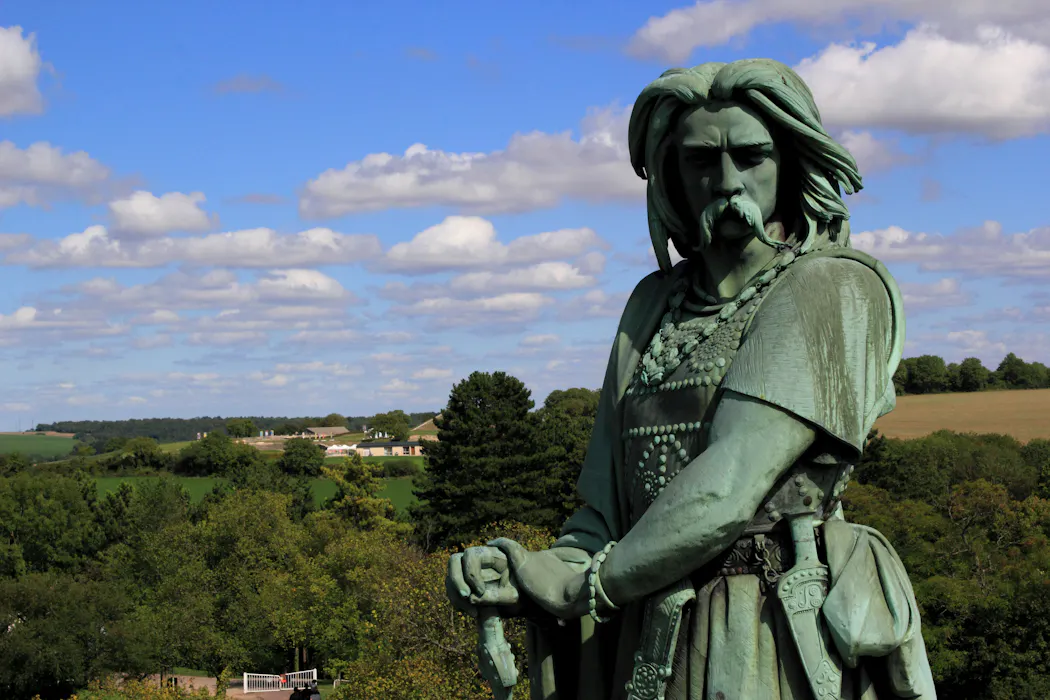
La statue de Vercingétorix, sur le probable site d’Alésia, a été érigée à la demande de Napoléon III.Thierry Clarte/MuséoParc Alésia
L’ESSENTIEL
Passionné d’archéologie, Napoléon III finance sur ses propres deniers les premières grandes campagnes de fouilles consacrées aux origines gauloises et gallo-romaines de la France.
Cette politique fait naître de nouvelles institutions, des méthodes de fouille plus rigoureuses et un grand musée consacré aux antiquités nationales.
Derrière les fouilles d’Alésia ou de Bibracte se joue un projet plus vaste : utiliser le passé pour construire la France contemporaine.
« La Gaule unie, formant une seule nation, animée d’un même esprit, peut défier l’Univers. » Cette citation, attribuée à Vercingétorix, est gravée depuis 1865 au pied de sa statue qui surplombe le village d’Alise-Sainte-Reine, en Côte-d’Or, site très probable d’Alésia.
Érigée à la demande de Napoléon III, cette statue incarne le récit national que l’empereur des Français cherche alors à construire en faisant des Gaulois les ancêtres de la nation française.
La naissance de l’archéologie impériale à Compiègne
Napoléon III s’intéresse jeune à Jules César, qui influence sa personnalité et son idéal du pouvoir. Fasciné par ce dernier, il se passionne pour la République romaine et les peuples qui vivaient à cette époque. Dès 1857, les découvertes rapportées dans la forêt de Compiègne (Oise) éveillent son intérêt pour l’archéologie.
La ville est bien connue de l’empereur. Il s’y rend presque chaque année afin d’y organiser les « Séries de Compiègne » : d’octobre à décembre, la Cour et les personnalités les plus connues de l’empire sont invitées à le côtoyer durant une semaine, au château et dans ses environs. En 1857, Napoléon III visite un site fouillé depuis plusieurs années dans la forêt : Champlieu.
Fasciné par les vestiges, il décide de renforcer les moyens consacrés aux recherches autour de Compiègne. Il confie leur conduite à Albert de Roucy. Celui-ci effectue les dégagements des vestiges et se charge de la découverte et de la conservation des objets. Il s’attèle à retrouver les sites gaulois et gallo-romains dans toute la forêt de Compiègne, dont le mont Chyprès, le mont Berny ou Saint-Pierre-en-Chastres.
Lors de ses visites, l’empereur est accompagné par des invités de marque, comme le roi du Danemark ou le tsar de Russie.
Passionné, Napoléon III souhaite reproduire l’exemple compiégnois au niveau national et finance la pratique archéologique de sa cassette personnelle.
L’archéologie : une rencontre historique et politique
Pour le souverain, l’archéologie s’inscrit également dans une démarche politique. Il s’agit de construire une nouvelle image de l’Empire français, associant puissance politique nationale et influence antiquisante.
La double généalogie, romaine et gauloise, inscrit le Second Empire dans une filiation ancienne et prestigieuse. Elle légitime le pouvoir impérial en le présentant comme l’héritier d’une civilisation glorieuse. L’archéologie devient un instrument au service d’un roman national en construction, dont les fouilles, les monuments et les musées assurent la diffusion.
La Gaule et la politique gallo-romaine deviennent un exemple pour le Second Empire à plusieurs niveaux :
sociétal : l’étude de la hiérarchie, de la justice, du droit romain et des habitudes quotidiennes gallo-romaines vise à améliorer la société et son quotidien très réglementé du XIXᵉ siècle ;
politique : Napoléon III prend comme exemple la politique républicaine romaine et souhaite incorporer certaines formes institutionnelles (dans la relation entre les différentes chambres notamment) ;
urbanistique : dans le cadre de la transformation des villes, le modèle gallo-romain inspire la forme des plans urbains et des bâtiments publics ;
militaire : étudier les armes et de la stratégie militaire ancienne doit permettre d’améliorer l’armée du Second Empire, en pleine réorganisation ;
culturel : l’art et les représentations gallo-romaines doivent être explorés et diffusés par l’école, les universités et les musées ;
technologique : les fabrications gauloises et romaines ayant résisté au temps doivent servir de modèles à des objets du quotidien plus durables.
La découverte des sites de la guerre des Gaules
D’un point de vue historique, l’objectif des fouilles est de comprendre comment vivaient les ancêtres des Français, avant et après la conquête romaine de la Gaule, et de savoir ce qu’il en reste sous le Second Empire. Au milieu du XIXᵉ siècle, les connaissances sur cette période demeurent limitées. L’organisation politique et sociale des Gaulois, leurs activités économiques et sociales ou leurs formes d’habitat restent beaucoup moins connues que celles des autres périodes de l’histoire de France.
Napoléon III concentre ses demandes sur un moment clé : la guerre des Gaules. Pour retrouver les lieux de batailles principaux, les archéologues s’appuient sur les informations laissées par Jules César dans son ouvrage les Commentaires.
À partir de 1859, plusieurs sites déjà repérés par les érudits, mais jamais fouillés méthodiquement, comme Bibracte (Saône-et-Loire/Nièvre), Gergovie (Puy-de-Dome) ou Uxellodunum (Lot), font l’objet de campagnes archéologiques. Le plus emblématique d’entre eux, Alésia, dont la localisation à Alise-Sainte-Reine faisait encore débat, est fouillé dès 1860.
L’empereur place ses hommes de confiance, chargés de contrôler les fouilles et de lui rapporter les découvertes. Ces acteurs sont secondés par une nouvelle institution créée en 1858, la Commission topographique des Gaules, qui a pour mission de créer des cartes représentant la Gaule avant et après la conquête romaine.
Un moment fondateur de l’archéologie nationale française
Trirème romaine commandée par Napoleon III et mise à l’eau à Clichy, le 9 mars 1861.
De nouvelles pratiques archéologiques se répandent également, comme l’archéologie expérimentale. Par exemple, Napoléon III participe à la reconstruction et assiste à la mise à l’eau d’un navire de guerre romain, une trirème, reproduite à l’échelle et testée en conditions réelles sur la Seine. Des armes romaines sont reproduites, testées et comparées aux armements contemporains, afin de comprendre les ressorts de la puissance militaire romaine.
Afin de regrouper toutes les connaissances archéologiques acquises, l’empereur demande la création du musée gallo-romain de Saint-Germain-en-Laye (Yvelines) en 1862. Celui-ci est innovant pour l’époque, en mettant l’accent sur les explications, la classification et la conservation des objets. Le musée se dote d’un atelier de moulage afin d’échanger des objets avec d’autres pays européens. Une bibliothèque est accessible à tous, comme l’ensemble du musée, que l’empereur inaugure le 29 mai 1867.
Inauguration du Musée gallo-romain de Saint-Germain-en-Laye, l’Univers illustré, 29 mai 1867, dessin, MAN, Saint-Germain-en-Laye. Archeologie.culture.fr
L’Histoire de Jules César (1865), rédigée par Napoléon III, regroupe la majorité des recherches effectuées par son équipe. L’ouvrage résume la passion et la vision politique de Napoléon III qui, le disant dans son introduction, se considère comme un « historien ». Le monarque aura, en tout cas, contribué à poser les fondements d’une archéologie scientifique et institutionnalisée en France.
Audrey Denis-Bosio a reçu des financements de la Fondation Napoléon.
Chez les Bassaris, dans le sud du Sénégal, certains arbres, forêts et autres plantes ne sont pas de simples ressources. Ils sont aussi des lieux sacrés, liés aux esprits, aux ancêtres et à la mémoire collective. Ce lien sacré porte un nom : le Dialan ou Angap. Les règles qui encadrent l’accès et l’utilisation des éléments du paysage peuvent ainsi contribuer à préserver certaines espèces et certains espaces naturels.
Dans une récente recherche menée autour du parc national de Niokolo-Koba, Idrissa Manka et Alioune Dème, spécialistes de l’archéologie, de l’ethnobotanique et de l’anthropologie, ont étudié le rôle des arbres dans les pratiques rituelles et spirituelles locales. The Conversation Africa les a interrogés sur les enseignements de cette étude, les menaces qui pèsent sur ces traditions et les pistes pour les préserver.
Que révèlent les rituels du Dialan sur les relations entre les communautés bassari et leur environnement ?
Le Dialan signifie autel et tire son nom du [Khaya senegalensis (caïlcédrat)](https://reboisons.nebeday.org/espece/cailcedrat). C’est un arbre utilisé à l’origine comme lieu d’invocation des forces invisibles chez les Mandingues (vaste communauté d’Afrique de l’Ouest).
L’expression Dialan désigne à la fois l’autel et les forces invisibles qui lui sont associées. Celles-ci font l’objet de vénération et de croyances collectives. Selon les populations locales, ces créatures surnaturelles sont capables de satisfaire ou de résoudre la plupart des problèmes communautaires. On les appelle beyils au pays bassari où le Dialan représentant une tradition séculaire conserve un rôle fondamental, malgré les nombreuses autres influences (modernisation, christianisme, islam, etc.).
En fait, les esprits du Dialan sont invoqués à plusieurs occasions. Parmi celles-ci, il y a le passage entre deux classes d’âge, les funérailles, la naissance, la guérison, la bénédiction, etc. Ces invocations se font par le biais de pratiques rituelles. Ces dernières nécessitent souvent l’examen de la couleur des entrailles ou des testicules du poulet après son sacrifice. L’objectif est de communiquer avec les beyils et de prédire l’avenir.
Généralement, ces rituels se déroulent dans des endroits spécifiques tels que la forêt sacrée (ekob en Bassari). Au-delà de sa dimension culturelle, celle-ci constitue une niche écologique et sert de refuge à la biodiversité grâce aux pratiques traditionnelles. Cela illustre ainsi l’interdépendance entre patrimoine immatériel et conservation environnementale.
Chez les Bassaris, le rite du Dialan permet de comprendre qu’au-delà d’être un lieu de subsistance, le milieu naturel représente un espace socialisé, sacralisé et mémorialisé. Les relations entre les hommes et certains paysages naturels sont régies par des normes rituelles (interdits, tabous, restrictions, soumission, sacrifices, etc.) et transmises au fil des générations.
Cela permet d’appréhender la manière dont les cosmologies traditionnelles participent à la protection, à la conservation et à la transmission de la biodiversité, tout en renforçant l’identité culturelle des communautés autochtones.
Pourquoi les arbres occupent-ils une place centrale dans les croyances des communautés autour du Niokolo Koba ?
Les arbres occupent une place centrale dans les systèmes de croyances des communautés adjacentes au parc national du Niokolo-Koba. Ils servent souvent d’intermédiaires entre les humains et la sphère surnaturelle pour de multiples fins : passage entre classes d’âge, naissance, guérison, purification, protection et bénédiction.
Ces croyances ancestrales, intégrées à l’identité des groupes ethniques locaux, confèrent à certains arbres une dimension culturelle, rituelle, écologique, symbolique et religieuse. Notre étude a répertorié 41 espèces à des fins magico-religieuses, dont le Khaya senegalensis, le Ceiba pentandra, l’Adansonia digitata, le Ficus gnaphalocarpa et le Parkia biglobosa généralement utilisées à ces fins.
La botanique ritualisée implique l’utilisation des plantes lors de bains et fumigations, pour des amulettes, masques, sacrifices et offrandes visant à établir une connexion avec le monde surnaturel (esprits, ancêtres, morts, etc.). Associées aux événements du cycle de vie ou à la résolution de problèmes sociaux, ces pratiques visent la santé, la protection et le bien-être social.
Les arbres sacrés, investis d’une forte valeur symbolique, constituent des marqueurs permanents de l’identité culturelle. Ils sont aussi des lieux de mémoire et des espaces privilégiés pour des rituels. Ces rituels permettent d’établir une communication avec les forces surnaturelles, considérées comme les véritables propriétaires de la nature selon les croyances locales.
En quoi vos résultats peuvent-ils contribuer à une meilleure conservation de la biodiversité autour du parc du Niokolo-Koba ?
Nos recherches mettent en évidence l’utilisation rituelle d’espèces ligneuses autour de la seconde plus grande aire protégée d’Afrique de l’Ouest. Elles établissent ainsi un lien entre patrimoine culturel immatériel et conservation de la biodiversité.
L’analyse de nos données démontre qu’au-delà de simples règles profanes, les croyances, les pratiques rituelles et les normes communautaires (tabous, restrictions et interdictions) qui régissent la gestion des espaces naturels constituent des conventions symboliques.
Celles-ci contribuent activement à la protection de certaines espèces animales et végétales, relevant ainsi d’une forme de conservation spirituelle de l’environnement.
Cette étude conclut que la réussite des stratégies de conservation et de valorisation des patrimoines culturels et naturels du Parc national du Niokolo-Koba nécessite une gouvernance territoriale participative. Pour ce faire, les autorités doivent intégrer les pratiques et priorités locales. Elles doivent également promouvoir le respect des traditions et des cultures, tout en garantissant les impératifs de conservation environnementale.
Pourquoi ces traditions sont-elles, malgré tout, en déclin et pourquoi est-il important de les préserver ?
Le déclin des traditions rituelles endogènes est lié à diverses menaces et pressions à la fois environnementales et anthropiques qui pèsent sur les espèces, leurs habitats mais aussi les communautés locales. Les perturbations naturelles, telles que les sécheresses et les changements climatiques, peuvent nuire aux habitats et entraver la conservation des espèces.
Les traditions ancestrales sont également confrontées à des menaces croissantes liées au déclin des sociétés traditionnelles, à la montée en puissance des religions monothéistes et au phénomène de la modernisation et de l’urbanisation.
Dans notre zone d’étude, ce déclin trouve en partie son origine dans des événements historiques survenus à la fin du XIXe siècle. Ceux-ci sont liés aux raids et affrontements d’islamisation impliquant les Peuls d’un côté et les Mandingues et Bassaris du territoire de Sibikiling de l’autre. Cette pression islamique s’accentue au milieu du XXe siècle avec l’arrivée du christianisme dans cette région.
Le fossé grandissant entre les sociétés modernes et la nature met davantage en péril la transmission de ces traditions. La disparition progressive des aînés et des chefs coutumiers fragilise également cette transmission aux jeunes générations. Celles-ci sont davantage intéressées par la croissance économique, l’amélioration du cadre de vie et la migration vers les centres urbains que par la préservation des savoirs écologiques traditionnels.
Trouver un successeur adéquat à un prêtre ou à chef coutumier décédé demeure de plus en plus une préoccupation majeure. À cela, s’ajoutent les déplacements forcés des communautés locales de leurs sites et terroirs ancestraux entre 1954 et 1976. Il y a aussi leur séparation physique des lieux sacrés naturels en raison des mesures de conservation. Cela a réduit les chances de préserver ces traditions africaines.
Il est donc urgent de trouver des solutions adaptées pour sauvegarder ce patrimoine culturel afin de préserver la cohésion sociale, de renforcer l’identité culturelle et de maintenir le lien sacré avec la nature.
Dr Tereza Majerovičová, Dr Miguel Ballesteros et Dr Jaromír Beneš de la faculté des sciences et du Laboratory of Archaeobotany and Palaeoecology (LAPE) de University of South Bohemia (Czech Republic) ont contribué à la réalisation de cet article.
Idrissa Manka bénéficie d’un financement dans le cadre du programme de mobilité Erasmus+.
Alioune Dème does not work for, consult, own shares in or receive funding from any company or organisation that would benefit from this article, and has disclosed no relevant affiliations beyond their academic appointment.