How do teens really use AI companions? With more creativity than you might think

Source: The Conversation – Global Perspectives – By Annabel Blake, PhD Candidate, Human-Computer Interaction, University of Sydney

RDNE/Pexels

In 2022, the founders of chatbot startup Character.AI launched a platform where anyone could create interactive characters powered by artificial intelligence (AI).

The app exploded, quickly growing to more than 20 million users who created more than 10 million chatbot characters.

Many of the users creating those characters were young people – until they weren’t. In November 2025, under mounting public and legal pressure surrounding youth suicides linked to its use, Character.AI banned users under 18. The decision was made after a number of attempts to improve youth safety, including parental controls and stricter content filters.

The ban is an attempt to keep teens safe from potential harm. But the more creative, playful and emotionally expressive AI experiments they were doing have also been silenced.

Our new research, published in the proceedings of the Association for Computing Machinery CHI Conference 2026, captures and preserves the new ways youth are experimenting with AI, so that we can build towards something better.

What do teens actually use AI chatbots for?

In 2026, three in ten US teenagers use AI daily. The idea of using AI for companionship has dominated media headlines and app stores, with hundreds of apps on offer.

Media coverage of AI companions taps into two primary fears. One is that young people will replace human friendships with AI. The other is that engaging with sycophantic chatbots instead of real people will result in teens losing their social skills.

These concerns are important. But companionship accounts for a surprisingly small share of why young people actually use AI. A recent Pew Research Center survey found the top uses by teens are seeking information (57%), doing homework (54%) and “for fun” (47%). Only a small percentage (12%) used AI for emotional support or advice. Romance and loneliness alleviation frequently rank among the lowest motivations for teen AI use: 4–6% and 8–11%, respectively.

When the public narrative almost exclusively frames AI chatbots as companions, it risks overlooking the bulk of how teenagers spend their time with AI.

Our team set out to understand what young people choose to do with AI when they’re free to use it outside of school contexts – seeking fun, messing around, and creating characters of their own design.

AI as entertainment

Before the ban, Character.AI was a popular “AI entertainment” destination for young people. It still has a viral TikTok channel, and has characters from popular youth media, from Peppa Pig to Call of Duty.

Our team spent more than eight months, between July 2024 and March 2025, immersed in Character.AI’s official community on online chat platform Discord, with more than 500,000 members. We systematically analysed 2,236 posts by young people aged 13–17. Of those users the majority, 68.2%, identified as female or non-binary; and 59% had created their own AI characters.

Through an analysis of youth discussion on the platform, we identified three core intents behind engagement with Character.AI: restoration, exploration and transformation.

Restoration

my favourite period comfort bot is Percy Jackson

Young people used characters for emotional comfort, venting, escapism and mood management. Rather than mirroring a formal clinical practice, we observed youth discussing “comfort bots” where young people engaged in soft, tender and gentle roleplay with familiar characters.

Beloved book characters would comfort people on their period, or characters from popular comics would give someone a pep talk for an upcoming math test.

Exploration

Character.AI has helped me find that creative spark within myself

Young people explored boundaries, engaged in creative world-building, and extended their fandoms. One teen wrote a three-book-long saga through character interactions. Another created a troupe of travelling theatre characters inspired by their love of theatre. They reported this use transferred skills into the real world, boosting creativity and improving their writing.

Transformation

I have characters who struggle with mental health issues and I tend to project on my personas during RP [roleplay]

Young people used AI to try on different identities, process real-life relationships, and re-author difficult real-life scenarios. Some people created “clones” of themselves, with superpowers or self-affirming versions of themselves.

Inspired by reality, they discussed creating characters that reflected real-world challenging relationships, such as “toxic friends”, “annoying sister”, or “foster care agent”.

Characters created with purpose

We also mapped seven distinct character archetypes young people were creating and discussing:

  • Soother – emotionally supportive figures
  • Narrator – a cast of characters for roleplays
  • Trickster – jesting, testing and transgressive chats
  • Icon – remixed celebrities or fandom figures
  • Dark Soul – angsty, emotionally complex characters
  • Proxy – modelled after real people in their lives, and
  • Mirror – clones of the self.

These archetypes are a central finding of our research. Instead of sycophantic or romantic chatbot engagement, young people are purposefully creating characters that are angsty, transgressive, playful, creative and reflective.

This shows we need to stop treating “companion AI” as if it’s one homogeneous thing. Treating AI chatbots as a single category is like treating all screen time as the same experience, whether a child is watching Bluey with family or doomscrolling short-form content at night, alone on their phone when they should be sleeping.

Towards better chatbots

The American Academy of Paediatrics recently shifted screen-time guidelines from set time limits to a framework that accounts for the individual child, their use, family relationships and their environment.

The same logic should apply to AI chatbots. This means moving beyond asking adults about their child’s use of AI, testing AI products with fake accounts that assume certain use cases, and banning access before listening to young people – their experiences, their experiments and their ideas for the future.

Banning is a reaction to bad design, but it doesn’t lead to better, safer AI products for teens.

The answer is not to permanently keep young people away from AI. Rather, it’s to build AI that deserves their trust, fosters their creativity and keeps them grounded in the physical world with families, friendships and communities.

The Conversation

Annabel Blake is a Design Researcher at Canva with a focus on AI, and conducted this research independently as part of their PhD.

Eduardo Velloso has recently received funding from Google. He has previously received research funding from Meta, Microsoft, and Snap.

Marcus Carter is a recipient of an Australian Research Council Future Fellowship (#220100076) on ‘The Monetisation of Children in the Digital Games Industry’. He has previously received funding from Meta, TikTok and Snapchat, and has consulted for Telstra. He is a previous president and board member of the Digital Games Research Association of Australia.

– ref. How do teens really use AI companions? With more creativity than you might think – https://theconversation.com/how-do-teens-really-use-ai-companions-with-more-creativity-than-you-might-think-278532

Will oil prices ever truly go back to ‘normal’?

Source: The Conversation – Global Perspectives – By Flavio Macau, Associate Dean – School of Business and Law, Edith Cowan University

The fallout from war between the United States, Israel and Iran has dominated global oil markets. And not just because the Strait of Hormuz, which normally carries about 20% of global oil and gas, remains effectively closed to shipping traffic.

Deep uncertainty about how long the disruption will continue has added a persistent “risk premium” – an extra cost built into oil prices to account for the risk of disrupted supply.

Rising insurance costs, reduced ship traffic and longer transit routes avoiding the Middle East have all added further friction to global oil supply chains.

An optimist might say this will all be sorted out quickly and soon enough we will be back to “normal”. And oil prices have retreated back below US$100 per barrel this week, on renewed hopes of a peace deal.

But they’re still elevated. Before war broke out in the Middle East, benchmark oil prices had hovered in the range of US$70–80 a barrel since 2023. That’s near where they’ve sat, on average, in “normal” times for much of the past two decades.

But what if there is no way back to “normal”? What if the fundamental challenge now isn’t the short-term disruption in supply, but the realisation that the days of cheap oil may have come to an end?

Oil’s invisible reach

Higher oil prices have a ripple effect that typically starts at the fuel pump. Petrol, diesel and jet fuel are top of mind. Driving to work, moving goods and travelling all become more expensive.

Many fertilisers, too, are petrochemical products. That means farming around the world is exposed to a shock.

But the list of goods that rely on oil and gas goes far beyond fuel and fertiliser. According to the US Department of Energy, petrochemicals (derived from oil and gas) are involved in the manufacturing of more than 6,000 everyday products.

Assorted pharmaceutical pills
Petrochemicals are used in the manufacturing of many pharmaceutical products.
Polina Tankilevitch/Pexels

In many cases, this is because petrochemicals are a key input in the production of plastic. But other products on the list may be surprising, such as aspirin, dishwashing liquid, toothpaste and dyes.

Building materials used in construction warrant a special mention. Asphalt, insulation, paint, pipes, membranes, fittings and other composite materials are mostly oil byproducts. Manufacturing bricks and many ceramic products is also gas-intensive.

Add transporting it all to the construction site, and the oil crisis becomes another headwind to housing affordability.

Is this the end of cheap oil?

In 1999, an article in The Economist quoted Don Huberts, who was then head of Shell Hydrogen at oil company Royal Dutch/Shell:

The stone age did not end because the world ran out of stones, and the oil age will not end because we run out of oil.

True enough, but what about cheap oil? Can that come to an end?

The world has faced many oil shocks before, some for geopolitical reasons, others due to concerns demand would outstrip supply.

But almost every time analysts predicted the world was about to run out of oil, price hikes were met with new discoveries, technological improvements and oil substitution.

Companies such as Chevron have pioneered new techniques, such as deepwater drilling.

Extracting oil from shale through fracking unlocked new supplies, especially in the US. This helped the US become the world’s largest producer of crude oil in the late 2010s.

This time, however, production facilities across the Middle East have suffered major damage, which may take years to repair. The central question is no longer whether oil exists in the ground, but whether it can be supplied cheaply, reliably and at scale again.

Just in time vs just in case

Until 2020, global economies largely operated in “just-in-time” mode. You only take what you need, when you need it, assuming it will always be there for you. This system works efficiently – and is cheap – until something goes wrong.

Lessons from the pandemic brought back the idea of “just in case”, particularly as the war in Ukraine caused further disruption.

“Just in case” means that you keep more than you need, so if someone closes the tap, you can keep all else running. However, this creates new costs.

To keep more oil and gas than you need, you don’t just have to pay for the extra stock. Countries also have to build new storage and infrastructure, and pay more in insurance.

You refine your management to make sure it all works properly, so that the extra cost added is part of a larger contingency plan. But someone must foot this bill.

How the world will have to adapt

The end of cheap oil does not mean the end of oil use. It means higher costs embedded throughout daily life.

Pressure on governments to subsidise fuel, expand stockpiles and intervene in markets can mean larger budget deficits. Households will have less money left for non-essentials as the cost of living bites even harder.

We will adapt, as we are already beginning to see in the current crisis. There are signs people around the world are travelling less, using more public transport and electrifying cars and homes.

Industries may invest more in efficiency and green energy not out of environmental idealism, but cost necessity.

But there may still be a rocky road ahead, and we may never get back to “normal”. Adaptation does not end oil dependence; it reshapes it. The challenge is managing a world in which oil remains essential, but is no longer cheap, stable or politically neutral.

The Conversation

Flavio Macau does not work for, consult, own shares in or receive funding from any company or organisation that would benefit from this article, and has disclosed no relevant affiliations beyond their academic appointment.

– ref. Will oil prices ever truly go back to ‘normal’? – https://theconversation.com/will-oil-prices-ever-truly-go-back-to-normal-280572

How Trump’s repeated efforts to fire Federal Reserve Chair Powell harm the economy – and make battling inflation harder

Source: The Conversation – USA (2) – By Ana Carolina Garriga, Professor or Political Science, Department of Government, University of Essex

President Donald Trump has repeatedly threatened to fire Fed Chair Jerome Powell. AP Photo/Julia Demaree Nikhinson

President Donald Trump has again threatened to oust Federal Reserve Chair Jerome Powell, putting at risk a keystone of good economic policy and inflation management: central bank independence.

The president said on April 15, 2026, that he would fire Powell if the Fed chair stayed on in that role after his term officially ends on May 15. Powell has said he intends to remain at the helm after that if his replacement has not yet been confirmed by the Senate. Legally, Powell is allowed to do this.

Trump has promised to fire Powell a number of times, and his Department of Justice has launched a criminal investigation into renovations at the Fed building. Trump has also tried to oust another Fed governor, Lisa Cook, over allegations of mortgage fraud. In an unprecedented video response to the investigation, Powell called it and other actions “pretexts” for Trump’s ultimate goal of getting the Fed to lower interest rates.

While Trump’s actions are seen as particularly aggressive, as political economists, we are not surprised to see politicians try to exert influence on central banks. For one thing, central banks remain part of the government bureaucracy, and independence granted to them can always be reversed – either by changing laws or backtracking on established practices.

An economic power struggle

At the heart of threats to Powell and Cook – and other moves to undermine the Fed by the Trump administration – is a power struggle.

Central banks, which are public institutions that manage a country’s currency and its monetary policy, have an extraordinary amount of power. By controlling the flow of money and credit in a country, they can affect economic growth, inflation, employment and financial stability.

These are powers that many politicians would like to control or at least manipulate. That’s because monetary policy can provide governments with economic boosts at key times, such as around elections or during periods of falling popularity.

The problem is that short-lived, politically motivated moves may be detrimental to the long-term economic well-being of a nation. They may, in other words, saddle the economy with problems further down the line.

That is why central banks across the globe tend to receive significant leeway to set interest rates independently and free from the electoral wishes of politicians.

In fact, monetary policymaking that is data-driven and technocratic, rather than politically motivated, has been seen as the gold standard of governance of national finances since the early 1990s and has largely achieved its main purpose of keeping inflation relatively low and stable.

But despite independence being seen to work, central banks over the past decade have come under increased pressure from politicians.

Trump is one recent example. In his first term as president, he criticized his own choice to head the Federal Reserve and demanded lower interest rates.

Attacks on the Fed have accelerated in Trump’s second administration. In April 2025, Trump lashed out at Powell in an online post, accusing him of being “TOO LATE AND WRONG” on interest rate cuts, while suggesting that the central banker’s “termination cannot come fast enough!” And in August, Trump took the unprecedented step of firing Cook, which a court later blocked. The Supreme Court is expected to issue a ruling in the case this year.

Moreover, the reason politicians may want to interfere in monetary policy is that low interest rates remain a potent, quick method to boost an economy. And while politicians know that there are costs to besieging an independent central bank – financial markets may react negatively, or inflation may flare up – short-term control of a powerful policy tool can prove irresistible.

a white man and a Black woman sit at chairs at a table
Fed Governors Jerome Powell and Lisa Cook have both been on the receiving end of Trump’s attacks.
AP Photo/Mark Schiefelbein

Legislating independence

If monetary policy is such a coveted policy tool, how have central banks held off politicians and stayed independent? And is this independence being eroded?

Broadly, central banks are protected by laws that offer long tenures to their leadership, allow them to focus policy primarily on inflation, and severely limit lending to the government.

Of course, such legislation cannot anticipate all future contingencies, which may open the door for political interference or for practices that break the law. And sometimes, central bankers are unceremoniously fired.

However, laws do keep politicians in line. For example, even in authoritarian countries, laws protecting central banks from political interference have helped reduce inflation and restricted central bank lending to the government.

In our own research, we have detailed the ways that laws have insulated central banks from the rest of the government, but also the recent trend of eroding this legal independence.

Politicizing appointees

Around the world, appointments to central bank leadership are political – elected politicians select candidates based on career credentials, political affiliation and, importantly, their dislike or tolerance of inflation.

But lawmakers in different countries exercise different degrees of political control.

A 2025 study shows that the large majority of central bank leaders – about 70% – are appointed by the head of government alone or with the intervention of other members of the executive branch. This ensures that the preferences of the central bank are closer to the government’s, which can boost the central bank’s legitimacy in democratic countries, but at the risk of permeability to political influence.

Alternatively, appointments can involve the legislative power or even the central bank’s own board. In the U.S., while the president nominates members of the Federal Reserve Board, the Senate can and has rejected unconventional or incompetent candidates.

Moreover, even if appointments are political, many central bankers stay in office long after the people who appointed them have been voted out. At the end of 2023, the most common length of the governors’ appointment was five years, and in 41 countries, the legal mandate was six years or longer.

And the Fed chair position has traditionally been protected by law, as Powell himself acknowledged in November 2024: “We’re not removable except for cause. We serve very long terms, seemingly endless terms. So we’re protected into law. Congress could change that law, but I don’t think there’s any danger of that.”

In the 2000s, several countries shortened the tenure of their central banks’ governors to four or five years. Sometimes, this was part of broader restrictions in central bank independence, as was the case in Iceland in 2001, Ghana in 2002 and Romania in 2004.

fruits on sale at a market
One of a central bank’s most important duties is to keep consumer prices in check, which becomes harder when its independence is questioned.
AP Photo/Matt Rourke

The low inflation objective

As of 2023, all but six central banks globally had low inflation as their main goal. Yet many central banks are required by law to try to achieve additional and sometimes conflicting goals, such as financial stability, full employment or support for the government’s policies.

This is the case for 38 central banks that either have the explicit dual mandate of price stability and employment or more complex goals. In Argentina, for example, the central bank’s mandate is to provide “employment and economic development with social equity.”

Conflicting objectives can open central banks to politicization. In the U.S., the Federal Reserve has a dual mandate of stable prices and maximum sustainable employment. These goals are often complementary, and economists have argued that low inflation is a prerequisite for sustainable high levels of employment.

But in times of overlapping high inflation and high unemployment, such as in the late 1970s or when the COVID-19 crisis was winding down in 2022, the Fed’s dual mandate has become active territory for political wrangling.

Since 2000, at least 23 countries have expanded the focus of their central banks beyond just inflation.

Limits on government lending

The first central banks were created to help secure finance for governments fighting wars. But today, limiting lending to governments is at the core of protecting price stability from unsustainable fiscal spending.

History is dotted with the consequences of not doing so. In the 1960s and 1970s, for example, central banks in Latin America printed money to support their governments’ spending goals. But it resulted in massive inflation while not securing growth or political stability.

Today, limits on lending are strongly associated with lower inflation in the developing world. And central banks with high levels of independence can reject a government’s financing requests or dictate the terms of loans.

Yet over the past two decades, almost 40 countries have made their central banks less able to limit central government funding. In the more extreme examples – such as in Belarus, Ecuador or even New Zealand – they have turned the central bank into a potential financier for the government.

Scapegoating central bankers

In recent years, governments have tried to influence central banks by pushing for lower interest rates, making statements criticizing bank policy or calling for meetings with central bank leadership.

At the same time, politicians have blamed the same central bankers for a number of perceived failings: not anticipating economic shocks such as the 2007-09 financial crisis; exceeding their authority with quantitative easing; or creating massive inequality or instability while trying to save the financial sector.

And since mid-2021, major central banks have struggled to keep inflation low, raising questions from populist and antidemocratic politicians about the merits of an arm’s-length relationship.

But chipping away at central bank independence, particularly in the name of lowering interest rates to boost the economy, as Trump appears to be doing by threatening to fire the Fed chair and his attempted removal of a member of the bank’s Board of Governors, is a historically sure way to high inflation.

This is an updated version of an article that was originally published on June 14, 2024.

The Conversation

The authors do not work for, consult, own shares in or receive funding from any company or organization that would benefit from this article, and have disclosed no relevant affiliations beyond their academic appointment.

– ref. How Trump’s repeated efforts to fire Federal Reserve Chair Powell harm the economy – and make battling inflation harder – https://theconversation.com/how-trumps-repeated-efforts-to-fire-federal-reserve-chair-powell-harm-the-economy-and-make-battling-inflation-harder-280766

Was Trump’s so-called ‘Jesus’ image blasphemy? A religious expert explains

Source: The Conversation – Global Perspectives – By Philip C. Almond, Emeritus Professor in the History of Religious Thought, The University of Queensland

This week, Donald Trump posted an AI image of himself dressed in white robes, placing a glowing hand over an ill or deceased man in a hospital bed, as if to heal or resurrect him. The image, posted on Truth Social, was widely taken as him presenting himself as a Messianic Jesus figure.

Sometime the next morning, he deleted the post. “I thought it was me as a doctor,” he explained to reporters, according to Time magazine. Jesus? “Only the fake news could come up with that one.”

But the post was widely interpreted as blasphemous – including by conservative Catholic group CatholicVote.org.

“I don’t know if the President thought he was being funny or if he is under the influence of some substance or what possible explanation he could have for this OUTRAGEOUS blasphemy,” declared Megan Basham, a prominent conservative Protestant Christian writer, on X. “But he needs to take this down immediately and ask for forgiveness from the American people and then from God.”

“I was very grateful to see how many conservative Christians immediately denounced the blasphemous Jesus/Trump image,” said pastor Doug Wilson, who recently led a prayer service at the Pentagon and founded the network of churches War Secretary Pete Hegseth belongs to.

What is blasphemy?

Within the Christian tradition, blasphemy has historically been an unstable, shifting idea. But, simply put, it means speech, thought or action that shows contempt for – or mockery of – God and sacred matters.

Judaism and Christianity’s concept of blasphemy came from the injunction in the Old Testament not to revile God. Within the Old Testament, it was treated as a crime, punishable by death: “One who blasphemes the name of the Lord shall be put to death; the whole congregation shall stone the blasphemer.”

The New Testament expanded the concept to include the rejection of Jesus. Eventually, cursing, reproaching, challenging, mocking, rejecting or denying Jesus became blasphemous.

More particularly, posing as Jesus or asserting powers that belong only to him was considered blasphemous in medieval times. The “Christs” that emerged were treated harshly, as dangerous heretics. This is where Trump’s presentation of himself as Jesus would undoubtedly be considered blasphemous.

Broadly, anything said or done that offended believers could be construed as blasphemous. Catholics at the time of the Reformation in the 16th century tended to brand those who offended them as heretics.

Protestants generally preferred the term blasphemy for anything they disliked or disagreed with. For example, 16th century theologian Martin Luther – a seminal figure in the Protestant Reformation – condemned as blasphemous not only Catholics, but also Jews and Muslims.

Blasphemy as sin or crime

a man who looks like Jesus with a 'B' on his forehead
James Nayler.
Britannica

From the 17th century onwards, blasphemy became not so much an offence against God as one against society. Within the unstable societies of early modern Europe, blasphemy was viewed as socially and politically subversive and prosecuted as such. The Quaker James Naylor was imprisoned in 1656 for reenacting Jesus’s entry into Jerusalem on Palm Sunday.

Early in the 17th century, blasphemy crossed to the United States. Virginia’s first law code specified death for blaspheming the divine Trinity.

Despite the first amendment to the US constitution, protecting free speech, blasphemy laws were regularly enacted. The US Supreme Court didn’t rule that laws against blasphemy infringed the right to free speech until after World War II. Several states still have blasphemy on their books.

England’s Blasphemy Act of 1697, which criminalised the denial of the Holy Trinity, the truth of Christianity, or the divine authority of the Bible, carried over into the colonies of Australia and New Zealand.

Blasphemy is no longer an offence under Australian federal law, though laws governing it vary across the states: it’s still in the criminal code of many of them. New Zealand’s criminal code deals with “blasphemous libel” as part of “crimes against religion, morality and public welfare”.

Is there blasphemy in Islam?

Within Islam, there is no exact equivalent to “blasphemy”. But the idea of the “word of infidelity” is analogous to it. In practice, it amounts to mockery of God, the prophet, or the Islamic tradition generally.

So, when Trump mockingly declared “Praise be to Allah” in a recent post, he was guilty of blasphemy in Muslim eyes. Conservative commentator Dinesh D’Souza compared it to the Old Testament account of the prophet Elijah, who mocked the prophets of Baal in 1 Kings 18.

The Islamic advocacy group Council on American-Islamic Relations called it “disturbing” and “offensive to Muslims”.

Laws against blasphemy are actively enforced in many modern Islamic states.

Does blasphemy matter?

It is not blasphemous to speak or publish opinions that are hostile to Christianity, Judaism or Islam – or for that matter, any religion. What matters is not so much the substance of criticism as the manner in which it is made.

We should only worry when criticism becomes a form of “religious hate speech”. The question we should ask is about intent. In a secular society, where we do identify ill intent, we may wish to think about “blasphemy” as a matter of public morality, not theology.

So, what about Donald Trump’s post? Does it matter?

If we consider “blasphemy” to include the mocking of religion, there is little doubt that Trump’s mockery of Islam is blasphemous. If we believe his deleted Truth Social post was intended to suggest he is Jesus – or in some sense divine – then Christians are entitled to consider him blasphemous.

That said, from a secular perspective, it is more self-indulgent foolishness than hate speech – but nonetheless, extremely inappropriate for a US president.

The Conversation

Philip C. Almond does not work for, consult, own shares in or receive funding from any company or organisation that would benefit from this article, and has disclosed no relevant affiliations beyond their academic appointment.

– ref. Was Trump’s so-called ‘Jesus’ image blasphemy? A religious expert explains – https://theconversation.com/was-trumps-so-called-jesus-image-blasphemy-a-religious-expert-explains-280603

The beloved emperor penguin and Antarctic fur seal are now officially endangered. Here’s what can be done

Source: The Conversation – Global Perspectives – By Mary-Anne Lea, Professor in Marine/Polar Predator Ecology, University of Tasmania

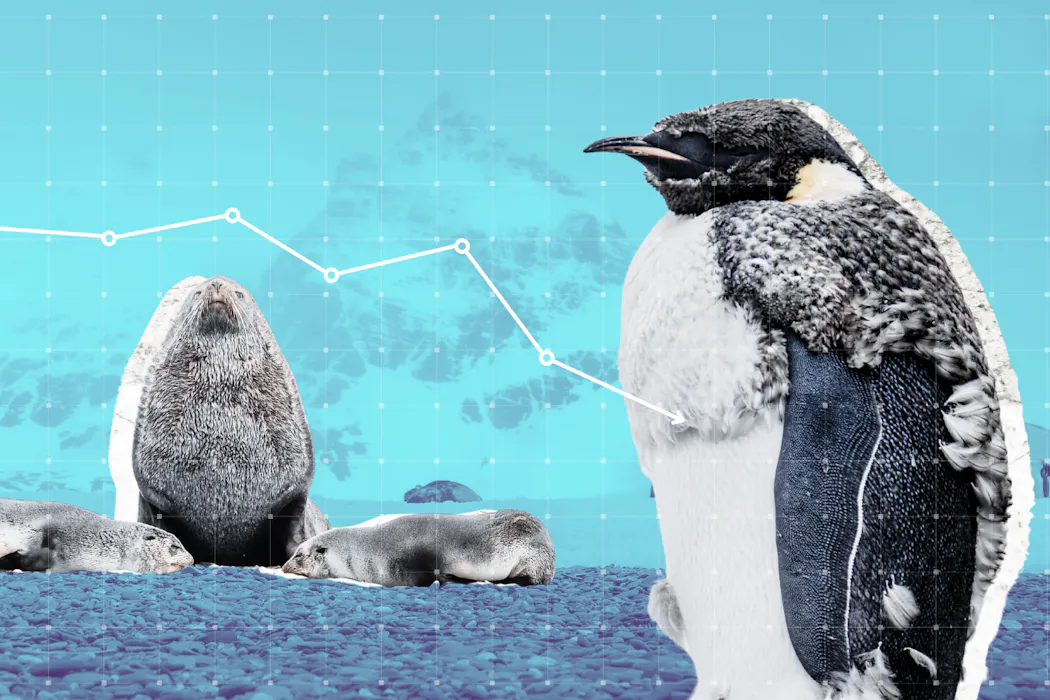
The Conversation, CC BY-ND

In 1902, British explorer Robert Falcon Scott spotted a large group of large black and white birds at Ross Island, Antarctica. This was among the many milestones of Scott’s famous Discovery expedition: the first breeding colony of emperor penguins.

Now, only 124 years since this penguin colony was discovered, emperor penguins have officially been listed as endangered, along with the Antarctic fur seal. As the world warms, Antarctic krill are shifting southwards and sea ice is shrinking at record levels. And these unprecedented changes are having a domino effect on these species.

These are the first penguin and pinniped – marine mammals that have front and rear flippers – to be given this conservation status in the Southern Ocean. Their perilous situation is a critical turning point, and shows how rapidly the Antarctic environment is changing.

At the same time, the spread of highly contagious avian influenza, or bird flu, adds a new and immediate threat to Southern Ocean wildlife, compounding the pressures of climate change on stressed species.

Antarctic fur seal with pups at Sailsbury Plain on South Georgia, with snow-covered hills in the background.
Antarctic fur seal with pups at Sailsbury Plain on South Georgia. The number of fur seals has dropped by over 50% since 1999.
Posnov/Getty

Dramatic declines linked to climate change

The first emperor penguin breeding colony was discovered at Cape Crozier, on Ross Island, during Robert Falcon Scott’s Discovery expedition in 1902. A decade later, Scott’s Terra Nova expedition returned, in part to collect emperor penguin eggs. It was an ill-fated expedition, immortalised in Apsley Cherry-Garrard’s famous book, The Worst Journey in the World.

In the 1960s, Scott’s son, Sir Peter Scott, one of the founders of modern conservation, helped establish the International Union for the Conservation of Nature’s Red List. Just 124 years after those early discoveries at Cape Crozier, that same framework has now been used to classify emperor penguins as endangered. The swift arc from discovery to extinction risk is a striking reminder of how quickly the species’ fortunes have changed.

Over nine years, between 2009 and 2018, emperor penguin numbers fell by 10%. Their numbers are expected to halve by 2073.

A group of southern elephant seals at rest.
Southern elephant seals are now officially listed as vulnerable.
Mary-Anne Lea, CC BY-ND

The decline is more pronounced for Antarctic fur seals. Hunted to the brink of extinction in the early 1880s, by 1999 their numbers had rebounded to an estimated 2.1 million mature seals. But since then, the global population has decreased by more than 50%, to about 944,000 mature individuals.

In just a decade, they have been reclassified on the IUCN’s Red List, going from of “least concern” – those species that are widespread and at low risk of extinction – to “endangered”. The IUCN’s red list is the comprehensive information source on the extinction risk status of species. This shows the remarkable speed at which these seals are declining.

Climate change and bird flu

Both of these dramatic declines are linked to climate change. Warming ocean temperatures and a reduction in sea ice affect the availability of the Antarctic fur seal’s key prey, Antarctic krill. Krill are shifting southwards and moving deeper, potentially making them less accessible to some predators. Competition with a growing population of whales has also increased.

Emperor penguins, by contrast, are completely dependent on sea ice. They use it as a stable platform for courtship, incubating their eggs and rearing chicks. But as sea ice declines and becomes less reliable, their breeding success is increasingly threatened. If the ice breaks up before chicks are fully developed, many are unable to survive.

At the same time, the spread of highly contagious bird flu adds a new and immediate threat to Southern Ocean wildlife. High mortality associated with avian influenza has also caused the uplisting of the southern elephant seal to “vulnerable” this week.

Some elephant seal populations have experienced more than 90% of pups dying, alongside sharp declines in breeding adults. These represent tens of thousands of animals lost, with many Antarctic fur seals also dying as a result of bird flu outbreaks.

emperor penguin chicks at Cape Crozier.
Emperor penguin chicks at Cape Crozier.
Mary-Anne Lea, CC BY-ND

We need to know more

Emperor penguins, Antarctic fur seals and southern elephant seals are three of the more widely researched Southern Ocean predators. But there is still a lot we don’t know, because of the remote location and the difficulty of sustaining research over time. And there are many species we know far less about. Antarctic ice seals, including Weddell seals, crabeater seals, leopard seals, and Ross seals, have “unknown” population trends on the IUCN red list, meaning there is not enough data to know if numbers are declining.

These recent listings make clear the urgent and ongoing need for improved, real-time monitoring. We need to know much more about wildlife health and population trends, the Antarctic environment and sea ice quality.

Human-driven threats facing Antarctic wildlife are many, and cumulative. To respond, we need to better protect Antarctic habitat and the species that live there. We need to reduce the interaction of marine species with industrial fishing. And we must improve how we assess current and suspected threats in Antarctica, when there is growing evidence of impacts.

Defining these animals as endangered is a stark reminder of how quickly Antarctica is changing before our eyes. Without a rapid reduction in greenhouse gas emissions and sustained conservation action, these species may be lost forever.

The Conversation

Mary-Anne Lea receives funding from the Australian Research Council, the Australian government, Rolex, the National Geographic Society and others. She is affiliated with the University of Tasmania, the Scientific Committee on Antarctic Research (SCAR) Expert Group on Birds and Marine Mammals, the SCAR Standing Committee on the Antarctic Treaty System (as a delegate to CCAMLR) and is a co-founder and board director of Homeward Bound Projects.

Jane Younger receives funding from the Australian Research Council, National Geographic Society, Rolex, WIRES, the Marine Megafauna Research Fund, and Lindblad-National Geographic. She is affiliated with the University of Tasmania and Senior Editor of Ecology & Evolution.

Noemie Friscourt receives funding from the Australian Research Council, the Australian government and the Antarctic Science Foundation. She is affiliated with the University of Tasmania.

– ref. The beloved emperor penguin and Antarctic fur seal are now officially endangered. Here’s what can be done – https://theconversation.com/the-beloved-emperor-penguin-and-antarctic-fur-seal-are-now-officially-endangered-heres-what-can-be-done-280362

Le raton laveur et vos poubelles : un casse-tête à résoudre pour cet animal ingénieux et astucieux

Source: The Conversation – in French – By Hannah Griebling, PhD Candidate in the Department of Forest and Conservation Sciences, Faculty of Forestry and Environmental Stewardship, University of British Columbia

Imaginez : vous vous réveillez et découvrez qu’un raton laveur astucieux a renversé votre poubelle, dispersant vos déchets partout dans la rue…


Les ratons laveurs — parfois surnommés « pandas des poubelles » — sont réputés pour être d’excellents innovateurs et des solutionneurs de problèmes capables de surmonter les obstacles les plus complexes dans leur quête de nourriture.

Un raton laveur se tient debout sur une boîte transparente, penchant ses pattes par-dessus le bord pour manipuler un casse-tête
Un raton laveur s’efforce d’ouvrir une boîte à casse-tête à solutions multiples.
(Hannah Griebling)

Comment les ratons laveurs ajustent-ils leurs stratégies lorsque les tâches deviennent plus difficiles ? Et continuent-ils à chercher des solutions même sans récompense alimentaire ? Nous avons mené une expérience pour le savoir.

Nous avons été surpris de constater que les ratons laveurs continuaient à résoudre plusieurs casse-têtes pendant un essai de 20 minutes, même lorsque cela ne leur donnait pas accès à une guimauve irrésistible.

Des cerveaux innovants, comparables à ceux des primates

Les ratons laveurs doivent souvent faire preuve d’ingéniosité pour trouver de la nourriture dans des milieux dominés par les humains, et ils ont plusieurs adaptations qui les y aident.

Tout d’abord, ils possèdent un nombre élevé de neurones concentré dans un cerveau relativement petit. Leur densité neuronale est plus proche de celle des primates que de celle des autres carnivores.

Ils possèdent également des pattes avant très habiles adaptées à la recherche de nourriture dans les cours d’eau, ainsi qu’un régime alimentaire généraliste qui leur permet de manger presque tout ce que nous jetons.

Un raton laveur perché sur une fontaine, en train de boire
Les ratons laveurs utilisent fréquemment les équipements et technologies domestiques humains à leurs propres fins.
(Unsplash/Fr0ggy5)

En tant que chercheurs, nous voulions savoir si les ratons laveurs modifient leurs stratégies lorsque les problèmes deviennent plus difficiles. Par exemple, que fait un raton laveur si la poubelle est ouverte, par rapport à une poubelle munie d’un couvercle ou dont le couvercle est verrouillé ?

Nous étions également curieux de savoir si leur résolution de problèmes suit ce que nous appelons un compromis entre exploration et exploitation.


À lire aussi :
Les barrages de castors aggravent-ils vraiment les inondations ?


Une récompense irrésistible : une guimauve

Pour explorer ces questions, nous avons donné aux ratons laveurs une boîte à énigmes à accès multiples. Ces boîtes sont utilisées dans la recherche sur la cognition animale pour étudier la résolution de problèmes et l’innovation. Elles comportent plusieurs problèmes à résoudre afin que l’animal puisse accéder à une seule récompense alimentaire.

En général, les chercheurs donnent à l’animal une boîte à accès multiples et le laissent résoudre le casse-tête de son choix pour accéder à la récompense. Ensuite, le chercheur verrouille cette solution et l’animal doit trouver une nouvelle façon d’accéder à la boîte.

Plutôt que de verrouiller les solutions de la boîte, nous nous sommes demandé : que se passerait-il si nous laissions la boîte déverrouillée et permettions aux ratons laveurs de la manipuler librement ? Reviendraient-ils systématiquement aux solutions qu’ils connaissaient déjà, ou exploreraient-ils de nouvelles façons de résoudre le problème ?

Ouvriraient-ils la boîte une seule fois, prendraient leur récompense — une guimauve — et s’en contenteraient-ils ? ? Ou continueraient-ils à jouer avec la boîte même après que la récompense alimentaire ait disparu ?

Un raton laveur tente d’ouvrir une boîte équipée de boutons rotatifs et de cadenas
Un raton laveur a réussi à ouvrir une solution à bouton rotatif sur la boîte à énigmes à solutions multiples et s’efforce de retirer un cadenas déverrouillé du loquet à gâchette.
(Hannah Griebling)

Les ratons laveurs résolvent des problèmes pour le plaisir

Le comportement des ratons laveurs nous a surpris. Nous nous attendions à ce qu’ils trouvent plusieurs solutions pour la boîte, et non pas à ce qu’ils continuent à chercher des solutions après avoir trouvé la seule guimauve à l’intérieur de la boîte à casse-tête.

Ils semblaient intrinsèquement motivés à trouver plusieurs solutions au cours d’un essai de 20 minutes, même lorsque la résolution du casse-tête ne menait pas directement à une récompense sous forme de guimauve.

En fait, les ratons laveurs découvraient plusieurs solutions pour la boîte à casse-tête, même lorsque les problèmes devenaient plus difficiles et qu’ils constataient, en la manipulant avec leurs pattes avant, qu’aucune autre guimauve n’y était.


Déjà des milliers d’abonnés à l’infolettre de La Conversation. Et vous ? Abonnez-vous gratuitement à notre infolettre pour mieux comprendre les grands enjeux contemporains.


Quand les choses se compliquent

À mesure que ces problèmes devenaient plus difficiles, les ratons laveurs ont commencé à se concentrer rapidement sur une seule solution à laquelle ils revenaient sans cesse.

Cela correspond à ce qu’on appelle un compromis entre exploration et exploitation : lorsqu’un problème devient plus difficile, il est souvent plus avantageux pour le raton laveur de se concentrer sur une seule solution, car la résolution demande plus de temps et d’efforts.

Un raton laveur se tient derrière une boîte à casse-tête, essayant de trouver un moyen d’y entrer
Un raton laveur travaille sur une solution de difficulté moyenne.
(Hannah Griebling)

Imaginez-vous dans une rue, en ville, affamé. Vous apercevez votre restaurant préféré, où vous adorez la cuisine, et vous remarquez un nouvel établissement intéressant juste à côté. Où choisissez-vous de manger ?

Les humains et les animaux non humains sont constamment confrontés à ce genre de décisions : quand il faut « explorer » et essayer quelque chose de nouveau, et quand il vaut mieux « exploiter » nos connaissances existantes.

Si ce nouveau restaurant au bout de la rue est cher, vous serez sans doute moins tenté de l’essayer que de savourer votre plat préféré dans votre restaurant habituel.

Réussir dans des villes en constante évolution

Cette propension à innover et à résoudre des problèmes, même lorsqu’elle ne rapporte pas directement de récompense tangible comme la nourriture, est sans doute familière à beaucoup d’entre nous. C’est ce qui anime notre envie de résoudre des mots croisés ou de venir à bout d’un nouveau jeu vidéo.

Cette motivation intrinsèque pourrait aider les ratons laveurs à s’épanouir en milieu urbain. En ville, les ressources changent rapidement : un soir, un raton laveur fouille dans les poubelles, et le lendemain, quelqu’un y place une brique pour l’en empêcher.

Plus les ratons laveurs apprennent à résoudre des problèmes, plus ils peuvent accéder aux ressources dans des villes en constante évolution. Bien sûr, cela peut agacer certains d’entre nous, mais il est difficile de ne pas admirer la capacité des ratons laveurs à s’adapter et à prospérer à nos côtés.

La Conversation Canada

Sarah Benson-Amram reçoit des financements du Conseil de recherches en sciences naturelles et en génie du Canada, de la Habitat Conservation Trust Foundation, de l’Université de la Colombie-Britannique, de la Fondation canadienne pour l’innovation et du British Columbia Knowledge Development Fund.

Hannah Griebling ne travaille pas, ne conseille pas, ne possède pas de parts, ne reçoit pas de fonds d’une organisation qui pourrait tirer profit de cet article, et n’a déclaré aucune autre affiliation que son organisme de recherche.

– ref. Le raton laveur et vos poubelles : un casse-tête à résoudre pour cet animal ingénieux et astucieux – https://theconversation.com/le-raton-laveur-et-vos-poubelles-un-casse-tete-a-resoudre-pour-cet-animal-ingenieux-et-astucieux-280219

Iran’s military forces combine state-of-the-art drones and hackers with out-of-date conventional weapons

Source: The Conversation – USA – By Paul J. Springer, Professor of Comparative Military Studies, Air University

Revolutionary Guard personnel stand under an Iranian-made unmanned aerial vehicle, the Shahed-136, while participating in a military rally in Tehran, Iran, on Jan. 10, 2025. Morteza Nikoubazl/NurPhoto via Getty Images

Six weeks of U.S. and Israeli bombardment have served to degrade Iran’s nuclear facilities and cripple parts of its military.

But the Islamic Republic’s offensive capabilities have been built up over nearly 50 years, during which Iran has been either at war or under the threat of conflict.

As an expert in military history and theory, I believe that to understand what may come next in Operation Epic Fury, it’s valuable to grasp the development of Iran’s modern military structure, capabilities and international activities.

Iranian military technology

Prior to the establishment of the Islamic Republic of Iran in 1979, Iran’s military was largely supplied by Western powers, particularly the United States.

It entered the Iran-Iraq war in 1980 with a substantial amount of then-modern equipment. That included nearly 80 F-14 fighter aircraft, over 200 F-4 and F-5 aircraft and thousands of tanks.

But Iran’s military was exhausted when the war ended in 1988. And the government had by then become a world pariah, making resupply all but impossible.

Although Iran imported some military equipment from the Soviet Union and China in 1990, its economy could not support substantial military spending.

Ironically, the arms embargoes that Iran faced during and after its war with Iraq made the regime self-reliant on its weapons stockpiles. And that triggered the development of a substantial domestic arms industry.

Most modern Iranian military equipment consists of reverse-engineered American and Soviet equipment, much of it obsolete. Since 1990, however, Iranian missile technology has substantially improved. That’s due to domestic production and importing expertise from other marginalized states, such as North Korea.

Smoke rises from a warehouse in an open field.
Smoke rises from an oil warehouse on the outskirts of Erbil, the capital of Iraq’s Kurdistan region, following a suspected drone strike on April 1, 2026.
Gailan Haji/Middle East Images/AFP via Getty Images

Starting in the 1990s, Iran also innovated a series of one-way attack drones, a relatively inexpensive way to attack distant targets.

The modern Iranian military

The Iranian military is split into the regular military, or “Artesh,” and the Islamic Revolutionary Guard Corps. The Artesh plays a domestic defense role akin to a militia, while the Revolutionary Guard serves as the more professional military force.

The Revolutionary Guard projects regional power. During the 2003 U.S.-Iraq war, for instance, it provided improvised explosive devices to insurgents targeting American forces.

The Revolutionary Guard tends to receive the bulk of Iranian military resources, including the best personnel and equipment. Quds Force, the unconventional warfare wing of the Revolutionary Guard, has long played a role in exporting the revolutionary beliefs of the Iranian rulers. The Quds Force provides arms and guidance to proxies throughout the Middle East, primarily by fomenting insurrections against Arab Sunni governments.

Iran has long been the patron of Hezbollah, based in Lebanon, whose primary goal is the eradication of Israel. More recently, Iran has also engaged in substantial support of Hamas in Gaza, despite the fact that Hamas is a Sunni organization, while the rulers of Iran are members of the Shiite branch of Islam.

Iran has constantly sought means of exerting military influence beyond its borders, without risking external attack. It has embraced the use of cyber warfare, a method of attack with a relatively low cost for participation and a potentially outsized influence on the world stage.

Iranian hackers have attacked Western military and government networks, including a hack of FBI Director Kash Patel’s personal emails. Iranian-backed hackers have also launched attacks on infrastructure and cultural institutions, including U.S. wastewater treatment plants and electrical grids.

Missile traces are seen in the sky.
Missile traces are seen over Damascus, Syria, during Iran’s missile attacks against Israel on June 14, 2025.
Hummam Sheikh Ali/Xinhua via Getty Images

Iran’s pursuit of atomic weaponry

Iran’s government has relentlessly pursued nuclear weapons since at least the 1980s.

The Iranian government has always maintained that its nuclear program is to provide power for the developing nation, rather than weaponry. But definitive evidence of uranium enrichment far beyond the requirements of power generation have caused Western states to demand an end to the Iranian nuclear program.

In 2010, cybersecurity researcher Sergey Ulasen discovered an incredibly complex malware program, dubbed Stuxnet, that was created to undermine the Iranian nuclear program by disrupting the function of enrichment centrifuges. No nation has ever taken responsibility for the attack, which set back Iranian uranium enrichment efforts by years.

In 2015, after negotiations with the five permanent members of the U.N. Security Council and Germany, Iran agreed to halt its uranium enrichment program in exchange for relief from economic sanctions and the release of frozen Iranian assets. The negotiations resulted in the Joint Comprehensive Plan of Action, or JCPOA.

Although the Trump administration withdrew the U.S. from the JCPOA in 2018, the agreement continued to function, and Iran seemed poised to reenter the global economy.

A machine produces a yellow substance.
Machines use yellow cakes to produce uranium hexafluoride at the uranium conversion facilities in Isfahan, Iran, on Feb. 3, 2007.
Behrouz Mehri/AFP via Getty Images

However, in 2020 the Iranians restarted their nuclear program. They also ramped up production of ballistic missiles and one-way attack drones.

In June 2025, the United States and Israel launched a massive aerial attack on Iranian nuclear facilities, an effort that Trump characterized as having destroyed Iran’s nuclear facilities.

Iran responded by launching a wave of ballistic missiles and drones toward Israel, most of which were intercepted before entering Israeli airspace.

The missile and interceptor war

Prior to Operation Epic Fury, analysts estimated that Iran possessed 3,000 ballistic missiles and tens of thousands of one-way attack drones. They also concluded that Iran had a substantial production capacity to increase its stockpiles.

In the first six weeks of the current conflict, Iran expended at least 650 missiles in attacks on Israel and hundreds more against other targets in the region.

The U.S. has placed a heavy emphasis on attacking missile production and storage facilities. But it’s difficult to ascertain how many missiles and drones the Iranian military might still possess.

Iranian production and transportation has almost certainly sustained substantial losses in capacity. And U.S. and Israeli aircraft prowl the skies over Iran seeking signs of mobile launchers or attempts to transport missiles to firing locations.

The rate of Iranian missile fire has substantially declined since the first days of the conflict, but it has never dropped to zero. That has led some analysts to suspect that Iran maintains a significant cache of long-range weaponry in reserve, while U.S. Secretary of Defense Pete Hegseth argues that it has lost the capacity to launch major barrages.

The Conversation

Paul J. Springer is a Senior Fellow of the Foreign Policy Research Institute. His comments represent his own opinion and do not reflect the official policy of the United States Government, the U.S. Department of Defense, or the U.S. Air Force.

– ref. Iran’s military forces combine state-of-the-art drones and hackers with out-of-date conventional weapons – https://theconversation.com/irans-military-forces-combine-state-of-the-art-drones-and-hackers-with-out-of-date-conventional-weapons-280547

Canada cannot afford to lose international research talent — here’s what needs to change

Source: The Conversation – Canada – By Evren Altinkas, Adjunct Professor, Department of History, University of Guelph

The Canadian government launched the Global Impact+ Research Talent Initiative in December 2025 designed to entice international researchers to come to Canada.

The initiative, which the government says will “invest up to $1.7 billion over 12 years to attract and support more than 1,000 leading international and expatriate researchers,” is a significant investment.

This is especially important amid declining cross-country budgets for post-secondary education and research.

But our work shows there are important challenges with recruiting and retaining internationally trained researchers.

Problems with points

International researchers face limited specific immigration pathways.

The comprehensive ranking system (CRS), also known as the point system), is the primary mechanism for skilled workers to attain permanent residence in Canada. The CRS ranks prospective immigrants based on their scores in relation to age, education, language and work experience. The federal government then invites candidates at or above a certain cutoff score to apply for permanent residency.

However, research by Christina Clark-Kazak, the second author of this story, shows how age-based points are inconsistent with the Canadian Charter of Rights and Freedoms. Section 15 of the Charter, on equality rights, prohibits discrimination on the basis of age.

At the same time, these age-based points don’t make sense alongside work experience points. The result? An incoherent policy.

It takes many years to obtain a PhD. In Canada’s immigration ranking system, a PhD only yields 14-15 more points than a Master’s and 28-30 more than a Bachelor’s degree.

At the same time, applicants aged 30-40 years lose five points per year. After they turn 45, they receive no points.

The average age of a PhD graduate is 35. It can take several years to land an academic job in Canada.

Due to this age discrimination and undervaluing of education in the CRS, many talented colleagues with extensive training and experience don’t meet the points threshold.

To partially address this issue, Immigration, Refugees and Citizenship Canada (IRCC) introduced new categories for express entry in February 2026. These include a category for “researchers and senior managers with Canadian work experience.”

Immigration Minister Lena Metlege Diab has described the new categories as a way to “drive innovation and growth.”

However, in a March 4 announcement of invitations to apply for permanent residence under the revamped Express Entry system (the only draw to date since IRCC introduced new categories), only 250 invitations were announced, and none went to researchers.

Immigration status is an equity issue

Evren Altinkas, the first author of this story, has analyzed collective agreements across Canadian universities. This analysis demonstrates a systematic absence of immigration status as a recognized equity category within hiring frameworks.

Across dozens of institutions — including institutions that have significant global rankings, like the University of Toronto, University of British Columbia and McGill University — there is no explicit contractual language addressing internationally trained or displaced scholars.

Many collective agreements contain general employment equity or diversity clauses. But these overwhelmingly focus on domestically recognized categories such as gender, race and Indigeneity, leaving immigration status unaddressed.

This omission reflects a broader pattern of “invisibility” of non-status and precarious migrants in Canadian institutional frameworks.

Even where limited references exist — such as provisions connected to the Scholars at Risk Network at institutions like University of Ottawa or the University of Guelph — these remain exceptional rather than systemic.

Policies and agreements are barriers

Current equity, diversity and inclusion (EDI) policies and collective agreements therefore pose interconnected practical, legal and behavioural barriers to recruiting and retaining internationally trained researchers.

Pervasive hiring norms include asking about Canadian experience — only recently set to change for some employers in Ontario
— and contribute to underemployment and skill mismatch.


Read more:
‘Canadian experience’ keeps skilled immigrants out of the labour market


The limited recognition of foreign credentials also systematically disadvantages immigrants.

Legally, immigration regimes create uncertainty that institutions and unions are not structurally equipped to accommodate. This is particularly the case with Canada’s increasingly complex “two-step” system of temporary to permanent residency.

The absence of immigration status within EDI discourse reinforces a narrow conception of diversity. This overlooks transnational academic trajectories.

Research shows that internationally educated researchers face persistent labour market barriers. These include visa precarity and limited institutional pathways into stable academic employment.


Read more:
Internationally experienced teachers: An overlooked resource to address teaching shortages


Even when funding mechanisms exist to support EDI-related scholarship or professional development, these are rarely designed to address structural constraints faced by internationally trained researchers.

This gap ultimately reveals a misalignment between Canada’s reliance on highly skilled immigrants and the institutional barriers embedded within academic labour systems.

Talented researchers voting with their feet

In this context, research shows both underemployment of talent and the departure of university-educated immigrants from Canada.

The Institute for Canadian Citizenship demonstrates “those with doctorates are nearly twice as likely to leave as those with a bachelor’s degree.”

The Canadian economy cannot afford to lose internationally trained academic and research talent. This is particularly true amid ongoing trade tensions with the United States and broader global economic uncertainty.

Canada’s competitiveness increasingly depends on its ability to attract and retain highly skilled workers in research, innovation and higher education.

Reports from the federal government emphasize that immigrants account for a significant share of growth in the highly educated labour force, especially in STEM and knowledge sectors.

Canada needs domestic innovation

Trade disruptions and protectionist policies — particularly in relation to the United States — have heightened the need for domestic innovation capacity.


Read more:
Why international students could be a critical factor in bolstering Canada’s economic resilience


Failing to integrate internationally trained researchers into stable academic positions risks exacerbating “brain waste,” where highly skilled people are underemployed despite labour shortages.

In a period marked by inflation, supply chain instability and shifting global alliances, retaining global talent is not only an equity issue but an economic imperative.

Canada’s long-term resilience depends on aligning immigration policy with institutional hiring practices in higher education and research sectors.

A path forward

We recommend three key changes to immigration policy and hiring practices.

First, along with more than 100 signatories of an open letter to the federal government organized through the interdisciplinary research partnership network UnborderED Knowledge (the “ED” in the name emphasizes education), we call for designated permanent residence pathways for internationally trained researchers.

The February 2026 Express Entry announcement provides an opportunity for IRCC to make a specific draw for researchers with a point threshold that redresses age biases in the CRS. They should do so as soon as possible.

Second, hiring practices in research institutions must acknowledge and accommodate immigration status as an equity issue, as outlined in the Tri-Agency Best Practices Guide for Recruitment, Hiring and Retention.

Third, in line with findings from the Ontario Human Rights Commission, federal and provincial governments should work with employers across all sectors to ensure that international researchers are not unfairly penalized for foreign credentials and experience.

The Conversation

Christina Clark-Kazak receives funding from the Social Sciences and Humanities Research Council of Canada.

Evren Altinkas does not work for, consult, own shares in or receive funding from any company or organisation that would benefit from this article, and has disclosed no relevant affiliations beyond their academic appointment.

– ref. Canada cannot afford to lose international research talent — here’s what needs to change – https://theconversation.com/canada-cannot-afford-to-lose-international-research-talent-heres-what-needs-to-change-276799

How commercial sand dredging is reshaping the largest lake in the UK – new study

Source: The Conversation – UK – By Neil Reid, Reader (Associate Professor) in Conservation Biology, Queen’s University Belfast

Algal blooms on Lough Neagh have harmful effects on wildlife and water quality. Studio 70SN/Shutterstock

At Lough Neagh in Northern Ireland, sand has been dredged commercially for decades. Large vessels remove sand from the lakebed and transport it to the shore. Because this happens underwater, the scale of the activity is largely invisible. Regulation has focused on where dredging is allowed and how much sand is removed.

Sand is used by the construction industry to make concrete. Demand for sand as a raw material is rising globally. Much of it taken from rivers, coasts and lakes.

But my team’s new research shows that this sand dredging is not just disturbing specific parts of the lakebed. That disruption is much more widespread and may be affecting the entire ecosystem.

Lough Neagh, the largest lake in the UK, supplies drinking water to 41% of the population of Northern Ireland and supports fisheries, wildlife and local livelihoods. Yet it is now at the centre of an environmental crisis. Toxic blue-green algal blooms caused by an overgrowth of the cyanobacteria Microcystis aeruginosa clog up the entire ecosystem.

Lough Neagh has experienced severe blue-green algal blooms each year since 2023, which can damage both environmental and public health. These blooms are mainly driven by nutrient pollution, warming waters and invasive species. Cumulative release of phosphorus and sustained sediment disturbance by dredging probably frees up nutrients in the system that could contribute to thresholds necessary for algal blooms to occur.

The current management by the Lough Neagh Action Plan focuses on reducing nutrient pollution and doesn’t yet consider sand dredging as a contributing factor.

To understand what is happening below the surface, my team worked with researchers at Newcastle University using sonar mapping to examine parts of the lakebed. Our findings revealed major physical changes. In some areas, dredging had carved deep depressions into the sediment, lowering the lakebed by up to 17 metres. These are not small disturbances. They reshape the lake’s structure.

The lakebed is a living habitat. It supports organisms such as the larvae of Lough Neagh flies, which form the base of the food web as prey for fish and other animals. It is also where commercially important fish like pollan and eel spawn. When this habitat is removed or repeatedly disturbed, ecosystem recovery can be slow or stall.

Our most striking finding was how far disturbance from dredging spreads. Satellite images showed plumes of sediment trailing behind dredging vessels, sometimes stretching more than a mile at the surface.

Such plumes are not created only during dredging itself, but also when boats move between sites, stirring up sediment in this unusually shallow lake with their powerful propellers. So-called “turbidity corridors” at times cover half of the lake’s surface. Sediment was also seen running off shoreline unloading yards, extending up to more than a mile offshore.

Dredging does not stay where it happens. Its footprint moves with the boats and spreads across the lake.

When sediment is stirred up, the effects ripple through the ecosystem. Cloudy water makes it harder for fish and birds to feed. More importantly, sediments store nutrients, especially phosphorus that may be released back into the water if disturbed.

Lough Neagh holds large amounts of what is known as legacy phosphorus. This has built up as a result of natural processes as well as decades of farm runoff, human wastewater treatment overflows and leaky septic tanks among other sources. When sediments are disturbed, stored pollution could potentially be released back into the water. Because the lake is shallow, that release can quickly affect the whole system.

The consequences for wildlife are significant. Disturbing the lakebed may damage fish spawning grounds and disrupt invertebrates that support the food web. Increased cloudiness can reduce feeding success for fish and birds. Powerful boat wakes could erode shorelines and disturb protected nesting birds. There is also concern for the eel fishery that recently collapsed.

While many factors are involved, widespread disturbance adds further pressure on an ecosystem already at the point of collapse.

Rethinking regulation

Current rules focus on the licensed dredging area and how much sand is removed. Our research suggests that approach is too narrow.

The wider effects including lakebed disturbance, sediment plumes, boat movement, propeller disturbance and runoff from the shore also need to be considered. If efforts to restore the lake focus only on reducing nutrient runoff from the land, other important drivers of decline may be overlooked.

There are practical ways to reduce the environmental footprint of dredging. Adjusting the force of suction used to collect sediment could reduce disturbance. Limiting overflow from the hopper – the part of the flat-bottomed barge used to collect dredged sand and water after suction – could reduce water containing sediment discharging back into the lake. Slower vessel speeds and fixed shipping lanes could confine disturbance.

In shallow waters, boats moving less forcefully – or protecting the lakebed – could stop sediment being churned up. On land, covering sand piles and using ponds or vegetation can help trap runoff before it flows into the lake.

Lough Neagh reflects a global issue. Demand for sand is increasing rapidly, putting pressure on aquatic environments worldwide. This research is the first attempt to measure how far the consequences of sand dredging extend across the UK and Ireland’s largest lake. The effects go well beyond the point of extraction.

If Lough Neagh is to recover, management will need to reflect the true scale of disturbances, including those unseen beneath the surface.

The Conversation

Neil Reid does not work for, consult, own shares in or receive funding from any company or organisation that would benefit from this article, and has disclosed no relevant affiliations beyond their academic appointment.

– ref. How commercial sand dredging is reshaping the largest lake in the UK – new study – https://theconversation.com/how-commercial-sand-dredging-is-reshaping-the-largest-lake-in-the-uk-new-study-279732

Netflix’s ‘The Dinosaurs’ rehashes a very old story — of empire and conquest

Source: The Conversation – Canada – By Frederick Oliver Beeby Maglaque, Exhibition Researcher, Pacific Museum of Earth and Masters student in Art History, University of British Columbia

“This is the story of the dinosaurs as it has never been told before,” narrates Morgan Freeman in the opening of Neflix’s The Dinosaurs docuseries.

The four-part series combines advanced CGI with real nature footage to create cutting-edge photorealistic visuals and tell a compelling story. The Dinosaurs is undeniably a technical and scientific achievement.

Netflix’s marketing has emphasized the show’s accuracy and engagement of more than 50 scientific advisers. Meanwhile, experts describe some scenes as “speculative,” given our evolving knowledge of the Mesozoic Era.

What The Dinosaurs does tell us, with great accuracy, is a lot about ourselves.

Tracing the rise and extinction of dinosaurs from the Triassic period to the Late Cretaceous period, the show — much like the dinosaur media that came before it — reflects our own reckoning with possibilities of human extinction that is only more necessary as our planet changes rapidly due to climate change.

It also reinforces another familiar narrative: the story of life on Earth as a story of conquest.

A Spinosaurus baits a shark in this dramatic clip from ‘The Dinosaurs.’ (Silverback Films)

Exotic beasts to be tamed, classified

Dinosaurs first entered the visual culture of western science in the 19th century. Famous depictions include two full-sized dinosaurs — an Iguanodon and Megalosaurus — that were unveiled at Crystal Palace Park in London in 1854.

Dinosaur-like figures in the foreground, Crystal Palace in the background.
Engraving The ‘Crystal Palace’ from the Great Exhibition, by George Baxter, after 1854.
(Wikimedia Commons), CC BY

The Crystal Palace itself was designed for the 1851 Great Exhibition — which displayed animals, minerals, cultural objects and more from across the British Empire. It was a steel and glass monument to industrial modernity and imperial power.

These “exotic” fake dinosaurs were placed on small, artificial islands, within lakes in the palace park, where visitors could view them from afar. They were positioned as beasts to be viewed with as much wonder as terror that the combined authority of science and empire could tame and classify. They are still there today.

(Friends of the Crystal Palace Dinosaurs)

Imperial fantasies of extraction

The film Jurassic Park, released in 1993, followed its 19th-century predecessors, depicting dinosaurs as creatures that dwell in distant exotic realms that humans, typically white explorers or scientists, must journey to.

The film is set on the imaginary Costa Rican island of Isla Muerta, where dinosaurs are born from amber extracted from the fictional Mano de Dios mine.


Read more:
Thirty years after Jurassic Park hit movie screens, its impact on science and culture remains as strong as ever – podcast


Like the Crystal Palace dinosaurs, they evoke an unknown exotic frontier — shaped by imperial fantasies of extraction. And yet, films like Jurassic Park also question this framing. Characters who seek to dominate nature — the businessman, the lawyer, the big game hunter — ultimately meet their downfall.

A scene inside the fictional Mano de Dios mine in the 1993 movie Jurassic Park.

Dinosaurs versus Earth

So, what happens when these familiar tropes are presented through the hyperrealism of modern dinosaur documentaries, alongside real paleontological discoveries, as “accurate?”

“In a savage and ever-changing world, some will rise and some will fall. But through it all, the dinosaurs will expand their empire and advance relentlessly to seize Earth’s final frontiers,” narrates Morgan Freeman in Episode 3 of The Dinosaurs.

Throughout the series, dinosaurs are portrayed as seeking to colonize the planet. This is evident in the episode titles — Rise, Conquest, Empire, Fall — and in how the other organisms are depicted.


Read more:
What bite marks on a dinosaur fossil tell us about the T. rex’s eating habits


The first episode concludes with a cowboy-style showdown between a dinosaur and a rauisuchian, a Triassic reptile described as a monstrous, lesser “other.” This scene marks the beginning of the dinosaurs’ so-called “reign.”

Again and again, The Dinosaurs tells a story of dinosaurs versus Earth, where natural events like volcanism are described as “Earth’s darkest forces.” The planet itself becomes something to be overcome in the dinosaurs’ pursuit of empire.

This Mesozoic, non-human history is also told as a story that is always moving toward a known ending. The first episode opens with a Tyrannosaurus rex (T.rex) in the aftermath of the Chicxulub impact, a 100- million megaton blast that struck the Gulf of Mexico region and devastated the planet.

The T.rex closes its eyes as ash falls across an apocalyptic landscape. Dinosaurs are portrayed as conquerors of Earth and as always already doomed to fail — ruled by this so-called “tyrant lizard king.”

A Tyrannosaurus rex takes on an Ankylosaurus in this dramatic clip from ‘The Dinosaurs.’ (Silverback Films)

A story of human mastery

The Dinosaurs engages in what we could call the “dino dialectic” — a trope where dinosaurs are presented as allegorical stand-ins for humans, reflecting an anthropocentric and often colonial vision of the human subject.

As media theorist W.M.T. Mitchell writes, “Dinos R Us.”

At the same time, their inevitable extinction is used to define them as primitive and inferior. Dinosaurs are us, but we remain superior, masters of our fates and of our planetary dominion.

If The Dinosaurs, the latest in an increasing number of contemporary dinosaur documentaries, reflects our own apocalyptic anxieties while reiterating this “dino dialectic,” we are continuing to tell the same story that led us here.

These documentaries are examples of what visual culture scholar Nicholas Mirzoeff calls “Anthropocene visuality” — a way of seeing that “keeps us believing that somehow the war against nature that western society has been waging for centuries is not only right; it is beautiful and it can be won.”

The Conversation

Frederick Oliver Beeby Maglaque receives funding from the Social Sciences and Humanities Research Council (SSHRC).

Kirsten F. Hodge receives funding from the Natural Sciences and Engineering Research Council of Canada and the Canadian Association of Science Centres.

– ref. Netflix’s ‘The Dinosaurs’ rehashes a very old story — of empire and conquest – https://theconversation.com/netflixs-the-dinosaurs-rehashes-a-very-old-story-of-empire-and-conquest-279162