At its heart, pizza is deceptively simple. Made from just a few humble ingredients – baked dough, tangy sauce, melted cheese and maybe a few toppings – it might seem like a perfect candidate for the kind of mass-produced standardization that defines many global food chains, where predictable menus reign supreme.
Yet, visit two pizzerias in different towns – or even on different blocks of the same town – and you’ll find that pizza stubbornly refuses to be homogenized.
We are researchersworking on a local business history project that documents the commercial landscape of Gainesville, Florida, in the 20th and 21st centuries. As part of that project, we’ve spent a great many hours over the past two years interviewing local restaurant owners, especially those behind Gainesville’s independent pizzerias. What we’ve found reaffirms a powerful truth: Pizza resists sameness – and small pizzerias are a big reason why.
Why standardized pizza rose but didn’t conquer
While tomatoes were unknown in Italy until the mid-16th century, they have since become synonymous with Italian cuisine – especially through pizza.
Pizza arrived in the U.S. from Naples in the early 20th century, when Italian immigration was at its peak. Two of the biggest destinations for Italian immigrants were New York City and Chicago, and today each has a distinctive pizza style. A New York slice can easily be identified by its thin, soft, foldable crust, while Chicago pies are known for deep, thick, buttery crusts.
After World War II, other regions developed their own types of pizza, including the famed New Haven and Detroit styles. The New Haven style is known for being thin, crispy and charred in a coal-fired oven, while the Detroit style has a rectangular, deep-dish shape and thick, buttery crust.
By the latter half of the 20th century, pizza had become a staple of the American diet. And as its popularity grew, so did demand for consistent, affordable pizza joints. Chains such as Pizza Hut, founded in 1958, and Papa John’s, established in 1984, applied the model pioneered by McDonalds in the late 1940s, adopting limited menus, assembly line kitchens and franchise models built for consistency and scale. New technologies such as point-of-sale systems and inventory management software made things even more efficient.
As food historian Carol Helstosky explains in “Pizza: A Global History,” the transformation involved simplifying recipes, ensuring consistent quality and developing formats optimized for rapid expansion and franchising. What began as a handcrafted, regional dish became a highly replicable product suited to global mass markets.
Today, more than 20,000 Pizza Huts operate worldwide. Papa John’s, which runs about 6,000 pizzerias, built its brand explicitly on a promise rooted in standardization. In this model, success means making pizza the same way, everywhere, every time.
So, what happened to the independent pizzerias? Did they get swallowed up by efficiency?
Not quite.
Chain restaurants don’t necessarily suffocate small competitors, recent research shows. In fact, in the case of pizza, they often coexist, sometimes even fueling creativity and opportunity. Independent pizzerias – there are more than 44,000 nationwide – lean into what makes them unique, carving out a niche. Rather than focusing only on speed or price, they compete by offering character, inventive toppings, personal service and a sense of place that chains just can’t replicate.
A local pizza scene: Creativity in a corporate age
For an example, look no farther than Gainesville. A college town with fewer than 150,000 residents, Gainesville doesn’t have the same culinary cache as New York or Chicago, but it has developed a very unique pizza scene. With 13 independent pizzerias serving Neapolitan, Detroit, New York and Mediterranean styles and more, hungry Gators have a plethora of options when craving a slice.
What makes Gainesville’s pizza scene especially interesting is the range of backgrounds its proprietors have. Through interviews with pizzeria owners, we found that some had started as artists and musicians, while others had worked in engineering or education – and each had their own unique approach to making pizzas.
The owner of Strega Nona’s Oven, for example, uses his engineering background to turn dough-making into a science, altering the proportions of ingredients by as little as half of a percent based on the season or even the weather.
Gainesville’s independent pizzerias often serve as what sociologists call “third places”: spaces for gathering that aren’t home or work. And their owners think carefully about how to create a welcoming environment. For example, the owner of Scuola Pizza insisted the restaurant be free of TVs, so diners can focus on their food. Squarehouse Pizza features a large outdoor space; an old, now repurposed school bus outfitted with tables and chairs to dine in, and a stage for live music.
Squarehouse also is known for its unusual toppings on square, Detroit-style pies – for example, the Mariah Curry, topped with curry chicken or cauliflower and coconut curry sauce. It refreshes its specialty menus every semester or two.
While the American pizza landscape may be shaped by big brands and standardized menus, small pizzerias continue to shine. Gainesville is a perfect example of how a local pizza scene in a small Southern college town can be so unique, even in a globalized industry. Small pizzerias don’t just offer food – they offer a flavorful reminder that the marketplace rewards distinctiveness and local character, too.
The authors do not work for, consult, own shares in or receive funding from any company or organization that would benefit from this article, and have disclosed no relevant affiliations beyond their academic appointment.
Source: The Conversation – USA (3) – By Lori Hunter, Professor of Sociology, Director of the Institute of Behavioral Science, University of Colorado Boulder
Edith Schaecher, center, and her daughter and granddaughter look at a photo album recovered from her tornado-damaged home in Greenfield, Iowa, in May 2024.AP Photo/Charlie Neibergall
Hurricanes, tornadoes and other extreme weather do not distinguish between urban and rural boundaries. But when a disaster strikes, there are big differences in how well people are able to respond and recover – and older adults in rural areas are especially vulnerable.
If a disaster causes injuries, getting health care can take longer in rural areas. Many rural hospitals have closed, leaving patients traveling longer distances for care.
At the same time, rural areas have higher percentages of older adults, a group that is more likely to have chronic health problems that make experiencing natural disasters especially dangerous. Medical treatments, such as dialysis, can be disrupted when power goes out or clinics are damaged, and injuries are more likely around property damaged by flooding or powerful winds.
As a sociologist who studies rural issues and directs the Institute of Behavioral Science at the University of Colorado Boulder, I believe that understanding the risks is essential for ensuring healthier lives for older adults. I see many different ways rural communities are helping reduce their vulnerability in disasters.
Disasters disrupt health care, especially in isolated rural regions
According to the U.S. Census Bureau, about 20% of the country’s rural population is age 65 and over, compared with only 16% of urban residents. That’s about 10 million older adults living in rural areas.
There are three primary reasons rural America has been aging faster than the rest of the country: Young people have been leaving for college and job opportunities, meaning fewer residents are starting new families. Many older rural residents are choosing to “age in place” where they have strong social ties. And some rural areas are gaining older adults who choose to retire there.
An aging population means rural areas tend to have a larger percentage of residents with chronic disease, such as dementia, heart disease, respiratory illness and diabetes.
According to research from the National Council on Aging, nearly 95% of adults age 60 and older have at least one chronic condition, while more than 78% have two or more. Rural areas also have higher rates of death from chronic diseases, particularly heart disease.
At the same time, health care access in rural areas is rapidly declining.
Hospital closures have left rural residents traveling about 20 miles farther for common in-patient health care services than they did two decades ago, and even farther for specialist care.
Those miles might seem trivial, but in emergencies when roads are damaged or flooded, they can mean losing access to care and treatment.
After Hurricane Katrina struck New Orleans in 2005, 44% of patients on dialysis missed at least one treatment session, and almost 17% missed three or more.
When Hurricanes Matthew and Florence hit rural Robeson County, North Carolina, in 2016 and 2018, some patients who relied on insulin to manage their blood sugar levels went without insulin for weeks. The county had high rates of poverty and poor health already, and the healthy foods people needed to manage the disease were also hard to find after the storm.
Insulin is important for treating diabetes – a chronic disease estimated to affect nearly one-third of adults age 65 and older. But a sufficient supply can be harder to maintain when a disaster knocks out power, because insulin should be kept cool, and medical facilities and drugstores may be harder for patients to reach.
Rural residents also often live farther from community centers, schools or other facilities that can serve as cooling centers during heat waves or evacuation centers in times of crisis.
Alzheimer’s disease can make evacuation difficult
Cognitive decline also affects older adults’ ability to manage disasters.
Caregivers for family members living with dementia may struggle to find time to prepare for disasters. And when disaster strikes, they face unique challenges. Disasters disrupt routines, which can cause agitation for people with Alzheimer’s, and patients may resist evacuation.
Living through a disaster can also worsen brain health over the long run. Older adults who lived through the 2011 Great East Japan earthquake and tsunami were found to have greater cognitive decline over the following decade, especially those who lost their homes or jobs, or whose health care routines were disrupted.
Social safety nets are essential
One thing that many rural communities have that helps is a strong social fabric. Those social connections can help reduce older adults’ vulnerability when disasters strike.
Following severe flooding in Colorado in 2013, social connections helped older adults navigate the maze of paperwork required for disaster aid, and some even provided personal loans.
Community support through churches, like this one whose building was hit by a tornado in rural Argyle, Wis., in 2024, and other groups can help older adults recover from disasters. Ross Harried/NurPhoto via Getty Images
Friends, family and neighbors in rural areas often check in on seniors, particularly those living alone. They can help them develop disaster response plans to ensure older residents have access to medications and medical treatment, and that they have an evacuation plan.
Rural communities and local groups can also help build up older adults’ mental and physical health before and after storms by developing educational, social and exercise programs. Better health and social connections can improve resilience, including older adults’ ability to respond to alerts and recover after disasters.
Ensuring that everyone in the community has that kind of support is important in rural areas and cities alike as storm and flood risks worsen, particularly for older adults.
Lori Hunter receives funding from the National Institutes of Health and the National Science Foundation.
People pray before Republican vice presidential nominee J.D. Vance at a town hall hosted by Lance Wallnau on Sept. 28, 2024, in Monroeville, Pa.AP Photo/Rebecca Droke
The NAR is a loosely organized but influential charismatic Christian movement that shares similarities with Pentecostalism, especially in its belief that God actively communicates with believers through the Holy Spirit. Unlike traditional Pentecostalism, however, the organization emphasizes modern-day apostles and prophets as authoritative leaders tasked with transforming society and ushering in God’s kingdom on Earth. Prayer, prophecy and worship are defined not only as acts of devotion but as strategic tools for advancing believers’ vision of government and society.
After the shooting, the Christ for the Nations Institute issued a statement “unequivocally” denouncing “any and all forms of violence and extremism.” It stated: “Our organization’s mission is to educate and equip students to spread the Gospel of Jesus Christ through compassion, love, prayer, service, worship, and value for human life.”
But the shooting has drawn attention to the school and the larger Christian movement it belongs to. One of the most important aspects of NAR teachings today is what is called “the Seven Mountain Mandate.”
The Seven Mountain Mandate calls on Christians to gain influence, or “take dominion,” over seven key areas of culture: religion, family, education, government, media, business and the arts.
The Seven Mountains concept was originally proposed in 1975 by evangelical leader Bill Bright, the founder of Campus Crusade for Christ. Now known as “Cru,” the Campus Crusade for Christ was founded as a global ministry in 1951 to promote Christian evangelism, especially on college campuses.
Since 1996, Bill Johnson, a senior leader of Bethel Church, and Johnny Enlow, a self-described prophet and Seven Mountains advocate, among others, have taken the original idea of the Seven Mountains Mandate and reshaped it into a more aggressive, political and spiritually militant approach. Spiritual militancy reflects an aggressive, us-vs.-them mindset that blurs the line between faith and authoritarianism, promoting dominion over society in the name of spiritual warfare.
Their version doesn’t just aim to influence culture; it frames the effort as a spiritual battle to reclaim and reshape the nation according to their vision of God’s will.
Lance Wallnau, another Christian evangelical preacher, televangelist, speaker and author, has promoted dominion theology since the early 2000s. During the 2020 U.S. presidential election, Wallnau, along with several prominent NAR figures, described Donald Trump as anointed by God to reclaim the “mountain” of government from demonic control.
In their book “Invading Babylon: The 7 Mountains Mandate,” Wallnau and Johnson explicitly call for Christian leadership as the only antidote to perceived moral decay and spiritual darkness.
NAR-aligned leaders have framed electoral contests as struggles between “godly” candidates and those under the sway of “satanic” influence.
Similarly, NAR prophet Cindy Jacobs has repeatedly emphasized the need for “spiritual warfare” in schools to combat what she characterizes as “demonic ideologies” such as sex education, LGBTQ+ inclusion or discussions of systemic racism.
In the NAR worldview, cultural change is not merely political or social but considered a supernatural mission; opponents are not simply wrong but possibly under the sway of demonic influence. Elections become spiritual battles.
This belief system views pluralism as weakness, compromise as betrayal, and coexistence as capitulation. Frederick Clarkson, a senior research analyst at Political Research Associates, a progressive think tank based in Somerville, Massachusetts, defines the Seven Mountains Mandate as “the theocratic idea that Christians are called by God to exercise dominion over every aspect of society by taking control of political and cultural institutions.”
The call to “take back” the culture is not metaphorical but literal, and believers are encouraged to see themselves as soldiers in a holy war to dominate society. Some critics argue that NAR’s call to “take back” culture is about literal domination, but this interpretation is contested.
Many within the movement see the language of warfare as spiritually focused on prayer, evangelism and influencing hearts and minds. Still, the line between metaphor and mandate can blur, especially when rhetoric about “dominion” intersects with political and cultural action. That tension is part of an ongoing debate both within and outside the movement.
At the same time, the Seven Mountains Mandate doesn’t depend on centralized leadership or formal institutions. It spreads organically through social networks, social media – notably podcasts and livestreams – and revivalist meetings and workshops.
André Gagné, a theologian and author of “American Evangelicals for Trump: Dominion, Spiritual Warfare, and the End Times,” writes about the ways in which the mandate spreads by empowering local leaders and believers. Individuals are authorized – often through teachings on spiritual warfare, prophetic gifting, and apostolic leadership – to see themselves as agents of divine transformation in society, called to reclaim the “mountains,” such as government, media and education, for God’s kingdom.
This approach, Gagné explains, allows different communities to adapt the action mandate to their unique cultural, political and social contexts. It encourages individuals to see themselves as spiritual warriors and leaders in their domains – whether in business, education, government, media or the arts.
The framing of the Seven Mountains Mandate as a divinely inspired mission, combined with the movement’s emphasis on direct spiritual experiences and a specific interpretation of scripture, can create an environment where questioning the mandate is perceived as challenging God’s authority.
Slippery slope
These beliefs have increasingly fused with nationalist rhetoric and conspiracy theories.
The ‘Appeal to Heaven’ flags symbolize the belief that people have the right to appeal directly to God’s authority when they think the government has failed. Paul Becker/Becker1999 via Flickr, CC BY
A powerful example of NAR political rhetoric in action is the rise and influence of the “Appeal to Heaven” flags. For those in the New Apostolic Reformation, these flags symbolize the belief that when all earthly authority fails, people have the right to appeal directly to God’s authority to justify resistance.
To be clear, its leaders are not calling for violence but rather for direct political engagement and protest. For some believers, however, the calls for “spiritual warfare” may become a slippery slope into justification for violence, as in the case of the alleged Minnesota shooter.
Understanding the Seven Mountains Mandate is essential for grasping the dynamics of contemporary efforts to align government and culture with a particular vision of Christian authority and influence.
Art Jipson does not work for, consult, own shares in or receive funding from any company or organization that would benefit from this article, and has disclosed no relevant affiliations beyond their academic appointment.
Source: The Conversation – in French – By Melinda Jackson, Associate Professor at Turner Institute for Brain and Mental Health, School of Psychological Sciences, Monash University
S’endormir n’est pas toujours simple, en particulier lorsque l’on est en proie au stress.Ursula Ferrara/Shutterstock
Plutôt que de se focaliser sur leurs préoccupations, les personnes promptes à s’endormir ont tendance à laisser divaguer leurs pensées, ce qui mène leur cerveau vers un état propice au sommeil. Une méthode que l’on peut tenter de mimer en cas de difficultés d’endormissement, grâce à un exercice appelé « brassage cognitif ».
Si vous fréquentez un tant soit peu les réseaux sociaux – peut-être en plein milieu de la nuit, quand vous n’arrivez pas à dormir, tout en vous disant que ce n’est pas la solution pour trouver le sommeil… – vous avez probablement vu passer l’une des nombreuses vidéos qui vantent les mérites du « brassage cognitif » (« cognitive shuffling » en anglais), une méthode qui, selon ses partisans, favoriserait l’endormissement.
Le principe est de solliciter son cerveau en lui soumettant des images et des idées aléatoires, selon un protocole spécifique qui consiste à :
choisir un mot au hasard (par exemple « cookie ») ;
se concentrer sur la première lettre de ce mot (ici C) et énumérer une série de mots débutant par cette lettre : chat, carotte, calendrier, etc. ;
visualiser chaque nouveau mot ;
lorsque vous vous sentez prêt, passer à la lettre suivante (O) et renouveler le processus ;
poursuivre avec chaque lettre du mot initial (donc, ici, O, K, I puis E) jusqu’à ce que vous soyez prêt à changer de mot ou que vous sombriez dans le sommeil.
Certes, cette méthode rencontre un certain succès sur Instagram et TikTok. Mais repose-t-elle sur des bases scientifiques ?
D’où vient cette idée ?
La technique du brassage cognitif a été popularisée voici plus d’une dizaine d’années par le chercheur canadien Luc P. Beaudoin, après la publication d’un article décrivant ce qu’il nommait « serial diverse imagining » (« visualisation diversifiée sérielle »), une méthode présentée comme facilitant l’endormissement.
L’un des exemples proposés par Luc Beaudoin mettait en scène une femme pensant au mot « blanket » (couverture en anglais). Elle imaginait ensuite un vélo (en pensant au mot « bicycle », équivalent anglais de bicyclette), puis se visualisait en train d’acheter des chaussures (« buying », « acheter » en anglais). Ensuite, elle faisait surgir dans son esprit un bananier, en pensant au mot « banana » (« banane »), etc.
En passant à la lettre L, elle évoquait son ami Larry, puis le mot « like » (« aimer »), en imaginant son fils qui serrait son chien dans ses bras, avant de basculer sur la lettre A, pensant au mot « Amsterdam », qui lui faisait évoquer mentalement un marin réclamant une autre portion de frites en levant sa large main, dans un bar proche des docks de la capitale batave, tandis qu’en fond sonore, un accordéoniste jouait de son instrument désaccordé… Peu après, elle sombrait dans le sommeil.
Selon Luc Beaudoin, l’objectif de ces exercices mentaux est de penser brièvement à une « cible » neutre ou agréable, puis de passer à d’autres cibles, sans lien avec les précédentes, et ce, fréquemment, soit toutes les 5 à 15 secondes environ. Il ne s’agit ni de relier les mots évoqués entre eux, ni de satisfaire la tendance naturelle de notre esprit à donner du sens. Le brassage cognitif vise plutôt à imiter le fonctionnement cérébral des « bons dormeurs ».
Trier le bon grain pro-endormissement de l’ivraie insomniante
Les bons dormeurs ont généralement des pensées plus hallucinatoires et moins ordonnées avant de s’endormir que les mauvais dormeurs. fran_kie/Shutterstock
Le brassage cognitif a pour but de détourner l’attention des pensées qui empêchent la somnolence (inquiétudes, planifications, ruminations) pour privilégier celles qui la favorisent (images calmes et neutres propices au sommeil). Il procure un moyen de s’apaiser et de s’évader, ce qui permet de diminuer le stress lié aux difficultés d’endormissement, et envoie au cerveau le signal que l’on est prêt à sombrer dans le sommeil.
Les recherches préliminaires menées par Luc Beaudoin et son équipe suggèrent que cette méthode aide à réduire l’excitation mentale avant le sommeil, à améliorer sa qualité et à faciliter l’endormissement.
Néanmoins, le nombre d’études étayant ces premiers résultats demeure limité, et des travaux complémentaires sont encore nécessaires.
Et si cela ne fonctionne pas ?
« C’est en forgeant qu’on devient forgeron » : comme pour tout nouvel exercice, acquérir la maîtrise du brassage cognitif passe par une période d’entraînement. Ne soyez pas découragé si l’effet n’est pas immédiat. Persévérez, et faites preuve de bienveillance envers vous-même.
Gardez à l’esprit que chaque individu réagit différemment. Par ailleurs, selon votre relation au stress, d’autres stratégies vous conviendront peut-être davantage :
instaurer une routine régulière avant le coucher pour inciter votre cerveau à se détendre ;
observer vos pensées, sans aucun jugement, pendant que vous êtes allongé ;
noter vos inquiétudes ou élaborer des listes de tâches plus tôt dans la journée, afin d’éviter de les ressasser au moment du coucher.
Et si, malgré tous vos efforts, vos pensées nocturnes continuent à nuire à votre sommeil ou à votre bien-être, n’hésitez pas à consulter votre médecin ou un spécialiste du sommeil.
Melinda Jackson a reçu des financements du Medical Research Future Fund, du National Health and Medical Research Council (NHMRC), de l’Aged Care Research & Industry Innovation Australia (ARIIA) et de Dementia Australia. Elle est membre du conseil d’administration de l’Australasian Sleep Association.
Eleni Kavaliotis a déjà bénéficié d’une bourse du Programme de formation à la recherche (RTP) du gouvernement australien. Elle est membre du Conseil sur l’insomnie et la santé du sommeil de l’Association australasienne du sommeil (Australasian Sleep Association’s Insomnia and Sleep Health Council).
L’interdiction de vente aux mineurs du protoxyde d’azote – le fameux « gaz hilarant » – ne suffit pas. Cette substance continue à être détournée pour des usages récréatifs, au prix d’atteintes neurologiques qui s’accompagnent de séquelles parfois lourdes.
Il y a quelques années, alors que j’intervenais dans une formation organisée dans le cadre du service sanitaire, Bruno Revol, pharmacien et enseignant-chercheur, nous a relaté le décès d’un étudiant de l’université de Grenoble survenue suite à l’inhalation de protoxyde d’azote.
Si ce gaz, mélangé à l’oxygène, est utilisé de longue date dans le milieu médical comme anesthésiant, ce sont d’autres propriétés qui amènent depuis quelque temps un nombre croissant de jeunes gens à détourner son usage : inhaler du protoxyde d’azote provoque en effet fous rires et désinhibition, ce qui lui a valu son surnom de « gaz hilarant ». Au prix, parfois, de graves complications.
Des « air bags parties » à l’invention de l’anesthésie générale
Poètes composant des vers lors d’une « air bag party ». Gravure en couleurs de R. Seymour, 1829. Collection Wellcome
Ce n’est qu’au milieu du XIXe siècle que ses propriétés analgésiques (qui apparaissent au-delà d’une concentration de 10 %) sont découvertes. Si la puissance anesthésique du protoxyde d’azote est faible, et ne permet pas de réaliser un acte chirurgical, ce gaz peut cependant être utilisé comme adjuvant. C’est ainsi qu’en association avec l’inhalation d’éther, il a permis de réaliser les premières opérations chirurgicales sous anesthésie générale.
Le protoxyde d’azote sera ensuite longtemps utilisé par les chirurgiens-dentistes, pour l’extraction de dents. Il sera également mis à contribution dans la prise en charge des blessés, pendant la Première Guerre mondiale, en lieu et place du chloroforme et de l’éther.
Un anesthésiant encore utilisé aujourd’hui
Incolore et inodore, le protoxyde d’azote présente une grande diffusibilité et une faible solubilité dans les tissus, ce qui explique son court délai d’action. Il n’est pas transformé (« métabolisé ») par l’organisme. Par ailleurs, il est éliminé rapidement par voie pulmonaire, dès lors que l’on arrête son administration.
Peu onéreux, efficace, d’action rapide et réversible, cet analgésique est utilisé lorsqu’il faut réaliser des gestes douloureux de courte durée en dehors du bloc opératoire (changement de pansements douloureux, brûlés, réalisation de ponction lombaire, sutures, etc.). Il est aussi employé dans les salles d’accouchement, pendant le travail obstétrical.
En France, le MEOPA est le médicament de référence pour les actes et les soins douloureux pédiatriques. Son utilisation est autorisée en médecine libérale, notamment par les dentistes (avec un embout nasal). S’il peut être parfois à l’origine d’effets indésirables (sensations vertigineuses, nausées, vomissements, agitation ou endormissement…), le rapport bénéfice-risque en faveur de son usage est encore considéré comme positif.
C’est cette toxicité qui est notamment responsable des graves effets observés en cas consommation répétée ou chronique de protoxyde d’azote pur, lorsque son usage « récréatif ».
Hors de l’hôpital, des détournements risqués
Le protoxyde d’azote n’est pas utilisé uniquement en milieu médical. Il est par exemple aussi employé dans le monde du tuning automobile, comme comburant afin d’accroître la puissance des moteurs, ainsi que dans le domaine culinaire, en tant que gaz de compression/propulsion, notamment dans les siphons de cuisine tels que ceux utilisés pour la crème chantilly.
Ce qui pose problème, c’est que ces cartouches sont détournées de leur usage et inhalées, le plus souvent via des ballons de baudruche. Les effets recherchés par les usagers, souvent des adolescents et des jeunes adultes, sont notamment l’euphorie, l’hilarité, le fou rire, la distorsion des perceptions (auditives, visuelles), la sensation de dissociation, le « flottement », et la désinhibition. Ces effets ne durant que deux à trois minutes, les prises sont souvent répétées.
Or, le protoxyde d’azote présente une toxicité neurologique. Il inactive de façon irréversible la vitamine B12. Cette vitamine, essentielle à la fonction nerveuse (ainsi qu’à la formation et à la maturation des globules rouges et à la synthèse de l’ADN) est principalement apportée par les aliments d’origine animale. Stockée dans le foie, elle permet le bon fonctionnement du cerveau (synthèse de neurotransmetteurs) et du système nerveux (myélinisation des neurones).
L’inactivation de la vitamine B12 par le protoxyde d’azote réduit petit à petit le stock hépatique et entraîne une carence d’apport neurologique, au niveau cérébral et des neurones.
Les effets sur la santé
Les risques liés à l’utilisation récréative de protoxyde d’azote peuvent être immédiats : brûlures par le froid du gaz libéré directement depuis la cartouche, asphyxie liée au manque d’oxygène et aux troubles cardiaques induits, perte de connaissance, désorientation temporo-spatiale, risque de chute, troubles de la vigilance, vertiges, surdosage avec troubles moteurs et cardio-respiratoires.
Les complications, en cas de consommations répétées à intervalles rapprochés ou à forte dose, peuvent être sévères, et parfois irréversibles : dépendance, atteintes neurologiques et neuromusculaires (se manifestant par des douleurs, des pertes de sensibilité, de force au niveau des membres, des troubles de la marche, une incontinence), troubles psychiatriques, atteintes cardiaques et troubles de la fertilité.
En cas de consommation chronique, la toxicité du protoxyde d’azote vis-à-vis de la vitamine B12, ainsi que le manque d’oxygène au niveau du cerveau (hypoxie cérébrale) ont des conséquences non négligeables.
Le système sanguin est également touché, ce qui se traduit notamment par des troubles hématologiques (atteinte de la moelle, anémie, leucopénie, thrombopénie, etc.). Des problèmes cardiovasculaires tels qu’arythmie, syndrome coronarien, accident vasculaire cérébral (AVC) et embolie pulmonaire peuvent aussi résulter d’une intoxication chronique au protoxyde d’azote.
Par ailleurs, divers troubles psychiatriques et troubles du comportement ont aussi été décrits (paranoïa, délire ou des hallucinations, notamment).
La question de l’addiction au protoxyde d’azote se pose également, en raison de l’existence d’un syndrome de sevrage se traduisant par des nausées, des vomissements, des sueurs, de la tachycardie, des tremblements, des troubles du sommeil, et des hallucinations.
Quelle prise en charge en cas d’intoxication ?
En cas de soupçon d’intoxication par le protoxyde d’azote, voici la conduite à tenir (pour la personne intoxiquée ou son entourage si cette dernière n’est pas en mesure de le faire).
Si l’intoxication survient en journée, et que la victime est consciente, mais présente des symptômes persistants (fourmillements, instabilité, nausées…), le médecin traitant peut être contacté. Les centres antipoison peuvent aussi être sollicités 24h/24 (la liste des numéros de téléphone est accessible sur leur site Internet).
Si la personne perd connaissance, a un comportement anormal, présente des difficultés à respirer, à marcher, ou est victime de convulsions ou des troubles neurologiques soudains, il faut contacter le SAMU (en composant le 15 ou le 112 depuis un portable).
Une téléconsultation dédiée à ce phénomène a été initiée par Christophe Riou, addictologue, en collaboration avec le centre d’addictovigilance des Hospices Civils de Lyon et l’hôpital Pierre Wertheimer. Facile d’accès, discrète, elle est adaptée à un jeune public et à son entourage.
Une consommation en hausse en particulier chez les jeunes
Ces chiffres confirment l’augmentation du nombre de cas déclarés de complications associées au protoxyde d’azote observés ces dernières années. L’Association française des centres d’addictovigilance note par ailleurs que la part des signalements concernant des femmes augmente. Ces signalements révèlent également un accroissement des cas liés à un usage répété et prolongé (autrement dit, supérieur à un an).
Parmi ces signalements d’abus, d’usage détourné et de dépendance, 92 % font état d’une consommation de doses élevées et de l’utilisation de bonbonnes de grand volume, tandis que 50 % d’entre eux relatent une consommation quotidienne.
Profil des utilisateurs
Aux Pays-Bas, selon l’European Union Drugs Agency, l’enquête sur la population générale menée en 2020 auprès des adultes âgés de 18 ans et plus a révélé que la consommation de protoxyde d’azote au cours des 12 derniers mois était la plus élevée chez les jeunes adultes âgés de 18 à 19 ans (14,5 %) et de 20 à 24 ans (12,1 %).
Au Danemark, une enquête menée en 2019 a révélé que la consommation au cours de la vie chez les jeunes âgés de 15 à 25 ans était de 13,5 %, contre 6,5 % au cours des 12 derniers mois.
Une enquête menée en 2016 au Royaume-Uni a révélé que 9 % des personnes âgées de 11 à 15 ans s’étaient vu proposer du protoxyde d’azote, et en 2021, 1,8 % des jeunes du même groupe d’âge ont reconnu en avoir consommé.
Selon l’ANSM, les consommateurs sont plus souvent des hommes (58 %) âgés de 22 ans en moyenne, et 10 % sont des mineurs. 80 % des signalements recensent des troubles neurologiques.
Les mesures d’interdiction de vente en France
Depuis le 1er juin 2021, la vente de protoxyde d’azote (gaz hilarant) est interdite aux mineurs, dans tous les commerces, lieux publics et sur Internet. Elle est aussi interdite dans les bars, discothèques, débits de boissons temporaires ou bureaux de tabac.
En juillet 2023, un arrêté a plafonné la quantité vendable aux particuliers à 10 cartouches maximum, toutefois en cas de dépassement, aucune sanction stricte n’est mentionnée.
Terminons en rappelant que le protoxyde d’azote est un puissant gaz à effet de serre. Il occupe la troisième place sur le podium des gaz à effet de serre dont l’émission aggrave le réchauffement climatique derrière le dioxyde de carbone (CO2) et le méthane (CH4) (si l’on ne tient pas compte de la vapeur d’eau). Il est 265 fois plus puissant que le CO2, et possède une longue demi-vie, de 120 ans (dans ce cas, la demi-vie est le délai pour que la moitié du produit considéré se transforme). Le protoxyde d’azote est aussi l’un des principaux agents de la destruction de la couche d’ozone..
Or, chaque année, les seules émissions de protoxyde d’azote à usage anesthésique sont estimées à plusieurs millions de tonnes d’équivalent CO2 dans les pays développés. Une consommation qui peine à se réduire en Europe malgré de multiples recommandations médicales en restreignant l’indication. Une raison supplémentaire d’éviter de s’adonner à l’utilisation récréative du protoxyde d’azote, au-delà des risques pour la santé qu’elle représente…
Philippe Arvers ne travaille pas, ne conseille pas, ne possède pas de parts, ne reçoit pas de fonds d’une organisation qui pourrait tirer profit de cet article, et n’a déclaré aucune autre affiliation que son organisme de recherche.
“In the real world, I’m a coward. When I’m online, I’m a hero.”
These words, paraphrased from a conversation with a young man with autism, have stayed with us throughout the years of research that underpin our recently published book exploring the relationship between children with special educational needs and disabilities and digital technology.
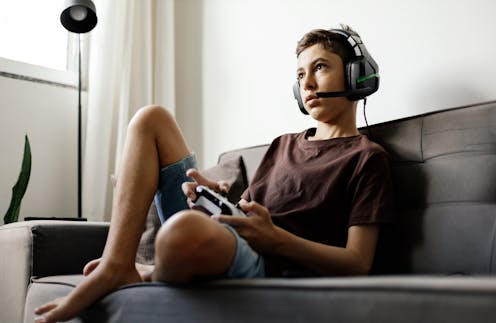
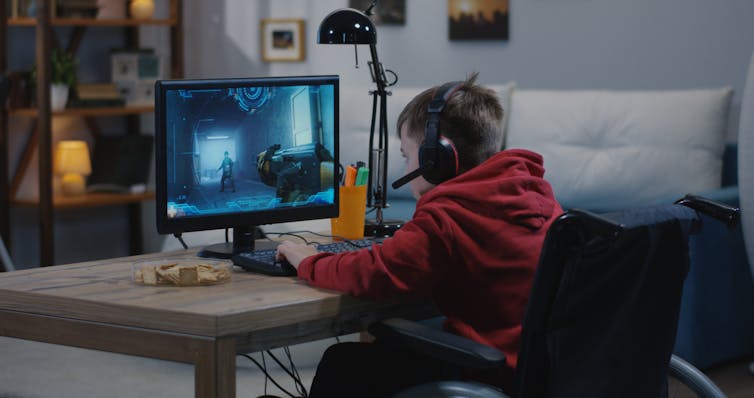
We’re constantly bombarded with warnings about the potential dangers of digital technology, especially for children. But this quote captures something we might miss. The digital world can be a vital space of empowerment and connection.
In our work, we’ve found that digital technology offers more than just access to learning for young people with special educational needs and disabilities. It opens doors to social lives, creative outlets and even employment opportunities that might be closed to them in the offline world. And yet, this potential is too often overshadowed by fears about the risks and harms they might encounter online.
Get your news from actual experts, straight to your inbox.Sign up to our daily newsletter to receive all The Conversation UK’s latest coverage of news and research, from politics and business to the arts and sciences.
Adolescence, the Netflix drama that delves into the hidden dangers of growing up in a digital world, has taken up a lot of the national conversation around social media, cyberbullying and online exploitation. But there is another show on Netflix that has received far less attention.
The Remarkable Life of Ibelin is a powerful documentary that tells the story of Mats Steen, a young Norwegian man with a severe disability who found freedom, friendship and purpose in the online world of gaming. Though physically limited by Duchenne muscular dystrophy, Mats, known as “Ibelin” in World of Warcraft, built a rich life online.
After his passing at 25, his gaming friends revealed just how much he had meant to them. Some travelled to his funeral. The film challenges stereotypes about online gaming. It shows it as a source of connection, compassion, and real human bonds.
We’ve spoken to many young people with special educational needs and disabilities who echo the same themes. Online spaces offer a sense of identity and capability they don’t always feel offline.
We found that the benefits of digital engagement for children with special educational needs and disabilities are extensive. It enhances communication: tools such as voice interfaces and text-to-speech software help those with speech or language difficulties express themselves confidently. Online platforms create spaces for friendships, especially for those who find face-to-face interaction challenging.
Digital tools can also foster independence. Calendar apps can be useful for those with ADHD, or assistive technology for learners with dyslexia. And for education, tailored online content can bridge the gap between mainstream and specialist learning environments.
But the digital world isn’t an equal playing field. Children with special educational needs and disabilities face disproportionate levels of online harm, including grooming, cyberbullying and exposure to inappropriate content. Crucially, they often lack the tools or support to report harm or seek help.
This, of course, raises concerns for the parents, carers and teachers of young people with special educational needs and disabilities. We’ve found that parents, carers and teachers we’ve spoken to often reach for a “prohibition first” approach – feeling young people will be safer if they do not have the access to the internet and social media that a young person without their needs might enjoy.
Safeguarding and empowerment
We’ve been asked questions such as “What apps should I ban?” or “How do I stop my child going on the dark web?” These questions reflect a risk-averse mindset that fails to appreciate the value of digital engagement. Risk cannot be eliminated, but it can be managed. And, more importantly, opportunity must be protected.
Too often, safeguarding strategies are done to children, not with them. It’s a good idea for parents and teachers of all children to talk to them about their digital life: what brings them joy, what worries them, where they feel confident or confused. Children are more likely to talk about fears or bad experiences if they feel believed, respected and understood. Make yourself a safe adult to talk to: one who listens without panic.
While banning apps or limiting access might be useful in some cases, it should not be the starting point for safeguarding. It’s worth considering whether there are skills that a child could learn that would allow them to use technology safely.
What’s more, online safety lessons are best when adapted to the communication style, cognitive ability and emotional maturity of an individual child. Visual aids, social stories, or interactive games may work better than text-heavy advice.
Fear can limit what technology can offer the children who may need it most. For young people with special educational needs and disabilities, digital spaces are not simply entertainment, they are platforms for agency, creativity, relationships and voice.
The role of adults here is to ensure these spaces are not only safe, but welcoming and empowering. That means moving past automatic restrictions and toward thoughtful, inclusive strategies that support children who might gain the most from using these technologies. We don’t need more bans. We need more belief.
The authors do not work for, consult, own shares in or receive funding from any company or organisation that would benefit from this article, and have disclosed no relevant affiliations beyond their academic appointment.
During his recent public spat with Donald Trump, Elon Musk tweeted a poll asking if a new political party would better represent the 80% of voters in the middle. Hundreds of thousands of people responded and more than 80% answered “yes”.
Many think that polarisation is fuelled by echo chambers created on social media platforms. These only expose people to beliefs similar to their own.
However, I study how narratives emerge on social media, and ways to investigate them. My work has two aims: first, to identify political issues that are likely to cross party lines, and a wider goal of exploring the role of social media in mitigating, rather than exacerbating, levels of polarisation.
Get your news from actual experts, straight to your inbox.Sign up to our daily newsletter to receive all The Conversation UK’s latest coverage of news and research, from politics and business to the arts and sciences.
Earlier this year, for example, I sorted through 12,000 posts from Republican and Democrat voters on subreddits (online forums discussing specific topics). Using a technique I developed in my PhD research, I analysed attitudes to contested political issues around the time of Trump’s inauguration. Like other researchers, I am finding that there are things both sides often agree on, and that not every issue splits neatly across party lines.
Pew Research shows what Democrats and Republicans agree on.
People on both sides of the political divide can be distrustful of tech companies and big businesses, where billionaires have power regardless of who’s in charge. Divisions of “up v down” could be alternatives to seeing divisions as “left v right”.
Both Republicans and Democrats want “the best” leaders who could get things done fast and efficiently. But it would appear that people on both sides are concerned about the “slash-and-burn” way that Doge (the Department for Government Efficiency, the new agency tasked with cutting federal spending) is working.
Emma Connolly does not work for, consult, own shares in or receive funding from any company or organisation that would benefit from this article, and has disclosed no relevant affiliations beyond their academic appointment.
When COVID arrived early in 2020, pandemic restrictions made in-person mental health care difficult or impossible. Both therapists and patients had to adapt almost overnight. For many in the field, it felt like a gamble: could this screen-based format offer the same level of support for people struggling with depression, anxiety or trauma?
Evidence has been growing, but until now few studies have compared treatment outcomes before and during the pandemic. Research my colleagues and I conducted offers new insights into this period.
We followed 2,300 patients treated in Sweden’s public mental health system over six years – three years before and three years during the pandemic – and tracked outcomes for common conditions including depression, anxiety, post-traumatic stress disorder (PTSD) and obsessive-compulsive disorder (OCD).
We found that nearly half of visits shifted online during the pandemic (up from just 4% pre-COVID), yet treatment outcomes did not decline – they remained stable, despite the rapid transition.
Get your news from actual experts, straight to your inbox.Sign up to our daily newsletter to receive all The Conversation UK’s latest coverage of news and research, from politics and business to the arts and sciences.
Patients filled out regular questionnaires during treatment to track their progress, using standard mental health assessments that measured depression and anxiety symptoms. We examined the degree of symptom improvement and the number of patients who transitioned from severe to manageable symptoms.
Fully 38% of depressed patients recovered, along with 56% of those with generalised anxiety disorder, 46% with OCD and 59% with PTSD. These recovery rates were almost identical before and during the pandemic.
We aren’t certain why remote care works, but one reason might be that the most important aspects of good therapy – things like building trust between patient and therapist, using evidence-based treatments and regular follow-up – can still occur online. In fact, for some people, meeting by video can make it easier to show up and feel comfortable. Our study suggests that, when care is done well, whether it’s in person or online doesn’t make much difference.
Online care also helps with everyday difficulties. It’s often easier for people who live far away, have trouble getting around or have busy schedules to get help from home. And during a health crisis like the pandemic, being able to keep up with treatment probably helped many people stay on track instead of falling behind.
Still, the findings come with limits. The study did not include children, people in acute psychiatric crisis or those with severe psychotic disorders — groups for whom in-person care may still be essential. And while online therapy offers flexibility, it also requires access to a private space, stable internet and the ability to engage through a screen — conditions that aren’t guaranteed for all patients.
Just turning on a webcam isn’t enough. The clinics in this study followed proven treatment methods and kept a close eye on how patients were doing. These steps probably made a big difference and are important for making remote care work.
Rather than being a temporary fix, online mental health care has become a core part of the system. Our study offers strong evidence that remote care, when well implemented, can match in-person treatment in effectiveness, even during something as challenging as a pandemic.
There is no one-size-fits-all model – and not all patients will benefit equally from internet-based treatments. But giving people the choice – and maintaining high standards of care regardless of delivery method – appears to be a key to success.
Because in the end, what matters most isn’t where care happens. It’s that it happens and that it works.
Fabian Lenhard works as the Head of Data & Analytics for WeMind Psychiatry and is affiliated as a researcher at Karolinska Institutet, Stockholm, Sweden.
Source: The Conversation – UK – By Christian van Nieuwerburgh, Professor of Coaching and Positive Psychology, RCSI University of Medicine and Health Sciences
Want to remember things better as you get older? The secret might be surprisingly simple: focus on feeling good.
Recent research involving over 10,000 people aged 50 and above has found that people with higher wellbeing perform better on memory tests as they age. The study, which followed participants for 16 years, checked their wellbeing and memory every two years.
The researchers expected that good memory might improve wellbeing, but found no evidence for that. Instead, it was wellbeing that predicted better memory performance over time.
The study also found that the link between wellbeing and memory stayed strong even after taking things like depression into account. This means wellbeing may affect memory on its own, not just through effects on mood.
Get your news from actual experts, straight to your inbox.Sign up to our daily newsletter to receive all The Conversation UK’s latest coverage of news and research, from politics and business to the arts and sciences.
However, the study’s authors acknowledge some limitations that should be taken into account when considering the real-life application of their findings.
The study relied on people reporting their own wellbeing, which can be biased – some people might overestimate how good they feel. The research also can’t prove that wellbeing directly causes better memory – other factors like income or life experiences might play a role.
Also, the memory tests used were relatively simple and might not capture the full complexities of how memory works in real life.
Despite these limitations, the study offers a compelling reason to invest in your wellbeing now. Here are five evidence-based strategies to increase the positive emotions in your day-to-day experiences.
Being kind can boost the wellbeing of both initiators and receivers of kindness.
3. Nurture your most important relationships
Positive relationships are important for our wellbeing. These should be nurtured and maintained.
4. Be more present.
In a distracted world, being present in the moment can be difficult. Being present is the opposite of multitasking. This takes intentional practice and you can develop it through meditation or mindfulness practices.
5. Do things that lead to a “flow” state.
Being in a flow state means that we are fully engaged in an activity. It is a mental state where a person feels fully involved and enjoys a process or activity that provides just the right balance of challenge and reward. People often talk about this as “being in the zone”. Finding an engaging hobby or sport is a good way of increasing flow moments.
Ensuring that you and the people around you experience positive emotions regularly is not just about feeling good in the moment. It is also an important investment for the future, ensuring better mental health and wellbeing for yourself and others. What will you do?
Christian van Nieuwerburgh does not work for, consult, own shares in or receive funding from any company or organisation that would benefit from this article, and has disclosed no relevant affiliations beyond their academic appointment.
Source: The Conversation – UK – By Dante McGrath, Postdoctoral Researcher, Centre for Climate Repair, Department of Engineering, University of Cambridge
Since 2019, the UK has been committed to the target of net zero greenhouse gas emissions by 2050. Legally binding net zero targets form the basis for national efforts to meet the international goals of limiting global warming to “well below 2°C above pre-industrial levels” and ideally to 1.5°C.
These goals, launched in 2015 as part of the UN’s Paris agreement, set the stage for climate action in a warming world. Much like the “reduce-reuse-recycle” sustainability initiative, various climate actions fit within three Rs — reduce, remove and reflect. These actions were the subject of a recent debate in the UK parliament.
My colleagues and I have reviewed how these three Rs differ in scope, scale and state of knowledge. Our analysis reveals that a range of climate interventions may complement intensified mitigation efforts (to reduce greenhouse gas emissions), but more research is urgently needed.
Reducing greenhouse gas emissions is at centre stage. This is non-negotiable. Emissions reduction must be deep, rapid and sustained if we are to limit global warming to less than 2°C. These drastic cuts demand an ensemble cast, players from all sectors, from energy to agriculture. The energy to power modern society accounts for almost 75% of our greenhouse gas emissions.
We need a prop change at centre stage: an energy transition from fossil fuels to renewables. This requires electrification and energy efficiency measures — both are central to managing the growth in energy demand sustainably.
At stage right, greenhouse gas removal offers a supporting role by removing historical emissions and offsetting residual emissions from sectors lagging behind in the energy transition (such as shipping and aviation). A number of academics have stressed that a range of removal methods is required to achieve net zero emissions and halt the rise in global temperature.
Conventional carbon removal methods, such as forestation or the restoration of peatlands and wetlands, are vital. However, due to resource constraints (such as land and water security) and ecosystem impacts of global warming, we need to scale new methods rapidly to meet Paris agreement targets. These include ways to capture and store carbon on land and at sea.
Novel methods have many challenges, however, related to their effectiveness (including storage durability and permanence), unintended environmental consequences, economic costs and demands on natural resources. The challenges constraining the scale-up of novel removal methods must be addressed if we are to achieve net zero and halt global warming.
The consequences of climate change are outpacing efforts to abate it. With each year, the likelihood of exceeding 1.5 and 2°C warming increases, posing major risks to society and Earth’s ecosystems. That’s why the third R — reflect — needs to be assessed.
Sunlight reflection methods have been in the wings on stage left. In the context of limiting global warming to 1.5°C, they have been considered feasible in theory, but fraught with challenges in practice. As the chance of exceeding 1.5°C in the coming years increases, this form of climate intervention needs further consideration. Experts brought together by the UN Environment Programme have concluded that, although this intervention is “not a substitute for mitigation”, it is “the only option that could cool the planet within years”.
The most studied methods to reflect sunlight are called stratospheric aerosol injection and marine cloud brightening. These methods mimic natural processes that cool the earth by reflecting sunlight, be it through the release of reflective aerosols into the upper atmosphere, or the addition of droplet-forming salt crystals into marine clouds in the lower atmosphere.
Sunlight reflection methods pose immense challenges with respect to research, ethics and governance. There are many scientific uncertainties about how these interventions will influence the climate. There is also no global regulatory framework in place. Any legislation needs to be based on scientific evidence and informed decisions.
Shining the spotlight
Meeting climate goals requires an ensemble cast performing actions across the warming world stage. Emissions reduction is indispensable and should remain centre stage in climate policy. Climate interventions at stage right and left — in the form of greenhouse gas removal and sunlight reflection — need responsible and responsive direction. Their risks and benefits need to be assessed.
Before curtains are drawn, let’s make sure every climate action — reduce, remove and reflect — gets a fair hearing.
Don’t have time to read about climate change as much as you’d like?
Dante McGrath does not work for, consult, own shares in or receive funding from any company or organisation that would benefit from this article, and has disclosed no relevant affiliations beyond their academic appointment.