
Source: The Conversation – UK – By Hossein Hashemi, Senior Lecturer, Division of Water Resources Engineering & Centre for Advanced Middle Eastern Studies, Lund University
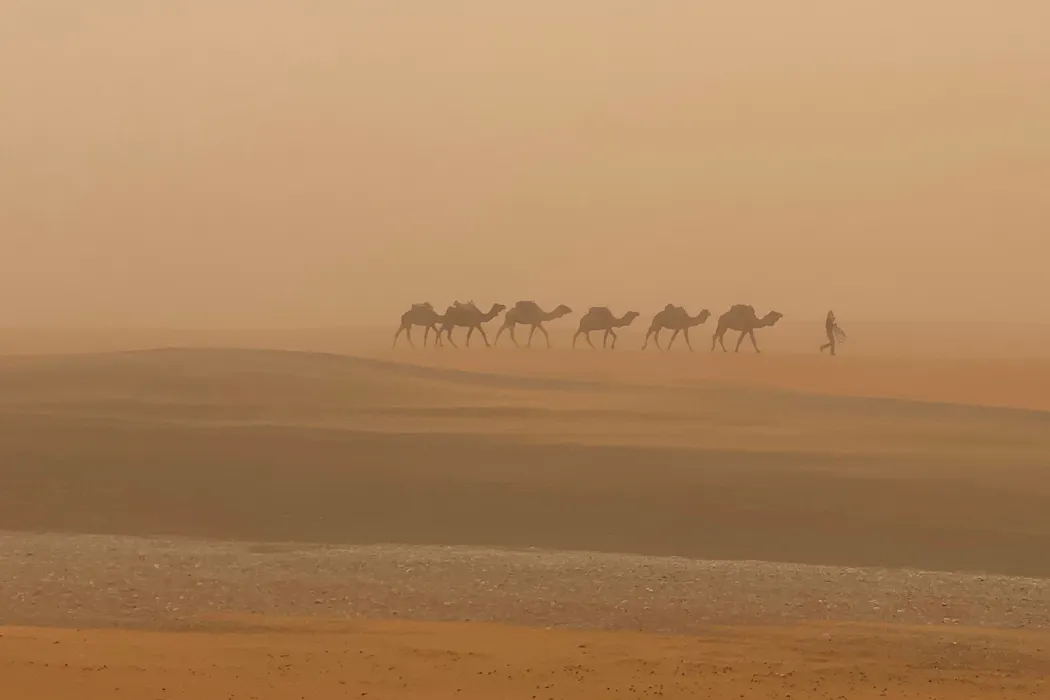
In recent years, residents of Spain, France and the UK have looked up to see an eerie sight: deep orange sunrises and skies thick with a yellowish haze. These hazy skies often deposit “blood rain”, rust-colored precipitation that leaves a fine grit on cars and windows.
These events are caused by dust plumes from the Sahara desert that travel thousands of kilometres across the Mediterranean. As climate change alters the world’s largest desert, Europe is finding itself increasingly downwind of a shifting environmental crisis.
The Sahara accounts for more than half of the world’s total dust emissions. Under hot, dry and windy conditions, particles are lifted several kilometres into the atmosphere and transported across continents.
While most travels west toward the Americas, some moves north towards Europe, particularly between February and June. Recent plumes – such as the intense “Calima” that sometimes blankets Spain – have reached as far as the North Sea and Scandinavia.

Lesley Hellgeth / shutterstock
The relationship between a warming planet and dust is complex.
On one hand, rising temperatures dry out soils and accelerate desertification, making it far easier for wind to dislodge fine particles. Under extreme warming scenarios, the amount of Saharan dust lifted into the atmosphere could rise by 40% to 60% by the end of the century.
However, the “dustiness” of the future also depends on wind patterns. Certain Saharan sand and dust storms have actually become rarer and less intense over the past two decades. Partly, this is due to an increase in vegetation in the Sahel region at the southern border of the Sahara. But it’s also down to a weakening of surface winds in general, and changes in certain large-scale climate patterns.
Health risks and economic consequences
For Europe, the impact is not just aesthetic. Saharan dust can substantially degrade air quality, pushing levels of invisible particulate matter beyond health guidelines. These fine particles, known as PM10, can penetrate deep into the lungs, triggering asthma and cardiovascular issues. In Spain and Italy, modelling studies suggest Saharan dust may account for up to 44% of deaths linked to PM10 pollution.
Dust also carries other costs. When it settles on snow in the Alps it darkens the surface and makes it less able to reflect sunlight, accelerating melting. It can reduce the efficiency of solar panels and disrupt aviation and road traffic by lowering visibility.

Xavi Lapuente / shutterstock
What to do about dust
Responding to this growing cross-border problem means acting both at the source and in affected areas.
In the Sahara and its margins, preventing the disruption of intact soils is critical. Overgrazing, river damming and land abandonment can all increase dust emissions. To stabilise the ground, measures include restoring vegetation, maintaining river flows and protecting the fragile “biocrust” of bacteria, moss and other organisms that bind the top few millimetres of desert soils and form a natural shield against wind erosion.
In Europe, the focus is on being prepared. Early warning systems now provide predictions up to 15 days in advance, allowing health authorities to issue alerts for vulnerable people to stay indoors. Simple measures, from improved building ventilation to creating more urban green spaces, can also reduce exposure.
In decades to come, the Saharan “dust belt” will remain a visible indicator of our planet’s health. But technology and forecasting alone will not be enough to solve the problem.
Dust does not respect borders, so managing it will require stronger international cooperation – and binding agreements – on everything from managing river basins to stop lake beds from drying out, to public health responses across Europe. Whether orange skies remain a curiosity or become a regular feature of European life, governments throughout Europe and Africa must take this shared risk seriously.

Hossein Hashemi does not work for, consult, own shares in or receive funding from any company or organisation that would benefit from this article, and has disclosed no relevant affiliations beyond their academic appointment.
– ref. Climate change is altering Saharan dust – and Europe is downwind – https://theconversation.com/climate-change-is-altering-saharan-dust-and-europe-is-downwind-278605