
Source: The Conversation – Canada – By Costanza Musu, Associate Professor, Graduate School of Public and International Affairs, L’Université d’Ottawa/University of Ottawa
Since the start of the ongoing United States–Israeli military campaign against Iran, the human toll of the conflict has mounted relentlessly.
Civilian casualties have been reported across the country, and the bombing campaign has caused widespread destruction to infrastructure. Alongside military targets, thousands of civilian buildings have been damaged or destroyed in the first weeks of the war.
Amid this destruction, another dimension of the conflict is increasingly drawing international concern: the damage inflicted on Iran’s cultural heritage.
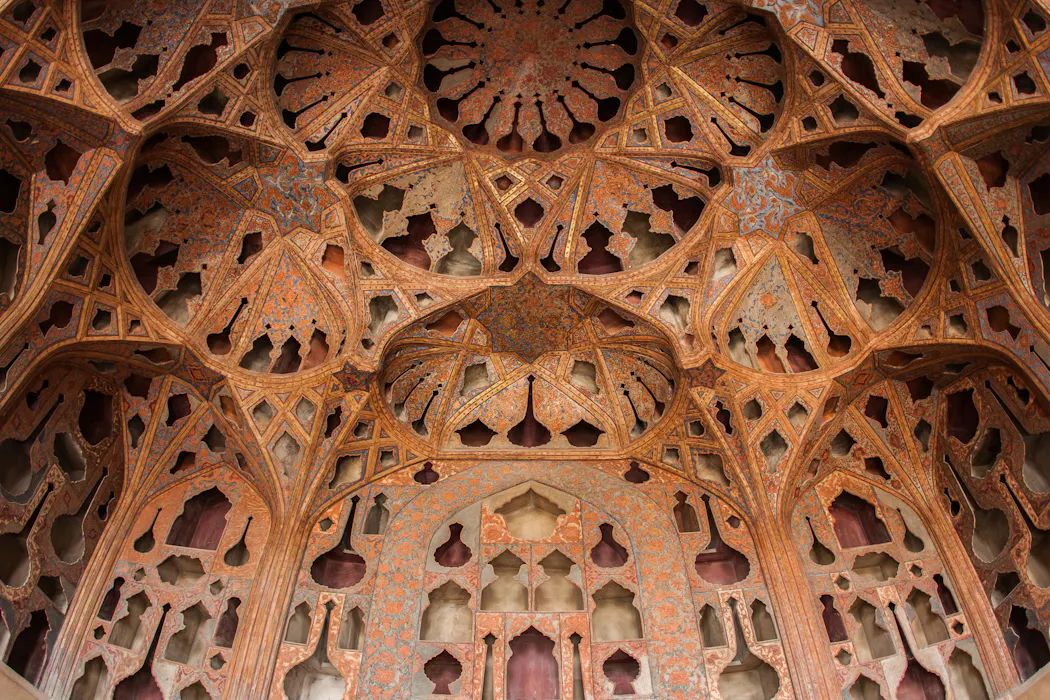
Several historically significant sites, including UNESCO landmarks, have been affected. Blasts in Tehran have damaged the Golestan Palace, while strikes in Isfahan hit structures around Naqsh-e Jahan Square, including Ali Qapu Palace, Chehel Sotoun and the Masjed-e Jameh.
The destruction of such sites highlights a frequently overlooked consequence of warfare: when the rules governing the conduct of war are stretched or ignored, cultural heritage, like civilian lives, becomes collateral damage.
Rules of engagement
Warfare is not meant to be unconstrained. It is governed by international humanitarian law, which sets limits on how military force can be used once hostilities begin. These rules are intended to reduce the human and material devastation of armed conflict by protecting civilians and civilian objects.
Read more:
Israeli strikes on Tehran oil depot highlight gaps in international law
States implement these legal obligations through rules of engagement, which guide how and when force may be used in compliance with international humanitarian law: what U.S. Secretary of War Pete Hegseth has dismissively called “stupid rules of engagement.”
International humanitarian law protects cultural heritage. After the widespread destruction of the Second World War, states adopted the 1954 Hague Convention, recognizing monuments, museums and archeological sites as specially protected cultural property, and requiring warring nations to refrain from attacking them except in cases of imperative military necessity.
Ignoring cultural property protections runs counter to a lesson many military forces, including the United States, have come to recognize: that safeguarding cultural heritage is not only a legal obligation, but also strategically smart.
Over the past two decades, this approach has increasingly been integrated into military doctrine. By protecting monuments and historic sites, military forces signal respect for a society’s identity, build trust with local populations and advance broader political objectives by fostering local civilian support.
Shifting public sentiment
In the current conflict, American officials have argued that the military campaign is aimed not at Iran’s people but at the regime that has ruled the country since the 1979 revolution.
Read more:
What happens next in US-Iran relations will be informed by the two countries’ shared history
U.S. President Donald Trump has suggested that the future of Iran now lies in the hands of its citizens, implying that the weakening of the regime could allow Iranians to shape a different political future.
Initially, some voices in the Iranian diaspora and within Iran welcomed the strikes in the hope that they might open the door to political change.
Yet the scale of the destruction inflicted on cities, infrastructure and cultural landmarks appears to be shifting public sentiment, allowing the Iranian leadership to rally the population around a narrative of national unity against foreign aggression.
At the same time, the conflict is threatening cultural heritage beyond Iran. Iranian missiles have struck areas in and around Jerusalem, where its Old Town contains some of the most significant religious and historical sites in the world within barely one square kilometre. These sites are sacred to Judaism, Christianity and Islam.
If the stated objective of the military campaign is to weaken the Iranian government and open the possibility for political change, the destruction of cultural heritage will produce the opposite effect. Cultural monuments, historic cities and religious sites are not simply architectural artifacts; they are powerful symbols of collective identity and historical continuity.
When they’re damaged or destroyed by foreign military force, the attack is often perceived not only as a strike against a government but an assault on the nation itself.
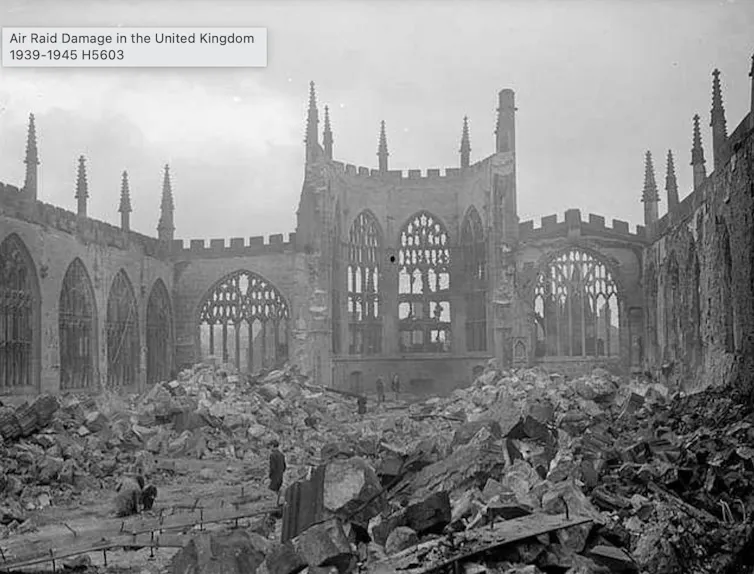
(Imperial War Museum)
Rallying citizens
History offers many examples of how damage to cultural heritage during wars can galvanize nationalist sentiment and strengthen the legitimacy of governments under pressure. Examples include the destruction of the Old Bridge of Mostar during the Bosnian War, which became a powerful symbol of national loss and identity, to the levelling of Palmyra’s ancient temples by ISIS, which the Syrian government invoked to reinforce claims of cultural guardianship and political legitimacy.
Rather than weakening the Iranian leadership, widespread destruction, particularly when it affects cultural landmarks, may instead help it mobilize public anger and rally citizens around the defence of the country.
Both international law and historical experience point in the same direction: protecting cultural heritage is not only a humanitarian obligation, but a strategic consideration in conflicts with long-term outcomes that depend on the attitudes of the people affected.

Costanza Musu receives funding from the Social Sciences and Humanities Research Council of Canada.
– ref. War in Iran: Why destroying cultural heritage is such a foolish strategic move in any conflict – https://theconversation.com/war-in-iran-why-destroying-cultural-heritage-is-such-a-foolish-strategic-move-in-any-conflict-277922