
Source: The Conversation – Global Perspectives – By Lauren C. Hall, PhD Candidate in Psychology, University of Tasmania
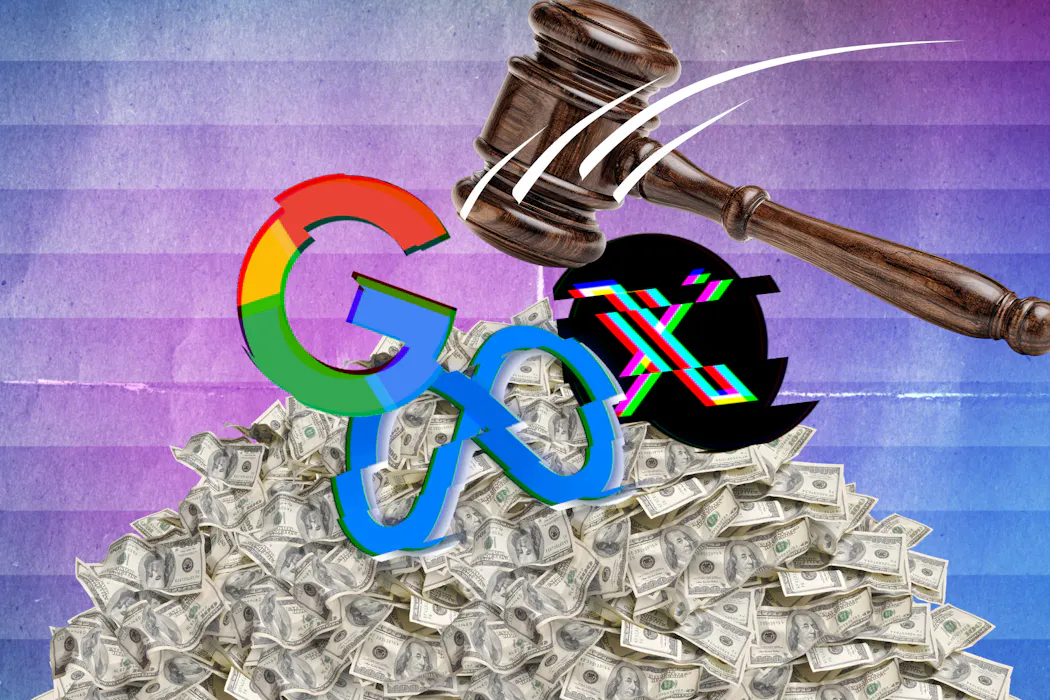
As countries around the world look to follow Australia’s lead and implement a social media ban for kids, many are also considering fines as an enforcement mechanism.
This is part of the playbook when it comes to regulating big tech. For example, last month the United Kingdom’s data watchdog fined Reddit £14 million (A$26 million) for unlawfully using children’s data.
In April 2025, the European Commission fined Apple and Meta €500 million (A$820 million) and €200 million (A$329 million) respectively for breaching the Digital Markets Act. And in September, the commission fined Google nearly €3 billion (A$4.9 billion) for abusive practices in online advertising technology.
But fines don’t always work to encourage companies to follow the law. For some companies, “illegal with a fine” is interpreted as “legal for a price”. So what are some other, more effective methods to encourage good corporate behaviour?
Fines can backfire
If fines are not consistent, immediate, and severe, they can backfire. If they do, bad behaviour may increase.
For example, a 2000 study examined the effect of childcare centres in Israel introducing fines for parents who regularly picked their children up late. But instead, these fines actually increased late pick-ups by parents.
Even after fines were stopped, the number of late pick-ups stayed higher than before.
Why? Because when there were fines, they were small (not severe), and parents could wait a month to pay (not immediate). However, parents got the immediate benefit of longer childcare.
Similarly, technology companies may decide a fine is cheaper than the costs to make changes, or any loss in money from fewer users and ad sales. And this could lead to them continuing with business-as-usual.
Corporate fines often fail because it may be unclear who in the company is directly responsible. Fines can also sometimes be too small to stop bad behaviour by large companies.
For these reasons, corporate re-offending is frequent, even if companies have been fined in the past.
A fine equals forgiveness
After introducing fines, behaviours previously considered socially or morally unacceptable may also be seen as “forgiven” by payment. This can increase bad behaviour.
The importance of unwanted behaviours may also be judged by the size of the fine.
If fines are seen as “small”, violations may also be seen as small, and bad behaviours may rise. Corporations may also see “small” fines as just a cost-of-doing-business.
Importantly, fine size is closely linked to a company’s financial size. For a small company, a fine could seem huge. The same sized fine may seem tiny to a large company. If similarly sized fines are given to companies making different revenue amounts, the companies may respond differently.
Changing company practices can also cost more for some companies than others. This too may affect how they respond to fines.
Furthermore, companies outside a legislative jurisdiction, or that have refused regulators’ demands in the past, may ignore fines altogether.
For example, 4Chan refused to pay fines issued under the UK’s Online Safety Act, and X decided to legally challenge instead of pay a €120 million (A$197 million) fine issued by the European Commission.
Given the borderless nature of some digital harms such as child sexual exploitation and abuse, coordinated changes to corporate laws, and international cooperation are needed.
Pulling multiple levers at once
So if fines alone don’t stop big tech and other businesses behaving badly, what will?
Research shows monitoring companies, and better resourcing regulators, are more effective than fines alone. Consistent regulator inspections combined with education also work well.
A 2025 paper suggests making “stand-alone consumer tech safety research centres” focused on reducing digital harms. This may require technology companies making data and algorithms available to these centres for inspection.
Then, regulators can look at if companies are using important and best practice safety features. For example, checking the images on sites to make sure users do not see harmful content online.
Regulators can also share knowledge with companies about laws and digital safety measures to improve consumer protections.
This cooperative model has been shown to be more effective than fines alone.
A 2016 study about what works when it comes to corporate deterrence found using multiple levers at the same time, such as monitoring, accountability, auditing, and punitive action were the most effective at stopping bad corporate behaviour.
Unfortunately, understanding the scope of digital harms, and best responses, have been limited by not enough resources, or access to data.
A 2025 paper highlights that increased data transparency from corporations will also improve evidence-informed decisions, ensuring regulation is fit-for-purpose.
As companies continue to prioritise rapid rollouts, with problems found after launch, fines may continue to be ineffective.
To tackle this problem, online regulators must ensure fines are complemented with other policy levers – and that the punishment for bad corporate behaviour is consistent, immediate and severe.

Lauren C. Hall is a recipient of an Australian Government Research Training Program Scholarship to support Higher Degree Research training.
James Sauer has received funding from the Australian Institute of Criminology and the Internet Watch Foundation for projects looking to mitigate online harms,
María Yanotti receives grant funding from Australian Housing and Urban Research Institute (AHURI). She is a member of the tax gap advisory group for the Australian Taxation Office (ATO). She is the Tasmanian Chair for the Women in Economics Network (WEN) and a committee member for the Economic Society of Australia (ESA) Tasmanian Branch. Maria is an associate editor for the Australian Economic Papers.
Christine Padgett does not work for, consult, own shares in or receive funding from any company or organisation that would benefit from this article, and has disclosed no relevant affiliations beyond their academic appointment.
– ref. Fines alone won’t stop big tech behaving badly. Here’s what might work – https://theconversation.com/fines-alone-wont-stop-big-tech-behaving-badly-heres-what-might-work-276969