
Source: The Conversation – UK – By Elizabeth Rosser, Associate Professor of Aging, Rheumatology and Regenerative Medicine, UCL
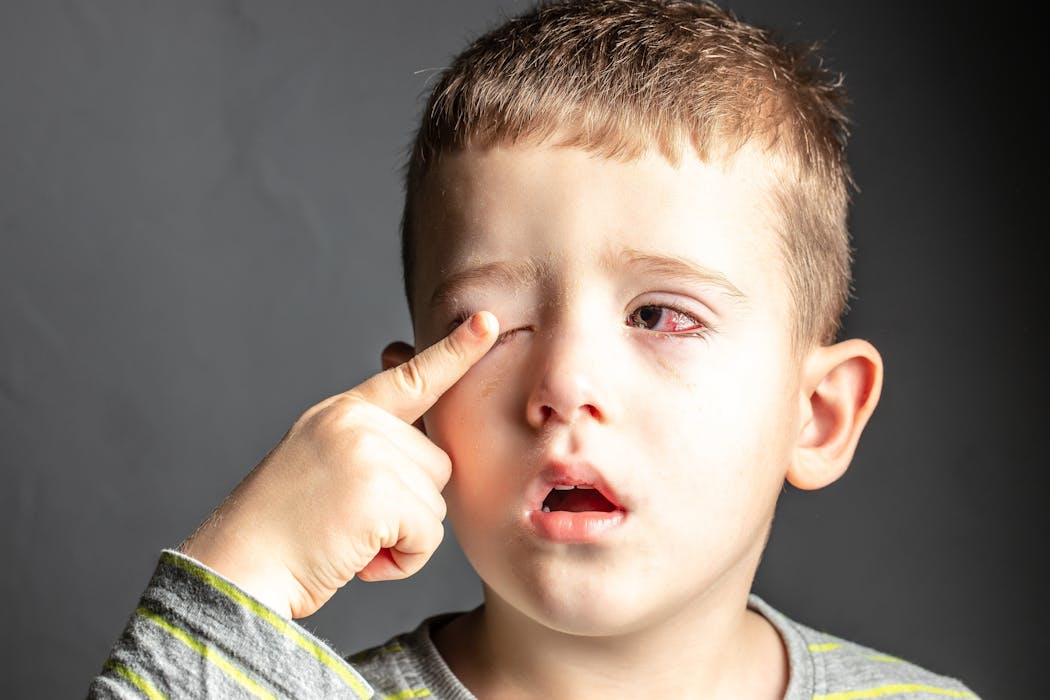
Arthritis is often associated with older age, but it also affects children. One of the most common forms is juvenile idiopathic arthritis (JIA), an inflammatory condition that causes persistent joint swelling and pain.
For reasons that remain unclear, between 10% and 30% of children with JIA also develop uveitis, an inflammatory disease of the eye. In some cases, this eye inflammation does not respond to treatment and can lead to sight loss.
A recent study from our laboratory shows that immune cells called B cells, best known for producing antibodies, play a previously underappreciated role in driving this process and may point to new treatment approaches.
JIA is diagnosed when a child or young person under 16 develops inflammation in at least one joint for more than six weeks with no clear cause. Around one in 1,000 children in the UK are affected. The condition includes several subtypes, most of which are autoimmune, meaning the immune system mistakenly attacks the body’s own tissues.
Outcomes vary. With treatment, some children experience long periods of remission and may outgrow the condition. For others, inflammation persists into adulthood and can cause joint damage and disability. JIA can also affect organs beyond the joints, including the skin, gut and eyes. When it involves the eye, the condition is known as JIA-associated uveitis.
Much remains unknown about why some children with JIA develop eye inflammation while others do not. It is unclear whether the same immune pathways drive disease in both joints and eyes, or why inflammation most often affects the front of the eye, known as anterior uveitis. In many cases, the condition is silent and painless, allowing damage to accumulate unnoticed. Regular eye screening is therefore essential.
Several risk factors are well established. Girls and children who develop JIA early in life, particularly before the age of six, are more likely to develop uveitis. Children who test positive for antinuclear antibodies are also at increased risk.
Even so, the biological mechanisms linking arthritis and eye disease remain poorly understood, and the role of antibody-producing B cells has received relatively little attention.
To investigate this, our study analysed blood samples from more than 150 children with arthritis. Certain types of B cells were more abundant in those who had developed uveitis than in children with arthritis alone. A distinctive aspect of the research was the opportunity to examine samples taken directly from affected eyes.
In some children, uveitis can lead to cataracts or glaucoma, making surgery necessary to preserve vision. During these procedures, small amounts of biological material that would normally be discarded can be collected for research. Using these samples, we found that activated B cells had migrated into the eyes of children with JIA-associated uveitis.
Laboratory experiments showed that blocking communication between B cells and another type of immune cell, known as T cells, significantly reduced inflammation. The drug used to achieve this is already being tested in clinical trials for multiple sclerosis and lupus, raising the possibility of repurposing it for children with treatment-resistant disease.
The need for new approaches is clear. Currently, one in four children with JIA-associated uveitis do not respond to the only approved biologic therapy, and by age 18 nearly a third have lost some vision in at least one eye.
These findings point to a potential new treatment pathway and highlight a broader issue in medical research. There is often a delay of many years before therapies developed for adults are tested in children, even when the underlying inflammatory mechanisms are similar.
Improving how discoveries are translated into paediatric care could significantly change outcomes for children with arthritis and uveitis. Earlier intervention, targeted therapies and faster access to treatments already being explored in adult disease may help prevent vision loss, and reduce the long-term burden on children and their families.

Elizabeth Rosser received funding from Fight for Sight, Arthritis UK, the Medical Research Foundation, Moorfields Eye Charity, the Lister Institute for Preventive Medicine and the Kennedy Trust for Rheumatology Research for this study. Work for this study was made possible by the CLUSTER consortium (https://www.clusterconsortium.org.uk) and the Childhood Ocular Inflammatory Disease (CHOIR) Biobank.
Beth Jebson does not work for, consult, own shares in or receive funding from any company or organisation that would benefit from this article, and has disclosed no relevant affiliations beyond their academic appointment.
– ref. Why arthritis in children can threaten eyesight – https://theconversation.com/why-arthritis-in-children-can-threaten-eyesight-276355