
Source: The Conversation – Global Perspectives – By Zachary Aman, Professor of Chemical Engineering, The University of Western Australia
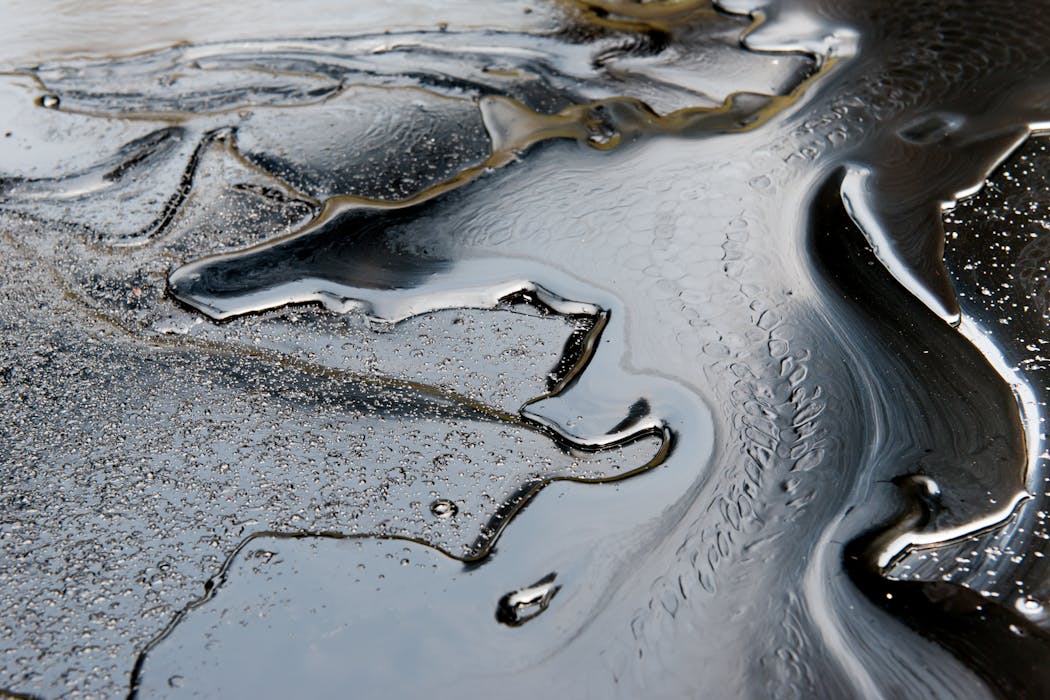
As the US–Israel war on Iran escalates, so too does the global oil crisis.
The effective closure of the Strait of Hormuz, through which roughly 20% of the world’s oil and natural gas flows, and the targeting of oil production facilities in the Middle East have lifted the oil price by 34%.
The price of Brent crude – the global benchmark – now sits at more than US$100 a barrel.
This means the cost of the many products derived from crude oil, such as petrol or gasoline, has also surged.
But how does crude oil become the fuel you pump into your car?
Like simmering a pasta sauce
Most consumers are transfixed when the oil price exceeds US$100 per barrel. But the economic reality is both more complex and longer-term.
That’s because the content of the barrel itself is not directly usable.
Rather, it must be broken (or “fractionated”) into the chemicals used to produce more than 6,000 everyday products.
These household items include the textiles and clothing dyes on our literal backs, electronics in our hands, flooring beneath our feet, and pharmaceuticals regulating our bodies.
Some of these products can be replaced with non-petroleum alternatives. But doing so can increase consumer prices by an order of magnitude.
The process of transforming a barrel of oil into these products is managed in the discipline of chemical engineering, through which high-temperature vessels (called “columns”) allow fluids to be split (or “fractionated”) into less- and more-dense products.
The experience is similar to simmering a pasta sauce, where the chef uses a precise temperature to boil off water (the less dense product) and concentrate the chemistry that makes tomatoes enjoyable.
Splitting in sequences
Unlike the hundreds of chemicals in the humble tomato, the tens of thousands of individual chemicals in a barrel of oil mean that between five and ten of these fractionation columns must be placed in sequence, each producing a more precise product than the last.
Most consumers would be familiar with the products of the first few columns, in which natural gas is the least dense (or “lightest”) product that typically powers the above-mentioned chef’s stove.
The next-densest product is gasoline, which accounts for around half of the volume of a traditional barrel of oil.
With additional heat and cost, the heavier products can be split into kerosene (“jet fuel”) and, with yet more heat, the diesel fuel that constitutes around one quarter of an average barrel.
Separating out the remaining products requires extremely high temperatures. This results in chemicals used to manufacture modern roads, rubbers, synthetic fabrics, plastics and cosmetics, among many others.

US Energy Information Administration
Not all oil is the same
The final complication emerges from the geological processes that themselves “manufacture” crude oil.
Over millions of years, high pressures and temperatures degrade and liquefy (or “cook”) volumes of dead plants and animals, often deep under the ground.
As the plants, animals and geology of each biome are unique, so too is the crude oil formed under ground. This reality means that one barrel of oil cannot simply be traded for another and used in the refinery columns described above. The collection of columns requires months to reach stable operation, and they are heavily dependent on the type and properties of the oil at the inlet.
Crucially, the time lag between producing one barrel of oil and finding its chemistry in the hands of an eager shopper is typically between one and three months, depending on the complexity of the consumer product.
Gasoline prices may feel an impact within a few weeks, while consumer plastics (such as food storage containers) may require multiple quarters to demonstrate an impact.
Alongside countries heavily dependent on crude oil imports, those with limited crude oil reserves or refining capacity are further exposed, as they must also import the crude oil “products” described above.
Nearly one third of the oil exported through the Straight of Hormuz is destined for China, while together China and other Asian buyers make up three quarters of these export destinations.
The conflict itself involves Western and Middle Eastern forces. But it is ironically those Pacific nations that carry the greatest near- and mid-term inflationary risk as this crucial shipping lane is put in jeopardy.

Zach Aman has consulted with multiple oil and gas companies, including Woodside, Chevron, Shell, and INPEX. He has received funding from oil and gas companies as well as the Australian Research Council. He is an Affiliate Faculty at the Colorado School of Mines.
– ref. Oil, petrol, gasoline: a chemical engineer explains how crude turns into fuel – https://theconversation.com/oil-petrol-gasoline-a-chemical-engineer-explains-how-crude-turns-into-fuel-278198