
Source: The Conversation – UK – By Ravindra Jayaratne, Reader in Coastal Engineering, University of East London
More than 1,000 properties flooded in London in 2021, resulting in insurance losses of more than £281 million. Record-breaking floods continue to hit the UK.
In the capital, 13% of properties have been classed as having a high or medium risk of flooding. Danger-to-life warnings could soon become a reality, especially for people living in east London on low-lying land next to the river Thames.
Boroughs like Tower Hamlets, Newham and Hackney are built on former marshland. These areas would have originally absorbed water naturally, but have been used for urban development. More than 85% of London marshland was lost during the 20th century. London has lost the natural buffer that used to help water drain away. As the sea level rises and storm surges get more prevalent, chances of flooding are greater.
London is one of the most urbanised cities across the world with 78% of land being urban. With significant impermeable surfaces made of concrete, asphalt and rooftops, water is prevented from draining into the ground. Rapid surface water runoff overwhelms drainage systems and surface water runoff flooding is one of the greatest threats to east London.
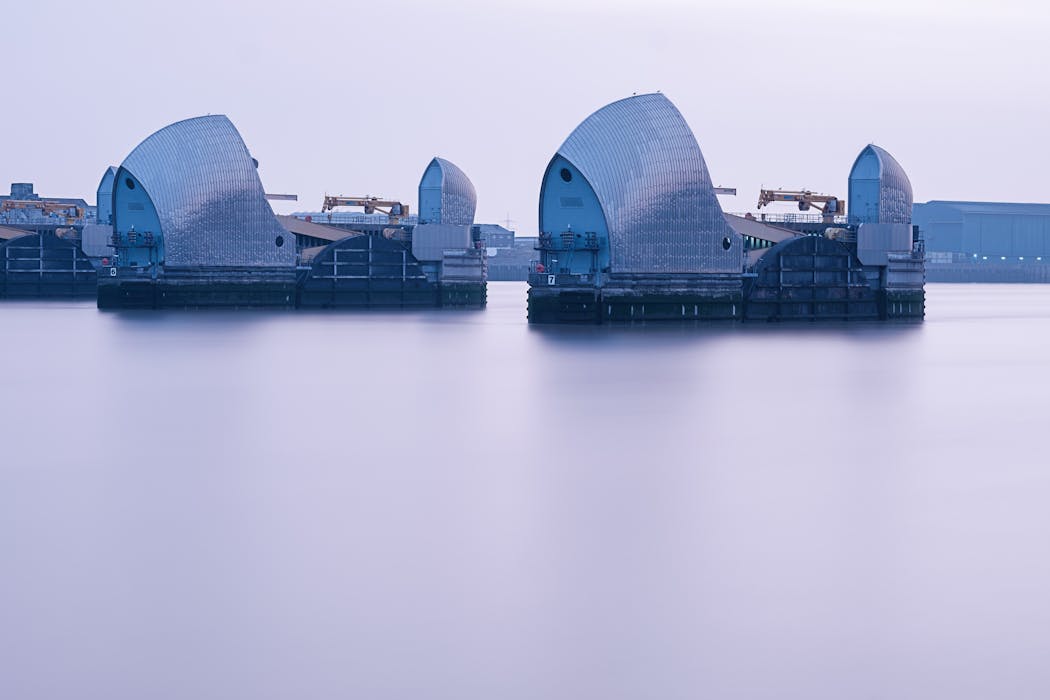
Large-scale infrastructure like the Thames Barrier and tidal flood defences protect London from large-scale river flooding, but they cannot prevent surface water flooding from local storms. As these structures age, maintenance costs rise. Relying solely on them is a risky strategy for the future, especially as storm surges become more intense due to climate change.
Read more:
Britain is at bursting point and its flood barriers need to be updated
Specialist bodies like the Environment Agency monitor water quality in rivers to reduce infection risks when water is contaminated. However, many parts of east London have Victorian-era sewer systems designed for much lower rainfall, so they are easily overwhelmed. This means the chance of sewage contamination is heightened in these areas. Around 39 million tonnes of untreated sewage are estimated to be discharged into the Thames every year.
East London also faces high levels of deprivation. Many people lack the resources to cope with floods and possible water contamination, often due to being constrained by socioeconomic inequities. High child poverty rates in east London boroughs like Tower Hamlets (47%), Newham (45%) and Hackney (45%) mean that flood preparation is often overlooked.
Aside from strengthening infrastructure and physical barriers, there are natural ways to manage flood risk.
Our research shows that merging nature with urban infrastructure improves the protective capacities and flood resilience of an urban river like the Thames. And initial insights from our ongoing social research show that creative ways of communicating with people can help people better understand – and support – natural flood solutions.

Abdul_Shakoor/Shutterstock
Natural barriers
Planting suitable wetland species alongside rivers and roof tops helps delay surface water runoff by up to 90%. Plants absorb water and release it over several hours rather than releasing it immediately like impermeable surfaces such as concrete and tarmac. This slows down the flow of water into the drainage system and reduces the risk of overwhelming the sewers and pollution spills.
In the Netherlands, there are hundreds of green roofs on bus stops. Data shows that each square metre green of roof cover absorbs 20 litres of water, reducing how much water enters the drains. More natural solutions like these can also improve air quality, attract pollinators and provide shade (which prevents the sun from heating up buildings or walkways).
Green roofs on bus stops are now a common sight in some UK cities, including Brighton and Cardiff. Introducing them to east London would be a good first step.

PixelBiss/Shutterstock
One charity-led initiative, East London Waterworks Park, involves rewilding a former depot. By converting land covered by concrete into swimming ponds, with reedbeds for filtration, this project provides more space to hold floodwater and a place for the local community to socialise and engage with nature.
At the Queen Elizabeth Olympic Park in London, an area that used to be a depository for building rubble has been transformed into a large-scale sustainable urban drainage system. This involves the creation of open spaces interspersed with natural features like reedbeds, wetlands and swales (marshy channels) that slow down runoff.
This helps slow down the flow of water into rivers, especially during intense rainfall. Studies show that improved water management at the park has saved 4,000 homes from flood risk since it opened in 2014.
London’s population is increasing. This constrains its resources and exacerbates the effects of increased urbanisation. Socioeconomic inequities raise the level of vulnerability of London’s population. Flood risk is a national security threat, not just an environmental issue.
Including nature in urban resilience plans helps reduce risk and empower people. But policymakers need evidence of which solutions are more effective before they’ll act.
Don’t have time to read about climate change as much as you’d like?
Get a weekly roundup in your inbox instead. Every Wednesday, The Conversation’s environment editor writes Imagine, a short email that goes a little deeper into just one climate issue. Join the 47,000+ readers who’ve subscribed so far.

Ravindra Jayaratne receives funding from the Royal Society, UK.
Maciej Pawlik is affiliated with the Green Party of England and Wales.
– ref. East London is at high risk of extreme flooding – here’s how to limit the damage – https://theconversation.com/east-london-is-at-high-risk-of-extreme-flooding-heres-how-to-limit-the-damage-275238