
Source: The Conversation – UK – By Eef Hogervorst, Professor of Biological Psychology, Loughborough University
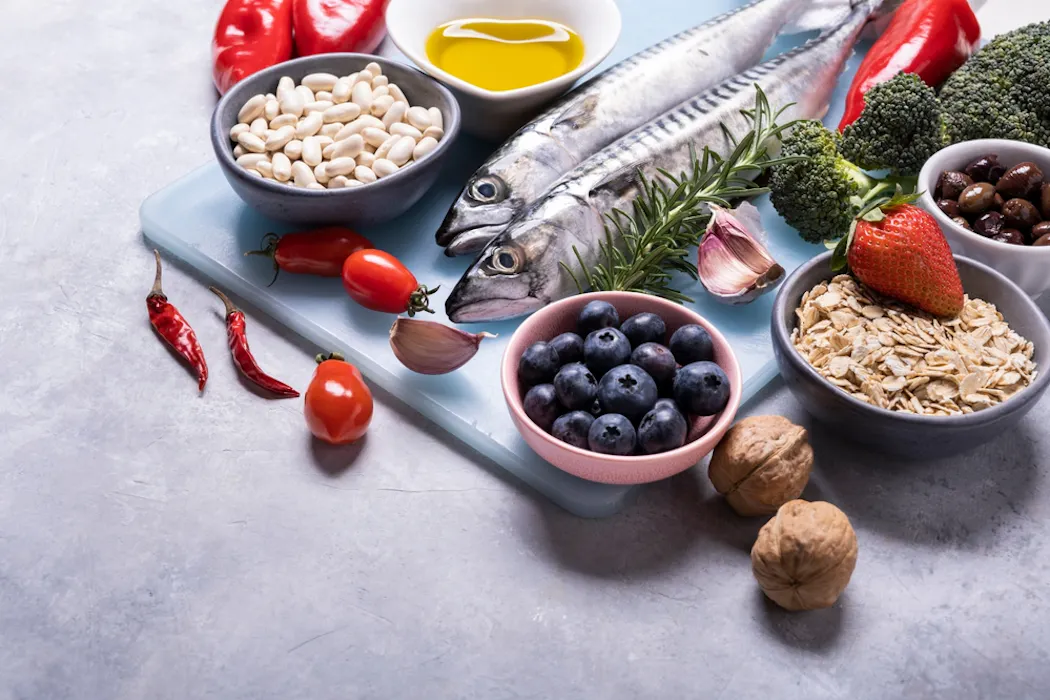
The Mediterranean diet – rich in olive oil, fish, vegetables and legumes – has long been linked to better heart health. Growing evidence suggests it may also help support brain health as we age, with a brain-focused variation of the diet drawing increasing scientific attention.
It is called the Mind diet. The name stands for Mediterranean-Dash Intervention for Neurodegenerative Delay – though what matters more than the acronym is what it actually involves: plenty of green vegetables, beans, whole grains, nuts, berries, poultry and fish, with olive oil as the main cooking fat, and limited amounts of red meat, butter, cheese, fried food and sweets. It combines the most brain-friendly elements of two well-studied eating patterns: the traditional Mediterranean diet and the Dash diet, which was originally developed to lower blood pressure.
A recent analysis from the long-running Framingham heart study examined the diets of adults aged 60 and over and assessed how these dietary patterns were associated with brain scan data collected later in the study. Those who followed the Mind diet most closely tended to have more grey matter – the tissue associated with memory and decision-making – and showed less overall loss of brain volume over time.
Both findings point in the same direction: that this way of eating may help keep the brain in better shape as we get older.
This is not the first study to suggest a link between diet and dementia risk. An earlier analysis combining 12 observational studies found an overall reduction in dementia risk of between 15 and 22% among people who followed Mediterranean-style diets, with the Mind diet showing the strongest effect of the three patterns studied. That is a meaningful difference, even if it cannot be taken as proof that diet alone is responsible.
Within the Framingham study, berries and poultry stood out as particularly beneficial for grey matter. This fits with what other research has suggested. Blueberries, for instance, have been the subject of several small trials, with one recent study finding improvements in memory even in people already showing early signs of memory problems.
Since red and processed meat have been linked to higher dementia risk in other studies, replacing them with chicken may be part of why poultry appears beneficial.

sergey kolesnikov/Shutterstock.com
Some of the findings were less straightforward. Fried food, as expected, was associated with worse outcomes. But whole grains, generally considered one of the healthier staples, produced a surprisingly weak result.
The reasons are unclear, though large amounts of bread and pasta – even wholegrain varieties – may raise blood sugar enough to offset some of the benefits. The evidence on whole grains and brain health remains mixed, and this is one area where more research is needed.
It is also worth noting who, in the Framingham study, was most likely to follow the Mind diet. They tended to be women, non-smokers, well-educated, and less likely to be overweight or to have diabetes, high blood pressure or heart disease. All of these factors are independently associated with better brain health, which makes it genuinely difficult to untangle how much of the benefit comes from the diet itself, and how much from the broader lifestyle it tends to accompany.
What the science can and can’t tell us
This is the central challenge facing all research in this area. Most of the studies are observational, meaning they track what people eat and what happens to them over time, rather than randomly assigning people to follow a particular diet and measuring the results.
Observational studies can show associations, but they cannot prove cause and effect. Self-reported diet data is also unreliable at the best of times – and particularly so among people whose memory is already beginning to fail.
The few trials that have actually put the Mind diet to the test have produced mixed results. One small three-month study found no improvement in memory or thinking skills, though participants did report better mood and quality of life.
Another trial found improvements in both brain scans and mental performance, but the participants were obese middle-aged women who also lost weight during the study, making it hard to know how much the diet itself contributed. Three months is also a short window in which to expect measurable changes in brain structure, and longer trials may yet tell a different story.
None of this means the Mind diet is not worth following. The broader evidence – across multiple studies and populations – consistently points in the same direction, and there is little downside to eating more vegetables, berries, fish and olive oil.
But diet is only one piece of a much larger picture. Not smoking, staying active, keeping blood pressure and blood sugar under control, and maintaining social connections all appear to matter at least as much when it comes to keeping the brain healthy in later life.
The Mind diet is not a cure for dementia, and it would be misleading to present it as one. What the evidence does suggest is that the food choices we make over decades – not just in later life, but across adulthood – may quietly shape the health of our brains in ways that only become visible much later. That is not a guarantee, but it is a reasonable basis for eating well.

Eef Hogervorst previously acted as consultant for Proctor and Gamble to review nutritional supplements and dementia risk/memory impairment. She received funding from ARUK, ISPF and ESRC to investigate (nutritional) risk factors for dementia. She also received PhD funding from DMT, Loughborough University and Universitas Indonesia She is a Chartered Psychologist with the BPS and holds an active BPS membership. She acted as expert on dementia risk and hormone treatment for NICE (2024) and ESHRE (2016) Guidelines.
– ref. This Mediterranean-style diet could keep your brain sharp as you age – new study – https://theconversation.com/this-mediterranean-style-diet-could-keep-your-brain-sharp-as-you-age-new-study-278461