
Source: The Conversation – UK – By Cassandra Etter-Wenzel, PhD Candidate in Energy Policy, University of Oxford
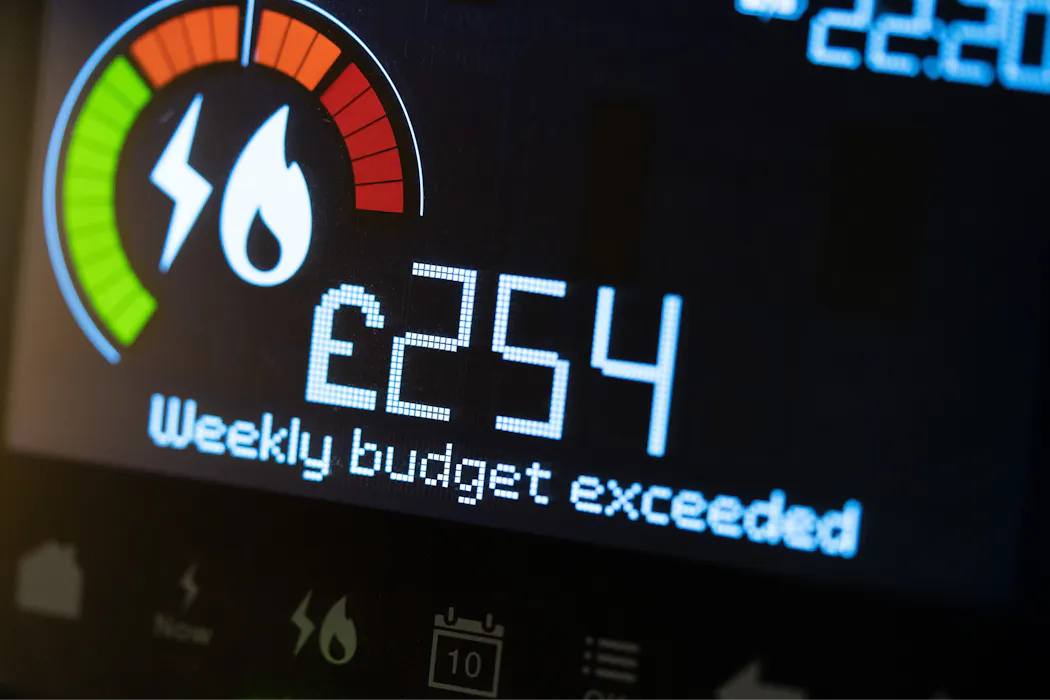
Even before the US-Israel war on Iran, people in the UK were unusually vulnerable to sudden swings in the cost of energy. Depending how you count it, either 11% or 30% of households are officially energy poor, and already struggled to afford basic needs in times of relative peace.
The government’s fuel poverty strategy for England, published in January 2026, focuses on long-term measures such as home insulation upgrades. But it says little about how to protect vulnerable households quickly in this crisis or in future price shocks.
To reduce the immediate harm, ministers need tools that can be deployed now, not just reforms that may take years to deliver.
Here are three measures that could be deployed right now.
A social tariff
The most effective step would be to discount energy bills for lower-income or vulnerable households – a so-called “social tariff”.
This is often seen as difficult or politically risky. But energy remains one of the few essential services without targeted affordability support. Water and telecoms already enjoy it, and energy should be no different.
In a policy brief we published late last year, we showed that the UK electricity system hits lower-income households hardest and produces “uneven bills”. This means that two households using the same amount of electricity can face differences in bills of up to 15% depending on where they live, and another 22% depending on payment method or contract type.

Carlos G. Lopez / shutterstock
A social tariff would be fairer. Through a lower unit rate or a bill discount it would protect households with the least room to cut energy use – such as older people, low-income households, those with medical-related electricity needs and renters in inefficient homes.
These policies can also encourage energy efficiency. For instance, in California, the state’s Care programme discounts electricity and gas bills for low-income households up to a set level of use. Beyond that point, rates revert to normal.
This is not unrealistic administratively. Portugal introduced automatic eligibility for its social energy tariff in 2016. This used existing tax and social security data to expand the number of households receiving support by 400%.
The UK already has the data infrastructure to do something similar through its benefits and tax system – energy companies wouldn’t have to find out household incomes themselves; they could just ask the government. The near-term step here is straightforward – ministers could ask the industry regulator Ofgem and energy companies to design an automatic, income-linked tariff for winter 2026, instead of waiting for another crisis response.
Emergency support
The second priority is to reduce immediate exposure to the most volatile and expensive fuels.
Government has traditionally responded to shocks like the Ukraine war with emergency bill support. However, these ill-targeted policies are impractical and do not reduce reliance on volatile fossil fuels. Unlike a social tariff, which is a continuous means-tested support payment, emergency support is often a one-off payment. Traditionally, emergency support is a flat payment to all households, meaning those on lower incomes benefit less in relative terms, though it can also be targeted at vulnerable households.
Transport is one immediate opportunity. Rather than (yet again) freezing fuel duty, the government could redirect this money into cheaper public transport for low-income and car-dependent households.
Germany’s €9 (£8) public transport ticket, introduced in 2022 during the energy and cost-of-living crisis, shows that governments really can act quickly when necessary.

PintoArt / shutterstock
Households that are off the gas grid and reliant on heating oil are especially exposed when global prices rise. Alongside short-term support, like the welcome £50 million announced last week, the government should consider targeted support to switch from oil to heat pumps. The economic case for heat pumps is especially strong for households relying on heating oil. This switch would immediately reduce their exposure to oil prices.
Help households access existing savings
The third priority is to ensure vulnerable households can benefit from money-saving features that are already available in the electricity system.
Smart meters, time-of-use tariffs and shifting electricity use to cheaper times of day can cut bills, but the savings are not automatic. Those who could benefit most are often least likely to be able to access them.
The near-term priority is not new schemes, but making existing ones usable. The government could require suppliers, local authorities and landlords to prioritise smart meters and other low-carbon technologies in social housing and private rentals, where people face the greatest barriers to accessing these savings. It could also fund trusted community organisations to help households choose suitable tariffs, avoid poor deals and access support if they fall into arrears.
This may sound less dramatic than a new subsidy scheme, but clarity matters in a price shock. Households cannot benefit from cheaper tariffs or smart systems they do not know about or cannot use, so financial support often flows most to those already best placed to respond.
The UK cannot prevent global energy price shocks, but it can choose who bears its greatest burden. What is missing is political will. If the government is serious about protecting vulnerable households, it needs a strategic short-term response that matches the scale of urgency.

The authors do not work for, consult, own shares in or receive funding from any company or organisation that would benefit from this article, and have disclosed no relevant affiliations beyond their academic appointment.
– ref. Rising energy prices will hit millions: here are three ways the UK government could shield vulnerable households – https://theconversation.com/rising-energy-prices-will-hit-millions-here-are-three-ways-the-uk-government-could-shield-vulnerable-households-279128