
Source: The Conversation – UK – By Helen Yaffe, Lecturer in Economic and Social History, University of Glasgow
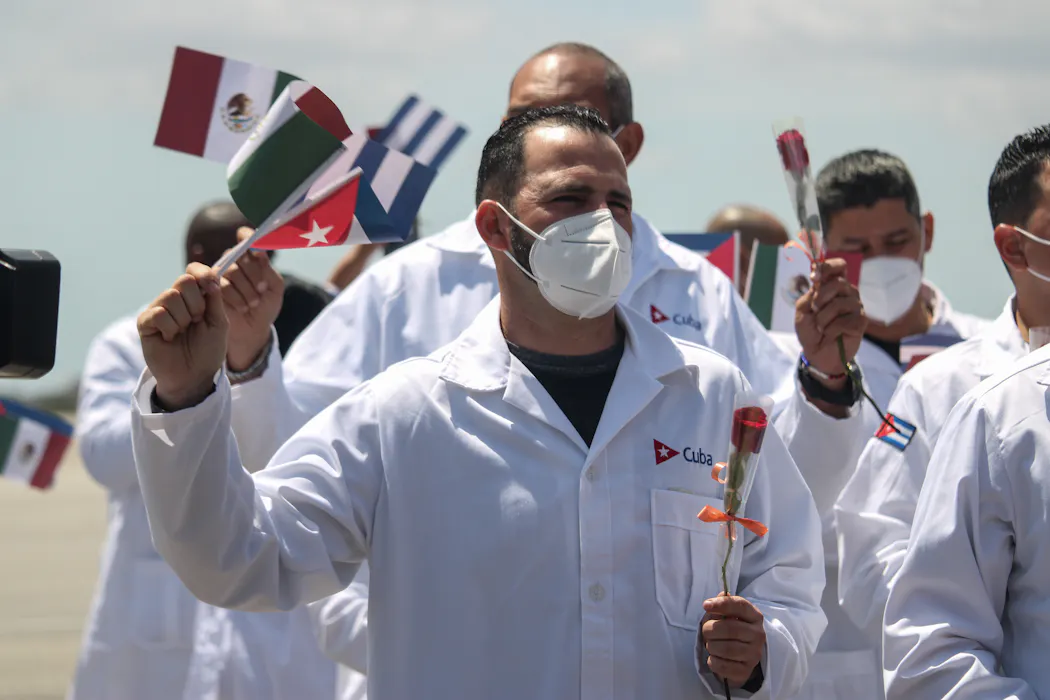
There were tearful scenes in the central American nation of Honduras on February 23, as locals said goodbye to the Cuban healthcare professionals who had been treating them for free for around two years. It came after the Honduran government abruptly ended the Cuban medical mission under pressure from the administration of the US president, Donald Trump.
That same day, a “sensitive” US State Department memo was sent to the secretary of state, Marco Rubio. It discussed the US strategy to sabotage Cuba’s medical internationalism, which has been an integral part of the island nation’s foreign policy since 1960. In recent years it has also become a key pillar of its economy.
The US has imposed unilateral sanctions on Cuba for more than 60 years. These prevent Cuba from engaging in “normal” international trade – for example, third parties cannot sell goods to Cuba if 10% of their components are from US companies or subsidiaries. And Cuba cannot export goods to the US. On top of that, the US blockade severely restricts Cuba’s access to the international financial system.
In this context, the export of medical professionals has become vital to the Cuban economy. For decades the Cuban government sent medical missions around the world as a donation to developing nations. But over the past two decades, it has developed cooperation agreements under which governments or local authorities pay the Cuban government for the medical services of its healthcare professionals.
Attacking that revenue looks to be a key component of the US push for regime change in Cuba by the end of the year. This is alongside the total oil blockade imposed by Trump’s executive order on January 29, which has now caused multiple national blackouts that have left the entire island in the dark.
It is a policy of carrots and sticks. Countries kicking out Cuban medics are offered US support for “infrastructure modernisation” – things like telemedicine and virtual training. A year earlier, Rubio had announced visa restrictions for current and former officials and their families from anywhere in the world who took part in Cuban programmes.
By mid-March this year, neighbouring governments fell into line. Guatemala, Paraguay, the Bahamas, Guyana and Jamaica terminated Cuban medical missions, ending decades of cooperation. In Guatemala, more than 400 Cuban healthcare professionals, most of them doctors, are serving indigenous communities under a three decades-long partnership. The last doctors will leave by the end of the year.
The US government’s attack on Cuban medical internationalism is not new. It began in 2006, the year after the oil-for-doctors programme between Cuba and Venezuela transformed the export of healthcare professionals into Cuba’s greatest revenue source.
US policy sought to eliminate this income and undermine the prestige the programmes earned the island. The then US president, George W Bush, set up the Cuban Medical Professional Parole (CMPP) Program, encouraging Cuban medics abroad to abandon missions and defect to the US. The programme was ended only in 2017, in Barack Obama’s final days as president.
Despite this, and reflecting the deficit in healthcare globally, Cuba’s earnings from the export of healthcare services rose. Revenues in 2018 (the first year Cuba published separate data for health services) were US$6.4 billion (£4.8 billion). Trump’s first administration developed policies, and funding, to sabotage these programmes.
Cuba’s bill of health
It also devised a new justification for doing this. The US government could not openly demand that countries sacrifice the health and wellbeing of their populations just to deny Cuba revenue. So instead, it accused Cuba of human trafficking and equated its healthcare professionals to slaves.
Anyone who has spoken to Cuban participants – as I have – knows the overseas service contracts they sign provide them with their regular Cuban salary, plus extra remuneration from the host country. They are guaranteed holidays and contact with families.
Even with tens of thousands of medical workers overseas, the state’s investment in healthcare and medical training means that the Cuban population has the highest ratio of doctors per person in the world. In 2022, it was said to have nine doctors and nine nurses for every 1,000 citizens. In the US, there are 2.6 doctors per 1,000 citizens and in the UK the figure is 3.2.
For many Cuban healthcare professionals, it signifies the fulfilment of an internationalist duty; for others a way to travel or increase their income. The Cuban government takes the lion’s share of revenues and puts them back into Cuba’s universal free public healthcare provision and medical training.
But under Trump’s second administration, Rubio, the son of Cuban migrants who left the island during the Batista dictatorship, has spearheaded a renewed attack on the island’s international medical programmes. The recent State Department memo stated that Cuban medical brigades were a key source of “hard cash” for the regime.
The four forms of Cuban medical internationalism practices established in the 1960s are:
- emergency medical brigades overseas
- treatment of foreign patients in Cuba
- training foreign students as healthcare professionals, and,
- establishment of public healthcare facilities overseas.
This contribution to developing nations has often been ignored or censored. But it translates into millions of lives saved and improved globally every year. Sabotaging medical internationalism would devastate Cuba. But it would also leave millions of people around the world without the vital medical attention that they had previously enjoyed.

Helen Yaffe does not work for, consult, own shares in or receive funding from any company or organisation that would benefit from this article, and has disclosed no relevant affiliations beyond their academic appointment.
– ref. US attacks on Cuban medical missions risk damaging healthcare for poor people in developing countries – https://theconversation.com/us-attacks-on-cuban-medical-missions-risk-damaging-healthcare-for-poor-people-in-developing-countries-278748