
Source: The Conversation – UK – By Tom Licence, Professor of Medieval History and Consumer Culture, School of History, University of East Anglia
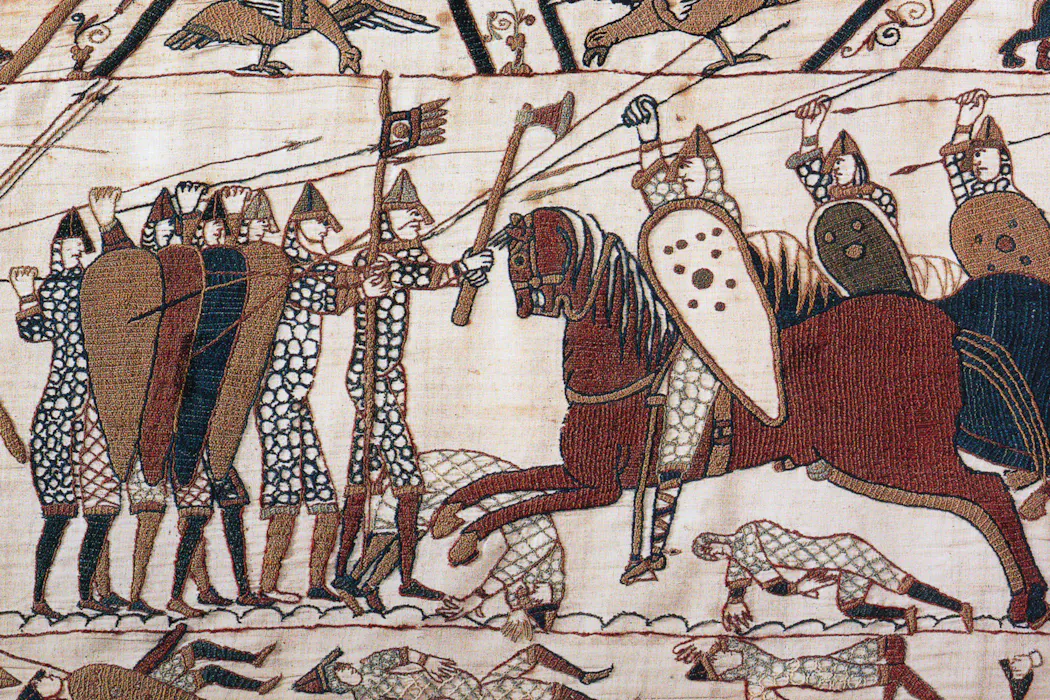

In 1066, England was invaded by multiple foreign powers. A northern force led by King Harald Hardrada of Norway advanced on York via the River Humber, while a southern force, led by Duke William of Normandy (later William I the Conqueror) crossed the Channel with forces from Normandy, France, Brittany and Ponthieu, and took up position at Hastings.
King Harold of England had to dash up from London to deal with the vikings, only to hurry back south again to deal with William. A distance of more than 250 miles separated his victory at Stamford Bridge (on September 25) from Battle, the site of his defeat (on October 14) at the Battle of Hastings.
His “almost miraculous” march, as one historian described it, became part of Harold’s legend. It’s now taught in schools, recreated by re-enactors and depicted in TV dramas such as the recent BBC miniseries, King and Conqueror (2025).
For some, Harold’s forced march was an incredible feat of generalship. For others, it was a fatal mistake. The conquest historian Allen Brown criticised Harold’s “reckless and impulsive haste”, while Henry Loyn accused Harold of “rashness” in undertaking a mad dash south that exhausted his men and led to his defeat at Hastings.
Researching my new biography, Harold, Warrior King, I turned to the Latin and Old English sources. And what I found surprised me.
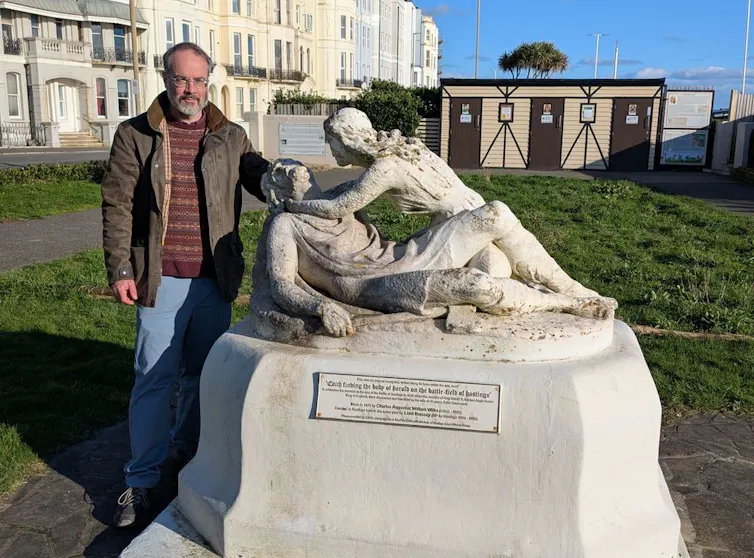
Tom Licence, CC BY-SA
Going back to the beginning, the forces Harold had assembled that spring to counter the threat of Norman invasion were a land army and a fleet stationed on the south coast. They remained there until September 8, by which time William’s fleet had still not appeared. The land army was then sent home, and the fleet sailed to London.
According to the Anglo-Saxon Chronicle, our most reliable contemporary account, after the fleet returned, Harold learned that Harald Hardrada was invading the north.
In 1801, the historian Sharon Turner took the Chronicle’s phrase “after the fleet came home” to indicate that the ships had all returned to their various ports. The father-figure of 1066 studies Edward Augustus Freeman agreed, and subsequent historians fell in with believing that Harold had no fleet when news of the vikings came.
A reference to a fleet (lið) which Harold then arrayed on the River Wharfe, south of York, when advancing on the vikings, was taken to refer to some hastily gathered force.
Assertions in two early Latin accounts of the battle that Harold had sent a fleet against William at Hastings appear to have confused many historians, who had come to believe that Harold had disbanded the fleet.
It was this apparent lack of a fleet that led Freeman to surmise Harold had marched up and down the country. But Freeman was not the first to suggest this; John Milton had written of the king marching to London “in great haste” in his book History of England in 1670.
The thing scholars appear not to have recognised is that where the chronicle speaks of the fleet “coming home”, it means coming home to London. In its entry for the year 1052, the same chronicle refers to the fleet journeying “homeward to London” in this way.
Thus, the statement that has long misled scholars into thinking Harold’s fleet was disbanded actually indicates he retained it all along.
A centuries-old error
Once I had spotted what appears to be a 200-year-old error, I was able to join the dots. The presence of a fleet on the River Wharfe now made sense, for this was the same fleet which Harold had sent up from London, having used it, we may assume, to transport troops.
And those early references to Harold sending hundreds of ships against William’s camp at Hastings indicate that he sent the ships back down to London subsequently, after the battle of Stamford Bridge.
Furthermore, the king may have enlarged his fleet with captured viking vessels, since the chronicle states that 300 viking ships sailed into the Humber, but only 24 returned to Norway.
What, then, of the march? When I looked into the Latin and Old English texts, I was unable to find any reference to it. There are references to Harold hurrying south very quickly and to Harold “moving” his army south, but the march is missing.
Some scholars were so wedded to the idea of a forced march, however, that the translators of the Norman account Deeds of Duke William (circa 1071) translated the Latin phrase “returning speedily to attack you” (festinus redit in te) as “advancing against you by forced marches”.
Freeman called the march “almost miraculous”. And such a march would be. Sailing, however, would have taken a few days and allowed the English army a chance to rest. Since the sources track the movements of the fleet but nowhere mention a march, it would appear that Harold used ships for all his operations.
If Harold used ships, of course, he cannot be accused of “reckless and impulsive haste”, and the cause of his defeat at the Battle of Hastings must be sought elsewhere.
No longer that desperate, land-locked defender as traditionally depicted, assaulted on all sides from the sea, this research shows that Harold was a seaborne commander equal to his foreign foes – and no less sophisticated in combining warfare on sea and land in England’s defence.
This article features references to books that have been included for editorial reasons, and may contain links to bookshop.org. If you click on one of the links and go on to buy something from bookshop.org The Conversation UK may earn a commission.

Tom Licence works for the University of East Anglia. He receives funding from the Leverhulme Trust
– ref. Is the biggest march in English history a myth? My research shows King Harold sailed down to the battle of Hastings – https://theconversation.com/is-the-biggest-march-in-english-history-a-myth-my-research-shows-king-harold-sailed-down-to-the-battle-of-hastings-278566