
Source: The Conversation – Canada – By Yimin Wu, Associate Professor, Tang Family Chair in New Energy Materials and Sustainability, University of Waterloo
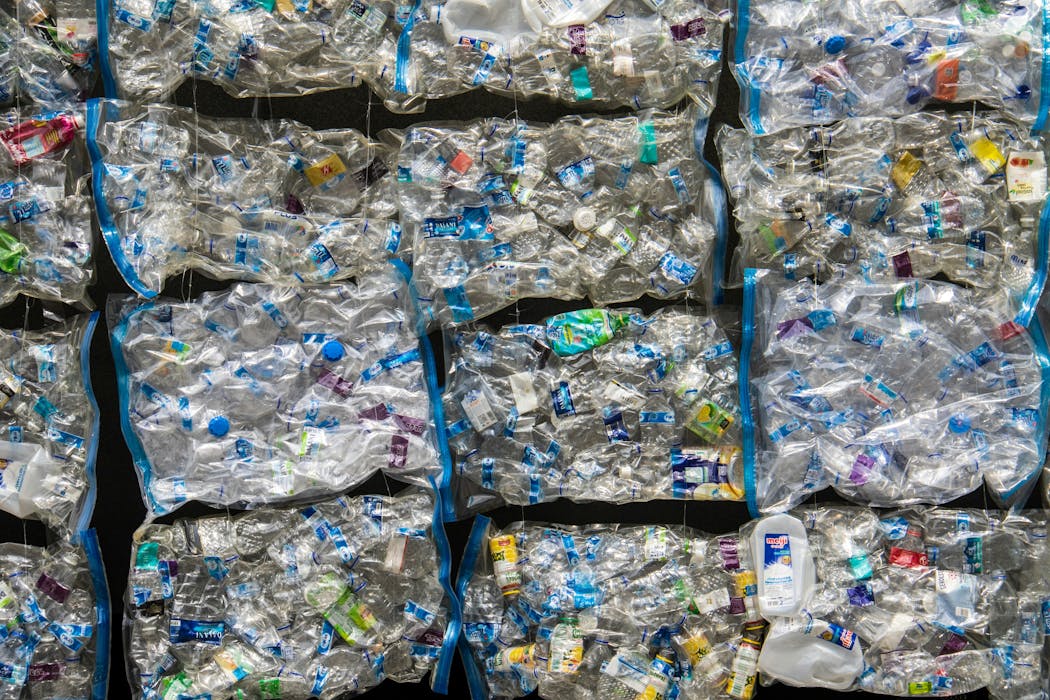
Plastic is one of the most durable materials humans have ever made. That durability has made it indispensable in medicine, food packaging and transport. But it’s also created one of the defining environmental problems we have faced.
Hundreds of millions of tonnes of plastic are produced globally every year. Much of it ends up in landfills, incinerators or the natural environment, where it can persist for centuries.
The methods we have for getting rid of plastic pollution have their downsides. Putting it in landfills means chemicals and microplastics can seep into the surrounding environment.
Burning it releases harmful fumes and toxins. Mechanical recycling often downgrades plastics into lower-value products, while chemical recycling typically requires high temperatures, high pressures and large amounts of energy.
Colleagues and I recently published research that explores a very different possibility: using sunlight and an iron-based catalyst to convert common plastic waste directly into acetic acid — the key component of vinegar and an important industrial chemical.
Instead of treating plastic purely as waste, our research shows that it can be transformed into something useful under mild conditions.
Learning from a wood-rotting fungus
The inspiration for our research came from nature. The white-rot fungus (Phanerochaete chrysosporium) is famous for its ability to break down lignin, one of the toughest polymers found in wood. It does this using enzymes that generate highly reactive chemical species capable of dismantling complex carbon structures.
We wondered whether a synthetic material could mimic this strategy.
The catalyst we designed is iron-doped carbon nitride, a semiconductor that absorbs visible light. We then anchored individual iron atoms, creating what scientists call a single-atom catalyst.
Rather than forming nanoparticles, each iron atom is isolated and embedded within the carbon nitride structure. This atomic precision is crucial. Each iron atom behaves like an active site in a natural enzyme, maximizing efficiency while maintaining stability.
A two-step reaction powered by light
The system works through a cascade of light-driven reactions.
Under sunlight and in the presence of hydrogen peroxide, the iron sites activate the peroxide to generate highly reactive hydroxyl radicals. A radical is an atom, molecule or ion that has at least one unpaired electron. This makes them highly chemically reactive.
These radicals attack the long carbon chains that make up plastics, like polyethylene (used in plastic bags), polypropylene (food containers), PET (drink bottles) and even PVC (pipes and packaging).
The polymers are progressively oxidized and broken down into smaller molecules, eventually forming carbon dioxide (CO₂).
Rather than allowing this CO₂ to escape, the same catalyst then performs a second job: it uses sunlight to reduce the CO₂ into acetic acid. In other words, the carbon in plastic waste is first oxidized and then re-assembled into a new, valuable molecule.
Essentially, this approach breaks down plastic and converts the resulting carbon into a commodity chemical in a single system. This distinguishes it from most existing recycling technologies.
Why acetic acid?
Acetic acid is best known as the sour component of vinegar, but it is also a major industrial feedstock. It is used to produce adhesives, coatings, solvents, synthetic fibres and pharmaceuticals.
Global demand runs into the millions of tonnes each year, representing a multi-billion-dollar market.
Currently, most acetic acid is produced through an energy-intensive processes process called methanol carbonylation, whereby methanol is reacted with carbon monoxide at high temperatures.
Converting waste plastic into acetic acid offers a potential circular pathway: instead of extracting new carbon, we reuse carbon already present in discarded materials.
In our experiments, the system produced acetic acid at rates comparably favourable with other reported light-driven plastic conversion methods. When we enhanced light utilization inside the reactor, the production rate increased substantially.
Importantly, the reaction operated at room temperature and normal atmospheric pressure. That contrasts with many chemical recycling methods that require heating plastics to several hundred degrees Celsius.
Handling real-world plastic
Laboratory studies often focus on pure, single plastic types. But real waste streams are mixed and contaminated. We therefore tested different common plastics individually, as well as mixtures.
Our catalyst was able to convert several major commodity plastics. Interestingly, PVC showed particularly strong performance. We believe chlorine released during its breakdown may generate additional reactive radicals, accelerating degradation.
The iron atoms remained atomically dispersed after repeated use, indicating good stability. This matters because catalyst degradation or metal leaching can undermine both performance and environmental safety.
The system does rely on added hydrogen peroxide, which is consumed during the reaction. While hydrogen peroxide decomposes into water and oxygen and is considered relatively benign, future work will need to address how it can be supplied sustainably at scale.
From concept to practice
Scaling up any new chemical process presents challenges. Light penetration, reactor design and the variability of waste plastic feedstocks all affect efficiency. Additives in commercial plastics — such as stabilizers, pigments and plasticizers — can also influence reaction outcomes.
To explore feasibility, we conducted a preliminary techno-economic assessment. This is a way of analyzing the potential economic benefits of an industrial process or product.
While further optimization is required, our analysis suggests that coupling waste cleanup with the production of a valuable chemical could help offset costs — particularly when environmental benefits are taken into account.
More broadly, this work illustrates the power of single-atom catalysts and bio-inspired design. By mimicking the way enzymes control reactivity at precise metal centres, we can achieve complex chemical transformations under mild conditions using sunlight as the energy source.
Rethinking plastic’s life cycle
The problem of plastic pollution will not be solved by a single technology. Reducing unnecessary plastic use, improving product design and strengthening recycling systems are all essential.
Transforming plastic waste into useful chemicals offers a complementary strategy. It reframes plastic not only as an environmental burden but also as a carbon resource.
If we can harness sunlight to drive these transformations efficiently and at scale, yesterday’s discarded packaging could become tomorrow’s industrial feedstock.
The challenge now is to translate our laboratory advances into robust, scalable systems. If successful, it would mark a step toward a more circular economy — one where waste is not the end of the story, but the beginning of a new one.

Yimin Wu receives funding from Tang Family Chair in New Energy Materials and Sustainability, Natural Sciences and Engineering Research Council of Canada, the seed funding from the Water Institute (WI), Waterloo Institute for Nanotechnology (WIN) at the University of Waterloo.
– ref. How we turned plastic waste into vinegar: A sunlight-powered breakthrough – https://theconversation.com/how-we-turned-plastic-waste-into-vinegar-a-sunlight-powered-breakthrough-276735