
Source: The Conversation – UK – By Naomi Braithwaite, Associate Professor in Fashion and Material Culture, Nottingham Trent University
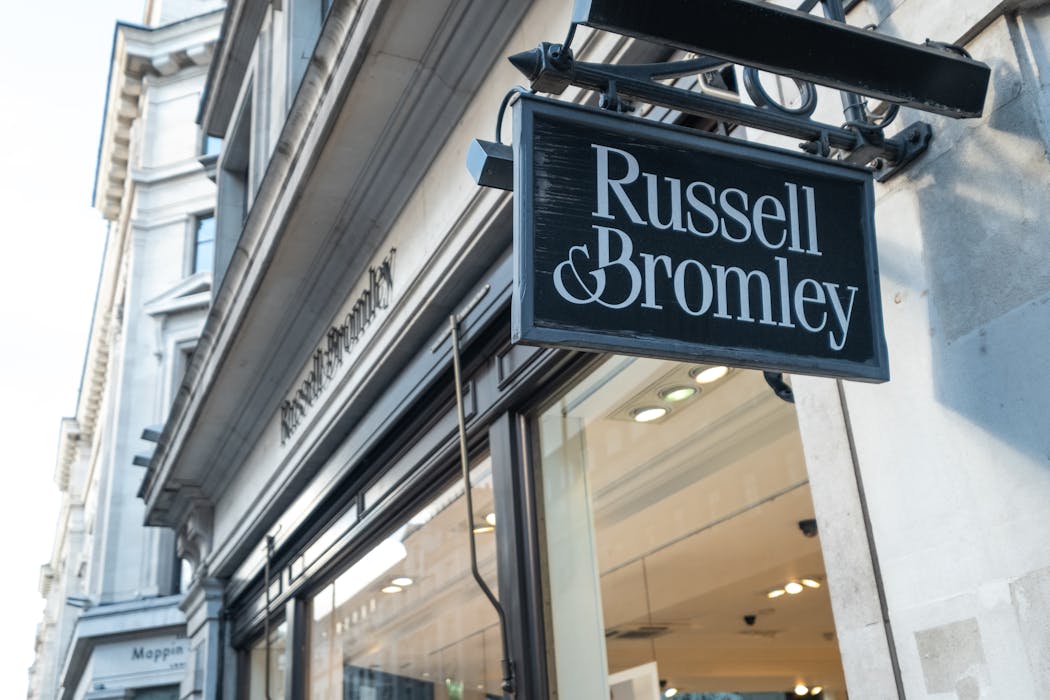
The UK heritage shoemaker Russell & Bromley has been bought by high-street clothing giant Next. Despite the brand’s rescue from administration, dozens of jobs will be lost in initial redundancies, and there are rumours that more than 30 shops could close. As one of the few independently owned footwear brands left in the UK, the sale spells another loss to the industrial heritage of the British footwear industry.
The closure of fashion stores is nothing new, and the gradual demise of the British high street has been well documented. In fact, research in 2021 revealed that the fastest-declining sector on the UK high street was fashion retail. Shifts in consumer behaviour driven by online shopping, alongside fast fashion, placed inevitable pressure on independent, mid- to high-end stores like Russell & Bromley.
With so much competition (particularly in the context of footwear, where many clothing retailers and supermarkets have added shoe lines), staying relevant has become even more challenging.
What set Russell & Bromley apart was its long history. It was founded in 1880 in Sussex and continued under the leadership of five generations of the same family. It has a strongly defined heritage as a British independent brand, with a focus on craftsmanship and understated luxury.
It has also been a favourite of the Princess of Wales, which guaranteed the brand further endorsement. More recently, another brand linked to the princess, LK Bennett, was sold to the owner of Poundland. LK Bennett was founded in 1990, also as a high-end shoe retailer, later branching out into clothing as well.
The Russell & Bromley sale followed the announcement that heritage sports shoe brand Gola had been acquired by Japanese conglomerate Marubeni – a response to booming sales in retro trainers. Gola, too, has a long history. It was founded in Leicester, once a centre for British shoemaking in 1905, making it one of Britain’s oldest sportswear brands.
Read more:
The history of sneakers: from commodity to cultural icon
Its origins were in making football boots, but in the 1960s the brand took off with its Harrier style being favoured by football fans, and its later endorsement by celebrities including Liam Gallagher and Paul Weller. But in recent years, Gola struggled to compete with the powerhouses of Nike and Adidas.
The cases of Russell & Bromley and Gola exemplify the challenges of maintaining independence in the complex global footwear industry where conglomerates are taking a dominant stance. The brands’ change in ownership highlights the transformation of what was once a flourishing footwear manufacturing and retail industry.
Dominance and decline
The 1960s was the heyday of fashion retail on the British high street with the emergence of boutiques like Mary Quant’s Bazaar and the advent of Topshop in 1964, which brought a new, younger consumer.
Footwear retailers were always a staple on the high street, with brands like Dolcis, and Lilley and Skinner. Both were part of the Leicester-based conglomerate the British Shoe Corporation, and alongside Clarks and Russell & Bromley they captured the footwear retail market.
But the UK’s fashion footwear retail industry started to decline in the 1990s with the closure of the British Shoe Corporation and its huge portfolio of stores.
This decline in shoe retail followed a significant change in the UK’s footwear manufacturing industry. While Northampton remains a centre of excellence for men’s footwear manufacturing, shoe factories in Leicester started to close from the 1980s. They could no longer compete with the prices and volumes of manufacturers in Brazil, India and China.
Recently, China has taken the lead in global shoe manufacturing, adapting the traditional skills and craftsmanship with technical advances and the ability to produce high volumes.
So where does Next fit into this picture? In 1982, the Midlands-based clothing company opened its first womenswear store and by 1988 had launched the Next Directory, which introduced home delivery. Consumers no longer had to go to separate shops to find shoes to match their outfits – suddenly it was all available in one place.
It was not just Leicester that suffered the decline of its footwear industry. London also had a long history in shoemaking, but failed to weather the competitive landscape. The 1990s saw an increase in international brands and retailers entering the UK retail space, placing further competition on domestic brands.

sopf/Shutterstock
Despite this uncertainty and change in UK footwear and retail, Russell & Bromley continued to thrive well into the 21st century. This is testament to its position as a high-end retailer that sold its own well-crafted shoes and bags with the desirable Made in Italy label. Investments in a refresh in 2025 may have proved too costly, as the market became increasingly difficult.
While there is plenty of choice for consumers at the lower and designer ends of the footwear market, the mid to high-price points where Russell & Bromley sits could perhaps be at risk of becoming squeezed out.
Italy, Spain and Portugal have maintained their rich shoemaking heritage. While this has much to do with legacy, it may also be the result of these countries’ continued endorsement by luxury brands, where the allure of artisanal shoes resonates with higher price points.
Despite the sales, the Russell & Bromley and Gola brands are not being lost. Under their new owners, they will be able to go on representing the legacy of the British footwear industry, which has been defined by heritage, fashion and craftsmanship.

Naomi Braithwaite does not work for, consult, own shares in or receive funding from any company or organisation that would benefit from this article, and has disclosed no relevant affiliations beyond their academic appointment.
– ref. The sale of Russell & Bromley is a symbol of the challenges facing independent heritage brands – https://theconversation.com/the-sale-of-russell-and-bromley-is-a-symbol-of-the-challenges-facing-independent-heritage-brands-274444