At Antarctica’s midwinter, a look back at the frozen continent’s long history of dark behavior

Source: – By Daniella McCahey, Assistant Professor of History, Texas Tech University

Is this visitor to Antarctica going crazy or having a good time? Tim Bieber/Photodisc via Getty Images

As Midwinter Day approaches in Antarctica – the longest and darkest day of the year – those spending the winter on the frozen continent will follow a tradition dating back more than a century to the earliest days of Antarctic exploration: They will celebrate having made it through the growing darkness and into a time when they know the Sun is on its way back.

The experience of spending a winter in Antarctica can be harrowing, even when living with modern conveniences such as hot running water and heated buildings. At the beginning of the current winter season, in March 2025, global news outlets reported that workers at the South African research station, SANAE IV, were “rocked” when one worker allegedly threatened and assaulted other members of the station’s nine-person winter crew. Psychologists intervened – remotely – and order was apparently restored.

The desolate and isolated environment of Antarctica can be hard on its inhabitants. As a historian of Antarctica, the events at SANAE IV represent a continuation of perceptions – and realities – that Antarctic environments can trigger deeply disturbing behavior and even drive people to madness.

A view of a small cluster of buildings below a cone-shaped hill, with a dark sky and the Moon shining.
Long hours of constant near-darkness take their toll in the Antarctic winter.
Andrew Smith, via Antarctic Sun, CC BY-ND

Early views

The very earliest examples of Antarctic literature depict the continent affecting both mind and body. In 1797, for instance, more than two decades before the continent was first sighted by Europeans, the English poet Samuel Taylor Coleridge wrote “The Rime of the Ancient Mariner.” It tells a tale of a ship blown by storms into an endless maze of Antarctic ice, which they escape by following an albatross. For unexplained reasons, one man killed the albatross and faced a lifetime’s torment for doing so.

In 1838, Edgar Allan Poe published the story of “Arthur Gordon Pym of Nantucket,” who journeyed into the Southern Ocean. Even before arriving in Antarctica, the tale involves mutiny, cannibalism and a ship crewed by dead men. As the story ends, Pym and two others drift southward, encountering an enormous, apparently endless cataract of mist that parts before their boat, revealing a large ghostly figure.

H.P. Lovecraft’s 1936 story “At the Mountains of Madness” was almost certainly based on real stories of polar exploration. In it, the men of a fictitious Antarctic expedition encounter circumstances that “made us wish only to escape from this austral world of desolation and brooding madness as swiftly as we could.” One man even experiences an unnamed “final horror” that causes a severe mental breakdown.

The 1982 John Carpenter film “The Thing” also involves these themes, when men trapped at an Antarctic research station are being hunted by an alien that perfectly impersonates the base members it has killed. Paranoia and anxiety abound, with team members frantically radioing for help, and men imprisoned, left outside or even killed for the sake of the others.

Whether to gird themselves for what may come or just as a fun tradition, the winter-over crew at the United States’ South Pole Station watches this film every year after the last flight leaves before winter sets in.

A trailer for the 1982 film ‘The Thing,’ set at an Antarctic research station.

Real tales

These stories of Antarctic “madness” have some basis in history. A long-told anecdote in modern Antarctic circles is of a man who stabbed, perhaps fatally, a colleague over a game of chess at Russia’s Vostok station in 1959.

More certain were reports in 2018, when Sergey Savitsky stabbed Oleg Beloguzov at the Russian Bellingshausen research station over multiple grievances, including the one most seized upon by the media: Beloguzov’s tendency to reveal the endings of books that Savitsky was reading. A criminal charge against him was dropped.

In 2017, staff at South Africa’s sub-Antarctic Marion Island station reported that a team member smashed up a colleague’s room with an ax over a romantic relationship.

Mental health

Concerns over mental health in Antarctica go much further back. In the so-called “Heroic Age” of Antarctic exploration, from about 1897 to about 1922, expedition leaders prioritized the mental health of the men on their expeditions. They knew their crews would be trapped inside with the same small group for months on end, in darkness and extreme cold.

American physician Frederick Cook, who accompanied the 1898-1899 Belgica expedition, the first group known to spend the winter within the Antarctic Circle, wrote in helpless terms of being “doomed” to the “mercy” of natural forces, and of his worries about the “unknowable cold and its soul-depressing effects” in the winter darkness. In his 2021 book about that expedition, writer Julian Sancton called the ship the “Madhouse at the End of the Earth.”

Cook’s fears became real. Most men complained of “general enfeeblement of strength, of insufficient heart action, of a mental lethargy, and of a universal feeling of discomfort.”

“When at all seriously afflicted,” Cook wrote, “the men felt that they would surely die” and exhibited a “spirit of abject hopelessness.”

And in the words of Australian physicist Louis Bernacchi, a member of the 1898-1900 Southern Cross expedition, “There is something particularly mystical and uncanny in the effect of the grey atmosphere of an Antarctic night, through whose uncertain medium the cold white landscape looms as impalpable as the frontiers of a demon world.”

Footage from 1913 shows the force of the wind at Cape Denison, which has been called ‘the home of the blizzard.’

A traumatic trip

A few years later, the Australasian Antarctic Expedition, which ran from 1911 to 1914, experienced several major tragedies, including two deaths during an exploring trip that left expedition leader Douglas Mawson starving and alone amid deeply crevassed terrain. The 100-mile walk to relative safety took him a month.

A lesser-known set of events on that same expedition involved wireless-telegraph operator Sidney Jeffryes, who arrived in Antarctica in 1913 on a resupply ship. Cape Denison, the expedition’s base, had some of the most severe environmental conditions anyone had encountered on the continent, including winds estimated at over 160 miles an hour.

Jeffryes, the only man in the crew who could operate the radio telegraph, began exhibiting signs of paranoia. He transmitted messages back to Australia saying that he was the only sane man in the group and claiming the others were plotting to kill him.

In Mawson’s account of the expedition, he blamed the conditions, writing:

(T)here is no doubt that the continual and acute strain of sending and receiving messages under unprecedented conditions was such that he eventually had a ‘nervous breakdown.’”

Mawson hoped that the coming of spring and the possibility of outdoor exercise would help, but it did not. Shortly after his return to Australia in February 1914, Jeffryes was found wandering in the Australian bush and institutionalized. For many years, his role in Antarctic exploration was ignored, seeming a blot or embarrassment on the masculine ideal of Antarctic explorers.

A group of people stand on a rocky shore waving at a small boat in the distance.
After five months of isolation in trying conditions on a remote Antarctic island, 22 men rejoice at their rescue in August 1916.
Frank Hurley, Underwood & Underwood, via Library of Congress

Wider problems

Unfortunately, the general widespread focus on Antarctica as a place that causes disturbing behavior makes it easy to gloss over larger and more systemic problems.

In 2022, the United States Antarctic Program as well as the Australian Antarctic Division released reports that sexual assault and harassment are common at Antarctic bases and in more remote field camps. Scholars have generally not linked those events to the specifics of the cold, darkness and isolation, but rather to a continental culture of heroic masculinity.

As humans look to live in other extreme environments, such as space, Antarctica represents not only a cooperative international scientific community but also a place where, cut off from society as a whole, human behavior changes. The celebrations of Midwinter Day honor survival in a place of wonder that is also a place of horror, where the greatest threat is not what is outside, but what is inside your mind.

The Conversation

Daniella McCahey does not work for, consult, own shares in or receive funding from any company or organization that would benefit from this article, and has disclosed no relevant affiliations beyond their academic appointment.

ref. At Antarctica’s midwinter, a look back at the frozen continent’s long history of dark behavior – https://theconversation.com/at-antarcticas-midwinter-a-look-back-at-the-frozen-continents-long-history-of-dark-behavior-253906

Reproducibility may be the key idea students need to balance trust in evidence with healthy skepticism

Source: – By Sarah R. Supp, Associate Professor of Data Analytics, Denison University

Reproducing results can increase trust in scientific studies. Huntstock via Getty Images

Many people have been there.

The dinner party is going well until someone decides to introduce a controversial topic. In today’s world, that could be anything from vaccines to government budget cuts to immigration policy. Conversation starts to get heated. Finally, someone announces with great authority that a scientific study supports their position. This causes the discussion to come to an abrupt halt because the dinner guests disagree on their belief in scientific evidence. Some may believe science always speaks the truth, some may think science can never be trusted, and others may disagree on which studies with contradicting claims are “right.”

How can the dinner party – or society – move beyond this kind of impasse? In today’s world of misinformation and disinformation, healthy skepticism is essential. At the same time, much scientific work is rigorous and trustworthy. How do you reach a healthy balance between trust and skepticism? How can researchers increase the transparency of their work to make it possible to evaluate how much confidence the public should have in any particular study?

As teachers and scholars, we see these problems in our own classrooms and in our students – and they are mirrored in society.

The concept of reproducibility may offer important answers to these questions.

Reproducibility is what it sounds like: reproducing results. In some ways, reproducibility is like a well-written recipe, such as a recipe for an award-winning cake at the county fair. To help others reproduce their cake, the proud prizewinner must clearly document the ingredients used and then describe each step of the process by which the ingredients were transformed into a cake. If others can follow the directions and come up with a cake of the same quality, then the recipe is reproducible.

Think of the English scholar who claims that Shakespeare did not author a play that has historically been attributed to him. A critical reader will want to know exactly how they arrived at that conclusion. What is the evidence? How was it chosen and interpreted? By parsing the analysis step by step, reproducibility allows a critical reader to gauge the strength of any kind of argument.

We are a group of researchers and professors from a wide range of disciplines who came together to discuss how we use reproducibility in our teaching and research.

Based on our expertise and the students we encounter, we collectively see a need for higher-education students to learn about reproducibility in their classes, across all majors. It has the potential to benefit students and, ultimately, to enhance the quality of public discourse.

The foundation of credibility

Reproducibility has always been a foundation of good science because it allows researchers to scrutinize each other’s studies for rigor and credibility and expand upon prior work to make new discoveries. Researchers are increasingly paying attention to reproducibility in the natural sciences, such as physics and medicine, and in the social sciences, such as economics and environmental studies. Even researchers in the humanities, such as history and philosophy, are concerned with reproducibility in studies involving analysis of texts and evidence, especially with digital and computational methods. Increased interest in transparency and accessibility has followed the rising importance of computer algorithms and numerical analysis in research. This work should be reproducible, but it often remains opaque.

Broadly, research is reproducible if it answers the question: “How do you know?” − such that another researcher could theoretically repeat the study and produce consistent results.

Reproducible research is explicit about the materials and methods that were used in a study to make discoveries and come to conclusions. Materials include everything from scientific instruments such as a tensiometer measuring soil moisture to surveys asking people about their daily diet. They also include digital data such as spreadsheets, digitized historic texts, satellite images and more. Methods include how researchers make observations and analyze data.

To reproduce a social science study, for example, we would ask: What is the central question or hypothesis? Who was in the study? How many individuals were included? What were they asked? After data was collected, how was it cleaned and prepared for analysis? How exactly was the analysis run?

Proper documentation of all these steps, plus making available the original data from the study, allows other scientists to redo the research, evaluate the decisions made during the process of gathering and analyzing information, and assess the credibility of the findings.

This short video, made by the National Academies, explains the key concepts in reproducing scientific findings and notes ways the process can be improved.

Over the past 20 years, the need for reproducibility has become increasingly important. Scientists have discovered that some published studies are too poorly documented for others to repeat, lack verified data sources, are questionably designed, or even fraudulent.

Putting reproducibility to work: An example

A highly contentious, retracted study from 1998 linked the measles, mumps and rubella (MMR) vaccine and autism. Scientists and journalists used their understanding of reproducibility to discover the flaws in the study.

The central question of the study was not about vaccines but aimed to explore a possible relationship between colitis − an inflammation of the large intestine − and developmental disorders. The authors explicitly wrote, “We did not prove an association between measles, mumps, and rubella vaccine and the syndrome described.”

The study observed just 12 patients who were referred to the authors’ gastroenterology clinic and had histories of recent behavioral disorders, including autism. This sample of children is simply too small and selective to be able to make definitive conclusions.

In this study, the researchers translated children’s medical charts into summary tables for comparison. When a journalist attempted to reproduce the published data tables from the children’s medical histories, they found pervasive inconsistencies.

Reproducibility allows for corrections in research. The article was published in a respected journal, but it lacked transparency with regard to patient recruitment, data analysis and conflicts of interest. Whereas traditional peer review involves critical evaluation of a manuscript, reproducibility also opens the door to evaluating the underlying data and methods. When independent researchers attempted to reproduce this study, they found deep flaws. The article was retracted by the journal and by most of its authors. Independent research teams conducted more robust studies, finding no relationship between vaccines and autism.

Each research discipline has its own set of best practices for achieving reproducibility. Disciplines in which researchers use computational or statistical analysis require sharing the data and software code for reproducing studies. In other disciplines, researchers interpret nonnumerical qualities of data sources such as interviews, historical texts, social media content and more. These disciplines are working to develop standards for sharing their data and research designs for reproducibility. Across disciplines, the core principles are the same: transparency of the evidence and arguments by which researchers arrived at their conclusions.

It is true that the underlying data for some studies cannot be fully released to the public – for example, confidential patient health information or the exact locations for species threatened by illegal poaching. But this does not mean that the research didn’t employ many other reproducibility techniques or that the findings should be discredited. Even without publicly available data, the description of the data and methods should be transparent enough to understand and to replicate.

Reproducibility in the classroom

Colleges and universities are uniquely situated to promote reproducibility in research and public conversations. Critical thinking, effective communication and intellectual integrity, staples of higher-education mission statements, are all served by reproducibility.

Teaching faculty at colleges and universities have started taking some important steps toward incorporating reproducibility into a wide range of undergraduate and graduate courses. These include assignments to replicate existing studies, training in reproducible methods to conduct and document original research, preregistration of hypotheses and analysis plans, and tools to facilitate open collaboration among peers. A number of initiatives to develop and disseminate resources for teaching reproducibility have been launched.

Despite some progress, reproducibility still needs a central place in higher education. It can be integrated into any course in which students weigh evidence, read published literature to make claims, or learn to conduct their own research. This change is urgently needed to train the next generation of researchers, but that is not the only reason.

Reproducibility is fundamental to constructing and communicating claims based on evidence. Through a reproducibility lens, students evaluate claims in published studies as contingent on the transparency and soundness of the evidence and analysis on which the claims are based. When faculty teach reproducibility as a core expectation from the beginning of a curriculum, they encourage students to internalize its principles in how they conduct their own research and engage with the research published by others.

Institutions of higher education already prioritize cultivating engaged, literate and critical citizens capable of solving the world’s most challenging contemporary problems. Teaching reproducibility equips students, and members of the public, with the skills they need to critically analyze claims in published research, in the media and even at dinner parties.

Also contributing to this article are participants in the 2024 Reproducibility and Replicability in the Liberal Arts workshop, funded by the Alliance to Advance Liberal Arts Colleges (AALAC) [in alphabetical order]: Ben Gebre-Medhin (Department of Sociology and Anthropology, Mount Holyoke College), Xavier Haro-Carrión (Department of Geography, Macalester College), Emmanuel Kaparakis (Quantitative Analysis Center, Wesleyan University), Scott LaCombe (Statistical and Data Sciences, Smith College), Matthew Lavin (Data Analytics Program, Denison University), Joseph J. Merry (Sociology Department, Furman University), Laurie Tupper (Department of Mathematics and Statistics, Mount Holyoke College).

Editors Note: This article has been updated to clarify standards for good reproducibility.

The Conversation

Sarah Supp receives funding from the National Science Foundation, awards #1915913, #2120609, and #2227298.

Joseph Holler receives funding from the National Science Foundation, award #2049837.

Peter Kedron receives funding from the National Science Foundation, award #2049837 and from Esri.

Richard Ball has received funding from the Alfred P. Sloan Foundation and the United Kingdom Reproducibility Network.

Anne M. Nurse and Nicholas J. Horton do not work for, consult, own shares in or receive funding from any company or organization that would benefit from this article, and have disclosed no relevant affiliations beyond their academic appointment.

ref. Reproducibility may be the key idea students need to balance trust in evidence with healthy skepticism – https://theconversation.com/reproducibility-may-be-the-key-idea-students-need-to-balance-trust-in-evidence-with-healthy-skepticism-251771

4 creative ways to engage children in STEM over the summer: Tips to foster curiosity and problem-solving at home

Source: – By Amber M. Simpson, Associate Professor of Mathematics Education, Binghamton University, State University of New York

Families and caregivers can boost children’s confidence and interest in science, technology, engineering and mathematics while school is out for summer. heshphoto/Getty Images

The Trump administration is reshaping the pursuit of science through federal cuts to research grants and the Department of Education. This will have real consequences for students interested in science, technology, engineering and mathematics, or STEM learning.

One of those consequences is the elimination of learning opportunities such as robotics camps and access to advanced math courses for K-12 students.

As a result, families and caregivers are more essential than ever in supporting children’s learning.

Based on my research, I offer four ways to support children’s summer learning in ways that feel playful and engaging but still foster their interest, confidence and skills in STEM.

1. Find a problem

Two children wearing blue shirts lay on the grass with magnifying glasses, exploring the environment.
To support STEM learning outside of school, encourage children to find and solve problems.
kali9/Getty Images

Look for “problems” in or around your home to engineer a solution for. Engineering a solution could include brainstorming ideas, drawing a sketch, creating a prototype or a first draft, testing and improving the prototype and communicating about the invention.

For example, one family in our research created an upside-down soap dispenser for the following problem: “the way it’s designed” − specifically, the straw − “it doesn’t even reach the bottom of the container. So there’s a lot of soap sitting at the bottom.”

To identify a problem and engage in the engineering design process, families are encouraged to use common materials. The materials may include cardboard boxes, cotton balls, construction paper, pine cones and rocks.

Our research found that when children engage in engineering in the home environment with caregivers, parents and siblings, they communicate about and apply science and math concepts that are often “hidden” in their actions.

For instance, when building a paper roller coaster for a marble, children think about how the height will affect the speed of the marble. In math, this relates to the relationship between two variables, or the idea that one thing, such as height, impacts another, the speed. In science, they are applying concepts of kinetic energy and potential energy. The higher the starting point, the more potential energy is converted into kinetic energy, which makes the marble move faster.

In addition, children are learning what it means to be an engineer through their actions and experience. Families and caregivers play a role in supporting their creative thinking and willingness to work through challenging problems.

2. Spark curiosity

Two girls wearing shorts use tweezers and a magnifying class to examine insects and tree bark.
Spontaneous learning moments can lead to deep engagement and learning of STEM concepts.
cglade/Getty Images

Open up a space for exploration around STEM concepts driven by their interests.

Currently, my research with STEM professionals who were homeschooled talk about the power of learning sparked by curiosity.

One participant stated, “At one time, I got really into ladybugs, well Asian Beatles I guess. It was when we had like hundreds in our house. I was like, what is happening? So, I wanted to figure out like why they were there, and then the difference between ladybugs and Asian beetles because people kept saying, these aren’t actually ladybugs.”

Researchers label this serendipitous science engagement, or even spontaneous math moments. The moments lead to deep engagement and learning of STEM concepts. This may also be a chance to learn things with your child.

3. Facilitate thinking

In my research, being uncertain about STEM concepts may lead to children exploring and considering different ideas. One concept in particular − playful uncertainties − is when parents and caregivers know the answer to a child’s uncertainties but act as if they do not know.

For example, suppose your child asks, “How can we measure the distance between St. Louis, Missouri, and Nashville, Tennessee, on this map?” You might respond, “I don’t know. What do you think?” This gives children the chance to share their ideas before a parent or caregiver guides them toward a response.

4. Bring STEM to life

With a piggy bank in the foreground, a man holding money talks to a young girl about finances.
Overhearing or participating in budget talks can help children develop math skills and financial literacy.
SeizaVisuals/Getty Images

Turn ordinary moments into curious conversations.

“This recipe is for four people, but we have 11 people coming to dinner. What should we do?”

In a recent interview, one participant described how much they learned from listening in on financial conversations, seeing how decisions got made about money, and watching how bills were handled. They were developing financial literacy and math skills.

As they noted, “By the time I got to high school, I had a very good basis on what I’m doing and how to do it and function as a person in society.”

Globally, individuals lack financial literacy, which can lead to negative outcomes in the future when it comes to topics such as retirement planning and debt.

Why is this important?

Research shows that talking with friends and family about STEM concepts supports how children see themselves as learners and their later success in STEM fields, even if they do not pursue a career in STEM.

My research also shows how family STEM participation gives children opportunities to explore STEM ideas in ways that go beyond what they typically experience in school.

In my view, these kinds of STEM experiences don’t compete with what children learn in school − they strengthen and support it.

The Conversation

Amber M. Simpson receives funding from the U.S. National Science Foundation.

ref. 4 creative ways to engage children in STEM over the summer: Tips to foster curiosity and problem-solving at home – https://theconversation.com/4-creative-ways-to-engage-children-in-stem-over-the-summer-tips-to-foster-curiosity-and-problem-solving-at-home-257407

NCAA will pay its current and former athletes in an agreement that will transform college sports

Source: – By Joshua Lens, Associate Professor of Instruction of Sport & Recreation Management, University of Iowa

Former Arizona State University swimmer Grant House is one of the plaintiffs in the class action lawsuit filed against the NCAA. Mike Comer/NCAA Photos via Getty Images

The business of college sports was upended after a federal judge approved a settlement between the NCAA and former college athletes on June 6, 2025.

After a lengthy litigation process, the NCAA has agreed to provide US$2.8 billion in back pay to former and current college athletes, while allowing schools to directly pay athletes for the first time.

Joshua Lens, whose scholarship centers on the intersection of sports, business and the law, tells the story of this settlement and explains its significance within the rapidly changing world of college sports.

What will change for players and schools with this settlement?

The terms of the settlement included the following changes:

  • The NCAA and conferences will distribute approximately $2.8 billion in media rights revenue back pay to thousands of athletes who competed since 2016.

  • Universities will have the ability to enter name, image and likeness, or NIL, agreements with student-athletes. So schools can now, for example, pay them to appear in ads for the school or for public appearances.

  • Each university that opts in to the settlement can disburse up to $20.5 million to student-athletes in the 2025-26 academic year, a number that will likely rise in future academic years.

  • Athletes’ NIL agreements with certain individuals and entities will be subject to an evaluation that will determine whether the NIL compensation exceeds an acceptable range based on a perceived fair market value, which could result in the athlete having to restructure or forego the deal.

  • The NCAA’s maximum sport program scholarship limits will be replaced with maximum team roster size limits for universities that choose to be part of the settlement.

Why did the NCAA agree to settle with, rather than fight, the plaintiffs?

In 2020, roughly 14,000 current and former college athletes filed a class action lawsuit, House v. NCAA, seeking damages for past restrictions on their ability to earn money.

For decades, college athletics’ primary governing body, the NCAA, permitted universities whose athletics programs compete in Division I to provide their athletes with scholarships that would help cover their educational expenses, such as tuition, room and board, fees and books. By focusing only on educational expenses, the NCAA was able to reinforce the notion that collegiate athletes are amateurs who may not receive pay for participating in athletics, despite making money for their schools.

A year later, in 2021, the U.S. Supreme Court unanimously ruled in a separate case, Alston v. NCAA, that the NCAA violated antitrust laws by limiting the amount of education-related benefits, such as laptops, books and musical instruments, that universities could provide to their athletes. The ruling challenged the NCAA’s amateurism model while opening the door for future lawsuits tied to athlete compensation.

It also burnished the plaintiffs’ case in House v. NCAA, compelling college athletics’ governing body to take part in settlement talks.

What were some of the key changes that took place in college sports after the Supreme Court’s decision in Alston v. NCAA?

Following Alston, the NCAA permitted universities to dole out several thousand dollars in what’s called “education benefits pay” to student-athletes. This could include cash bonuses for maintaining a certain GPA or simply satisfying NCAA academic eligibility requirements.

But contrary to popular belief, the Supreme Court’s Alston decision didn’t let college athletes be paid via NIL deals. The NCAA continued to maintain that this would violate its principles of amateurism.

However, many states, beginning with California, introduced or passed laws that required universities within their borders to allow their athletes to accept NIL compensation.

With over a dozen states looking to pass similar laws, the NCAA folded on June 30, 2021, changing its policy so athletes could accept NIL compensation for the first time.

Will colleges and universities be able to weather all of these financial commitments?

The settlement will result in a windfall for certain current and former collegiate athletes, with some expected to receive several hundred thousands of dollars.

Universities and their athletics departments, on the other hand, will have to reallocate resources or cut spending. Some will cut back on travel expenses for some sports, others have paused facility renovations, while other athletic departments may resort to cutting sports whose revenue does not exceed their expenses.

As Texas A&M University athletic director Trev Alberts has explained, however, that college sports does not have a revenue problem – it has a spending problem. Even in the well-resourced Southeastern Conference, for example, many universities’ athletics expenses exceed its revenue.

Do you see any future conflicts on the horizon?

Many observers hope the settlement brings stability to the industry. But there’s always a chance that the settlement will be appealed.

More potential challenges could involve Title IX, the federal gender equity statute that prohibits discrimination based on sex in schools.

What if, for example, a university subject to the statute distributes the vast majority of revenue to male athletes? Such a scenario could violate Title IX.

Middle-aged man wearing lanyard being interviewed.
NCAA President Charlie Baker, who has served in his role since 2023, has overseen major changes in conference governance and athlete compensation.
David J. Griffin/Icon Sportswire via Getty Images

On the other hand, a university that more equitably distributes revenue among male and female athletes could face legal backlash from football athletes who argue that they should be entitled to more revenue, since their games earn the big bucks.

And as I pointed out in a recent law review article, an athlete or university may challenge
the new enforcement process that will attempt to limit athletes’ NIL compensation within an acceptable range that is based on a fair market valuation.

The NCAA and the conferences named in the lawsuit have hired the accountancy firm Deloitte to determine whether athletes’ compensation from NIL deals fall within an acceptable range based on a fair market valuation, looking to other collegiate and professional athletes to set a benchmark range. If athletes and universities have struck deals that are too generous, both could be penalized, according to the terms of the settlement.

Finally, the settlement does not address – let alone solve – issues facing international student-athletes who want to earn money via NIL. Most international student-athletes’ visas, and the laws regulating them, heavily limit their ability to accept compensation for work, including NIL pay. Some lawmakers have tried to address this issue in the past, but it hasn’t been a priority for the NCAA, as it has lobbied Congress for a federal NIL law.

The Conversation

Joshua Lens owns The Compliance Group, which provides NCAA compliance consulting services for universities and conferences.

ref. NCAA will pay its current and former athletes in an agreement that will transform college sports – https://theconversation.com/ncaa-will-pay-its-current-and-former-athletes-in-an-agreement-that-will-transform-college-sports-256178

How school choice policies evolved from supporting Black students to subsidizing middle-class families

Source: – By Kendall Deas, Assistant Professor of Education Policy, Law, and Politics, University of South Carolina

Originally developed as a tool to help Black children attend better schools, school voucher programs now serve a different purpose. Drazen via Getty Images

School voucher programs that allow families to use public funds to pay tuition to attend private schools have become increasingly popular.

Thirteen states and the District of Columbia currently operate voucher programs.

In addition, 15 states have universal private school choice programs that offer vouchers, education savings accounts and tax credit scholarships.

More states are considering school choice and voucher programs as the Trump administration advocates for widespread adoption.

School vouchers have a long history in the U.S.

The first vouchers were offered in the 1800s to help children in sparsely populated towns in rural Vermont and Maine attend classes in public and private schools in nearby districts.

After the U.S. Supreme Court’s 1954 Brown v. Board of Education decision, in which justices ruled that separating children in public schools on the basis of race was unconstitutional, segregationists used vouchers to avoid school integration.

More recently, school voucher programs have been pitched as a tool to provide children from low-income families with quality education options.

As a scholar who specializes in education policy, law and politics, I can share how current policies have strayed from efforts to support low-income Black children.

History of school voucher programs

A rolled diploma and mortar board with US dollars inside
Over time, as school voucher policies grew in popularity, they evolved into education subsidies for middle-class families.
Peter Dazeley/Getty Images

Research from education history scholars shows that more recent support for school choice was not anchored in an agenda to privatize public schools but rooted in a mission to support Black students.

Over time, as school voucher policies grew in popularity, they evolved into subsidies for middle-class families to send their children to private and parochial schools.

School choice policies have also expanded to include education savings account programs and vouchers funded by tax credit donations.

Vouchers can redirect money from public schools, many of which are serving Black students.

Impact on public schools

A boy wearing a white shirt holds up an exam paper with an A+ grade.
School voucher programs can negatively impact the quality of public schools serving Black students.
Connect Images via Getty Images

States looking to add or expand school choice and voucher programs have adopted language from civil rights activists pushing for equal access to quality education for all children. For example, they contend that school choice is a civil right all families and students should have as U.S. citizens. But school voucher programs can exclude Black students and harm public schools serving Black students in a host of ways, research shows.

This impact of voucher programs disproportionately affects schools in predominantly Black communities with lower tax bases to fund public schools.

Since the Brown v. Board ruling, school voucher programs have been linked to racial segregation. These programs were at times used to circumvent integration efforts: They allowed white families to transfer their children out of diverse public schools into private schools.

In fact, school voucher programs tend to exacerbate both racial and economic segregation, a trend that continues today.

For example, private schools that receive voucher funding are not always required to adopt the same antidiscrimination policies as public schools.

School voucher programs can also negatively impact the quality of public schools serving Black students.

As some of the best and brightest students leave to attend private or parochial ones, public schools in communities serving Black students often face declining enrollments and reduced resources.

In cities such as Macon, Georgia, families say that majority Black schools lack resources because so many families use the state’s voucher-style program to attend mostly white private schools.

Moreover, the cost of attending a private or parochial school can be so expensive that even with a school voucher, Black families still struggle to afford the cost of sending children to these schools.

Vouchers can siphon school funding

Two parents walk hand-in-hand in a school hallway while talking with an educator.
Voucher programs can disproportionately affect funding in majority Black school districts.
kali9/Getty Images

Research from the Economic Policy Institute, a nonpartisan, nonprofit think tank based in Washington, D.C., shows that voucher programs in Ohio result in majority Black school systems such as the Cleveland Metropolitan School District losing millions in education funding.

This impact of voucher programs disproportionately affects schools in predominantly Black communities across the U.S. with lower tax bases to fund public schools.

Another example is the Marion County School District, a South Carolina system where about 77% of students are Black.

Marion County is in the heart of the region of the state known as the “Corridor of Shame,” known for its inadequate funding and its levels of poor student achievement. The 17 counties along the corridor are predominantly minority communities, with high poverty rates and poor public school funding because of the area’s low tax base due to a lack of industry.

On average, South Carolina school districts spent an estimated US$18,842 per student during the 2024-25 school year.

In Marion County, per-student funding was $16,463 during the 2024-2025 school year.

By comparison, in Charleston County, the most affluent in the state, per-student funding was more than $26,000.

Returning voucher policy to its roots

Rather than focus on school choice and voucher programs that take money away from public schools serving Black students, I argue that policymakers should address systemic inequities in education to ensure that all students have access to a quality education.

Establishing restrictions on the use of funds and requiring preferences for low-income Black students could help direct school voucher policies back toward their intent.

It would also be beneficial to expand and enforce civil rights laws to prevent discrimination against Black students.

These measures would help ensure all students, regardless of background, have access to quality education.

The Conversation

Kendall Deas does not work for, consult, own shares in or receive funding from any company or organization that would benefit from this article, and has disclosed no relevant affiliations beyond their academic appointment.

ref. How school choice policies evolved from supporting Black students to subsidizing middle-class families – https://theconversation.com/how-school-choice-policies-evolved-from-supporting-black-students-to-subsidizing-middle-class-families-252481

The complex reality of college student mental health: Data reveals both challenges and positive trends

Source: – By Jeffrey A. Hayes, Professor of Education and Psychology, Penn State

College students are facing mental health challenges, but not all is lost. Bevan Goldswain/Getty Images

The word “crisis” is used frequently and, I would argue, inaccurately, to depict the psychological well-being of today’s college students.

It is true that college students’ mental health has deteriorated in many regards during the past two decades.

The Healthy Minds Study, which gathers national survey data on tens of thousands of students annually, has found that the percentage who considered suicide in the prior year rose from 6% in 2007 to 13% in 2024. The percentage of students who made a specific suicide plan tripled during that period.

While some news reports portray the current state of student mental health as an unprecedented crisis, the full picture is more nuanced. As a psychologist who has been researching college student mental health for more than 20 years, as summarized in my recent book, “College Student Mental Health and Wellness: Coping on Campus,” I believe recent data suggests a turning of the tide.

The 2024 Health Minds Study found a slight decrease over the previous two years in the percentage of students contemplating suicide.

Data also reveals a similar decline in the percentage of students dealing with severe anxiety from 2022 to 2024.

The study marks the first time since data collection began on suicide or severe anxiety that there has been a two-year decrease in either area.

Reason for concern

A student with dark hair sits in front of a laptop computer crying with her head in her hands.
The demand for psychological services at college and university counseling centers has outpaced growth in undergraduate enrollment.
Peter Dazeley/Getty Images

To be clear, there is reason for concern about the psychological well-being of college students.

Healthy Minds Study researchers found that in 2007, 9% of college students were taking psychotropic medication such as antidepressants. In 2024, that number had grown to 26%.

A 2024 national survey conducted by the American College Health Association found that more than a third of students received mental health care in the previous year.

The demand for psychological services at college and university counseling centers has outpaced growth in undergraduate enrollment more than fourfold.

From 2013 to 2021, suicidal thoughts, depression and anxiety worsened, particularly among Native American and Alaskan Native students and other students of color.

During that same time, there was a 13% increase in students who were at risk for developing an eating disorder.

Findings from another national dataset gathered by the Center for Collegiate Mental Health, an international network of more than 800 college and university counseling centers, indicate that from 2010 to 2024, depression symptoms increased 18% among students receiving psychological services, general anxiety symptoms rose more than 25%, and social anxiety symptoms climbed more than 30%.

In addition, students’ family-related distress steadily increased during the past decade.

The sky is not falling

A group of six smiling students walks outside on a college campus.
Despite disturbing trends in student mental health, recent data suggests that fewer students are contemplating suicide and dealing with anxiety.
Ariel Skelley/Getty Images

Despite these challenges, there is good news regarding decreases in the share of students considering self-injury and reporting depression symptoms.

Data from the Healthy Minds Study reveals that the percentage of students considering self-injury has not increased the past two years, after more than doubling from 14% in 2007 to 29% in 2022.

A similar pattern can be found in Center for Collegiate Mental Health data about depression. Depression symptoms have decreased each of the past two academic years.

The network has been collecting depression data since 2010, and never before have scores dropped in consecutive years.

Other researchers have noted a similar recent decrease in depression among college students.

The Center for Collegiate Mental Health data also indicates that students’ academic distress peaked following the onset of COVID-19 and declined each of the past three years, returning to pre-pandemic levels. Students’ frustration has also shown a gradual, 7% decline from 2010 to 2024.

Furthermore, for the first time since 2012, there has been a two-year uptick in college students who are flourishing, according to data from the Healthy Minds Study. Other researchers have found a similar recent trend, accompanied by a decrease in student loneliness.

More good news, based on data, about what students put in their bodies: Symptoms related to eating disorders have not increased in any of the past four years, according to the Center for Collegiate Mental Health. Data from the network indicates that current alcohol use is at its lowest level since 2010, declining 29% over that period.

Binge drinking has also decreased 18% since 2012, according to the Healthy Minds Study.

We need data, not dread

A student and mental health therapist sit and talk in a college library
Mental health professionals need accurate data to support the psychological well-being of college students.
SeventyFour/Getty Images

Valid data can help in discerning the truth about college student mental health.

Data that captures national trends in college student psychological well-being is needed to support mental health professionals. For example, as data reveals emerging trends, such as an increase in college students with attention-deficit/hyperactivity disorder, training can be provided to clinicians in treating students with these concerns.

Campus mental health professionals and administrators can also use data to advocate for resources they need to support students. For instance, our research has found that students of color are more likely to seek psychological help when there are therapists on staff from the same ethnic or racial background. This data can inform hiring practices at college and university counseling centers.

Finally, continuous data collection can help determine how college student mental health is impacted by specific events, such as pandemics, campus shootings and laws that eliminate diversity, equity and inclusion programs. During the COVID-19 pandemic, social anxiety decreased, while general anxiety spiked.

These events may not affect students equally.

International students, a group that already experiences heightened suicidal thoughts, may be particularly impacted by recent news of visa cancellations and deportations.

The Conversation

Jeffrey A. Hayes has received a research grant from the American Foundation for Suicide Prevention to study college student suicide.

ref. The complex reality of college student mental health: Data reveals both challenges and positive trends – https://theconversation.com/the-complex-reality-of-college-student-mental-health-data-reveals-both-challenges-and-positive-trends-257086

Outsourcing cost of ‘impact’ data could mean 13% more bang for every charitable buck

Source: – By George E. Mitchell, Professor of Public and International Affairs, Baruch College, CUNY

Trying to measure a charity’s impact requires the right tools. MirageC/Moment via Getty Images

Charitable donors often make gifts despite having little information about the organizations they support. Without relevant data, that money may not flow to the charities that evidence suggests are delivering the biggest bang for donors’ bucks.

But getting good information about what donors call “impact” takes money, time and effort. If donors are responsible for those costs, then they may not obtain the data, and charities would be less likely to produce the data in the first place.

I’m a public and international affairs professor who researches nonprofits and philanthropy.. I conducted a study in 2023 with Chengxin Xu and Huafang Li, two other scholars of nonprofit management, to better understand whether these costs influence how donors pick charities. Through this study, which involved nearly 2,000 U.S. adults, we were able to estimate how much impact may be lost when donors incur information costs themselves.

Impact refers to the effects a charity achieves. Donors can try to get the most impact per dollar by supporting charities that achieve high impact at low cost.

We asked the participants in our experiment to choose one of 10 hypothetical charities to receive support. All the charities had the same mission: “to save lives.” Everyone was paired with a fictitious partner who would also be supporting the selected charity. Before choosing, the participant had the option to obtain information about each organization’s impact per dollar.

About half the time, the participant could pay for the information themselves out of their own hypothetical budget. In the other half, they could tell their partner to pay out of their partner’s budget. The charity would receive the combined gifts, minus any money paid for information. The total amount spent stayed the same no matter who paid or whether anyone paid.

When someone else paid, participants were more likely to direct their gifts to more efficient charities, raising the average impact of donations by about 13%. In other words, donors gave smarter when someone else picked up the tab for the information.

Why it matters

Americans gave more than US$550 billion to charity in 2023.

If shifting information costs can boost the impact of charitable giving by 13%, then applying that gain to just one-tenth of that giving could potentially unlock about $7 billion worth of additional impact. Funders who are very interested in the potential of data to increase impact, such as effective altruists, philanthropists who emphasize outcomes, and some large foundations, may be willing to bear the costs so others don’t have to. The challenge is that not all donors are equally willing to pay for information that could increase the impact of charitable giving.

Other research findings have suggested that most Americans want to see data about the impact that charities have, but it is not obvious where the funding for this should come from. If charities cover the cost themselves, then they are essentially asking their donors to pay for it. But many donors may want all their gifts to pay for program delivery, not data production.

What still isn’t known

It’s unclear how well these findings would translate into real-world giving behavior. Donors’ appetite for information that comes at the expense of direct services may be limited, even if it improves the overall impact of their gifts. And using data about impact per dollar to guide giving could have downsides. For example, it might reward work that is easy to measure and discourage efforts that are just as important but are harder to assess, or just take longer for the results to be seen.

What’s next

Philanthropists can access more data about charities than ever before. Platforms like Candid and Charity Navigator offer the potential to harness that data to better inform donors. Organizations like GiveWell go even further, recommending specific charities based on rigorous data analysis. I’ll be studying these kinds of opportunities for boosting the impact of charitable giving, because when donors are better informed, they can accomplish more with their money.

The Research Brief is a short take about interesting academic work.

The Conversation

George E. Mitchell receives funding from the Baruch College Fund.

ref. Outsourcing cost of ‘impact’ data could mean 13% more bang for every charitable buck – https://theconversation.com/outsourcing-cost-of-impact-data-could-mean-13-more-bang-for-every-charitable-buck-255825

No country for old business owners: Economic shifts create a growing challenge for America’s aging entrepreneurs

Source: – By Nancy Forster-Holt, Clinical Associate Professor of Innovation and Entrepreneurship, University of Rhode Island

Americans love small businesses. We dedicate a week each year to applauding them, and spend Small Business Saturday shopping locally. Yet hiding in plain sight is an enormous challenge facing small business owners as they age: retiring with dignity and foresight. The current economic climate is making this even more difficult.

As a professor who studies aging and business, I’ve long viewed small business owners’ retirement challenges as a looming crisis. The issue is now front and center for millions of entrepreneurs approaching retirement. Small enterprises make up more than half of all privately held U.S. companies, and for many of their owners, the business is their retirement plan.

But while owners often hope to finance their golden years by selling their companies, only 20% of small businesses are ready for sale even in good times, according to the Exit Planning Institute. And right now, conditions are far from ideal. An economic stew of inflation, supply chain instability and high borrowing costs means that interest from potential buyers is cooling.

For many business owners, retirement isn’t a distant concern. In the U.S., baby boomers – who are currently 61 to 79 years old – own about 2.3 million businesses. Altogether, they generate about US$5 billion in revenue and employ almost 25 million people. These entrepreneurs have spent decades building businesses that often are deeply rooted in their communities. They don’t have time to ride out economic chaos, and their optimism is at a 50-year low.

New policies, new challenges

You can’t blame them for being gloomy. Recent policy shifts have only made life harder for business owners nearing retirement. Trade instability, whipsawing tariff announcements and disrupted supply chains have eroded already thin margins. Some businesses – generally larger ones with more negotiating power – are absorbing extra costs rather than passing them on to shoppers. Others have no choice but to raise prices, to customers’ dismay. Inflation has further squeezed profits.

At the same time, with a few notable exceptions, buyers and capital have grown scarce. Acquirers and liquidity have dried up across many sectors. The secondary market – a barometer of broader investor appetite – now sees more sellers than buyers. These are textbook symptoms of a “flight to safety,” a market shift that drags out sale timelines and depresses valuations – all while Main Street business owners age out. These entrepreneurs typically have one shot at retirement – if any.

Adding to these woes, many small businesses are part of what economists call regional “clusters,” providing services to nearby universities, hospitals and local governments. When those anchor institutions face budget cuts – as is happening now – small business vendors are often the first to feel the impact.

Research shows that many aging owners actually double down in weak economic times, sinking increasing amounts of time and money in a psychological pattern known as “escalating commitment.” The result is a troubling phenomenon scholars refer to as “benign entrapment.” Aging entrepreneurs can remain attached to their businesses not because they want to, but because they see no viable exit.

This growing crisis isn’t about bad personal planning — it’s a systemic failure.

Rewriting the playbook on small business policy

A key mistake that policymakers make is to lump all small business owners together into one group. That causes them to overlook important differences. After all, a 68-year-old carpenter trying to retire doesn’t have much in common with a 28-year-old tech founder pitching a startup. Policymakers may cheer for high-growth “unicorns,” but they often overlook the “cows and horses” that keep local economies running.

Even among older business owners, circumstances vary based on local conditions. Two retiring carpenters in different towns may face vastly different prospects based on the strength of their local economies. No business, and no business owner, exists in a vacuum.

A small business owner in Rochester, Vt., discusses the challenges of retirement in a news segment from WCAX-TV.

Relatedly, when small businesses fail to transition, it can have consequences for the local economy. Without a buyer, many enterprises will simply shut down. And while closures can be long-planned and thoughtful, when a business closes suddenly, it’s not just the owner who loses. Employees are left scrambling for work. Suppliers lose contracts. Communities lose essential services.

Four ways to help aging entrepreneurs

That’s why I think policymakers should reimagine how they support small businesses, especially owners nearing the end of their careers.

First, small business policy should be tailored to age. A retirement-ready business shouldn’t be judged solely by its growth potential. Rather, policies should recognize stability and community value as markers of success. The U.S. Small Business Administration and regional agencies can provide resources specifically for retirement planning that starts early in a business’s life, to include how to increase the value of the business and a plan to attract acquirers in later stages.

Second, exit infrastructure should be built into local entrepreneurial ecosystems. Entrepreneurial ecosystems are built to support business entry – think incubators and accelerators – but not for exit. In other words, just like there are accelerators for launching businesses, there should be programs to support winding them down. These could include confidential peer forums, retirement-readiness clinics, succession matchmaking platforms and flexible financing options for acquisition.

Third, chaos isn’t good for anybody. Fluctuations in capital gains taxes, estate tax thresholds and tariffs make planning difficult and reduce business value in the eyes of potential buyers. Stability encourages confidence on both sides of a transaction.

And finally, policymakers should include ripple-effect analysis in budget decisions. When universities, hospitals or governments cut spending, small business vendors often absorb much of the shock. Policymakers should account for these downstream impacts when shaping local and federal budgets.

If we want to truly support small businesses and their owners, it’s important to honor the lifetime arc of entrepreneurship – not just the launch and growth, but the retirement, too.

The Conversation

Nancy Forster-Holt does not work for, consult, own shares in or receive funding from any company or organization that would benefit from this article, and has disclosed no relevant affiliations beyond their academic appointment.

ref. No country for old business owners: Economic shifts create a growing challenge for America’s aging entrepreneurs – https://theconversation.com/no-country-for-old-business-owners-economic-shifts-create-a-growing-challenge-for-americas-aging-entrepreneurs-254537

How the end of carbon capture could spark a new industrial revolution

Source: – By Andres Clarens, Professor of Civil and Environmental Engineering, University of Virginia

Steelmaking uses a lot of energy, making it one of the highest greenhouse gas-emitting industries.
David McNew/Getty Images

The U.S. Department of Energy’s decision to claw back US$3.7 billion in grants from industrial demonstration projects may create an unexpected opening for American manufacturing.

Many of the grant recipients were deploying carbon capture and storage – technologies that are designed to prevent industrial carbon pollution from entering the atmosphere by capturing it and injecting it deep underground. The approach has long been considered critical for reducing the contributions chemicals, cement production and other heavy industries make to climate change.

However, the U.S. policy reversal could paradoxically accelerate emissions cuts from the industrial sector.

An emissions reality check

Heavy industry is widely viewed as the toughest part of the economy to clean up.

The U.S. power sector has made progress, cutting emissions 35% since 2005 as coal-fired power plants were replaced with cheaper natural gas, solar and wind energy. More than 93% of new grid capacity installed in the U.S. in 2025 was forecast to be solar, wind and batteries. In transportation, electric vehicles are the fastest-growing segment of the U.S. automotive market and will lead to meaningful reductions in pollution.

But U.S. industrial emissions have been mostly unchanged, in part because of the massive amount of coal, gas and oil required to make steel, concrete, aluminum, glass and chemicals. Together these materials account for about 22% of U.S. greenhouse gas emissions.

The global industrial landscape is changing, though, and U.S. industries cannot, in isolation, expect that yesterday’s means of production will be able to compete in a global marketplace.

Even without domestic mandates to reduce their emissions, U.S. industries face powerful economic pressures. The EU’s new Carbon Border Adjustment Mechanism imposes a tax on the emissions associated with imported steel, chemicals, cement and aluminum entering European markets. Similar policies are being considered by Canada, Japan, Singapore, South Korea and the United Kingdom, and were even floated in the United States.

The false promise of carbon capture

The appeal of carbon capture and storage, in theory, was that it could be bolted on to an existing factory with minimal changes to the core process and the carbon pollution would go away.

Government incentives for carbon capture allow producers to keep using polluting technologies and prop up gas-powered chemical production or coal-powered concrete production.

The Trump administration’s pullback of carbon capture and storage grants now removes some of these artificial supports.

Without the expectation that carbon capture will help them meet regulations, this may create space to focus on materials breakthroughs that could revolutionize manufacturing while solving industries’ emissions problems.

The materials innovation opportunity

So, what might emissions-lowering innovation look like for industries such as cement, steel and chemicals? As a civil and environmental engineer who has worked on federal industrial policy, I study the ways these industries intersect with U.S. economic competitiveness and our built environment.

There are many examples of U.S. innovation to be excited about. Consider just a few industries:

Cement: Cement is one of the most widely used materials on Earth, but the technology has changed little over the past 150 years. Today, its production generates roughly 8% of total global carbon pollution. If cement production were a country, it would rank third globally after China and the United States.

Researchers are looking at ways to make concrete that can shed heat or be lighter in weight to significantly reduce the cost of building and cooling a home. Sublime Systems developed a way to produce cement with electricity instead of coal or gas. The company lost its IDP grant in May 2025, but it has a new agreement with Microsoft.

Making concrete do more could accelerate the transition. Researchers at Stanford and separately at MIT are developing concrete that can act as a capacitor and store over 10 kilowatt-hours of energy per cubic meter. Such materials could potentially store electricity from your solar roof or allow for roadways that can charge cars in motion.

How concrete could be used as a capacitor. MIT.

Technologies like these could give U.S. companies a competitive advantage while lowering emissions. Heat-shedding concrete cuts air conditioning demand, lighter formulations require less material per structure, and energy-storing concrete could potentially replace carbon-intensive battery manufacturing.

Steel and iron: Steel and iron production generate about 7% of global emissions with centuries-old blast furnace processes that use intense heat to melt iron ore and burn off impurities. A hydrogen-based steelmaking alternative exists today that emits only water vapor, but it requires new supply chains, infrastructure and production techniques.

U.S. Steel has been developing techniques to create stronger microstructures within steel for constructing structures with 50% less material and more strength than conventional designs. When a skyscraper needs that much less steel to achieve the same structural integrity, that eliminates millions of tons of iron ore mining, coal-fired blast furnace operations and transportation emissions.

Chemicals: Chemical manufacturing has created simultaneous crises over the past 50 years: PFAS “forever chemicals” and microplastics have been showing up in human blood and across ecosystems, and the industry generates a large share of U.S. industrial emissions.

Companies are developing ways to produce chemicals using engineered enzymes instead of traditional petrochemical processes, achieving 90% lower emissions in a way that could reduce production costs. These bio-based chemicals can naturally biodegrade, and the chemical processes operate at room temperature instead of requiring high heat that uses a lot of energy.

Is there a silver bullet without carbon capture?

While carbon capture and storage might not be the silver bullet for reducing emissions that many people thought it would be, new technologies for managing industrial heat might turn out to be the closest thing to one.

Most industrial processes require temperatures between 300 and 1830 degrees Fahrenheit (150 and 1000 degrees Celsisus for everything from food processing to steel production. Currently, industries burn fossil fuels directly to generate this heat, creating emissions that electric alternatives cannot easily replace. Heat batteries may offer a breakthrough solution by storing renewable electricity as thermal energy, then releasing that heat on demand for industrial processes.

How thermal batteries work. CNBC.

Companies such as Rondo Energy are developing systems that store wind and solar power in bricklike materials heated to extreme temperatures. Essentially, they convert electricity into heat during times when electricity is abundant, usually at night. A manufacturing facility can later use that heat, which allows it to reduce energy costs and improve grid reliability by not drawing power at the busiest times. The Trump administration cut funding for projects working with Rondo’s technology, but the company’s products are being tested in other countries.

Industrial heat pumps provide another pathway by amplifying waste heat to reach the high temperatures manufacturing requires, without using as much fossil fuel.

The path forward

The Department of Energy’s decision forces industrial America into a defining moment. One path leads backward toward pollution-intensive business as usual propping up obsolete processes. The other path drives forward through innovation.

Carbon capture offered an expensive Band-Aid on old technology. Investing in materials innovation and new techniques for making them promises fundamental transformation for the future.

The Conversation

Andres Clarens receives funding from the National Science Foundation and the Alfred P Sloan Foundation.

ref. How the end of carbon capture could spark a new industrial revolution – https://theconversation.com/how-the-end-of-carbon-capture-could-spark-a-new-industrial-revolution-257894

Charitable giving grew to $593B in 2024, propelled by a strengthening US economy and a booming stock market

Source: – By Jon Bergdoll, Associate Director of Data Partnerships at the Lilly Family School of Philanthropy, Indiana University

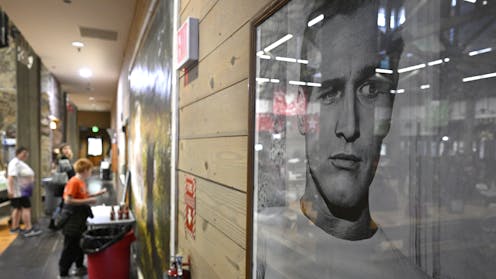
Paul Newman, the late actor and philanthropist, co-founded Camp Boggy Creek, which children with serious illnesses and their families attend for free. AP Photo/Phelan M. Ebenhack

U.S. charitable giving increased 3.3% to US$593 billion in 2024, lifted by the strength of the economy.

The annual report from the Giving USA Foundation, produced in partnership with the Indiana University Lilly Family School of Philanthropy,
found that this was the second-highest level on record after adjusting for inflation.

Giving grew at the fastest pace since 2021, when the COVID-19 pandemic led many Americans to make larger-than-usual donations. It was also the first time since then that growth in giving outpaced inflation.

As two of the report’s lead researchers, we see many signs of healthy growth in charitable giving in 2024. Our data shows that the strong economy, which grew 2.8% in 2024, bolstered individual and corporate giving and allowed foundations to maintain the historically high level of giving seen from them in recent years.

It also helped that stock markets performed well in 2024, consumer sentiment was generally positive, personal income rose and inflation continued to ease.

Donations to nearly every charitable category we track grew.

Individuals and corporations led overall growth

Individual donors continued to provide the bulk of the nation’s charitable gifts. The $392 billion they gave to charity accounted for two-thirds of the year’s total. Giving by individuals grew 5.1% from 2023 − a swifter pace than for all donations.

Corporate giving rose even faster. It was up 6% to a record $44 billion.

This growth reflects the high pretax profits earned by corporations in 2024 and the trend toward corporations donating a higher share of pretax profits in recent years.

For example, corporations generally donated less than 1% of pretax profits from 2004-2018. But our research team started to see corporate giving rise to 1% or more in the 2019 data. This was also the case in 2024, when corporate giving stood at 1.1% of pretax profits.

Corporate philanthropy has grown by more than 50% since 2019, a trend that has coincided with rising in-kind donations of insulin products and other pharmaceuticals. Drugmakers made an estimated $24 billion in these donations in 2024 − up 41% since 2019.

To be sure, corporations’ donations amounted to just 7% of overall giving in 2024.

Meanwhile, grants made by foundations exceeded $100 billion for the third straight year. Almost $1 out of every $5 contributed to charity was from a foundation in each of those years.

Giving by foundations in the five years ending in 2024 was higher than any other period since Giving USA has tracked this data. Foundation giving, however, remained fairly flat from 2023 to 2024, at about $110 billion.

Around 8% of all gifts made in 2024 were from bequests included in people’s wills, the same as in 2023. Bequests totaled $44 billion, down 4.4% when adjusted for inflation. But the total given through bequests varies quite a bit from year to year.

Most kinds of donations increased

Donations to most of the nine charitable categories Giving USA tracks increased. The one exception: Gifts to churches and other religious institutions fell 1%. But religious giving remained by far the top category, followed by human services and education.

Religious causes received 23% of all donations, a total of $147 billion. Giving to human services nonprofits, such as food banks and homeless shelters, increased considerably during the pandemic. It now accounts for about 14% of all donations. In 2024, these gifts totaled $91 billion.

Giving to education, which primarily consists of donations to colleges and universities has tended to grow more slowly than overall giving in recent years.

Giving for education rebounded to a record high in 2024, however, rising nearly 10% from a year earlier. And these gifts have grown at a quick pace over the past decade, increasing by more than 22% from 2015 to 2024. The $88 billion in gifts received for education in 2024 was the third-largest of the nine categories we follow.

Several other categories also reached all-time highs of giving in 2024: health, at $61 billion; arts, culture and humanities, at $25 billion; and environment and animals, at $22 billion.

The increases in giving for most kinds of nonprofits, supported by strong growth in giving by individuals and corporations, indicate that the charitable sector ended 2024 in a relatively solid position.

The Conversation

Jon Bergdoll receives grant funding from the Giving USA Foundation, which publishes Giving USA.

Christina Daniken receives grant funding from the Giving USA Foundation, which publishes Giving USA.

ref. Charitable giving grew to $593B in 2024, propelled by a strengthening US economy and a booming stock market – https://theconversation.com/charitable-giving-grew-to-593b-in-2024-propelled-by-a-strengthening-us-economy-and-a-booming-stock-market-259221