Sept penseurs francophones pour comprendre la condition intellectuelle contemporaine

Source: The Conversation – in French – By Christophe Premat, Professor, Canadian and Cultural Studies, Stockholm University

Qu’est-ce qu’être intellectuel aujourd’hui depuis l’Afrique ou ses diasporas, sinon occuper une position instable, prise entre héritages coloniaux, contraintes globales et luttes pour une autonomie critique, au prix fréquent d’une marginalisation sociale ?

Comme le montre l’ouvrage Sensibilités intellectuelles africaines, auquel j’ai contribué, l’intellectualité africaine ne peut être comprise sans prendre en compte les formes sensibles, éthiques et cognitives par lesquelles les penseurs habitent leur époque. L’intellectuel n’est pas seulement producteur de savoir, il est un sujet situé, traversé par des contradictions, engagé dans un monde qu’il contribue à transformer.


Sortir de l’« intellectuel exotique »

  • Penser la rupture critique – Jean-Godefroy Bidima

La philosophie de Bidima ouvre sur une autre manière de penser, plus relationnelle, plus située, attentive aux formes concrètes de production du sens. Elle s’enracine dans une revalorisation d’une éthique de la palabre.

Loin d’une vision folklorisante, la palabre est chez Bidima une véritable figure philosophique du débat et du jugement. Elle désigne un espace de parole où la vérité ne se décrète pas, mais se construit collectivement, dans la confrontation des points de vue, dans la temporalité longue de l’échange, dans l’attention aux voix multiples.

La palabre est ainsi une pratique épistémique et politique mettant en jeu une rationalité qui ne se réduit pas à l’argument abstrait, mais qui intègre les affects, les expériences, les positions sociales. Elle permet de penser autrement la délibération, en dehors des modèles strictement occidentaux de la raison discursive, tout en évitant toute idéalisation naïve.

Dans cette perspective, l’intellectuel n’est plus celui qui parle de manière surplombante, mais celui qui participe à des dispositifs de co-élaboration du sens. Il doit apprendre à écouter, à se décentrer, à inscrire sa parole dans un tissu relationnel.

Seloua Luste Boulbina radicalise cette exigence en montrant que la colonisation a produit une infrastructure mentale durable. Dans la perspective de Boulbina, penser ne consiste jamais à habiter une langue comme un sol stable, mais à se tenir dans l’écart entre les langues, là où les concepts vacillent et où leur prétendue universalité se fissure.

Sa philosophie relève ainsi d’une déconstruction active : penser “entre les langues”, c’est dès lors assumer une position de discontinuité, de déplacement et d’hybridité, où aucune appartenance linguistique ou conceptuelle ne peut être tenue pour évidente.

Avec Diagne, la sortie de l’aliénation ne passe ni par le rejet ni par la pure déconstruction, mais par la traduction. Celle-ci est pensée comme une opération philosophique majeure : traduire, c’est faire circuler les idées, mais aussi les transformer.

Il défend une conception relationnelle du savoir, où les traditions philosophiques ne sont pas closes, mais en dialogue. L’Afrique n’est pas en périphérie : elle participe activement à la reconfiguration des savoirs. Dans cette optique, l’intellectuel devient un passeur, capable de naviguer entre plusieurs univers linguistiques et conceptuels.

L’intellectuel face au pouvoir : entre critique et marginalité

La pensée de Mbembe s’ancre dans une interrogation radicale sur les formes historiques de la violence. Esclavage, colonisation, postcolonie : ces expériences ne sont pas seulement des événements passés, mais des structures qui continuent d’informer le présent.

Le concept de postcolonie occupe ici une place centrale. Il ne désigne pas simplement la période qui suit les indépendances, mais un régime de pouvoir spécifique, caractérisé par l’imbrication du passé colonial et des formes contemporaines de domination. La postcolonie est un espace où s’entrelacent continuités et transformations. Les logiques de commandement, de violence et de dépendance héritées de la colonisation y sont reconfigurées plutôt que dépassées. Mbembe insiste notamment sur la dimension quotidienne et diffuse du pouvoir postcolonial. Celui-ci ne s’exerce pas seulement de manière coercitive, mais aussi à travers des formes de complicité, de théâtralisation et d’intériorisation.

Le pouvoir et les sujets qu’il gouverne sont pris dans une relation ambivalente, faite à la fois de soumission, de détournement et de participation. Cette ambivalence produit une condition marquée par ce que Mbembe décrit comme une « convivialité » paradoxale avec le pouvoir, où domination et adhésion coexistent.

La postcolonie est ainsi un espace où le politique se mêle à l’affectif, au symbolique, au corporel, produisant une expérience du monde marquée par l’excès, la précarité et l’incertitude. L’intellectuel, chez Mbembe, est celui qui affronte cette configuration complexe. Il travaille à partir d’un monde marqué par ce qu’il appelle une « grande nuit », c’est-à-dire une histoire dense de dépossession et de violence, mais aussi de résistances et de réinventions.

Avec Jean-Marc Ela, la réflexion sur l’intellectuel s’ancre dans une exigence théologique et politique forte : penser à partir du vécu concret des populations, en particulier des mondes ruraux africains longtemps marginalisés par les savoirs dominants.

Sa théologie, proche de la théologie de la libération, rompt avec une approche abstraite et désincarnée du religieux comme du savoir. Elle affirme au contraire que toute pensée authentique doit émerger des conditions réelles d’existence, des expériences de précarité, des luttes pour la dignité et des formes ordinaires de résistance.

Critiquer le développement comme injonction

  • Dénoncer l’injonction au développement – Aminata Traoré

Aminata Traoré propose une critique frontale du discours du développement, qu’elle analyse comme une nouvelle forme de domination. Les politiques économiques globales imposent des normes qui dépossèdent les sociétés de leur capacité d’autodéfinition. Le développement devient une injonction, un cadre contraignant qui reproduit des dépendances.

Son travail met en évidence la dimension politique, culturelle et symbolique de ces processus. L’intellectuel est ici une figure de résistance, qui travaille à restaurer des marges d’autonomie et à redonner sens à la notion de souveraineté. Cette critique s’inscrit pleinement dans les analyses du livre sur la marginalisation structurelle de l’Afrique dans les dynamiques globales.

Pour une habitation poétique du monde

  • Habiter le déphasage – Felwine Sarr

Chez Felwine Sarr, l’intellectuel se caractérise par un décalage avec son environnement. Ce déphasage tient à une lucidité particulière qui lui fait percevoir les contradictions et les non-dits du monde. Une telle perception rend difficile toute adhésion simple et installe une tension intérieure. Cette tension n’est pas seulement inconfortable, elle est aussi la condition d’une pensée critique exigeante.

Cependant, cette lucidité ne conduit pas uniquement à une forme de malaise. Elle ouvre un espace de création. L’intellectuel ne se limite pas à analyser ou à dénoncer, il imagine d’autres possibles et esquisse de nouveaux horizons. Sa clairvoyance devient alors une ressource qui permet de transformer la critique en invention.

Il en résulte une figure à la fois exposée et créatrice, dont la force tient précisément à cette capacité à faire de la lucidité un principe d’ouverture plutôt qu’un simple constat.

  • Une condition plus qu’une école

Ces penseurs ne forment pas une école au sens strict, mais donnent à voir une condition partagée. Ils tracent un espace de pensée où l’exigence intellectuelle naît du rapport concret au monde et d’un refus des solutions toutes faites. Leur diversité ne fragilise pas leur portée, elle en constitue la force, en montrant que la figure de l’intellectuel africain ne se laisse pas réduire à un modèle unique. Cette pluralité apparaît comme une manière d’habiter le réel plutôt que comme une doctrine à suivre. Elle engage aussi un rapport singulier à l’Afrique, non pas comme une essence figée ou un simple objet d’étude, mais comme un horizon de pensée.

The Conversation

Christophe Premat est directeur du Centre d’études canadiennes de l’Université de Stockholm et professeur en études culturelles francophones. Il a codirigé avec Buata B. Malela l’ouvrage Sensibilités intellectuelles africaines (éditions Hermann, 2025), consacré aux formes contemporaines de l’intellectualité africaine.

ref. Sept penseurs francophones pour comprendre la condition intellectuelle contemporaine – https://theconversation.com/sept-penseurs-francophones-pour-comprendre-la-condition-intellectuelle-contemporaine-281903

English local elections 2026: a story of a new kind of politics

Source: The Conversation – UK – By Stephen Coleman, Professor of Political Communication, University of Leeds

Every election is a storytelling contest, with campaigning parties competing to frame the plot. This year’s local elections, the largest test of voters’ mood since the 2024 general election, have been dominated by two master-narratives.

The first is about the demise of the old two-party system under which Labour and Conservatives have been the battling giants for almost 100 years. Vast regions of England have long been regarded as safe electoral zones. They have been disrupted only occasionally by strategic incursions by the Liberal Democrats or mid-term revolts against whoever formed the Westminster government.

The story of the 2026 local elections is one of a conspicuous public impulse to punish the old incumbents, resulting in the ascendancy of the new kids on the political block – Reform UK and the Greens.

In the 2024 general election, Reform won 15.3% of the vote in English constituencies and the Green Party won 7.3%. Since then, Labour’s poll ratings have fallen and the Tories have hardly recovered from their devastating result when they lost 238 seats.

But the story amounts to more than numbers. We are witnessing a pervasive and powerful expression of desire by the electorate – not just for radical political alternatives, but for a radical alternative to politics itself.

The rise of the outsider

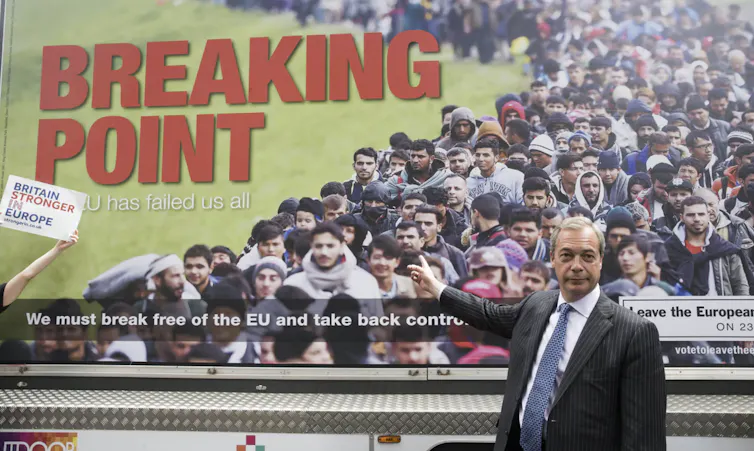
This is a story about the rejection of anyone who looks or speaks like a conventional politician. Both Reform leader Nigel Farage and Zack Polanski, the leader of the Greens in England and Wales, have cultivated images of themselves as outsiders who eschew the caution and attachment to well-rehearsed cliche that has so discredited their opponents.

It was an election in which voters came to believe that what these political mavericks say is what they actually mean. Left-inclined voters might feel repelled by Farage’s strident nationalism and right-inclined voters might regard Polanski as a dangerous dreamer. But neither doubts that they are up against genuine commitments.

Meanwhile, Labour and Conservative candidates have continued to campaign in the way they have been for decades. This means they have often actually been talking about local policies relating to refuse collection, libraries and care services. The newcomers have tended to ignore the rules of the game and fought their campaigns on headline values rather than policy detail.

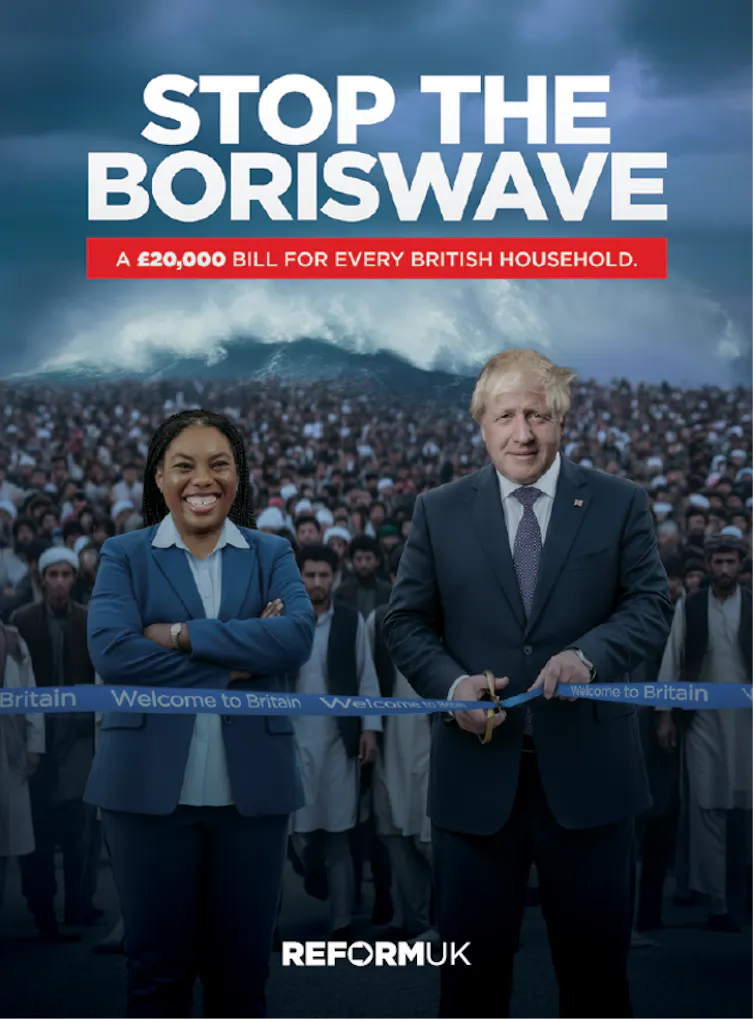
Reform UK has said that it planned to open migrant detention centres in areas where the vote for the Green Party is high, while Green candidates in Haringey produced an election video stating that if elected they would uphold the inalienable rights of the Palestinian people.

The fact that elected local councillors lack any power to place detention centres in other areas or determine UK foreign policy was ignored. Local elections were turned into a showcase for a style of politics in which cultural symbolism outweighed the prudential technicalities of local governance.


Read more:
After a year of Reform UK in local government, the cracks are starting to show


However, as Reform politicians are learning in the few areas where they already hold local power, attention to policy complexity calls for rather more than the repetition of populist slogans, leading several of their councillors to leave the party as the responsibility of hard policy choices has dawned upon them.

For many voters, these local elections present a chance to gamble on the promise of the untried. And this brings us to the second story of this campaign, which is taking place almost exactly a decade after the Brexit referendum.

That was a moment when the politics of “anything must be better than this” appealed to electoral gamblers. As an insurgency of the unheard, Brexit reflected a feeling that the political establishment needed a good poke in the eye. This was regardless of the consequences for the assailants.

crowd of people on a march in support of remain ahead of the brexit vote in 2016.
Unfinished business from 2016.
Ms Jane Campbell/Shutterstock

A key story of this year’s local elections is that the division between Leavers and Remainers, far from fading into the distance, has hardened over the past decade. Socially liberal Remainers and culturally conservative Leavers have each sought political homes in which to complete what they see as unfinished business.

YouGov polling in early 2026 suggested that how people voted on Brexit is a key predictor of how they would vote in this year’s elections. Some 50% of those who voted Leave in 2016 intended to back Reform this year. Among Remainers, the largest number (28%) say that they will vote Labour, but both the Greens and the Liberal Democrats each have around a fifth of the Remainer vote, making them the largest political home for those who opposed Brexit ten years ago.

The results of these elections say a lot about how much voters are tired of the old incumbents and continue to dwell on changes that Brexit promised or threatened. In terms of how councils will be run between now and the next local elections, during a period of constrained public spending, hollowing out of services and energy insecurity, this election campaign has had precious little to say.

The Conversation

Stephen Coleman does not work for, consult, own shares in or receive funding from any company or organisation that would benefit from this article, and has disclosed no relevant affiliations beyond their academic appointment.

ref. English local elections 2026: a story of a new kind of politics – https://theconversation.com/english-local-elections-2026-a-story-of-a-new-kind-of-politics-282409

From fossicking for fossils to a champion for life on Earth: Sir David Attenborough at 100

Source: The Conversation – Global Perspectives – By Euan Ritchie, Professor in Wildlife Ecology and Conservation, School of Life & Environmental Sciences, Deakin University

BBC, CC BY-NC-ND

Sir David Attenborough turns 100 this week.

Very few people have the good fortune to live for a century. Fewer still achieve so much and touch so many lives.

Across his seven decade career with the BBC, Attenborough ushered in the transition from black and white to colour television. He gave the now legendary comedy troupe Monty Python their lucky break, greenlighting their Flying Circus. His keen eye and care for viewers is in part why tennis balls are yellow, not white – they’re much easier to see on screen.

But Attenborough is, of course, most famous for his nature documentaries. For decades, he has fronted the camera to educate, entertain and inspire billions of people about the complexity, wonder and majesty of the natural world, and the many threats it faces. It wasn’t a given – Attenborough was told early in his career his teeth were too big for television!

For ecologists like myself, Attenborough’s work has been a source of deep inspiration. It was instrumental in my decision to pursue a life and a career dedicated to understanding, caring and fighting for the protection of nature. For this gift, I am eternally grateful.

A career driven by curiosity

Attenborough’s connection with nature came early, forged in no small part through an insatiable fascination with fossils – including his childhood joy at discovering an ammonite in the Leicestershire countryside.

He went on to study geology and zoology at Cambridge University, graduating in 1947. He served in the navy and worked in an educational publishing house. Notably, the BBC rejected his first job application as a radio producer in 1950. But he tried again, and joined the BBC as a trainee producer in 1952.

His career in nature documentaries began to bud almost immediately, with his Zoo Quest series beginning in 1954. But it burst into full bloom with the landmark Life on Earth series in 1979, which brought distant locations, extraordinary wildlife and evolution and ecology to TV. It instilled a sense of wonder and awe in audiences, while maintaining and respecting scientific accuracy.

two men, black and white image, TV interview
Early in his career, Attenborough (right) interviewed Edmund Hillary.
Wikimedia, CC BY-NC-ND

The master storyteller

One reason Attenborough has had such success as a communicator is his understated, calm but authoritative demeanour. When you sit down to watch an Attenborough documentary, you feel in safe hands.

His approach isn’t the norm. In other nature documentaries, wildlife can often seem secondary, as props for the presenter.

Some of Sir David’s documentaries didn’t always go to script.

In series such as The Living Planet, The Trials of Life, The Blue Planet, The Planet Earth, and scores of others, Attenborough took us across the globe, revealing nature’s beauty, oddities and extraordinary complexity, as well as its macabre and brutal aspects. The habitats home to the world’s species are brought to life in extraordinary detail. We watch with laughter, trepidation, sadness, anger, excitement and awe, ebbing and flowing as nature’s stories unfold.

Who can forget the first time they saw and heard the extraordinary vocal repertoire and mimicry of a lyrebird, or a curious mountain gorilla’s desire to connect with a fellow great ape? The epic battle for survival between a hatchling iguana and hungry hordes of racer snakes? Or the breathtaking explosion of colour and complexity of a coral reef? Each of these was captured by master cinematographers and the story told to us by Attenborough.

A truly epic chase and battle for survival between iguanas and snakes.

Over his long career, Attenborough has become an icon. He was voted the UK’s best TV presenter of all time. But his prodigious output has come at a personal cost too. One of his regrets is how much time he has spent away from his family.

He is also not off limits to criticism. For a long time, Attenborough focused on the glory of nature, largely omitting the damage humans do through overfishing, deforestation, pollution, spreading exotic species, and other threats. He has also shied away from assigning blame to those most responsible for the harms inflicted on nature.

In 2018, he said too much focus on why so much wildlife is threatened was a “turn-off” for some viewers. Ecologists and conservation scientists can sympathise. We know bombarding people with doom and gloom invites apathy and despair, not a desire to act. It’s a hard line to walk between harsh realities and hope.

To his credit, Attenborough has belatedly focused on these issues in recent years. Footage of plastic pollution in Blue Planet II and the ravages of industrial fishing in Ocean have brought a sharp focus on these issues.

In 2020, he released A Life On Our Planet, which he describes as a “witness statement” to the startling losses of biodiversity he has seen over his lifetime. Rather than just spell out the problems, Attenborough laid out how to solve them – and the role we can all play in fixing the two biggest and deeply interwoven problems nature faces: climate change and biodiversity declines and extinctions.

While Attenborough’s earlier work largely avoided these difficult conversations, they succeeded in bringing nature’s wonder to millions of people. This shouldn’t be overlooked. At a time when more and more of us are cut off from nature, Attenborough’s documentaries forged a new connection. For people to care about losing nature, they first have to know and love it.

Conservation relies on stories

Scientific research rarely leads to the behavioural changes we might hope for. Accumulating facts and evidence is vital. But it’s not enough. What humans respond to is stories.

Alongside other globally renowned voices such as the late, great Jane Goodall, Attenborough’s work telling the stories of nature has shaped public opinion. In turn, it has galvanised conservation efforts such as the push to protect 30% of the world’s oceans by 2030.

As he celebrates his centenary, it’s encouraging to see a new generation and diversity of voices in the media and science communication, advocacy, and scientific community. They speak and share their messages with great clarity, confidence, and passion.

Attenborough is just one person. He can’t replace the vital role of scientists, community leaders, conservationists and policymakers in conserving nature. But no one will ever replace David’s distinctive voice. As he has said:

it seems to me that the natural world is the greatest source of excitement; the greatest source of visual beauty; the greatest source of intellectual interest. It is the greatest source of so much in life that makes life worth living

Hear, hear. Happy birthday for May 8th, David Attenborough.

The Conversation

Euan Ritchie receives funding from the Australian Research Council and the Department of Energy, Environment and Climate Action. Euan is a Councillor with the Biodiversity Council.

ref. From fossicking for fossils to a champion for life on Earth: Sir David Attenborough at 100 – https://theconversation.com/from-fossicking-for-fossils-to-a-champion-for-life-on-earth-sir-david-attenborough-at-100-281229

Russia doesn’t have much to celebrate on Victory Day, as Ukraine brings the war home to Putin

Source: The Conversation – Global Perspectives – By Jon Richardson, Visiting Fellow, Centre for European Studies, Australian National University

Russia has dramatically scaled back its annual Victory Day parade in Red Square on May 9, with no heavy military hardware for the first time in 20 years. There will also be fewer foreign or Russian dignitaries present.

In addition, the government has shut down airports and temporarily suspended mobile internet access ahead of the holiday.

The Kremlin says the security measures are intended to guard against Ukrainian “terrorism”. It has declared a unilateral “truce” for May 8-9, warning that any Ukrainian attacks during the celebrations could trigger a massive strike on Kyiv. Ukrainian President Volodymyr Zelensky has rejected the proposal, calling it a “theatrical performance”.

As the war grinds on in Ukraine, the Kremlin’s precautions at home are remarkable – a sign that Ukraine’s long-range strike capabilities have punctured one of Russian President Vladimir Putin’s most important political rituals, as well as the country’s seeming impregnability from the war.

Ukraine’s momentum

Under Putin’s rule, Victory Day has become more than just a commemoration of the Soviet defeat of Nazi Germany. The parade, a showcase of Russian military might, has been elevated into a core ritual of legitimising his regime.

The symbolism has taken on even greater meaning since Russia’s full-scale invasion of Ukraine in 2022. The defeat of Nazi Germany has been fused with Putin’s bogus claim that Russia needs to defeat fictitious Nazis in Ukraine.

Last year, Putin welcomed two dozen world leaders, including Xi Jinping of China, Luiz Inácio Lula da Silva of Brazil, Nicolás Maduro of Venezuela and Abdel Fattah el-Sisi of Egypt.

It was seen as an attempt to project Russia’s global power and show the West’s attempts to isolate Moscow were failing.

What a difference a year makes.

Ukraine has steadily expanded its ability to hit targets far inside Russia, including oil terminals, refineries, military infrastructure and defence industries. Some targets in the Baltic Sea near St. Petersburg and in the Ural Mountains are hundreds of kilometres from Ukraine.

The mere threat of drones has prompted dozens of airport closures and hundreds of flight delays in recent months, especially in Moscow.

At the same time, Ukraine has become much more adept at repelling Russian drone attacks on its own territory, reportedly shooting down 33,000 Russian drones in March of this year alone – a record for one month.

The expansion of its unmanned ground robotic systems and deep-strike capabilities – including its Flamingo missile, which hit a defence plant 1,500 kilometres from Ukraine on May 5 – have helped Ukraine offset its disadvantages in manpower (which remains a big constraint) and ammunition.

Ukraine’s defence industrial base is a big part of the story. Kyiv says its capacity has grown 50-fold since 2022, and now accounts for 70% of its weapons procurement.

Its successes have won the admiration of its European partners and others around the world. In recent days, for example, it signed a 10-year defence export deal with Saudi Arabia, the United Arab Emirates and Qatar, all three of which were attacked by Iran.

And there are signs Ukraine is gaining momentum on the frontlines. Analysts say Ukrainian forces actually gained more territory than they lost in February, for the first month since 2023.

Estimates of Russian death tolls are difficult to come by, but NATO chief Mark Rutte said Russia is losing 30-35,000 soldiers per month, while Zelensky said 35,000 Russian troops were either killed or wounded in the month of March.

Cracks at home

Meanwhile, Putin has only grown more paranoid about a potential coup or assassination attempt with drones. He has reportedly sharply reduced his movements, spends more time in bunkers, and is surrounded by tighter security.

Domestic strains are growing, as well. Russia’s rate of recruitment has begun to fall short of its battlefield losses. The quality of recruits has plummeted, as well, with alcoholics reportedly being duped or pressured into signing up.

It is becoming harder to sustain recruitment without another politically risky mobilisation. That matters because Putin has long tried to convince Russians the war can be fought at a distance, without demanding too much from society at large.

Russia’s economy is suffering, too, from chronic labour shortages, negative growth, and high inflation and interest rates.

And there are increasing signs of discontent. One critic, Ilya Remeslo, a former Kremlin propagandist, for instance, publicly accused Putin of being a “war criminal”. He was arrested, but in a surprise move, was released after just 30 days and has vowed to continue his campaign against the Russian leader.

Gennady Zyuganov, the leader of Russia’s Communist Party (loyal to Putin), has warned the country’s faltering economy risks stoking a 1917-style revolution. And an anonymous former senior official wrote in The Economist that grumbling among the elite shows Putin is losing his grip on Russia.

Rising popular anger has also been triggered by the tightening of controls on the internet, including WhatsApp and Telegram, aimed at curbing dissent and criticism.

It’s too early to claim the war has turned decisively in Kyiv’s favour. The current stalemate may prevail for some time.

But the recent trends suggest Russia can no longer assume it can simply outlast Ukraine through attrition. This may well cause Putin to adjust his calculations about peace talks and his unwavering pursuit of maximalist goals.

Despite US President Donald Trump’s unfounded recent claim that Ukraine has been “militarily defeated”, Kyiv is more than holding its own. It continues to have Europe’s backing, as well, with the EU recently finalising a massive 90 billion euro (A$145 billion) loan.

As eminent strategic analyst Lawrence Freedman argues, Ukraine is succeeding by not losing. He argues Ukraine’s “Micawber strategy” – hoping that something will turn up, like the character Wilkins Micawber in Charles Dickens’ David Copperfield – could very well pay off.

The Conversation

Jon Richardson does not work for, consult, own shares in or receive funding from any company or organisation that would benefit from this article, and has disclosed no relevant affiliations beyond their academic appointment.

ref. Russia doesn’t have much to celebrate on Victory Day, as Ukraine brings the war home to Putin – https://theconversation.com/russia-doesnt-have-much-to-celebrate-on-victory-day-as-ukraine-brings-the-war-home-to-putin-282254

Trump and Lula at the White House: a relationship built on pragmatism and a broader regional calculus

Source: The Conversation – Global Perspectives – By Guilherme Casarões, Associate Professor of Brazilian Studies, Florida International University

Brazilian President Lula da Silva greets US President Donald Trump upon his arrival at the White House: the trip also serves a second, equally important function for Lula, as each item on the bilateral agenda maps directly onto a domestic electoral fault line. Ricardo Stuckert/PR, CC BY

For about three hours of closed-door talks between Brazilian President Luiz Inácio Lula da Silva and US President Donald Trump at the White House on May 7, 2026, many observers in the two countries held their breath. Since there was no official joint statement or press conference, they did not know what to expect. Despite the reported “chemistry” between both presidents at the United Nations General Assembly last September, bilateral tensions were far from resolved.

The meeting between both presidents could have gone many ways: on the surface, Brazil and the US currently stand more as geopolitical rivals than allies. Over the last few months, Lula has made several criticisms to what he saw as a renewed US unilateralism. The Trump administration, in turn, seems to be responsive to the former President Jair Bolsonaro family’s demands regarding free speech or organized crime.

But Lula wanted the conversation to succeed, not so much because of diplomatic concerns, but because he faces an uphill battle ahead of the October elections. His trip to Washington was, above all, a domestic political operation. Even if the meeting lacked specific results, the positive atmosphere reported by both presidents was a victory for Lula in the context of a presidential race that is already shaping up to be one of the most consequential in Brazil’s recent history.

Flávio Bolsonaro, the eldest son of the jailed former President Jair Bolsonaro, has mounted a formidable electoral challenge. Polls now show him in a statistical tie with Lula in a hypothetical runoff, which is a remarkable position for a candidate whose political inheritance includes a father convicted of attempting a coup d’état.

The far-right senator has made several trips to the United States over recent months, including an appearance at the conservative CPAC summit, projecting himself as the candidate who can restore Brazil’s relationship with Washington after years of what he characterizes as Lula’s anti-American drift. His pitch to Brazilian voters is simple and powerful: only a Bolsonaro can work with Trump.

That narrative has found purchase in a Brazilian electorate that is increasingly attentive to geopolitical alignments. This is not the Brazil of previous electoral cycles, where foreign policy was a footnote.

Trump as a lifeline

Since Trump’s return to the White House, the Bolsonarist movement has portrayed the U.S. president as a lifeline, not only capable of keeping Jair Bolsonaro out of jail but also helping his movement’s political comeback. Flávio has reportedly pledged significant concessions to Washington on rare earth minerals, narcoterrorism designations, and trade, presenting these as proof of loyalty to an administration that the Bolsonaro family views as friendly and like-minded.

Whether or not Trump reciprocates that loyalty in any meaningful way is almost beside the point. The image of members of the Bolsonaro dynasty in Washington, welcomed by the MAGA establishment, is itself an electoral asset.

This is precisely the vulnerability that Lula traveled to Washington to neutralize. By securing a White House meeting, the Brazilian president sent a clear signal to his domestic audience: the relationship with Washington is not broken, and it does not require a Bolsonaro to fix it. The Brazilian-only press conference that followed the meeting only served to reinforce this point.

But the trip serves a second, equally important function. Each item on the bilateral agenda maps directly onto a domestic electoral fault line for Lula. On trade and tariffs, Lula returns home able to claim that he is fighting to protect Brazilian exporters and consumers from the inflationary pressures of a trade war. On organized crime – specifically the potential US designation of drug gangs PCC and Comando Vermelho as foreign terrorist organizations – the president can portray himself as a defender of Brazilian sovereignty and judicial autonomy, resisting external interference in domestic security policy. On rare earth minerals and strategic resources, Lula can reframe what is, in essence, a negotiation over economic dependency as a story of Brazil’s rising geopolitical clout.

And on democracy itself, the contrast with the Bolsonaro family could not be starker: while the father languishes under house arrest for plotting a coup, they were not able to prevent Lula from being welcomed in Washington as a legitimate (and friendly) head of state.

Political pragmatism

It would be a mistake, however, to reduce Trump’s willingness to meet Lula to a mere diplomatic courtesy. The Trump administration has shown a consistent pragmatism beneath its ideological posturing. Its management of relations with Claudia Sheinbaum’s Mexico, its intermittent engagement with Venezuela, and now its reception of Lula all suggest that the White House can work with ideological opponents when strategic interests demand it.

Brazil, the largest economy in South America and a country with substantial reserves of the critical minerals that Washington covets for its industrial and defense supply chains, is too significant to be held hostage to electoral sympathies for the Bolsonaro family. There is also a broader regional calculus: as the United States asserts primacy across Latin America through what has become known as the “Trump Corollary”, having a cooperative Brazilian government is considerably more useful than a destabilized one.

None of this means that Lula’s Washington gambit will succeed electorally. Flávio Bolsonaro has proven to be a more disciplined and adaptable candidate than his father, and the transnational networks that animate the Bolsonarist movement extend well beyond Washington. A single White House photo-op carries only so much weight.

What the trip does illustrate, however, is the degree to which Brazilian electoral politics has become inseparable from the global contest over alignment, sovereignty, and great-power patronage. In that contest, Lula has made his move. It will hardly change the minds of those who, left or right, have already made up their minds about their candidates. But it shows to the centrist voter, if anything, that a pragmatic defense of Brazilian sovereignty can be much more efficient than ideological submission to foreign interests.

The Conversation

Guilherme Casarões não presta consultoria, trabalha, possui ações ou recebe financiamento de qualquer empresa ou organização que poderia se beneficiar com a publicação deste artigo e não revelou nenhum vínculo relevante além de seu cargo acadêmico.

ref. Trump and Lula at the White House: a relationship built on pragmatism and a broader regional calculus – https://theconversation.com/trump-and-lula-at-the-white-house-a-relationship-built-on-pragmatism-and-a-broader-regional-calculus-282470

Iran wants oil tariffs paid in Chinese yuan – is the power of the US petrodollar in decline?

Source: The Conversation – Global Perspectives – By Chris Ogden, Associate Professor in Global Studies, University of Auckland, Waipapa Taumata Rau

Fadel Senna /AFP via Getty Images

After weeks of blockades by Iran and the United States in the Strait of Hormuz, it’s clear the narrow waterway is now pivotal to the outcome of the conflict.

The US has begun to escort ships through the narrow passage, but behind the military manoeuvring lies a deeper development: energy security in the Persian Gulf is in a state of profound flux.

As well as the desire by both Iran and the US to control the global flow of oil, gas, helium and fertilisers from the region, the United Arab Emirates (a key US ally) has withdrawn from OPEC in what’s been called a major blow to the oil cartel.

On top of this, Iran has announced plans to introduce tariffs in the Strait of Hormuz as a form of reparations for the damage caused by the war.

If imposed, these tariffs are estimated to be worth between US$40 billion and $50 billion a year to Iran, and would potentially allow it to mitigate the impact of US economic sanctions.

Crucially, tariffs would be a way to cultivate stronger relations with China because they would be denominated in Chinese yuan, not US dollars. This has the potential to significantly alter regional and global power balances.

In fact, such payments have reportedly already been made by vessels going to China, India and Japan, with the Iranian parliament working to formalise the process. (Iran has also begun accepting payments in cryptocurrency.)

50 years of dominance

If Iran can continue to charge these tariffs it could tilt regional influence away from the US towards China and Asia by eroding the historical dominance of the petrodollar.

Essentially, the petrodollar system has seen the pricing and trading of oil in US dollars. The term dates from the 1970s when the US asked Saudi Arabia to exclusively price its oil in US dollars in return for military aid.

This spread across OPEC (the Organization of the Petroleum Exporting Countries), becoming the benchmark of the global oil trade, bolstering the US dollar as the global reserve currency and underwriting US power.

Oil-producing nations amassed huge petrodollar surpluses – too much to invest only in their own economies – which were funnelled or “recycled” back into US securities and stocks, and other countries’ sovereign wealth funds.

They have become the primary source of revenue for OPEC members, as well as non-member oil exporters Qatar and Norway. This ties these countries to Washington and gives the US significant financial leverage in global affairs. The flow of petrodollars helps finance US deficits and reduce US borrowing costs.

A new paradigm?

If major regional players such as the UAE, Bahrain, Qatar, Kuwait and Saudi Arabia pay Iranian tariffs in “petroyuans”, economist Antonio Bhardwaj has said, it would mark:

the systematic erosion of the petrodollar system and the emergence of the petroyuan as a credible, institutionally embedded alternative framework for settling global energy transactions.

It’s a sizeable “if”, but the introduction of tariffs would also pose a dilemma for countries that supported Iran in the conflict (implicitly or explicitly) and those that didn’t.

As internatinoal relations analyst Pakizah Parveen has written, we would see the emergence of:

a bifurcated global oil market: barrels from compliant parties would move through Hormuz in yuan. In contrast, non-compliant parties would incur significantly higher costs in dollar-denominated barrels.

Such a choice would affect major US allies such as Pakistan, South Korea, Japan and the Philippines, all of which have faced severe economic pressures as a result of the upheavals in the Gulf and Middle East.

Paying tariffs in petroyuan would draw them towards China and play into Beijing’s narrative of being a reliable and more stable economic force. It also mirrors Russia’s request for payment in yuan for its oil since 2025.

Decline of the petrodollar

It would be premature to argue Iranian tariffs will lead to a general “de-dollarisation” of the world economy. But they may be a step towards a devaluing of the US dollar.

By extension, any move by other countries away from the US dollar is a move away from dependence on the US financially and politically. It would also aid China’s push to internationalise the yuan.

For the first time since 1996, global central banks hold more gold in their reserves than US debt securities. The BRICS group of countries may move further away from US influence, with China, India and Brazil having all reduced their US holdings in 2025.

Overall, Iranian tariffs denominated in yuan would be another sign of an emerging multipolar world in which US preeminence is no longer a given. It would mean more strategic flexibility for all countries, great and small, but also more uncertainty.

The Conversation

Chris Ogden is affiliated with the Foreign Policy Centre in London.

ref. Iran wants oil tariffs paid in Chinese yuan – is the power of the US petrodollar in decline? – https://theconversation.com/iran-wants-oil-tariffs-paid-in-chinese-yuan-is-the-power-of-the-us-petrodollar-in-decline-281858

Russia’s pared-down Victory Day parade tells a story: Away from the pomp, war in Ukraine is not going to Putin’s plan

Source: The Conversation – Global Perspectives – By Lena Surzhko Harned, Associate Teaching Professor of Political Science, Penn State

A police boat patrols the waters of the Moskva River near Red Square, which is decorated for the celebration of the 81st anniversary of the Soviet Union’s victory over Nazi Germany in World War II.
AP Photo/Alexander Zemlianichenko

Victory Day in Russia, which marks the surrender of Nazi Germany to the Soviet Union, has long held particular importance in Vladimir Putin’s Russia.

Yet this year the May 9 celebration – usually replete with extensive parades across the country and a demonstration of military hardware in Moscow – is expected to be significantly pared down. That’s due to Kyiv’s ongoing long-range military capabilities. For the first time in two decades, Russian officials have said, there will be no lavish display of tanks and missiles.

The reality for Putin is that the war in Ukraine, now in its fifth year, continues to be a grueling drain on Russian men, its economy and resources – and may continue to be for some time.

That was underscored by the European Union’s April 23 approval of a US$106 billion loan package to Ukraine. The aid, which will be a boon to Ukraine’s war-torn economy, had been stymied by EU-member Hungary under its former president, Viktor Orban, who was ousted in April 12 elections.

The resumption of EU aid and the removal of a pro-Moscow European voice at the EU represent major blows to Russia’s regional strategy. Perhaps trying to reset the narrative, Russia declared it would mark this Victory Day with a two-day ceasefire with Ukraine. Ukrainian President Volodymyr Zelenskyy responded by saying his country would also observe a ceasefire, starting two days earlier on May 6.

But there remain few immediate signs of a breakthrough in the conflict – and Russia appears chiefly interested in negotiating Ukraine’s future not with Kyiv but with U.S. President Donald Trump, who has been sympathetic to Russian interests.

As a scholar of contemporary politics in Eastern Europe, I see that as part of a pattern of Russian miscalculations and consistent denial of the will of citizens in democratic societies in Eastern Europe. Indeed, it reflects a dominant imperial mindset among Russia’s political elites, which the Kremlin has not altered since the collapse of the Soviet Union in 1991.

Losing hold of the old Soviet bloc?

While formally recognizing the independence of former Soviet republics in 1991, Moscow has continued to treat those countries as part of its sphere of influence.

For more than 25 years, Russia has pursued a hybrid approach of influencing former Soviet countries, along with others in Eastern Europe. That has included supporting electoral fraud, economic machination, media manipulation and use of force and violence.

Indeed, suspected Russian interference in politics and elections has been a frequent occurrence in Armenia, Georgia, Moldova, Romania and most recently Hungary.

A man in a suit gestures on a stage.
Hungary’s former Prime Minister Viktor Orban was Russia’s most stalwart ally in Europe.
AP Photo / Petr David Josek

But Hungary and Armenia are recent and powerful examples that show the limits of Russian operations. Orban’s loss in Hungary immediately dislodged Russia’s most powerful point of leverage in European politics.

Meanwhile, in Yerevan on May 5, Armenia hosted a bilateral summit with the EU where the country established stronger economic and defense ties to the bloc. It was a stark diplomatic event for the country that has long been a junior ally of Russia’s but which has increasingly moved away from Moscow.

Ukraine: A test of Russian policy

Yet Ukraine remains the focal point of both the extent and limits of Russian external interference.

Putin has been attempting to have a loyal proxy government in the country ever since being spurned by Leonid Kuchma – the second president of Ukraine, who was in office until 2005 – who proclaimed that “Ukraine is not Russia.”

In Ukraine’s 2004 presidential elections, Putin’s Kremlin threw its substantial resources behind Kuchma’s prime minister, Viktor Yanukovich, who was seen as more friendly to Russian interests.

Since then, its relationship with the country has been one of external interference. Putin’s message throughout has been clear: The West, in its fights against Russia, has sought to colonize and destroy Ukraine by supporting nationalist forces against Moscow’s interests.

Facing consistently strong Ukrainian civil society and sovereignty movements, Russia found it difficult to fully implement its goals through political subversion or influence. So Moscow increasingly turned to military options.

In March 2014, Russia moved to annex Crimea and began a war in Ukraine’s eastern border regions of Luhansk and Donetsk.

That war in the east ground on for years, until in 2022 Putin made the decision to double down yet again, this time opting for a full invasion. The goal of the war was in Putin’s own words to “de-militarize” and “de-nazify” Ukraine. Yet, four years later, Putin’s desire for regime change has not yielded the desired results.

The human cost of Russian pursuits

Over the past year, Trump’s commitment to a peace deal between Ukraine and Russia, without first establishing a durable ceasefire, has moved the U.S. position toward Putin’s. That has included Trump’s support for Ukraine territorial concession as the grinding war continues.

Without significant territorial gains, Russia has continued and intensified its campaign of mass airstrikes and drone attacks on Ukrainian population centers. Indeed, 2025 was the deadliest year since the start of the full-scale invasion; civilian deaths were up 26% in 2025 over the previous year.

A rescue worker walks among rubble.
A rescue worker walks inside apartments destroyed by a Russian strike in Odesa, Ukraine, on April 27, 2026.
AP Photo/Michael Shtekel

In the especially cold winter of 2025-26, Russia consistently targeted the energy grids vital to the millions of Ukrainians. Across Ukraine, at the record-low freezing temperatures, people endured daily attacks by drones and artillery, while trying to survive without electricity, heat and running water.

The Kremlin’s plan to put maximum pressure on Ukrainian civilians in the hope that Ukrainians would start blaming their leadership for refusing peace on Putin’s terms has not worked. For its part, the Ukrainian leadership has refused Russia’s maximalist war aims while cautiously continuing a commitment to the U.S.-mediated peace process.

Zelenskyy’s approval ratings remain steady at around 60%. The public opposition to Moscow’s demands on territorial concessions have not budged either, with a majority of Ukrainians continuing to categorically reject territorial concessions. Those numbers have not changed significantly since 2024.

Yet, war and surviving it takes a toll. And the experience of the year of negotiations has left many disillusioned, with some 70% doubting that peace talks will lead to a lasting solution.

A murky future

The last rounds of U.S.-mediated talks between Russia and Ukraine took place Feb. 16, 2026.

While Zelenskyy insists that the talks are not stalled, Russian’s top diplomat, Sergey Lavrov, has said the negotiations are not Russia’s top priority.

Buoyed by high oil prices as a result of the U.S. war in Iran, Russia has pursued a spring offensive and not relinquished its demands on Ukraine’s territories.

Yet this demand remains a nonstarter for Ukraine and Zelenskyy. As the Trump administration embraces the Russian “land for security” plan, Russia and its allies are likely to continue to put pressure on Zelenskyy, portraying him as an obstacle to peace talks.

But especially given Moscow’s recent woes, from losing a reliable ally in Hungary to the related EU loan guarantee, it’s unlikely that a continued grinding war will convince Ukrainians to abandon their sovereignty – or serve Russia’s own security.

The Conversation

Lena Surzhko Harned does not work for, consult, own shares in or receive funding from any company or organization that would benefit from this article, and has disclosed no relevant affiliations beyond their academic appointment.

ref. Russia’s pared-down Victory Day parade tells a story: Away from the pomp, war in Ukraine is not going to Putin’s plan – https://theconversation.com/russias-pared-down-victory-day-parade-tells-a-story-away-from-the-pomp-war-in-ukraine-is-not-going-to-putins-plan-276690

Ted Turner didn’t just revolutionize television − he changed the way we see our world

Source: The Conversation – USA – By Michael J. Socolow, Professor of Communication and Journalism, University of Maine

Ted Turner attends the CNN launch event in Atlanta, Ga., on June 1, 1980. Rick Diamond/Getty Images

Ted Turner, who died on April 6, 2026, was bright, shrewd and, most of all, lucky. The cable TV visionary proved to be in the right place, at the right time, to change television and video news forever.

Most of his big gambles, on things such as the MGM studio and library, which led to the creation of the Turner Classic Movies channel, paid off handsomely.

But Turner will be remembered mostly for the creation and development of the Cable News Network – CNN – which launched in 1980 and made our knowledge of distant events instantaneous and our world more comprehensible. In this sense, Turner’s legacy extends beyond television. He changed our conception not only of journalism but also of our world.

Turner’s obituaries note his record-setting philanthropy, his impressive conservation efforts and his campaign to make the world safer by securing post-Soviet Union era nuclear weaponry. Over the course of his 87 years, Turner proved an outstanding yachtsman, an active and involved sports team owner and a quotable maverick in the business world.

Yet as a scholar of broadcast history – and a former CNN employee – I think Turner’s ultimate legacy is a bit more atmospheric than measurable.

He changed the media ecology in profound and lasting ways. CNN’s arrival disrupted an established media environment, in which broadcast journalism routines and audience viewing habits had become standardized by the ABC, CBS and NBC TV networks.

The ramshackle early CNN, with its farcical “world headquarters” housed in a former Atlanta-area country club, was derided as the “Chicken Noodle Network” by veteran network journalists. But by the mid-1980s it had established profitability, and by 1991, with the collapse of the Soviet Union and the Gulf War, it assumed a singular position in America’s – and the world’s – information environment.

CNN had matured to respectability, and Turner was recognized as a visionary by Time magazine, which named him 1991’s Man of the Year. His idea had blossomed into a new arena for global information sharing, and his cable network fully competed with the established broadcast channels on big stories throughout the 1990s.

Right place, right time, right team

Turner’s cable TV news revolution required significant collaboration. The fulfillment of his vision needed luck, inherited money, innovative new technologies, supportive partners and even federal regulatory intervention.

For example, had Newton Minow’s Federal Communications Commission not pushed Congress to pass the All-Channel Receiver Act of 1962, American TV manufacturers would likely never have placed the UHF dial on their sets. That UHF dial made additional local TV competition possible by allowing more stations to broadcast.

In 1970, Turner purchased UHF Channel 17 in Atlanta, which he named WTGC for “Turner Communications Group,” and UHF Channel 36 in Charlotte, North Carolina, which he named WRET for “Robert Edward Turner,” and began building his broadcasting empire.

By the mid-1970s, the cost of satellite distribution to cable system operators had decreased to such an extent that Turner realized – and seized – an opportunity to nationally distribute his local station. He worked with satellite and cable system operators, building early relationships that would prove beneficial to everyone in the cable industry as it developed over the 1980s and ’90s.

In 1979 and 1980, he used these relationships to build the first 24-hour TV network, but it was his internal hires that made the original channel function. To launch CNN, Turner hired veterans of the TV news business, including Robert Wussler, who had previously been president of CBS Sports and the CBS Television Network. And he hired Reese Schonfeld, who had previously founded the Independent Television News Association, a national syndicator of pooled local TV programming.

A man stands in a newsroom, arms folded.
Ted Turner in the newsroom of his Cable News Network in Atlanta in 1985.
AP Photo

It was Turner’s vision, investments and established partnerships that made CNN possible. But the creation of the network proved a team effort requiring managerial competence and veteran television production experience.

CNN’s success was never assured. The channel continually lost money in its initial years. But the idea of 24-hour TV news being delivered to paying subscribers, through their cable system operators, proved so valuable that as early as 1981, two CBS executives secretly jetted to Atlanta to meet with Turner and Wussler about purchasing the network.

“I’ll sell you CNN,” he told them. But the deal floundered when the CBS executives would not accept anything less than 51% ownership – and control – of the channel. “You want control? You don’t buy control of Ted Turner’s companies,” he explained. “Forty-nine percent or less.”

Only four years later, Turner would turn the tables and attempt to take over CBS.

Turner came very close to living long enough to see CBS and CNN under a single ownership. CBS’ parent company, Paramount Skydance, is closing in on the purchase of Warner Bros. Discovery, the corporation that owns CNN.

Yet today, these two once hugely profitable news operations have been subsumed within massive multinational corporations, with their legacy brand equity providing as much value to their ownership as their journalism. Turner had long bemoaned the managerial fate of his cable news channel, which he sold to Warner Bros. in 1996.

Success invites criticism, establishes a legacy

Turner is one of the few figures in American media history who left a clearly identifiable legacy. There was a media world that existed before CNN and the one that came after. CNN’s success gave rise to competitors such as MSNBC, Fox News and others.

These channels simultaneously differentiated themselves from CNN while constantly measuring themselves against their older rival. But Turner’s original vision was distinct from the panel programs and punditry that’s now replaced original reporting from around the world.

Four men dressed in suits stand in a newsroom.
President Bill Clinton tours CNN’s new studios in Atlanta with Ted Turner on May 3, 1994.
AP Photo/Dennis Cook

Turner wanted to own and operate a global news organization where the news would always be the star, and where, like the classic wire services, professional reporting would be instant and accurate. And he wanted to make a fortune while doing it.

When he finally succeeded, critics began to complain about what journalist and academic Tom Rosenstiel called “The Myth of CNN” in a cover story in The New Republic in 1994. Scholars bemoaned CNN for its privileging good visuals over context and depth. They argued that its foreign coverage failed to maintain sufficient independence from the U.S. government.

Dictators and terrorists around the world learned to exploit CNN to get their messages across to the American public. In this sense, CNN’s neutrality, once a source of respect and credibility, could also undermine it by making the channel easily exploitable.

Billions of people around the world now take for granted the profusion of news access to anywhere on earth, at any time of day or night. That world was unimaginable before Turner’s work to make CNN conceivable and then real.

His legacy is not simply a series of cable channels but an entirely new way of thinking about information retrieval and access. Think about that the next time you scroll past video clips from London, Tokyo, Beirut or Mexico City, or check out breaking news videos from Ukraine or Tehran. And thank Ted for making such a world possible.

The Conversation

Michael J. Socolow does not work for, consult, own shares in or receive funding from any company or organization that would benefit from this article, and has disclosed no relevant affiliations beyond their academic appointment.

ref. Ted Turner didn’t just revolutionize television − he changed the way we see our world – https://theconversation.com/ted-turner-didnt-just-revolutionize-television-he-changed-the-way-we-see-our-world-282434

Yémen–Somalie : l’inquiétante coopération entre ennemis idéologiques menace le commerce mondial

Source: The Conversation – in French – By Brendon Novel, Candidat au doctorat en science politique, Université de Montréal

Dans une région stratégique pour le commerce mondial, des ennemis idéologiques pourraient aujourd’hui coopérer. Les insurgés houthistes du Yémen et le groupe somalien Al-Chabab, branche d’Al-Qaida la plus puissante au monde, échangeraient des ressources logistiques et militaires selon plusieurs rapports de l’ONU et du renseignement étatsunien, sans qu’il soit toutefois question d’une alliance formelle.


Ces échanges concernent notamment des technologies militaires, dont des drones, qui pourraient accroître la capacité d’Al-Chabab à opérer bien au-delà du territoire somalien, dans une zone déjà marquée par de fortes tensions sécuritaires.

Le mouvement Ansar Allah (dont les partisans sont les « Houthistes ») contrôle une partie du nord du Yémen et dispose de capacités militaires lui permettant de perturber la navigation en mer Rouge. Al-Chabab, de son côté, contrôle de larges portions du territoire somalien et mène une insurrection armée contre le gouvernement central.

Dans le cadre de mes recherches doctorales en science politique à l’Université de Montréal, j’ai été amené à m’intéresser aux questions de sécurité dans la Corne de l’Afrique, et plus largement dans le bassin de la mer Rouge, qui constitue l’une des principales routes du commerce mondial entre l’Asie et l’Europe via le canal de Suez.

Des liens opportunistes

Les premières mentions d’une coopération entre les deux groupes remontent à 2024. Le panel d’experts sur le Yémen de l’ONU est le premier à avoir alerté sur un trafic d’armes en expansion entre les côtes somaliennes et yéménites, toutes deux en proie à des conflits depuis 1991 et 2014 respectivement. Ce même panel s’est aussi inquiété d’une coopération croissante entre les deux organisations, tant sur le plan opérationnel que logistique.

Des cadres houthistes se seraient effectivement rendus en Somalie pour y établir des liens directs. Il est également probable que des connexions aient été établies par des individus extérieurs aux deux groupes, mais intégrés à des réseaux criminels qui leur sont liés. Des flux de contrebande de tout type — y compris d’armes — prospèrent en effet depuis longtemps le long des côtes de la Corne de l’Afrique et du Yémen.

À première vue, il peut paraître contre-intuitif que ces deux organisations coopèrent. Les Houthistes sont d’obédience chiite zaydite, alors qu’Al-Chabab s’inscrit dans un courant rigoriste de l’islam sunnite particulièrement anti-chiite.

L’existence d’intérêts matériels circonstanciels entre deux forces idéologiquement opposées n’a toutefois rien d’inédit. Le mouvement houthiste cherche à gagner en influence régionale et à diversifier ses sources de revenus, tandis qu’Al-Chabab vise à enrichir son arsenal militaire.


À lire aussi :
Le Somaliland, source de tensions dans la Corne de l’Afrique


Al-Chabab en quête de drones

Toujours selon l’ONU, des militants d’Al-Chabab auraient été formés au Yémen aux technologies de drone et à la fabrication d’engins explosifs sophistiqués. Par-là, Al-Chabab cherche à rendre ses assauts plus efficaces et meurtriers contre les forces gouvernementales somaliennes et leurs soutiens internationaux.

Ce faisant, les Houthistes auraient déjà fourni des drones armés aux militants somaliens qui leur ont également demandé des missiles guidés. Très utilisés au cours des attaques houthistes contre des navires en mer Rouge et dans le golfe d’Aden entre 2023 et 2025, ces équipements conféreraient à Al-Chabab une capacité de nuisance encore plus importante, en Somalie et au-delà.

Jusqu’à présent, l’organisation se sert de drones essentiellement pour des activités de surveillance et de renseignement. L’acquisition de drones offensifs donnerait à ses militants un levier de plus face à une armée somalienne déjà en grande difficulté.

Une expansion territoriale quasi continue

Depuis son émergence au milieu des années 2000, Al-Chabab s’est imposé comme la branche d’Al-Qaida la plus puissante au monde. L’organisation contrôle aujourd’hui de larges portions du territoire somalien, au centre et au sud du pays. Sa force repose d’abord sur les défaillances militaires, politiques et économiques du gouvernement somalien et de ses soutiens étrangers.

Al-Chabab prospère en effet sur l’échec du processus de reconstruction de l’État somalien selon un modèle fédéral. L’organisation exploite en particulier les rivalités — parfois violentes — entre l’armée fédérale et les forces régionales en quête d’autonomie. Ses militants profitent de ces dissensions, toujours plus importantes, alors que le pouvoir central à Mogadiscio, la capitale, s’efforce de centraliser le pouvoir et les ressources économiques du pays.

Comme l’armée somalienne, les forces internationales engagées à leur côté depuis le milieu des années 2000 — notamment celles de l’Union africaine — sont mises en difficulté par Al-Chabab.

Les États-Unis sont également en peine. En 2025, le nombre de frappes états-uniennes en Somalie n’a jamais été aussi important. Si elles ont permis d’affaiblir le groupe État islamique dans le nord du pays (aussi suspectées de liens avec les Houthistes), elles n’ont que peu affecté le contrôle territorial d’Al-Chabab.


À lire aussi :
La guerre en Éthiopie menace de déstabiliser toute la région


Déjà des milliers d’abonnés à l’infolettre de La Conversation. Et vous ? Abonnez-vous gratuitement à notre infolettre pour mieux comprendre les grands enjeux contemporains.


Risques d’instabilité régionale accrue

Après l’opération Hilaac (« éclair »), menée avec le soutien de Washington contre l’État islamique dans la province autonomiste du Puntland au nord, une nouvelle opération, Onkod (« tonnerre »), se prépare contre Al-Chabab dans une région côtière à l’ouest du Puntland. Les militants de l’organisation y renforcent donc leurs positions. Leurs actions — pour l’instant limitées — pourraient alors déborder sur le golfe d’Aden qui voit passer près de 30 % du trafic mondial de conteneurs.

Entre 2023 et 2025 déjà, ce passage maritime a traversé une période de forte instabilité du fait des attaques houthistes en mer Rouge en soutien au peuple palestinien. Ces opérations ont mobilisé l’attention et les ressources des forces internationales présentes dans la région, contribuant à un regain des attaques de piraterie depuis les côtes somaliennes. Si ces attaques ont diminué aujourd’hui, un retour de l’instabilité n’est pas exclu.

Une présence d’Al-Chabab plus marquée dans le nord de la Somalie pourrait y contribuer. Dans le même temps, les Houthistes pourraient eux aussi participer à l’instabilité de cet espace maritime, dans un contexte de guerre ouverte entre l’Iran, les États-Unis et Israël depuis février. L’économie mondiale, déjà exposée aux perturbations du détroit d’Ormuz, en serait alors d’autant plus fragilisée.

La Conversation Canada

Brendon Novel ne travaille pas, ne conseille pas, ne possède pas de parts, ne reçoit pas de fonds d’une organisation qui pourrait tirer profit de cet article, et n’a déclaré aucune autre affiliation que son organisme de recherche.

ref. Yémen–Somalie : l’inquiétante coopération entre ennemis idéologiques menace le commerce mondial – https://theconversation.com/yemen-somalie-linquietante-cooperation-entre-ennemis-ideologiques-menace-le-commerce-mondial-278176

Health authorities work to contain cruise ship hantavirus outbreak

Source: The Conversation – USA (3) – By Daniel Pastula, Professor of Neurology, Medicine (Infectious Diseases), and Epidemiology, University of Colorado Anschutz

The cruise ship MV Hondius sits anchored off Praia, the capital of Cape Verde, on May 5, 2026, before setting course for Spain on May 6. AFP via Getty Images

The MV Hondius, a Dutch cruise ship with a deadly outbreak of hantavirus, was on its way to the Canary Islands on May 7, 2026, after evacuating three ill passengers for treatment.

The World Health Organization confirmed the outbreak on May 4, noting a total of seven infections, with three deaths since the outbreak began in early April. An eighth case was confirmed on May 6.

Because of the illness’s one- to eight-week incubation period, additional cases may still be identified. Health officials around the world are monitoring passengers who disembarked from the ship in the early days of the outbreak in late April. Health officials emphasize, however, that the risk to the public from the outbreak is low.

I’m a medical epidemiologist – here’s what you need to know about the virus and how the outbreak is playing out.

What is hantavirus?

Hantavirus isn’t just one virus but a group of closely related viruses found throughout the world. Their natural reservoir is rodents, such as wild mice, rats and moles. Infected rodents don’t get symptoms, but the virus replicates in their cells. It sometimes spills over into other animals, including humans, and can cause severe disease and even death.

There are two general types of hantaviruses. Old World hantaviruses, typically found in Europe and Asia, generally affect the kidneys. Their mortality rate in people is 15% or less.

New World hantaviruses, such as the one causing the outbreak on the Hondius, occur in North and South America. The best-known strains of this type are the Andes virus, the strain that was confirmed in the cruise ship outbreak, and the Sin Nombre virus, which likely caused the death of Betsy Arakawa, Gene Hackman’s wife, in March 2025.

These viruses generally affect the lungs and are fatal in about 40% of cases. Symptoms start with a flu-like illness and can progress quickly to intense inflammation in the lungs that leads to lung and heart failure.

A person with a hantavirus infection may experience symptoms anywhere from a week to eight weeks after exposure. There is no treatment; doctors can offer only supportive care, such as hydration, artificial respiration or dialysis.

How do these viruses spread?

Cases of hantavirus infection are rare. The Centers for Disease Control and Prevention recorded 890 cases in the U.S. from 1993, when surveillance began, through the end of 2023.

The vast majority of cases occur in China, with thousands of cases caused by Old World hantavirus strains occurring annually.

Most often, people become infected with these viruses by inhaling aerosolized urine or droppings from infected rodents. Imagine a cabin infested with mice infected by the virus – sweeping the cabin would shake up dust from the mouse urine and droppings, distributing it through the air and enabling people to inhale the viral particles. There’s a smaller risk of getting ill through direct contact, such as by being bitten by an infected rodent or by touching its saliva.

Health officials are tracking people who left the ship before the outbreak was identified.

The worry on the cruise ship is human-to-human transmission. Epidemiologists had previously found hints that the Andes virus may be transmitted from one person to another under certain circumstances, such as close, sustained contact in close quarters, like a small cruise ship.

What do investigators think happened on the cruise ship?

The Hondius, now carrying close to 150 passengers, started out in Argentina on April 1 and was sailing north on a 33-day journey.

There were no reports of rodents on the ship, so it’s unlikely the illness started there. According to news reports, the people who first got sick had been touring Argentina and Chile for months beforehand. Researchers speculate they likely got infected during an activity in which they were exposed to a rodent carrying the disease or its excrement.

Given these viruses’ weekslong incubation period, these people may have been feeling fine when they boarded the ship, before eventually falling ill. They may have then spread Andes virus to others through breathing shared air or other close contact in close quarters.

What happens now?

The ship is now traveling to Spain, and multiple patients are being evacuated along the way.

Also, researchers are tracking 29 people who disembarked from the ship on April 24, before the outbreak was identified. People who had significant exposure will likely be quarantined to watch for symptoms and be isolated if symptoms develop.

Residents of three U.S. states are being monitored. Dutch officials announced on May 7 that a flight attendant who was not a passenger but briefly interacted with a passenger was hospitalized with possible hantavirus symptoms.

Is the situation dangerous?

Health officials can’t rule out that additional hantavirus cases may emerge in the cruise ship outbreak, but beyond the ship the risk remains low. That’s because most cases of hantavirus, including Andes virus, are acquired directly from rodents or their excrement and not from other humans.

It’s important to note, however, that even on vacation, people should pay attention to risks for infection – particularly as they may be very different from the ones they’re used to at home.

The Conversation

Daniel Pastula does not work for, consult, own shares in or receive funding from any company or organization that would benefit from this article, and has disclosed no relevant affiliations beyond their academic appointment.

ref. Health authorities work to contain cruise ship hantavirus outbreak – https://theconversation.com/health-authorities-work-to-contain-cruise-ship-hantavirus-outbreak-282343