Small improvements in sleep, physical activity and diet are linked with a longer life

Source: The Conversation – UK – By Eef Hogervorst, Professor of Biological Psychology, Loughborough University

CandyRetriever/Shutterstock

We may not need to completely overhaul our lives to live healthier for longer, according to a large UK-based study. This is welcome news, particularly as many people will already have abandoned their New Year’s resolutions.

The recent study followed around 590,000 people in the UK, with an average age of 64, over an eight-year period. The researchers confirmed earlier findings that healthier lifestyles are associated with lower risk of disease, including dementia, and with living longer in good health and independence.

The authors reported that even very small changes were associated with such benefits. These included around five additional minutes of sleep per night, two extra minutes per day of moderate to vigorous physical activity, and modest improvements in diet. Together, these changes were associated with roughly one additional year of healthy life. “Healthy life” here refers to years lived without major illness or disability that limits daily functioning.

More substantial changes were linked to larger gains. Almost half an hour of extra sleep per night, combined with four additional minutes of exercise per day, which adds up to nearly half an hour of extra activity per week, along with further dietary improvements, was associated with up to four additional healthy years of life.

This matters because, although women live longer on average than men, those extra years are often spent in poorer health, with significant personal and economic costs. Women face a higher risk of dementia, stroke and heart disease at older ages, as well as conditions that lead to vision loss and bone fractures. These illnesses can reduce quality of life and threaten independence.


Read more:
Are you ageing well? Take the five-part quiz that could help change your future


Lifestyle change may also reduce the risk of early death. The same lifestyle factors examined in this cohort were analysed last year in a separate study, which focused on mortality (the risk of dying).

In that analysis, people who followed healthier lifestyle patterns over an eight-year period had a 10% lower risk of death in that period. The combination of 15 extra minutes of sleep per night, two additional minutes of moderate to vigorous physical activity per day and a healthy diet was linked to a modest reduction in the risk of dying. A much larger reduction of 64% was seen among people who slept between seven and eight hours per night, ate a healthy diet and engaged in between 42 and 103 additional minutes of moderate to vigorous physical activity per week. Importantly, this benefit was only seen when these behaviours occurred together. Diet alone had no measurable effect, for instance.

Strengths and limitations

One of the key strengths of these studies is that they show health benefits at very low thresholds of behaviour change. This reduces the likelihood that the results are driven only by people who are already healthier or more motivated, and makes the findings more applicable to older adults and those with limited capacity to change their routines.

Another strength is the use of objective measurements rather than self-reported data. Physical activity and sleep were measured using wearable devices, rather than relying on participants to estimate their own behaviour. Self-reporting can be unreliable, particularly for people with memory problems, such as those in the early stages of dementia.

However, there are important limitations. The objective measurements were only collected for three to seven days, which may not reflect people’s long-term habits. From personal experience, wearing activity trackers can lead people to exercise more while they are being monitored, but these changes are often short-lived.

In addition, wrist-worn accelerometers estimate sleep and activity based on movement. During deep sleep, people move very little, but lack of movement does not always mean someone is asleep. These devices may therefore not fully capture true sleep patterns or physical activity levels. Other methods, such as thigh-mounted sensors or mattress-based sensors that detect movement during sleep, may provide more accurate assessments.

Despite these issues, objective measurements are generally more reliable than self-report. Still, because behaviour was only measured once, it is unclear whether actual changes in behaviour over time influenced health outcomes. It is also not clear whether the recorded activity reflected leisure-time exercise or physical activity at work, which can have different effects on health.

Dietary information presents another challenge. Diet was self-reported and collected three to nine years before collection of sleep and activity data. Diets often change over time, particularly after diagnoses such as cardiovascular disease, where people may be advised to reduce their cholesterol intake, or in conditions such as dementia, where people may forget to eat. As a result, it is difficult to know whether diet influenced disease risk, or whether emerging disease altered diet, eventually contributing to poor health and earlier death.


Read more:
Insect protein could support healthy ageing and fight climate change


There are also broader social factors to consider. Healthy behaviours tend to cluster together and are strongly linked to education and financial security. For example, smoking and having overweight and obesity are closely associated with deprivation and poverty.

Participants in the UK Biobank, a large long-term health research project that collects genetic, lifestyle and health data from hundreds of thousands of UK adults, are generally healthier than the average UK population.

Health research often attracts people who are healthier, better educated and more financially secure. This may reflect both interest in research and having the time and resources to take part in such studies.

Wealth also shapes exposure to risk. People with higher incomes are less likely to live in areas with high levels of pollution and are more likely to have control over their working conditions and finances. Financial stress can affect sleep quality, leading to fatigue and reducing the likelihood of exercising, shopping for fresh food, or preparing healthy meals. Over a lifetime, these factors contribute to poorer health and earlier death.

Although researchers attempted to account for these influences using statistical methods, these are deeply interconnected and difficult to separate. The widening health-wealth gap, with many people now living in severe poverty, highlights the limits of personal responsibility. These structural issues require action from policymakers, rather than placing the burden solely on people who may have very little control over the conditions that shape their health.

The Conversation

Eef Hogervorst has received funding from several governmental and charity foundations for her research into lifestyle and health including currently the ISPF and Alzheimer’s Research UK. She is affiliated with Loughborough university and has recently acted as dementia expert for NICE and the BBC. In the past she has acted as consultant on diet and dementia risk for Proctor

ref. Small improvements in sleep, physical activity and diet are linked with a longer life – https://theconversation.com/small-improvements-in-sleep-physical-activity-and-diet-are-linked-with-a-longer-life-273502

Why hospitality skills can help all businesses adapt to the AI revolution

Source: The Conversation – UK – By Alisha Ali, Associate Professor, Department of Service Sector Management, Sheffield Hallam University

Drazen Zigic/Shutterstock

The future of work is being rewritten by artificial intelligence (AI) – but technology competence alone will not be enough to empower the workforce of the future. While AI has massive potential to improve efficiency, accuracy and productivity in the workplace, it’s less clear how it will evolve to foster the person-centred concerns that all businesses face.

The human-centred skills found in the hospitality sector (empathy, creativity, adaptability, kindness, resilience and cultural intelligence) have been shown to be strategic assets in AI deployment in the workplace – things like chatbots or virtual assistants. They also remain the hardest skills to replicate in and by AI.

These qualities are not just soft skills – they should be at the heart of all customer service businesses. They enable employees to turn routine interactions into memorable experiences through emotional connection and the anticipation of customers’ needs. For now at least, AI is ill-equipped to manage this.

These hospitality skills matter for all businesses – not just those in the sector. In a world of evolving AI, they can help organisations ensure that the human touch is not lost. And investing in these skills can also drive profitability.

The UK hospitality sector leads the Social Productivity Index, a metric that measures the broader social value of industries beyond just how much revenue they make. Hospitality is the third-largest employer in the UK and the top employer of under-25s, part-time workers and minority groups. It also contributes £93 billion to the UK economy annually, accounting for 3% of GDP.

As such, investing in hospitality skills is critical to driving economic growth and building more resilient, people-centred workplaces. These skills are essential for things like creating a welcoming environment or navigating complex and changing business demands. There is a need for all businesses to prioritise these skills alongside their use of AI.

ai chatbot conversation on a phone screen
Efficient… but impersonal.
Tero Vesalainen/Shutterstock

By 2030, industries such as banking, healthcare and retail are expected to rely heavily on agentic AI (those systems that can solve complex problems in real time) to interact with customers. These industries lean heavily on efficiency, compliance and product knowledge – which are important – but they leave little room for genuine emotional engagement.

Many businesses are using chatbots and virtual concierges to resolve customers’ problems. Hospitality skills can help to determine which customer concerns can be dealt with by AI and which need to have the human touch. Similarly, AI can manage staff and rotas, but it cannot judge uncertainty or consider the impact of decisions on staff.

Hospitality comes into its own in terms of personalisation and cultural sensitivity. These skills are not just add-ons; rather they are the glue that holds great customer experiences together. Multilingual greetings, tailoring menus to cultural norms, spotting unspoken needs and other small touches all build loyalty.

Good hospitality professionals do not just serve, they anticipate, adapt and make people feel seen. Emotional intelligence and emotional labour are embedded into hospitality roles, with staff trained to manage emotions and respond with empathy.

The ‘what’ and the ‘why’ of business

In an era where technology handles the “what”, hospitality skills can deliver the “why” – that is, the meaning behind the interaction. And when transferred to sectors that also rely heavily on these strengths, such as healthcare, hospitality skills can provide great opportunities for career change or progression.

We suggest three ways organisations can embrace hospitality skills alongside AI to future-proof their talent pool.

First, staff training should be designed to combine both AI knowledge and the deep connectivity of hospitality skills. This training should encompass how businesses expect staff to engage with AI, as well as how hospitality skills can be fused to support and enhance their customers’ experience.

While AI can process data and do transactions, it cannot truly care, comfort or create trust. These are crucial measures in ensuring that the human element does not fade into the background.

Second, by investing in hospitality skills, businesses can concentrate more effectively on the customer journey and improve the efficiency of their service. For example, while AI can provide prompts on what to say, it cannot offer genuine comfort to a dissatisfied customer. Hospitality skills are essential to deliver those messages effectively and with care.

These skills help businesses to understand customer management, flow and touchpoints (points of interaction). This in turn strengthens the connection between AI and the customer experience as they interact to deliver a warm welcome.

Third, in developing AI for business use, hospitality skills will become core to the training process in order to improve the customer experience. This kind of hospitality training can transform business services from being standardised and short-termist to those that focus on building a lasting relationship with the customer.

For example, using banking apps, customers receive automatic suggestions on loans, mortgage updates or new accounts. But it is the staff’s hospitality skills that ensure these recommendations are presented with warmth and a genuine understanding of customers’ needs. This delivers experiences using AI but also conveys personalised customer service.

Businesses that engage with hospitality skills will not only navigate the AI revolution, but lead it. By combining AI-driven efficiency with the kind of skills that encourage genuine human connection, they can deliver streamlined services while making customers feel valued. In other words, technology can enhance, not replace, the human touch.

The Conversation

Alisha Ali is affiliated with the Council for Hospitality Management Education (CHME).

Lisa Wyld is affiliated with the Council for Hospitality Management Education (CHME).

Maria Gebbels is affiliated with the Council for Hospitality Management Education (CHME).

ref. Why hospitality skills can help all businesses adapt to the AI revolution – https://theconversation.com/why-hospitality-skills-can-help-all-businesses-adapt-to-the-ai-revolution-272541

How to cut harmful emissions from ditches and canals – new research

Source: The Conversation – UK – By Teresa Silverthorn, Postdoctoral Research Associate, University of Liverpool

Thijs de Graaf/Shutterstock

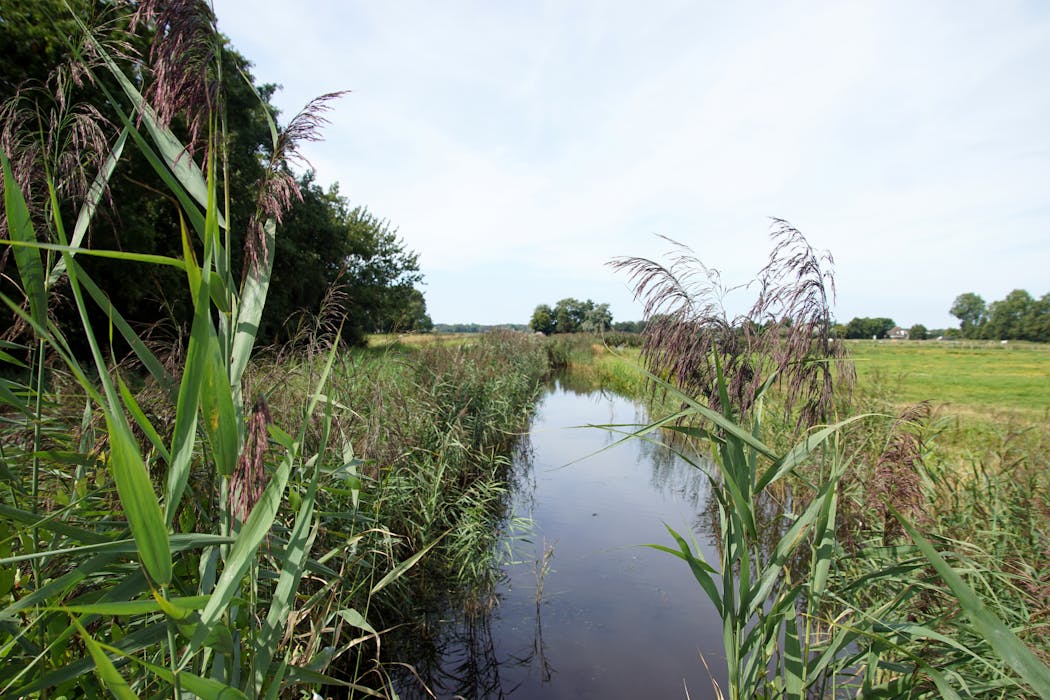
Ditches and canals are the underdog of the freshwater world. These human-made waterways are often forgotten, devalued and perceived negatively – think “dull as ditchwater”. But these unsung heroes have a hidden potential for climate change mitigation, if they’re managed correctly.

We know that ditches and canals have a large global extent, covering at least 5.3 million hectares — about 22% of the UK’s total land area. However, no one has yet mapped all global ditch and canal networks robustly, so it’s potentially more.

These waterways are also hotspots of greenhouse gas emissions, which contribute to climate change. We have previously calculated that ditches emit 333 teragrams of carbon dioxide equivalents (a common unit to express the climate impact of all greenhouse gases), which is nearly comparable to the UK’s total greenhouse gas emissions in 2023.

Ditches often contain stagnant waters and are commonly found running through farmland or cities, where they receive high amounts of nutrients from fertilisers, manure and stormwater run-off. This creates the low-oxygen, high-nutrient conditions that are ideal for the production of potent greenhouse gases methane and nitrous oxide – both of which warm the atmosphere considerably more than CO₂.


Read more:
Ditches and canals are a big, yet overlooked, source of greenhouse gas emissions – new study


However, ditches and their surrounding landscape can be managed (by farmers and landowners, for example) in ways that reduce nutrient inputs and therefore lower their greenhouse gas emissions. This makes them an untapped solution for reducing the effects of climate change.

Many nature restoration solutions focus on storing atmospheric carbon – by planting trees or mangroves, for example. But there are also immediate wins to be made simply by reducing greenhouse gas emissions. The importance of methane reduction has now been recognised by more than 160 countries, all of which signed the global methane pledge to cut human-caused methane emissions by at least 30% from 2020 levels by the end of the decade.

Our new study outlines the steps needed to reduce emissions from global ditches and canals. First, we need to better understand these systems by mapping their global extent. We also need to collect more measurements of greenhouse gas emissions from underrepresented regions like South America and Africa. Emissions from irrigation ditches in these understudied places could be large.

We also need to improve our understanding of how the potent greenhouse gas methane escapes the sediments in bubbles. This involves using sensors that monitor methane concentrations continuously, in order to capture “hot moments” when weather or human activity (such as fertiliser use on farmland) cause sudden pulses of emissions.

All of these strategies will improve estimates of global greenhouse gas emissions from ditches. From that new baseline, any progress in reducing emissions can be more accurately measured.

New directions for ditches

There are several ways to reduce greenhouse gas emissions from ditches and canals. These include reducing fertiliser application rates on farmland, excluding livestock from areas beside ditches to reduce the amount of manure that ends up in waterways (which has already been shown to be effective for ponds), and managing pollution sources like wastewater treatment plants.

In the Netherlands, researchers have tested the effects of dredging agricultural ditches to remove the nutrient- and organic matter-rich sediments that release greenhouse gases.

They found that dredging resulted in a 35% decline in ditch emissions after one year. However, this method isn’t perfect, as the emissions from the removed sediments still need to be accounted for at a later stage, and dredging disturbs aquatic habitats and organisms.

Planting vegetation alongside ditches helps intercept nutrients and sediments before they reach the ditch. This vegetation also provides shading, which reduces water temperature and rates of greenhouse gas emissions. A study across Denmark, Great Britain and Sweden found that riverside vegetation helped to considerably reduce nutrient inputs to rivers and streams, and improved habitats for stream organisms like bugs and frogs.

Introducing floating vegetation can also trap methane and create the conditions for its removal before it is released into the atmosphere. Current trials in the UK are looking at introducing Sphagnum moss to peatland ditches. Once a floating mat of this moss has been established, it can trap bubbles of methane in an oxygen-rich environment created by the photosynthesising moss.

When methane and oxygen are present together, methane-eating bacteria can convert methane to carbon dioxide, which has a much lower impact on the climate. Initial results showed a decrease in methane of approximately 40% when Sphagnum was present.

Some of these techniques might be too expensive to scale, and many are still at the early stages of research into their use in ditches. Nevertheless, ditches and canals can in future be climate heroes – we just need to give them the chance by managing them in smart and sustainable ways.


Don’t have time to read about climate change as much as you’d like?

Get a weekly roundup in your inbox instead. Every Wednesday, The Conversation’s environment editor writes Imagine, a short email that goes a little deeper into just one climate issue. Join the 47,000+ readers who’ve subscribed so far.


The Conversation

Teresa Silverthorn has received funding for ditch research from from Defra, the Environment Agency, and EPSRC (UK research councils).

Jonathan Ritson has receive funding from the GGR-Peat project (UKRI funding, BB/V011561/1).

Mike Peacock has received funding for ditch research from Defra, the Environment Agency, NERC and EPSRC (UK research councils), and Formas and VR (Swedish research councils).

ref. How to cut harmful emissions from ditches and canals – new research – https://theconversation.com/how-to-cut-harmful-emissions-from-ditches-and-canals-new-research-273251

Why keeping quiet about the family feud gave Brand Beckham a commercial boost

Source: The Conversation – UK – By Ashleigh Logan-McFarlane, Lecturer in Marketing, Edinburgh Napier University

The ease and global reach of social media posts make them a fitting way to divulge secrets about a commercial dynasty – particularly when your parents are David and Victoria Beckham. In the days after Brooklyn Beckham took to Instagram to say he had cut ties with his A-list family, reactions from the world’s social media users took on a life of their own.

The Beckhams’ PR machine was largely silent on the matter, despite the size of the business empire. If sold, Brand Beckham’s combined businesses are worth an estimated £500 million. In 2024, David Beckham’s DRJB holdings (with business interests in media, marketing, endorsement deals and spirits) declared a US$92 million turnover, with Victoria Beckham Holdings family and beauty brands amassing close to £113 million.

Victoria also owns the trademarks to Brooklyn Peltz Beckham’s name and brand. This means that other businesses cannot use it to market goods or services. And it is alleged that a prenuptial agreement was signed before Brooklyn’s wedding to Nicola Peltz, whose family is worth around US$1.3 billion.

On January 19, Brooklyn shared the lengthy statement on Instagram that confirmed rumours of an ongoing feud with his parents. Among his reasons was the claim that his family values self-promotion and endorsements “above all else”. “Brand Beckham comes first,” he went on.

Brooklyn’s public airing of this private family conflict, combined with David and Victoria’s decision not to respond to his criticisms, fuelled a surge of creative social media content.

Filling a PR vacuum

My own research on how passionate social media users reshaped the narrative during a royal PR crisis can help to explain this. The so-called #KateGate furore blew up after a family photo of the Princess of Wales and her children released for Mother’s Day 2024 had to be withdrawn when it emerged it had been doctored.

While research into public relations typically focuses on how brands can manage crises and address reputational threats, my study found that social media users add a different dimension to a PR crisis. When official PR machines stay silent, as the royals did, social media users start using their posts to co-create their own story about the brand or institution in real time.

This means that crisis narratives aren’t owned by the PR team. As such, brands need to consider how social media users remix, parody and challenge PR using humour and references to news and popular culture. The silent approach is not always effective, and did not work for the royal communications team. It missed opportunities to pick up on and engage with these playful disruptions before they were “formalised” in the press.

Social media users filled the communications void with resurfaced clips that appear to show how frosty the relationship had become.

But the Beckhams have fared better. In response to Brooklyn’s claim that Victoria “hijacked” the first dance at his wedding, people created memes with their own take on how this played out. Some attracted millions of views, with one featuring a clip of Victoria’s 2001 song Not Such an Innocent Girl even getting a “like” from Brooklyn’s brother Cruz.

Regardless of whether these memes mock or support Brooklyn or Brand Beckham, social media users put energy and passion into creating them. David and Victoria did not rush to address Brooklyn’s points or try to put their own case across. Instead, social media users catapulted their creative content to fill the silence with humour and speculation.

At its essence, this is really a family tragedy playing out on a global stage. But it appears it is business as usual for Brand Beckham. If anything, the feud seems to have attracted more attention to other aspects of the family’s lives and businesses. David attended the World Economic Forum in Davos alongside the chief executive of Bank of America. He also continues to post Instagram endorsement deals with brands such as Adidas and Boss clothing, reportedly for £300,000 a time.

Meanwhile sales and streams of Victoria’s single Not Such an Innocent Girl rose by 19,615% in a week, securing the former Spice Girl her first solo UK number one. Both David and Victoria also have documentaries, made by their own production company, streaming on Netflix.

And although it would have been arranged before the rift went public, there was heightened media interest when Victoria received the prestigious Knight of the Order of Arts and Letters from the French culture ministry in Paris surrounded by her other children.

In the age of social media, not all celebrity brands can afford to sit out a PR crisis and allow the posts to act for them. Smaller or lesser-known brands have more freedom to show a sense of humour and engage with the memes, comments and ridicule. But for the Beckhams, silence as a strategy seems to have worked this time.

The Conversation

Ashleigh Logan-McFarlane receives funding from Economic Social Research Council.

ref. Why keeping quiet about the family feud gave Brand Beckham a commercial boost – https://theconversation.com/why-keeping-quiet-about-the-family-feud-gave-brand-beckham-a-commercial-boost-274483

Anti-ICE protesters are following same nonviolent playbook used by people in war zones across the world to fight threats to their communities

Source: The Conversation – USA – By Oliver Kaplan, Associate Professor of International Studies, University of Denver

In Detroit, Mich., volunteers with the Detroit People’s Assembly put together whistle kits designed to alert the community when immigration agents are nearby. Jim West/UCG/Universal Images Group via Getty Images

From coast to coast, groups of people are springing up to protect members of their communities as Immigration and Customs Enforcement and Border Patrol agents threaten them with violent enforcement.

In Portland, Oregon, community volunteers have delivered food boxes to migrant families scared to leave their homes. In Portland, Maine, nearly a thousand people turned out for a virtual American Civil Liberties Union “Know Your Rights” training event. And in Minneapolis and St. Paul, volunteers have formed networks to give warning with whistles and phone apps when ICE is prowling the streets.

As someone who for two decades has studied nonviolent movements in war zones, I see many parallels between these movements abroad and those that have been organized recently across the U.S. The communities I have studied – from Colombia to the Philippines to Syria – teach lessons about surviving in the midst of danger that Americans have been discovering instinctively over the past year.

These experiences show that protection of their neighbors is possible. Violence can bring feelings of fear, isolation and powerlessness, but unity can overcome fear, and nonviolence and discipline are key for denying the powerful pretexts for further escalation and harm.

But at the same time, the deaths of Americans Renée Good and Alex Pretti, who were part of a nonviolent movement and were killed by immigration agents in Minneapolis, make it clear that acting to protect neighbors requires courage, and prospects are not always certain.

Here are the core lessons I have learned from the people and the groups I have researched.

Two people on a sidewalk, one blowing a whistle and the other filming with a camera at something on the road.
Members of the public take videos and blow whistles at what they think are Immigration and Customs Enforcement agents in unmarked cars driving by in South Portland, Maine, on Jan. 23, 2026.
Joseph Prezioso/AFP via Getty Images

1. Organizing is the first step

Community organizing is the act of building social ties, setting decision-making procedures, sharing information and coordinating activities.

In Colombia, I found that it was the more organized communities with vibrant local councils that were better able to protect themselves by avoiding or opposing violence when caught between heavily armed insurgents, paramilitaries and state forces. These organizations provide reassurance to the more hesitant and encourage more people to join in.

America has a strong civic culture and history of organizing, dating back to the Civil Rights Movement and long before, and Minnesota is known for its strong social cohesion. It’s no wonder so many Minnesotans, as well as Chicagoans, Angelenos and other Americans have organized to aid their neighbors and press for justice.

Make no mistake, the act of organizing itself is powerful. I found that insights from the combatants of armed conflicts shed light on this. A former insurgent I interviewed in Colombia quoted to me an adage of Aristotle and Shakespeare: “A single swallow doesn’t make a summer” – meaning there’s safety in numbers.

A mass of people on its own can shift the calculus and behavior of those with weapons and deter them. It’s why there are now many visuals of ICE agents leaving the scene when outnumbered by community members.

2. Adopting nonviolent strategies

Organizing also enables communities to adopt nonviolent methods for accountability and protection without ratcheting up conflict.

These strategies are less political or partisan, since there is usually consensus around promoting safety, which makes it difficult for political figures to oppose. While recent polling on presidential approval and immigration policy still shows a partisan split, ICE is widely unpopular, and a large majority opposes its aggressive tactics.

Americans have taken up many of these nonviolent strategies. They have established early warning networks just as communities did in the Democratic Republic of Congo to guard against attacks by the Lord’s Resistance Army rebel group.

Whether with whistles or WhatsApp, such networks of protectors are sharing information with each other to identify threats and come to each other’s aid.

A screenshot of a Facebook post from the ACLU of Maine noting the large turnout for a 'Know Your Rights training' event on Jan. 23, 2026.
A Facebook post from the ACLU of Maine notes the large turnout for a ‘Know Your Rights’ training event on Jan. 23, 2026.
Facebook

3. Setting up safe zones

Communities in places such as the Philippines have also set up safe zones or “peace zones” to publicize their desire to keep violence away from their residents. This is akin to the declaration of “sanctuary cities” in the U.S. for the issue of immigration.

Communities may also apply different kinds of pressure on armed aggressors. While protest is the most visible approach, dialogue is also possible. Pressure can take the form of persuasion as well as shaming to make trigger-happy agents think twice about what they’re doing and use restraint.

In the U.S., protectors have shown great creativity when it comes to exerting pressure. Grandmas and priests are visible symbols who have influence through their moral and spiritual status. The use of humor and farcesuch as protesters dressed in frog suits – can help to de-escalate tensions.

It may not always seem like it, but reputations and concerns about accountability matter, even to bullies. That’s why ICE agents don’t want to be seen enacting violence. Hence the face masks, the snatching of protesters’ phones and the misleading statements by officials about violent encounters.

A line of people on their knees, praying, some wearing items that denote they are part of the clergy, with police behind them.
A large group of protesters, including clergy, gather at Minneapolis-St. Paul International Airport in frigid temperatures on Jan. 23, 2026, to demonstrate against immigration enforcement operations in the Twin Cities metro area.
Elizabeth Flores/The Minnesota Star Tribune via Getty Images

4. Finding the facts

In the “fog of war,” the powerful may try to twist the facts and mislead and stigmatize communities and individuals to create pretexts for even greater uses of force.

In Colombia and Afghanistan, armed groups falsely accused individuals of being enemy collaborators. Communities addressed this by conducting their own investigations of those accused, after which community elders could vouch for them.

In the U.S., Americans are recording cellphone videos and collecting community evidence to counter official lies, such as accusations of domestic terrorism – and for future efforts to pursue accountability.

Standing up for others

Finally, what’s known as “accompaniment” is also important.

For example, international humanitarian staff and volunteers have gone to communities in places such as Colombia, Guatemala and South Sudan to let armed groups know that outsiders are watching them and acting as unarmed bodyguards for human rights defenders.

In the U.S., volunteers, citizens and religious leaders have used their less vulnerable social statuses to stand up for noncitizens who are under threat, even positioning themselves between immigration agents and those who may be at risk. People from around the country have also sent messages and traveled in solidarity to the cities and states where operations have been carried out.

Yet that can have consequences even for those who believe themselves less likely to be attacked. An ICE agent on Sept. 19, 2025, shot a clergyman in the head with a pepper ball while he was protesting at an ICE detention facility in Chicago.

Acting to protect oneself, other people and communities can involve risks. But civil society has power, too, and many communities in war zones in other countries have outlasted their oppressors. Americans are learning and doing what civilians in war zones worldwide have done for decades, while also writing their own story in the process.

The Conversation

Oliver Kaplan does not work for, consult, own shares in or receive funding from any company or organization that would benefit from this article, and has disclosed no relevant affiliations beyond their academic appointment.

ref. Anti-ICE protesters are following same nonviolent playbook used by people in war zones across the world to fight threats to their communities – https://theconversation.com/anti-ice-protesters-are-following-same-nonviolent-playbook-used-by-people-in-war-zones-across-the-world-to-fight-threats-to-their-communities-274498

Suivre la faune grâce à l’ADN : une percée scientifique en collaboration avec une communauté autochtone

Source: The Conversation – in French – By Valérie S. Langlois, Professor/Professeure titulaire, Eau Terre Environnement Research Centre, Institut national de la recherche scientifique (INRS)

Orignaux, caribous, cerfs… Ils traversent les forêts depuis des millénaires et façonnent les écosystèmes autant que les cultures humaines. Mais comment confirmer leur présence sans les observer, les capturer ou les déranger ? La réponse tient parfois à l’invisible : des fragments d’ADN laissés dans la neige, la poussière ou transportés par des insectes.

Cette approche, appelée ADN environnemental (ADNe), transforme le suivi de la faune terrestre, à condition d’en adapter les méthodes aux réalités du territoire.

Au Canada, la protection de la biodiversité se fait sous des pressions croissantes liées à l’exploitation des ressources et aux changements climatiques. Le Cerf de Virginie, par exemple, se déplace vers le nord, empiétant sur les habitats d’orignal et du caribou. Il peut transporter avec lui des maladies qui mettent à risque des populations entières de cervidés. La progression de l’espèce est suivie de près, mais repose sur des informations parfois difficiles à obtenir.

Il en va de même pour le suivi des espèces rares et difficiles à observer, comme le carcajou, dont la présence dans plusieurs régions du nord du Québec demeure incertaine, faute de données tangibles pour la confirmer.

Pour orienter les décisions nécessaires à la protection de la biodiversité, l’ensemble des acteurs — gouvernements, organismes de conservation, industrie et Peuples autochtones — ont besoin de données fiables, comparables et produites de manière socialement responsable. Or, les outils de suivi traditionnels (observation directe, capture, colliers GPS ou pièges photographiques) sont souvent coûteux, intrusifs ou difficiles à déployer dans des régions éloignées.

L’ADN environnemental : promesses et limites

L’ADNe repose sur un principe à la fois simple et puissant : tous les organismes vivants libèrent des fragments de leurs cellules contenant de l’ADN dans leur environnement, notamment par leurs excréments, leur urine, leur salive, leur peau ou leurs poils. En analysant ces traces génétiques présentes dans l’eau, le sol, la neige ou l’air, il devient possible d’identifier les espèces qui fréquentent un milieu donné, sans contact direct ni perturbation des animaux.

Si cette approche est aujourd’hui bien établie pour les espèces aquatiques, son application aux animaux terrestres demeure un défi scientifique majeur. Contrairement aux milieux aquatiques, l’ADNe est dispersé de façon inégale. Sa détection dépend étroitement du comportement des espèces, des conditions climatiques, de la nature des substrats (sol, poussière, neige) et des processus de dégradation de l’ADN dans l’environnement. Ces facteurs rendent le suivi plus complexe et nécessitent des méthodes adaptées aux réalités locales.

Dans ce contexte, un récent article scientifique publié dans la revue Environmental DNA a marqué une avancée majeure pour le suivi de la biodiversité au Canada. Nous y présentons de nouveaux outils permettant de suivre 125 espèces animales d’Amérique du Nord de manière non invasive. Fait marquant, près de la moitié de ces espèces ont été sélectionnées par des partenaires autochtones à travers le pays, pour leur importance culturelle, écologique ou alimentaire. Parmi elles figure le caribou, une espèce emblématique et culturellement centrale pour de nombreuses Nations autochtones.

C’est précisément à l’interface entre ces promesses technologiques et ces défis scientifiques qu’est née une collaboration étroite entre des chercheuses et chercheurs de l’Institut national de la recherche scientifique (INRS) et la Première Nation Abitibiwinni à Pikogan, au nord d’Amos en Abitibi-Témiscamingue, dans le cadre du projet pancanadien iTrackDNA.


À lire aussi :
Utiliser l’ADN pour suivre avec précision la trace des animaux dans leur milieu naturel


Une recherche co-construite sur le territoire

En 2021, la communauté anicinape s’est jointe au projet iTrackDNA afin de développer des outils de suivi de la faune répondant à ses priorités culturelles et territoriales. Les gardiens du territoire, les biologistes communautaires et les chercheuses et chercheurs ont d’abord identifié des espèces clés, dont l’orignal, le caribou forestier et le cerf de Virginie, qui suscitent des préoccupations sur les plans culturel, écologique et de subsistance.

Une première campagne d’échantillonnage, fondée sur la filtration classique de l’eau, s’est soldée par des résultats décevants. Malgré la présence confirmée des espèces, les taux de détection étaient faibles, voire inexistants. Loin d’être un échec, ce revers a mis en lumière une réalité essentielle : les méthodes standards d’ADNe ne sont pas universelles et doivent être adaptées aux contextes écologiques et sociaux dans lesquels elles sont utilisées.

Repenser les méthodes, ensemble

Plutôt que d’abandonner, l’équipe a choisi de repenser entièrement l’approche. Une étude expérimentale rigoureuse a été menée sur le territoire ancestral de la Nation Abitibiwinni, en forêt boréale au Québec, afin de comparer différentes méthodes de collecte d’ADNe pour le suivi de la faune terrestre. Les protocoles ont été co-développés avec les gardiens du territoire, en privilégiant des matériaux peu coûteux, accessibles et applicables en régions éloignées.

Quatre grandes approches ont été testées : l’échantillonnage de la neige de surface, la collecte de poussières et d’invertébrés (mouches charognardes), l’échantillonnage de l’eau locale et l’échantillonnage de l’eau en aval. Les essais ont été réalisés dans des environnements contrôlés, notamment au refuge faunique Pageau et dans un enclos gouvernemental de caribous, afin de comparer clairement l’efficacité de chaque méthode.

La neige, alliée inattendue du suivi faunique

Les résultats, récemment publiés dans la revue scientifique Journal of Applied Ecology, sont sans équivoque. L’échantillonnage de la neige de surface s’est révélé la méthode la plus performante, avec une détection parfaite de l’ADN des trois espèces ciblées. La neige agit comme un excellent conservateur : froide, sombre et peu perturbée, elle accumule et préserve l’ADNe déposé par les animaux en déplacement.

Les méthodes basées sur les invertébrés et la poussière aérienne ont également montré une forte efficacité. Ces approches sont prometteuses pour les saisons sans neige ou pour les espèces qui ne sont actives que l’été. À l’inverse, l’échantillonnage de l’eau s’est avéré moins fiable pour certaines espèces terrestres, sauf dans des contextes très spécifiques, soulignant la nécessité d’une validation locale préalable.


À lire aussi :
L’étude des forêts anciennes de l’est du Canada indique que le changement climatique a commencé il y a près de 100 ans


Déjà des milliers d’abonnés à l’infolettre de La Conversation. Et vous ? Abonnez-vous gratuitement à notre infolettre pour mieux comprendre les grands enjeux contemporains.


Partager les nouvelles connaissances

Suite à cette collaboration fructueuse, une formation unique sur l’ADNe, co-organisée par l’INRS, la Première Nation Abitibiwinni et l’Institut de développement durable des Premières Nations du Québec et du Labrador, a réuni des membres de 12 communautés et organismes autochtones. L’objectif était de renforcer les capacités locales en matière de suivi de la faune à l’aide d’outils scientifiques adaptés aux réalités du territoire.

Les participantes et les participants ont acquis des compétences concrètes, allant de la conception d’un plan d’échantillonnage à l’interprétation des résultats de laboratoire. Les méthodes enseignées, développées conjointement par des chercheuses, des chercheurs et des gardiens du territoire, sont respectueuses des animaux, fiables et applicables en milieux éloignés avec du matériel accessible. Cette formation illustre comment une technologie de pointe peut être appliquée localement pour soutenir la gestion du territoire, tout en respectant les savoirs, les cultures et les priorités des communautés.


À lire aussi :
Des hivers plus doux, des parasites plus présents : l’orignal est-il en péril face à la tique d’hiver ?


Une science utile, ancrée et durable

Au-delà des résultats techniques, cette recherche montre la force d’une démarche menée conjointement, où les savoirs écologiques autochtones et la génomique moderne se complètent et se renforcent. Les protocoles développés sont désormais accessibles à d’autres organisations autochtones et non autochtones, au Canada comme ailleurs, et contribuent directement à l’élaboration de normes canadiennes pour l’analyse de l’ADNe.

Si l’ADNe n’apporte pas encore toutes les réponses, il constitue un outil puissant et adaptable pour appuyer la gouvernance territoriale et la conservation de la biodiversité. En misant sur la collaboration, l’innovation méthodologique et l’ancrage territorial, cette approche ouvre la voie à un suivi de la faune plus inclusif, plus fiable et mieux aligné avec les défis environnementaux d’aujourd’hui et de demain.

La Conversation Canada

Valérie S. Langlois a reçu des financements de Génome Canada, Génome Québec et du programme de Chaires de recherche du Canada pour effectuer ce projet de recherche.

Annie Claude Bélisle a reçu des financements de Mitacs Élévation et de la Première Nation Abitibiwinni.

ref. Suivre la faune grâce à l’ADN : une percée scientifique en collaboration avec une communauté autochtone – https://theconversation.com/suivre-la-faune-grace-a-ladn-une-percee-scientifique-en-collaboration-avec-une-communaute-autochtone-272110

Winter storms don’t have to be deadly – here’s how to stay safe before, during and after one hits

Source: The Conversation – USA (2) – By Brett Robertson, Associate Professor and Associate Director of the Hazards Vulnerability and Resilience Institute, University of South Carolina

A powerful winter storm that swept across the United States in late January 2026, leaving hundreds of thousands of people without power in freezing temperatures for days, has been linked to at least 70 deaths. And several East Coast states are under a new winter storm warning just days later.

The causes of the deaths and injuries varied. Some people died from exposure to cold inside their homes. Others fell outside or suffered heart attacks while shoveling snow. Three young brothers died after falling through ice on a Texas pond. Dozens of children were treated for carbon monoxide poisoning from improperly used generators or heaters.

These tragedies and others share a common theme: Winter storms pose multiple dangers at once, and people often underestimate how quickly conditions can become life-threatening.

A man stands by the open door of a car stuck on a road with deep snow.
If you plan to drive in a winter storm, be prepared to be stranded, as this driver was in Little Rock, Ark., on Jan. 24, 2026. Cars can slide off roads, slide into each other or get stuck in snow drifts. Having warm winter gear, boots and a charged cell phone can help you deal with the cold.
Will Newton/Getty Images

I’m the associate director of the Hazards Vulnerability and Resilience Institute at the University of South Carolina, where we work on ways to improve emergency preparedness and response. Here is what people need to know to reduce their risk of injury during severe winter weather.

Prepare before the storm arrives

Preparation makes the biggest difference when temperatures drop, and services fail. Many winter storm injuries happen after power outages knock out heat, lighting or medical equipment.

Start by assembling a basic emergency kit. The Federal Emergency Management Agency recommends having water, food that does not require cooking, a flashlight, a battery-powered radio, extra batteries and a first-aid kit, at minimum.

Some basics to go into an emergency kit
In addition to these basics, a winter emergency kit should have plenty of warm clothes and snacks to provide energy to produce body heat.
National Institute of Aging

In wintertime, you’ll also need warm clothing, blankets, hats and gloves. When you go out, even in a vehicle, make sure you dress for the weather. Keep a blanket in the car in case you get stranded, as hundreds of people did for hours overnight on a Mississippi highway on Jan. 27 in freezing, snowy weather.

Portable phone chargers matter more than many people realize. During emergencies, phones become lifelines for updates, help and contact with family. Keep devices charged ahead of the storm and conserve battery power once the storm begins.

If anyone in your home depends on electrically powered medical equipment, make a plan now. Know where you can go if the power goes out for an extended period. Contact your utility provider in advance to ask about outage planning, including whether they offer priority restoration or guidance for customers who rely on powered medical equipment.

What to do if the power goes out

Loss of heat is one of the most serious dangers of winter storms. Hypothermia can occur indoors when temperatures drop, especially overnight.

If the power goes out, choose one room to stay in and close its doors to keep the warmth inside. Cover windows with curtains or blankets. Wear loose layers and a knit hat to keep your own body heat in, even indoors. Remember to also eat regular snacks and drink warm fluids when possible, since the body uses energy to stay warm.

Five people sit around a table, each wrapped up in warm clothes and hats. Two children are studying.
Wearing knit caps, lots of layers and staying together in one room can help with warmth. If you light candles, use them carefully to avoid fires.
SimpleImages/Moment via Getty Images

It might seem tempting, but don’t use camp stoves, outdoor grills or generators inside a home. These can quickly produce carbon monoxide, an odorless and deadly gas. During the January storm, one Nashville hospital saw more than 40 children with carbon monoxide poisoning linked to unsafe heating practices.

If you must use a generator, keep it outdoors and far from windows and doors. Make sure your home’s carbon monoxide detectors are working before storms arrive.

If your home becomes too cold, go to a warmer place, such as a friend’s home, a warming center or a public shelter. You can call 2-1-1, a nationwide hotline, to find local options. The American Red Cross and the Salvation Army also list open shelters on their websites. Several states maintain online maps for finding warming centers and emergency services during winter storms, including Kentucky, Louisiana, Mississippi, New York, Tennessee, and Texas.

Be careful outside – ice changes things

Winter storms make everyday activities dangerous. Ice turns sidewalks into slippery hazards. Snow shoveling strains the heart.
Frozen ponds and lakes might look solid but often are not as the ice can change quickly with weather conditions.

Walking on icy surfaces, even your own sidewalk, requires slow steps, proper footwear and full attention to what you’re doing. Falls can cause head injuries or broken bones, and it can happen with your first step out the door.

A group of kids scream as they sled down a hillside, legs flying in the air.
Playing in the snow, like this group was at Cherokee Park in Louisville, Ky., can be the best part of winter, but be sure to do it safely. At least three people died in accidents while being towed on sleds behind vehicles on icy streets during the January 2026 storm.
Jon Cherry/Getty Images

Shoveling snow is a common risk that people often overlook, but it deserves special caution. The actions of shoveling in cold weather can place intense strain on the heart. For people with heart conditions, it that extra strain can trigger heart attacks.

Why shoveling snow is more stressful on your heart than mowing your lawn. Mayo Clinic.

If you’re shoveling, take frequent breaks. Push snow instead of lifting when possible. And stop immediately if you feel chest pain, dizziness, or shortness of breath.

Communication saves time and lives

Winter storms disrupt information flows. Cell service fails. Internet access drops. Power outages silence televisions.

In my research on heat and storm emergencies, people frequently rely on personal networks to share updates, resources, and safety information. With that in mind, check on family, friends and neighbors, especially older adults and people who live alone.

Research I have conducted shows that nearby social ties matter during disasters because they help people share information and act more quickly when services are disrupted. Make sure that the information you’re sharing is coming from reliable sources – not everything on social media is. Also, let others know where you plan to go if conditions worsen.

A woman in a puffy jacket, hat and scarf walks up snow-covered subway stairs.
Walk carefully on snow and ice, particularly stairs like these in a New York subway station on Jan. 25, 2026. At home, be sure to clear snow off your steps soon after a storm so ice doesn’t build up.
Spencer Platt/Getty Images

Use multiple sources for information. Battery-powered radios remain critical during winter storms. Sign up for local emergency alerts by email or text. Studies have found that in regions accustomed to frequent hazardous weather, people often take actions in response to risks more slowly when they don’t have reliable local updates or clear alerts.

Practice matters

Many injuries happen because people delay actions they know they need to take. They wait to leave a house that’s getting too cold or at risk of damage by weather, such as flooding. They wait to ask for help. They wait to adjust plans.

In research I contributed to on evacuation drills involving wildfires, people who practiced their evacuation plan in advance were more likely to react quickly when conditions changed. Talking through evacuation plans for any type of emergency, whether a hurricane or a winter storm, builds people’s confidence and reduces their hesitation.

Take time each winter to review your emergency supplies, communication plans, and heating options.

Winter storms will test your preparation, judgment, and patience. You cannot control when the next one arrives, but you can decide how ready you will be when it does.

The Conversation

Brett Robertson receives funding from the National Science Foundation (Award #2316128). Any opinions, findings, conclusions, or recommendations expressed in this material are those of the author and do not necessarily reflect the views of the National Science Foundation.

ref. Winter storms don’t have to be deadly – here’s how to stay safe before, during and after one hits – https://theconversation.com/winter-storms-dont-have-to-be-deadly-heres-how-to-stay-safe-before-during-and-after-one-hits-274605

Les inégalités économiques croissantes pavent la voie à la montée des autoritarismes

Source: The Conversation – in French – By Jonathan Martineau, Professeur de philosophie, Liberal Arts College, Université Concordia, Concordia University

En concentrant la richesse et le pouvoir entre les mains d’une minorité, le système économique dominant fragilise les démocraties et ouvre la voie aux autoritarismes, révèle le dernier rapport d’Oxfam, publié la semaine dernière en marge de l’ouverture du Forum économique mondial de Davos, un choix de calendrier loin d’être anodin.


Alors que les élites économiques et politiques mondiales s’y réunissaient pour débattre du « nouvel ordre mondial » et de stratégies pour diversifier les marchés et maintenir la croissance économique mondiale à flots, le rapport d’Oxfam dresse quant à lui un constat accablant : le système économique dominant produit des niveaux d’inégalités sans précédent historique.

Loin d’être des anomalies conjoncturelles, ces inégalités apparaissent comme le symptôme structurel d’un modèle économique fondé sur l’exploitation, dont les effets menacent de plus en plus la stabilité démocratique à l’échelle mondiale.

Professeur de philosophie au Liberal Arts College de l’Université Concordia, mes recherches portent sur le temps, la technologie et l’économie politique du capitalisme contemporain.


À lire aussi :
Voir le monde tel qu’il est : le message (réaliste) de Carney à Davos


Un système inégalitaire

Le rapport souligne d’abord l’extrême concentration de la richesse. Les 12 milliardaires les plus riches de la planète possèdent aujourd’hui une richesse équivalente à celle détenue par la moitié la plus pauvre de l’humanité, soit environ 4 milliards de personnes. Ce chiffre, déjà frappant en soi, illustre une dynamique propre au capitalisme contemporain. Les inégalités ne sont pas qu’un résultat indésirable du système, mais une structure fondamentale de son fonctionnement.

Les marchés mondiaux reposent sur une série de relations sociales structurées par des rapports de propriété et de pouvoir asymétriques entre les personnes et les pays. Le système ne fait pas que concentrer la richesse une fois qu’elle est produite, il « crée » de la richesse sur la base de rapports sociaux inégaux. La richesse des uns dépend de la pauvreté des autres.

L’un des constats les plus préoccupants du rapport réside justement dans cette mise en parallèle de l’augmentation de la richesse des milliardaires et de la progression de l’insécurité alimentaire à l’échelle mondiale. Les données présentées indiquent que ces deux phénomènes suivent des trajectoires similaires. Alors qu’une fraction infinitésimale de la population mondiale voit sa richesse croître de manière exponentielle, des centaines de millions de personnes basculent ou demeurent dans des situations de précarité alimentaire.

Cette relation n’est pas fortuite : le système privilégie la maximisation du profit plutôt que la satisfaction des besoins fondamentaux, et l’accès aux nécessités dépend de la capacité de payer, et non d’un droit humain.

De l’économique au politique

L’évolution récente de la fortune des milliardaires renforce ce diagnostic, et ouvre également sur les dimensions politiques du problème des inégalités.

Depuis la seconde élection de Donald Trump en novembre 2024, la richesse des milliardaires a augmenté à un rythme trois fois supérieur à la moyenne observée au cours des cinq années précédentes. Cette accélération ne peut être comprise indépendamment des choix politiques favorables au capital : déréglementation, baisses d’impôts sur les hauts revenus et le capital, affaiblissement des mécanismes de redistribution et du pouvoir de négociation du travail.

Aux États-Unis, la convergence entre les intérêts des milliardaires de la tech et les politiques économiques de l’administration Trump illustre également cette dynamique. Le rapport met ainsi en lumière l’imbrication étroite entre la sphère politique et les inégalités économiques.

Ces inégalités économiques ont également des conséquences majeures sur les processus démocratiques. Le rapport d’Oxfam montre que les milliardaires ont environ 4000 fois plus de chances d’occuper un poste politique que les citoyennes et citoyens ordinaires. Cette surreprésentation des élites économiques dans les sphères du pouvoir contribue à orienter les politiques publiques en fonction de leurs intérêts propres.

Dans un tel contexte, les institutions démocratiques tendent à fonctionner de manière formelle, tandis que leur substance – l’égalité politique et la souveraineté populaire – s’érode progressivement.

Les données comparatives présentées dans le rapport renforcent ce constat : les pays caractérisés par les niveaux d’inégalités économiques les plus élevés présentent un risque sept fois plus important de voir leur démocratie s’affaiblir que ceux où les inégalités sont les moins prononcées. Loin d’être un simple enjeu de justice distributive, l’inégalité apparaît ainsi comme un facteur structurel de déstabilisation démocratique.

Lorsque de larges segments de la population sont exclus des bénéfices économiques et privés de toute influence politique réelle, la confiance envers les institutions décline, ouvrant la voie à des formes politiques autoritaires.


À lire aussi :
Les États-Unis seront-ils contrôlés par une clique de milliardaires ? Le risque de glissement vers une oligarchie est réel


La parade des CEO à Davos

Contrôle, répression et délégitimation

Dans ce contexte, l’argument selon lequel le capitalisme contemporain engendre des formes politiques autoritaires mérite une attention particulière. Plus les inégalités se creusent, plus le maintien de l’ordre social existant requiert des dispositifs de contrôle, de répression et de délégitimation des revendications populaires.

Par exemple, les discours anti-immigration de ce point de vue peuvent servir de diversion afin de canaliser la grogne populaire non pas envers les classes dominantes, mais envers des boucs-émissaires vulnérables. La montée des droites autoritaires dans de nombreux contextes nationaux peut ainsi être interprétée non pas comme une rupture avec le système économique dominant, mais comme l’une de ses modalités de stabilisation politique face à des contradictions internes croissantes.

En dernière analyse, le récent rapport d’Oxfam met en évidence un enchaînement préoccupant : concentration extrême de la richesse, aggravation de la précarité matérielle, captation du pouvoir politique et érosion démocratique. Le rapport invite donc à dépasser une lecture strictement morale ou technocratique des inégalités.


Déjà des milliers d’abonnés à l’infolettre de La Conversation. Et vous ? Abonnez-vous gratuitement à notre infolettre pour mieux comprendre les grands enjeux contemporains.


Celles-ci ne sont pas de simples « excès » qu’il suffirait de corriger à la marge par des ajustements fiscaux. Elles constituent le produit normal d’un système économique fondé sur l’exploitation et la précarité du plus grand nombre, et la subordination de la démocratie aux intérêts économiques.

Dans ce cadre, la défense de la démocratie ne peut se limiter à la protection des procédures électorales ; elle suppose également une transformation plus profonde des structures économiques qui conditionnent l’exercice effectif de la citoyenneté.

Résister à la montée des autoritarismes implique dès lors de s’attaquer aux causes structurelles de ces dynamiques. Cela passe non seulement par des politiques de redistribution ambitieuses, mais aussi par le développement de formes d’organisation économique et sociale alternatives au capitalisme, plus à même de mettre l’économie et le travail au service des besoins de tous et toutes, plutôt qu’à l’accumulation privée des richesses par une poignée de milliardaires.

La Conversation Canada

Jonathan Martineau a reçu des financements du Conseil de recherche en sciences humaines du Canada (CRSH), du Fonds de recherche du Québec, Société et Culture (FRQ-SC), et de l’Observatoire international sur les impacts sociétaux de l’intelligence artificielle (Obvia).

ref. Les inégalités économiques croissantes pavent la voie à la montée des autoritarismes – https://theconversation.com/les-inegalites-economiques-croissantes-pavent-la-voie-a-la-montee-des-autoritarismes-274520

CAN 2025 de football : les réussites et les ratés de l’édition marocaine

Source: The Conversation – in French – By Chuka Onwumechili, Professor of Communications, Howard University

La 35e édition de la Coupe d’Afrique des nations (CAN) 2025, organisée par le Maroc, a été riche en frissons et en rebondissements avec du bon et du moins bon. Elle s’est terminée par une victoire du Sénégal, qui remporte ainsi son deuxième titre de champion d’Afrique. Si la victoire 1-0 contre le Maroc était méritée, la finale s’est terminée sur une note amère. Les supporters ont envahi le terrain et l’équipe victorieuse a quitté le terrain pendant 16 minutes.

Je suis chercheur en communication sportive et auteur de plusieurs ouvrages sur le football en Afrique.

Les quatre points positifs du tournoi ont été les suivants :

  • des matchs de qualité disputés sur des terrains impeccables

  • une couverture médiatique élargie

  • un intérêt mondial accru

  • une augmentation du nombre de supporters.

En revanche, nous avons assisté à l’abandon de l’équipe sénégalaise lors de la finale, à de mauvaises décisions arbitrales, en particulier dans les matchs impliquant le Maroc, et à des problèmes de billetterie.

Cette CAN 2025 a offert des exemples à suivre comme la qualité des terrains et le marketing réussi, dont les futurs pays organisateurs devraient s’inspirer. Cependant, la Confédération africaine de football (CAF) doit tirer les leçons de ce tournoi en matière de sécurité autour du terrain et de formation des arbitres.

Ce qui a bien fonctionné

Les infrastructures de la CAN ont démontré que le Maroc était prêt à accueillir la Coupe du monde plus tard dans l’année. Rien que pour les six stades, le pays a dépensé 1,4 milliard de dollars américains. Pas moins de 10 milliards de dollars américains ont été dépensés pour les infrastructures publiques connexes dans le domaine des transports. Les matchs ont été de grande qualité et se sont déroulés sur d’excellentes pelouses.

Les supporters qui ont assisté à ce spectacle de football ont été transportés par un système ferroviaire à grande vitesse et d’autres moyens de transport fluides.

La qualité des surfaces a peut-être contribué au fait qu’il y ait eu moins de surprises ou de bouleversements. Les quatre équipes qui ont atteint les demi-finales – l’Égypte, le Maroc, le Nigeria et le Sénégal – étaient toutes en tête de leur groupe.

Finalement, la finale a opposé les deux équipes africaines les mieux classées. Le match a été exceptionnel, les grands noms ayant produit un football mémorable tout au long du tournoi.


Read more:
CAN 2025 de football : quand l’image du sport influence le business et l’économie


Couverture médiatique élargie

La décision de s’étendre à d’autres marchés a conduit à une couverture médiatique élargie en Chine, au Brésil et sur les principaux marchés européens. La participation de plusieurs joueurs de renom issus de clubs européens a permis d’assurer une audience mondiale au tournoi. Des équipes telles que le Real Madrid, le PSG, le Bayern Munich, Manchester United et Liverpool ont vu certains de leurs joueurs participer à la compétition.

À ceux-ci s’ajoutaient des joueurs de renommée mondiale tels que Sadio Mané, Riyad Mahrez et Pierre-Emerick Aubameyang. Ces noms étaient assurés d’attirer l’attention des médias du monde entier.

L’audience a globalement augmenté, avec des hausses remarquables en Europe. La France a enregistré 3,4 millions de téléspectateurs et le Royaume-Uni 1,7 million de téléspectateurs.

Intérêt mondial accru

La CAF a annoncé une augmentation de 90 % de ses revenus. Le chiffre d’affaires s’est élevé à 192,6 millions de dollars (114 millions de dollars américains de bénéfices), contre 105,6 millions de dollars dont 72 millions de bénéfices lors de la précédente CAN. Cela montre une augmentation constante, avec le nombre de partenaires qui passe de 9 à 17 entre 2021 et 2023. Une plus grande couverture médiatique a suscité l’intérêt commercial autour du tournoi.

L’affluence dans les stades a aussi nettement progressé. Les chiffres annoncés à la fin de la compétition ont montré que 1,34 million de personnes ont assisté aux matchs. En 2023, en Côte d’Ivoire, le nombre de spectateurs était de 1,1 million.

Cela montre clairement l’intérêt croissant pour le tournoi. La proximité du Maroc avec l’Europe a également été un facteur déterminant. Davantage de spectateurs ont fait le déplacement depuis le continent et d’ailleurs.

Les primes remises aux équipes lors du tournoi ont également battu des records, le Sénégal remportant 11,6 millions de dollars. Les équipes éliminées lors de la phase de groupes ont reçu chacune 1,3 million de dollars américains.


Read more:
Le football africain a remporté la 34e édition de la CAN, suivi de près par la Côte d’Ivoire


Erreurs

Scènes de colère : La finale a été gâchée par un retrait du terrain des Sénégalais, qui protestaient contre un penalty accordé au Maroc pendant les arrêts de jeu. Le match a été suspendu pendant 16 minutes. Les Sénégalais étaient furieux suite à l’annulation de leur but dans les dernières minutes du temps réglementaire. Les protestations contre le penalty accordé au Maroc ont duré jusqu’à ce que l’une des figures emblématiques de l’équipe, Sadio Mané, demande à ses coéquipiers de poursuivre le match.

À ce moment-là, les supporters sénégalais en colère avaient arraché des sièges dans les tribunes et de nombreuses bagarres ont éclaté. Finalement, le Maroc n’a pas réussi à convertir le penalty et le Sénégal a marqué un but mémorable pour remporter la victoire.

Questions relatives à l’arbitrage : Tout au long du tournoi, le Maroc a semblé être favorisé par plusieurs décisions et absences de décision arbitrales. La CAF devrait envisager des programmes d’échange d’arbitres avec d’autres confédérations afin d’améliorer l’arbitrage. Cela aiderait non seulement la CAN, mais permettrait également aux arbitres de découvrir d’autres événements continentaux.

Il est également préoccupant que des ramasseurs de balles marocains aient été vus en train d’arracher les serviettes des gardiens de but des équipes adverses lors des matchs Nigeria-Maroc et Sénégal-Maroc.

Problèmes de billetterie : Il y a également eu des problèmes de billetterie. Alors que les billets étaient tous vendus, plusieurs stades étaient déserts pendant les matchs de groupe. Cela peut s’expliquer par des problèmes liés au fait que les revendeurs secondaires ont peut-être acheté plus de billets qu’ils ne pouvaient en revendre. Néanmoins, chaque match a attiré en moyenne 21 167 spectateurs. La présence des médias a également augmenté pendant le tournoi. Selon certaines informations, plus de 3 800 journalistes ont couvert l’événement depuis le Maroc.

Perspectives

La compétition a démontré que le Maroc était prêt à accueillir les matchs de la Coupe du monde en 2030. Le Maroc, ainsi que l’Espagne et le Portugal, accueilleront les matchs, auxquels participeront 48 équipes. Les six villes utilisées pour la CAN 2025 accueilleront le monde entier en 2030. Le Portugal n’aura que deux villes hôtes et l’Espagne fournira neuf sites.


Read more:
Coupe d’Afrique des nations : les diasporas, une aubaine pour le football africain ?


Il sera difficile pour les pays hôtes de la CAN 2027 d’égaler la réussite du Maroc.

Les trois pays hôtes de la CAN 2027 – le Kenya, la Tanzanie et l’Ouganda – devraient au moins atteindre le niveau de la Côte d’Ivoire qui avait accueilli l’édition de 2023.

Ils peuvent au moins s’inspirer de la Côte d’Ivoire en cherchant à améliorer le système de billetterie, la sécurité autour des stades et former les ramasseurs de balles afin de protéger les équipes en déplacement.

Mais les perturbations sur le terrain ne doivent occulter ni les nombreuses réalisations de ce tournoi ni les infrastructures déployées.

The Conversation

Chuka Onwumechili does not work for, consult, own shares in or receive funding from any company or organisation that would benefit from this article, and has disclosed no relevant affiliations beyond their academic appointment.

ref. CAN 2025 de football : les réussites et les ratés de l’édition marocaine – https://theconversation.com/can-2025-de-football-les-reussites-et-les-rates-de-ledition-marocaine-274558

African migration: focusing on Europe misses the point – most people move within the continent

Source: The Conversation – Africa (2) – By Nadine Biehler, Researcher, German Institute for International and Security Affairs

Images of rubber dinghies overcrowded with refugees heading for Europe and narratives about mistreatment and exploitation of migrants on unsafe migration routes have come to dominate how African migration is perceived in European public and policy debates.

They suggest a continent on the move, driven mainly by conflict and heading to the global north. These narratives are deeply misleading. Nevertheless, they shape public opinion and political decision-making.

Fears of large-scale migration from Africa to Europe are exaggerated. Data shows migration from Africa has been growing, but more slowly compared to growth rates of migration worldwide – and largely takes place on the continent.

Because migration from Africa is seen primarily as a looming crisis for Europe, policy responses tend to focus on border control and deterrence, rather than on cooperation, the development potential of migration or protection.

We are researchers working on migration, forced displacement and data analysis. We combined our expertise in a new working paper to analyse the latest data from the UN Department of Economic and Social Affairs (UN DESA) on global migration. We also looked at current data on forced displacement.

We found that:

  • most African migration happens within Africa

  • the majority of African migrants moving across borders are not fleeing violence

  • the vast majority of those forced to flee never leave their own country or region, let alone the continent.

Understanding these mobility patterns is essential for more realistic and effective European migration policies.

The data

The UN DESA migration estimates that our paper is based on are the most comprehensive global data source available on migration. The estimates measure how many migrants live in a country at a given point in time (stock data). However, they don’t capture when they moved (flow data) or why. In addition, UN DESA figures exclude movements within countries.

Our paper complements these estimates with data provided by the UN Refugee Agency and the Internal Displacement Monitoring Centre on forced displacement. This includes internal displacement, which is particularly widespread in Africa.

This research found that most African migration takes place within Africa.

Globally, there were about 304 million international migrants in 2024. Africans made up around 15% of that total.

In other words, the majority of the world’s migrants are not from Africa.

Even more striking is where African migrants actually go.

In 2024, around 25 million Africans were living in an African country outside the one they were born in or held citizenship of. This exceeded the number of Africans living outside the continent (20.7 million) by around 21%.

This means that African migration is predominantly intracontinental, a long-standing trend that has become even more pronounced over time.

Several factors help explain this.

Travel within Africa is often cheaper and safer than journeys to other continents. Regional free movement agreements, such as those in west and east Africa, enable cross-border mobility. At the same time, legal pathways to Europe, North America or Asia remain limited and costly for most Africans, with high visa rejection rates and few opportunities for regular migration.

African migration is also gendered. Men are more likely to migrate than women, especially when moving beyond the continent. This gap is smaller for migration within Africa. This suggests that more accessible legal routes and less dangerous journeys help with overcoming migration barriers for women.

Forced displacement

War and conflict are forcing more people to leave their homes worldwide, and Africa is no exception.

By the end of 2024, more than 120 million people globally were forcibly displaced by war and violence. However, the majority of them (73.5 million, or 60% of the forcibly displaced globally) never left their own country to seek asylum elsewhere. They remained internally displaced in their countries of origin.

This is particularly true for the African continent, where almost half of all internally displaced people worldwide lived.

Sudan and the Democratic Republic of Congo account for almost 80% of internal displacement in Africa.

Even when Africans do cross borders to seek protection, they usually stay close to home.

In 2024, almost 87% of the 12.2 million African refugees and asylum seekers worldwide lived on the African continent. Only a small minority sought protection outside Africa.

This challenges the widespread idea that forced displacement in Africa automatically translates into large-scale migration to Europe.

In reality, neighbouring countries – often themselves affected by poverty or instability, and sometimes both countries of origin and destination for forcibly displaced people – carry most of the responsibility for hosting displaced populations.

Even when taking into account future displacement scenarios driven by the climate crisis, the World Bank estimates that affected people will remain within their regional neighbourhoods.

Still, globally, as well as in Africa, voluntary migration dominates: out of 45.8 million African migrants globally, refugees and asylum seekers make up 12.2 million.

This is also true for African migration to countries of the European Union, where residence permits for work, education or family reasons (2024: about 670,000) significantly exceed first-time asylum applications (2024: about 240,000).

Why these findings matter

First, the data shows clearly that African migration is not primarily about Europe. It is, above all, about Africa itself. For European and other global north policymakers, our findings suggest a need to rethink priorities. Supporting refugee-hosting countries in Africa, expanding legal migration pathways and investing in reliable migration data may ensure more effective migration management. Focusing narrowly on deterrence is misplaced.

Second, our findings highlight the importance of African countries and regions as migration destinations and refugee hosting states. Countries such as Uganda, Côte d’Ivoire, South Africa or Nigeria host millions of migrants and refugees, often with far fewer resources for integration and protection than wealthier states. For African governments, this means continuing to strengthen regional and continental mobility frameworks. These would allow people to move safely and legally for work, education or family reasons. Intra-regional migration is already the backbone of African mobility. It is likely to remain so.

Third, the analysis demonstrates that UN DESA data is indispensable but incomplete. It excludes domestic migration, undocumented migration and many forms of temporary or circular mobility common in Africa. Funding cuts to international data-collection institutions risk further weakening evidence-based policymaking.

Understanding how people actually move – and why – is essential for designing fair and realistic migration policies.

The Conversation

Nadine Biehler works at SWP for the research project “Strategic Refugee and Migration Policy”, funded by the German Federal Ministry for Economic Cooperation and Development (BMZ).

Emma Landmesser works at SWP for the research project “Strategic Refugee and Migration Policy”, funded by the German Federal Ministry for Economic Cooperation and Development (BMZ).

Rebecca Majewski does not work for, consult, own shares in or receive funding from any company or organisation that would benefit from this article, and has disclosed no relevant affiliations beyond their academic appointment.

ref. African migration: focusing on Europe misses the point – most people move within the continent – https://theconversation.com/african-migration-focusing-on-europe-misses-the-point-most-people-move-within-the-continent-273679