Elon Musk sued OpenAI and lost. But the core question of the case remains unanswered

Source: The Conversation – Global Perspectives – By Alexandra Andhov, Chair in Law and Technology, University of Auckland, Waipapa Taumata Rau

On Monday, a nine-member federal jury in Oakland, California took less than two hours to dismiss Elon Musk’s lawsuit against OpenAI and its chief executive Sam Altman.

Crucially, the jury did not rule on the core claims of the case. These included whether OpenAI, the company behind the popular artificial intelligence (AI) chatbot ChatGPT, strayed from its founding mission and whether Altman and OpenAI’s co-founder Greg Brockman enriched themselves at the expense of a charitable purpose.

It decided only that Musk had waited too long to sue in relation to his core claims about breaches of a founding contract or breach of charitable trust.

A victory for Musk could have neutered OpenAI, which in turn would have probably sent shockwaves through the entire AI sector given the company’s dominant position developing the technology.

Now, however, OpenAI has a clear path to take its next big step in the AI race, even though the key question at the core of the case remains unanswered: is OpenAI a nonprofit dedicated to humanity or a corporation dedicated to its shareholders?

How it all started

OpenAI was founded in December 2015 as a nonprofit entity – an AI research lab.

Musk and a group of prominent entrepreneurs pledged US$1 billion to develop AI for the benefit of humanity, free of commercial pressure. Alongside Musk, the founding group included Altman, Brockman and computer scientist Ilya Sutskever.

The organisation’s charter committed to two key principles. First, developing artificial general intelligence safely and for the benefit of all of humanity.

Second, developing the technology openly, meaning it would be open source. This would allow others to use their underlying models, code, and research freely.

This was the deal Musk says he signed up for. And OpenAI claims it continues to honour this deal even today, despite more than US$20 billion in revenue in 2025.

Since 2015, a lot has happened. And understanding these events is key to interpreting the jury’s verdict.

A very different deal

By 2019, the original deal looked different. Given that training frontier AI models was extraordinarily expensive, Altman started to seek more cash.

OpenAI created a capped-profit subsidiary where investors could earn up to 100 times their initial investment, with any extra money flowing back to the nonprofit parent.

One of the first investors was Microsoft, which initially invested US$1 billion and more than US$13 billion over time. The nonprofit retained formal governance, the usual nonprofit rules applied, but the commercial subsidiary became the decision-maker.

That same year, OpenAI released GPT-2. The model was released partially, in stages, rather than published as open source. This was the moment the “open” in OpenAI began to read differently.

GPT-3 followed in 2020, and it was available only via a paid subscription. The inner workings of the model also remained secret. ChatGPT launched in November 2022, and reached 100 million users in a few days.

Twelve months later, OpenAI’s nonprofit board fired Sam Altman, citing a loss of confidence in his candour. This was what the governance structure was meant for: to protect the organisation’s humanity-first mission, the board had the power to remove the chief executive.

Yet, within five days, after pressure from Microsoft and the employees, Altman was back and the board was out. A new board that aligned with the commercially-driven enterprise took their seats.

The mechanism built to keep OpenAI accountable to its charter was the one that lost. Whatever the “humanity claim” of the founding mission was supposed to mean, commercial interests prevailed.

A sweeping reorganisation

In October 2025, after nearly a year of negotiation with the attorneys general of California (where OpenAI is headquartered) and Delaware (where it is incorporated), the organisation completed a sweeping reorganisation.

The nonprofit became the OpenAI Foundation, with the same mission: “to ensure artificial general intelligence benefits all of humanity”. The for-profit became a public benefit corporation, called OpenAI Group PBC. Unlike a conventional corporation, it is required to advance its stated mission and consider the broader interests of all stakeholders.

The OpenAI Foundation holds a 26% stake in the new public benefit corporation and retains some contractual and special shareholder governance rights. Microsoft owns 27% and the remaining 47% is owned by other investors and employees.

Thus the Foundation controls the public benefit corporation in form. Yet in practice, OpenAI is now a profit-seeking enterprise with a charitable shareholder. So while a number of nonprofit governance guardrails are in place, significant deficiencies remain.

The unanswered question

OpenAI is now openly preparing for a public listing at the end of 2026, at an expected valuation at up to US$1 trillion, even as it defends dozens of pending lawsuits, ranging from intellectual property infringement and consumer protection claims to a wrongful death suit.

This is the part the jury did not address.

A verdict on a statute of limitations is a statement about timing, not purpose. It tells us when a complaint can be heard. It does not tell us whether the complaint was right. And in this particular case, it demonstrates the difficulty in relying on private individuals to enforce non-profit governance norms.

Musk has said he will appeal the verdict. The appeal court will almost certainly limit itself to a narrow legal question – perhaps when a reasonable plaintiff should have understood OpenAI had changed.

The larger question about whether OpenAI is a nonprofit dedicated to humanity or a corporation dedicated to its shareholders, has now been deferred indefinitely – at least in a legal context.

The public, however, will no doubt make up its own mind about a company now worth hundreds of billions of dollars.

The Conversation

Alexandra Andhov is the director of ALTeR (Center for Advancing Law and Technology Responsibly) at the University of Auckland. She received funding from the Independent Research Fund Denmark for the “PROFIT” Project (Gaps and Opportunities in Corporate Governance of Big Tech Companies) to research big tech companies.

Ian Murray is a Professor of Law at the University of Western Australia, Director of the Charity Law Association of Australia and New Zealand and also a member of the Law Council of Australia’s Charity and Not-for-profits Sub-committee.

– ref. Elon Musk sued OpenAI and lost. But the core question of the case remains unanswered – https://theconversation.com/elon-musk-sued-openai-and-lost-but-the-core-question-of-the-case-remains-unanswered-283256

Indigenous Australians were the world’s first astronomers. But their knowledge is now at risk

Source: The Conversation – Global Perspectives – By Kai Lane, Traditional Owner Representative and Trainee Ecologist, Indigenous Knowledge

Oliver Strewe/Getty

I’m a proud Yorta Yorta and Barapa Barapa man, an Indigenous astronomer and a trainee ecologist.

When I look at the night sky, I don’t just see stars. Instead, I see an ancient knowledge system that has guided people, culture and Country for tens of thousands of years.

But that knowledge is now at risk. In many of our towns and cities, the stars are increasingly hidden behind a haze of artificial light. And that light pollution is threatening a unique way of understanding the world.

A ‘living classroom’

The night sky is a living classroom, at once a calendar, map, lore book and weather forecast.

Indigenous Elders share this knowledge with younger people – often outdoors, on Country, beneath the stars.

They may start by talking about constellations, which have helped guide Indigenous Australians for millenia.

One example is the Wangel or “long-necked turtle” constellation. Various Indigenous communities looked to this constellation, based on the bright orange star Pollux, to know when it was time to travel and gather for different ceremonies. This may be because the bright orange star reflects the turtle’s orange colouring.

Stars with a turtle traced over them
The Wangel (long-necked turtle) constellation.
Habitat Warriors, CC BY

Another is the Djurt or “red-rumped parrot” constellation. This constellation is based on the Antares star which appears bright red with a blue halo, resembling the parrot’s red and blue feathers. This constellation guided communities to spots where food was abundant, such as grasslands that were full of seeds.

Constellations also hold lore, or rules, that guide sustainable practices. For example, when the Otchocut or “Murray cod” constellation appears in the night sky, we do not hunt Murray Cod. This is because it becomes visible when the rivers are warm and the fish are breeding, typically between October to November. Similarly, when the red-rumped parrot constellation appears, that means the parrot is breeding and therefore cannot be hunted.

The stars may also provide weather forecasts, but only if you have the knowledge and observation skills to understand them. For example, a star that twinkles and appears bright blue suggests a storm is coming. And if a cluster of stars twinkle quickly, it may mean the wind will become stronger.

Stars with a fish traced over them
The Otchocut (Murray cod) constellation.
Habitat Warriors, CC BY

Stars and songlines

The routes laid out by the stars are often connected to songlines. Songlines, sometimes known as dreaming tracks, are cultural pathways that connect traditional sites. Songlines also act as “drop pins” that indicate where important resources, such as waterholes and food, may be.

A well-known example is the Seven Sisters dreamtime story, which recounts the journey of seven sisters that ultimately become part of the Taurus constellation. For some Indigenous communities in central Australia, the Seven Sisters serve as a kind of celestial map. This is because the seven stars roughly mirror the location of seven waterholes.

The threat of light

As our cities grow, light pollution from streetlights, floodlights and buildings is spreading. As a result, it’s increasingly rare to see dark nights and starry skies near urban areas.

For Indigenous communities, this has a direct cultural impact.

Light pollution makes it near impossible to connect with the stars, and therefore share Indigenous sky knowledge with younger generations.

A small furry dark brown bat clinging to a branch
Microbats are an important Barapa Barapa men’s totem.
Chris Lindorff /iNaturalist, CC BY

Light pollution also affects culturally important species. In Barapa Barapa culture, the microbat is a men’s totem and the nightjar is a women’s totem. Both are nocturnal animals that rely on darkness, so artificial light makes it harder for them to survive.

Beyond culture, light pollution has widespread ecological impacts, affecting how animals grow, behave and breed. Research suggests light pollution can stop clownfish eggs from hatching, shrink the brains of spiders and disorient threatened seabirds such as petrels and shearwaters.

It can also negatively affect human health. Research shows artificial light – particularly from LED lights and electronic devices – may trigger sleep and mood disorders and certain cardiovascular problems.

The nocturnal Nightjar is an important Barapa Barapa women’s totem.
DH Fischer/iNaturalist, CC BY

So, what can we do?

The good news is, we can each help reduce light pollution by making simple lifestyle changes. Here are some ideas:

  • turn off outdoor lights whenever you’re not using them
  • use lightbulbs with a lower brightness and warmer colouring
  • choose light designs that direct light only where its needed
  • close curtains and blinds at night to stop indoor light from spilling out
  • during festive times such as Christmas, opt for daytime decorations instead of outdoor lights.

We can also better regulate the use of artificial light outdoors. Currently, Australia does not have any regulations around light pollution. But countries such as France have substantially reduced their light pollution levels by regulating what kind of lighting people can use and install.

Together, stronger regulation and simple lifestyle tweaks could help us tackle light pollution. And that’s key to keeping Indigenous sky knowledge alive.

Kai Lane talks about Indigenous astronomy and the harm caused by light pollution.

The Conversation

Kai Lane works for Ecology Restoration Australia and also co-leads the Habitat Warriors program.

Jaana Dielenberg is an Ambassador for the Australasian Dark Sky Alliance, Science Communication Director of the Biodiversity Council, Honorary Fellow at The University of Melbourne and University Fellow (Biodiversity) at Charles Darwin University. She was previously employed under a grant funded by the Australian government’s National Environmental Science Program Threatened Species Recovery Hub.

Kaori Yokochi is a lecturer at Deakin University. She receives funding from various organisations for her ecological research. She is also a member of the Network for Ecological Research on Artificial Light and the Australasian Dark Sky Alliance.

– ref. Indigenous Australians were the world’s first astronomers. But their knowledge is now at risk – https://theconversation.com/indigenous-australians-were-the-worlds-first-astronomers-but-their-knowledge-is-now-at-risk-281435

Philadelphia will celebrate Ona Judge Day to honor Martha Washington’s enslaved maid who made a daring escape to freedom

Source: The Conversation – USA – By Timothy Welbeck, Director of the Center for Anti-Racism, Temple University

The National Park Service removed an exhibit on slavery at the President’s House site in Philadelphia on Jan. 22, 2026. AP Photo/Matt Rourke

On the evening of May 21, 1796, Ona Judge made the daring decision to free herself.

Considering the prominence of her owner, the laws of the time and the dangerous trek to New Hampshire, a place where she could discreetly live freely, the act carried remarkable risk. Nevertheless, she slipped out of the President’s House undetected while the first family dined.

The house, then located at the intersection of 6th and Market streets in Philadelphia, served as the first executive mansion. It stood mere feet from Independence Hall, where the nation adopted its lofty language regarding freedom.

Panels with pictures and text affixed to the exterior of a building
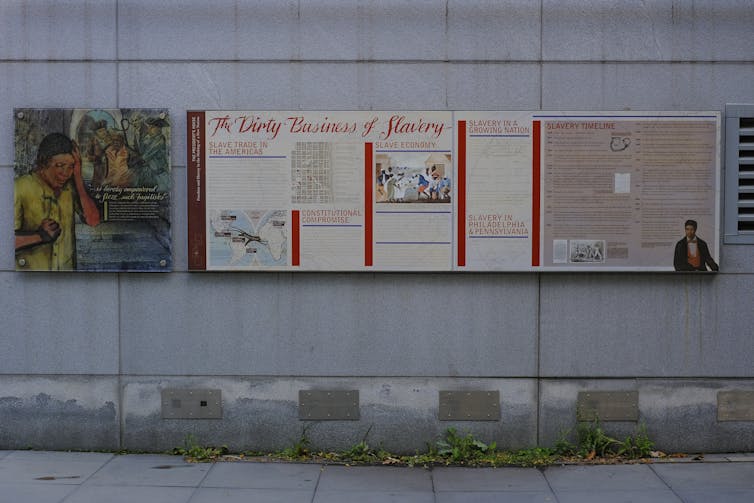
The slavery exhibition at Independence Hall opened in December 2010. It was the first slavery memorial on federal land in U.S. history.
Michael Yanow/NurPhoto via Getty Images

Years later, Judge described her narrow escape to Rev. Benjamin Chase in an interview for the abolitionist newspaper The Liberator. Judge told Chase, “I had friends among the colored people of Philadelphia, had my things carried there beforehand, and left Washington’s house while they were eating dinner.”

Prior to her escape, Judge served as a chambermaid in the President’s House. She spent years tending to Martha Washington’s every need: bathing and dressing her, grooming her hair, laundering her clothes, organizing her personal belongings, and even periodically caring for her children and grandchildren.

Being a chambermaid also included grueling daily tasks such as maintaining fires, emptying chamber pots and scrubbing floors.

Even though she engaged in this arduous labor as property of the Washingtons, living in Philadelphia provided Judge a glimpse of what freedom could eventually look like for her. Historians estimate that 5% to 9% of the city’s population at the time were free Black people. Prior to her escape, Judge befriended several of them.

Dark, moody painting depicting Black woman taking care of children by a fireplace
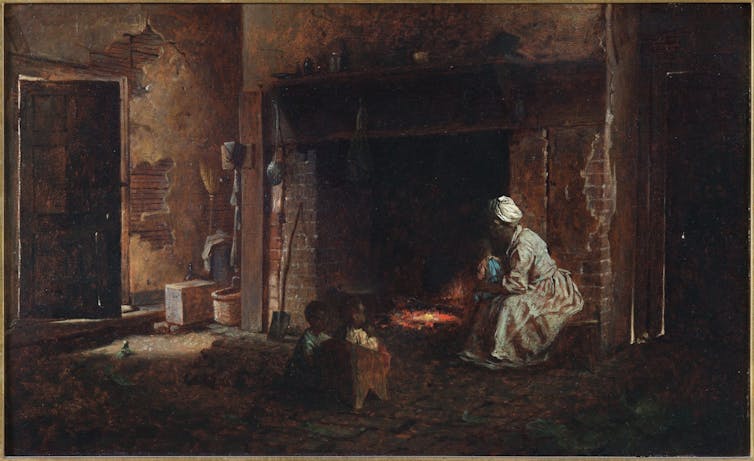
An oil painting titled ‘Mt. Vernon Kitchen’ by Eastman Johnson, 1864.
Mount Vernon Ladies’ Association

In the spring of 1796, the Washingtons prepared to return to Virginia to resume private life. President Washington issued his farewell address in the fall of 1796, but he told family and close confidants of his plans earlier in the year.

During that time, Martha Washington made arrangements for their pending return to Mount Vernon. Her plans included bequeathing Ona Judge to her granddaughter, Elizabeth Parke Custis, as a wedding gift. Upon learning this, Judge made plans of her own.

In her interview with Chase she explained, “Whilst they were packing up to go to Virginia, I was packing to go, I didn’t know where; for I knew that if I went back to Virginia, I should never get my liberty.”

As a civil rights lawyer and professor in the Africology and African American Studies department at Temple University in Philadelphia, I study the intersection of race, racism and the law in the United States. I am pleased that the city of Philadelphia has decided to honor May 21 as “Ona Judge Day” starting this year, as I believe Judge’s story is vital to the telling of America’s history, despite attempts by the Trump administration to erase that legacy.

Dismantling history

Erica Armstrong Dunbar, a professor of African American Studies at Emory University, tells Judge’s fascinating story in her book “Never Caught: The Washingtons’ Relentless Pursuit of their Runaway Slave Ona Judge.”

Before January 2026, those who wished to learn about Judge could literally stand on the same walkway in Philadelphia where Judge once stood when she chose to flee. Several footprints, shaped like a woman’s shoes and embedded into the pathway outside of where the President’s House once stood, memorialize the beginning of Judge’s journey. These footprints composed part of an exhibit examining the paradox between slavery, freedom and the nation’s founding.

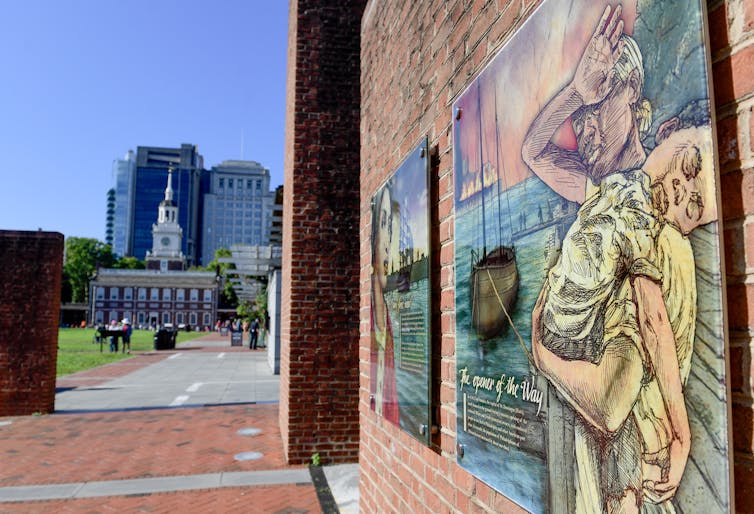
The exhibit, “Freedom and Slavery in the Making of a New Nation,” also included 34 explanatory panels bolted onto brick walls along that sidewalk. They provided biographical details about the nine people the Washingtons owned while living in the presidential mansion. The exhibit presented the sobering reality that our nation’s first president enslaved people while he held the nation’s highest office.

Colorful illustration on a panel on wall of brick building
These and other panels discussing the founders’ owning of slaves were removed in late January 2026, after an executive order issued by President Donald Trump in March 2025 called to eliminate materials deemed disparaging to the Founding Fathers or the legacy of the United States.
Matthew Hatcher/Getty Images

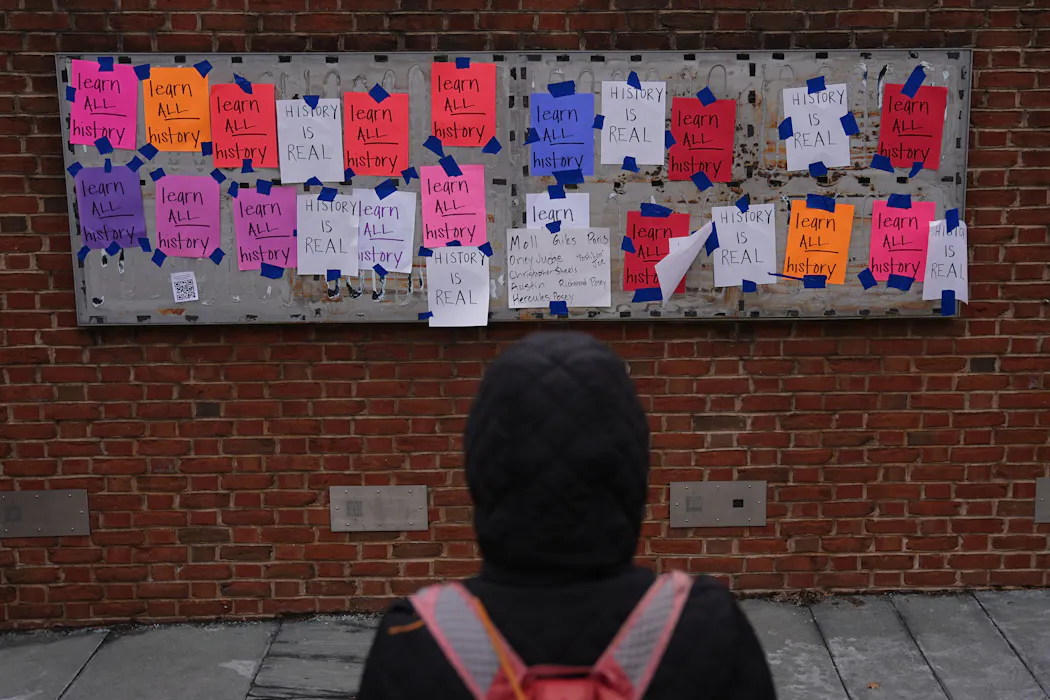
This changed in late January when the National Park Service dismantled the slavery exhibit at Philadelphia Independence National Historic Park. The removal sparked intense, immediate outrage from people across the country dismayed by the attempt to suppress unfavorable aspects of American history.

Philadelphia Mayor Cherelle Parker responded swiftly. “Let me affirm, for the residents of the city of Philadelphia, that there is a cooperative agreement between the city and the federal government that dates back to 2006,” she said in a public statement. “That agreement requires parties to meet and confer if there are to be any changes made to an exhibit.”

The city of Philadelphia later sued Interior Secretary Doug Burgum and National Park Service acting Director Jessica Bowron. Pennsylvania subsequently filed an amicus brief in support of the city’s lawsuit.

After an inspection of the exhibit’s panels, U.S. District Judge Cynthia Rufe, who oversaw the case, ruled that the government must mitigate any potential damage to them while they are stored.

Civil rights activist and Philadelphia-based attorney Michael Coard had an opportunity to visit and examine the exhibits in storage prior to a ruling from Rufe that ultimately ordered their restoration. Coard led the fight to create and preserve the exhibit and later led the fight to restore it.

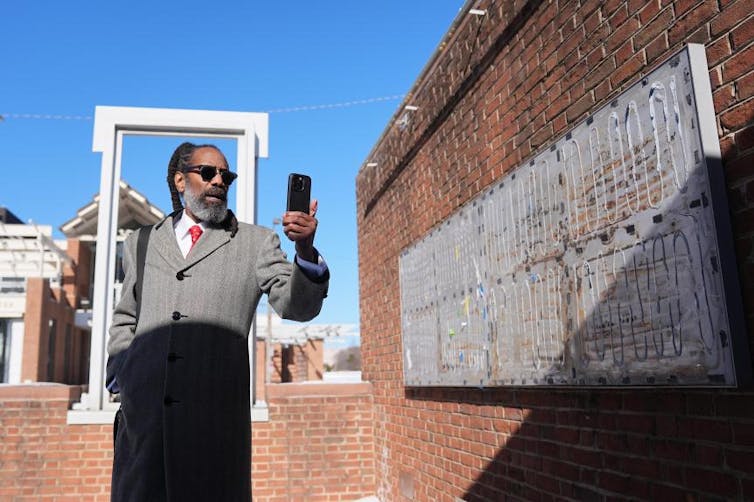
Man in overcoat and sunglasses holds up phone, with brick walls around him
Philadelphia-based attorney Michael Coard, who helped lead the effort to create the exhibition, visited the site after its removal.
AP Photo/Matt Rourke

Limiting discussion of race

In ruling to “reinstall all panels, displays, and video exhibits that were previously in place,” Rufe referenced George Orwell’s “1984.” She chided the federal government’s efforts to “dissemble and disassemble historical truths.” Critics had raised similar concerns and argued that the National Park Service’s dismantling of the exhibit was an attempt to “whitewash history” and erase stories like Ona Judge’s.

Avenging the Ancestors Coalition, a Philadelphia-based organization dedicated to preserving Black history, has scheduled a celebration on May 21, 2026, at Independence Hall to honor Ona Judge Day and Judge’s courageous escape more than two centuries ago.

Organizers feel greater urgency to share this history around slavery in the U.S. because of actions by the federal government that seek to suppress it. For example, the Trump administration has restored and reinstalled two Confederate monuments of Albert Pike in Washington and Arlington National Cemetery, while it removed the slavery exhibit in Philadelphia.

Moreover, during the first week of his second term, Trump signed multiple executive orders to eliminate
diversity, equity and inclusion policies.

Similarly, during the first Trump administration, the federal government engaged in various efforts to counterbalance the 1619 Project, a project spearheaded by Pulitzer-winning journalist Nikole Hannah-Jones that discussed the 400th anniversary of slavery’s beginnings in America. The 1619 Project spawned yearslong backlash. This included the 1776 Commission, created during the first Trump administration, which tried to discredit the conclusions of the 1619 project.

It is all part of a broader pattern across the country to limit how public institutions broach topics pertaining to race and racism.

This pattern has intensified as the United States prepares to celebrate the 250th anniversary of the framers signing the Declaration of Independence. As the nation celebrates its history, it must decide how much of it to explore.

_This is an updated version of an article originally published on Feb. 11, 2026.

Read more of our stories about Philadelphia and Pennsylvania, or sign up for our Philadelphia newsletter on Substack.

The Conversation

Timothy Welbeck has colleagues and affiliates who are members of Avenging the Ancestors Coalition, an organization which is mentioned in this article.

– ref. Philadelphia will celebrate Ona Judge Day to honor Martha Washington’s enslaved maid who made a daring escape to freedom – https://theconversation.com/philadelphia-will-celebrate-ona-judge-day-to-honor-martha-washingtons-enslaved-maid-who-made-a-daring-escape-to-freedom-283353

Special courts helps veterans stay out of jail – but funding cuts to VA and government programs are threatening their work

Source: The Conversation – USA (3) – By Jamie Rowen, Associate Professor of Legal Studies and Political Science, UMass Amherst

Veterans from past wars and those returning from ongoing wars will need the country’s continued support. SDI Productions/E+ via Getty Images

Memorial Day is an apt time to reflect on the long-term consequences of war. Among them are substance use, mental health problems, homelessness and jail time for those who served in the military.

About 8% of all Americans in prisons or jails are veterans, according to the Council on Criminal Justice, a nonpartisan think tank. Veterans end up incarcerated largely because of substance use and mental health disorders, both of which also contribute to homelessness.

For more than 15 years, one tool for helping veterans break out of addiction has been Veterans Treatment Courts. These programs help veterans accused or convicted of crimes address the challenges driving their involvement in the criminal legal system.

Veterans Treatment Courts require a dedicated clinician and need to provide access to counseling, housing support and other social services to meet veterans’ needs. For this, they must have funding from the government. As a legal scholar studying the use of criminal law to aid veterans, my research shows that these programs, which exist in every state except Connecticut and Vermont, can be very effective. But they only work when they have the staffing and the resources to support veterans’ complex needs.

However, since 2025, massive cuts to the Department of Veteran Affairs as well as to publicly funded healthcare such as Medicaid and Medicare, which are widely used by veterans, are making it harder for veterans to access healthcare.

What are Veterans Treatment Courts?

Veterans Treatment Courts are a subset of the drug treatment courts that were created by judges and criminal legal reformers beginning in 1988. These courts are an alternative to jail for people arrested or convicted for crimes that may be related to substance use disorders.

The idea was to allow courts to address the root causes of criminal behavior rather than simply punish people who committed crimes. Specialized treatment courts were soon developed to provide support for specific issues, such as mental health, or to groups accused of specific crimes, such as sex work.

Veterans treatment courts aim to help people address the underlying issues that lead them to commit crimes.

In 2008, a judge in Buffalo recognized that veterans in his drug treatment court would benefit from support from other veterans and the comprehensive services from the VA. So he launched a distinct program just for veterans that soon received national media attention. Veterans Treatment Courts now operate in over 745 courthouses.

Eligibility varies across courts, but typically requires that the person have served in the military and that the crime they committed is not considered so serious that it deserves incarceration. While these programs are funded through a variety of sources, such as local and state governments, the federal government offers tens of millions of dollars every year for local courthouses to set up Veterans Treatment Courts.

Veterans Treatment Courts have a variety of requirements for participants. Once admitted to the program, participants must attend a hearing where they talk to the judge about how they are doing. They must also take drug tests and attend therapy appointments. They may also have to show that they have stable housing and employment and that they have performed community service or engaged in other activities that indicate they are connected to their communities and therefore at lower risk for substance use or criminal behavior.

If participants meet program requirements, they graduate. Graduation usually means some sort of legal benefit, such as dropped charges and fines or the termination of probation.

Resources are key to success

Advocates suggest that Veterans Treatment Courts are more effective than jail or prison in preventing people from committing new crimes, and that treatment courts in general cost less than incarceration. But studies on whether they help veterans more than alternatives such as drug treatment courts or a regular criminal court have been inconclusive.

My research shows that treatment courts, in general, are most effective if they have dedicated staff and access to services to address substance use as well as housing insecurity. That level of support is exactly what the VA provides.

Veterans with VA benefits not only receive outpatient and inpatient substance use treatment, but they are able to access federally funded education and housing support unavailable to most U.S. citizens. Even Veterans Treatment Court participants who are ineligible for VA healthcare benefit from the unique levels of public support and state-funded programs for veterans in the U.S.

All this gives Veterans Treatment Courts the resources to help their participants more than other treatment courts or regular criminal courts can.

A person, visible torso down, walks through an economically stressed urban area, with a mural of an American flag behind them.
There’s a strong connection between veteran homelessness and incarceration.
Spencer Platt/Getty Images News

A program under threat

Recognizing the connection between veteran homelessness and incarceration, the federal government has put millions of dollars into the VA to help veterans in the criminal legal system. Congress annually authorizes tens of millions of dollars to support VA clinicians working in Veterans Treatment Courts. In January 2026, Congress even created a new center dedicated to this goal.

However, despite this support, the federal funding cuts for both the VA and mental health treatment more generally present numerous challenges for Veterans Treatment Courts. Tens of thousands of VA employees have left the agency since President Donald Trump took office. This has lead to staffing shortages that undermine care for all veterans.

Staff stability is especially important for these programs’ viability and success. My research shows that funding cuts lead to high turnover and low morale. When the Department of Health and Human Services sent a notice canceling US$2 billion worth of funding in January 2026, treatment courts were scrambling to figure out how they could staff their programs. Though this money was restored, the cancellation showed treatment court staff that their work could end without warning.

Given that the country’s criminal legal system is already overburdened, enabling Veterans Treatment Courts to do their vital work does more than help veterans. In my view, this program also models how comprehensive social services can help people struggling with substance use disorders, mental health problems, housing insecurity and other challenges.

As people recover from past wars and return from ongoing conflicts, they will need the country’s continued investment to reintegrate and thrive.

The Conversation

Jamie Rowen receives funding from the National Science Foundation.

– ref. Special courts helps veterans stay out of jail – but funding cuts to VA and government programs are threatening their work – https://theconversation.com/special-courts-helps-veterans-stay-out-of-jail-but-funding-cuts-to-va-and-government-programs-are-threatening-their-work-275742

What Jefferson and Madison would have thought about ‘rededicating’ the US to God

Source: The Conversation – USA (3) – By Steven K. Green, Professor of Law, Director of the Center for Religion, Law & Democracy, Willamette University

Many of the thousands of letters between the two founders attest to their deep commitment to religious freedom. AlexanderZam/iStock via Getty Images Plus

Thousands of Americans prayed on the National Mall on May 17, 2026, during “Rededicate 250”: a day-long rally to “come together in prayer and worship ahead of the nation’s 250th birthday,” as organizers described it. U.S. House Speaker Mike Johnson, one of many Republican politicians and conservative Christian leaders to speak, led a prayer to “rededicate the United States of America as one nation under God.”

Planned by Freedom 250, a public-private partnership, the rally prompted criticism that it blurred the lines separating church and state. According to the Pew Research Center, 73% of adults agree that religion should be kept separate from government policies, and only 19% of Americans say the United States should stop enforcing that principle.

But figures allied with the Trump administration have challenged the premise that the U.S. government should be – or was meant to be – separate from religion. In 2023, Johnson remarked that “The separation of church and state is a misnomer … it comes from a phrase that was in a letter that Jefferson wrote. It’s not in the Constitution. And what he was explaining is they did not want the government to encroach upon the church – not that they didn’t want principles of faith to have influence on our public life.”

As a scholar of American legal and religious history, I have written extensively about the development of religious freedom in the U.S., and the origins of the separation of church and state.

Two of the Founding Fathers shaped American views on these topics more than any other: Thomas Jefferson and James Madison. Yet their views have also become lightning rods for controversy as the “wall” between church and state comes under scrutiny.

My 2024 book, “The Grand Collaboration,” seeks to answer several questions: What was Jefferson’s and Madison’s understanding of religious freedom? And why were they so deeply committed to that principle?

Bedrock of law – in Virgina and beyond

Jefferson wrote the Virginia Bill for Religious Freedom in 1777, the most comprehensive declaration of religious freedom at the time. The bill guaranteed freedom of conscience, protected religious assemblies from government oversight, prohibited government funding of religious institutions and boldly declared that religious opinions were outside the authority of civil officials.

An obelisk-shaped grave sits in a grassy area with trees.
Thomas Jefferson asked that his gravesite commemorate three of his accomplishments, including writing Virginia’s statute for religious freedom.
Christopher Hollis/Wikimedia Commons

Several years later, Madison guided these ideals into law. His “Memorial and Remonstrance Against Religious Assessments,” a protest against a proposal to support Christian teachers with tax money, affirmed the values of church-state separation and religious equality. He helped defeat the proposal – and set the stage for Virginia to adopt Jefferson’s bill.

As president, Jefferson went on to pen a letter to a Baptist association in Connecticut where he immortalized the phrase “a wall of separation between church and state.”

The Bill of Rights contains two clauses about religion, both in the First Amendment: that “Congress shall make no law respecting an establishment of religion, or prohibiting the free exercise thereof.”

What qualifies as “establishment of religion,” however, is open to debate.

In 1947, the U.S. Supreme Court embraced church-state separation as the guiding principle for interpreting the religion clauses, relying extensively on the two Virginians’ writings and actions. As Justice Hugo Black wrote, “In the words of Jefferson, the clause against establishment of religion by law was intended to erect ‘a wall of separation between Church and State.’”

The duo’s documents served as the authority for the legal principle of church-state separation, and for more than five decades, their bona fides remained unquestioned in the law.

Shift at SCOTUS

Criticism of church-state separation intensified in the 1980s. As the religious right grew into a political force, commentators argued that the concept was anti-religious and did not represent the prevailing views about church and state during the founders’ time.

In recent decades, such arguments have attracted politicians and jurists, including members of the Supreme Court. Justice Clarence Thomas has written that the court’s earlier separationist interpretations of the Constitution “sometimes bordered on religious hostility.” Legal scholar Philip Hamburger has declared that “the constitutional authority for separation is without historical foundation” and “should at best be viewed with suspicion.”

Several recent Supreme Court decisions have rejected a separationist approach to church-state matters. For example, the conservative majority has allowed taxpayer dollars to be used at religious schools, the display of religious symbols on government property, and religious expression by public school employees.

In a 2022 dissent, Justice Sonia Sotomayor bemoaned that the court has turned the separation of church and state from a “constitutional commitment” to a “constitutional violation.”

The justices’ earlier reliance on Jefferson and Madison has borne the brunt of criticism that their views on church-state matters did not represent their peers, or that neither man was in favor of separation as he has been portrayed.

Exchange of ideas

To better understand Jefferson’s and Madison’s beliefs, I examined many of the 2,300 letters between the two on “Founders Online,” a National Archives website. I also looked at correspondence with other acquaintances.

Both founders had deistic leanings, meaning they believed in a supreme being, but thought science and reason were the best paths to understanding religion. They were only nominally observant Christians, but more protected from religious intolerance than other “dissenters” due to their high social standing and affiliation with the Anglican Church.

A formal portrait of a man staring at the viewer, with white hair, a white shirt with a high neck, and a black jacket.
Thomas Jefferson’s official presidential portrait, painted around 1800 by Rembrandt Peale.
White House History via Wikimedia Commons

All the more striking, then, that they worked throughout their lives to advance religious freedom.

Religious matters were never far from their minds. For instance, in Madison and Jefferson’s exchanges discussing the need for a bill of rights, freedom of conscience was invariably at the top of the list. Both were convinced that government should avoid supporting religion, even if no particular religion was given preference. They also insisted that people should have broad religious freedoms.

These views were clearly on the vanguard, but other religious rationalists and religious dissenters also advocated a comprehensive understanding of religious freedom.

Both men were committed to advancing religious freedom because they saw it as deeply entwined with freedom of inquiry and conscience. “Reason and free enquiry are the only effectual agents against error,” Jefferson wrote in 1784. Allowing people to investigate ideas freely “will support the true religion,” because “Truth can stand by itself.”

Similarly, Madison declared “the freedom of conscience to be a natural and absolute right.”

In their view, free inquiry was the fount of other rights. Religious freedom, for example, was a subset of freedom of conscience. And a healthy separation of church and state was key to ensuring those freedoms.

‘A pillar of support’

The letters reveal the extent to which Jefferson and Madison complemented and reinforced each other’s attitudes toward church and state. They also reveal the close intellectual and emotional affection that each man held for the other, and how much each man valued the other’s support.

A portrait of a man with white hair, a white shirt with a high neck, and a black jacket.
A portrait of James Madison by Chester Harding, painted around 1829, a few years before his death.
Daderot/National Portrait Gallery via Wikimedia Commons

In their final exchanges before Jefferson’s death on July 4, 1826, he implored Madison, “To myself, you have been a pillar of support thro’ life. Take care of me when dead, and be assured that I shall leave with you my last affections.”

Madison responded with similar affection: “You cannot look back to the long period of our private friendship & political harmony, with more affecting recollections than I do.”

Jefferson’s and Madison’s half-century of collaboration on behalf of religious freedom and equality is an important chapter in the nation’s founding history. I believe its legacy should be remembered and celebrated, not discarded.

This is an updated version of an article originally published on June 25, 2024.

The Conversation

Steven K. Green does not work for, consult, own shares in or receive funding from any company or organization that would benefit from this article, and has disclosed no relevant affiliations beyond their academic appointment.

– ref. What Jefferson and Madison would have thought about ‘rededicating’ the US to God – https://theconversation.com/what-jefferson-and-madison-would-have-thought-about-rededicating-the-us-to-god-283311

Stem cells have potent potential for diabetes treatment

Source: The Conversation – Canada – By Bailey Laforest, PhD student in Biology, Carleton University

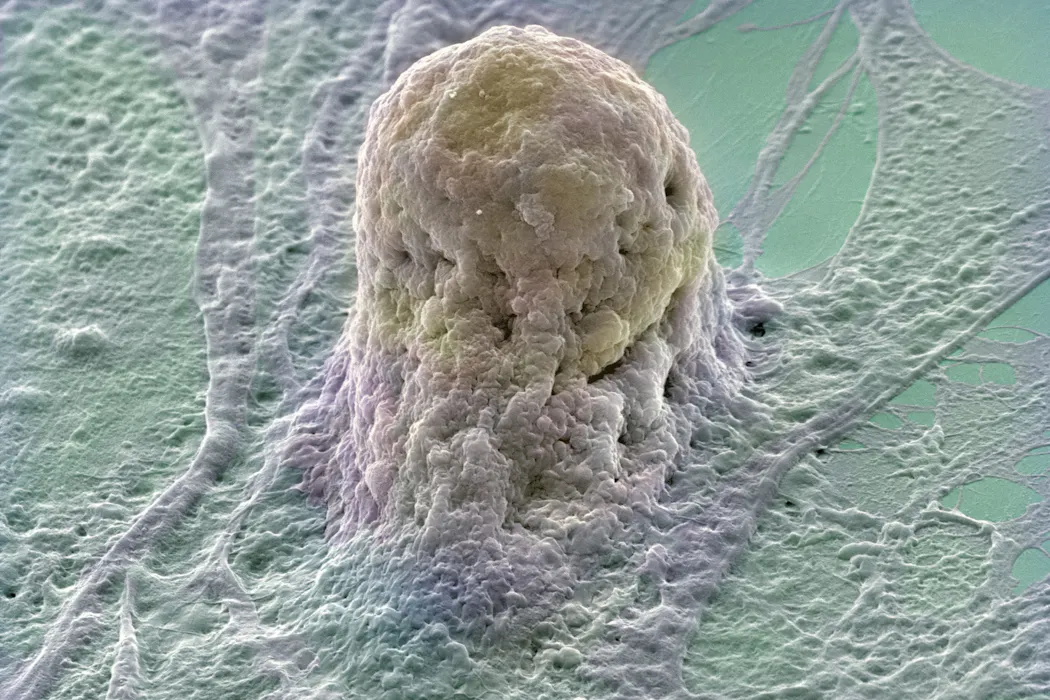
A human embryonic stem cell. Stem cells are derived from very early embryos. (Annie Cavanagh/Wellcome Collection), CC BY-NC

Humans have around 30 trillion cells in our adult bodies. Amazingly, each of these cells came from a handful of about 100 stem cells in the earliest days of development. The ability of these embryonic stem cells to turn into any cell type makes them pluripotent — something that researchers are harnessing in science and medicine today.

The use of human embryonic stem cells in research began in 1998, when several human embryos were donated from couples undergoing in vitro fertilization. From these embryos, scientists generated a virtually unlimited supply of pluripotent cells. Almost 30 years later, these embryonic stem cell lines are still used in many research labs today.

Another milestone in stem cell research came in 2007, when two labs — led by Shinya Yamanaka at the University of Kyoto in Japan and by James Thomson at the University of Wisconsin-Madison in the United States — separately published papers on how they had reprogrammed mature cells (like skin cells) back to a stem cell-like pluripotent state.

These are known as induced pluripotent stem cells. Their main benefit is that they carry a person’s own DNA, enabling more personalized disease-modelling and therapies.

How can stem cells be used for diabetes treatment?

In our research lab, we use embryonic stem cells to generate insulin-producing beta cells — the cell type that is destroyed by the immune system in people with Type 1 diabetes. The loss of these insulin-producing beta cells leaves patients dependent on insulin injections to control blood sugar levels and prevent severe complications like blood vessel and nerve damage.

Insulin therapy does not relieve the emotional load of living with Type 1 diabetes. It also does not fully replace the dynamic function of the body’s own beta cells, so many people with Type 1 diabetes still experience long-term health problems.

To overcome this, researchers are making lab grown stem cell-derived beta cells to try to restore the body’s ability to produce insulin. Recent clinical trials have shown promising results of transplanting these cells into individuals with Type 1 diabetes:

  • Vertex Pharmaceuticals transplanted beta cells derived from embryonic stem cells into 12 patients with Type 1 diabetes, and 10 (83 per cent) were able to stop insulin injections within six months.

  • A research team from China reprogrammed a Type 1 diabetes patient’s fat cells into induced pluripotent stem cells, turned the induced pluripotent stem cells into beta cells, and then transplanted them under the patient’s abdominal muscle. Remarkably, the recipient became insulin-independent 75 days after surgery and remained so for at least 12 months.

These early trials show that stem cell-derived beta cells can survive, mature and function after transplantation into patients. But challenges remain, including ensuring cells fully develop into the cell type of interest, producing cells safely and efficiently at large scales and preventing immune rejection.

How can stem cells avoid immune rejection?

Lab-grown cells have different genetics from the patient, so the patient’s immune system attacks the transplanted cells as “non-self.”

Researchers and physicians are hoping to overcome this problem by using induced pluripotent stem cells that carry the patient’s own DNA. However, even “self-derived” cells can behave unpredictably after months of reprogramming and growth in the lab, so immune rejection remains a risk.

And in diseases like Type 1 diabetes, the cells can still be destroyed by the same autoimmune response that caused the disease in the first place.

While immune-suppressing drugs are currently used to prevent rejection, they carry serious risks that outweigh the benefits for most patients.

Researchers are now exploring ways to prevent cell rejection without the need for immune-suppressing drugs, such as using protective capsules that shield the transplanted cells or introducing genetic changes that help the cells “hide” from the immune system.

The promise of immune-evasive genetically modified cells was recently demonstrated in a 2025 study when researchers transplanted gene-edited cells into a patient with Type 1 diabetes without using any immune-suppressing drugs. Remarkably, the patient showed no immune response to the transplanted cells, which survived, secreted insulin and improved blood sugar control over 12 weeks.

This breakthrough highlights the potential of immune-evasive cell therapies to overcome one of the biggest obstacles in regenerative medicine.

The road ahead

Stem cells offer an extraordinary toolkit for scientific research and medicine. Researchers are getting better at turning these pluripotent cells into specialized tissues and the first successful clinical trials are already here. However, these therapies are still experimental and not yet approved by Health Canada or the Food and Drug Administration in the United States.

Patients should be cautious of unapproved stem cell therapies and always consult their health-care professional before joining approved clinical trials. The progress made so far brings real hope that future stem cell therapies could improve the lives of people living with chronic diseases.

The Conversation

Jennifer Bruin receives funding from CIHR, NSERC, Canada Research Chairs Program, and the National Killam Program

Bailey Laforest does not work for, consult, own shares in or receive funding from any company or organisation that would benefit from this article, and has disclosed no relevant affiliations beyond their academic appointment.

– ref. Stem cells have potent potential for diabetes treatment – https://theconversation.com/stem-cells-have-potent-potential-for-diabetes-treatment-280003

Wise leadership pays off. Here’s how to apply it in the workplace

Source: The Conversation – France – By Abderrahman Hassi, Associate Professor of Management , Al Akhawayn University

In a global context marked by chaos and turbulence, technological advancements, health crises, marketplace alterations, shifting demographics and organizational foolishness, the demand for more adaptive and reflective forms of leadership has become a necessity. Given this context, wisdom can provide a meaningful understanding of “good” leadership to navigate such turbulence and seize the opportunities that come along with it. As such, wisdom constitutes a cornerstone of effective leadership and serves as a key driver of organizational excellence.

How do leaders ‘wise up’?

To put wisdom to good use in leadership, in one of our research pieces, we developed a valid “wise leadership scale”, designed to assess the extent to which leaders and managers demonstrate wisdom within organizations by gathering data in France and Morocco. In a recent research output, we validated the new wise leadership scale using data collected from Canada, China and Morocco. How do we define wise leadership?

Wise leadership is oriented toward enabling others to contribute meaningfully to the flourishing of individuals, organizations, and the wider community.

We conceptualised wise leaders as individuals who enact normatively positive behaviours through four mechanisms:

  • Intellectual shrewdness

This involves the ability to recognise, comprehend, and make sound decisions in both predictable and unpredictable situations. It entails quickly detecting subtle cues and underlying dynamics, anticipating potential difficulties, and generating actionable insights, even in ambiguous and uncertain contexts.

Wise leaders grasp what needs to be done and are acutely aware of the repercussions of their decisions and actions. To establish facts and provide deductive explanations without rushing to judgement, they rely on reasoned and circumspect observation. Wise leaders also possess the intellectual abilities required to realise their envisioned future by selecting the appropriate course of action at the right moment, while carefully considering the prevailing circumstances.

A lack of intellectual shrewdness along with sound judgement and foresight among high-ranking executives and engineers resulted in Volkswagen’s Dieselgate scandal in 2015.

The latter was about setting up unauthorised software to evade nitrogen oxide emission regulations. The individuals concerned were intelligent leaders with remarkable engineering and financial abilities. Nonetheless, they exhibited poor judgement and unwise behaviour as they did not adequately assess the potential repercussions or anticipate the harmful consequences for both the company and themselves of tampering with emission tests. The scandal resulted in a colossal loss of over €33 billion in penalties and settlements for Volkswagen.

  • Spurring action

This refers to the capacity to inspire and mobilise others around a compelling vision. Wise leaders help subordinates perceive a positive future vision as both meaningful and attainable.

Spurring action involves directing followers toward actions that yield desired outcomes that followers themselves recognise and appreciate as wise. To this end, wise leaders display specific traits and behaviours that enable them to align individual and organizational goals. Wise leaders additionally, actively develop the potential of their followers, elevating them to new levels of performance and growth. On top of this, wise leaders are also able to bring people with varying interests together, even by resorting to power if necessary. Lastly, by fostering a sense of purpose, nurturing trust, building strong human connections, and creating opportunities for organizational members to work collaboratively, wise leaders entice subordinates to achieve positive work outcomes.

When Tadataka Yamada took over as chairman of R&D at Glaxo SmithKline (GSK) in December 2000, his company was one of 39 pharmaceutical companies suing the South African government for violating price protections and patent infringement for AIDS medicines over access to drug therapies for needy patients.

Given the patients’ powerless position to alter the course of the legal process, Yamada opted to be a part of the solution to global health problems, rather than a party to a lawsuit that prevented such treatments from reaching those in desperate need.

In one-on-one meetings with each GSK board member, Yamada emphasised GSK’s moral obligation to relieve human suffering and associated it with the company’s long-term performance. All 39 corporations withdrew their legal action against South Africa in April 2001. GSK’s business strategy in developing countries, stakeholder relations, and reputation were all positively impacted by this decision.

  • Moral conduct

This refers to how far morals, values, and principles guide wise leaders’ day-to-day interactions with stakeholders in a consistent, truthful, and ethical manner. Wise leaders avoid excess and greed, uphold high ethical standards and prioritise virtuous outcomes. In practice, wise leaders balance their own interests with those of others, carefully evaluate the moral implications of their decisions and actions, and consistently adhere to their ethical principles. To achieve this, wise leaders rely on a strong moral compass that provides clear behavioural guidelines, ensures consistency between words and deeds, and reinforces their moral commitment. As a result, they serve as role models for their followers; their organizations function harmoniously, grounded in a noble purpose aimed at delivering benefits to the greatest number of people.

As an example, Mario Rovirosa, CEO of Ferrer – Spain’s first B corp pharmaceutical company, stresses that the brand’s slogan “Ferrer for good” says it all: it is the company’s purpose to “do good” in society and on the planet, and asserts that Ferrer harnesses its pharmaceutical activity to obtain the required resources to do good.

Rovirosa spearheaded Ferrer to become the first Spanish pharmaceutical laboratory to obtain the B Corp certification that is awarded by B Lab to firms that meet high standards of social and environmental performance, accountability, and transparency.

Ferrer takes into account the effects corporate decisions have on their employees, customers, suppliers, community, and the physical environment. Recently, the company conferred more than half of its profits to social and environmental initiatives.

  • Cultivating humility

Cultivating humility involves a balanced sense of self-worth that lies between the vices of deficiency and excess. Wise leaders deeply value their expertise and knowledge yet continually subject them to critical scrutiny. They are committed to lifelong learning as they strongly believe that true wisdom also stems from the vast realms of knowledge that remain unexplored. Wise leaders remain open to learning from all sources, including subordinates, and readily acknowledge that they do not know everything.

Moreover, the humility of wise leaders is evident in their willingness to openly admit mistakes and draw valuable lessons from them. Finally, wise leaders willingly adopt the perspectives of others, rather than exclusively rely on self-focused stances. In so doing, they truly guard against intellectual arrogance and ignorance.

When Anne Mulcahy took the reins of Xerox in 2001, it was recommended that she announce the company’s bankruptcy. Xerox was losing 300 million dollars each year. However, she chose not to take the “easy path”. When confronted with daunting obstacles, Mulcahy favoured dialogue over speeches and exhorted staff to share critical viewpoints and even discordant stances, and hence succeeded in accommodating diverse perspectives and expectations.

Anne Mulcahy’s tenure as CEO at Xerox is a shining example of operational efficiency and cultivating humility, which is part of wise leadership.

Mulcahy did what the vast majority of leaders would not do: she approached junior subordinates to mentor her in product development, engineering, and finance. Mulcahy ended up saving Xerox and improving its profitability by slashing both its capital expenditures and total debt in half, and cutting its general and administrative expenses by one third.

The proposed wise leadership model broadens the scope of existing approaches, such as authentic, ethical and transformational leadership, by incorporating the core components of judgement, action, morality, and humility.

This new wise leadership scale can serve as a practical tool to assess the degree of wise leadership demonstrated by current employees and to identify individuals with (un) wise tendencies during leadership recruitment and selection processes.

It also offers a valuable mechanism to design and deliver targeted leadership training and development programmes aimed at fostering wisdom in leaders, which may lead, in turn, to generating positive organizational outcomes.


The European Academy of Management (EURAM) is a learned society founded in 2001. With over 2,000 members from 60 countries in Europe and beyond, EURAM aims at advancing the academic discipline of management in Europe.


A weekly e-mail in English featuring expertise from scholars and researchers. It provides an introduction to the diversity of research coming out of the continent and considers some of the key issues facing European countries. Get the newsletter!


The Conversation

Les auteurs ne travaillent pas, ne conseillent pas, ne possèdent pas de parts, ne reçoivent pas de fonds d’une organisation qui pourrait tirer profit de cet article, et n’ont déclaré aucune autre affiliation que leur organisme de recherche.

– ref. Wise leadership pays off. Here’s how to apply it in the workplace – https://theconversation.com/wise-leadership-pays-off-heres-how-to-apply-it-in-the-workplace-282900

5 reasons Stephen Colbert is one of the most important satirists in American history

Source: The Conversation – USA (2) – By Sophia A. McClennen, Professor of International Affairs and Comparative Literature, Penn State

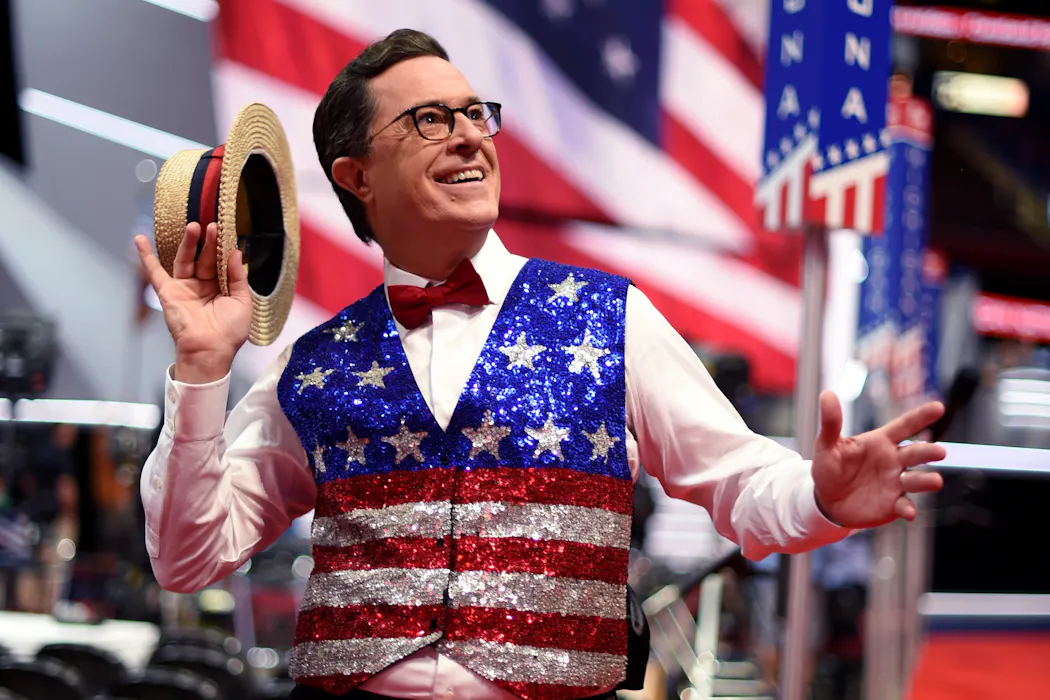
Stephen Colbert tapes a segment for ‘The Late Show’ at Quicken Loans Arena ahead of the 2016 Republican National Convention in Cleveland. Timothy A. Clary/AFP via Getty Images

Stephen Colbert’s final episode as host of “The Late Show” on May 21, 2026, won’t mark the end of his career.

But as a scholar of political satire, I think it offers a chance to reflect on the lasting impact of his comedy, which has spanned his work as a correspondent on “The Daily Show,” his conservative pundit persona on “The Colbert Report” and his reinvention on “The Late Show.”

The best satirists do more than entertain. They influence public discourse and leave lasting marks on political life. This group includes towering writers such as Benjamin Franklin and Mark Twain, alongside performers like Lenny Bruce and George Carlin.

In my view, Stephen Colbert has earned a spot in the top tier. Here are five reasons why.

1. He didn’t just satirize the news – he informed the public

Most satirists offer wry commentary about political events.

Colbert often did something more ambitious: He helped audiences understand them.

Critics have long dismissed political comedy as superficial entertainment, but Colbert’s satire frequently offered valuable information to the public.

In 2010, the U.S. Supreme Court’s Citizens United decision transformed campaign finance law, tilting political influence toward wealthy people and corporations. As host of the “Colbert Report,” the comedian responded by creating an ongoing series of “Colbert Super PAC” segments. Working with former Federal Election Commission Chair Trevor Potter, Colbert was able to translate the opaque mechanics of campaign finance law into accessible civic education.

Colbert used his platform to highlight the dangers of unrestricted, anonymous donations in politics.

It’s hard to fully track the impact of this approach. But a 2007 Pew Research Center study did find that audiences for satirical news programs such as “The Daily Show” and “The Colbert Report” scored high on political knowledge measures, outperforming audiences who only consumed political news from traditional outlets.

That urge to use satire as a vehicle for civic education continued after Colbert became host of “The Late Show” in 2015.

With debates raging over the border wall proposed by the first Trump administration, Colbert brought experts on to the program to break down the engineering, financial and logistical realities of building one that spanned the entirety of the U.S.-Mexico border. Yes, the absurdity of the physics and finances elicited laughs. But Colbert also helped viewers understand why Trump’s promises were implausible.

2. He gave Americans a new political vocabulary

When the world is absurd, the satirist uses ironic wit to make sense of it.

Colbert excelled at distilling the spin and duplicity of politics into memorable soundbites.

On the first episode of “The Colbert Report” in 2005, he introduced the word “truthiness” to describe the tendency to prefer what “feels true” over what the evidence supports. It incisively gave a name to a deceptive political tactic, one that the Bush administration had repeatedly used, from “Mission Accomplished,” to “weapons of mass destruction” and “enhanced interrogation techniques.”

“Truthiness” took on a life of its own. Merriam-Webster named it Word of the Year in 2006.

Colbert continued this rhetorical work on “The Late Show.” For example, in February 2017, after Donald Trump escalated his attacks on the press by labeling major news outlets “the enemy of the American people,” the comedian shifted from parody to diagnosis. He foregrounded the phrase’s authoritarian history, insisting that the rhetoric signaled a meaningful escalation in attacks on First Amendment rights, rather than a passing controversy.

In other words: There was nothing to laugh about here.

3. He blurred the line between satire and direct action

Media scholars have increasingly noted how political comedians now function as hybrid figures who blur journalism, entertainment and civic engagement. According to communications scholar Joseph Faina, Colbert may be one of the clearest examples of that shift.

Colbert’s satirical presidential campaign in South Carolina in 2007 mocked the theater of American electoral politics. He actually attempted to enter the race through official channels, only to be blocked by the South Carolina Democratic Party. But even in his failure to appear on the ballot, he was able to show how party control and media spectacle, not just voter choice, structure the field of viable candidates.

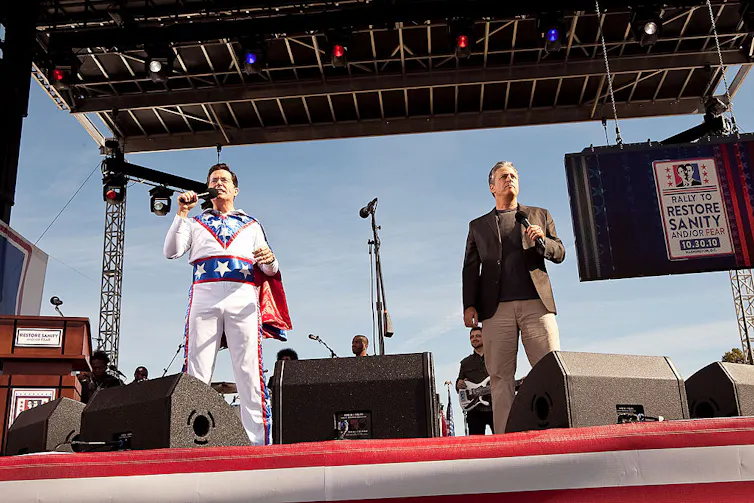
In 2010, he held a rally with Jon Stewart on the National Mall before a crowd of over 200,000 people. Assuming his conservative pundit persona, Colbert blended irony and sincerity, mocking the self-seriousness, sensationalism and outrage-driven news cycles of cable news through his competing calls for “sanity” and “fear.” But the event was also designed to motivate voter turnout in the midterm elections.

That interventionist impulse continued on “The Late Show.” During the 2020 election cycle, for example, Colbert encouraged voting through segments like “Better Know a Ballot.” A riff on his previous “Better Know a District” from “The Colbert Report,” the “Better Know a Ballot” series was designed to educate viewers about ballot access, voting procedures and the practical elements of democratic participation.

Two middle-aged men, one wearing a red, white and blue daredevil outfit with a cape, hold microphones on stage.
Stephen Colbert, left, and comedian Jon Stewart onstage at their ‘Rally to Restore Sanity and/or Fear’ on Oct. 30, 2010, in Washington, D.C.
Paul Morigi/WireImage via Getty Images

4. He measurably influenced political behavior

Claims about comedians changing politics can easily become exaggerated. But Colbert’s influence has empirical support.

Research by political communication scholars Jody Baumgartner and Jonathan Morris found that exposure to political satire can increase viewers’ sense of what’s known as “political efficacy” – the belief that they can understand and engage with politics. Other studies suggest satirical news audiences are often more politically active than they’re assumed to be.

Colbert is repeatedly cited in these studies as one of the prime examples of a satirist who makes an impact.

Take, for instance, the so-called “Colbert bump,” where candidates who appear on his programs experience boosts in fundraising, visibility and media coverage. Political scientist James H. Fowler found that Democratic candidates who appeared on “The Colbert Report” experienced a 44% increase in campaign donations within 30 days of their appearance.

A similar effect could be seen on “The Late Show.”

After Colbert interviewed Texas state Rep. James Talarico, a U.S. Senate candidate, in February 2026, CBS canceled the segment, claiming – perhaps disingenuously – that the network could be punished for not adhering to the FCC’s “equal time” rule, which requires broadcast stations to offer comparable airtime to opposing candidates.

A taped version of the interview was nonetheless posted to YouTube, where it racked up over 9 million views, helping fuel Talarico’s US$27 million first-quarter fundraising haul, the largest amount ever raised by a U.S. Senate candidate in the first quarter of an election year.

5. He redefined American patriotism

To rank Colbert among America’s most important satirists requires one additional consideration: his role in redefining not only what America stands for, but what it means to be patriotic.

Many satirists lean toward cynicism, portraying politics as hopelessly corrupt and public life as fundamentally absurd. Not Colbert.

As linguist Geoffrey Nunberg argued in his 2006 book, “Talking Right: How Conservatives Turned Liberalism into a Tax-Raising, Latte-Drinking, Sushi-Eating, Volvo-Driving, New York Times-Reading, Body-Piercing, Hollywood-Loving, Left-Wing Freak Show,” conservatives had claimed a monopoly on patriotism as the 20th century drew to a close. At the same time, many of them promoted what’s known as “blind patriotism,” in which any criticism of the U.S. is cast as evidence of insufficient national loyalty.

Colbert’s satire directly challenged that framework.

To expose that performative patriotism, Colbert’s persona on “The Colbert Report” wrapped itself in exaggerated patriotic imagery: flags, bombast, overconfidence and chest-thumping nationalism.

But the joke was never America itself. The target was a performance of patriotism that treated dissent as disloyalty, emotional certainty as evidence and partisan identity as civic virtue.

As I argue in my 2011 book, “Colbert’s America,” Colbert’s satire consistently distinguished between nationalism and democratic patriotism. The former demands unquestioning loyalty. The latter demands accountability. For example, through segments like “Threat-Down” on “The Colbert Report,” he satirized the way nationalism often depends on exaggerating fictive dangers and denouncing symbolic, external enemies.

In that sense, Colbert belongs in a distinctly American satirical tradition that stretches back to Benjamin Franklin. The great American satirists have used humor not to reject the national project, but to expose the gap between its ideals and its realities. They reshape how citizens understand power and civic responsibility.

For nearly three decades, Stephen Colbert has done exactly that.

The Conversation

Sophia A. McClennen does not work for, consult, own shares in or receive funding from any company or organization that would benefit from this article, and has disclosed no relevant affiliations beyond their academic appointment.

– ref. 5 reasons Stephen Colbert is one of the most important satirists in American history – https://theconversation.com/5-reasons-stephen-colbert-is-one-of-the-most-important-satirists-in-american-history-282564

San Diego mosque shooting reflects how online rhetoric, media depictions and political discourse contribute to increased Islamophobia

Source: The Conversation – USA (3) – By Anisah Bagasra, Associate Professor of Psychology, Kennesaw State University

People comfort one another near the scene of a shooting outside the Islamic Center of San Diego on May 18, 2026, in San Diego. AP Photo/Gregory Bull

Many Muslim Americans are fearful following a shooting at the Islamic Center of San Diego that left three worshipers dead. Investigators reportedly found hate speech and anti-Islamic writing inside the vehicle of the suspected shooters, who killed themselves soon after the attack.

The director of the Islamic Center, Taha Hassane, condemned the attack while also encouraging individuals to respond with tolerance and love. “All of us are responsible for spreading the culture of tolerance, the culture of love,” he said, while lamenting the conditions that had led to such violence.

The attack comes just one week before the celebration of Eid al-Adha, an annual festival celebrating the Prophet Abraham’s – Ibrahim in Arabic – willingness to sacrifice his son in obedience to God, and the conclusion of the annual Hajj – the pilgrimage to Mecca, one of the five pillars of Islam.

It also comes on the heels of ongoing tensions in the Middle East and increasing political rhetoric in the United States. Republicans in Congress held hearings during the week of May 13, 2026 titled “Sharia-Free America.” This reflects a long-standing anti-Muslim trope that portrays Muslims as invaders who want to impose sharia – Islamic religious law – on all Americans. Many Muslim Americans are concerned because the rise of anti-Muslim bigotry among politicians has been mostly met with silence.

Muslim Americans have been warning that the increased rhetoric targeting Islam and Muslims endangers their community. As a scholar who studies Islamophobia and its impact on Muslim Americans, I have observed how the war with Iran intensified anti-Muslim sentiment online. A study by the Center for the Study of Organized Hate found that in the first six days of the conflict, the average number of Islamophobic posts on X jumped from an average of 2,000 posts daily to 6,000.

Research consistently shows that negative portrayals of Muslims shape public attitudes toward them and can lead to increased discrimination, psychological harm and hate crimes like the shooting in San Diego.

Increase in Islamophobia

Islamophobia in the United States tends to surge during global conflicts, political campaigns and terrorist attacks. Human Rights First, an organization that works to promote human rights in the U.S. and abroad, documented surges in Islamophobia in 2015 following the Syrian refugee crisis, when a large number of people were displaced. That same year the 2015 attacks in Paris and shooting in San Bernardino, California, intensified public anxiety about terrorism. A surge in crimes against Muslims followed.

Islamophobic rhetoric in the U.S., in which Muslims were often framed as a security threat, intensified during Donald Trump’s 2016 presidential campaign and continued into his first presidency. Burton Speakman, a scholar of digital media, and I found an increasing acceptance of such rhetoric among the political right in social media posts from 2016-19.

Social media posts and comments showed an increasing use of dehumanizing language toward Muslims. In a study I conducted in 2020, a majority of 830 Muslim Americans reported encountering the most Islamophobic content on Facebook, followed by Twitter and Instagram. This shift was also reflected in the language and coverage of Islam in right-wing media, which often portrayed Muslims as invaders wanting to impose sharia and as a drain on social welfare.

Mainstream media can also amplify negative depictions of Muslims by often discussing Islam within the context of terrorism and portraying Muslims more negatively than other racial, ethnic or religious minority groups.

Hate crimes tend to increase alongside Islamophobic rhetoric. During 2016, a period with high rates of Islamophobic rhetoric, there were 307 reported incidents – the highest recorded number since immediately following 9/11. The numbers dropped in 2017 but were followed by an increase in 2024 with the start of the Israel-Hamas war. That year, 288 anti-Muslim hate crimes were reported.

A 2025 poll found that 63% of American Muslims reported experiencing religious discrimination, with many reporting at least one such incident every year since 2016.

Mental health of Muslim Americans

The cumulative effects of Islamophobia have an impact an American Muslims’ mental health and access to care.

A woman wearing a headscarf speaks with another woman reclining on a bed, who is also wearing a headscarf.
Higher rates of depression among Muslim Americans are associated with Islamophobia.
triloks/ E+ via Getty images

Numerous studies since 9/11 link the high rates of discrimination experienced by the Muslim American
community to higher rates of depression. Experiences of discrimination also lead some Muslim Americans to believe they are not viewed as being American.

Thirty-one percent of participants in my 2020 study described the impact of social media on their mental health. Many said they avoided displaying their Muslim identity in social media posts, supporting a Muslim political candidate on social media, or even sharing religious content or videos. Some just withdrew – 27% deactivated or deleted their social media accounts.

In addition, many Muslims reported feeling discouraged from seeking both physical and psychological treatment from non-Muslim providers. This leads Muslim Americans to significantly underutilize available services compared to other ethnic and religious minority groups.

A 2015 study found that nearly one-third of Muslim Americans reported experiencing discrimination in health care settings, which has an impact on their trust in providers. The majority reported rude treatment by providers, insensitivity regarding modesty requirements, or having their pain disregarded. One participant in that study said: “Going into a surgery, health care providers didn’t recognize the importance of me keeping my hijab on and wanting most of my body covered.”

In my 2023 study, a number of participants described personal experiences with mental health professionals who seemed not to see them as individuals beyond their religious affiliation. One participant described a provider as being “quick to attribute problems” to religion or culture. “I worry about them stereotyping and end up feeling as if I’m on the defense,” this participant said.

My most recent study, conducted in 2024, which is currently under review, asked 325 Muslim Americans who had used any psychological services about their health-seeking behavior: 56% said they were worried about provider bias; 57% were worried about being misunderstood.

Following Trump’s travel ban targeting several Muslim countries in 2017, a study conducted by researchers at the Yale School of Public Health found that many Muslim Americans skipped their primary care appointments. At the same time, their visits to the emergency room went up.

Addressing the challenges

In response, a number of initiatives have emerged at the local and national levels.

One approach involves increasing mental health literacy within Muslim communities and creating networks of mental health professionals working with Muslim clients.

For example, mental health professionals and community leaders are working to increase mental health literacy both digitally and through in-person education. Muslim community members learn about symptoms of mental health disorders through training, such as Mental Health First Aid. Online directories of Muslim mental health providers have also been created.

Another approach involves training mental health professionals. A team at Stanford University has created a six-part training module that provides therapists with knowledge of religious norms and an opportunity to reflect on their own possible biases.

Finally, Muslim researchers and providers have begun to develop therapies and resources that integrate Muslim beliefs and spiritual approaches with treatment. These include psychotherapy that is inspired by the Quran, the teachings of the prophet and spiritual practices such as self-reflection, prayer and mindfulness.

A vulnerable community

The war with Iran has fueled an increase in anti-Muslim rhetoric that has increasingly spilled into political discourse. In February 2026, for example, U.S. Rep. Randy Fine of Florida posted on X that “the choice between dogs and Muslims is not a difficult one.” In another post he wrote, “We need more Islamophobia, not less.” Similarly, U.S. Rep. Brandon Gill of Texas called for stopping the entry of “Muslims immigrating to America.”

The shooting at the Islamic Center of San Diego has deepened fear of harassment and violence among an already vulnerable community.

Muslim Americans can often feel powerless in the face of such hostility. Greater public awareness, stronger advocacy and efforts to address the mental health impacts of anti-Muslim hatred are critical for a community that already feels vulnerable.

This is an updated version of an article first published on April 17, 2026.

The Conversation

Anisah Bagasra receives funding from Meta for Content Policy research in 2019

– ref. San Diego mosque shooting reflects how online rhetoric, media depictions and political discourse contribute to increased Islamophobia – https://theconversation.com/san-diego-mosque-shooting-reflects-how-online-rhetoric-media-depictions-and-political-discourse-contribute-to-increased-islamophobia-283267

After the flames, wildfires pollute drinking water for years

Source: The Conversation – Canada – By Qingshi Tu, Assistant Professor, Department of Wood Science, University of British Columbia

When people think about wildfires, they usually think about flames, smoke and evacuations. However, for many communities, some of the most important damage begins after the fire has passed.

Most wildfires leave behind a barren, blackened landscape, and within this changed environment, important impacts can leave their mark. Trees and other vegetation that once slowed rainfall and held soil in place are gone. Ash and burned debris cover the ground. Soil can become more vulnerable to erosion.

Then, the rain comes. When that happens, streams, rivers and water reservoirs receive a sudden pulse of ash, sediment and fire-suppressant chemicals washed off the land. For communities that depend on those waters for drinking water, wildfires can quickly become a long-term water-quality problem.

This risk is often overlooked when governments and communities think about wildfires. Our recent review of 23 studies across 28 watersheds brings together existing knowledge on how wildfire-related contaminants affect water sources.

One of the clearest lessons is that the impacts of wildfire do not stop at the edge of the burn scar. They can travel downstream, into the waters that people rely on every day.


Read more:
Why forest loss is making our watersheds leak rain


More contaminants in water

One of the first signs of trouble after a wildfire is often turbidity — the cloudiness caused by suspended particles in the water.

High turbidity can make drinking water much more difficult to treat. Fine particles can interfere with processes, clog filters and make disinfection less effective. After a fire, the problem is often worsened by storms that flush large amounts of ash, soil and organic material into waterways over a short period of time.

Wildfires can also increase levels of contaminants such as polycyclic aromatic hydrocarbons (PAHs), some of which are carcinogenic or suspected carcinogens. Many PAHs can attach to ash, soot and fine particles, allowing them to move through a watershed when water runs off. Some lower-molecular-weight PAHs may also occur in dissolved form, creating additional challenges for monitoring and water treatment.

In some cases, chemicals used in fire suppression can also affect water quality: some fire retardants contain phosphates, which can add too many nutrients to water bodies if they get into streams or reservoirs.

Wildfires also make landscapes more vulnerable to erosion, which can release sediments, metals, dissolved organic matter and other contaminants into lakes, rivers and reservoirs.

Not every wildfire affects water in the same way. The size of the impact depends on many factors: how severely the area burned, how steep the terrain is, what kinds of soil and vegetation are present, how close the burned area is to streams and reservoirs, and how soon heavy rain falls after the fire. In many cases, the fire creates the conditions for water contamination, but the first major storm that follows delivers the blow.

There are still those other persistent factors that can lead to contamination, even years after the wildfire. This is one reason wildfire risk is becoming harder to manage in a warming world.

That broader perspective matters for water policy. If governments treat wildfire only as an emergency response problem, they will miss what happens before and long after after the flames. They will also miss opportunities to reduce long-term contamination of drinking water.

What can be done?

The first step is to recognize water protection as part of wildfire preparedness. Utilities and governments should know which watersheds are most vulnerable to severe fire and post-fire runoff. Fire-risk planning, watershed management and drinking-water planning are often handled separately. That needs to change.

The second step is better monitoring. After a major fire, communities need timely information about what is entering their water sources. Without timely monitoring, utilities are left reacting after water quality has already deteriorated.

The third step is stronger support for drinking water treatment systems, especially in smaller and rural communities. Large cities may have more backup options, flexible treatment systems and capacity. Smaller communities often do not. Yet they may face some of the greatest risks when fire affects the watersheds they depend on.

Wildfire policy should be guided by fairness as well as science. Not all communities are equally able to absorb a shock to their water supply. Communities with fewer financial resources, older infrastructure or limited treatment capacity may face longer disruptions and higher risks.

Protecting drinking water after wildfire isn’t just an environmental issue. It’s also a public health and equity issue.

As Canada heads into another wildfire season, we should widen our understanding of what wildfires leave behind. The flames may last days or weeks, but the effects on water can last far longer. If we want communities to be truly resilient, we need to protect not only the air people breathe, but also the water they depend on.

The Conversation

Loretta Li receives funding from Mitacs and Kerr Wood Leidal Associates, Ltd. under the Mitacs Accelerate grant, IT43279.

Raul de Leon Rabago receives funding from Mitacs and Kerr Wood Leidal Associates, Ltd. under the Mitacs Accelerate grant, IT43279.

Qingshi Tu does not work for, consult, own shares in or receive funding from any company or organisation that would benefit from this article, and has disclosed no relevant affiliations beyond their academic appointment.

– ref. After the flames, wildfires pollute drinking water for years – https://theconversation.com/after-the-flames-wildfires-pollute-drinking-water-for-years-280127