Source: The Conversation – UK – By Helen Vassallo, Associate Professor of French and Translation, University of Exeter
Cathedrals is the latest work by Argentinian crime writer Claudia Piñeiro to be published in English by Charco Press, in a translation by Frances Riddle. The crime is the murder and dismemberment of 17-year-old Ana Sardá 30 years ago. Yet, as ever in Piñeiro’s work, nothing is quite what it seems.
Each section is written from the perspective of a key character, and the truth emerges gradually as the stories intertwine. The first section is narrated by Lía, Ana’s middle sister. Cathedrals opens with Lía’s loss of faith, confirmed 30 years earlier at Ana’s funeral. This sets up a core premise of the book: how can a barbaric act that takes a human life ever be rationalised as “God’s will”?
Lía left Argentina, unable to remain with a family who, apart from her father Alfredo, were all content to move on when the local police closed the unsolved murder investigation. Now running a bookstore in Santiago de Compostela, Spain, Lía corresponds with Alfredo via a postal locker, refusing to hear any news of the rest of her family.
This silence is shattered when the eldest sister, Carmen, and her husband Julián turn up in Lía’s bookshop. Their son Mateo has disappeared, and they believe Lía can help them find him. In the course of the conversation, Lía learns that Alfredo is dead.
Narration of the next section falls to Mateo, who has grown up with the family scar of the murder and dismemberment of an aunt he never knew. Despite Carmen and Julián’s dogmatic efforts to impose a “normal” family life on him, Mateo is defined by the inherited trauma of Ana’s death. Urged on by his grandfather Alfredo, Mateo embarks on a pilgrimage that will be Alfredo’s last gift to his family.
The distinctive voices of each narrator represent one of the great successes of Riddle’s translation. She deftly navigates a significant shift in style in the third section: this is narrated by Marcela, Ana’s best friend, a retrograde amnesiac. Condemned to create no new memories after a statue fell on her head the day of Ana’s death, Marcela’s section is cyclical, returning again and again to her final memory: Ana dying in her arms. Yet everyone tells Marcela that this moment, in which her memory is forever suspended, cannot truly have happened.
Next we hear from Elmer, the now-retired police officer assigned to Ana’s murder case, whose investigations were shut down by a line manager keen to move on from a community scandal. Narration of the final chapters then returns to Ana’s family: first her weak brother-in-law Julián, and then Carmen, a sister blinded by unquestioning religious faith. In a moving twist, the last words fall to Alfredo.
Cathedrals is crime fiction with social comment. The characters’ experiences are connected to the sociopolitical context in Argentina: the dictatorship is still fresh, and society has not broken free of its restrictions. Poverty is rising, and religious doctrine is a powerful means of keeping women in set roles, because in the Bible “[n]o one cares about heroines, they care about mothers and wives.” Those who think for themselves or break with expectations are ostracised.
Piñeiro takes on the institution of the Catholic church, describing its teachings as “stories that do not stand up to the credibility we demand from any minor work of fiction”, and exposing the hypocrisy of those who preach God’s word as a way of hiding from their own sins. As the truth is revealed little by little, the most aberrant crime is reasoned away as part of “God’s plan”. How easy it is to hide a crime in a society that normalises gender violence, and how cruel it is to twist faith into some kind of moral immunity.
With her characteristic edge-of-the-seat storytelling, Piñeiro exposes not only the monsters we live among, but also the society that produces them. Yet she also tells a personal tale of loss, scars and kinship that shows humanity in the darkest of human experiences, and the dignity we can afford others by acknowledging our own failings.
This article features references to books that have been included for editorial reasons, and may contain links to bookshop.org. If you click on one of the links and go on to buy something, The Conversation UK may earn a commission.
Helen Vassallo receives funding from the British Academy. She has previously collaborated with Charco Press on La Lucha: Latin American Feminism Today.
As more people look for ways to stay younger for longer, the supplement industry has moved beyond creams and cosmetic fixes to something more ambitious: products that claim to slow ageing by acting on cellular processes.
Among the most heavily marketed compounds are NAD+, NMN and resveratrol, often described as supporting cellular repair, energy production and healthy ageing. But what do they actually do, where are they being used, and how strong is the evidence?
To make sense of the claims, it helps to separate three things: the molecule NAD+, the compounds sold to raise it, and the products, such as supplements, creams and serums, that contain them.
Nicotinamide adenine dinucleotide, or NAD+, is a coenzyme found in all living cells. A coenzyme is a helper molecule that allows enzymes to carry out chemical reactions in the body. NAD+ plays an essential role in energy metabolism, DNA repair, inflammation and the activity of a family of proteins involved in cellular stress responses.
NAD+ levels tend to decline with age, although this decline is complex and may vary between tissues. Lower NAD+ availability has been linked to reduced mitochondrial function, meaning reduced activity in the cell structures that help produce energy. This is one of the biological changes associated with ageing.
NAD+ in creams and serums
NAD+ has begun appearing in skincare creams and serums, but the evidence is even less developed here than it is for supplements.
While NAD+ is important for skin-cell energy and repair, it remains unclear whether topical NAD+ in ordinary creams can penetrate the skin in sufficient amounts to produce meaningful anti-ageing effects.
Better-established ingredients, such as sunscreen, retinoids and niacinamide, currently have much stronger evidence for improving visible signs of skin ageing.
NAD+ precursors as supplements
Because NAD+ itself is not thought to be absorbed efficiently when swallowed, much research has focused on NAD+ precursors. Precursors are compounds the body can convert into another substance. In this case, they are compounds the body can convert into NAD+. Two of the best known are nicotinamide mononucleotide (NMN) and nicotinamide riboside (NR).
In animal studies, NAD+ precursors have produced promising results. Older mice given these compounds have shown improvements in energy metabolism, insulin sensitivity and aspects of physical function. Some studies have also reported improvements in healthspan and lifespan-related measures in animal models, although these findings vary by model and do not translate neatly into humans. These results have helped drive enormous commercial interest, but turning promising mouse studies into meaningful benefits for people has proved far harder.
Human clinical trials suggest that NMN and NR can raise NAD+ levels, or related markers of NAD+ activity, in blood and tissues. However, the strongest evidence is for changes in blood, while evidence for meaningful effects in specific tissues is still limited.
Some small studies have reported possible benefits for metabolic health, including insulin sensitivity in specific groups. Others have explored potential effects on muscle mass, but recent reviews have not found convincing evidence that NMN or NR preserve muscle mass or function in older adults.
When researchers look at outcomes that matter more directly to everyday ageing, such as strength, cognition, frailty or biological age, the picture is much less clear. Biological age is a contested estimate of how old the body appears at a cellular or molecular level. One major problem is that ageing unfolds over a long period, while most supplement trials last only weeks or months.
Resveratrol
Resveratrol is another compound often promoted for anti-ageing, but it is different from NMN and NR. It is not an NAD+ precursor. It belongs to a group of natural plant chemicals called polyphenols and is found in red grapes, berries and peanuts.
In laboratory and animal studies, resveratrol has been associated with lower levels of inflammation and improved mitochondrial function, meaning better activity in the parts of cells that help produce energy.
The difficulty is that resveratrol has poor oral bioavailability. This means much of what is swallowed is broken down or modified before it can reach tissues in the form and concentration used in laboratory experiments. This creates a large gap between what resveratrol can do in cells in a dish and what a supplement is likely to do in the human body. So far, human trials have not shown convincing evidence that resveratrol slows ageing, and findings on cardiovascular and anti-inflammatory benefits remain mixed.
Resveratrol may interact with some medications, especially anticoagulant and antiplatelet drugs, often described as blood-thinning medicines. High doses can also cause side effects such as gastrointestinal symptoms. Anyone taking regular medication, managing a chronic condition, pregnant or breastfeeding should seek medical advice before taking high-dose supplements.
So, are NAD+, NMN and resveratrol the elixir of youth? No. The key distinction is between biological plausibility and proven benefit. These compounds are not biologically implausible: they act on real pathways involved in energy production, stress responses and cellular maintenance. But affecting a pathway is not the same as slowing ageing in a person.
In humans, the evidence so far suggests possible benefits in limited contexts, but major questions remain about long-term safety, optimum doses and who is most likely to benefit. The science is plausible, but the marketing often turns “this affects a process associated with ageing” into “this supplement will keep you young”.
For now, the best-supported ways to support healthy ageing remain far less glamorous: regular exercise, good sleep, a balanced diet, avoiding smoking, limiting alcohol and managing long-term health conditions. Supplements may eventually prove useful, but at present, the evidence for staying younger for longer is much stronger for everyday habits than for anti-ageing products.
The authors do not work for, consult, own shares in or receive funding from any company or organisation that would benefit from this article, and have disclosed no relevant affiliations beyond their academic appointment.
Who owns a swarm of bees? And what happens when they stray onto a neighbour’s land?
In early medieval Ireland, such questions were addressed by a remarkable set of laws known as the Bechbretha, which set out the rights and responsibilities associated with beekeeping. Also known as bee-judgments, these laws formed part of the wider medieval Irish legal system, Brehon law (known in Old Irish as fénechas or customary law).
Brehon law espoused restorative rather than criminal justice and was chiefly concerned with the type of compensation to be paid for crimes committed. Most of these laws were written down in the 7th and 8th centuries, but they probably preserve much older traditions that had previously been passed down orally.
Early medieval Irish society was hierarchical. In legal cases, the amount of compensation owed or received depended entirely on a person’s social rank, with payments varying according to their status.
The Bechbretha provided a legal guide for lawyers dealing with cases involving bee trespass (where a neighbour’s bees came onto another’s land and supposedly stole nectar from flowers and plants), injuries or death caused by bees, beehive theft and the compensation owed in each situation.
In medieval Ireland, bees were given legal status because they were classified as domestic livestock. Like cattle, horses, pigs, poultry and sheep, they were legally protected because of their considerable value. Beekeeping produced a wide range of goods, including honey for food and sweetening, as well as mead and beer, beeswax for candles, sealants and writing tablets, and other products used in medicine, polishing, lubrication, skincare and waterproofing.
The Bechbretha also had another purpose – maintaining good relations within local communities. According to the Bechbretha and another legal text, the 8th-century Bretha Comhaithchesa, Judgements on Neighbourhood, a mutual agreement among the farming community ensured compensation would be paid if and when animal trespass, theft or injury occurred. A certain level of trust between neighbours was required for this process to work.
That said, it is one thing to show where a neighbour’s large domestic animal has trespassed or caused damage. It is something else to prove that neighbouring bees had rampaged through your flowers, stealing nectar before buzzing away with their ill-gotten gains.
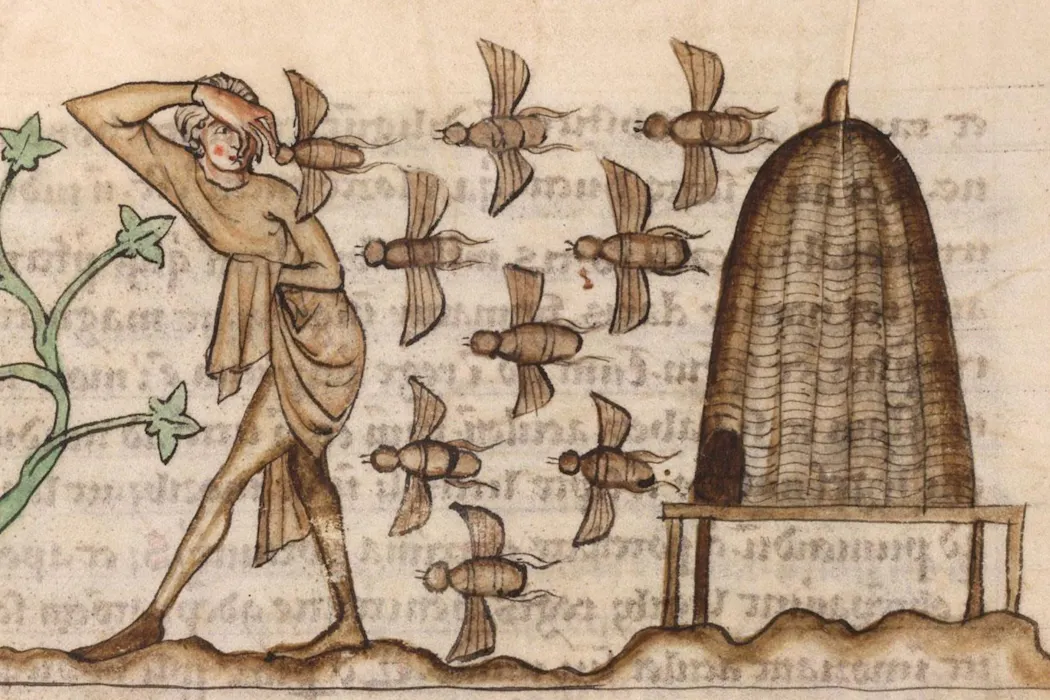
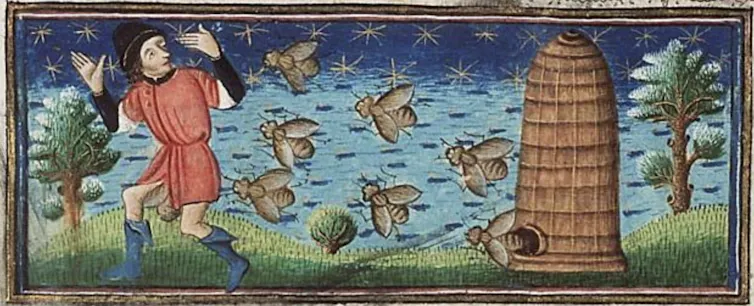
One suggestion the Bechbretha makes is to dust flour over bees, follow them to source and identify the culprits. Because honeybees tend to return repeatedly to the same nectar sources, tracking and marking them with white flour – which scatters onto the ground as they fly, leaving a visible flight path – can be effective. The laws also state that the owner of stray bees has three years to collect their honey, but by the fourth year must surrender the first swarm from that hive to the wronged party.
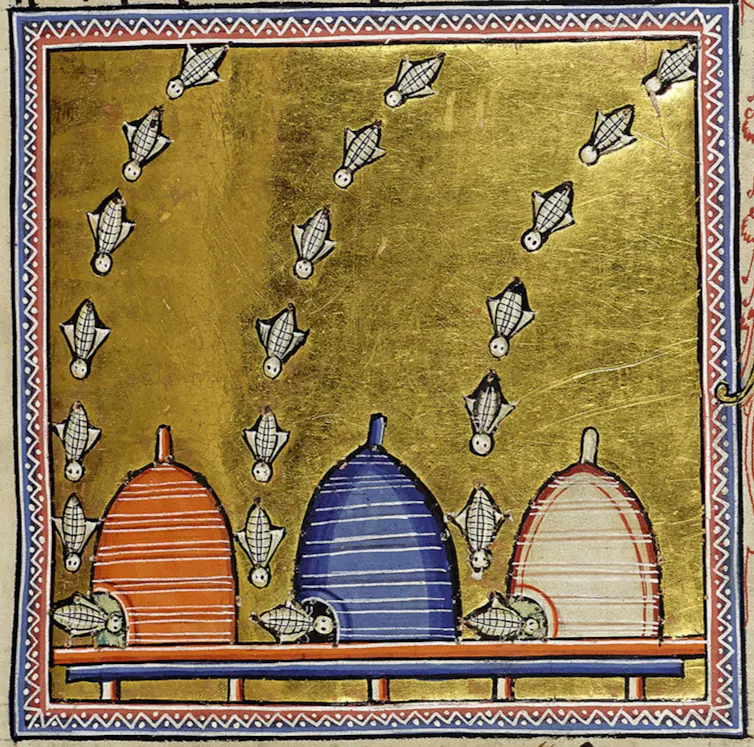
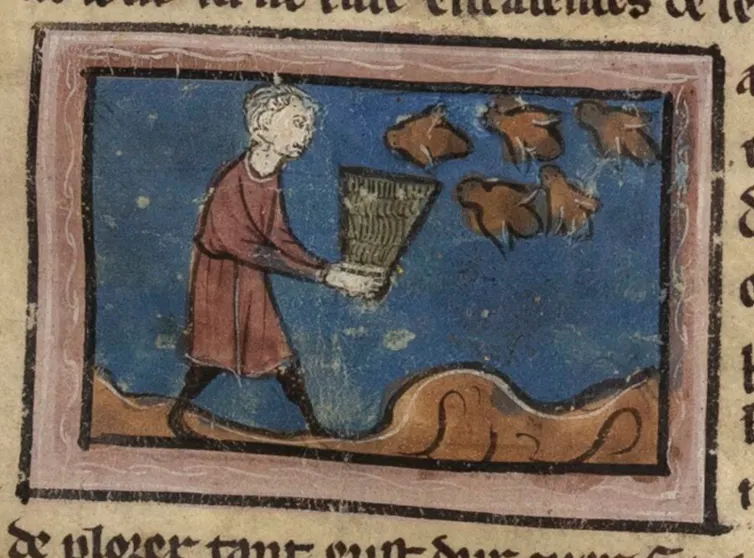
The Bechbretha also dealt with questions about ownership of swarms which settled and built new hives on either private or common land. The beekeeper who found the new hive was entitled to a third of the honey for three years but after that time elapsed, the landowner on which the swarm settled became its owner. Where a swarm was discovered in woodland, the finder was entitled to (almost) everything. The local church and patriarch of the finder’s kin-group were both entitled to a share.
Where hives were stolen or illegally moved and where perpetrators got stung or died from being stung, beekeepers were not held responsible. Where bees stung people without provocation, compensation was due, though if the victim killed the bee(s), their death was deemed recompense enough. Generally, for valid situations where someone was stung, killed or maimed, hives were given over in payment.
Theft of beehives carried hefty penalties, dependent on their location. The closer a hive was to a homestead, particularly a high-status one, the larger the compensation. This was usually in the form of cattle, the main currency used in pre-coinage Ireland. Theft of hives from monasteries also carried imposing fines.
That there were a set of early medieval Irish laws solely for bees reveals the high regard with which these little creatures were held. Restitution through beehives and bee produce helped the proliferation of beekeeping throughout the community. In pre-industrial, early medieval Ireland, where society’s survival depended so much upon the climate, bees were a pivotal part of the agricultural system, as they are today.
At the close of the tenth century, writers of Irish historical records documented two instances of bech-dibad – bee mortality – which resulted in mass famine and death among the human population. The fact that these disasters were recorded is significant in that it suggests an awareness about what happens if the bees disappear.
Today, bee colonies around the world face multiple threats – from habitat loss, climate change, toxic chemicals and deadly invasive parasites. The Bechbretha shows that if the will is there and communities are involved and feel invested, protecting our bees is possible.
Chris Doyle does not work for, consult, own shares in or receive funding from any company or organisation that would benefit from this article, and has disclosed no relevant affiliations beyond their academic appointment.
Imaginez qu’un membre de votre famille souffre d’un cancer avancé. La douleur est intense, constante. Vous cherchez de la morphine orale, l’un des médicaments essentiels pour soulager cette souffrance. Dans de nombreux pays francophones d’Afrique, vous aurez peu de chances d’en trouver : ni dans un centre de santé rural, ni dans une pharmacie de la capitale, ni parfois même dans un hôpital universitaire.
Cette situation n’est pas accidentelle. Elle résulte de décennies de sous-investissement, de cadres réglementaires restrictifs, d’un manque de formation et d’une faible intégration des soins palliatifs dans les systèmes de santé.
Les soins palliatifs désignent l’ensemble des soins destinés à améliorer la qualité de vie des personnes atteintes de maladies graves, évolutives ou incurables, ainsi que celle de leurs proches. Ils visent à soulager la douleur et les autres symptômes physiques, mais aussi à apporter un soutien psychologique, social et spirituel. Contrairement à une idée reçue, ils ne se limitent pas aux derniers jours de vie : ils peuvent être initiés dès le diagnostic d’une maladie sérieuse, en parallèle des traitements curatifs.
Des organisations comme Human Rights Watch avaient déjà alerté sur cette réalité. Notre étude, publiée en 2026 dans la revue Médecine Palliative, permet de la mesurer pour la première fois à l’échelle régionale à l’aide d’indicateurs standardisés de l’Organisation mondiale de la santé (OMS).
Mes recherches doctorales portent sur l’évaluation du développement des soins palliatifs en Afrique, aux niveaux régional et national. L’étude présentée ici, dont je suis co-auteure, s’inscrit dans cette démarche et constitue la première analyse comparative des pays francophones du continent fondée sur le cadre standardisé de l’OMS, afin de mesurer les inégalités d’accès aux soins essentiels.
Ce que nous avons mesuré
Notre équipe a évalué la structure de développement des soins palliatifs dans 22 pays francophones d’Afrique, à partir de 14 indicateurs de l’OMS couvrant six dimensions : les politiques de santé, l’accès aux médicaments essentiels, la formation des professionnels, la recherche, les services spécialisés et l’autonomisation des personnes et des communautés.
Le constat est préoccupant. Parmi ces pays, trois sur quatre se situent encore au stade « émergent », soit le niveau le plus faible de développement. Seul le Maroc atteint le niveau « établi » selon le classement mondial des soins palliatifs publié en 2025, indiquant qu’une majorité des dimensions structurelles nécessaires au développement durable des soins palliatifs sont en place, malgré des lacunes persistantes. Les écarts avec les pays africains non francophones sont statistiquement significatifs dans trois domaines essentiels : l’accès aux médicaments, la formation et les services spécialisés.
Ces résultats signifient que des personnes atteintes de cancer, de VIH avancé, de tuberculose sévère, de démence ou d’autres maladies graves risquent de vivre et de mourir avec des souffrances évitables, sans accompagnement adapté. La situation est encore plus préoccupante pour les enfants : dans 77 % des pays étudiés, aucun service spécialisé en soins palliatifs pédiatriques n’existe. De nombreux pays ne disposent pas de formulations médicamenteuses adaptées aux enfants, les privant même des traitements de base contre la douleur.
Pourquoi ce retard ?
Le développement des soins palliatifs en Afrique s’est accéléré à partir des années 1980 et 1990, notamment en réponse à l’épidémie de VIH et à la progression des cancers. Une partie des soutiens internationaux s’est historiquement structurée autour de certains pays anglophones, comme l’Ouganda, le Kenya ou l’Afrique du Sud, laissant les pays francophones plus souvent en marge. Ce déséquilibre a laissé des traces structurelles profondes, encore visibles aujourd’hui, y compris dans la production scientifique.
Entre 2017 et 2023, les pays anglophones d’Afrique ont publié environ quinze fois plus d’articles scientifiques sur les soins palliatifs que les pays francophones — un écart qui reflète non seulement un investissement historique inégal, mais aussi des barrières linguistiques, un accès limité aux bases de données internationales et un manque de financement dédié à la recherche locale. Cette invisibilité scientifique entretient l’invisibilité politique : ce qui n’est pas documenté est rarement priorisé.
À cela s’ajoutent des obstacles réglementaires persistants. Un clinicien du Burkina Faso nous l’a résumé ainsi :
Au niveau rural, la morphine orale est inexistante du fait de la non-formation du personnel et de la lourdeur des textes réglementaires.
Dans plusieurs pays, l’usage médical des opioïdes (substances psychoactives très puissantes qui agissent sur le système nerveux central) reste encadré par des textes très restrictifs, la morphine étant davantage perçue comme une substance à contrôler que comme un médicament essentiel. Résultat : la morphine orale, pourtant inscrite depuis longtemps sur la liste des médicaments essentiels de l’OMS, reste très peu disponible dans les structures de santé primaires, en particulier en milieu rural.
Le Maroc et le Bénin montrent que le changement est possible
Ces inégalités ne sont ni inévitables ni irréversibles. Le Maroc est aujourd’hui le pays francophone africain le plus avancé en soins palliatifs. Une réforme réglementaire adoptée en 2013 a assoupli les règles de prescription des opioïdes. Toutes les facultés de médecine enseignent désormais les soins palliatifs, intégrés dans l’offre de soins essentielle.
Le Bénin offre une leçon complémentaire. Depuis 2018, la pharmacie d’un grand hôpital universitaire produit localement une solution orale de morphine à partir de poudre importée, grâce à un partenariat avec l’Ouganda et au soutien de coopérations internationales — réduisant la dépendance aux importations et facilitant l’accès au traitement. En 2020, une loi a reconnu les soins palliatifs comme un droit du patient et une responsabilité de l’État, et le pays dispose aujourd’hui d’un plan national dédié.
Que faut-il faire ?
La priorité est politique : reconnaître les soins palliatifs comme une composante ordinaire des systèmes de santé. Les gouvernements doivent les intégrer dans les lois nationales et la couverture sanitaire universelle, désigner des responsables au sein des ministères et réviser les réglementations des opioïdes. Sans cadre politique, les initiatives restent isolées et fragiles.
La formation est un levier tout aussi essentiel. Au Cameroun, 71 % des écoles d’infirmiers proposent déjà un enseignement en soins palliatifs — un point de départ, mais qui doit devenir obligatoire et harmonisé. La recherche locale, publiée en français et accessible aux décideurs, doit également être renforcée. Les organisations régionales et internationales sont bien placées pour soutenir les pays les moins avancés et accompagner ce plaidoyer. Parmi elles, l’Association africaine de soins palliatifs (APCA), la Fédération internationale de soins palliatifs (FISP), le Centre africain de recherche de soins de fin de vie (ACREOL) et l’Alliance mondiale contre le cancer (AMCC) disposent de l’expérience et des réseaux nécessaires pour faciliter le mentorat, le partage d’expériences et le dialogue politique entre pays.
Une question de justice
D’ici 2060, le nombre de personnes ayant besoin de soins palliatifs en Afrique subsaharienne devrait presque tripler, selon une étude publiée dans The Lancet Global Health. Sans changement, de nombreux patients mourront sans médicaments disponibles, sans professionnel formé, sans service accessible. Améliorer ces indicateurs, c’est ouvrir la possibilité de réduire cette souffrance pour des millions de personnes.
Les soins palliatifs ne sont pas un luxe réservé aux pays riches. Le retard observé en Afrique francophone n’est pas une fatalité. Il est le reflet de choix politiques, de priorités de financement et d’inégalités historiques qui peuvent et doivent être corrigés.
La question n’est donc plus seulement de mesurer l’inégalité. Elle est de décider collectivement de la réduire.
Fernanda Bastos does not work for, consult, own shares in or receive funding from any company or organisation that would benefit from this article, and has disclosed no relevant affiliations beyond their academic appointment.
As part-night lighting (i.e., turning off streetlights in the middle of the night) becomes more widespread among local authorities, three studies focusing, respectively, on robins, toads and bats show that, often, turning off the lights for a few hours is not enough to restore natural night. In terms of biodiversity, the challenge is not just about switching off the lights, but knowing when and where to do so.
In recent years, switching off street lighting in the middle of the night has turned out to be a no-brainer for several challenges: reducing energy bills, demonstrating a commitment to energy efficiency, and limiting light pollution and its effects on ecosystems.
From a biodiversity perspective, the best solution would be to have no lighting at all.
But this option clashes with other legitimate uses of night-time spaces: our own! This leaves one question: is switching off the lights for a few hours in the middle of the night really enough to reduce the impact of light on biodiversity? Not necessarily: its effects on organisms depend on the context – location, large-scale light landscape, weather conditions – and the species concerned.
A widespread measure whose biological effects remain poorly understood
Not all species actually use night-time in the same way. The early evening, the middle of the night and the hours leading up to dawn are often associated with different behaviours: foraging, movement, returning to roost, falling asleep and waking up, communication… In this context, part-night lighting may limit certain effects of light pollution on biodiversity… or miss the mark entirely if it doesn’t coincide with species’ peak activity times.
Another important point: switching off lights locally does not necessarily mean returning to total darkness. In towns and cities, nearby lighting – streetlights on adjacent streets, shop signs, shop windows or private lighting – as well as light scattered by clouds often maintain residual brightness. And this effect is not limited to urban zones: in rural areas too, the light halo from towns and cities can remain visible for several dozen kilometres (approx. 15 miles). For the species most sensitive to light, the difference between periods when lights are on and off may, therefore, be minimal, even when public lighting is switched off locally. A local council’s switch-off schedule is therefore not sufficient, on its own, to describe the actual lighting conditions to which animals are exposed.
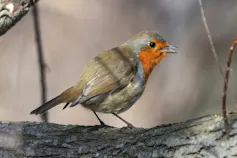
The European robin, commonly found in cities: switching off the lights in the middle of the night isn’t enough
This is what we observe in the European robin. For this diurnal bird, part-night lighting is not sufficient, in an urban context, for restoring activity patterns comparable to those observed in unlit areas. Even when streetlights are switched off between 11:00 pm and 6:00 am, the birds tend to sing earlier in the morning and later in the evening than in truly dark areas.
Spectogram of the European robin’s song. Fourni par l’auteur
To test this effect in the Nantes metropolitan area (Loire-Atlantique department) in France, we compared three types of site: unlit sites, sites lit up all night, and sites where street lighting is switched off for part of the night.
We used a simple indicator: the European robin’s song. By recording the soundscape over several days, we can reconstruct the species’ singing patterns across the entire day-night cycle and see how they vary according to light conditions.
The result is clear: sites where lighting is cut off in the middle of the night often look more like sites lit all night than unlit ones. The gap appears mainly at key moments for this species, at dawn and dusk – respectively around 40 minutes before sunrise and 20 minutes after sunset – which correspond to its peak vocal activity.
The familiar bird song of robins, as well as those of the Eurasian wren, chaffinches and blackcaps. Laurent Godet, Fourni par l’auteur737 ko(download)
In our study, the peak in the “dawn chorus” occurs on average before sunrise, by a matter of tens of minutes. However, it is precisely at this time, in an urban landscape that is already well lit, that part-night lighting is barely distinguishable from continuous lighting.
This is no doubt due to the central roles dawn and dusk play in diurnal species: these transitions serve as reference points for synchronising daily rhythms. Many lighting systems still leave lights on in the early evening and switch them back on before dawn. In other words, lights are switched off in the middle of the night, but are kept on at the two times that matter most for synchronising activity.
For a robin, this shift can have very real consequences: singing earlier also means defending its territory earlier, interacting differently with other birds, and bringing forward essential activities such as foraging or attracting a mate.
The data alone does not allow us to conclude that there is a direct effect on reproduction or survival. However, it does show that part-night lighting does not automatically bring the situation back to normal, particularly in urban areas where darkness is often incomplete even when a street or neighbourhood is in the dark.
A bat from Réunion: switching lights off slightly earlier could make all the difference
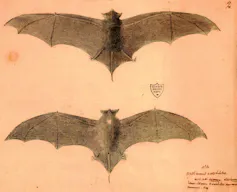
A free-tailed bat native to the island of Réunion (Mormopterus acetabulosus). Paul Jossigny, CC BY
For the free-tail bat, a nocturnal bat endemic to Réunion, bringing forward the switch-off times by two hours is enough to mitigate the effect of the lighting at the start of the night. However, this effect persists at the end of the night, when lighting in the morning is switched on early.
We studied this species, Mormopterus francoismoutoui, in a setting that allowed us to go beyond a simple comparison between lit and unlit sites. For one month, at certain sites, the part-night lighting scheme was altered: the streetlights were switched off two hours earlier than usual. This allowed us to compare the situation before and after this change at the same sites, alongside unlit control sites. Bat activity was monitored acoustically, using recording devices to capture their echolocation calls. This is not a direct count of individuals, but an indicator of their activity.
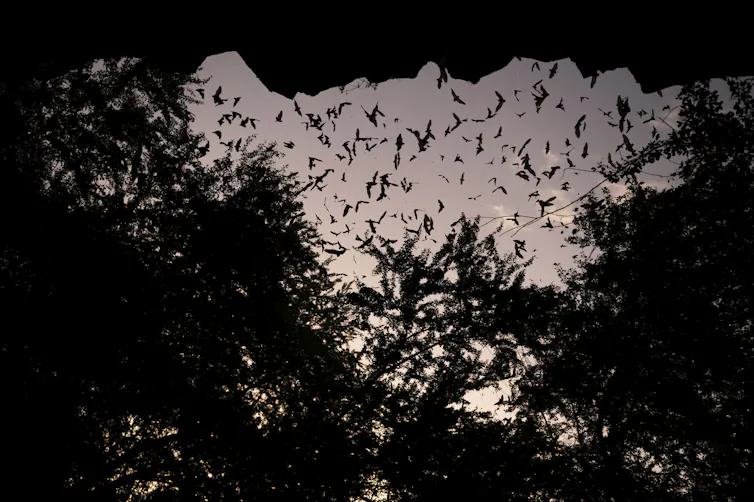
Free-tailed bats in Réunion flying out of a roost. Samuel Challéat, CNRS Nocturnal Environment Observatory, UMR Géode, Fourni par l’auteur
The results show that as long as the streetlights remain on, bats are detected more frequently near the lit areas, particularly at the beginning and end of the night, i.e. during their peak activity periods. When the evening switch-off is brought forward, this effect disappears at the start of the night: the light no longer “structures” their activity as it did before. However, a difference tends to persist before dawn, which is consistent with the morning switch-on remaining unchanged. Bats therefore still seem to be attracted to lit areas during their peak of activity before dawn, particularly when the weather was favourable.
This result highlights an important point: the effectiveness of part-night lighting depends on how much it overlaps with the activity rhythms of the species present. Turning off the lights in the middle of the night may have little effect if a species concentrates its movements and foraging at the beginning or end of the night. Conversely, a seemingly modest adjustment – in this case, switching off the lights two hours earlier in the evening – may be enough to mitigate the effect of lighting for part of the night.
However, we must exercise caution when interpreting these findings. A higher presence near streetlights does not necessarily mean that light is beneficial. It may reflect an opportunity, for example, if insects are attracted to the light but it may also indicate more ambiguous effects: altered movement patterns, a concentration of individuals in certain areas, increased competition, or greater exposure to predators. In other words, these results primarily show a redistribution of activity over time and space, without allowing us to conclude that artificial lighting is, in itself, beneficial or harmful.
For toads, partial switch-off remains only a partial solution
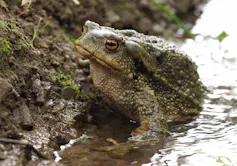
For the spiny toad (Bufo spinosus), a primarily nocturnal amphibian, part-night lighting mitigates certain effects of artificial light to some extent, without recreating the conditions of a truly dark night.
The spiny toad is a common species in southern and western France, frequently found near inhabited areas, including urban and suburban settings. For its very close relative, the common toad (Bufo bufo), artificial light at night is already known to affect behaviour, physiology and even gene expression in cells: over 1,000 genes malfunction when the animals are exposed to low-intensity light at night! However, in these animals, activity is often most pronounced at the start of the night, suggesting that part-night lighting can, at best, only mitigate the effects.
What is meant by ‘gene expression’?
Gene expression refers to the way in which an organism “activates” or “deactivates” certain genes, depending on the time of day, the environment or the state it is in. Not all genes are active all the time. Depending on whether it is day or night, or whether an animal is resting, active or under stress, certain genes are activated more than others. This enables the production of the molecules necessary for the organism to function. To say that artificial light can alter gene expression therefore means that it does not merely change the visible behaviour of animals: it can also profoundly affect their biological functioning.
We tested this hypothesis experimentally on individuals from one of the areas least affected by light pollution in western France – in Mayenne and Orne. Three groups were formed: one group was kept in natural darkness, one group was exposed to low light levels throughout the night (0.5 lux) and one group was subjected to a part-night lighting scheme between 11:00 pm and 5:00 am, but with the same light intensity of 0.5 lux for the rest of the night. After at least nine days of exposure, we monitored the males’ activity via video during the night.
The distance travelled varied little between the different groups, no doubt partly due to the experimental setup. However, one finding stands out clearly: the longer the toads are exposed to light, the more time they spend in their shelter. The individuals subjected to part-night lighting occupy an intermediate position between those placed in darkness and those exposed to light all night. This is also the only group to show a resumption of activity after the lights were switched back on at 5:00 am.
For a toad, this can have very real consequences: spending more time in hiding potentially means having less time to forage for food, find a mate or move to another site. The surge in activity observed when the lights were switched on again could represent extra energy spent or a source of stress. Part-night lighting therefore reduces certain behavioural effects, but for these animals it does not seem to be equivalent to a completely unlit night.
We still do not know whether this attenuation also results in a reduction in the physiological or genetic effects of artificial light. We also need to gain a better understanding of the impact of a sudden change in light intensity, both when the lights are switched off and when they are switched back on.
A common finding: the importance of key moments during the night
It would be an oversimplification to conclude that part-night lighting is pointless. However, our findings serve as a reminder that it is primarily designed with human night-time activities in mind – when public spaces are less busy and traffic is lighter – rather than with the times when light has the greatest influence on biodiversity.
In our three studies, it is precisely the early and late hours of the night that appear to be decisive. For robins, maintaining light at dusk and dawn is sufficient for sustaining shifts in activity, even when the lights are switched off in the middle of the night. For free-tail bats, bringing forward the evening switch-off reduces the effect of light at the start of the night but not at the end of the night if the morning switch-on remains unchanged. Where toads are concerned, switching the lights back on at the end of the night revives activity at a time when it would normally be decreasing. In all three cases, the conclusion is the same: to be effective, part-night lighting must coincide with the periods when species are most sensitive to light and produce a genuinely perceptible reduction in brightness.
Finally, describing part-night lighting simply as “turning lights off” can be misleading. This method of managing street lighting also involves abrupt, artificial transitions: switching on, switching off, and switching on again, which can disrupt organisms. Turning off the lights in the middle of the night is, therefore, not just about less light: it is also another way of artificially dividing up the night.
What are the implications for local action?
These findings do not, of course, provide a one-size-fits-all solution. However, they suggest three key measures if we are to ensure that part-night lighting also benefits biodiversity.
Firstly, adjust lighting schedules around dusk and dawn, which are often crucial for species’ rhythms and activity. Secondly, reduce light spill from areas that remain lit – adjacent streets, shop signs, private lighting – so that switching off the lights results in a real reduction in brightness. Finally, adapt the lighting strategy to suit different locations – city centres, residential areas, the outskirts of nature areas – rather than applying the same rule everywhere.
Such planning decisions are best informed by both environmental expertise and residents’ experience, so as to identify sensitive locations and times, make decisions transparently, and then adjust the choices in light of feedback and observations.
A weekly e-mail in English featuring expertise from scholars and researchers. It provides an introduction to the diversity of research coming out of the continent and considers some of the key issues facing European countries. Get the newsletter!
Samuel Challéat is coordinator of the CNRS Nocturnal Environment Observatory, director of CNRS GDR 2202 LUMEN (Light & Nocturnal Environment), and deputy director of UMR 5602 GÉODE (Geography of the Environment, CNRS, Toulouse 2 University). He has received funding from La Réunion National Park as part of the FENOIR programme, and from the CNRS Mission for Transversal and Interdisciplinary Initiatives (MITI) as part of the OUTRENOIR programme.
Jean Secondi est membre du GDR2202 LUMEN (Lumière & environnement nocturne) du CNRS
Kévin Barré est membre de l’Observatoire de l’environnement nocturne du CNRS et du GDR2202 LUMEN (Lumière & environnement nocturne) du CNRS. Il a reçu des financements du Parc national de La Réunion et de la Mission pour les initiatives transverses et interdisciplinaires (MITI) du CNRS
Laurent Godet is a member of UMR 6554 LETG, the CNRS Nocturnal Environment Observatory, and the CNRS GDR2202 LUMEN (Light & Nocturnal Environment). He has received funding from the Réunion National Park, the CNRS Mission for Transversal and Interdisciplinary Initiatives (MITI) and the Fondation de France as part of the LARN project.
Léa Mariton is a member of the CNRS Nocturnal Environment Observatory and of the CNRS GDR 2202 LUMEN (Light & Nocturnal Environment). She has received funding from La Réunion National Park and from the CNRS Mission for Transversal and Interdisciplinary Initiatives (MITI).
Thierry Lengagne est membre du GDR2202 LUMEN (Lumière & environnement nocturne) du CNRS.
A year has passed since conflict broke out between India and Pakistan, briefly raising fears of an all-out war between the two nuclear powers.
While violent conflict between the neighbours has been commonplace for the past 80 years, this latest round of fighting felt different.
Both sides used new weapons against one another, including cruise missiles, short-range ballistic missiles and drones. The level of mistrust and sharp rhetoric worsened considerably, significantly testing regional partnerships.
One year later, tensions remain high, with an underlying risk of further escalation.
What happened last year?
The war broke out last May following a terrorist attack that killed 26 civilians in the Pahalgam area of Indian Kashmir on April 22.
Within days, Indian police claimed the Pakistan-based militant group Lashkar-e-Taiba was behind the attack. Pakistan vehemently denied any involvement.
Dozens of people are believed to have been killed. As in any India-Pakistan conflict, the possibility of the use of nuclear weapons created further alarm.
The four-day conflict came to an end with a ceasefire on May 10. It was announced by the Trump administration, which claimed to have mediated the deal. This irritated India, but Pakistan nominated US President Donald Trump for the Nobel Peace Prize.
India nonetheless claimed victory, boasting of its ability to deliver precise attacks far inside Pakistani territory, exposing weaknesses in its rival’s air defences. Pakistan, meanwhile, claimed to have shot down five Indian fighter jets (which India denies).
Political ramifications
In Pakistan, the Pakistani military returned to the political mainstream following the conflict. After leading Pakistan’s military response to India, the chief of army staff, Syed Asim Munir, was elevated to field marshal, and then to the post of the country’s first chief of defence forces.
Munir’s influence has only grown since. He has become very close to Trump and has been a key figure in the negotiations between the US and Iran to bring an end to their war.
In India, Operation Sindoor was seen as a win for the Modi government’s decisive foreign policy, and was a moment of rare political consensus in the country.
However, in Kashmir, the terror attack raised fresh questions about the government’s claims of normalcy in the region – and its push to boost tourism – following the controversial revocation of Kashmir’s statehood in 2019.
In the weeks that followed the attack, security operations in the Kashmir valley shut down several tourist sites. This led to a sharp decline in visitor numbers and severely affected local businesses. Security operations also targeted civilians, alarming human rights experts.
Shifting regional dynamics
Perhaps the most significant impact of the conflict has been the difference in diplomatic engagements of both countries.
After the war, Pakistan also signed a new deal with the Trump administration to develop Pakistan’s oil reserves, and a defence pact with Saudi Arabia, a staunch US ally.
India had pursued a decade-long push to isolate Pakistan diplomatically, which made Pakistan’s increasing bonhomie with the US and Gulf states particularly awkward.
Modi’s ill-timed visit to Israel and the visible lack of influence in the US–Iran war has also raised questions about India’s professed role as a regional leader. It has highlighted the limits to India’s strategy of balancing its strategic partnerships, especially during conflict.
India has tried to engage in proactive diplomacy, dispatching delegations of MPs and former diplomats to more than 30 countries over the past year. While India claims these visits were a success, they haven’t done much to convince the world that Pakistan was the aggressor in their conflict.
Where do things go from here?
One year on, the political rhetoric on both sides is as charged as ever.
Both India and Pakistan have signalled a resolve for further escalation in future conflicts.
India has also reiterated that a major water-sharing treaty between the countries would remain suspended until Pakistan takes steps to end its support for terrorism – leaving a major concern over water security unresolved.
In response, Pakistan has made clear any attempt to target Pakistan again would “trigger consequences” that would not be “geographically confined or strategically or politically palatable for India”.
The shifting geopolitics and heightened rhetoric have narrowed the space for any prospects of meaningful dialogue between the two. As a result, the alarmingly low levels of trust will remain.
The ceasefire holds for now, but the conflict continues unabated.
Stuti Bhatnagar does not work for, consult, own shares in or receive funding from any company or organisation that would benefit from this article, and has disclosed no relevant affiliations beyond their academic appointment.
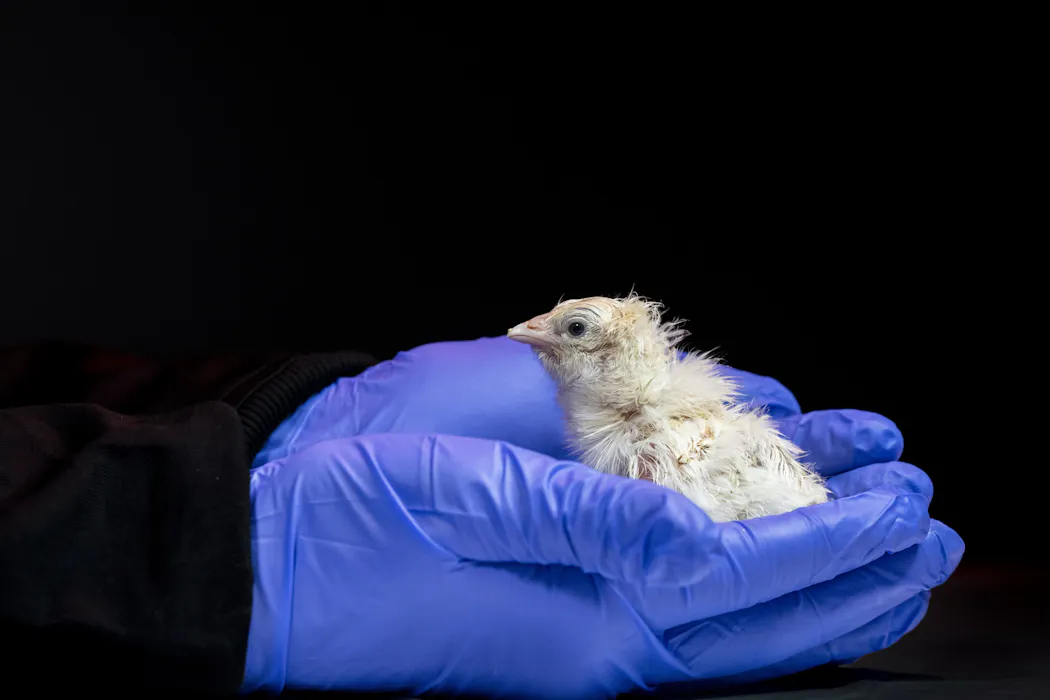
Today’s announcement by Texas-based de-extinction company Colossal Biosciences about a successful hatching of chicks from an artificial egg would represent a major innovation, if the claims can be verified.
The company says its artificial egg supports the full development of bird embryos outside a biological eggshell, without the requirement for supplemental oxygen. The work is part of its plan to “de-extinct” birds, including the giant moa and dodo.
Colossal’s artificial egg could be groundbreaking science and deliver a useful tool for conservation. But its announcement and slick video include no data or peer-reviewed scientific publications, making it difficult to independently assess the claim.
The technology is currently used for research purposes such as studying how embryos develop, how tumours grow, and to create genetically modified chickens. It also has applications for drug and vaccine development.
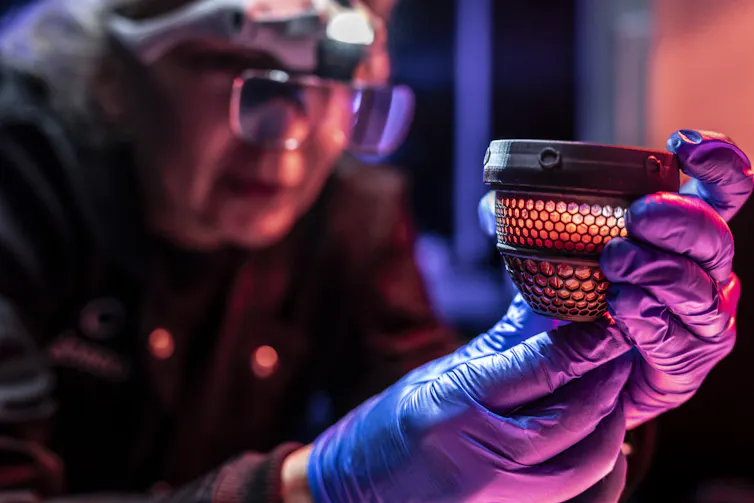
Colossal claims to have solved this problem by replacing the hard eggshell and membrane separating the yolk from the shell. Its version is based on the key innovations of an open, latticed half-shell and a transparent, silicone-based membrane that allows oxygen to freely diffuse from the air into the developing embryo.
The company’s artificial egg is based on a latticed half shell. Colossal Biosciences, CC BY-NC-ND
The company’s plan is to transfer a fertilised embryo and yolk from a real egg to their artificial egg, which would then be housed in incubators. Embryo development would be observed directly through the transparent membrane, as in other artificial systems.
The technology could also be used in Colossal’s attempts to genetically engineer a Nicobar pigeon to look more like a dodo.
Key to Colossal’s goal is that its artificial egg could be scaled in size.
However, this still requires a fertilised embryo and yolk. Given the large size differences between chicken eggs and emu (up to 12 times bigger) and giant moa (up to 80 times bigger), there is not enough yolk and egg white in any living birds’ eggs to support the development of a giant moa chick.
An egg yolk is a single cell. It will not be as simple as injecting extra yolk into this fragile cell to make it giant.
Bird embryo development is a complex process, unique to each species. A lot happens in an egg and only time will tell whether this new technology reflects natural processes and produces healthy individuals.
But as our work on other extinct species shows, there is also widespread Māori and public opposition in New Zealand to the company’s plans to “de-extinct” the moa for an ecotourism venture.
A potential conservation tool
The company claims its artificial egg technology “has broad applications for the conservation of threatened species”.
Artificial egg technology requires considerable amounts of funding, which Colossal has mobilised from private sources. This is funding that would not have otherwise been available for conservation.
One area where it could make a significant difference is the captive breeding of critically endangered species (such as kākāpō, kakī black stilt and pukunui southern dotteral) for reintroduction into the wild. This is especially true for long-lived and slow-breeding species which tend to produce fewer eggs.
For example, eggs damaged by inexperienced new parents, misadventure or adverse weather events could be rescued into artificial eggs to help developing chicks to survive.
When combined with genome engineering techniques, the use of artificial eggs could help to reintroduce lost genetic diversity or make birds resistant to diseases. The technology may also be able to reverse the impacts of inbreeding on low hatching success in some species.
However, for critically endangered birds with few natural eggs, the development of transgenic birds would be necessary to produce enough chicks.
For example, chickens could provide sperm and egg cells containing genetically modified DNA from a different species. After mating, the fertilised embryo and yolk could be transferred to the artificial egg.
Ethical questions remain about whether such steps should be taken, even if technologically possible.
The use of artificial egg technology in conservation, especially in combination with genome engineering and transgenic birds, would require transparent and increased levels of engagement with Indigenous communities as the kaitiaki (guardians) of endangered species.
It is also vital this technology (and conservation in general) is not privatised. If Colossal’s artificial egg technology is to make a meaningful difference to saving species from extinction, it must be available to conservation organisations in the public sector.
If the technology lives up to the hype, it won’t be a silver bullet or panacea to stopping species declines, but it might just help. In the short term at least, saving species from extinction will still come down to predator control and habitat restoration.
Nic Rawlence receives funding from Te Apārangi Royal Society of New Zealand Marsden Fund.
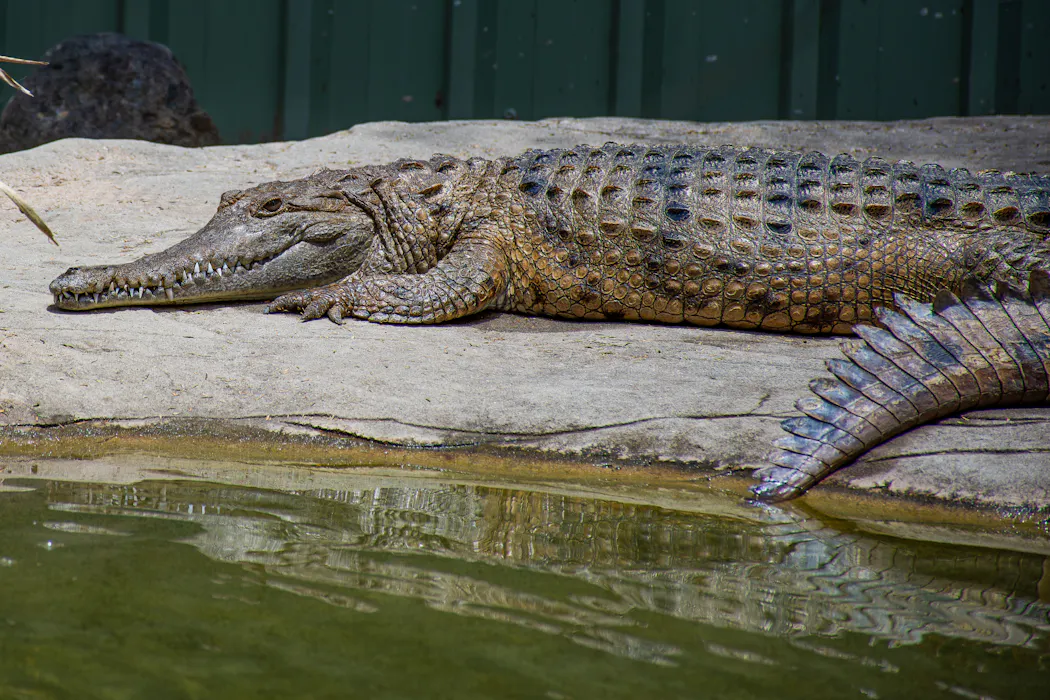
The sight of a saltwater crocodile basking on a mudbank is one of the most iconic and intimidating images of northern Australia. Yet the crocodiles that inhabit the region today are just the survivors of a much richer and stranger lost world.
Until recently, Australasia was home not just to the familiar crocodiles found in tropical waterways, but also to a unique cast of crocs unlike any living species.
Our recent review of evidence from the past 129,000 years reveals a dramatic story of extinctions, human encounters, and survival against the odds.
Mekosuchines – the lost rulers of Australasia
Modern crocodiles are members of the genus Crocodyls, but an entirely different group of crocodylians known as mekosuchines once dominated the region.
For more than 50 million years, mekosuchines were the apex predators of Australasia. Some even survived to meet humans.
These remarkable animals came in an astonishing variety of shapes and sizes, inhabiting many different environments.
Some were giant semi-aquatic ambush predators, much like the saltwater crocodiles that still patrol northern rivers today. Others were much smaller “dwarf” species that inhabited islands such as New Caledonia. Most terrifyingly, some species possessed blade-like serrated teeth and probably hunted their prey on land.
A fragmentary puzzle
We pieced together a record of crocodylians over the past 129,000 years from scattered and highly fragmentary remains recovered from more than 20 archaeological and palaeontological sites.
Most are located in Australia, though some are found in New Guinea, and a handful more across the southwest Pacific. At archaeological sites on the Australian mainland, as well as in the Torres Strait and New Guinea, researchers have uncovered the broken bones and teeth of modern crocodile species, showing that these formidable reptiles have shared landscapes with people for thousands of years.
Ancient rock art, some dating back around 20,000 years, reveals that Indigenous Australians were closely observing and depicting these animals for millennia. The distribution of archaeological remains and rock art closely mirrors the modern ranges of crocodiles today. This points to a long and relatively stable coexistence between humans and these powerful predators.
Crocodylian remains have been found at sites across Australasia dated over the past 129,000 years. Jorgo Ristevski, CC BY
Archaeological evidence shows that humans did occasionally eat crocodiles, and sometimes even crafted pendants from their teeth. Yet such discoveries are quite rare. When ancient archaeological sites do yield crocodile bones, there are usually only a handful of them.
The evidence suggests crocodiles were hunted only rarely. This is not surprising.
Adult saltwater crocodiles are enormous, immensely powerful, and highly lethal to humans. For ancient communities, engaging with these apex predators would have been a hazardous undertaking, and something mostly avoided.
But modern crocodiles weren’t alone in these ancient landscapes. Fossils show they shared them with the mekosuchines.
On mainland Australia, mekosuchines are currently only known from fossils. Most remains date from more than 40,000 years ago. We currently have no evidence of these extinct crocs from archaeological sites or in ancient rock art.
We don’t know if humans and mekosuchines ever directly interacted in Australia. Their disappearance occurred around the same time as the extinction of other Australian megafauna, potentially after a long period of coexistence with humans. The exact cause of their demise in Australia remains a mystery.
Island extinctions
However, the story is different on the islands of New Caledonia, Vanuatu and Fiji. There, some mekosuchine species managed to survive into much more recent times. And humans almost certainly encountered them directly.
The extinct crocs of New Caledonia and Vanuatu were small, reaching less than two metres in length as adults. They also likely lived more on land than today’s semi-aquatic crocodiles. Their small statures and terrestrial lives would have made them far more accessible for human hunters.
Size comparisons between the largest (the living saltwater crocodile, Crocodylus porosus) and smallest (the extinct dwarf crocs of New Caledonia and Vanuatu, Mekosuchus) known crocodylian species from the past 129,000 years in Australasia. Jorgo Ristevski, CC BY
Tragically, the known record of these island mekosuchines ends within a few centuries of human settlement. In several cases, their remains were found in association with human artefacts and middens.
In one example from Vanuatu, a mekosuchine limb bone appears to bear the gnaw marks of a rat, an invasive species introduced to the island by humans. While definitive proof is elusive, it seems likely that direct or indirect human involvement may be the reason for the disappearance of these “dwarf” island crocodylians.
Lessons for the Anthropocene
We are now living through the Anthropocene, an age when humans are profoundly influencing the planet and extinctions are accelerating, as is particularly evident in Australia.
The prehistoric past is not just a record of vanished worlds, but a warning for the future. Understanding how apex predators like crocodiles responded to past climatic changes, environmental upheaval, and human impacts provides important clues for their conservation in the future.
To truly unravel these questions will take the combined work of palaeontologists, archaeologists, ecologists and conservationists. Just as crucial will be deep engagement with Indigenous knowledges and land managers, whose long histories of observing and living alongside these animals offer clues for protecting the world’s remaining crocodiles, and the threatened ecosystems they inhabit.
The authors do not work for, consult, own shares in or receive funding from any company or organisation that would benefit from this article, and have disclosed no relevant affiliations beyond their academic appointment.
On Thursday, United States President Donald Trump and Chinese President Xi Jinping shook hands outside China’s Great Hall of the People, in Beijing, for 14 seconds. Almost immediately, we saw various pundits trying to interpret the meaning of the interaction.
A brief look at the history of the handshake, however, reveals the complexity of this gesture’s symbolism.
Handshakes can be traced back to ancient societies, but the exact origins are somewhat mysterious. It is often said – although difficult to prove – that the gesture developed as a symbol of good faith, with the participants showing their hands to be empty of weapons.
A further theory is that the shaking was intended to jiggle any hidden weapons loose from the sleeves – somewhat undermining it as a display of trust.
Assyrian diplomacy
The oldest known depiction of a handshake comes from the 9th century BCE, and represents a diplomatic display of unity.
On a limestone relief found in modern-day Iraq, King Shalmaneser III of Assyria and King Marduk-zakir-shumi I are shown shaking hands, symbolising renewed treaty relations between Babylon and Assyria, and an alliance between the two rulers.
Relations between the two great Mesopotamian powers had long been problematic, but the peaceful image of the handshake lingered in this artistic depiction, even as the rivalry grumbled on.
Shalmaneser III greets Marduk-zakir-shumi, King of Babylon, surrounded by guards. This dais was carved in the 9th century BCE, and is on display at the Iraq Museum in Bagdad. Wikimedia, CC BY-SA
Hello, but also goodbye
Although more commonly considered a signal of greeting, the handshake has also been used as a powerful farewell gesture.
In Classical Greek art, grave reliefs depict the dead clasping hands with the living. This motif is known as dexiosis, meaning the “joining of the right hands”. It signals the end of the embodied connection between the pair, as well as the continuation of their loving bond in the afterlife.
A dexiōsis (handshake) scene in a funeral context, on an ancient Greek jug. Wikimedia
Handshakes can sometimes also have a religious meaning. In ancient Rome, the right hand was strongly associated with Fides, the divine force of trust and good faith, so the hand clasping was a sacred bond.
The “joining of right hands” (known as the dextrarum iunctio) was a gesture of unity that could be used to symbolise weddings, as well as other social and political bonds. It was also closely linked with the Roman goddess Concordia, who was the divine personification of harmony.
A misleading symbol?
The image of peace and harmony presented by the handshake shouldn’t always be taken at face value; the handshake symbolism can also be used to conceal a union in trouble. The Roman emperors Caracalla and Geta offer a clear example.
After the death of their father, emperor Septimius Severus, in 211 CE, the brothers ruled together. Imperial imagery shows them with right hands extended in harmony.
Yet before the year was out, Caracalla was plotting his brother’s murder. He arranged a meeting with Geta under the pretence of reconciliation, where Geta was killed – reportedly in the arms of their mother.
Even among heroes, a handshake didn’t guarantee a happy ending. In ancient Greek art, Herakles is depicted shaking hands with the centaur Pholos, symbolising a warm welcome from the hybrid being. Sadly, their greeting ends in tragedy: Herakles is attacked by intoxicated centaurs, and Pholos dies after being struck with a poisoned arrow.
Peacocking politicians
Closer to home, Australian politics has its own (significantly less bloody) version of the doomed handshake. On the eve of the 2004 federal election, the two party leaders, Mark Latham and John Howard, met outside ABC studios.
Latham’s exaggerated handshake made good political theatre but is generally viewed as a misstep. His party went on to lose the election, with the image looming large in the minds of voters.
In Assyrian art, the handshake is static. But in modern politics, handshakes are filmed in motion, replayed on news bulletins, clipped for social media, and analysed by audiences the world over. In this context, the handshake can become something of a power play.
Donald Trump’s handshakes are frequently read as tests of dominance, with long grips and close stances.
When Trump and French president Emmanuel Macron met in Brussels in 2017, their handshake was widely described as a white-knuckled contest. Macron later characterised the exchange as a deliberate “moment of truth” designed to show he would not be pushed around. Macron said he wished to signal he wouldn’t make concessions – “not even symbolic ones”.
Last year, the pair once again clasped hands in front of the cameras, for 26 seconds.
The symbolism attached to handshakes also means the rejection of an offered hand carries a powerful sting. During the 2020 Australian Black Summer bushfires, Prime Minister Scott Morrison tried shaking a firefighter’s hand while visiting the fire-ravaged town of Cobargo, New South Wales.
“I don’t really want to shake your hand,” the firefighter said. Morrison took his hand anyway.
COVID almost killed the handshake
When COVID came, people wondered if the new era might mark the end of the handshake. There were widespread health warnings against shaking hands, resulting in a rise of alternative physical greetings.
Yet, from ancient Assyria to modern China, the handshake endures. More than a greeting, it’s a deeply symbolic tradition carrying a multitude of meanings.
Louise Pryke does not work for, consult, own shares in or receive funding from any company or organisation that would benefit from this article, and has disclosed no relevant affiliations beyond their academic appointment.
During the final season of Lena Dunham’s acclaimed comedy drama series, Girls, the character she plays, Hannah Horvath, says her ambition as a writer is to make people laugh about painful things. In real life, this is exactly what Dunham has achieved with her second memoir, Famesick which opens with a prime example.
“It’s very hard to remember a time – aside from brief flashes of adrenaline on a set or a date or at a fashion party where people are inadvertently dressed like kids in a school play about Greek gods – when being in my body didn’t feel like towing a wrecked car across town at midnight,” she writes.
A searingly funny, bare-hearted exploration of the cost of success, Dunham’s book charts her meteoric rise as a young screenwriter, director and actor with brutal honesty.
Review: Famesick by Lena Dunham (4th Estate)
Smart, sassy and highly entertaining, Famesick is ultimately a painfully astute analysis of the ways a dream job can morph into a perilous nightmare. Particularly for someone who is neurodivergent, barely out of college, emotionally dependent on their parents and suffering from a rare, undiagnosed chronic disease.
Throughout the first decade of her glittering career, Dunham balanced precariously between adulation and critical attacks. Her intelligent, sharply observed humour defined her public and professional image, but her personal boundaries were all too permeable. The demands of her job bled into her life with devastating consequences for her body.
Careering from one disastrous man to another, leaning hard on colleagues and friends, Dunham looked to others for the psychological stability she hadn’t yet developed. Her heart dangerously exposed on her sleeve, she poured the events of her life into screenplays, medicated her stress and crashed her way through stardom, unprotected by the industry that relied on her.
The price of Dunham’s success was exorbitant, involving much more than long hours and hard work. Yet while parts of her story are harrowingly visceral, she refuses self-pity and keeps away from the confessional traps of trauma porn.
There is nothing gratuitous or exploitative in these pages and Dunham refrains from blaming others for her chaos. Instead, she frames her drug addiction, unhealthy relationship patterns and debilitating chronic health issues as the cost of her own ambition, with a central question in mind. Was it worth it?
A cursed, well-connected fairy tale
Dunham’s narrative begins like a modern-day fairy tale with the story of her name, chosen by her mother “because it sounded like the name of someone who could be a movie star or a lawyer with an equal measure of success”. As a legacy, this turned out to be something of a curse.
Raised within privileged and well connected New York circles, by artist parents, Dunham began experimenting with film-making while attending liberal arts college Oberlin. Her first breakthrough was in 2010, with the award-winning semi-autobiographical movie, Tiny Furniture. She was just 23.
Six months after her film premiere, Dunham’s career skyrocketed when HBO contracted her to write and direct the pilot episode of Girls. Aiming to reflect the messy, early twenties stage of life, “when you don’t even know enough to even know what you’re looking for”, the show, like her film, starred herself and her childhood friend Jemima Kirke, with Allison Williams and Zosia Mamet completing the quartet of titular girls.
The series’ most intriguing character was arguably Hannah’s oddball boyfriend, Adam Sackler, played with unnerving conviction by Adam Driver in his first major role. Sackler, a misanthropic alcoholic, was based on Dunham’s real-life abusive lover in the first season. Later, the character evolved into a tender and devoted partner.
Off screen, Driver and Dunham’s relationship was, according to the book, also intense. The two actors skirted each other as Dunham tried to fathom her co-star’s unpredictable, occasionally explosive behaviour.
On one occasion, rehearsing a fight scene, he threw a chair at a wall when she couldn’t remember her lines. But while she recalls his verbal aggression and short temper, she also remembers spending “an inordinate amount of time wondering if Adam liked me”. Given the obvious strength of her seemingly unresolved feelings for Driver, it’s hard to know how to read her interpretation of him, though she clearly never figured him out.
With its frank, often hilarious, sometimes uncomfortable, all too relatable depictions of troubled friendship, awkward sex, career missteps and the fraught struggle for identity, Girls made a huge impact. From 2012, it ran for six seasons and five years, by which time all four main actors were turning 30. According to Dunham, the ending was planned to avoid losing “the creative clarity and specificity that gave it value”.
The show established Dunham as a sharp-sighted, uniquely talented visionary, but also attracted pernicious criticism that took her many years to process.
Accused of exploiting her nepo baby status, reviled for daring to expose her perfectly average physique, branded a myopic millennial, Dunham was both pummelled and pressurised for assuming the voice of her generation. “Or a voice,” as Dunham remembers her high-powered co-showrunner, Jenni Konner quipping. “Of a generation.”
Body as battleground
The irony of her situation was ridiculous. The whole point of Girls was to satirise the hot, flawed, contradictory tangle of young, white female adulthood experienced by Dunham and her friends. But like countless other women, Dunham was vilified for daring to give herself a platform. Worse – again, like so many other women – she experienced every mistake as an abject failure that filled her with shame.
Dunham’s extraordinary trajectory served as both example and warning to her peers, but behind the scenes of her controversial story, her body had become a battleground.
Between the pilot of Girls, when a colitis attack landed her in hospital, and the final season, when she shattered her elbow, collapsed from endometriosis and suffered a massive internal haemorrhagic cyst that caused so much pain she could barely walk, Dunham had chosen to “ignore my body’s noisy signals in favour of this thing I wanted so badly”.
In 2019, Dunham was diagnosed with Ehlers-Danlos syndrome, a rare genetic connective tissue disorder that explained many of her symptoms. Prior to this, her faltering health was often just another source of shame. Hospital stays and bed rest delayed production, which was expensive and upset Konner. So Dunham numbed herself with prescription pills and kept going.
On the brink of her career, Dunham was in thrall to Konner. Brought in by HBO, the 38-year-old supervisor was already a television heavyweight and represented a big sister figure for the less experienced creator, who was her junior by 14 years.
Within days of their first meeting, Konner began divulging intimate details of her life and making extremely personal remarks to Dunham, all while teaching her how to write a pilot. But once filming started, she began exercising her authority “on a more sinister note”, telling her protegee she had to gain weight and look dowdy in order to stay funny.
Years later, when working with younger women herself, Dunham could see “how absurd it would seem to link myself to them in ways beyond the playful support system an on-set adult provides”. But as the ingenue, Dunham placed all her faith in Konner, and immersed herself in a lopsided relationship that grossly transgressed professional boundaries.
Together with Kirke, and Dunham’s long-term partner, music mogul Jack Antonoff, Konner became one of the author’s “three Js”; effectively a triumvirate who “defined my world, and in relation to whom I defined myself”. Caught up in this circle of co-dependency, Dunham was invariably left with an overwhelming sense of inadequacy. She felt she was
always in trouble with one of them for something: A dinner I arrived late for and left early. A messy breakdown I couldn’t predict or control … and the endless cycle of reassurance I required afterward. The only thing I could promise was to never miss a deadline.
Dunham is more circumspect when it comes to her parents. However, it’s impossible not to speculate over her enmeshed relationships in light of her family dynamic. Supportive, but also overprotective and possessive, her mother (“the original frenemy”) and father tended to burden her with “unreasonable expectations”.
And they appeared to have been threatened by her success, as Dunham explains, “because it forced them to admit how much of their own self-image rode on their own highly specific public identities”.
Other telling details are scattered throughout the book, including the death of her beloved anorexic grandmother and her estranged brother, Cyrus, who couldn’t bear the attention his older sister’s fame commanded. (A media storm over a passage in Dunham’s first book had resulted in claims she had sexually abused Cyrus when they were both children, and though Dunham strenuously denied this and issued an apology, damage was done.)
There is enough here to know that Dunham’s comparatively untold family story has been a difficult and complicated one, with firmly embedded roots and a pretty long shadow.
After Girls, Dunham’s life imploded. Her physical suffering culminated in a hysterectomy. She broke up with Antonoff after five years. And her addiction to benzodiasepines, taken to suppress her anxiety, finally landed her in rehab.
Her recovery, chronicled in the third part of the book, was slow and incremental as she learned to reappraise her work ethic, to accept her body and to learn to live with chronic illness. She also had to let go of Konner, which broke her heart, but helped her become more forgiving towards her younger, needier self.
As the book moves towards its poignant conclusion, which sees Dunham married to British musician Luis Felber and settled into a more sustainable rhythm of work and life, the price she has paid for fame becomes clear.
“Hollywood’s culture has always been permissive toward everything but human frailty,” she writes. And with this final insight, she points her reader back to the front of her book, and the long, tragic list of now-dead stars to whom her memoir is dedicated, along with “anyone else who was too Famesick to be cured”.
Liz Evans does not work for, consult, own shares in or receive funding from any company or organisation that would benefit from this article, and has disclosed no relevant affiliations beyond their academic appointment.