Trump’s climate policy rollback plan relies on EPA rescinding its 2009 endangerment finding – but will courts allow it?

Source: The Conversation – USA (2) – By Gary W. Yohe, Professor of Economics and Environmental Studies, Wesleyan University
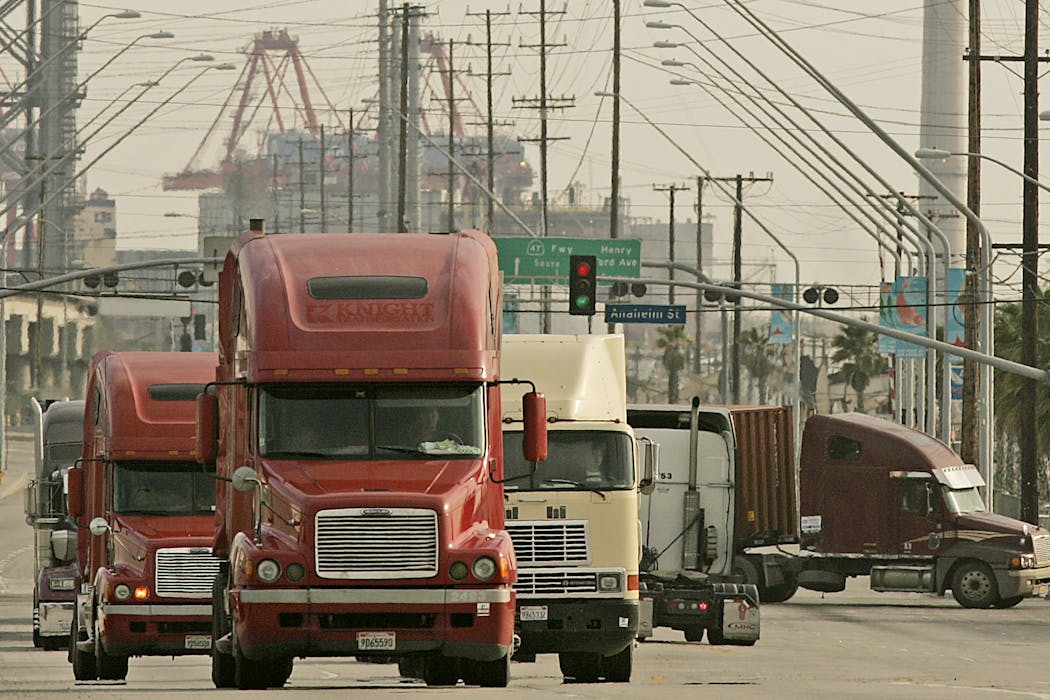
Trucks leave a smoggy Port of Long Beach in 2008, the year before the endangerment finding was released. Luis Sinco/Los Angeles Times via Getty Images

In 2009, the U.S. Environmental Protection Agency formally declared that greenhouse gas emissions, including from vehicles and fossil fuel power plants, endanger public health and welfare. The decision, known as the endangerment finding, was based on years of evidence, and it has underpinned EPA actions on climate change ever since.

The Trump administration now wants to tear up that finding as it tries to roll back climate regulations on everything from vehicles to industries.

But the move might not be as simple as the administration hopes.

An airplane flying over a packed highway with San Diego in the background.
Transportation is the nation’s leading source of emissions, yet the federal government aims to roll back vehicle standards and other regulations written to help slow climate change.
Kevin Carter/Getty Images

EPA Administrator Lee Zeldin sent a proposed rule to the White House Office of Management and Budget in early January 2026 to rescind the endangerment finding. Now, a Washington Post report suggests, action on it may be delayed over concerns that the move wouldn’t withstand legal challenges.

Cracks in the administration’s plan are already evident. On Jan. 30, a federal judge ruled that the Department of Energy violated the law when it handpicked five researchers to write the climate science review that the EPA is using to defend its plan. The ruling doesn’t necessarily stop the EPA, but it raises questions.

There’s no question that if the EPA does rescind the endangerment finding that the move would be challenged in court. The world just lived through the three hottest years on record, evidence of worsening climate change is stronger now than ever before, and people across the U.S. are increasingly experiencing the harm firsthand.

Several legal issues have the potential to stop the EPA’s effort. They include emails submitted in a court case that suggest political appointees sought to direct the scientific review.

To understand how we got here, it helps to look at history for some context.

The Supreme Court started it

The endangerment finding stemmed from a 2007 U.S. Supreme Court ruling in Massachusetts v. EPA.

The court found that various greenhouse gases, including carbon dioxide, were “pollutants covered by the Clean Air Act,” and it gave the EPA an explicit set of instructions.

The court wrote that the “EPA must determine whether or not emissions from new motor vehicles cause or contribute to air pollution which may reasonably be anticipated to endanger public health or welfare.”

But the Supreme Court did not order the EPA to regulate greenhouse gas emissions. Only if the EPA found that emissions were harmful would the agency be required, by law, “to establish national ambient air quality standards for certain common and widespread pollutants based on the latest science” – meaning greenhouse gases.

The Supreme Court justices seated for a formal portrait.
The Supreme Court under Chief Justice John Roberts in 2007 included seven justices appointed by Republican presidents. Front row, left to right: Anthony M. Kennedy (appointed by Ronald Reagan), John Paul Stevens (Gerald Ford), John Roberts (George W. Bush), Antonin Scalia (Reagan) and David Souter (George H.W. Bush). Standing, from left: Stephen Breyer (Bill Clinton), Clarence Thomas (George H.W. Bush), Ruth Bader Ginsburg (Clinton) and Samuel Alito Jr. (George W. Bush).
AP Photo/J. Scott Applewhite

The EPA was required to follow formal procedures – including reviewing the scientific research, assessing the risks and taking public comment – and then determine whether the observed and projected harms were sufficient to justify publishing an “endangerment finding.”

That process took two years. EPA Administrator Lisa Jackson announced on Dec. 7, 2009, that the then-current and projected concentrations of six key greenhouse gases in the atmosphere – carbon dioxide, methane, nitrous oxide, hydrofluorocarbons, perfluorocarbons and sulfur hexafluoride – threatened the public health and welfare of current and future generations.

Challenges to the finding erupted immediately.

Jackson denied 10 petitions received in 2009-2010 that called on the administration to reconsider the finding.

On June 26, 2012, the U.S. Court of Appeals for the D.C. Circuit upheld the endangerment finding and regulations that the EPA had issued under the Clean Air Act for passenger vehicles and permitting procedures for stationary sources, such as power plants.

This latest challenge is different.

It came directly from the Trump administration without going through normal channels. It was, though, entirely consistent with both the conservative Heritage Foundation’s Project 2025 plan for the Trump administration and President Donald Trump’s dismissive perspective on climate risk.

Trump’s burden of proof

To legally reverse the 2009 finding, the agency must go through the same evaluation process as before. According to conditions outlined in the Clean Air Act, the reversal of the 2009 finding must be justified by a thorough and complete review of the current science and not just be political posturing.

That’s a tough task.

Energy Secretary Chris Wright has talked publicly about how he handpicked the five researchers who wrote the scientific research review. A judge has now found that the effort violated the 1972 Federal Advisory Committee Act, which requires that agency-chosen panels providing policy advice to the government conduct their work in public.

All five members of the committee had been outspoken critics of mainstream climate science. Their report, released in summer 2025, was widely criticized for inaccuracies in what they referenced and its failure to represent the current science.

Scientific research available today clearly shows that greenhouse gas emissions harm public health and welfare. Importantly, evidence collected since 2009 is even stronger now than it was when the first endangerment finding was written, approved and implemented.

Map shows many ares with record or near record warm years.
Many locations around the world had record or near-record warm years in 2025. Places with local record warmth in 2025 are home to approximately 770 million people, according to data from Berkeley Earth.
Berkeley Earth, CC BY-NC

For example, a 2025 review by the National Academies of Sciences, Engineering and Medicine determined that the evidence supporting the endangerment finding is even stronger today than it was in 2009. A 2019 peer-reviewed assessment of the evidence related to greenhouse gas emissions’ role in climate change came to the same conclusion.

The Sixth Assessment of the Intergovernmental Panel on Climate Change, a report produced by hundreds of scientists from around the world, found in 2023 that “adverse impacts of human-caused climate change will continue to intensify.”

Maps show most of the US, especially the West, getting hotter, and the West getting drier.
Summer temperatures have climbed in much of the U.S. and the world as greenhouse gas emissions have risen.
Fifth National Climate Assessment

In other words, greenhouse gas emissions were causing harm in 2009, and the harm is worse now and will be even worse in the future without steps to reduce emissions.

In public comments on the Department of Energy’s problematic 2025 review, a group of climate experts from around the world reached the same conclusion, adding that the Department of Energy’s Climate Working Group review “fails to adequately represent this reality.”

What happens if EPA does drop the endangerment finding

As an economist who has studied the effects of climate change for over 40 years, I am concerned that the EPA rescinding the endangerment finding on the basis of faulty scientific assessment would lead to faster efforts to roll back U.S. climate regulations meant to slow climate change.

It would also give the administration cover for further actions that would defund more science programs, stop the collection of valuable data, freeze hiring and discourage a generation of emerging science talent.

Cases typically take years to wind through the courts. Unless a judge issued an injunction, I would expect to see a continuing retreat from efforts to reduce climate change while the court process plays out.

I see no scenario in which a legal challenge doesn’t end up before the Supreme Court. I would hope that both the enormous amount of scientific evidence and the words in the preamble of the U.S. Constitution would have some significant sway in the court’s considerations. It starts, “We the People of the United States, in Order to form a more perfect Union,” and includes in its list of principles, “promote the general Welfare.”

The Conversation

Gary W. Yohe does not work for, consult, own shares in or receive funding from any company or organization that would benefit from this article, and has disclosed no relevant affiliations beyond their academic appointment.

ref. Trump’s climate policy rollback plan relies on EPA rescinding its 2009 endangerment finding – but will courts allow it? – https://theconversation.com/trumps-climate-policy-rollback-plan-relies-on-epa-rescinding-its-2009-endangerment-finding-but-will-courts-allow-it-274194

Denmark’s generous child care and parental leave policies erase 80% of the ‘motherhood penalty’ for working moms

Source: The Conversation – USA (2) – By Alexandra Killewald, Professor of Sociology, University of Michigan

A Danish mom drops her young son at his school in Copenhagen. Sergei Gapon/AFP via Getty Images

For many women in the U.S. and around the world, motherhood comes with career costs.

Raising children tends to lead to lower wages and fewer work hours for mothers – but not fathers – in the United States and around the world.

As a sociologist, I study how family relationships can shape your economic circumstances. In the past, I’ve studied how motherhood tends to depress women’s wages, something social scientists call the “motherhood penalty.”

I wondered: Can government programs that provide financial support to parents offset the motherhood penalty in earnings?

A ‘motherhood penalty’

I set out with Therese Christensen, a Danish sociologist, to answer this question for moms in Denmark – a Scandinavian country with one of the world’s strongest safety nets.

Several Danish policies are intended to help mothers stay employed.

For example, subsidized child care is available for all children from 6 months of age until they can attend elementary school. Parents pay no more than 25% of its cost.

But even Danish moms see their earnings fall precipitously, partly because they work fewer hours.

Losing $9,000 in the first year

In an article to be published in an upcoming issue of European Sociological Review, Christensen and I showed that mothers’ increased income from the state – such as from child benefits and paid parental leave – offset about 80% of Danish moms’ average earnings losses.

Using administrative data from Statistics Denmark, a government agency that collects and compiles national statistics, we studied the long-term effects of motherhood on income for 104,361 Danish women. They were born in the early 1960s and became mothers for the first time when they were 20-35 years old.

They all became mothers by 2000, making it possible to observe how their earnings unfolded for decades after their first child was born. While the Danish government’s policies changed over those years, paid parental leave and child allowances and other benefits were in place throughout. The women were, on average, age 26 when they became mothers for the first time, and 85% had more than one child.

We estimated that motherhood led to a loss of about the equivalent of US$9,000 in women’s earnings – which we measured in inflation-adjusted 2022 U.S. dollars – in the year they gave birth to or adopted their first child, compared with what we would expect if they had remained childless. While the motherhood penalty got smaller as their children got older, it was long-lasting.

The penalty only fully disappeared 19 years after the women became moms. Motherhood also led to a long-term decrease in the number of the hours they worked.

A woman pushes a stroller holding a baby past an election poster while another woman crosses her path carrying objects awkwardly.
The ‘motherhood penalty’ is largest in the first year after a mom’s first birth or adoption.
Kristian Tuxen Ladegaard Berg/NurPhoto via Getty Images

Studying whether government can fix it

These annual penalties add up.

We estimated that motherhood cost the average Danish woman a total of about $120,000 in earnings over the first 20 years after they first had children – about 12% of the money they would have earned over those two decades had they remained childless.

Most of the mothers in our study who were employed before giving birth were eligible for four weeks of paid leave before giving birth and 24 weeks afterward. They could share up to 10 weeks of their paid leave with the baby’s father. The length and size of this benefit has changed over the years.

The Danish government also offers child benefits – payments made to parents of children under 18. These benefits are sometimes called a “child allowance.”

Denmark has other policies, like housing allowances, that are available to all Danes, but are more generous for parents with children living at home.

Using the same data, Christensen and I next estimated how motherhood affects how much money Danish moms receive from the government. We wanted to know whether they get enough income from the government to compensate for their loss of income from their paid work.

In the graphic head, put a comma after “Denmark”; in the footnote, fix the spelling of “adusted” to “adjusted”

We found that motherhood leads to immediate increases in Danish moms’ government benefits. In the year they first gave birth to or adopted a child, women received over $7,000 more from the government than if they had remained childless. That money didn’t fully offset their lost earnings, but it made a substantial dent.

The gap between the money that mothers received from the government, compared with what they would have received if they remained childless, faded in the years following their first birth or adoption. But we detected a long-term bump in income from government benefits for mothers – even 20 years after they first become mothers.

Cumulatively, we determined that the Danish government offset about 80% of the motherhood earnings penalty for the women we studied. While mothers lost about $120,000 in earnings compared with childless women over the two decades after becoming a mother, they gained about $100,000 in government benefits, so their total income loss was only about $20,000.

Benefits for parents of older kids

Our findings show that government benefits do not fully offset earnings losses for Danish moms. But they help a lot.

Because most countries provide less generous parental benefits, Denmark is not a representative case. It is instead a test case that shows what’s possible when governments make financially supporting parents a high priority.

That is, strong financial support for mothers from the government can make motherhood more affordable and promote gender equality in economic resources.

Because the motherhood penalty is largest at the beginning, government benefits targeted to moms with infants, such as paid parental leave, may be especially valuable.

Child care subsidies can also help mothers return to work faster.

The motherhood penalty’s long-term nature, however, indicates that these short-term benefits are not enough to get rid of it altogether. Benefits that are available to all mothers of children under 18, such as child allowances, can help offset the long-term motherhood penalty for mothers of older children.

The Conversation

Alexandra Killewald does not work for, consult, own shares in or receive funding from any company or organization that would benefit from this article, and has disclosed no relevant affiliations beyond their academic appointment.

ref. Denmark’s generous child care and parental leave policies erase 80% of the ‘motherhood penalty’ for working moms – https://theconversation.com/denmarks-generous-child-care-and-parental-leave-policies-erase-80-of-the-motherhood-penalty-for-working-moms-273186

Life isn’t all diamonds – money and fame don’t shield the many ‘Real Housewives’ facing criminal charges

Source: The Conversation – USA (2) – By C. Clare Strange, Assistant Research Professor of Criminology and Justice Studies, Drexel University

Jen Shah, a cast member of the “Real Housewives” series, leaves a Manhattan federal court in January 2023 after receiving a 6½-year sentence for conspiracy to commit wire fraud. Gotham/GC Images

“The Real Housewives” reality TV series, which showcases the lives of a rotating cast of wealthy women in 11 cities in the U.S. and places in several other countries, is famous for its characters’ over-the-top drama and messy personal antics.

But there are also useful lessons that the characters’ lives and frequent run-ins with the law offer to casual observers and criminology students alike.

I developed the idea for The Real Housewives of Criminology course when I heard a story on NPR in 2023 about how the Bravo Network franchise was becoming more like a true-crime TV series.

Jen Shah, a cast member from “The Real Housewives of Salt Lake City,” had recently been sentenced to six years in federal prison for her role in a nationwide telemarketing scheme – but she wasn’t the only one on the show who met such a fate.

Many people who appear on “Housewives” share a real-life penchant for crime – from driving-under-the-influence charges and theft to fraud and assault.

During any given episode, viewers may find “Housewives” stars and their families navigating the fallout – from court dates to public shaming.

I realized that these scenes illustrate core concepts from criminal justice theory and practice as well as any textbook.

A window into the course

The course examines the criminal cases of the “Housewives” and compares them to those of the general public.

Students discuss how factors such as social class, age and race can impact people’s experiences with the justice system. At the same time, they come to understand that factors such as how serious a crime is, a person’s criminal history and the harm done to victims tend to drive case outcomes more than any other factor.

I believe that this course is especially relevant now, because it is increasingly common for undergraduate students to consume news about crime and punishment from streaming platforms and social media.

It seems there is a new “Housewife” arrest every several months, which brings with it new circumstances and a new case study to dissect.

Critical lessons

One key takeaway from the course is that there are many meaningful differences – and similarities – between the criminal cases shown in “Housewives” and those of most people.

While money and power can often go a long way in fighting a criminal conviction, sometimes they fall short when the harm to victims or society is too great, or the pattern of behavior is too obvious.

Many “Housewives” stars and their families have learned this lesson the hard way.

Read along

This course requires students to view footage from “The Real Housewives,” read peer-reviewed criminological research, and listen to podcast episodes from “The Bravo Docket.”

We even read book chapters straight from some of the Housewives’ memoirs. All of this culminates in a “Final Reunion,” meaning a final verbal exam for students, in which they embody one of the “Housewives” cast members and answer questions from me – dressed as host Andy Cohen – about their criminal cases.

A group of five women dressed in formal wear pose and stand in front of a backdrop that says 'Bravo.'
Teresa Giudice, right, poses with others in ‘The Real Housewives of New Jersey’ cast in April 2013. She is among the cast members who have faced criminal charges.
Taylor Hill/FilmMagic

Real takeaways

While the court of public opinion tends to quickly draw conclusions from limited information, my honors students learn that there is more than meets the eye when it comes to the U.S. justice system.

The Real Housewives of Criminology helps them to navigate the nuance beneath the headlines about popular crime news stories, in and beyond the “Bravosphere.”

The Conversation

C. Clare Strange does not work for, consult, own shares in or receive funding from any company or organization that would benefit from this article, and has disclosed no relevant affiliations beyond their academic appointment.

ref. Life isn’t all diamonds – money and fame don’t shield the many ‘Real Housewives’ facing criminal charges – https://theconversation.com/life-isnt-all-diamonds-money-and-fame-dont-shield-the-many-real-housewives-facing-criminal-charges-272762

800 years after his death, the legends and legacy of Francis of Assisi endure

Source: The Conversation – USA (3) – By Vanessa Corcoran, Adjunct Professor of History, Georgetown University

On the 800th anniversary of the death of St. Francis of Assisi, founder of the Franciscan order, his body will be displayed for the first time ever in February 2026, at the Basilica of San Francesco. Millions of visitors are expected to converge in the small Tuscan town of Assisi to honor the 13th-century saint.

Francis, who died on Oct. 4, 1226, espoused care for the poor and reverence for the natural world. Those values were reflected centuries later in the actions of Pope Francis. The late pope chose his papal name in honor of the medieval saint’s embrace of the poor and his teachings on the moral responsibility of caring for all creatures on Earth.

As a scholar of medieval religious history, I’m aware that several dramatic episodes near the end of Francis’s life played a decisive role in shaping his legacy as the founder of the Franciscan order. These events also explain why his radical messages around poverty and the environment still resonate today.

Born rich, yet sought a life of poverty

Born into a merchant family in the Umbrian town of Assisi, in present-day Italy, around 1181, Francis famously renounced his family’s wealth. One narrative recounts how he shed his garments in the public square, much to the embarrassment of his father. Early biographers described him as “Il Poverello,” or “The Little Poor One.”

In 1209, he founded the mendicant Franciscan order, a religious group devoted to works of charity.

What historians and theologians know about Francis comes primarily from his own writings and hagiographic texts. Hagiography is a form of religious biography that celebrates the virtuous lives of saints, often recounting miracles attributed to them, both in their lifetime and after their death. Devotees often visit their tombs to seek a miraculous intervention. Some of the hagiographies of Francis were written shortly after his death in 1226.

Thomas of Celano, a Franciscan friar who knew Francis personally, wrote “The Life of Francis,” published just two years after his passing. This hagiography played a central role in his rapid canonization. It provided a detailed account of Francis’ life, and Pope Gregory IX relied on its evidence that Francis’ deeds merited sainthood.

Thirteenth-century theologian and philosopher St. Bonaventure wrote the “Life of St. Francis,” now regarded as the most comprehensive account of Francis’ life. This second religious biography captures not just the key events of Francis’ life, but it also articulates his enduring legacy as the founder of the Franciscans. There are currently about 650,000 Franciscans worldwide. Members of the Franciscan order are active in over 100 countries worldwide, focusing on issues of poverty, mission and education.

Both narratives describe key moments from Francis’ early years: After taking a vow of poverty, Francis begged for alms and also worked in leper colonies near Assisi. During this period, he founded the Franciscan order.

In 1210, he traveled to Rome and received papal approval for the order from Pope Innocent III.

In 1219, Francis traveled to Egypt to meet with Sultan al-Malik al-Kamil during the Fifth Crusade. He initially attempted to convert al-Kamil to Christianity through his preaching. According to Christian texts, the meeting ultimately led to safer conditions for prisoners of war during the Crusades.

Miracles and legends

The end of Francis’ life was believed to be marked by spiritual encounters that many Catholics interpret as signs of his holiness.

Recounted in great detail in the 13th-century hagiographies, these stories explain why he later became closely associated with animals and protection of the natural world. These encounters have also been replicated numerous times in artistic renderings of Francis.

As an itinerant preacher, Francis regularly traveled throughout Italy to spread the Gospel. But on one occasion, Francis paused to preach to a flock of birds. According to legend, they listened in rapt attention.

Thomas of Celano notes that from that day on, Francis’ sermons were not just intended for people but for “all birds, all animals, all reptiles, and also insensible creatures, to praise and love the creator.”

The idea that animals became transfixed by Francis’ preaching was reiterated in other devotional texts. In the 14th-century account “The Little Flowers of St. Francis,” there is another legendary story that Francis’ preaching reportedly stopped a wolf from terrorizing the Tuscan town of Gubbio.

Francis spoke to the wolf and extended his arm. According to the legend, the wolf then stretched out his paw as if to shake his hand. Such stories became central to shaping Francis’ identity as the patron saint of animals and, later, of the natural world.

In 1224, a severe illness left Francis nearly blind. Unable to write, he dictated the “Canticle of the Sun,” or “Canticle of the Creatures,” often considered the first major work in Italian vernacular literature.

Despite his failing eyesight, this devotional text reflects poetically on the beauty of God’s creations, referring to animals as “brothers and sisters.” It praises how the Earth “sustains us and governs and … produces various fruits with colored flowers and herbs.”

A fresco shows a haloed man kneeling in prayer as rays of light descend from a winged angel above, while a nun sits nearby reading from a book.
A fresco by Pietro Lorenzetti shows St. Francis receiving the stigmata. Basilica of San Francesco, Assisi, Italy.
dmitriymoroz/iStock/Getty Images Plus

Notably, Francis became the first person believed to receive the stigmata – wounds believed to mirror those of Christ’s crucifixion. Eyewitness accounts of Sept. 17, 1224, later recorded by Thomas of Celano, noted:

“A little before his death, our brother and father (Francis) appeared as if crucified, bearing in his body the five wounds which are truly the stigmata of Christ. In fact, his hands and feet had something like perforations made by the nails, front and back, that retained scars and showed the blackness of the nails. And to his side, he seemed to be pierced and blood often flowed out.”

Italian Renaissance artist Giotto di Bondone depicted these scenes in an elaborate fresco cycle in the Basilica of Santa Croce in Florence. These wounds furthered the idea of Francis as Christ-like: a motif explored often in devotional writing.

Influence on the modern-day papacy

Though Francis of Assisi was already recognized as a formative historical figure, he received renewed global attention on March 13, 2013, when then-Cardinal Jorge Mario Bergoglio broke with the church tradition of taking a name in honor of a papal predecessor. He took the name Francis.

The choice was deliberate, given that Francis of Assisi’s mission was tied to living a life of poverty and caring for others. Soon after his election to the papacy, Francis expounded on his reasoning of his papal name, affirming that his namesake was “the man of poverty, the man of peace, the man who loves and protects creation.”

A Gothic-style cathedral sits under a cloudy sky as a line of people walks toward its entrance.
Basilica di San Francesco in Assisi.
Rosmarie Wirz/Moment Open/Getty Images

The “Canticle of the Sun” later shaped the pope’s signature 2015 encyclical, “Laudato Si’” – “Care for Our Common Home.” The first papal encyclical devoted to the environment, the document called for global dialogue and action to protect the planet. In it, Pope Francis wrote that Francis of Assisi “shows us just how inseparable the bond is between concern for nature, justice for the poor, commitment to society, and interior peace.” Since the death of the pope, “Laudato Si” has been hailed as one of the lasting contributions of the first Jesuit and Latin American-born pope.

As pilgrims travel to Assisi during this special Jubilee year of St. Francis, the church has emphasized it is not just about seeing the remains of the medieval visionary but to remember this “model of holiness of life and a constant witness of peace.”

Although this medieval saint, most commonly known through frescoes and fragmented texts, may seem like a distant historical figure, Francis’ teachings on care for the poor and responsibility toward the environment offer a lasting message to the 21st century.

The Conversation

Vanessa Corcoran does not work for, consult, own shares in or receive funding from any company or organization that would benefit from this article, and has disclosed no relevant affiliations beyond their academic appointment.

ref. 800 years after his death, the legends and legacy of Francis of Assisi endure – https://theconversation.com/800-years-after-his-death-the-legends-and-legacy-of-francis-of-assisi-endure-271482

Allumer la lumière pour éteindre la douleur chez les rongeurs

Source: The Conversation – in French – By Marion Bied, Docteure en biologie, Université Côte d’Azur

Allumer la lumière pour éteindre la douleur. Ce slogan résume bien notre découverte : une simple lumière dans l’UV-A supprime la douleur chez les rongeurs, sans aucun médicament et de manière plus efficace et durable que l’ibuprofène. Cette méthode, que nous avons appelée Light-Induced Analgesia, récemment publiée dans Nature Communications, le 26 janvier 2026, pourrait améliorer le bien-être animal et bouleverser les pratiques vétérinaires dans le cadre de l’expérimentation animale, mais aussi lors de la prise en charge des nouveaux animaux de compagnie, comme les hamsters, les chinchillas et même les tortues ou les boas.

Comment est née cette méthode antidouleur reposant sur la lumière ?

Comme Pasteur l’a dit, « le hasard ne favorise que les esprits préparés ». Effectivement, toute notre étude repose sur une observation inattendue que nous avons faite lors d’une expérience témoin : une protéine appelée TRAAK s’active (en d’autres mots, elle se met en marche), lorsqu’elle est éclairée avec de la lumière UV-A.

Aussi fortuite qu’elle puisse paraître, cette observation nous a souri puisque l’activité principale de notre laboratoire porte sur TRAAK et les protéines qui lui sont proches.

TRAAK est une protéine présente dans les récepteurs de la douleur et freine la transmission des messages douloureux vers le cerveau quand elle est dans son état actif. D’où notre idée : activer ces protéines des récepteurs de la douleur présents dans la peau avec de la lumière et ainsi inhiber les récepteurs de la douleur. Cela empêcherait alors les messages nerveux d’atteindre le cerveau, résultant en de l’analgésie.

Pour vérifier cela, nous avons illuminé les pattes de souris et avons testé leur sensibilité mécanique en déterminant la pression à appliquer pour déclencher leur réflexe de retrait de la patte. Cette procédure, couramment utilisée en expérimentation animale et humaine n’induit aucune douleur chez la souris puisque le réflexe est déclenché physiologiquement avant que la souris ne ressente la douleur. Nous avons ainsi pu montrer que, après le traitement à la lumière, il faut trois fois plus de force pour induire le retrait, ce qui veut dire que les pattes des souris deviennent trois fois moins sensibles, que ce soit sur des souris saines ou soumises à une douleur chronique pour une durée allant jusqu’à six heures. Nous avons même démontré que cet effet est plus efficace et durable que les antidouleurs utilisés couramment, comme l’ibuprofène ou la crème anesthésiante Emla (souvent utilisée lors de la vaccination).

Analgésie induite par la lumière (LIA) : l’illumination de la peau de rongeurs avec une simple lampe UV-A (appelée lumière noire) active les canaux TRAAK présents dans les terminaisons nerveuses des récepteurs de la douleur situés dans la zone exposée. Cette activation inhibe l’activité de ces récepteurs, qui cessent alors de transmettre des signaux douloureux vers le cerveau. Ce processus génère un effet analgésique net et prolongé, observé aussi bien chez le rat que chez la souris.
Fourni par l’auteur

Pourquoi cette découverte est-elle importante ?

Ce nouveau traitement est non invasif, peu coûteux et simple à mettre en place. De plus, l’analgésie induite par la lumière (LIA) ne requiert aucune injection ni traitement médicamenteux et permet de s’affranchir de tout effet secondaire ou d’interaction médicamenteuse. Ce dernier point en fait une véritable aubaine en expérimentation animale, en proposant une solution pour soulager la douleur sans avoir de répercussion sur les conclusions des expériences.

En effet, dans le cadre des expériences précliniques sur rongeurs, bien contrôler la douleur est essentiel, à la fois pour le bien-être des animaux et pour la fiabilité des résultats scientifiques. Une douleur mal prise en charge peut en effet modifier le fonctionnement de l’organisme et fausser les observations et conclusions de l’étude. Les solutions actuelles pour soulager la douleur reposent essentiellement sur des médicaments qui sont efficaces mais susceptibles d’induire des effets secondaires pouvant modifier les paramètres biologiques étudiés et ainsi fausser les résultats et conclusions de l’étude.

Au-delà du cadre de l’expérimentation animale, la LIA pourra être appliquée aux nouveaux animaux de compagnie pour une analgésie locale, rapide et robuste. Par exemple, un vétérinaire pourrait l’employer pour rendre plus supportable le nettoyage d’un abcès chez les hamsters.

Quelles sont les suites de cette étude ?

La LIA n’est pas applicable chez l’humain, une unique différence dans la séquence de TRAAK rend la lumière inefficace sur la version humaine de la protéine : la lumière n’aura donc aucun effet antidouleur.

Nous sommes tout de même très excités, car notre étude identifie TRAAK comme une cible prometteuse pour le développement de nouveaux traitements antidouleur, y compris chez l’humain (en l’activant d’une manière différente). Nous allons donc poursuivre nos travaux pour développer des molécules activant TRAAK et proposer une stratégie potentiellement plus efficace et plus ciblée que les antidouleurs disponibles actuellement sur le marché.

Enfin, même si nous avons déterminé le mécanisme moléculaire à l’origine de l’activation de TRAAK par la lumière, une question subsiste : pourquoi certaines espèces possèdent-elles une version activable à la lumière ? Cela joue-t-il un rôle physiologique, par exemple au niveau du rythme nocturne/diurne des espèces ou encore dans la vision ? Nous comptons bien trouver des explications en étudiant quelles espèces possèdent une protéine TRAAK sensible à la lumière et leurs caractéristiques écologiques.


Tout savoir en trois minutes sur des résultats récents de recherches, commentés et contextualisés par les chercheuses et les chercheurs qui les ont menées, c’est le principe de nos « Research Briefs ». Un format à retrouver ici.

The Conversation

Marion Bied a reçu des financements de la Fondation pour la Recherche Médicale (FRM).

Guillaume Sandoz a reçu des financements de la Fondation pour la Recherche Médicale, l’Agence Nationale de la Recherche

ref. Allumer la lumière pour éteindre la douleur chez les rongeurs – https://theconversation.com/allumer-la-lumiere-pour-eteindre-la-douleur-chez-les-rongeurs-274751

Angola’s Lobito Corridor is being revived – but who stands to gain?

Source: The Conversation – Africa – By Daniel Tjarks, Resarch Associate in Human Geography, Saarland University

The Lobito Corridor is a massive infrastructure axis linking Angola’s shore on the west of Africa to the mineral-rich interior. Built in the first three decades of the 1900s to export cheap commodities to colonial Portugal, it later fell into disrepair. Its main railway was rebuilt during Angola’s post-war reconstruction. More recently it has attracted renewed and competing international interests.

Daniel Tjarks has researched Angola’s political and economic geography, the spatial development of colonial Angola and the current role of international actors in the country. Angola’s post-war spatial development and the government’s plans to promote more balanced and equitable growth also feature in his PhD dissertation. He questions some of the celebratory political claims made about efforts to revitalise the corridor. In particular, whether it will help Angola diversify its oil-dependent economy and benefit ordinary citizens.


What is the Lobito Corridor?

The Lobito Corridor is a logistics corridor. At its heart is a 1,300km rail line that connects the port of the Angolan city of Lobito to the mineral-rich parts of Zambia and Congo to the east.

Its most important component, the Benguela Railway, was constructed between 1903 and 1931 under Portuguese colonial rule by Scottish engineer Robert Williams.

At the time, it was one of three separate railways linking the colony’s ports to its hinterland. This way, colonial Angola could provide Portugal with cheap commodities.

During Angola’s post-independence civil war (1975-2002), the line was largely destroyed. As Angola entered the peace period, the country was able to rebuild its infrastructure thanks to its booming oil business.

Chinese capital and construction companies enabled the resurrection of the railway between 2006 and 2014.

In 2023, a western consortium outbid Chinese competitors for a 30-year concession for the line’s operation. The consortium consists of Swiss commodity trader Trafigura, Portuguese construction company Mota-Engil and Belgian rail operator Vecturis. It has committed to invest US$455 million in the corridor’s development in Angola alone. Trafigura CEO Jeremy Weir says it will not only “create a western route to market for goods and materials” but also “boost the development of sectors along the line”.

Why is the corridor attracting so much attention again?

A lot is at stake in the Lobito corridor. Much more than a regional infrastructure project, it has gained strategic importance in the global scramble for critical resources.

Cobalt and copper from Zambia and the Democratic Republic of Congo are key to the clean energy transition and modern communication technology. The DRC and Zambia together account for about 14% of the global mine production of copper and the DRC for 73% of cobalt.

Control of access to these minerals is at the heart of growing US-China competition, at times referred to as a “second cold war”.

The Lobito corridor has therefore become a project of global importance.

For this reason, the railway line has attracted high-ranking visits in recent years. In 2024, then US president Joe Biden inspected the rail line, marking the first visit of a US president to the continent since 2015 and the first of a sitting US president to Angola. In 2025, German president Frank-Walter Steinmeier also made the trip – again, the first of a German president to the country.

Even the Trump administration seems to have decided it will not break with commitments to support development of the corridor.

In 2024, the US, Europe, the African Development Bank and the three host countries signed a memorandum of understanding to extend the line to the east and mobilise investment alongside it.

At the seventh AU-EU summit in November 2025, European commission president Ursula von der Leyen described these commitments as evidence of the “European model” of investment and the two continents’ “unique and strategic partnership”. The commission promised to mobilise loans and private investments for the corridor worth no less than US$2 billion.

As the US and EU are trying to counter Chinese capital investment in Angola and in the wider region, the Lobito Corridor will continue to play a key role.

Who will benefit from the Lobito corridor?

There are good reasons to remain sceptical about the corridor’s promised benefits.

First, recent background reports point to major challenges facing the development of the soft infrastructure of customs and regulations. Others have pointed to the corridor’s unclear commercial viability. Ships having to call at the secondary port of Lobito will incur higher costs. There’s also competition from other routes – mostly, the Chinese-built Tazara railway, connecting Zambia to Dar-es-Salaam.

Second, the economic model at the heart of the Lobito corridor is anything but a break with exploitative extractivism. Throughout Angolan history, primary commodities have left the country, while hopes for broad-based growth have repeatedly been frustrated.

The consortium that now operates the railway grounds its investment primarily in expectations of future demand for critical minerals. And while the political emphasis on complementary investments is laudable, the corridor does not, as one background report puts it,

immediately lend itself to linking minerals and wider development.

Moreover, the country has already seen decades of large-scale oil exports that have delivered few tangible results for the wider population. Instead they have propelled blatant corruption and growing discontent with a ruling party that has been in power since independence.

Angolan economists Alves da Rocha and Wilson Chimoco have argued that “expectations on the impact on economic diversification are very low”.

Angolan government critic and journalist Rafael Marques de Morais has even called the corridor

a mirror of everything negative the continent endures: Chinese debt, Western opportunism, Congolese blood, Angolan misrule.

For him

if hypocrisy needed a railway, it would look exactly like the Lobito Corridor.

If the project really is to benefit all, the government will have to live up to promises that fewer and fewer Angolans seem to believe it capable of delivering.

The Conversation

Daniel Tjarks does not work for, consult, own shares in or receive funding from any company or organisation that would benefit from this article, and has disclosed no relevant affiliations beyond their academic appointment.

ref. Angola’s Lobito Corridor is being revived – but who stands to gain? – https://theconversation.com/angolas-lobito-corridor-is-being-revived-but-who-stands-to-gain-274305

Nigeria’s open borders promised more trade and free movement: but crossings are chaotic and corrupt

Source: The Conversation – Africa (2) – By John Babalola, Associate lecturer, University of Lincoln

West Africa has pursued one of the world’s most ambitious border liberalisation schemes in the past four decades. The Ecowas Free Movement Protocol, signed in 1979, enables citizens of 16 member states to cross international borders with minimal documentation. The intention was to promote economic integration and prosperity across the region.

For instance, Nigeria’s open borders promise trade. Yet at Nigeria’s border posts, a troubling reality emerges. The open border system has become a vehicle for systematic exploitation of travellers.

My research towards my PhD at the University of Lincoln under the supervision of Dr Joshua Skoczylis focuses on west African migration and border governance. Together, we have examined how the region’s free movement protocol operates in practice at Nigeria’s frontiers.

Using the examples of two contrasting Nigerian border crossings – Idi-Iroko on the Benin border and Chikanda on the Niger border – I sought to understand the protocol’s impact on border security in Nigeria. Through qualitative interviews with policymakers, frontline security staff and community leaders, the research reveals how information gaps between officials and citizens transform an integration policy into an instrument of corruption.

While these sites cannot claim to represent all of Nigeria’s 84 manned official border posts, they illustrate the institutional dynamics reported across major crossing points in the region.

My findings show that the Ecowas Free Movement Protocol is an example of what policy scholars call an implementation gap: the chasm between what policies promise on paper and what happens on the ground. This protocol establishes free movement principles without prescribing mechanisms or standard practices. But Nigeria has failed to develop its own ways to manage its borders.

The current chaotic system is crying out for changes: these should include standardised operating procedures, proper remuneration for border personnel, accountability mechanisms and intelligence sharing.

When nobody knows the rules

The protocol’s basic requirement is straightforward: travellers need a valid travel document (a passport) and an international health certificate. Yet interviews with dozens of border community members revealed that most had never seen these requirements written down, let alone understood them.

“I think the protocol is good for trade between countries,” one Idi-Iroko resident told me, “but I don’t really know what it says.” Another community member was more direct: “International passports? Those are a waste of time and money. You don’t need them to cross the borders.”

When citizens remain uncertain about requirements, officials can demand payments for unknown violations, charge fees for services that should be free, and accept bribes to overlook supposed irregularities. What looks like bureaucratic failure becomes a feature of the system for those who benefit from it.

Multiple residents confirmed they crossed regularly without documents, recognised by officials who “know them” as locals.

Border residents understand that in practice, rules matter less than relationships with officials. Documentation requirements are negotiable, and informal payment often smooths passage more effectively than proper papers.

The strategic information gap

Security agencies claim they regularly conduct community information programmes. Immigration officials described visiting market squares and motor parks to distribute flyers about trafficking dangers and documentation requirements. “We do enlightenment campaigns constantly,” one senior officer insisted. Yet my requests for programme documentation, schedules, attendance records, or evaluation reports yielded nothing.

None of the community members interviewed across two border zones recalled such programmes. Most had gleaned their understanding of border operations from informal conversations and personal experience.

The real implementation gap

Free movement doesn’t mean unregulated movement. Even within a borderless zone, states retain legitimate security interests: preventing trafficking, controlling smuggled goods, monitoring public health threats, and maintaining basic records of cross-border flows. The protocol acknowledges this by allowing member states to refuse entry on grounds of security, public health, or public order. Rules are needed to distinguish between these legitimate security functions and arbitrary restrictions that undermine the integration agenda.

The protocol assumes member states will create necessary institutional capacity: motivated, well-resourced security forces working collaboratively. But in reality there are ten competing agencies at major Nigerian posts, earning vastly different salaries, following separate mandates, jealously guarding information. As one military officer explained: “One organisation tries to be smarter, working individualistically instead of in cooperation.”

Frontline officers exercise enormous discretion in this under-regulated environment. They become de facto policymakers. They don’t simply implement policy poorly, they effectively create policy through their daily choices about whom to stop, what to inspect, and which violations to overlook.

A customs official candidly admitted to me:

Many people don’t go there for patriotism or duty. They go for survival. Even if you have the numbers, they’ll always try to see where the honey tastes better.

In this context, systematic corruption isn’t aberrant behaviour – it’s a strategy within deficient systems that national governments have failed to develop.

Why technology won’t fix this

Security officials often cite lack of technology as their main challenge. They argue that scanners, biometric systems and digital monitoring could help verify travellers’ identities, flag security threats, and create audit trails of border transactions. In theory, that could reduce opportunities for officials to demand arbitrary payments or wave through prohibited goods.

But technology won’t solve the fundamental problem my research uncovered.

The issue isn’t capacity for enforcement. It’s the incentive for exploitation. Sophisticated surveillance equipment won’t prevent officials from accepting bribes if their salaries are inadequate and accountability mechanisms are absent.

Anyway, most border posts lack electricity infrastructure to power such technology. And equipment placed in remote areas becomes vulnerable to theft or vandalism. Investment in hardware simply creates more expensive ways to fail.

What needs to change

Forty-six years after the protocol’s enactment, Ecowas needs to confront uncomfortable realities. Real reform requires several interconnected changes:

  • Genuine transparency about requirements: sustained, accessible public information about what documentation is legally required, what fees are legitimate, and how to report violations.

  • Standardised operating procedures across member states.

  • Adequate compensation for security personnel.

  • Accountability mechanisms with genuine consequences for exploitative behaviour.

  • Coordination frameworks that reduce inter-agency competition and enable intelligence sharing.

Until Ecowas confronts this reality, the free movement protocol will continue delivering the opposite of its promise: not integration and prosperity, but fragmentation and exploitation.

This article is based on doctoral fieldwork conducted in Nigeria between 5 June 2024 and 1 August 2024. Interview data and full findings will be available in the forthcoming PhD thesis at the University of Lincoln.

The Conversation

The authors do not work for, consult, own shares in or receive funding from any company or organisation that would benefit from this article, and have disclosed no relevant affiliations beyond their academic appointment.

ref. Nigeria’s open borders promised more trade and free movement: but crossings are chaotic and corrupt – https://theconversation.com/nigerias-open-borders-promised-more-trade-and-free-movement-but-crossings-are-chaotic-and-corrupt-273670

Is the whole universe just a simulation?

Source: The Conversation – USA – By Zeb Rocklin, Associate Professor of Physics, Georgia Institute of Technology

Could the Earth and everything on it – and even the whole universe – be a simulation running on a giant computer? OsakaWayne Studios/Moment via Getty Images

Curious Kids is a series for children of all ages. If you have a question you’d like an expert to answer, send it to CuriousKidsUS@theconversation.com.


Is the whole universe just a simulation? – Moumita B., age 13, Dhaka, Bangladesh


How do you know anything is real? Some things you can see directly, like your fingers. Other things, like your chin, you need a mirror or a camera to see. Other things can’t be seen, but you believe in them because a parent or a teacher told you, or you read it in a book.

As a physicist, I use sensitive scientific instruments and complicated math to try to figure out what’s real and what’s not. But none of these sources of information is entirely reliable: Scientific measurements can be wrong, my calculations can have errors, even your eyes can deceive you, like the dress that broke the internet because nobody could agree on what colors it was.

Because every source of information – even your teachers – can trick you some of the time, some people have always wondered whether we can ever trust any information.

If you can’t trust anything, are you sure you’re awake? Thousands of years ago, Chinese philosopher Zhuangzi dreamed he was a butterfly and realized that he might actually be a butterfly dreaming he was a human. Plato wondered whether all we see could just be shadows of true objects. Maybe the world we live in our whole lives inside isn’t the real one, maybe it’s more like a big video game, or the movie “The Matrix.”

screenshot of a landscape in a cartoonish video game
Are we living in a very sophisticated version of Minecraft?
Tofli IV/Wikimedia Commons, CC BY-SA

The simulation hypothesis

The simulation hypothesis is a modern attempt to use logic and observations about technology to finally answer these questions and prove that we’re probably living in something like a giant video game. Twenty years ago, a philosopher named Nick Bostrom made such an argument based on the fact that video games, virtual reality and artificial intelligence were improving rapidly. That trend has continued, so that today people can jump into immersive virtual reality or talk to seemingly conscious artificial beings.

Bostrom projected these technological trends into the future and imagined a world in which we’d be able to realistically simulate trillions of human beings. He also suggested that if someone could create a simulation of you that seemed just like you from the outside, it would feel just like you inside, with all of your thoughts and feelings.

Suppose that’s right. Suppose that sometime in, say, the 31st century, humanity will be able to simulate whatever they want. Some of them will probably be fans of the 21st century and will run many different simulations of our world so that they can learn about us, or just be amused.

Here’s Bostrom’s shocking logical argument: If the 21st century planet Earth only ever existed one time, but it will eventually get simulated trillions of times, and if the simulations are so good that the people in the simulation feel just like real people, then you’re probably living on one of the trillions of simulations of the Earth, not on the one original Earth.

This argument would be even more convincing if you actually could run powerful simulations today, but as long as you believe that people will run those simulations someday, then you logically should believe that you’re probably living in one today.

Scientist Neil deGrasse Tyson explains the simulation hypothesis and why he thinks the odds are about 50-50 we’re part of a virtual reality.

Signs we’re living in a simulation … or not

If we are living in a simulation, does that explain anything? Maybe the simulation has glitches, and that’s why your phone wasn’t where you were sure you left it, or how you knew something was going to happen before it did, or why that dress on the internet looked so weird.

There are more fundamental ways in which our world resembles a simulation. There is a particular length, much smaller than an atom, beyond which physicists’ theories about the universe break down. And we can’t see anything more than about 50 billion light-years away because the light hasn’t had time to reach us since the Big Bang. That sounds suspiciously like a computer game where you can’t see anything smaller than a pixel or anything beyond the edge of the screen.

Of course, there are other explanations for all of that stuff. Let’s face it: You might have misremembered where you put your phone. But Bostrom’s argument doesn’t require any scientific proof. It’s logically true as long as you really believe that many powerful simulations will exist in the future. That’s why famous scientists like Neil deGrasse Tyson and tech titans like Elon Musk have been convinced of it, though Tyson now puts the odds at 50-50.

Others of us are more skeptical. The technology required to run such large and realistic simulations is so powerful that Bostrom describes such simulators as godlike, and he admits that humanity may never get that good at simulations. Even though it is far from being resolved, the simulation hypothesis is an impressive logical and philosophical argument that has challenged our fundamental notions of reality and captured the imaginations of millions.


Hello, curious kids! Do you have a question you’d like an expert to answer? Ask an adult to send your question to CuriousKidsUS@theconversation.com. Please tell us your name, age and the city where you live.

And since curiosity has no age limit – adults, let us know what you’re wondering, too. We won’t be able to answer every question, but we will do our best.

The Conversation

Zeb Rocklin does not work for, consult, own shares in or receive funding from any company or organization that would benefit from this article, and has disclosed no relevant affiliations beyond their academic appointment.

ref. Is the whole universe just a simulation? – https://theconversation.com/is-the-whole-universe-just-a-simulation-268177

From ski jumping to speedskating, winter sports represent physics in action

Source: The Conversation – USA – By Amy Pope, Principal Lecturer of Physics and Astronomy, Clemson University

An understanding of angular momentum helps figure skaters glide across the ice and execute complex spins. AP Photo/Jeff Roberson

During the 2026 Winter Olympics, athletes will leap off ramps, slide across ice and spin through the air. These performances will look different to my students who have studied physics through sports. These feats will be something the students have already measured, modeled or felt. As a physicist, I help my students see the games as a place where classroom lessons come to life.

I spend a lot of time thinking about how abstract ideas such as kinematics, forces, energy, momentum and motion are understood in the real world. Recently, I listened to a meeting of the Clemson football team’s offense to gain an appreciation for what my student-athletes do. But I came out with an idea for a new introductory physics class.

While sitting in the back row, listening to the coach break down the Tigers’ upcoming game, I realized that I could understand every single word said, despite never having played football. Most of the guys were called Sam or Mike, and they continually talked about gaps and boxes. I knew the terminology. I followed the diagrams. I could repeat the language. And yet, I understood absolutely nothing about how that information translated into a strategy for winning the game.

It dawned on me that my confusion is likely similar to how many students experience physics. They can follow the individual pieces, equations, definitions and vocabulary, but they have trouble connecting those pieces to real-world meaning. Physics makes sense as a subject of study, yet it often seems disconnected from everyday life.

I created Clemson’s Physics of Sports class to close the gap. The course begins not with abstract problems or idealized systems, but with sports that people already care about. The class then reveals the physics that make those activities possible.

Physics in skiing

Many introductory, algebra-based physics courses have students study frictionless blocks sliding down imaginary planes. In my course, students analyze the newest Olympic sports.

Ski mountaineering, making its Olympic debut in 2026, requires athletes to climb steep, snow-covered slopes entirely under their own power. My students uncover an elegant physics problem involving friction, the force that resists sliding between surfaces.

Ski mountaineering competitors ski up a snowy hill marked with banners.
Ski mountaineers use friction to go uphill before skiing down.
AP Photo/Antonio Calanni

To accelerate uphill, the skis must experience a small amount of friction while moving in the forward direction. However, the same ski must provide enough friction in the opposite direction to prevent the skier from sliding back down the slope.

Skiers resolve this contradiction using climbing skins on their skis that are engineered to grip the snow in one direction while allowing smooth sliding in the opposite direction. In class, students examine how the skin material’s design helps climbers summit the mountain efficiently.

Students also look at how specialized materials assist in ski jumping.

The skintight suits skiers wear are not for aesthetics; they help control the physics of air. Loose fabric increases drag and can even generate lift, much like a wingsuit worn by skydivers. Tight-fitting clothing minimizes these effects, making competition fairer by leveling the field for all athletes.

A ski jumper flying through the air.
The tight suits ski jumpers wear prevent them from gaining an unfair advantage by using drag and lift from loose fabric.
AP Photo/Matthias Schrader

Physics in skating

When it comes to skating, small changes in physics can set medalists apart from the rest of the field. In class, students investigate how speedskaters can lean dramatically toward the ice without falling by analyzing their centripetal acceleration and the forces acting on their bodies during high-speed turns. Centripetal acceleration is the accelerating force directed toward the center of a turn. It keeps the skater moving in a curved path rather than moving along a straight path.

Figure skating provides another striking example where small changes in body positioning can dramatically affect the athlete’s performance. Angular momentum, which describes how much rotational motion an object has, depends on both how fast the object spins and how its mass is distributed. Angular momentum allows skaters to control how many times they spin in midair.

A diagram showing two sketches of a figure skater, one where they spin with their arms outstretched (and go slower) and one where they pulls their arms in (and go faster).
When a figure skater pulls their limbs in toward their torso, they spin faster. In physics, this concept is called the conservation of angular momentum.
Sketchplanations, CC BY-NC

In class, students don’t just watch the elite athletes – they model these concepts with their own movements. By sitting on a rotating stool with weights in their outstretched hands, students emulate a figure skater by pulling their arms inward and spinning much faster as their mass moves closer to their axis of rotation.

Physics in action

By studying sports, students begin to see physics not as a collection of formulas but as a framework for understanding how the world works. A basic understanding of physics allows students to critically evaluate everyday claims, ranging from viral sports clips to misleading headlines and exaggerated performance claims.

In highlight reels, for example, athletes often appear to steer left or right after taking off on a jump. Physics students know that can’t be the case – once airborne, there is no way to change that path without pushing on something.

Elite athletic performances aren’t the only places to see physics in action, of course. The same principles underlie most everyday experiences. With sports as an entry point, students can learn a language that allows them to interpret the physical world around them.

Physics does not live only in textbooks or exams. It is written into every stride, turn and jump, at every level, from recreational activities to Olympic competitions.

The Conversation

Amy Pope does not work for, consult, own shares in or receive funding from any company or organization that would benefit from this article, and has disclosed no relevant affiliations beyond their academic appointment.

ref. From ski jumping to speedskating, winter sports represent physics in action – https://theconversation.com/from-ski-jumping-to-speedskating-winter-sports-represent-physics-in-action-272958

The healing power of poisonous plants

Source: The Conversation – UK – By Anthony Booker, Reader in Ethnopharmacology, University of Westminster

Triff/Shutterstock

Some of the best-known medicines come from poisonous plants. The chemotherapy drug taxol comes from the yew tree, morphine from the opium poppy and digoxin from the foxglove. These plants can have lethal toxicity if taken in their raw form. Digoxin is prescribed to treat angina at doses a thousand times more dilute than most prescription medications, highlighting the plant’s extreme potency.

Many people consider herbal medicines a safe alternative to pharmaceuticals. And it’s true that many herbal medicines are fairly mild. However, there is a less well-known group of herbal medicines that are far more potent and controlled under the Medicines Act, where they are restricted to use by medical herbalists and at strictly defined dosages.


Many people think of plants as nice-looking greens. Essential for clean air, yes, but simple organisms. A step change in research is shaking up the way scientists think about plants: they are far more complex and more like us than you might imagine. This blossoming field of science is too delightful to do it justice in one or two stories.
This article is part of a series, Plant Curious, exploring scientific studies that challenge the way you view plantlife.


These are known as the schedule 20 herbs in the UK and are prescribed for a variety of health needs. All of these plants are toxic at relatively low doses, mainly due to the presence of chemical compounds called alkaloids, which also have healing properties.

Here are ten examples of these deadly, healing plants.

1. Wild saffron

Known as wild saffron or the autumn crocus, Colchicum autumnale is one of the oldest known medicinal plants. It was first mentioned in the Egyptian medical text, Ebers Papyrus (circa 1550BC), where it was described for the treatment of pain and swelling. It is still used in medicine, chiefly for its anti-inflammatory properties and particularly for the treatment of gouty arthritis.

2. Deadly nightshade

Atropa belladonna is commonly known as deadly nightshade. All parts of the plant are pain relieving, antispasmodic, hallucinogenic, narcotic and sedative. Containing tropane alkaloids (the same group as cocoaine), it is used predominantly for the gastrointestinal tract (colic, gastritis, IBS), but also for asthma and for urinary spasm, Parkinson’s disease and topically for pain relief.

Dark purple bell shaped flowers hanging from shrub
Deadly nightshade has healing properties too.
Greens and Blues/Shutterstock

3. Greater celandine

Greater celandine is often seen when walking in the woods. It has a long history of medical use in eastern and central European folk medicine to treat asthma, bronchitis, jaundice, digestive issues and even cancer. However, due to the presence of isoquinoline alkaloids, it has the potential to cause severe liver toxicity when ingested and many experts advise against its use. It can be used relatively safely as a poultice or cream to treat warts and verrucae.

Small yellow flowers with large leaves
Greater celandine is common in woodland.
Zhanna Bohovin/Shutterstock

4. White quebracho

White quebracho is a tropical tree from South America. Rich in indole alkaloids, which are also present in psychoactive drug psilocybin, it has traditionally been used to treat fever, malaria, swellings, stomach upsets, cough, headaches, syphilis, impotence and asthma.

5. Fever tree

Species of chinchona or “fever tree” have been used worldwide to treat malaria. The drug quinine is extracted from its bark. It was introduced into Europe in the 17th century for the treatment of fevers. Although it is commonly used as an appetite stimulant, recent research has suggested that it may have a role to play in weight management and obesity too.

6. Thorn apple

Datura stramonium or thorn apple has traditionally been used for various ailments including respiratory conditions, ulcers, wounds, inflammation, rheumatism and gout, sciatica, bruises and swellings and fever. Modern research has shown that it may also have potential in the treatment of epilepsy.

White bell shaped flower
Thorn apple may look fragile but it is a restricted drug.
Roman Nerud/Shutterstock

7. Ephedra sinica

Ephedra sinica has been known in traditional Chinese medicine for approximately 5,000 years. The plant contains the alkaloids ephedrine and pseudoephedrine, some of the first drugs to be used in the treatment of respiratory conditions. Side effects can include psychosis, delusions and hallucinations, which is one of the reasons drugs obtained from this plant were restricted in the UK in 2014 for cough and cold remedies for use in young children. The psychoactive properties of ephedra also explain its notoriety as a recreational drug and a number of deaths in the US have been linked to its misuse.

8. Henbane

Plants in the nightshade family, including henbane, are potent medicinal plants. They are purported to have anti-diabetic, antioxidant, anticancer, insecticidal, antiasthmatic, antiallergic, antidiarrhoeal, cardioprotective, anticonvulsant and antidepressant effects but more research is needed. However they also contain psychoactive compounds that can cause delirium and hallucinations.

Skull on wooden floorboards with white bell shaped flowers in foreground.
Henbane is no mild herb.
mutie/Shutterstock

9. Pheasant’s eye

Adonis vernalis, (pheasant’s eye) leaves and flowers have long been used in European and east Asian folk medicine to treat cardiovascular conditions. Studies have shown the chemical constituents within this plant also have antimicrobial and anti-inflammatory effects. The cardiovascular effects are largely attributed to the cardiac glycosides (chemicals that slow down heart rate) contained within this plant, which are also responsible for its toxicity, in a similar way to the foxglove.

10. Lily of the valley

A common poisonous plant often found in the garden, lily of the valley, has historically been used to treat cardiovascular conditions such as arrythmias, heart failure and angina. Another plant that contains cardiac glycosides, its common presence in gardens is a particular danger for children and pets.

Other toxic healers

Not all toxic plants are on the schedule 20 list however. Garden herbs comfrey and borage contain pyrrolizidine alkaloids that can be toxic to the liver and comfrey has been banned for medicinal use in many European countries. Comfrey, also known as knitbone, is mainly used topically as an anti-inflammatory and analgesic for acute sprains and strains or more chronic conditions such as osteoarthritis.

Belonging to the same family, borage is not that well known as a medicinal herb in the UK, whereas in Mediterranean countries it has a strong reputation for treating a range of conditions. It is credited with sedative properties, useful for insomnia, and dizziness and melancholy. In gynaecology, it can shift postpartum exhaustion, and helps with the symptoms of menopause. The oil from this plant contains negligible amounts of these alkaloids and supplements are often processed to remove the toxicity.

In the UK there are several professional associations that hold a register of qualified medical herbalists. Learning the right dosage to give a patient was just as important for folk healers. Modern science may help us verify which plants are best for healing but getting the dosage right is an ancient skill.

The Conversation

Anthony Booker is affiliated with The Royal Society of Chemistry, The Register of Chinese Herbal Medicine, The British Pharmacopoeia, The Medicines and Healthcare Products Regulatory Agency, The American Botanical Council, The British Herbal Medicine Association and The European Scientific Cooperative on Phytotherapy..

ref. The healing power of poisonous plants – https://theconversation.com/the-healing-power-of-poisonous-plants-273843