How do people know their interests? The shortest player in the NBA shows how self-belief matters more than biology

Source: The Conversation – USA – By Greg Edwards, Adjunct Lecturer of English and Technical Communications, Missouri University of Science and Technology

Muggsy Bogues didn’t let his height get in the way of his mastery of the game. Focus on Sport/Getty Images

Curious Kids is a series for children of all ages. If you have a question you’d like an expert to answer, send it to CuriousKidsUS@theconversation.com.


How do people know their interests? For example, one person likes art and the other does not, but how and why does that happen? – Leia K., age 12, Redmond, Washington


Standing at 5 feet 3 inches tall and weighing 136 pounds, Muggsy Bogues did not fit the typical profile of a National Basketball Association athlete when he played professionally from 1987 to 2001. The average NBA player during Bogues’ rookie season was 6 feet 7 inches tall and weighed 208 pounds.

Despite that, Bogues had a successful NBA career, finishing among the league’s all-time leaders in career assists. He even made an appearance alongside Michael Jordan in “Space Jam.”

Muggsy Bogues in mid-air, arm extended to the net with basketball in hand, players of the competing team surrounding him
Believing you can fly to the net can help you stand among the giants.
Focus on Sport/Getty Images

It’s true that a person’s DNA shapes their physical traits, which can influence what activities feel possible for someone. For example, Jérémy Gohier, the 7-foot-6 Canadian eighth-grader, towers over his peers, making basketball an activity that likely felt possible and worth trying early on.

But biology alone would not fully explain why Bogues developed a lasting interest in basketball. Given his small stature, it may have suggested the opposite.

Instead, Bogues was introduced to basketball early in his life and had opportunities to learn the game in ways that helped him feel capable. He credited his coach, Leon Howard, as someone who supported him and taught him the game. Those early experiences gave him confidence and made him want to continue playing.

Bogues’ story raises a broader question that extends far beyond the world of sports: How do people recognize what they are interested in, and what motivates them to keep pursuing an activity?

Based on my research and what I have observed when teaching students in my own classroom, I believe whether people decide to stick with an interest comes down to self-efficacy: A person’s belief in their ability to succeed at a specific task.

Experience builds confidence

Motivation to keep doing specific activities often grows from access to opportunities, encouragement from others and chances to practice and improve. Moments of success in a task or activity, known as mastery experiences, can help people believe in their abilities.

Albert Bandura, a social psychologist who proposed the concept of self-efficacy, also identified other factors that shape self-efficacy. These include encouragement from others, learning by watching others be successful, and a person’s psychological and emotional state – such as whether they feel energized and excited or tense and anxious.

Bogues likely experienced all of these while practicing basketball. He benefited from coaches who believed in him, from studying the game by watching others and from learning how to perform under pressure.

Young person playing piano on a spotlit stage
Having people who support you in your endeavors makes it easier to step on stage.
sot/Stone via Getty Images

In my own research, I found that how confident teachers were with using classroom technologies varied depending on how much support and opportunity to learn they had. Those same factors often shape whether people feel capable enough to keep engaging with and being interested in an activity.

I have seen something similar in my almost 15 years of teaching students ranging from middle schoolers to 70-year-olds who decided to go back to school. When students struggle to get started on an assignment, they sometimes assume they are simply bad at it. However, once they take a small step and experience even minor success, their attitude often shifts to “I can do this,” which makes them more willing to keep going and ultimately end up liking the subjects.

This was even true in my own experiences as a student. When I took my first speech course as a high school senior at Missouri University of Science and Technology, I felt like a ball of nerves. I had no inkling I would one day enjoy being a professional communicator and return to this same institution decades later, winning awards and teaching speech and writing courses to students who seem just as nervous as I once was.

Embrace new opportunities

When people have new opportunities to discover what they can do, their small moments of success can help interests blossom into full-fledged passions.

If someone never gets the chance to experience early success and encouragement, they might disengage or lose interest in an activity over time.

But success does not always mean getting better at the activity itself.

People don’t have to be the best at whatever they become interested in it. Their interests may help them accomplish other goals such as stress relief or a sense of belonging. They may stay engaged not because they feel especially skilled in the activity, but because they believe it helps them reach these other goals that matter in their lives.

A specific activity may matter because it connects to someone’s life in personal ways. It might remind them of someone they love, offer an escape from a bad home life or help them make social connections. Even if people do not feel confident in the activity itself, they can still see it helping them reach these goals, which can be enough to keep them interested.

Close-up of child's hand fingerpainting on sheets of paper
Trying something new could lead to your favorite activity.
Virojt Changyencham/Moment via Getty Images

This is why it is important for people of all ages to try new things. Without access to basketball and training opportunities, Muggsy Bogues’ path might have looked very different. And if Bob Ross had not decided to take an art class while he was in the Air Force and continue practicing, the world may have never experienced “The Joy of Painting.”

Trying new things is the first step in developing interests. After that, having opportunities to build confidence and improve can help people sustain those interests for years to come.


Hello, curious kids! Do you have a question you’d like an expert to answer? Ask an adult to send your question to CuriousKidsUS@theconversation.com. Please tell us your name, age and the city where you live.

And since curiosity has no age limit – adults, let us know what you’re wondering, too. We won’t be able to answer every question, but we will do our best.

The Conversation

Greg Edwards does not work for, consult, own shares in or receive funding from any company or organization that would benefit from this article, and has disclosed no relevant affiliations beyond their academic appointment.

ref. How do people know their interests? The shortest player in the NBA shows how self-belief matters more than biology – https://theconversation.com/how-do-people-know-their-interests-the-shortest-player-in-the-nba-shows-how-self-belief-matters-more-than-biology-272492

White men file workplace discrimination claims but are less likely to face inequity than other groups

Source: The Conversation – USA – By Donald T. Tomaskovic-Devey, Professor of Sociology and Director of the Center for Employment Equity, UMass Amherst

In March 2025 the EEOC characterized DEI programs as potentially discriminatory against white men. Wong Yu Liang/Getty Images

In December 2025, Andrea Lucas, the chair of the U.S. Equal Employment Opportunity Commission, invited white men to file more sex- and race-based discrimination complaints against their employers.

“Are you a white male who has experienced discrimination at work based on your race or sex? You may have a claim to recover money under federal civil rights laws. Contact the @USEEOC as soon as possible,” she wrote in a post on X.

In February 2026, the EEOC began to investigate Nike on what the agency said was suspicion of discrimination against white workers.

Both initiatives followed the EEOC’s March 2025 characterization of diversity, equity and inclusion efforts, or DEI, as potentially discriminatory against white men. The EEOC characterization falls within the Trump administration’s larger pattern of calling DEI “illegal discrimination.”

At the Center for Employment Equity at the University of Massachusetts, we have done extensive research on who files discrimination charges with the EEOC.

Given the EEOC’s December 2025 solicitation for white men to file discrimination complaints, we revisited our prior research to see what is known about discrimination against white people and, in particular, what is known about white and white male discrimination charges registered with the EEOC.

As part of our research, the EEOC gave us access to discrimination charges submitted to the agency and state Fair Employment Practices Agencies from 2012 to 2016. By law, all U.S. employment discrimination claims must be submitted to the EEOC, or state agencies with equivalent roles, prior to any legal actions.

While the EEOC has a history of sharing its data with researchers stretching back to the 1970s, the EEOC stopped sharing current and historical data with researchers in 2016. As a result, we do not have any data on discrimination complaints after 2016. Judging by the EEOC’s yearly reports, the basic patterns have not changed much in the interim.

White men already file complaints

When we looked at all sex- and race-based discrimination charges received by the EEOC, unsurprisingly we found that men are much less likely than women to file sex-based discrimination charges. But white men do file about 10% of sex discrimination complaints. While Black, Hispanic and Asian male employees are more likely to file racial discrimination complaints, white men file about 9% of such complaints.

In the same study, when we compared legal charges filed with the EEOC to national survey data, we found that percentages submitting a legal complaint to the EEOC roughly correspond to the percentages of survey-reported experiences of discrimination at work. Together, these two findings suggest that white people generally, and white men in particular, were already filing employment discrimination charges.

A blonde-haired woman speaks in front of a microphone.
EEOC chair Andrea Lucas in December 2025 encouraged white men to file more discrimination complaints against their employers.
AP Photo/Mariam Zuhaib, File

Second, we did a deeper dive on sexual harassment charges. We found that while white men were 46% of the labor force, they filed 11% of sexual harassment charges and 11% of all other charges, most commonly tied to disability and age.

The general pattern is that, while white men already file discrimination charges, they are less likely to experience employment discrimination than other groups.

The risk of filing complaints

Charges filed with the EEOC can result in two types of benefits to the charging party: monetary settlements and mandated changes in workplace practices.

White men who filed sexual harassment charges received some benefit 21% of the time, lower than white women, at 29%. That’s also lower than Black women, 23%, and higher than Black men, 19%. The EEOC already receives discrimination charges from white men and, at least for sexual harassment, treats them similarly to other groups.

Most people who submit a discrimination charge do so to improve their employment experience and those of their co-workers. But submitting these claims to the EEOC or a state Fair Employment Practices Agency is a high-risk, low-reward act.

We found that, at least for sexual harassment, employers responded to white men’s complaints in much the same way as to other groups. White men who filed sexual harassment discrimination charges lost their job 68% of the time and experienced employer retaliation at about the same rate. Retaliation can include firing but also other forms of harassment at work, such as abusive supervision and close monitoring by human resource departments.

A swoosh logo is seen on a building.
The Nike logo is shown on a store in Miami Beach, Fla., on Aug. 8, 2017.
AP Photo/Alan Diaz, File

We found this pattern of employer retaliation and worker firings for all demographic groups that file any type of discrimination complaint. White men who file discrimination charges receive the same harsh treatment from their employers as any other group.

Urging more white men to submit discrimination complaints based on the perceived unfairness of DEI practices, as the EEOC has done, is likely to lead to job loss and retaliation from employers.

What will happen?

It’s possible that EEOC chair Lucas’ call for more discrimination charges from white men will increase the number of filings.

This is exactly what happened after 2012 when the EEOC ruled that the 1964 Civil Rights Act’s prohibition of sex discrimination also protected LGBTQ workers from sexual-orientation and gender-identity discrimination.

More concerning is the EEOC defining employer efforts to prevent discrimination and create inclusive workplaces as discrimination against white men.

In the end, all workers want to be treated fairly and with respect. Employer efforts to create such workplaces should be supported. It would be a better use of EEOC resources to support companies’ efforts to create such workplaces.

The Conversation

When this research was completed the authors received funding from the W.K.Kellogg Foundation, the U.S. National Science Foundation, and the U.S. Department of Labor.

When this research was completed the author received funding from the U.S. National Science Foundation, and the U.S. Department of Labor.

ref. White men file workplace discrimination claims but are less likely to face inequity than other groups – https://theconversation.com/white-men-file-workplace-discrimination-claims-but-are-less-likely-to-face-inequity-than-other-groups-273664

A history of pancake recipes – from Elizabethan ale to the invention of self-raising flour

Source: The Conversation – UK – By Sara Read, Lecturer in English, Loughborough University

Pieter Aertsen’s The Pancake Bakery (1560). Wikimedia

With Pancake Day fast approaching, let’s go back in time to look at the history of the humble dish.

Recipes from the first published cookbooks show that in England, pancakes were made very thinly – hence the phrase “flat as a pancake” – from lots of wet ingredients that were forbidden during the impending pre-Easter Lenten Fast. Eggs, cream, butter and animal fats are all products from which people were meant to abstain, alongside all other meats.

It makes sense, then, that the dish, generally eaten year-round, became associated with Shrovetide – the days before Lent – when cooks wanted to clear out their pantries to avoid temptation in the long fast before Easter.

Early pancakes were cooked until crispy and served warm with butter and sprinkled with sugar.

It’s common to see a recipe in old cookbooks that used ale, much like the coating of beer-battered fish we’re familiar with today. One recipe from a book published in the reign of Elizabeth I is a rich affair which mixes:

A pint of thick cream
4 or 5 egg yolks
A handful of flour
2 or 3 spoonfuls of ale

This is seasoned with “a good handful of sugar, a spoonful of cinnamon, and a touch of ginger”.

The batter is set aside while the cook takes a knob of butter “as big as your thumb” in a frying pan and heats it until it is “molten brown”. Now tip the fat out and ladle the batter into the tilted pan as thinly as possible over a low heat. Flip when one side is “baked” and cook the other until the pancake is as dry (crispy) as possible, but not burned.

English poet and writer Gervais Markham’s bestselling book of household management The English Housewife, which ran to at least nine editions from its first publication in 1615, has a recipe for “the best pancakes”.

In this dish, there are two or three beaten eggs to which you mix in “a pretty quantity of fair running water”. The eggy mixture is seasoned with salt, cloves, mace, cinnamon and nutmeg, and thickened with “fine Wheate-flower”. You then fry a thin layer of batter in sweetened butter or seam (pig lard) and serve sprinkled with sugar.

The frontis page of The English Housewife

Wikimedia, CC BY-SA

Markham recommends using water over milk or cream because dairy “makes them tough, cloying and not crisp, pleasant and savoury as running water”.

Fritters or pancakes?

On Shrove Tuesday in 1661, which fell on February 26, diarist Samuel Pepys paid a visit to his cousin Jane Turner’s house, where he found her mixing pancake batter with her daughters Theophila and Joyce. After leaving them to their preparations, he later returned to dine “very merry and the best fritters that ever I eat in my life”.

In the 16th and 17th centuries, the names pancake and fritter were often used interchangeably, although fritters (like the modern incarnation) were cooked with fruit in them.

One of the reasons Pepys enjoyed his pancakes so much might be found in a contemporary recipe book, The Gentlewoman’s Cabinet Unlocked (1675), which boasts in its title that it will provide “directions for the best way of making pancakes, fritters, tansies, puddings, custards, cheesecakes; and such like fine knacks and other delicate dishes, which are most frequently used in gentlemen’s houses”.

The author doesn’t include a specific pancake recipe, since there is one for fritters. A glance through the ingredients listed shows why these were more likely to end up on the table of a gentleman than a that of a labourer:

Take nine eggs, yolks and whites, beat them very well, then take half a pint of sack [Spanish wine], a pint of ale, some ale yest. Put these to the eggs and beat them all together, put in some spice and salt, and fine flower. Then shred in your apples and let them be well tempered, and fry them with beef-suet, or half beef and half higs-suet dried out of the leaf.

While earlier recipes mention topping pancakes with sugar and sometimes things like rose water, it isn’t until the 19th century that the combination of lemon juice and sugar appears in print. But lemon juice had probably been used for a long time before then.

A 1600s painting of a family making pancakes.
A 17th-century painting of a family making pancakes, by Adriaen Rombouts.
Wikimedia

Elizabeth Hammond’s Modern Domestic Cookery (1819) includes this pancake recipe: “Take eggs, flour and milk, with which make a light batter. Add nutmeg, ginger and salt, fry them in plenty of hot lard. Serve with lemon juice and powdered loaf sugar.”

A modern cook might be surprised to see Hammond recommending substituting “snow” for eggs during the winter, “when they are generally very dear”. This is a tip for making eggs go further by using just the whites beaten until fluffy, leaving you free to use the yolks in another dish.

While Markham and many other cookbooks recommend it, refined wheat flour was the most expensive of grains and largely something that more affluent families ate regularly. It only gradually became the ubiquitous ingredient it is today.

In 1923, the flour brand Be-Ro (founded in 1880 in the north-east of England) began giving away a recipe book to encourage sales of the relatively novel self-raising flour. This small cookbook ran to over 40 editions and is still available.

Like many northern homes, my family still have our copy, which is the 16th edition from 1953. While pancakes aren’t normally made with a raising agent, Be-Ro still offered a recipe for them.

5oz Be-Ro flour
Quarter teaspoonful salt
One egg
Half a pint of milk

The very thin batter was cooked on a “fairly brisk fire” in lard which had been heated to smoking point, and served with sugar or syrup and lemon or orange.

We can see from this how modern recipes became much more precise with their measurements. The pamphlet ends with a warning that all its recipes are especially designed for Be-Ro self-raising flour: “Ladies are warned that unless Be-Ro is used, satisfactory results may not be obtained.”

Whether you’re planning to have a rather austere Be-Ro style pancake or are tempted to switch things up with something a little boozier, perhaps the key takeaway from history is that there is no reason to reserve pancakes just for Shrove Tuesday.


Looking for something good? Cut through the noise with a carefully curated selection of the latest releases, live events and exhibitions, straight to your inbox every fortnight, on Fridays. Sign up here.


The Conversation

Sara Read does not work for, consult, own shares in or receive funding from any company or organisation that would benefit from this article, and has disclosed no relevant affiliations beyond their academic appointment.

ref. A history of pancake recipes – from Elizabethan ale to the invention of self-raising flour – https://theconversation.com/a-history-of-pancake-recipes-from-elizabethan-ale-to-the-invention-of-self-raising-flour-275708

Does the cold really ‘seep into your bones’?

Source: The Conversation – UK – By Adam Taylor, Professor of Anatomy, Lancaster University

Mix and Match Studio/Shutterstock

Another cold snap is approaching. Some people deal with it by taking an invigorating walk outside, while others hibernate with a cozy blanket and biscuits.

But one thing seems to be common when temperatures drop: we like talking about how cold it feels. Comments such as “I am so cold, I can feel it in my bones” are a common greeting in wintertime.

So, is there any truth to this particular complaint?

In the UK, the relatively high humidity even in cold temperatures means moisture in the air moves the warm air next to our bodies away quite quickly. It also sees moisture absorbed into our clothes, which then conducts heat away from the body. Water has an almost 70-fold higher rate of heat transfer than air.

The body is most efficient at approximately 37°C, but our extremities can be up to 6°C cooler. And there are variations around this body temperature dependant on sex, age and health status. Older people tend to feel the cold more, and women are more sensitive to the cold than men.

How cold affects our bones

Our bones don’t actually feel the cold as we sense it. They lack the same temperature-sensitive receptors that we have in our skin. There is a good reason for this, given our major bones are buried under layers of muscles, connective tissue and skin, so temperature sensing isn’t really key for them.

However, just because bones don’t “feel” the cold, it doesn’t mean the cold doesn’t have an affect on them. They can sense temperature change, particularly cooling, from nerves in the outermost lining of bone, known as the periosteum. This layer has what many scientists view as a net of neurons (cells that transmit signals) arranged in a fishnet-like pattern that senses distortion or injury of the underlying layers of bone.

Although short-term exposure of the body to the cold isn’t a problem for bones, prolonged exposure over a number of weeks can shorten their length, reduce their thickness, and decrease bone mineral density.

Other musculoskeletal tissues are much more susceptible to the changes in temperature and pressure. Synovial fluid, the lubricant of most major joints, becomes thicker when temperatures decline. This makes it harder and more uncomfortable for joints to move normally, which is exacerbated in people with underlying joint conditions such as rheumatoid or osteoarthritis.

The cold also causes contraction of tissues, making things tighter and stiffer. Tendons, which connect muscles to bone, increase in stiffness. Ligaments, which attach different bones around joints, also become stiffer.

Both of these changes make it harder for muscles to exert their action to move bones, requiring more force and decreasing their range of motion. This is exacerbated with humidity, which is common in the UK all year round.

Woman sits with pink mug and feet against radiator
Don’t even try getting through the cold snap without plenty of hot drinks.
AstroStar/Shutterstock

These effects happen in tandem with reduced blood flow to our extremities. This protective mechanism is designed to ensure our core, where all our critical major organs are, doesn’t drop from the optimum operating temperature of 37°C. Reduced blood in these tissues also contributes to the tissue contraction, as less blood is entering them.

All of these changes result in an increase in mechanical strain or pressure upon receptor cells in the bones and surrounding tissues. This can trigger pain receptors, which may be perceived as cold.

The brain also plays a role. In the UK, grey skies often accompany the cold and damp. London averages 3.4 hours of sunshine in December, for example, while the US state of Colorado averages around eight hours of sunlight in the same month.

These dark winter months in the northern hemisphere mean many of us don’t get sufficient sunlight to synthesise enough vitamin D. You may know vitamin D deficiency is associated with poor bone health and conditions such as rickets (in children) and osteomalacia (adults). But it also has other implications in how cold feels.

Research suggests that people with low vitamin D levels have increased sensitivity to pain, particularly musculoskeletal pain.

This isn’t the only nervous-system effect that vitamin D has on cold perception. It is also linked with increased anxiety and depression symptoms. People with these conditions have altered tolerance when it comes to temperature.

Sunlight exposes the skin to the Sun’s radiation and visible light, both of which have a natural warming effect. So sunny and dry cold feels very different to damp, grey cold.

The good news is that taking on extra calories can help you ride out the latest cold snap. Wearing lots of layers and moving around as much as possible will also help keep you warm, by generating and trapping as much heat as possible against the body.

The Conversation

Adam Taylor does not work for, consult, own shares in or receive funding from any company or organisation that would benefit from this article, and has disclosed no relevant affiliations beyond their academic appointment.

ref. Does the cold really ‘seep into your bones’? – https://theconversation.com/does-the-cold-really-seep-into-your-bones-275870

Economists and environmental scientists see the world differently – here’s why that matters

Source: The Conversation – UK – By Manuel Suter, Postdoctoral Researcher in Ecological Economics, Lund University

santypan/Shutterstock

Imagine someone has chronic pain. One doctor focuses on the body part that hurts and keeps trying to fix that single symptom. Another uses a more comprehensive brain-body approach and tries to understand what’s keeping the nervous system stuck in alarm mode – perhaps stress, fear of symptoms or learned triggers. Because they’re looking at the problem differently, they’ll resort to completely different treatments.

Something similar happens in environmental debates. Experts sometimes argue about which solutions work best and often disagree about priorities and trade-offs. But my colleagues and I recently published a study suggesting that the divide may start even earlier: economists and environmental scientists have different perceptions of which environmental issues are most relevant.

In a global survey of 2,365 researchers who publish in leading economics and environmental science journals, we asked them to list up to nine environmental issues they think are most relevant today. The answers show two fields looking at the same planet through different lenses.

The environmental issues that researchers notice are linked to the solutions they recommend. If they mainly recognise climate change, they are more likely to see potential in conventional, market-based solutions (such as introducing a carbon tax). If they recognise further environmental issues such as biodiversity loss or pollution, they are more likely to see potential in broader, more systemic solutions.

Climate change was by far the most often mentioned issue category across the entire sample. About 70% of respondents listed it. The second most common category mentioned by 51% was biosphere integrity, which is essentially the loss of nature.

Several environmental pressures that are critical for our planet’s stability were mentioned by far fewer researchers. Novel entities, which include synthetic chemicals and plastics, were listed by about 43%. Biogeochemical flows, which include fertiliser, were at about 9%. Ocean acidification was about 8%.

Economists and environmental scientists have different problem maps. When we compared fields, environmental researchers listed more and broader issue categories than economists.

earth, left side blue green, right side burning red
Economists and environmental scientists see the world from different perspectives.
World pieces/Shutterstock

Both were equally likely to mention climate change and other closely related issues like greenhouse gas emissions or air pollution. The gaps appeared for issues less directly tied to carbon such as biodiversity, land system change, novel entities and pollution.

One possible reason for these differences is that distinct disciplines are trained to notice different things. Like photographers, we tend to focus on what our field puts in the frame. Economists often study prices, incentives and policies around carbon emissions, so climate change is a natural centre of gravity.

Different solution preferences

We also asked respondents to rate the potential of seven approaches for mitigating environmental issues. All approaches were rated with at least moderate potential.

Overall, technological advances were rated highest and non-violent civil disobedience lowest. Economists rated market-based solutions and technological advances higher than environmental researchers. Environmental researchers rated degrowth of the global economy and non-violent civil disobedience higher than economists.

Then, we looked at whether researchers who named a broader range of environmental issues also tended to favour different kinds of solutions, even after accounting for things like political orientation and research field.

A pattern emerged: naming more categories was associated with higher perceived potential for more systemic approaches such as environmental regulation, degrowth and non-violent civil disobedience. Naming more issues was also associated with lower perceived potential for technological advances.

Economists and environmental scientists often advise governments, sit on expert panels and shape what counts as a solution. If two influential expert groups are starting from different shortlists of what the problem is, it’s no surprise they end up championing different fixes.

It also helps explain why some debates feel stuck. If climate change is the only relevant issue you see, it’s easier to put your faith in cleaner tech and market incentives. If you also see biodiversity loss, chemical pollution and land system change as problems, it no longer looks like an engineering issue. It starts to look like lots of connected pressures that need changes in how we produce, consume and organise the economy.

That topic comes up in our related work on green growth, the idea that countries can keep increasing GDP while reducing environmental harm. Using data from our survey, we found that researchers across disciplines were far from convinced that societies can keep growing GDP while cutting emissions and resource use fast enough.

Economists were generally more optimistic than Earth, agricultural and biology scientists. Those differences lined up with faith in technology and markets.

You can’t agree on the route if you don’t agree on the map. A more shared picture of the environmental crisis, beyond carbon alone, might not magically solve it. But it can lead to more fruitful research and discussions about trade offs and widen the scope of solutions being considered.


Don’t have time to read about climate change as much as you’d like?

Get a weekly roundup in your inbox instead. Every Wednesday, The Conversation’s environment editor writes Imagine, a short email that goes a little deeper into just one climate issue. Join the 47,000+ readers who’ve subscribed so far.


The Conversation

Manuel Suter receives funding from the Swiss National Science Foundation (Postdoc Mobility Fellowship: P500PS_225579) and is a member of the organisation “Degrowth Switzerland”.

ref. Economists and environmental scientists see the world differently – here’s why that matters – https://theconversation.com/economists-and-environmental-scientists-see-the-world-differently-heres-why-that-matters-275032

Why the UK has announced a border security deal with China – and what it could mean for small boat crossings

Source: The Conversation – UK – By David L. Suber, Departmental Lecturer in Criminology, University of Oxford

Simon Dawson/Number 10 Downing Street, CC BY-NC-SA

The UK’s prime minister, Keir Starmer, recently visited China to announce what was described as a reset in relations between London and Beijing. Among the economic and diplomatic announcements was a surprising element: a new agreement on border security.

Under the deal, the UK and China committed to closer cooperation to disrupt the supply of engines and equipment used in small boat crossings of the English Channel.

Numbers of small boat arrivals to the UK in 2025 were the second-highest on record. The prime minister is under pressure to deliver on his commitment to “smash the gangs” and reduce unauthorised arrivals.

At first glance, China might appear an unlikely partner in this regard. Chinese nationals are nowhere close to the top nationalities crossing the Channel by small boat.

But the agreement is part of the British government’s efforts to tackle people smuggling by targeting the global supply chain of small boats and engines used for crossings. The aim is to disrupt Channel crossings well before migrants reach the French coast.

Engines and dinghies recovered in the Channel often carry serial or registration numbers. These can be traced back through distributors and intermediaries to manufacturers, many of which are based in China. The UK-China agreement broadly involves sharing intelligence to identify suspect sales of engines by Chinese manufacturers.

For several years, disrupting supply chains has been a central pillar of UK countersmuggling policy. From an enforcement perspective, this approach has obvious appeal. If there are no boats, engines, life vests or fuel, crossings cannot happen.

The logic behind this strategy is to drive up the prices of crossing the Channel, making it unaffordable for migrants and refugees and hijacking the smugglers’ business model.

The deal with China builds on a growing web of agreements the UK has with countries along the migration routes leading to the Channel. In 2023, it signed a similar border security deal with Turkey, focused on sharing intelligence to allow the Turkish authorities to intercept shipments of dinghies and engines manufactured in China.

Both Conservative and Labour governments then went on to expand Project Invigor, the National Crime Agency-led international taskforce, to target organised immigration crime. Border security deals were extended with countries in the western Balkans as well as Iraq, Tunisia, Romania and Bulgaria, and France.

Last year, the Labour government also expanded its global sanctions list, allowing asset freezes, travel bans and other financial restrictions against individuals and companies involved in smuggling from abroad.

Stopping the boats

The crucial question is whether these strategies will achieve the stated goal of reducing Channel crossings. Disrupting supply chains only works if partner states are willing and able to investigate, prosecute and seize.

Research on migrant smuggling consistently shows that deterrence rarely eliminates demand. On the contrary, it increases demand for smugglers’ services. People still attempt the journeys – what changes is how they travel.

Years of independent monitoring by journalists and migrant support groups – including Alarmphone, Captain Support and Calais Migrant Solidarity – point to a clear link between the surge in British and European investment aimed at stopping unauthorised maritime crossings, and the rising number of deaths in the Channel.

Efforts to choke off equipment supplies and intensify policing might lead to reduced number of crossings, but also create the conditions in which they become more lethal: overcrowded inflatables, rushed departures, violence on beaches and a narrowing of options for those unable to pay smugglers.


Read more:
Deaths of 31 people in UK’s worst small boat disaster caused by government’s ‘systemic failure’ – the Cranston inquiry conclusions explained


Supply-chain crackdowns in the central Mediterranean, often driven by European agreements with key transit countries such as Tunisia and Libya, have coincided with shifts towards heavier, improvised and less seaworthy vessels. For example, “metal boats” used to cross the Mediterranean are often assembled by migrants themselves, and are much more prone to sinking than wooden boats.

When more than 380 people shipwrecked in the Central Mediterranean last week during cyclone Harry, political responses focused on accusing smugglers for allowing departures in dangerous weather.

Yet organisations working on the ground, as well as migrants themselves, point out that setting off during rough weather conditions has increasingly become a strategy to evade coastal patrols and pushbacks from Tunisian or Libyan police. Similarly, migrants have reported crossing mountainous borders during winter blizzards to avoid detection on the Turkey-Iranian border.

In the Channel, this pattern is already evident. As boats and engines become harder to obtain, supply tightens while demand remains. The result has been chronic overcrowding, deteriorating equipment quality, and increasingly chaotic launch conditions. Fewer boats do not mean fewer people attempting to cross – they mean more people per boat.

From the government’s perspective, cooperating with China fits neatly into its “smash the gangs” approach to people smugglers. But supply-chain disruption is not a neutral technical fix. In practice, it is likely to make those attempting to cross borders turn to more dangerous methods.

If the UK wants to reduce irregular arrivals and deaths in the Channel, supply chain crackdowns and enforcement will not be enough. The visa schemes for Hong Kong residents, and Ukrainian and Afghan refugees suggest that when lawful pathways are available, irregular journeys like small boat crossings lose their appeal.

Expanding safe and legal routes for the main nationalities seeking asylum to the UK should be tested to see if this holds true.

The Conversation

David L. Suber receives research funding from the Leverhulme Trust and from the John Fell Fund at the University of Oxford.

ref. Why the UK has announced a border security deal with China – and what it could mean for small boat crossings – https://theconversation.com/why-the-uk-has-announced-a-border-security-deal-with-china-and-what-it-could-mean-for-small-boat-crossings-275590

Michelin-star restaurants’ quiet luxury approach to marketing has to adapt in the era of social media

Source: The Conversation – UK – By Christina O’Connor, Associate Professor in Marketing, University of Limerick

Johnathan Ball/Shutterstock

Chanel, Christian Louboutin and Hermès are names that are synonymous with luxury, signifying elegance, craftmanship and prestige. These brands often use subtle, mysterious signals to communicate their status – things like minimalist designs or the red sole on a Louboutin shoe. Often termed “quiet luxury”, this trend is also seen in the world of high-end dining.

This approach to luxury branding is aimed at creating a desire in consumers to learn these signals. In this way, you become part of an exclusive group that can interpret them. Even if the brands are out of reach price-wise, the ability to “speak their language” brings a cache and status.

But social media has challenged this concept of quiet luxury by bringing brands closer to consumers. More than four billion people around the world use social media, so brands that once felt difficult to reach can now be accessed instantly.

When it comes to the services and hospitality sectors, the “luxury” is embedded in an experience rather than a product. The recent Michelin Awards were hosted in Dublin and saw two new Michelin-star restaurants being added in Ireland and 20 in the UK.

For these high-end dining establishments, social media has raised a different set of challenges for marketers trying to capture the magic of their offering while preserving some mystique. After all, giving too much detail away in a social media post may spoil the eventual experience for the consumer.

For example, the (now closed) Ultraviolet Shanghai restaurant in China boasted three Michelin stars. But its secret location was disclosed only to diners who reserved one of the ten seats available per night.

Going for the soft sell

In our recent study of luxury dining in the UK and Ireland, we interviewed the chefs, owners and marketing managers of 29 Michelin-star restaurants. Specifically, we asked them how they can sustain visibility and engagement in the noisy, ever-evolving world of social media – while preserving the core elements of luxury.

We found that luxury restaurants tend to favour a soft-sell approach to using social media to send these signals of quality. The idea is not to simply state what they offer. Rather, it is about a “show, don’t tell” approach that hints at the signals for those who can read between the lines.

As the consumer, you get a flavour (pun very much intended) of the luxury, which is meant to entice but not to reveal all. It’s about leaving you to speculate on what other ingredients and flavour combinations may await or other clues or hints about the luxury experience.

What also emerged from our interviews was the variety of experiences that these restaurants offer. Michelin (although secretive on its awarding criteria) applies consistent standards across all markets where it publishes its guide to the finest restaurants.

But at the same time, it describes a rich tapestry of varied dining experiences. There is no one-size-fits-all when it comes to delivering world-class food or communicating the quality of a restaurant on social media. For restaurants seeking to ascend to that luxury level, it’s about crafting a story on social media showcasing their quality and what makes them stand out, while maintaining that mysterious allure.

blurry shot of a table at a high-end restaurant.
Keep the mystery under wraps until diners arrive.
BorisK9/Shutterstock

One of the main takeaways from our study is how luxury restaurants preserve mystery to create excitement and inspire customers to visit. So-called “low-mystery” signals (like in-depth descriptions of dishes) hype up the restaurant. But elements of the experience that mark it as luxury (the service, ambience and ingredients, for example) can be strategically curbed in social media posts – “high-mystery” signals. In this way, the restaurant can hope to provoke a sense of surprise and awe in customers once they arrive.

In the future, agentic AI will undoubtedly play a bigger role in enhancing luxury hospitality by doing things like designing bespoke dining experiences. From a marketing perspective right now, gen-AI tools offer quick and convenient ways of generating social media content. But there’s a risk that this could hinder luxury allure rather than help it. Attempts to prompt gen-AI tools to create a sense of mystery and anticipation could go wrong and produce the opposite effect.

Whether in fashion or food, luxury brands that want to communicate superiority appear to be best served by using the soft-sell approach. High-mystery social media marketing can create desire in potential customers by preserving the mystique and allure of the product or service. Because if you know, you know – right?

The Conversation

The authors do not work for, consult, own shares in or receive funding from any company or organisation that would benefit from this article, and have disclosed no relevant affiliations beyond their academic appointment.

ref. Michelin-star restaurants’ quiet luxury approach to marketing has to adapt in the era of social media – https://theconversation.com/michelin-star-restaurants-quiet-luxury-approach-to-marketing-has-to-adapt-in-the-era-of-social-media-275640

A new diagnosis of ‘profound autism’ is on the cards. Here’s what could change

Source: The Conversation – Global Perspectives – By Kelsie Boulton, Senior Research Fellow in Child Neurodevelopment, Brain and Mind Centre, University of Sydney

When it comes to autism, few questions spark as much debate as how best to support autistic people with the greatest needs.

This prompted The Lancet medical journal to commission a group of international experts to propose a new category of “profound autism”.

This category describes autistic people who have little or no language (spoken, written, signed or via a communication device), who have an IQ of less than 50, and who require 24-hour supervision and support.

It would only apply to children aged eight and over, when their cognitive and communication abilities are considered more stable.

In our new study, we considered how the category could impact autism assessments. We found 24% of autistic children met, or were at risk of meeting, the criteria for profound autism.

Why the debate?

The category is intended to help governments and service providers plan and deliver supports, so autistic people with the highest needs aren’t overlooked. It also aims to re-balance their under-representation in mainstream autism research.

This new category may be helpful for advocating for a greater level of support, research and evidence for this group.

But some have raised concerns that autistic people who don’t fit into this category could be perceived as less in need and excluded from services and funding supports.

Others argue the category doesn’t sufficiently emphasise autistic people’s strengths and capabilities, and places too much emphasis on the challenges that are experienced.

What did we do?

We conducted the first Australian study to examine how the “profound autism” category might apply to children attending publicly funded diagnostic services for developmental conditions.

Drawing on the Australian Child Neurodevelopment Registry, we examined data from 513 autistic children assessed between 2019 and 2024. We asked:

  • how many children met the criteria for profound autism?
  • were there behavioural features that set this group apart?

Because we focused on children at the time of diagnosis, most (91%) were aged under eight years. We described these children as being “at risk of profound autism”.

What did we find?

Around 24% of autistic children in our study met, or were at risk of meeting, the criteria for profound autism. This is similar to the proportion of children internationally.

Almost half (49.6%) showed behaviours that were a safety risk, such as attempting to run away from carers, compared with one-third (31.2%) of other autistic children.

These challenges weren’t limited to children who met criteria for profound autism. Around one in five autistic children (22.5%) engaged in self-injury, and more than one-third (38.2%) showed aggression toward others.

So, while the category identified many children with very high needs, other children who didn’t meet these criteria also had significant needs.

Importantly, we found the definition of “profound autism” doesn’t always line up with the official diagnostic levels which determine the level of support and NDIS funding children receive.

In our study, 8% of children at risk of profound autism were classified as level 2, rather than level 3 (the highest level of support). Meanwhile, 17% of children classified as level 3 did not meet criteria for profound autism.

Our concern

We looked at children when they first received an autism diagnosis. Children were aged 18 months to 16 years, with more than 90% under the age of eight years.

This aligns with our earlier research, showing the average age of diagnosis in public settings is 6.6 years.

From a practical perspective, our biggest concern about the profound autism category is the age threshold of eight years.

Because most children are already assessed before age eight, introducing this category into assessment services would mean many families would need repeat assessments, placing additional strain on already stretched developmental services.

Second, modifications will be needed if this criteria is going to be used to inform funding decisions as it didn’t map perfectly onto level 3 support criteria.

On balance, however, our results suggest the profound autism category may provide a clear, measurable way to describe the needs of autistic people with the highest support requirements.

Every autistic child has individual strengths and needs. The term “profound autism” would need to be promoted with inclusive and supportive language, so as to not replace or diminish individual needs, but to help clinicians tailor supports and obtain additional resources when needed.

Including the category in future clinical guidelines, such as the national guideline for the assessment and diagnosis of autism, could help ensure governments, disability services and clinicians plan and deliver supports.

What can you do in the meantime?

If you’re concerned your child requires substantial support, here are some practical steps you can take to ensure their needs are recognised and addressed:

Explain your concerns

Not all clinicians have experience working with children with high support needs. Be as clear as possible about behaviours that affect your child’s safety or daily life, including self-injury, aggression or attempts to run away. These details, while difficult to share, help give a clearer picture of your child’s support needs.

It can also be a challenge to find and access clinicians with appropriate expertise. Another potential benefit of having a defined category is that it can better help families navigate care.

Ask about support for the whole family

Our studies show that many caregivers want more support for themselves but don’t always ask. Talk with clinicians about supports for yourself as well, including respite, or family support groups.

Reach out

Coming together with other carers and families can reduce your own isolation and normalise many of the unique challenges you face. Connecting with like-minded people can provide a supportive, empathetic and empowering community.

Plan for safety

For children with high support needs, prioritise safety planning with your child’s care team. This can include strategies to reduce risks, as well as planning how best to support your child’s interactions with health, education and disability services over time.


Read more:
Parents of autistic children are stressed. Here’s what they want you to know


The Conversation

Marie Antoinette Hodge is a Clinical Neuropsychologist at the Children’s Hospital at Westmead.

Kelsie Boulton and Rebecca Sutherland do not work for, consult, own shares in or receive funding from any company or organisation that would benefit from this article, and have disclosed no relevant affiliations beyond their academic appointment.

ref. A new diagnosis of ‘profound autism’ is on the cards. Here’s what could change – https://theconversation.com/a-new-diagnosis-of-profound-autism-is-on-the-cards-heres-what-could-change-271930

Why your brain has to work harder in an open-plan office than private offices: study

Source: The Conversation – Global Perspectives – By Libby (Elizabeth) Sander, MBA Director & Associate Professor of Organisational Behaviour, Bond Business School, Bond University

Arlington Research/Unsplash, CC BY

Since the pandemic, offices around the world have quietly shrunk. Many organisations don’t need as much floor space or as many desks, given many staff now do a mix of hybrid work from home and the office.

But on days when more staff are required to be in, office spaces can feel noticeably busier and noisier. Despite so much focus on getting workers back into offices, there has been far less focus on the impacts of returning to open-plan workspaces.

Now, more research confirms what many suspected: our brains have to work harder in open-plan spaces than in private offices.

What the latest study tested

In a recently published study, researchers at a Spanish university fitted 26 people, aged in their mid-20s to mid-60s, with wireless electroencephalogram (EEG) headsets. EEG testing can measure how hard the brain is working by tracking electrical activity through sensors on the scalp.

Participants completed simulated office tasks, such as monitoring notifications, reading and responding to emails, and memorising and recalling lists of words.

Each participant was monitored while completing the tasks in two different settings: an open-plan workspace with colleagues nearby, and a small enclosed work “pod” with clear glazed panels on one side.

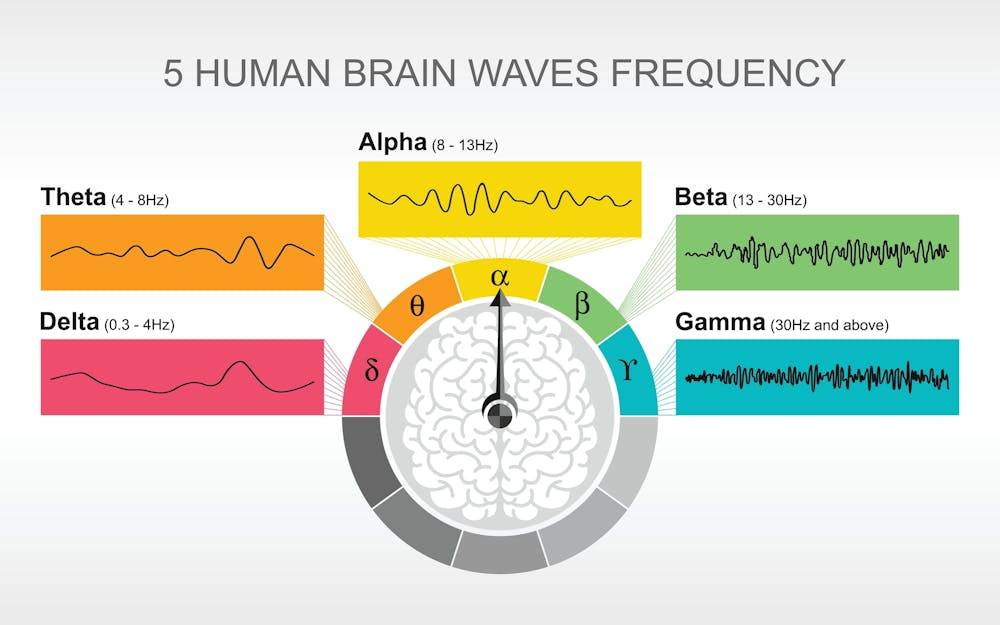
The researchers focused on the frontal regions of the brain, responsible for attention, concentration, and filtering out distractions. They measured different types of brain waves.

Brainwaves are grouped into five different wavelength categories.
Shutterstock

As neuroscientist Susan Hillier explains in more detail, different brain waves reveal distinct mental states:

  • “gamma” is linked with states or tasks that require more focused concentration
  • “beta” is linked with higher anxiety and more active states, with attention often directed externally
  • “alpha” is linked with being very relaxed, and passive attention (such as listening quietly but not engaging)
  • “theta” is linked with deep relaxation and inward focus
  • and “delta” is linked with deep sleep.

The Spanish study found that the same tasks done inside the enclosed pod vs the open-plan workspace produced completely opposite patterns.

It takes effort to filter out distractions

In the work pod, the study found beta waves – associated with active mental processing – dropped significantly over the experiment, as did alpha waves linked to passive attention and overall activity in the frontal brain regions.

This meant people’s brains needed progressively less effort to sustain the same work.

The open-plan office testing showed the reverse.

Gamma waves, linked to complex mental processing, climbed steadily. Theta waves, which track both working memory and mental fatigue, increased. Two key measures also rose significantly: arousal (how alert and activated the brain is) and engagement (how much mental effort is being applied).

In other words, in the open-plan office participants’ brains had to work harder to maintain performance.

Even when we try to ignore distractions, our brain has to expend mental effort to filter them out.

In contrast, the pod eliminated most background noise and visual disruptions, allowing participant’s brains to work more efficiently.

Researchers also found much wider variability in the open office. Some people’s brain activity increased dramatically, while others showed modest changes. This suggests individual differences in how distracting we find open-plan spaces.

With only 26 participants, this was a relatively small study. But its findings echo a significant body of research from the past decade.

What past research has shown

In our 2021 study, my colleagues and I found a significant causal relationship between open-plan office noise and physiological stress. Studying 43 participants in controlled conditions – using heart rate, skin conductivity and AI facial emotion recognition – we found negative mood in open plan offices increased by 25% and physiological stress by 34%.

Another study showed background conversations and noisy environments can degrade cognitive task performance and increase distraction for workers.

And a 2013 analysis of more than 42,000 office workers in the United States, Finland, Canada and Australia found those in open-plan offices were less satisfied with their work environment than those in private offices. This was largely due to increased, uncontrollable noise and lack of privacy.

Just as we now recognise poorly designed chairs cause physical strain, years of research has shown how workspace design can result in cognitive strain.

What to do about it

The ability to focus and concentrate without interruption and distraction is a fundamental requirement for modern knowledge work.

Yet the value of uninterrupted work continues to be undervalued in workplace design.

Creating zones where workers can match their workplace environment to the task is essential.

Responding to having more staff doing hybrid work post-pandemic, LinkedIn redesigned its flagship San Francisco office. LinkedIn halved the number of workstations in open plan areas, instead experimenting with 75 types of work settings, including work areas for quiet focus.

For organisations looking to look after their workers’ brains, there are practical measures to consider. These include setting up different work zones, acoustic treatments and sound-masking technologies, and thoughtfully placed partitions to reduce visual and auditory distractions.

While adding those extra features in may cost more upfront than an open plan office, they can be worth it. Research has shown the significant hidden toll of poor office design on productivity, health and employee retention.

Providing workers with more choice in how much they’re exposed to noise and other interruptions is not a luxury. To get more done, with less strain on our brains, better design at work should be seen as a necessity.

The Conversation

Libby (Elizabeth) Sander has received Industry Connections Grant research funding from the Australian government.

ref. Why your brain has to work harder in an open-plan office than private offices: study – https://theconversation.com/why-your-brain-has-to-work-harder-in-an-open-plan-office-than-private-offices-study-274946

The peer review system is breaking down. Here’s how we can fix it

Source: The Conversation – Global Perspectives – By Hamid R. Jamali, Professor, School of Information and Communication Studies, Charles Sturt University

Joshua Hoehne/Unsplash

Scientific publishing relies on peer review as the mechanism that maintains trust in what we publish. When we read a journal article, we assume experts have rigorously scrutinised it before publication. This crucial system is currently under severe strain.

We conducted a comprehensive study of Australian academic journals and their editors – surveying 139 editors and interviewing 27. The picture is concerning.

Finding qualified peer reviewers has become one of the most significant challenges editors face. When peer review cannot be secured adequately, both the long-term viability of journals and research integrity suffer. The voluntary system underpinning academic trust is breaking down.

The scale of the crisis

More than half of the editors we surveyed (55%) rated finding reviewers as a significant or very significant challenge.

Some described having to send out 30 or more invitations to secure just two reviewers. One called the process “ridiculous”. Another expressed frustration with authors who had recently published in their journal yet “repeatedly refuse to review” for it.

There are also reviewers who say yes and then never do the review, which delays the process further.

The consequences are significant. Some journals now reject manuscripts outright when they cannot find suitable reviewers, despite the work being in scope and potentially valuable.

Publishing articles takes longer and quality research can go unpublished because it cannot be properly peer reviewed. This is a systemic crisis.

Why academics decline review invitations

Peer review remains entirely voluntary. Academics review manuscripts without payment, formal recognition, or acknowledgement in their workload.

Researchers face pressure to increase the quantity, quality and impact of their research. At the same time, universities are actively discouraging the activities that sustain scholarly publishing, with many editors reporting that their universities have removed editorial and peer review roles from workload models entirely.

As a consequence of workload intensification, scholars protect their time more carefully. Post-COVID shifts in work-life balance have also made academics more selective about how they allocate effort. At the same time, submission volumes continue to grow: more papers to review, fewer willing reviewers, besides the fact that not every author is a qualified reviewer.

There is also a lack of reciprocity. Authors who have just published often decline to review. Some editors suggested publishing in a journal should come with an obligation to review for it.

Current strategies fall short

Editors, of course, have developed workarounds. These include using databases to identify reviewers, running reviewer training workshops to mentor emerging scholars, mining reference lists, and relying more heavily on editorial boards.

They also report rejecting more papers at the initial screening stage, before sending them out for peer review, to reduce the number of manuscripts that need reviewing. But this increases the time required of editors.

An emerging concern raised by some editors is the appearance of reviews generated by artificial intelligence (AI). These reviews can be vague, confusing, and fail to improve manuscripts. This worsens the crisis. Peer review is supposed to be conducted by peers after all.

Systemic change is essential

Short-term strategies won’t solve this crisis.

Some proposed solutions include paying reviewers or introducing mandatory review requirements for authors to review an equal number of articles to those they publish. But these are not easy to implement.

Peer review is so integral to the scholarly system that research would grind to a halt without it.

Yet it remains invisible in how universities and research bodies measure success in the current metric-driven culture.

The core of the problem, as one editor put it, is that “the extrinsic or intrinsic benefits are just not as strong as they used to be”. Therefore, it needs to be better recognised and incentivised by universities and other stakeholders by actions such as including it in workload models, highlighting it in promotion criteria and so on.

Why this matters

This crisis affects all of us who rely on published research. It threatens the viability of journals, particularly local or independent journals not owned by big publishers. But fundamentally, it jeopardises the integrity of the scientific record itself.

We have built a publishing system dependent entirely on voluntary labour, especially for local and independent journals. Without significant change – without formal recognition, support, and genuine incentives – the shortage of reviewers will deepen. Publication schedules will suffer. The diversity of publishing outlets will diminish. Trust in peer review will erode.

The solution requires action from multiple stakeholders including universities, funders and research assessment bodies.

Scholarly communities must understand that sustaining peer review is a shared responsibility. The voluntary system underpinning academic trust has been taken for granted too long. It’s time to start properly valuing it.

The Conversation

Edward Luca is an Associate Editor of the Journal of the Australian Library and Information Association (JALIA) and a Director of the Aurora Foundation Ltd.

Hamid R. Jamali and Simon Wakeling do not work for, consult, own shares in or receive funding from any company or organisation that would benefit from this article, and have disclosed no relevant affiliations beyond their academic appointment.

ref. The peer review system is breaking down. Here’s how we can fix it – https://theconversation.com/the-peer-review-system-is-breaking-down-heres-how-we-can-fix-it-275317