What your neck size reveals about your health

Source: The Conversation – UK – By Ahmed Elbediwy, Senior Lecturer in Clinical Biochemistry / Cancer Biology, Kingston University

Nick NA/Shutterstock.com

Doctors have long relied on measurements like body mass index (BMI) and waist-to-hip ratios to assess health risks. However, researchers are increasingly focusing their attention on an unexpected indicator: neck circumference.

A thick neck might project strength, like that of heavyweight boxers or rugby players, but studies suggest it could signal a concerning health issue.

BMI, which divides weight by height to estimate body fat, doesn’t always tell the complete story. A competitive bodybuilder might have a high BMI, but clearly isn’t obese. This is where neck circumference offers additional insight.

Research shows that people with larger necks relative to their body size face increased risks of several serious health conditions. The connection lies in what neck size reveals about fat distribution, particularly in the upper body.

This fat around your upper body releases fatty acids into your blood, which can interfere with how your body manages cholesterol, blood sugar and heart rhythm. Essentially, neck circumference serves as a proxy for visceral fat – the harmful fat that wraps around your organs.

The evidence linking neck size to health problems is striking. People with thicker necks show increased rates of several cardiovascular diseases, including hypertension, atrial fibrillation and heart failure.

Atrial fibrillation is particularly concerning. This condition causes irregular heartbeat and blood flow, potentially leading to blood clots and stroke. The electrical imbalance in the heart can eventually progress to heart failure.

Neck circumference also correlates with coronary heart disease, where the main arteries to the heart narrow and restrict oxygen-rich blood flow.

But cardiovascular problems aren’t the only concern. Larger neck circumference increases the risk of developing type 2 diabetes and gestational diabetes. Diabetes can lead to serious long-term complications, including vision loss and limb amputations.

There’s also a connection to sleep disorders. Thick necks have been linked to obstructive sleep apnoea, where breathing repeatedly stops and starts during sleep. This condition causes extreme daytime fatigue and strains the cardiovascular system. People with sleep apnoea face higher risks of car accidents due to their exhaustion.

So what constitutes a risky neck size? For men, 17 inches (43cm) or greater increases health risks. For women, the threshold is 14 inches (35.5cm) or greater.

Perhaps most surprisingly, these risks persist even in people with normal BMI. You could have a healthy weight according to traditional measures, but still face elevated health risks due to neck circumference.

And for each additional centimetre of neck circumference beyond these thresholds, death rates and hospitalisation rates increase.

What this means for you

If your neck measures above these thresholds, it’s not cause for panic – but it is worth taking seriously. Neck size represents just one piece of your overall health picture, but it’s an important one that’s often overlooked.

The good news is that neck circumference can change with lifestyle modifications. Cardiovascular exercise and weight training can help reduce upper-body fat. Quality sleep supports metabolic regulation and recovery. A balanced diet rich in pulses, fruits, and vegetables provides essential nutrients without excess calories.

Measuring your neck takes seconds with a tape measure. Simply wrap it around the narrowest part of your neck, ensuring the tape is snug but not tight.

This simple measurement could provide valuable insight into health risks that traditional metrics might miss. While neck circumference shouldn’t replace other health assessments, it offers another tool for understanding your cardiovascular and metabolic health.

In an era where we’re constantly seeking better ways to predict and prevent disease, sometimes the answers are literally right in front of us. Your neck might be revealing more about your health than you realise – and it’s worth paying attention.

The Conversation

The authors do not work for, consult, own shares in or receive funding from any company or organisation that would benefit from this article, and have disclosed no relevant affiliations beyond their academic appointment.

ref. What your neck size reveals about your health – https://theconversation.com/what-your-neck-size-reveals-about-your-health-263483

What will happen to the legal status of ‘sinking’ nations when their land is gone?

Source: The Conversation – UK – By Avidan Kent, Professor of Law, University of East Anglia

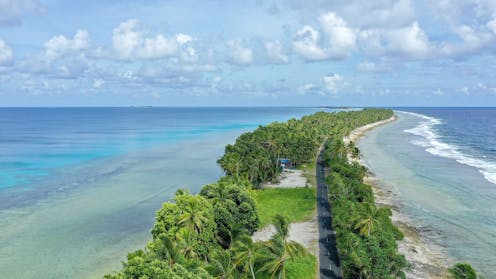
Some small island states, such as Tuvalu, are at risk of losing their land to rising seas. Romaine W / Shutterstock

Small island nations such as Tuvalu, Kiribati, the Maldives and Marshall Islands are particularly vulnerable to climate change. Rising seas, stronger storms, freshwater shortages and damaged infrastructure all threaten their ability to support life.

Some islands even face the grim possibility of being abandoned or sinking beneath the ocean. This raises an unprecedented legal question: can these small island nations still be considered states if their land disappears?

The future status of these nations as “states” matters immensely. Should the worst happen, their populations will lose their homes and sources of income. They will also lose their way of life, identity, culture, heritage and communities.

At the same time, the loss of statehood could strip these nations of control over valuable natural resources and even cost them their place in international organisations such as the UN. Understandably, they are working hard to make sure this outcome is avoided.

Losing land means losing a way of life.

Tuvalu, for example, has signed a treaty with Australia to ensure it will be recognised as a state, regardless of the impact climate change has on the islands.

Beyond affirming that “the statehood and sovereignty of Tuvalu will continue … notwithstanding the impact of climate change-related sea-level rise”, Australia has committed to accepting Tuvaluan citizens who seek to emigrate and start their lives afresh on safer ground.

Facing the threat of physical disappearance, Tuvalu has also begun digitising itself. This has involved moving its government services online, as well as recreating its land and archiving its culture virtually.

The aim is for Tuvalu to continue existing as a state even when climate change has forced its population into exile and rising seas have done away with its land. It says it will be the world’s first digital nation.

Elsewhere, in the Maldives, engineering solutions are being tested. These include raising island heights artificially to withstand the disappearance of territory. Other initiatives, such as the Rising Nations Initiative, are seeking to safeguard the sovereignty of Pacific island nations in the face of climate threats.

But how will the future statehood of small island nations be determined legally?

International law’s position

Traditionally, international law requires four elements for a state to exist. These are the existence of population, territory, an effective and independent government and the capacity to engage in international relations.

With climate change threatening to render the land of small island nations unliveable or rising seas covering them entirely, both population and territory will be lost. Effective and independent government will also become inoperative. On the face of it, all the elements required for statehood would cease to exist.

But international law does recognise that once a state is established it continues to exist even if some of the elements of statehood are compromised. For instance, so-called failed states such as Somalia or Yemen are still regarded as states despite lacking an effective government – one of the core elements required under international law.

However, the threats posed to the statehood of small island nations by climate change are unprecedented and severe. They are also very likely to be permanent. This makes it unclear whether international law can extend this flexibility to sinking island nations.

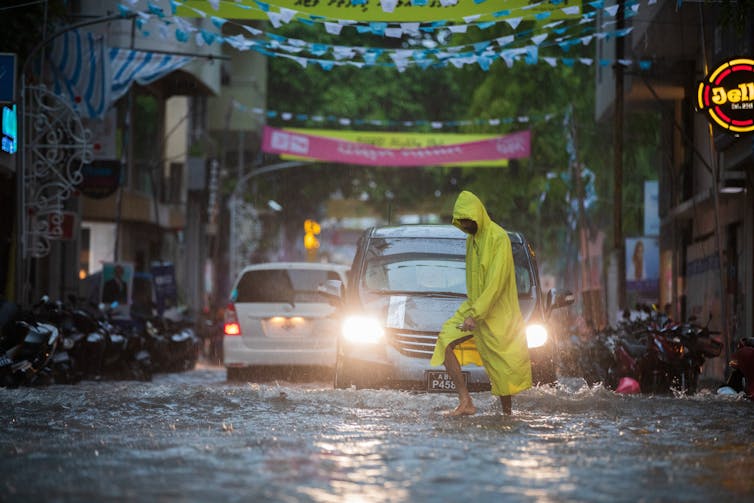
A man in a yellow rain coat walking across a flooded street.
Flooding in Malé, the capital of the Maldives, in April 2024.
azmeeali / Shutterstock

The International Court of Justice (ICJ) recently issued its advisory opinion on the obligations of states in respect of climate change. The ICJ addressed a wide range of issues concerning the legal obligations of states in the context of climate change. This included the future statehood of small island nations.

In this regard, the ICJ acknowledged that climate change could threaten the existence of small islands and low-lying coastal states. But it concluded its discussion with a single, rather cryptic sentence: “once a state is established, the disappearance of one of its constituent elements would not necessarily entail the loss of its statehood.”

What exactly did the court mean by this remark? Unfortunately, the answer is not entirely clear. On the one hand, the decision seems to confirm the traditional flexible approach of international law to statehood.

In their separate opinions, some of the court’s judges interpreted this sentence as extending the flexibility previously applied in other contexts – such as failed states – also to the situation of sinking island nations. In other words, a state could retain its legal existence even if it disappears beneath rising seas.

At the same time, a closer reading of the decision suggests that the court stopped short of explicitly confirming that the flexibility of the term “statehood” could be stretched so far as to mean a state could exist even if completely submerged under the seas.

The court noted only that the disappearance of “one element … would not necessarily” result in the loss of statehood. But in the case of sinking island nations it is likely that all key elements – population, territory, government and ability to enter into international relations – would disappear.

For now, the ICJ has left the matter open. The decision points to flexibility, but it avoids the definitive statement that many vulnerable nations had hoped for. The legal future of sinking islands remains uncertain.

The Conversation

The authors do not work for, consult, own shares in or receive funding from any company or organisation that would benefit from this article, and have disclosed no relevant affiliations beyond their academic appointment.

ref. What will happen to the legal status of ‘sinking’ nations when their land is gone? – https://theconversation.com/what-will-happen-to-the-legal-status-of-sinking-nations-when-their-land-is-gone-263559

J.D. Vance is wrong about history – here’s why this matters for Ukraine

Source: The Conversation – UK – By Chris Smith, Course Director, History, Coventry University

In a recent Meet the Press interview, the vice-president of the US, J.D. Vance, argued in relation to Russia’s illegal invasion of Ukraine: “This is how wars ultimately get settled. If you go back to world war two, if you go back to world war one, if you go back to every major conflict in human history, they all end with some kind of negotiation.”

Vance was responding to a question from the NBC news anchor, Kristen Weller, who asked: “If Russia is allowed to keep any of the territory that it illegally seized, what message does that send to China? Does it give China a green light to invade Taiwan? Does it give Russia a green light to invade other European countries, which is what your European allies are concerned about?”

Vance’s response was clearly his way of saying that the war in Ukraine would have to end in a negotiation, with the suggestion that some sort of territorial concessions on Ukraine’s part would naturally flow from that process.

But he was wrong. In fact, few major wars in recent history have ended in negotiation. Let’s take Vance’s two examples. The second world war in Europe ended with the Soviet capture of Berlin and Germany’s dictator dosing himself with cyanide and putting a bullet in his own brain. The war against Japan ended with Hirohito’s empire on the verge of famine, its infrastructure destroyed by American fire. The Soviets had invaded Manchuria, Sakhalin and the Kuril Islands, and were threatening to invade Hokkaido. To cap it all, the Americans were also threatening to invade Kyushu and then Honshu. But before that came to pass, the US deployed superweapons. Japan surrendered just days after the atomic bombings and the Soviet intervention.

As for the first world war, that ended with an armistice on November 11 1918 following the collapse of the German armed forces. The peace treaty, the Treaty of Versailles, was later signed in 1919. The Germans were not invited to those negotiations and the terms of the treaty were imposed upon them. This led to the partition of Germany, the loss of its empire, its military reduced to a rump, and a reparations bill of 20 billion gold marks (£6.6 billion).

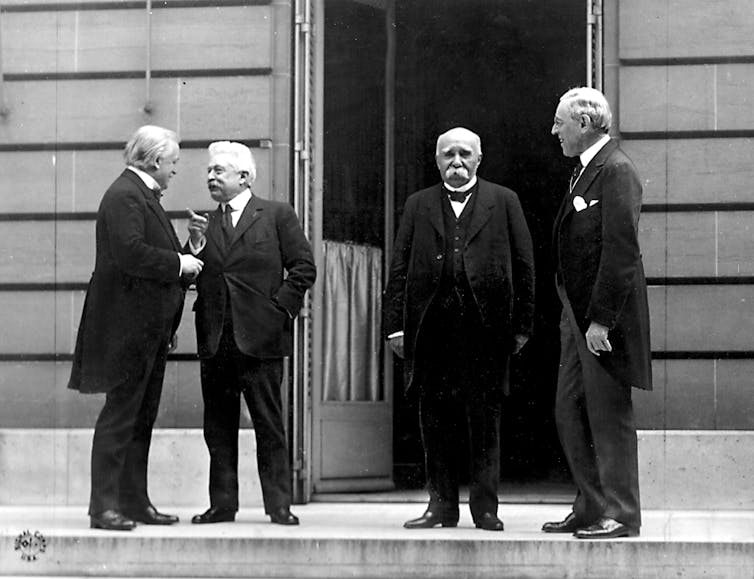
The 'Big Four' at the Versailles conference: Britain's David Lloyd George, Vittorio Orlando of Italy, Georges Clemenceau of France and US president Woodrow Wilson.
The ‘Big Four’ at the Versailles conference: Britain’s David Lloyd George, Vittorio Orlando of Italy, Georges Clemenceau of France and US president Woodrow Wilson.
Edward N. Jackson (US Army Signal Corps)

So, which major wars does Vance mean? Contrary to his pronouncements, clearly not the first or second world wars. If we look at the major wars a century prior, do we see what he is talking about?

The Napoleonic wars came to an end with coalition forces engaged in a full-scale invasion of France and entering Paris on March 30 1814. Napoleon abdicated on April 6 and was exiled to Elba. He escaped in 1815, returned to arms and was defeated at Waterloo. He was exiled again, even further away, to Saint Helena. Meanwhile after the French capitulation, a treaty was signed in Paris in November 1815, imposing a large fine, a foreign occupation and the loss of territory. So presumably Vance wasn’t referring to these conflicts.

Perhaps Vance was thinking of some of the rather smaller 19th-century wars which ended with, at least nominal, negotiated settlements.

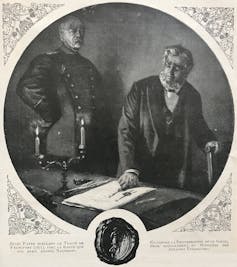
Illustration showing French foreign minister, Jules Favre signing the Treaty of Frankfurt in 1871 as German chancellor Otto von Bismarck looks on.
Watched by German chancellor Otto von Bismarck, the French foreign minister, Jules Favre, puts his seal on the Treaty of Frankfurt.
Cliche Manuel priz chez Falise/Wikimedia Commons

The Crimean war ended with another Treaty of Paris in 1856 and involved Russia agreeing to the neutrality of the Black Sea and the loss of the territories it had captured from the Ottoman empire.

The Franco-Prussian war of 1870-71 ended with the Treaty of Frankfurt in 1871, which saw France lose territory in Alsace and Lorraine. Ultimately, these wars ended with negotiated capitulation.

Negotiation or capitulation?

“Negotiation” is what Vance says regarding Russia and Ukraine. But the administration he serves has already suggested that any negotiation will involve Ukraine giving up land. President Donald Trump came away from the recent summit in Alaska talking about Ukraine giving up its territory, despite the fact that territory is not something that can simply be negotiated away over the heads of the Ukrainian people. This all sounds rather more like Ukrainian “capitulation” rather than a “negotiation”.

A friend from the Ukrainian diaspora said to me recently: Ukraine will be “forced to erase itself to make Russia happy, and that has been happening for hundreds of years”. They, as she noted, have always refused. Contrary to Vladimir Putin or Vance’s plans, the Ukrainians have their own ideas about their national destiny.

Vance is wrong for another reason. Ukraine’s defeat would represent perhaps the greatest US foreign policy disaster since the Vietnam war. In 2025 the US still claims to be the world’s only true superpower; its support and weaponry has helped keep Russia from the gates of Kyiv without firing a shot or placing a single US soldier on the ground.

Russia, by contrast – long a rival for the superpower mantle – has endured multiple recent foreign policy setbacks. Not least of these is the failure to dismantle Ukraine, which was supposed to take a matter of days. But also, the collapse of its client regime in Syria and Israel’s humiliation of Iran, another longstanding ally.

Things do not need to be as they are. Trump and Vance could assist Ukraine securing the just peace its president, Volodymyr Zelensky, is calling for. They could allay European fears about Russia by making it clear to Putin that aggression will not be rewarded. But from everything they’ve said, this is not the path they want to take. Instead, while Vance misinterprets history, Ukraine continues to bleed.

The Conversation

Chris Smith does not work for, consult, own shares in or receive funding from any company or organisation that would benefit from this article, and has disclosed no relevant affiliations beyond their academic appointment.

ref. J.D. Vance is wrong about history – here’s why this matters for Ukraine – https://theconversation.com/j-d-vance-is-wrong-about-history-heres-why-this-matters-for-ukraine-263951

White mold fungi split their genome across several nuclei, with implications for future gene editing

Source: The Conversation – Canada – By Xin Li, Professor, Botany, University of British Columbia

A view of the mold _Sclerotinia sclerotiorum_ seen under a microscope. (Mushroom Observer/Wikimedia Commons), CC BY-SA

Genomes contain the complete library of information required to build and maintain a living organism — the figurative blueprints of life. In eukaryotes, genomes are stored in the nuclei, where they are organized into chromosomes. A eukaryote is an organism whose cells have a nucleus surrounded by a membrane: plants, animals, fungi and many microbes are eukaryotes.

The human genome, for example, is organized in 23 chromosomes, each containing a portion of the complete genetic code. Until recently, it has always been assumed that each nucleus contains at least a complete set of chromosomes, and thus the “one nucleus, one full genome” rule.

However, our research has revealed that in two species of fungi, their genomes can be split across multiple nuclei, with each nucleus receiving only part of the total chromosomes.

A surprising discovery

white mold growing on a plant
Sclerotinia sclerotiorum causes stem rot in plants.
(Rasbak/Wikimedia Commons), CC BY-SA

Our laboratory at the University of British Columbia studies the fungus Sclerotinia sclerotiorum, which is a soil-borne pathogen causing stem rot or white mold in various crop plants, including canola, soybean and sunflower.

Despite its impact on cash crops, S. sclerotiorum‘s genetics and cell biology are not well understood.

While trying to better understand the biology of this fungus, our laboratory made a startling discovery about the organization of S. sclerotiorum’s 16 chromosomes during cell division and reproduction.

Most eukaryotic cells are diploid, meaning the nucleus contains two copies of each different chromosome. In many fungi, such as baker’s yeast, reproduction begins with a parent diploid cell dividing to form haploid spore cells with one nucleus housing one copy of each chromosome.

However, S. sclerotiorum spores, known as ascospores, each contain two separate nuclei. Previously, it was assumed that each nucleus was haploid, containing the full suite of 16 chromosomes. This would mean that each ascospore contains a total of 32 chromosomes, similar to a diploid cell.

Using fluorescent microscopy, we were able to directly count the number of chromosomes present in a single ascospore. Remarkably, we consistently observed only 16 chromosomes per ascospore, in conflict with the 32 predicted by the current “one nucleus, one full genome” theory.

Additionally, we used fluorescent probes to label specific chromosomes, and found that the two nuclei in an ascospore contain distinct chromosomes. Ascospores contain one set of 16 chromosomes divided across two nuclei, rather than each nucleus containing a complete set of chromosomes.

An irregular manner

The next question we asked was whether the 16 chromosomes are randomly assorted between the two nuclei, or whether this genomic division follows a regular pattern.

To answer this, we separated individual nuclei and determined which chromosomes were present through polymerase chain reaction (PCR) analysis. We found that chromosome composition varies among nuclei, suggesting the division of chromosomes between nuclei is in an irregular manner.

Intrigued, we sought to investigate whether similar phenomenon occurs in other fungi. Botrytis cinerea is another species of plant pathogenic fungi in the same family as S. sclerotiorum.

B. cinerea produces conidial spores typically with four to six nuclei, rather than the two regularly observed in ascospores of S. sclerotiorum. Using similar methods, we found that the 18 chromosomes in the B. cinerea genome are similarly split across nuclei, with each nucleus generally carrying three to eight chromosomes.

This observation showed that haploid genome “splitting” across nuclei occurs in multiple plant pathogenic fungi. However, whether this phenomenon is wider spread across fungal families, or even other eukaryotes, requires further study.

An unknown mechanism

The observation that the S. sclerotiorum and B. cinerea haploid genomes are divided across nuclei raises questions about how this separation plays a role in the rest of the fungal life cycle.

In order to produce the next generation, these fungi need to reform a diploid cell with the full suite of chromosomes, from which new ascospores can be produced. Presumably, this requires the fusion of nuclei with complementary chromosomes to reunite the genome. So how do these fungi ensure that the correct nuclei fuse?

Perhaps the simplest explanation would be one of viability selection: nuclei may fuse randomly, but only those with a complete genome would produce viable ascospores. This seems inefficient, and a more attractive scenario would involve some structure or mechanism to keep complementary nuclei together after the initial division, allowing them to easily reassemble later in the fungal life cycle.

We hope our future work will provide answers to these fascinating questions, and help broaden our understanding of the fundamental dynamics of nuclei and their genomes. This improved understanding will enable dramatic revolutions in gene editing, allowing researchers to manipulate chromosomes and nuclei at will.

The Conversation

Xin Li receives funding from the Natural Sciences and Engineering Research Council of Canada.

Edan Jackson receives funding from Natural Sciences and Engineering Research Council of Canada.

Josh Li receives funding from Natural Sciences and Engineering Research Council of Canada.

ref. White mold fungi split their genome across several nuclei, with implications for future gene editing – https://theconversation.com/white-mold-fungi-split-their-genome-across-several-nuclei-with-implications-for-future-gene-editing-260699

Talking about sex isn’t always easy for teachers in South Africa. Here’s what they told us

Source: The Conversation – Africa – By Vhothusa Edward Matahela, Associate Professor: Health Sciences Education, University of South Africa

Young people in rural Limpopo, the South African province bordering Botswana, Zimbabwe and Mozambique, face high risks of HIV, unplanned pregnancy, and other societal challenges.

One reason is that they aren’t always getting sexuality education that connects with their lived realities. Schools provide lessons on reproduction, HIV prevention and relationships. But too often, what’s taught in class doesn’t match what learners are experiencing outside, leading
to unsafe sexual practices.

We are part of the University of South Africa community engagement project focusing on HIV prevention among learners in Limpopo province. To understand the gaps, we ran a three-day workshop with 19 teachers (16 of them women) from rural schools near Musina. This border town is on a busy trade route, where high mobility, transactional sex and the risk of trafficking shape the everyday lives of learners.

Our goal was to hear directly from teachers about how they navigate sexuality education and to explore ways to make it more effective.

Talking about sex at school

The 19 teachers came from eight public primary and secondary schools. They all taught the Life Orientation curriculum, a mandatory subject in South African schools, which covers life skills, sexuality education and HIV prevention for learners from grades 4 to 12 (ages 9 to 18). It
covers topics such as health and well-being, including sexuality education. Teachers are expected to deliver these lessons in an age-appropriate, participatory way.

Teachers told us they often struggle with this part of the curriculum. Talking about sex in the classroom is not straightforward. Some learners giggle, others stay silent, and some challenge the teacher’s authority. Teachers admitted that their own discomfort, shaped by cultural and religious beliefs, sometimes made it even harder to engage openly.

What the teachers said

During the workshop, teachers spoke candidly about the barriers they face.

  • Cultural and religious taboos: Many communities expect adults, especially women, not to discuss sex openly. Teachers worried about being judged by parents or community leaders if they spoke too frankly with learners. They are held back by cultural taboos, personal discomfort, and local realities – like families depending on relationships between girls and older men.

Traditional beliefs and stigma surrounding HIV in Limpopo make it hard for teachers, parents, and learners to talk openly
about prevention. Educators teaching Life Orientation are sometimes
referred to as thitshere wa u funza zwavhudzimu – “the teacher who teaches forbidden topics”. This silence allows myths and misunderstandings to persist.


Read more:
Let’s talk about sex education: race and shame in South Africa


  • Limited training and resource constraints: Teachers said they had not received
    sufficient preparation for teaching sexuality education. Some relied only on textbooks, which they felt did not address the realities learners face, such as early sexual debut, peer pressure, or access to social media.

Teachers often feel alone. Some said they had not received enough training or materials to teach about HIV, sexual health, or sensitive issues. Sexuality is still seen as a private matter in this cultural context.

When we were brought up, it was taboo to talk about sexuality with kids. Some
parents think we’re teaching forbidden things.

Some teachers have over 60 learners in a class, making it hard to give everyone attention. And, with learners speaking
different languages, some important messages get lost.

Videos, posters and teaching aids are rare. Teachers have to rely mostly on talking, which does not always work for difficult topics such as sexuality.

Despite these challenges, teachers also shared how they try to adapt. Some use storytelling, role play, or small group discussions to make learners more comfortable. Others bring in health professionals to talk about sensitive topics. These approaches, despite the challenges, can make lessons more engaging while respecting local norms and working with limited resources.

What teachers can do differently

During our workshops, teachers discussed what they believed would be effective ways to deliver culturally relevant sexuality education in rural schools.

1.) Small group discussions: Teachers felt that learners are more comfortable sharing in small groups.

Learners open up more and learn from each other.

2.) Drama and role play: They suggested that acting out real-life situations, such as handling peer pressure or supporting a friend with HIV, could make lessons more real and memorable.


Read more:
We used performing arts to map out gender violence in Sierra Leone. What we found


3.) Using videos: Short, simple videos made by the experts about HIV and relationships would help explain tough topics.


Read more:
Social media for sex education: South African teens explain how it would help them


4.) Demonstrations: They saw value in showing, not just telling, how to use condoms (male and female), for example, to build practical skills.

5.) Storytelling and case studies: Teachers believed that sharing stories, whether true or made up, would help learners connect lessons to their own lives.

Children remember stories better. They see themselves or their families in them.

6.) Peer teaching and games: They recommended letting learners or other teachers lead parts of the lesson, and using local games and songs to keep things fun and engaging.

These suggestions by the teachers match approaches used in successful sexuality
education programmes in South Africa and beyond.

Overall, the teachers’ ideas reflect proven strategies from other successful programmes and could be highly effective if adapted for rural Limpopo.

What teachers need

The Department of Basic Education reports that Life Orientation teachers receive sexuality education content during initial teacher training. The department has also developed scripted lesson plans to improve teacher confidence and curriculum consistency. In-service training is offered sporadically through
workshops linked to the Life Skills and HIV/AIDS Education Programme, but these sessions are not consistently available across all provinces, creating gaps in teacher preparedness.

Studies highlight that many Life Orientation teachers still feel under-prepared, especially when dealing with learners’ trauma or sexual violence. Many teachers rely on self-study, peer networks, and NGO-supported
programmes to strengthen their skills in sexuality education.


Read more:
Why sexuality education in schools needs a major overhaul


The teachers we spoke to wanted to know more about HIV, sexual health and new treatments. They needed to know how to support children who might not fit traditional gender roles. They asked for training in how to counsel and support learners facing problems. And they called for support from other teachers, principals, and the community.

Workshops like ours can help teachers build confidence, share strategies, and support each other. The teachers told us they valued the space to reflect on their own beliefs and to practise new approaches.

What’s clear is that teachers cannot carry the burden alone. Training programmes must equip them with practical tools, not just theory. Parents, community leaders and health workers need to be engaged too, so that sexuality education is reinforced beyond the classroom.

We’ll also be tracking how these methods affect learners’ knowledge, attitudes
and behaviour over time.

The Conversation

The authors do not work for, consult, own shares in or receive funding from any company or organisation that would benefit from this article, and have disclosed no relevant affiliations beyond their academic appointment.

ref. Talking about sex isn’t always easy for teachers in South Africa. Here’s what they told us – https://theconversation.com/talking-about-sex-isnt-always-easy-for-teachers-in-south-africa-heres-what-they-told-us-260462

World maps get Africa’s size wrong: cartographers explain why fixing it matters

Source: The Conversation – Africa (2) – By Jack Swab, Assistant Professor Department of Geography & Sustainability, University of Tennessee

The African Union has endorsed the #CorrectTheMap Campaign, a call for the United Nations and the wider global community to use a different kind of world map. The campaign currently has over 4,500 signatures.

The map most commonly used is called the Mercator projection. Map projections are how cartographers (map makers) “flatten” the three-dimensional Earth into a two-dimensional map.

The Mercator projection was created over 450 years ago, designed for colonial exploration and maritime trade. But, over the centuries, it has become an “all purpose” projection for many governments, educators and companies.

That flat drawing inflates the size of countries closer to the North or South Pole. It exaggerates the area of North America and Eurasia while under-representing the size of much of South America and Africa. As the largest continent in the global south, Africa is a victim of this cartographic inequity.

The #CorrectTheMap campaign calls for a move to the Equal Earth map projection, developed in 2018 by an international team of cartographers. It addresses the distortions found in the Mercator projection.

Controversies over map projections are not new. Since the 1970s cartographers have discussed how certain projections distort how the Earth looks and how people imagine their place in that world.

At the heart of the debates about maps are tensions about what sort of power maps have in the world.

A change in map projections, for the African Union, is about more than correcting a technical flaw. It’s also a chance to influence how current and future map users view, talk about and value Africa.

The call is a demand for Africans to be represented on their own terms, rather than through cartographic traditions that have long diminished their scale and significance.

As cartographers, we pay attention to the social and communicative power of maps.

Given that maps help shape how we make sense of the world, the simplest decisions that go into crafting a map can have major geopolitical consequences.

Maps are not neutral

There are over 200 major projections of the world map. Each one warps the image of the Earth in different ways, making the choice of projection a consequential and complicated decision rather than a neutral one.

For example the Dymaxion projection, developed by the American engineer Buckminster Fuller, was designed to challenge ideas of the north and the south. Others, like the Lambert conformal conic projection, are used extensively in aviation to aid in flight planning.

Maps are a form of storytelling, as well as an information source. Even the lines, colours, symbols and size of regions depicted on maps communicate social meaning. They subtly but powerfully educate people, from schoolchildren to world leaders, about who and what matters.

US president Donald Trump’s recent interest in the US buying Greenland, citing its large size, was likely influenced by map distortion. The Mercator projection shows Greenland as nearly the same size as Africa, when in reality Africa is about 14 times larger.

Other projections do a better job at more accurately representing the true size of continents. Some projections are better than others for this specific task; for example the Gall-Peters projection has been used in the past as an alternative to the Mercator projection.

Cartography as a tool of control

Cartography has been a powerful tool of control throughout Africa’s history. Topographers and surveyors participated in the European conquest and colonisation of Africa, regularly accompanying military expeditions. Map-makers in Europe framed Africa as a landscape to be exploited by populating maps with trade routes, resources and blank spaces ready for development – all while often ignoring the mapping traditions and geographic knowledge of indigenous Africans.

The Berlin Conference of 1885, where European powers assembled with no African representation, was one of the pinnacles of this cartographic and colonial grab and partitioning of the continent.

The Mercator projection is joined by other kinds of western storytelling – found across popular culture, the news and diplomatic circles – that have stereotyped, degraded and undersized Africa’s place in the world.

Viewed in this light, the public reckoning over the Mercator projection can be interpreted as not just about the visual accuracy of a map, also the restoration of dignity and autonomy.

Why changing the world map is difficult

Bringing about changes won’t be easy.

Firstly, global map production is not governed by a single authority. Even if the United Nations were to adopt the Equal Earth projection, world maps could still be drawn in other projections. Cartographers are frequently commissioned to update world maps to reflect changes to names and borders. But the changes don’t always find quick acceptance. For example, cartographers changed English-language world maps after the Czech Republic adopted the name “Czechia” as its English name in 2016. While making the change was not difficult, broader acceptance has been harder to achieve.

A person’s mental image of the world is solidified at a young age. The effects of a shift to the Equal Earth projection may take years to materialise. Previous efforts to move away from Mercator projection, such as by Boston Public Schools in 2017, upset cartographers and parents alike.

Given the African Union’s larger goals, supporting the Equal Earth projection is the first step in pushing the global community to see the world more fairly and reframing how the world values Africa. Mobilising social support for the new projection through workshops with educators, diplomatic advocacy, forums with textbook publishers, journalists, and Africa’s corporate partners could help move the world away from the Mercator projection for everyday use.

Shifting to the Equal Earth projection alone will not undo centuries of distorted representations or guarantee more equitable global relations. But it’s a step towards restoring Africa’s rightful visibility on the world stage.

The Conversation

The authors do not work for, consult, own shares in or receive funding from any company or organisation that would benefit from this article, and have disclosed no relevant affiliations beyond their academic appointment.

ref. World maps get Africa’s size wrong: cartographers explain why fixing it matters – https://theconversation.com/world-maps-get-africas-size-wrong-cartographers-explain-why-fixing-it-matters-263833

Air conditioning isn’t the only answer

Source: The Conversation – UK – By Will de Freitas, Environment + Energy Editor, The Conversation

Keeping cool in Manchester, England. Iordanis / shutterstock

I recently returned from visiting family in America and was struck by how hot I felt back home in London, despite the temperatures being lower. Partly, this was down to humidity: London is sticky in summer, while Utah, where my uncle lives, is very dry.

But it’s also down to the buildings. My brick house absorbs and retains heat while every building I went to in America was either well ventilated or had air conditioning blasting away.

That contrast got me thinking: as the UK warms, can it keep its homes and workplaces comfortable without relying solely on air-con?

Jesus Lizana, Nicole Miranda and Radhika Khosla at the University of Oxford say that northern Europe is dangerously unprepared for the heat of the near future.

They looked at the coming demand for cooling using the concept of “cooling degree days”, which essentially assesses how often people will need to take extra measures, like switching the air-conditioning on, to keep themselves cool.

They found countries like Nigeria and Chad will see the biggest absolute rise in cooling degree days. “A clear indication that Africa is shouldering the burden of a problem it did not create”, they note.

But they also found that countries in northern latitudes will face the greatest relative increase in uncomfortably hot days.

“Of the top ten countries with the most significant relative change in cooling degree days as global warming exceeds 1.5°C and reaches 2°C, eight are located in northern Europe.”

It gets worse. “Buildings in the northern hemisphere”, they write, “are primarily designed to withstand cold seasons by maximising solar gains and minimising ventilation – like greenhouses.”

The solution seems obvious: let’s all get air-con.


Read more:
Northern Europe faces biggest relative increase in uncomfortable heat and is dangerously unprepared – new research


Coal-powered air-con?

But Mehri Khosravi says it isn’t that simple. An energy researcher at the University of East London, she warns that:

“Cooling requires huge amounts of energy at the exact moments when demand is already high. In 2022 and 2023, the UK had to briefly restart a coal power plant to keep the lights – and the air conditioners – on.”

Khosravi says the UK and similar countries should instead focus on reducing demand for cooling.

In winter, she says, we rightly focus on better insulation to reduce heating demand, as “it’s a lot harder to warm a house than it is to stop heat escaping in the first place.”

So how do we stop a northern European brick house from heating up in the first place?

Khosravi suggests we look to southern Europe for inspiration, where 35°C summers were common long before climate change. Her suggestions include shading and shutters to block sunlight before it enters a building, natural ventilation to let heat escape in cooler hours, and reflective or light-coloured buildings that reflect sunlight.

White wall, blue shutters, black cat
Mediterranean cooling tactics. Cat optional.
Natalia Dobryanskaya / shutterstock

It’s hard to imagine Scarborough being turned into Santorini any time soon. But while we wait to adapt our buildings for the new normal, Khosravi says we should adapt our behaviour too.

In Spain, the hottest hours are for siestas. Outdoor activities are paused, and people are more active in the mornings and evenings. Culturally, they understand that keeping curtains closed during the day and opening windows at night can prevent homes from overheating.

In the UK, heat is still culturally framed as “good weather”. Sunny weekends trigger beach trips, barbecues and more outdoor activity, even when it’s dangerously hot. This mismatch between perception and risk is a major public health challenge.


Read more:
How Britain can beat the heat without becoming addicted to air conditioning


Smarter cooling

Perhaps there are smarter ways to cool down. Academics in Australia recently published research suggesting a “fan first” approach, even when air-conditioning is installed.

“The approach is simple”, they write: “use electric fans as your first cooling strategy, and only turn on air conditioning when the indoor temperature exceeds 27°C.”

These fans use only a tiny fraction of the electricity used to run air conditioning, but “can make you feel up to 4°C cooler”. In their research, the Australian team increased an office’s air conditioning set-point from 24 to 26.5°C, with supplementary air movement from desk and ceiling fans. This “reduced energy consumption by 32%, without compromising thermal comfort”.


Read more:
Tempted to turn on the aircon? Science says use fans until it’s 27°C


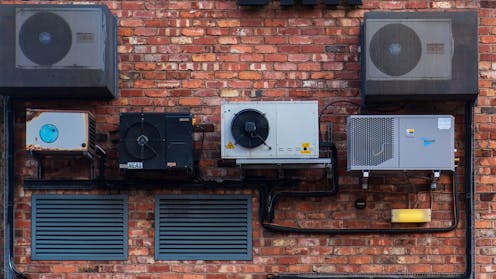
Air conditioning doesn’t have to mean the typical rows of humming white boxes. Heat pumps – already central to Britain’s low-carbon heating plans – can also keep homes cool in summer.

Essentially, they’re able to act like reversible air conditioners: in winter, they draw warmth into a building, and in summer they can run in reverse to push heat out.

Crucially, they do so with far greater efficiency than traditional systems. Theresa Pistochini, an engineer at UC Davis in California, points out that heat pumps can be “anywhere from 200% to 400% efficient”, meaning they move more than twice as much energy (heat) than the energy required to operate them.

Her analysis found that “buying a heat pump today will reduce global-warming impact in almost all geographical locations.”


Read more:
Heat pumps will cool your home during the hottest of summers and reduce your global warming impact


For households, this could mean one appliance that covers both heating and cooling, slashes energy bills, and avoids the climate-damaging lock-in of conventional air conditioning. For policymakers, heat pumps may offer a way to meet surging cooling demand without blowing the carbon budget.

But heat pumps aren’t a perfect fix. Installation is costly, many older homes will still need upgrades, and there aren’t enough trained engineers. They’ll need further support if they’re to become a mainstream alternative to air-con.

Nonetheless, together with simple measures like fans and shutters, heat pumps point to a smarter approach to cooling. And it could be made even more sustainable if paired with clean energy from rooftop solar.

Homes equipped with solar panels can generate electricity during the hottest parts of the day – exactly when air conditioners or heat pumps are working hardest.

Tom Rogers and colleagues at Nottingham Trent University say solar will play a “pivotal role” in “addressing summer cooling demand and enhancing climate resilience”. They analysed satellite images to estimate that rooftop solar could provide “nearly one third” of the city’s electricity demand.


Read more:
Rising temperatures mean more air conditioning which means more electricity is needed – rooftop solar is a perfect fit


The UK is warming, and staying comfortable in hotter summers is a must. But there’s more than one way to cool down. Simple measures like fans, efficient heat pumps and rooftop solar – combined with smarter building design and passive cooling – could keep homes safe, energy use low and emissions in check.


This roundup of The Conversation’s climate coverage comes from our award-winning weekly climate action newsletter. Every Wednesday, The Conversation’s environment editor writes Imagine, a short email that goes a little deeper into just one climate issue. Join the 45,000+ readers who’ve subscribed.


The Conversation

ref. Air conditioning isn’t the only answer – https://theconversation.com/air-conditioning-isnt-the-only-answer-264063

Sun dogs, rainbows and glories are celestial wonders – and they may appear in alien skies too

Source: The Conversation – UK – By Peter Berthelemy, PhD Candidate in Atmospheric Physics , University of Bath

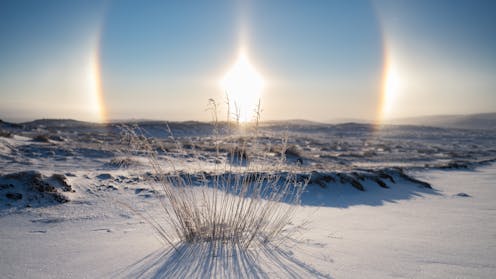
Earth may not be the only planet with sun dogs, as shown here in a wintry landscape. Guozongxia/Shutterstock

Every once in a while, you may look up towards the Sun and see strange bright lights on either side of it. Or perhaps you’ll be sitting in an aircraft, looking out the window at its shadow and see a circle of light, like a halo below (known as glories). Or, if you’re really adventurous, maybe you’ll even be out on a midnight walk with a full moon lighting your way, and see what appears to be a rainbow encircling the moon.

These are all beautiful examples of atmospheric optical phenomena. And a new paper has suggested they may appear in alien skies too.

These celestial wonders can tell us a lot about the state of the atmosphere at home on Earth as well as on other planets. Rainbows, for instance, the most well-known of these phenomena, can only form when light passes through spherical liquid droplets, like our normal rain on Earth. Therefore, there must be spherical liquid droplets in the atmosphere where the rainbows are observed.

Most planet atmospheres have some kind of crystalline aerosols (clouds of tiny particles) in them, from sodium chloride in Io (one of Jupiter’s moons), to carbon dioxide crystals in Mars. On Earth, these are generally ice crystals, often found in clouds as snowflakes. The orientation of these crystals, and how they change the light, dictates the type of optical phenomena you can see.

Pillars of coloured light
Light pillars over London, Ontario Canada.
Ray Majoran/Wikimedia, CC BY-SA

Sun dogs are another of these phenomena, where bright lights appear on either side of the Sun, sometimes even splitting white light into the colours of the rainbow. They form because of the light being bent by horizontally oriented hexagonal ice crystals high up in the atmosphere. If you want the best chance of seeing these, you should try to be at the same latitudes as Europe or Argentina during wintertime. Look for high altitude wispy clouds that are in front of the Sun, and you might get lucky.

Horizontal ice crystals can also create light pillars in extremely cold conditions, which look like coloured beams of light trailing to clouds over head. Vertical crystals form parhelic circles – a circle of light at the same height as the Sun. And crystals aligned with the electric fields above thunderstorms create crown flashes.

The new paper proposes that, from what we know of our own atmosphere, we can presume that similar optical phenomena happen on planets outside of our solar system (called exoplanets). It’s just a matter of spotting them and finding out why they occur.

Previous studies have shown that on many exoplanets the crystalline aerosols in their atmospheres are moved around and oriented in a multitude of different ways, much like on Earth.

Magnetic fields swirl around the planet, as they do on Earth, pushing and pulling along field lines. On Earth, this can be seen as the northern lights phenomena. Radiation pressure from a planet’s parent star pushes the crystals using the power of light, much like how the wind pushes boats. And the wind, often much faster than anywhere on Earth, speeds around the exoplanet, rushing from the hot, star-facing side of the exoplanet to the colder space-facing side as the planet spins.

A special type of exoplanet, hot Jupiters (so named because they’re huge, gassy and very hot) generally have incredibly fast winds (up to 18,000km/h) and high densities of crystalline aerosols, much like an incredibly fast-moving sandstorm.

This means that the main way that the crystals are oriented is through the superfast winds spinning around the planet. Imagine a fleet of boats all randomly turned around in a patch of ocean, then a massive gust of wind comes, turning them all so that they’re facing the same direction.

The researchers on the new paper previously used the James Webb Space Telescope (JWST) to find evidence for tiny quartz crystals in the high altitude clouds of a hot Jupiter 1,300 light years away from Earth (WASP-17 b). These crystals have an elongated shape, like boats, so are more likely to be oriented with the wind. This led them to think about what optical properties could be seen with the wind-aligned crystals.

The optical phenomena that come from the crystals being oriented the same way cannot be seen by normal cameras. But scientists can use instruments such as those on the JWST to observe these effects.

We have already gained valuable information about faraway atmospheres from looking at their optical phenomena using the JWST. For example on Venus, rainbows and glories have been used by scientists to decipher the mysteries of Venus’ extreme heats and yellow colour.

A similar technique of observing glories has been used to detect the presence of long-lasting clouds on the exoplanet WASP-76b. The new knowledge of these clouds gives us insight into the exoplanet’s atmosphere. Now we know that there can be conditions for a stable temperature, which surprised scientists as half of the planet is hot enough to melt iron.

An artist’s impression of glory on exoplanet WASP-76b.
ESA, CC BY-SA

We can also guess what optical effects might occur on planets where we know what the atmosphere is made of. For example, in the high atmospheres of Jupiter and Saturn, where a special type of ammonia crystals are concentrated, we would expect to observe four separate sun dogs. Alas, on Earth, we can only ever see two at a time due to the shape of our atmospheric ice crystals.

Who knows what other wondrous phenomena we may see on other worlds. Who’s to say whether there couldn’t be a planet surrounded by continual rainbows? There is much more to learn about so many exoplanets. Optical phenomena such as sun dogs can tell us huge amounts about their atmospheres, which could help us in the search for habitable planets in the future.

The Conversation

Peter Berthelemy does not work for, consult, own shares in or receive funding from any company or organisation that would benefit from this article, and has disclosed no relevant affiliations beyond their academic appointment.

ref. Sun dogs, rainbows and glories are celestial wonders – and they may appear in alien skies too – https://theconversation.com/sun-dogs-rainbows-and-glories-are-celestial-wonders-and-they-may-appear-in-alien-skies-too-263360

Champion tennis player Monica Seles has myasthenia gravis – what is it and how does it affect sufferers?

Source: The Conversation – UK – By Adam Taylor, Professor of Anatomy, Lancaster University

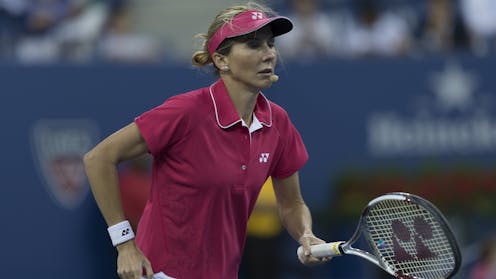
The tennis legend revealed recently that three years ago she was diagnosed with the rare autoimmune condition. lev radin/ Shutterstock

Former tennis star Monica Seles has revealed she has been diagnosed with myasthenia gravis, a rare autoimmune condition that affects how the muscles work. The multiple Grand Slam champion says she was actually diagnosed three years ago after experiencing trouble with her vision and weakness in her arms and legs.

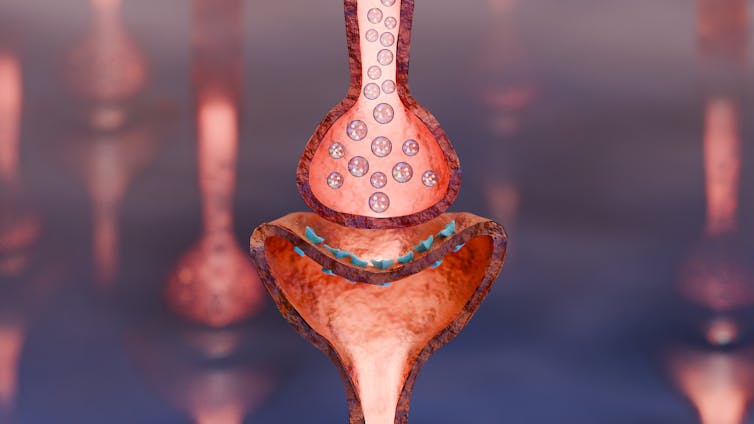
It is estimated that myasthenia gravis affects between three and 12 in every 100,000 people and occurs when the body attacks the neuromuscular junction – a specialised connection between the muscles and the body’s neurons (nerve cells). This reduces the ability to transmit neurotransmitters (chemical messengers) across the junction, affecting the way the muscles contract and function.

The most common signs of the condition are weakness of the muscles that move the eyes, drooping of one or both eyelids and blurred or double vision. Less common ocular symptoms include dry eyes, pain and tearing.

Cardiac changes are also commonly seen and arrhythmia (abnormal heart beat) is also common. The condition also weakens the facial muscles, making it more difficult to physically express emotions.

Other voluntary movements can be affected, too – particularly when moving the arms and legs. This weakness can make regular daily tasks more difficult. This symptom often worsens the more activity you do, while improving with rest.

Myasthenia gravis can affect people of any age, though in women it tends to emerge between the ages of 20 and 40. In men it tends to occur over the age of 60. It’s not considered an inherited condition, so it can occur even in people with no family history of the condition.

The condition is extremely rare in infants, though there’s a form of the myasthenia gravis that can be passed from the mother to her foetus. This causes the unborn child to acquire antibodies across the placenta, which can temporarily lead to symptoms for a few months after birth. It affects up to 30% of children whose mothers have myasthenia gravis.

Symptoms occur between three and 72 hours after birth and can include poor sucking, respiratory difficulty, facial muscle weakness or paralysis and weak muscle tone.

In the past 20 years, there has been a rise in the incidence of myasthenia gravis – particularly in over 65s. It’s unclear what factors are driving this increase. It could be due to improved diagnostics, longer life expectancy and the natural deterioration of the immune system that occurs with ageing.

A drawing depicting the neuromuscular junction.
The condition affects the neuromuscular junction, changing how the muscles function.
ALIOUI Mohammed Elamine7/ Shutterstock

While most people with myasthenia gravis have a near normal lifespan, some research suggests the condition may lead to premature death – potentially due to the effect that the condition has on the muscles needed for breathing and swallowing.

It is estimated that 20% of people with myasthenia gravis will experience a respiratory crisis. This typically happens within the first two years of diagnosis.

Managing muscle symptoms

It isn’t entirely clear what causes myasthenia gravis, but the thymus gland, located in the chest, is believed to be involved in the condition. This gland is largest in childhood, as it plays a role in forming new immune cells, but shrinks with age.

The thymus gland is believed to produce the antibodies which attack the neuromuscular junction – leading to myasthenia gravis. Adding strength to this theory are findings that patient with myasthenia gravis have better health outcomes and lower risk of premature death after having their thymus removed.

There’s currently no cure for the myasthenia gravis. Available treatments focus on reducing muscle weakness which can help to improve quality of life – particularly when symptoms worsen.

Pyridostigmine is often the first-line treatment. This medication improves communication between the nerves and the muscles by preventing the breakdown of the neurotransmitter acetylcholine that is found in the neuromuscular junction.

Corticosteroids, such as prednisolone, are also often used when pyridostigmine doesn’t work or when symptoms worsen. These steroids reduce inflammation and lower the immune system’s ability to damage the body’s tissues. Only low doses of these types of drugs are used as long-term use can have side-effects such as bone thinning (osteoporosis), increased blood sugar levels and fatigue.

Immunosuppressants can also be beneficial as they decrease the body’s attacks on its tissues and reduce symptoms.

During symptom flare-ups, treatments such as monoclonal antibodies or complement inhibitors can help, by reducing the body’s natural processes for fighting infections. In autoimmune diseases this process is overactive, leading to inflammation and tissue damage.

This is one reason why these treatments don’t come without risks. For instance, complement inhibitors can increase the risk of certain bacterial infections such as Neisseria meningitidis, which can result in meningitis.

Therapeutic plasma exchange has also been shown to reduce the number of harmful antibodies circulating in the blood. This treatment works by removing the plasma from a sample of a person’s blood using a machine, and replacing it with donated plasma or sterile fluid. This has a significant and positive impact on the severity of symptoms.

Seles isn’t the first famous person to talk about her diagnosis in the hope of educating people about the disease. Actors Sir Laurence Olivier and Suzanne Rogers, US Olympian James Carter and Christopher Milne – son of Winnie the Pooh author AA Milne – were all diagnosed with the condition. Walt Disney apparently also based Sleepy, one of the seven dwarves, on his friend who suffered from the condition.

With increasing awareness and better diagnostics, treatment options for myasthenia gravis are improving, making it easier for people who suffer with this incurable condition to lead full and active lives.

The Conversation

Adam Taylor does not work for, consult, own shares in or receive funding from any company or organisation that would benefit from this article, and has disclosed no relevant affiliations beyond their academic appointment.

ref. Champion tennis player Monica Seles has myasthenia gravis – what is it and how does it affect sufferers? – https://theconversation.com/champion-tennis-player-monica-seles-has-myasthenia-gravis-what-is-it-and-how-does-it-affect-sufferers-263242

Cigarette filters do nothing for smokers’ health and just create plastic pollution – they should be banned

Source: The Conversation – UK – By Jonathan Livingstone-Banks, Lecturer & Senior Researcher in Evidence-Based Healthcare, University of Oxford

Kristine Rad/Shutterstock.com

Cigarette filters were widely introduced in the 1950s, ostensibly to make smoking less harmful. With growing public concern about lung cancer and other smoking-related diseases, the tobacco industry responded not by making cigarettes safer, but by making them seem safer. Filters were the perfect innovation – not for health, but for public relations.

Over 70 years later, we know that filters don’t reduce harm. In fact, they may exacerbate some risks. By softening smoke and making it easier to inhale deeply, filters may actually raise the risk of lung cancer. In the early 1950s, one popular filter type even contained asbestos. Despite this, most smokers today still believe filters make cigarettes safer.

Beyond the health deception, cigarette filters create an environmental disaster. They’re made of a plastic called cellulose acetate. They don’t biodegrade but break down into microplastics, polluting our rivers and oceans.

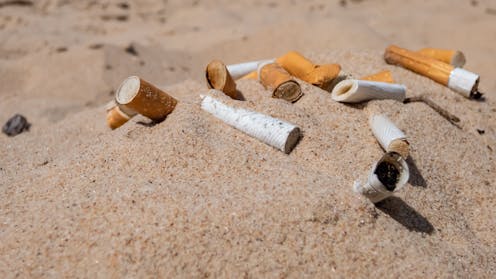
And there are a lot of them. Cigarette butts are the single most littered item on the planet. An estimated 4.5 trillion are discarded each year, and roughly 800,000 metric tonnes of this plastic waste enters the environment annually. While legislation has restricted other single-use plastics like bottles, bags and straws, cigarette filters have largely escaped such regulatory attention.

Under pressure, some tobacco companies now market “biodegradable” filters made from new materials. But these are a false solution. Even so-called biodegradable filters offer no health benefit and continue to pollute ecosystems. They serve the industry by creating an illusion of environmental responsibility, all while maintaining the false perception that filters themselves are benign or necessary.

So why not ban cigarette filters outright?

Cigarette filters are among the most harmful single-use plastics still in global circulation. And unlike many other pollutants, they serve no essential purpose. The WHO Framework Convention on Tobacco Control already advises against measures that sustain the perception of reduced harm, and cigarette filters fall squarely into that category.

Banning cigarette filters would remove the illusion of safety from filtered cigarettes. It could reduce smoking prevalence, as unfiltered cigarettes are generally harsher and less palatable. And it would eliminate one of the most widespread sources of plastic pollution, preventing hundreds of thousands of tonnes of plastic waste each year.

If we can ban plastic straws, surely we can ban cigarette filters. In fact, it’s already been done. Santa Cruz in California voted to ban cigarette filters in 2024.

People cleaning litter on a beach. One holds a handful of plastic straws.
We managed to ban plastic straws, so why not cigarette filters?
David Pereiras/Shutterstock

Now is the perfect time to act. Plastics are on the global conscience. This month in Geneva, world leaders negotiated what could become the first legally binding UN treaty addressing plastic pollution from production to disposal. This treaty is a rare opportunity to tackle the root causes of plastic waste globally.

The current draft of the treaty includes cigarette filters, but only partially. Plastic cigarette filters are listed in Annex X, a category concerned with voluntary or mandatory restrictions. This leaves room for continued use, including so-called “eco” filters, and does not mandate a total phase-out.

If all cigarette filters (not just plastic ones) were listed in Annex Y, they would be set for a complete and mandatory ban. August negotiations continued without a final agreement, and negotiations will continue at a later date, meaning there is still time to act.

Health and environmental groups, including the World Health Organization, Action on Smoking and Health, and the Stop Tobacco Pollution Alliance, are calling for strong commitments on cigarette filters. What could be stronger than an outright ban?

Banning filters won’t end smoking overnight or eliminate plastic pollution. But it would be a meaningful and symbolic step toward aligning environmental and public health goals. It would remove a harmful and misleading product from the market, reduce pollution and make cigarettes more honest.

The Conversation

Jonathan Livingstone-Banks has received funding from the US National Institutes of Health (NIH), the National Institute for Health and Care Research (NIHR) and Cancer Research UK (CRUK).

Jamie Hartmann-Boyce receives research (including research consultancy) funding from groups involved in tobacco control, including the Truth Initiative, Cancer Research UK, and the US Food and Drug Administration.

ref. Cigarette filters do nothing for smokers’ health and just create plastic pollution – they should be banned – https://theconversation.com/cigarette-filters-do-nothing-for-smokers-health-and-just-create-plastic-pollution-they-should-be-banned-263374