Older Americans who vote live longer than those who don’t – new research

Source: The Conversation – USA – By Sara Konrath, Associate Professor of Philanthropic Studies, Indiana University

A study found that voting, like good nutrition and exercise, could extend your lifespan. Jeff Swensen/Getty Images

Most people know the basics of healthy living that become more important as you grow older: Eat plenty of vegetables, exercise regularly, sleep well, have a social life, limit your alcohol consumption and don’t smoke.

As an economist and social psychologist who study altruism and health, we wondered whether civic engagement might play a role as well.

In 2022, the American Medical Association, an organization representing doctors, noted that voting could potentially have health benefits. So we conducted a study that directly tested this idea: We examined whether older Americans – people who are 65 and up – who vote live longer than nonvoters.

Older adults vote at a higher rate than younger adults in the United States. In Wisconsin, the focus of our study, the voting rate of older adults is even higher.

We used data from the Wisconsin Longitudinal Study, a study which has followed a randomly selected sample of Wisconsin high school graduates since 1957. We compared the long-term health of older adults who voted in the 2008 presidential election to those who did not vote in that election. Using objectively verified voting records from Catalist, which tracks Americans’ voting behavior, along with official National Death Index records, we found that voters were 45% less likely to die within five years after the 2008 election, 37% less likely to die 10 years after the election, and 29% less likely to die 15 years later.

We also examined voting in the 2004 and 2012 presidential elections and found that the results were stronger for more recent elections – those held in 2008 and 2012 – compared to the earlier one held in 2004.

You may wonder whether this is just because healthier people are more likely to vote in the first place.

It’s easier to vote when you’re healthy than when you’re not, but this does not fully explain our results. Voters still had a lower risk of dying when we controlled for demographic factors such as gender, marital status and income, other forms of civic engagement such as volunteering, and a voter’s health status prior to voting.

We also found that those in poorer health to begin with benefited more from voting 15 years later than those who had been healthier before they voted.

Here’s another finding: How someone voted didn’t matter. When we compared what happened to older adults who cast their ballots in person to those who mailed their ballots, we found that both groups had about an equally lower risk of dying over the 15-year period.

It also did not matter whether a voter’s preferred candidate won. We found that although it can be stressful when the candidate you support loses, the people we studied experienced similar long-term health benefits of voting regardless of their political affiliation.

An older woman casts her ballot.
Voters had a lower risk of dying when the researchers controlled for demographic factors such as gender, marital status and income.
Paul Hennessy/Anadolu via Getty Images

Why it matters

Scientists have long known that people who volunteer for nonprofits experience many health benefits, including a longer lifespan.

Voting is, arguably, also an altruistically motivated act. That’s because individual voters are aware that their one vote will not change the outcome of a national election.

What still isn’t known

If you are wondering why voting predicts lower mortality risk, well, so did we.

One possibility is that as with other civic engagement activities, including volunteering, voting may trigger positive biological responses that support well-being. Other researchers have found ample evidence showing that volunteering can boost the brain’s reward system, reduce stress and even slow some aspects of aging.
Although we didn’t test for these in the Wisconsin Longitudinal Study, they may help explain why people who vote tend to have better health outcomes than those who don’t.

Voting might also improve health through a sense of self-efficacy, civic duty and social connection, since it is both an altruistic and shared activity.

Although the exact explanations aren’t known, studies consistently show a link between volunteering and a lower mortality risk, which suggests that participating in civic life – even something as simple as casting a ballot – may be good for your health, like going for a run or eating vegetables.

The Conversation

The authors do not work for, consult, own shares in or receive funding from any company or organization that would benefit from this article, and have disclosed no relevant affiliations beyond their academic appointment.

ref. Older Americans who vote live longer than those who don’t – new research – https://theconversation.com/older-americans-who-vote-live-longer-than-those-who-dont-new-research-279933

Perseverance doesn’t always pay off for companies – sometimes it’s better to ‘fail fast’

Source: The Conversation – USA (2) – By Scott Friend, Professor and Schaefer Endowed Chair in Marketing, University of Dayton

Slack’s embrace of a ‘fail fast’ approach helped it become the world’s dominant intra-office messaging app. AP Photo/Kiichiro Sato

Across the business world, companies often double down on struggling ideas, retreating only after clear evidence shows they won’t work.

A recent spectacular example was Meta’s metaverse push. After the organization invested US$80 billion over several years, it announced changes in March 2026 that all but abandoned its grand strategy.

But many companies are following the opposite approach of quickly walking away from failure instead of blindly sticking to a vision. Google ended its cloud gaming service Stadia when it failed to take off, choosing instead to reuse the technology elsewhere. Mercedes abandoned its zero-sidepod F1 concept once it clearly hit a competitive dead end. And Slack transitioned from a failed gaming app to a ubiquitous intra-office messaging platform.

What drove all these decisions wasn’t a tolerance for failure. Instead, executives read signals of weakness early, confronted inconvenient evidence and changed course before greater losses accumulated. In other words, they embraced “failing fast.”

As business professors who study sales performance and sales failure, we argue that this concept is one of the most important yet most misunderstood ideas in our field. It’s not about celebrating mistakes or lowering standards, nor does it give leaders permission to abandon rigor or give up easily.

At its core, it’s about creating the conditions for faster learning: building the managerial discipline to recognize when an opportunity is unlikely to pay off, stopping before sunk costs deepen, and redirecting scarce resources to more promising bets. And this is a strategy that can work for any company, at any level, no matter how high or low the stakes.

The Slack model

Slack is everywhere these days. But few recall that it was actually founded in 2011 as a multiplayer online game called Glitch that failed to take off. The company, then known as Tiny Speck, shut it down in 2012, but in the process its leaders identified hidden value in an internal communication tool they had built simply to coordinate their own work.

This practical side project looked like a tool that could do well in the burgeoning market for team-collaboration software. So the company pivoted by deploying its remaining capital and talent to launch Slack in 2013. Since that time, Slack has become one of the fastest-growing enterprise software platforms in history, eventually leading to a
$27.7 billion acquisition by the business platform Salesforce in 2021.

Stories like these are often told as tales of persistence, but they’re actually examples of disciplined quitting. Similar cases include 3M’s accidental invention of Post-it Notes (first used as ad hoc bookmarks for hymnals); Shopify’s pivot from selling snowboards to enabling e-commerce infrastructure; and Instagram’s shift from a cluttered check-in app to a focused photo-sharing platform.

Together, these stories suggest that success depends not only on staying the course but also on recognizing early when the course is no longer worth pursuing and changing to a better one.

Know when (and how) to fold ‘em

Despite this history, much of business culture still promotes a simpler message that grit drives success.

This mindset, however, can also foster a sunk cost fallacy. Myriad examples of this trap linger across business lore to this day: Blockbuster failing to accept an offer to purchase Netflix and instead expanding its physical footprint model; Kodak inventing digital cameras but opting to prioritize its dominant film business; and the persistent joint venture funding of the Concord supersonic airliner despite strong evidence that the project wouldn’t become commercially viable. All three businesses eventually went bankrupt after once dominating their respective industry.

An ungrammatical sign over a Blockbuster store in Chicago reads:
Blockbuster went bankrupt in 2011 after it failed to innovate, while Netflix became dominant.
AP Photo/Kiichiro Sato

Sunk costs, in short, come into direct tension with notions of failing fast. But our research underscores the latter’s benefits, showing that associated payoffs extend beyond high-profile corporate pivots and even apply to everyday decision-making. Studies in business-to-business sales, for example, find that walking away early from low-potential opportunities can improve motivation and performance.

That said, there’s an important condition: This approach only works when executives and customer-facing personnel have a grounded understanding of what the company can do and what customers want – rather than treating early exit as a suboptimal default.

Across these varied cases, our research has pointed to another clear pattern that emerges: Failing fast is typically structured in a way to make decisions under uncertainty, with three distinct stages. Again, the origin story of Slack is a good example.

The first step is to gather information that suggests whether any given project will succeed. These signals can come from direct observation or data. The goal is to build an early, evidence-based picture of whether an effort is gaining traction. In the case of Slack, CEO Stewart Butterfield and his team recognized through direct user experience that Glitch, the game, just wasn’t fun. But they also saw other signals that showed structural limitations preventing a viable path to succeed on mobile devices.

The next step is to interpret the collected data – combining experience, contextual awareness and analytical tools to distinguish between ideas that warrant investment and those that don’t. Structured approaches, like comparing goals to historical benchmarks, can make sure that assessments are consistent and grounded in evidence rather than intuition alone. In Slack’s case with Glitch, Butterfield synthesized the early signals and concluded that, despite significant sunk costs, the game didn’t justify further resources.

The final and most difficult step is execution. When signals and analysis point to early exit as the most effective course, acting on that conclusion is hard. Withdrawing, even when continuing no longer makes strategic sense, feels counterintuitive in an environment that rewards persistence. That’s why executives need to make the case that there’s a smarter way to allocate time, capital and attention. With Slack, Butterfield followed through on his analytical convictions by shutting down the game and repurposing internal technology to create Slack – reframing this “failure” as a strategic reallocation.

A lesson for everyone

These lessons extend far beyond the world of sales, startup culture and Big Tech. Managers face similar choices in product development, partnerships and hiring – situations where the real risk is not failure, but failing late. This way, strong organizations understand how to fail by design. That is, defining success and failure criteria early, testing assumptions quickly and containing any downside before commitment becomes wasteful. These are, in fact, universal lessons that apply across industries, up and down the chain.

As a more poetic analogy, we turn to the sea. No skilled sailor tries to cross every channel. Some waters will test their endurance, while others will open up new routes. The best sailors prove sound judgment by reading the winds early and changing course before a storm takes hold.

Business leaders face the same choice. Growth comes from neither persistence alone nor reflexive retreat, but from knowing when the effort no longer creates value.

The Conversation

The authors do not work for, consult, own shares in or receive funding from any company or organization that would benefit from this article, and have disclosed no relevant affiliations beyond their academic appointment.

ref. Perseverance doesn’t always pay off for companies – sometimes it’s better to ‘fail fast’ – https://theconversation.com/perseverance-doesnt-always-pay-off-for-companies-sometimes-its-better-to-fail-fast-279946

Sora’s downfall signals broader problems with AI’s creative utility

Source: The Conversation – USA (2) – By Ahmed Elgammal, Professor of Computer Science and Director of the Art & AI Lab, Rutgers University

In March 2026, OpenAI announced the closure of Sora, its video generation software, to redirect the company’s computing resources to other projects. Samuel Boivin/NurPhoto via Getty Images

OpenAI officially discontinued its video generation tool, Sora, on April 26, 2026.

I’m a computer scientist who’s been developing AI tools and studying their evolution and adoption for the past decade, and I wasn’t surprised by OpenAI’s decision to shut down Sora.

To me, the challenges Sora faced reflect deeper limitations of AI’s creative capacities that are becoming harder to ignore.

Problems from the start

OpenAI unveiled Sora on Feb. 15, 2024, as an AI tool that gave users the ability to create short videos from text prompts. To pull this off, the technology essentially predicted how images would change from frame to frame based on what it had “learned” from millions of hours of existing footage.

But from the start, there were problems with it.

First, Sora was expensive to run. Generating video requires far more computing power than creating text or images, making it challenging for OpenAI to keep costs under control. Nor was it bringing in enough revenue to justify those costs, especially compared with other AI products that are cheaper to operate and easier to monetize. According to The Wall Street Journal, Sora was losing US$1 million per day.

Second, the early hype – TechPowerUp declared Sora the “Text-to-Video AI Model Beyond Our Wildest Imagination” – didn’t seem to translate into lasting engagement. After the initial buzz faded, users seemed to struggle to find consistent, practical uses for the technology.

Finally, tools like Sora exist in a legal gray area, where concerns about copyright and ownership of visual content force companies into a cautious, defensive stance. In practice, this has meant strict prompt controls that prevent references to copyrighted characters or films; blocking outputs that look like living people or intellectual property; and establishing legal safeguards, such as watermarks and metadata tags, on outputs.

Put together, these challenges likely forced OpenAI to redirect its resources elsewhere, especially as competition across the AI industry has intensified.

A symptom of larger issues

But there’s also a pattern that isn’t unique to Sora’s failure to thrive.

Many generative AI programs geared toward creative fields have encountered a common problem: rapid initial adoption, followed by declining sustained engagement.

Many users appear to try image and video generation tools like Midjourney and Stability AI out of curiosity. But if stagnating traffic data is any indication, few creative professionals seem to be integrating them into their regular workflows.

Two charts showing traffic data for Midjourney and Stability AI. In each case, there's rapid initial adoption followed by sustained declines.
After experiencing rapid initial adoption, Midjourney and Stability AI, two of the most well-known text-to-image and text-to-video generative AI platforms, have each experienced declining engagement. Midjourney’s estimated organic traffic data appears in the graph on the top, while Stability AI’s appears in the graph below.
Ahmed Elgammal/Ubersuggest

OpenAI and other companies rolled out prompt-based image and video tools with the hope that the efficiency of their product would provide an attractive alternative to the time-consuming process of producing films, photographs and graphic design. Instead of spending a lot of time and money filming a video, you could simply write a prompt, and AI – trained on billions of pieces of human-generated content – would render it for you.

Generative AI’s counter-creative bias

So what happened?

AI-generated outputs of text and images can look impressively real. The bots seem to follow instructions well and appear to give users control.

But there’s an important catch. Under the hood, these systems are built to imitate what they’ve already seen, and that’s especially the case for images and videos. They’ve been trained on massive collections of visual data and rewarded for producing results that closely match the patterns contained in those visuals. That’s why the outputs can look so realistic and recognizable.

Because they’re optimized to produce familiar outputs, they end up suppressing novelty. This, it goes without saying, doesn’t lend itself to true creative breakthroughs. Even the benchmarks used by researchers to evaluate the performance of such systems tend to favor outputs that look “right,” rather than those that truly shatter expectations or take an image to the next level.

Furthermore, these systems don’t learn from a vast repository of data that encompasses the visual world and all human artistic outputs. Instead, the data used to train these models has often been curated to favor certain images and videos that are polished, clear and visually appealing. In effect, the training process teaches models not just what things look like, but what good-looking content is supposed to be.

In a recent paper, I highlighted this problem, which I call the “counter-creative bias” – the tendency of these systems to favor familiarity over meaningful novelty.

Counter-creative bias explains why so many AI-generated images and videos, even when they vary in subject or style, end up sharing a similar look and feel. And I think it explains why so many artists and other creatives don’t seem to be widely adopting these tools. Good creative work involves pushing boundaries, not simply coming up with something that’s passable and palatable.

The limits of prompting

There’s another problem with these tools.

When someone uses AI to generate an image or a video via a prompt, they’re already operating within the constraints of language.

An artist who wishes to use AI has to learn how to write elaborate prompts with the right keywords that compel the system to generate the desired composition, colors, lighting and aesthetics. To create an interesting image or a video, you have to cleverly manipulate words, combine odd concepts and deploy metaphors. It’s an entirely different skill set.

This was obvious from the beginning. When OpenAI launched DALL-E 2 in July 2022, the company demonstrated the range of interesting images by using crafted prompts like “an espresso machine that makes coffee from human souls” or “panda mad scientist mixing sparkling chemicals.”

The sources of creativity in these examples were the human-written prompts themselves, not how the AI generated the image. To make something visually creative, you have to become clever at manipulating words. Users are forced to fiddle with any number of prompt variations to reach a desired or even satisfactory result.

Wading through the slop

There’s a reason Merriam-Webster and the American Dialect Society chose “slop” as their 2025 words of the year: The internet is brimming with viral AI-generated images of world leaders and wide-eyed children, designed to coax engagement but bereft of creative value. The counter-creative bias inherent to these models is reflected in the fact that many people are becoming accustomed to an AI aesthetic characterized by hyper-polished, well-lit, perfectly composed, generically pretty images.

There was a time when AI art was seen as a burgeoning form of conceptual art.

In the summer of 2019, London’s Barbican Centre included AI art in its exhibition, “AI: More Than Human.” In November of that year, the National Museum of China in Beijing showcased 120 AI-integrated artworks, which were viewed by over 1 million people. I championed some of the artists incorporating this new technology into their work.

Back then, creating art with AI involved constant experimentation. The AI these artists used hadn’t been trained on billions of copyrighted, curated images from the internet. Instead, artists trained AI models using their own images and inspiration, while AI was allowed to manipulate pixels free of any language constraints. No universal aesthetic emerged; every AI artist seemed to come up with something unique, and their existing artistic identity shined through the medium, rather than becoming overshadowed by it.

That hopeful period appears to be over. Once pixels had to be rendered through the control of language, I think it hampered its potential as an artistic medium. And now we’re left with a technology that seems best suited for memes, spam, deepfakes and porn.

The Conversation

Ahmed Elgammal does not work for, consult, own shares in or receive funding from any company or organization that would benefit from this article, and has disclosed no relevant affiliations beyond their academic appointment.

ref. Sora’s downfall signals broader problems with AI’s creative utility – https://theconversation.com/soras-downfall-signals-broader-problems-with-ais-creative-utility-280013

America’s founding promise of religious freedom has long coexisted with prejudice, even as many Christians have worked to confront it

Source: The Conversation – USA (3) – By David Mislin, Assistant Professor of Intellectual Heritage, Temple University

Student artwork on display at the Tree of Life Synagogue in Pittsburgh on Oct. 27, 2019, marks the one-year anniversary of the attack. AP Photo/Keith Srakocic

As the United States marks the 250th anniversary of its independence, old questions have returned about who belongs and whose religious practices are truly protected in the country.

At the start of the year, an arson attack significantly damaged the oldest synagogue in Mississippi. Two days later, local officials in Oklahoma rejected a proposal to build a mosque after opponents declared Islam “hostile to our Constitution.” A Texas GOP congressman complained on social media that a Hindu festival was a “third world” practice. These incidents come amid resurgent claims that the United States is a Christian nation.

All this has happened even as President Donald Trump has emphasized a particular idea of religious liberty throughout his second term. In his proclamation for Religious Freedom Day in 2026, he emphasized familiar ideas of Americans’ “God-given right to practice their faith, follow their conscience, and worship their God freely and without fear.” But the statement also seemed to reflect a broader project of lending government support to Christianity. The proclamation linked support for religious liberty with projects to eliminate “anti-Christian bias.”

The tension between embracing religious liberty and the marginalization of other religions in favor of Christianity is not new. As a historian of U.S. religion, I recognize that ideals of religious freedom have long coexisted with religious discrimination or outright bigotry. Importantly, however, history also offers a lesson for the present by showing the important role U.S. Christians have played in combating such bigotry.

Religious freedom in theory

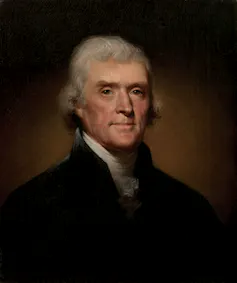
A portrait of gray-haired man, wearing a faint smile.
A portrait of Thomas Jefferson.
Rembrandt Peale, Collections White House via Wikimedia Commons

As the founders built a new nation, many emphasized the importance of religious liberty. Shortly after independence in 1776, Thomas Jefferson began drafting the Virginia Statute of Religious Freedom. When enacted a decade later, the law declared that Virginians’ “civil rights” did not depend on their “religious opinions.” Civic participation was not limited to members of particular traditions, and there was no state-funded church. The law was a foundational step to prevent government from discriminating against citizens on the basis of their beliefs.

The Virginia statute provided a template for the First Amendment to the U.S. Constitution, ratified in 1791. The amendment prohibits Congress from enacting laws that favor particular religions or interfering with free religious practice. It represents a key safeguard for personal belief against the power of the federal government.

Legal safeguards did not mean that all religious groups were treated equally, however. In reality, many Americans imagined the new nation to be a Protestant country.

Official and unofficial religious discrimination

Despite protections at the federal level and in some states, including Virginia, state and local governments were not bound by First Amendment protections until the 1920s. Religious discrimination in civic life was commonplace for the nation’s first 100 years.

North Carolina prohibited Catholics from holding public office until the 1830s and Jews from doing so until the 1860s. New Hampshire’s Constitution banned all non-Protestants from holding public office until 1877.

Smaller instances of religious bigotry abounded as well. In some public schools, including in large cities such as Philadelphia, students of all religions were required to read the Bible and sing Protestant hymns. Jewish Americans were often forced to work on their Sabbath and found themselves barred from some hotels and resorts, especially in the second half of the 1800s.

At times, hostility to religious minorities even fueled outright violence. The Philadelphia Bible Riots of 1844 began when the city’s growing Catholic population challenged the use of a Protestant Bible translation in public schools. Anti-Catholic nativists responded with force, and the ensuing conflict left over a dozen people dead.

Toward a ‘Judeo-Christian’ America

Things slowly began to change soon after the nation’s centennial in 1876. As I explore in my work, rising indifference toward religion among many Americans, as well as outright atheism, pushed many Protestant leaders to reevaluate how they treated their Catholic and Jewish neighbors.

Echoing a distrust of atheists that runs deep in U.S. history, these Protestants believed that any religion – even a non-Protestant one – was better for society than no religion at all. This conclusion prompted many Protestants to more fully affirm Catholicism and Judaism. By the early 1900s, it had become common for Protestant ministers to challenge religious bigotry, as one Minnesota clergyman did when he publicly lamented the “false notions and wretched prejudices” held against Jews.

This attitude gained support among the nation’s leaders. President Theodore Roosevelt took a major step by publicly praising Catholics and Jews. He insisted that their religious affiliations did not keep them from being “full Americans.”

After appointing the first Jewish Cabinet member in U.S. history, Roosevelt boasted “in my cabinet at present, there sit side by side Catholic and Protestant, Christian and Jew.”

There was soon a backlash to the growing acceptance of religious diversity. The 1920s witnessed the resurgence of the Ku Klux Klan. Its anti-immigrant campaigns targeted Catholics and Jews with particular force.

Still, the idea that Jewish and Catholic Americans were equal stakeholders in American society took root. By the 1950s, politicians, academics and religious leaders described the United States not as a Protestant country but a “Judeo-Christian” one.

Expanding multiculturalism

The Immigration and Nationality Act of 1965 opened a new chapter for religious pluralism in the United States. The law ended restrictions on immigration from non-European countries. Consequently, the number of practitioners of Hinduism, Buddhism and Islam increased significantly.

Christian groups lobbied strongly for these changes. The National Council of Churches, which represented the country’s major Protestant denominations, lent its significant clout to support the legislation. U.S. Catholic organizations likewise endorsed the 1965 law. For many Catholics, earlier experiences of discrimination and prejudice guided their desire for a more welcoming, inclusive immigration policy.

A man in a dark suit sits at a table, looking down at papers as several others around him look on.
President Lyndon B. Johnson signs the Immigration and Nationality Act of 1965 on Liberty Island, N.Y., on Oct. 3, 1965.
GHI/Universal History Archive/Universal Images Group via Getty Images

After 1965, religious diversity became far more visible to ordinary Americans. Earlier generations of immigrants – including Catholics and Jews in the 1800s – typically settled in ethnic enclaves. By contrast, immigrants now settled in diverse suburban communities. Newly arrived Hindus, Buddhists and Muslims often lived next door to Protestant, Catholic and Jewish families.

As in earlier periods, these developments were not entirely harmonious. The 1980s and ’90s witnessed violent attacks against both the institutions and individual practitioners of minority religions. Islamic centers and Buddhist temples were targeted in places ranging from Massachusetts to Minnesota, to Tennessee. The large population of Hindu Americans in northern New Jersey endured a wave of violence against individuals. Despite these instances, scholar of religion Diana L. Eck chronicled in her 2001 book “A New Religious America” how fully the religious nature of the U.S. had been transformed as the nation became characterized by multiculturalism.

While religious minorities have often faced exclusion and hostility, many Americans have long believed that guarantees of religious liberty promise a more inclusive society. In its 250th year, that promise is being tested once again.

The Conversation

David Mislin does not work for, consult, own shares in or receive funding from any company or organization that would benefit from this article, and has disclosed no relevant affiliations beyond their academic appointment.

ref. America’s founding promise of religious freedom has long coexisted with prejudice, even as many Christians have worked to confront it – https://theconversation.com/americas-founding-promise-of-religious-freedom-has-long-coexisted-with-prejudice-even-as-many-christians-have-worked-to-confront-it-272035

Texas proposes Bible readings for K-12 students, reigniting century-old legal battle over their place in public schools

Source: The Conversation – USA (3) – By Charles J. Russo, Joseph Panzer Chair in Education and Research Professor of Law, University of Dayton

A proposed list of required reading for Texan public schools includes several stories from the Bible. plherrera/E+ via Getty Images

In 2023, Texas passed a law aimed at improving K-12 students’ reading. In part, it called for a required reading list to spell out “at least one literary work to be taught in each grade level.”

An initial list named about 300 texts – many of them from the Bible. The Texas State Board of Education then cut the list by 100 readings but still included more than a dozen biblical texts.

Debate over the Bible’s place in classrooms, if any, has erupted since the list was published. At the board’s April 10, 2026, meeting, all nine Republican members preliminarily approved the materials, while the five Democrats rejected the list. The board plans to take a final vote in June.

Critics argue that mandatory Bible readings in public schools would violate the religion clauses in the First Amendment to the U.S. Constitution.

American courts have considered similar questions for 150 years – with the answer often depending on a lesson’s purpose.

Courts, Bible and schools

The first reported case on the Bible in U.S. schools was in 1872, when the Supreme Court of Ohio affirmed a ban against religious instruction in public classrooms. Conversely, 50 years later, the Supreme Court of Georgia upheld an ordinance to start school days with readings from the King James Version of the Bible.

A black and white photograph, taken from the back of a classroom, shows a few rows of students standing with their heads bowed.
Students in San Antonio, Texas, pray in 1962.
Bettmann via Getty Images

Bible reading first reached the U.S. Supreme Court in 1963, in the case of School District of Abington Township v. Schempp. This case, from Pennsylvania, was consolidated with a similar one from Maryland, called Murray v. Curlett.

Opponents in both states challenged mandatory Bible readings and prayer at the start of school days. The plaintiffs argued that these activities violated the establishment clause of the U.S. Constitution’s First Amendment: that “Congress shall make no law respecting an establishment of religion.”

The justices struck down both practices, finding that they did not have a secular purpose and that their main effect was to advance religion.

Attempting to allay concerns they were anti-religious, the justices declared, “It certainly may be said that the Bible is worthy of study for its literary and historic qualities. Nothing we have said here indicates that such study of the Bible or of religion, when presented objectively as part of a secular program of education, may not be effected consistently with the First Amendment.”

Justice William Brennan’s concurrence added, “The holding of the Court today plainly does not foreclose teaching about the Holy Scriptures or about the differences between religious sects in classes in literature or history.”

Similarly, in the following decades, lower courts invalidated classes as violating the establishment clause if the subject matter promoted Christianity – teaching it as religious truth rather than discussing the Bible’s literary and historical qualities. In 1981, for instance, the 5th U.S. Circuit Court of Appeals banned a Bible literature course in Alabama.

Two years later, the 8th Circuit summarily affirmed a judgment striking down a program in Arkansas allowing students to take voluntary Bible classes during school hours.

In 1996, a federal trial court in Mississippi invalidated Bible study classes taught in a rotation with music, physical education and library courses, plus another called A Biblical History of the Middle East. The courts agreed that the classes were unacceptable because they advanced Christianity.

Texas proposal

Returning to Texas, the board’s reading list is far from inclusive. Proposed passages are primarily from a handful of translations of the Bible: the English Standard Version, New International Reader’s Version, King James Version, and one from the Jewish Publication Society. The list does not include translations used by Catholics or sacred texts from non-Jewish and non-Christian faiths.

Two students, facing away from the camera, read text on computers positioned up against a white wall.
Students work under Ten Commandments and Bill of Rights posters in a classroom at Lehman High School in Kyle, Texas, on Oct. 16, 2025.
AP Photo/Eric Gay

Texts on the proposed list include well-known biblical lessons such as the Golden Rule for kindergarten, the Parable of the Prodigal Son for first grade, Corinthains’ definition of love for seventh grade, and the Beatitudes for eighth grade – the passage that begins, “Blessed are the poor.” Selections for older students include David and Goliath, The Tower of Babel, and passages from the books of Job and Ecclesiastes – that “for everything there is a season.”

As of now, the proposal permits parents who object to opt their children out of specific readings if they conflict with their religious or moral beliefs.

2 types of teaching

As Brennan noted in Abington, the Supreme Court “plainly does not foreclose teaching about the Holy Scriptures or about the differences between religious sects in classes in literature or history.” However, there is a significant difference between objectively teaching about religion and teaching of religion from a faith perspective.

This difference has been important throughout my own career. For 36 years, I have taught law with a special interest in the relationships between religion, law and education. But in addition to my education and law degrees, I hold a master’s degree in divinity. I previously taught religion, social studies and law to high school students, while teaching college theology part time.

Teaching religion at two Catholic high schools before and after law school, my job was to inculcate Roman Catholic values in my students. Conversely, teaching theology to adult students, I emphasized 11th-century theologian Anselm of Canterbury’s dictum that theology represents “faith seeking understanding.” In other words, my goal was to enable them to make their own judgments about whether to follow religious teachings.

In many cases, I have argued that increasing religious practices in public life is constitutional. My concern about Texas, however, is that the readings fail to distinguish between teaching about and of religion. Expanding students’ horizons and advancing tolerance by exposing them to religious perspectives is a good intention. Yet the breadth of selections is hardly inclusive, given its focus primarily on Christianity, to the exclusion of other faiths. Texas certainly can promote teaching about religion to enhance understanding of others, but it must be careful not to teach religion.

The Conversation

Charles J. Russo does not work for, consult, own shares in or receive funding from any company or organization that would benefit from this article, and has disclosed no relevant affiliations beyond their academic appointment.

ref. Texas proposes Bible readings for K-12 students, reigniting century-old legal battle over their place in public schools – https://theconversation.com/texas-proposes-bible-readings-for-k-12-students-reigniting-century-old-legal-battle-over-their-place-in-public-schools-280987

Healthy life expectancy falls in the UK – and the decline is worse among women

Source: The Conversation – UK – By Philip Broadbent, Wellcome Multimorbidity PhD Fellow & Public Health Registrar, University of Glasgow

LittlePigPower/Shutterstock.com

Healthy life expectancy in the UK – the years we can expect to live in good health – has fallen by more than two years over the past decade, according to a new Health Foundation analysis published.

The decline has been larger for women than for men – a finding the report says raises “concerns about the worsening trend of women’s health”. Of 21 high-income countries, the UK has fallen from 14th to 20th on this measure over the same period; only the US now ranks lower.

The aggregate matters, but so does the distribution. The gap in healthy life expectancy between the most and least deprived areas of England is now 20.3 years for women.

A girl born today in Hartlepool can expect to live just 51.2 years of good health; in Richmond-upon-Thames, 70.3. Translate that into time spent unwell and women in the poorest areas can expect roughly three decades of life in poor health, against around 13 years for the most affluent. In Wales, female healthy life expectancy fell by 3.7 years over the decade alone.

Why women in particular?

Men in deprived areas suffer too, but not in the same way and not for the same reasons. Three factors compound disproportionately for women.

The first is unpaid care. Women are 29% more likely than men to be unpaid carers, and almost twice as likely to provide 35 hours or more of unpaid care per week. Forty-two per cent of carers say their physical health has suffered as a consequence of providing care, and 74% report stress and anxiety. Caring falls disproportionately on the same low-income women whose paid work is already physically demanding.

That leads to the second reason: the labour market. Some 78% of social care staff are women; women make up around 59% of minimum-wage workers, concentrated in care, cleaning, hospitality and retail. These are the sectors most likely to involve shift work, zero-hour contracts, physically demanding work and exposure to violence, and least likely to offer sick pay or flexibility when long-term illness inevitably arrives.

The third is diagnostic delay and dismissal. Women in the UK now wait an average of nine years for an endometriosis diagnosis, and the waiting list for a gynaecology appointment is now close to a quarter of a million.

Women’s pain is more likely to be reframed as anxiety than properly worked up, and just 2% of UK health research funding goes to reproductive health and childbirth, despite maternal mortality sitting at its highest level in 20 years.

A strategy that doesn’t match the scale

This is the context in which health secretary Wes Streeting’s renewed women’s health strategy lands. Launched on April 15 with a pledge to end “medical misogyny” and the “gaslighting” of women, it has been welcomed in principle. But it contains £5 million of additional investment, against the £8 million in the men’s health strategy unveiled in November.

UK health secretary Wes Streeting.
Streeting’s women’s health strategy landed on April 15. But does it do enough?
repic/Shutterstock.com

Look closer and the women’s headline figures shrink fast. The £1 million for menstrual education in schools works out at roughly £300 per state secondary, or about two hours of workshops per school year.

The £5 million for a maternity care bundle averages around £42,000 per trust (or the equivalent of one midwife’s annual salary). The £2.6 million for osteoporosis scanners buys roughly 33 machines, two-thirds of them replacing outdated ones. There is no ring-fenced funding for gynaecology, despite the unprecedented backlog.

Funding is not evidence, but it is the clearest policy signal of political priority. It is difficult to see how a 20-year healthy life expectancy gap for women in deprived areas closes on a per-school spend that wouldn’t cover a supply teacher.

What should be done?

Healthy life expectancy is not a measure of behaviour or individual lifestyle choices. It is the measurable end product of the cumulative conditions in which women grow up, work, give birth and grow old. The decline since 2012 maps, with depressing predictability, onto a decade of austerity, rising child poverty and stagnant real wages – pressures that fall hardest on the women already doing most of the unpaid work to hold their households together.

A serious response would ring-fence women’s health funding, match rhetoric on medical misogyny with sustained investment in gynaecology, maternity and reproductive research and recognise, as has been argued for more than 15 years, that the “causes of the causes” sit upstream of the NHS.

The Health Foundation has called this report a watershed. It will only become one if the policy response is built to the scale of the problem.

The Conversation

Philip Broadbent receives funding from The Wellcome Trust 223499/Z/21/Z

ref. Healthy life expectancy falls in the UK – and the decline is worse among women – https://theconversation.com/healthy-life-expectancy-falls-in-the-uk-and-the-decline-is-worse-among-women-281563

Shortages, substitutes and uncertainty: the new reality of drugs supplies

Source: The Conversation – UK – By Tracy Hussell, Director of the Lydia Becker Institute of Immunology and Inflammation, University of Manchester

Yaroslav Astakhov/Shutterstock.com

The reliable supply of drugs is fundamental to any healthcare system, yet shortages remain a persistent problem.

Disruptions arise from a range of causes: manufacturing failures, fluctuating demand, regulatory changes and wars. Around 60% of drug shortages are linked to manufacturing bottlenecks, while insufficient reserves of both finished products and raw ingredients continue to leave health systems like the NHS exposed.

The seriousness of the issue has prompted intervention at the highest levels. In the UK, a recent House of Lords report called for more strategic leadership on medicine supply, warning of inadequate oversight and a failure to treat shortages as a matter of national security, despite the clear risks to public health.

Existing government measures – including the National Supply Disruption Response protocol
– aim to mitigate the effect of these drug shortages. Pharmacists and GPs are allowed to dispense alternative medicines where appropriate, and doctors may avoid initiating new patients on drugs in short supply. These measures, however, manage scarcity rather than prevent it.

Compounding the problem is the reality that many patients remain on prescriptions they may no longer need. Under pressure, NHS services often lack the capacity to review and safely reduce medications. Such “de-prescribing” must be gradual to avoid withdrawal effects, meaning this potential reserve of medicines cannot be mobilised quickly enough to address shortages.

The UK’s reliance on overseas manufacturing, adds a further layer of vulnerability. A significant proportion of essential medicines are made abroad, often concentrated in a handful of countries such as India, Israel and Ireland. This lack of diversity leaves supply chains fragile, particularly in times of global disruption.

Recent shortages have affected a wide range of treatments, including Ritalin (methylphenidate), used to treat ADHD, propranolol used to treat angina, heart arrhythmia, high blood pressure and anxiety, and medicines used in hormone replacement therapy, diabetes and epilepsy. There are about 120 drugs in short supply in the UK today.

A bottle of propranolol, with pills spilling out.
Propranolol is one of the 120 drugs in short supply.
luchschenF/Shutterstock.com

Using equivalent drugs is not straightforward

GPs and pharmacists are empowered to use alternative medicines in a shortage. Some are structurally similar to the missing version. However, differences in how they are produced and how they are delivered in the body mean they aren’t necessarily equivalent.

For example, immediate-release versions of drugs produce sharper peaks and are cleared quickly by the body, leading to a rapid decrease in drug concentration levels in the blood. This creates gaps in symptom control, particularly overnight.

Extended-release versions, by contrast, provide more stable and consistent coverage. Although the total dose may be similar, differences in how the drug is absorbed can affect both how well the drug works and side-effects.

Patients are often on medicines for a long time – sometimes for life – and adapt to them specifically. Adding even a slightly different version is not necessarily tolerated and the patient may be faced with withdrawal or side-effects.

GPs and pharmacists need better information about which medicines can be used when supplies run short. They should discuss these options with patients so they understand what to expect.

Side-effects are easier to manage when patients know they are caused by the medicine, not by their condition getting worse or a new illness. Ideally, patients would receive an identical replacement, but this is not always possible.

Fixing drug shortages will take sustained investment in domestic manufacturing and genuine political will to treat the problem as a long-term priority. Where UK production isn’t viable, the NHS must urgently diversify their overseas suppliers.

In the meantime, frontline staff need the resources to navigate shortages confidently – and patients deserve clear, honest information about any changes to medication.

The Conversation

Tracy Hussell does not work for, consult, own shares in or receive funding from any company or organisation that would benefit from this article, and has disclosed no relevant affiliations beyond their academic appointment.

ref. Shortages, substitutes and uncertainty: the new reality of drugs supplies – https://theconversation.com/shortages-substitutes-and-uncertainty-the-new-reality-of-drugs-supplies-281192

How 2 men smashed through a marathon barrier long thought unbreakable

Source: The Conversation – Global Perspectives – By Mark Connick, Postdoctoral Researcher in Paralympic Classification and Biomechanics, The University of Queensland; Queensland University of Technology

On May 6 1954, Sir Roger Bannister did what was deemed impossible in athletics: he ran a mile in less than four minutes.

The milestone was celebrated worldwide, not just by athletics fans. It was considered at the time to be a similar achievement to scaling Mount Everest for the first time, which Sir Edmund Hilary and Tenzing Norgay had done the year before.

On Sunday, Kenya’s Sabastian Sawe and Ethiopia’s Yomif Kejelcha achieved a breakthrough comparable to Bannister’s some 72 years ago: running the 42 kilometres of a marathon in less than two hours.

Let’s break down this new benchmark and work out how these athletes were able to do it.

What happened in London?

Sawe smashed the men’s world record by an astonishing 65 seconds in winning the event in 1 hour, 59 minutes and 30 seconds.

Kejelcha – remarkably running in his first marathon – also crossed the line in under two hours (1:59:41).

The race was blisteringly fast. Even third-place getter Jacob Kiplimo of Uganda broke the previous world record – set in 2023 by Kenya’s Kelvin Kiptum in the United States – by seven seconds (finishing in 2:00:28).

Sawe ran quicker as the marathon went on, covering the second half of the race in 59:01. He pulled clear of Kejelcha after about 30 kilometres and made his solo break in the final two kilometres.

After the race, Sawe said:

I’ve made history today in London, and for the next generation I’ve shown them that nothing is impossible. Everything is possible, with a matter of time.

The training and nutrition

Sawe’s team said he trained by running up to 240 kilometres a week and fuelled himself before the race with bread and honey.

This reported training volume is likely an important factor in running a sub two-hour marathon.

Running up to 240 kilometres a week is beyond what most runners can tolerate. But high training volume, especially when much of it is done at relatively low intensity, is associated with faster marathon performances.

Nutrition during the race was also well planned.

A two-hour marathon is run at such high intensity that carbohydrate intake becomes important to maintain performance. The body stores carbohydrate in the muscles and liver but those stores are limited.

According to his nutrition team, Sawe took a carbohydrate drink and a gel leading up to the start, then used carbohydrate drinks and gels throughout the race.

His reported intake averaged about 115 grams of carbohydrate per hour.

While this is not a recommendation for the recreational runner, at the intensity required to run a two-hour marathon, it helps to maintain energy supply and pace late in the race.

The physiology

Although Sawe and Kejelcha’s laboratory data are not public, the physiology required to run a fast marathon is due to three main attributes:

  • an exceptional capacity to take in and use oxygen during running

  • the ability to maintain a high fraction of that capacity for prolonged periods

  • an exceptional running economy, which means using less oxygen at a given speed.

Exceptional marathon performances also depend on durability, which is the ability to prevent deterioration of these qualities throughout the race.

What about the shoe?

Sawe and Kejelcha wore the lightest “supershoe” in history: Adidas’ Adios Pro Evo 3.

Adidas says it is “the fastest and lightest supershoe ever made”. It weighs less than 100 grams.

Supershoes can improve running economy by about 4% compared with conventional racing shoes.

The Adios Pro Evo 3 combines several features common in supershoes: very low weight, thick resilient foam and a stiff carbon-based structure in the midsole. The heel thickness is reported to be 39 millimetres, just under the 40mm limit permitted by World Athletics.

While most runners benefit from supershoes, the effect is variable and not the same for all runners.

Researchers have suggested this is due to two ways in which the footwear interacts with the runner.

Firstly, the foam and stiffening element can affect the “spring-like” bounce of the body as the foot hits and leaves the ground.

Secondly, they can change how the runner moves, including how the foot and ankle work, how long the foot stays on the ground, and the timing of energy return. As such, a shoe may be capable of storing and returning more energy, but the athlete still has to interact with it effectively.


Read more:
Running ‘super shoes’ may make you faster – but at what cost?


The exact benefit of the Adios Pro Evo 3 over other supershoes has not been independently measured, but even small improvements are likely to be important over a marathon.

The conditions in London also likely contributed to these performances. While London is considered to be a relatively fast course (although not as fast as Berlin), the weather conditions were close to ideal: between 13-17°C during the race, which is at the upper end of the theoretical optimum for marathon running but within the range associated with fast endurance performance.

A perfect storm

As recently as 2017, a sub-two hour marathon was considered unlikely to occur for generations.

The best explanation for the performances in London is the convergence of many factors including exceptional physiology, years of high-volume training, efficient biomechanics helped by the use of advanced footwear, optimised fuelling and favourable weather conditions.

The Conversation

Mark Connick does not work for, consult, own shares in or receive funding from any company or organisation that would benefit from this article, and has disclosed no relevant affiliations beyond their academic appointment.

ref. How 2 men smashed through a marathon barrier long thought unbreakable – https://theconversation.com/how-2-men-smashed-through-a-marathon-barrier-long-thought-unbreakable-281522

Ghana’s fuel payment strategy works for now: how to fix longer term problems

Source: The Conversation – Africa – By Ishmael Tingbani, Associate Professor in Accounting, University of Southampton

Ghana introduced a new payment arrangement for petroleum imports in 2023, using gold instead of scarce US dollars. The policy was designed to ease pressure on the cedi by reducing the need for upfront dollar purchases to settle fuel import bills.

In an import-dependent economy, rising demand for US dollars usually weakens the domestic currency. Importers must exchange local currency for dollars. As the local currency loses value, the local cost of imports rises, driving inflation.

Ghana’s petroleum-for-gold strategy delivered short-term benefits. It reduced immediate demand for foreign exchange, supported relative stability in the cedi and contributed to moderating fuel price pressures and inflation.

The country is still vulnerable to global oil price shocks, however. That has become evident with the latest surge in oil prices triggered by instability in the Middle East. For oil-importing economies such as Ghana, geopolitical risks like this translate directly into higher fuel import costs and greater pressure on foreign-exchange reserves.

I am a scholar who has served as a technical adviser to Ghana’s Ministry of Energy and major oil firms. This article argues that Ghana’s current stabilisation measures are helping to manage short-term pressure, but they have not removed the country’s exposure to oil shocks. That matters because temporary relief should not be mistaken for structural reform.

The structural gaps are limited refining capacity, weak storage infrastructure and an underdeveloped downstream petroleum sector.

As long as these constraints remain, oil shocks will continue to transmit quickly into the exchange rate, inflation and the broader economy.

What’s working

Ghana is one of Africa’s largest gold producers, with output exceeding 120 tonnes annually.

The creation of the Ghana Gold Board, under the Ghana Gold Board Act, 2025 Act 1140, improves the state’s ability to mobilise gold through official channels. This is not a solution to Ghana’s energy problem. But it is a more credible stabilisation strategy than relying on politically driven fuel price interventions and implicit subsidies. Those strategies, seen in earlier periods, contributed to fiscal losses and market distortions.

Inflation has eased significantly over the past year, falling from peak levels in 2023 to around 3%-4% in early 2026. Fuel prices have moderated, with pump prices declining by over 20% year-on-year in Febuary 2026. This indicates that short term pressures are being managed.

But relief is not reform. Policies such as gold-for-oil cannot eliminate Ghana’s dependence on imported refined fuels.

The gaps

Ghana’s vulnerability to global oil shocks stems from the structure of its energy system. Despite producing crude from offshore fields such as Jubilee, TEN and Sankofa-Gye Nyame, the country remains heavily dependent on imported refined fuels priced and settled in US dollars. That mismatch ties the domestic economy directly to global oil markets.

In practice, this dependence is substantial. Domestic refining meets only a small share of demand, with roughly 72% of refined petroleum products supplied through imports in recent years. In other words, most of the fuel actually consumed in the economy is sourced from international markets rather than processed locally, reinforcing the country’s reliance on foreign currency.

These imports are concentrated in a few critical products that underpin everyday economic activity. Diesel accounts for the largest share, used extensively in transport, logistics, construction and backup power generation. Petrol (gasoline) supports road transport, while liquefied petroleum gas (LPG) is widely used for household cooking and some commercial purposes. In effect, Ghana’s import bill is not abstract. It underwrites the economy’s core energy needs, from moving goods and people to powering businesses and households.

This dependency on imports is driven by three factors.

  • Limited refining capacity. Ghana’s ability to process crude oil domestically is constrained by the limited and unreliable operation of its main refining asset, the Tema Oil Refinery. Although installed capacity exists, it has operated intermittently for years due to financial constraints, maintenance challenges and operational inefficiencies.

But expanding domestic refining capacity on its own won’t insulate Ghana from price dynamics. Domestic fuel prices remain linked to international benchmarks, meaning global oil shocks would continue to pass through to inflation.

Where refining could make a difference is on the financing side. It would lower demand for US dollars.

  • Weak storage infrastructure. Ghana has limited strategic storage capacity for petroleum products, reducing its ability to build reserves and manage supply over time. The country must rely on frequent imports to meet demand, increasing exposure to external supply and financing shocks.

  • An underdeveloped downstream petroleum sector. Beyond refining and storage, inefficiencies in the movement and sale of petroleum products constrain how effectively supply is managed within the domestic market. Distribution remains fragmented across importers, bulk distributors and retail outlets, with limited coordination and logistical bottlenecks in transportation and depot infrastructure. Regulatory rigidities in pricing and market participation further reduce flexibility. As a result, even when supply is available, it is not always efficiently allocated, and global price shocks are transmitted quickly and with limited buffering through the domestic economy.

What needs to be done

Four priorities now stand out.

First, recent gains must be consolidated through continued macroeconomic discipline and a firm avoidance of policy reversals.

Second, foreign-exchange buffers should be strengthened to better absorb future oil-price shocks and contain exchange-rate pressures.

Third, gold and foreign exchange strategies need to be integrated so that gold mobilisation directly reinforces external liquidity.

Finally, dependence on downstream imports must be reduced through credible investment in refining, storage and broader energy infrastructure.

The real test of Ghana’s fuel strategy is not whether it can withstand a single episode of oil-market volatility, but whether today’s stabilisation measures can be converted into a more resilient energy system.

The Conversation

Ishmael Tingbani does not work for, consult, own shares in or receive funding from any company or organisation that would benefit from this article, and has disclosed no relevant affiliations beyond their academic appointment.

ref. Ghana’s fuel payment strategy works for now: how to fix longer term problems – https://theconversation.com/ghanas-fuel-payment-strategy-works-for-now-how-to-fix-longer-term-problems-281076

Meta and Microsoft have joined the tech layoff tsunami. Is AI really to blame?

Source: The Conversation – Global Perspectives – By Kai Riemer, Professor of Information Technology and Organisation, University of Sydney

Dimitri Otis / Getty Images

Meta and Microsoft are the latest software companies to announce big cuts to their global workforce. Both companies are also making big investments in artificial intelligence (AI).

The link seems obvious. Meta’s chief people officer, Janelle Gale, said the job cuts – about 10% of staff or almost 8,000 workers – serve to “offset the other investments we’re making”. Meta boss Mark Zuckerberg has previously spoken about a “major AI acceleration” with spending in excess of US$115bn planned this year.

Microsoft is also betting big on AI. The company also just announced early retirement packages for about 7% of its US workforce.

The two tech giants join Atlassian, Block, WiseTech Global and Oracle, who have all made similar announcements this year, each evoking AI without outright blaming it.

What is happening here? How we understand these layoffs depends on what we think AI is, and what implications it will have. Broadly speaking, there are three ways of looking at it: that AI is superintelligence, that it’s mostly hype, and that it’s a useful tool.

The end of white-collar work?

In the first view, AI is emerging superintelligence. It is a new kind of mind, that learns, reasons, and will soon outperform humans at most cognitive tasks (hint: it’s not!).

The job losses are not just a corporate restructuring. They are an early tremor of something seismic.

In February 2026, AI entrepreneur Matt Shumer put this view vividly – comparing the current moment to the strange, quiet weeks before COVID-19 broke into global consciousness. Most people, he argued, haven’t yet realised we are facing an “intelligence explosion”.

The essay drew significant criticism. Commentators noted it contained little hard data and read at times like a pitch for Shumer’s company’s own AI products.

But it captured a genuine anxiety. Something real is happening in software engineering, at least, where tasks are well-defined and success is easy to verify.

But the leap to “all white-collar work will be automated” is a big one. The view that AI is a kind of universal mind that learns and improves itself is far-fetched.

And most professional work is far messier than coding: ambiguous briefs, competing stakeholder interests, outputs that are hard to verify, and shifting success criteria. Coding may be a canary in the coal mine, but coal mines and boardrooms are very different places.

Are tech companies winding back hiring sprees?

The second view sees the conversation around AI as mostly hype. AI is being invoked as cover. Companies that hired aggressively during the pandemic boom, and now face financial pressure, are blaming AI as the more palatable explanation.

OpenAI CEO Sam Altman called this dynamic “AI washing”: companies blaming AI for layoffs they would have made regardless.

For example, Meta announced in March it would shut down its Metaverse platform Horizon World by June. Reality Labs, the division developing the technology, employed 15,000 people as of January 2026.

We don’t know in detail the make-up of the present job cuts, so Meta may just be repackaging earlier failures as AI-driven productivity gains.

Another cynical reading suggests that laying off workers in the name of AI is a way to drive up stock prices. When Block invoked AI and cut nearly 4,000 roles, its stock jumped the following day.

Announce AI-driven layoffs and you may find investors reward you for being future-focused. It is a historically familiar trick: technology has repeatedly served as convenient cover for financial restructuring.

Are layoffs a way to make staff use AI?

The third view is more nuanced. It sees AI as a powerful tool, but one that companies will need to transform themselves to take advantage of.

This has implications for what jobs are needed and in what quantities. We think this view has the most merit.

On this reading, the tech leaders believe AI will change how software gets built. But they don’t know exactly how.

So they do what tech companies often do when faced with uncertainty: they create pressure. They cut headcount staff, expect those remaining to produce just as much as before, and force teams to find ways to meet those expectations using AI.

It’s not a bet that AI will do everything, but that the pressure will force humans to work out how to use AI to increase productivity.

This also lines up with industry experience. For example, Google chief executive Sundar Pichai claims a 10% increase in engineering speed from AI adoption across the company. This could tally with cuts of around 7–10% of total workforce for most of the mentioned companies.

What this means for knowledge workers

These three views are often presented as mutually exclusive. In practice, all three expectations exist simultaneously. The honest answer to “what is really happening here” is probably “a bit of everything”.

What is true is that software development tends to be an early indicator of broader shifts in knowledge work. Productivity benefits from AI are real for those who adopt it. Yet adoption is unevenly distributed, and lags in less technical industries.

In this context, the ability to understand AI and make good decisions about how and where to use it is becoming a baseline professional skill.

The workers most at risk are not necessarily those whose tasks can be replicated by AI. They are those who wait for pressure to arrive from outside rather than getting ahead of it now.

We will have answers to the question of whether AI is mostly hype or a useful tool in the next few years.

If Meta, Microsoft, and their peers rehire staff with different skills, redesign workflows, and emerge genuinely more capable, the case for useful AI looks good. If they simply pocket the payroll savings, the cynics were right.

If you want to know where tech companies are going, don’t look at what they cut – watch what they hire.

The Conversation

The authors do not work for, consult, own shares in or receive funding from any company or organisation that would benefit from this article, and have disclosed no relevant affiliations beyond their academic appointment.

ref. Meta and Microsoft have joined the tech layoff tsunami. Is AI really to blame? – https://theconversation.com/meta-and-microsoft-have-joined-the-tech-layoff-tsunami-is-ai-really-to-blame-281436