Climate change is worsening violent extremism in Kenya – what can be done

Source: The Conversation – Africa (2) – By Dylan O’Driscoll, Professor in Peace and Conflict, Coventry University

Climate change and its associated impacts can worsen security challenges, including those associated with violent extremism.

This is particularly the case in areas that are both vulnerable to the impacts of climate change and characterised by social and political instability.

In north-eastern Kenya, for instance, droughts, flooding and livelihood destruction are unfolding alongside, and worsening, activity by al-Shabaab, a terrorist network headquartered in Somalia. The terror group has evolved from carrying out large-scale attacks in Kenya, such as the Westgate Mall attack (in 2013) and the Garissa University attack (2015), to persistent, low-intensity attacks and broader community engagement in the border region.

Despite these overlapping crises, the understanding of how climate change and violent extremism interact remains limited.

As a multidisciplinary team, we set out to address this gap through workshops with policymakers and practitioners working across relevant policy areas in Nairobi and north-eastern Kenya, as well as focus groups and interviews with community members and leaders in the region.

Our findings highlight how in vulnerable environments, climate change acts as a threat multiplier. It intensifies:

  • economic instability, by damaging and destroying livelihoods

  • social fragmentation, by increasing the strain on social networks

  • psychological strain, through the scale of destruction caused by cumulative climate events

  • institutional weaknesses, by increasing pressure on public services and government access.

These conditions provide increased opportunities for extremists to influence or coerce the local population.

When we spoke with local herders and community leaders in north-eastern Kenya, we found that the impact of climate change left local communities more vulnerable to recruitment by extremists. At the same time, al-Shabaab activities in the area made it harder for communities to adapt to a changing environment. This reinforces a cycle of fragility.

Climate impacts and insecurity are interwoven dynamics that shape everyday life, governance and prospects for stability in north-eastern Kenya.

Our findings challenge the idea that climate change and security can be addressed separately. Effective responses must combine environmental, social and security strategies to build long-term resilience.

Livelihood destruction

For pastoralists in the north-eastern Kenyan counties of Garissa and Wajir, keeping livestock is not just a job. It is their identity, their food security and their children’s future.

However, as droughts and flash floods become more frequent, herds are being decimated. In times of desperation, al-Shabaab positions itself as a provider.

As one community member told us:

When the land dries up, animals die, farms fail, and people go hungry, especially the youth, they become desperate. Al-Shabaab knows this and exploits it. They offer food, money, and what seems like ‘purpose’ to young boys who feel abandoned by their own government.

What we had not anticipated before undertaking this research was the profound emotional toll of climate change and how this is creating ideal conditions for al-Shabaab recruitment. The loss of livestock causes a deep sense of shame among men who can no longer fulfil their role as providers.

A local herder told us:

We are men, supposed to provide, but we found ourselves helpless.

In a culture where “a man without animals is seen as a child, no matter his age”, as one respondent put it, this loss of status leads to depression and hopelessness.

Extremist groups exploit this emotional emptiness. They offer a sense of status to men who feel they have lost everything else.

Increased migration

As water and pasture vanish, herders are forced to travel much further from home, often entering remote, insecure areas where the state has limited presence.

This increased mobility is a necessary survival strategy. But it increases the likelihood of encountering al-Shabaab.

Individuals arriving in new areas with depleted resources and no social contacts are vulnerable to recruitment. In these remote areas, al-Shabaab often steps in to provide assistance, such as protection.

The lack of veterinary services and schooling creates several further vulnerabilities. When children drop out of school to follow herds, they become soft targets for recruiters.

Social breakdown

Beyond individual loss, violent extremism is unravelling social bonds.

In the past, neighbours could count on each other. Now, they are drifting apart because nobody has anything left to give, leading to a profound loss of community dignity.

As one community member put it:

When your neighbour comes asking for milk or sugar, you have nothing to offer. Our economy is not just about money; it is about sharing. When livestock die, that sharing disappears, and we become poorer not only in wealth but also in spirit.

Even the authority of community elders is under pressure. They are losing influence because their traditional wisdom about the seasons is no longer effective. Their status diminishes, creating a leadership vacuum.

Al-Shabaab is quick to attempt to fill this void, offering a new sense of order.

Governance challenges

The reach of the Kenyan state is limited in the remote and arid northern region.

When aid is delayed or distributed unevenly, it fuels grievances about neglect. Al-Shabaab is highly effective at using religious and political language to channel these frustrations against the state. It presents its own ideology as a path to justice.

Furthermore, insecurity prevents the delivery of the services needed for climate adaptation, leaving the most vulnerable populations dependent on anyone who will help. This gives al-Shabaab a clear entry point.

The way forward

Breaking this cycle of vulnerability requires a policy shift that integrates environmental and security strategies. It is necessary to formally recognise climate change as a critical security issue, to trigger the multi-agency coordination necessary for mitigation.

In practice, this means aligning national and county-level plans to prevent and counter violent extremism with climate adaptation strategies. This would enable agencies to share knowledge and pool funding.

Climate adaptation plans must incorporate conflict analyses to ensure aid does not inadvertently fuel grievances.

Most importantly, future interventions must look beyond technical solutions to address the emotional weight of lost dignity and the breakdown of social structures. This will foster resilience in the local economy and the community.

The Conversation

Dylan O’Driscoll receives funding from the British Academy for this research. He is an Associate Senior Fellow at the Stockholm International Peace Research Institute.

Fathima Azmiya Badurdeen receives funding from the British Academy.

Joel Busher received funding from the British Academy for this research.

Wilson Ndenyele receives funding from the British Academy.

Sheila Ronoh does not work for, consult, own shares in or receive funding from any company or organisation that would benefit from this article, and has disclosed no relevant affiliations beyond their academic appointment.

ref. Climate change is worsening violent extremism in Kenya – what can be done – https://theconversation.com/climate-change-is-worsening-violent-extremism-in-kenya-what-can-be-done-279604

How freak weather and an old-fashioned grid exacerbate energy insecurity

Source: The Conversation – UK – By Farooq Sher, Senior Lecturer in Sustainable Energy Engineering, Nottingham Trent University

F01 PHOTO/Shutterstock

The Iran crisis is reshaping how the world produces, uses and secures energy. This is no temporary shock. It has become a structural stress test of energy systems, industrial production and government strategy.

We’ve seen this in the recent past: household energy bills in 2024 were still about 4% higher than in 2019,
even after the 2022 global energy crisis had eased (annual bills were up 16% at the peak). That crisis was driven by a combination of post-pandemic demand recovery, tight energy supplies and wider geopolitical disruption, including the Ukraine war, which pushed energy prices sharply higher.

Affordability remains fragile because many lower-income households still spend a disproportionately large share of their income on energy. It’s also a problem for business. Sustained energy costs continue to burden European manufacturing, for instance, affecting industrial competitiveness and long-term economic resilience.

At the same time, the International Energy Agency (IEA) projects global electricity demand will have grown 3.3% in 2025 and then 3.7% in 2026. The pressure from the 2022 crisis therefore shifted rather than disappeared.

International fuel markets remain highly sensitive to geopolitical shocks, especially when households and industry depend on imported gas and oil. Around 20% of the world’s oil passes through the Strait of Hormuz. This highlights how concentrated supply routes can transmit instability rapidly across global markets, causing not just rising energy prices but knock-on effects like increased fertiliser costs.

closed fuel pumps at petrol station
Fuel has been in short supply so prices have escalated.
JessicaGirvan/Shutterstock

It’s also no longer just a question of fuel supply. Unpredictable, extreme weather conditions are compounding the problem of volatile prices of fossil fuels. Heatwaves raise electricity demand for cooling; drought weakens hydropower; storms disrupt transmission and distribution infrastructure; and low-wind periods test whether the system has enough backup power, storage and flexibility to maintain supply.

The IEA’s work on climate resilience in power systems makes clear that climate-related extremes are becoming more important across electricity generation, networks and demand. Price risk and weather risk are increasingly overlapping drivers of modern energy insecurity (the risk of energy becoming unaffordable, unreliable or unavailable).

The strain is emerging from a mismatch between how energy systems were built and the conditions under which they now operate. Electricity systems are being asked to integrate larger amounts of low-carbon power, but the supporting infrastructure has not developed at the same speed. This means there is still not enough grid capacity, energy storage, system interconnection or ability to match electricity demand with changing supply to move electricity efficiently, store surplus power or reduce pressure at times of peak demand.


Read more:
The oil price surge is just one symptom of a supply chain network that is not fit for this age of global tensions


At least 1,650GW of renewable electricity capacity worldwide is waiting in grid connection queues. That is equivalent to more than 40 times Britain’s recent peak electricity demand of about 38GW, which shows how large the backlog has become.

An estimated US$400 billion (£296 billion) is spent annually on grid infrastructure, including transmission lines, substations and distribution networks that carry electricity from where it is generated to where it is used.

This compares with roughly US$1 trillion spent on forms of energy generation, such as solar farms, wind farms, hydropower plants and gas-fired power stations. This shows how electricity-generating capacity has expanded faster than the systems needed to connect it, balance supply and demand, and keep the system secure.
When electricity demand is rising rapidly, there’s less of a buffer if the supporting infrastructure needed to manage it (such as grids or storage) is not expanding at the same pace.

Missed warning signs

Well before the Iran energy crisis, it was clear that we are overly dependent on internationally traded fossil fuels. The same goes for the slow pace of grid expansion relative to new generation capacity, and our failure to treat weather variability as a core energy-security issue rather than a secondary climate concern.

Recent European electricity data underlines this. Wind and solar generated 30% of EU electricity in 2025, slightly above the 29% from fossil fuels. Nevertheless, less windy and less rainy conditions contributed to a 12% fall in EU hydro output in 2025.

Cleaner systems do not automatically become more resilient. Network strength, flexibility and climate preparedness all need to advance at the same pace.

The strongest evidence points towards a more integrated response in which energy security and decarbonisation are treated as part of the same agenda. Lowering dependence on volatile fossil fuels, using energy more efficiently in homes, transport and industry, and strengthening system flexibility are increasingly central to long-term security. Yet many electricity systems remain too slow to adapt when supply drops, demand surges, or electricity must be shifted across regions or time periods.

new houses with solar panels on roof, blue sky
Rooftop solar panels and heat pumps on new homes reflect the shift towards cleaner, more resilient household energy.
fokke baarssen/Shutterstock

You can see the implications with households. Heat pumps are typically three to four times more efficient than gas boilers in the sense that they can deliver three to four units of heat for each unit of electricity used, because they move heat rather than generate it directly.

However, the Climate Change Committee also notes that lower running costs depend on electricity prices and policy support, so greater efficiency does not always mean lower bills in the short term. Solar panels can help here. The UK government’s solar roadmap says a typical household installing rooftop solar could save around £500 per year on bills. Meanwhile, the IEA also estimates that electric vehicles displaced more than 1.3 million barrels of oil demand per day in 2024.

These are not only indicators of decarbonisation; they also show how cleaner technologies can reduce direct exposure to fossil-fuel price volatility.

At the policy level, the choice is between deeper structural resilience and repeated cycles of short-term crisis management. The European Commission’s REPowerEU plan is to make Europe’s energy system more secure, affordable and sustainable by reducing dependence on imported fossil fuels, accelerating clean energy and improving energy efficiency. It is intended to strengthen long-term energy resilience across the EU by diversifying energy supplies and speeding up the transition to domestically produced low-carbon energy.

What remains uncertain is the timing and scale of future shocks. What is certain is that the greatest vulnerabilities still lie in fossil-fuel dependence, weak infrastructure and delayed policy adjustment. The most credible route to a more secure energy future lies in efficiency, electrification, renewables, stronger grids, storage and policy that takes a longer-term approach.

The Conversation

Farooq Sher does not work for, consult, own shares in or receive funding from any company or organisation that would benefit from this article, and has disclosed no relevant affiliations beyond their academic appointment.

ref. How freak weather and an old-fashioned grid exacerbate energy insecurity – https://theconversation.com/how-freak-weather-and-an-old-fashioned-grid-exacerbate-energy-insecurity-280502

Could the Strait of Malacca be the next global flashpoint?

Source: The Conversation – UK – By Gokcay Balci, Lecturer in Sustainable Freight Transport and Logistics, University of Leeds

Tanker ships off the coast of Singapore, a key port in the Strait of Malacca. Adwo / Shutterstock

While recent global attention has focused on the Strait of Hormuz, which Iran has effectively held closed since late February in a move that has disrupted world energy supplies, a quieter but also important development has been taking shape in south-east Asia.

On April 14, the US and Indonesia announced a “major defence cooperation partnership”, strengthening their military ties. According to reports, the US is also seeking to gain wider access to Indonesian airspace. Several media outlets say Indonesia’s president, Prabowo Subianto, has approved the proposal.

These developments matter because Indonesia’s vast archipelago sits astride some of the most critical sea routes in the world. These include the Strait of Malacca, an important chokepoint for global shipping and trade. The region surrounding Malacca has seen growing military attention from outside powers in recent years.

Both the US and China have been steadily expanding their military presence around the strait and its approaches. The US has largely done so through base access and naval deployments, and China through its port network and naval buildup. The Andaman and Nicobar Islands, located near the strait’s western approaches, also provide India with a strategic presence in the region.

South-east Asia is becoming more explicitly tied into great-power competition, with the new US-Indonesia defence partnership adding the latest layer. Should this competition intensify – whether through a crisis in Taiwan, a spillover from Hormuz or a shift in alliances – the Strait of Malacca would be at the centre of it.

A map showing the Strait of Malacca in south-east Asia.
At its narrowest point, the Strait of Malacca is just 2.8km wide.
Peter Hermes Furian / Shutterstock

The strait is the shortest sea route connecting the Indian Ocean to the South China Sea and Pacific Ocean, making it the default corridor for trade between east Asia and the west. It stretches roughly 900km from the Malay Peninsula to the Indonesian island of Sumatra. At its narrowest point, the Phillips Channel near Singapore, it is barely 2.8km wide.

Almost 24% of global seaborne trade by volume flows through the strait. It carries 45% of the world’s seaborne oil, over 25% of all cars traded internationally and 23% of dry bulk cargo including key agricultural commodities like grains and soybeans. A large portion of European imports of electronics, consumer products like footwear and toys, machinery and industrial goods pass through the strait in sea containers as well.

The strait is also home to some of the world’s most critical port infrastructure. Singapore, located at the strait’s southern entrance, is the second-busiest container port and the busiest container transshipment hub on the planet. It handles over 40 million containers a year and is the world’s largest ship refuelling hub. Port Klang in Malaysia ranks among the world’s top ten container ports too, handling 14 million containers annually.

Why Malacca is irreplaceable

The most commonly cited detours around the Strait of Malacca, the Sunda and Lombok Straits, both lie within Indonesian territory and neither is a straightforward substitute. Rerouting through either adds roughly 1,000 to 1,500 nautical miles to the journey – three to five extra days at sea – along with higher fuel costs and the loss of Singapore’s refueling infrastructure.

Beyond Indonesia, the Torres Strait near Papua New Guinea is too shallow for large commercial vessels with a draft of over 12 metres. Ships avoiding all these routes would face a detour around the entire Australian continent, adding another ten to 15 days of transit time. These geographical features are the reason why the Strait of Malacca is so difficult to bypass.

China understands the risk of relying on Malacca perhaps better than anyone. In 2003, the then-president of China, Hu Jintao, coined the phrase “Malacca dilemma” to describe a strategic exposure that has continued since. Between 75% and 80% of China’s imported oil still passes through the strait.

Beijing has invested heavily in alternatives, but none come close to matching the scale of what transits Malacca. Pipelines running from Kyaukpyu on the Bay of Bengal in Myanmar into Yunnan province in China bypass Malacca entirely. However, their capacity is only around 440,000 barrels per day, a small fraction of China’s roughly 11 million barrels of daily oil imports.

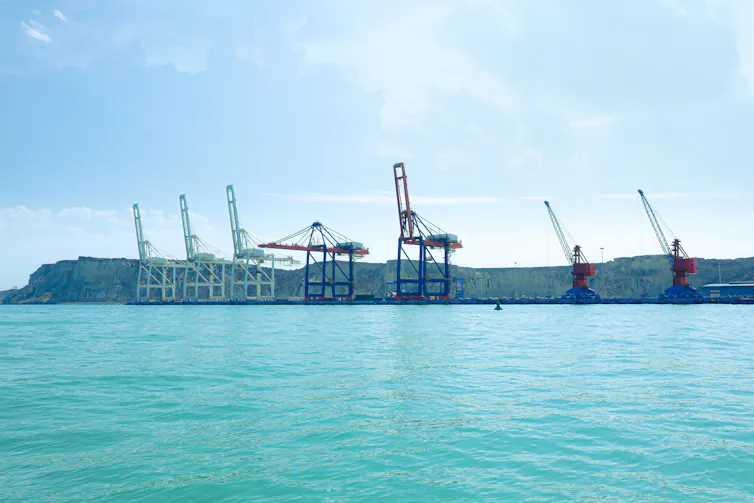
Gwadar Port on the Arabian Sea in Balochistan.
Gwadar Port on the Arabian Sea in Balochistan, Pakistan, which was developed largely with Chinese investment as part of the China-Pakistan Economic Corridor.
victor yankee / Shutterstock

The China-Pakistan Economic Corridor plans to link Gwadar Port on the Arabian Sea to Xinjiang in north-west China through road, rail and energy infrastructure. But it remains only partially developed, with its completion affected by difficult terrain and security challenges in parts of Pakistan. China has also diversified through Central Asian oil and gas pipelines, which provide about 10% of its total imported oil.

There are rail freight corridors connecting China to Europe, which avoid maritime chokepoints entirely and are faster than shipping. However, they are far more expensive and very limited in capacity. Arctic shipping routes along Russia’s northern coast offer a longer-term hedge, cutting the distance between Asia and Europe, but remain seasonal and marginal in global trade terms.

For now, there is no clear indication that the growing military presence around the Strait of Malacca will have any impact on commercial shipping. But if a conflict does arise in the future, it will be trade-dependent economies like China that will suffer.

The Conversation

Gokcay Balci receives funding from UK National Clean Maritime Research Hub

Ebru Surucu-Balci does not work for, consult, own shares in or receive funding from any company or organisation that would benefit from this article, and has disclosed no relevant affiliations beyond their academic appointment.

ref. Could the Strait of Malacca be the next global flashpoint? – https://theconversation.com/could-the-strait-of-malacca-be-the-next-global-flashpoint-281190

Claim check: does your pint of beer really come with a ‘surprising health benefit’?

Source: The Conversation – UK – By Chloe Casey, Lecturer in Nutrition and Behaviour, Bournemouth University

Face Portraits/Shutterstock.com

Beer could come with a “surprising health benefit”, according to a new report from the BBC. This must be pleasing news for beer drinkers everywhere. But what did the new study the BBC report was based on actually say? And does it stand up to scrutiny?

The study, published in the Journal of Agricultural and Food Chemistry, set out to assess the vitamin B6 content of alcohol-free and full-strength beers. Vitamin B6 is an essential nutrient with important roles in the body, but there are problems with how these findings are framed.

The numbers are technically true but misleading in context. Saying that a beer provides 15% of your daily vitamin B6 sounds impressive, but it ignores the wider dietary picture.

Most people in the UK are not deficient in vitamin B6. And the same amount, or more, can easily be obtained from a standard healthy diet. A number of foods, such as potatoes, chickpeas, fortified cereals, grains, meat and vegetables, provide vitamin B6 without the need for alcohol.

The paper also links vitamin B6 to important neurological functions, but does not provide evidence that beer consumption meaningfully improves brain health. It correctly states that vitamin B6 is involved in making the brain chemicals serotonin and dopamine, and confirms that beer contains measurable amounts of B6. However, the interpretation that beer is therefore “brain boosting” is problematic.

The study does not measure brain health outcomes of any kind (not cognition, mood or neurological effects), so such conclusions are not supported by the data. The B6 intake from beer is modest, and this narrative overlooks the well established harms associated with alcohol consumption.

The serving size framing is also concerning. The study refers to “a serving” and, in some cases, volumes of up to a litre. Drinking at those levels on a regular basis would clearly conflict with NHS guidance on alcohol consumption. A typical half-litre serving was reported to provide around 13–16% of daily vitamin B6 requirements. A beer would need to provide about one whole day’s worth of vitamin B6 in a standard pint to qualify for a health claim. None of the beers in the study came close to that.

The study also does not adequately emphasise alcohol’s downsides, including risks to the liver, brain and increased cancer incidence. In recognition of these harms, the World Health Organization states that there is no safe level of alcohol consumption. Although this is acknowledged in the paper, highlighting a small vitamin content without properly weighing it against these risks is misleading.

When drinks brands latch on to studies like this to make their products seem good for you, they’re putting marketing ahead of public health. At worst, they’re nudging people to drink more.

A familiar story: the red wine myth

This is not the first time narratives about the health benefits of alcohol have found their way into the media. The idea that a glass of red wine a day is good for your heart is one of the most enduring examples. While this claim has some scientific roots, it is now heavily debated.

The belief largely traces back to the so-called “French paradox”, coined following observations that people in France appeared to have relatively low rates of heart disease despite diets rich in saturated fat and regular alcohol consumption. Red wine, in particular, has been suggested to offer some health benefits because it contains natural compounds called polyphenols – especially one called resveratrol – which can act as antioxidants and help protect the body’s cells.

Later studies, however, have raised serious concerns about these claims. Researchers pointed out that other factors – like people’s diet, how active they are and their access to healthcare – may have influenced the results. There has also been a wider rethink of alcohol’s effects, with growing evidence that it can increase the risk of harm, especially from certain types of cancer.

Taken together, these issues help explain a pattern known as the “healthy user effect”. At first glance, observational data suggest that moderate alcohol consumption may be protective. Some studies report lower rates of heart disease among moderate drinkers compared with non-drinkers. But observational data can only show correlations, not cause and effect.

In reality, moderate wine drinkers often differ from non-drinkers in important ways. They are, on average, more likely to eat healthier diets, be more physically active, be wealthier, have more friends, and see their doctor more often.

Each of these factors independently reduces the risk of heart disease and stroke. When they are not fully accounted for, alcohol itself can mistakenly appear to be the protective factor.

When the wider body of evidence is considered, particularly research linking alcohol to cancer, liver disease and mental health problems, most reviews conclude that any potential benefits are small and probably outweighed by the risks. The nutritional contributions of beer and wine do exist, but they are minor and unlikely to translate into meaningful health improvements.

Polyphenols, antioxidants, vitamins and minerals can all be obtained more safely and reliably from fruits, vegetables, whole grains, legumes, olive oil and other whole foods, without the risks associated with alcohol.

The Conversation

Chloe Casey does not work for, consult, own shares in or receive funding from any company or organisation that would benefit from this article, and has disclosed no relevant affiliations beyond their academic appointment.

ref. Claim check: does your pint of beer really come with a ‘surprising health benefit’? – https://theconversation.com/claim-check-does-your-pint-of-beer-really-come-with-a-surprising-health-benefit-281399

Arandora Star sinking: a lesser known Nazi war crime that spawned generations of conspiracy theories

Source: The Conversation – UK – By Simona Palladino, Senior Lecturer in Social Sciences, Liverpool Hope University

Just days before the Battle of Britain began in July 1940, more than 800 civilians were killed off the coast of Ireland when a German U-Boat sank a converted five-star cruise ship.

The people on board were German, Austrian and Italian internees – deemed enemy aliens by the UK government – who were being deported to Canada.

Why the Nazis sank a civilian ship has never been fully explained.

But the sinking of the Arandora Star remains one of the lesser known war crimes of the second world war.

My research has examined the oral histories of some of the Italian families, based in the UK, who remember the second world war. My latest project has looked into the long-term effects of Arandora Star sinking as it was experienced and transmitted across generations.

The attack

The Arandora Star was a first class cruise liner built in 1927 by the Cammell Laird Company Ltd, in Birkenhead, near Liverpool. It was one of the best-known ships in the world at the time.

When the war broke out, the Arandora, like many commercial ships, was placed at the disposal of the British government. Under the command of Captain E.W. Moulton, the Arandora was ordered to carry German, Austrian and Italian internees from Liverpool to Canada.

More than 1,600 men were forced onto the ship which was actually designed to carry 500. Internees were crammed below decks and the exits were guarded by barbed wire.

On July 2 1940 – the morning after it embarked on its voyage – the Arandora was torpedoed by a German U-boat, 100 miles northwest of Ireland.

Around 805 men, over 50 percent of the total number drowned, were Italian. About 100 British soldiers and crew members also lost their life, including the ship’s captain.

One British sailor told the press in 1940 that the Arandora Star turned half over on her side and sank, carrying down the occupants of several life rafts. “When the ship disappeared,” the sailor said, “there were hundreds of men on her decks … A cloud of steam rose a hundred feet in the air, and the suction dragged rafts and men underneath with her”.

But the ship’s traumatic final moments were just the start of the story for the families of those involved.


Read more:
From World War II ‘enemy’ internment to Windrush: Britain quickly forgets its gratitude to economic migrants


Part of my study involved making a 15-minute documentary, entitled The Arandora Star Sinking, to raise awareness about the xenophobia and discrimination faced by the people and communities who were left behind.

The film captures memories of the incident from the perspective of one of the descendants.

Vincenzo Margiotta

Vincenzo Margiotta is a third generation Italian based in Liverpool, whose grandfather was interned and died on the Arandora Star.

Margiotta’s family migrated to Scotland at the beginning of the 20th century, from Picinisco, Lazio, and established businesses in catering.

“Things were great. Life was good,” he said – until the outbreak of the second world war. Following Benito Mussolini’s declaration of war, on June 10 1940, anti-Italian feeling erupted among British citizens.

Around 4,500 Italian men between the ages of 16 and 70 with less than 20 years’ residence in Britain were ordered to be interned, including Margiotta’s grandfather.

Research has shown how Italian internees were regarded as the most “dangerous characters”. They were deported even though their degree of loyalty to the fascists had not been assessed.

Public opinion in the UK was initially in favour of the internment of “enemy aliens”. However, after the tragedy of the Arandora Star – and as a result of campaigns by various members of parliament – opinion changed and supported the release of “loyal” internees. Eventually internees were able to apply for release and many of them served in the armed forces.

Information vacuum

Over the years, Margiotta heard many stories about what happened to his grandfather.

One reason for this is because the official history was unclear. Why, for example, were none of the deportation transport ships marked as carrying prisoners of war? Instead, they set sail unaccompanied, equipped with anti-submarine guns, and employing a zigzag pattern in their movements – making the ships obvious targets for German U-boats.

Research has also shown that next of kin of internees were not informed about the Arandora disaster for weeks and only some families received a notification of “missing presumed drowned”, in April 1941, when the Home Office missing list was finalised.

Consequently, memories transmitted via word of mouth among family and community members were the main sources this group had available to them.

Margiotta said: “My knowledge of the incident was hearing stories around the table from other families”, adding:

Somebody pushed my grandfather off the ship, and told him to jump into the water … he was frightened, as he couldn’t swim – screaming in disbelief at what was happening around him … and then was never seen again.

This spoken mode of transmission of memories might have contributed to speculation and intrigue. The sinking has been subject to divergent tales and invention.

Gold bullion?

Margiotta said conspiracy theories included, “stories of it carrying gold bullion to take to Canada to fund the war chest for the UK … it was carrying soldiers; lots of stories. All have been unfounded. But I guess there is a story somewhere that needs to come out”.

It is evident how the lack of official information and records caused a sense of injustice for the loss of civilians. As Margiotta told me at the end of our interview:

…Why would the enemy wish to torpedo a ship like that? Why was a converted five-star cruise ship … torpedoed? There’s a lot of unanswered questions.

Margiotta represents just one of the many victims’ relatives who expressed the need to find answers to these basic questions.

In my previous research I spoke to Anglo-Italian families in the north-east of England who all shared the same pain and frustration. It’s time these questions were answered.

The Conversation

Simona Palladino does not work for, consult, own shares in or receive funding from any company or organisation that would benefit from this article, and has disclosed no relevant affiliations beyond their academic appointment.

ref. Arandora Star sinking: a lesser known Nazi war crime that spawned generations of conspiracy theories – https://theconversation.com/arandora-star-sinking-a-lesser-known-nazi-war-crime-that-spawned-generations-of-conspiracy-theories-281069

Ukraine’s killer robots show how war is changing

Source: The Conversation – UK – By Ezenwa E. Olumba, Leverhulme Early Career Research Fellow, Aston University

The Droid TW 12.7, made by Devdroid, has been used in many of the attacks involving ground robots in Ukraine. Devdroid, CC BY

For the first time, Ukraine has captured a Russian position using only ground robots and aerial drones, reports suggest. In a message posted on social media on April 14, Ukraine’s president Volodymyr Zelensky said: “The occupiers surrendered, and the operation was carried out without infantry and without losses on our side.”

Zelenskyy offered no further details about the operation, but this points to a serious shift in how such robots are used. They are increasingly being deployed in direct combat in war zones. What was once imagined as the future is now a reality.

Until recently, these ground robots were used mainly by the Ukrainian army in support roles, including resupplying frontline positions, evacuating wounded soldiers, and carrying out mining or demining operations in targeted areas.

However, there have been other reported uses of these robots (also known as an unmanned ground vehicles) in combat roles in the war between Russia and Ukraine. In January 2026, Ukrainian forces were reported to have captured three Russian soldiers in Zaporizhzhia using a single ground robot. Footage of the incident, which circulated online, showed the impact of facing a robotic system in combat written on the faces of the captured soldiers.

This has been going on for some time. In March 2025, The Wall Street Journal reported that Ukrainian forces engaged Russian forces near Kharkiv using several ground robots equipped with machine guns. These were deployed from different positions and supported by first-person-view (FPV) attack drones.

Improving with experience

Not much is known about the type of unmanned ground vehicles used by Ukraine. But reports suggest that among the weapons used in most of these attacks is the Droid TW 12.7, developed by Devdroid, a private tech company in Ukraine involved in the manufacture of military robotics.

This robot is armed with a 12.7 mm M2 Browning machine gun, has a firing range of up to roughly one kilometre, and is equipped with night-vision capability. It is remotely operated, rather than fully autonomous, although it can carry out preprogrammed combat tasks.

Devdroid, like most military tech start-ups in Ukraine, appears to hold an advantage in manufacturing these systems and in testing them in active combat conditions on a timely basis. This creates rapid feedback, allowing for quick adjustments and improvements based on battlefield experience.

A coordinated attack, like the ones conducted by Ukraine, involving a group of ground vehicles and swarms of drones, is not just a low-cost way to defend or seize positions but also points to a change in how force is applied on the battlefield.

Such a coordinated “multi-swarm” of killer robots on the ground and in the air would reduce the exposure of human soldiers for the attacking side, while increasing the pressure on those defending both in terms of casualties and the loss of expensive equipment. Such robots are produced locally and are far cheaper to lose than trained soldiers or expensive military hardware, such as tanks.

There are early indications of this effect. In December 2025, near Kostyantynivka, a Ukrainian Droid TW 12.7 is reported to have detected and disrupted a Russian night assault, destroying an MT-LB armoured vehicle in the process. Incidents like this suggest an opportunity to learn with each deployment and to feed that information back in to subsequent operations.

At present, these robots are not fully autonomous. They are remotely operated, with limited automated functions depending on their programmes. Nonetheless, the direction is clear. As production expands, as these robots are tested, and their designs are refined, these weapon systems are likely to become more capable. They are likely to feature increased levels of coordination and a likely increase in autonomy.

Like any battlefield technology, they have limits. Rough terrain can restrict their movement, and they may be vulnerable to jamming. However, the recent history of drone warfare suggests that such weaknesses are unlikely to remain without resolution for long. Design changes, battlefield testing and production cycles are likely to lead to the manufacture of robots that are more capable over time.

No one wants to face a coordinated attack involving swarms of drones and unmanned ground vehicles on the battlefield. Whatever the view anyone may hold, the advantage is shifting towards systems such as the Droid TW 12.7, both now and in future conflicts.

The future is now

The use of these robots raise ethical and legal concerns, including questions of accountability when multiple weapons systems are deployed at once, and issues related to reduced restraint in their use.

In our recent study, we found that existing international laws are insufficient to regulate the development and use of killer robots that may target and kill autonomously. We argue that such weapons pose serious ethical, legal and security risks in the places where they are deployed, often in the global south. For instance, the first recorded use of an autonomous killer robot occurred in Libya in 2020, when an armed group reportedly deployed a Turkish-made Kargu-2 drone that “hunted down” members of the Libyan National Army.

We recommend that humans must remain in control of these weapons, and that clearer human-centred rules are needed to govern the design, testing and deployment of autonomous weapons systems, which include robots.

The unprecedented use of robots to capture an enemy position in Ukraine marks a clear shift in how robots are used on the battlefield. It might already be possible for one or two soldiers to deploy groups of coordinated robots that, together with swarms of drones, attack or defend front lines in the battlefield.

Killer robots are no longer something that exists only in science fiction movies. They are real and here to stay. This shift in the use of robots on the battlefield increases the need for international regulation on the production, testing and use of AI-enabled weapons.

The Conversation

Ezenwa E. Olumba does not work for, consult, own shares in or receive funding from any company or organisation that would benefit from this article, and has disclosed no relevant affiliations beyond their academic appointment.

ref. Ukraine’s killer robots show how war is changing – https://theconversation.com/ukraines-killer-robots-show-how-war-is-changing-280936

The cost of toxic leadership in the workplace – and how to avoid it

Source: The Conversation – UK – By Kristina Shea, PhD Candidate, RCSI University of Medicine and Health Sciences

You will probably recognise toxic leaders when you encounter them. They are the ones whose presence shifts the atmosphere, whose emails create unease, or whose behaviour limits the thinking of others. They often interrupt, frequently overlook contributions and hamper other people’s growth. While this behaviour is often seen as unfortunate but acceptable, the impact on employee wellbeing is corrosive.

Leadership shapes not only what people do, but how they experience their work and how they see themselves. In other words, leaders are responsible for the psychological environments they create. Research has highlighted leadership as a central influence on employee wellbeing.

Unfortunately, most employees report having experienced at least one toxic manager at some point. Even well-intentioned leaders may, at times, engage in toxic behaviour that diminishes others.

Our new research shows consistent declines across all dimensions of the wellbeing of employees who report to toxic leaders. Results from 273 employees highlighted negative impacts on emotions, engagement, relationships, meaning and accomplishment. The most pronounced effects showed up in their mindset and physical health, and affected employees said they experienced less enjoyment in their work and less sense of purpose.

From a psychological perspective, our findings are concerning. Positive emotions, engagement, healthy relationships, meaning and accomplishment are central to humans’ ability to thrive. Without these, work becomes something to endure rather than a context for growth.

These experiences rarely remain confined to the workplace; they tend to influence broader aspects of life. The happiness of employees has been found to have an impact on an employer’s bottom line – employees who experienced joy at work achieved 25% higher sales per hour, according to one analysis.

In fact, research has found that having emotional needs met, feeling valued and doing meaningful work could even be stronger predictors of performance than pay.

How toxic energy spreads

Leaders contribute to the energy of a workplace through their everyday interactions in what is known as “emotional contagion”. This is the process by which emotions and moods transfer between people through everyday interaction. When that energy is toxic, it can spread through teams and organisations, shaping how people feel and relate to one another.

The good news is that emotional contagion works both ways. Our research also looked at something known as “positively energising leadership” (PEL). This offers a way of understanding leadership as a force that enhances the capacity of others. Positively energising leaders are capable of producing extraordinary results and can drive positive outcomes in the workplace.

These leaders can be defined by two dimensions. The first is relational energy – the kind of energy that arises through interaction. For example, a manager who greets team members by asking about their weekend, listens to the answers and remembers them the next week can generate more relational energy in three minutes than a leader who sends dozens of emails over the course of a day.

Unlike physical energy, relational energy can be created and shared through attention, connection and presence.

man and woman walking through a workplace having a conversation.
Just asking a question and paying attention to the answer can be powerful.
fizkes/Shutterstock

The second is virtuous behaviour. This includes expressing gratitude, demonstrating integrity, offering support and treating others with respect. Taking time to listen to colleagues is a powerful way of building connection and strengthening relationships.

For leaders, there are three key practical implications. The first is to approach interactions thinking about how you might help the other person feel capable and valued. The second is to attend to your own wellbeing. The third is to invite feedback on your impact, asking employees how you can be a better leader and enhance their wellbeing. This information allows you to refine and enhance your leadership skills.

For employees working under a toxic leader, the situation is more difficult. However, there are a few things that you can do. Where possible, seek out positive relational energy from other sources: supportive peers or colleagues in other teams. This can buffer the negative effects of a toxic leader.

It is also helpful to allocate time for recovery and small wellbeing practices outside the work context. Finally, consider raising your concerns through trusted people like coaches, mentors or HR colleagues. It is important to reflect honestly on whether you will be able to sustain your performance and wellbeing under a toxic leader.

Leadership is expressed through everyday moments. In every interaction, leaders contribute to an environment in which people can thrive or one in which they feel diminished. These moments shape whether workplaces become spaces where people realise their potential or just places they must endure.

The Conversation

The authors do not work for, consult, own shares in or receive funding from any company or organisation that would benefit from this article, and have disclosed no relevant affiliations beyond their academic appointment.

ref. The cost of toxic leadership in the workplace – and how to avoid it – https://theconversation.com/the-cost-of-toxic-leadership-in-the-workplace-and-how-to-avoid-it-280761

The BBC is axing Football Focus – here’s what it means for sports broadcasting

Source: The Conversation – UK – By Richard Jones, Director of Journalism, Politics and Contemporary History, University of Salford

The BBC has announced the end of one of its longest-running programmes, Football Focus.

It’s been a fixture of Saturday lunchtimes since 1974. But the final whistle will blow when this season finishes. The BBC has blamed a decline in audience for the BBC One broadcast as fans now get their pre-match news and views from a wider range of sources.

This isn’t a sign that the BBC is moving away from football. Research in my forthcoming book Sports Journalism in the UK, shows that 60% of the content on the BBC Sport X account is now about football, compared to 39% in its traditional sports bulletins on Radio 5 Live.

The BBC is also transforming its previously cautious approach to YouTube, with new video-first sports podcasts and channels, as it seeks to meet younger audiences on their favourite platforms. The old Football Focus slot will be going to Kelly Somers’ The Football Interview, a more in-depth weekly conversation on iPlayer that you’re already as likely to watch on your phone as the TV.

Another venerable BBC football programme, Match of the Day, suffered a similar drop in ratings in its traditional Saturday night slot. The BBC responded by making its valuable clips of Premier League highlights available online earlier. But one effect of the expansion of the Match of the Day brand has been to make Football Focus a less visible part of the BBC’s extensive football coverage.

The Wayne Rooney Show is a podcast created for BBC Sounds.

Some online commentary has blamed declining ratings on a so-called “woke” takeover of Football Focus, pointing to the appointment in 2021 of its first regular female host Alex Scott and the introduction of more items about women’s football. Some male critics have argued the BBC is part of a conspiracy to give the women’s game a prominence it doesn’t deserve.

Yet the BBC and others have argued that women’s football drives audiences and engagement. The public broadcaster’s coverage of women’s football has been rewarded with rising viewing figures of England’s success at major tournaments. In the year to 2024, the government’s participation survey found women’s football was the second most watched sport on British television, behind only men’s football.

In the era of pay TV networks, which outbid terrestrial broadcasters for the rights to many of the major sports leagues, tournaments and events, sport tended to be pushed to the margins of free-to-air television, relegated to weekend afternoons and nighttime highlights. But this is not to say it is not still an important part of the free-to-air offer: by 2024, the BBC, ITV, Channel 4 and Channel 5, spent £700 million between them on sport, more than any other genre of new, original programming. Yet it is live sport, not related shows such as Football Focus, which we’re mainly tuning in for.

The BBC faces a difficult broader context. It is under pressure to limit spending and BBC Sport is no exception. The BBC is not showing this summer’s Commonwealth Games live from Glasgow on television, a decision that would have been unthinkable in the past. All broadcasters now regularly have their commentators sitting in studios or at home describing the action from television pictures, to cut production costs.

The legacy of Football Focus

While it may now look like a holdover from a bygone age, Football Focus will go down as an important programme in British sports media history. An earlier version, Football Preview, began in September 1967 as part of the BBC’s old multi-sport magazine show, Grandstand. It was an innovative development, bringing regular football discussion and analysis from the pages of newspapers onto the screen.

Extended and relaunched seven years later with host Bob Wilson, Football Focus was often directly up against ITV rivals On The Ball (1965-1985, then 1998-2004) and Saint & Greavsie (1985-1992). These shows helped pioneer the now familiar diet of football previews, interviews and punditry. Each enjoyed the sort of pre-match access to players and managers now often restricted by clubs and leagues keen to keep their best material for themselves.

When the BBC briefly lost the rights to Premier League highlights in 2001, both Football Focus and results show Final Score were spun out as separate programmes to help maintain the prominence of football on the BBC. It worked: Football Focus lasted almost two decades after its mothership Grandstand finally came off the air in 2007. The falling number of top flight 3pm kick offs certainly didn’t help though, and that trend might in time make it harder for even Final Score to endure, too.

Intense competition in a sport environment saturated by media, meant Football Focus struggled to remain distinctive. Fans can now get everything from detailed tactical analysis to outrageous hot takes from content creators large and small. These offer the sort of depth and partisan approach the BBC, constrained by limitations of time, resources and objectivity, cannot.

Peter Crouch holding a microphone
Many successful BBC sport formats, like That Peter Crouch Podcast, have since moved to commercial platforms.
Stefan Constantin 22/Shutterstock

Ghosts of the past have come back to haunt the BBC. That Peter Crouch Podcast, launched by the BBC, is the UK’s most popular football podcast, according to Edison Research. The only problem is that it’s been on commercial platform Acast since 2022. Meanwhile, ex-Football Focus host Gary Lineker’s Goalhanger stable includes three of the UK’s top six podcasts overall, including his own The Rest is Football, coming soon to Netflix.

Then there’s the sometime Dragon’s Den star, Gary Neville. The footballer turned entrepreneur recently signed Mark Goldbridge to his expanding media network, The Overlap. As the face of YouTube channel The United Stand, Goldbridge has become arguably the most successful exponent yet of fan media, delivering unfiltered opinions on Manchester United from his home studio rather than the stadium. In true football transfer style, the deal was for an “undisclosed” fee.

All this adds up to a much busier football media market than the one Football Focus first entered. BBC Sport’s focus remains on football, perhaps increasingly so. But on Saturday lunchtimes at least, it’s going to be taking a different form.

The Conversation

Richard Jones does not work for, consult, own shares in or receive funding from any company or organisation that would benefit from this article, and has disclosed no relevant affiliations beyond their academic appointment.

ref. The BBC is axing Football Focus – here’s what it means for sports broadcasting – https://theconversation.com/the-bbc-is-axing-football-focus-heres-what-it-means-for-sports-broadcasting-281472

Why is water wet?

Source: The Conversation – USA – By Yunyao Li, Assistant Professor of Earth and Environmental Sciences, University of Texas at Arlington

Evaporating water is essential to helping your body cool down. Imgorthand/E+ via Getty Images

Curious Kids is a series for children of all ages. If you have a question you’d like an expert to answer, send it to CuriousKidsUS@theconversation.com.


Why is water wet? – Philip S., age 12, Northville, Michigan


Spring is often a rainy season. If you get caught in a downpour without an umbrella, you will quickly learn what it means to be wet. But what is it about water that makes it wet?

I am an atmospheric scientist, and water is a fundamental part of the atmosphere. I study storms and wildfires, both of which are closely connected to water.

Why water is wet has to do with how water molecules interact with each other and the things around them.

Wet you can see

Imagine you accidentally spill water on your clothes one day. You will notice two things: First, the water spreads out on the cloth, and the wet part sticks to your body more than the dry part does; and second, the wet area feels cool.

Wet clothes stick to your body and water spreads across the fabric because water molecules are strongly attracted to other molecules, a chemical property called adhesion.

One important reason why water molecules are so attracted to other molecules is that they’re polar. Like a microscopic magnet, one end of the molecule carries a small negative charge, while the other end carries a small positive charge.

Diagram of a v-shaped molecule at bent in a 104.5-degree angle, a surrounding cloud in a gradient of red around the oxygen and blue around the hydrogens
Water, also known as H2O, has a slightly negative charge surrounding its oxygen atom and a slightly positive charge around its hydrogen atoms.
Riccardo Rovinetti/Wikimedia Commons, CC BY-SA

Many everyday materials, such as glass, skin and clothing, are also polar. When water touches these surfaces, the electric charges on those materials attract the water molecules and hold them in place. This strong attraction also helps water spread out over surfaces. Whether something feels “wet” to you has to do with how good a liquid is at staying in contact with a surface. Water feels wet because its molecules stick tightly to each other and to your skin.

Compared to water, mercury has much weaker attraction to surfaces. Mercury’s molecules are much more attracted to each other, meaning they have very strong cohesion. As a result, mercury does not easily stick to other surfaces.

The cool feeling of being wet comes from evaporation. Liquids need energy to change into gas because they must overcome the forces holding molecules together before they can float away. They take this energy from their surroundings in the form of heat.

Diagram depicting spherical red molecules in three erlenmeyer flasks, arranged from solid (a packed cube), to liquid (a loose pile of molecules), to gas (a few molecules flying around).
As temperature increases, the adhesion between molecules decreases.
OpenStax, CC BY-SA

When you step out of a pool and the water on your swimsuit evaporates, you might feel cold because it’s taking away heat from your body. Wet things often feel cool because evaporation takes heat away from the skin. Sometimes something that feels cool can trick you into thinking it’s also wet, even if no liquid is actually present.

Evaporative cooling is very useful in daily life, and other liquids can also do it. For example, when you clean a wound with an alcohol wipe, it also feels cool. Like water, alcohol evaporates and carries heat away from your body. Similarly, when sweat evaporates, it removes heat from your body and cools you down.

Wet you cannot see

Sometimes you can feel damp even when you don’t see any water. This is related to the amount of water vapor in the air, also called humidity.

Air can hold only a limited amount of water vapor. When there is already a lot of water vapor in the air, evaporation slows down. This makes it harder for sweat on your skin to evaporate, so you feel sticky and wet.

When air becomes completely full of water vapor, the vapor starts to condense and turn back into liquid water to form dew or fog.

How much water vapor air can hold depends on temperature. Warm air can hold more water vapor, while cold air can hold less. As temperature increases, water molecules gain more energy and can more easily escape their attraction to each other and become a vapor.

This is why dark or shady places often feel damp. These areas get less sunlight, stay cooler and cannot hold much water vapor. As a result, water does not evaporate easily and the area stays wet.

Group of people sitting on a bench under a wooden gazebo in a grassy area surrounded by trees
Shady, cool areas can feel wet even when you don’t see water around.
Ketut Agus Suardika/iStock via Getty Images Plus

A lot of water, but not wet

Because the air’s ability to hold water depends on temperature, sometimes the air can contain a lot of water vapor but you don’t feel wet.

For example, when you are near a fire, the burning process produces water vapor. However, because the temperature is also higher, the air can hold more water vapor. This speeds up evaporation. If there are wet clothes nearby, they may actually dry more quickly.

In weather forecasts, scientists use relative humidity to describe how humid the air feels, rather than the actual amount of water vapor in the air.

Because hot air can hold so much moisture that relative humidity stays low, people are often surprised when I tell them that wildfires release large amounts of water vapor. Fire is the last thing most people associate with being wet.


Hello, curious kids! Do you have a question you’d like an expert to answer? Ask an adult to send your question to CuriousKidsUS@theconversation.com. Please tell us your name, age and the city where you live.

And since curiosity has no age limit – adults, let us know what you’re wondering, too. We won’t be able to answer every question, but we will do our best.

The Conversation

Yunyao Li does not work for, consult, own shares in or receive funding from any company or organization that would benefit from this article, and has disclosed no relevant affiliations beyond their academic appointment.

ref. Why is water wet? – https://theconversation.com/why-is-water-wet-279521

Potential signs of life on distant planets sound exciting – but confirmation can take years

Source: The Conversation – USA – By Olivia Harper Wilkins, Assistant Professor of Chemistry, Dickinson College

The Taurus molecular cloud is a relatively close star-forming region at 450 light-years away. It has been the site of many astromolecule discoveries. European Southern Observatory

Astronomers can use telescopes to find specific molecules in the atmospheres of neighboring planets, in nebulae – clouds of interstellar dust and gas – hundreds or thousands of light-years away, or in galaxies beyond the far reaches of the Milky Way.

So far, astronomers have found more than 350 molecules in the spaces between and around stars in just under a hundred years – the first such molecule was reported in 1937. Each year, the cosmic chemical stockroom grows by anywhere from a handful to a couple of dozen new finds. Many of these molecules are precursors to biomolecules, meaning they might provide hints about life’s origins elsewhere in the cosmos.

As an astrochemist, my research is all about chemicals found in space, especially in distant cosmic clouds where infant stars are born. Even so, the precise observations captured by these telescopes never cease to amaze me.

With this ongoing boom in astrochemical census data, there is a lot to be excited about. Sometimes, however, this excitement can be premature. Finding molecules in places people will likely never visit is no simple task, so vetting and sometimes correcting these observations is a continual process – especially for molecules whose signals aren’t as strong.

‘Seeing’ molecules in space

Astronomers can’t visit neighboring planets, let alone distant star-forming regions. So, how do they see what is out there?

Astronomers observe the cosmos with telescopes that collect all different wavelengths of electromagnetic energy. For astrochemistry, they typically use radio telescopes. These satellite-dishlike instruments are used to “see” radio waves, which have wavelengths much longer than the human eye can perceive.

Large white radio telescope at center with cloudy blue sky overhead and orange, green, and yellow field in the foreground. Mountains are in the background, and a crop of trees are to the right of the image.
The Robert C. Byrd Green Bank Telescope in West Virginia is a radio telescope that has been used in the discovery of many astromolecules.
NSF/AUI/NRAO/John Stoke, CC BY

When molecules freely tumble around as gases in space, they rotate, and this motion releases energy in the form of photons, or electromagnetic particles. Different types of rotations require different levels of energy. Each photon carries that energy with it to a telescope, which records its signal. The more photons of a given energy, the stronger that signal.

If a radio telescope records all of the expected signals for a given molecule – its spectrum – then astronomers can confidently say that they have detected that molecule.

Infrared telescopes, such as the James Webb Space Telescope, or telescopes that detect visible light, such as the Hubble Space Telescope, can also be used for astrochemistry. Both kinds of telescopes, however, collect chemical signals, which are often more difficult to distinguish from one another.

Knowing what to look for

Behind every discovery of a new molecule in space is months or even years of work to capture a chemical’s “fingerprints,” or its spectrum.

I spent about a year doing this kind of work at the University of Cologne in Germany as a Fulbright research fellow. There, I used computer models of astrophysically interesting chemicals to predict what their spectra would look like.

In the lab, I injected the chemicals into a glass tube held under vacuum to mimic conditions in space. Using sensitive instruments, I recorded what a radio telescope would see if it were looking at only that molecule.

Astronomers had already found some of these molecules in space, and my colleagues and I were reexamining them, but we were also looking at molecules that we predicted might exist somewhere in space.

I worked with a team of scientists to adjust the computer inputs over and over until the simulated spectra matched the experimental data. When simulated spectra matched the experiments, that meant that the simulated spectra reliably modeled what a molecule’s fingerprint looks like in space. Reliable model spectra allow astronomers to detect chemical features at frequencies beyond what they can measure in the laboratory.

While my contributions to the Cologne team didn’t lead to a discovery of a new molecule in space, I gained an appreciation for the work behind the scenes of molecule discovery. The laboratory measurements are done precisely so that astronomers can be confident in their detections.

When detections get cloudy

Even with powerful radio telescopes and thorough experiments, some detections aren’t quite as clear as astronomers would like them to be. Sometimes, the signals are too faint for astronomers to be totally confident that they represent the molecules they think they do. Other times, there are too many molecule signals crowded together, causing different signals to blend.

Scientists have detected molecules relevant to biological processes back on Earth in comets and the atmospheres of other planets. These detections are exciting, but most scientists exercise caution to avoid jumping to conclusions because those molecules generally can exist outside of living things.

Sometimes, however, the excitement overshadows the caution and leads to premature conclusions.

Scientists often get excited when new molecules, especially biologically relevant molecules, are potentially present, and they want to share those findings with the world. Some researchers are also concerned about being the first to publish a new result, especially because a lot of telescope data is publicly available after a brief proprietary period.

Perhaps one of the most exciting nondiscoveries in astrochemistry was that of glycine in interstellar space more than 20 years ago. Glycine is the simplest amino acid, a type of molecule essential for life as we know it. Finding this molecule in a nebula would change how scientists think about the evolution of life’s ingredients.

Follow-up studies showed that key signals were missing in the initial report of glycine. As a result, astrochemists now generally agree that glycine had not been found in star-forming nebulae.

Pink and purple infrared images of dust in Sagittarius B2 captured by JWST
This is a mid-infrared image of Sagittarius B2 captured by the James Webb Space Telescope. Sagittarius B2 is a molecule-rich region of space and one of the places scientists thought they had observed glycine before that claim was refuted.
NASA, ESA, CSA, STScI, A. Ginsburg (University of Florida), N. Budaiev (University of Florida), T. Yoo (University of Florida). Image processing: A. Pagan (STScI), CC BY

More recently, another molecular discovery has been scrutinized: the potential detection of phosphine in Venus’ atmosphere. Unlike with glycine, scientists have not yet agreed on whether phosphine, which is associated with some biological processes on Earth, is indeed present on Venus.

Initial reports of phosphine on Venus spurred chatter about biosignatures and evidence of potential life on Earth’s much hotter sister planet. However, follow-up studies by other scientists couldn’t confirm the initial results.

Over the past five years, scientists have continued to try to confirm or definitively refute Venusian phosphine.

Vetting claims

When reading about discoveries of new molecules in interstellar space or on other planets, how can you be confident in the detections you are reading about? It’s important to watch out for flashy headlines that claim signs of life have been found elsewhere in the universe. Molecule discoveries that rely on only one or two signals being detected are generally less reliable than those based on five or more signals.

For discoveries that tease hints of life on other worlds, other scientists are almost certainly going to try to reproduce the results. If you wait a few months for the initial fanfare to die down, you can do a web search to see what new results have come out to support – or refute – the original claim.

The Conversation

Olivia Harper Wilkins receives funding from NASA and the National Radio Astronomy Observatory (NRAO).

ref. Potential signs of life on distant planets sound exciting – but confirmation can take years – https://theconversation.com/potential-signs-of-life-on-distant-planets-sound-exciting-but-confirmation-can-take-years-277451