Why Asos should be wary of banning customers returning unwanted goods

Source: The Conversation – UK – By Nic Sanders, Senior Lecturer in Management and Marketing, University of Westminster

‘Now where’s that returns label?’ Cast of Thousands.Shutterstock

Shopping for clothes online is a risky business. How do you know if that top will be a good fit, or those shoes will definitely be the right colour? One popular solution to this predicament is to order lots of tops and lots of shoes, try them on at home, and send back all the ones you don’t want – often at no cost.

But that tactic can be expensive for the fashion retailer, which needs to pay for all those deliveries and returns. And now Asos, which sends millions of shipments every month, has started banning some customers for over-returning items – prompting something of a backlash.

The response by the retail giant, which says it wants to maintain a “commitment to offering free returns to all customers across all core markets”, also raises questions about the sustainability of the online fashion business model which Asos helped to create.

Many online retailers rely on the emotional highs of shopping. The excitement of placing an order, the anticipation of delivery, and the dopamine hit of unpacking a purchase is central to its popular customer experience.


Get your news from actual experts, straight to your inbox. Sign up to our daily newsletter to receive all The Conversation UK’s latest coverage of news and research, from politics and business to the arts and sciences.


Online shopping generally has thrived on impulsive buying, with the option of returning items treated as a normal part of the process. Of course, even in the days before online shopping there would be customers who routinely returned items.

But by digitising and simplifying the process, the likes of Asos have helped this to happen on a massive scale. Shoppers have become completely used to ordering multiple sizes or styles with the express intention of returning most of the items they receive. Their homes effectively become fitting rooms.

And those customers could reasonably argue that online retailers often use digital strategies which encourage multi-item purchases.

Some sites remind shoppers of recently viewed products and provide suggestions of similar items, for example. There may be are prompts and nudges towards clothes which are frequently bought together.

Items are then sometimes temporarily reserved in a shopper’s basket for 60 minutes, creating a sense of urgency. Targeted emails and limited time offers drive bulging shopping baskets, encouraging more risk purchases and returns.

Yet returned items carry a significant cost. They may be unfit for resale and ultimately disposed of, which beyond the financial burden, has an environmental price.

In addition to creating landfill, each delivery and return has a carbon footprint. And although many younger consumers express support for sustainable practices, their buying behaviour continues to prioritise price and convenience.

But free returns have become part of the online fashion industry landscape. Research suggests that customers are simply more likely to buy something if returns are free.

And today’s tricky financial climate, marked by inflation and rising living costs will surely have made consumers even more cautious. Many will be reluctant to buy items that incur delivery and return costs.

Shopping around

Frustrations can then arise from unclear return policies, often buried in lengthy terms and conditions documents. Some of those banned by Asos say they were confused about the rules.

Automated customer service systems offering generic responses may then leave shoppers with no clear way to challenge these decisions.

Perhaps the wider issue here is that online shopping cannot fully replicate the benefits of shopping in store. In physical shops, customers can try on items before deciding.

But online, this can’t happen, so returns become fundamental to the decision-making process. For cost-conscious shoppers, avoiding unnecessary spending is essential. But if returns policies become harder to access, they may turn to other retailers which offer more certainty.
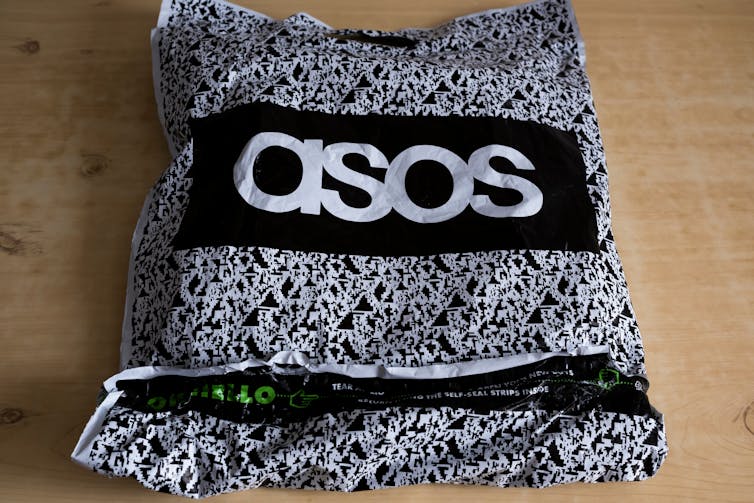
Asos package.
Return to sender?
A08/Shutterstock

For example, retailers such as Zara and H&M, with a business model which mixes online convenience with a high street (or shopping mall) presence, offer the option to order online and then return in person.

This hybrid (or “omni-channel”) model appears to be driving consumers to physical shops for a blended experience which provides convenience and helps reduce return costs.

For Asos, doing something similar would require major investment (in bricks and mortar) and increased operational costs – so is perhaps an unlikely solution for the company.

But to balance sustainability, cost and customer satisfaction, Asos could explore other options. These might include clearer, more visible communication regarding “fair use” policies and their consequences. It could aim for more human interactions and better dialogue with customers it plans to ban.

Offering physical retail locations or return collection points to simplify the process and reduce the environmental impact and costs will provide customer flexibility. Overall, these areas will help create a better customer service experience.

Ultimately, Asos and other similar online clothing retailers must evolve. With changing consumer expectations, a challenging economic climate and rising operational costs, the model that defined these retailers’ early success cannot remain unchanged.

If they make adjustments, they may emerge stronger. If they do not, they risk sparking a customer exodus that would be hard to reverse.

The Conversation

Nic Sanders does not work for, consult, own shares in or receive funding from any company or organisation that would benefit from this article, and has disclosed no relevant affiliations beyond their academic appointment.

ref. Why Asos should be wary of banning customers returning unwanted goods – https://theconversation.com/why-asos-should-be-wary-of-banning-customers-returning-unwanted-goods-259952


How Trump plays with new media says a lot about him – as it did with FDR, Kennedy and Obama

Source: The Conversation – UK – By Sara Polak, University Lecturer in American Studies, Leiden University

There is a strange and worrying parallel between the breakneck speed at which Donald Trump has operated in the first few months of his presidency and the ever-accelerating pace at which information moves on social media platforms. Where in his first term he used Twitter, now, the 47th US president is using his own platform, TruthSocial, to announce changes of direction that are sometimes so fundamental that they change decades of US policy.

Social media has become a key tool of governing for Trump’s administration. He uses it both to make announcements and to drum up support for those announcements. His social media posts can move the markets and make or break careers. They can even, it seems, stop wars.

So when he used TruthSocial to announce a ceasefire between Israel and Iran on June 23, giving the two countries a deadline to stop firing missiles, it appears that neither of the antagonists were fully aware of the situation, given they carried on attacking each other. So an all-caps message followed: “ISRAEL. DO NOT DROP THOSE BOMBS,” he posted. “BRING YOUR PILOTS HOME, NOW!” – adding, just in case anyone had any doubt he was serious: “DONALD J. TRUMP, PRESIDENT OF THE UNITED STATES.”

Trump’s use of his TruthSocial platform began as he sought to re-establish himself from the political wilderness after the insurrection of January 6 2021. It has now become a tool of his extreme power and his willingness to use (and abuse) it – globally as well as domestically.


Get your news from actual experts, straight to your inbox. Sign up to our daily newsletter to receive all The Conversation UK’s latest coverage of news and research, from politics and business to the arts and sciences.


He’s the latest in a string of US presidents known for their adroit use of whichever is the medium most guaranteed to connect with the greatest number of people. From Theodore “Teddy” Roosevelt’s adept cultivation of print journalists in the early 20th century through Franklin D. Roosevelt’s comforting use of radio as it gained popularity and John F. Kennedy’s mastery of the rising medium of television, presidents have expanded their reach and influence through adept use of media.

FDR’s “fireside chats”, broadcast on the radio throughout the US in the 1930s, reached an estimated 80% of the population, showing he understood the key media principle of reach. Roosevelt would address his listeners as “my friends” and Americans came to understand them as seemingly intimate conversations with their president.

FDR dominated the airwaves at a time when many Americans hardly understood the important role that the federal government played in their own lives – and millions of households were only just getting mains electricity (thanks to the Rural Electrification Act of 1936). But radios were becoming a common mass medium and FDR perfectly understood how to use it. If you listen to the fireside chats, FDR may sound patrician – and at times formal – but his tone is also friendly, thoughtful and reassuring.

In Germany at around the same time, Adolf Hitler’s massive stadium speeches were very effective for people who were in the stadium and being lifted by the intensity of the crowd and all the carefully thought out visual cues. But when broadcast on radio, Hitler had nothing like Roosevelt’s ability to connect with people on a personal level.

Roosevelt was hardly the first leader – or even the first US president – to speak on the radio. But he was the first to master the medium. He figured out how to use its potential to deliver a key implicit message: that his government should and did take on a central role in people’s lives.

Equally, John F. Kennedy can be said to have “discovered” political television. Not just as a medium for political campaigns, debates and speeches – but also for putting across to a mass audience his role as the embodiment of American decency, beauty and masculinity: JFK’s White House as Camelot.

JFK was considered a master of the fast-growing medium of television.

Both Roosevelt and Kennedy were in several ways physically disabled and lived with chronic illness, yet through the “new medium” of their time were able to project an image of quintessentially American strength and trustworthiness. In part this was their own doing – but it’s also a testament to the power of the media they used for their time.

Mastering the medium

These possibilities of a medium used to its best advantage – for example, to be heard around the US, but still to project a sense of intimacy – have become known as the “affordances” of a medium. The medium afforded Roosevelt space to be authentic without showing his disability. Kennedy appeared young, fit and handsome – even when dependent on painkillers.

When a new medium is introduced, people start to play around with its affordances – and this applies to politicians too. Political leaders who develop a special aptitude for using the new medium to emphasise their unique style can become particularly successful, as has Donald Trump with his use of social media.

The US president rose to power helped by his adept use of many of Twitter’s attributes – the imposed brevity of his messages, the ease of retweeting, the tendency for other users to “pile on” (and the user anonymity, which tends to encourage pile-ons) to polarise American public debate.

Trump was forced off Twitter after the Capitol Hill insurrection of January 6 2021. So he came back with his own platform, TruthSocial, where he can also make the rules. And now he uses the platform to make foreign policy, trumpeting his positions (which can change with bewildering speed) on TruthSocial well before they can be announced by the White House press team, which often has to scramble to catch up.

When Canadian communication theorist Marshall McLuhan penned his famous phrase: “The medium is the message” in his groundbreaking 1964 study, Understanding Media: The Extensions of Man, he meant to say that media form and content are not as distinct from one another as one might think and that the form of a medium of communication can shape society as much as its content. In Donald Trump’s use of social media, we are seeing this idea at work.

The Conversation

Sara Polak does not work for, consult, own shares in or receive funding from any company or organisation that would benefit from this article, and has disclosed no relevant affiliations beyond their academic appointment.

ref. How Trump plays with new media says a lot about him – as it did with FDR, Kennedy and Obama – https://theconversation.com/how-trump-plays-with-new-media-says-a-lot-about-him-as-it-did-with-fdr-kennedy-and-obama-248923

From Roman drains to ancient filters, these artefacts show how solutions to water contamination have evolved

Source: The Conversation – UK – By Rosa Busquets, Associate Professor, School of Life Sciences, Pharmacy and Chemistry, Kingston University

Thirst: In Search of Freshwater, an exhibition at Wellcome Collection. Benjamin Gilbert., CC BY-NC-ND

A new exhibition in London (open until February 2026) called Thirst: In search of freshwater highlights how civilisations have treasured – and been intrinsically linked to – safe, clean water.

As a chemist, I research how freshwater is polluted by modern civilisation. Common contaminants in rivers include pharmaceuticals,
microplastics
(which degrade further when exposed to sunlight and wave power), and forever chemicals or per- and polyfluoroalkyl substances (PFAS) (some of which are carcinogenic).

Synthetic toxic chemicals are introduced into the environment from the products we make, use and dispose of. This wasn’t a problem centuries ago, where we had a totally different manufacturing industry and technologies.

Some, such as PFAS from stain-resistant textiles or nonstick materials such as cookware, can be particularly difficult to remove from wastewater. PFAS don’t degrade easily, they resist conventional heat treatments and can easily pass through wastewater treatments, so they contaminate rivers or lakes that are sources of our drinking water.


Get your news from actual experts, straight to your inbox. Sign up to our daily newsletter to receive all The Conversation UK’s latest coverage of news and research, from politics and business to the arts and sciences.


Testing for pollutants is even more critical in developing nations that lack sanitation and face drought or flooding.
Having to protect and conserve drinking water and its sources is as relevant today as it always has been.

For this exhibition, curator at the Wellcome Collection in London, Janice Li, has selected 125 historical objects, photographs and feats of engineering that link to drought, rain, glaciers, rivers and lakes. These three artefacts from Thirst illustrate how our relationship with water contamination has evolved:

1. Ancient water filters

Made from natural materials such as clay, water jug filters have been used for hundreds of years in every continent by ancient civilisations. They show that purifying water for drinking was commonplace. The sand and soil particles that naturally get suspended in water and removed by these filters would have carried microbes.

broken arabic jug
Water jug filters with Arabic inscription, found in Egypt, dating back to 900-1,200.
Victoria and Albert Museum London/Wellcome Collection, CC BY-NC-ND

But in ancient times, pharmaceuticals and other drugs, pesticides, forever chemicals and microplastics would not have been a problem. Those filters could work relatively well despite being made of simple materials with wide pores.

Today, those ancient filters would no longer be effective. Modern water filters are made using more advanced materials which typically have small pores (called micropores and mesopores). For example, filters often include activated carbon (a highly porous type of carbon that can be manufactured to capture contaminants) or membranes that filter water. Only then is it safe for people to drink.


Read more:
Forever chemicals are in our drinking water – here’s how to reduce them


2. Roman water pipes

Lead water pipes (known as fistulae) were useful parts of a relatively advanced plumbing system that distributed drinking water throughout Roman cities. They are still common in water systems in our cities today. In the US, there are about 9.2 million lead service lines in use. Exposure to lead causes severe human health problems. Lead exposure, not necessarily from drinking water only, was attributed to more than 1.5 million deaths in 2021.

old lead water pipe on black background.
A Roman lead water pipe that dates back to 1-300CE.
Courtesy of Wellcome Collection/Science Museum Group., CC BY-NC-ND

It’s now understood that lead is neurotoxic and it can diffuse or spread from the pipes to drinking water. Lead from paints and batteries, including car batteries, can also contaminate drinking water.

To protect us from lead leaching or flaking off from pipes, some government agencies are calling for the replacement of lead pipes with copper or plastic pipes. Water companies routinely add phosphates (mined powder that contains phosphorus) to drinking water to help capture potential lead contamination and make it safe to drink.

3. The horror of unhealthy water

One caricature titled The Monster Soup by artist William Heath (1828) is part of the Wellcome Trust’s permanent collection. The graphics read “microcosms dedicated to the London Water companies” and “Monster soup, commonly called Thames Water being a correct representation of the precious stuff doled out to us”. The cartoon shows a lady so terrified at the sight of microbes in river water from the Thames that she drops her cup of tea.

poster of Monster Soup
Monster Soup by William Heath.
Courtesy of the Wellcome Collection., CC BY-NC-ND

Even today, many people remain shocked at the toxic contamination in rivers and sewage pollution prevents people from swimming.

By 2030, 2 billion people will still not have safely managed drinking water and 1.2 billion will lack basic hygiene services. Drinking water will still be contaminated by bacteria such as E. coli and other dangerous pathogens that cause waterborne diseases. So advancing technologies to filter out contamination will be just as crucial in the future as it has been in the past.


Don’t have time to read about climate change as much as you’d like?

Get a weekly roundup in your inbox instead. Every Wednesday, The Conversation’s environment editor writes Imagine, a short email that goes a little deeper into just one climate issue. Join the 45,000+ readers who’ve subscribed so far.


The Conversation

Rosa Busquets receives funding from UKRI/ EU Horizons MSCA Staff exchanges Clean Water project 101131182, DASA, project ACC6093561. She is affiliated with Kingston University, UCL, Al-Farabi Kazakh National University, UNEP EEAP.

ref. From Roman drains to ancient filters, these artefacts show how solutions to water contamination have evolved – https://theconversation.com/from-roman-drains-to-ancient-filters-these-artefacts-show-how-solutions-to-water-contamination-have-evolved-253876

When do we first feel pain?

Source: The Conversation – UK – By Laurenz Casser, Leverhulme Trust Early Career Fellow, University of Sheffield

Alina Troeva/Shutterstock.com

At some point between conception and early childhood, pain makes its debut. But when exactly that happens remains one of medicine’s most challenging questions.

Some have claimed that foetuses as young as twelve weeks can already be seen wincing in agony, while others have flat-out denied that even infants show any true signs of pain until long after birth.

New research from University College London offers fresh insights into this puzzle. By mapping the development of pain-processing networks in the brain – what researchers call the “pain connectome” – scientists have begun to trace exactly when and how our capacity for pain emerges. What they discovered challenges simple answers about when pain “begins”.


Get your news from actual experts, straight to your inbox. Sign up to our daily newsletter to receive all The Conversation UK’s latest coverage of news and research, from politics and business to the arts and sciences.


The researchers used advanced brain imaging to compare the neural networks of foetuses and infants with those of adults, tracking how different components of pain processing mature over time. Until about 32 weeks after conception, all pain-related brain networks remain significantly underdeveloped compared with adult brains. But then development accelerates dramatically.

The sensory aspects of pain – the basic detection of harmful stimuli – mature first, becoming functional around 34 to 36 weeks of pregnancy. The emotional components that make pain distressing follow shortly after, developing between 36 and 38 weeks. However, the cognitive centres responsible for consciously interpreting and evaluating pain lag far behind, and remain largely immature by the time of birth, about 40 weeks after conception.

This staged development suggests that while late-term foetuses and newborns can detect and respond to harmful stimuli, they probably experience pain very differently from older children and adults. Most significantly, newborns probably can’t consciously evaluate their pain – they can’t form the thought: “This hurts and it’s bad!”

A newborn held in a doctor's hands.
Does it hurt?
Martin Valigursky/Shutterstock.com

A history of changing views

These findings represent the latest chapter in a long-running scientific debate that has swung dramatically over the centuries, often with profound consequences for medical practice.

For most physiologists in the 18th and 19th centuries, the perceived delicacy of the infant’s body meant that it must be exquisitely sensitive to pain, so much so that some have had their doubts if infants ever felt anything else. Birth, in particular, was imagined to be an extremely painful event for a newborn.

However, advances in embryology during the 1870s reversed this thinking. As scientists discovered that infant brains and nervous systems were far less developed than adult versions, many began questioning whether babies could truly feel pain at all. If the neural machinery wasn’t fully formed, how could genuine pain experiences exist?

This scepticism had troubling practical consequences. For nearly a century, many doctors performed surgery on infants without anaesthesia, convinced that their patients were essentially immune to suffering. The practice continued well into the 1980s in some medical centres.

Towards the end of the 20th century, public outrage about the medical treatment of infants and new scientific results turned the tables yet again. It was found that newborns exhibited many of the signs (neurological, physiological and behavioural) of pain after all, and that, if anything, pain in infants had probably been underestimated.

The ambiguous brain

The reason why there has been endless disagreement about infant pain is that we cannot access their experiences directly.

Sure, we can observe their behaviour and study their brains, but these are not the same thing. Pain is an experience, something that’s felt in the privacy of a person’s own mind, and that’s inaccessible to anyone but the person whose pain it is.

Of course, pain experiences are typically accompanied by telltale signs: be it the retraction of a body part from a sharp object or the increased activity of certain brain regions. Those we can measure. But the trouble is that no one behaviour or brain event is ever unambiguous.

The fact that an infant pulls back their hand from a pin prick may mean that it experiences the pricking as painful, but it may also just be an unconscious reflex. Similarly, the fact that the brain is simultaneously showing pain-related activity may be a sign of pain, but it may also be that the processing unfolds entirely unconsciously. We simply don’t know.

Perhaps the infant knows. But even if they do, they can’t tell us about their experiences yet, and until they can, scientists are left guessing. Fortunately, their guesses are becoming increasingly well informed, but for now, that is all they can be – guesses.

What would it take to get certainty? Well, it would require an explanation that connects our brains and behaviour to our conscious experiences. But so far, no scientifically respectable explanation of this kind has been forthcoming.

The Conversation

Laurenz Casser receives funding from the Leverhulme Trust.

ref. When do we first feel pain? – https://theconversation.com/when-do-we-first-feel-pain-259588

Toxic fungus from King Tutankhamun’s tomb yields cancer-fighting compounds – new study

Source: The Conversation – UK – By Justin Stebbing, Professor of Biomedical Sciences, Anglia Ruskin University

Miro Varcek / Shutterstock.com

In November 1922, archaeologist Howard Carter peered through a small hole into the sealed tomb of King Tutankhamun. When asked if he could see anything, he replied: “Yes, wonderful things.” Within months, however, Carter’s financial backer Lord Carnarvon was dead from a mysterious illness. Over the following years, several other members of the excavation team would meet similar fates, fuelling legends of the “pharaoh’s curse” that have captivated the public imagination for just over a century.

For decades, these mysterious deaths were attributed to supernatural forces. But modern science has revealed a more likely culprit: a toxic fungus known as Aspergillus flavus. Now, in an unexpected twist, this same deadly organism is being transformed into a powerful new weapon in the fight against cancer.

Aspergillus flavus is a common mould found in soil, decaying vegetation and stored grains. It is infamous for its ability to survive in harsh environments, including the sealed chambers of ancient tombs, where it can lie dormant for thousands of years.

When disturbed, the fungus releases spores that can cause severe respiratory infections, particularly in people with weakened immune systems. This may explain the so-called “curse” of King Tutankhamun and similar incidents, such as the deaths of several scientists who entered the tomb of Casimir IV in Poland in the 1970s. In both cases, investigations later found that A flavus was present, and its toxins were probably responsible for the illnesses and deaths.

Despite its deadly reputation, Aspergillus flavus is now at the centre of a remarkable scientific finding. Researchers at the University of Pennsylvania have discovered that this fungus produces a unique class of molecules with the potential to fight cancer.

These molecules belong to a group called ribosomally synthesised and post-translationally modified peptides, or RiPPs. RiPPs are made by the ribosome – the cell’s protein factory – and are later chemically altered to enhance their function.

While thousands of RiPPs have been identified in bacteria, only a handful have been found in fungi – until now.

The process of finding these fungal RiPPs was far from simple. The research team screened a dozen different strains or types of aspergillus, searching for chemical clues that might indicate the presence of these promising molecules. Aspergillus flavus quickly stood out as a prime candidate.

The researchers compared the chemicals from different fungal strains to known RiPP compounds and found promising matches. To confirm their discovery, they switched off the relevant genes and, sure enough, the target chemicals vanished, proving they had found the source.

Purifying these chemicals proved to be a significant challenge. However, this complexity is also what gives fungal RiPPs their remarkable biological activity.

The team eventually succeeded in isolating four different RiPPs from Aspergillus flavus. These molecules shared a unique structure of interlocking rings, a feature that had never been described before. The researchers named these new compounds “asperigimycins”, after the fungus in which they were found.

The next step was to test these asperigimycins against human cancer cells. In some cases, they stopped the growth of cancer cells, suggesting that asperigimycins could one day become a new treatment for certain types of cancer.

The team also worked out how these chemicals get inside cancer cells. This discovery is significant because many chemicals, like asperigimycins, have medicinal properties but struggle to enter cells in large enough quantities to be useful. Knowing that particular fats (lipids) can enhance this process gives scientists a new tool for drug development.

Further experiments revealed that asperigimycins probably disrupt the process of cell division in cancer cells. Cancer cells divide uncontrollably, and these compounds appear to block the formation of microtubules, the scaffolding inside cells that are essential for cell division.

Tremendous untapped potential

This disruption is specific to certain types of cells, so this may in turn reduce the risk of side-effects. But the discovery of asperigimycins is just the beginning. The researchers also identified similar clusters of genes in other fungi, suggesting that many more fungal RiPPs remain to be discovered.

Almost all the fungal RiPPs found so far have strong biological activity, making this an area with tremendous untapped potential. The next step is to test asperigimycins in other systems and models, with the hope of eventually moving to human clinical trials. If successful, these molecules could join the ranks of other fungal-derived medicines, such as penicillin, which revolutionised modern medicine.

The story of Aspergillus flavus is a powerful example of how nature can be both a source of danger and a wellspring of healing. For centuries, this fungus was feared as a silent killer lurking in ancient tombs, responsible for mysterious deaths and the legend of the pharaoh’s curse. Today, scientists are turning that fear into hope, harnessing the same deadly spores to create life-saving medicines.

This transformation, from curse to cure, highlights the importance of continued exploration and innovation in the natural world. Nature has in fact provided us with an incredible pharmacy, filled with compounds that can heal as well as harm. It is up to scientists and engineers to uncover these secrets, using the latest technologies to identify, modify and test new molecules for their potential to treat disease.

The discovery of asperigimycins is a reminder that even the most unlikely sources – such as a toxic tomb fungus – can hold the key to revolutionary new treatments. As researchers continue to explore the hidden world of fungi, who knows what other medical breakthroughs may lie just beneath the surface?

The Conversation

Justin Stebbing does not work for, consult, own shares in or receive funding from any company or organisation that would benefit from this article, and has disclosed no relevant affiliations beyond their academic appointment.

ref. Toxic fungus from King Tutankhamun’s tomb yields cancer-fighting compounds – new study – https://theconversation.com/toxic-fungus-from-king-tutankhamuns-tomb-yields-cancer-fighting-compounds-new-study-259706

Humans and animals can both think logically − but testing what kind of logic they’re using is tricky

Source: The Conversation – USA – By Olga Lazareva, Professor of Psychology, Drake University

For some mental processes, humans and animals likely follow similar lines of thinking. Catherine Falls Commercial/Moment via Getty Images

Can a monkey, a pigeon or a fish reason like a person? It’s a question scientists have been testing in increasingly creative ways – and what we’ve found so far paints a more complicated picture than you’d think.

Imagine you’re filling out a March Madness bracket. You hear that Team A beat Team B, and Team B beat Team C – so you assume Team A is probably better than Team C. That’s a kind of logical reasoning known as transitive inference. It’s so automatic that you barely notice you’re doing it.

It turns out humans are not the only ones who can make these kinds of mental leaps. In labs around the world, researchers have tested many animals, from primates to birds to insects, on tasks designed to probe transitive inference, and most pass with flying colors.

As a scientist focused on animal learning and behavior, I work with pigeons to understand how they make sense of relationships, patterns and rules. In other words, I study the minds of animals that will never fill out a March Madness bracket – but might still be able to guess the winner.

Logic test without words

The basic idea is simple: If an animal learns that A is better than B, and B is better than C, can it figure out that A is better than C – even though it’s never seen A and C together?

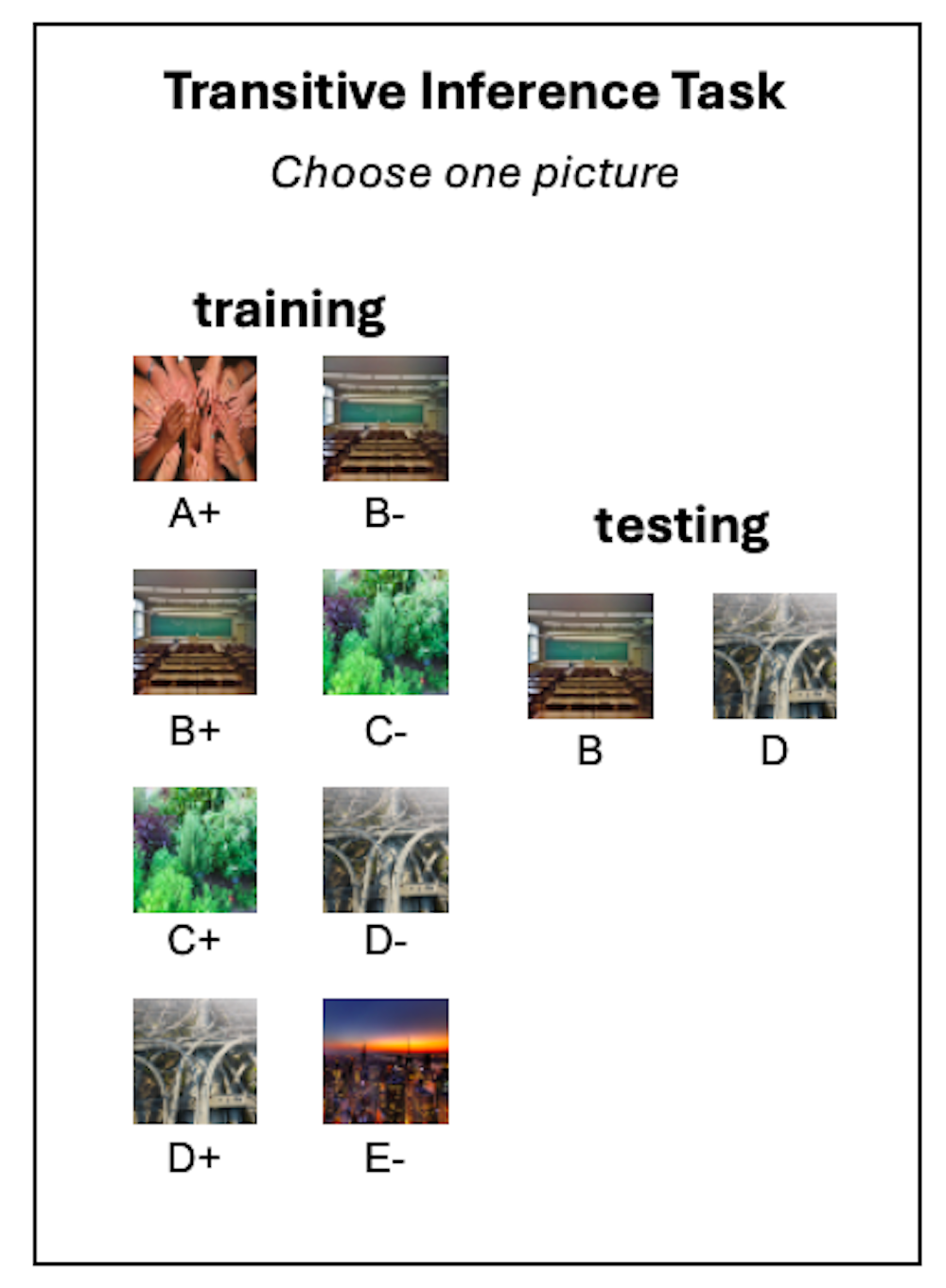
In the lab, researchers test this by giving animals randomly paired images, one pair at a time, and rewarding them with food for picking the correct one. For example, animals learn that a photo of hands (A) is correct when paired with a classroom (B), a classroom (B) is correct when paired with bushes (C), bushes (C) are correct when paired with a highway (D), and a highway (D) is correct when paired with a sunset (E). We don’t know whether they “understand” what’s in the picture, and it is not particularly important for the experiment that they do.

Comparing four pairs of images labeled a range of A to D in a training column, then one pair of images in the tesitng column
In a transitive inference task, subjects learn a series of rewarded pairs – such as A+ vs. B–, B+ vs. C– – and are later tested on novel pairings, like B vs. D, to see whether they infer an overall ranking.
Olga Lazareva, CC BY-ND

One possible explanation is that the animals that learn all the tasks create a mental ranking of these images: A > B > C > D > E. We test this idea by giving them new pairs they’ve never seen before, such as classroom (B) vs. highway (D). If they consistently pick the higher-ranked item, they’ve inferred the underlying order.

What’s fascinating is how many species succeed at this task. Monkeys, rats, pigeons – even fish and wasps – have all demonstrated transitive inference in one form or another.

The twist: Not all tasks are easy

But not all types of reasoning come so easily. There’s another kind of rule called transitivity that is different from transitive inference, despite the similar name. Instead of asking which picture is better, transitivity is about equivalence.

In this task, animals are shown a set of three pictures and asked which one goes with the center image. For example, if white triangle (A1) is shown, choosing red square (B1) earns a reward, while choosing blue square (B2) does not. Later, when red square (B1) is shown, choosing white cross (C1) earns a reward while choosing white circle (C2) does not. Now comes the test: white triangle (A1) is shown with white cross (C1) and white circle (C2) as choices. If they pick white cross (C1), then they’ve demonstrated transitivity.

Comparing two sets of three shapes labeled a range of A to C in a section, then one trio of shapes in the tesitng section
In a transitivity task, subjects learn matching rules across overlapping sets – such as A1 matches B1, B1 matches C1 – and are tested on new combinations, such as A1 with C1 or C2, to assess whether they infer the relationship between A1 and C1.
Olga Lazareva, CC BY-ND

The change may seem small, but species that succeed in those first transitive inference tasks often stumble in this task. In fact, they tend to treat the white triangle and the white cross as completely separate things, despite their common relationship with the red square. In my recently published review of research using the two tasks, I concluded that more evidence is needed to determine whether these tests tap into the same cognitive ability.

Small differences, big consequences

Why does the difference between transitive inference and transitivity matter? At first glance, they may seem like two versions of the same ability – logical reasoning. But when animals succeed at one and struggle with the other, it raises an important question: Are these tasks measuring the same kind of thinking?

The apparent difference between the two tasks isn’t just a quirk of animal behavior. Psychology researchers apply these tasks to humans in order to draw conclusions about how people reason.

For example, say you’re trying to pick a new almond milk. You know that Brand A is creamier than Brand B, and your friend told you that Brand C is even waterier than Brand B. Based on that, because you like a thicker milk, you might assume Brand A is better than Brand C, an example of transitive inference.

But now imagine the store labels both Brand A and Brand C as “barista blends.” Even without tasting them, you might treat them as functionally equivalent, because they belong to the same category. That’s more like transitivity, where items are grouped based on shared relationships. In this case, “barista blend” signals the brands share similar quality.

Child looking at colorful toy cars arranged in a line across a table or bed
How researchers define logical reasoning determines how they interpret results.
Svetlana Mishchenko/iStock via Getty Images

Researchers often treat these types of reasoning as measuring the same ability. But if they rely on different mental processes, they might not be interchangeable. In other words, the way scientists ask their questions may shape the answer – and that has big implications for how they interpret success in animals and in people.

This difference could affect how researchers interpret decision-making not only in the lab, but also in everyday choices and in clinical settings. Tasks like these are sometimes used in research on autism, brain injury or age-related cognitive decline.

If two tasks look similar on the surface, then choosing the wrong one might lead to inaccurate conclusions about someone’s cognitive abilities. That’s why ongoing work in my lab is exploring whether the same distinction between these logical processes holds true for people.

Just like a March Madness bracket doesn’t always predict the winner, a reasoning task doesn’t always show how someone got to the right answer. That’s the puzzle researchers are still working on – figuring out whether different tasks really tap into the same kind of thinking or just look like they do. It’s what keeps scientists like me in the lab, asking questions, running experiments and trying to understand what it really means to reason – no matter who’s doing the thinking.

The Conversation

Olga Lazareva does not work for, consult, own shares in or receive funding from any company or organization that would benefit from this article, and has disclosed no relevant affiliations beyond their academic appointment.

ref. Humans and animals can both think logically − but testing what kind of logic they’re using is tricky – https://theconversation.com/humans-and-animals-can-both-think-logically-but-testing-what-kind-of-logic-theyre-using-is-tricky-253001

Why the US bombed a bunch of metal tubes − a nuclear engineer explains the importance of centrifuges to Iranian efforts to build nuclear weapons

Source: The Conversation – USA – By Anna Erickson, Professor of Nuclear and Radiological Engineering, Georgia Institute of Technology

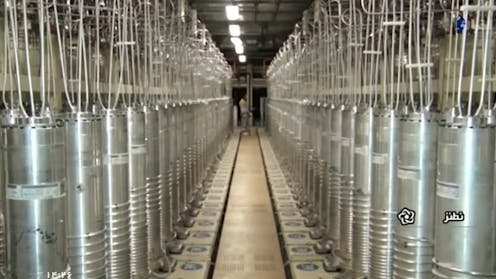
An image from Iranian television shows centrifuges lining a hall at Iran’s Natanz uranium enrichment facility in 2021. IRIB via APPEAR

When U.S. forces attacked Iran’s nuclear facilities on June 21, 2025, the main target was metal tubes in laboratories deep underground. The tubes are centrifuges that produce highly enriched uranium needed to build nuclear weapons.

Inside of a centrifuge, a rotor spins in the range of 50,000 to 100,000 revolutions per minute, 10 times faster than a Corvette engine’s crankshaft. High speeds are needed to separate lighter uranium-235 from heavier uranium-238 for further collection and processing. Producing this level of force means the rotor itself must be well balanced and strong and rely on high-speed magnetic bearings to reduce friction.

Over the years, Iran has produced thousands of centrifuges. They work together to enrich uranium to dangerous levels – close to weapons-grade uranium. Most of them are deployed in three enrichment sites: Natanz, the country’s main enrichment facility, Fordow and Isfahan. Inside of these facilities, the centrifuges are arranged into cascades – series of machines connected to each other. This way, each machine yields slightly more enriched uranium, feeding the gas produced into its neighbor to maximize production efficiency.

As a nuclear engineer who works on nuclear nonproliferation, I track centrifuge technology, including the Iranian enrichment facilities targeted by the U.S. and Israel. A typical cascade deployed in Iran is composed of 164 centrifuges, working in series to produce enriched uranium. The Natanz facility was designed to hold over 50,000 centrifuges.

Iran’s early intentions to field centrifuges on a very large scale were clear. At the peak of the program in the early 2010s it deployed over 19,000 units. Iran later scaled down the number of its centrifuges in part due to international agreements such as the since scrapped Joint Comprehensive Plan of Action signed in 2015.

Legacy of enrichment

Iran has a long history of enriching uranium.

In the late 1990s, it acquired a Pakistani centrifuge design known as P-1. The blueprints and some components were supplied via the A.Q. Khan black market network – the mastermind of the Pakistani program and a serious source of nuclear proliferation globally. Today, the P-1 design is known as IR-1. IR-1 centrifuges use aluminum and a high-strength alloy, known as maraging steel.

About one-third of the centrifuges that were deployed at the sites of the recent strike on June 21 are IR-1. Each one produces on the order of 0.8 separative work units, which is the unit for measuring the amount of energy and effort needed to separate uranium-235 molecules from the rest of the uranium gas. To put this in perspective, one centrifuge would yield about 0.2 ounces (6 grams) of 60%-enriched uranium-235 per year.

A typical uranium-based weapon requires 55 pounds (25 kilograms) of 90%-enriched uranium. To get to weapons-grade level, a single centrifuge would produce only 0.14 ounces (4 grams) per year. It requires more work to go higher in enrichment. While capable of doing the job, the IR-1 is quite inefficient.

The author explains the uranium enrichment process to CBS News.

More and better centrifuges

Small yields mean that over 6,000 centrifuges would need to work together for a year to get enough material for one weapon such as a nuclear warhead. Or the efficiency of the centrifuges would have to be improved. Iran did both.

Before the strike by U.S. forces, Iran was operating close to 7,000 IR-1 centrifuges. In addition, Iran designed, built and operated more efficient centrifuges such as the IR-2m, IR-4 and IR-6 designs. Comparing the IR-1 with the latest designs is like comparing a golf cart with the latest electric vehicles in terms of range and payload.

Iran’s latest centrifuge designs contain carbon fiber composites with exceptional strength and durability and low weight. This is a recipe for producing light and compact centrifuges that are easier to conceal from inspections. According to the international nuclear watchdog International Atomic Energy Agency, before the strike Iran was operating 6,500 IR-2m centrifuges, close to 4,000 IR-4 centrifuges and over 3,000 IR-6 centrifuges.

With each new generation, the separative work unit efficiency increased significantly. IR-6 centrifuges, with their carbon fiber rotors, can achieve up to 10 separative work units per year. That’s about 2.8 ounces (80 grams) of 60%-enriched uranium-235 per year. The International Atomic Energy Agency verified that the IR-6 cascades have been actively used to ramp up production of 60%-enriched uranium.

The most recent and advanced centrifuges developed by Iran, known as IR-9, can achieve 50 separative work units per year. This cuts down the time needed to produce highly enriched uranium for weapon purposes from months to weeks. The other aspect of IR-9 advanced centrifuges is their compactness. They are easier to conceal from inspections or move underground, and they require less energy to operate.

Advanced centrifuges such as the IR-9 drive up the risk of nuclear weapons proliferation significantly. Fortunately, the International Atomic Energy Agency reports that only one exists in testing laboratories, and there is no evidence Iran has deployed them widely. However, it’s possible more are concealed.

Bombs or talks?

Uranium enrichment of 60% is far beyond the needs of any civilian use. The International Atomic Energy Agency confirmed that Iran stockpiled about 880 pounds (400 kilograms) of highly enriched uranium before the attack, and it might have escaped intact. That’s enough to make 10 weapons. The newer centrifuges – IR-2m, IR-4 and IR-6 – would need a bit over eight months to produce that much.

It’s not clear what the U.S. attack has accomplished, but destroying the facilities targeted in the attack and hindering Iran’s ability to continue enriching uranium might be a way to slow Iran’s move toward producing nuclear weapons. However, based on my work and research on preventing nuclear proliferation, I believe a more reliable means of preventing Iran from achieving its nuclear aims would be for diplomacy and cooperation to prevail.

The Conversation

Anna Erickson receives funding from Department of Energy National Nuclear Security Administration (NNSA) related to nuclear nonproliferation technologies. She has previously served on the Board of Directors of the American Nuclear Society.

ref. Why the US bombed a bunch of metal tubes − a nuclear engineer explains the importance of centrifuges to Iranian efforts to build nuclear weapons – https://theconversation.com/why-the-us-bombed-a-bunch-of-metal-tubes-a-nuclear-engineer-explains-the-importance-of-centrifuges-to-iranian-efforts-to-build-nuclear-weapons-259883

The hidden cost of convenience: How your data pulls in hundreds of billions of dollars for app and social media companies

Source: The Conversation – USA – By Kassem Fawaz, Associate Professor of Electrical and Computer Engineering, University of Wisconsin-Madison

Many apps and social media platforms collect detailed information about you as you use them, and sometimes even when you’re not using them. Malte Mueller/fStop via Getty images

You wake up in the morning and, first thing, you open your weather app. You close that pesky ad that opens first and check the forecast. You like your weather app, which shows hourly weather forecasts for your location. And the app is free!

But do you know why it’s free? Look at the app’s privacy settings. You help keep it free by allowing it to collect your information, including:

  • What devices you use and their IP and Media Access Control addresses.
  • Information you provide when signing up, such as your name, email address and home address.
  • App settings, such as whether you choose Celsius or Fahrenheit.
  • Your interactions with the app, including what content you view and what ads you click.
  • Inferences based on your interactions with the app.
  • Your location at a given time, including, depending on your settings, continuous tracking.
  • What websites or apps that you interact with after you use the weather app.
  • Information you give to ad vendors.
  • Information gleaned by analytics vendors that analyze and optimize the app.

This type of data collection is standard fare. The app company can use this to customize ads and content. The more customized and personalized an ad is, the more money it generates for the app owner. The owner might also sell your data to other companies.

Screenshot from an android phone with the default opt-in selection radio button filled in
Many apps, including the weather channel app, send you targeted advertising and sell your personal data by default.
Jack West, CC BY-ND

You might also check a social media account like Instagram. The subtle price that you pay is, again, your data. Many “free” mobile apps gather information about you as you interact with them.

As an associate professor of electrical and computer engineering and a doctoral student in computer science, we follow the ways software collects information about people. Your data allows companies to learn about your habits and exploit them.

It’s no secret that social media and mobile applications collect information about you. Meta’s business model depends on it. The company, which operates Facebook, Instagram and WhatsApp, is worth US$1.48 trillion. Just under 98% of its profits come from advertising, which leverages user data from more than 7 billion monthly users.


Read more:
How Internet of Things devices affect your privacy – even when they’re not yours


What your data is worth

Before mobile phones gained apps and social media became ubiquitous, companies conducted large-scale demographic surveys to assess how well a product performed and to get information about the best places to sell it. They used the information to create coarsely targeted ads that they placed on billboards, print ads and TV spots.

Mobile apps and social media platforms now let companies gather much more fine-grained information about people at a lower cost. Through apps and social media, people willingly trade personal information for convenience. In 2007 – a year after the introduction of targeted ads – Facebook made over $153 million, triple the previous year’s revenue. In the past 17 years, that number has increased by more than 1,000 times.

Five ways to leave your data

App and social media companies collect your data in many ways. Meta is a representative case. The company’s privacy policy highlights five ways it gathers your data:

First, it collects the profile information you fill in. Second, it collects the actions you take on its social media platforms. Third, it collects the people you follow and friend. Fourth, it keeps track of each phone, tablet and computer you use to access its platforms. And fifth, it collects information about how you interact with apps that corporate partners connect to its platforms. Many apps and social media platforms follow similar privacy practices.

Your data and activity

When you create an account on an app or social media platform, you provide the company that owns it with information like your age, birth date, identified sex, location and workplace. In the early years of Facebook, selling profile information to advertisers was that company’s main source of revenue. This information is valuable because it allows advertisers to target specific demographics like age, identified gender and location.

And once you start using an app or social media platform, the company behind it can collect data about how you use the app or social media. Social media keeps you engaged as you interact with other people’s posts by liking, commenting or sharing them. Meanwhile, the social media company gains information about what content you view and how you communicate with other people.

Advertisers can find out how much time you spent reading a Facebook post or that you spent a few more seconds on a particular TikTok video. This activity information tells advertisers about your interests. Modern algorithms can quickly pick up subtleties and automatically change the content to engage you in a sponsored post, a targeted advertisement or general content.

Your devices and applications

Companies can also note what devices, including mobile phones, tablets and computers, you use to access their apps and social media platforms. This shows advertisers your brand loyalty, how old your devices are and how much they’re worth.

Because mobile devices travel with you, they have access to information about where you’re going, what you’re doing and who you’re near. In a lawsuit against Kochava Inc., the Federal Trade Commission called out the company for selling customer geolocation data in August 2022, shortly after Roe v Wade was overruled. The company’s customers, including people who had abortions after the ruling was overturned, often didn’t know that data tracking their movements was being collected, according to the commission. The FTC alleged that the data could be used to identify households.

Kochava has denied the FTC’s allegations.

Information that apps can gain from your mobile devices includes anything you have given an app permission to have, such as your location, who you have in your contact list or photos in your gallery.

If you give an app permission to see where you are while the app is running, for instance, the platform can access your location anytime the app is running. Providing access to contacts may provide an app with the phone numbers, names and emails of all the people that you know.

Cross-application data collection

Companies can also gain information about what you do across different apps by acquiring information collected by other apps and platforms.

Android screenshot – white and green text on a black background
The settings on an Android phone show that Meta uses information it collects about you to target ads it shows you in its apps – and also in other apps and on other platforms – by default.
Jack West, CC BY-ND

This is common with social media companies. This allows companies to, for example, show you ads based on what you like or recently looked at on other apps. If you’ve searched for something on Amazon and then noticed an ad for it on Instagram, it’s probably because Amazon shared that information with Instagram.

This combined data collection has made targeted advertising so accurate that people have reported that they feel like their devices are listening to them.

Companies, including Google, Meta, X, TikTok and Snapchat, can build detailed user profiles based on collected information from all the apps and social media platforms you use. They use the profiles to show you ads and posts that match your interests to keep you engaged. They also sell the profile information to advertisers.

Meanwhile, researchers have found that Meta and Yandex, a Russian search engine, have overcome controls in mobile operating system software that ordinarily keep people’s web-browsing data anonymous. Each company puts code on its webpages that used local IPs to pass a person’s browsing history, which is supposed to remain private, to mobile apps installed on that person’s phone, de-anonymizing the data. Yandex has been conducting this tracking since 2017, while Meta began in September 2024, according to the researchers.

What you can do about it

If you use apps that collect your data in some way, including those that give you directions, track your workouts or help you contact someone, or if you use social media platforms, your privacy is at risk.

Aside from entirely abandoning modern technology, there are several steps you can take to limit access – at least in part – to your private information.

Read the privacy policy of each app or social media platform you use. Although privacy policy documents can be long, tedious and sometimes hard to read, they explain how social media platforms collect, process, store and share your data.

Check a policy by making sure it can answer three questions: what data does the app collect, how does it collect the data, and what is the data used for. If you can’t answer all three questions by reading the policy, or if any of the answers don’t sit well with you, consider skipping the app until there’s a change in its data practices.

Remove unnecessary permissions from mobile apps to limit the amount of information that applications can gather from you.

Be aware of the privacy settings that might be offered by the apps or social media platforms you use, including any setting that allows your personal data to affect your experience or shares information about you with other users or applications.

These privacy settings can give you some control. We recommend that you disable “off-app activity” and “personalization” settings. “Off-app activity” allows an app to record which other apps are installed on your phone and what you do on them. Personalization settings allow an app to use your data to tailor what it shows you, including advertisements.

Review and update these settings regularly because permissions sometimes change when apps or your phone update. App updates may also add new features that can collect your data. Phone updates may also give apps new ways to collect your data or add new ways to preserve your privacy.

Use private browser windows or reputable virtual private networks software, commonly referred to as VPNs, when using apps that connect to the internet and social media platforms. Private browsers don’t store any account information, which limits the information that can be collected. VPNs change the IP address of your machine so that apps and platforms can’t discover your location.

Finally, ask yourself whether you really need every app that’s on your phone. And when using social media, consider how much information you want to reveal about yourself in liking and commenting on posts, sharing updates about your life, revealing locations you visited and following celebrities you like.


This article is part of a series on data privacy that explores who collects your data, what and how they collect, who sells and buys your data, what they all do with it, and what you can do about it.

The Conversation

Kassem Fawaz receives funding from the National Science Foundation. In the past, his research group has received unrestricted gifts from Meta and Google.

Jack West does not work for, consult, own shares in or receive funding from any company or organization that would benefit from this article, and has disclosed no relevant affiliations beyond their academic appointment.

ref. The hidden cost of convenience: How your data pulls in hundreds of billions of dollars for app and social media companies – https://theconversation.com/the-hidden-cost-of-convenience-how-your-data-pulls-in-hundreds-of-billions-of-dollars-for-app-and-social-media-companies-251698

Mexican flags flown during immigration protests bother white people a lot more than other Americans

Source: The Conversation – USA – By Edward D. Vargas, Associate Professor, School of Transborder Studies, Arizona State University

Protesters wave the Mexican flag in Los Angeles on June 9, 2025. Luke Johnson/Los Angeles Times via Getty Images

Agents with U.S. Immigration and Customs Enforcement conducted a series of raids throughout Los Angeles and Southern California in early June 2025, sparking protests in downtown Los Angeles and other cities, including New York, Chicago and Austin, Texas.

Some demonstrators expressed growing frustration with ICE by showcasing the Mexican flag, which has become the defining symbol of the protests in Los Angeles.

The use of the flag has also become the subject of intense debate in the media.

Some outlets have depicted the flag as symbolizing ethnic pride, solidarity with immigrants and opposition to the Trump administration.

Others have called it the “perfect propaganda” tool for Republicans and conservatives, some of whom have referred to the Mexican flag as the “confederate banner of the L.A. riots.” They point to its use as evidence of anarchy and a city taken over by immigrants.

But what do Americans think about protesters waving the Mexican flag, and why?

Much of our knowledge surrounding this question is based on the 2006 immigrant rights protests across the United States, which occurred in a much less politically polarized era. Additionally, a vast majority of protesters then brought U.S. flags compared with other national flags, including the Mexican flag.

Research published in 2010 found that even though the public was more likely to be bothered by protesters waving the Mexican flag than the U.S. flag, that difference was largely absent once you divided the public into subgroups, including white people, Latinos and immigrants.

To reexamine public attitudes toward protesters waving the Mexican flag, we conducted an online survey experiment among 10,145 U.S. adults in 2016.

As political scientists who specialize in Latino politics and immigration-related issues, we tested how exposure to the Mexican flag versus the American flag shaped opinion about protests during Trump’s first presidential campaign in 2016.

We found that even though much of the public continued to be less bothered by the American flag than the Mexican flag, there were also important and perhaps surprising differences in protest attitudes between white Americans and other racial and ethnic groups.

A man holds a Mexican flag in front of several police officers on motorcycles.
A demonstrator holds a Mexican flag in front of law enforcement during a protest on June 13, 2025, in Los Angeles.
AP Photo/Wally Skalij

More or less bothered

In the study, we randomly divided respondents into two groups: a treatment group and a control group. Respondents in the treatment group were shown an image of protesters waving a Mexican flag. Respondents in the control group were shown an image of protesters waving the U.S. flag. After viewing the image, respondents were then asked about the extent to which they supported or were bothered by the protests.

Overall, 41% of the respondents said they were bothered by protesters waving the Mexican flag, and 28% said protesters waving the U.S. flag bothered them.

Our results show important differences in opinion between racial and ethnic groups.

White respondents were more likely than any other racial and ethnic group to say they were bothered by protesters waving Mexican flags. Sixty-nine percent of white respondents said they were bothered, 31 percentage points more than the average of nonwhite respondents.

However, 51% of white respondents were also bothered by the image of protesters waving U.S. flags. By contrast, just 20% of Latinos, 33% of Black Americans and 34% of Asian Americans said they were bothered by protesters waving U.S. flags.

Put differently, large majorities of nonwhite respondents were supportive of showing U.S. flags at protests despite their more positive views toward Mexican flags.

What explains racial differences?

When taking a deeper look at what causes Americans to feel bothered about protesters waving Mexican flags, some clear patterns emerge.

On average, older Americans were more likely to be bothered relative to younger Americans. This was particularly true for Americans over 40 years of age compared with millennials, born between 1981 and 1996, and Gen Z respondents, born between 1997 and 2012.

However, there are some nuances when examining age groups and whether they had attended a protest, march or rally in the previous year.

Our findings suggest that older Americans who had not engaged in protests were most likely to be bothered when they saw images of protesters waving Mexican flags. Millennials and Gen Z respondents who participated in a protest were least likely to be bothered.

Given that this issue intersects nationality, race, ethnicity, gender and citizenship status, it’s logical that these factors explained why Americans supported or opposed the use of Mexican flags at immigration protests.

A woman carrying a Mexico-U.S. flag walks in front of soldiers.
A woman carrying a flag with details of the United States and Mexican flags walks past members of the United States Marine Corps on June 14, 2025, in Los Angeles.
Cristopher Rogel Blanquet/Getty Images

For example, racial minorities who have a stronger sense of ethnic or racial identity were more likely to be supportive of protesters waving Mexican and U.S. flags. In other words, group identity is a strong predictor of support for protests in general, regardless of what flag is being flown.

However, minorities who lack a sense of ethnic pride and identity were most likely to be upset when they saw others expressing their First Amendment right to peaceably assemble.

The reality is that recent immigration protests across the country are the first time many of the Latino youth who are citizens have participated in these types of protests. Anyone under age 22 would not have memory of, or been alive during, the last large pro-immigrant protests in 2006.

The Mexican flag represents more than nationalistic pride. It represents their parents’ heritage, hard work and their binational experience as Americans engaged in politics.

The Conversation

The authors do not work for, consult, own shares in or receive funding from any company or organization that would benefit from this article, and have disclosed no relevant affiliations beyond their academic appointment.

ref. Mexican flags flown during immigration protests bother white people a lot more than other Americans – https://theconversation.com/mexican-flags-flown-during-immigration-protests-bother-white-people-a-lot-more-than-other-americans-259004

Invasive carp threaten the Great Lakes − and reveal a surprising twist in national politics

Source: The Conversation – USA – By Mike Shriberg, Professor of Practice & Engagement, School for Environment & Sustainability, University of Michigan

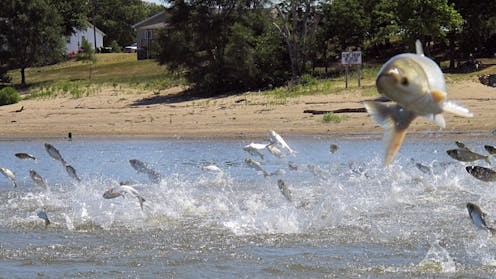
Invasive Asian carp are spreading up the Mississippi River system and already clog the Illinois River. AP Photo/John Flesher

In his second term, President Donald Trump has not taken many actions that draw near-universal praise from across the political spectrum. But there is at least one of these political anomalies, and it illustrates the broad appeal of environmental protection and conservation projects – particularly when it concerns an ecosystem of vital importance to millions of Americans.

In May 2025, Trump issued a presidential memorandum supporting the construction of a physical barrier that is key to keeping invasive carp out of the Great Lakes. These fish have made their way up the Mississippi River system and could have dire ecological consequences if they enter the Great Lakes.

It was not a given that Trump would back this project, which had long been supported by environmental and conservation organizations. But two very different strategies from two Democratic governors – both potential presidential candidates in 2028 – reflected the importance of the Great Lakes to America.

As a water policy and politics scholar focused on the Great Lakes, I see this development not only as an environmental and conservation milestone, but also a potential pathway for more political unity in the U.S.

A feared invasion

Perhaps nothing alarms Great Lakes ecologists more than the potential for invasive carp from Asia to establish a breeding population in the Great Lakes. These fish were intentionally introduced in the U.S. Southeast by private fish farm and wastewater treatment operators as a means to control algae in aquaculture and sewage treatment ponds. Sometime in the 1990s, the fish escaped from those ponds and moved rapidly up the Mississippi River system, including into the Illinois River, which connects to the Great Lakes.

Sometimes said to “breed like mosquitoes and eat like hogs,” these fish can consume up to 40% of their body weight each day, outcompeting many native species and literally sucking up other species and food sources.

Studies of Lake Erie, for example, predict that if the carp enter and thrive, they could make up approximately one-third of the fish biomass of the entire lake within 20 years, replacing popular sportfishing species such as walleye and other ecologically and economically important species.

Invasive carp are generally not eaten in the U.S. and are not desirable for sportfishing. In fact, silver carp have a propensity to jump up to 10 feet out of the water when startled by a boat motor. That can make parts of the Illinois River, which is packed with the invasive fish, almost impossible to fish or even maneuver a boat.

Look out! Silver carp fly out of the water, obstructing boats and hitting people trying to enjoy a river in Indiana.

The Brandon Road Lock and Dam solution

Originally, the Great Lakes and the Mississippi River were not connected to each other. But in 1900, the city of Chicago connected them to avoid sending its sewage into Lake Michigan, from which the city draws its drinking water.

The most complete way to block the carp from invading the Great Lakes would be to undo that connection – but that would recreate sewage and flooding issues for Chicago, or require other expensive infrastructure upgrades. The more practical, short-term alternative is to modify the historic Brandon Road Lock and Dam in Joliet, Illinois, by adding several obstacles that together would block the carp from swimming farther upriver toward the Great Lakes.

The barrier, estimated to cost US$1.15 billion, was authorized by Congress in 2020 and 2022 after many years of intense planning and negotiations. For the first phase of construction, the project received $226 million in federal money from the Bipartisan Infrastructure Law to complement $114 million in state funding – $64 million from Michigan and $50 million from Illinois.

On the first day of Trump’s second term, however, he paused a wide swath of federal funding, including funding from the Bipartisan Infrastructure Law. And that’s when two different political strategies emerged.

A brief documentary explains the construction of a connection between the Great Lakes and the Mississippi River basin.

Pritzker vs. Whitmer vs. Trump

Illinois, a state that has voted for the Democratic candidate in every presidential election since 1992, has the most financially at stake in the Brandon Road project because the project requires the state to acquire land and operate the barrier. When Trump issued his order, Illinois Gov. JB Pritzker, a Democrat, postponed the purchase of a key piece of land, blaming the “Trump Administration’s lack of clarity and commitment” to the project. Pritzker essentially dared Trump to be the reason for the collapse of the Great Lakes ecosystem and fisheries.

Another Democrat, Gov. Gretchen Whitmer of Michigan, a swing state with the most at stake economically and ecologically if these carp species enter the Great Lakes, took a very different approach. She went to the White House to talk with Trump about invasive carp and other issues. She defended her nonconfrontational approach to critics, though she also hid her face from cameras when Trump surprised her with an Oval Office press conference. When Trump visited Michigan, she stood beside him as they praised each other.

When Trump released the federal funding in early May, Pritzker kept up his adversarial language, saying he was “glad that the Trump administration heard our calls … and decided to finally meet their obligation.” Whitmer stayed more conciliatory, calling the funding decision a “huge win that will protect our Great Lakes and secure our economy.” She said she was “grateful to the president for his commitment.”

A woman shakes hands with a man in a blue suit wearing a red ballcap.
Michigan Gov. Gretchen Whitmer greets President Donald Trump as he arrives in her state in late April 2025.
AP Photo/Alex Brandon

Why unity on carp?

Whether coordinated or not, the net result of Pritzker’s and Whitmer’s actions drew praise from both sides of the aisle but was little noticed nationally.

Trump’s support for the project was a rare moment of political unity and an extremely unusual example of leading Democrats being on the same page as Trump. I attribute this surprising outcome to two key factors.

First, the Great Lakes region holds disproportionate power in presidential elections. Michigan, Wisconsin and Pennsylvania have backed the eventual winner in every presidential race for the past 20 years. This swing state power has been used by advocates and state political leaders to drive funding for Great Lakes protection for many years.

Second, Great Lakes are the uniting force in the region. According to polling from the International Joint Commission, the binational body charged with overseeing waterways that cross the U.S.-Canada border, there is “nearly unanimous support (96%) for the importance of government investment in Great Lakes protections” from residents of the region.

There aren’t any other issues with such high voter resonance, so politicians want to be sure Great Lakes voters are happy. For example, Vice President JD Vance has been particularly vocal about the Great Lakes. And Great Lakes restoration funding was one of the few things in the presidential budget that Democrats and Republicans agreed on.

Both Pritzker and Whitmer likely had state-based and national motivations in mind and big aspirations at stake.

Their combined effort has put the project back on track: As of May 12, 2025, Pritzker authorized Illinois to sign the land-purchase agreement he had paused back in February.

And perhaps the governors have identified a new area for unity in a divided United States: Conservation and environmental issues have broad public support, particularly when they involve iconic natural resources, shared values and popular outdoor pursuits such as fishing and boating. Even when political strategies diverge, the results can bring bipartisan satisfaction.

The Conversation

Mike Shriberg was previously the Great Lakes Regional Executive Director of the National Wildlife Federation, which entailed being a co-chair (and, for part of the time, Director) of the Healing Our Waters – Great Lakes Coalition.

ref. Invasive carp threaten the Great Lakes − and reveal a surprising twist in national politics – https://theconversation.com/invasive-carp-threaten-the-great-lakes-and-reveal-a-surprising-twist-in-national-politics-257707