This moth was genetically engineered to be unable to attract a mate.Kristina Brauburger
A single “sexy” gene could help us combat one of the world’s most destructive fruit pests. By deleting the gene that lets female moths produce their mating scent, colleagues and I created an “unsexy” moth – and showed one way to turn insect attraction into a powerful pest control tool.
You’ve probably seen moths flittering around a bright lamppost on a balmy summer night. Those same insects, in their larval form, are the worms that burrow into your apples and peaches, making them serious pests in agriculture.
Moths are usually controlled with chemical pesticides, but pests evolve resistance and these sprays also harm bees and other pollinators. We need new and more sustainable methods to protect important crops targeted by moth larvae, like apples, maize, tomatoes and rice.
In a new study published in the Journal of Chemical Ecology, colleagues and I have demonstrated a way to unravel sexual communication in insects and provide a more sustainable alternative to pesticides. It seems we can stop moths by using their natural instincts against them.
Moths find their mates through chemical communication. Female moths release a species-specific pheromone, which males can detect and follow over long distances.
Farmers have long used synthetic versions of these pheromones to lure male moths away from females so that they don’t reproduce. But the problem is, every species has its own unique blend of pheromones, and replicating the exact recipe in a factory can be costly.
To achieve pheromone-based control on a large-scale, we need to understand how insects make them in the first place – and find the genes responsible.
How we found the sexy gene
Our study focused on the oriental fruit moth (Grapholita molesta), a serious pest on peaches, apples and other fruit. We wanted to identify the gene responsible for making its pheromone.
Pheromones are made from fatty acids by a specific enzyme. To find the genetic material responsible for that enzyme, we needed to identify the fatty acid, the enzyme and eventually the gene.
The fatty acids from which moth pheromones are derived are the same ones that all organisms make in abundance – like the fats in cooking oils and butter.
We first found the small fatty acid that served as the raw material for the moths’ scent, using a technique called gas chromatography, which separates fatty acids based on their size. When we placed this particular fatty acid onto the moth’s pheromone gland, it was converted into the pheromone, confirming we had the right starting point.
Next, we needed to find the exact enzyme that turned that specific fatty acid into that specific pheromone. The key was a double bond between two carbon atoms – that’s a job done by enzymes called desaturases. Searching the moth’s DNA we found many desaturase genes, but only one that was active in females but not in males. This looked like the right gene.
Creating an unsexy moth
A lab moth being ‘Crispr-ed’ by the author. Kristina Brauburger
To test the gene’s function, we used Crispr – a precise gene-editing tool sometimes described as “genetic scissors” – to delete the suspected desaturase gene in moth eggs. When the moths grew into adults, females without the gene could no longer produce their pheromone, confirming it as the crucial link in their sexual communication.
Silencing this single gene meant we’d effectively created an “unsexy” moth – one that couldn’t hope to attract a mate. Our method can also be applied to different species, including other pest moths that make similar pheromones.
Pest control with insect genes
Chemical pesticides remain the main defence against crop pests, but resistance is spreading fast and pesticides are linked to soil contamination, pollinator declines and more.
Pheromone-based pest control avoids these problems. When synthetic pheromones are spread in a field or orchard, males become confused because they follow the synthetic trails instead of those made by the female moth, reducing their breeding success.
Our “unsexy” moths helped us identify the exact gene behind this mating signal. Knowing which gene produces the pheromone means we can now reproduce the pheromone outside the insect – for example, by inserting the gene into yeast or plants that act as “biofactories”.
These engineered organisms can then produce the pheromone naturally and cheaply, the same way we use genetically modified yeast to make medicines like insulin.
Our discovery connects lab research to real-world pest management: by decoding the moth’s love signal, we’ve taken a step towards greener, gene-based production of pheromones that could one day replace chemical pesticides.
Marie Inger Dam is a co-inventor on several patent applications relating to pheromone production.
Source: The Conversation – Canada – By Scott J. Davidson, Assistant Professor and CARCLIQUE Research Chair, Groupe de recherche interuniversitaire en limnologie (GRIL), Université du Québec à Montréal (UQAM)
Healthy peatlands shape water cycles, support unique biodiversity and sustain communities. Yet for all their importance, we still lack a clear picture of how peatlands are changing through time.
When peatlands are drained, degraded or burned, the carbon they hold is released into the atmosphere. More than three million square kilometres of wetlands have been drained by humans since 1700, meaning we have lost a huge amount of carbon sequestration potential globally. This makes it all the more important for us to understand and conserve remaining peatlands.
Traditionally, studies of peatlands have focused on a few well-researched sites, often in temperate or boreal regions. But climate change, land use pressures and extreme weather are affecting peatlands everywhere, including in remote, tropical and under-studied regions.
To predict how peatlands will change and react under future conditions, we need frequent data on different types of peatland habitats that captures how they change over seasons and years.
In our recent research, we harnessed the power of people, easily accessible technology and a research network to collect data using a distributed data approach. This means using data collected following a standardized methodology: everyone collecting similar data using the same methods regardless of location.
The Grande Plée Bleue peatland near Québec City. To predict how peatlands will change and react under future conditions, researchers need frequent data on different types of peatland habitats that captures how they change over seasons and years. (Scott J Davidson)
Methods that make a difference
Our study, called The PeatPic Project, used smartphone photography to collect data. We connected with peatland researchers around the world via social media and word of mouth and asked them to collect photographs of their peatlands during 2021 and 2022. We gathered more than 3,700 photographs from 27 peatlands in 10 countries.
We analyzed these photographs to look at the plant colour, telling us how green leaves are across the year, and providing rich information on the vegetation growing there. Changes in green leaf colour indicate when plants start their growing season.
They also indicate how green or healthy plants are, how much nutrient plants take up and when they turn brown in the autumn. Colour shifts can also signal changes in moisture or nutrient conditions, temperature stress or disturbance.
This kind of science, conducted by a global community of researchers, amplifies reach. Local observers can use smartphones to record seasonal changes, water levels, vegetation colour or cover, land use or disturbance. With training, standardized protocols, good metadata and validation, community-generated data can be robust. These methods lower the cost, increase the amount of data available to researchers, and build local stewardship and global networks.
Small statured plants of peatlands (example from a Minnesotan peatland) are difficult to capture using remote sensing but distributed sampling using smartphone photos offers a solution. (Avni Malhotra)
Better predictions of peatland function are not just academic; they are essential for mitigating the effects of climate change, protecting biodiversity, water security and reducing risks from disasters like fires and droughts.
Information derived from images can be converted into mathematical representations of plant behaviour and this can in turn be added into digital twins of peatlands.
Creating digital twins of peatlands can help experts simulate “what if” scenarios. For example, what happens if drainage increases after a wildfire or restoration is initiated? But to build useful digital twins, we need data in place: across biomes, seasons and scales.
We now have easily accessible tools and technology that allow us to monitor peatlands in ways that were not possible a decade ago. But advancing this depends on action from multiple fronts:
Research networks should develop, share and adopt standard protocols and data practices so that data from different places and sources can be combined, compared and scaled.
Communities, including members of the public, can be partners in observation. Training, co-design, fairness and recognition are essential. Local observations, including smartphone photography, could feed directly into decision-making.
The public can help by supporting policies that fund this work by participating in community science initiatives and recognizing how something as simple as a smartphone photo can significantly contribute to understanding how our planet works.
In fact, the PeatPic Project inspired us to create another community science project called Tracking the Colour of Peatlands. This project involves fixed point locations on 16 peatlands around the world, where members of the public can take a photo of the peatland at different times to help us build a picture how the ecosystem changes over the year.
Peatlands are not fringe ecosystems. They matter for people, climates, water and biodiversity. Harnessing distributed data gathering across a global community, and accessible tools like smartphones gives us a chance to see how peatlands change, to predict where they are most at risk and to act ahead of crisis.
The future of peatlands, and of the Earth’s carbon and water cycles, depends on seeing, recording, sharing and acting together on what is happening now.
Scott J. Davidson receives funding from the Québec Ministry of the Environment. He is a member of the Groupe de recherche interuniversitaire en limnologie (GRIL), an FRQNT-funded network.
Avni Malhotra’s research was supported by the Swiss National Science Foundation.
Typhoon Halong was an unusual storm, likely fueled by the Pacific’s near-record warm surface temperatures this fall. Its timing means recovery will be even more difficult than usual for these hard-hit communities, as Alaska meteorologist Rick Thoman of the University Alaska Fairbanks explains.
Disasters in remote Alaska are not like disasters anywhere in the lower 48 states, he explains. While East Coast homeowners recovering from a nor’easter that flooded parts of New Jersey and other states the same weekend can run to Home Depot for supplies or drive to a hotel if their home floods, none of that exists in remote Native villages.
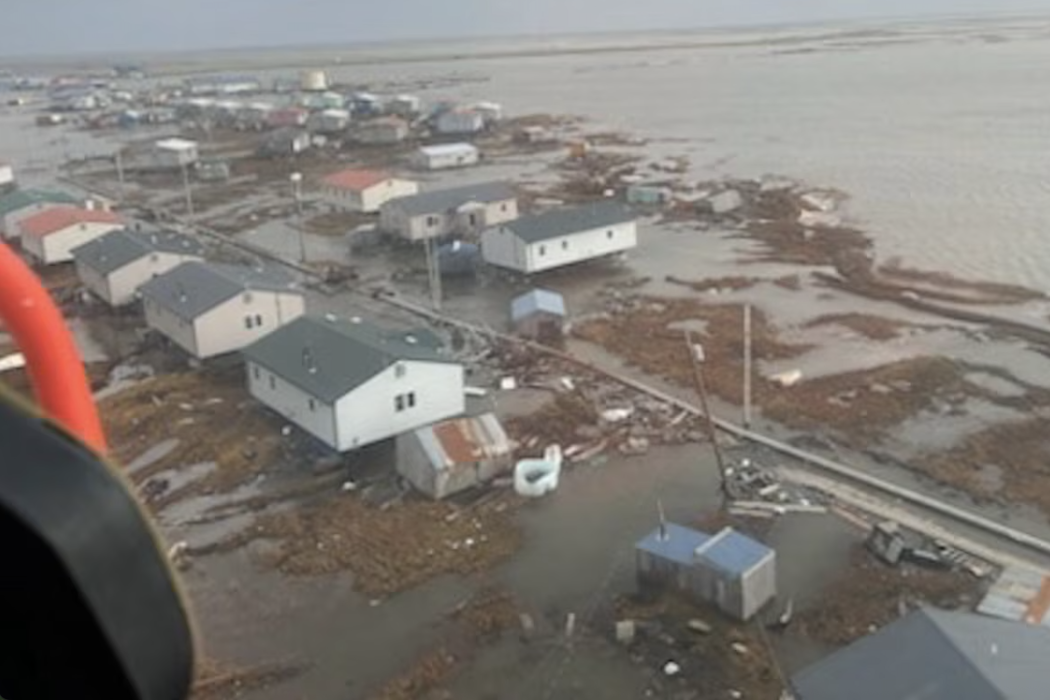
Ex-Typhoon Halong’s storm surge and powerful winds knocked homes off their foundations and set some afloat. U.S. Coast Guard via AP
What made this storm unusual?
Halong was an ex-typhoon, similar to Merbok in 2022, by the time it reached the delta. A week earlier, it had been a powerful typhoon east of Japan. The jet stream picked it up and carried it to the northeast, which is pretty common, and weather models did a pretty good job in forecasting its track into the Bering Sea.
But as the storm approached Alaska, everything went sideways.
The weather model forecasts changed, reflecting a faster-moving storm, and Halong shifted to a very unusual track, moving between Saint Lawrence Island and the Yukon-Kuskokwim Delta coast.
Ex-Typhoon Halong’s storm track showing its turn toward Alaska’s Yukon-Kuskokwim Delta. Rick Thoman
Unlike Merbok, which was very well forecast by the global models, this one’s final track and intensity weren’t clear until the storm was within 36 hours of crossing into Alaska waters. That’s too late for evacuations in many places.
Did the loss of weather balloon data canceled in 2025 affect the forecast?
That’s a question for future research, but here’s what we know for sure: There have not been any upper-air weather balloon observations at Saint Paul Island in the Bering Sea since late August or at Kotzebue since February. Bethel and Cold Bay are limited to one per day instead of two. At Nome, there were no weather balloons for two full days as the storm was moving toward the Bering Sea.
Did any of this cause the forecast to be off? We don’t know because we don’t have the data, but it seems likely that that had some effect on the model performance.
Why is the delta region so vulnerable in a storm like Halong?
The land in this part of western Alaska is very flat, so major storms can drive the ocean into the delta, and the water spreads out.
Most of the land there is very close to sea level, in some places less than 10 feet above the high tide line. Permafrost is also thawing, land is subsiding, and sea-level rise is adding to the risk. For many people, there is literally nowhere to go. Even Bethel, the region’s largest town, about 60 miles up the Kuskokwim River, saw flooding from Halong.
Native residents of Kipnuk discuss the challenges of permafrost loss and climate change in their village. Alaska Institute for Justice.
These villages are also small. They don’t have extra housing or the resources to rapidly recover. The region was already recovering from major flooding in summer 2024. Kipnuk’s tribe was able to get federal disaster aid, but that aid was approved only in early January 2025.
What are these communities facing in terms of recovery?
People are going to have really difficult decisions to make. Do they leave the community for the winter and hope to rebuild next summer?
There likely isn’t much available housing in the region, with the flooding so widespread on top of a housing shortage. Do displaced people go to Anchorage? Cities are expensive.
There is no easy answer.
It’s logistically complicated to rebuild in places like Kipnuk. You can’t just get on the phone and call up your local building contractor.
Almost all of the supplies have to come in by barge – plywood to nails to windows – and that isn’t going to happen in winter. You can’t truck it in – there are no roads. Planes can only fly in small amounts – the runways are short and not built for cargo planes.
The National Guard might be able to help fly in supplies. But then you still need to have people who can do the construction and other repair work.
Everything is 100 times more complicated when it comes to building in remote communities. Even if national or state help is approved, it would be next summer before most homes could be rebuilt.
Is climate change playing a role in storms like these?
That will be another question for future research, but sea-surface temperature in most of the North Pacific that Typhoon Halong passed over before reaching the Aleutian Islands has been much warmer than normal. Warm water fuels storms.
A comparison of daily sea-surface temperatures shows how anomalously warm much of the northern Pacific Ocean was ahead of and during Typhoon Halong. NOAA Coral Reef Watch
Halong also brought lots of very warm air northward with it. East of the track on Oct. 11, Unalaska reached 68 degrees Fahrenheit (20 degrees Celsius), an all-time high there for October.
Rick Thoman retired from National Weather Service Alaska Region in 2018.
Sexual violence in marriages is a very real issue in South Africa, but remains shrouded in silence and denial. It’s a subject that Nyasha Karimakwenda has researched for many years in various forms, from traditional practices to court judgments. We asked her to outline the issues.
What is marital rape and why should we pay more attention to it?
Though marriage rates in southern Africa have decreased over the past decades, marriage is still considered to be an ideal social tool for formalising relationships and building families.
But it’s also an environment where spouses can be exposed to different kinds of abuse. This includes sexual abuse by their partners.
Marital rape is the term commonly used to refer to sexual violence by a partner in a marriage or former marriage. It’s a significant problem globally and is mostly committed by husbands against wives.
It’s critical that we learn more about marital rape because it’s a feature of many women’s lives. And it’s not uncommon for it to happen alongside other kinds of violence in marriages. These can include emotional, verbal, economic and physical harms.
Why is there so much silence around marital rape?
Many cultures and legal systems around the world have supported the position that sexual violence committed by husbands against wives is not morally wrong. Or that it’s an issue that should remain within the family.
Historically, for example, Commonwealth countries inherited the marital rape exemption from England. This established that husbands could not be held criminally liable for raping their wives. Some African countries – such as Kenya, Uganda and Nigeria – still retain versions of this exemption and marital rape is not a criminal offence there.
Added to this are existing patriarchal cultural norms across the continent that reinforce the idea that husbands are entitled to sex with their wives, whether the wife says no or not.
It’s only in recent decades that countries around the world started to change their criminal laws to allow for rape in marriage to be prosecuted. But there is still a lot of progress needed to make sure that both laws and cultures fully recognise the existence and harm of marital rape.
In South Africa marital rape was made a crime in 1993. Even so, as my doctoral research shows, marital rape continues to be silenced because of social and cultural perspectives.
I learned that among some communities the belief that marriage gives husbands unlimited sexual access to their wives remains strong. Under this thinking, husbands cannot rape their wives, because they have ownership of their wives’ bodies.
My research, along with the work of other scholars, also captures how women are socialised to accept that their bodies are no longer their own once they marry. So they suffer the sexual abuse in silence.
What is ukuthwala and what’s its connection to marital rape?
The term ukuthwala has various meanings in South Africa’s dominant Nguni languages. In the context of marriage, it describes particular customary practices used to make a marriage happen quickly, and often with less expense in poorer communities.
These practices exist across South Africa, but are mostly documented among the Xhosa and Zulu people. Historically, ukuthwala has also been practised in different forms. Some forms of ukuthwala are more like elopement. Other forms are extremely violent, where a girl is abducted by a group of men, beaten, raped and forced to marry a man typically much older than her and a stranger.
Examining violent ukuthwala is another way to understand how marital rape is condoned. A growing body of ukuthwala research, including my own, shows how, for generations, some families and communities have used the custom and rape to control unwilling brides and transform their social status from girl to wife.
Gradually, more research is showing how certain communities don’t view the sexual force in ukuthwala as rape, but see it as an acceptable means for creating and maintaining a marriage – a part of custom.
What happens when women turn to South Africa’s courts?
Because of the cultural misunderstandings of marital rape, wives face significant hurdles in getting their case moved along from police to prosecutors to trial before a judge. Participants in my marital rape research expressed how police sometimes mock wives seeking help. They believe it’s not possible for a husband to rape a wife and maintain that criminal punishment is not appropriate.
Prosecutors also have problematic views about marital rape. A 2017 rape attrition study by the South African Medical Research Council found that prosecutors were reluctant to refer intimate partner rapes, including marital rapes, for trial.
We need more research about how marital rape is treated by the courts. But there’s evidence of similar thinking held by judges. In a few appeals cases that I analysed, judges affirmed husbands’ rape convictions but handed down lesser sentences because of the marital relationships. This minimises a wife’s pain and the seriousness of marital rape.
How does South Africa best address the problem?
My research emphasises that marital rape survivors need specialised, empathic and personalised assistance. Society can start by listening and being kind to women who divulge their pain.
I’ve found that women’s community-based organisations like Masimanyane and Mosaic are critical for providing non-judgmental and culturally-aware spaces for women seeking support when facing violence.
Awareness raising and education at national and local levels is vital to dismantle the longstanding idea that husbands are entitled to sex in marriage. This is also critical for wives to understand their rights to wellbeing and sexual autonomy.
Lastly, civil servants that survivors engage with – medical professionals, police, prosecutors, judges – must be properly sensitised to the unique circumstances of marital rape survivors. There should be greater oversight of their professional conduct.
Nyasha Karimakwenda does not work for, consult, own shares in or receive funding from any company or organisation that would benefit from this article, and has disclosed no relevant affiliations beyond their academic appointment.
Source: The Conversation – Africa (2) – By Celestina Atom, Postgraduate Researcher and Part-time Lecturer in Politics and International Relations., Teesside University
Since 2009, Boko Haram has waged one of the deadliest insurgencies in Africa. Concentrated in north-east Nigeria and the Lake Chad Basin, the group has killed more than 35,000 people and displaced at least 2.5 million.
Its attacks on schools, markets, religious centres, and entire villages have torn at the fabric of Nigerian society, creating not only a humanitarian emergency but also a profound crisis of trust and cohesion.
In 2016, Nigeria launched Operation Safe Corridor, a state-run initiative for low-risk former Boko Haram and Islamic State West Africa Province members who have surrendered or been captured.
The programme involves various ministries, departments and agencies of the Nigerian government, alongside the armed forces and other security institutions. It is coordinated by the Office of the Chief of Defence Staff and receives both technical and partial financial support from non-state partners such as the Centre for Democracy and Development, a Nigerian NGO. Its core mandate is to help rehabilitate ex-combatants and reintegrate them into society.
Participants undergo a six to 12-month rehabilitation process. This includes psychological counselling, religious reorientation, civic education, literacy classes and vocational training. As of 2025, the programme has processed over 2,000 ex-combatants. Around 789 participants were still in rehabilitation in February.
The logic of the programme is simple: peace cannot be won by force alone. Nigeria must offer pathways out for those willing to abandon violence.
Despite its ambitious design, few studies have evaluated the outcomes of Operation Safe Corridor beyond community perceptions. There is limited evidence on long-term indicators such as employment stability, psychological recovery, family reintegration and reduced recidivism. Other measures such as economic independence, social cohesion and follow-up support also remain underexplored. This gap raises questions about the programme’s effectivenes and sustainability.
On paper, the programme looks promising. Public ceremonies, such as the mass oath-taking of nearly 600 former fighters in March and another 390 in April 2025, have been highly publicised. But Operation Safe Corridor remains deeply controversial.
Victims and affected communities accuse the government of prioritising perpetrators over survivors. Others doubt the sincerity of those passing through the programme. They cite the risk of ex-fighters rejoining the group if their needs are not met, or acting as spies.
The focus has been on public perception, victims and community members. The perspectives of the soldiers responsible for carrying out these initiatives have received far less attention in both research and policy discussions. My recent study drew on in-depth, face to face interviews with eight soldiers and other security personnel. It examines their perceptions and lived experiences of the Operation Safe Corridor programme.
These soldiers now find themselves responsible for rehabilitating the very people they have long fought against. Their perspectives expose an underappreciated dimension of peacebuilding: the emotional labour of those asked to facilitate reconciliation.
Betrayal on three fronts
The soldiers’ testimonies reveal recurring feelings of betrayal – by the state, by colleagues, and by the communities they are meant to protect.
They described how soldiers fighting the insurgents had been neglected by the state. Despite Nigeria’s rising defence budget, frontline troops reported poor welfare, inadequate equipment, and delayed salaries. Many saw the government as channelling resources into high-profile rehabilitation schemes while neglecting the needs of soldiers.
They also spoke of soldiers who, due to institutional neglect and financial strain, had leaked sensitive information to Boko Haram. Such betrayals are devastating in a conflict that depends on trust and cohesion.
Soldiers in our study also spoke of incidents where villagers shielded insurgents, misdirected patrols, or remained silent under coercion. While many civilians acted out of fear or kinship ties, soldiers interpreted such actions as complicity. For them, the distinction between victims and perpetrators often blurred, leaving them isolated in a morally ambiguous terrain.
Between scepticism and redemption
These experiences of betrayal fuel deep scepticism about Operation Safe Corridor’s effectiveness. Much like community members, many soldiers doubt the sincerity of ex-combatants’ repentance. They suspect that hunger, dwindling supplies, or factional infighting – not moral transformation – drive surrender. Some fear that the programme may serve as a way for insurgents to regroup before rejoining the fight.
Yet glimpses of hope emerge. Soldiers described moments when ex-combatants provided actionable intelligence that disrupted Boko Haram operations, saving lives and reducing violence. Others witnessed genuine remorse among participants.
This tension between betrayal and redemption captures the psychological complexity of implementing deradicalisation. For some soldiers, supporting reintegration becomes a way to reclaim a sense of moral purpose amid the chaos of war. For others, it remains a bitter pill.
Why soldiers’ perspectives matter
Soldiers are not neutral functionaries; they are emotionally invested actors whose wellbeing and outlook directly shape programme outcomes.
Neglecting their perspectives risks undermining peacebuilding. When soldiers feel unsupported, cynicism festers. When they doubt the sincerity of reintegration, they may disengage or resist. Conversely, their fragile optimism can sustain long-term commitment to peace.
Deradicalisation, rehabilitation and reintegration programmes in Sierra Leone, Colombia and Uganda have shown similar dynamics: practitioners carry heavy emotional burdens, often without adequate support. The United Nations has acknowledged this, urging that staff welfare and psychosocial needs be met. Nigeria’s experience reinforces this lesson.
Towards a more holistic peace
What does this mean for policy? My study suggests three key steps.
Support the supporters. Deradicalisation, rehabilitation and reintegration staff, especially soldiers, need structured psychosocial support. This includes counselling, trauma debriefing, and safe spaces to reflect on moral dilemmas, with feedback mechanisms to share their experiences and perspectives.
Reform welfare and recognition systems. Timely salaries, leave policies, and acknowledgement of frontline sacrifices are not luxuries. They are essential for sustaining morale and countering perceptions of institutional betrayal.
Strengthen monitoring and community engagement. To address fears of recidivism and community resentment, reintegration must include follow-up and victim support.
An imperfect yet necessary step
Operation Safe Corridor has clear shortcomings, from weak transparency to limited attention to victims, but abandoning it would mean reverting to military solutions that have already failed. Soldiers’ testimonies show that reintegration is not hopeless, only incomplete.
Peace depends on rebuilding trust: between the state and soldiers, soldiers and communities, and communities and ex-combatants. Nigeria’s soldiers are guardians of peace, yet many feel betrayed. Acknowledging their experiences is essential, for reintegration is not only about transforming fighters but also supporting those guiding them back.
Celestina Atom does not work for, consult, own shares in or receive funding from any company or organisation that would benefit from this article, and has disclosed no relevant affiliations beyond their academic appointment.
What makes some countries rich and others poor? Is there any action a country can take to improve living standards for its citizens? Economists have wondered about this for centuries. If the answer to the second question is yes, then the impact on people’s lives could be staggering.
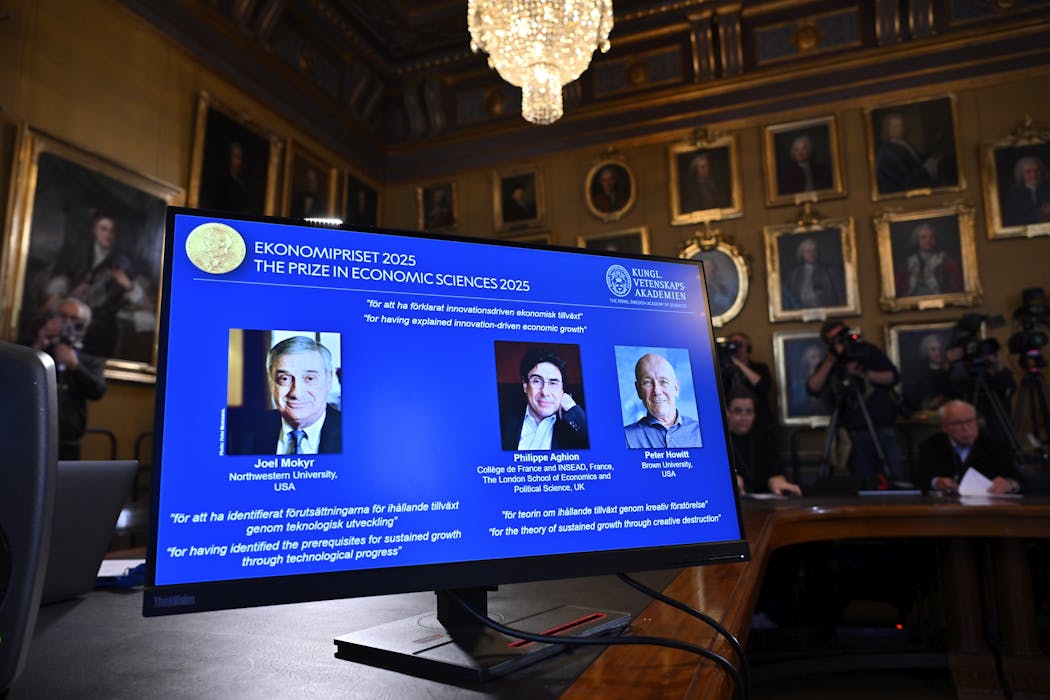
This year’s Sveriges Riksbank Prize in Economic Sciences (commonly known as the Nobel prize for economics) has gone to three researchers who have provided answers to these questions: Philippe Aghion, Peter Howitt and Joel Mokyr.
For most of human history, economic stagnation has been the norm – modern economic growth is very recent from a historical point of view. This year’s winners have been honoured for their contributions towards explaining how to achieve sustained economic growth.
At the beginning of the 1980s, theories around economic growth were largely dominated by the works of American economist Robert Solow. An important conclusion emerged: in the long-run, per-capita income growth is determined by technological progress.
Solow’s framework, however, did not explain how technology accumulates over time, nor the role of institutions and policies in boosting it. As such, the theory can neither explain why countries grow differently for sustained periods nor what kind of policies could help a country improve its long-run growth performance.
It’s possible to argue that technological innovation comes from the work of scientists, who are motivated less by money than the rest of society might be. As such, there would be little that countries could do to intervene – technological innovations would be the result of the scientists’ own interests and motivations.
But that thinking changed with the emergence of endogenous growth theory, which aims to explain which forces drive innovation. This includes the works of Paul Romer, Nobel prizewinner in 2018, as well as this year’s winners Aghion and Howitt.
These three authors advocate for theories in which technological progress ultimately derives from firms trying to create new products (Romer) or improve the quality of existing products (Aghion and Howitt). For firms to try to break new ground, they need to have the right incentives.
Creative destruction
While Romer recognises the importance of intellectual property rights to reward firms financially for creating new products, the framework of Aghion and Howitt outlines the importance of something known as “creative destruction”.
This is where innovation results from a battle between firms trying to get the best-quality products to meet consumer needs. In their framework, a new innovation means the displacement of an existing one.
In their basic model, protecting intellectual property is important in order to reward firms for innovating. But at the same time, innovations do not come from leaders but from new entrants to the industry. Incumbents do not have the same incentive to innovate because it will not improve their position in the sector. Consequently, too much protection generates barriers to entry and may slow growth.
But what is less explored in their work is the idea that each innovation brings winners (consumers and innovative firms) and losers (firms and workers under the old, displaced technology). These tensions could shape a country’s destiny in terms of growth – as other works have pointed out, the owners of the old technology may try to block innovation.
This is where Mokyr complements these works perfectly by providing a historical context. Mokyr’s work focuses on the origins of the Industrial Revolution and also the history of technological progress from ancient times until today.
Mokyr noted that while scientific discoveries were behind technological progress, a scientific discovery was not a guarantee of technological advances.
It was only when the modern world started to apply the knowledge discovered by scientists to problems that would improve people’s lives that humans saw sustained growth. In Mokyr’s book The Gifts of Athena, he argues that the Enlightenment was behind the change in scientists’ motivations.
In Mokyr’s works, for growth to be sustained it is vital that knowledge flows and accumulates. This was the spirit embedded in the Industrial Revolution and it’s what fostered the creation of the institution I am working in – the University of Sheffield, which enjoyed financial support from the steel industry in the 19th century.
Mokyr’s later works emphasise the key role of a culture of knowledge in order for growth to improve living standards. As such, openness to new ideas becomes crucial.
Analysis using their framework still has an impact on our lives today. It is present in policy debates around big data, artificial intelligence and green innovation. And Mokyr’s analysis of how knowledge accumulates poses a central question around what countries can do to encourage an innovation ecosystem and improve the lives of their citizens.
But this year’s prize is also a warning about the consequences of damaging the engines of growth. Scientists collaborating with firms to advance living standards is the ultimate elixir for growth. Undermining science, globalisation and competition might not be the right recipe.
Antonio Navas does not work for, consult, own shares in or receive funding from any company or organisation that would benefit from this article, and has disclosed no relevant affiliations beyond their academic appointment.
At a testy meeting in Banff recently, the American ambassador to Canada, Pete Hoekstra, mused about the future of pre-clearance in Canada. Cross-border travel numbers are down, he complained, which makes the cost of the program less appealing to Americans.
Hoekstra’s comments came across as a threat — almost a demand that Canadians resume travelling to the United States.
But should Canadians continue to stay away? Maybe it’s time to rethink Canada’s pre-clearance program with the U.S. and the ways it can undermine Canadian civil rights and sovereignty.
Since then, the program has expanded to nine Canadian international airports and the Alaska Marine Highway System Ferry Terminal in Prince Rupert, B.C. The U.S. has also expanded its pre-clearance facilities to the Bahamas, Bermuda, Ireland and the United Arab Emirates.
Under Canada-U.S. pre-clearance arrangement, American border agents are located in Canada so that travellers can clear customs, immigration, public health and safety and agriculture inspection before they travel. This provides an additional layer of security for the U.S. since it can screen travellers much earlier in their travel journeys and stop suspicious travellers before they board their flights.
For Canadian travellers, it makes crossing the border faster. By clearing customs in Canada, they don’t need to wait in long lines when they arrive in the U.S. This makes it much easier to catch connecting flights and also means airlines can fly into smaller American airports from Canada, which can be cheaper and more convenient.
Police powers
Pre-clearance in Canada has become so commonplace that it’s not faced significant scrutiny, even though recent legislation raises pressing concerns.
In 2015, the U.S. and Canada signed a new treaty on land, rail, marine and air transport pre-clearance. This legislation opened the door to expanded pre-clearance with new facilities at Québec City’s airport and Billy Bishop airport on the Toronto islands, scheduled to open soon. Pilot projects have also been introduced at train stations and ports, which raise their own issues because they’re often located in city centres.
Subsequently, Canada passed its new Preclearance Act that entered into force in 2019. The legislation updated the terms for pre-clearance but also introduced worrisome and expansive new police powers for U.S. officers on Canadian soil.
American border agents now have the power to conduct strip searches if a Canadian officer is not available or is unwilling to participate. American border agents also have the authority to carry weapons.
Under the previous legislation of 1999, U.S. border agents were authorized to use “as much force is necessary to perform their pre-clearance duties” if they did so “on reasonable grounds.” But under the recent legislation, U.S. officers are “justified in doing what they are required or authorized to do under this Act and in using as much force as is necessary for that purpose.” In other words, the use of force is now legitimized.
Furthermore, while it was previously possible for travellers to remove themselves from inspection without prejudice, under the 2017 legislation, their withdrawal from the border process could be interpreted as grounds for suspicion.
The act of withdrawal itself becomes suspect, with refusal to answer taken as obstruction, which is a criminal offence in both the U.S. and Canada. This can impede someone’s ability to enter the U.S. at a later date.
If someone is suspected of committing an offence, U.S. border agents are also able to detain them as long it does not “unreasonably delay the traveller’s withdrawal” from the process. There is no time limit placed on what is meant by “unreasonably delay.”
Worrisome legislative changes
When the new Preclearance Act was introduced, Prime Minister Justin Trudeau tried to assuage concerns by explaining that pre-clearance allowed more protections for travellers because the Canadian Constitution would apply in Canada.
The act itself states:
“The exercise of any power and performance of any duty or function under United States law in Canada is subject to Canadian law, including the Canadian Charter of Rights and Freedoms, the Canadian Bill of Rights and the Canadian Human Rights Act.”
But can these protections really be assured when there are overlapping jurisdictions at play?
Take U.S. President Donald Trump’s most recent 2025 travel ban that fully bans nationals of 12 countries and partially bans nationals of seven others.
Under the terms of the 2015 treaty, pre-clearance officers also receive immunity for civil and administrative offences in their host countries. Furthermore, the U.S. passed legislation a year later stipulating the U.S. has jurisdiction over offences committed by American personnel stationed in Canada.
As Canada’s privacy officer has stated, this lack of accountability in Canada means there is little recourse for someone in Canada who experiences an incident with American border officers when going through pre-clearance. If there is no accountability, then Canadian laws are essentially meaningless.
Border politics
For these reasons, a Canadian reassessment of the pre-clearance program is all the more pressing since efforts are already underway to implement Canadian pre-clearance at land borders with the U.S.
In January 2025, before Trump’s inauguration, a two-year pilot project was announced at the Cannon Corners facility on the New York-Québec border. This would be somewhat different from the police powers granted to American border officials at Canadian airports, but Canada’s objectives have been similar to U.S. security directives — make admissibility determinations before someone enters Canada.
In other words, Canada is proceeding with pre-clearance initiatives that make it more difficult for people to make asylum claims when crossing the Canada-U.S. border.
Hoekstra has put the future of pre-clearance in question. This provides an excellent opportunity to reconsider whether the costs of the program outweigh the benefits in today’s political climate. That’s because no matter how convenient and efficient pre-clearance programs might be, they raise challenging questions about Canadian sovereignty and the rights of Canadian citizens.
The question should really be whether Canada wants to pursue America-style border politics rather than trying to build more humane border policies and practices.
Emily Gilbert has received funding from the Social Sciences and Humanities Research Council.
Employees at public and private colleges do not have the same First Amendment rights. dane_mark/Royalty-free
American colleges and universities are increasingly firing or punishing professors and other employees for what they say, whether it’s on social media or in the classroom.
Some of these dismissed professors compared Kirk to a Nazi, described his views as hateful, or said there was no reason to be sorry about his death.
Some professors are now suing their employers for taking disciplinary action against them, claiming they are violating their First Amendment rights.
In one case, the University of South Dakota fired Phillip Michael Cook, a tenured art professor, after he posted on Facebook in September that Kirk was a “hate spreading Nazi.” Cook, who took down his post within a few hours and apologized for it, then sued the school, saying it was violating his First Amendment rights.
A federal judge stated in a Sept. 23 preliminary order that the First Amendment likely protected what Cook posted. The judge ordered the University of South Dakota to reinstate Cook, and the university announced on Oct. 4 that it would reverse Cook’s firing.
For decades, American colleges and universities have traditionally encouraged free speech and open debate as a core part of their academic mission.
As scholarswho study college free speech and academic freedom, we recognize that these events raise an important question: When, if ever, can a college legally discipline an employee for what they say?
An aerial view of University of South Dakota’s Vermillion campus, one of the places where a professor was recently fired for posting comments about Charlie Kirk, a decision that was later reversed. anup khanal – CC BY-SA 4.0
Limits of public employees’ speech rights
The First Amendment limits the government’s power to censor people’s free speech. People in the United States can, for instance, join protests, criticize the government and say things that others find offensive.
But the First Amendment only applies to the government – which includes public colleges and universities – and not private institutions or companies, including private colleges and universities.
In contrast, public colleges are considered part of the government. The First Amendment limits the legal authority they have over their employees’ speech. This is especially true when an employee is speaking as a private citizen – such as participating in a political rally outside of work hours, for example.
The Supreme Court ruled in a landmark 1968 case that public employees’ speech rights as private citizens can extend to criticizing their employer, like if they write a letter critical of their employer to a newspaper.
The Supreme Court also ruled in 2006 that
the First Amendment does not protect public employees from being disciplined by their employers when they say or write something as part of their official job duties.
Even when a public college employee is speaking outside of their job duties as a private citizen, they might not be guaranteed First Amendment protection. To reach this legal threshold, what they say must be about something of importance to the public, or what courts call a “matter of public concern.”
Talking or writing about news, politics or social matters – Kirk’s murder – often meets the legal test for when speech is about a matter of public concern.
And in some cases, even when a public employee speaks as a private citizen on a topic that a court considers a matter of public concern, their speech may still be unprotected.
A public employer can still convince a court that its reasons for prohibiting an employee’s speech – like preventing conflict among co-workers – are important enough to deny this employee First Amendment protection.
Lawsuits brought by the employees of public colleges and universities who have been fired for their comments about Kirk may likely be decided based on whether what they said or wrote amounts to a matter of public concern. Another important factor is whether a court is convinced that an employee’s speech about Kirk was serious enough to disrupt a college’s operations, thus justifying the employee’s firing.
Academic freedom and professors’ speech
There are also questions over whether professors at public universities, in particular, can cite other legal rights to protect their speech.
At both private and public colleges, professors’ work contracts – like the ones typically signed after receiving tenure – potentially provide legal protections for faculty speech connected to academic freedom, such as in the classroom.
However, the First Amendment does not apply to how a private college regulates its professors’ speech or academic freedom.
Professors at public colleges have at least the same First Amendment free speech rights as their fellow employees, like when speaking in a private citizen capacity.
Additionally, the First Amendment might protect a public college professor’s work-related speech when academic freedom concerns arise, like in their teaching and research.
In 2006, the Supreme Court left open the question of whether the First Amendment covers academic freedom, in a case where it found the First Amendment did not cover what public employees say when carrying out their official work.
Since then, the Supreme Court has not dealt with this complicated issue. And lower federal courts have reached conflicting decisions about First Amendment protection for public college professors’ speech in their teaching and research.
Beyond legal questions, colleges are also grappling with how to define their commitments to free speech and academic freedom.
In particular, we believe campus leaders should consider the purpose of higher education. Even if legally permitted, restricting employees’ speech could run counter to colleges’ traditional role as places for the open exchange of ideas.
The authors do not work for, consult, own shares in or receive funding from any company or organization that would benefit from this article, and have disclosed no relevant affiliations beyond their academic appointment.
Source: The Conversation – Canada – By Tracy Smith-Carrier, Professor and Canada Research Chair (Tier 2) in Advancing the UN Sustainable Development Goals, Royal Roads University
With one-quarter of Canadians struggling to put food on the table, Canada has recently received a D grade from Food Banks Canada for its performance in meeting the country’s food security needs.
According to a 2024 report by the federal government’s National Advisory Council on Poverty, poverty is also on the rise, and people who once thought they were financially secure are starting to feel the squeeze.
Canada is a signatory to the International Covenant on Economic, Social and Cultural Rights, recognizing the right to food, housing and an adequate standard of living.
As a social scientist, my research shows that Canada is struggling to realize these rights because decision-makers often lack the political will to act, and the judicial system still relies on an outdated approach that cannot hold these decision-makers accountable.
While Canada and other United Nations member states have endorsed social and economic rights, these rights have often been treated differently from their civil and political counterparts.
Civil and political rights are typically considered negative rights, which do not require the government to act or provide anything, but rather to protect or not interfere with people’s rights, such as freedom of expression or religion. Social and economic rights, on the other hand, have often been deemed positive rights, meaning they require the state to act or provide resources to meet them, like education or health care.
Weaker language was deliberately included in the International Covenant of Economic, Social and Cultural Rights by the rights architects, particularly those in the United States, who felt that its ratification should not encroach on state autonomy or require “thicker social programs and a robust welfare state.”
The impasse on social and economic rights has led to the denial of these rights for those living in poverty.
Enforcing implemented rights
Some, like Oxford legal scholar Sandra Fredman, argue the courts should use legal frameworks not to defer to politicians or usurp their decision-making capacity, but to require them to provide reasoned justifications for their distributive decisions.
The “climate of the era” has changed. It’s time for politicians to actively work to fulfill social and economic rights and for the courts to hold them accountable when they fail to do so.
Without substantive rights — ones backed by action — poverty will continue to rise and people will be denied justice.
Tracy Smith-Carrier receives funding from the Tri-agency’s Canada Research Chairs program and the Social Sciences and Humanities Research Council.
Source: The Conversation – USA (2) – By Alexandra A Phillips, Assistant Teaching Professor in Environmental Communication, University of California, Santa Barbara
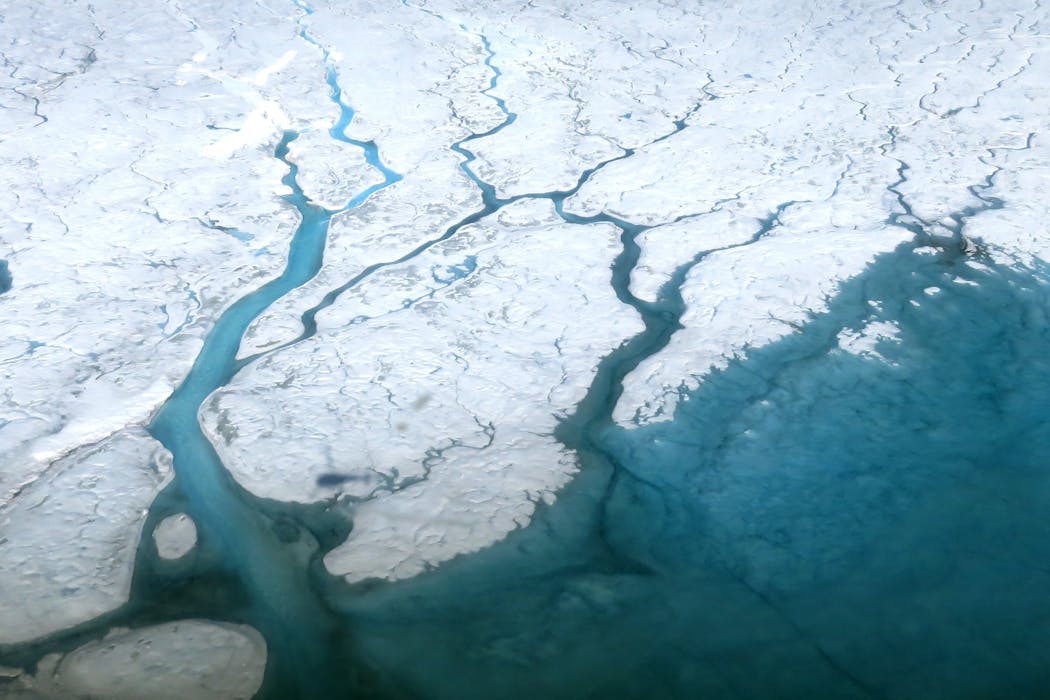
Meltwater runs across the Greenland ice sheet in rivers. The ice sheet is already losing mass and could soon reach a tipping point.Maria-José Viñas/NASA
As the planet warms, it risks crossing catastrophic tipping points: thresholds where Earth systems, such as ice sheets and rain forests, change irreversibly over human lifetimes.
Scientists have long warned that if global temperatures warmed more than 1.5 degrees Celsius (2.7 Fahrenheit) compared with before the Industrial Revolution, and stayed high, they would increase the risk of passing multiple tipping points. For each of these elements, like the Amazon rain forest or the Greenland ice sheet, hotter temperatures lead to melting ice or drier forests that leave the system more vulnerable to further changes.
Pink circles show the systems closest to tipping points. Some would have regional effects, such as loss of coral reefs. Others are global, such as the beginning of the collapse of the Greenland ice sheet. Global Tipping Points Report, CC BY-ND
The term “tipping point” is often used to illustrate these problems, but apocalyptic messages can leave people feeling helpless, wondering if it’s pointless to slam the brakes. As a geoscientist who has studied the ocean and climate for over a decade and recently spent a year on Capitol Hill working on bipartisan climate policy, I still see room for optimism.
It helps to understand what a tipping point is – and what’s known about when each might be reached.
Tipping points are not precise
A tipping point is a metaphor for runaway change. Small changes can push a system out of balance. Once past a threshold, the changes reinforce themselves, amplifying until the system transforms into something new.
The Greenland ice sheet, which is 1.9 miles (3 kilometers) thick at its thickest point, has been losing mass for several years as temperatures rise and more of its ice is lost to the ocean. A tipping point would mean runaway ice loss, with the potential to eventually raise sea level 24 feet (7.4 meters) and shut down a crucial ocean circulation. Sean Gallup/Getty Images
The scientific reality of tipping points is more complicated than crossing a temperature line. Instead, different elements in the climate system have risks of tipping that increase with each fraction of a degree of warming.
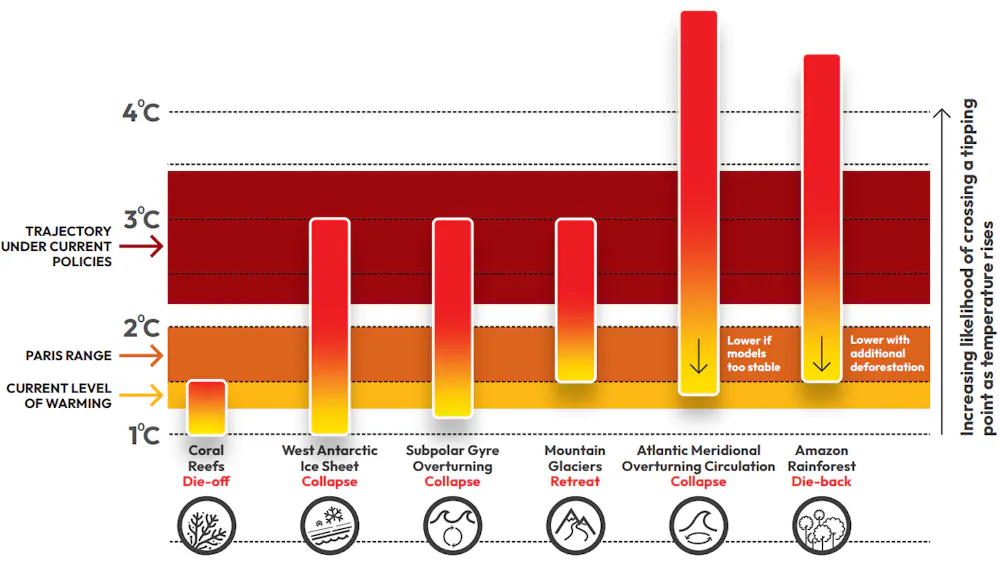
For example, the beginning of a slow collapse of the Greenland ice sheet, which could raise global sea level by about 24 feet (7.4 meters), is one of the most likely tipping elements in a world more than 1.5 C warmer than preindustrial times. Some models place the critical threshold at 1.6 C (2.9 F). More recent simulations estimate runaway conditions at 2.7 C (4.9 F) of warming. Both simulations consider when summer melt will outpace winter snow, but predicting the future is not an exact science.
Gradients show science-based estimates from the Global Tipping Points Report of when key global or regional climate tipping points are increasingly likely to be reached. Every fraction of a degree increases the likeliness, reflected in the warming color. Global Tipping Points Report 2025, CC BY-ND
Forecasts like these are generated using powerful climate models that simulate how air, oceans, land and ice interact. These virtual laboratories allow scientists to run experiments, increasing the temperature bit by bit to see when each element might tip.
Their nine core tipping elements include large-scale components of Earth’s climate, such as ice sheets, rain forests and ocean currents. They also simulated thresholds for smaller tipping elements that pack a large punch, including die-offs of coral reefs and widespread thawing of permafrost.
The world may have already passed one tipping point, according to the 2025 Global Tipping Points Report: Corals reefs are dying as marine temperatures rise. Healthy reefs are essential fish nurseries and habitat and also help protect coastlines from storm erosion. Once they die, their structures begin to disintegrate. Vardhan Patankar/Wikimedia Commons, CC BY-SA
Some tipping elements, such as the East Antarctic ice sheet, aren’t in immediate danger. The ice sheet’s stability is due to its massive size – nearly six times that of the Greenland ice sheet – making it much harder to push out of equilibrium. Model results vary, but they generally place its tipping threshold between 5 C (9 F) and 10 C (18 F) of warming.
Other elements, however, are closer to the edge.
Alarm bells sounding in forests and oceans
In the Amazon, self-perpetuating feedback loops threaten the stability of the Earth’s largest rain forest, an ecosystem that influences global climate. As temperatures rise, drought and wildfire activity increase, killing trees and releasing more carbon into the atmosphere, which in turn makes the forest hotter and drier still.
Rising temperatures also threaten biodiversity underwater.
The second Global Tipping Points Report, released Oct. 12, 2025, by a team of 160 scientists including Lenton, suggests tropical reefs may have passed a tipping point that will wipe out all but isolated patches.
Coral loss on the Great Barrier Reef. Australian Institute of Marine Science.
Corals rely on algae called zooxanthellae to thrive. Under heat stress, the algae leave their coral homes, draining reefs of nutrition and color. These mass bleaching events can kill corals, stripping the ecosystem of vital biodiversity that millions of people rely on for food and tourism.
Low-latitude reefs have the highest risk of tipping, with the upper threshold at just 1.5 C, the report found. Above this amount of warming, there is a 99% chance that these coral reefs tip past their breaking point.
Similar alarms are ringing for ocean currents, where freshwater ice melt is slowing down a major marine highway that circulates heat, known as the Atlantic Meridional Overturning Circulation, or AMOC.
The AMOC carries warm water northward from the tropics. In the North Atlantic, as sea ice forms, the surface gets colder and saltier, and this dense water sinks. The sinking action drives the return flow of cold, salty water southward, completing the circulation’s loop. But melting land ice from Greenland threatens the density-driven motor of this ocean conveyor belt by dilution: Fresher water doesn’t sink as easily.
Not all scientists agree that an AMOC collapse is close. For the Amazon rain forest and the North Atlantic, some cite a lack of evidence to declare the forest is collapsing or currents are weakening.
The Amazon forest has been losing tree cover to logging, farming, ranching, wildfires and a changing climate. Pink shows areas with greater than 75% tree canopy loss from 2001 to 2024. Blue is tree cover gain from 2000 to 2020. Global Forest Watch, CC BY
Other changes driven by rising global temperatures, like melting permafrost, likely don’t meet the criteria for tipping points because they aren’t self-sustaining. Permafrost could refreeze if temperatures drop again.
Risks are too high to ignore
Despite the uncertainty, tipping points are too risky to ignore. Rising temperatures put people and economies around the world at greater risk of dangerous conditions.
But there is still room for preventive actions – every fraction of a degree in warming that humans prevent reduces the risk of runaway climate conditions. For example, a full reversal of coral bleaching may no longer be possible, but reducing emissions and pollution can allow reefs that still support life to survive.
Tipping points highlight the stakes, but they also underscore the climate choices humanity can still make to stop the damage.
Alexandra A Phillips does not work for, consult, own shares in or receive funding from any company or organization that would benefit from this article, and has disclosed no relevant affiliations beyond their academic appointment.