Lifting weights just two or three times a week can significantly change the trillions of bacteria living in your gut, and it might happen in as little as eight weeks.
That’s according to a recent study – not yet peer-reviewed – finding that previously inactive people who began resistance training showed notable changes in their gut microbiome, the community of microbes living in the digestive system.
Your gut is home to bacteria, fungi, viruses and other microscopic organisms, most of which live in the large intestine. These microbes help break down food that your body can’t digest on its own, allowing you to access more nutrients and vitamins.
Some bacteria are considered beneficial because they’re often found in people who are healthy, both physically and mentally. They produce compounds that appear to support wellbeing.
The makeup of your gut microbiome isn’t fixed. It changes based on factors such as what you eat, how old you are, how well you sleep – and, as this study shows, whether you exercise.
Researchers at the University of Tübingen in Germany recruited 150 people who didn’t normally exercise and asked them to do resistance training two to three times a week for eight weeks. Participants used either lighter weights with more repetitions (15 to 20) or heavier weights with fewer repetitions (eight to ten).
Both approaches produced similar improvements in strength and body composition. The exercises included chest presses, abdominal work, leg curls, leg presses and back exercises – two sets of each.
The researchers collected stool samples at the start of the programme, after four weeks and after eight weeks to track changes in participants’ gut bacteria.
Some people gained strength much faster than others. The researchers divided participants into “high responders” – the top 20%, who increased their strength by more than 33% on average – and “low responders” – the bottom 20%, who gained less than 12.2%.
The biggest factor determining whether someone was a high or low responder appeared to be their initial strength level.
But the researchers also found something interesting: the people who gained the most strength showed subtle but significant changes in their gut bacteria that the others didn’t.
High responders showed increases in 16 types of bacteria and decreases in 11 others. Two bacteria in particular stood out: Faecalibacterium and Roseburia hominis.
Both produce butyrate, a type of compound called a short-chain fatty acid. These compounds are created when gut bacteria break down fibre, and they serve multiple purposes: they provide energy for the body and help maintain a healthy gut lining, which prevents harmful bacteria from entering the bloodstream.
Similar increases in these bacteria have been found in other studies looking at exercise and the gut. However, in this study, the researchers didn’t find an actual increase in short-chain fatty acids in the stool samples – only more of the bacteria that produce them.
Not that simple
It’s tempting to label certain bacteria as “good” or “bad”, but it’s not that simple. Throughout the study, some bacteria typically associated with good health decreased, while others previously linked to poor health increased.
This highlights an important point: everyone’s microbiome is unique. The same bacteria might perform different roles in different people, depending on the individual and their overall health.
We also can’t say for certain whether the changes in gut bacteria caused the strength gains, or whether getting stronger caused the bacterial changes. Studies like this can show associations, but they can’t prove cause and effect – the microbiome is influenced by too many factors to control them all.
Diet, for instance, has a major effect on gut bacteria. Participants were told not to change their eating habits during the study, but it’s extremely difficult to accurately track what people eat.
It’s possible that some high responders changed their diet as they became more focused on fitness, and this could have contributed both to their bacterial changes and their strength gains.
What we can say with more confidence is that exercise appears to benefit overall physical and mental health and should be part of a healthy lifestyle regardless of what it does to your gut microbes.
This was a small study that still has to go through the peer-review process of being officially looke at by other scientists. But it has the potential to add to growing evidence that our lifestyle choices, including how much we move, can influence the microscopic world living inside us.
Rosie Young does not work for, consult, own shares in or receive funding from any company or organisation that would benefit from this article, and has disclosed no relevant affiliations beyond their academic appointment.
When Andrew (not his real name) lost his job during the COVID-19 pandemic, he turned to work as a courier. His days became a slog – cycling for hours in rain or shine, juggling Deliveroo, Uber Eats and JustEat.
Despite the grind, he couldn’t afford to rent even a single room in his city. After months of sofa surfing and crammed bunk-bed accommodation, a friend of a friend offered him a room at a rent he could actually manage.
The catch? He had to have sex with his new, live-in landlady once a week.
This is what’s known as a sex-for-rent arrangement: when someone offers free or discounted accommodation in exchange for sex. I’ve been studying the experiences of people in sex-for-rent arrangements, and will be publishing my findings over the coming year.
While such arrangements might come with a veneer of consent, research from the UK and US shows they are often exploitative and disempowering. They start with a power imbalance, usually economic, that allows one person to exploit another’s desperation for housing.
There is relatively little academic research on sex for rent in the UK. But what we do have so far is deeply concerning. A 2022 survey by campaign group Generation Rent estimated that over 200,000 women may have been offered free or discounted rent in exchange for sexual favours.
These offers sometimes appear on platforms like Craigslist or Facebook Marketplace, often couched in vague, euphemistic language: “reduced rent for suitable female tenant”, or “alternative arrangements can be discussed”.
Investigative journalism has shown that these ads typically target young women – especially students and those in insecure work.
While confirming that young women are heavily targeted, my ongoing research reveals how economically marginalised men are being exploited too. Through qualitative interviews with survivors of sex-for-rent, I am exploring how this exploitative practice occurs, who is targeted and why.
Participants like Andrew often work in the gig economy, where wages are low and unpredictable. Others are migrants with no access to benefits or housing assistance, making it near impossible to access stable accommodation. Their experiences of sex-for-rent are made worse by social stigma, masculine expectations of self-reliance and a lack of tailored support.
What I have found so far supports and expands on findings already established in existing research, which has found how sex-for-rent is advertised to young women online, and becoming a regular part of an insecure housing market.
Survivors told me that landladies as well as landlords were engaging in sexual exploitation via sex-for-rent. Landlords were often aware of participants’ financial struggles and framed the arrangement as “helping them out”. Participants who tried to leave said they were threatened with eviction – both legal and illegal – to trap them.
The 15 men I spoke to reported intense feelings of shame, degradation and emasculation. They were also often unaware of support services that might be able to help them, including housing charities or services for male victims of sexual violence. Many feared legal consequences, wrongly believing they had broken the law by “prostituting themselves” and doubted police would believe them.
The limits of the law
Sex-for-rent is technically illegal under the Sexual Offences Act 2003, which states that sex-for-rent amounts to “controlling or inciting prostitution for gain”. Yet only two successful prosecutions have occurred – Christopher Cox in 2022 and Frederick Allyard in 2024.
It is unclear whether any further attempted prosecutions have occurred. But my research indicates that victims broadly believe that they themselves have committed an offence, rather than their landlords, grounded in the wrongful belief that sex work is a crime – it isn’t a crime to sell sex anywhere in the UK.
What is illegal is soliciting, brothel keeping and pimping, though these concepts are poorly defined in British law.
In 2023, the Home Office launched an open consultation on exchange of sexual relations for accommodation. While this is a welcome recognition of the issue, the consultation largely frames sex-for-rent as a matter of individual criminal landlords. It says little about why such exploitation persists – or how social conditions actively enable it.
Rents outpacing wage growth have created conditions for predatory landlords to take advantage of tenants. William Barton/Shutterstock
Landlords hold far more power than tenants in the UK. Rents are among the highest in Europe, with projections suggesting that 2.2 million working adults could be priced out of the rental market by 2030.
At the same time, wages have stagnated, housing benefit is inadequate, and those with insecure immigration status are locked out of public support entirely. Tenants begin from a position of reduced power, in a housing system that gives more power to the interests of landlords.
This system can be taken advantage of by predatory landlords, either through exploitation like sex-for-rent, or not keeping properties in liveable conditions.
Even if there were more prosecutions for sex-for-rent, it wouldn’t solve the problem alone. We can’t just focus on individual acts of criminality – sex-for-rent is the outcome of structural inequalities in housing, made possible by policy choices: the erosion of social housing, the deregulation of the private rental sector, the rise of precarious work and punitive immigration controls.
Properly addressing the problem would require more secure, affordable housing, an end to no recourse to public funds conditions and support services for all victims of sexual exploitation, not just women.
Over a decade of austerity has left many of these services hanging on by a thread. The current government could do worse than to reverse these trends. Sex-for-rent is not a fringe issue. It is a symptom of how deeply our housing and welfare systems have failed – and it demands a response as structural as the harm itself.
Chris Waugh does not work for, consult, own shares in or receive funding from any company or organisation that would benefit from this article, and has disclosed no relevant affiliations beyond their academic appointment.
Source: The Conversation – Africa – By Alan Hirsch, Senior Research Fellow New South Institute, Emeritus Professor at The Nelson Mandela School of Public Governance, University of Cape Town
It remains too difficult for Africans to travel between African countries. Africa-wide reforms have failed. The keynote continental agreement, the African Union’s Protocol on Free Movement of Persons, adopted in 2018, still has only four country ratifications from 55 members.
A new report of the African Union bemoans the low (though slightly improved) level of human integration in Africa. It describes the main challenges as legal fragmentation, weak institutional frameworks, security concerns, and limited mutual recognition of documents and qualifications.
Nevertheless, some consolation can be drawn from the fact that African migration governance systems have been moving in the right direction.
The visa openness index shows that for 28% of country‑to-country travel scenarios within Africa, African citizens do not need a visa to cross the border. This is an improvement from 20% in 2016.
But the pace of change is slow. Given this, and the fact that progress has been driven at bilateral and regional levels, is there still a role for continental initiatives?
Based on our research over the last decade, we argue that incremental reforms at all levels – unilateral, bilateral, regional and continental – can combine to move Africa forward towards free regular movement.
We recognise that the implementation of the African Union Protocol on Free Movement of Persons is still some way off. But there are opportunities to support its aims and intentions through incremental initiatives and reforms. This could include pilot programmes run under the auspices of the African Union and regional bodies that provide for categories of people to travel freely. These categories could include, for example, traders at borders or those with professional skills.
What’s standing in the way
There are many reasons a continental process to reform and align migration governance shouldn’t work.
Firstly, the African Union has an extraordinary number of members (55). The European Union has 27. The large number of countries makes any wholesale continental institutional intervention difficult.
Secondly, there are huge levels of inequality both within and between African countries. The richest country in Africa has an income per person on average – taking costs into account – around 53 times higher than the poorest. Large income differences between countries, sometimes coinciding with better judicial systems and social services, make it likely that, whatever the reality, vulnerable residents in the richer country are likely to fear an uncontrolled influx.
Thirdly, the level of institutional development varies hugely between countries. Population registration is very weak in many African countries. Unicef estimated that in 2022, more than half of the unregistered children in the world were African. The Lancet medical journal estimated that in 2021 only one in three deaths in Africa were registered. Systems for issuing identification documents and passports are imperfect. Confidence in other countries keeping good records of citizens and monitoring criminal and terrorist activity are key ingredients of a good migration partnership.
But Africans cannot afford to allow these and other obstacles to diminish the effort towards a fully integrated continent.
In a world of large, competing power blocs, Africa’s fragmentation puts it at a huge disadvantage. In any case, compared with much of the rest of the world, at least Africa is moving in the right direction. It is mostly opening borders, rather than closing them.
The efforts so far
African initiatives to facilitate easier border crossings have a long history.
establish a common market and gradually remove obstacles to the free movement of persons, goods, services, and capital and the right of residence and establishment.
The 2018 protocol itself explained why freer movement would be beneficial for Africa’s social and economic development. It set up a programme of three phases, from visa-free visits to (eventually) rights to settle, work and start a business.
We noted some evidence that citizens of African countries are often more open to freer movement than their governments are.
Unlike the Free Movement of Persons Protocol, the African Continental Free Trade Agreement (AfCFTA) has been widely ratified and is in the process of implementation. It provides for specific categories of travellers to be allowed free movement in the course of service delivery.
The free movement protocol is, in practice, driven by a few busy staffers in the AU headquarters in Addis Ababa, with some kind external assistance. The AfCFTA is driven by a relatively large, dedicated secretariat with wide support within and beyond Africa.
A more practical way forward
One of the conclusions we have drawn from our research is that a varied approach might work better.
For example, migration expert Amanda Bisong has pointed out that the AfCFTA services protocol makes provision for the visa-free movement of certain categories of professional and business persons. If implemented, this would be a significant continental step towards broader reforms.
We noted previously that such “neo-liberal” or “elitist” reforms could pave the way to broader multilateral reforms, as was the case in South America. The term “neo-liberal migration reform” was coined in South America to refer to visa-free travel for elites, but not for lower-skilled people.
Secondly, informal cross-border traders could be included into the ambit of formality within a specific agreement. Or as an extension of the services protocol of the free trade agreement.
Thirdly, such initiatives could be initiated as pilot programmes under the auspices of the AU and some regional blocs. Their purpose would be to support the free trade agreement services protocol commitment and to formalise informal traders.
Such pilot programmes could include:
the implementation of regional agreements on mutual recognition of skills
special economic zones with freer movement provisions, or
harmonised visa policies for specific categories of persons.
If successful, these models could be scaled up to encourage broader adoption of the AU Free Movement of Persons Protocol.
Countries with weaker institutional capacities should not be left behind in integrating mobility into the implementation of the free trade agreement. Capacity-building programmes, including financial and technical assistance, should be provided to states that struggle with border management, migration governance or digital infrastructure.
We also noted that continental and regional forums to exchange views and experiences in migration policy and practice are important. We recommend more frequent and more focused forums to monitor the implementation of migration reform policies and discuss the systematic deepening of reforms.
Alan Hirsch is a Senior Research fellow at the New South Institute which funded the research on which this article is based.
Victor Amadi is an Affiliate Researcher at the New South Institute, which funded the research on which this article is based.
The company also says it’s focusing work on improved enforcement of impersonation violations and a new spam-filtering system, and that updates are “the latest in a series of changes we’re making to support a more trustworthy music ecosystem for artists, for rights-holders and for listeners.”
As AI becomes more embedded in music creation, the challenge is balancing its legitimate creative use with the ethical and economic pressures it introduces. Disclosure is essential not just for accountability, but to give listeners transparent and user-friendly choices in the artists they support.
Apple Music took aim at impersonation when it pulled the viral track “Heart on My Sleeve” featuring AI-cloned vocals of Drake and The Weeknd. The removal was prompted by a copyright complaint reflecting concerns over misuse of artists’ likeness and voice.
CBC News covers AI-generated band The Velvet Sundown.
The indie-facing song promotion platform SubmitHub has introduced measures to combate AI-generated spam. Artists must declare if AI played “a major role” in a track. The platform also has an “AI Song Checker” so playlist curators can scan files to detect AI use.
Spotify’s announcement adds another dimension to these efforts. By focusing on disclosure, it recognizes that artists use AI in many different ways across music creation and production. Rather than banning these practices, it opens the door to an AI labelling system that makes them more transparent.
Labelling creative content
Content labelling has long been used to help audiences make informed choices about their media consumption. Movies, TV and music come with parental advisories, for example.
Digital music files also include embedded information tags called metadata, which include details like genre, tempo and contributing artists that platforms use to categorize songs, calculate royalty payments and to suggest new songs to listeners.
Canada has relied on labelling for decades to strengthen its domestic music industry. The MAPL system requires radio stations to play a minimum percentage of Canadian music, using a set of criteria to determine whether a song qualifies as Canadian content based on music, artist, production and lyrics.
A disclosure standard will make AI music labelling possible. The next step is cultural: deciding how much information should be shared with listeners, and in what form.
According to Spotify, artists and rights-holders will be asked to specify where and how AI contributed to a track. For example, whether it was used for vocals, instrumentation or post-production work such as mixing or mastering.
For artists, these details better reflect how AI tools fit into a long tradition of creative use of new technologies. After all, the synthesizer, drum machines and samplers — even the electric guitar — were all once controversial.
But AI disclosure shouldn’t give streaming platforms a free pass to flood catalogues with algorithmically generated content. The point should also be to provide information to listeners to help them make more informed choices about what kind of music they want to support.
Information about AI use should be easy to see and quickly find. But on Spotify’s Velvet Sundown profile, for example, this is dubious: listeners have to dig down to actually read the band’s descriptor.
The cultural perception around musicians having their music train AI platforms or in using AI tools in music production is also a site of creative tension.
Turning a disclosure standard into something visible — such as an intuitive label or icon that allows users to go deeper to show how AI was used — would let listeners see at a glance how human and algorithmic contributions combine in a track.
Embedded in the digital song file, it could also help fans and arts organizations discover and support music based on the kind of creativity behind it.
Ultimately, it’s about giving listeners a choice. A clear, well-designed labelling system could help audiences understand the many ways AI now shapes music, from subtle production tools to fully synthetic vocals.
Need for transparency
As influence of AI in music creation continues to expand, listeners deserve to know how the sounds they love are made — and artists deserve the chance to explain it.
Easy-to-understand AI music labels would turn disclosure into something beyond compliance: it might also invite listeners to think more deeply about the creative process behind the music they love.
Gordon A. Gow receives funding from the Social Sciences and Humanities Research Council (SSHRC).
Brian Fauteux does not work for, consult, own shares in or receive funding from any company or organisation that would benefit from this article, and has disclosed no relevant affiliations beyond their academic appointment.
Del Toro’s Frankenstein offers audiences a chance to reconsider how we regard “the monster,” not just in horror cinema, but in stories that reflect attitudes about difference — especially difference in embodiment.
Another disability studies scholar, Rosemarie Garland-Thomson has noted that disabled figures are often trapped as spectacles: seen but not heard, as well as pitied or feared.
By giving The Creature an interior life, del Toro insists on humanity where cinema once imposed monstrosity.
Shift is more than aesthetic
The shift matters for how popular culture links monstrosity and disability. For nearly a century, films like the 1931 Frankenstein, directed by James Whale, encoded the monster as “deformed,” “broken,” or pathologically violent.
Poster for the 1931 ‘Frankenstein’ directed by James Whale. (Universal Pictures/Wikipedia)
The Creature (played by Boris Karloff) was made grotesque through design choices: a flat head, sunken eyes, heavy gait. These features mark him as visibly other, a body built for the audience to recoil from.
The film doubles down with plot devices: instead of receiving a “normal” brain, the monster is mistakenly given a “criminal brain.” Violence, the story suggests, is not the result of isolation or trauma but the natural consequence of defective biology. The message is clear: difference equals danger.
Difference as innate fault
From a disability studies perspective, this is called pathologization — the act of treating difference as if it were a medical defect that explains everything about a person. Whale’s Creature’s strangeness is presented as something built into his body. His scars, his staggered walk, his inability to communicate in words — all of these are framed as signs of an innate fault.
This is what theorists mean when they talk about “otherness.” Otherness refers to the way societies define who counts as normal, human or acceptable by pushing certain groups outside those boundaries. The Creature’s stitched, scarred body signals that he is not simply different but a threatening body to fear and control.
Over time, these representations cemented a cultural shorthand: to be visibly different, to bear scars, to move awkwardly or speak strangely, was to embody danger. The monster on screen taught viewers to associate disability with deviance and fear.
Rotten Tomatoes Classic Trailer for the 1931 ‘Frankenstein.’
Looking ‘wrong’ and being ‘dangerous’
The story tells us if someone looks or moves “wrong,” then violence or danger must be lurking inside them.
That way of thinking didn’t come out of nowhere. It echoes early 20th-century ideas of eugenics, which tried to link disability and criminality. When you watch Whale’s Frankenstein through this lens, The Creature is a cautionary tale about why difference itself must be feared, controlled or even eliminated.
Mary Shelley’s original 1818 novel tells a much more complicated story. Her Creature is eloquent, self-aware and painfully conscious of how he is rejected by every human being he meets.
But the 1931 film stripped that complexity away. Over time, audiences learned to read disability-coded traits — a limp, a scarred face, halting speech — as cinematic signs of danger.
Trailer for Guillermo del Toro’s ‘Frankenstein.’
A Creature with soul
Del Toro’s narrative follows Shelley more closely than the 1931 film. The Creature learns to speak, contemplates justice and articulates the pain of being abandoned. His violence, when it occurs, is not framed as the inevitable product of a defective brain but as the consequence of rejection, loneliness and abuse.
The design of The Creature reflects a shift in perspective. While his stitched body is unmistakably scarred, the makeup emphasizes vulnerability as much as grotesquerie. The Creature is unsettling because he is both human and not — beautiful, wounded and deeply present. The stitching and scars become traces of experience, history and survival.
From monstrosity to humanity
Movingly, the question becomes not “what is wrong with him?” but “why does society fail him?” This reorientation:
Rejects the idea of defect as destiny. The Creature’s tragedy comes from rejection, not innate flaw.
Restores voice and agency. In del Toro’s hands, The Creature is eloquent, thoughtful and capable of moral reasoning. That matters for audiences used to seeing disability-coded figures as voiceless.
Shifts monstrosity onto society. The true horror is Victor Frankenstein’s hubris and refusal to care for what he made. The violence arises from abandonment, not deformity.
The Creature becomes legible as disabled because he shows us what it is like to live in a body that others cannot accept. His tragedy mirrors the lived reality of many disabled people: not inherent brokenness, but the pain of exclusion.
Monsters, disability and empathy
Frankenstein stories endure because they dramatize the question: What do we owe each other?
Whale’s 1931 version presented the monster as proof that boundaries must be enforced because the abnormal body is a threat.
Del Toro answers differently. His Creature reveals that what makes us monstrous is not our difference but our refusal to accept others as fully human. We are asked to fear the consequences of our own failure to care.
Billie Anderson does not work for, consult, own shares in or receive funding from any company or organisation that would benefit from this article, and has disclosed no relevant affiliations beyond their academic appointment.
Source: The Conversation – Canada – By James Horncastle, Assistant Professor and Edward and Emily McWhinney Professor in International Relations, Simon Fraser University
There’s recently been a significant uptick in Russian incursions into Europe. They started in mid-September with Russian drones violating Polish airspace, resulting in Poland being forced to deploy its air force to protect its sovereignty.
But these known Russian incursions are being overtaken by a troubling phenomenon. Airports in Europe, including but not limited to Copenhagen and Munich, have seen their operations disrupted by unknown drones.
Analysts increasinglybelieve these mysterious drones are operated by Russian agents to sow fear and tension in Europe. Whether that’s true remains to be seen.
Russian offensive weakening
While these incidents may appear designed to escalate the conflict by threatening to draw the European Union and NATO into the conflict, they instead reflect Russian strategic weakness as winter approaches.
Throughout 2025, Russia had several advantages over Ukraine. Russian superiority in arms production and mobilization, supplemented by direct and indirect aid from states like North Korea and China put it in a favourable strategic position compared to Ukraine.
While Russian frontline forces advance against Ukrainian positions, Russia increased the tempo and volume of its drone and missile strikes against Ukrainian cities. Nonetheless, even though Russian drones and missiles have inflicted considerable destruction and casualties on Ukraine in 2025, Ukrainians have yet to lose their will to resist.
Russian forces took advantage of this strategic imbalance against Ukraine to seize Ukrainian territory. Critically, however, while Russian forces have made gains, they have not achieved a decisive breakthrough against Ukraine. Russia’s minimal gains in September, furthermore, indicate that its offensive is stalling.
The fall weather and resulting cold and rain will further stall Russian offensive operations in Ukraine. The year 2025, initially looking like it would favour Russia, has resulted in Putin having little to show for it.
What’s more, Ukraine has not been passive during this period.
Exploiting Russian vulnerabilities
From a numbers and material standpoint, Ukraine is at a considerable disadvantage against Russia. But Putin’s government has two interrelated points that Ukraine seeks to undermine: domestic support for Putin and the Russian economy.
The extent of domestic support for Putin is a subject of debate among scholars and analysts. But Putin’s actions suggest he’s nervous enough about it that he’s seeking to insulate his support base against the effects of the war. To do so, he’s maintaining the illusion of a strong Russian economy.
But Elvira Nabiullina, Russia’s central bank governor, has warned the Russian economy is in trouble. Putin has ignored her warnings and has instead offered pithy retorts to criticisms of the Russian economy.
Despite Putin’s nonchalant reaction to the weakness of the Russian economy, Ukraine recognizes the fragility of his stance. In fact, Ukraine is now repeatedly striking the resource at the heart of Russia’s precarious prosperity: oil.
Fuel shortages will only become more pronounced as energy demands increase over the cold Russian winter. Putin’s base, in short, could finally be forced to confront the consequences of his policies.
Escalate to de-escalate
Russian strategic failures in 2025, along with increased Ukrainian pressure, help explain Russia’s subversive efforts in Europe.
A misunderstood element of Russian strategic doctrine is the concept of escalating to de-escalate. Although this tactic is most commonly applied to nuclear strategy, it applies to all aspects of Russia’s strategic doctrine.
Russian politicians and generals are calculating that Europe is simultaneously unprepared and unwilling to wage war against Russia. Furthermore, Russian leaders are relying on the belief that European leaders, despite their rhetoric, will do whatever possible to eliminate the root cause of Russia’s recent incursions into European airspace: the Russia-Ukraine war.
Putin, after seemingly pushing Europeans to the brink of war, will likely pivot to a policy that encourages a diplomatic solution to Ukraine. Putin has followed a similar strategy of appearing to be more diplomatically inclined in the winters of 2024 and early 2025. Worldleaders, desperate for the war to end, have treated such proposals more seriously than warranted.
Russian drones and missiles may have proven devastating for Ukraine, but they haven’t altered the strategic balance.
Ukraine’s strikes, on the other hand, appear to be bearing strategic fruit at a critical moment of Russian vulnerability, forcing Putin to use unconventional means to try to secure victory against Ukraine.
James Horncastle does not work for, consult, own shares in or receive funding from any company or organisation that would benefit from this article, and has disclosed no relevant affiliations beyond their academic appointment.
In December 1989, the United Nations declared Oct. 13 International Day for Disaster Risk Reduction. At the time, the aim was to make disaster-risk reduction part of everyday thinking worldwide.
Today, this mission is more urgent than ever as disasters strike more often and with greater force.
And although substantial progress has been made, there is still much to achieve in reducing disaster risks and their impacts.
One of the main culprits for overlooking certain disasters is the way we talk about them. We tend to focus more on the narratives surrounding rapid-onset events — wildfires, earthquakes, hurricanes — versus long-term crises like climate change.
Punishment from the gods
Historically, people saw disasters as unpredictable forces beyond human control.
The Lisbon earthquake of 1755, however, marked a turning point, prompting a shift towards human-centred explanations of disasters.
Enlightenment thinkers such as Voltaire, Rousseau and Kant challenged purely religious interpretations, advocating rational and scientific reasoning and a better understanding of nature, ushering in a new view of disasters as acts of nature.
Disasters as human-induced
This intellectual shift marked the beginning of a more secular and scientific understanding of disasters. It suggested that disasters could be studied, anticipated and potentially prevented through human action.
Building on this foundation, the Industrial Revolution in the 19th century introduced new risks associated directly with human activities, such as factory accidents and railway crashes. By statistically analyzing these incidents, experts identified predictable patterns, prompting the creation of specialized institutions to manage and mitigate these emerging hazards.
As the understanding of human influence on disasters evolved further in the early 20th century, scholars began exploring how social behaviours, industrial practices and preparedness levels shaped disaster outcomes.
This expanded perspective underscored the crucial role of societal structures and human decisions, demonstrating that disasters were not just natural events but deeply intertwined with human factors. Although religious interpretations still exist in some communities, the consensus has shifted toward viewing disasters as human-induced.
By the 1960s, research turned to the social, political and economic roots of disasters. Scholars showed that poverty, weak governance, poor infrastructure and inequality made communities far more vulnerable.
As a result, attention shifted from reacting after disasters to tackling their root causes in advance. This regarded disasters as acts of social systems and structures.
Politics and equity meet
More recently, vulnerability and resilience have become core concepts in disaster management practice and policy-making.
International frameworks such as the Hyogo Framework (2005–2015) and the Sendai Framework for Disaster Risk Reduction (2015–2030) reflect this shift. These frameworks define disasters as a global issue requiring international collaboration, systematic risk management and proactive strategies.
Today, scholars widely recognize disasters not as purely natural events but as results of human actions, including negligence, poor planning and inadequate governance.
Defining what exactly constitutes a disaster, however, remains contested: Who decides what qualifies as a disaster, and according to which criteria? Which ones are more important and deserve more attention?
This distinction is especially clear in media and political discussions, which tend to highlight rapid-onset events like earthquakes, floods or hurricanes. In contrast, slower, long-term crises related to climate change or environmental degradation often receive far less attention
What media coverage misses
Our understanding and management of disasters is biased.
Sudden disasters like wildfires consistently receive far greater media coverage in comparison to slower-developing events like droughts or environmental degradation.
For example, CBC devoted up to eight hours in a single day to covering the immediate aftermath of the 2010 Haiti earthquake. In contrast, the 2011 Horn of Africa drought typically received less than two minutes of daily coverage. Yet the cumulative impacts of these slow-onset crises are substantial, often surpassing the effects of rapid-onset disasters.
During this period, weather-, climate- and water-related hazards comprised half of all disasters and 45 per cent of disaster-related deaths, disproportionately affecting developing countries. Additionally, between 1998 and 2017 alone, droughts led to economic losses roughly US$124 billion.
The World Bank further underscores this critical issue, estimating that climate-related, slow-onset disasters could displace about 216 million people globally by 2050. Such displacement carries extensive humanitarian and geopolitical consequences.
Recent events highlight the serious consequences of slow-onset disasters. Global soil degradation, for example, currently affects nearly 3.2 billion people. Between 2015 and 2019, 100 million hectares of land were lost each year, cutting food production and worsening hunger.
Rising sea levels threaten nearly 900 million people globally in low-lying coastal areas. Flooding, saltwater intrusion and soil salinization are damaging homes, farmland and public health.
Building a better future
Addressing what we pay attention to requires a fundamental shift in approaches to disasters.
This involves critically recognizing human accountability in exacerbating hazards and scrutinizing structural vulnerabilities — poverty, inadequate infrastructure, ineffective governance — which increase disaster impacts.
As a society, we need to re-evaluate our priorities and adopt a holistic perspective that equally acknowledges all disaster forms.
With sustained investment in prevention, stronger infrastructure and greater social equity, communities in Canada and around the world can strengthen their capacity to face the future.
The authors do not work for, consult, own shares in or receive funding from any company or organisation that would benefit from this article, and have disclosed no relevant affiliations beyond their academic appointment.
Source: The Conversation – USA (2) – By Alexandra A Phillips, Assistant Teaching Professor in Environmental Communication, University of California, Santa Barbara
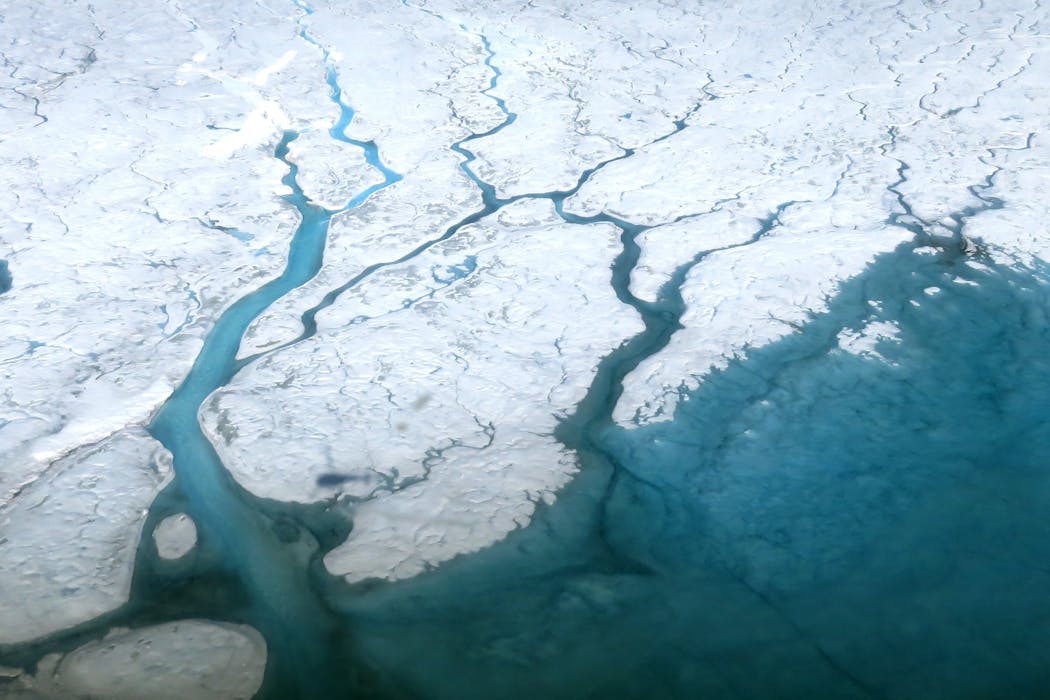
Meltwater runs across the Greenland ice sheet in rivers. The ice sheet is already losing mass and could soon reach a tipping point.Maria-José Viñas/NASA
As the planet warms, it risks crossing catastrophic tipping points: thresholds where Earth systems, such as ice sheets and rain forests, change irreversibly over human lifetimes.
Scientists have long warned that if global temperatures warmed more than 1.5 degrees Celsius (2.7 Fahrenheit) compared with before the Industrial Revolution, and stayed high, they would increase the risk of passing multiple tipping points. For each of these elements, like the Amazon rain forest or the Greenland ice sheet, hotter temperatures lead to melting ice or drier forests that leave the system more vulnerable to further changes.
Pink circles show the systems closest to tipping points. Some would have regional effects, such as loss of coral reefs. Others are global, such as the beginning of the collapse of the Greenland ice sheet. Global Tipping Points Report, CC BY-ND
The term “tipping point” is often used to illustrate these problems, but apocalyptic messages can leave people feeling helpless, wondering if it’s pointless to slam the brakes. As a geoscientist who has studied the ocean and climate for over a decade and recently spent a year on Capitol Hill working on bipartisan climate policy, I still see room for optimism.
It helps to understand what a tipping point is – and what’s known about when each might be reached.
Tipping points are not precise
A tipping point is a metaphor for runaway change. Small changes can push a system out of balance. Once past a threshold, the changes reinforce themselves, amplifying until the system transforms into something new.
The Greenland ice sheet, which is 1.9 miles (3 kilometers) thick at its thickest point, has been losing mass for several years as temperatures rise and more of its ice is lost to the ocean. A tipping point would mean runaway ice loss, with the potential to eventually raise sea level 24 feet (7.4 meters) and shut down a crucial ocean circulation. Sean Gallup/Getty Images
The scientific reality of tipping points is more complicated than crossing a temperature line. Instead, different elements in the climate system have risks of tipping that increase with each fraction of a degree of warming.
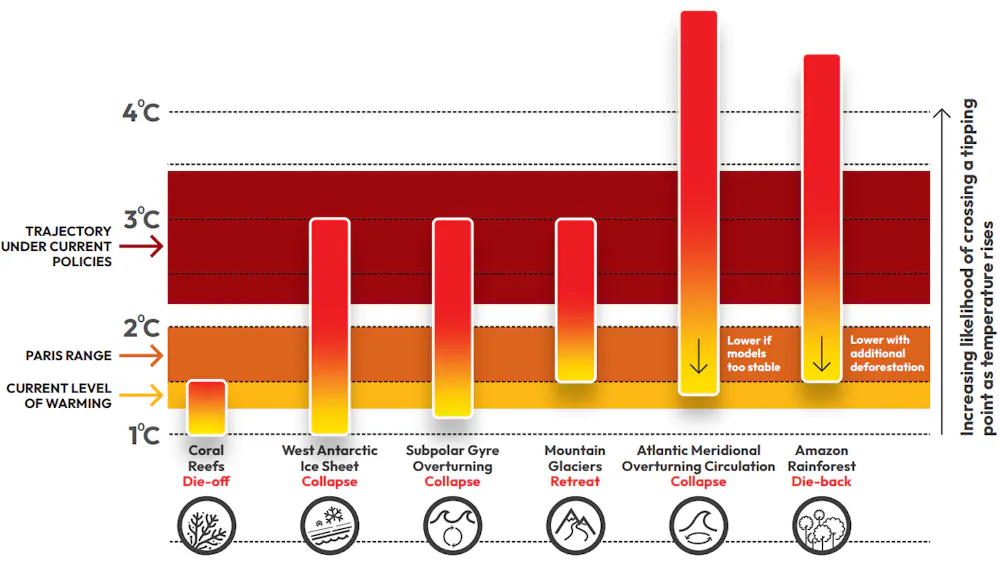
For example, the beginning of a slow collapse of the Greenland ice sheet, which could raise global sea level by about 24 feet (7.4 meters), is one of the most likely tipping elements in a world more than 1.5 C warmer than preindustrial times. Some models place the critical threshold at 1.6 C (2.9 F). More recent simulations estimate runaway conditions at 2.7 C (4.9 F) of warming. Both simulations consider when summer melt will outpace winter snow, but predicting the future is not an exact science.
Gradients show science-based estimates from the Global Tipping Points Report of when key global or regional climate tipping points are increasingly likely to be reached. Every fraction of a degree increases the likeliness, reflected in the warming color. Global Tipping Points Report 2025, CC BY-ND
Forecasts like these are generated using powerful climate models that simulate how air, oceans, land and ice interact. These virtual laboratories allow scientists to run experiments, increasing the temperature bit by bit to see when each element might tip.
Their nine core tipping elements include large-scale components of Earth’s climate, such as ice sheets, rain forests and ocean currents. They also simulated thresholds for smaller tipping elements that pack a large punch, including die-offs of coral reefs and widespread thawing of permafrost.
The world may have already passed one tipping point, according to the 2025 Global Tipping Points Report: Corals reefs are dying as marine temperatures rise. Healthy reefs are essential fish nurseries and habitat and also help protect coastlines from storm erosion. Once they die, their structures begin to disintegrate. Vardhan Patankar/Wikimedia Commons, CC BY-SA
Some tipping elements, such as the East Antarctic ice sheet, aren’t in immediate danger. The ice sheet’s stability is due to its massive size – nearly six times that of the Greenland ice sheet – making it much harder to push out of equilibrium. Model results vary, but they generally place its tipping threshold between 5 C (9 F) and 10 C (18 F) of warming.
Other elements, however, are closer to the edge.
Alarm bells sounding in forests and oceans
In the Amazon, self-perpetuating feedback loops threaten the stability of the Earth’s largest rain forest, an ecosystem that influences global climate. As temperatures rise, drought and wildfire activity increase, killing trees and releasing more carbon into the atmosphere, which in turn makes the forest hotter and drier still.
Rising temperatures also threaten biodiversity underwater.
The second Global Tipping Points Report, released Oct. 12, 2025, by a team of 160 scientists including Lenton, suggests tropical reefs may have passed a tipping point that will wipe out all but isolated patches.
Coral loss on the Great Barrier Reef. Australian Institute of Marine Science.
Corals rely on algae called zooxanthellae to thrive. Under heat stress, the algae leave their coral homes, draining reefs of nutrition and color. These mass bleaching events can kill corals, stripping the ecosystem of vital biodiversity that millions of people rely on for food and tourism.
Low-latitude reefs have the highest risk of tipping, with the upper threshold at just 1.5 C, the report found. Above this amount of warming, there is a 99% chance that these coral reefs tip past their breaking point.
Similar alarms are ringing for ocean currents, where freshwater ice melt is slowing down a major marine highway that circulates heat, known as the Atlantic Meridional Overturning Circulation, or AMOC.
The AMOC carries warm water northward from the tropics. In the North Atlantic, as sea ice forms, the surface gets colder and saltier, and this dense water sinks. The sinking action drives the return flow of cold, salty water southward, completing the circulation’s loop. But melting land ice from Greenland threatens the density-driven motor of this ocean conveyor belt by dilution: Fresher water doesn’t sink as easily.
Not all scientists agree that an AMOC collapse is close. For the Amazon rain forest and the North Atlantic, some cite a lack of evidence to declare the forest is collapsing or currents are weakening.
The Amazon forest has been losing tree cover to logging, farming, ranching, wildfires and a changing climate. Pink shows areas with greater than 75% tree canopy loss from 2001 to 2024. Blue is tree cover gain from 2000 to 2020. Global Forest Watch, CC BY
Other changes driven by rising global temperatures, like melting permafrost, likely don’t meet the criteria for tipping points because they aren’t self-sustaining. Permafrost could refreeze if temperatures drop again.
Risks are too high to ignore
Despite the uncertainty, tipping points are too risky to ignore. Rising temperatures put people and economies around the world at greater risk of dangerous conditions.
But there is still room for preventive actions – every fraction of a degree in warming that humans prevent reduces the risk of runaway climate conditions. For example, a full reversal of coral bleaching may no longer be possible, but reducing emissions and pollution can allow reefs that still support life to survive.
Tipping points highlight the stakes, but they also underscore the climate choices humanity can still make to stop the damage.
Alexandra A Phillips does not work for, consult, own shares in or receive funding from any company or organization that would benefit from this article, and has disclosed no relevant affiliations beyond their academic appointment.
Hidden beneath farmland in the central tablelands of New South Wales lies one of Australia’s most extraordinary fossil sites – McGraths Flat. It dates back between 11 million and 16 million years into the Miocene epoch, a time when many of today’s familiar plants and animals evolved.
It is here that palaentologists and geologists from the Australian Museum Research Institute have made remarkable fossil discoveries. Where dust and drought now dominate, a lush rainforest once flourished. In stunning ecological detail, fossils at McGraths Flat reveal this ancient ecosystem.
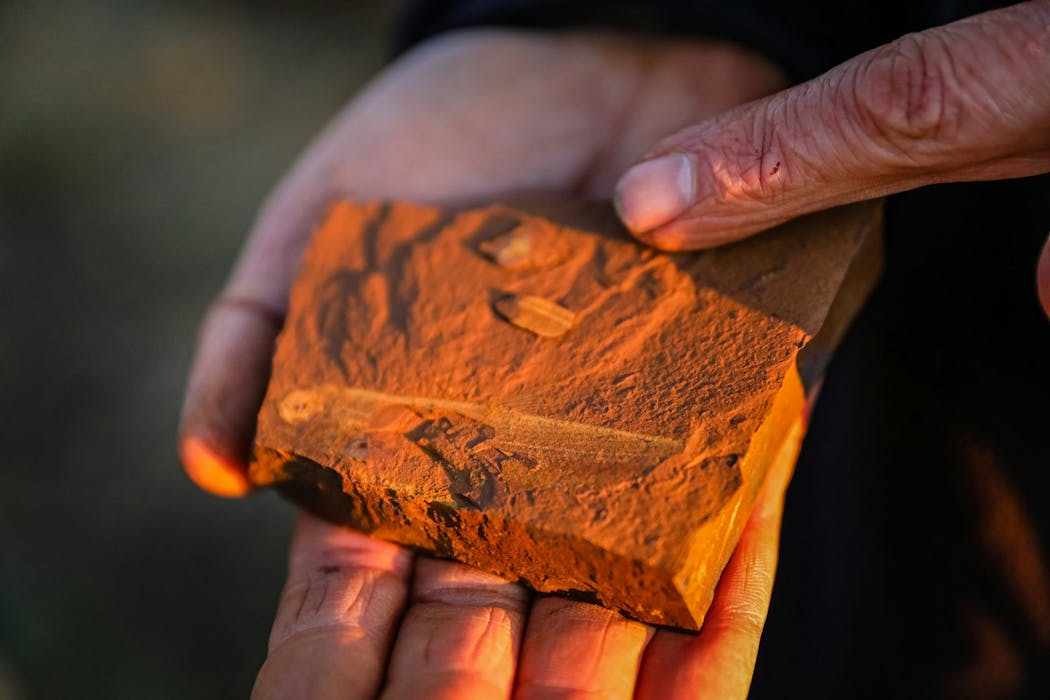
Strikingly red in appearance, the sedimentary rocks here are composed entirely of goethite – a fine-grained mineral that contains iron. This iron has preserved a range of plants, insects, spiders, fish and feathers with exceptional detail.
Our new study, published in the journal Gondwana Research, shows there’s another reason these rocks are so intriguing. They fundamentally challenge ideas about where well-preserved fossil sites on Earth can be found, and why.
A large trapdoor spider preserved in McGraths Flat. Michael Frese
Beyond shale and sandstone
Traditionally, the most exceptionally well-preserved fossil sites are from rocks dominated by shale, sandstone, limestone, or volcanic ash.
Consider Germany’s Messel Pit or Canada’s Burgess Shale. At these sites, organisms were rapidly buried in fine-grained sediments, allowing the exceptional preservation of soft tissues, not just hard parts.
Messel Pit has preserved roughly 47 million-year-old fossils showing the outlines of feathers, fur and skin. Meanwhile, the Burgess Shale contains soft tissues from some of Earth’s earliest animal life, dating back about 500 million years.
By contrast, sedimentary rocks made entirely of iron are the last place you’d expect to find well-preserved remains of land-based (terrestrial) animal and plant life.
That’s because iron-rich sedimentary rocks are predominantly known from banded iron formations. These massive iron deposits largely formed around 2.5 billion years ago in Earth’s ancient oxygen-depleted oceans, long before complex animal and plant life evolved.
In more recent history, iron is considered a mere weathering product, forming rust on the continents when exposed to our oxygen-rich atmosphere. Just look at Australia’s iconic red-rocked outback landscape that preserves these million- to billion-year-old features.
Yet the discovery of McGraths Flat has defied these expectations.
Strikingly red fossil-bearing rocks of McGraths Flat, composed of an iron-oxyhydroxide mineral called goethite. Tara Djokic
Terrestrial life entombed in iron
McGraths Flat is made from a very fine-grained, iron-rich rock called ferricrete. It’s essentially a cement made from iron.
The ferricrete consists almost entirely of microscopic iron-oxyhydroxide mineral particles, each just 0.005 millimetres across. When an animal died and was buried in the sediment, this minute scale is what allowed the iron particles to fill every cell. The result? Extraordinarily well-preserved soft tissue fossils.
Compared with marine life, fossil sites preserving terrestrial life are notoriously rare. Terrestrial sites that preserve soft tissues? Even rarer. The exceptional detail captured in the McGraths Flat fossils reveals new snapshots of past life we don’t often get to find.
These fossils are so perfectly preserved that individual pigment cells in fish eyes, internal organs of insects and fish, and even delicate spider hairs and nerve cells can be seen.
This level of preservation rivals other well-preserved fossil sites, such as those consisting of shale or sandstone. Except here, they are entombed in iron.
Australian Museum Research Institute researchers Matthew McCurry, Tara Djokic and Patrick Smith (left to right), three of 15 co-authors who collaborated on this study published in Gondwana Research. Salty Dingo
How did McGraths Flat form?
Our new study sheds light on how this fossil site came to be – a crucial step for finding similar terrestrial fossil troves in iron.
McGraths Flat began forming during the Miocene when iron leached from weathering basalt under warm, wet rainforest conditions.
Acidic groundwater then carried the dissolved iron underground until it reached a river system with an oxbow lake – an abandoned river channel. There, the iron became ultra-fine iron-oxyhydroxide sediment.
It rapidly coated dead organisms on the lake floor and replicated their soft tissue structures down to the cellular level.
A new fossil roadmap
Understanding how McGraths Flat formed could provide a roadmap for finding similar iron-rich fossil sites worldwide.
Key features to look for include very fine-grained and finely layered ferricrete in areas where:
ancient river channels cut through older iron-rich landscapes, such as basaltic rocks from volcanoes
ancient warm, humid conditions once promoted intense weathering, and
the surrounding geology lacks significant limestone or sulphur-containing minerals (such as pyrite), because these could interfere with the formation of the iron-oxyhydroxide mineral sediments.
The red rocks of McGraths Flat open an entirely new chapter in our understanding of how exceptionally well-preserved fossil sites can form.
The next breakthrough in understanding ancient terrestrial life might not come from traditional shale or sandstone fossil beds, but from rusty-red rocks hidden beneath our feet.
Palaeontologists from the Australian Museum Research institute at the McGraths Flat field site, splitting the red rocks apart with a hammer and chisel to search for fossils. Tara Djokic
The study’s authors acknowledge the traditional custodians of the land and waterways on which McGraths Flat is located, the Wiradjuri Nation people.
Tara Djokic and co-authors received funding for this research from the Etheridge family descendants; Australian Museum Research Institute, Australian Museum Trust; and Australian Research Council (ARC). We acknowledge the scientific and technical assistance of Microscopy Australia, especially from the Centre for Advanced Microscopy, ANU (jointly funded by the ANU and the Australian Federal Government).
Tara is affiliated with the not-for-profit organisation Women in Earth and Environmental Sciences Australasia (WOMEESA).
The first steps of the peace plan for Gaza are underway. Now both parties have agreed to terms, Hamas is obligated to release all hostages within 72 hours and the Israeli Defence Forces (IDF) will withdraw to an agreed-upon line within the strip.
Hopes are high, particularly on the ground in Gaza and in Israel after two years of brutal conflict. Some argue the parties are now closer than ever to an end to hostilities, and US President Donald Trump’s 20-point peace plan may be an effective road-map.
But the truth is we have been here before. Hamas and Israel have now agreed to a road-map to peace in principle, but what is in place today is very similar to ceasefire deals in the past, and a ceasefire is not the same as a peace deal or an armistice.
The plan is also very light on specifics, and the devil is definitely in the detail. Will the IDF completely withdraw from Gaza and rule out annexation? Who will take on governance of the strip? Is Hamas going to be involved in this governance? There were signs of disagreement on these issues even before the fighting stopped.
So if the ceasefire steps hold in the short term – then what? What would it take for the peace plan to be successful?
First, the political pressures to refrain from resuming hostilities will need to hold. Once all the hostages are returned, which is expected to take place by Tuesday Australian time, Hamas effectively loses any remaining leverage for future negotiations if hostilities were to resume.
Once the hostage exchange is complete, it’s likely Israeli Prime Minister Benjamin Netanyahu will see some pressure from his right to resume hostilities.
With Hamas relinquishing this leverage, it will be essential for the Israeli government to see these negotiations and the end of the war as fundamental to its long term interests and security for peace to hold. There must be a sincere desire to return to dialogue and compromise, not the pre-October 7 2023 complacency.
Second, Hamas will likely have to relinquish its arms and any political power in Gaza. Previously, Hamas has said it would only do this on the condition of recognition of a sovereign Palestinian state. As recently as October 10, factions in Gaza have said they would not accept foreign guardianship, a key part of the peace plan, with governance to be determined “by the national component of our people directly”.
Related to this, any interim governance or authority that takes shape in Gaza must reflect local needs. The proposed “body of peace” headed by Trump and former UK prime minister Tony Blair, could risk repeating previous mistakes of cutting Palestinians out of discussions over their own future.
Part of the peace deal is the resumption of humanitarian aid flows, but the fate of the Gaza blockade that has been effectively in place since 2007 is unclear. The land, sea and air blockade, which was imposed by Egypt and Israel following Hamas’ political takeover of Gaza, heavily restricts imports and the movement of Gazans.
Prior to October 2023, unemployment in the strip sat at 46%, and 62% of Gazans required food assistance as a result of the limits placed on imports, including basic food and agricultural items such as fertiliser.
Should the blockade continue, at best Israel will create the same humanitarian conditions in Gaza of food, medical and financial insecurity that existed prior to the October 7 attacks. While conditions and restrictions are orders of magnitude worse in Gaza today, NGOs called early incarnations of the blockade “collective punishment”. For peace to hold in the strip, security policy needs to be in line with global humanitarian principles and international law.
Most importantly, however, all parties involved must see peace in Gaza as fundamentally connected to broader peace between Israelis and Palestinians. Seeing the Gaza conflict as discrete and separate from the broader Palestinian-Israeli conflict would be a mistake. Discussions of Palestinian national self-determination in Gaza and the West Bank must be taken seriously and be a central part of the plan for peace to last.
Many challenges stand in the way, including Israeli settlement and annexation, the status of Jerusalem and the question of demilitarisation.
A meaningful step would be for the US to refrain from using its veto power at the UN Security Council (UNSC) against votes supporting Palestinian statehood. While several states recognised a Palestinian state at the recent UN General Assembly, the US has blocked formal status at the UNSC every time.
However, peace deals are incredibly difficult to negotiate at the best of times, requiring good faith, sustained commitment and trust. The roots of this conflict reach back decades, and mutual mistrust has been institutionalised and weaponised. Difficulties in negotiating the Oslo Accords in the 1990s showed just how deep the roots of the conflict are. The situation is now much worse.
It is not clear if any party involved in negotiation possesses the political will needed to reach an accord. However, an opportunity exists to reach one, and it should not be taken for granted.
Andrew Thomas does not work for, consult, own shares in or receive funding from any company or organisation that would benefit from this article, and has disclosed no relevant affiliations beyond their academic appointment.