When ‘sustainable’ fashion backfires on the environment

Source: The Conversation – UK – By Erez Yerushalmi, Professor of Economics, Birmingham City University

triocean/Shutterstock

The circular economy – the idea of “reduce, reuse and recycle” – has long been promoted as one solution to the environmental crisis. Instead of the old “take, make, use, throw away” model, it aims to keep materials in play for as long as possible.

In fashion, this means going well beyond traditional repair habits and shopping secondhand. It entails innovations such as clothing rental platforms, fibre-to-fibre recycling, and AI tools that cut waste in supply chains and sort textiles for recycling.

This sounds like a win-win: less waste, fewer raw materials used, and a lighter footprint on the planet. But in fact, these innovations could end up making things worse.

In our recent study, we found that innovations in the circular economy – especially in the textiles and clothing industry – can trigger what’s called a “backfire rebound effect”. This is where the production and consumption of clothing rises, potentially wiping out any environmental gains. It happens when efficiency improvements lower costs and make products seem more sustainable, tempting consumers to buy more.

The rebound effect is an index measuring how innovation affects production – ranging from below zero (“super conservation”: the best outcome for the environment) to above one (“backfire”: the worst), with a range of outcomes in between.

It’s not a new concept. In 1865, British economist William Stanley Jevons observed that improvements in coal efficiency actually led to more coal being burned. Today, the same dynamics can occur in fashion.

Recycled clothing, marketed as eco-friendly, may tempt people to buy more. And if fashion brands then scale up – at home or abroad – the negative environmental impact is amplified, wiping out many of the gains from recycling.

Until now, no studies had quantified the rebound effect for the global textile industry. Clothing and textiles are widely held to be the world’s second-most polluting sector after energy, consuming around 20% of the world’s water every year, emitting 1.7 billion tonnes of CO₂ annually (about 10% of global emissions), and generating 92 million tonnes of waste each year. Less than 1% of this waste is recycled into new garments.

a large pile of used clothing for recycling
Less than 1% of waste textiles are recycled into new garments.
RymanStudio/Shutterstock

With annual global production of new textiles projected to climb to 160 million tonnes by 2030 (from 124 million tonnes in 2023), the speed of this growth means there is a clear need for more recycling and reuse. Yet our research suggests that environmental innovations could actually lead to increased levels of global textile consumption.

Specifically, we found a global average backfire effect of 1.6 – a strikingly high figure. This means that for every 1% gain in environmental textile innovation, there will be an increase in new textile production of 0.6%.

We can think of it in terms of cars that become more fuel-efficient: instead of saving petrol, people may drive more. In the same way, rather than easing pressure on the planet, innovation in textiles is fuelling more production and harm. What we really need is a rebound effect below 1 (a “partial rebound”) – or better still, below zero (super conservation).

What causes this special rebound in textiles?

When an efficient recycling innovation is introduced, production costs drop, similar to the example of the fuel-efficient cars. Consumers, drawn by lower prices and the moral appeal of “sustainable” products, increase their purchases. Businesses see opportunities to expand into new markets. Soon, the gains from the innovation are overwhelmed by rising demand, leaving the planet worse off.

This doesn’t mean circular economy strategies for fashion should be abandoned – but they need guardrails. In our simulations, a Pigouvian tax (a tax on damaging behaviour) was effective in reducing the rebound effect.

The greater the efficiency gains from circular innovations, the higher the tax required to prevent unsustainable consumption. For textiles, we found that a 10% efficiency gain from circular innovation – such as fibre-to-fibre recycling or AI sorting – requires a minimum uniform tax of 1.25% on production to prevent backfire (full rebound). A 2.5% tax could reduce the rebound to manageable levels (partial rebound).

Use of taxes to reduce rebound effect of environmental textile innovations

Other traditional policy tools could achieve similar results, including production caps on new clothes, incentives for longer lifespans for products, and measures to encourage genuinely sustainable consumption.

And because the rebound effect is not uniform across the world, such policies require both international coordination and measures that are specific to individual regions.

For example, in Bangladesh, where textiles account for more than 80% of exports and employ millions of people, blunt curbs on fast fashion could devastate livelihoods. Yet it is demand from wealthy countries for cheap clothing that fuels this dependence. Policies must therefore balance global environmental goals with local economic realities.

But the challenge goes deeper – right to the tension between a growth-driven economic system and the planet’s limits. Degrowth theory (the controversial but increasingly discussed idea that populations could voluntarily curb production and consumption) asks whether true sustainability is possible if economies remain dependent on increasing consumption.

Behavioural change is crucial – this means embracing minimalism, reusing more, and buying only what truly adds value. In the fashion world, this could mean campaigns that promote repairing clothes and cutting back on consumption, backed by policies that guide consumers towards these more sustainable habits.

Real-life examples already exist. France has a repair fund that refunds part of the cost of mending clothes. The Waste and Resources Action Programme works in the UK, Europe and Australia as a public–private partnership to cut waste across the fashion sector. And schemes like the Better Cotton Initiative, Cascale and Fashion Pact aim to shift production towards more sustainable practices.

Our study is the first to quantify the rebound effect of circular economy innovation in textiles at both global and regional scales. Its findings suggest a nuanced reality: circularity can help, yet without additional changes it risks accelerating the problems it was meant to solve.

We believe that measuring this rebound effect is key if policies are to deliver in practice. The fashion industry needs to back its sustainability promises with evidence, not just good intentions.

The Conversation

The authors do not work for, consult, own shares in or receive funding from any company or organisation that would benefit from this article, and have disclosed no relevant affiliations beyond their academic appointment.

ref. When ‘sustainable’ fashion backfires on the environment – https://theconversation.com/when-sustainable-fashion-backfires-on-the-environment-264309


Charlie Kirk’s assassination is the latest act of political violence in a febrile United States

Source: The Conversation – Global Perspectives – By Jared Mondschein, Director of Research, US Studies Centre, University of Sydney

In yet another shocking act of political violence in the United States, Charlie Kirk, who came to prominence as a conservative influencer and supporter of Donald Trump, was assassinated while debating with students at a university in Utah.

The 31-year-old, who came to fame by doing just that – debating whoever wanted to engage with him – was undeniably the most influential figure in young conversative politics.

News of his killing sent social media into an all-too familiar frenzy, with opposing political camps blaming each other for the increasingly febrile environment in contemporary America. It has also raised fears it may provoke even more violence.

Who was Charlie Kirk?

The meagre tent in which Kirk would set up shop on university campuses around America to engage in debate with university students should not be mistaken for meagre support.

Kirk’s political organisation, Turning Point USA (TPUSA), had a revenue of US$78,000 (A$118,000) when he founded it in 2012. As of last year, its annual revenue had grown to US$85 million (A$129 million).

His podcast, The Charlie Kirk Show, boasted between 500,000 and 750,000 downloads for each episode, ranking it as one of the top 25 most listened to podcasts in the world. Even Kirk’s 7 million X account followers is greater than MSNBC’s 5 million.

Outside the online world, TPUSA today has a presence in more than 3,500 high school and college campuses, with more than 250,000 student members, and more than 450 full- and part-time staff. But perhaps the most important metric is the fact that a TikTok survey of users under 30 found that, among those who voted for Trump, they trusted Kirk more than any other individual.

As much as Kirk’s many detractors abhorred his views and his conduct – particularly his views of Black people, Jews, trans people and immigrants, as well as his efforts to denounce professors engaging in “leftist propaganda” – there was no denying he was willing to debate practically anyone.

Whether it was in storied lecture halls at Oxford University or a progressive university campus in the US, Kirk engaged in political debate with anyone willing to come to the open microphone at his events, encouraging students to “prove me wrong”. The dissemination of clips of these interactions – typically an unwitting progressive student asking Kirk a question only to have Kirk counter-argue – garnered hundreds of millions of views across a variety of social media channels.

Support for Trump

Kirk first came to prominence championing more conventional Republican politicians, including Texas Senator Ted Cruz and former Wisconsin governor Scott Walker. But he eventually came around to supporting Trump in 2016, and never looked back.

Indeed, when many – particularly within the Republican party – sought to distance themselves from Trump after incidents such as the infamous Access Hollywood tape in 2016 or the violence at the US Capitol on January 6 2021, Kirk stayed the course.

The combination of his unceasing loyalty to Trump and his increasing popularity among young voters saw him increase his power within conservative circles. This power saw his organisation contribute millions of dollars to various Trump-aligned campaigns. TPUSA also bolstered support for embattled cabinet nominee, and now defence secretary, Pete Hegseth, and initiate efforts to oust former chair Ronna McDaniel from the Republican National Committee.

But perhaps Kirk’s most notable political win was harnessing a record number of young people to vote for Trump in 2024, despite the fact he was the oldest ever person to lead the Republican presidential ticket.

US political violence

Some may look at yet another instance of deadly US political violence and wonder whether it would have any sort of lasting impact. After all, the creation of the US followed an act of political violence known to Americans as the Revolutionary War. And this founding preceded more political violence, including the Civil War, Reconstruction and Civil Rights movement, among others.

Yet, as much as the entirety of US history is filled with such incidents, there is no denying that for the past generation in particular, it has also grown worse.

Numerous studies have found that the number of attacks and plots against elected officials, political candidates, political party officials, and political workers is exponentially higher now than in recent history. In examining 30 years of data, the Center for Strategic and International Studies (CSIS) found the number of attacks and plots in the past five years is nearly triple that of the preceding 25 years combined.

But beyond the numbers, US politicians themselves increasingly cite the spectre of violence as a reason why they have either retired from politics or – perhaps more worryingly – changed their votes.

Ultimately, there’s little question as to whether the US will continue to suffer from political violence. The greater question is to what extent and at what cost.

Kirk’s death will affect far more than just his friends and his family – including his widow and two young children. Today marked the loss of a unique leader in the US conservative movement.

The Conversation

Jared Mondschein does not work for, consult, own shares in or receive funding from any company or organisation that would benefit from this article, and has disclosed no relevant affiliations beyond their academic appointment.

ref. Charlie Kirk’s assassination is the latest act of political violence in a febrile United States – https://theconversation.com/charlie-kirks-assassination-is-the-latest-act-of-political-violence-in-a-febrile-united-states-265063

10 years ago, gravitational waves changed astronomy. A new discovery shows there’s more to come

Source: The Conversation – Global Perspectives – By Simon Stevenson, ARC DECRA Fellow, Swinburne University of Technology

Carl Knox, OzGrav, Swinburne University of Technology

Ten years ago, scientists heard the universe rumble for the first time. That first discovery of gravitational waves proved a key prediction from Albert Einstein’s theory of general relativity and began a new era of astronomy.

Now, a new gravitational-wave discovery marks the anniversary of this major breakthrough. Published today in Physical Review Letters, it puts to the test a theory from another giant of science, Stephen Hawking.

What are gravitational waves?

Gravitational waves are “ripples” in the fabric of space-time that travel at the speed of light. They are caused by highly accelerated massive objects, such as colliding black holes or the mergers of massive star remains known as neutron stars.

These ripples propagating through the universe were first directly observed on September 14 2015 by the twin Laser Interferometer Gravitational-wave Observatory (LIGO) detectors in the United States.


Read more:
Gravitational waves discovered: how did the experiment at LIGO actually work?


That first signal, called GW150914, originated from the collision of two black holes, each more than 30 times the mass of the Sun and more than a billion light years away from Earth.

This was the first direct proof of gravitational waves, exactly as predicted by Einstein’s theory of relativity 100 years earlier. The discovery led to the award of the 2017 Nobel Prize in Physics to Rainer Weiss, Barry Barish and Kip Thorne for their pioneering work on the LIGO collaboration.

This simulation shows the gravitational waves produced by two orbiting black holes.

Hundreds of signals in less than a decade

Since 2015, more than 300 gravitational waves have been observed by LIGO, along with the Italian Virgo and Japanese KAGRA detectors.

Just a few weeks ago, the international LIGO/Virgo/KAGRA collaboration released the latest results from their fourth observing run, more than doubling the number of known gravitational waves.

Now, ten years after the first discovery, an international collaboration including Australian scientists from the Australian Research Council’s Centre of Excellence for Gravitational Wave Discovery (OzGrav), has announced a new gravitational-wave signal, GW250114.

The signal is almost a carbon copy of that very first gravitational wave signal, GW150914.

The observed gravitational wave GW250114 (LVK 2025). The observed data is shown in light grey. The smooth blue curve represents the best fit theoretical waveform models, showing excellent agreement with the observed signal.
LIGO, Virgo and KAGRA collaboration

The black hole collision responsible for GW250114 had very similar physical properties to GW150914. However, due to significant upgrades to the gravitational wave detectors over the past ten years, the new signal is seen much more clearly (almost four times as “loud” as GW150914).

Excitingly, it’s allowed us to put to the test the ideas of another groundbreaking physicist.

Hawking was right, too

More than 50 years ago, physicists Stephen Hawking and Jacob Bekenstein independently formulated a set of laws that describe black holes.

Hawking’s second law of black hole mechanics, also known as Hawking’s area theorem, states that the area of the event horizon of a black hole must always increase. In other words, black holes can’t shrink.

Meanwhile, Bekenstein showed that the area of a black hole is directly related to its entropy, a scientific measure of disorder. The second law of thermodynamics tells us that entropy must always increase: the universe is always getting messier. Since the entropy of a black hole must also increase with time, it tells us that its area must also increase.

How can we test these ideas? Colliding black holes, it turns out, are the perfect tool.

The precision of this recent measurement allowed scientists to perform the most precise test of Hawking’s area theorem to date.

Previous tests using the first detection, GW150914, showed that signal was in good agreement with Hawking’s law, but could not confirm it conclusively.

Black holes are surprisingly simple objects. The horizon area of a black hole depends on its mass and spin, the only parameters necessary to describe an astrophysical black hole. In turn, the masses and spins determine what the gravitational wave looks like.

By separately measuring the masses and spins of the incoming pair of black holes, and comparing these to the mass and spin of the final black hole left over after the collision, scientists were able to compare the areas of the two individual colliding black holes to the area of the final black hole.

The data show excellent agreement with the theoretical prediction that the area should increase, confirming Hawking’s law without a doubt.

Which giant of science will we put to the test next? Future gravitational wave observations will allow us to test more exotic scientific theories, and maybe even probe the nature of the missing components of the universe – dark matter and dark energy.

The Conversation

Simon Stevenson receives funding from the Australian Research Council. He works for Swinburne University of Technology. He is a member of OzGrav and the LIGO Scientific collaboration.

ref. 10 years ago, gravitational waves changed astronomy. A new discovery shows there’s more to come – https://theconversation.com/10-years-ago-gravitational-waves-changed-astronomy-a-new-discovery-shows-theres-more-to-come-264131

Blue, green, brown, or something in between – the science of eye colour explained

Source: The Conversation – Global Perspectives – By Davinia Beaver, Postdoctoral research fellow, Clem Jones Centre for Regenerative Medicine, Bond University

Pouya Hajiebrahimi/Unsplash

You’re introduced to someone and your attention catches on their eyes. They might be a rich, earthy brown, a pale blue, or the rare green that shifts with every flicker of light. Eyes have a way of holding us, of sparking recognition or curiosity before a single word is spoken. They are often the first thing we notice about someone, and sometimes the feature we remember most.

Across the world, human eyes span a wide palette. Brown is by far the most common shade, especially in Africa and Asia, while blue is most often seen in northern and eastern Europe. Green is the rarest of all, found in only about 2% of the global population. Hazel eyes add even more diversity, often appearing to shift between green and brown depending on the light.

So, what lies behind these differences?

It’s all in the melanin

The answer rests in the iris, the coloured ring of tissue that surrounds the pupil. Here, a pigment called melanin does most of the work.

Brown eyes contain a high concentration of melanin, which absorbs light and creates their darker appearance. Blue eyes contain very little melanin. Their colour doesn’t come from pigment at all but from the scattering of light within the iris, a physical effect known as the Tyndall effect, a bit like the effect that makes the sky look blue.

In blue eyes, the shorter wavelengths of light (such as blue) are scattered more effectively than longer wavelengths like red or yellow. Due to the low concentration of melanin, less light is absorbed, allowing the scattered blue light to dominate what we perceive. This blue hue results not from pigment but from the way light interacts with the eye’s structure.

Green eyes result from a balance, a moderate amount of melanin layered with light scattering. Hazel eyes are more complex still. Uneven melanin distribution in the iris creates a mosaic of colour that can shift depending on the surrounding ambient light.

What have genes got to do with it?

The genetics of eye colour is just as fascinating.

For a long time, scientists believed a simple “brown beats blue” model, controlled by a single gene. Research now shows the reality is much more complex. Many genes contribute to determining eye colour. This explains why children in the same family can have dramatically different eye colours, and why two blue-eyed parents can sometimes have a child with green or even light brown eyes.

Eye colour also changes over time. Many babies of European ancestry are born with blue or grey eyes because their melanin levels are still low. As pigment gradually builds up over the first few years of life, those blue eyes may shift to green or brown.

In adulthood, eye colour tends to be more stable, though small changes in appearance are common depending on lighting, clothing, or pupil size. For example, blue-grey eyes can appear very blue, very grey or even a little green depending on ambient light. More permanent shifts are rarer but can occur as people age, or in response to certain medical conditions that affect melanin in the iris.

The real curiosities

Then there are the real curiosities.

Heterochromia, where one eye is a different colour from the other, or one iris contains two distinct colours, is rare but striking. It can be genetic, the result of injury, or linked to specific health conditions. Celebrities such as Kate Bosworth and Mila Kunis are well-known examples. Musician David Bowie’s eyes appeared as different colours because of a permanently dilated pupil after an accident, giving the illusion of heterochromia.

A collage of three people, each with different coloured eyes.
Celebrities such as David Bowie, Mila Kunis and Kate Bosworth (L to R) are well-known examples of people whose eyes are different colours.
Wikimedia Commons/The Conversation

In the end, eye colour is more than just a quirk of genetics and physics. It’s a reminder of how biology and beauty intertwine. Each iris is like a tiny universe, rings of pigment, flecks of gold, or pools of deep brown that catch the light differently every time you look.

Eyes don’t just let us see the world, they also connect us to one another. Whether blue, green, brown, or something in-between, every pair tells a story that’s utterly unique, one of heritage, individuality, and the quiet wonder of being human.

The Conversation

Davinia Beaver does not work for, consult, own shares in or receive funding from any company or organisation that would benefit from this article, and has disclosed no relevant affiliations beyond their academic appointment.

ref. Blue, green, brown, or something in between – the science of eye colour explained – https://theconversation.com/blue-green-brown-or-something-in-between-the-science-of-eye-colour-explained-264681

Want more protein for less money? Don’t be fooled by the slick black packaging

Source: The Conversation – Global Perspectives – By Emma Beckett, Adjunct Senior Lecturer, Nutrition, Dietetics & Food Innovation – School of Health Sciences, UNSW Sydney

The Conversation, CC BY-SA

If you’ve been supermarket shopping lately, you might have noticed more foods with big, bold protein claims on black packaging – from powders and bars to yoghurt, bread and even coffee.

International surveys show people are shopping for more protein because they think it’ll help their fitness and health. But clever marketing can sway our judgement too.

Before your next shop, here’s what you should know about how protein is allowed to be sold to us. And as a food and nutrition scientist, I’ll offer some tips for choosing the best value meat or plant-based protein for every $1 you spend – and no, protein bars aren’t the winner.

‘Protein’ vs ‘increased protein’ claims

Let’s start with those “high protein” or “increased protein” claims we’re seeing more of on the shelves.

In Australia and New Zealand, there are actually rules and nuances about how and when companies can use those phrases.

Under those rules, labelling a product as a “protein” product implies it’s a “source” of protein. That means it has at least 5 grams of protein per serving.

“High protein” doesn’t have a specific meaning in the food regulations, but is taken to mean “good source”. Under the rules, a “good source” should have at least 10 grams of protein per serving.

Then there is the “increased protein” claim, which means it has at least 25% more protein than the standard version of the same food.

If you see a product labelled as a “protein” version, you might assume it has significantly more protein than the standard version. But this might not be the case.

Take, for example, a “protein”-branded, black-wrapped cheese: Mini Babybel Protein. It meets the Australian and New Zealand rules of being labelled as a “source” of protein, because it has 5 grams of protein per serving (in this case, in a 20 gram serve of cheese).

But what about the original red-wrapped Mini Babybel cheese? That has 4.6g of protein per 20 gram serving.

The difference between the original vs “protein” cheese is not even a 10% bump in protein content.

Black packaging by design

Food marketers use colours to give us signals about what’s in a package.

Green signals natural and environmentally friendly, reds and yellows are often linked to energy, and blue goes with coolness and hydration.

These days, black is often used as a visual shorthand for products containing protein.

But it’s more than that. Research also suggests black conveys high-quality or “premium” products. This makes it the perfect match for foods marketed as “functional” or “performance-boosting”.

The ‘health halo’ effect

When one attribute of a food is seen as positive, it can make us assume the whole product is health-promoting, even if that’s not the case. This is called a “health halo”.

For protein, the glow of the protein halo can make us blind to the other attributes of the food, such as added fats or sugars. We might be willing to pay more too.

It’s important to know protein deficiency is rare in countries like Australia. You can even have too much protein.

How to spend less to get more protein

If you do have good reason to think you need more protein, here’s how to get better value for your money.

Animal-based core foods are nutritionally dense and high-quality protein foods. Meats, fish, poultry, eggs, fish, and cheese will have between 11 to 32 grams of protein per 100 grams.

That could give you 60g in a chicken breast, 22g in a can of tuna, 17g in a 170g tub of Greek yoghurt, or 12g in 2 eggs.

In the animal foods, chicken is economical, delivering more than 30g of protein for each $1 spent.

But you don’t need to eat animal products to get enough protein.

In fact, once you factor in costs – and I made the following calculations based on recent supermarket prices – plant-based protein sources become even more attractive.

Legumes (such as beans, lentils and soybeans) have about 9g of protein per 100g, which is about half a cup. Legumes are in the range of 20g of protein per dollar spent, which is a similar cost ratio to a protein powder.

5 bowls of different nuts, including unshelled peanuts.
Nuts, seeds, legumes and oats are all good plant-based options.
Towfiqu Barbhuiya/Unsplash, CC BY

Nuts and seeds like sunflower seeds can have 7g in one 30g handful. Even one cup of simple frozen peas will provide about 7g of protein.

Peanuts at $6 per kilogram supply 42g of protein for each $1 spent.

Dry oats, at $3/kg have 13g of protein per 100g (or 5g in a half cup serve), that’s 33g of protein per dollar spent.

In contrast, processed protein bars are typically poor value, coming in at between 6-8g of protein per $1 spent, depending on if you buy them in a single serve, or in a box of five bars.

Fresh often beats processed on price and protein

Packaged products offer convenience and certainty. But if you rely on convenience, colours and keywords alone, you might not get the best deals or the most nutritious choices.

Choosing a variety of fresh and whole foods for your protein will provide a diversity of vitamins and minerals, while reducing risks associated with consuming too much of any one thing. And it can be done without breaking the bank.

The Conversation

Emma Beckett has received funding for research or consulting from Mars Foods, Nutrition Research Australia, NHMRC, ARC, AMP Foundation, Kellogg and the University of Newcastle. She works for FOODiQ Global and is the author of ‘You Are More Than What You Eat’. She is a member of committees/working groups related to nutrition and food, including the Australian Academy of Science, the National Health and Medical Research Council, and is a member of the Nutrition Society of Australia and the Australian Institute of Food Science and Technology.

ref. Want more protein for less money? Don’t be fooled by the slick black packaging – https://theconversation.com/want-more-protein-for-less-money-dont-be-fooled-by-the-slick-black-packaging-264039

Deadly Nepal protests reflect a wider pattern of Gen Z political activism across Asia

Source: The Conversation – Global Perspectives – By DB Subedi, Lecturer, The University of Queensland

Earlier this week, thousands of mainly young people in Nepal took to the streets in mass protests triggered by the government’s decision to ban 26 social media platforms.

Some 22 people died and hundreds were injured within in a few hours in the clashes between protesters and police.

Prime Minister KP Sharma Oli and his cabinet ministers resigned in the face of growing public outrage and widespread criticism, both domestically and internationally, over the protesters’ deaths.

What happened?

Provoked by the deaths of the protesters on September 8, angry, young demonstrators burned down several government buildings across the country, including the parliament and supreme court.

Several politicians’ residences were also set on fire, while leaders of major political parties went into hiding.

The Nepal Army is currently mobilising troops on the streets to take control of the situation, but power has not yet been officially transferred to a new government.

Unrest leads to protests

Political protests and public uprisings are not new in Nepal. The country’s first mass uprising in 1990 (labelled “Jana Andolan I”) and the second in 2006 (“Jana Andolan II”) both called for major changes in the political system.

The governments that followed failed to meet the public’s hopes for real reforms.

For the first time in the country’s history, a protest of this size has been entirely led by young people from Generation Z (born roughly between 1997 and 2012). Out of nearly 30 million people in Nepal, about 40% belong to this generation.

Growing up in a digital culture shaped by internet and social media platforms, this generation has lived through Nepal’s worst years of political instability and frequent government changes. There have been 14 governments in the past 15 years.

In 2008, Nepal declared a shift from its constitutional monarchical system to a federal republic system, but the new federal constitution was only passed in 2015. But this massive change has delivered few improvements for everyday people. Despite some improvements in roads, electricity and the internet, inequality, political corruption, elitism and nepotism continue.

Making the situation even worse is an unemployment rate that exceeds 10% overall – and more than 20% for young people.

The social media ban that sparked action

In a country where more than 73% of households own a mobile phone and about 55% of the population uses the internet, social media platforms are not only a source of entertainment and networking, but also a way of amplifying political voices – especially when traditional media is perceived as being biased towards political interests.

Nepal’s Gen Z is using social media both as a social and political space. #Nepobaby is often trending on TikTok, while Instagram posts detail the lavish lifestyle that politicians and their children enjoy compared to the hard reality of many young people, who work low-wage jobs or have to leave the country just to survive.

On September 3, the government banned these social media platforms, citing a directive requiring companies to register in Nepal. The government justified the move as necessary to control fake news, misinformation and disinformation.

But Gen Z saw the ban as censorship. The frustration spreading on social media quickly turned into a nationwide uprising.

The government lifted the ban on September 8, but it could not save the coalition government.

Similarities in other countries

The protests in Nepal mirror similar movements led recently by young people elsewhere in Asia, especially Bangladesh, Sri Lanka and Indonesia.

Like Bangladesh in 2024, the young protesters in Nepal were frustrated with corruption and joblessness.

Similar to Sri Lanka’s “Aragalaya” movement in 2022, Nepal’s protesters fought against inequality and nepotism, resulting in the collapse of the government.

And like Indonesia’s student protests in recent weeks, the Nepali protesters relied on memes, hashtags and digital networks, rather than party machines to organise.

Where to from here?

What comes next for Nepal is unclear. The army chief is now coordinating with Gen Z activists to set up an interim civilian government that will prepare for fresh elections.

This is a remarkable shift: the youth who shook the streets are being asked to help shape the country’s political future.

Yet, challenges remain.

The young protesters are still a loose, leaderless network lacking the experience to run a state system. After an online meeting September 10, the protesters reportedly agreed to propose former Chief Justice Sushila Karki, now in her 70s, as a leader of the interim civilian government.

Nepal’s key institutions, such such as the courts, bureaucracy and security forces, are still largely dominated by older elites, as well. Any attempt to shift power may face resistance.

Perhaps Nepal can take a lesson from Bangladesh’s recent experience, where young protesters stepped in to help form an interim government, under the leadership of Nobel Peace Prize winner Muhammad Yunus.

Despite the challenges ahead, the uprising has provided a historic opportunity to fix Nepal’s broken government system. But real change depends on how power shifts from the old guard to new leaders, and whether they can address the structural and systemic issues that drove young people to the streets.

The Conversation

DB Subedi does not work for, consult, own shares in or receive funding from any company or organisation that would benefit from this article, and has disclosed no relevant affiliations beyond their academic appointment.

ref. Deadly Nepal protests reflect a wider pattern of Gen Z political activism across Asia – https://theconversation.com/deadly-nepal-protests-reflect-a-wider-pattern-of-gen-z-political-activism-across-asia-264968

Can Israel use self-defence to justify its strike on Qatar under the law?

Source: The Conversation – Global Perspectives – By Shannon Bosch, Associate Professor (Law), Edith Cowan University

Israel launched a targeted airstrike on the Hamas leadership in Doha, the capital of Qatar, on Tuesday. Six people were reported killed, including the son of a senior Hamas figure.

Global condemnation was swift. The Qatari government called the strike a “clear breach of the rules and principles of international law”, a sentiment echoed by Turkish President Recep Tayyip Erdogan, Malaysian Prime Minister Anwar Ibrahim, and others.

UN Secretary-General António Guterres called the attack “a flagrant violation of sovereignty and the territorial integrity of Qatar”. The prime ministers of both the UK and Australia also said the strike violated the sovereignty of Qatar.

Even US President Donald Trump, Israel’s strongest ally, distanced himself from the attack:

Unilaterally bombing inside Qatar, a Sovereign Nation and close Ally of the United States, that is working very hard and bravely taking risks with us to broker Peace, does not advance Israel or America’s goals.

So, what does the law say about this? Was Israel’s attack against Hamas on the territory of another country lawful?

Israel’s justification

Israeli Prime Minister Benjamin Netanyahu justified the strike by saying it targeted the political leadership of Hamas in retaliation for two attacks: a shooting in Jerusalem that killed six people and an attack on an army camp in Gaza that killed four soldiers. He said:

Hamas proudly took credit for both of these actions. […] These are the same terrorist chiefs who planned, launched and celebrated the horrific massacres of October 7th.

Netanyahu speaks after the Qatar strike.

What does international law say?

Article 2(4) of the UN Charter prohibits the use of force against the “territorial integrity or political independence” of another state.

Any use of force requires either the authorisation of the UN Security Council, or a justification that force is being used strictly in self-defence and in accordance with Article 51 of the UN Charter.

So, does this mean Israel could claim self-defence against Hamas’ leadership in Qatar, if the group did indeed direct the two attacks against its citizens in Jerusalem and Gaza?

The answer is complicated.

Self-defence against groups like Hamas

The International Court of Justice (ICJ) has repeatedly stressed the paramount importance of territorial sovereignty in international law.

As such, it has restricted the use of self-defence to armed attacks that can be attributable to a state, not merely to non-state actors operating from a state’s territory.

After the September 11 2001 terror attacks, the United States and other countries claimed they could use force in self-defence against non-state actors (such as terrorist groups) that are sheltering and operating from another state’s territory, even if that state was not directly involved.

In response to these developments, Sir Daniel Bethlehem, an expert in international law and foreign policy advisor to the UK government, proposed several principles aimed at curtailing this justification within the intent of Article 51.

The “Bethlehem principles”, which remain contested, argue that Article 51 can cover actual or imminent attacks by terrorist groups, but only if necessity (the use of force in self-defence is truly a last resort) and proportionality are satisfied.

Moreover, as a rule, force on another state’s soil requires the consent of that state. The only narrow exceptions are when there’s a reasonable, objective belief the host state is colluding with the group or is unable or unwilling to stop it – and no other reasonable option short of force exists.

Israel argues Hamas’ leadership based abroad in countries such as Qatar, Lebanon and Iran remains part of the command structure that orchestrates hostilities against its soldiers in Gaza and citizens in Israel.

That alone, however, is not enough to justify self-defence according to the Bethlehem principles.

By Netanyahu’s own admission, the objective of the Qatar strike was retaliatory, not to prevent an ongoing or imminent attack.

Questions could also be raised about whether proportionality was observed given the diplomatic context of striking a sovereign state and the potential for disproportionate civilian harm in this part of Doha, which houses many diplomatic residences.

Targeting political leaders meeting in a third state — especially one engaged in mediation — also raises questions about whether force was the only means available to address the threat posed by Hamas in this situation.

Moreover, under these principles, Israel would need to demonstrate that Qatar is either colluding with or is unable or unwilling to stop Hamas – and that there was no other effective or reasonable way to respond to the situation.

Qatar has hosted Hamas’ political offices since 2012 and has been one of the group’s main financial backers since it came to power in Gaza.

At the same time, Qatar has played an important mediation role since the October 7 attacks.

This makes it difficult to argue Qatar is unwilling or unable to neutralise Hamas’ operations from its territory. Its mediation would also suggest there is a reasonably effective alternative to force to counter Hamas’ actions.

Final verdict

Without UN Security Council authorisation, Israel’s strikes on Qatar do appear to be a violation of territorial sovereignty and possibly an act of aggression under the UN Charter.

This is further bolstered by the narrow approach the ICJ has taken on self-defence against non-state actors in third-party states, and its stringent requirements of proportionality and necessity – neither of which appear to have been met here.

The Conversation

Shannon Bosch does not work for, consult, own shares in or receive funding from any company or organisation that would benefit from this article, and has disclosed no relevant affiliations beyond their academic appointment.

ref. Can Israel use self-defence to justify its strike on Qatar under the law? – https://theconversation.com/can-israel-use-self-defence-to-justify-its-strike-on-qatar-under-the-law-264975

Poland responds to Russian drones incursion by invoking Article 4 of the NATO treaty − what happens next?

Source: The Conversation – Global Perspectives – By John Deni, Research Professor of Joint, Interagency, Intergovernmental, and Multinational Security Studies, US Army War College

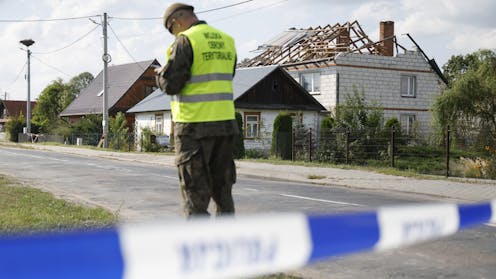
Authorities inspect a house damaged by debris from a Russian drone shot down in eastern Poland. Wojtek Radwanski/AFP via Getty Images

NATO fighter jets shot down multiple Russian drones in Polish airspace on Sept. 10, 2025, sparking fears of an expanding Russia-Ukraine war.

The incident represented the first such incursion by unmanned Russian aircraft into the territory of a NATO member since the invasion of Ukraine in February 2022. Moscow said it did not target Poland, raising the possibility of the drones unintentionally straying off course. But several European leaders indicated that they believed the incursion to be intentional.

Poland responded with a rare move, invoking Article 4 of the NATO treaty. The Conversation turned to John R. Deni, a nonresident Senior fellow at the Atlantic Council and author of “NATO and Article 5: The Transatlantic Alliance and the Twenty-First-Century Challenges of Collective Defense,” to explain what invoking these articles means – and what might happen next.

What is Article 4 of the NATO Treaty?

Article 4 can be invoked by any NATO member that feels threatened. Under its terms, a member state can request a consultation of the North Atlantic Council, or NAC – the highest political decision-making body in the NATO alliance.

A NAC meeting in itself isn’t unusual. Every NATO summit is a NAC meeting at the level of heads of states. And a NAC meeting takes place every Wednesday at ambassadorial level in Brussels.

But what Article 4 does is open the way for a special meeting of the NAC to consult over the next steps that the alliance should take.

While invoking Article 4 is a big deal, it doesn’t carry the same weight as invoking Article 5.

What is Article 5?

Article 5 really is the heart and soul of the NATO alliance. It is the part of the treaty that says that if one member is attacked, then all of the other members will treat it as an attack on them all. In effect, it calls for a collective response once requested by any of the current 32 members of NATO.

The NATO treaty was signed in April 1949, and Article 5 is central to it. In the immediate aftermath of World War II, Western European countries sought a way to defend themselves in the event Germany again arose as a security challenge. By the late 1940s, concerns shifted toward the threat posed by the Soviet Union, which stationed large military forces across Eastern Europe, staged a coup in Czechoslovakia and blockaded Berlin.

Initially, the United States was skeptical of joining any kind of postwar alliance in Europe, but Soviet actions convinced American leaders to sign on as a way of maintaining Western Europe as free and open.

Article 5 doesn’t automatically get triggered once a NATO member is attacked; the country attacked needs to request that the alliance invoke it. In this case, that would mean Poland, should Polish officials conclude that Russian missiles were sent deliberately.

What does triggering either require of the US?

Under Article 4, all NATO members, including the U.S., are required to join discussions at the North Atlantic Council, the alliance’s main decision-making body. That could be followed by a joint declaration or plan of action.

Invoking Article 5, however, has more serious consequences. It means that the United States would be called upon to help defend any European ally, or Canada, if attacked.

But there is an important caveat. Article 5 was written in such a way that it allows each ally to decide for itself the best course of action to take – there is no prescribed response once the article is invoked.

In the case of the U.S., the executive branch – that is, the president – would need to consider the views and responsibilities of Congress. If the president were to decide on direct military action, then Congress would likely be involved in some capacity – and, of course, only Congress has the power to declare war.

But Article 5 doesn’t necessarily require a military response. In fact, there is enough flexibility in the language of the treaty for a more nuanced response.

This is vital. Each member of NATO remains a sovereign state and can’t be compelled into military action. Decision-making over the use of force remains at the national level; such choices are not simply handed over to a supranational organization.

When have articles 4 and 5 been triggered in the past?

Article 4 has been invoked several times over NATO’s lifetime. It was invoked by Turkey amid concerns over cross-border terrorism as a result of the Syrian War. More recently, it was invoked by eight NATO members in Eastern Europe after the Feb. 24 Russian invasion of Ukraine.

Article 5 has been triggered only once before in the seven decades of NATO’s existence. That was on Sept. 12, 2001 – the day after the 9/11 terrorist attacks on the United States.

The European allies came to the U.S.’s defense on that occasion. They did this by deploying patrol aircraft in U.S. airspace. Additionally, when the decision was made to invade Afghanistan, several NATO countries in which American troops are based – especially Germany – provided guards for U.S. military bases overseas so that American soldiers could deploy.

What does Poland hope to achieve in invoking Article 4?

Article 4 allows any member country that perceives a serious security threat to bring it to the attention of all the allies. Taking this step allows Poland to make its case to all NATO members and get across its concerns and the level of threat from Russia it perceives.

I would expect Poland to use an Article 4 meeting to highlight the many times Russian military forces have violated the airspace of allies all along the eastern frontier and especially in northeastern Europe.

In some instances, these violations can be chalked up to pilot or operator error, but in recent years the regularity of violations has led many observers in the West to conclude Russia is purposefully violating allied airspace.

The intent of these violations is varied. Sometimes, as in the case of these drones over Poland, it may be to take a circuitous route to the intended target – likely Ukrainian civilians and military facilities in Western Ukraine – so as to avoid Ukrainian air defenses. In other cases, Russia is likely trying to intimidate smaller NATO allies or probing Western defenses to test reaction times and means of response.

Regardless, Poland, like many allies in Eastern Europe, has justifiably lost patience with Moscow’s repeated violations. By invoking Article 4 and bringing this to NATO’s table, Warsaw likely hopes to secure the unequivocal backing of its allies in responding more aggressively, as it did, in coordination with the Dutch, in shooting down these Russian drones.

How might we expect the US to respond?

The United States is likely to stand firmly behind Poland’s efforts to defend itself in the wake of this egregious violation of Polish airspace.

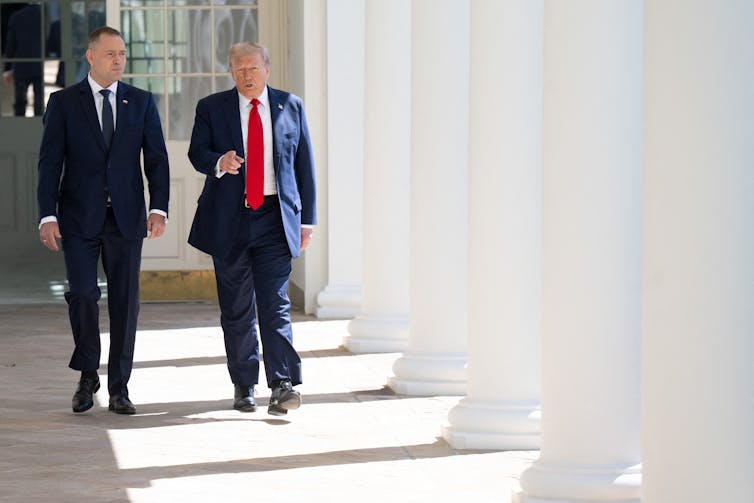
Two men in suits walk down a sunlit corridor.
President Donald Trump and Polish President Karol Nawrocki walk down the colonnade on the way to the Oval Office on Sept. 3, 2025.
Saul Loeb/AFP via Getty Images

Polish President Karol Nawrocki had what was regarded as a highly successful meeting at the White House in early September, during which President Donald Trump said the U.S. commitment to Poland – both political as well as the military presence – would remain and could in fact grow. The U.S. sees Poland as a staunch ally in a special category of particularly close partners. Beyond that, it’s at least theoretically possible that U.S. air defense assets based in Germany, including Patriot air defense battalions, might be deployed to Poland to beef up defenses there, but it’s unclear whether such a request has been made.

The views expressed are those of the author and do not necessarily reflect those of any organization he may be affiliated with.
_
_Sections of this article were originally included in a story published by The Conversation on Nov. 16, 2022.

The Conversation

John Deni does not work for, consult, own shares in or receive funding from any company or organization that would benefit from this article, and has disclosed no relevant affiliations beyond their academic appointment.

ref. Poland responds to Russian drones incursion by invoking Article 4 of the NATO treaty − what happens next? – https://theconversation.com/poland-responds-to-russian-drones-incursion-by-invoking-article-4-of-the-nato-treaty-what-happens-next-265051

How Israel’s attack on Qatar erodes peace — and American influence — in the Middle East

Source: The Conversation – Canada – By Spyros A. Sofos, Assistant Professor in Global Humanities, Simon Fraser University

The bombing of a Hamas office on Qatari soil by Israeli jets was more than a strike against a militant group. It was a bold and deeply consequential act against a state that has long positioned itself as a mediator in Middle Eastern conflicts and hosts 11,000 American troops on its territory.

For decades, Qatar has balanced its role as an American ally with its open lines of communication to groups that include Hamas and the Taliban. It has provided an indispensable channel for negotiations that the United States itself cannot conduct.

By targeting Qatar directly, Israel has crossed into uncharted territory. The strike is not just a military move — it is an unmistakably revisionist act, challenging the norms, alliances and security architecture of the region.


Read more:
Israel’s attack on Syria: Protecting the Druze minority or a regional power play?


Defining revisionism

In international relations, “revisionism” refers to attempts by states to revise the existing order of rules, institutions or the distribution of power.

Revisionist states seek to undermine the constraints imposed by the international system, reshaping it in ways that benefit them. They often do this not only by rejecting particular norms, but also by bending them to suit their own purposes.

Israel’s strike on Qatar demonstrates this pattern clearly.

By attacking a U.S. ally, Israel is not just pursuing Hamas operatives, it’s asserting that its own security imperatives override the norms of sovereignty, alliance management and the delicate balance that underpins regional diplomacy.

Qatar’s unique position

Qatar, unlike other Gulf states, has built a reputation as a broker of peace processes, hosting talks between Israel and Hamas, the U.S. and the Taliban and even among rival Palestinian factions.

Its role has often been tolerated, and even encouraged, by the U.S., which benefits from having a close ally act as a mediator of last resort.

The strike, therefore, is likely not just about Hamas. It is an apparent attempt to discredit Qatar’s mediating role, portraying it instead as a protector of terrorists and therefore unfit to serve as a diplomatic arbitrator. But more importantly, it seems an attempt to undermine diplomacy in the region as it eliminates a crucial venue for negotiation, leaving military action as the primary currency in Israeli–Palestinian relations.

With the massive U.S. Al Udeid airbase located in Qatar, Israel’s actions place American officials in an uncomfortable position: tolerate Israeli overreach and risk undermining their own ally, or confront Israel and fracture an already tense relationship. Either outcome serves Israel’s interests and loosens U.S. influence in the Middle East.

Hijacking U.S. foreign policy

Successive U.S. administrations have increasingly outsourced mediation to partners like Qatar. This reflects a recognition of American limits: its deep alliance with Israel makes it an unconvincing neutral broker, while states such as Qatar can talk to countries and organizations the U.S. designates as adversaries.

Yet Israel has repeatedly undercut such efforts. The 2015 Joint Comprehensive Plan of Action agreement on the Iranian nuclear program was relentlessly opposed by Israel, whose intelligence leaks and lobbying helped derail American efforts at forging a new deal in 2018.


Read more:
US-Iran tensions: no route for de-escalation in sight


In June 2025, just days before an Iranian delegation was scheduled to meet the American envoy for renewed discussions on the nuclear program, Israel initiated its 12-day war with Iran, collapsing the conditions for diplomacy before talks could even begin.

More recently, Gaza ceasefire talks in Doha were repeatedly disrupted by Israeli escalations on the ground or by making new demands, ensuring that negotiations never moved beyond crisis management.

The strike on Qatari soil takes this interference to a new level. It is not only a rejection of particular negotiations, but an attack on the infrastructure of American-led diplomacy.

Israel is seemingly aiming to hijack American foreign policy, narrowing U.S. options and entrenching Israel’s role as the sole gatekeeper of “acceptable” peace processes in the region.

Weaponizing peace processes?

Revisionist Israeli governments have tended to use negotiations not as pathways to a permanent peace, but as tools for managing conflict on their own terms.

By selectively engaging in negotiations while simultaneously engaging in settlement expansion in the West Bank, Israeli actions mean talks rarely translate into substantive concessions. The peace process becomes a means of buying time, dividing opponents and presenting Israel as a willing but frustrated partner.

Targeting Qatar continues this pattern. By undermining the one Gulf state that consistently invests in dialogue, Israel shrinks the diplomatic horizon. If no credible mediator is left standing, peace negotiations become a hollow exercise — something Israel could invoke to deflect criticism while pursuing its own security goals via military action.

This seems like peace as spectacle, weaponized to perpetuate the very state of war it claims to want to overcome.

A state of permanent war

One of the striking features of Israel’s regional stance is its reliance on a “permanent war” condition. Periodic escalations with Gaza, Lebanon, Syria, or Iran are not anomalies, but seem to be part of a strategy to normalize insecurity.

This strategy enables Israel to consolidate domestic political support, sustain high levels of military aid and investment and maintain control over the Palestinian Territories under the guise of an omnipresent existential threat.

That threat isn’t unfounded — and was underscored by the Hamas attacks of Oct. 7, 2023 — but Israel has used it to entrench a permanent-war posture that extends well beyond immediate security needs instead of pursuing peace.

The strike on Qatar extends this logic outward as Israel signals that there is no neutral space left and that even mediators can be attacked. The result is not the resolution of conflict but its apparent institutionalization: an endless cycle of violence where war is the baseline, not the exception.


Read more:
Can Israel still claim self-defence to justify its Gaza war?


What does Israeli revisionism achieve?

Israel’s strategy achieves several goals. By striking a U.S.-allied state, Israel challenges the principle that allied territory is off-limits.

At the same time, undercutting Qatar’s mediating role undermines the American ability to engage in diplomacy in the region, and leaves fewer avenues for talks, which means military action sets the agenda. Finally, expanding the geography of conflict turns instability into the Middle East’s default condition.

Such strategies may achieve short-term gains, but they come at enormous cost. The strike risks fracturing Israel’s quiet alignment with Gulf monarchies, alienating the U.S.

If the U.S. cannot or will not restrain strikes against its key allies, what meaning do American security guarantees truly carry? U.S. allies in the Middle East will point to the Qatar strikes as evidence that American protection is conditional, eroding confidence in the very alliance system that underpins U.S. power.

For the U.S., the attack underscores a deeper dilemma: the more it outsources its regional diplomacy to Israel, the more vulnerable it becomes. Israel’s repeated strikes in the midst of sensitive negotiations — from the Iran nuclear talks to Gaza ceasefires — show how effectively it can hijack American policy and systematically undermine the prospect of peace in the Middle East.

The Conversation

Spyros A. Sofos does not work for, consult, own shares in or receive funding from any company or organisation that would benefit from this article, and has disclosed no relevant affiliations beyond their academic appointment.

ref. How Israel’s attack on Qatar erodes peace — and American influence — in the Middle East – https://theconversation.com/how-israels-attack-on-qatar-erodes-peace-and-american-influence-in-the-middle-east-265017

Israeli strike in Doha crosses a new line from which relations with Gulf may not recover

Source: The Conversation – Global Perspectives – By Kristian Coates Ulrichsen, Fellow for the Middle East at the Baker Institute, Rice University

The dust settles in Doha after the latest Israeli attack in the region. Photo by Jacqueline Penney / AFPTV /AFP via Getty Images

The Israeli airstrike targeting senior Hamas political leaders in Qatar on Sept. 9, 2025, represents the crossing of a number of lines.

Resulting in the deaths of six people but seemingly failing to kill any members of Hamas’ leadership, the strike was the first serious attack on the sovereignty of any of the six Gulf Arab states by Israel to date.

The bombing, which destroyed a building in a busy residential area of the Qatari capital, Doha, was also an act of international aggression under Article 2, paragraph 4 of the United Nations Charter. And it marks a major escalation in the post-Oct. 7, 2023, Israeli-involved conflicts across the Middle East.

But it isn’t the first time Israel has targeted individuals being hosted by one of the Gulf States. In 2010, Israeli operatives were successful in killing a senior Hamas operative in the United Arab Emirates.

That operation in Dubai set back Gulf-Israel relations for years. Similarly, the impact of the Doha strike will be consequential for what remains of Israeli ties in the Gulf now, as well as for the web of U.S.-Arab Gulf state defense partnerships that have underpinned regional security for decades.

Indeed, as an expert on Gulf Arab politics, I believe the latest development represents the gravest crisis for Israel’s budding relations in the Gulf.

The tangled history of Israel-Gulf ties

Aside from a Saudi contingent that fought in the 1948 war, the Arab Gulf countries have not been direct military participants in the Arab-Israeli conflict. Rather, they have deployed resources in other ways, such as providing financial support to states actively involved in fighting Israel and participating in the 1973-74 Arab oil embargo.

In addition, the Gulf states maintained the Arab League boycott of Israel until the 1990s, when the secondary and tertiary aspects of the boycott – which targeted outside companies and third countries that did business with Israel – were gradually diluted. Formal ties also emerged in the 1990s, with Qatar and Oman leading the way in hosting Israeli trade offices and the latter receiving visits by two Israeli prime ministers: Yitzhak Rabin in 1994 and Shimon Peres in 1996. Gulf Arab countries also hosted multilateral meetings as part of the Oslo peace process that launched in 1993 between Israeli and Palestinian leaders.

And yet, Israeli outreach to the Gulf states has always been vulnerable to upswings of violence in the occupied Palestinian territories, which led to the closure of the trade missions in Muscat, the capital of Oman, and Doha in the 2000s. Ties reached their lowest ebb in January 2010 after the Israeli security service Mossad dispatched a 27-strong death squad to Dubai to assassinate Mahmoud al-Mabhouh, a senior weapons procurer for Hamas.

With Israeli operatives traveling into and out of the UAE using forged European and Australian passports, the killing infuriated the Emirati leadership and sent the discreet effort of building bilateral relations into a deep freeze for several years.

Ties only began to thaw in the turbulent aftermath of the Arab uprisings when Israel authorized the sale of sophisticated Pegasus spyware in 2013 as an “olive branch” to the UAE.

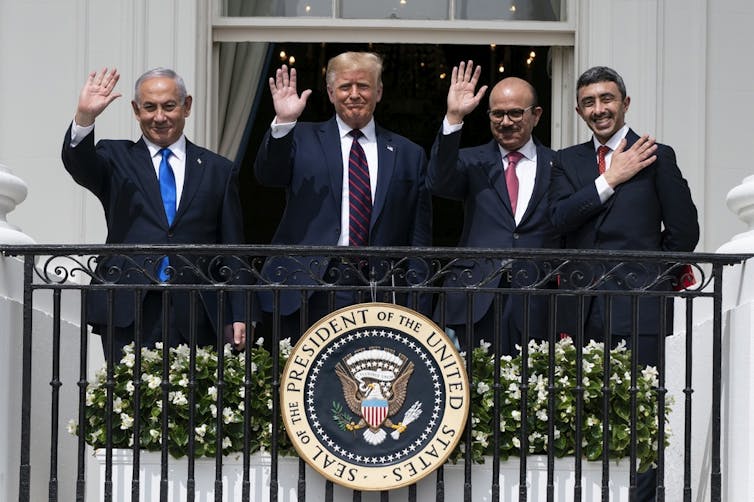
The subsequent upward trajectory of relations, which culminated in the signing of the Abraham Accords in 2020, illustrated how shared interests in regional geopolitics could act as a salve for bilateral antagonism. The accords, initially signed by Bahrain and the UAE, represented the first recognition of Israel by an Arab state since Jordan back in 1994.

Four men wave from a balcony.
A lot has changed in the Middle East since the 2020 signing of the Abraham Accords at the White House.
AP Photo/Alex Brandon

The gloomy diplomatic outlook after Doha

But it will be harder to repair ties this time around – not least because the strike on Doha comes after months of Gulf states’ mounting concern at the extensive and open-ended scope of Israeli attacks across the Middle East and the ongoing war in Gaza, which most Arab Gulf leaders have described in genocidal terms.

Over the past year, Israel has hit targets in Lebanon, Syria, Iraq, Iran and Yemen. In the process, Israel has destroyed large areas of southern Lebanon; bombed the ministry of defense in Syria; killed Ismail Haniyeh, a former head of the Hamas political office in Doha; killed the prime minister of the Houthi-controlled government in Yemen and multiple members of his cabinet; and launched the 12-day war against Iran.

That pattern of behavior caused deep alarm among Gulf officials who have strenuously sought to “de-risk” the region as they focus on large-scale development projects such as Vision 2030 in Saudi Arabia.

The war with Iran was particularly emblematic of these regional fears. Indeed, it ended with an Iranian missile strike on Qatar that targeted Al Udeid, the largest U.S. air base in the Middle East and the location of the forward headquarters of U.S. Central Command. The June 23 strike appeared to be a choreographed face-saving measure of limited retaliation after President Donald Trump had ordered U.S. airstrikes against three nuclear facilities in Iran the previous day. But the sight of the Qatari night sky lighting up with interceptor fire and missile debris falling in Doha nevertheless caused shock waves in the Gulf.

It was the first time a Gulf capital had came under attack by a state, rather than a militant nonstate group, since Iraq launched Scud missiles during the Gulf War in 1991 following its invasion of Kuwait.

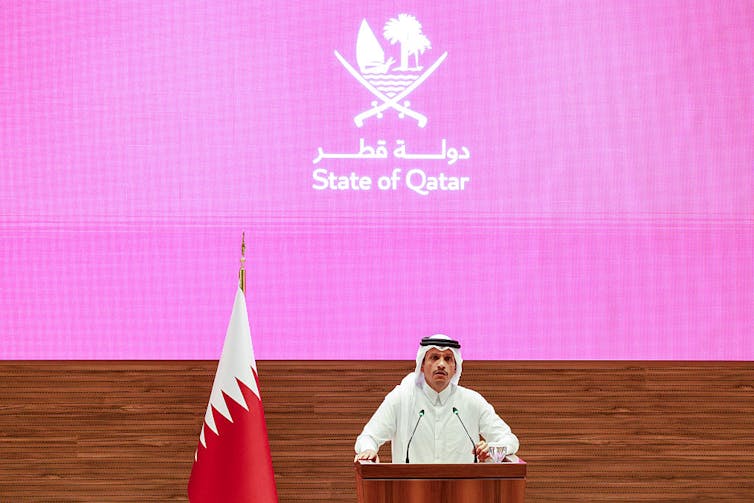
A man speaks at a lectern.
Qatar’s Prime Minister and Foreign Minister Mohammed bin Abdulrahman al-Thani addresses a press conference following Israeli strikes in Doha on Sept. 9, 2025.
Photo by Karim Jaafar/AFP via Getty Images

Talk of diplomatic red lines

Iran’s attack on the U.S. air base in Qatar in June generated statements of solidarity with Doha from all other members of the Gulf Cooperation Council, reflecting the degree to which the six Gulf Arab countries have come back together after the political rifts that divided them in the 2010s. The GCC has been most cohesive at times that its members perceive a common external threat, such as during the Iran-Iraq War in the 1980s. That has also been evident after Israel’s military engagements since the Oct. 7, 2023, Hamas attacks.

Over the summer, alarm at Israel’s regional wars led prominent Saudi commentators to describe Israel as a chief spoiler, a routine violator of international norms and a contributor to instability. Such language had previously been reserved primarily for Iranian actions.

Anwar Gargash, a foreign policy advisor to UAE President Sheikh Mohammed bin Zayed Al Nahyan whose name adorns the Diplomatic Academy in Abu Dhabi, described the Sept. 9 Israeli strike on Qatar as “treacherous.” It remains to be seen whether this is a red line which leads the UAE, or Bahrain, to suspend the Abraham Accords or break diplomatic ties with Israel.

Going forward, officials in Doha and other GCC capitals will be urgently assessing the implications of a strike by one U.S. partner and in the vicinity of a U.S. base meant to deter and detect regional aerial threats in the first place. And while the Trump administration has officially denied foreknowledge or involvement in the Israeli attack, even being caught in the dark will invite commentary about the apparent ineffectiveness of American deterrence and further damage Gulf states’ confidence in the U.S. defense and security support.

When Israeli forces killed Haniyeh, another Hamas political leader, in July 2024, they waited until he left Doha to attend the presidential inauguration in Iran before they struck in Tehran. Until now, the assumption had been that Israel would hit targets in states adversarial to the U.S. rather than allies or partners.

That line has been crossed, and across the Gulf there will be concern about what else may happen – for example, to Houthi delegates being hosted in Oman.

The Conversation

Kristian Coates Ulrichsen does not work for, consult, own shares in or receive funding from any company or organization that would benefit from this article, and has disclosed no relevant affiliations beyond their academic appointment.

ref. Israeli strike in Doha crosses a new line from which relations with Gulf may not recover – https://theconversation.com/israeli-strike-in-doha-crosses-a-new-line-from-which-relations-with-gulf-may-not-recover-264954