AI’s errors may be impossible to eliminate – what that means for its use in health care

Source: The Conversation – USA – By Carlos Gershenson, Professor of Innovation, Binghamton University, State University of New York

Federal legislation introduced in early 2025 proposed allowing AI to prescribe medication. Wladimir Bulgar/Science Photo Library via Getty Images

In the past decade, AI’s success has led to uncurbed enthusiasm and bold claims – even though users frequently experience errors that AI makes. An AI-powered digital assistant can misunderstand someone’s speech in embarrassing ways, a chatbot could hallucinate facts, or, as I experienced, an AI-based navigation tool might even guide drivers through a corn field – all without registering the errors.

People tolerate these mistakes because the technology makes certain tasks more efficient. Increasingly, however, proponents are advocating the use of AI – sometimes with limited human supervision – in fields where mistakes have high cost, such as health care. For example, a bill introduced in the U.S. House of Representatives in early 2025 would allow AI systems to prescribe medications autonomously. Health researchers as well as lawmakers since then have debated whether such prescribing would be feasible or advisable.

How exactly such prescribing would work if this or similar legislation passes remains to be seen. But it raises the stakes for how many errors AI developers can allow their tools to make and what the consequences would be if those tools led to negative outcomes – even patient deaths.

As a researcher studying complex systems, I investigate how different components of a system interact to produce unpredictable outcomes. Part of my work focuses on exploring the limits of science – and, more specifically, of AI.

Over the past 25 years I have worked on projects including traffic light coordination, improving bureaucracies and tax evasion detection. Even when these systems can be highly effective, they are never perfect.

For AI in particular, errors might be an inescapable consequence of how the systems work. My lab’s research suggests that particular properties of the data used to train AI models play a role. This is unlikely to change, regardless of how much time, effort and funding researchers direct at improving AI models.

Nobody – and nothing, not even AI – is perfect

As Alan Turing, considered the father of computer science, once said: “If a machine is expected to be infallible, it cannot also be intelligent.” This is because learning is an essential part of intelligence, and people usually learn from mistakes. I see this tug-of-war between intelligence and infallibility at play in my research.

In a study published in July 2025, my colleagues and I showed that perfectly organizing certain datasets into clear categories may be impossible. In other words, there may be a minimum amount of errors that a given dataset produces, simply because of the fact that elements of many categories overlap. For some datasets – the core underpinning of many AI systems – AI will not perform better than chance.

A portrait of seven dogs of different breeds.
Features of different dog breeds may overlap, making it hard for some AI models to differentiate them.
MirasWonderland/iStock via Getty Images Plus

For example, a model trained on a dataset of millions of dogs that logs only their age, weight and height will probably distinguish Chihuahuas from Great Danes with perfect accuracy. But it may make mistakes in telling apart an Alaskan malamute and a Doberman pinscher, since different individuals of different species might fall within the same age, weight and height ranges.

This categorizing is called classifiability, and my students and I started studying it in 2021. Using data from more than half a million students who attended the Universidad Nacional Autónoma de México between 2008 and 2020, we wanted to solve a seemingly simple problem. Could we use an AI algorithm to predict which students would finish their university degrees on time – that is, within three, four or five years of starting their studies, depending on the major?

We tested several popular algorithms that are used for classification in AI and also developed our own. No algorithm was perfect; the best ones − even one we developed specifically for this task − achieved an accuracy rate of about 80%, meaning that at least 1 in 5 students were misclassified. We realized that many students were identical in terms of grades, age, gender, socioeconomic status and other features – yet some would finish on time, and some would not. Under these circumstances, no algorithm would be able to make perfect predictions.

You might think that more data would improve predictability, but this usually comes with diminishing returns. This means that, for example, for each increase in accuracy of 1%, you might need 100 times the data. Thus, we would never have enough students to significantly improve our model’s performance.

Additionally, many unpredictable turns in lives of students and their families – unemployment, death, pregnancy – might occur after their first year at university, likely affecting whether they finish on time. So even with an infinite number of students, our predictions would still give errors.

The limits of prediction

To put it more generally, what limits prediction is complexity. The word complexity comes from the Latin plexus, which means intertwined. The components that make up a complex system are intertwined, and it’s the interactions between them that determine what happens to them and how they behave.

Thus, studying elements of the system in isolation would probably yield misleading insights about them – as well as about the system as a whole.

Take, for example, a car traveling in a city. Knowing the speed at which it drives, it’s theoretically possible to predict where it will end up at a particular time. But in real traffic, its speed will depend on interactions with other vehicles on the road. Since the details of these interactions emerge in the moment and cannot be known in advance, precisely predicting what happens to the the car is possible only a few minutes into the future.

AI is already playing an enormous role in health care.

Not with my health

These same principles apply to prescribing medications. Different conditions and diseases can have the same symptoms, and people with the same condition or disease may exhibit different symptoms. For example, fever can be caused by a respiratory illness or a digestive one. And a cold might cause cough, but not always.

This means that health care datasets have significant overlaps that would prevent AI from being error-free.

Certainly, humans also make errors. But when AI misdiagnoses a patient, as it surely will, the situation falls into a legal limbo. It’s not clear who or what would be responsible if a patient were hurt. Pharmaceutical companies? Software developers? Insurance agencies? Pharmacies?

In many contexts, neither humans nor machines are the best option for a given task. “Centaurs,” or “hybrid intelligence” – that is, a combination of humans and machines – tend to be better than each on their own. A doctor could certainly use AI to decide potential drugs to use for different patients, depending on their medical history, physiological details and genetic makeup. Researchers are already exploring this approach in precision medicine.

But common sense and the precautionary principle
suggest that it is too early for AI to prescribe drugs without human oversight. And the fact that mistakes may be baked into the technology could mean that where human health is at stake, human supervision will always be necessary.

The Conversation

Carlos Gershenson does not work for, consult, own shares in or receive funding from any company or organization that would benefit from this article, and has disclosed no relevant affiliations beyond their academic appointment.

ref. AI’s errors may be impossible to eliminate – what that means for its use in health care – https://theconversation.com/ais-errors-may-be-impossible-to-eliminate-what-that-means-for-its-use-in-health-care-251036

AI-generated political videos are more about memes and money than persuading and deceiving

Source: The Conversation – USA – By Lisa Fazio, Associate Professor of Psychology, Vanderbilt University

Politicians are posting AI-generated videos of themselves and their opponents. Screenshots by The Conversation

Zohran Mamdani as a creepy trick-or-treater, Gavin Newsom body-slamming Donald Trump and Hakeem Jeffries in a sombrero. This is not the setup to an elaborate joke. Instead, these are all examples of recent AI-generated political videos. New easy-to-use tools – and acceptance of those tools by politicians – means that these fake videos are quickly becoming commonplace in American politics.

Perhaps the most interesting thing about many of the videos is how clearly fake they are. Rather than trying to deceive the viewer into thinking a depicted event actually happened, the videos serve a different purpose. President Trump didn’t post a video of himself wearing a crown in a fighter jet dumping feces on a group of protesters because he wanted people to believe that the flight actually happened. He likely did it to express his feelings about the protest and to create an in-joke with his followers.

Fears about the political implications of AI-generated videos have been around since the term deepfakes was coined in 2017. Steady improvements in the technology mean that distinguishing real from fake could become a significant threat. But today’s use of AI imagery is largely about making memes and making money – in other words, typical social media content.

Getting a rise out of people

Internet platforms use algorithms designed to keep people engaged, and that typically means promoting content that stirs emotions. AI-generated political videos often provoke an emotional response – amusement or outrage.

People are more likely to share information when it is emotionally arousing. For example, people are more likely to pass along urban legends that elicit feelings of disgust, and news articles that are emotionally charged are more likely to make the New York Times list of most emailed articles. Similar patterns occur online, where emotional content is much more likely to go viral than nonemotional content.

In addition, strong emotions can interfere with people’s ability to detect false information. People are worse at distinguishing between true and false political news headlines when they are experiencing stronger emotions – for instance, enthusiasm, excitement or fear. Thus, emotionally appealing AI-generated videos are both more likely to spread and reduce people’s ability to judge whether they are real or fake.

Online politics

Creating and sharing AI videos is also a powerful way for people to demonstrate their allegiances and show their political identities. “I am a Trump supporter, so I post AI videos of ICE detainees crying to own the libs” or “I am a Democrat and so I share Governor Newsom’s AI-video of JD Vance talking about couches to show that I’m in on the joke.”

What’s new in recent months is that campaigns and politicians are using AI-created videos, not just their supporters. An analysis from The New York Times showed that Trump commonly uses AI imagery to “attack enemies and rouse supporters”.

These new tools also allow for active participation in the political process. Rather than simply watching politicians and voting, citizens can play an active role in shaping the conversation between elections.

Information and technology researcher Kate Starbird has written about similar dynamics in the ways that everyday Americans found “evidence” for voter fraud in the 2020 election. Politicians told the public that voter fraud was going to occur, and then when voters saw things that they did not understand when voting, such as the use of Sharpie pens to mark ballots, they interpreted that action as evidence of voter fraud. Politicians then circulated that evidence online to support the false narrative.

New AI tools make this cycle of participatory disinformation even simpler. Instead of reinterpreting actual events as evidence for a false claim, people can easily generate that evidence themselves.

AI video at volume

AI video creation tools make it incredibly easy for people to churn out hundreds of videos, post them online and simply see what content becomes popular and goes viral. In fact, that’s exactly what seems to have happened with recent AI-generated videos of raids by Immigration and Customs Enforcement. According to an investigation by 404 media, Facebook user “USA Journey 897” used to post a variety of real videos of police activity as well as absurd AI videos of people carrying whales and riding tigers.

However, after the release of a new version of OpenAI’s Sora video generator on Sept. 30, 2025, the account switched entirely to posting multiple fake videos of deportations every day. Most of the videos accumulated hundreds of thousands of views, and one fake video of a Walmart employee being detained had over 4 million views.

Typically these accounts are hosted overseas and exist to earn money through creator incentive programs. These incentives create an environment where social media no longer informs people about the world, but instead serves as a fun-house mirror, presenting back to us the world that we want to see – or at least the version of the world that will capture our attention and outrage.

AI-generated political ads are stretching ethical boundaries.

Flowing into the internet

It’s not always easy for people to detect which videos are real and which are AI-generated. A recent audit by the publication Indicator found that platforms regularly fail to properly label AI content. Researchers posted over 500 AI-generated images and videos across Instagram, LinkedIn, Pinterest, TikTok and YouTube. Less than one-third were properly labeled as AI-generated, and even posts generated by the platform’s own AI tools were often missed.

For years, the great fear concerning political deepfakes was that they were going to fool people into believing something happened that didn’t. They still might, but at the moment, AI-generated political videos are a mix of entertainment and memes, legitimate attempts at persuasion, and ways of capturing attention for money.

In other words, they are now just like the rest of the internet. Most of what we see and share is meant to entertain, some is meant to inform and persuade, and a great deal exists solely to monetize our attention.

The Conversation

Lisa Fazio does not work for, consult, own shares in or receive funding from any company or organization that would benefit from this article, and has disclosed no relevant affiliations beyond their academic appointment.

ref. AI-generated political videos are more about memes and money than persuading and deceiving – https://theconversation.com/ai-generated-political-videos-are-more-about-memes-and-money-than-persuading-and-deceiving-268977

The Ivies can weather the Trump administration’s research cuts – it’s the nation’s public universities that have the most to lose

Source: The Conversation – USA (2) – By Todd L. Pittinsky, Professor of Technology and Society, Stony Brook University (The State University of New York)

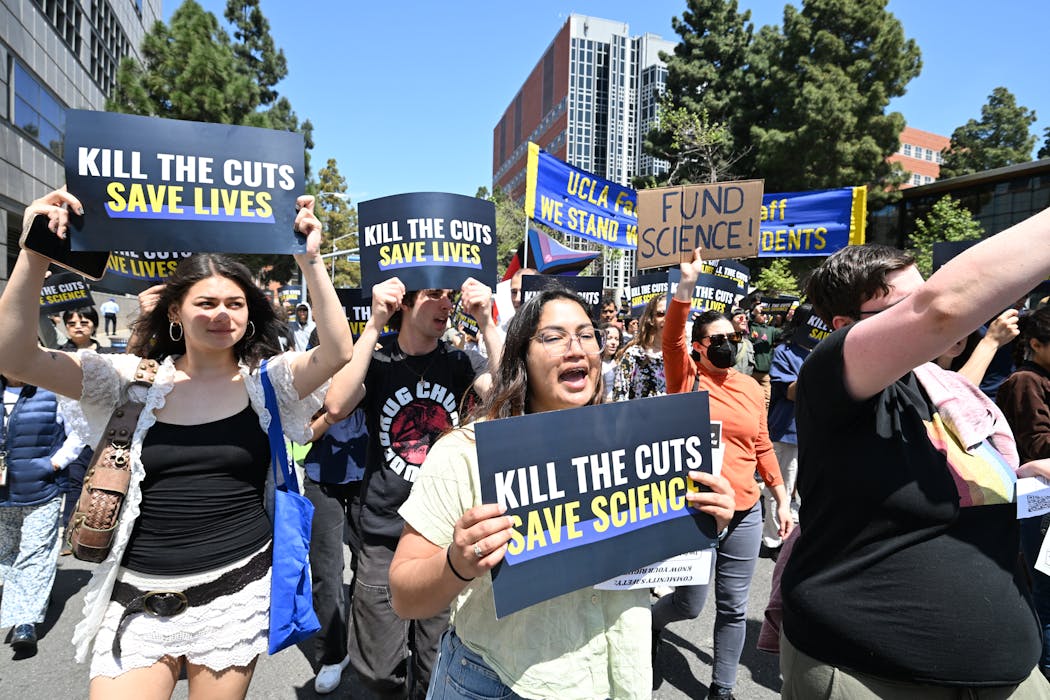
UCLA students and researchers protest the Trump administration’s funding cuts for research, health and higher education in April 2025. Robyn Beck/AFP via Getty Images

Most of the media coverage of the federal government’s recent cuts in federal research money for universities has focused on its effects on a handful of elite Ivy League universities, such as Harvard, Columbia and Cornell.

“When you take money away from a Columbia or a Harvard or other institutions, you’ve just taken away funds from the best researchers,” Toby Smith, the senior vice president for government relations at the Association of American Universities, told CNN in April 2025.

But these schools account for only a small fraction of the nation’s scientific output that federal research money helps generate.

In my view, too many policy discussions and debates obsess over what happens on the campuses of elite colleges. Meanwhile, public universities quietly power the nation’s research engine.

The Ivies do play a critical role in advanced research. But the nation’s public universities make up the backbone of U.S. innovation – research powerhouses such as the University of Michigan, the University of Texas at Austin, Georgia Institute of Technology and Stony Brook University, where I teach.

These places train the overwhelming majority of science, technology, engineering and mathematics graduates for the U.S. workforce and run the lion’s share of federally funded science and engineering research.

Slashing research and development

U.S. colleges and universities spend more than US$108.8 billion annually on research and development, of which about 55% – roughly $60 billion – comes from federal funding via agencies such as the National Institutes of Health and the National Science Foundation. Together, the country’s eight Ivy League schools received approximately $4.6 billion of federal university research and development funding in 2023 – or 7.8% of all federal research and development funding allocated to academia.

In 2023, meanwhile, the University of Washington, Georgia Institute of Technology, the University of California, San Diego, and the University of Michigan, Ann Arbor, each received over $1 billion in federal research funds.

The Trump administration’s federal research and development funding cuts are largely tied to what are called “indirect costs.”

Direct costs fund researcher salaries and lab supplies. Indirect costs support the infrastructure that makes research possible and compliant with federal guidelines: lighting, heating and cooling for labs; high-speed data networks; security; and administrative staff who handle payroll and ensure adherence to federal safety and ethics standards.

In 2025, the Trump administration decided to cap indirect costs for grants awarded by the National Institutes of Health and the National Science Foundation at 15% of the total grant. Traditionally, universities have negotiated their own rates based on documented overhead expenses, with many institutions citing indirect cost rates between 50% and 70%.

Many aspects of the 15% cap have been paused as they’re being challenged in court. Should these cuts go through, it would be incredibly disruptive for universities that have counted on this funding.

However, outside of the battle over indirect costs, many research projects simply lost funding or experienced major delays. Over the past year, thousands of grants have been frozen, terminated or left unfunded.

Ivy League institutions are much better equipped to weather the storm.

In 2021, Forbes reported that the collective endowment of the eight Ivies was approximately $192.6 billion – led by Harvard’s $53.2 billion and Yale’s $42.3 billion. Supporters of Trump’s funding cuts have argued that this immense, tax-exempt financial arsenal could significantly subsidize their overhead costs, rather than relying on taxpayers to do so. While endowments don’t serve as a blank check, schools can still pull from them in times of need.

In contrast, public universities are far more dependent on federal funds to sustain labs, staff and graduate programs. In 2021, the entire Texas public university system – the University of Texas at Austin, Texas A&M, the University of Houston, the University of Texas at Dallas and Texas Tech – held an endowment of around $40 billion, more than $10 billion less than Harvard’s.

Public schools are the training ground

This isn’t to argue that the Ivies should have their research funding cut, while public universities ought to be spared. It’s to shift the focus of the conversation to who stands to lose the most: the public universities that educate the vast majority of the U.S.’s future scientists and fuel most of the nation’s scientific output.

The Ivy League’s geographic reach is extremely concentrated, situated across just seven states, all in the Northeast. Public four-year institutions are located in all 50 states and draw from a much more economically and racially diverse population. They award the vast majority of engineering degrees in the U.S., with more than 144,701 given out in 2023, or more than 70% of the nation’s total.

Purdue University awarded 3,827 engineering degrees that year, with Texas A&M conferring 3,704. By contrast, Cornell University granted just 820 engineering degrees – the most among the Ivies, but just 25th nationally.

Elite schools, including the Ivies, have increasingly steered graduates into finance, law or consulting. Just 2.72% of Yale’s 2024 graduating class was employed as engineers six months after graduation. Meanwhile, public universities serve as the top feeder schools for major defense and aerospace firms.

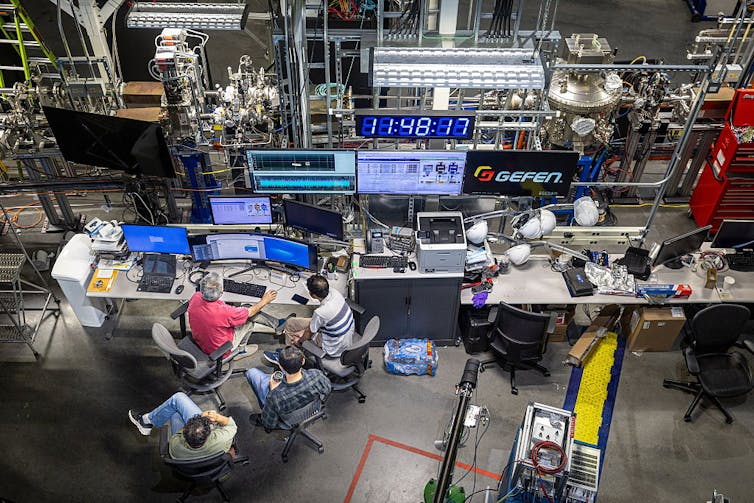
Stony Brook University’s College of Engineering and Applied Sciences enrolled over 5,600 students in fall 2024, making it one of the top producers of engineering talent in New York. The university manages the Department of Energy’s Brookhaven National Laboratory, which uses advanced tools such as particle colliders to make discoveries in physics, energy, materials and biology. It’s one of a handful of universities that directly operate a national lab.

A bird's-eye view of a group of scientists surrounded by an array of electronic equipment.
The U.S. Department of Energy’s Brookhaven National Laboratory in Brookhaven, N.Y., is managed by Stony Brook University.
J. Conrad Williams Jr./Newsday RM via Getty Images

Collateral damage

The Trump administration has argued that federal research funding cuts are necessary because too many dollars have been allocated for social policy goals, whether it’s $349,985 to train engineers to “enable engineering for social justice” or $600,000 to teach aerospace engineering students “critical consciousness and sensitivity to injustices within social systems.”

While federal law bars the Department of Education from influencing curriculum, the National Science Foundation faces no such constraint. Too much funding, it claimed, went to research that strayed from the federal agencies’ core scientific mandates and crowded out the kind of critical research that underpins U.S. innovation.

While I think fiscal responsibility and mission creep merit attention, cuts that are too dramatic and too indiscriminate risk gutting the high-impact research that is essential to national security and technological leadership, much of which takes place at public institutions. Fields from supercomputing and wireless communications to biothreat countermeasures and health sciences will and have felt the pain of widespread cuts.

A graduate wearing a black cap decorated with the phrase 'Truss Me I'm an Engineer.'
An engineering graduate celebrates during the 73rd commencement ceremony for California State University, Long Beach, in 2022.
Brittany Murray/MediaNews Group/Long Beach Press-Telegram via Getty Images

Federal research funding is not merely academic spending. It is an important national investment that directly fuels local and national economic growth. It supports high-wage jobs and “innovation districts” centered on university and federal laboratories.

The future of scientific research funding isn’t a debate over how much government help the privileged Ivies ought to receive.

It’s a question of whether public universities will be given the resources to nurture the next generation of scientists, drive bold discoveries and keep America at the forefront of scientific innovation for generations to come.

The Conversation

Todd L. Pittinsky is a Professor of Technology, AI & Society in the College of Engineering and Appled Sciences at Stony Brook University (SUNY).

ref. The Ivies can weather the Trump administration’s research cuts – it’s the nation’s public universities that have the most to lose – https://theconversation.com/the-ivies-can-weather-the-trump-administrations-research-cuts-its-the-nations-public-universities-that-have-the-most-to-lose-267197

Polytechnic universities focus on practical, career-oriented skills, offering an alternative to traditional universities

Source: The Conversation – USA (2) – By Kelly Droege, Assistant Professor, University of Wisconsin-Stout

Unlike traditional research universities and private liberal arts colleges, polytechnic universities tend to offer apprenticeships and microcredentials, all geared toward giving students practical skills they can use in the workforce. iStock/Getty Images Plus

For decades, a four-year college degree was widely seen as the standard path to getting most midlevel jobs in the United States. It was the expected entry point for getting a job as a marketing specialist, project manager, IT support analyst, among other roles.

But this expectation is shifting. Many fields – including cybersecurity, health care and advanced manufacturing – are facing significant shortages in skilled workers. The gap between available skilled jobs and workers is likely to push employers to rethink what they require from job candidates over the next decade.

A major demographic shift will also play a role. Between 2024 and 2032, an estimated 18.4 million experienced workers with education beyond high school are expected to retire, according to September 2025 findings by Georgetown University’s center on education and the workforce.

Only 13.8 million younger workers with similar education levels are expected to enter the workforce during the same period, these findings show. This trend will also make it harder for employers to fill roles that traditionally require a college degree.

At the same time, 25 states over the past few years have enacted legislation and executive orders to remove college degree requirements for people applying for some public sector jobs, signaling a shift in how essential college degrees are for getting hired for some kinds of work.

These shifts underscore a broader trend: A four-year degree is no longer essential for many kinds of work.

Hiring data tells a similar story. As of January 2024, 52% of U.S. job postings on Indeed did not mention any formal education requirement, up from 48% in 2019. Job postings requiring at least a bachelor’s degree also dropped from 20.4% to 17.8% between 2018 and 2023.

As hiring expectations change – influenced in part by advances in artificial intelligence – employers may struggle to find candidates who already have the right job-specific skills.

With over 20 years of experience as professors who also train employees in industries such as manufacturing, health care and business information technologies, we believe that college degrees shouldn’t be mandatory for some jobs.

A large white, modern looking building is seen against a bright blue sky.
Florida Polytechnic University is one of several polytechnic universities in the U.S. offering a STEM and career-focused education.
John Greim/LightRocket via Getty Images

A widening gap

Nearly half of recent college graduates say they feel unprepared for entry-level work, and 56% cite a lack of job-specific skills as the biggest issue, according to a 2025 report by Cengage Group, an education and workforce training company.

Alternative pathways – apprenticeships, certifications and on-the-job training – can give workers practical skills and help employers fill crucial roles more quickly.

Employers dropping degree requirements is only one step toward this goal. We think it is also important that prospective college students and their families are aware of educational opportunities besides a traditional four-year degree.

Understanding polytechnic universities

Some people think of higher education in terms of traditional liberal arts colleges or research universities. But there are also polytechnic universities, which focus on hands-on, career-aligned learning and emphasize strong STEM and technical programs. These schools often prepare students for exactly the kinds of jobs employers struggle to fill.

There are about 10 major polytechnic universities in the U.S. Some well-known polytechnic universities are California Polytechnic State University in San Luis Obispo, California, Worcester Polytechnic Institute in Worcester, Massachusetts, and State University of New York Polytechnic Institute in Marcy and Albany, New York.

Instead of offering a wide range of liberal arts majors, polytechnic universities offer majors such as engineering, robotics, construction management and information technology.

A central feature of these schools is applied learning – hands-on labs, real-world projects and problem-solving experiences.

Polytechnic students can earn bachelor’s and master’s degrees, but they also can often get short-term certificates in fields such as human resources, instructional design, project management and digital marketing. Many programs also include apprenticeships, such as workplace training specialists.

Students can also pursue microcredentials, which involve short course sequences that build targeted skills, such as business writing or engineering mechanics. These options give students more flexible and affordable ways to learn without committing to a traditional four-year degree.

Polytechnic universities also tend to cost less than research universities and private colleges, and students can use federal financial aid or private loans to attend.

There are some limitations. Polytechnic schools generally offer fewer majors, usually within STEM fields. Their alumni networks may be smaller, and we have found that some people perceive them as less prestigious than traditional universities because they focus more on teaching than on research.

Real world relevance

In March 2025, we asked 10 online instructors at different polytechnic universities how they bring career-focused learning into their classes.

Our research, which will likely be published in 2026, shows that every instructor tried to make their courses feel relevant to real workplaces.

Some instructors used simulations in the course. Others shared examples from their own industry backgrounds with students. All agreed that students learn best when they can clearly connect their coursework to their career goals.

One of the most effective strategies is hiring instructors with deep industry experience. Their professional networks help programs stay aligned with the skills employers currently value.

Not every college wants to become a polytechnic, and not every student wants that style of education.

However, traditional universities can still learn from this model by adding more applied learning, embedding essential job skills into their programs, and partnering more closely with industry. These changes can better prepare students to succeed in the workforce.

The Conversation

Kelly Droege works for the University of Wisconsin – Stout, a polytechnic institution.

Laura Reisinger does not work for, consult, own shares in or receive funding from any company or organization that would benefit from this article, and has disclosed no relevant affiliations beyond their academic appointment.

ref. Polytechnic universities focus on practical, career-oriented skills, offering an alternative to traditional universities – https://theconversation.com/polytechnic-universities-focus-on-practical-career-oriented-skills-offering-an-alternative-to-traditional-universities-268349

Even with Trump’s support, coal power remains expensive – and dangerous

Source: The Conversation – USA (2) – By Hannah Wiseman, Professor of Law, Penn State

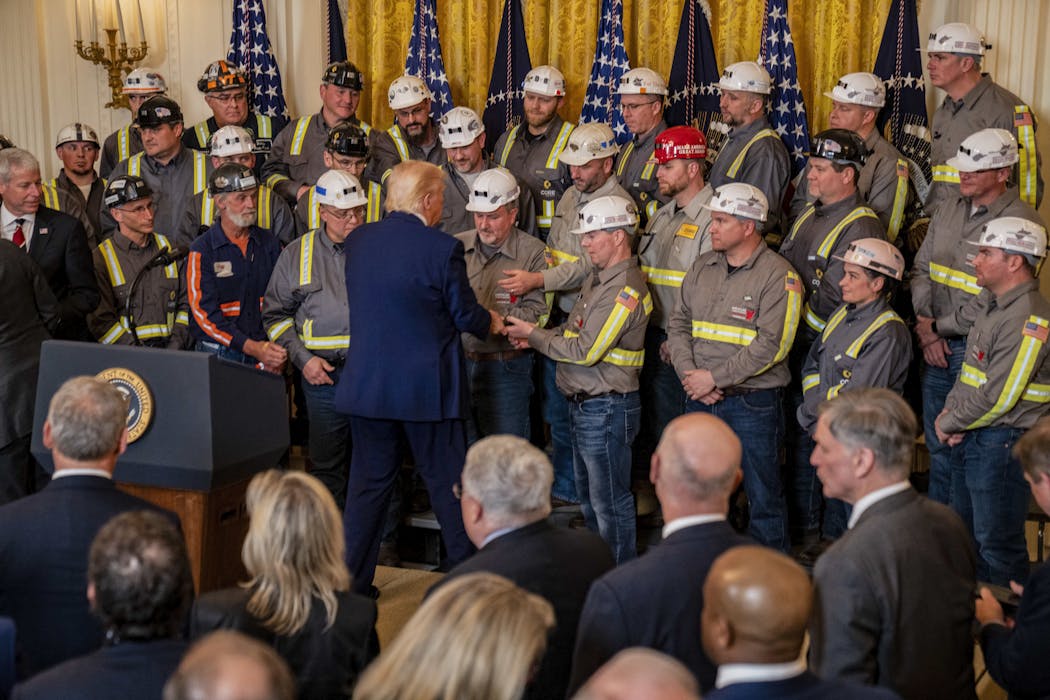
President Donald Trump has aligned himself with the coal industry, including at this meeting in April 2025. Andrew Thomas/Middle East Images/AFP via Getty Images

As projections of U.S. electricity demand rise sharply, President Donald Trump is looking to coal – historically a dominant force in the U.S. energy economy – as a key part of the solution.

In an April 2025 executive order, for instance, Trump used emergency powers to direct the Department of Energy to order the owners of coal-fired power plants that were slated to be shut down to keep the plants running.

He also directed federal agencies to “identify coal resources on Federal lands” and ease the process for leasing and mining coal on those lands. In addition, he issued orders to exclude coal-related projects from environmental reviews, promote coal exports and potentially subsidize the production of coal as a national security resource.

But there remain limits to the president’s power to slow the declining use of coal in the U.S. And while efforts continue to overcome these limits and prop up coal, mining coal remains an ongoing danger to workers: In 2025, there have been five coal-mining deaths in West Virginia and at least two others elsewhere in the U.S.

A large industrial area with towers, a rail line and large buildings with large metal connections.
A coal-fired power plant in Michigan has remained open at Trump administration orders.
Jim West/UCG/Universal Images Group via Getty Images

A long legacy

Until 2015, coal-fired power plants generated more electricity than any other type of fuel in the U.S. But with the rapid expansion of a new type of hydraulic fracturing, natural gas became a cheap and stable source for power generation. The prices of solar and wind power also dropped steadily. These alternatives ultimately overcame coal in the U.S. power supply.

Before this change, coal mining defined the economy and culture of many U.S. towns – and some states and regions, such as Wyoming and Appalachia – for decades. And in many small towns, coal-related businesses, including power plants, were key employers.

Coal has both benefits and drawbacks. It provides a reliable fuel source for electricity that can be piled up on-site at power plants without needing a tank or underground facility for storage.

But it’s dirty: Thousands of coal miners developed a disease called black lung. The federal government pays for medical care for some sick miners and makes monthly payments to family members of miners who die prematurely. Burning coal also emits multiple air pollutants, prematurely killing half a million people in the United States from 1999 through 2020.

Coal is dangerous for workers, too. Some coal-mining companies have had abysmal safety records, leading to miner deaths, such as the recent drowning of a miner in a sudden flood in a West Virginia mine. Safety reforms have been implemented since the Big Branch Mine explosion in 2010, and coal miner deaths in the U.S. have since declined. But coal mining remains a hazardous job.

A stone plaque with names carved on it, between two statues of coal miners.
A memorial honors coal miners who died on the job in Harlan County, Ky.
Jim West/UCG/Universal Images Group via Getty Images

A champion of coal

In both of his terms, Trump has championed the revival of coal. In 2017, for example, Trump’s Department of Energy asked the Federal Energy Regulatory Commission to pay coal and nuclear plants higher rates than the competitive market would pay, saying they were key to keeping the U.S. electricity grid running. The commission declined.

In his second term, Trump is more broadly using powers granted to the president in emergencies, and he is seeking to subsidize coal across the board – in mining, power plants and exports.

At least some of the urgency is coming from the rapid construction of data centers for artificial intelligence, which the Trump administration champions. Many individual data centers use as much power as a small or medium city. There’s enough generation capacity to power them, though only by activating power plants that are idle most of the time and that operate only during peak demand periods. Using those plants would require data centers to reduce their electricity use during those peaks – which it’s not clear they would agree to do.

So many data centers, desperate for 24/7 electricity, are relying on old coal-fired power plants – buying electricity from plants that otherwise would be shutting down.

A long train of cargo cars carrying a black substance stretches to the horizon.
The sun rises on a coal train outside Ritzville, Wash.
Visions of America/Joseph Sohm/Universal Images Group via Getty Images

Limits remain

Despite the Trump adminstration’s efforts to rapidly expand data centers and coal to power them, coal is more expensive than most other fuels for power generation, with costs still rising.

Half of U.S. coal mines have closed within the past two decades, and productivity at the remaining mines is declining due to a variety of factors, such as rising mining costs, environmental regulation and competition from cheaper sources. Coal exports have also seen declines in the midst of the tariff wars.

The U.S. Department of the Interior’s recent effort to follow Trump’s orders and lease more coal on federal lands received only one bid – at a historically low price of less than a penny per ton. But in fact, even if the government gave its coal away for free, it would still make more economic sense for utilities to build power plants that use other fuels. This is due to the high cost of running old coal plants as compared to new natural gas and renewable infrastructure.

Natural gas is cheaper – and, in some places, so are renewable energy and battery storage. Government efforts to prevent the retirement of coal-fired power plants and boost the demand for coal may slow coal’s decline in the short term. In the long term, however, coal faces a very uncertain future as a part of the U.S. electricity mix.

The Conversation

Hannah Wiseman is affiliated with the Center for Progressive Reform. Along with a team of other Penn State researchers, she also received a seed grant from the Penn State Institute of Energy and the Environment for a project entitled “Assessing distributional effects of coal-fired power plant operations on pollution and health.”

Seth Blumsack receives funding from the U.S. National Science Foundation, NASA, the Alfred P. Sloan Foundation and the Heising Simons Foundation.

ref. Even with Trump’s support, coal power remains expensive – and dangerous – https://theconversation.com/even-with-trumps-support-coal-power-remains-expensive-and-dangerous-269668

Why global environmental negotiations keep failing – and what we can do about it

Source: The Conversation – UK – By Catalina Turcu, Professor of Sustainable Built Environment, UCL

President Andre Correa do Lago during closing plenary meeting of the 30th UN climate summit (Cop30). Photo by Ueslei Marcelino/Cop30, CC BY-NC-ND

In the past year alone, four major environmental negotiations have collapsed.

Global talks on a treaty to cut plastic pollution fell apart. Governments did not agree on the timeline and scope for the seventh assessment report of the Intergovernmental Panel on Climate Change (IPCC). Talks on the International Maritime Organization’s net-zero framework failed to reach consensus. And the summary for policymakers for the UN Environment Programme’s flagship report on the state of the environment was not approved.

These failures signal a deeper breakdown in how the world tackles environmental crises such as climate change, biodiversity loss, pollution and waste and land degradation.

There are cracks in the system. International negotiations are built on principles of representation and consensus, meant to ensure fairness and inclusivity. In theory, every country has a voice, and decisions reflect collective agreement. In practice, however, these principles often paralyse or delay progress.

Consensus can allow a few countries to block collective action, even when most members are in favour, while calls for representation are sometimes used to delay decisions in the name of democracy – ironically, sometimes by states where democratic principles are in question.

Take the global plastics treaty negotiations. Talks have hit a deadlock between countries seeking limits on plastic production and oil-producing countries pushing to focus only on waste and recycling. Similarly, the IPCC process is grappling with unprecedented disputes over timelines and plans for removing carbon from oceans and rivers.

Then there’s the politicisation of science. Every paragraph of a policy summary – distilling key scientific findings for governments – is negotiated line by line. This process often dilutes or deletes science to fit national agendas, with the recent UN climate summit (Cop30) declaration removing any mention of fossil fuels. The result: assessments that take years to produce and summaries mired in political wrangling, eroding trust in science, and delaying the urgent action they are meant to drive.


Read more:
Why climate summits fail – and three ways to save them


Who really decides? Formally, it is the member states – that’s nations and entities like the EU. On paper, every country has an equal voice. In reality, power dynamics tell a different story.

Some nations dominate the floor with large, well-prepared teams, armed with technical experts and seasoned negotiators. They arrive with detailed positions, ready to shape the agenda. Others, often from smaller or less-well-resourced states, struggle to be heard. Their delegations are thin, sometimes just one or two people juggling multiple sessions.

Gender gaps persist, too. Despite decades of commitments to equality, men still speak far more often than women in many negotiations – up to four times more in some sessions of the recently collapsed Global Environment Outlook, the UN’s flagship report on the state of the global environment that connects climate change, nature loss and pollution to unsustainable consumption.

Negotiations to agree on possible ways to tackle the issues fell apart when some governments failed to agree with scientific conclusions outlined in the report. This is not just about optics, and it affects whose perspectives shape global environmental policy. When voices are missing, so are ideas and priorities.

Scientists, meanwhile, sit at the back of the room. Their role is largely reactive – allowed to clarify technical points only when specifically asked by member states. Their expertise, which should anchor decisions in evidence, is often sidelined by political bargaining. The result? Policies that sometimes drift away from what science says is necessary to protect ecosystems and communities.

The new fault lines

Rising nationalism and geopolitical tensions make cooperation harder. Environmental action is increasingly framed as a sovereignty issue, with domestic interests trumping global solutions. Climate pledges are weighed against economic competitiveness, biodiversity targets through trade-offs and resource control. Trust erodes, negotiations drag on, and the planet pays the price.

This reality shows in the slow progress of major agreements. Multilateralism, once the only path forward, now splinters into shifting blocs. Some countries stall decisions to protect short-term gains; others walk away entirely, creating a void – and an opportunity for others to step in.

Improving this means rethinking the system from the ground up. That involves challenging the consensus stranglehold. The requirement for consensus often paralyses negotiations. Allowing coalitions of ambitious countries to move ahead when consensus fails could break deadlocks and create momentum. So-called “coalitions of the willing” (such as the fossil fuel phase-out coalition announced at Cop30) can set higher standards and inspire others to follow.

Giving science a stronger voice, while allowing political input, ensures that decisions remain grounded in facts without ignoring legitimate national concerns.
Current models treat scientific input as secondary to political negotiation. Hybrid approval systems can protect evidence without ignoring legitimate national concerns.

Modernising the process can speed up negotiations. Moving away from paper-heavy, language-dependent systems towards digital tools and AI-assisted drafting could accelerate text negotiations, reduce translation or language delays and make participation easier for smaller delegations.

Beyond funding and technical aid, small delegations can be empowered through real-time intelligence, dedicated staff, mentorship and early access to information. Gender and regional balance can be ensured through measures like speaking-time quotas and consistent, process-long leadership roles.

The collapse of these talks is a warning. Our governance systems were built for another era, yet environmental crises today are more complex and more interconnected than ever. The machinery meant to solve them is buckling under outdated rules and rising pressure.

Without bold reform, multilateral environmentalism risks irrelevance. Failure to reach global agreements will invite fragmented, unilateral fixes – patchwork solutions far too weak to prevent ecological breakdown. The question is not whether reform is needed, but whether we act before it’s too late.

The stakes are high. Every delay means more emissions, more extinctions and more communities exposed to environmental impacts. The world cannot afford negotiations that stall while ecosystems collapse. We need systems that are agile, inclusive, evidence-based and fit for the 21st century.


Don’t have time to read about climate change as much as you’d like?

Get a weekly roundup in your inbox instead. Every Wednesday, The Conversation’s environment editor writes Imagine, a short email that goes a little deeper into just one climate issue. Join the 47,000+ readers who’ve subscribed so far.


The Conversation

The author served as Coordinating Lead Author for the GEO 7 assessment and participated in the SPM approval meeting in Nairobi (27–31 October 2025). She also acted as a scientific observer at COP28 in the UAE and at the 60th session of the Subsidiary Body for Scientific and Technological Advice (SBSTA), following negotiations in the Research and Systematic Observation (RSO) Working Group in preparation for COP29 in Azerbaijan.

ref. Why global environmental negotiations keep failing – and what we can do about it – https://theconversation.com/why-global-environmental-negotiations-keep-failing-and-what-we-can-do-about-it-269749

The year’s best meteor shower is about to start – here’s how to see it

Source: The Conversation – Global Perspectives – By Jonti Horner, Professor (Astrophysics), University of Southern Queensland

Peak of the Geminids in 2017. Dai Jianfeng/IAU OAE, CC BY

Where many other meteor showers are often over-hyped, the Geminids are the real deal: far and away the best shower of the year, peaking on December 14–15 in Australia and Aotearoa New Zealand.

The Geminids – dust and debris left behind by the rock comet Phaethon – put on a fantastic display every year, but 2025 promises to be extra special because the Moon will be out of the way, giving us perfectly dark skies.

So where and when should you look?

Meteors that radiate from the constellation Gemini

The key thing for working out the visibility of a meteor shower is its “radiant”, the single point in the sky from which the meteors seemingly originate. For the Geminids, at their peak, that point lies within the constellation Gemini, near the bright star Castor (α Geminorum).

The radiant is a result of perspective – the dust that causes a given meteor shower is all travelling in the same direction towards Earth, just like the lines in the drawing below.

The higher the radiant is in the sky, the more meteors you will see. When the radiant is below the horizon, you won’t see any meteors from that shower because they are hitting the other side of the planet.

Artwork demonstrating 1-point perspective drawing. Parallel lines diverge from the perspective of the viewer, from a radiant point on the horizon.
The dust that creates a meteor shower is all moving in the same direction. As meteors approach the observer, they appear to radiate from a single point on the horizon – the result of perspective.
Braindrain0000/Wikipedia, CC BY-SA

What time should I look?

The absolute best time to observe is when the radiant is at its highest in the sky, called “culmination”, which happens around 2am or 3am local time on December 15. But any time between midnight through dawn will be a great time to watch the meteor shower in Australia and New Zealand.

The time at which the Geminid radiant rises varies depending on your latitude. The farther south you live, the later the radiant will rise. And the farther north you live, the higher in the sky the radiant will reach, increasing the number of meteors you will see per hour.

The more light-polluted your skies, the fewer meteors you’ll see. Fortunately, the Geminids often produce many bright meteors so it’s worth looking even from inner city locations. Just remember the rates you see will be markedly worse than if you were camping somewhere dark in the countryside.

If the forecast is cloudy for the night of the Geminid maximum, the nights of December 13 and 15 will still offer a decent display, although not as spectacular.

Where should I look?

The Geminids can appear in any part of the night sky, but the best place to look with the unaided eye is usually around 45 degrees to the left or right of the radiant (whichever direction is a darker sky for you).

The easiest way to work this out is to find the constellation Orion, and look so that Orion is about 45 degrees from the centre of your vision.

I’d recommend spending at least an hour out beneath the stars when looking for Geminids, to give your eyes enough time to adapt to the darkness. Don’t look at your phone or any other bright lights during this time. Instead, take some blankets and pillows and lie down.

Ideally, you want to be resting so that the centre of your vision is about 45 degrees above the horizon. Then lie back, and enjoy the show. Remember that meteors come in randomly – you might wait ten minutes and see nothing, then three come along all at once.

Why do meteors look different in photos?

In the days after the Geminid peak, you’ll doubtless see lots of spectacular images on social media. But photos showing dozens of meteors against the background stars are composites of many photographs taken over a period of several hours.

Keen photographers will often set up their cameras pointing at the northern sky, take a lengthy series of exposures, then pick those with meteors in them and stack them together to make a composite image.

If you want to try this yourself, here are a couple of useful tips.

First, to avoid any star trails on your individual images, follow the rule of 500. Find out the focal length of your lens (common wide-angle lenses have focal lengths of 14 to 35mm), and set your exposure time to be less than 500 divided by the focal length of your lens. For example, if you’re using a 50mm lens, you’d have to keep your exposures under 10 seconds.

Next, set the lens focal ratio, or f-number, to be as small as possible. This will ensure the lens is wide open, allowing it to gather as much light as it can during each image.

Finally, set the ISO of your camera to be relatively high, choosing a number of at least 1,600. The higher you set the ISO, the more sensitive your camera will be to light, and the fainter the objects visible in the dark sky images. However, be warned that setting the ISO too high can make your images grainy.

Once all that is done, set up your camera with the field of view you want to image, take a timelapse of the sky, and leave your camera running while you watch the skies. Hopefully over the course of an hour or two under the stars you might just capture some spectacular shots of debris bits burning up high overhead.

The Conversation

Jonti Horner does not work for, consult, own shares in or receive funding from any company or organisation that would benefit from this article, and has disclosed no relevant affiliations beyond their academic appointment.

ref. The year’s best meteor shower is about to start – here’s how to see it – https://theconversation.com/the-years-best-meteor-shower-is-about-to-start-heres-how-to-see-it-270809

Millions of hectares are still being cut down every year. How can we protect global forests?

Source: The Conversation – Global Perspectives – By Kate Dooley, Senior Research Fellow, School of Geography, Earth and Atmospheric Sciences, The University of Melbourne

David Clode/Unsplash, CC BY

Ahead of the United Nations climate summit in Belém last month, Brazil’s President Lula da Silva urged world leaders to agree to roadmaps away from fossil fuels and deforestation and pledge the resources to meet these goals.

After failing to secure consensus, COP president Andre Corrêa do Lago announced these roadmaps as a voluntary initiative. Brazil will report back on progress at next year’s UN climate summit, COP31, when it hands the presidency to Turkey and Australia chairs the negotiations.

Why now?

These goals originate in the outcomes of the first global stocktake of the world’s progress towards the Paris Agreement goals, undertaken in 2023.

At the COP28 talks in Dubai in that year, there was an agreement to transition away from fossil fuels and to halt and reverse deforestation and forest degradation by 2030.

Yet achieving these goals relies on a “just transition”, where no country is left behind in the transition to a low-carbon future, including a “core package” of public finance to address climate adaptation, and loss and damage. The Belém outcome fell short.

Forests need urgent protection

Forest loss and degradation is continuing, at an average rate of 25 million hectares a year over the last decade, according to the Global Forest Watch. This is 63% higher than the rate needed to meet existing targets to halt and reverse forest loss by 2030. Yet the climate pledges submitted for the Belém COP remain far off track from this goal.

In the 2025 Land Gap Report, my colleagues and I calculated the scale of this “forest gap” – the gap between 2030 targets and the plans countries are putting forward in their climate pledges.

We show the pledges submitted up until this year’s climate summit would cut deforestation by less than 50% by 2030, meaning forests spanning almost 4 million hectares would still be cut down. The pledges would lead to forest degradation – where the ecological integrity of a forest area is diminished – of almost 16 million hectares. This is only a 10% reduction on current rates.

Together, this equates to an anticipated “forest gap” of around 20 million hectares expected to be lost or degraded each year by 2030. That’s about twice the size of South Korea.

While this underscores the inadequacy of commitments, the analysis is based on pledges submitted up to the start of November 2025, at which point only 40% of countries had submitted an updated plan. Major pledges submitted during COP31, such as from the European Union and China, don’t change this analysis.

A graph which shows the rate of deforestation.
This graph shows that deforestation will only slightly decline to 2030.
The Land Gap Report, author supplied., CC BY-ND

Forest wins in Belém

A new fund for forest conservation called the Tropical Forests Forever Facility was launched in Brazil, attracting $US6.7 billion in pledges ($A9.9 billion).

The forest fund focuses on tropical deforestation, the leading cause of emissions from forest loss. But it has a key weakness: the limited monitoring of forest degradation, which could allow countries to receive payments while still logging primary forests.

The fund will establish a science committee and plans to revise monitoring indicators over the next three years, creating an opportunity to strengthen its ability to protect tropical forests.

The COP30 leaders’ summit also saw the launch of a historic pledge of $US1.8 billion ($A2.7 billion) to support conservation and recognition of 160 million hectares of Indigenous Peoples’ and local communities’ territories in tropical forest countries.

But global action on forests needs to extend beyond the tropics. Across both deforestation and forest degradation, countries in the global north are responsible for over half of global tree cover loss over the past decade.

Beyond tropical forests

A global accountability framework on forests is needed to increase ambition on climate action, including in countries and regions with extensive forests outside of the tropics, such as Australia, Canada and Europe.

In these regions, industrial logging is a major driver of tree-cover loss but receives far less political attention than tropical deforestation. Wide gaps in reporting – between deforestation and degradation – mean logging-related degradation often goes unreported.

In a recent report, only 59 countries said they monitor forest degradation. Of these, almost three-quarters are tropical forest countries.

The IUCN World Conservation Congress which convened in Abu Dhabi this year prior to the climate talks, passed a motion on delivering equitable accountability and means of implementation for international forest protection goals. This arose from a recognised need to promote greater equity between forest protection standards across countries.

All of this points to an urgent need to tackle accountability in global forest governance. The forest roadmap to be developed for COP31 in Turkey could help drive stronger alignment and transparency across UN processes – from the UN Forum on Forests’ 2017–2030 plan to the Kunming–Montreal Global Biodiversity Framework’s 2030 target to halt and reverse biodiversity loss.

Australia could lead on forests

Australia could help shape global forest ambition in the year ahead. It is currently the only country whose emissions pledge promises to halt and reverse deforestation and degradation by 2030 – a clear signal that developed countries must lead.

As President of Negotiations at COP31, Australia can also work to bring Brazil’s fossil-fuel and forest roadmaps into formal negotiations. But this depends on two things: credible leadership from developed countries and long-overdue climate finance. As a deforestation hotspot with ongoing native forest logging, Australia has considerable work to do to meet this responsibility.

The Conversation

Kate Dooley receives funding from the Australian Research Council and a number of philanthropic organisations. She is affiliated with Climate Integrity and the Minderoo Foundation.

ref. Millions of hectares are still being cut down every year. How can we protect global forests? – https://theconversation.com/millions-of-hectares-are-still-being-cut-down-every-year-how-can-we-protect-global-forests-271305

From violence to sexism, the manosphere is doing real-world harm

Source: The Conversation – Global Perspectives – By Stephanie Wescott, Lecturer in Humanities and Social Sciences, Monash University

There’s a lot of debate around the extent to which the manosphere is playing out in young people’s lives and relationships.

Some suggest claims about its malevolence are misplaced. Others think just because something happens on the internet doesn’t mean it affects lives offline.

But this is in spite of a significant body of international evidence demonstrating otherwise.

In this post-digital world, there is little or no delineation between what’s viewed and experienced online and what’s lived in the “real world”. This means we have to consider the potential harms of the manosphere not as remote or abstract, but as very real, and not to be underestimated or dismissed.


The manosphere is a dark, but growing part of the internet that’s harming everyone who gets sucked into it. In this three-part series, Mapping the Manosphere, we’ve asked leading global experts how it works, what the dangers are and how this online phenomenon is playing out in real life.


The gendered content spiral

Broadly, the manosphere is centred on anti-feminist, misogynistic and anti-gender equity ideas and beliefs.

Content can initially appear harmless. It presents information and insights on health, fitness and financial and career success.

But these are generally founded on rigid gendered ideas, extreme and isolating pursuits of self-optimisation and unhealthy ideas about relationships with girls and women.

New research has identified a shift in the manosphere towards monetisation and entrepreneurialism, pseudoscientific wellness and alignment with extremist ideologies.

Users may encounter content documenting extensive morning routines, beginning at 4am. These videos can involve multiple wellness-related rituals, recommendations for preserving testosterone and diatribes on men’s “natural” roles as providers in families.

The manosphere-adjacent content generated by tradwives and stay-at-home girlfriends glamorises an aesthetic (and unrealistically curated) life. A woman performs a caring role in the home, eschewing feminist ideas and advocating for women’s return to the domestic sphere. It’s often connected to white supremacy and far-right conservatism.

There’s evidence boys can find manosphere content helpful and positive. Some seek validation and belonging in these spaces. This makes the need for them to engage with it critically even more prescient.


Read more:
Andrew Tate’s extreme views about women are infiltrating Australian schools. We need a zero-tolerance response


Real world harm

Research widely shows manosphere content causes harm both to the boys and men who consume it and to other people in their lives.

Viewing manosphere content is known to contribute to unhealthy body image.

It’s also correlated with beliefs about violence being permissable. Manosphere sentiments have been identified among men who use violence.

Our own research into the influence of manosphere content on boys’ behaviour in schools has shown a shift in boys’ attitudes towards women and girls. Teachers report a discernible uptick in incidents of gendered violence in their schools.

There is also emerging concern that manosphere content is contributing to a growing ideological shift among young men and young women. Across multiple countries, young men are voting more conservatively than they used to.

Further, there is abundant evidence that misogyny – a central theme in manosphere content – is a predictor of all forms of violence. This includes gendered and extremist violence.

There are growing calls to place misogyny at the centre our efforts to counter and prevent extremist violence. This means acknowledging the role of the manosphere in the process of radicalisation.

Racist and misogynistic attitudes have also been identified as an urgent concern for national security, given they are significant contributors to violent extremism.

The next frontiers

Alongside the established evidence, we’re seeing signs of where manosphere beliefs might manifest next, if they’re not already.

In relationships and dating, advice circulating in manosphere spaces will continue to frame intimacy in transactional and manipulative terms. This will erode trust and mutual respect, while normalising male entitlement in relationships.

Over time, such messages risk reshaping, or regressing, expectations around dating, partnership and consent.

The manosphere frames work and study as competitive arenas. Discourses around “high-value men” and “grindset” culture blame feminism or “soft” values for perceived failures or inefficiencies.

This narrative positions career success as a masculine duty while dismissing collaboration and diversity, with long-term consequences for equity in schools and workplaces.

Finally, manosphere narratives of crisis and decline dovetail with populist politics. In the United States, aggrieved male voters have been central to Donald Trump’s rise, attracted to his performance of strongman masculinity.

Similar dynamics may surface elsewhere as leaders draw on themes of protection, grievance and a return to “traditional” order.

Where to from here?

The danger with manosphere content is that it exaggerates and exploits real (and perceived) problems, issues and grievances among boys and men.

This means it’s becoming increasingly confusing to distinguish what are legitimate and reasonable concerns among young men, what has been manufactured and how victimhood can be constructed by manosphere ideologies.

Explicitly honing young people’s critical digital literacy is an approach committed to empowering young people to become more discerning: to question not only what they are viewing, but its ideologies, how it makes them feel, and how platforms are designed to provoke particular responses.

These skills promote the development of critical dispositions: essential lifelong skills that will help them to consume information in a more informed, less reactive way. Critical literacy in kids helps them to become adults who are informed and discerning, and therefore, empowered.

The Conversation

Stephanie Wescott receives funding from Australia’s National Research Organisation for Women’s Safety and the Australian Research Council.

Steven Roberts receives funding from the Australian Research Council and the Australian Government and ANROWS, among others. He is a Board Director at Respect Victoria, but this article is written wholly separate from and does not represent that role.

ref. From violence to sexism, the manosphere is doing real-world harm – https://theconversation.com/from-violence-to-sexism-the-manosphere-is-doing-real-world-harm-262205

Novel ‘body-swap’ robot provides insights into how the brain keeps us upright

Source: The Conversation – Canada – By Jean-Sébastien Blouin, Professor, School of Kinesiology, University of British Columbia

Imagine driving a car with a steering that doesn’t respond instantly and a GPS that always reflects where you were a second ago. To stay on course, you must constantly infer how to steer the wheel from outdated information.

Our brains do exactly that every time we move: sensory signals reach the brain tens of milliseconds after an event and motor commands take similar time to travel to the muscles, which then need extra time to generate force. In other words, the brain is always working with “old news” and must predict the future outcome of every action.

This predictive ability is most impressive when we stand upright because it requires keeping a tall, top‑heavy body balanced on two small feet.

Balance challenges

Scientists have long known that neural delays make balance hard to control. Even in healthy young adults, it takes about one-sixth of a second for information from the feet, muscles and inner ears to reach the brain and for a corrective signal to return to the muscles. Simple physics models treat the body as a mass balanced around the ankles and predict that if the delay is too long, standing becomes impossible.

The physical properties of our bodies similarly shape how we move. Just as a large van steers more sluggishly than a compact car, a large person standing upright resists motion and feels sudden pushes or bumps less sharply.

To test whether the brain treats delayed signals similar to changes in body mechanics, a team at the University of British Columbia and the Erasmus University Medical Centre in the Netherlands built a life‑size “body‑swap” robot.

A man stands in a large piece of machinery.
A participant stands in the ‘body-swap’ robot at the University of British Columbia.
(Sensorimotor Physiology Lab/UBC), CC BY-NC-SA

Participants stand on two force‑sensing footplates and are secured to a padded frame. Motors move the frame in response to the forces they generate, making the whole system behave like their real body swaying under gravity.

Crucially, the robot can alter the simulated body mechanics on the fly: it can make you feel lighter or heavier, add or remove energy from your motion, or insert a delay between your forces and the motion you feel — mimicking the brain’s own sensory‑motor lag.

Three experiments

With this tool, researchers asked whether the brain treats time (delay) and space (body dynamics) independently, under three experiments:

1. Changing body dynamics and delays alter balance similarly: Participants stood while the robot inserted a 0.2‑second lag between their commands and resulting motion. That pause — a blink of an eye — caused larger sway and pushed many participants to a virtual “fall” boundary. Similarly, sway increased when the robot made the body feel lighter or added energy to the motion, much like a gust of wind pushes you forward.

2. Delays feel like altered body mechanics: With the delay turned off, participants adjusted their bodies’ mechanical properties until their sensation matched the delayed condition they had just experienced. They chose a lighter body or a setting that added energy. When they were asked to make the delayed condition feel “natural,” participants selected a heavier body or a setting that dissipated energy from the motion. Hence, tweaking the body’s mechanical properties can recreate or cancel the feeling of delayed information.

3. Improving balance under delay: Volunteers who never experienced the robot stood on it with the 0.2‑second delay present, combined with a heavier body or one that dissipated energy from the motion. Their balance improved instantly: sway dropped by up to 80 per cent and most participants no longer reached the virtual fall boundary.

Blending time and space

Taken together, the three experiments support one conclusion: the brain does not store separate solutions for “late information” and an “unstable body.”
Instead, it maintains a unified internal model that blends time and space into one representation of movement.

When sensory feedback is outdated and the body feels unstable, adding heaviness and dissipating energy from the motion restores balance. Conversely, making the body lighter or adding energy reproduces the instability caused by delays. In either case, a unified representation of balance is used to keep you upright.

These findings are more than a laboratory curiosity. As we age or when diseases damage long nerves, signals travel slower and are more disrupted, leading to balance deficits and a higher risk of falls. According to the World Health Organization, about one in three older adults falls each year, and falls are the leading cause of injury‑related hospital stays, costing health systems billions of dollars.

The body‑swap robot offers a new perspective to this problem: assistive devices and wearable exoskeletons that supply just enough “helpful resistance” the moment a person begins to sway can counteract the destabilizing effects of neural delays.

They also raise a broader question: have the body sizes of animals and the mechanics that compensate for neural delays evolved to enhance their survival?

The next time you lean over a sink or chat in a doorway, remember that your brain is quietly juggling time‑and‑body representations in the background. The fact that you never notice this balancing act may be the most astonishing finding of all.

The Conversation

Jean-Sébastien Blouin receives funding from the Natural Sciences and Engineering Research Council of Canada.

Patrick A. Forbes receives funding from the Dutch Research Council (NWO).

ref. Novel ‘body-swap’ robot provides insights into how the brain keeps us upright – https://theconversation.com/novel-body-swap-robot-provides-insights-into-how-the-brain-keeps-us-upright-270846