University ranking systems are being rejected. African institutions should take note

Source: The Conversation – Africa – By Sioux McKenna, Professor of Higher Education, Rhodes University, South Africa, Rhodes University

The Sorbonne University, founded in Paris in 1253 and known globally as a symbol of education, science and culture, has just announced that, starting in 2026, it will stop submitting data to Times Higher Education (THE) rankings. It is joining a growing movement of universities questioning the value and methodology of these controversial league tables.

Rankings companies add together various indices that purport to measure quality. The indices include research outputs, the results of reputation surveys, the amount of money they receive in research grants and donations, and how many Nobel prize winners they have ever employed.

Nathalie Drach-Temam, president of the Sorbonne, stated that

the data used to assess each university’s performance is not open or transparent

and

the reproducibility of the results produced cannot be guaranteed.

This echoes wider concerns about the lack of scientific rigour of ranking systems that claim to measure complex institutional performance through simplified metrics.

The problem is that the general public believe that the rankings offer an indication of quality. As a result rankings have enormous influence over the market. This includes the choice of where to study and where to invest funding.

The university’s decision aligns with its commitment to the Agreement on Reforming Research Assessment, an agreement signed by over 700 research organisations, funders and professional societies, and the Barcelona Declaration, signed by about 200 universities and research institutes. Both advocate for open science practices to make scientific research, data, methods, and educational resources transparent, accessible and reusable by everyone without barriers. And both recommend “avoiding the use of rankings of research organisations in research assessment”.

The Sorbonne joins a growing list of high-profile institutions abandoning rankings. Columbia University, Utrecht University and several Indian institutes have opted out of major ranking systems. In the US, 17 medical and law schools, including Yale and Harvard, have withdrawn from discipline-specific rankings.

There are five major rankings companies and at least 20 smaller ones. On top of these are a similar number of discipline specific and regional rankings. Together they make up a billion dollar industry. Yet the rankings are accessible without charge.

The rankings industry has increasingly targeted African countries. It sees the continent as a new market at a time when it is losing traction among high profile institutions in the global north.

There has been a rapid increase in snazzy events run by rankings organisations on the continent. These events are very expensive and often quite luxurious – attended by vice-chancellors, academics, consultants and others.

As an academic involved in higher education teaching, I believe that chasing the rankings can harm Africa’s fragile higher education system. There are two main reasons for this.

Firstly, the rankings metrics largely focus on research output, rather than on the potential for that research to address local problems. Secondly, the rankings fail to consider higher education’s role in nurturing critical citizens, or contributing to the public good.

The Sorbonne’s decision reflects a growing body of opinion that the rankings industry is unscientific and a poor means of measuring quality.

Nevertheless, many vice-chancellors are not willing to risk the cost of withdrawing. Rankings might do a poor job of indicating quality, in all its nuanced forms. Nevertheless, they are very good at shaping public opinion. And even if a university chooses to stay out of the ranking by refusing to hand over its data, the industry continues to include it, based only on limited publicly available data.

The ranking industry

Rankings themselves are available for free. The ranking industry derives most of its revenue from reselling the data that universities provide. Universities submit detailed institutional data to ranking companies without charge. That information is then repackaged and sold back to institutions, governments and corporations.

This data includes institutional income. It often also includes contact details of staff and students. These are used for “reputation surveys”. In the case of QS University Rankings, “reputation” makes up more than 40% of the rankings.

This business model has created what can be described as a sophisticated data harvesting operation disguised as academic assessment.

Mounting criticism

Academic research has extensively documented the problems with ranking methodologies. These include:

  • the use of proxy metrics that poorly represent institutional quality. For example, while many university rankings do not include a measurement of teaching quality at all, those that do, use measures such as income, staff to student ratio, and international academic reputation.

  • composite indexing that combines unrelated measurements. The metrics that are collected are simply added together, even though they have no bearing on each other. Our students are repeatedly warned of the dangers of using composite measurement in research, and yet this is at the heart of the rankings industry.

  • subjective weighting systems that can dramatically alter results based on arbitrary decisions. If the system decides to weight reputation at 20% and then make university income worth 10%, we have one order of institutions. Switch these weightings to make the former 10% and the latter 20% and the list rearranges itself. And yet, the quality of the institutions is unchanged.

Rankings tend to favour research-intensive universities while ignoring teaching quality, community engagement and local relevance.

Most ranking systems emphasise English-language publications. This reinforces existing academic hierarchies rather than providing meaningful assessment of quality.

Where new rankings are being introduced, such as the Sub-Saharan Africa rankings, or the Emerging Economies rankings, or even the Impact rankings, they sadly still have the problem of proxy measures, and composite and subjective weightings.

In addition, many of the ranking companies refuse to reveal precise methodological detail. This makes it impossible to verify their claims or understand on what basis institutions are actually assessed.

Researchers argue that rankings have thrived because they align with the idea of higher education as a marketplace where institutions compete for market share. This has led universities to prioritise metrics that improve their ranking positions rather than activities that best serve their students and communities.

The emphasis on quantifiable outputs has created what scholars call “coercive isomorphism” – pressure for all universities to adopt similar structures and priorities regardless of their specific missions or local contexts.

Research shows that striving for a spot in the rankings limelight affects resource allocation, strategic planning and even which students apply to institutions. Some universities have shifted focus from teaching quality to research output specifically to improve rankings. Others have engaged in “gaming” – manipulating data to boost their positions.

Looking forward

Participation in methodologically flawed ranking systems presents a contradiction: universities built on principles of scientific research continue to support an industry whose methods would fail basic peer review standards.

For universities still participating, Sorbonne’s move raises an uncomfortable question: what are their institutional priorities and commitments to scientific integrity?

The Conversation

Sioux McKenna does not work for, consult, own shares in or receive funding from any company or organisation that would benefit from this article, and has disclosed no relevant affiliations beyond their academic appointment.

ref. University ranking systems are being rejected. African institutions should take note – https://theconversation.com/university-ranking-systems-are-being-rejected-african-institutions-should-take-note-265914

Tanzania’s ruling party has crushed the opposition – the elections are a mere formality

Source: The Conversation – Africa (2) – By Nicodemus Minde, Researcher, United States International University

Tanzania has conducted regular polls since the first multiparty elections in 1995. But they have often failed to meet democratic standards. The opposition has been persistently excluded and restricted, and media freedoms and civil rights have been suppressed. This pattern has come to be identified as electoral authoritarianism.

Tanzania’s ruling party, Chama Cha Mapinduzi (CCM), will seek to extend its dominance on 29 October 2025. It has been in power since independence in 1961, making it one of Africa’s longest-serving ruling parties.

I have studied Tanzania’s political party dynamics for a decade and in my view CCM’s candidate, Samia Suluhu Hassan, is destined for a landslide victory after the disqualification of two major opposition parties. Samia became president following the death in office of John Magufuli in 2021.

Chama Cha Demokrasia na Maendeleo (Chadema) was disqualified for refusing to sign the election code of conduct. The party’s chair, Tundu Lissu, faces treason charges for calling for electoral reforms. The presidential candidate of the second-largest opposition party, ACT Wazalendo, has also been disqualified following a petition filed by the country’s registrar of political parties.

This makes the election significantly different to the last poll, held in 2020. That year, opposition parties participated, despite electoral flaws. This time, the ruling party goes to the polls virtually unchallenged. It will be looking for a seventh consecutive election victory.

The campaign is now dominated by CCM at all levels. There are indications that voter turnout will be low, with little public enthusiasm, especially knowing that a CCM victory is certain. Since 2010 the voter turnout has been shrinking. The elections in 2010 and 2020 experienced notably low voter turnout, with rates of 42.7% and 50.7%, respectively.

Tanzania continues to experience a decline in democracy, accompanied by heightened political repression and restrictions on political rights and civil liberties. The country’s status in the Freedom House democracy index dropped from the Partly Free category in 2020 to the Not Free category going into 2025.

Polling

Tanzanian general elections include three main categories: presidential, parliamentary, and councillor seats. They take place across the mainland and Zanzibar, Tanzania’s semi-autonomous state.

The 2025 elections feature 272 constituencies, 222 of which are mainland and 50 of which are in Zanzibar. Eight new constituencies were created in the mainland earlier this year.

The Independent Electoral Commission announced that a total of 37.7 million people had registered as voters in the 2025 elections, compared to 29.8 million at the last election: a 26.55% increase. According to the commission this reflects a rise in population but critics allege a scheme to manipulate the vote during the elections.

The electoral commission has cleared 16 presidential candidates. Samia, a native of Zanzibar, is running for her first full term. Her running mate, Emmanuel Nchimbi, has deep roots within CCM.

Chadema has called for electoral reforms, a stance which has brought charges of treason and incitement against Lissu.

ACT-Wazalendo’s candidate Luhaga Mpina was barred from running after the attorney general said his party had not followed nomination procedures.

With Chadema and ACT-Wazalendo out of the presidential race in mainland Tanzania, Chama Cha Ukombozi wa Umma (Chaumma), a fringe party that has benefited from the defections of some Chadema members, has emerged as the only challenger.

Its presidential candidate and running mate are Salum Mwalimu and Devotha Minja, who defected from Chadema earlier this year.

Chaumma’s apparent campaign resources have led some to conclude that it is surreptitiously backed by the ruling party. Chaumma and the 15 other fringe parties run the risk of legitimising an already flawed electoral process.

In Zanzibar, incumbent Hussein Mwinyi of CCM is seeking another term. He faces competition from Othman Masoud of ACT-Wazalendo. This will be the first general election in Zanzibar without opposition icon Seif Shariff Hamad, who died in 2021. He was a perennial presidential candidate in Zanzibar, always claiming that he had won but never becoming president.

In 2010 a government of national unity was formed in which he became the first vice president in a gesture aimed at reconciliation.

Campaign issues

The CCM is promising to deliver a strengthened economy, infrastructure development and improved healthcare. It has also pledged a new constitution. This last promise is part of the rhetoric previously peddled during political campaigns.

When Samia took office in 2021, she initiated reforms that promised improvements in governance. These are long forgotten.

Chadema’s “No Reforms, No Elections” position continues to shape public discourse. The call has focused minds on the governance and human rights issues facing Tanzania. These include attacks on media freedom, the targeting of government critics, and gross violations of human rights and abductions.

It has had an effect too on international opinion of Tanzania. Several international organisations including the African Commission on Human Rights and the European Parliament have voiced their concern about the deteriorating human rights situation in Tanzania.

ACT-Wazalendo has resolved to pursue reforms by participating in the election, with the rallying call of Linda Kura (protect the vote).

What’s different (and what’s not) this time

There is a new electoral framework for the 2025 election.

Three new electoral laws were passed. These are the National Electoral Commission Act (2023), the Presidential, Parliamentary, and Local Government Elections Bill (2023), and the Political Parties Affairs Laws (Amendment) Bill (2023). These changes led to the establishment of a new electoral body, the Independent National Electoral Commission, with the promise of reforming the electoral system.

A multi-stakeholder engagement recommended changes to enhance the electoral body’s independence. On this basis, a government task force recommended the creation of an “independent” committee, chaired by the chief justice, to vet applications of electoral commissioners.

Despite these changes, the executive branch still maintains significant influence over the electoral structure and decision making. The president still has the powers to appoint the chair, vice chair and commissioners of the electoral body.

With the opposition pushed aside and a controlled electoral process under way, CCM’s victory is all but certain. The key question now is the future of Tanzania’s democracy.

The Conversation

Nicodemus Minde is affiliated with the Institute for Security Studies.

ref. Tanzania’s ruling party has crushed the opposition – the elections are a mere formality – https://theconversation.com/tanzanias-ruling-party-has-crushed-the-opposition-the-elections-are-a-mere-formality-265771

Museum in a box: on the road with South Africa’s heritage

Source: The Conversation – Africa – By Tim Forssman, Senior Lecturer, University of Mpumalanga

Museums are usually in cities. So, where transport is poor and it’s expensive to travel, many people can’t visit them. We decided to experiment with a way of getting around the problem: we built a travelling museum.

I’m an archaeologist working in the Limpopo Valley, in the north of South Africa, studying hunter-gatherers and the rise of precolonial kingdoms. I am interested in how crafted goods and local wealth shaped social relations and became the pillars upon which state society was built.

Together with Justine van Heerden, I designed a mobile museum to share our research. It’s a sturdy, portable cabinet with drawers that each tell a chapter of regional history. There are five layers, with the bottom ones stretching back over 250,000 years, and the top only a few hundred years. Inside the drawers are objects from teaching collections or which have been handed to us over the years, like pieces of pottery or stone tools.

We travel with our museum to the field, to conferences and to meetings with land-owners, and we have written a paper to share with our community what we’ve learnt about community engagement programmes, and why this initiative works.

Justine surveyed and interviewed people who saw our museum for her master’s research. The main lessons we learnt are that:

  • people learn best from touching something, not just listening to a talk

  • visits with the museum should be short and frequent

  • people respond to seeing something that’s locally relevant

  • “experts” can learn from community engagement.

To make it work, a travelling museum needs maintenance. Objects must be durable or replaceable. Facilitators need training. And the initiative needs funding.

But taking the museum to rural schools and communities matters. Giving people a chance to engage with their past signals that the past is theirs and that expertise grows where they are.

What it is (and why touch matters)

The oldest display in our mobile museum cabinet is from Earlier and Middle Stone Age tool makers. Younger items include a Later Stone Age or hunter-gatherer display, and the top drawer includes a display on our current research. Inside each are artefacts, replicas and teaching aids designed to be handled. No glass. No alarms. No “do not touch” signs.

We emphasised touching because learning changes when your hands are involved. Feeling the edge of a stone tool or the weight of a ceramic sherd (a piece of broken pottery) transforms an abstract idea (“people lived here a thousand years ago”) into something immediate (“someone shaped this with their hands”).

For people who are learning about concepts in the museum for the first time, that moment of contact is powerful. They are learning from their fingertips.

Who we work with

We use the travelling museum in three main settings:

  • Schools and community centres in our research area of northern South Africa, where many artefacts we study originate. Teachers tell us it’s far easier (and cheaper) than bussing students to a city museum. But it is not confined to the area we work in and we’ve brought the museum to South Africa’s capital city, Pretoria, and Skukuza in the east of the country to present heritage to interested groups, including students from abroad.

  • Field visits and public talks, where elders, park staff and local guides share knowledge that seldom makes it into display labels. On a tour to the northern Kruger National Park, when we visited local archaeological sites such as Thulamela with the South African Archaeology Society, the museum accompanied us and we presented it to the group as an evening lecture.

  • Importantly, the museum visits university classrooms regularly. Here, it acts as a bridge between lectures and excavations; students practise describing, recording and interpreting real materials before heading into the field. Showing up with something useful – something that makes learning easier and more enjoyable – goes a long way.

Learning from a travelling museum

A mobile display doesn’t replace a traditional museum, which stores, conserves, researches and presents a variety of items. But it does what big buildings can’t: reach people where they are, on their terms, at short notice, without a ticket price.

We’ve learnt that even 30 minutes of guided handling beats an hour of talking. Holding an artefact, which might be hundreds of years old, can be a profound experience.

We plan multiple small sessions instead of one large event. This allows us to regularly engage, revisit groups and present our museum in various ways. We’ve also produced posters, videos and slideshows about the exhibit.

Local relevance is key. People light up when objects and stories come from places they know, where they live, or where they’ve travelled to.

There is a risk with our approach. Letting the public touch objects means wear and tear. We manage that with robust replicas and careful choice of what we present. We believe that respectful risk is necessary because of the benefits it leads to.


Read more:
What it’s like curating ancient fossils: a palaeontologist shares her story


A travelling museum takes upkeep, money, planning and partners. Incorporating it into our research programme overcomes many of these challenges and tells the story of what we’re doing.

Why this matters beyond archaeology

Mobile museums are about equity as much as education. If cultural heritage remains behind glass in places that may be difficult to visit, it quietly reinforces the idea that knowledge lives elsewhere and belongs to someone else.


Read more:
Looting of the Sudan National Museum – more is at stake than priceless ancient treasures


It is also not only about facts, but about exchange and connections. It’s about ownership and voice. When people handle the finds that came from their region, they ask different questions and offer different insights. Those conversations often redirect our research questions too. We’ve often been struck by people’s desire for a deep connection with the past.

Heritage is a public good, and it surrounds us in South Africa – it’s in the hills, caves, under earth and in our backyards. If it clusters around privilege, it narrows the stories a society can tell about itself.

The Conversation

Tim Forssman receives funding from the National Research Foundation.

ref. Museum in a box: on the road with South Africa’s heritage – https://theconversation.com/museum-in-a-box-on-the-road-with-south-africas-heritage-266108

Reconciliation includes recognizing Residential Schools are not the only colonial atrocity

Source: The Conversation – Canada – By Wade Paul, Phd Candidate, Concordia University

Sept. 30 is upon us once again, the fourth year this day will be observed as a time to reflect on the history of colonialism, and its ongoing impacts, on the Indigenous Peoples and communities in what is now called Canada.

This day first became recognized as Orange Shirt Day by grassroots organizers in 2013, the day Canadians honour the Survivors of Residential Schools and acknowledge the intergenerational impacts of these institutions on Indigenous Peoples.

Inspired by Survivor Phyllis Webstad’s testimony shared with the Truth and Reconciliation Commission (TRC) — where she described how the orange shirt her grandmother had given her was taken away on her first day of Residential School — the orange shirt emerged as an enduring symbol of Indigenous resilience.

While we continue to wear orange shirts to honour Survivors and acknowledge that not every child returned home, the federal government in 2021 officially declared Sept. 30 a statutory holiday and called it the National Day for Truth and Reconciliation (NDTR).

Truth-telling

In this country, reconciliation is an ongoing process of repairing and rebuilding the relationship between Indigenous Peoples and settlers, and the relationship between Indigenous Peoples and the Canadian government.

It has often taken the form of truth-telling probes such as the TRC, which ran from 2008 to 2015, collecting testimony from Survivors and their communities and examining the systemic harms caused.

Understanding the Residential Schools system has been an important starting point. That said, it was only one of the many destructive and assimilationist tactics imposed upon Indigenous Peoples.

This year, in addition to learning more about Residential Schools, I invite you to learn about some of the many other culturally devastating practices: the Potlatch Ban, the Sixties Scoop, the Millennium Scoop, the forced and coerced sterilization of Indigenous women and the contemporary concerns Indigenous Nations and groups face today as a result of this history.

No songs, dances or large gatherings

While Residential Schools were designed to cut off Indigenous children from their languages, families and teachings, the Potlatch Ban sought to suppress associations and criminalize cultural and spiritual practices among adults.

The Potlatch Ban, instituted in 1885 through an amendment to the Indian Act, prohibited Indigenous ceremonies, including songs, dances and gatherings that were deemed to be too large or threatening to colonial authorities.

This effectively made potlatches (ceremonial assemblies practised by Indigenous peoples of the Pacific Northwest Coast to mark important events such as births, marriages or funerals), sun dances (sacred ceremonies of spiritual renewal that are held annually by many First Nations peoples from the Prairies) and powwows (gatherings featuring music, dancing, eating and the trading or selling of goods) illegal until the ban was lifted in 1951.

These ceremonies, however, continued underground, with one of the most infamous instances being Chief Dan Cranmer’s potlatch on Christmas Day in 1921. Although the potlatch was held in secret, it was attended by at least 300 guests and was ultimately raided by Indian agents, resulting in 45 people being arrested and charged.

Officials confiscated more than 750 cultural items used in the potlach, the bulk of which were sent to the Royal Ontario Museum (ROM) in Toronto, the Museum of the American Indian in New York and the then‐National Museum in Ottawa, now called the Canadian Museum of History.

The museums held these items in their collection from 1922 until the ROM began the process of repatriation by returning its portion of the collection in 1988.

The foster care crisis

Many Indigenous children were forcibly taken from their families and placed in non-Indigenous homes by child welfare authorities in a practice known as the Sixties Scoop, which went on from the 1960s to the 1980s.

It is estimated that more than 20,000 Indigenous children were separated from their families and funnelled into the Canadian child welfare system for assimilationist purposes.

Families were dismantled as siblings were dispersed to new homes, sometimes even in different countries. This succeeded in disconnecting Indigenous children from their roots and families. Many of these adopted children discovered their true heritage only later in life as adults.

Since 2021, Survivors of the Sixties Scoop have been calling for a separate national inquiry to trace the histories of erasure and loss experienced by the displaced children.

Even more alarming is that the forced removal of Indigenous children from their families continues today, a reality now often referred to as the Millennium Scoop.

According to Statistics Canada, although Indigenous children account for only 7.7 per cent of Canada’s child population, they comprise more than 53 per cent of children in foster care.

The sterilization of Indigenous women

Indigenous women have borne a disproportionate amount of this colonial violence. This reality was acknowledged and further investigated through the National Inquiry into Missing and Murdered Indigenous Women and Girls (MMIWG).

One harrowing example is the forced or coerced sterilization of Indigenous women. In her 2015 book An Act of Genocide: Colonialism and the Sterilization of Aboriginal Women, women’s and gender studies scholar Karen Stote detailed how more than 500 Indigenous women were sterilized in federal hospitals between 1971 and 1974.


Read more:
Forced sterilizations of Indigenous women: One more act of genocide


In 2021, a report from the Canadian Standing Senate Committee on Human Rights concluded that the prevalence of the practice is both “under-reported and under-estimated” and continues to occur today. In 2023, Sen. Yvonne Boyer stated that although it’s hard to determine precisely, at least 12,000 Indigenous women were affected between 1971 and 2018 — some as young as 17.

Modern-day remnants of colonialism

It’s important to remember that Indigenous Peoples and their concerns are not simply a part of Canada’s history. The issues facing them have evolved, as have their needs.

The Aamjiwnaang First Nation, for example, an Anishinaabe community situated near Sarnia, Ont. along the St. Clair River in a patch of land commonly known as “Chemical Valley,” has a highly localized challenge. The region has been home to 40 per cent of the country’s petrochemical companies, including Shell Canada, Bayer, Dow Chemical and DuPont.

The sustained presence of these businesses has resulted in significantly elevated levels of chemical pollution. Air monitoring data show that residents of Aamjiwnaang are exposed to 30 times more benzene than people living in Toronto or Ottawa.

The region, including Aamjiwnaang and the city of Sarnia, records more hospitalizations for respiratory illnesses than nearby Windsor and London. Similarly, a Western University study found that 25 per cent of children in Sarnia have been diagnosed with asthma, compared to only 17 per cent in London.

Additionally, other troubling trends have been observed in Aamjiwnaang regarding gender distribution among newborns, where males made up about 35 per cent of children instead of the expected 51 per cent.

Another ongoing and pervasive challenge facing a number of Indigenous communities is the lack of access to clean drinking water.

Though the right to clean drinking water was at the core of then-Liberal candidate Justin Trudeau’s 2015 campaign promise to end boil-water advisories within five years, a decade later there remain 39 long-term and 38 short-term advisories affecting First Nations across the country.

Reconciliation is an ongoing process

As the Canadian settler state and Indigenous Peoples continue this process of truth-telling and reconciliation, it’s important to remember that Residential Schools were one part of a much larger colonial strategy to assimilate Indigenous Peoples and erase Indigenous cultures, languages, traditions, practices and governance systems.

And as you observe this National Day for Truth and Reconciliation, consider learning even more about the many other tactics.

This way, we can acknowledge past harms, work to address current realities and look to foster meaningful engagements with Indigenous communities.

The Conversation

Wade Paul receives funding for his PhD from St. Mary’s First Nation Education Department and The Social Sciences and Humanities Research Council (SSHRC). He is a member of Sitansisk (St. Mary’s First Nation).

ref. Reconciliation includes recognizing Residential Schools are not the only colonial atrocity – https://theconversation.com/reconciliation-includes-recognizing-residential-schools-are-not-the-only-colonial-atrocity-265527

Our AI model can help improve indoor ventilation during wildfire season

Source: The Conversation – Canada – By Hoda Khalil, Adjunct Research Professor and Lecturer, Systems and Computer Engineering, Carleton University

A recent report from the University of Chicago’s Air Quality Life Index found that wildfires are worsening air quality in Canada. The report found that in 2023, wildfires caused concentrations of particulate matter to rise to levels not seen since the index started taking records in 1998.

This summer, Canada experienced one of the worst wildfire seasons on record. Fires caused thousands to evacuate their homes and smoke periodically blanketed cities, causing outdoor air quality to deteriorate.

When we smell or see smoke, the first thing many of us might think to do is close our windows. However, wildfire smoke contains small fine particulate matter (PM2.5) that can pass through small openings or gaps.

In 2023, wildfires in Canada caused more greenhouse gas emissions than all other sources combined. That means designing safer indoor spaces is a public health imperative. But how can we develop indoor spaces that are well-ventilated and safe from the harmful effects of smoke?

Enhancing indoor air quality

Answering this question would traditionally require going through a real-world process of trial and error in various spaces. Such a process is time-consuming and not always feasible. However, we recently developed a framework integrating modelling and simulation with deep learning techniques to help answer this question.

We know that enhancing indoor air quality, whether through improved ventilation, an optimal occupancy-to-area ratio or other room setting adjustments, can improve health and reduce the spread of infections.

The next step for researchers and designers is to determine the best indoor design features to reduce carbon dioxide concentration. Such features include rooms dimensions, the location of ventilation ports, ventilation levels, where windows are, maximum number of occupants, seating arrangements and so on.

How our model works

Our framework tackles two pertinent problems: the lack of verified, accurate information and the inefficiency of producing and studying simulation results for many combinations of settings.

We use an advanced mathematical model and associated software tools that allow us to simulate varied enclosed spaces with different settings, and to collect simulation results.

The simulated data is then further used to form a data set to train an AI algorithm — in this case, using a deep neural network. Designers can use the trained network to predict unknown settings of the closed space when other settings are altered.

The framework allows designers to simulate how changes in room layout, such as the number vents and where they are placed, or the density of occupants, could impact well-being. For example, the framework can estimate how many people might get sick in a given space, helping architects and planners adjust configurations to minimize infection risk before construction begins.

We used several case studies from university laboratory settings to validate the framework. In one case study, our research team could create 600 simulation scenarios of different laboratory designs. The simulation results produced a rich dataset that would be nearly impossible to replicate in real life due to cost and logistical constraints.

The resulting dataset is used to train a machine learning algorithm to predict where and how many people might be exposed to high levels of carbon dioxide. With that information in hand, it’s easier to make smart decisions about where to place ventilation ports or how many people should safely occupy a room under specific conditions.

Future studies needed

Across Canada, researchers are leveraging machine learning to study indoor air quality in homes, schools and offices. Our findings suggest that this approach is well-suited for studying how carbon dioxide spreads in indoor environments.

However, broader study is still needed. To date, case studies have focused exclusively on a university environment. Yet our framework is designed to be scaleable and adaptable to wide range of indoor spaces. Future research should expand to schools, gymnasiums and residential buildings to strengthen the trust in the framework and refine its predictive power.

As climate change intensifies wildfire seasons, Canadians will spend more time indoors avoiding smoke. The good news is that we have the tools, data and the scientific insight to make indoor spaces healthier and safer for everyone.

We may not have the means to control the air outside, but we can design our spaces to control the quality of the air inside.

The Conversation

The authors do not work for, consult, own shares in or receive funding from any company or organisation that would benefit from this article, and have disclosed no relevant affiliations beyond their academic appointment.

ref. Our AI model can help improve indoor ventilation during wildfire season – https://theconversation.com/our-ai-model-can-help-improve-indoor-ventilation-during-wildfire-season-263600

Why we should be skeptical of the hasty global push to test 15-year-olds’ AI literacy in 2029

Source: The Conversation – Canada – By J-C Couture, Adjunct faculty and Associate Lecturer, Department of Secondary Education, University of Alberta

If 2022 was the year OpenAI knocked our world off course with the launch of ChatGPT, 2025 will be remembered for the frenzied embrace of AI as the solution to everything. And, yes, this includes teaching and schoolwork.

In today’s breakneck AI innovation race, the Organization for Economic Co-operation and Development (OECD), along with the European Commission, have called for the development of unified AI literacy strategies in kindergarten to Grade 12 education.

They have done this through an AI Literacy Framework developed with Code.org, and a range of experts in computational thinking, neuroscience, AI, educational technology and innovation — and with “valuable insights” from the “TeachAI community.”

The “TeachAI community” refers to a larger umbrella project providing web resources targeting teachers, education leaders and “solution providers”. Its advisory committee includes companies like Meta, OpenAI, Amazon and Microsoft and other for-profit ed tech providers, international organizations and government educational agencies and not-for-profit groups.

The rush to establish global standards for AI literacy has been further energized by a recent OECD program announcement.

The Programme for International Student Assessment (PISA) — which tests 15-year-old students of member nations in literacy, numeracy and science every three years — is introducing a media and AI literacy assessment in 2029. This is related to what it calls an “innovation domain” of learning.

There have been consultations about the AI literacy framework, but it’s misguided to think that educators and the general public at large would be able to comment on this in an informed way before AI has been widely accessible to the public.

The OECD’s hasty push for PISA 2029 threatens to obscure essential questions about the political economy that is enabling the marketing and popularization of AI, including relationships between business markets and states.

Marketing, popularizing AI

Essential questions include: Who stands to benefit most and profit from proliferating AI in education? And what are the implications for young people when national governments and international organizations appear to be actively promoting the interests of private tech companies?

We agree with a growing community of researchers that regard calls for AI literacy as being based on ill-defined and preliminary concepts: for example, the draft framework speaks about four areas of AI literacy competency that involve: engaging with AI, creating with AI, managing AI and designing AI.

As we try to grasp the meaning of terms such as “AI skills” and “AI knowledge,” the educational landscape becomes both vague and confounding.
Educators are all too familiar with the legacy, often related to commercialization, of attaching various modifiers to notions of literacy — digital literacy, financial literacy, the list goes on.

‘The future’

By framing AI as a distinct, readily measurable capability, the OECD has signalled that it can impose its own understanding onto AI, leaving school communities globally with the task of simply accepting and implementing this presumed all-embracing vision of the future amid profound and alarming existential and practical questions.

Efforts to frame AI literacy as a vehicle to prepare young people for “the future” are a recurring theme of influential global policy bodies like the OECD.

Elsewhere, research has shown how these policy shifts over the past three decades follow a familiar pattern — the OECD functions as an influential policy entity that establishes its own definitions of student progress through standards and benchmarks for assessing the quality of education programs around the globe. In doing so, it imposes a single understanding on what are diverse systems with distinct cultures.

As digital education expert Ben Williamson points out, this burst of “infrastructuring AI literacy” not only involves “building, maintaining and enacting a testing and measurement system” but will also “make AI literacy into a central concern and objective of schooling systems.”

In doing so, it will sideline other important subjects, gear up schools and learners to become uncritical users of AI and turn schools into a testing ground for AI developments.


Read more:
Youth social media: Why proposed Ontario and federal legislation won’t fix harms related to data exploitation


Lack of discussion around teachers

We also have other concerns.

In our preliminary research, yet to be published, we analyzed the AI Literacy Framework document and found a significant lack of discussion regarding the role of teachers. The document directly mentions teachers only 10 times and schools nine times. By comparison, AI is mentioned 442 times, while learners and students are referenced approximately 126 times.

This suggests to us that teachers and formal schooling seem to have been removed from any major role in these frameworks. When they are mentioned, they appear a more of a prop to AI and not a critical mediator.

Educators and national education systems are facing a one-size-fits-all solution to a wider societal issue that attempts to defuse, depoliticize and naturalize what ought to be urgent, engaged conversations by teachers and the education profession about AI, education, learning, sustainability and the future.

Current classroom realities

As political theorist Langdon Winner reminded us more than 40 years ago, technologies have politics that rotate around both problems and opportunities. These politics ignore some realities and amplify others.

Well-intended promoters of AI literacy in schools in Canada call for professional development and resources to support the adoption of AI. Yet these aspirations and hopes for positive change need to be contextualized by the current realities Canadian teachers face:

  • 63 per cent of educators report their ministries of education are “not supportive at all;”

  • Nearly 80 per cent of educators report struggling to cope;

  • 95 per cent of educators are concerned that staff shortages are negatively impacting students.

Proceed with slowly with care

Ours is not a call for educators to be luddites and reject technology. Rather, it’s a call to the profession and the public to collectively question the rush to AI and the current framings of AI literacy as an inevitable policy trajectory and preferred future for education.

Both the limited time frame of the next few months to respond to the AI Literacy Framework — following its May 2025 release — and the pre-emptive decision by the OECD to proceed with its PISA assessment in 2029 signals a race to a finish line.

As with the recent return to school and the annual reminders about the need for caution in school speed zones, we need to avoid distractions — and proceed slowly, with care.

The Conversation

Michele Martini received funding from the European Research Council (Grant agreement No. 837727)

J-C Couture and Susan Lee Robertson do not work for, consult, own shares in or receive funding from any company or organisation that would benefit from this article, and have disclosed no relevant affiliations beyond their academic appointment.

ref. Why we should be skeptical of the hasty global push to test 15-year-olds’ AI literacy in 2029 – https://theconversation.com/why-we-should-be-skeptical-of-the-hasty-global-push-to-test-15-year-olds-ai-literacy-in-2029-263695

‘Whisper networks’ don’t work as well online as off − here’s why women are better able to look out for each other in person

Source: The Conversation – USA – By Carrie Ann Johnson, Assistant Teaching Professor of Women’s and Gender Studies, Iowa State University

Would you trust sensitive information from someone you know more than from an anonymous online poster? kali9/E+ via Getty Images

Whisper networks are informal channels that women use to warn each other about sexual harassment, abuse or assault. The reason they work isn’t because they are secret – they work because they are contextual.

The informal protective communication shared in schools, churches, workplaces and other organizations can be communicated and trusted based on the common language and cultural understanding of those giving and receiving the information.

Since 2017 when the MeToo hashtag went viral, people have been trying to create online whisper networks. Projects like the Shitty Media Men list and the Facebook group Are We Dating the Same Guy are both examples of trying to build a larger warning system. The Tea app sells itself as a digital platform that gives women tools to protect themselves and others when dating men.

However, important components of whisper networks get lost when they are moved to anonymous nationwide warning systems.

I’m an organizational communications and gender scholar. My research focuses on whisper networks and how people use them to keep safe in organizations. When this idea moves to a digital platform, the information may still be useful, but it is harder for participants to gauge how reliable it is.

What makes whisper networks work

Whisper networks form when there is an environment of shared risk. Their purpose is protective. In other words, the people in whisper networks do not share information for punitive reasons, but to protect each other and to make sense of their experiences. There is an unspoken expectation that the receiver of information will also share only with people they trust.

In my study of whisper networks, participants talked about how they could assess the information they receive and give through personal interactions in their offices, congregations, schools and other organizations. They felt like they could measure the trustworthiness of the person sharing information and the trustworthiness of the people with whom they share information.

They also talked about cues, including noticing how the person sharing information treats other people in the office and how they talk about other people when they aren’t around. This important component of whisper networks is difficult to translate to an app, even when the app claims to verify people as members.

Women use coded messages and actions in whisper networks to figure out who is safe in any given room, who is in need of whisper network information, and when they decide that whisper network information is worth listening to.

These protective messages tend to be shared either one on one or in small groups. Women know the information is reliable because of how it is shared and who shares it. For example, someone might say, “He is a little creepy toward the undergraduate women.” The person receiving the message uses the surrounding context codes to understand the seriousness of the situation.

Another person might say, “He makes people feel special and then uses information to be unprofessional.” Instead of a warning about actions, it is a warning about the process the harasser uses and what to watch out for. The person sharing the information wants the person they are protecting to understand the ways this perpetrator tends to move in relation to the people they work with.

None of the language is specific, and it is largely coded so that the listener understands, and the person sharing doesn’t need to worry about the repercussions of sharing it.

Interview participants told me that they usually share information in quiet conversations where they already trust the person they are talking to.

When I asked participants about how they knew they were receiving whisper network information, they talked about how the person would lean in, drop to a different tone or volume, or how the vibe would change. It’s difficult to get any of those clues through an online platform.

The risk of faulty information and misinterpretation goes up when information is shared on anonymous platforms or shared widely. When more specific stories are shared, it’s almost always in a trusted, private setting, not shared widely on an anonymous forum. When protective communication is broad, the network loses the very qualities that made it feel safe in the first place. Few of the nonverbal and social reputation signals exist on an app, and that makes the communication feel less trustworthy.

Anonymous platforms can also create potentially volatile situations. Because people can post anonymously, there is more room for sloppiness, exaggeration and even defamation. These apps build on the myth that there is an individual solution and quick fix for sexual harassment and assault instead of acknowledging the underlying structural and cultural issues.

In addition to being less effective than offline networks, whisper network apps and websites are vulnerable to hackers.

A different safety concern

Online platforms offer users a limited understanding of how their data is used and stored, so the user’s safety takes second place to the platform owners’ and investors’ financial incentives. These apps have largely been created by people who carry less risk and who are concerned with monetization, even if they also care about safety. The risks disproportionately affect those whose safety is already at risk.

In addition to the issues of effectiveness and trust is the question of safety. The Tea app has been in the news because of two separate data breaches, including over 70,00 images that were leaked to online message boards. Data included government-issued IDs, personal information and private messages. A separate breach exposed direct messages on the app.

So while it’s conceivable that some online lists could be created for specific communities that share a common culture and language, no matter how good the intent is, it is unlikely that the creators of apps and websites are at the same risk of exposure as the people who use them. In addition, apps built for specific communities or communication styles would probably be significantly less profitable than those that are promoted nationally or worldwide and so are less likely to be built or sustained.

All of this isn’t to say that apps aren’t useful and necessary. But based on my research, I don’t believe they provide the same safety and protection as in-person, organizational whisper networks.

The Conversation

Carrie Ann Johnson does not work for, consult, own shares in or receive funding from any company or organization that would benefit from this article, and has disclosed no relevant affiliations beyond their academic appointment.

ref. ‘Whisper networks’ don’t work as well online as off − here’s why women are better able to look out for each other in person – https://theconversation.com/whisper-networks-dont-work-as-well-online-as-off-heres-why-women-are-better-able-to-look-out-for-each-other-in-person-265182

‘Warrior ethos’ mistakes military might for true security – and ignores the wisdom of Eisenhower

Source: The Conversation – USA – By Monica Duffy Toft, Professor of International Politics and Director of the Center for Strategic Studies, The Fletcher School, Tufts University

Hundreds of generals and admirals will converge on Quantico, Virginia, on Sept. 30, 2025, after being summoned from across the globe by their boss, Pentagon chief Pete Hegseth. While Hegseth has not formally announced the purpose of the meeting, The New York Times reports that it will cover “aspects of what he calls a shift toward a ‘warrior ethos’ at the Pentagon.”

The meeting comes soon after President Donald Trump’s Sept. 5 executive order renaming the Department of Defense the “Department of War.” With that change, Trump reverted the department to a name not used since the 1940s.

The change represents far more than rebranding – it signals an escalation in the administration’s embrace of a militaristic mindset that, as long ago as 1961, President Dwight D. Eisenhower warned against in his farewell address, and that the nation’s founders deliberately aimed to constrain.

The timing of this name change feels particularly notable when considered alongside recent reporting revealing secret U.S. military operations. In 2019, a detachment of U.S. Navy SEALs crept ashore in North Korea on a mission to plant a listening device during high-stakes nuclear talks. The risks were enormous: Discovery could have sparked a hostage crisis or even war with a nuclear-armed foe.

That such an operation was approved by Trump in his first term at all exemplifies an increasingly reckless militarism that has defined American foreign policy for decades. That militarism is the very subject of my book, “Dying by the Sword.”

Further, the name change was announced just days after Trump authorized a U.S. military strike on a Venezuelan boat that the administration claimed was carrying drug-laden cargo and linked to the Tren de Aragua cartel. The strike killed 11 people. The administration justified the killings by labeling them “narcoterrorists.”

A large cargo plane being unloaded by soldiers.
The U.S. has beefed up military exercises in Puerto Rico during a campaign in the Southern Caribbean against boats suspected of transporting illegal drugs.
Miguel J. Rodríguez Carrillo/Getty Images

Abandoning restraint – deliberately

The Department of War existed from 1789 until 1947, when Congress passed the National Security Act reorganizing the armed services into the National Military Establishment. Just two years later, lawmakers amended the act, renaming the institution the Department of Defense.

Officials disliked the “NME” acronym – which sounded uncomfortably like “enemy” – but the change was not only about appearances.

In the aftermath of World War II, U.S. leaders wanted to emphasize a defensive rather than aggressive military posture as they entered the Cold War, a decades-long standoff between the United States and Soviet Union defined by a nuclear arms race, ideological rivalry and proxy wars short of direct great-power conflict.

The new emphasis also dovetailed with the new U.S. grand strategy in foreign affairs – diplomat George F. Kennan’s containment strategy, which aimed to prevent the expansion of Soviet power and communist ideology around the world.

Kennan’s approach narrowly survived a push to a more aggressive “rollback” strategy of the Soviet Union from its occupation and oppression of central and eastern Europe. It evolved instead into a long game: a team effort to keep the adversary from expanding to enslave other peoples, leading to the adversary’s collapse and disintegration without risking World War III.

On the ground, this meant fewer preparations for war and more emphasis on allies and intelligence, and foreign aid and trade, along with the projection of defensive strength. The hope was that shaping the environment rather than launching attacks would cause Moscow’s influence to wither. To make this strategy viable, the U.S. military itself had to be reorganized.

In a 1949 address before Congress, President Harry S. Truman described the reorganization sparked by the 1947 legislation as a “unification” of the armed forces that would bring efficiency and coordination.

But a deeper purpose was philosophical: to project America’s military power as defensive and protective, and for Truman, strengthening civilian oversight.

The wisdom of this restraint is clearest in Eisenhower’s farewell address of January 1961.

In less than 10 minutes, the former five-star general who had commanded Allied forces to victory in World War II cautioned Americans against the rise of a “military-industrial complex.” He acknowledged that the nation’s “arms must be mighty, ready for instant action,” but warned that “the potential for the disastrous rise of misplaced power exists and will persist.”

Creating new enemies, destabilizing regions

The risky North Korean team mission by the Navy SEALs illustrates how America’s militaristic approach often produces the very dangers it aspires to deter.

Rather than enhancing diplomacy, the operation risked derailing talks and escalating conflict. This is the central argument of my book: America’s now-reflexive reliance on armed force doesn’t make America great again or more secure. It makes the country less secure, by creating new enemies, destabilizing regions and diverting resources from the true foundations of security.

It also makes the U.S less admired and respected. The State Department budget continues to be dwarfed by the Department of War’s budget, with the former never reaching more than 5.5% of the latter. And the U.S. Agency for International Development, or USAID, once the leading arm of U.S. soft power as quiet purveyor development aid around the world, is now shuttered.

Today’s Pentagon budget exceeds anything Eisenhower could have imagined.

President Dwight D. Eisenhower’s farewell speech, delivered on Jan. 17, 1961, in which he warned against the establishment of a “military-industrial complex.”

Trump’s rebranding of the Department of Defense into the Department of War signals a shift toward framing U.S. power primarily in terms of military force. Such a framing emphasizes the use of violence as the principal means of solving problems and equates hostility and aggression with leadership.

Yet historical experience shows that military dominance alone has not translated into strategic success. That’s the mindset that lost the U.S. endless wars in Afghanistan and Iraq, and failed in interventions in Libya and Syria – conflicts that altogether cost trillions of dollars and hundreds of thousands of lives while leaving the country less secure and eroding its international legitimacy.

Only an alert and knowledgeable citizenry,” Eisenhower said, can compel the proper balance between military power and peaceful goals.

The very title of my and my co-author’s book comes from the Gospel of Matthew – Chapter 26, verse 52 – that “to live by the sword is to die by the sword.” Throughout modern history, true security has come from diplomacy, international law, economic development and investments in health care and education. Not from an imaginary “warrior ethos.”

America, I would argue, doesn’t need a Department of War. It needs leaders who understand, as Eisenhower did, that living by the sword will doom us all in the end. Real security comes from the quiet power that builds legitimacy and lasting peace. The U.S. can choose again to embody those strengths, to lead not by fear but by example.

The Conversation

Monica Duffy Toft does not work for, consult, own shares in or receive funding from any company or organization that would benefit from this article, and has disclosed no relevant affiliations beyond their academic appointment.

ref. ‘Warrior ethos’ mistakes military might for true security – and ignores the wisdom of Eisenhower – https://theconversation.com/warrior-ethos-mistakes-military-might-for-true-security-and-ignores-the-wisdom-of-eisenhower-266213

Censorship campaigns can have a way of backfiring – look no further than the fate of America’s most prolific censor

Source: The Conversation – USA (2) – By Amy Werbel, Professor of the History of Art, Fashion Institute of Technology (FIT)

The vast majority of Americans support the right to free speech. Jacek Boczarski/Anadolu via Getty Images

In the first year of President Donald Trump’s second term in office, his administration has made many attempts to suppress speech it disfavorsat universities, on the airwaves, in public school classrooms, in museums, at protests and even in lawyer’s offices.

If past is prologue, these efforts may backfire.

In 2018, I published my book “Lust on Trial: Censorship and the Rise of American Obscenity in the Age of Anthony Comstock.”

A devout evangelical Christian, Comstock hoped to use the powers of the government to impose moral standards on American expression in the late-19th and early-20th centuries. To that end, he and like-minded donors established the New York Society for the Suppression of Vice, which successfully lobbied for the creation of the first federal anti-obscenity laws with enforcement provisions.

Later appointed inspector for the Post Office Department, Comstock fought to abolish whatever he deemed blasphemous and sinful: birth control, abortion aids and information about sexual health, along with certain art, books and newspapers. Federal and state laws gave him the power to order law enforcement to seize these materials and have prosecutors bring criminal indictments.

I analyzed thousands of these censorship cases to assess their legal and cultural outcomes.

I found that, over time, Comstock’s censorship regime did lead to a rise in self-censorship, confiscations and prosecutions. However, it also inspired greater support for free speech and due process.

More popular – and more profitable

One effect of Comstock’s censorship campaigns: The materials and speech he disfavored often made headlines, putting them on the public’s radar as a kind of “forbidden fruit.”

For example, prosecutions targeting artwork featuring nude subjects led to both sensational media coverage and a boom in the popularity of nudes on everything from soap advertisements and cigar boxes to photographs and sculptures.

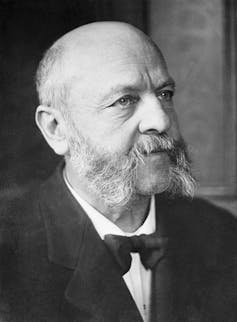
Black-and-white portrait of bald man with mutton chops.
Anthony Comstock.
Bettmann/Getty Images

Meanwhile, entrepreneurs of racy forms of entertainment – promoters of belly dancing, publishers of erotic postcards and producers of “living pictures,” which were exhibitions of seminude actors posing as classical statuary – all benefited from Comstock’s complaints. If Comstock wanted it shut down, the public often assumed that it was fun and trendy.

In 1891, Comstock became irate when a young female author proposed paying him to attack her book and “seize a few copies” to “get the newspapers to notice it.” And in October 1906, Comstock threatened to shut down an exhibition of models performing athletic exercises wearing form-fitting union suits. Twenty thousand people showed up to Madison Square Garden for the exhibition – far more than the venue could hold at the time.

The Trump administration’s recent efforts to get comedian Jimmy Kimmel off the air have similarly backfired.

Kimmel had generated controversy for comments he made on his late-night talk show in the wake of conservative activist Charlie Kirk’s assassination. ABC, which is owned by The Walt Disney Co., initially acquiesced to pressure from Federal Communications Commission Chairman Brendan Carr and announced the show’s “indefinite” suspension. But many viewers, angered over the company’s capitulation, canceled their subscriptions of Disney streaming services. This led to a 3.3% drop in Disney’s share price, which spurred legal actions by shareholders of the publicly traded company.

ABC soon lifted the suspension. Kimmel returned, drawing 6.26 million live viewers – more than four times his normal audience – while over 26 million viewers watched Kimmel’s return monologue on social media. Since then, all network affiliates have resumed airing “Jimmy Kimmel Live!”

‘Comstockery’ and hypocrisy

In the U.S., disfavored political speech and obscenity are different in important ways. The Supreme Court has held that the First Amendment provides broad protections for political expression, whereas speech deemed to be obscene is illegal.

Despite this fundamental difference, social and cultural forces can make it difficult to clearly discern protected and unprotected speech.

In Comstock’s case, the public was happy to see truly explicit pornography removed from circulation. But their own definition of what was “obscene” – and, therefore, criminally liable – was much narrower.

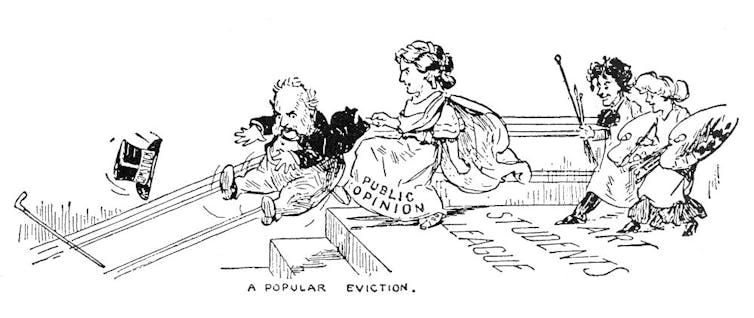
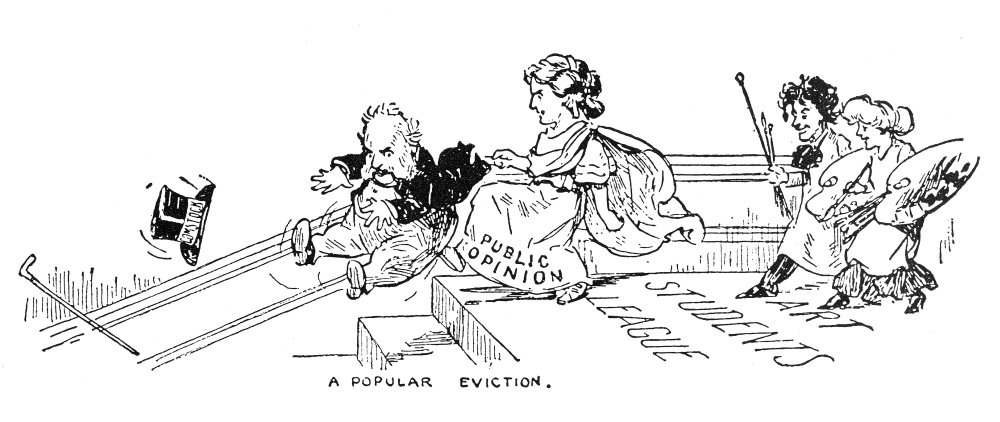
In 1905, Comstock attempted to shut down a theatrical performance of George Bernard Shaw’s “Mrs. Warren’s Profession” because the plot included prostitution. The aging censor was widely ridiculed and became a “laughing stock,” according to The New York Times. Shaw went on to coin the term “Comstockery,” which caught on as a shorthand for overreaching censoriousness.

Cartoon of young women booting an older man down some steps.
Cartoonists at the turn of the 20th century had a field day with Anthony Comstock’s overreaches.
Amazon

In a similar manner, when Attorney General Pam Bondi recently threatened Americans that the Department of Justice “will absolutely … go after you, if you are targeting anyone with hate speech,” swift backlash ensued.

Numerous Supreme Court rulings have held that hate speech is constitutionally protected. However, those in power can threaten opponents with punishment even when their speech clearly does not fall within one of the rare exceptions to the First Amendment protection for political speech.

Doing so carries risks.

The old saying “people in glass houses shouldn’t throw stones” also applies to censors: The public holds them to higher standards, lest they be exposed as hypocrites.

For critics of the Trump administration, it was jarring to see officials outraged about “hate speech,” only to hear the president announce, at Charlie Kirk’s memorial, “I hate my opponent, and I don’t want the best for them.”

In Comstock’s case, defendants and their attorneys routinely noted that Comstock had seen more illicit materials than any man in the U.S. Criticizing Comstock in 1882, Unitarian minister Octavius Brooks Frothingham quoted Shakespeare: “Who is so virtuous as to be allowed to forbid the distribution of cakes and ale?”

In other words, if you’re going to try to enforce moral standards, you better make sure you’re beyond reproach.

Free speech makes for strange bedfellows

Comstock’s censorship campaign, though self-defeating in the long run, nonetheless caused enormous suffering, just as many people today are suffering from calls to fire and harass those whose viewpoints are legal, but disliked by the Trump administration.

Comstock prosecuted women’s rights advocate Ida Craddock for circulating literature that advocated for female sexual pleasure. After Craddock was convicted in 1902, she died by suicide. She left behind a “letter to the public,” in which she accused Comstock of violating her rights to freedom of religion and speech.

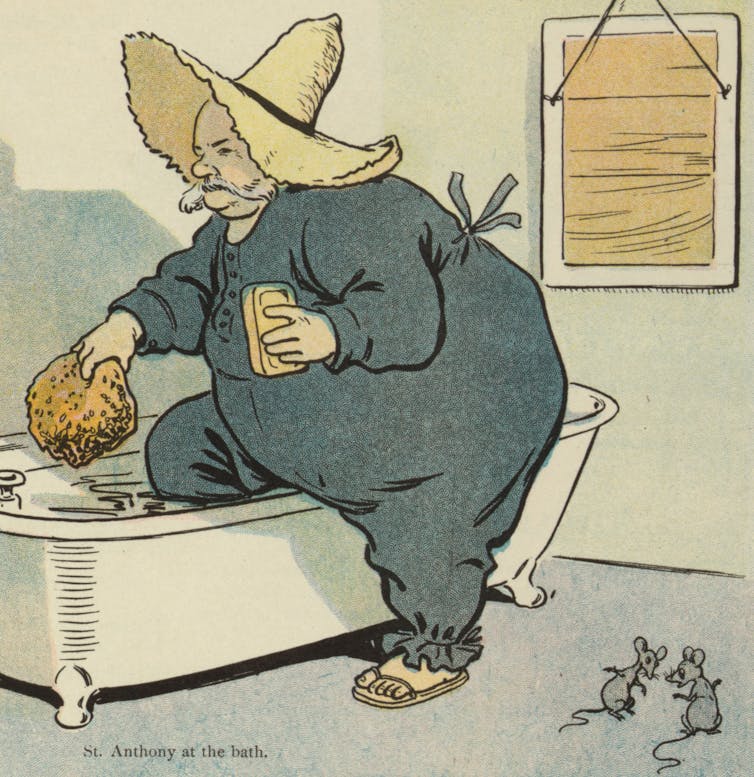
Portly man wearing a hat and a full body suit gingerly stepping into a bathtub.
A 1906 cartoon in the satirical periodical Puck mocks Anthony Comstock as a prude.
PhotoQuest/Getty Images

During Craddock’s trial, the jury hadn’t been permitted to see her writings; they were deemed “too harmful.” Incensed by these violations of the First and Fourth amendments, defense attorneys rallied together and were joined by a new coalition in the support of Americans’ constitutional rights. Lincoln Steffens of the nascent Free Speech League wrote, in response to Craddock’s suicide, that “those who believe in the general principle of free speech must make their point by supporting it for some extreme cause. Advocating free speech only for a popular or uncontroversial position would not convey the breadth of the principle.”

Then, as now, the cause of free expression can bring together disparate political factions.

In the wake of the Kimmel saga, many conservative Republicans came out to support the same civil liberties also advocated by liberal Hollywood actors. Two-thirds of Americans in a September 2025 YouGov poll said that it was “unacceptable for government to pressure broadcasters to remove shows it disagrees with.”

My conclusion from studying the 43-year career of America’s most prolific censor?

Government officials may think a campaign of suppression and fear will silence their opponents, but these threats could end up being the biggest impediment to their effort to remake American culture.

The Conversation

Amy Werbel receives funding from the State University of New York.

ref. Censorship campaigns can have a way of backfiring – look no further than the fate of America’s most prolific censor – https://theconversation.com/censorship-campaigns-can-have-a-way-of-backfiring-look-no-further-than-the-fate-of-americas-most-prolific-censor-266117

McCarthyism’s shadow looms over controversial firing of Texas professor who taught about gender identity

Source: The Conversation – USA (2) – By Laura Gail Miller, Ed.D. Candidate in Educational Organizational Learning and Leadership, Seattle University

A Texas A&M free speech case raises questions about academic freedom that have featured before in American society and courts, including during the 1950s. Westend61

Texas A&M University announced the resignation of its president, Mark A. Welsh III, on Sept. 18, 2025, following a controversial decision earlier in the month to fire a professor over a classroom exchange with a student about gender identity.

The university – a public school in College Station, Texas – fired Melissa McCoul, a children’s literature professor, on Sept. 9. McCoul’s dismissal happened after a student secretly filmed video as the professor taught a class and discussed a children’s book that includes the image of a purple “gender unicorn,” a cartoon image that is sometimes used to teach about gender identity.

The student questioned whether it was “legal” to be teaching about gender identity, given President Donald Trump’s January 2025 executive order – which is not legally binding – that said there are only two genders, male and female.

The video went viral, triggering backlash from Republican lawmakers who called for McCoul to be fired and praised the fact that the school also demoted the College of Arts and Science’s dean and revoked administrative duties from a department head.

Texas A&M officials have said that McCoul was fired because her course content was not consistent with the published course description. McCoul is appealing her firing and is considering legal action against the school.

Academic freedom advocates have condemned McCoul’s firing and say it raises questions about whether professors should be fired for addressing politically charged topics.

As a history educator researching curriculum design, civics education and generational dynamics, I study how classroom discussions often mirror larger cultural and political conflicts.

The Texas A&M case is far from unprecedented. The Cold War offers an example of another politically contentious time in American history when people questioned if and how politics should influence what gets taught in the classroom – and tried to restrict what teachers say.

A large grassy and concrete space is seen with a water tower behind it and a person riding their bike, while another one walks.
The public university Texas A&M, seen here in August 2023, is the site of a controversial freedom of speech and academic repression case.
iStock/Getty Images Plus

Educators under suspicion in the McCarthy era

During the Cold War – a period of geopolitical tension between the U.S. and the Soviet Union that came after World War II and lasted until 1991 – fears of communist infiltration spread widely across American society, including the country’s schools.

One particularly contentious period was in the late 1940s and 1950s, during what is often referred to as the McCarthy era. The era is named after Wisconsin Sen. Joseph McCarthy, a Republican who led the charge on accusing government employees and others – often without evidence – of being communists.

Beginning in the late 1940s, local school boards, state legislatures and Congress launched investigations into teachers and professors across the country accused of harboring communist sympathies. This often led to the teachers being blacklisted and fired.

More than 20 states passed loyalty oath laws requiring public employees, including educators, to swear that they were not members of the Communist Party or affiliated groups.

In California, for example, the 1950 Levering Act mandated a loyalty oath for all state employees, including professors at public universities. Some employees refused to sign the oath, and 31 University of California professors were fired.

And in New York, the Feinberg Law, approved in 1949, authorized school districts to fire teachers who were members of “subversive organizations.” More than 250 educators were fired or forced to resign under the Feinberg Law and related anti-subversion policies between 1948 and 1953.

These laws had a chilling impact on academic life and learning.

Faculty, including those who were not under investigation, and students alike avoided discussing controversial topics, such as labor organizing and civil rights, in the classroom.

This pervasive climate of censorship also made it challenging for educators to fully engage students in critical, meaningful learning.

The Supreme Court steps in

By the mid-1950s, questions about the constitutionality of these laws – and the extent of professors’ academic freedom and First Amendment right to freedom of speech – reached the Supreme Court.

In one such case, 1957’s Sweezy v. New Hampshire, Louis C. Weyman, the New Hampshire attorney general, questioned Paul Sweezy, a Marxist economist, about the content of a university lecture he delivered at the University of New Hampshire.

Weyman wanted to determine whether Sweezy had advocated for Marxism or said that socialism was inevitable in the country. Sweezy refused to answer Weyman’s questions, citing his constitutional rights. The Supreme Court ruled in Sweezy’s favor, emphasizing the importance of academic freedom and the constitutional limits on state interference in university teaching.

The Supreme Court also considered another case, Keyishian v. Board of Regents, in 1967. With the Cold War still ongoing, this case challenged New York’s Feinberg Law, which required educators to disavow membership in communist organizations.

In striking down the law, the court declared that academic freedom is “a special concern of the First Amendment.” The ruling emphasized that vague or broad restrictions on what teachers can say or believe create an unconstitutional, “chilling effect” on the classroom.

While these cases did not remove all political pressures on what teachers could discuss in class, they set significant constitutional limits on state efforts to regulate classroom speech, particularly at public institutions.

A man in a black-and-white photo wears glasses and holds up papers toward a microphone. He sits next to another man.
Sen. Joseph R. McCarthy, right, speaks during the McCarthy investigations in November 1954, trying to show communist subversion in high government circles.
Bettmann/Contributor

Recurring tensions from now and then

There are several important differences between the McCarthy era and current times.

For starters, conservative concern centered primarily on the spread of communism during the McCarthy era. Today, debates often involve conservative critiques of how topics such as gender identity, race and other cultural issues — sometimes grouped under the term “woke” — are addressed in schools and society.

Second, in the 1950s and ‘60s, external pressures on academic freedom often came in the form of legal mandates.

Today, the political landscape in academia is more complex and fast-paced, with pressures emanating from both the public and federal government.

Viral outrage, administrative investigations and threats to cut state or federal funding to schools can all contribute to an intensifying climate of fear of retribution that constrains educators’ ability to teach freely.

Despite these differences, the underlying dynamic between the two time periods is similar – in both cases, political polarization intensifies public scrutiny of educators.

Like loyalty oaths in the 1950s, today’s political controversies create a climate in which many teachers feel pressure to avoid contentious topics altogether. Even when no laws are passed, the possibility of complaints, investigations or firings can shape classroom choices.

Just as Sweezy and Keyishian defined the boundaries of state power in the 1950s and ‘60s, potential legal challenges like the appeal from the fired Texas A&M professor may eventually lead to court rulings that clarify how people’s First Amendment protections apply in today’s disputes over curriculum and teaching.

Whether these foundational protections will endure under the Supreme Court’s current and future makeup remains an open question.

The Conversation

Laura Gail Miller does not work for, consult, own shares in or receive funding from any company or organization that would benefit from this article, and has disclosed no relevant affiliations beyond their academic appointment.

ref. McCarthyism’s shadow looms over controversial firing of Texas professor who taught about gender identity – https://theconversation.com/mccarthyisms-shadow-looms-over-controversial-firing-of-texas-professor-who-taught-about-gender-identity-265554