What makes people welcome or reject refugees? What research in Germany reveals

Source: The Conversation – UK – By Tobias Hillenbrand, PhD candidate, Innovation, Economics, Governance and Sustainable Development, UNU-MERIT, United Nations University

Across the EU, immigration is one of the most divisive topics in politics today. Germany, a country once known for its “Willkommenskultur” (welcome culture), is a case in point.

The German chancellor, Friedrich Merz, has recently said that Syrians no longer have “grounds for asylum in Germany”, and that they will be encouraged to return voluntarily. Some could also be deported in the near future.

Polling suggests that tough approaches to immigration resonate well with the public, reflecting a broader shift toward more negative immigration attitudes.

What determines whether people in a host country like Germany welcome or reject refugees? This is what my colleagues Bruno Martorano, Laura Metzger and Melissa Siegel and I sought to better understand in a recent paper.

Through a survey experiment, we tested how different factors would affect whether participants express concern for refugees’ wellbeing, or consider them a threat.

The study was designed to assess the effects of different factors on people’s attitudes towards refugees. For example, whether a participant held humanitarian values (is committed to help fellow humans in need). We measured this based on their responses to a frequently-used set of four questions. Humanitarian considerations have received little attention in earlier studies in this area.

We also measured if people’s views changed depending on the amount of adversity refugees faced (such as whether they were fleeing war), and the personal characteristics of the refugees – their age and gender, and whether they were part of families.

We surveyed more than 2,000 participants in 2023, using short, professionally-produced videos about Syrian refugees in Turkish refugee camps.

Some participants watched a control video, which provided only some background information. Others watched one of four videos: two emphasised the humanitarian situation of Syrian refugees in refugee camps in Turkey, the other two stressed challenges that the immigration of these refugees may imply for German society.

One of the “humanitarian message” videos and one of the “threat message” videos focused on families with small children among the refugees. The other two highlighted young refugee men.

After they watched the videos, we surveyed respondents about their views and concerns about the refugees.

Humanitarian compassion

On average, respondents overall showed a moderate level of concern for the wellbeing of Syrian refugees. They were somewhat more worried about the impact on Germany’s welfare system, security and cultural life. Fears that refugees might take away jobs were less common.

We identified a strong correlation between how humanitarian someone generally is, and the compassion that respondent expressed toward the refugees. We also found that exposure to short videos highlighting the humanitarian plight of refugees made participants care significantly more for most aspects of refugees’ wellbeing, compared to those who only saw the control video.

Additionally, we gave participants the possibility to sign pro-refugee policy petitions within the survey. Only a quarter of respondents overall signed a petition calling for increased funding for Syrian refugees abroad. An even smaller share supported a petition for more admissions of Syrians to Germany. But highlighting the humanitarian plight of refugees largely increased the share of respondents advocating for more support for refugees abroad.

The limits of this kind of messaging were also apparent. Watching the humanitarian videos did nothing to reduce immigration-related fears, nor did it increase acceptance for allowing refugees into the country.

Scepticism of (some) refugees

Those who watched videos of young male refugees were significantly less likely to support allowing more refugees into the country. Our data suggests that this is likely due to heightened concerns about negative cultural effects among those who viewed a video featuring young refugee men, rather than economic concerns or participants feeling more physically threatened.

Those who watched the videos highlighting families were more concerned about the refugees’ safety. Yet, they also expressed greater concerns that refugees may represent a burden for the welfare state.

The videos did not impact all respondents equally. For example, among respondents who identified as politically leftwing, seeing a video with a humanitarian message was associated with fewer cultural concerns about immigration, compared to the control group. For right-leaning respondents, we observed the opposite: seeing one of the humanitarian videos was associated with more concerns.

In addition, it was remarkable how differently east and west Germans reacted to our experiment. The political legacy of eastern Germany – the region which used to be the socialist authoritarian German Democratic Republic (GDR) until 1990 – is relevant in explaining persistent differences between the eastern and western German populations. It has been well established that east and west Germans differ in their values, preferences and voting behaviour, including support for the anti-immigration party AfD.

While similar at baseline, we found that exposure to the four videos affected the views of east Germans more negatively than those of west Germans, regardless of the exact message or the group of refugees the video highlighted. For example, focusing on refugee families largely boosted the share of west Germans who supported increasing support for refugees abroad. Among east Germans though, it had if anything the reverse effect.

It was remarkable how different these populations reacted to the very same message. Their reactions diverge more strongly than across any other divide, such as age or education.

Taken together, our results suggest that people’s opinions on immigration are more complex than a simple pro- v anti-immigration split. Whether a political message is effective or not – that is, whether it changes minds – depends on the framing of the message itself, as well as the views and values held by the people receiving that message.

The Conversation

Tobias Hillenbrand does not work for, consult, own shares in or receive funding from any company or organisation that would benefit from this article, and has disclosed no relevant affiliations beyond their academic appointment.

ref. What makes people welcome or reject refugees? What research in Germany reveals – https://theconversation.com/what-makes-people-welcome-or-reject-refugees-what-research-in-germany-reveals-269436

As flu cases spike, is it time to start wearing masks again?

Source: The Conversation – UK – By Paul Hunter, Professor of Medicine, University of East Anglia

Yau Ming Low/Shutterstock.com

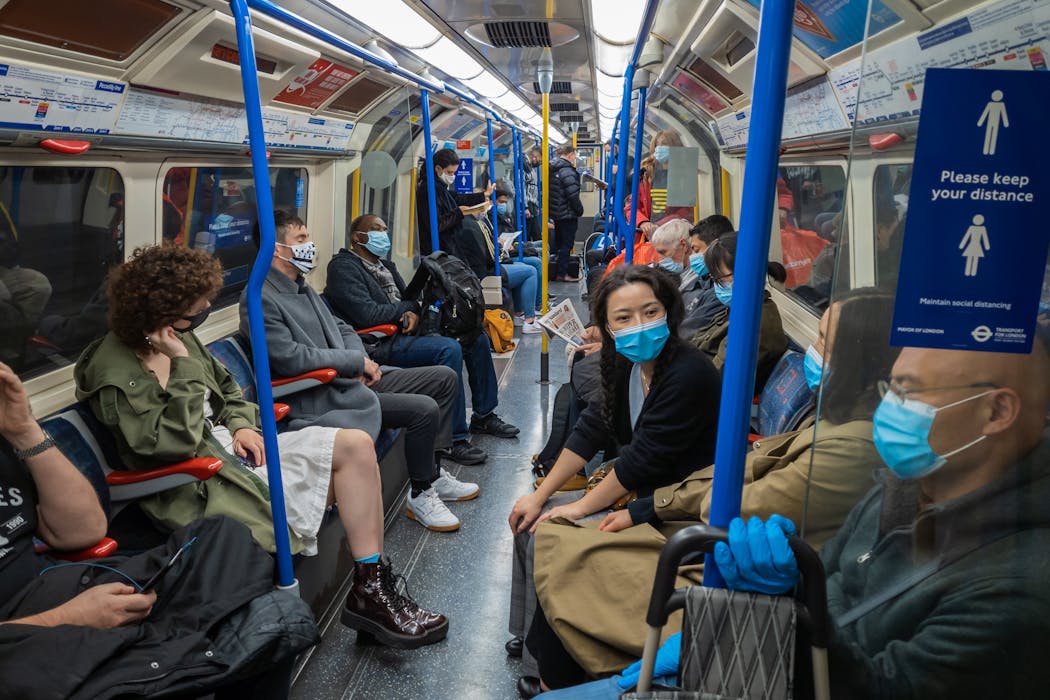
With flu season arriving early and NHS leaders encouraging people with symptoms to wear masks in public, a question arises: do masks actually work against the flu?

The short answer is that the evidence remains surprisingly weak. Studies conducted before the COVID pandemic generally found that masks made little to no difference in the spread of flu in everyday settings. There is little reason to think this has changed, although the COVID pandemic has taught us more about when masks can be helpful in reducing the spread of respiratory diseases.

This matters because flu cases began rising earlier than usual this year and are higher than we would normally expect at this point in the season.

While the number of people being admitted to hospital with a diagnosis of flu is still at moderate levels, the number of daily admissions is increasing. There are real concerns that we are heading towards an especially bad winter. This year, Australia suffered its worst flu season in at least 20 years.

The main flu strain currently circulating in the UK is a type of influenza A known as H3N2 – subclade K. This strain probably appeared first in the US, from where it has spread globally, extending the flu season in Australia and New Zealand and causing the early start of the flu season in Europe.

Crucially, this strain is quite different from the one used in this year’s vaccine. This means the vaccine may be less effective at preventing infection, although it should still help protect against severe illness.

Against this backdrop, Daniel Elkeles, the chief executive of NHS Providers, told Times Radio that if you’re coughing and sneezing “then you must wear a mask when you’re in public spaces, including on public transport, to stop the chances of you giving your virus to somebody else”.

The government guidance is less forthright, with a government spokesperson stating that people should consider wearing a mask in such circumstances, not that they must wear one.

Before the COVID pandemic, there had been several studies investigating the benefits of face coverings for respiratory viruses, including influenza. The most thorough of those reviews concluded that overall, masks made little or no difference to the spread of flu, either in the home or in public places.

They also concluded that N95 masks (tight-fitting, high-filtration masks) were no better than surgical masks in everyday settings. However, the authors were only able to identify a single low-quality study to support this finding.

Blue surgical masks and white N95 masks.
In real-world studies, N95 masks perform no better than surgical masks.
Maridav/Shutterstock.com

In a review my colleagues and I conducted on the effectiveness of masks on the spread of respiratory infections prior to COVID, we found a similar poor effect overall. But individual studies in the review often gave very different results to each other.

Weaker studies were more likely to suggest masks work

Some studies suggested a strong protective effect, while others showed greater infection risk when people wore masks. Better-quality studies, such as randomised trials, generally found little or no benefit. In contrast, weaker study designs were more likely to suggest that masks worked.

The COVID pandemic added new evidence. The most robust recent review of masks and COVID in the community concluded that mask wearing was associated with a reduced risk of COVID transmission outside of healthcare settings. There was insufficient evidence to comment on the relative effectiveness of N95 respirator masks compared to standard surgical masks in public spaces, but in hospitals the balance of evidence was that there was little difference between the two types of mask.

These real-world studies contrast sharply with laboratory studies, which have generally found masks to be highly effective at reducing the amount of virus people release into the air and showing that properly fitted N95 masks are more effective than surgical masks for COVID and flu.

In the flu study, the researchers reported that a properly fitted N95 mask reduced the amount of flu virus released into the air by more than 94%. However, a poorly fitting N95 mask performed no better than an ordinary surgical mask – a crucial finding that suggests the gap between laboratory and real-world effectiveness may come down to how people actually wear masks.

The COVID lesson

Some of the most convincing evidence for the effectiveness of masks at preventing COVID was the UK’s Office for National Statistics (ONS) COVID infection survey. In this survey, up to 150,000 people were screened every two weeks for the virus whether or not they had symptoms. For part of the time, the survey also collected data on mask wearing.

My colleagues and I analysed data from the ONS survey and concluded that, in adults, always wearing a mask at work or in enclosed spaces – or both – was associated with about a 20% reduction in the risk of catching COVID during the time the delta variant was the dominant strain of the virus. But after the appearance of the omicron variant, there was little if any reduced risk in mask wearers.

In children, mask wearing was associated with less of a reduction in risk of testing positive for COVID, and during the omicron period there was even a small increased risk.

Evidence for the value of masks for flu remains less clear, suggesting little if any benefit. Nevertheless, I would still encourage people who are at risk of severe disease if they catch the flu to wear a mask in crowded indoor environments – especially if they have not yet received the vaccine.

If someone is ill with the flu, it is best that they should stay at home. If they have to go out into crowded indoor environments, then I would also encourage them to wear a mask. I would not encourage mask wearing in children, given the lack of clear benefit and potential for improper use.

For most people, the overall evidence does not support routine mask wearing. I would also not encourage the general public to wear N95 masks because these masks need to be properly fitted for them to be effective. Nevertheless, wearing a mask is a personal decision, and people should be free to decide on what makes them feel most comfortable.

The Conversation

Paul Hunter consults for the World Health Organization. He receives funding from National Institute for Health Research and has received funding from the World Health Organization and the European Regional Development Fund

ref. As flu cases spike, is it time to start wearing masks again? – https://theconversation.com/as-flu-cases-spike-is-it-time-to-start-wearing-masks-again-271904

Cannabis dependence is rising in England and Wales – but treatment is lagging

Source: The Conversation – UK – By Francesca Spiga, Research Fellow in Research Synthesis, University of Bristol

Cannabis is often seen as relatively harmless – but the latest figures tell a different story. Julian Wiskemann/ Shutterstock

Cannabis dependence is on the rise, according to the latest data on drug use and dependence published by NHS England.

Although cannabis use has remained stable over the past decade in England and Wales, dependence on the drug has risen significantly. In 2024, 6.7% of people aged 16 to 64 showed signs of drug dependence – compared with only 3.8% in 2014. This rise in drug dependence has mainly been attributed to an increase in the number of adults reporting cannabis dependence.

In England’s substance misuse treatment services alone, 86% of children aged 14-17 enrolled in treatment between 2024 and 2025 were there for cannabis problems – making it by far the most commonly used substance among young people.

Trends are slightly different in adults, with 21% of those in treatment reporting issues with cannabis use alongside opiates. Among people entering treatment for substance misuse, 22.2% were there for cannabis problems – continuing a steady climb since 2022 (20.9%).

Cannabis is often seen as relatively harmless, but these figures tell a different story. For some, cannabis use becomes difficult to control – interfering with work, relationships and mental health. It can also lead to cannabis use disorder, a serious condition that, due to its relatively mild perceived physical harms, receives far less attention than other substance use disorders.

What is cannabis use disorder?

Cannabis remains the most commonly used illicit drug in the UK. While many people use it without major problems, some develop patterns of harmful or dependent use.

Cannabis use disorder is defined by symptoms such as difficulty cutting down cannabis use, spending excessive time using or recovering from use, and continuing to use cannabis despite negative consequences. These problems can affect education, employment and relationships, and are linked to mental health issues such as psychosis and depression.


Read more:
What is cannabis use disorder? And how do you know if you have a problem?


Despite these risks, cannabis is often perceived as “safe” compared to other drugs. The perception that cannabis doesn’t cause serious problems increases the risk of use and decreases the motivation to stop. This perception may partly explain why treatment services are now seeing such high numbers of young people with cannabis-related problems.

The latest ONS figures highlight a persistent public health challenge – one that requires more than just awareness.

Can cannabis use disorder be treated?

Treatment for cannabis use disorder isn’t straightforward. Unlike opioid dependence, there are no approved drug-based treatments for cannabis problems.

Current UK clinical guidelines recommend psychosocial interventions, such as cognitive behavioural therapy, as first-line options. But the evidence base for these therapies is surprisingly thin. Studies are small, inconsistent and often measure success in different ways – making it hard to know what really works.

A young girl smokes a marijuana cigarette.
In England, 85% of young people in treatment programmes were there for cannabis problems.
2Design/ Shutterstock

Our research group recently reviewed all available trials of psychosocial and pharmacological treatments for cannabis use disorder.

We found that while psychosocial approaches such as cognitive behaviour therapy (teaching people practical strategies to change unhelpful thoughts and actions and boost motivation) and acceptance-based approaches (teaching skills to manage difficult emotions, accept challenging thoughts and stay focused on the present moment) show promise, the benefits are modest and vary widely between studies.

Other psychological strategies such as contingency management (offering rewards for meeting treatment goals) have shown some success for other substance use disorders (such as cocaine and amphetamine). But the evidence for cannabis is limited.

The benefits of prescription drug treatments for cannabis use disorder remain uncertain. No drug that has been investigated to date, including antidepressants and cannabinoid agonists (which mimic the effects of cannabis), have produced convincing results.

In short, while there are some encouraging findings, the research base is still too limited to draw firm conclusions about which interventions work best. This leaves doctors and patients with uncertainty and limited guidance on treatments.

Where do we go from here?

The rise in cannabis-related treatment demand comes at a time when recreational cannabis use is highly common and high-potency products are increasingly available. This means that it could become a more common problem, which is why developing a treatment base is so important.

But a challenge researchers face in developing suitable treatments for cannabis use disorder is deciding what counts as a good outcome.

Many trials aim to have participants achieve abstinence (complete cessation of cannabis use) – but this isn’t always realistic or even what people want. For some, reducing use rather than stopping completely can still improve mental health and quality of life.

Yet there’s no universal agreement on what constitutes meaningful change. This matters because treatment goals should reflect what people actually value. If someone wants to cut down rather than quit, measuring success only by abstinence risks overlooking meaningful progress.

So until researchers agree on a core outcome set, comparing studies and developing treatment guidelines will remain difficult.

To ensure that support is based on robust evidence, we need more research, better and bigger trials and a clearer understanding of what works – and for whom.

The good news is that with growing recognition of cannabis use disorder as a genuine public health concern, researchers have an opportunity to shape a more effective and compassionate response.

For those personally affected by cannabis use disorders, psychosocial therapies are still the most supported options. Opening a non-judgemental conversation, encouraging professional support and staying informed about what treatments are available can make a real difference.

The Conversation

Francesca Spiga is funded by the NIHR Evidence Synthesis Programme. The views expressed are those of the authors and not necessarily those of the NIHR or the Department of Health and Social Care.

Monika Halicka is funded by the NIHR Evidence Synthesis Programme. The views expressed are those of the authors and not necessarily those of the NIHR or the Department of Health and Social Care.

ref. Cannabis dependence is rising in England and Wales – but treatment is lagging – https://theconversation.com/cannabis-dependence-is-rising-in-england-and-wales-but-treatment-is-lagging-271642

The best dinosaur discoveries of 2025

Source: The Conversation – UK – By Richard Butler, Professor of Palaeobiology, University of Birmingham

Lindsay Zanno, associate research professor at North Carolina State University, with the Dueling Dinosaurs fossil N.C. State University, CC BY-NC-ND

In 2025, dinosaurs were everywhere. In May, the BBC revived their landmark series Walking With Dinosaurs, while July saw the release of Jurassic World Rebirth, the seventh film in the extinction-proof Jurassic Park franchise.

Rising auction prices for dinosaur skeletons were a rich source of media headlines and academic concern. And a record-breaking number of visitors (6.3 million in 2024–2025) flocked to the Natural History Museum in London, where dinosaurs are a key draw.

A golden era in dinosaur science is driving this fascination with dinosaurs. Around 1,400 dinosaur species are now known from more than 90 countries, with the rate of discovery accelerating in the last two decades. The year 2025 has so far seen the discovery of 44 new dinosaur species – nearly one a week.

Many new discoveries come from palaeontological hotspots, such as Argentina, China, Mongolia and the US, but dinosaur fossils are also being found in many other places, from a Serbian village to the rainswept coast of north-west Scotland. Even as a researcher, it is hard to keep track, but here is a personal view of some of the year’s highlights.

Zavacephale rinpoche

Some fossils are so exciting that when first shown at academic conferences, they draw audible gasps even from experienced palaeontologists. Zavacephale is one of these. The stunning skeleton of this one-metre-long plant-eating dinosaur was discovered in 110-million-year-old rocks in the Gobi Desert of Mongolia and described by palaeontologist Tsogtbaatar Chinzorig and colleagues.

Zavacephale is the oldest known member of the pachycephalosaurs, a group of dinosaurs famed for their domed skulls, probably used to butt heads like today’s bighorn sheep. Pachycephalosaurs have long been one of the most enigmatic dinosaur groups, and the discovery of Zavacephale is critical to understanding their early evolution.

Istiorachis macarthurae

Dinosaur fossils have been common discoveries in the rapidly eroding Cretaceous Period-aged cliffs of the Isle of Wight, off the south coast of England, for nearly two centuries. Yet, even here, there is much to learn. Jeremy Lockwood, a retired doctor turned dinosaur expert, has since 2021 named three new species of large ornithopods, one of the most common groups of plant-eating dinosaurs. These new species are closely related to Iguanodon, a four-legged ornithopod from Belgium with a very distinctive thumb spike.

Lockwood’s latest discovery, the six-metre-long Istiorachis, is another herbivorous ornithopod with a striking sail-like structure running along its back. This sail may have been a display structure used to attract mates and to deter predators by making this 128-million-year-old animal look bigger.

Spicomellus afer

Spicomellus was named in 2021 based on an incomplete rib from 165-million-year-old rocks in Morocco. It is a rib unlike that in any other animal, alive or extinct, with a series of long spines fused to its surface. In 2025, I was part of a team led by researcher Susie Maidment that described a much more complete skeleton. It revealed one of the strangest dinosaurs ever discovered.

The new fossils show that Spicomellus is the oldest known member of the ankylosaurs, heavily armoured, low and squat plant-eaters described by Maidment as resembling “walking coffee tables”.

Spicomellus is characterised by its bizarre armour, bristling with long spines all over the body, including a bony collar around the neck with spines the length of golf clubs sticking out of it. Dubbed the “punk rock dinosaur” by the BBC, Spicomellus is changing our understanding of ankylosaur evolution, but also highlighting the importance of the Moroccan fossil record.

Nanotyrannus lethaeus

For many years, one of the fiercest debates in dinosaur palaeontology has been about Nanotyrannus, a 66-million-year-old predator from Montana in the US. Nanotyrannus was first named in 1988, and suggested to be a small tyrannosaurid, around 5m long, that lived alongside the giant Tyrannosaurus rex. But many other palaeontologists disagreed, suggesting that fossils of Nanotyrannus were just young individuals of T rex.

In 2025, palaeontologists Lindsay Zanno and James Napoli published a description of a new Nanotyrannus fossil specimen, preserved as part of the Duelling Dinosaurs fossil alongside a herbivorous Triceratops. They showed that this Nanotyrannus was nearly an adult, but also that it was different from T rex in lots of ways that cannot be explained by growth, including a longer hand.

A subsequent study on the original Nanotyrannus demonstrated that this specimen was also fully grown. Together, these studies end a 35-year-long controversy and reveal Nanotyrannus as a slender, agile pursuit predator, built for speed.

Illustration of dinosaurs preparing for attack.
A pack of Nanotyrannus attacks a juvenile T. rex.
Anthony Hutchings, CC BY-NC-ND

Huayracursor jaguensis

Gigantic, four-legged, long-necked, plant-eating sauropod dinosaurs of the Jurassic and Cretaceous periods, such as Brachiosaurus, were the largest animals to ever walk the Earth, weighing up to 70 tonnes (equivalent of 12 African elephants). The year 2025 saw many new sauropod discoveries, including a Jurassic Highway of trackways announced by our team from a quarry in Oxfordshire, UK.

Important new information on sauropod origins came from the Triassic Period rocks of Argentina, long a key source of dinosaur discoveries. The 2m long Huayracursor was described from 228-million-year-old rocks in the Andes, making it one of the oldest known sauropod ancestors. It has a much longer neck than other species from the dawn of dinosaur evolution, revealing the earliest stages in the evolution of the extreme neck elongation seen in later sauropods.

Image of dinosaur skeleton
Skeletal reconstruction of Huayracursor jaguensis.
Martín Hechenleitner and Malena Juarez, CC BY

The year 2025 was another remarkable year for dinosaur discovery and 2026 will have a lot to live up to. But I’m looking forward to seeing what surprises the new year brings.

The Conversation

Richard Butler receives funding from the Leverhulme Trust, the European Commission and the British Institute for Libyan and Northern African Studies.

ref. The best dinosaur discoveries of 2025 – https://theconversation.com/the-best-dinosaur-discoveries-of-2025-271224

Christmas adverts are hijacking the Love Actually feel-good spirit to get us spending more

Source: The Conversation – UK – By Michal Chmiel, Senior Lecturer in Psychology, Royal Holloway, University of London

The Christmas advert season has officially started, and Richard Curtis’s genius is all around – again.

From the carrot expressing love on a placard in the Aldi advert, to the moment when Keira Knightley finally says yes to Joe Wilkinson (and to his food) in the Waitrose commercial, the Love Actually film seems to be everywhere in Christmas adverts. The spending spirit is being neatly squeezed into our minds, just like the extra syllable in the original lyrics of the Love Is All Around anthem.

These adverts are trying to tap into our growing loneliness and desire for togetherness and to persuade us that the best way to get it is to spend money on gifts. In the Pandora advert, for example, the boy character plans a Christmas gift for his mother to the sound of the Beach Boys hit song God Only Knows, which could be intended to remind us of the ending of Love Actually in the arrivals hall at Heathrow airport.

It’s no surprise that advertisers use works of fiction to reconnect us with past memories of joy and happiness. Take Roald Dahl’s BFG, for example, in Sainsbury’s Christmas 2025 TV ad. During Christmas, when we listen to familiar tunes or watch films together, we often experience a sense of togetherness, recognising that we share more than we disagree on.

Love Actually is an example of a cultural phenomenon that many people in the UK share nostalgic feelings towards, which evokes a feeling of belonging in us. We often respond in the same way to the movements and dialogue of Knightley, Hugh Grant and Emma Thompson, and we seem to feel united in our responses.

Once we form a connection between Love Actually or BFG and pleasant feelings associated with watching or reading them, advertisers can use the familiar songs, scenes or characters to borrow the connected positive feelings and shape our responses to their ads.

This happens because of the wiring of the impulsive system, which is often referred to as the hot system, which is a metaphor coined by psychologists to explain why we respond with predictable actions or thoughts to familiar content. Much of human behaviour is automatic. In familiar situations, we tend to act in a routine or habitual way.

Just as a Christmas carol can make us nostalgic for past Christmases, the Love Actually scene in which Grant’s character dances to Jump (For My Love) after defending matters important to Britain can make us feel happy and proud. The feeling of moments that make us proud has been recreated by Google Pixel Ad in another attempt to invoke the spirit of Love Actually.

Our willingness to buy things to reconnect with positive memories from the past is not irrational. When we experience happiness, we want to hold on to that feeling, and buying goods is a way of prolonging this state, as one 2022 study showed. If something makes us happy, such as buying goods, we do exactly that.

All those familiar movie moments, tunes and purchases can make us feel united. The need to belong and feel connected is one of the fundamental human motivations. We need stable and meaningful relationships. Sadly, there are fewer chances to meet up now that more people are working from home. John Lewis’s advert offers us a way of reconnecting: buying a gift when “you can’t find words”.

The small but significant innovations that have shaped the way we spend our working days and weekends have also changed the way we communicate. Social media was another development of the first decade of the 21st century that seemed to enable social contact while exposing us to a new set of psychological threats.

One of these was a desire to feel popular on social media. This is why, together with media communication scholar Gareth Thompson, I coined the term digital peacocks. Just like peacocks, digital poseurs post content to attract attention and feel recognised.

The combination of focusing on ourselves and the need for recognition from others could indicate narcissistic tendencies, leading us to spend more money on unnecessary purchases. Why are we responding in this way?

One possible explanation is the feeling of exhaustion caused by information coming at us from all directions, and the experience of division and loneliness. According to a 2018 study, loneliness leads us to focus disproportionately on ourselves.
Adverts that we watch outside of the unifying Christmas period do not help with that. (You are unique! You’re so much better than everyone else – doesn’t that sound familiar?)

As a 2022 study of narcissists and their attraction to luxury goods found, the more unique we feel, the more we feel the urge to demonstrate this through
unnecessary purchases. However, this is an attempt to address a psychological need with material items.

Gifts are fine but conversation is even better

It would be a mistake to think that social connections are only about having a lot of people around who are similar to us. Sharing similar values may be important, but what makes humans unique is the multitude of small differences.

Buying a gift isn’t the best way to get that sense of togetherness. Talking to other people and feeling listened to is what helps alleviate feelings of loneliness, even if we don’t necessarily agree with them.

Finally, Waitrose, it would only count if Keira said yes to Andrew Lincoln,
wouldn’t it? Readers, now I’m open to hearing your opinions – after all, we don’t have to agree on that.

The Conversation

Michal Chmiel does not work for, consult, own shares in or receive funding from any company or organisation that would benefit from this article, and has disclosed no relevant affiliations beyond their academic appointment.

ref. Christmas adverts are hijacking the Love Actually feel-good spirit to get us spending more – https://theconversation.com/christmas-adverts-are-hijacking-the-love-actually-feel-good-spirit-to-get-us-spending-more-271255

Buy now, panic later is the new holiday ritual – stopping it won’t be easy

Source: The Conversation – UK – By Olga Cam, Lecturer in Accounting, University of Sheffield

Olya Detry/Shutterstock

The holiday season brings celebration and gift-giving, but it also ushers in something less festive: financial stress. In the UK, retailers now shape much of the spending calendar, with Black Friday one of the busiest shopping events of the year.

This year on Black Friday weekend, Nationwide building society alone saw more than 31.2 million transactions, a 5.8% increase on last year. What’s more, households that usually spend around £2,460 a month (a typical amount in the UK) shell out an additional £713 (29% more) in the month of December.

This spending culture can lead to people worrying about their budget for December and January, and often pushes them towards borrowing just to take care of their household and family.

Some estimates suggest that three quarters of UK families rely on credit, including credit cards, overdrafts and buy now, pay later (BNPL) services, to manage Christmas costs. These purchases may feel harmless at the time, but they quickly add up.

The UK already has high levels of consumer borrowing. A report by the Financial Conduct Authority (FCA) found that 65% of UK adults (35.3 million people) held a credit card.

BNPL has grown especially quickly, probably because it feels effortless to use. In fact, research shows that BNPL use rose from 17% in 2022 to 27% of adults in 2023, with further increases in 2024.

For the moment, many BNPL products in the UK fall outside the Consumer Credit Act 1974 and therefore remain unregulated. But this is due to change – from July 15 2026 third-party BNPL products will be fully regulated by the FCA.

In terms of the cost to consumers of BNPL, a study from Stanford University involving 570,000 people found that BNPL users paid more overall due to higher overdraft fees, interest charges and late payment fines. These costs often become visible only after the holidays when many households realise that the supposedly cheap option was not cheap at all.


Read more:
Mobile payments used to be less ‘painful’ than using cash. That might be changing


A recent report on financial capability in the UK suggests that low levels of financial literacy play into these economic difficulties around times of increased spending. Strikingly, these gaps are not limited to a single demographic – they appear across age groups and income levels.

Financial literacy is often misunderstood. Many people assume it is simply mathematics, yet it is far more complex. True financial literacy is about behaviour and confident decision-making rather than understanding complex products.

In a social and digital environment shaped by targeted advertising, limited-time offers and frictionless credit, even financially knowledgeable people can overspend. The problem is rarely numerical skill. It is the challenge of managing behaviour and emotion at the point of purchase.

What’s going on in your brain?

Behavioural economist Richard Thaler’s concept of mental accounting helps to explain why BNPL and credit cards encourage overspending. Thaler’s theory shows that people treat money differently depending on how they categorise it. Creating a category such as holiday spending makes it easier to justify purchases that would otherwise feel unnecessary.

Another concept, payment decoupling, also helps to explain the appeal of BNPL. When buying is separated from paying, consumers feel less of the “pain” of payment. Humans naturally prefer immediate rewards over long-term consequences. BNPL strengthens this tendency by delaying the moment when the financial cost becomes real.

Understanding these psychological processes can help consumers make more confident decisions.

female teacher sitting beside a young girl at her desk, helping her with her work.
Teachers aren’t always confident enough to teach financial literacy.
Monkey Business Images/Shutterstock

Financial literacy has never been a core part of the UK school curriculum. Even where it appears, it is often presented as an add-on rather than a fully developed programme. The new skills for life and work curriculum in England aims to strengthen financial capability, but it remains heavily weighted towards knowledge rather than behaviour.

According to the Organisation for Economic Co-operation and Development (OECD), financial literacy includes knowledge, behaviour, attitudes and decision-making. Many people will recognise the tension: understanding the sensible option, yet not acting on it.

A further challenge we have found when conducting financial literacy workshops is that most teachers have never been trained to teach about money. They feel confident teaching literature or algebra, but not long-term financial planning, credit agreements, debt or interest.

In our workshops, teachers often report feeling unsure about how to discuss everyday financial risks with students. This matters for families too. Children usually learn financial behaviour from the adults around them. If both teachers and parents feel uncertain, young people receive inconsistent messages.

Our workshops also showed that young people are eager to talk about money when given the opportunity. They ask thoughtful questions that challenge assumptions that they might be uninterested in finances. They are quick to understand the emotional and psychological aspects of spending, demonstrating why financial literacy should be lived and discussed rather than memorised.

Financial literacy is not about becoming an accountant. It is about understanding why people spend the way they do and building the confidence to make decisions that support wellbeing, especially during emotionally charged or financially pressured moments.

This Christmas, the most valuable gift many people can give themselves is the space to pause before spending and the skills to avoid entering the new year in a buy-now-panic-later cycle.

The Conversation

Mohammad Rajjaque is affiliated with Citizen’s Advise Sheffield where he is Vice-Chair of the board of trustees. CAS is Sheffield’s largest provider of advice and advocacy services, including debt advice.

Olga Cam does not work for, consult, own shares in or receive funding from any company or organisation that would benefit from this article, and has disclosed no relevant affiliations beyond their academic appointment.

ref. Buy now, panic later is the new holiday ritual – stopping it won’t be easy – https://theconversation.com/buy-now-panic-later-is-the-new-holiday-ritual-stopping-it-wont-be-easy-271559

Sophie Kinsella showed that ‘light’ fiction can speak to women’s real lives

Source: The Conversation – UK – By Charlotte Ireland, Associate Researcher, Department of English, University of Birmingham

The bestselling British author Sophie Kinsella “peacefully” died two days before her 56th birthday on December 10, 2025. Across more than 30 books published between 1995 and 2024, Kinsella became one of the most commercially successful writers of popular women’s fiction. Her novels were the books readers packed for holidays, lent to friends and read on commutes – stories that created a sense of connection through shared experience.

Born Madeleine Wickham, she was one of Britain’s most successful novelist. She has sold more than 50 million books in more than sixty countries. Since her death, fellow contemporary writers Jennifer Weiner and Jenny Colgan, have shared tributes celebrating her impact.

Her death comes only three months after that of Jilly Cooper, described as the queen of the bonkbuster – popular novels featuring explicit sexual encounters and wild storylines. If Cooper defined the sexy, sensational bestsellers of the late 20th century, Kinsella did the same for the early 21st-century romantic comedy novel.

Although she preferred to describe her work as romantic comedies, she is frequently situated within chick lit: satirical, confessional stories about women by women.

Controversy surrounds the term “chick lit” which has often been used pejoratively, implying that fiction about women’s lives is lightweight or disposable rather than culturally meaningful. Such dismissal rarely applied to male-authored popular fiction. The debate reveals how stories about women’s work, relationships and personal lives are routinely undervalued.

But, as fellow author Jennifer Weiner argues, being labelled “chick lit” carries advantages. The tag gives “booksellers and readers, a quick and easy shorthand with which to refer to books that feature smart, funny, struggling, relatable female protagonists.”

Alongside Helen Fielding (Bridget Jones), Candace Bushnell (Sex and the City) and Terry McMillan (Waiting to Exhale), Kinsella stands as one of the genre’s foundational voices.

What made Kinsella distinct was her focus on consumerism, finances and the stresses of modern work, shaped in part by her background as a financial journalist. In an interview with the Guardian, she described how shopping had become a national pastime, full of contradictions – the thrill of spending, the shame of debt – and “nobody has written about it”. So she did, blending the “funny and painful”.

Her most famous heroine, Becky Bloomwood, embodies this perfectly in The Secret Dreamworld Of A Shopaholic, which would be the first in the nine-book Shopaholic series and adapted for the screen as Confessions of a Shopaholic. Bloomwood insists: “They should list shopping as a cardiovascular activity.”

The line is typical of the voice that made Kinsella’s fiction so distinctive. Her writing was full of internal monologues that combine comedy with anxious, “Oh God, what now?” moments. Her heroines are flawed, panicked and often ridiculous – and it is precisely because of that, readers stayed loyal.

While some have called for the end of chick lit, the genre has continued to thrive because of authors like Kinsella. It has not disappeared, it has evolved, reflecting new social norms and including older female protagonists.

Kinsella’s novels are markedly contemporary, as she explained: “The world changes and I reflect the world. I’m writing about issues that didn’t even exist when I started writing.”

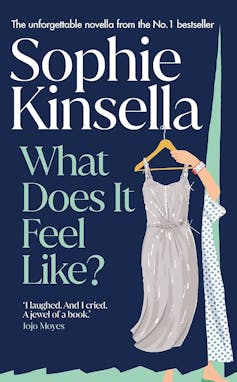
Book cover with a silver dress

Transworld Digital

Her writing may look light, but in classrooms and scholarship alike, Kinsella’s novels demonstrate how comedy can carry sharp cultural critique. Her books have been used to teach students
about different waves of feminism, showing how humour can make social critique accessible. Her novels have also been linked with post-feminist discourse and compared to 19th century classics.

Kinsella’s stories interrogate (rather than simply embrace) the demands placed upon women. Her gift was balancing this critique with levity, allowing serious themes to coexist with warmth and wit. As she put it: “The best comedy comes out of truth. So, it can’t be just silly. It’s got to have a kind of underlying message.”

Across her fiction, she wrote not only about shopping but about the pressure to curate a perfect life, marriage, sisterhood, workplace misery and, recently, an unforgettable, semi-autobiographical novella about living with a brain tumour.

Kinsella’s final year also brought a different kind of visibility. In April 2024, she publicly shared her diagnosis of glioblastoma. She resisted the idea of a grand bucket list. She didn’t want to “swim with dolphins” or “meet a celebrity”.

Instead, she said, she wanted simply to “lead [her] life, but just make it a bit nicer,” with “a little treat here, a little treat there”. In many ways, this mirrors what her books offer readers: not grand transformations, but small joys, respites from pressure and moments of laughter.

In Shopaholic Ties the Knot (2001), Becky reflects: “We’re on this planet for too short a time … What’s more important? Knowing a few meaningless figures balanced – or knowing that you were the person you wanted to be?” It feels sharper in the wake of Kinsella’s passing. But her novels remain stories full of wit, resilience and warmth, still offering readers “a little treat here, a little treat there”.

This article features references to books that have been included for editorial reasons, and may contain links to bookshop.org. If you click on one of the links and go on to buy something from bookshop.org The Conversation UK may earn a commission.


Looking for something good? Cut through the noise with a carefully curated selection of the latest releases, live events and exhibitions, straight to your inbox every fortnight, on Fridays. Sign up here.


The Conversation

Charlotte Ireland does not work for, consult, own shares in or receive funding from any company or organisation that would benefit from this article, and has disclosed no relevant affiliations beyond their academic appointment.

ref. Sophie Kinsella showed that ‘light’ fiction can speak to women’s real lives – https://theconversation.com/sophie-kinsella-showed-that-light-fiction-can-speak-to-womens-real-lives-272097

Pandas, pingpong and ancient canals: President Xi’s hosting style says a lot about Chinese diplomacy

Source: The Conversation – Global Perspectives – By Xianda Huang, Ph.D. Student in Asian Languages and Cultures, University of California, Los Angeles

Chinese President Xi Jinping and French President Emmanuel Macron take in the view at the UNESCO World Heritage site in Dujiangyan, southwestern China’. Sarah Meyssonnier/AFP via Getty Images

When French President Emmanuel Macron traveled to China in early December for his fourth state visit, the itinerary began with the expected formalities. There was a red carpet reception at the Great Hall of the People in Beijing and high-level talks with President Xi Jinping on trade, technology and Ukraine.

But the defining image of this diplomatic trip did not take place in the capital. Rather, it occurred more than 1,000 miles (1,600 km) away in Chengdu, Sichuan province. There, Xi hosted Macron for a rare instance of “no-tie diplomacy,” a term used by Chinese media to describe a relaxed and informal style of statecraft.

Stepping outside the rigid protocols of Beijing, Xi personally guided Macron through the mist-covered mountains of Sichuan. The walk held high significance: It marked the first time Xi has hosted a foreign leader for such an informal sightseeing meeting outside the capital, with an itinerary that included the Dujiangyan irrigation system, a visit to China’s national table tennis team and the Chengdu Research Base of Giant Panda Breeding.

Global attention remains understandably fixed on “hard” issues — trade tariffs, the war in Ukraine and nuclear energy. But as a cultural historian of modern China, I believe the choreography of this visit offers a vital window into Beijing’s diplomatic strategy. By foregrounding things like ancient waterways and table tennis, China is deploying a sophisticated brand of cultural statecraft designed to soften the edges of a hardening geopolitical landscape.

The reciprocity of ‘home diplomacy’

The choice to host Macron in Chengdu was not random, but a carefully curated act of diplomatic reciprocity. In April 2024, Macron had invited Xi to his personal retreat in the French Pyrenees, a gesture intended to foster personal intimacy.

During the latest tour, Xi reportedly referenced their previous meeting, telling Macron: “Last year you invited me to your hometown in the Hautes-Pyrénées; I believe this visit will further deepen your understanding of China.”

By bringing Macron to Sichuan, Xi was returning the favor, moving the relationship from the professional to the personal. This reflects a shift in Chinese diplomacy from a “Wolf Warrior” mentality, defined by confrontation and rhetorical aggression, toward a more relational approach with key European partners. By investing time in this kind of provincial visit, Beijing is signaling that it views France not just as a trading partner, but as a nation worthy of deep, personal engagement.

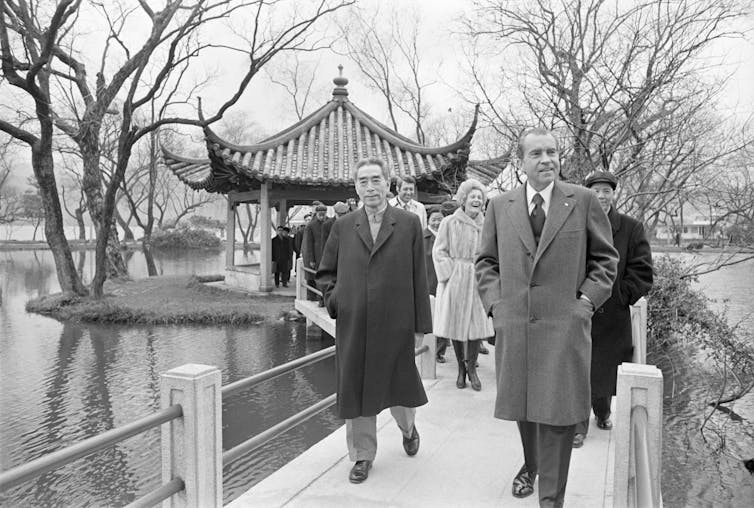
Two men in overcoats walk on a bridge in front of a pagoda.
French President Emmanuel Macron’s sightseeing tour recalls that of U.S. President Richard Nixon during his breakthrough 1972 visit to China.
Bettmann/Contributor/Getty Images

This outreach is especially important at a time when China–U.S. trade tensions remain high, as Beijing increasingly looks to the European Union as a critical component of its broader strategy to counter Washington-led containment efforts.

Governing with the flow

The centerpiece of Macron’s cultural tour in China was the Dujiangyan irrigation system. Built in the third century B.C.E., the UNESCO World Heritage site remains the world’s oldest still‑operating dam‑free hydraulic project.

However, Dujiangyan is more than a tourist attraction; it is a physical manifestation of Chinese political philosophy. Unlike modern dams that block water, Dujiangyan manages it by dividing the flow. It embodies the Taoist principle of wu wei (nonaction) and Xi’s metaphor “to govern water is to govern the country.”

By showcasing this specific site, Xi was offering a subtle lesson in statecraft. The metaphor implies a governance style based on balance, adaptability and working with natural forces rather than confronting them head-on.

In the context of strained international relations, the message to France was clear: Cooperation should not be constrained by rigid binaries between East and West, nor shaped by the logic of containment. Instead, it should follow the natural flow of mutual interests — ranging from trade and climate action to cultural and educational exchange.

Pingpong diplomacy 2.0

If Dujiangyan represented ancient wisdom, the visit to the Sichuan Provincial Gymnasium brought diplomacy into the modern, high-energy arena of sport.

Table tennis holds a mythical place in Chinese diplomatic history. The original “ping-pong diplomacy” of the early 1970s helped thaw the ice between China and the United States, paving the way for President Richard Nixon’s historic 1972 visit. As historian Pete Millwood argues in “Improbable Diplomats,” these athletic exchanges offered a politically safe and publicly palatable setting through which both countries could begin signaling a major shift in diplomatic relations.

A man in a suit stands at a table tennis table.
French President Emmanuel Macron takes on Chinese table tennis players at Sichuan University in Chengdu on Dec. 5, 2025.
Sarah Meyssonnier/AFP via Getty Images

On Dec. 5, Macron tapped into this legacy when he visited the venue of the 2025 ITTF Mixed Team World Cup and participated in an impromptu match. Partnering with French players Félix Lebrun and Prithika Pavade against Chinese stars Wang Chuqin and Sun Yingsha, Macron engaged in a lighthearted rally that went viral on Chinese social media.

In an era where diplomatic interactions are often scripted and stern, these moments humanize the “other side” for the domestic public, creating a reservoir of public goodwill that leaders can draw upon when navigating difficult political compromises.

Soft power with fur

While the two leaders bonded over paddles, Brigitte Macron, France’s first lady, engaged with China’s most enduring soft-power asset: the giant panda.

Panda diplomacy” has been a hallmark of Beijing’s foreign policy since the 1950s. The loaning of these animals is a barometer of political warmth; their recall can signal a chill.

The French First Lady visited the Chengdu Research Base of Giant Panda Breeding to see “Yuan Meng.” As the first panda born in France, to parents on loan from China, Yuan Meng is a living symbol of the bilateral relationship between France and China. Brigitte Macron, who is his godmother, helped facilitate Yuan Meng’s return to China alongside his parents in November 2025.

Following Brigitte Macron’s visit, the announcement of a new agreement to send two more pandas to France by 2027 served as a tangible deliverable of the summit.

A black-and-white panda hangs on a tree.
A giant panda looks on as French first lady Brigitte Macron makes a visit to the Chengdu research base for giant panda breeding.
Ludovic Marin /AFP via Getty Images)

The limits of cultural diplomacy

What do waterworks, pingpong and pandas add up to?

Critics might dismiss these events as mere pageantry — a velvet glove concealing the brutal fist of realpolitik. Indeed, a friendly game of table tennis does not resolve the European Union’s concerns over Chinese state subsidies, nor does it bridge the gap regarding China’s stance on the war in Ukraine.

However, dismissing the cultural dimension ignores how China views diplomacy. For Beijing, “friendly atmosphere” is often a prerequisite for progress on substantive political issues.

The Xi-Macron meeting in Chengdu also signaled a refinement of Chinese soft power, moving away from the combative rhetoric of recent years toward a strategy that embraces warmer ties with key European powers like France.

While culture cannot replace hard diplomacy, this Macron visit demonstrates that in 2025, the road to political consensus in Beijing may very well run through the panda enclosure and table tennis arena.

This long-term intent was encapsulated in the leaders’ farewell at Dujiangyan. As they parted ways, Xi joked, “Next time, we’ll see another place.” Macron’s immediate response — “Of course, definitely” — hints that this cultural diplomacy is designed to be an ongoing effort.

The Conversation

Xianda Huang does not work for, consult, own shares in or receive funding from any company or organization that would benefit from this article, and has disclosed no relevant affiliations beyond their academic appointment.

ref. Pandas, pingpong and ancient canals: President Xi’s hosting style says a lot about Chinese diplomacy – https://theconversation.com/pandas-pingpong-and-ancient-canals-president-xis-hosting-style-says-a-lot-about-chinese-diplomacy-271597

Coup contagion? A rash of African power grabs suggests copycats are taking note of others’ success

Source: The Conversation – Global Perspectives – By Salah Ben Hammou, Postdoctoral Research Associate, Rice University

Benin’s coup leaders appear on state TV on Dec. 7, 2025, to announce the suspension of the country’s constitution. Reuters/YouTube

In a scene that has become familiar across parts of Africa of late, a group of armed men in military garb appeared on state TV on Dec. 7, 2025, to announce that they had suspended the constitution and seized control.

This time it was the West African nation of Benin, and the coup was relatively short-lived, with the government regaining full control a day later. But a week before, senior military officers in Guinea-Bissau had more success, deposing President Umaro Sissoco Embaló and effectively annulling the Nov. 23 election in which both Embaló and the main opposition leader had claimed victory. A month earlier it was Madagascar, where a mass Gen-Z uprising led to the elite CAPSAT unit of the Malagasy military ousting President Andry Rajoelina and installing Colonel Michael Randrianirina as leader.

The cluster of coup attempts follows a broader pattern. Since 2020, there have been 11 successful military takeovers in Africa: one each in Guinea, Guinea-Bissau, Niger, Sudan, Chad, Madagascar and Gabon; and two each in Burkina Faso and Mali. Benin represents the fifth failed coup over the same period.

The prevalence of military takeovers led United Nations Secretary-General António Guterres to warn as far back as 2021 of a coup “epidemic.”

But can coups, like the pathogens of many epidemics, be contagious? Certainly observers around the world continue to ask whether a military takeover in one country can influence the likelihood of another one happening elsewhere.

Do coups spread?

Cross-national research offers little firm evidence that a coup in one country directly increases the chances of another. And some scholars remain skeptical that such a phenomenon exists. Political scientist Naunihal Singh, for instance, argues that the recent wave’s coup plotters are drawing less from contemporary events than from their own countries’ long histories of military intervention.

In addition, he suggests that any observed regional cluster mostly reflects shared underlying conditions. For example, the countries across the Sahel region that have been the center of post-2020 African coups share a common set of coup-prone pressures: chronic insecurity driven by insurgencies, weak state capacity and widespread frustration over quality of governance.

Likewise, Michael Miller and colleagues at George Washington University, in a broader analysis, contend that would-be plotters pay closer attention to domestic dynamics than to foreign coups when deciding whether to move against their own governments.

As scholars of military coups, we recently explored the phenomenon and have come to a different conclusion.

Our forthcoming study argues that would-be plotters do indeed pay close attention when contemporaries seize power. A number of dynamics, however, could keep a statistical trend from being realized.

For one, statistical modeling typically requires contagion to occur within a tight temporal window, often 1 to 3 years.

Our findings challenge this approach. A wave of so-called “Free Officers” coups – military takeovers led by junior or mid-ranking nationalist officers, inspired by Egypt’s 1952 Free Officers movement – is a widely invoked example of contagion. The original Free Officers ousted King Farouk and went on to abolish the monarchy and end British influence in Egypt.

However, it took a full six years before a second “Free Officers” coup occurred in the region, in Iraq in 1958.

A group of men in army uniforms sit and chat.
Egypt’s Gamal Abdul Nasser, center left, became an inspiration for other would-be coup leaders.
Ronald Startup/Picture Post/Hulton Archive/Getty Images

Rather than blindly follow the lead of Egypt’s coupists, would-be copycats watched closely, took notes and moved only when two factors lined up: the rewards appeared to be worth the risk, and they obtained the ability to make a takeover possible.

In the case of the post-1952 Middle East, the potential “rewards” of emulating Egypt’s Free Officers were not immediately apparent, even in countries with circumstances very similar to Egypt’s.

It wasn’t until the original Free Officers Movement’s leader, Colonel Gamal Abdel Nasser, emerged as a revolutionary icon in the region that others attempted to emulate his success. Nasser’s status grew further through his anti-colonial sentiments and victories, like his handling of the Suez Crisis of 1956.

As Nasser’s influence grew, the perceived value of a military takeover increased, and Free Officers-inspired plots quickly proliferated against the region’s monarchies. Six years after the Egyptian coup, the first copycat coup succeeded in Iraq, followed by additional successes in Yemen, Libya and Sudan between 1962 and 1969.

A further complication to establishing a firm trend is that the success of one takeover may actually hinder the immediate progress of another. After all, would-be copycats are not the only observers.

Vulnerable leaders and their allies can take cues from coups in other countries to try to mitigate their spread at home.

Thwarted conspiracies in Jordan and Saudi Arabia, which were uncovered between 1955 and 1969, demonstrated that while the sentiment to emulate Egypt’s coup was widespread, not all plotters had the capacity to act. Some governments were better prepared to block these attempts. Foreign partners like the United States and Great Britain also played no small role in helping shore up their monarchical allies against coup plots.

Africa’s coup wave

The case of the Free Officers Movement shows that plotters wait for clear signals that a coup is worth the risk. In Africa today, those signals are more immediate, even without a monumental figure like Egypt’s Nasser.

Coupists now see visible domestic support for military takeovers and muted international consequences for those who seize power.

It is increasingly clear to us that the region has seen a large increase in public support for military rule during this post-2020 wave.

Military coupists like Burkina Faso’s Ibrahim Traoré and Mali’s Assimi Goïta have not only attracted domestic support but also regional popularity, lauded for their anti-colonial rhetoric against France and their willingness to confront the Economic Community of West Africa States.

Data from Afrobarometer, which has regularly asked about respondents’ positions on having military rule, illustrate this shift clearly.

In the survey wave that ended in 2013, less than 11% of respondents in Benin said they supported or strongly supported army rule. This nearly doubled to 19% by 2021 and has now tripled, with 1 in 3 people in Benin expressing support for military rule. While a majority still opposes military rule, the direction of this change is significant.

These attitudes are reinforced by military leaders’ promises to “clean up” corrupt or ineffective governments. In Madagascar, for example, over 60% of citizens in 2024 said it was permissible for the armed forces to remove leaders who abuse power.

Highly visible images of cheering pro-military crowds in countries like Niger and Gabon further signal that a takeover can gain public support.

International indifference

The international signals are just as important. From the near-absent reaction to the Zimbabwean military’s removal of Robert Mugabe in 2017 to the lukewarm response to Chad’s military takeover in 2021, these cases suggest that international punishment can be temporary or even nonexistent.

The message is reinforced when coup leaders who are initially condemned, like Madagascar’s Randrianirina, later gain acceptance from regional organizations like the South African Development Community. In Guinea-Bissau, attention on last month’s coup has somehow seemed to focus more on President Embaló’s alleged involvement in the coup than on the military’s unconstitutional seizure of power.

And the lessons drawn from international responses involve more than just the seizure of power. Contemporary military leaders are staying in power much longer than their predecessors in the early 2000s, either by indefinitely delaying elections or by directly contesting them.

Although the African Union’s framework specifically forbids coup leaders from standing in elections, there has been virtually no consequences for coupists consolidating their rule via elections in places like Chad and Gabon.

This is not lost on would-be plotters, who see their contemporaries seize and legitimize their authority with minimal pushback.

To some degree, the spread of coups depends on how they are received. And in the case of the recent rash of military takeovers in Africa, the international community and domestic policymakers have done little in the way of stemming that spread.

The Conversation

The authors do not work for, consult, own shares in or receive funding from any company or organization that would benefit from this article, and have disclosed no relevant affiliations beyond their academic appointment.

ref. Coup contagion? A rash of African power grabs suggests copycats are taking note of others’ success – https://theconversation.com/coup-contagion-a-rash-of-african-power-grabs-suggests-copycats-are-taking-note-of-others-success-271661

Pardons are political, with modern presidents expanding their use

Source: The Conversation – USA – By Stewart Ulrich, Assistant Professor of Political Science, Sam Houston State University

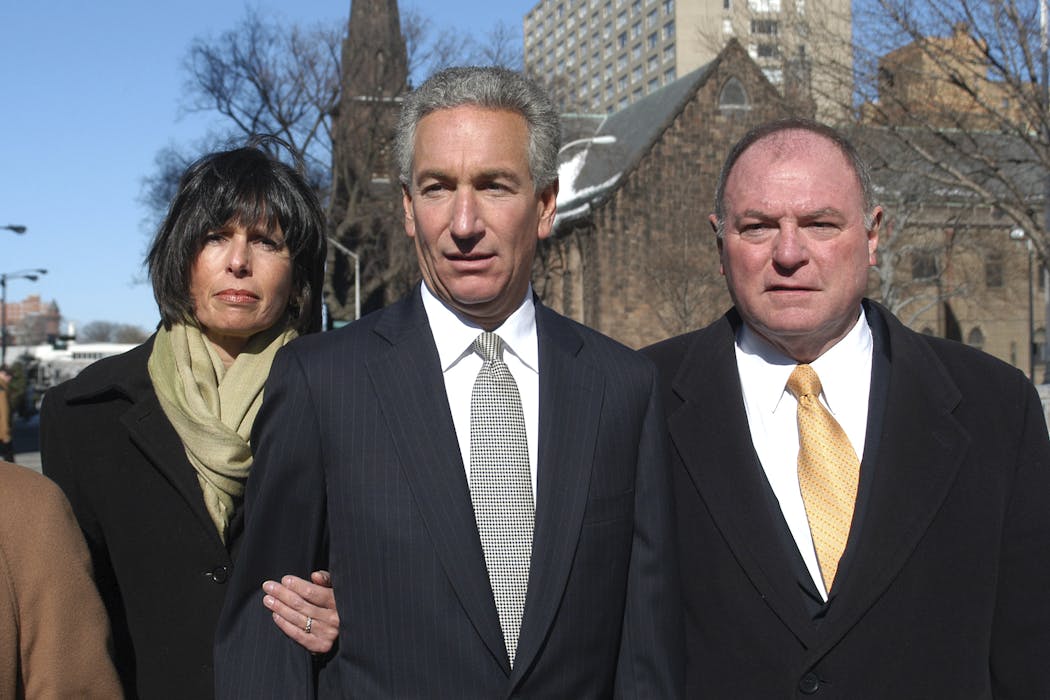
President Trump pardoned Charles Kushner, center, who is the father of his son-in-law Jared Kushner. The senior Kusher now serves as U.S. ambassador to France. Marko Georgiev/AP

President Donald Trump is making full use of his pardon power. This year, Trump has issued roughly 1,800 pardons, or nearly six times the number he issued during the four years of his first term. Granted, about 1,500 of them involved individuals charged for their role in the Jan. 6, 2021, assault on Congress. Still, the pace of Trump’s pardons this year have been nearly unprecedented.

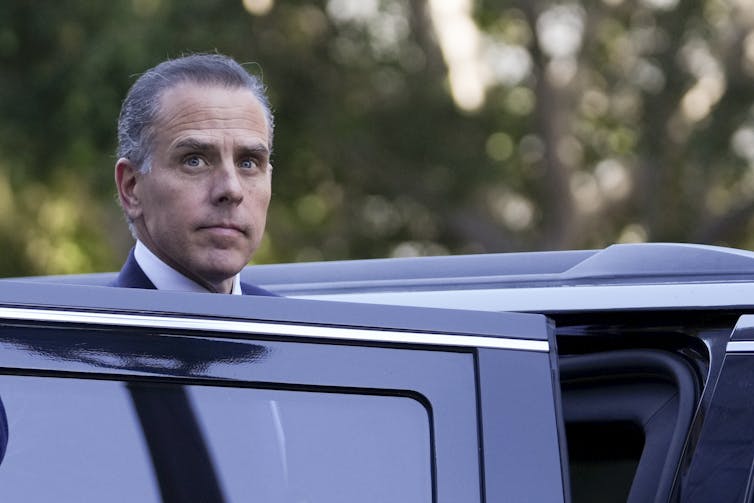
That is, until you remember his predecessor. Joe Biden, at the end of his term, issued a full and sweeping pardon to his son Hunter for gun and drug charges. This was an unprecedented action by a president to pardon his own child, which had never been done before. Biden also granted pardons to several other family members on his final day in office.

Despite serving a single term, Biden holds the record for the most acts of clemency, or pardons combined with commuted sentences, of any president. It’s a record that’s not hard to imagine Trump could break.

As a political scientist who has studied pardons and other aspects of presidential power, I believe that the founders of our nation would be horrified by the contemporary use of the pardon power, which represents a far cry from the unifying act of mercy it was intended to be. While Biden issued pardons to family members, Trump has handed them out to political allies.

It remains to be seen whether this is a slight deviation from course or becomes a permanent pattern for all presidents in the future.

A clear break

There’s no question that Trump and Biden have acted within their authority in issuing pardons for federal offenses. Presidents can extend a pardon, or complete legal forgiveness of a crime, or a commutation, which is the reduction of a sentence. However, individuals pardoned for federal crimes may still face peril in state courts.

This extraordinary power may seem kinglike at first glance, but it was given to the president with a different vision in mind. The founders of the country viewed the pardon power not as a personal token for the president to hand out but as an act of mercy meant to check the other two branches.

Hunter Biden leaves a federal courthouse in Los Angeles after pleading guilty on tax charges.
At the end of his presidency, Joe Biden issued a pardon to his son Hunter, who faced sentencing on gun and tax charges.
Eric Thayer/AP

If Congress passed a law that the president believed was poorly written, or if the courts unfairly punished someone for breaking it, the president could step in and right the wrong. This was seen by the founders as a merciful act, stemming from the tradition of old English law.

Throughout American history, we have seen presidents mostly adhere to this pattern. Both Abraham Lincoln and his successor Andrew Johnson issued pardons and amnesty to former Confederate citizens, with the aim of helping the nation come back together after secession and the Civil War. Harry Truman granted amnesty to certain World War II deserters, while Jimmy Carter granted pardons to hundreds of thousands of individuals who dodged the draft during the Vietnam War.

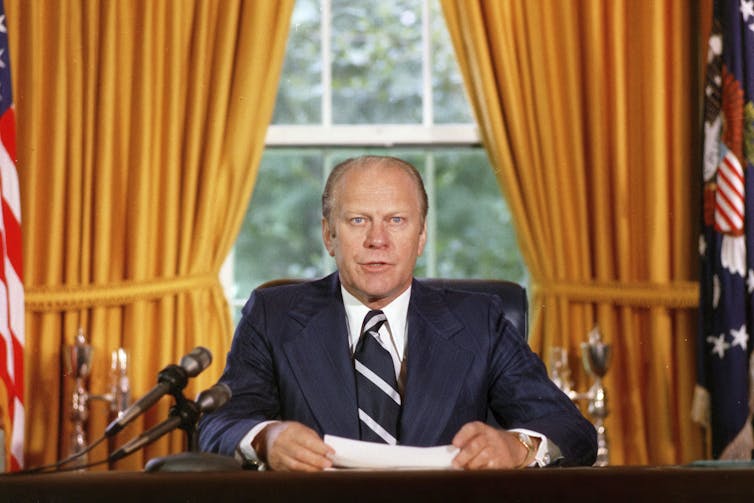
But toward the end of the 20th century and into the 21st, presidents have used the pardon pen increasingly for personal and political reasons. The inflection point is undoubtedly the pardon of former President Richard M. Nixon in 1974 by his former vice president and successor, Gerald Ford. This was issued a month after Nixon’s resignation in the wake of the Watergate scandal, which involved Nixon’s 1972 reelection campaign spying on his political enemies.

Ford justified his action by citing the need for national unity, saying the pardon would spare the country from a messy and dramatic public trial of a former president. Never before had a high-profile public politician received such a presidential grant, which caused Ford’s public standing to take a hit. Scholars and historians believe the act contributed to his reelection loss in 1976.

Gerald Ford addresses the nation regarding his pardon of Richard Nixon.
In 1974, President Gerald Ford pardoned his predecessor, Richard M. Nixon, seeking to spare the country the divisiveness of a trial involving a former president.
AP

We have since seen Ford’s decision open the door to more pardons of political allies or personal friends. In 1992, George H.W. Bush pardoned officials he had served with in the Reagan administration who were tangled up in the arms-for-hostages, Iran-Contra scandal; Bill Clinton pardoned Democratic donor Marc Rich in 2001; and George W. Bush commuted the sentence of vice presidential aide Scooter Libby in 2007.

Trump’s expanded use

As it happens, Trump issued a full pardon to Libby in 2018. During his first term, Trump also pardoned Charles Kushner, the father of his son-in-law, Jared Kushner.

At the end of his first term, Trump pardoned “”) his former campaign manager Paul Manafort and his friend Roger Stone among other political allies.

Trump’s second term has seen clemency for his former lawyer and friend Rudy Giuliani, as well as crypto executive Changpeng Zhao, whose ties to Trump family businesses have raised questions about the pardon.

Trump’s use of the pardon power does not seem to follow a consistent doctrine or philosophy. Some of his clemency actions seem to contradict his administration’s policy, such as dozens of pardons of drug traffickers, despite the effort to stop drug trafficking in the Caribbean.

The pace of Trump’s pardons and commutations, however, suggests little hesitation. The question looking forward, beyond his presidency, is how much of a precedent his actions, along with Biden’s, may set for their successors.

We know this from earlier expansions of the pardon’s reach, as well as other areas of presidential authority: Few presidents willingly relinquish powers accrued by their predecessors. Once chief executives have exercised a certain type of authority, their predecessors seldom give it back, ultimately increasing the power of the presidency.

The Conversation

Stewart Ulrich does not work for, consult, own shares in or receive funding from any company or organization that would benefit from this article, and has disclosed no relevant affiliations beyond their academic appointment.

ref. Pardons are political, with modern presidents expanding their use – https://theconversation.com/pardons-are-political-with-modern-presidents-expanding-their-use-271373