What international law says about the Israeli strikes on Iranian oil facilities

Source: The Conversation – UK – By Saeed Bagheri, Assistant Professor of International Law, University of Reading

Israeli strikes targeted oil facilities near the Iranian capital of Tehran over the weekend. Two oil refineries, both of which had been attacked by Israel in 2025, and two oil storage facilities were hit. According to Iran’s deputy health minister, Ali Jafarian, at least four people were killed by the strikes.

The strikes raise two main questions. First is whether an oil refinery truly qualifies as a legitimate military target under international humanitarian law. And second is whether the rule of proportionality – that military actions are not excessive in relation to their intended aim – should have constrained an attack of this nature.

The principle of distinction forms the cornerstone of the laws governing the conduct of hostilities. It requires parties to an armed conflict to distinguish at all times between civilian and military objects. The Geneva conventions, a set of treaties that establish rules for humane treatment during wars, also say that parties must limit their attacks to military objectives.

Article 52 of the conventions provides the authoritative definition of a military object. It says an object is a legitimate target if it makes an effective contribution to military action by its nature, location, purpose or use. It adds that the destruction of such an object must also offer a definite military advantage in the circumstances prevailing at the time.

Oil refineries showcase the complexity of applying these principles. They convert crude oil into gasoline, diesel and aviation fuel, all of which are essential both for civilian life and military operations. Armed forces may depend on these fuels to operate vehicles, aircraft and naval vessels, sustaining their combat and logistical capabilities.

Disrupting fuel production can therefore weaken the military capability of an adversary. This could make an oil refinery a legitimate target. However, there is no convincing evidence yet that the two targeted facilities near Tehran – the Tondgouyan and Shahran oil refineries – were important sources of fuel for the Iranian military.

Even if an oil refinery contributes to military actions, its importance to the civilian economy remains significant from a legal standpoint. Many states depend on continuous energy supplies for transportation, industry and public services.

Fuel shortages can disrupt public transportation, delay the delivery of food and medical supplies and impede electricity generation. In densely populated urban areas like Tehran, which is home to around 15 million people, such disruptions can have a serious impact on daily life and economic stability.

These considerations are reinforced by Article 54 of the Geneva conventions. This safeguards objects from attack that are considered indispensable for the survival of the civilian population.

The provision explicitly references foodstuffs, water installations and agricultural areas. But its underlying rationale emphasises the importance of protecting systems that are essential to fundamental living conditions, so probably includes energy infrastructure that underpins the operation of water treatment, sanitation and emergency services.

Principle of proportionality

The principle of proportionality provides a mechanism to balance military necessity and humanitarian protection. Article 51 of the Geneva conventions prohibits attacks that are expected to cause incidental civilian harm that is excessive in relation to the anticipated military advantage.

In the case of oil refineries, proportionality analysis should account not only for immediate casualties and structural damage. It should also account for the expected downstream impact on civilian life. This includes the impact of service interruptions, economic disruption, fuel shortages and, perhaps most importantly, reduced air, water and soil quality.

Environmental contamination, particularly degraded water quality, has been documented following attacks on energy facilities in previous conflicts. The most notable instances have been in Kuwait during the 1991 Gulf war, Syria in 2015 and Ukraine since 2022.

Under international humanitarian law, adversaries must take these considerations into account when assessing what is proportionate in the pursuit of military objectives. They must weigh the anticipated military advantage against the broader consequences for civilians who depend on the targeted facilities.

Tehran’s high energy demands mean that damage to refineries that supply fuel to millions could cause severe disruption. It could also cause air and water pollution. The Iranian authorities warned of toxic acid rain immediately after the attacks on Tehran’s oil facilities, and many residents have since reported headaches and difficulty breathing.

These consequences do not appear to have been considered in the Israeli military’s proportionality assessment. No feasible precautions or mitigation measures were reported prior to the attacks. There also does not appear to be evidence that attacking the refineries would yield a definite military advantage.

International humanitarian law does not categorically prohibit attacks on energy infrastructure. But it does require careful, context-specific assessments of the military relevance of an energy facility and the possible civilian harm caused by its destruction.

For now, assessing the legality of the Israeli strikes is difficult. More detail on the role of the refineries in Iran’s military operations and the anticipated military advantage achieved by targeting them will be required before a judgment can be made.

The Conversation

Saeed Bagheri does not work for, consult, own shares in or receive funding from any company or organisation that would benefit from this article, and has disclosed no relevant affiliations beyond their academic appointment.

ref. What international law says about the Israeli strikes on Iranian oil facilities – https://theconversation.com/what-international-law-says-about-the-israeli-strikes-on-iranian-oil-facilities-277875

The Middle East conflict has swiftly exposed economic vulnerability in the region

Source: The Conversation – UK – By Emilie Rutledge, Senior Lecturer in Economics, The Open University

At the end of 2025, the Gulf states received high praise for their economic resilience. According to reports by the World Bank and the World Economic Forum, the region was stable, modern and reliable.

Now the six countries of the Gulf Cooperation Council (GCC) – Bahrain, Kuwait, Oman, Qatar, Saudi Arabia and the United Arab Emirates – are watching on nervously. The economic damage done by what has become a regional conflict, bringing an abrupt loss of stability, could be huge.

Aside from Saddam Hussein’s foray into Kuwait in 1991, these six countries have successfully steered clear of conflict on their home turf over a long perriod. They avoided the revolutionary upheavals which affected Egypt (1952), Iraq, Syria and Iran (1979). They steered clear of any spillover from the long-running Israel-Palestine conflict.

The group was mostly unaffected by the war between Iran and Iraq. And aside from a short-lived uprising in Bahrain in 2011, the GCC emerged largely unscathed from the regional turmoil of the Arab Spring in 2010 which spread from Tunisia and and Egypt and led to violent instability which continues to this day in Libya, Yemen and Syria.

The GCC’s comparative stability underpins its attractiveness as a global hub for money and modernity. Success in luxury tourism has filled places such as Dubai and Abu Dhabi with five (and even a seven) star hotels. Only France has more Michelin-starred restaurants than the United Arab Emirates (UAE). There is cutting-edge technology in Qatar’s energy sector, and a vast AI campus in the UAE.

It is these kinds of projects which led the World Bank and the World Economic Forum to publish glowing reports on the region recently. Both organisations agreed in late 2025 that oil wealth was being wisely invested for the future.

The general view was that the GCC was a place of economic stability and diversity. A director of the World Bank, Safaa El Kogali, said that the region’s embrace of a digital future had been nothing short of “remarkable”.

But US military bases in all GCC countries have come under attack. Drones have hit oil tankers. The Strait of Hormuz, vital for the transit of much of the world’s energy is effectively closed.

Missiles from Iran directly hit three Amazon web service facilities, one in Bahrain and two in the UAE, leading the company to recommend that GCC businesses back up their data and migrate it to data centres in the US.

Stock markets across the world have fallen sharply. Energy bills and petrol prices have soared as oil and gas refineries have been shut in Kuwait, Saudi Arabia, Qatar and the UAE.

Under fire

Despite efforts to diversify economies away from oil, for now the region is still clearly dependent on oil exports and food imports, hence the worries over Hormuz. There are fears for its numerous desalination plants, which provide drinking water (as well as filling infinity pools and keeping golf courses green).

And its status as a safe and sunny sanctuary for conference conveners, influencers, holiday makers and owners of second homes is now being questioned.

Boats in marina surrounded by skyscrapers.
Dubai marina.
frank_peters/Shutterstock

Even if the conflict were to end soon, reputational damage has been done. People are fleeing the area, as images of smoke filled skies fill screens.

This will inevitably dampen foreign direct investment in the immediate future. The course and duration of the conflict will determine the degree to which the region can bounce back and continue to attract holidaymakers and young professionals and those seeking a life with more sun and less tax.

From a geopolitical perspective, the region’s recent success – aside from its vast and easily extracted natural resources – has rested largely on the assumed political stability that was underwritten by hosting US military bases and buying US military hardware. Both of these could now prove to be an economic liability.

The Conversation

Emilie Rutledge does not work for, consult, own shares in or receive funding from any company or organisation that would benefit from this article, and has disclosed no relevant affiliations beyond their academic appointment.

ref. The Middle East conflict has swiftly exposed economic vulnerability in the region – https://theconversation.com/the-middle-east-conflict-has-swiftly-exposed-economic-vulnerability-in-the-region-277666

How Snoop Dogg became Swansea City’s most unlikely asset

Source: The Conversation – UK – By Iwan Williams, Senior Lecturer in Sports Communication and Public Relations, Swansea University

When Snoop Dogg swaggered into Swansea wearing a Swansea City hoodie and beanie, it felt surreal. The American rapper took his seat at the Swansea.com Stadium and, for a moment, Welsh football tilted slightly off its axis.

Far from being incidental, it was a calculated public relations strategy – and a smart one. His arrival offers a revealing lesson in sports branding, celebrity capital and the globalisation of lower-league football.

Snoop Dogg’s minority investment in Swansea City, announced in July 2025, triggered an immediate surge of interest in a Championship club that has struggled for visibility since relegation from the Premier League in 2018. Swansea have spent years trying to stabilise themselves financially and culturally outside the glare of the top flight.

The club’s chief executive, Tom Gorringe, has been candid about those constraints. Swansea needed fresh revenue streams and renewed attention. Snoop’s social media reach – more than 100 million followers across platforms, including more than 88.5 million on Instagram – offered exactly that.

That kind of reach acts as a multiplier. Every post, every appearance, exposes the club to audiences traditional marketing budgets could never reach. Nowhere is that more valuable than in the US, a market long targeted by British clubs but notoriously difficult for smaller sides to penetrate in any meaningful way.

The effect was almost immediate. Ticket demand spiked ahead of Swansea’s match against Preston on February 24, the first widely publicised fixture attended by Snoop. The club opened additional sections of the ground to accommodate a crowd of 20,233. This was an unprecedented move in recent years. What would normally have been a modest second-tier fixture sold out. It became one of the largest attendances in recent Swansea history.

Snoop Dogg attends Swansea City V Preston North End.

Celebrity endorsements in sport are nothing new. Yet the pairing of a west coast rapper with a west Wales Championship club is less random than it first appears. Snoop’s public persona dovetails neatly with Swansea’s self-image. He has described the city as “proud” and “working class”, “an underdog that bites back, just like me”.

That underdog identity carries weight in Welsh sport. Whether in football or rugby, Wales often frames itself as resilient, defiant and collectively driven when competing against wealthier or more populous opponents. The emotional logic fits. And in modern sporting PR, emotional authenticity matters more than cynical brand alignment.

There is another advantage. Snoop’s presence humanises the club’s ownership structure. Since November 2024, following a takeover, Swansea’s central decision-makers have been two American businessmen. For many supporters, overseas ownership can feel distant and abstract. A globally recognised cultural figure who turns up at games, posts enthusiastically and participates in club promotions offers something more tangible.

No magic bullet

Still, this is no magic bullet. Snoop Dogg’s investment is relatively modest. Swansea remain bound by financial regulations and the economic realities of the Championship. Celebrity attention can amplify a brand, but it cannot increase recruitment budgets or guarantee promotion. If results falter, media interest will cool.

Within those limits, however, Swansea appear to be maximising what celebrity PR can offer. The club is not claiming that Snoop will transform its fortunes overnight. Instead, it is treating his global cultural capital as a strategic asset in an unequal league ecosystem where visibility itself has value.


Read more:
Why America is buying up English football – and what it means for the future of ‘soccer’


His involvement also reflects a broader shift in how football clubs operate. Increasingly, they exist at the intersection of sport, entertainment and global media. Ownership is no longer just about balance sheets. It shapes narrative, perception and the way fandom itself is constructed.

In that sense, Swansea are doing more than enjoying a surreal headline. They are experimenting with identity. They are attempting to reposition themselves within a crowded, rapidly evolving football mediascape.

It is also telling that the club’s other celebrity co-owners, American lifestyle personality Martha Stewart and Croatian footballer Luka Modrić, have not generated similar column inches. Clearly, not all celebrity is equal.

Swansea City, to their credit, seem to understand where the real leverage lies. By directing the PR spotlight squarely at Snoop Dogg, they have recognised that brand alignment works best when it feels culturally coherent. In football, as on the pitch, timing and positioning matter. Get them right, and even a Championship club can land a global headline.

The Conversation

Iwan Williams does not work for, consult, own shares in or receive funding from any company or organisation that would benefit from this article, and has disclosed no relevant affiliations beyond their academic appointment.

ref. How Snoop Dogg became Swansea City’s most unlikely asset – https://theconversation.com/how-snoop-dogg-became-swansea-citys-most-unlikely-asset-276904

Cultural appropriation? How westerners have worn indigenous clothing for a variety of reasons throughout history

Source: The Conversation – UK – By Robert Frost, Early Career Fellow in History, University of Leicester

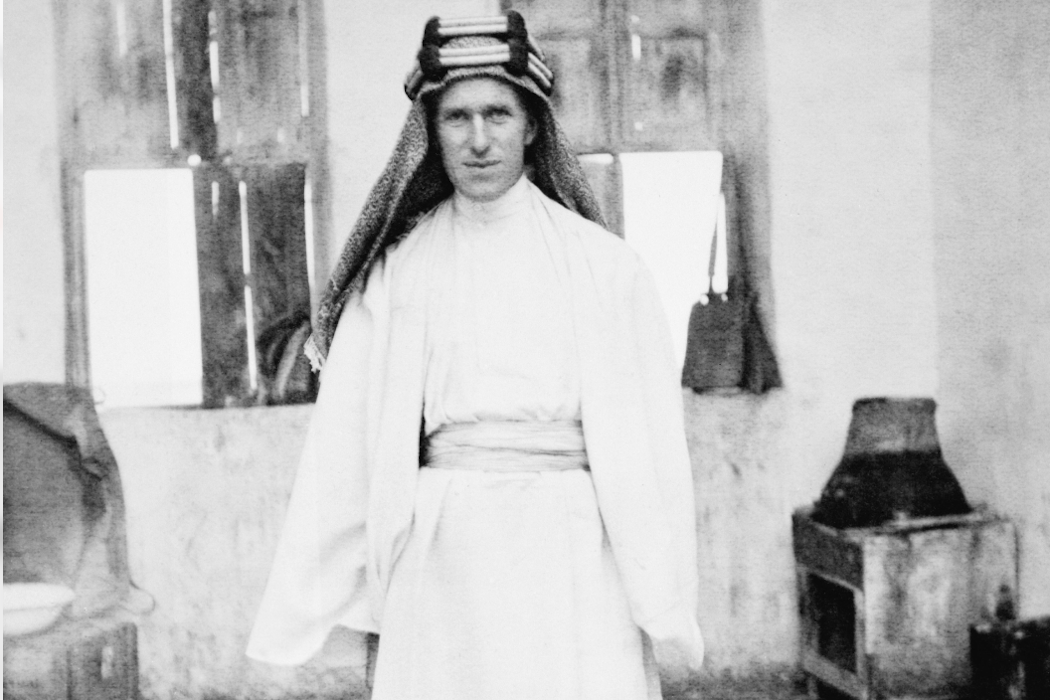
TE Lawrence wearing Arab dress in January 1917. S.F. Newcombe / Imperial War Museum, CC BY

The concept of cultural appropriation, or “the act of taking or using things from a culture that is not your own”, is a controversial topic guaranteed to provoke polarising debate.

Recently, the National Portrait Gallery added a trigger warning to its photographs and portraits of T.E. Lawrence, also known as Lawrence of Arabia. Visitors are now advised that these reflect “attitudes and viewpoints of the time”. Two Daily Telegraph columnists voiced contrary opinions, though both ultimately subsumed the issue into an attack on Free Palestine activists, impeding our understanding of the historical context.

If we restrict ourselves to looking at the images alone, they can indeed be classed as acts of cultural appropriation: there was, after all, no obligation for Lawrence to wear the costume when posing.


Read more:
What is cultural appropriation, and how does it differ from cultural appreciation?


But there is also Lawrence’s personal reality to consider. In the Seven Pillars of Wisdom, Lawrence recounted being given the clothing by the Arabian Emir Feisal, the leader of the Arab revolt. The emir felt that British army khaki was uncomfortably close to that worn by the Turkish colonial soldiers, and that his followers would be more willing to accept someone dressed like themselves.

And Lawrence’s loyalty to the Arab cause did not end in 1918. In 1919, he lobbied the British government – unsuccessfully – to back them at Versailles. The most famous painting of Lawrence in Arab robes, from the same year, was a radical act of solidarity with another culture.

In this light, Lawrence was not simply engaging in frivolous cosplay. His choices should be distinguished from those of contemporaries such as Margaretha Geertruida Zelle) also known as Mata Hari, the Dutch courtesan, dancer and convicted spy whose performances revolved around discarding the slendong veils worn by Javanese temple dancers. Yet beyond such surface-level engagement, I have come across documentation showing how and why many others donned indigenous dress in the countries they visited, as opposed to simply wearing it, in effect, for show.

Practical considerations

Wearing native dress for more practical purposes was part of a longer tradition extending back many centuries. For starters, it had practical benefits. Turkish dress was particularly popular; it was composed of layers which could be added or removed as needed. It was also looser than standard European clothing, so better suited to a warm climate. And it was no small advantage that it could actually be obtained locally. Those venturing to Egypt and Palestine frequently wore it.

In the 1810s, the British sailors Charles Irby and James Mangles, quickly realised that western dress tended to attract a little too much attention. They recalled how local people, intrigued by their appearance, “used to flock to gaze at us as if we had been wild beasts”.

An sepia toned illustration of a white man in middle-Eastern dress.
English Orientalist Edward William Lane in 1829.
Jason Thompson / WIkipedia, CC BY

Witnessing a play in Cairo in 1815, the Italian adventurer and Egyptologist Giovanni Belzoni was surprised to see a character in western dress “who served as a sort of clown”. Under such conditions, it is unsurprising that Irby, Mangles and Belzoni all opted to change out of western clothing.

As I point out in my recent research, travellers were often advised by local people. Sadic Gibraltar, the son of an Egyptian admiral, told the British Egyptologist Gardner Wilkinson that Egypt was safe, “but costume of Turk is better”. Gibraltar sent Wilkinson to Osman Effendi, who led Wilkinson around the city to buy the recommended clothing. He also fitted out Edward William Lane in the same way; this dress allowed Lane to conduct a study of Islamic culture that would now be classed as participant observation.

A couple of decades later in 1839, the Scottish artist David Roberts was only permitted to enter mosques after he promised Cairo’s governor that he would wear local dress.

Two centuries later, it is difficult to assess whether any of these people were in any real danger. More likely, the dress simply made the wearer less conspicuous, so reduced unnecessary stress. William Rae Wilson probably also spoke for many when he wrote that his hosts “look upon it as a sort of compliment to imitate their dress”.

Resistance to wearing local dress came primarily from other Europeans, not indigenous people. Early 19th-century British embassy missions abroad always wore military uniform. Even Lord Byron – well-known for donning Greek national dress in the Greek war of independence – chose full-dress uniform for meeting Albania’s ruler, Ali Pasha. At an official level, there was an expectation that every Briton should behave similarly.

In one extreme episode, the British consul in Egypt, Henry Salt, sought to disavow Britons who continued to wear native dress. Charged by Britain’s growing power during the Napoleonic wars, Salt envisaged a future in which western clothing would mark his compatriots out for special treatment.

An objection by the Britons themselves meant the order was rescinded, though eventually a trend developed toward tropical kit being used as a marker of difference in the late 19th century.

It has become almost a stock-in-trade to suggest that Britons, from the Arctic to the Sahara, failed to copy local customs more appropriate to their situation. Paintings from the past are complicated artefacts, but it is perhaps time to reclassify them as examples showing that some Britons actually did adapt.

The Conversation

Robert Frost receives funding from The Leverhulme Trust.

ref. Cultural appropriation? How westerners have worn indigenous clothing for a variety of reasons throughout history – https://theconversation.com/cultural-appropriation-how-westerners-have-worn-indigenous-clothing-for-a-variety-of-reasons-throughout-history-275110

The federal government’s Musqueam agreements raise questions about who truly owns land

Source: The Conversation – Canada – By Daniel Sims, Associate Professor of First Nations Studies; Adjunct Professor of Education, University of Northern British Columbia

Canada’s federal government recently signed three agreements with the Musqueam First Nation that, among other things, recognize the Musqueam People’s Aboriginal title to their traditional territory — which includes most of Vancouver.

For that reason, it’s surprising that rather than making headlines immediately, most media outlets didn’t report on the agreements until a week after Ottawa’s announcement. The situation was reminiscent of how the Cowichan case in the summer of 2025 didn’t make news until the City of Richmond started informing residents in October that it might affect their fee simple title, a term referring to ownership of full, permanent property rights.

Given how many residents not only in Richmond and Vancouver, but also the rest of British Columbia, have responded with concern about what this ruling means — including some who blame reconciliation efforts — the delay in informing the public is less than ideal and only causes further anxiety.

It hasn’t helped that when asked in the B.C. legislature, provincial government officials simply responded they weren’t involved in reaching the three agreements.

Cowichan

The Cowichan case is potentially precedent-setting because it stated that Aboriginal title could co-exist with fee simple title, the form of title most Canadians associate with land ownership.

In doing so, it transformed the general understanding of treaty-making in Canada — that only the Crown could acquire Aboriginal title, and having acquired it, could then grant title to third parties.

This concept is enshrined in the Royal Proclamation of 1763, which is referenced in the Canadian Constitution and often cited as the reason why treaties were — or are — signed with Indigenous nations.

In fact, this belief was so entrenched in Canadian legal thought that in 1923, the federal government and the province of Ontario rushed through what are known as the Williams Treaties — final historic land cessions involving seven Mississauga and Chippewa First Nations — when they realized Aboriginal title had not been dealt with throughout the province.

One of the major exceptions to this way of handling Aboriginal title is British Columbia. Aside from the Douglas Treaties — negotiated by the colony of Vancouver Island, and Treaty 8, negotiated by the federal government without the province — treaties were not historically signed in B.C..

That means most Aboriginal title in B.C. has not been dealt with. They’re
currently being negotiated because past leaders refused to do so.

Perspectives on treaties

There has been a wealth of research and discussion regarding treaties between the Crown and Indigenous nations, and at times they come to some radically different conclusions.

For example, some First Nations view them as sacred agreements while others regard them in less than ideal terms.

The Conversation Canada ran a powerful piece two years ago that reconsidered the Williams Treaties from Anishinaabe perspectives.


Read more:
Revisiting the Williams Treaties of 1923: Anishinaabeg perspectives after a century


Seven years ago, historian Sheldon Krasowski, who was born in Treaty 6 territory in Saskatoon, published his book No Surrender: The Land Remains Indigenous challenging the Crown’s perspective that treaties extinguished Aboriginal title. It illuminates why not all First Nations in British Columbia are negotiating treaties.

These discrepancies do not mean, however, that First Nations aren’t interested in having their Aboriginal title recognized. Instead, some nations, like the Tšilhqot’in, decided to take the matter to court. In 2014, the Supreme Court of Canada recognized the Tšilhqot’in had Aboriginal title to a portion of their traditional territory.

This prompted other First Nations to make similar legal claims, including the Cowichan and Musqueam, which brings us back to the Cowichan case and the Musqueam agreements.

Put simply, provincial and federal governments appear to be taking a calculated approach when it comes to these claims, fighting those they think they might win in the courts and simply recognizing Aboriginal title if they think they’ll lose.

‘Canadian dream’

As someone who researches this topic, I am amazed by how seemingly OK people are with the Haida Aboriginal Title Agreement in 2024 given that it also stated Aboriginal title can co-exist with fee simple title.

This brings us back to fee simple title. It’s important to remember it’s a legal concept that developed over time. In this sense, saying it can co-exist with Aboriginal title is a new development. That being said, given the place home ownership and land ownership play in the Canadian dream, it’s understandable that people who own property are concerned.

No one wants to worry that their land is not really theirs. Many people think of land ownership as absolute, even though strictly speaking, fee simple title starts with a Crown grant and can be revoked and infringed upon for a number of reasons. It also does not automatically include mineral rights.

In other words, no one has complete control over their land, and Aboriginal title is simply another layer of legal obligation.

Only time will tell what the co-existence of Aboriginal title with fee simple title will mean. The Cowichan case is currently being appealed, and given that in December 2025 the Wolastoqey ruling in New Brunswick found they could not co-exist, it’s possible the Cowichan ruling will be overturned.

The Conversation

Daniel Sims is a member of the Tsay Keh Dene First Nations. Currently he holds an Insight Grant from the Social Sciences and Humanities Research Council (SSHRC) to research failed economic developments and concepts of wilderness in Tsek’ehne traditional territory (the Finlay-Parsnip watershed).

ref. The federal government’s Musqueam agreements raise questions about who truly owns land – https://theconversation.com/the-federal-governments-musqueam-agreements-raise-questions-about-who-truly-owns-land-277219

Gulf attention is turning inward: why the Iran war could destabilise the Horn of Africa

Source: The Conversation – Africa (2) – By Brendon J. Cannon, Associate Professor, Khalifa University

Gulf states have become increasingly prominent in the squabbles, civil wars and inter-country tensions in the Horn of Africa over the past decade. The countries in this region include Sudan, Ethiopia, Eritrea, Somaliland, Somalia and Djibouti.

As a result, the US-Israel war on Iran matters for the Horn, where Gulf money, Gulf diplomacy and Gulf defence equipment have become part of the operating environment of conflict and rivalry.

For over a decade, I have researched the interactions of sub-Saharan Africa with Arab Gulf states, as well as Turkey, Japan, China and others. In my view, Gulf states may scale back their engagement in the Horn as the security situation in the Middle Eastern region deteriorates.

This could potentially reshape conflicts, alignments and diplomacy across the Horn of Africa – if the war drags on.

Gulf states like the United Arab Emirates and Qatar – important partners for Ethiopia, Sudan and Somalia – will likely begin focusing inward on their own security. The strategic importance of Horn of Africa states for Saudi Arabia or the UAE will diminish.

In practical terms, this could mean a drop in high-level visits, a reduction in arms flows and a weakening of political loyalty as Horn actors adjust.

For the Horn, this could lead to two outcomes. One, an escalation in conflict, with states and armed groups seeking to settle scores while external patrons are distracted. Or second, a temporary cooling-off period as actors reassess the implications of reduced Gulf funding, arms and mediation.

Either way, the Horn is unlikely to grow calmer. Instead, longstanding grievances, between Ethiopia and Eritrea for instance, may become more pronounced.

Sudan’s war and Gulf backing

For Sudan, the implications of the ongoing conflict in the Gulf could be significant. The two warring parties – the Rapid Support Forces (RSF) and Sudan’s military – have relied heavily on external support.

Both may find themselves suddenly without the largesse and military equipment from Gulf backers, depending on how the Iran war unfolds. This drawback of support could hit the RSF particularly hard as its biggest external backer, the UAE, focuses on its own security. Sudan’s military, however, may continue to benefit from Turkish and Egyptian support.

Much recent commentary has focused on evolving “alliances” and “blocs” that pit the UAE/Israel/Somaliland/Ethiopia against Turkey/Saudi Arabia/Egypt/Somalia within Sudan’s civil war.

This framing, however, often misses two basic facts. First, these are not alliances but rather opportunistic alignments that bring together diverse actors and interests from outside the Horn. These alignments have always been opportunistic on the part of external state actors, such as Turkey, the UAE and Qatar.

They hold only as long as external patrons can plausibly deliver resources, arms and diplomatic attention without unacceptable reputational damage to themselves.

Second, state leaders in the Horn of Africa have largely steered these relationships themselves. They have used external patrons to advance domestic and regional interests.


Read more:
Middle Eastern monarchies in Sudan’s war: what’s driving their interests


Gulf states’ opportunistic interventions were possible largely because they were at peace with one another and with Iran. That is no longer the case.

Sudan’s civil war may last even longer now that Gulf states are focused elsewhere. Neither side in the civil war will have the ability to land a knock-out punch.

Ethiopia, Eritrea, Somalia and Somaliland’s recognition

The Iran war could affect Ethiopia, Eritrea, Somalia and Somaliland in a number of ways.

Firstly, the diplomatic flurry of visits by Gulf leaders to Ethiopia and Somalia may slow. From 2023 to early 2026, Gulf leaders sought to shape political outcomes and advance investment and logistics interests. If this tempo slows, Horn actors will face less patronage and mediation, which may lead either to a pause in tensions or to quick escalation.

Secondly, Israel’s recognition of Somaliland – which Qatar and Saudi Arabia (as well as Egypt and Turkey) have taken a stand against – is now likely to be far from their agendas. Somalia’s long-standing ambition of reabsorbing Somaliland may also find waning external support.

Thirdly, Ethiopia’s interest in gaining access to the Red Sea has been one of the central issues in recent diplomatic manoeuvring in the Horn. With Saudi Arabia, in particular, focused on Iran, Addis Ababa may feel emboldened to formalise access through Somaliland (with which it had signed an agreement in 2024).

Turkey and Egypt may remain engaged

Two non-Gulf states, however, are likely to remain active in the Horn: Turkey and Egypt.

Turkey can still afford foreign policy opportunism in the region, as long as it does not become directly involved in the Iran war. For Ankara, the Gulf states’ distraction may create an opportunity to expand its influence. This could be through trying to help Somalia reassert control over Somaliland and other autonomous regions. It could also encourage Ethiopia to reduce tensions with Eritrea, or help balance relations between Ethiopia and Egypt. These would all enhance Turkey’s reputation outside its region and reinforce the image it has of itself as a rising, global power.


Read more:
Egypt-Ethiopia hostilities are playing out in the Horn – the risk of new proxy wars is high


Egypt’s involvement is driven by existential concerns over the Nile. This is particularly about a dispute with Ethiopia over the Grand Ethiopian Renaissance Dam. This is a massive project on the Blue Nile that Egypt fears could reduce the flow of water on which its agriculture, economy and population depend.

For both Turkey and Egypt, curtailing Israel’s growing influence across the wider Middle East and the Horn of Africa remains a strategic priority. A stronger Israel would dilute Turkey’s desired role as a broker and patron in the Horn, and complicate Egypt’s efforts to constrain Ethiopia.

An emboldened Israel, however, could also reshape Egypt’s engagement with Ethiopia. Egypt and Turkey might offer Ethiopia’s Abiy Ahmed diplomatic incentives – including limited or symbolic access to the Red Sea in Somaliland’s port of Berbera, for instance. This would be in return for Addis Ababa’s agreement to reaffirm Somalia’s territorial integrity (and never recognise Somaliland). But this seems unlikely as neither Egypt nor Turkey possesses the power to put Somalia back together again.

The Horn’s own agenda

The real powers in the Horn of Africa remain the region’s own states and rival centres of authority. Horn states have the agency and interests to shape outcomes. They have long drawn external patrons into the region, playing them off against one another to extract resources, recognition and diplomatic support.

What the Iran war changes is not who sets the Horn’s agenda, but the external conditions under which Horn actors pursue it.

Gulf states have been opportunistic precisely because they had the capacity to act in the Horn when the Gulf itself was stable. That capacity may now be constrained.

This is not a new finding. In work published over five years ago, my colleague Federico Donelli and I argued that enduring security burdens at home limited the reach of Gulf ambitions in the Horn.

The Horn’s underlying conflicts and rivalries will therefore continue to interact in unpredictable ways.

The Conversation

Brendon J. Cannon does not work for, consult, own shares in or receive funding from any company or organisation that would benefit from this article, and has disclosed no relevant affiliations beyond their academic appointment.

ref. Gulf attention is turning inward: why the Iran war could destabilise the Horn of Africa – https://theconversation.com/gulf-attention-is-turning-inward-why-the-iran-war-could-destabilise-the-horn-of-africa-277855

Mau Mau: how Kenya’s history of colonial violence speaks through living bodies and graves

Source: The Conversation – Africa (2) – By Rose Miyonga, Researcher, University of Warwick

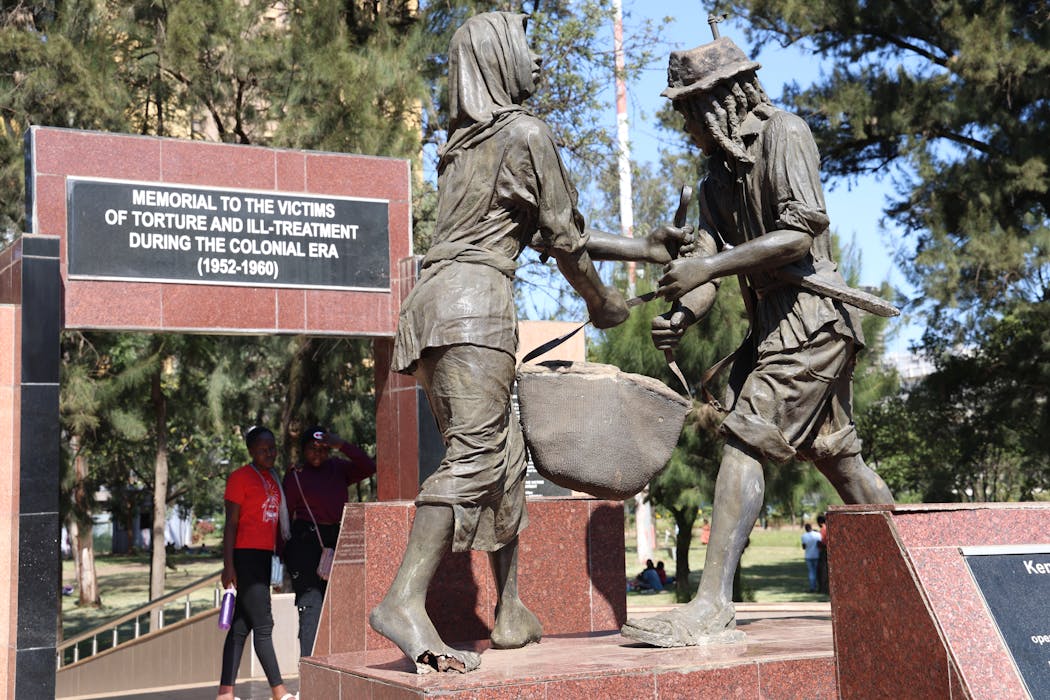
The Mau Mau Memorial Monument in Nairobi, Kenya. Wikimedia Commons, CC BY

Between 1952 and 1963, Kenya experienced one of the most violent chapters in its modern history. The Mau Mau uprising, rooted in land dispossession and political repression under British colonial rule, escalated into a brutal counterinsurgency war.

An estimated 50,000 Kenyans died during the violent conflict between Mau Mau guerrillas and British forces, and from disease and starvation. Torture, sexual violence and forced detention were widespread. Over a million people were displaced into villages and detention camps in the 1950s.

Many victims of the uprising were buried in unmarked mass graves. Others survived, but were permanently scarred.

As Britain prepared to leave in the early 1960s ahead of Kenya’s independence in 1963, officials took painstaking efforts to hide the evidence of their brutality. They destroyed some archival material that described their violent conduct and secretly took other documents back to the UK.

Further, after independence, Kenya’s own government pushed Mau Mau survivors to “forgive and forget” the past.

This created a profound historical gap. So if archives were destroyed and public history suppressed, where else might the past be found?

As an oral historian, I set out to answer this question. I embarked on an oral history project, speaking to 60 Mau Mau survivors, visiting memory sites such as mass graves, and collecting material from archives in the UK and Kenya.

I set out my findings in a recent paper.

My research shows that many Mau Mau survivors are living with permanent wounds and disabilities, which serve as constant reminders of the past. During interviews, people were keen to show me their scars and wounds, using them to illustrate their painful histories. These included bullet wounds (and sometimes bullets still lodged in the body), scars from torture and amputations.

My study showed that the body can become evidence in contexts where written documentation is absent or contested. Physical scars authenticate memory. These injuries also ensure that the past is never fully forgotten. Chronic pain and disability materially shape everyday life, tying the present to wartime violence.

My research also included understanding the Mau Mau war through human remains. I visited memory sites where communities mourn and remember, such as mass graves. I also researched the contents of boxes at the National Museum of Kenya on Mau Mau victims.


Read more:
Kenya: the shameful truth about British colonial abuse and how it was covered up


By sharing their experiences, survivors reclaim agency over their histories. Rather than being passive victims of silence, they become active custodians of memory.

My findings suggest that archives are not limited to documents stored in state repositories. In post-conflict contexts where records are incomplete or destroyed, memory often persists through bodies and landscapes.

Custodians of memory

Through my study, I was able to observe how people use their bodies to tell their histories. I noticed this most powerfully in the 2002 BBC documentary Kenya: White Terror.

In one section, Mau Mau survivor Mwangi Kinyari goes with presenter John McGhie to a detention camp, and takes him to the cell where he was tortured and held for eight days during a three-year imprisonment.

Ignoring McGhie’s urges to be careful, Kinyari removes his jacket and insists on acting out a scene of torture, manoeuvring himself into a handstand position with his feet up on the wall and his hands on the dirt floor to demonstrate how he was hung upside down during torturous interrogations in that cell.

He then removes his belt and lifts his shirt to show the scars from the operation he had for the internal bleeding that resulted from beatings.

The descriptions of brutality he endured at the hands of white guards were powerful enough. Kinyari gives testimony of having his testicles beaten until he urinated blood, and his eyes seared with hot coals.

His words and descriptions communicate the facts of what happened, but there is something more that his body conveys through acting out the scene of his torture, using his body to write into the missing record of his experiences, and recentring himself in the frame of historical memory.

Aged 80, Kinyari seized an opportunity to speak back to the historical forces that had forgotten him. He used his entire body as a vehicle to do this.


Read more:
Kenya’s female freedom fighters were the silent heroes of the anti-colonial movement – here are some of their stories


Mass grave sites also deserve greater recognition as spaces of history and remembrance. These mass graves are a visceral reminder of Mau Mau history, countering attempts to silence and sanitise the past. They offer insights into the brutality and devastation of the war.

Even though they are not marked or honoured in an official capacity, community members have found ways to tend to them as sites of mourning and remembrance.

Violence has profoundly shaped the past and present of Mau Mau survivors. This is evident both in survivors’ bodies and in the remains of those who were killed. These are archives in their own right.

Unhealed wounds aren’t only symbolic. They continue to shape survivors’ economic opportunities, health and wellbeing decades later. Embodied memory also strengthens contemporary justice claims. Survivors seeking compensation rely not only on testimony but on visible physical evidence of abuse.

What should be done

Bodies have powerful stories to tell. Unhealed wounds have resonance in the present, materially affecting survivors’ lives, illustrating the legacies of war. They are also record-keepers, offering evidence for people who still hope to have their stories heard and maybe even get compensation for their suffering.

Tending to these wounds would be literally and figuratively healing for the Kenyan nation. Ignoring these embodied archives risks reproducing historical erasure.

First, there needs to be urgency in recording survivors’ testimonies through oral histories and community memory work. The Mau Mau generation is ageing, and embodied memory will not last indefinitely.

Second, mass grave sites and human remains deserve formal recognition as spaces of national history and mourning.

Third, continued engagement with reparations processes is essential as it allows survivors of Mau Mau traumas to seek justice and closure.

Acknowledging embodied suffering is central to meaningful justice. Addressing these wounds – both literal and historical – could contribute to broader national reflection in a country still shaped by colonial violence and inequality.

The Conversation

Rose Miyonga receives funding from the UK Arts and Humanities Research Council via the Midlands4Cities consortium.

ref. Mau Mau: how Kenya’s history of colonial violence speaks through living bodies and graves – https://theconversation.com/mau-mau-how-kenyas-history-of-colonial-violence-speaks-through-living-bodies-and-graves-277118

Treaty 4 raises hard questions like how did ‘Crown land’ come to be?

Source: The Conversation – Canada – By Ken Wilson, Assistant Professor, Department of English and Creative Writing, University of Regina

In my recently published book, Walking the Bypass: Notes on Place from the Side of the Road, I describe standing beside the Regina Bypass, a new (and politically controversial) highway around Saskatchewan’s capital, asking myself how settlers came to own the land that stretched to the horizon in all directions.

Canadian courts have generally treated the numbered treaties as land cessions, though they also recognize them as solemn agreements requiring honourable interpretation.

I recalled what the late Stó:lō Elder Lee Maracle wrote in My Conversations With Canadians: settlers like me rarely get curious about “how the shift from Indigenous authority over the land to Canadian authority over the land occurred.”

I decided to get curious, and what I learned surprised me.

The official story: Surrender

Regina is in Treaty 4 territory. In September 1874, treaty commissioners representing the Crown negotiated that treaty with Cree, Saulteaux and Nakoda chiefs at Fort Qu’Appelle, now a town east of Regina, but then a Hudson’s Bay Co. trading post.

What Treaty 4 means depends on whose story you believe. The federal government tells one story; First Nations treaty Elders and legal scholars tell another. Those stories offer radically different versions of that treaty.

According to the federal government, First Nations surrendered their title to the land through the historical numbered treaties, including Treaty 4. That interpretation depends on the words of the treaty document: First Nations “do hereby cede, release, surrender and yield up” their land.

There’s a problem, however. As historian Sheldon Krasowski points out in No Surrender: The Land Remains Indigenous, there’s no evidence those words were mentioned by the treaty commissioners during the negotiations, or that their translator, Charles Pratt, a Cree-Nakoda catechist who often translated for Anglican missionaries, would have been able to convey the treaty’s legalese into the chiefs’ languages.

When pioneering Cree lawyer Harold Cardinal and historian Walter Hildebrandt explained the meaning of what’s come to be known as the “surrender clause” to First Nations Treaty Elders, those Elders were incredulous that anyone would think the chiefs would have agreed to give up their rights to the land. Elder Kay Thompson (Treaty 4) told Cardinal and Hildebrandt:

“We never gave it up; we never surrendered anything.”

If that interpretation is wrong, then Canada’s legal claim to much of the land west of Ontario rests on uncertain ground.

A different account of Treaty 4

If the so-called “surrender clause” wasn’t interpreted, and if contemporary Treaty Elders say no surrender of land took place, then the federal government’s story about the treaties doesn’t make much sense. And, if there was no surrender of land, then what gave the federal government the right to survey, sell or give away to settlers everything outside of reserves?

How did the notion of “Crown land” come about? How did the shift in authority that Edler Maracle describes happen?

First Nations legal scholars and Elders offer a completely different account of Treaty 4 and the other historical treaties: they were about sharing the land and establishing an ongoing relationship with settlers.

The most important speech of the Treaty 4 negotiations, the one that brought the talks to a conclusion, was made by Chief Loud Voice on the last day of the discussions. He said:

“Let us join together and make the treaty; when both join together it is very good.”

Those words suggest a desire to create a relationship with the newcomers to the Plains, not a surrender of land. Contemporary Indigenous legal scholars agree with this interpretation.

In Two Families: Treaties and Government, writer and lawyer Harold Johnson argues that the treaties represent sacred ceremonies in which First Nations adopted settlers as their kin. That’s why the Elder he consulted suggested he use the Cree word kiciwâminawak — “our cousins” — to refer to settlers.

For Johnson, the key element of the negotiations was the Sacred Pipe Ceremony, which solemnized that adoption, not the treaty document. “The paper at treaty was ancillary to ceremony,” he explains. “My ancestors recognized your paper as your ceremony and participated so as not to offend.”

Ceremony, not paper, constituted the agreement.

What if the story isn’t true?

Interpreting Treaty 4, like the other historical treaties, as a sharing agreement rather than a surrender of land raises profound questions. How did so much land in Saskatchewan, as in other parts of Canada, come to belong to settlers?

This disagreement is not simply about history; it is about what counts as law.

In Saskatchewan, as elsewhere, reserves are a tiny part of the total area. The rest belongs to the Crown or has been sold or given to settlers.

How can that situation be considered sharing? How did the Crown come to possess the land? On what basis was the land sold or given away? Is our title to the land the product of a story that simply isn’t true? Did that shift from Indigenous to Canadian authority happen through a misunderstanding, at best, or trickery, at worst?

These two interpretations aren’t just trivia. The unsettling questions they raise block genuine reconciliation today because the official interpretation relies on a version of the treaty that partners reject. Thinking about those questions, and discussing them with Indigenous Peoples, won’t be easy for settlers, but it needs to happen.

As Dallas Hunt and Gina Starblanket, Cree authors and advocates for Indigenous thoughts, point out:

“Treaty is work; it takes labour to be in relationship with other people.”

Are we settlers ready for that work? The first step might be reconsidering which story about the treaties we believe.

The Conversation

Ken Wilson does not work for, consult, own shares in or receive funding from any company or organisation that would benefit from this article, and has disclosed no relevant affiliations beyond their academic appointment.

ref. Treaty 4 raises hard questions like how did ‘Crown land’ come to be? – https://theconversation.com/treaty-4-raises-hard-questions-like-how-did-crown-land-come-to-be-270036

How the U.S.-Israel attack on Iran helps Russia in its war against Ukraine

Source: The Conversation – Canada – By James Horncastle, Assistant Professor and Edward and Emily McWhinney Professor in International Relations, Simon Fraser University

The American and Israeli attacks on Iran and the confusion within the United States over the war’s objectives are making headlines.

The attacks, and Iran’s countertactics of targeting American military bases and allies in the region, is having geopolitical ramifications beyond Iran’s borders. The surge in oil prices is just one way the war is affecting people around the world.

The war is also having a significant impact on other conflicts globally — especially the Russia-Ukraine war. The assault on Iran is helping advance Russian interests as it prepares for a spring offensive against Ukraine.

Impact of the war on Russia

The current phase of the Russia-Ukraine war is entering its fifth year, with the cost of the conflict in terms of resources and human casualties mounting on both sides.

One U.S. think tank estimates Russia’s total number of casualties at over 1.2 million, forcing Russia to rely on North Korean soldiers and illicit recruiting practices, primarily in Africa and Asia, to make up for a shortfall.

Russian casualty levels have impacted how it approaches the conflict, but equally important from Russian President Vladimir Putin’s perspective is maintaining support among both the broader populace and the Russian oligarchs. Preventing the Russian economy from collapsing has been critical to Putin’s endeavours.

The linchpin of the Russian economy is oil revenues, which are a critical component of the country’s federal budget. Efforts by Ukrainian allies to limit Russia’s ability to profit from oil revenues has resulted in oil reaching the lowest percentage of Russia’s budget in 2025 in over five years.

But the U.S.-Israeli war against Iran, however, is likely to reverse this trend and indirectly further Russia’s war efforts.

The oil factor

Rising oil prices are the most immediate impact of the American-Israeli attack on Iran. In response to the attacks, Iran has shut down the Strait of Hormuz — a critical juncture in global energy responsible for one-fifth of the world’s oil supply.


Read more:
What is the Strait of Hormuz, and why does its closure matter so much to the global economy?


Iran has also targeted hydrocarbon production in surrounding states to further increase the strain upon the U.S., Israel and their allies.

Rising oil prices benefit Russia. The closure of the Strait of Hormuz is having a disproportionate impact on Asia because the majority of the oil that goes through the strait is bound for Asian markets. That means Asian countries will have to look elsewhere to replace it.

The likely replacement source for Middle Eastern oil is Russia. Despite efforts by Ukraine’s allies to impose a price cap on Russian oil, Russia’s shadow fleet has succeeded in evading western sanctions.

China and other Asian countries will seize upon relatively cheaper Russian oil to insulate their economies against the energy shocks created by the war on Iran.

The oil profits generated by Russia as a result will help it continue its war in Ukraine. Given the declining state of the Russian economy, this turn of events couldn’t have happened at a better time for Putin.

Ukraine’s need for global support

The Ukraine-Russia conflict has become a war of attrition. The resources needed for victory go beyond the immediate resources that either Russia or Ukraine possess. Ukraine in particular needs its allies to focus on developments in the conflict.

The war on Iran, however, is diverting global attention from Russia-Ukraine. This works to Russia’s advantage.

America’s bombing campaign against Iran is also rapidly exhausting its stockpile of munitions. U.S. President Donald Trump has blamed former president Joe Biden for the shortage.

While the U.S. has cut supplies to Ukraine under Trump, Ukraine still relies on its European allies purchasing munitions from the U.S. due to Europe’s atrophied arms industry. As the war drags on, Ukrainian needs are likely to take a backseat to American needs.


Read more:
Pause in aid has introduced uncertainty into Ukraine’s military planning − forever changing its war calculus


Glimmer of hope?

Trump commented last year that Ukraine had no cards left to play in the war against Russia. Iran’s attacks, however, have exposed a critical weakness in American capabilities: drone warfare.

While the U.S. and its Gulf allies have shot down most Iranian drones thus far, they’ve done so at a disproportionate cost and are rapidly exhausting their air defence capabilities.

Ukraine has mastered drone warfare and countermeasures and is now arguably the most innovative state in these areas. A war game in 2025 between Ukraine and NATO in Estonia demonstrated Ukrainian superiority in this area of warfare.

Trump, in fact, has asked Ukraine for assistance in this area. It’s an opportunity Ukraine should seize upon to counter the many existential risks it faces due to the war in Iran.

The Conversation

James Horncastle does not work for, consult, own shares in or receive funding from any company or organisation that would benefit from this article, and has disclosed no relevant affiliations beyond their academic appointment.

ref. How the U.S.-Israel attack on Iran helps Russia in its war against Ukraine – https://theconversation.com/how-the-u-s-israel-attack-on-iran-helps-russia-in-its-war-against-ukraine-277724

AI and work: an expert assesses how far this revolution still has to run

Source: The Conversation – UK – By Vivek Soundararajan, Professor of Work and Equality, University of Bath

Gorodenkoff/Shutterstock

Every week brings fresh claims about AI transforming the workplace. A CEO declares a revolution. A think piece predicts millions of jobs vanishing overnight. The noise is relentless.

But strip away the hype and there is a simpler question. In developed economies, what has AI actually changed about work so far? The answer turns out to be more interesting, and more uneven, than either side suggests.

What’s real

Let’s start with what the evidence supports. AI is delivering genuine productivity gains in specific kinds of knowledge-based and service work. An experimental study found that professionals using ChatGPT for writing tasks took 40% less time to complete them, with an 18% improvement in quality (as evaluated by their colleagues in blind testing).

And another study of more than 5,000 customer service agents found a 15% increase in issues resolved per hour. An industry experiment involving realistic, complex tasks done with management consultants found they completed the work 25% faster and produced results that were deemed to be 40% higher in quality (again, judged by experts in blind tests). Randomised trials involving nearly 5,000 software developers documented a 26% increase in completed tasks.


AI has long been discussed as a threat to jobs and livelihoods. But what’s the reality? In this new series, we explore the impact it is already having on different occupations – and how people really feel about their AI assistants.


These are not small numbers. And adoption is moving fast. A US survey found that nearly four in ten workers were using generative AI at work by mid-2025. This pace of adoption outstrips the early years of both the personal computer and the internet. Across countries in the Organisation for Economic Co-operation and Development (OECD), firms report that AI integration into business functions is accelerating.

So the productivity story is real, particularly in text-heavy, codifiable tasks across legal, finance, marketing and customer service. That much is not hype.

What’s overstated

But the apocalyptic predictions have not yet materialised. Employment across OECD countries remains historically robust. A review of the research-based evidence produced in the US in early 2026 found that despite rapid adoption, AI has so far caused little in the way of widespread job losses or pay cuts. And a study (as yet unpublished) that tracked AI chatbot use in Danish workplaces found essentially zero effects on earnings or recorded hours, even among heavy users and early adopters.

Why? Because many jobs still require tacit knowledge, physical presence, sound judgement and the kind of contextual awareness that AI cannot yet replicate. And adoption is far more uneven than the headline numbers suggest. While AI use among firms in the US soared between 2023 and 2025, a report found fewer firms had actually embedded it into their operations. The information sector, for example, adopted it at roughly ten times the rate of hospitality.

One economic modelling exercise estimates that AI might add somewhere between 1% and 1.6% to US GDP over the next decade. This is significant, but it is far short of the transformative claims.

The gap between productivity gains in controlled studies and real transformation inside organisations remains enormous. The revolution, for most workplaces, has not yet arrived.

What’s under-reported

Here is where the story gets more consequential and where the commentary falls short. The distributional effects of AI within developed economies deserve far more attention. Not everyone is experiencing this transformation the same way.

The evidence on who benefits is strikingly consistent. Less experienced workers see the biggest gains from AI tools. A study found that AI narrowed the gap between the most and least productive staff, with the largest improvements among lower-ability workers.

In customer service, novice agents benefited most. The most experienced staff experienced little improvement and, in some cases, slight quality declines. The industry experiment mentioned above found below-average performers improved by 43%, while top performers gained 17%. So the biggest gains go to the least experienced workers, narrowing the gap between top and bottom performers within firms.

That sounds like good news. But there’s a catch.

While AI may compress skills inside firms, the broader labour market is telling a different story. Entry-level roles are shrinking in AI-exposed occupations. The routine tasks that once justified hiring juniors – jobs which provided learning opportunities for those on the bottom rung – are the first to be automated.

Economic theory has long warned that automation displaces workers from tasks, and the creation of new tasks to counterbalance this is neither automatic nor guaranteed. An estimated 60% of jobs in advanced economies face some AI exposure.

a row of female telephone switchboard operators working in the 1930s.
Automation has always posed a threat to human tasks.
Everett Collection/Shutterstock

In most realistic scenarios, inequality worsens without deliberate intervention – partly because higher-income workers hold more capital assets and stand to gain from rising returns on AI-related investments.

The pattern that is emerging is this: AI helps those already inside the door while quietly narrowing the door for those trying to get in.

Paying attention to the right question

Sector matters. Firm size matters. Job type matters. The AI transition is not one story. It is many – unfolding at different speeds, with different consequences, depending on where you sit in the economy.

The debate has been stuck between breathless optimism and existential dread. Neither is useful. The evidence points somewhere more uncomfortable: a transformation that is real but partial, fast in some corners and stalled in others – and distributing its costs and benefits in ways that are shaped by existing inequalities.

If the productivity gains are genuine, the question is: who captures them? If entry-level work is disappearing, what replaces it? And if the gap between firms that adopt and those that cannot is widening, the focus should be on what we are building in response. Just talking about it won’t be enough.

The Conversation

Vivek Soundararajan does not work for, consult, own shares in or receive funding from any company or organisation that would benefit from this article, and has disclosed no relevant affiliations beyond their academic appointment.

ref. AI and work: an expert assesses how far this revolution still has to run – https://theconversation.com/ai-and-work-an-expert-assesses-how-far-this-revolution-still-has-to-run-277650