Women of the Rosenstrasse protest challenged the Nazi regime for their detained Jewish husbands’ freedom – and won

Source: The Conversation – USA (3) – By Danielle Wirsansky, Ph.D. Candidate in Modern European History, Florida State University

A sculpture by Ingeborg Hunzinger commemorates the Rosenstrasse protest in Berlin. NikiSublime/Flickr via Wikimedia Commons, CC BY

On the cold evening of Feb. 27, 1943, Charlotte Israel gathered with a small crowd of women on the Rosenstrasse, a narrow street in central Berlin. They were not Jewish, but their husbands were, and the men had just been arrested in a sweeping roundup of more than 9,000 Berlin Jews. Heinrich Himmler, leader of the SS and an architect of the Holocaust’s murder of 6 million Jews, called this arrest a “de-judaization of the Reich.”

Nearly 2,000 of those arrested had non-Jewish wives and were crammed together in a building on the Rosenstrasse. Israel and the other women who had gathered outside resolved to return the next day. Early the next morning, as she approached Rosenstrasse in search of her husband, Annie Radlauer heard a chorus of voices growing louder as she drew nearer: “Give us our husbands back!” The vigil, which sometimes grew into collective protests, continued off and on until March 6.

This protest still raises questions about how Hitler ruled and about attempts to rescue German Jews.

Families under pressure

Under the Nuremberg Laws of 1935, Nazi Germany banned marriage and sexual relations between Jews and people it considered “Aryans,” and it ratcheted up pressures for already married couples to divorce.

In most of these marriages, the non-Jewish partners were Christian women who faced enormous social stigma and political threats. Their households were considered “Jewish,” and the Gestapo could storm their homes, day or night, in a terrifying search.

Jewish women married to gentile men, on the other hand, lived under the protection of an “Aryan household,” and virtually all were exempted from wearing the yellow star that Jews in Germany were required to wear from 1941 onward. Yet their husbands were pressured by restrictions to their careers.

Jews married to Christians did face persecution, and at least hundreds of them were murdered in the Holocaust. The Gestapo deported Jews whose spouses had divorced them to labor and death camps, intending that they would never return.

Over the decade leading up to Rosenstrasse, however, as many spouses refused the pressure to divorce, the regime created temporary exemptions. Intermarried couples with Christian children were classified as “privileged” Jews, for example, exempt from wearing the yellow star. And until Himmler’s February 1943 campaign, even “non-privileged” Jews who did wear the star were “temporarily” held back from deportations.

Courage on the street

That February’s mass arrests are sometimes referred to as the “Factory Action,” since many Jews were arrested at work. But others were snatched from home or from the street if seen wearing the star.

A man with a cane wears a top hat and black coat with a star badge on it.
Laws in Nazi Germany forced Jewish people to wear a yellow Star of David badge from 1941 onward.
Bundesarchiv, Bild 183-R99993/German Federal Archives via Wikimedia Commons, CC BY-SA

The women and girls who gathered on Rosenstrasse were not political activists. They were wives, mothers and children trying to keep their families together under a murderous dictatorship. Their protest was unusual for its public visibility, since non-Nazi public gatherings were outlawed. Eyewitnesses recalled the women shouting for the release of their husbands and moments when guards threatened to shoot if protesters did not clear the street.

Most of the imprisoned Rosenstrasse Jews were released on March 6. American intelligence reported that Himmler’s action was discontinued “because of the protest which such action aroused.”

Meanwhile, 7,000 other Jews arrested in the same roundup – Jews not shielded by family relationships with non-Jews – were deported to Auschwitz, with many murdered.

Weighing the impact

Some scholars see the protest as tipping the balance to save the 2,000 men’s lives – based, in part, on events leading up to Rosenstrasse.

On Dec. 6, 1942, Adolf Hitler had authorized Joseph Goebbels, in his role as district leader of Berlin, to “ensure that the unprivileged full Jews are taken out of Germany,” likely to be murdered. And Nazi officials had promised Auschwitz’s Buna work camp thousands of skilled Jewish laborers – a quota that was not met because of the Rosenstrasse Jews’ release.

But Germany’s defeat in the Battle of Stalingrad by February 1943, coinciding with an increase in Allied bombing raids, sent public morale plunging. That made public opposition a bigger concern for the regime, especially for Goebbels, the propaganda minister. On March 6, he wrote that he had discontinued the deportation of the Rosenstrasse prisoners because “large throngs” gathered to side with the Jews.

During the decade since Hitler took power, women married to Jewish men defied scornful social, economic and political pressure, day after day. Some historians see their refusal to comply – even putting their lives on the line for their families – as causing Hitler to make a series of concessions.

Other scholars, however, say this runs “a danger of dramatically underestimating the power of the Nazi regime.” Gestapo terror suppressed all outward resistance, they argue, and a street protest could not have influenced policy.

This interpretation holds that the regime never intended to send the Rosenstrasse Jews to Auschwitz or elsewhere in the east but was holding the men to register them and select some for labor in Berlin.

Never before or after did the regime imprison Jews for such purposes. In any case, these protesters could only have had influence because they were not Jewish. Any Jewish resistance, such as the famous Warsaw Ghetto Uprising that started that April on the eve of Passover, was violently suppressed.

‘We stuck together’

Our research sees intermarriage and the Rosenstrasse protest as significant for several reasons.

First, they highlight how gender shapes expectations about protest and resistance. Nazi society cast women primarily as wives and mothers. Christian women wishing to reunite their families without calling for Hitler’s demise, or the release of all Jews, were harder for the regime to portray as political enemies or criminal agitators.

A large red pillar stands on a cobblestone street amid concrete buildings.
Today, a pillar commemorates the women’s protest.
Adam Carr/English Wikipedia via Wikimedia Commons

Second, the protest underscores the importance of visibility. Much of Nazi persecution relied on secrecy and masking genocide with bureaucratic language and routines. In Germany, deportations to killing sites or forced labor camps were often carried out quickly, with limited public exposure. A protest in the center of Berlin made secrecy impossible.

Third, the Rosenstrasse protest illuminates the range of responses available, in certain circumstances, to ordinary people living under Hitler. While armed resistance movements have received extensive attention, protests rooted in family and community operated differently. For example, Hitler compromised with German women who publicly protested orders to leave their families in order to evacuate cities being bombed by the Allies. Nazi officials appeased protesters opposing the removal of crucifixes from German schools.

The Rosenstrasse protest has become part of wider conversations about women-led resistance in World War II – alongside actions such as sheltering their Jewish neighbors, serving as couriers for underground networks or using workplaces and churches to quietly obstruct Nazi policies.

Decades later, Holocaust survivor Margot Graebert remembered what was at stake on Rosenstrasse. Her father and sister were held there, and her mother brought her to the protest. In the years before, “We’d seen so many families (of intermarriage) split up … and we stuck together.”

Rosenstrasse was not only a public protest but also a struggle to keep families from being torn apart: Above all, the women were fighting for the return of their own husbands and relatives. Its outcome does not change the scale of Nazi persecution or suggest that the regime tolerated dissent. But we argue that Rosenstrasse and its testimonies still matter today – not as a simple story of triumph but as a revealing debate about what protests could and could not accomplish under Nazism.

The Conversation

Danielle Wirsansky is affiliated with the Rosenstrasse Civil Courage Foundation.

Nathan Stoltzfus is co-founder of the Rosenstrasse Civil Courage Foundation.

ref. Women of the Rosenstrasse protest challenged the Nazi regime for their detained Jewish husbands’ freedom – and won – https://theconversation.com/women-of-the-rosenstrasse-protest-challenged-the-nazi-regime-for-their-detained-jewish-husbands-freedom-and-won-277154

What is the ‘acid rain’ in the wake of US bombings in Iran? An atmospheric scientist explains

Source: The Conversation – Global Perspectives – By Gabriel da Silva, Associate Professor of Chemical Engineering, The University of Melbourne

Reports are emerging of black rain falling over parts of Iran in the hours after US-Israeli airstrikes on oil depots on the weekend, with some outlets describing it as “acid rain”.

Iranian residents have reported headaches, difficulty breathing, and oil-contaminated rain settling on buildings and cars. Iran’s Red Crescent Society warned rainfall following the strikes could be “highly dangerous and acidic.”

As an atmospheric chemist and chemical engineer who researches air pollution, these reports are very worrying, and indicate much more than just acid rain.

This rain would include acids but also likely a host of other pollutants that are harmful to humans and the environment in the short and long term. It may even be worse than the term “acid rain” conveys.

More broadly, the thick clouds of toxic smoke over densely populated areas in Iran are also a major problem for anyone breathing this air right now.

What could this ‘acid rain’ be?

One of the primary ways air pollutants are removed from the atmosphere is through rain. When you have significant levels of pollutants in air they will be collected by falling water droplets and “rain out” of the atmosphere.

That’s why we are getting these reports of black rain falling from the sky after the oil depots were struck – evidence of just how contaminated the local air must be.

To me, this black rain indicates toxic pollutants such as hydrocarbons, ultrafine particles known as PM2.5, and carcinogenic compounds called polycyclic aromatic hydrocarbons (PAHs) have made their way into the rain.

On top of this there would be a mix of other unknown chemicals, likely including heavy metals and inorganic compounds from the building materials and everything else caught up in the initial explosions and the ensuing fires.

The smoke from the bombed oil depots would also contain sulfur dioxide and nitrogen dioxide, which are precursors to forming sulfuric acid and nitric aid in the air. This acid then makes its way into water droplets, and is responsible for what we conventionally label acid rain.

The acid rain we heard so much about in past decades was primarily caused by sulfur dioxide produced by burning fossil fuels. Sulfur is naturally present in crude oil but is now mostly removed at the refining stage.

Aside from the rain, it’s worth remembering that all smoke is toxic; if you can smell it, it can be at levels that are harming you.

So that level of black smoke seen over densely populated areas in Iran is extremely worrying and can cause chronic short- and long-term health problems.

What are the potential health risks?

In the short term, people exposed to this black smoke in Iran might have headaches or difficulty breathing, especially if they have asthma or lung disease.

Vulnerable populations – such as older people, young children and people with disabilities – are more at risk. Exposure to toxic air pollution during pregnancy can also lead to lower birth weights.

In the longer term, exposure to the compounds in the air and in this black rain is potentially increasing people’s cancer risk. When ultrafine particles (PM2.5) are inhaled, they can get into your bloodstream. This has been linked to a range of health impacts including cancers, neurological conditions (such as cognitive impairment), and various cardiovascular conditions.

Once these heavily polluted plumes of air have their pollutants rained into natural waterways, they can also start to affect aquatic life, as well as human drinking water sources.

Another issue is that this black rain is depositing these compounds on buildings, roads and surfaces, which means they can make their way back into the air when disturbed by strong winds.

A legacy of war

There has been growing attention on the environmental impact of conflict worldwide. Part of this has emerged in the wake of past wars in Iraq and Kuwait, where there was large-scale deconstruction of oil wells and the use of burn pits.

We now know there are long-term health impacts on returning service people, including Australians. So we can assume local populations are also profoundly affected.

In the short term, people exposed to this smoke and black rain in Iran should try to wear masks or face coverings, seek refuge from it, stay indoors, close doors and windows, and try to keep the air out. It is also important to clean hard surfaces where possible, particularly indoors, to reduce exposure to deposited pollutants.

On the ground, of course, this may be very difficult to achieve in the chaos of war.

The Conversation

Gabriel da Silva does not work for, consult, own shares in or receive funding from any company or organisation that would benefit from this article, and has disclosed no relevant affiliations beyond their academic appointment.

ref. What is the ‘acid rain’ in the wake of US bombings in Iran? An atmospheric scientist explains – https://theconversation.com/what-is-the-acid-rain-in-the-wake-of-us-bombings-in-iran-an-atmospheric-scientist-explains-277849

Why is Mark Carney rejecting gender equity efforts?

Source: The Conversation – Canada – By Jeanette Ashe, Visiting Senior Research Fellow, Women’s Leadership, King’s College London

The past year marked the 30th anniversary of the United Nations Beijing Declaration and Platform for Action, the world’s most comprehensive plan to achieve the equal rights of women and girls.

Adopted in 1995, it called on governments to fight for gender equality, to protect women’s rights and to rebalance power structures so that everyone has an equitable chance in the world.

Thirty years later, Canada is still falling short. One of Beijing’s core commitments was for governments to create permanent, well-resourced institutions dedicated to advancing gender equality. Yet across Canada, some provinces still lack full, stand-alone ministries of Women and Gender Equality (WAGE), and the federal ministry of WAGE has been deprioritized.

A fragile federal commitment

Prime Minister Mark Carney initially dropped the Women and Gender Equality (WAGE) portfolio from his first cabinet, reinstating it only after pushback from women’s and social justice organizations.

More recently, reports of deep budget cuts to WAGE have renewed concern that gender equality remains politically expendable. Without sustained funding, programs vital to women’s safety and economic security could be decimated at a time when a number of urgent issues demand gender expertise.

As a recent UN Women media advisory reports, “the spread of digital misogyny poses a direct and urgent threat to progress on gender equality.” While much of this activity results in various forms of cyberbullying and harassment, the impact of these networks goes far beyond the digital world and shows up in real life spaces like our public schools.


Read more:
‘Quiet, piggy’ and other slurs: Powerful men fuel online abuse against women in politics and media


Wavering commitment

Yet, Canadian governments have done little to respond, as exemplified by AI Minister Evan Solomon’s decision against banning Elon Musk’s X or his AI chatbot Grok despite the growing problems of “nudification” and personalized pornography .

This wavering commitment echoes global patterns of institutional gender rollback, with the UN warning of a “post-feminist retrenchment.”

These trends are part of an international shift against equity and inclusion exemplified by recent court cases and policy changes in the United States — a shift glaringly evident as the Donald Trump administration blames gangs of “wine moms” for ICE protests and violence, including the killing of 37-year-old Renee Good in Minneapolis. Good’s death was described by Vice President JD Vance as a “tragedy of her own making.”

While this anti-equity rhetoric is circulating in Canada, a recent report reveals that “most Canadians view EDI measures in the workplace positively, with strong support among equity deserving groups, younger workers and those with positive job experiences.”


Read more:
Blaming ‘wine moms’ for ICE protest violence is another baseless, misogynist myth


A provincial patchwork

Six provinces currently maintain full, stand-alone ministries dedicated to women and gender equality:

By contrast, four provinces still lack a dedicated ministry:

Opaque and easily cut

When gender equality has a ministry of its own, citizens can see its budget, monitor its priorities and hold governments accountable. Where it does not, gender programs are buried inside larger departments; invisible in financial statements and easily cut.

Even federally, where WAGE exists, proposed cuts and decreased funding show how vulnerable these portfolios remain.

Carney’s mandate letter to cabinet clearly indicated a shift from his predecessor’s feminist brand. There is no reference at all to feminism or gender equality. In fact, Carney’s cuts to WAGE seem to reflect a larger rejection of feminist policies, including foreign policy.

But while governments stall, the public is ahead. Recent Abacus Data polling found that 86 per cent of Canadians support equal numbers of women and men in politics and 58 per cent support requiring political parties to nominate a minimum number of women candidates — up four points from last year.

This data shows Canadians are ready for legislated gender quotas and for the institutions needed to help deliver them. Fully funded ministries for Women and Gender Equality are one such institution.

Why now matters

The Beijing anniversary arrived amid a global gender backlash, from the rollback of reproductive rights in the U.S. to rising online abuse of women in politics. At precisely this moment, governments should be strengthening equality initiatives rather than weakening them.


Read more:
Growing threats faced by women candidates undermine our democracy


If gender equality is a priority, it’s simply not enough to celebrate the growing number of women in our legislatures. Real progress demands institutional power and stable funding of gender equality mandates. As UN Women recently reported, “achieving gender parity could cumulatively add US$342 trillion to the global economy by 2050.”

Repositioning Canada in the global hierarchy does not mean leaving 50 per cent of the population behind. Now, more than ever before, it’s critical to double down on the commitment to equity. In troubled times, leaders need to embrace equity wholesale, and taking leadership on equity must be a cornerstone of Carney’s supposed “values-based” pragmatism.

The Conversation

The authors do not work for, consult, own shares in or receive funding from any company or organisation that would benefit from this article, and have disclosed no relevant affiliations beyond their academic appointment.

ref. Why is Mark Carney rejecting gender equity efforts? – https://theconversation.com/why-is-mark-carney-rejecting-gender-equity-efforts-273677

Making sense of the widening gender mental health gap: what teenage girls told us

Source: The Conversation – UK – By Ola Demkowicz, Lecturer in Psychology of Education, University of Manchester

SeventyFour/Shutterstock

Women experience greater low mood and anxiety than men. This longstanding gender mental health gap reflects a complicated mix of biological, psychological, social, and sociocultural factors – though we are still far from fully understanding it.

NHS data shows that young women aged 17-19 are twice as likely to have a mental health disorder as young men. Other national data shows steeper increases in symptoms of low mood and anxiety for girls.

Common explanations put forward include social media, increased sexualisation of girls and growing academic pressure. But girls themselves have rarely been asked what they think. This limits our understanding of their needs and experiences.

In a study on what girls themselves think about worsening trends in girls’ low mood and anxiety, I worked closely with two young women, Pratyasha and Jo, from start to finish. This was important to make sure we not only listened to girls, but that we also asked them the right questions in a constructive way and could better understand what they told us. We worked together throughout, to design how the research would run, to hold conversations with girls taking part and to interpret what we heard.

Our wider research team included people from many different academic and clinical backgrounds, but Pratyasha and Jo’s lived experience and hands-on input were central to every stage of the project. We spoke with 32 girls aged 16 to 18 across England, from varied ethnic and religious backgrounds, about their views on the worsening adolescent gender mental health gap.

Gender expectations

Girls described how sexist stereotypes shaped their lives from an early age. They described how they saw – and felt expected to conform to – narrow views of how girls “should” behave and present themselves. Many said they had been judged when they were seen as not conforming: they were told to smile, or mocked for liking football. They explained that these experiences shaped their lives in many ways, including normalising school-based sexual harassment and affecting their self-worth.

“People think that an insecure girl is just someone who thinks, ‘oh, my hair isn’t good enough’”, said Sunita, “but it’s so much deeper than that and I think a lot of the insecurities within girls that they just don’t feel like … a person because of how they’ve been treated.”

This echoes research showing that gender norms can be worrying and stressful for girls. This could partly explain higher rates of low mood among girls.

Girls also described considerable academic pressure: intense exams, a fear of mistakes and pressure to excel. They felt these issues could be compounded for girls, who are expected to both succeed and prove themselves. They said this can prompt feeling sad and worried, particularly as they worked towards high-stakes exams.

Girl stressed at homework desk
Girls talked about the pressures of academic work.
antoniodiaz/Shutterstock

“In year nine I was perfectly fine,” Hannah recalled, “and then in year ten I was really sad and really depressed and I had so much anxiety because I really wanted to do well in my GCSEs”.

Evidence does suggest that academic pressure affects mental health, with some evidence of greater effects for girls. In the UK, there has been considerable concern about how education reforms in the 2010s might increase the pressure placed on young people.

Although the limited available evidence does not suggest young people are feeling more pressured than they used to, it seems that school satisfaction has dropped sharply in recent years. It’s important that we try to understand what that might mean for girls and their mental health.

Comparison, insecurities and social media

The girls reflected on social media engagement as a mixed experience with some positives. They highlighted that comparison and insecurity are normalised in social media spaces. They said that visual platforms, such as Instagram and TikTok, particularly reiterate gendered expectations for girls on how they should present themselves. They explained that while the standards set on social media about life and how one should look are unrealistic, it’s difficult to understand what is “real”.

“In your mind you’re comparing yourself without even thinking about it and that affects your mood,” reflected Kira. These insights from girls line up with growing evidence that social media’s mental health effects depend on specific experiences, not simply time spent online. Evidence also suggests that the elements of comparison involved in social media may be especially problematic for girls.

Given that girls’ mental health has been declining for several years, it is vital that we engage with and listen to their perspectives. In this project, that meant involving them directly in examining and discussing evidence, so that we can better make sense of trends in their mental health. Girls need meaningful opportunities to share their challenges and priorities on issues affecting their mental health.

For parents, teachers and others who support adolescent girls, it can mean making space for open conversation about the issues affecting them in life. The girls we spoke with repeatedly emphasised how important it is to have supportive environments where they can process and make sense of their worlds – and to be heard and advocated for.

The Conversation

The study was funded by the National Institute for Health and Care Research (NIHR) Public Health Research Programme (project reference NIHR135295). The views expressed in this article are those of the author(s) and not necessarily those of the NIHR.

ref. Making sense of the widening gender mental health gap: what teenage girls told us – https://theconversation.com/making-sense-of-the-widening-gender-mental-health-gap-what-teenage-girls-told-us-254867

The relentless cycle of violent news is leading to trauma for journalists, even those not in war zones

Source: The Conversation – UK – By Richard Sambrook, Emeritus Professor of Journalism, Cardiff University

Fedorovekb/Shutterstock

The news agenda of the last few years has been relentless, from war in Ukraine, Gaza and Iran to political polarisation and violence. The constant flow of distressing images and developments can lead to anxiety and dread for readers and viewers. Many even avoid the news altogether.

For those whose job is to review and edit such stories in newsrooms, the impact can be even more distressing. Often it is younger journalists, working long shifts monitoring online images, who are the most affected by what has been called the “digital frontline”.

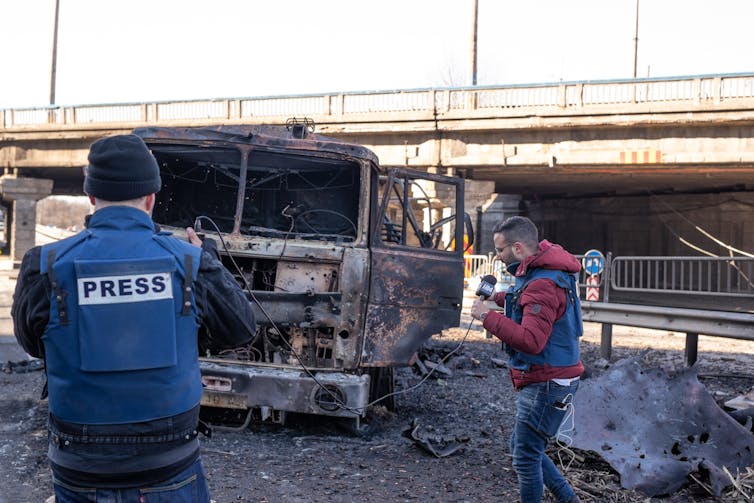
Newsrooms have long recognised the dangers of sending staff into war zones and to report on hazardous events. They provide journalists with safety training and equipment, and have well established protocols. Now, they are having to consider how to protect the mental health of staff based in the newsroom, as they see increasing numbers of journalists suffer from post-traumatic stress disorder (PTSD) or related conditions.

The International News Safety Institute and Cardiff University recently conducted a confidential survey of some two dozen newsrooms in the UK and Europe, along with 30 interviews with newsroom leaders and trauma experts. In the survey, more than three-quarters of them were aware of staff suffering PTSD, with an average of four out of ten staff seeking help within their news organisations.

All of those surveyed or spoken to agreed there was increasing potential for trauma to affect newsroom staff, given the issues and images they are expected to deal with on a daily basis. As one newsroom leader commented: “I often think our teams are the ‘invisible’ first responders and we tend to overlook the psychological challenges that come with the job.”

Another said they had not seen a time with so many heavy and traumatic stories coming at once and having an impact on all staff in their newsroom. The traumatic impact of frontline reporting has been recognised for some time. But research is now identifying the risk of trauma to newsroom-based teams and to content moderators, which itself is now a more central news function.

Management response has been patchy. Larger organisations such as Reuters, The New York Times and the BBC have developed sophisticated and proactive approaches to managing the mental health of staff.

Others rely on a basic employee assistance programme provided by a third party – often not tailored to the specific experiences in newsrooms. And some have yet to consider even that. Others have developed peer-to-peer networks within newsrooms, with more experienced editors trained to look for signs of trauma. Some have psychologists in the newsroom or visiting regularly for staff to talk to confidentially.

Only 10% of newsroom leaders surveyed said they had proactive measures in place, preparing staff before they took up roles exposing them to frequent distressing images. Barriers to change include a legacy of “macho” culture, restricted funding or simply a lack of focus on the issue.

The new frontline

Discussion in the media industry still focuses mainly on physical safety for staff in hostile environments, and has not caught up with the rapidly evolving digital landscape. In many ways the situation mirrors the development of safety protocols for war zones developed by the media 30 years ago.

The BBC, with others, developed the first hostile environment training in the early 1990s, providing helmets and flak jackets and armoured vehicles for those reporting the Bosnian war. Other newsrooms took longer to catch up. Today, there are still some reporting teams in war zones without training or equipment – but very few. Adapting to the new digital risks seems to be following a similar trajectory.

Two male journalists in press flak jackets film around a burned-out truck
Newsrooms usually provide equipment and support for those physically reporting from war zones.
Honcharuk Andrii/Shutterstock

It isn’t simply looking at distressing images of suffering which is a problem. It’s increasingly recognised that what’s known as “moral injury”, which comes from witnessing, or failing to prevent events that violate one’s own moral values, can be distressing. Examples include the guilt of being unable to help those in danger or being expected to frame stories in ways the journalist may personally disagree with, violating their personal ethics.

Helplessness can also be a factor. Some reporters covering climate change, for example, refer to it as “the apocalypse beat”. Moral injury is distinct from PTSD, but can be equally debilitating.

The digital environment of most news coverage today also means journalists are more directly exposed to abuse and harassment from readers, or from those who disagree with their coverage. This may be exacerbated when covering controversial or polarising conflicts.

Online harassment of journalists is rising steeply as a consequence of social polarisation and the legitimising of attacks on the media by populist politicians.

Women in journalism are already deeply affected by this. Almost 90% of respondents to a 2025 survey for the European Federation of Journalists, said their female journalists had experienced online harassment and abuse. Such levels of abuse directly affect physical, emotional and mental wellbeing, and have also been found to spill into real-world violence.

The increase in vicarious trauma is a business risk. “As news cycles accelerate and conflicts proliferate, unaddressed trauma will worsen, threatening staff wellbeing, retention and the integrity of journalism itself”, observed one newsroom editor.

The news industry is starting to respond to these challenges. Newsroom leaders and trauma experts recommend using tools like audio muting, screen minimisation and grayscale filters, which can minimise the visceral impact of graphic content. And there is greater support for staff suffering regular harassment as employers increasingly recognise their duty of care with a legal responsibility to manage psychosocial risks. But there is still a sense that news management culture must adapt more rapidly to the changing risks experienced by desk-based staff processing a violent and stressful news agenda.

The Conversation

Richard Sambrook does not work for, consult, own shares in or receive funding from any company or organisation that would benefit from this article, and has disclosed no relevant affiliations beyond their academic appointment.

ref. The relentless cycle of violent news is leading to trauma for journalists, even those not in war zones – https://theconversation.com/the-relentless-cycle-of-violent-news-is-leading-to-trauma-for-journalists-even-those-not-in-war-zones-276806

Kids can take tablets, so why are we still giving liquid medicines?

Source: The Conversation – UK – By Rebecca Payne, Clinical Senior Lecturer, Bangor University

shutterstock Nicoleta Ionescu/Shutterstock

When six-year-old Seren was prescribed antibiotics, taking them four times a day quickly became a battle. The orange liquid tasted revolting, and much of it ended up on kitchen surfaces rather than in her mouth. Her mother was never sure how much she had actually swallowed, but was afraid to give her more in case the dosage was exceeded.

The final straw came on day five, when the bottle was knocked over and the remaining dose spilled across the floor. The family gave up. Seren never finished the course.

This is a situation I come across as a GP, which happens all too often in my clinical practice. But a new paper from my colleagues and I suggests that a solution may be to encourage more children to take tablets.

Liquid medicines are commonly prescribed for children. They are widely assumed to be the safest and most practical option. In reality, they can be difficult to give and easy to get wrong.

Children may spit liquid medicine out, swallow only part of it, or refuse it altogether. Measuring doses accurately can be difficult with a distressed or wriggling child, and many formulations are unpalatable. Liquids spoil quickly, with refrigeration often required. Together, these factors increase the likelihood that courses are not completed as prescribed.

The consequences are significant. Incomplete or inconsistent dosing can make treatment less effective and can contribute to the development of antibiotic resistance. Children may remain unwell for longer or return to the GP for further consultations or alternative antibiotics, adding pressure on families and the health system.

Oral liquid medicines that are prescribed, or purchased from pharmacies, can be very expensive. Research shows more than two thirds of prescriptions for liquid medicines could be safely changed to tablets or capsules, saving three quarters of treatment costs.

Costs don’t just affect parents and health care systems, but the environment too. Liquid medicines typically have a much larger carbon footprint than tablets. They require more packaging, are heavier to transport and, in some cases, need refrigeration.

Despite all this, the assumption that children cannot swallow tablets persists. This belief is widespread among parents and healthcare professionals and strongly influences prescribing habits. Yet a growing body of research challenges this long-held view.

Evidence from the UK and other countries shows that most children can learn to swallow tablets. Research has shown that with brief, structured coaching, most children from around the age of four can learn to swallow tablets safely and confidently.

International experience supports these findings, with European guidance making similar recommendations.

So, if tablets are often cheaper, easier to store and more reliable, why do liquid medicines remain the default?

Longstanding practice plays a major role. Outside specialist paediatric settings, prescribers, pharmacists and parents often assume young children can only manage liquids. Tablets can look intimidating, and both parents and professionals can worry about the risk of choking. Parents may struggle to introduce a new skill when a child is unwell and upset.

How do we teach children to swallow tablets?

Tablet swallowing is best introduced when a child is well. Teaching can be done by parents, with online resources available to help. Training programmes such as KidzMed recommend starting with very small sweets and gradually increasing the size as confidence grows. The child chooses a favourite drink, places the sweet on their tongue, takes a few gulps and swallows. For most children, progress is rapid.

Liquids will always be necessary for babies, infants and children with complex needs or swallowing difficulties. But they do not need to be the default for every child.

GPs and other prescribers could routinely ask whether a child can swallow tablets and record this information in medical notes, making it easily available for future consultations. Prescribing systems could be adjusted so liquids aren’t the default option presented for children.

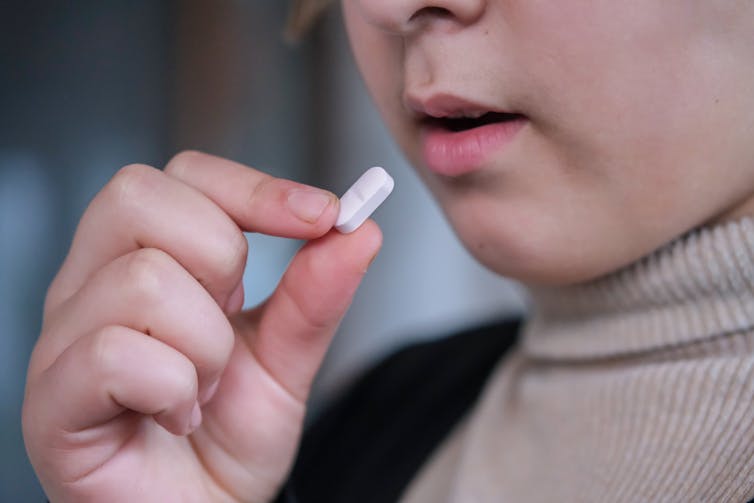
Close up image of a girl taking a white pill.
Online resources are available to help children take tablet medicines.
Mahsun YILDIZ/Shutterstock

Education and culture change will be needed. Training on tablet swallowing could be included in GP, pharmacist and prescriber curricula, supported by updates for current practitioners. Community pharmacists are well placed to coach families and advise on suitable formulations. Schools and children’s television shows can support culture change by normalising tablet taking.

Liquid medicines are often messy, expensive and difficult to give. Their widespread use contributes to incomplete treatment, avoidable healthcare use and unnecessary environmental costs.

With simple coaching and system change, many children can take tablets from an early age. Doing so could reduce stress for families, improve treatment effectiveness, cut costs and reduce the environmental footprint of medicines.

The Conversation

Rebecca Payne is partially funded by a University of Oxford Clarendon-Reuben Scholarship. She works on the REMEDY project funded by Health and Care Research Wales.

ref. Kids can take tablets, so why are we still giving liquid medicines? – https://theconversation.com/kids-can-take-tablets-so-why-are-we-still-giving-liquid-medicines-272368

Scandinavians cycle to work even on snowy days, here’s why that makes sense

Source: The Conversation – UK – By Till Koglin, Senior Lecturer and Reader in Transport and Mobility Planning, Lund University

A man cycles in snowy weather in Stockholm, Sweden. Hans Christiansson/Shutterstock

Across Scandinavia many people commute to work or school on their bikes during winter, despite snow and freezing temperatures.

For example, in the Stockholm region of Sweden around 34% of people cycle at some point during the winter months. Oslo in Norway has seen an increase of winter cycling recently. With 15 % of all journeys being made using this form of transport in winter in 2022, up from 7% in 2015.

I live in the small town of Lund in southern Sweden and I am a winter cyclist. Even in temperatures as low as -5°C to -10°C, with snow on the ground, I cycle from home to take one child to school, and another to preschool and then to work on my bike. It’s around 5km every weekday. For me that is the best and cheapest option. Most of my route is on bike paths through the city. In winter I usually wear a warm jacket, but nothing particularly special for cycling. Most other parents bring their kids to school by bike, even in winter.

And cycling in winter is not just a trend in Sweden. Research shows that the Danish capital, Copenhagen, also has high cycling levels in the colder months. Around 66% of Copenhagen’s cyclists say they use their bikes in the winter. Cyclists there report feeling often prioritised and safe, and many see cycling as an efficient mode of transport. Even in winter, cycling often remains the fastest and most convenient option for many urban journeys.

In Sweden, especially in the northern part of the country, studded winter tyres for bikes are fairly common, although where I live in Lund they tend not to be used.

Studies show that studded bicycle tyres significantly improve bicycle grip and braking on ice.

Cycle tracks that are covered with snow can thaw and then freeze creating slushy icy paths that are particularly difficult to manage. Many Scandinavian cities, such as Copenhagen, address this challenge by making sure winter maintenance for cycling routes is given a high priority. Timely snow clearance and anti‑slip treatments, such as combining gravel with salt for better grip, improve safety and encourage people to continue cycling even in cold weather.

Studies show that surface conditions strongly affect cycling decisions.

Snow clearance remains the most important factor in people’s decisions about whether to get on their bikes, while anti‑slip measures help reduce crashes. Good city maintenance of cycle tracks and appropriate equipment encourages people to continue to use this form of transport throughout the winter.

Advice from local authorities often emphasises safe winter cycling practices, such as adjusting speed to cope with winter conditions. It’s these factors, along with knowledge of how to cycle in bad weather and good path clearance that help cyclists get to work even in demanding weather.

Also significant is that cities in Sweden and Denmark usually offer tracks separated from the roads, and give cyclists clear priority at junctions with cars. Features such as cycling bridges and specific traffic signals for cyclists make the journey easier and minimise conflict with motor vehicles, which becomes especially important when visibility is low or surfaces are wet.

In places where infrastructure is not as well suited for cycling or mixed with fast-moving traffic, winter conditions exacerbate stress and discourage cycling.

Better for the environment

Winter cycling has significant implications for sustainable transport policies and reaching climate goals. Each cyclist represents one fewer trip with a car having to start in cold weather, a type of journey associated with disproportionately high emissions and local air pollution. Studies suggest that improving winter maintenance levels of cycle paths could reduce accidents and winter cycling more generally reduces car use.

Sustained winter cycling also helps reduce congestion and eases pressure on public transport during peak periods.

Strong links between public transport and cycling also help people tackle longer journeys. Good cycle parking facilities at stations or being able to take the bike on a train also encourages cycling for parts of a journey.

Winter cycling in Scandinavia is not because people are unusually hardy but because of consistent planning choices, reliable maintenance and a cultural commitment to cycling as an everyday activity. When cities treat cycling as essential transport rather than a seasonal option, people continue to cycle, even in the snow.

The Conversation

Till Koglin receives funding from The Swedish Energy Agency, The Swedish Transport Administration, Sweden’s innovation agency.

ref. Scandinavians cycle to work even on snowy days, here’s why that makes sense – https://theconversation.com/scandinavians-cycle-to-work-even-on-snowy-days-heres-why-that-makes-sense-276567

A Pale View of Hills: the legacy of atomic bombings in Japan is explored in this adaptation of Kazuo Ishiguro’s first novel

Source: The Conversation – UK – By Jennifer Coates, Professor of Japanese Studies, University of Sheffield

How much do any of us really know about who we are? This question haunts director Kei Ishikawa’s adaptation of Kazuo Ishiguro’s first novel, A Pale View of Hills (1982).

The complex story follows “unreliable narrator” Etsuko from Japan to England. A Pale View of Hills starts in 1982, as Etsuko (Yoh Yoshida) packs up her English country house, preparing to move. Her daughter Niki (Camilla Aiko) arrives, taking advantage of the domestic upheaval to ask about their family history.

Both are struggling with the suicide of older daughter Keiko. Niki cannot enter Keiko’s old room, while Etsuko tells neighbours that Keiko is living in Manchester, England. Niki expresses surprise at how easily her mother tells this lie, but as the film progresses we learn that mother and daughter are keeping a number of secrets from one another.

The family secrets are hidden in omissions and untruths. Sometimes the secrets are obscured by mixing up truths to create confusion. When Niki asks Etsuko for the story of how she came to England, she blends truths supported by the evidence of photo albums and family belongings. Stories and pictures wend together into a confusing narrative that doesn’t add up, and is missing important details.

Etsuko’s memories take the film back to Nagasaki in 1952, seven years after the “Fat Man” atomic bomb was dropped on the port city on August 9 1945, killing as many as 70,000 people.

Ongoing hardship in Nagasaki can be inferred from neighbourhood gossip about a local woman rumoured to be entertaining American servicemen for money, and a spate of violent crimes against children. Nostalgic, warm images jar with dialogue about wartime suffering, violence and discrimination against the hibakusha (被爆者, “bomb-affected people”).

Ishikawa evokes postwar Japanese history in subtle references to the cinema of the era. The cinematography bathes Nagasaki in golden light, evoking the colours of Japanese films of the 1950s and 1960s. A poster for Yasujirō Ozu’s The Flavor of Green Tea Over Rice (1952), a drama about a postwar couple considering divorce, signposts the issues in Etsuko’s marriage.

Her relationship to her father-in-law, established during their shared work as schoolteachers, evokes the common trope in postwar atomic bomb film narratives of the young female teacher as heroine. Yet Etsuko emerges as a much more complicated character than the brave heroines of post-war films.

Played by Suzu Hirose, the younger Etsuko befriends her troubled neighbour Sachiko (Fumi Nikaido) and her daughter Mariko. Etsuko is in the early stages of pregnancy and the bullying suffered by Mariko prompts her to help the family. Mariko is ostracised because of the visible scarring on her arms from the atomic bombings, and Sachiko struggles to find work. Sachiko dreams of moving her small family to America, where discrimination against hibakusha will no longer hold them back.

As Etsuko’s story develops, however, the female characters seem to blend.
Sachiko’s hope that Mariko might become an actress in Hollywood echoes Etsuko’s fondness for film magazines, which she reads secretly. While the whole neighbourhood knows of Sachiko and Mariko’s hibakusha status, Etsuko is keeping secret that she was also exposed to radiation during the bombing and worries about its effects on her unborn child.

When Niki finds a family album featuring a photograph of Mariko with the caption “Keiko, 1952”, the audience questions whether Etsuko’s story contains a vital untruth: is Sachiko a version of herself? Ishikawa cites The Hours (Stephen Daldry, 2002) as inspiration for this structure, which shows “the different women at different times in the same story”.

A later photograph shows Niki’s birth in 1958, confirming that she cannot be the baby that the Etsuko in the story is carrying. This suggests that Etsuko will give birth to Keiko who will be a baby disfigured by radiation exposure. Like Sachiko, she will be abandoned by her husband and survive on the outskirts of the community until a move to the west and a new baby changes her fortunes in 1958.

Ishikawa’s desire to “update the story of Nagasaki” and connect contemporary audiences with it is achieved through the echoes that Etsuko’s omissions cast across the film. The subtle performances and beautiful cinematography of Ishikawa’s film creates an inviting and nostalgic atmosphere that allows the disturbing themes of this important book to be gently drawn out.

A rich history of the atomic bombings of Japan and the ongoing impact that continues in the silences, lies and omissions is exposed in A Pale View of Hills. What are people still carrying? For Ishikawa, “the unspoken words, the hidden gestures, the secrets passed on, the narratives that stem from objects” are all “traces of memories” that allow a generational transmission of history.

The Conversation

Jennifer Coates receives funding from UKRI and the Leverhulme Trust.

ref. A Pale View of Hills: the legacy of atomic bombings in Japan is explored in this adaptation of Kazuo Ishiguro’s first novel – https://theconversation.com/a-pale-view-of-hills-the-legacy-of-atomic-bombings-in-japan-is-explored-in-this-adaptation-of-kazuo-ishiguros-first-novel-273842

Kim Kardashian’s new caffeine-free energy drink relies on paraxanthine – here’s what the science says

Source: The Conversation – UK – By Colin Davidson, Professor of Neuropharmacology, University of Lancashire

3D model of paraxanthine’s molecular structure SergeiShimanovich/Shutterstock

Kim Kardashian has launched an energy drink. Instead of containing caffeine, Update includes paraxanthine, a compound the body naturally produces when it breaks down caffeine. According to the brand’s promotional material, using paraxanthine directly “eliminates the crash, jitters and overstimulation” often associated with traditional energy drinks.

Energy drinks are already a huge global market, and most rely on caffeine to provide their stimulant effects. This new product takes a different approach by skipping caffeine and using one of its natural breakdown products instead.

It does not rely on paraxanthine alone. The formula also contains other ingredients commonly used in energy drinks and supplements, including alpha-GPC, sometimes marketed for cognitive performance, and sucralose, an artificial sweetener found in many low or zero sugar beverages. Any assessment of its potential health effects therefore needs to consider these ingredients as well.

Paraxanthine is the main metabolite produced when the body processes caffeine. The liver converts caffeine into three compounds: paraxanthine, theobromine and theophylline. Of these, paraxanthine is the most abundant, accounting for more than 70% of caffeine metabolism, while the other two make up the remaining 20 to 30%.

Caffeine works mainly by blocking adenosine receptors in the brain. Adenosine builds up during the day and promotes tiredness. When those receptors are blocked, we feel more alert. Paraxanthine appears to act on many of the same biological pathways, which may explain its similar stimulant effects.

Some research suggests it may be less toxic than caffeine. Scientists often compare toxicity using LD50, or “lethal dose 50”, the amount required to kill 50% of animals in a study.

In rats, paraxanthine has a higher LD50 than caffeine at around 830 milligrams per kilogram of body weight, while caffeine’s is roughly 300mg per kilogram. In other words, much higher doses are required to reach lethal levels in these animals.

What do animal studies show?

In one long-term study, rats were given either paraxanthine or caffeine for 90 days. Those receiving caffeine showed several signs of overstimulation, including excessive grooming, increased activity and more frequent defecation. Animals given paraxanthine behaved much more normally.

It also appeared less likely to trigger anxiety-like behaviour in rats.

The same study examined biochemical changes after long-term treatment. Rats given caffeine showed increased cholesterol levels and reduced thyroid hormone levels, suggesting a less favourable metabolic profile.

Post-mortem examinations revealed further differences. Several organs were smaller in the caffeine-treated rats, including the spleen, heart, kidneys, liver and testes. These changes were not observed in animals given paraxanthine.

What about human studies?

Animal experiments can provide useful clues, but they do not always reflect what happens in people.

The available human evidence suggests a similar pattern. In one comparison, caffeine produced a greater increase in blood pressure than paraxanthine at comparable doses.

In another study, participants taking paraxanthine performed better in several cognitive tests designed to measure attention and memory, without significant side-effects.

In a small placebo-controlled study, around a dozen healthy adults took it daily for one week. Researchers found no clinically significant changes in standard blood chemistry markers or reports of adverse side effects. However, the study was short and involved a small number of participants, so it cannot establish long-term safety.

It has also attracted interest for potential medical uses and has been patented as a possible treatment for certain psychiatric conditions. That does not necessarily mean it will become an approved therapy.

Taken together, these findings suggest it may produce some of the stimulant effects associated with caffeine, such as improved alertness and concentration, while potentially causing fewer side-effects such as jitteriness or rapid heart rate.

However, an important limitation is that most research comes from studies examining caffeine metabolism rather than people consuming paraxanthine directly. Human trials of the compound itself remain relatively small and short.

What about the other ingredients?

Several additional compounds are included, but the only one for which the dose is clearly stated is alpha-GPC, at 315mg per can.

Alpha-GPC, short for alpha-glycerylphosphorylcholine, occurs naturally in foods such as fish, meat, milk, eggs, cereals and peanuts. After consumption, it is converted into phosphorylcholine, which helps support the production of neurotrophic factors. These proteins help nerve cells grow, survive and communicate.

It has been widely studied for safety. Animal studies using very high doses have found only minor adverse effects, suggesting it is generally considered safe when consumed within typical supplement ranges.

The formula also contains L-theanine, an amino acid found naturally in tea, which may promote a calmer form of alertness and reduce overstimulation.

Another ingredient is sucralose, used in many low or zero-sugar drinks. It is widely regarded as safe by food safety regulators. Some studies have raised questions about possible metabolic effects.

For example, one recent study found that long-term consumption was associated with insulin resistance in mice fed a high-fat diet. Animal findings do not always translate directly to humans, and the amount included in the drink has not been publicly disclosed.

Is paraxanthine better than caffeine?

Each 350ml can contains 300mg of paraxanthine and 315mg of alpha-GPC. That amount is broadly comparable to the quantity the body might generate after metabolising a large dose of caffeine, although the exact conversion varies between people.

Based on the available studies, this level would likely produce stimulant effects similar to caffeine, such as increased alertness and improved attention. Some evidence suggests it may cause fewer of the side-effects often linked to caffeine, including jitteriness or increased heart rate.

The alpha-GPC dose falls within a range generally considered safe and may support brain signalling processes.

The main uncertainty relates to sucralose. While widely approved for consumption, some research suggests that long-term intake could affect metabolic health, although the evidence remains mixed and the quantity here is unknown.

Overall, studies in animals and humans suggest paraxanthine may be less toxic than caffeine and capable of producing similar stimulant effects. However, the evidence base remains far smaller than the decades of research available for caffeine.

More research will be needed before we can determine whether paraxanthine-based energy drinks offer a meaningful advantage over traditional caffeinated options.

The Conversation

Colin Davidson has previously received funding from the US National Institute on Drug Abuse (NIDA). He is a consultant with the Defence Science and Technology Laboratory (UK) and a member of the Advisory Council on the Misuse of Drugs. His views in this article are his own.

ref. Kim Kardashian’s new caffeine-free energy drink relies on paraxanthine – here’s what the science says – https://theconversation.com/kim-kardashians-new-caffeine-free-energy-drink-relies-on-paraxanthine-heres-what-the-science-says-276921

From period scooping to menstrual masking: the strange science of viral period hacks

Source: The Conversation – UK – By Katie Edwards, Commissioning Editor, Health + Medicine and Host of Strange Health podcast, The Conversation

Halfpoint/Shutterstock

Period scooping sounds like something you would only hear in a biology lab, not while doom-scrolling TikTok. Yet earlier this year, videos claiming you can “scoop out” your period to avoid the mess and shorten the whole thing racked up millions of views. Some people were pushing in the shower using pelvic floor muscles. Others described using water, fingers, or even objects to “clean out” menstrual fluid.

In the final episode of the first season of The Conversation’s Strange Health podcast, co-host Dan Baumgardt and I watched the clips, winced a bit, laughed a bit, then did what we always do: we asked an expert what is actually going on inside the body.

I spoke to Sally King, a visiting fellow at King’s College London and founder of the evidence-based menstrual health project Menstrual Matters. Her first point was almost disappointingly simple: you cannot shorten a period by “scooping”. Menstruation is the shedding of the uterine lining, triggered by hormonal changes and helped along by uterine contractions. Once the process is underway, removing fluid from the vaginal canal does not stop the uterus shedding tissue. It might make you feel less “full” for a moment, but it does not end your period early.

Where King’s tone sharpened was on the version of “scooping” that involves washing inside the vagina with water or soap, essentially douching. This is not harmless hygiene. The vagina is self-cleaning and has an acidic environment that supports protective bacteria. Flooding it with neutral water or alkaline products disrupts that balance and is linked to infections such as bacterial vaginosis, and in some cases more serious reproductive health problems.

If the motivation is smell, discomfort or discharge, the answer is not Dettol or “feminine washes”. It is proper treatment and, crucially, a culture where people feel able to ask for help without shame.


Read more:
‘Dirty red’: how periods have been stigmatised through history to the modern day


Then there videos raving about “emergency period stop” drinks. Lime juice. Tajín. Shots of whatever is trending this week. King was blunt: there is no scientific basis for any food or drink instantly halting a period mid-cycle. Menstrual symptoms can change from month to month anyway, which makes it easy to mistake coincidence for cause, especially online where confirmation bias thrives.

And yet not all viral period content is rooted in disgust. Some of it is a backlash against stigma. The most eyebrow-raising example is “period masking”, where influencers smear menstrual blood on their faces and claim the stem cells will transform their skin.

King’s verdict was half delighted, half exasperated. Menstrual fluid does contain unusually interesting stem cells, and scientists are investigating them for regenerative medicine. During the COVID-19 pandemic, for example, researchers reported promising results using menstrual blood-derived mesenchymal stem cells as a treatment in severely ill patients, but these were processed cells delivered in a clinical setting, not a DIY face mask.


Read more:
Menstrual health literacy is alarmingly low – what you don’t know can harm you


These trends flourish in the gaps left by poor menstrual health education, including in medicine. King argues that we still teach about menstruation primarily as a prelude to pregnancy, rather than a complex biological process with its own functions and health signals.

If a hack relies on shame, secrecy, or the idea that your body is dirty and must be “fixed” fast, it is probably selling you something, even if what it wants is only your attention.

Strange Health is hosted by Katie Edwards and Dan Baumgardt. The executive producer is Gemma Ware, with video and sound editing for this episode by Anouk Millet. Artwork by Alice Mason.

If you’ve got a question about a viral trend or video you’ve seen and you’d like us to delve into the science behind it in a future episode, please email us at strangehealth@theconversation.com.

Listen to Strange Health via any of the apps listed above, download it directly via our RSS feed or find out how else to listen here. A transcript is available via the Apple Podcasts or Spotify apps.

The Conversation

Katie Edwards is Commissioning Editor, Health and Medicine at The Conversation in the UK. Sally King is the founder of Menstrual Matters- the world’s first evidence-based info hub on menstrual health and rights.

Dan Baumgardt does not work for, consult, own shares in or receive funding from any company or organisation that would benefit from this article, and has disclosed no relevant affiliations beyond their academic appointment.

ref. From period scooping to menstrual masking: the strange science of viral period hacks – https://theconversation.com/from-period-scooping-to-menstrual-masking-the-strange-science-of-viral-period-hacks-276733