Environmental pressures need not always spark conflict – lessons from history show how crisis can be avoided

Source: The Conversation – UK – By Jay Silverstein, Senior Lecturer in the Department of Chemistry and Forensics, Nottingham Trent University
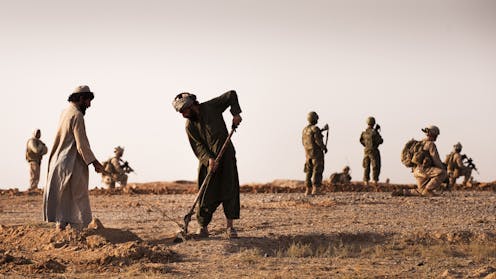
Afghan farmers plough a field while US soldiers patrol in Helmand province in 2010.
ResoluteSupportMedia / Flickr, CC BY-ND

The expectation that competition for dwindling resources drives societies towards conflict has shaped much of the discourse around climate change and warfare. As resources become increasingly vulnerable to environmental fluctuations, climate change is often framed as a trigger for violence.

In one study from 2012, German-American archaeologist Karl Butzer examined the conditions leading to the collapse of ancient states. Among the primary stressors he identified were climate anxieties and food shortages.

States that could not adapt followed a path towards failure. This included pronounced militarisation and increased internal and external warfare. Butzer’s model can be applied to collapsed societies throughout history – and to modern societies in the process of dissolution.


Wars and climate change are inextricably linked. Climate change can increase the likelihood of violent conflict by intensifying resource scarcity and displacement, while conflict itself accelerates environmental damage. This article is part of a series, War on climate, which explores the relationship between climate issues and global conflicts.


Bronze age aridification in Mesopotamia from roughly 2200BC to 2100BC, for example, is correlated with an escalation of violence there and the collapse of the Akkadian empire. Some researchers also attribute drought as a major factor in recent wars in east Africa.

There is a wide consensus that climatic stress contributes to regional escalations of violence when it has an impact on food production. Yet historical evidence reveals a more complex reality. While conflict can arise from resource scarcity and competition, societal responses to environmental stress also depend on other factors – including cultural traditions, technological ingenuity and leadership decisions.

The temptation to draw a direct correlation between climate stress and war is both reductionist and misleading. Such a perspective risks surrendering human agency to a deterministic “law of nature” – a law to which humanity need not subscribe.

Catalysing transformation

In the first half of the 20th century, researchers grappled with the Malthusian dilemma: the fear that population growth would outpace the environment’s carrying capacity. The reality of this dynamic has contributed to the collapse of certain civilisations around the world.

These include the Maya and Indus Valley civilisations in Mesoamerica and south Asia respectively. The same applies to the Hittite in what is now modern-day Turkey and the Chaco Canyon culture in the US south-west.

Civilisations affected by climate stress:

A table documenting examples of civilisations affected by climate stress.
Many civilisations have been affected by climate stress in the past.
Jay Silverstein, CC BY-NC-ND

However, history is equally rich with examples of societies that have successfully averted crisis through innovation and adaptation. From the dawn of agriculture (10,000BC) onward, human ingenuity has consistently expanded the boundaries of environmental possibility. It has also intensified the means of food production.

Irrigation systems, efficient planting techniques and the selective breeding of crops and livestock enabled early agricultural societies to flourish. In Roman (8th century BC to 5th century AD) and early medieval Europe (5th to 8th centuries AD), the development of iron ploughshares revolutionised soil cultivation. And water-lifting technologies – from the Egyptian shaduf to Chinese water wheels and Persian windmills – expanded arable land and intensified production.

In the 19th century, when Europe’s population surged and natural fertiliser supplies such as guano became strained, the Haber-Bosch process revolutionised agriculture by enabling nitrogen to be extracted from the atmosphere. This allowed Europe to meet its growing demand for food and, incidentally, munitions.

Danish economist Esther Boserup’s work from 1965, The Conditions of Agricultural Growth, challenged the Malthusian orthodoxy. It demonstrated that population pressure can stimulate technological innovation. Boserup’s insights remain profoundly relevant today.

As humanity confronts an escalating environmental crisis driven by global warming, we stand at another historic inflection point. The reflexive response to climate stress – political instability and conflict – should be challenged by a renewed commitment to adaptation, cooperation and innovation.

The measuring shaft of a nilometer.
A nilometer, which was used to gauge the optimal time to open agricultural canals in ancient Egypt.
Baldiri / Wikimedia Commons, CC BY-NC-SA

Dwindling military superiority

There are many examples of societies successfully overcoming environmental threats. But our history is also full of failed civilisations that more often than not suffered ecological catastrophe.

In many cases, dwindling resources and the lure of wealth in neighbouring societies contributed to invasion and military confrontation. Droughts have been implicated in militaristic migration in central Asia, such as the westward movement of the Huns and the southward push of the Aryans.

Asymmetries in military power can encourage or deter conflict. They offer opportunities for reward or impose strategic constraints. And while military superiority has largely shielded the wealthiest nations in the modern era, this protection may erode in the foreseeable future.

Natural disasters that erode security infrastructure are becoming increasingly frequent and severe. In 2018, for example, two hurricanes caused a combined US$8.3 billion (£6.2 billion) in damage to two military facilities in the US. There has also been a proliferation of inexpensive military technologies like drones.

Both of these developments could create new opportunities to challenge dominant powers. Under such conditions, increases in military conflict should be expected in the coming decades.

In my view, dramatic action must be taken to avoid a spiral of conflict. Ideals, knowledge and data should be translated into political and economic will. This will require coordinated efforts by every nation.

The growth of organisations such as the Center for Climate and Security, a US-based research institute focused on systemic climate and ecological security risks, signals movement in the right direction. Yet such organisations face a steep climb in their efforts to translate geopolitical climate issues into meaningful political action.

One of the main barriers is the rise of anti-intellectualism and populist politics. Often aligned with unregulated capitalism, this can undermine the very strategies needed to address the unfolding crisis.

If we are to avoid human tragedy, we will need to transform our worldview. This requires educating those unaware of the causes and consequences of global warming. It also means holding accountable those whose greed and lust for power have made them adversaries of life on Earth.

History tells us that environmental stress need not lead to war. It can instead catalyse transformation. The path forward lies not in fatalism, but in harnessing the full spectrum of human creativity and resilience.

The Conversation

Jay Silverstein does not work for, consult, own shares in or receive funding from any company or organisation that would benefit from this article, and has disclosed no relevant affiliations beyond their academic appointment.

ref. Environmental pressures need not always spark conflict – lessons from history show how crisis can be avoided – https://theconversation.com/environmental-pressures-need-not-always-spark-conflict-lessons-from-history-show-how-crisis-can-be-avoided-262300


International law isn’t dead. But the impunity seen in Gaza urgently needs to be addressed

Source: The Conversation – UK – By James Sweeney, Professor, Lancaster Law School, Lancaster University

Philippe Lazzarini, the commissioner general of the United Nations Relief and Works Agency for Palestine Refugees (Unrwa) says that Gaza is “becoming the graveyard of international humanitarian law”.

International humanitarian law (IHL), regulates the conduct of armed conflict, which is the legal expression for war. It covers everything from what is a lawful target, to the treatment of prisoners and injured people, and even to the testing of new weapons. The main rules of IHL can be found in the Geneva Conventions of 1948.

Lazzarini, though, has gone so far as to say that we “have made the Geneva convention[s] almost irrelevant. What is happening and being accepted today in Gaza is not something that can be isolated; it will become the new norm for all future conflicts”.

There can be no doubt that the situation in Gaza is dire. There is plausible evidence of the Israeli military carrying out war crimes there in its military operation triggered by, and commenced soon after, the devastating attack by Hamas against Israel on October 7 2023. The Hamas attack itself involved the commission of war crimes – and so does its taking of hostages and the subsequent treatment of them in captivity. But to say that all these atrocities render the law irrelevant is premature.

There are several reasons for this. One is that there is a difference between the existence of an important rule and its enforcement. Even where a rule is not being enforced, international law gives us a precise language to articulate exactly what is wrong with the situation. I recently wrote that what appears to have been a deliberate “double tap” attack against Nasser hospital in Khan Younis, northern Gaza, on August 25, violated IHL and can be seen as a war crime.

I have also written that other Israeli operations in Gaza amount to a crime against humanity, as they are part of a widespread or systematic attack against a civilian population. I, and others, have seriously contemplated the idea that a genocide is under way.

These legal expressions are important, and to accuse anyone of perpetrating the crimes that they embody has very serious political consequences. That is why, however implausibly, states like Israel and Russia have tried to maintain that they are totally compliant with international law.

Enforcement and impunity

Returning to the issue of enforcement, it is important to recognise that there are in fact several legal and political forums that provide an opportunity for it. These include the organs of the UN, including the International Court of Justice. There are also International Criminal Court arrest warrants for key leaders in respect of the events in both Gaza and Ukraine.

States that are signed up to the International Criminal Court are meant to be under an obligation to arrest people who are wanted by it. Yet, several opportunities to arrest Vladimir Putin have been spurned, like when he visited Mongolia recently. Likewise, Hungary failed to arrest the Israeli prime minister, Benjamin Netanyahu, when he visited earlier this year (Hungary has since denounced the court).

It’s debatable whether either of them will ever face trial. But the arrests warrants have already had political consequences. Putin was unable to attend the Brics summit in South Africa in 2023 because that country recognises the ICC. There were mixed reactions internationally to the news of the warrant against Netanyahu, with some affirming their support or at least their intention to comply with the warrants if necessary.

But history tells us that leaders who once seemed untouchable have eventually faced justice in one form or another.

Did the surviving leading Nazis ever expect to go on trial at a hastily convened military tribunal in Nuremberg? Did Augusto Pinochet expect that he would die under house arrest in his native Chile, facing trial for his actions during and since the military coup of 1973? Or that Saddam Hussein would face the death penalty and be hanged for his crimes in Iraq? Or that Libya’s Muammar Gaddafi would be ousted, abused, and then killed by a militia? Probably not.

A fair trial at the ICC would be preferable to most of those examples.

Justice for violations of international humanitarian law clearly needs to be seen to be done – if we don’t want Lazzarini’s catastrophic prediction to become a reality.

The Conversation

James Sweeney does not work for, consult, own shares in or receive funding from any company or organisation that would benefit from this article, and has disclosed no relevant affiliations beyond their academic appointment.

ref. International law isn’t dead. But the impunity seen in Gaza urgently needs to be addressed – https://theconversation.com/international-law-isnt-dead-but-the-impunity-seen-in-gaza-urgently-needs-to-be-addressed-264520

Deadlier than varroa, a new honey-bee parasite is spreading around the world

Source: The Conversation – Global Perspectives – By Jean-Pierre Scheerlinck, Honorary Professor Fellow, Melbourne Veterinary School, Faculty of Science, The University of Melbourne

Albert Stoynov/Unsplash

For decades, beekeepers have fought a tiny parasite called Varroa destructor, which has devastated honey-bee colonies around the world. But an even deadlier mite, Tropilaelaps mercedesae – or “tropi” – is on the march. Beekeepers fear it will wreak even greater havoc than varroa – and the ripple effects may be felt by the billions of people around the world who rely on honey bee-pollinated plants.

From Asia to Europe

Tropi’s natural host is the giant honey-bee (Apis dorsata), common across South and Southeast Asia. At some point, the mite jumped to the western honey-bee (Apis mellifera), the species kept by beekeepers around the world. Because this host is widespread, the parasite has steadily moved westwards.

It has now been detected in Ukraine, Georgia and southern Russia, and is suspected to be in Iran and Turkey. From there, it is expected to enter eastern Europe, then spread across the continent. Australia and North America are also at risk.

Why tropi spreads so fast

Like varroa, tropi is a tiny mite that breeds inside capped brood cells, the life stages of the honey-bee when the late larvae and pupae develop inside honeycomb cells that are sealed by a layer of wax. The mite feeds on bee pupae and transmits lethal viruses, such as deformed wing virus – the deadliest of the bee viruses. But there are crucial differences.

Varroa can survive on adult bees for long periods, but tropi cannot. Outside brood cells, it lives only a few days, scurrying across the comb in search of a new larva.

Because tropi spends more time in capped cells, it reproduces quickly. A capped cell that contains a female varroa will result in one or two mated varroa offspring emerging with the adult bee. Tropi offspring develop faster inside a capped cell than varroa offspring, so a tropi “mother” may result in more offspring emerging than a varroa infested cell, more quickly overwhelming the colony.

As a result, colonies infested with tropi can collapse far faster than those plagued by varroa.

Small white insect larvae with brown parasites attached.
Tropi is a tiny mite that feeds on honey-bee pupae and transmits lethal viruses.
Denis Anderson/CSIRO

Current control methods

In parts of Asia where the parasite is already established, small-scale and commercial beekeepers often manage it by caging the queen for about five weeks.

With no eggs being laid, no brood develops, leaving the mites without a food source. This method is practical where beekeepers manage dozens of hives, but not in places like Europe where commercial operations often involve thousands.

Another option is treating the beehive with formic acid, which penetrates brood cell caps and kills the mite without necessarily harming the developing bee, provided concentrations are kept low. This treatment may offer beekeepers a practical tool.

Why varroa treatments won’t work

Many wonder whether the chemicals used against varroa could also fight tropi. The answer is, mostly no.

Varroa spends much of its life outside of a capped cell clinging to adult bees, where it comes into contact with mite-killing chemicals known as miticides spread through the colony on bee bodies. By contrast, tropi rarely attaches to adults, instead darting across comb surfaces.

Because of this, it is far less exposed to chemical residues. Treatments designed for varroa are often ineffective against the faster-breeding tropi.

Managing both mites together will be particularly difficult. Combining treatments risks harming colonies or contaminating honey. For instance, formic acid for tropi and insecticides such as amitraz for varroa might interact at even low levels, killing the bees as well as the parasites.

There is also the danger of resistance. Over-use of varroa treatments has already produced resistant strains, reducing the effectiveness of several once-reliable chemicals. Introducing more compounds to fight tropi, without careful integrated pest management, could accelerate this process and leave beekeepers with few effective tools.

A brown and yellow beehive.
Bee colonies infested with tropi can collapse far faster than those plagued by varroa.
Nick Pitsas/CSIRO

The wider impact

The spread of tropi will not only devastate beekeepers but also agriculture more broadly. Honey-bees are critical pollinators of many crops. Heavier hive losses will raise costs for both honey production and pollination services, affecting food prices and availability.

Research is underway in countries such as Thailand and China to develop better management strategies. But unless effective and practical treatments are found soon, the spread of this new mite around the world could be catastrophic.

The story of varroa shows how quickly a single parasite can transform global beekeeping. Tropi has the potential to be even worse: it spreads faster, kills colonies more quickly, and is harder to control with existing methods.


The author would like to acknowledge the contribution of Robert Owen, a beekeeper who completed a PhD on the varroa mite at the University of Melbourne in 2022, to this article.

The Conversation

Jean-Pierre Scheerlinck does work for the CIS, drafting the Australian Pollination Security Status Report. He has received funding from the ARC and NHMRC.

ref. Deadlier than varroa, a new honey-bee parasite is spreading around the world – https://theconversation.com/deadlier-than-varroa-a-new-honey-bee-parasite-is-spreading-around-the-world-264891

Do I have insomnia? 5 reasons why you might not

Source: The Conversation – Global Perspectives – By Amelia Scott, Honorary Affiliate and Clinical Psychologist at the Woolcock Institute of Medical Research, and Macquarie University Research Fellow, Macquarie University

Oleg Breslavtsev/Getty

Even a single night of sleep trouble can feel distressing and lonely. You toss and turn, stare at the ceiling, and wonder how you’ll cope tomorrow. No wonder many people start to worry they’ve developed insomnia.

Insomnia is one of the most talked-about sleep problems, but it’s also one of the most misunderstood.

But just because you can’t sleep, it doesn’t mean you have insomnia. You might have another sleep disorder, or none at all.

What is insomnia?

Let’s clear up some terms, and separate short-term or intermittent sleep problems from what health professionals call “insomnia disorder”.

Sleep problems can involve being awake when you want to be asleep. This could be lying in bed for ages trying to fall asleep, waking in the middle of the night for hours, or waking up too early. Having a sleep problem is a subjective experience – you don’t need to tally up lost hours to prove it’s a problem.

But insomnia disorder is the official term to describe a more problematic and persistent pattern of sleep difficulties. And this long-term or chronic sleep disorder has clear diagnostic criteria. These include at least three nights a week of poor sleep, lasting three months or more. These criteria help researchers and clinicians make sure they’re talking about the same thing, and not confusing it with another sleep problem.

So, what are some reasons why a sleep problem might not be insomnia?

1. It’s short term, or comes and goes

About a third of adults will have a bout of “acute insomnia” in a given year. This short-term problem is typically triggered by stress, illness or big life changes.

The good news is that about 72% of people with acute insomnia return to normal sleep after a few weeks.

Insomnia disorder is a longer-term, persistent problem.

2. It doesn’t affect you the next day

Some people lie awake at night but still function well during the day. More fragmented and less refreshing sleep is also a near-universal part of ageing.

So if your sleep problem doesn’t significantly affect you the next day, it usually isn’t considered to be insomnia.

For people with insomnia, the struggle with sleep spills into the day and affects their mood, energy, concentration and wellbeing. Worry and distress about not sleeping can then make the problem worse, which creates a frustrating cycle of worrying and not sleeping.

3. It’s more about work or caring

If you feel tired during the day, an important question is whether you’re giving yourself enough time to sleep. Sometimes sleep problems reflect a “sleep opportunity” that is too short or too irregular.

Work schedules, child care, or late-night commitments can cut sleep short, and sleep can slip down the priority list. In these cases, the problem is insufficient sleep, not insomnia.

You might have noisy neighbours or an annoying cat. These can also affect your sleep, and reduce your “sleep opportunity”.

The average healthy adult gets around seven hours sleep (though this varies widely). For someone who needs seven, it usually means setting aside about eight to allow for winding down, drifting off, and waking overnight.

4. It’s another sleep disorder

Other sleep disorders can look like insomnia, such as:

  • obstructive sleep apnoea (when your breathing stops multiple times during sleep) can cause frequent awakenings through the night and daytime sleepiness

  • restless legs syndrome creates an irresistible urge to move your legs in the evening that often interferes with falling asleep. It’s often described as jittery feelings or having “creepy crawlies”, and is often undiagnosed

  • circadian rhythm problems, such as being a natural night owl in an early-bird world, can also lead to trouble falling asleep.

5. Medications and substances are interfering

Caffeine, alcohol and nicotine all create insomnia symptoms and worsen the quality of sleep.

Certain medications can also interfere with sleep, such as stimulants (for conditions such as attention-deficit hyperactivity disorder or ADHD) and beta-blockers (for various heart conditions).

These issues need to be considered before labelling the problem as insomnia. However, it’s important to keep taking your medication as prescribed and discuss any concerns with your doctor.

Getting the right help

If your sleep is worrying you, the best first step is to see your GP. They can help rule out other causes, review your medications, or refer you for a sleep study if needed.

However, once insomnia becomes frequent, chronic (long term) and distressing, you can worry too much about your sleep, constantly check or track your sleep, or try too hard to sleep, for instance by spending too much time in bed. These psychological and behavioural mechanisms can backfire, and make good sleep even less likely.

That’s why “cognitive behavioural therapy for insomnia” (or CBT-I) is recommended as the first-line treatment.

This is more effective, and longer-lasting than sleeping pills. This therapy is available via specially trained GPs, and sleep psychologists. You can take part in person or online.

In the meantime

If you’re in a rough patch of sleep:

  • remind yourself that short runs of poor sleep usually settle on their own

  • avoid lying in bed panicking if you wake at 3.30am. Instead, step out of bed or use the time in a way that feels restful

  • keep a consistent wake-up time, even after a poor night. Try to get some morning sunlight to reset your body clock

  • make sure you’re putting aside the right amount of time for sleep – not too little, not too much.

The Conversation

Amelia Scott is a member of the psychology education subcommittee of the Australasian Sleep Association. She receives funding from Macquarie University.

ref. Do I have insomnia? 5 reasons why you might not – https://theconversation.com/do-i-have-insomnia-5-reasons-why-you-might-not-262701

My knee is clicking. Should I be worried? Am I getting arthritis?

Source: The Conversation – Global Perspectives – By Jamon Couch, Lecturer, Department of Microbiology, Anatomy, Physiology & Pharmacology, and PhD Candidate, La Trobe University

It’s a quiet morning. You lace up your shoes, step outside and begin a brisk morning stroll. But as you take those first few steps, there it is, a faint grinding noise, almost like the crunch of gravel underfoot, except … the sound is coming from your knee!

Thinking back, you recall noticing a similar sound as you were walking up the stairs last week. You pause, do some quick stretches and continue walking. But the grinding sound quickly returns.

A wave of dread follows: Is there something wrong with my knee? Is that bone-on-bone? Am I getting arthritis?

This is a common experience for people of all ages. Before you hit the panic button, let’s unpack what these noisy knees – known in medical terms as “knee crepitus” – might really mean.

What is knee crepitus? How common is it?

Knee crepitus refers to the audible crackling, creaking or grinding sounds that occur when you bend or straighten your knee. You might hear it when climbing stairs, standing up from a chair, or even just as you walk.

Surprisingly, we don’t know what actually causes knee crepitus. Theories suggest these knee joint noises may be attributed to damaged knee cartilage, tendons moving over bones, or the popping of normal gas bubbles in the fluid surrounding the knee.

But current scientific evidence is insufficient to confidently determine the origin of this common symptom.

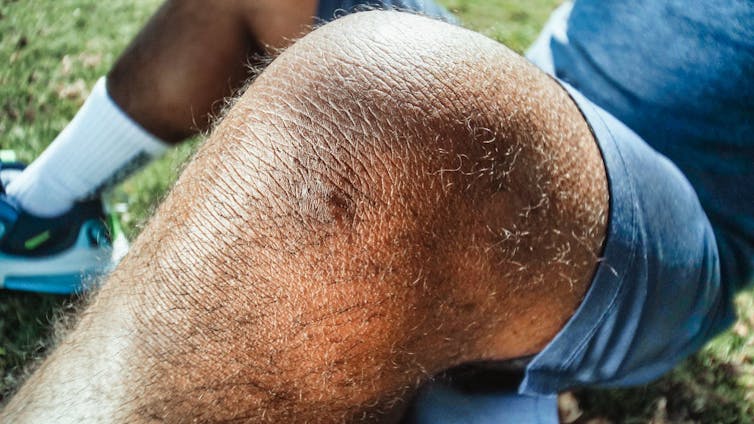
Man sitting on ground, close-up of bare knee.
One theory is we’re hearing gas bubbles pop in the fluid around the knee.
Kindel Media/Pexels

Our recent review of the 103 studies of knee crepitus (involving 36,439 people) found 41% of people in the general population had noisy knees.

There is a common perception that this crackling, creaking or grinding noise is a sign of a damaged or arthritic knee. However 36% of people who had no pain and had never injured their knee also had knee crepitus.

So, knee crepitus is common across the population, including among people with no knee problems at all.

But I heard it’s an early sign of arthritis…

Having knee crepitus can create worry, and make people fearful of exercising and using their knees. People often ask: Am I causing further damage to my knees? Does this mean I’m going to get arthritis?

Noisy knees are more common among older adults with arthritis: 81% of people with osteoarthritis have knee crepitus.

However, knee crepitus isn’t always a sign of impending knee problems and shouldn’t stop you from exercising and using your knees. In a study of 3,495 older adults (mean age 61 years), two-thirds of people who reported “always” having knee crepitus did not develop symptomatic osteoarthritis over the next four years.

If you’re a younger adult with a previous knee injury, the story is much the same: knee crepitus is still common, particularly after a knee injury, but it’s not always a sign of underlying problems.

Our recent study looked at 112 young adults (with a median age of 28) who had a previous knee injury requiring surgery. We found those with knee crepitus were twice as likely to have cartilage damage (particularly in the kneecap area) in the first year post-surgery. However, having knee crepitus did not mean worse outcomes in the future.

It seems that while those with knee crepitus may experience worse pain and symptoms in the early stages following knee injury, this does not translate to worse recovery or greater rates of osteoarthritis over the long term.

What should I do about my noisy knees?

Given noisy knees are common in those without knee pain, injury or arthritis, you generally shouldn’t be concerned. Yes, your knees might wake your baby as you step away from their cot, and perhaps a quiet yoga studio might draw focus on your knees, but generally speaking, if it’s not painful, it’s nothing to worry about.

Unfortunately, there are no effective treatments for knee crepitus. The best advice is to keep doing the things that help to improve overall knee health: getting regular exercise, both aerobic and resistance-based, and achieving and maintaining a healthy body weight.

Just be cautious about sourcing information online, as more than half of the advice available on the internet about knee clicking isn’t supported by research.

So, when should you be concerned?

Although knee crepitus is often benign, there are circumstances where you could consult your health-care provider. This includes if your noisy knees are:

  • accompanied by pain, swelling, instability, or locking

  • associated with other signs of arthritis, such as stiffness, redness, or reduced mobility.

In such cases, a health-care provider may recommend a physical assessment to examine structures in and around the knee joint, and evaluate the impact of your symptoms on your quality of life and participation in activities.

The clinician may recommend:

  • physiotherapy and exercise to strengthen supporting muscles
  • seeing a dietitian for advice about weight management
  • anti-inflammatory medication.

Most importantly, creaky knees alone, without other symptoms, are not normally cause for concern. So, lace up those shoes and keep moving.

The Conversation

Jamon Couch receives funding from an Australian government Research Training Program scholarship.

Adam Culvenor receives funding from The National Health and Medical Research Council and Medibank Better Health Research Hub.

ref. My knee is clicking. Should I be worried? Am I getting arthritis? – https://theconversation.com/my-knee-is-clicking-should-i-be-worried-am-i-getting-arthritis-264472

Koalas are running out of time. Will a $140 million national park save them?

Source: The Conversation – Global Perspectives – By Christine Hosking, Conservation Planner/Researcher, The University of Queensland

In a historic move, the New South Wales government has announced a Great Koala National Park will be established on the state’s Mid North Coast, in a bid to protect vital koala habitat and stop the species’ sharp decline.

The reserve will combine existing national parks with newly protected state forest areas, to create 476,000 hectares of protected koala habitat. Logging will be phased out in certain areas, and a transition plan enacted for affected workers and communities.

Conservationists have welcomed the move as a win for biodiversity. However, some industry groups have raised concerns about the economic impact on the region’s timber operations.

The announcement, which follows a long campaign by koala advocates, shows the NSW government recognises the importance of protecting biodiversity. But announcing the national park is just the first step in saving this iconic species.

A worrying decline

Koalas are notoriously hard to count, because they are widely distributed and difficult to spot.

In 2016, a panel of 15 koala experts estimated a decline in koala populations of 24% over the past three generations and the next three generations.

Habitat loss and fragmentation is the number one threat to koalas. Others include climate change, bushfires, disease, vehicle strikes and dog attacks.

The decline gave momentum to calls by conservationists and scientists for the establishment of a Great Koala National Park, taking in important koala habitat on the NSW Mid North Coast.

In 2023, the NSW government pledged A$80 million to create the park. The announcement on Sunday increased the pledge to $140 million.

Announcing the development, NSW Premier Chris Minns said it was “unthinkable” that koalas were at risk of extinction in that state.

The government also proposed the park’s boundary and announced a temporary moratorium on timber harvesting within it – as well as a support package for logging workers, industries and communities.

However, the logging industry remains opposed to the plan.

Not the end of the story

The creation of the park is a welcome move. It will protect not just koalas but many other native species, large and small.

But on its own, it’s not enough to save the NSW koala population. Even within the national park, threats to koalas will remain.

For example, research shows climate change – and associated heat and less rainfall – threatens the trees koalas use for food and shelter. Climate extremes also physically stress koalas. This and other combined stresses can make koalas more prone to disease.

Bushfires, and inappropriate fire management, can degrade koala habitat and injure or kill them outright.

The NSW government says logging must immediately cease in areas to be brought into the park’s boundary. However, logging pressures can remain, even after national parks are declared. Forestry activities must cease completely, and forever, if the park is to truly protect koalas.

What’s more, recreational activities, if allowed in the national park, may negatively impact koalas. For example, cutting tracks or building tourist facilities may fragment koala habitat and disturb shy wildlife.

These threats must be managed to ensure the Great Koala National Park achieves its aims.

Prioritising nature

Of course, the creation of a new national park does not help koalas outside the park’s boundaries. Koala populations are under threat across their range in NSW, Queensland and the ACT.

That’s why the national recovery plan for the koala should be implemented urgently and in full. It includes increasing the area of protected koala habitat, restoring degraded habitat, and actively conserving populations. It also includes ending habitat destruction by embedding koala protections in land-use planning.

As I have previously written, koala protection areas should be replicated throughout the NSW and Queensland hinterlands. My research shows the future climate will remain suitable for koalas in those areas.

And logging must be curbed elsewhere in Australia, such as in Tasmania, where it jeopardises threatened species and ancient forests.

The Great National Koala Park promises be a sanctuary for koalas and other wildlife, and a special place for passive, nature-based recreation and tourism. Yes, the plan has detractors. But saving Australia’s koalas means prioritising nature’s needs over that of people.

And we must not forget: the national park is just one step on a long road to preventing koala extinctions.

The Conversation

Christine Hosking does not work for, consult, own shares in or receive funding from any company or organisation that would benefit from this article, and has disclosed no relevant affiliations beyond their academic appointment.

ref. Koalas are running out of time. Will a $140 million national park save them? – https://theconversation.com/koalas-are-running-out-of-time-will-a-140-million-national-park-save-them-264789

Murdoch resolves succession drama – a win for Lachlan; a loss for public interest journalism

Source: The Conversation – Global Perspectives – By Andrew Dodd, Professor of Journalism, Director of the Centre for Advancing Journalism, The University of Melbourne

Rupert Murdoch has succeeded in securing his vision for the future of News Corporation, the global media empire he has always thought of as his family business.

To achieve this, he has torn apart his family. He has also ensured his media outlets, especially Fox News, remain committed to his hard right-wing views.

With hindsight, this deal was inevitable. The 94-year-old mogul had just one remaining job to do as chairman emeritus of News Corp: to ensure that when he dies, the company he built and moulded remains in his image.

This announcement says he has found a way, which may give him some comfort but is profoundly disappointing to anyone who cares about public interest journalism.

There’s no longer any prospect of his children from his first and second marriages, Prudence, Elisabeth and James, who are now known as the “departing beneficiaries”, staging a coup after his death to wrest control from Rupert’s chosen successor and elder son Lachlan, who has headed News Corporation and Fox Corporation since Murdoch stepped aside in 2023.

Lachlan has taken a lesson from Rupert’s dealmaking playbook. He has thrown money at the problem by paying his three siblings more than he had previously offered for their respective shares. According to The New York Times, the three siblings will receive US$1.1 billion (A$1.7 billion) each for all their shares in the company.

Their agreement brings an end to the bitter battle the three siblings fought with their father and brother over the latter’s infamous attempt to revoke a seemingly irrevocable trust created at the end of Murdoch’s longest marriage, of 32 years, to Anna Murdoch (now Anna Maria dePeyster).

She had hated how her husband pitted their children against one another in the battle for succession, so she negotiated an agreement that would give each of the four children from the first two marriages a vote in the family trust. It also ensured Rupert retained enough votes in the trust so he could not be outvoted by his four (voting) children.

When Rupert anointed Lachlan his successor, upsetting the others, speculation was aired that when Rupert died, and his votes with him, the three siblings might oust Lachlan as chief executive and take control of the company. Worse, in Rupert’s eyes, they might change the editorial direction of the company, in particular Fox News.

That is what has changed. The family trust has also been re-engineered with an increased lifespan from 2030 to 2050, and folds in Murdoch’s daughters from his third marriage, to Wendi Deng – Grace and Chloe. This shores up the trust so they can’t sell out and dilute Lachlan’s shareholding.

Under the deal, a new company called Holdco, owned by Lachlan, Grace and Chloe, will own all the remaining shares of News Corp and Fox Corporation that previously had been held by the Murdoch family trust. The departing beneficiaries will sell their personal holdings in News Corp and Fox so none of them has any interest in either business. What’s more, they’ve agreed to a standstill clause that prevents them or their affiliates buying back in.

In 2019 alone, the company News Corporation made a reported US$71 billion (A$107 billion) from the sale of its entertainment assets to Disney. After that sale, the children were each given US$2 billion (just over A$3 billion).

Having already been referred to in the litigation as “white, privileged, multi billionaire trust-fund babies”, the three departing siblings have been made even wealthier by this agreement.

It was announced in a company press release on September 8 with an uncharacteristically sedate headline: “News Corp announces resolution of Murdoch family trust matter”.

It appears the decision to settle was in part driven by signals emanating from the probate court in Reno, which last year ruled in favour of Prudence, Elisabeth and James. Recently, however, the presiding appellate judge, Lynne Jones, appeared supportive of Rupert and Lachlan, saying “Who knows better than Rupert Murdoch the strengths and weaknesses of his family and his children?”

This may have weakened the three children’s bargaining power and forced them to accept some sort of buyout.

James may have contributed to this by granting an interview to The Atlantic which was published in February, in which he was highly critical of his father and gave away inside information from the probate hearings. Rupert and Lachlan’s lawyers pushed for James to be punished, a move that appeared to have support from the Reno court.

Clearly it was wishful thinking to believe Prudence, Elisabeth and James would stage a takeover and restore sensible programming to the Murdoch media. But it remains an irony, in a case replete with them, that it was James’ candid comments in an insightful 13,000-word profile casting much-needed light on a notoriously secretive family, which weakened the three siblings’ bargaining position.

Those comments helped ensure Rupert, and ultimately Lachlan, will be able to continue running their media empire as they see fit. Initially, that will mean little change, which is of course the problem. If News mastheads and Fox News continue as they have, we can look forward to more coverage denying the need to urgently act on climate change, more distortion of important issues and more support for assaults on democracy by the Trump administration. This is the kind of content that prompted James, if not all of the departing beneficiaries, to protest in the first place.

At least now we know the answer to this question: What choice would three multi billionaires make if they were offered another billion dollars each or the opportunity to transform a global media business for the better?

The Conversation

The authors do not work for, consult, own shares in or receive funding from any company or organisation that would benefit from this article, and have disclosed no relevant affiliations beyond their academic appointment.

ref. Murdoch resolves succession drama – a win for Lachlan; a loss for public interest journalism – https://theconversation.com/murdoch-resolves-succession-drama-a-win-for-lachlan-a-loss-for-public-interest-journalism-264866

High-tech plans to save polar ice will fail, new research finds

Source: The Conversation – Global Perspectives – By Steven Chown, Director, Securing Antarctica’s Environmental Future and Professor of Biological Sciences, Monash University

Derek Oyen/Unsplash

Our planet continues to warm because of greenhouse gas emissions from human activities. The polar regions are especially vulnerable to this warming. Sea ice extent is already declining in both the Arctic and Antarctic. The Greenland and Antarctic ice sheets are melting, and abrupt changes in both polar environments are underway.

These changes have significant implications for society through sea level rise, changes to ocean circulation and climate extremes. They also have substantial consequences for polar ecosystems, including polar bears and emperor penguins, which have become iconic symbols of the impacts of climate change.

The most effective way to mitigate these changes, and lower the risk of widespread impacts, is reducing greenhouse gas emissions. Yet decarbonisation is slow, and current projections suggest temperature increases of roughly 3°C by 2100.

Given the expected change, and the importance of the polar regions for planetary health, some scientists and engineers have proposed technological approaches, known as geoengineering, to soften the blow to the Arctic and Antarctic.

In research published today in Frontiers in Science, my colleagues and I assessed five of the most developed geoengineering concepts being considered for the polar regions. We found none of them should be used in the coming decades. They are extremely unlikely to mitigate the effects of global warming in polar regions, and are likely to have serious adverse and unintended consequences.

What is polar geoengineering?

Geoengineering encompasses a wide range of ideas for deliberate large-scale attempts to modify Earth’s climate. The two broadest classes involve removing carbon dioxide from the atmosphere and increasing the amount of sunlight reflected back into space (known as “solar radiation modification”).

For the polar regions, here are the five most developed concepts.

Stratospheric aerosol injection is a solar radiation modification approach that involves introducing finer particles (such as sulphur dioxide or titanium dioxide) into the stratosphere to reflect sunlight back out to space. In this case, the focus is specifically on the polar regions.

Sea curtains are flexible, buoyant structures anchored to the seafloor at 700 metres to 1,000m depth and rising 150m to 500m. The aim is to prevent warm ocean water from reaching and melting ice shelves (floating extensions of ice that slow the movement of ice from Greenland and Antarctica into the ocean) and the grounding lines of ice sheets (where the land, ice sheet and ocean meet).

A diagram showing a large curtain in the sea against a wall of ice.
Sea curtains are flexible, buoyant structures anchored to the seafloor at 700m to 1,000m depth and rising 150m to 500m.
Frontiers

Sea ice management includes two concepts. The first is the scattering of glass microbeads over fresh Arctic sea ice to make it more reflective and help it survive longer. The second is pumping seawater onto the sea ice surface, where it will freeze, with the aim of thickening the ice – or into the air to produce snow, to the same general effect, using wind-powered pumps.

Basal water removal targets the ice streams found in the Antarctic and Greenland ice sheets. These streams are fast-moving rivers of ice that flow toward the coast, where they can enter the ocean and raise sea levels. Water at their base acts as a lubricant. This concept proposes to remove water from their base to increase friction and slow the flow. The concept is thought to be especially relevant to Antarctica, which has much less surface melting than Greenland, and therefore melt is more about the base of the ice sheet than its surface.

Ocean fertilisation involves adding nutrients such as iron to polar oceans to promote the growth of phytoplankton. These tiny creatures absorb carbon dioxide from the atmosphere, which gets stored in the deep ocean when they die and sink.

A diagram showing nutrients being added to an ocean to promote the growth of phytoplankton
Ocean fertilization aims to promote the growth of phytoplankton.
Frontiers

The risk of false hopes

In our research, we assessed each of these concepts against six criteria. These included: scope of implementation; feasibility; financial costs; effectiveness; environmental risks; and governance challenges.

This framework offers an objective way of assessing all such concepts for their merits.

None of the proposed polar geoengineering concepts passed scrutiny as concepts that are workable over the coming decades. The criteria we used show each of the concepts faces multiple difficulties.

For example, to cover 10% of the Arctic Ocean with pumps to deliver seawater to freeze within ten years, one million pumps per year would need to be deployed. The estimated costs of sea curtains (US$1 billion per kilometre) are underestimates of similar-scale projects in easier environments, such as the Thames Barrier near London, by six to 25 times.

One project that planned to spread glass microbeads on ice has also been shut down citing environmental risks. And at their most recent meeting, the majority of Antarctic Treaty Consultative Parties made clear their view that geoengineering should not be conducted in the region.

Polar geoengineering proposals raise false hopes for averting some disastrous consequences of climate change without rapidly cutting greenhouse gas emissions.

They risk encouraging complacency about the urgency of achieving net zero emissions by 2050 or may be used by powerful actors as an excuse to justify continued emissions.

The climate crisis is a crisis. Over the time available, efforts are best focused on decarbonisation. The benefits are rapidly realisable within the near term.

The Conversation

Steven Chown receives funding from the Australian Research Council and The Wellcome Trust. He is the lead of the Action Group on Climate for the Scientific Committee on Antarctic Research, a patron of the Mouse-Free Marion project, a member of the Korea Polar Research Institute’s Policy Advisory Panel, and chair of the White Desert Foundation’s Grant Advisory Panel.

ref. High-tech plans to save polar ice will fail, new research finds – https://theconversation.com/high-tech-plans-to-save-polar-ice-will-fail-new-research-finds-264794

Mass hysteria at Heathrow airport – how social contagion works

Source: The Conversation – UK – By Kit Yates, Professor of Mathematical Biology and Public Engagement, University of Bath

Heathrow’s Terminal 4 was evacuated on September 8 as fire crews were called in to investigate “possible hazardous materials” at the London airport. After a few hours of halted flights and frustrating inconvenience, emergency services declared that no “adverse substance” had been found anywhere in the airport.

People were allowed back into the terminal, and normal service was resumed. In the meantime, however, 21 people were treated at the scene by the London Ambulance Service. So what really happened at Heathrow?

According to the Metropolitan Police, it was probably “mass hysteria”. Such outbreaks – variously called mass psychogenic disorder, mass sociogenic illness, epidemic hysteria or mass hysteria – are all types of social contagion. They are typically characterised by the rapid spread, between members of a social group, of symptoms that have no apparent known cause and for which no physical infectious agent can be identified. The symptoms are real, but the trigger is psychological.

History is full of examples. In 1962, a textile factory in the US city of Spartanburg, South Carolina, shut down after dozens of workers reported rashes, numbness, nausea and fainting. Investigators suspected an insect in a shipment of cloth, but no evidence of such a cause was ever found.

Sociologists later concluded that, while an insect bite may have triggered the first case, the rest were probably psychogenic (something that originates from psychological factors rather than a physical cause). Clusters of illness followed social ties, and the main predictors were background anxiety and stress – classic conditions for hysterical contagion.

Mass psychogenic effects have been recorded even further back in time. The infamous “dancing plague” of 1518 in Strasbourg began with a single woman dancing without pause. Within weeks, hundreds of others had joined her.

In a misguided attempt to help the victims “dance away their mania”, officials in the town hired musicians and erected an enormous stage for the merrymakers to help them burn off their energy. Unsurprisingly, this only attracted more people to the fray. At its height, 15 people a day were reported to be dropping dead until the dancing abruptly stopped.

Positive feedback loop

In their early stages, infectious diseases typically spread according to a mathematical mechanism known as a positive feedback loop. These are characterised by a signal that triggers a response – or series of responses – which ultimately ends up amplifying the original signal.

In an epidemic, infected individuals can come into contact and infect susceptible people, creating more infectious individuals who have the power to infect more people, and so on.

Something similar happens in the spread of social epidemics – only in these cases, the illness is spread by the infectious power of emotion, rather than something physical. The same mathematics that we use to describe the explosive onset of an infectious disease can be used to describe the viral outbreak of an idea.

Just because an illness is spread by an idea or emotion, rather than a virus or bacterium, it doesn’t make that illness any less real for the communities or people affected. Scientists have suggested that a hugely diverse range of social phenomena – from generosity to violence and from kindness to unemployment – may be socially contagious.

Some scientists have even come full circle by suggesting that diseases like obesity, which is typically considered to be a non-communicable disorder, may have a strong social component that allows it to spread like a contagious disease. Whether teen pregnancy, for example, is genuinely socially contagious, as some scientists claim, is still hotly debated.

What is clear is that positive feedback loops can amplify an initially small quantity to unexpected magnitudes. For this reason, the impact of positive feedback is sometimes referred to as the snowball effect. A small amount of snow that begins rolling down a hillside picks up more snow as it rolls and increases in size. The bigger it gets, the more snow it picks up, until the initially small snowball has gathered both size and pace.

It seems that social contagion, mediated by a positive feedback loop, may have been the cause of the disruption at Heathrow airport. Of the 21 people assessed by ambulance staff, all but one was discharged at the scene. The Metropolitan Police even used the positive feedback loop terminology, suggesting the incident may have started with a single person falling ill and then “snowballed” from there.

The situation at Heathrow was quickly resolved, but when ideas spread like diseases, they’re much harder to stop than actual germs. Underestimating an idea’s potency, its longevity and its ability to enthral can lead us to misjudge or misunderstand how a situation will unfold.

One only has to look at the pervasive spread of disinformation throughout the COVID pandemic to see the damage that dangerously incorrect ideas – overstating the potential harms of effective vaccines, underplaying the risks of contracting COVID and falsely claiming the effectiveness of unproven treatments – can do.

The viral spread of such falsehoods through social media means they can reach far and wide in virtually no time – and are, consequently, extremely difficult to counter. We underestimate the snowballing of these pervasive myths at our peril.

The Conversation

Kit Yates does not work for, consult, own shares in or receive funding from any company or organisation that would benefit from this article, and has disclosed no relevant affiliations beyond their academic appointment.

ref. Mass hysteria at Heathrow airport – how social contagion works – https://theconversation.com/mass-hysteria-at-heathrow-airport-how-social-contagion-works-264900

Emmanuel Macron’s presidency is in survival mode. How did France’s political paralysis get so bad?

Source: The Conversation – Global Perspectives – By Romain Fathi, Senior Lecturer, School of History, ANU / Chercheur Associé at the Centre d’Histoire de Sciences Po, Australian National University

Over the past year, French President Emmanuel Macron has emerged as one of the most influential leaders on the global stage.

His diplomatic activism has reshaped alliances, advanced European priorities and positioned France as a central player in addressing some of the world’s most pressing challenges.

In recent months alone, Macron has:

Domestically, however, his presidency is in crisis. His approval ratings have plummeted to as low as 15% as he has grappled with political paralysis, public discontent and a fragmented National Assembly.

The latest blow to Macron’s presidency occurred this week when his chosen prime minister was ousted by the assembly after serving just 270 days.

This domestic instability has raised questions about France’s – and Macron’s – political future. Some in France are calling for him to step aside before the end of his term in April 2027, triggering new elections.

Revolving door of prime ministers

Macron’s troubles began after his re-election in April 2022 against Marine Le Pen, a victory seen by many as a vote against the far right rather than an endorsement of his agenda.

Traditionally, a freshly elected president gains a strong parliamentary majority, but Macron’s coalition lost its majority in the June 2022 legislative elections.

The first prime minister of his second term, Élisabeth Borne, resigned after 19 months, amid a public and legislative backlash against Macron’s pension reforms. Her successor, Gabriel Attal, faced the same legislative deadlock and did not last six months.

In June 2024, Macron dissolved the National Assembly, hoping fresh elections would resolve the persistent political instability. It backfired. The elections produced an even more fragmented parliament, making governance nearly impossible.

It took Macron seven weeks to appoint a new prime minister, Michel Barnier, during which time France successfully hosted the 2024 Olympics under a caretaker government, a rare bright spot in the political chaos.

Barnier lasted just three months. His replacement, François Bayrou, resigned this week after a resounding no-confidence vote.

Macron has few good options

Macron wasted no time in appointing a successor this week, Sébastien Lecornu, whose key mission will be to pass the October budget.

The 39-year-old Lecornu is a Macron faithful and has been a member of every government since Macron become president in 2017. He has most recently served as a steady defence minister during the Russian war on Ukraine.

At this stage, however, the new government is not likely to last long, for the same reason the others have fallen: a politically fragmented National Assembly that has sought to oppose Macron at every opportunity. Key to Lecornu’s survival will be his ability to appoint well-known ministers from both the moderate left and moderate right, a difficult equation.

Macron has few options to address the bitter opposition he faces in the assembly. He could dissolve the body again, but this risks further empowering the far left and far right, who are pushing for new elections.

Or, he could buckle to the pressure to resign. However, there is no legal obligation for him to do so, and he remains committed to serving out his term.

Growing popular frustration

This decision risks making him even more unpopular in the short term.

Many citizens blame Macron for the current instability, dating back to his election in 2017. When he came into office, Macron revolutionised the French political landscape. The country had traditionally been ruled by either the moderate left (the Socialists) or the moderate right (the Republicans). But Macron delivered a majority at the centre, which had not been seen since 1974.

The issue, however, is that this weakened the moderate left and right. By siphoning supporters from both sides to build his coalition, he decimated the Socialists and Republicans. This in turn gave more power to the far left and far right to become a more vocal and destabilising opposition.

The public also widely views Macron’s decision to call snap elections last year as a reckless gamble that only deepened the country’s divisions.

And his pension reforms, economic policies and perceived favouritism towards the wealthy continue to fuel public anger.

In fact, Macron faces a new wave of nationwide protests on Wednesday called Bloquons Tout (Let’s Block Everything) over economic inequality, rising costs of living and his policies.

Where to from here?

Macron insists it’s his duty to uphold France’s institutions, even in turbulent times. He has signalled his intention to stay the course, using his constitutional powers to govern, despite the lack of a stable majority.

Yet, the French public is growing impatient. His optimism and resilience are being tested as never before.

The coming months will be crucial. If he can pass the budget and restore some stability, he may yet salvage his second term.

If not, France could face a prolonged period of political paralysis, with no clear resolution in sight, at least not until the next scheduled presidential election in April 2027.

Macron can’t run in 2027 – he is barred from serving for more than two consecutive terms. However, he may have ambitions to run again in 2032, despite how toxic his brand has become.

In the end, Macron’s legacy may hinge on how he navigates the current crisis. Paradoxically, although the French have lost confidence in his domestic political vision for France, the moderate majority still believes the potential alternatives (such as Le Pen) are far riskier, and Macron knows this.

The Conversation

Romain Fathi does not work for, consult, own shares in or receive funding from any company or organisation that would benefit from this article, and has disclosed no relevant affiliations beyond their academic appointment.

ref. Emmanuel Macron’s presidency is in survival mode. How did France’s political paralysis get so bad? – https://theconversation.com/emmanuel-macrons-presidency-is-in-survival-mode-how-did-frances-political-paralysis-get-so-bad-264870