Bamboo: superfood or superfad? Here’s what our study actually said

Source: The Conversation – UK – By Lee Smith, Professor of Public Health, Anglia Ruskin University

boommaval/Shutterstock.com

According to the New York Post, our research team has discovered a much-overlooked “superfood”: bamboo shoots. Before you rush out to harvest the ornamental bamboo growing in your garden, there are a few things you should know.

We systematically reviewed all the available evidence on bamboo as a food and its effect on human health. The research base turned out to be surprisingly thin – just 16 studies met our criteria, including four trials in people and four that used cells in a dish. The final eight focused on bamboo characteristics with potential application to nutrition. This is what they showed us.

There is evidence of some positive health effects from eating bamboo. One study showed that eating bamboo shoots in cookies better controlled blood sugar levels, and that more bamboo consumption translated to further lowered levels.

Other studies documented the beneficial effects of the fibre they contain. This isn’t limited to the inevitable bowel movements but also includes the delightfully termed “faecal volume”, both of which were shown to improve.

Also, compared to a fibre-free diet, bamboo shoots lowered overall cholesterol and LDL cholesterol (so-called “bad cholesterol”) that can build up in blood vessels and cause heart disease.

One unusual benefit of bamboo is that it contains flavonoids – plant compounds that can protect against acrylamide, a potentially harmful chemical that forms when starchy foods are cooked at high temperatures. These compounds can increase the risk of some cancers and have been the subject of the Food Standards Agency campaign in 2017 to avoid any burning and “go for gold” when cooking.

Eating bamboo may also help calm inflammation and protect cells from damage. In lab tests, it reduced immune cell activity by 63% and halved the release of substances that trigger inflammation in the body. Bamboo also acts as an antioxidant – lab tests showed it cut by nearly half the production of harmful chemicals like hydrogen peroxide that can damage cells.

Although these findings were in cells in a dish, it gives some insight into the action of bamboo extracts on the human body.

The grass isn’t all green, though

However, if bamboo isn’t properly prepared, it can lead to problems. One study linked it to an increased risk of a condition called goitre. Goitre is an enlargement of the thyroid, a gland in the neck that is important for growth and setting the metabolic rate. It is visible as a swelling in the front of the neck and is most typically associated with low iodine consumption.

Poorly prepared bamboo contains chemicals called cyanogenic glycosides, which the body converts into another chemical called thiocyanate. These block the thyroid from using iodine effectively. People on low-iodine diets, or with existing thyroid issues, are particularly at risk. But the risk of goitre from bamboo shoot consumption may be reduced by properly preparing the shoot to eat, which can be achieved by boiling the shoot in water.

Some of the bamboo samples analysed contained heavy metals, like arsenic, cadmium and lead. These show up in most foods in trace amounts, and have safety levels specified, for example, by the Food Standards Agency.

Bamboo shoots being harvested.
Some bamboo shoots contained heavy metals.
aomas/Shutterstock.com

While most were measured well within permitted limits, lead was found in amounts up to 4.6 times the permitted levels in 21 of the samples assessed. While caution is important, these concentrations were not shown to affect the health of the cells in the lab, which might suggest how easily such chemicals are used by tissues (their so-called “bio-availability”).

There are some other things to bear in mind too. The evidence base in this area isn’t as strong as it could be. The few relevant studies we did find on this topic had some methodological issues and they didn’t offer the most compelling evidence for their findings.

We could only formally assess the four trials on people, which scored in a range indicating “overall satisfactory quality”. As ever, though, they do show the value of research in this area, and the attention our study has garnered shows the public’s clear interest in the topic.

Still, the research shows that bamboo shoots have potential as a sustainable, healthy food. And like the shoots themselves, interest in this area is only likely to grow – rapidly.

The Conversation

The authors do not work for, consult, own shares in or receive funding from any company or organisation that would benefit from this article, and have disclosed no relevant affiliations beyond their academic appointment.

ref. Bamboo: superfood or superfad? Here’s what our study actually said – https://theconversation.com/bamboo-superfood-or-superfad-heres-what-our-study-actually-said-274782


Could Andrew Mountbatten-Windsor be compelled to testify in US Epstein investigation?

Source: The Conversation – UK – By Caleb H. Wheeler, Senior Lecturer in Law, Cardiff University

The release of more Jeffrey Epstein files has again brought Andrew Mountbatten-Windsor and his friendship with the convicted paedophile sex offender back into the spotlight.

The tranche of files contains emails between the former prince, his wife Sarah Ferguson, and Epstein, including after the latter’s house arrest for soliciting a minor for prostitution. Also included is a photo of Mountbatten-Windsor kneeling over an unidentified woman on the ground.

A second woman, said to be in her 20s at the time, has now come forward with allegations that Epstein sent her to the UK for a sexual encounter with Mountbatten-Windsor. The first, Virginia Giuffre, died by suicide in early 2025.

Mountbatten-Windsor continues to deny any allegations of wrongdoing related to Giuffre and Epstein. He was stripped of all his official titles in October 2025.

The latest developments have prompted calls for the former prince to testify in front of the US Congress as part of their investigation into Epstein’s crimes. Last year, a congressional panel wrote to Mountbatten-Windsor to ask him to submit to questioning. Now, ministers including Keir Starmer have suggested that he should voluntarily testify.

This is unlikely to happen, for several reasons.

The first, and most straightforward reason, is that Mountbatten-Windsor can’t be compelled to testify in the US. Typically, when potential witnesses refuse to appear voluntarily, the US Congress or a court can issue a subpoena for their testimony.

This is essentially a demand that a person come testify even if they don’t want to, and if they don’t then they can be subject to some form of punishment (being held in contempt of Congress or court, and possible civil penalties).

However, under US federal law, subpoena power only extends to US citizens or residents, not foreign nationals.

One possible option might be found in the application of a mutual legal assistance in criminal matters treaty that exists between the UK and the US. It calls for one state to assist the other when the latter state is conducting a domestic criminal investigation or prosecution.

The sort of assistance required can include the taking of testimony or a statement from a witness located in the country assisting with the investigation. Should the witness refuse to testify, they would then face punishment under the law of the country providing assistance.

Under this treaty, the US could request that the UK government compel Mountbatten-Windsor’s testimony so that it might then be shared with Congress. The difficulty with this approach is that the UK is permitted to refuse the request for various reasons, including national security interests or other public policy concerns. Past practice regarding secrecy about the monarchy would suggest that either or both bases for refusal could be exercised in this case.

If he testifies

If Mountbatten-Windsor were to voluntarily testify in the US Congressional investigation, could it spell trouble for the rest of the royals?

He is accused of actions that were allegedly done in his private capacity and not as a representative of the crown, so it’s unlikely they could be attributed back to monarchy. In any case, the king is likely more concerned about embarrassment to the institution of the monarchy than to any tangible negative repercussions.

He would likely object to Mountbatten-Windsor testifying, but those objections would more probably revolve around the monarchy’s traditional desire for privacy and not wanting their dirty laundry aired in public (any more than it already has been).

Theoretically, the king may want to reserve the possibility of his brother testifying as a future bargaining chip, should the UK want some form of concession from the US. However, there is no evidence of that happening.

Whether the former prince himself is more exposed, legally, now that he is no longer a royal is a slightly complicated question. Some state officials are protected from prosecution for crimes by personal immunity (immunity ratione personae).

This essentially means they can’t be prosecuted by a foreign court during the time they hold office (but can be prosecuted after leaving office). This principle is applicable in both the UK and the US as customary international law, which means it is binding due to consistent state practice.

Whether this applies with regard to Mountbatten-Windsor really turns on whether his role as prince made him a government official eligible for this sort of immunity. It is usually reserved for very senior members of government and heads of state, so it is highly unlikely that being a “working royal” would qualify.

He might attempt to claim diplomatic immunity under the Vienna convention on diplomatic relations. It could be argued that he is entitled to immunity, either in his capacity as UK special trade envoy between 2001-11, or as a “working royal” representing the UK while abroad.

However, there is no precedent for finding that a member of the monarchy is the functional equivalent of a diplomat – particularly where they lack power to negotiate and make deals with foreign governments.

Other legal possibilities

The real danger to Mountbatten-Windsor is that if he were to voluntarily travel to the US to testify as a witness, he could accidentally incriminate himself and end up getting arrested. Such a case, however, seems unlikely. Presumably, he would obtain legal advice before testifying, giving him a clear idea of what he should or should not say.

The most immediate legal peril he could face is the possibility of prosecution in the UK. Police have announced that they intend to investigate a woman’s claims that she was trafficked to the UK for the purpose of having sex with Mountbatten-Windsor. Should they find sufficient evidence that a crime took place, Mountbatten-Windsor could find himself in the dock.

Despite that, under UK law he still cannot be compelled to testify. However, refusing to do so could be seen by a judge or jury as a mark against him when considering all of the evidence.

The Conversation

Caleb H. Wheeler does not work for, consult, own shares in or receive funding from any company or organisation that would benefit from this article, and has disclosed no relevant affiliations beyond their academic appointment.

ref. Could Andrew Mountbatten-Windsor be compelled to testify in US Epstein investigation? – https://theconversation.com/could-andrew-mountbatten-windsor-be-compelled-to-testify-in-us-epstein-investigation-274915

My unsung hero of science: Frank Malina – fearless rocket engineer, groundbreaking artist and communist ‘traitor’

Source: The Conversation – UK – By Stephen Roddy, Lecturer, Radical Humanities Laboratory, Future Humanities Institute, University College Cork

Test crew for the Jato prototype solid rocket booster including a dapper-looking Frank Malina (centre), August 1941. Nasa Jet Propulsion Laboratory/Wikimedia

Frank Malina was a lot of things. The Texas-born aeronautical engineer co-designed the first jet-assisted take-off (Jato) rocket and the US’s first operational high-altitude rocket. He co-founded and became director of Nasa’s Jet Propulsion Laboratory – and along the way, joined a team of rocket engineers who became known as the “suicide squad” for their risk-taking approach.

Malina was also a pacifist and anti-fascist, a card-carrying member of the Communist party, and a painter and pioneer in the field of kinetic art – where motion, be it mechanically or naturally produced, is critical to the artwork. His efforts to bridge science and technology with the creative arts led to him launching Leonardo, MIT press’s world-leading journal on the use of contemporary science and technology in the arts and music.


Frank Malina beside a rocket

This series is dedicated to little-known but highly influential scientists who have had a powerful influence on the careers and research paths of many others, including the authors of these articles.


His exceptional approach leant a credibility to research at the intersection of art and technology, opening the door for generations who would follow in his footsteps – including my work in sound and music computing, combining media engineering and music composition techniques to produce auditory displays.

Today, such systems for presenting information through sound are ubiquitous, from our mobile devices to our cars. Yet if it wasn’t for the efforts of figures like Malina, building bridges between the arts and sciences, fields like mine wouldn’t exist at all.

The suicide squad

Malina is said to have disappointed his musician father when he expressed interest in science and maths as a child – eventually opting for a career in engineering. In 1935, two amateur rocket enthusiasts, Jack Parsons and Ed Forman, approached the young graduate student about forming a new rocket research group at the California Institute of Technology.

Parsons, the group’s self-taught chemist, was an avowed occultist and a leading light within the Ordo Templi Orientis, an occult secret society that was headed by Aleister Crowley – the British occultist and ceremonial magician sometimes described as “the wickedest man in the world”. Forman was the mechanic and focused on the material construction of the rockets. Some early fumbles soon earned them the “suicide squad” tag.

Frank Malina was part of a team of rocket engineers who were dubbed ‘the suicide squad’. Video: Propulsion+

The unorthodox pair adopted an intuitive, hands-on approach to rocketry which relied heavily on trial-and-error, and resulted in more than a few near misses. Malina provided the academic rigour, ensuring that experiments were designed and carried out to a high scientific standard.

Rocketry was still considered science fiction as the world approached the brink of war in 1938, so Malina was careful to describe their approach as “jet-assisted takeoff” when pursuing the US military for funding.

In fact, Malina was an avowed pacifist who claimed reluctance at “making rockets for murdering purposes”. It might seem strange, then, that he would align himself with the US Army – but against the backdrop of rising global fascism, and limited options for funding, he had few other options to pursue his engineering ambitions.

Declared a fugitive

Having been thoroughly convinced of the complete failure of capitalism by his experiences of the Great Depression, Malina became a member of the Communist Party of the United States in 1938 – holding meetings at his home until the early 1940s as war raged across Europe.

But this proved problematic as he rose up the ranks of Nasa’s newly founded Jet Propulsion Laboratory. By the time he took over as director in 1944, he was coming under increased surveillance from the FBI, who had been watching him since Parsons – secretly an FBI informant – had reported Malina’s communist associations in 1942.

After the war, Malina became increasingly distressed with attempts by the army at JPL to co-opt his rocket designs to deliver nuclear weapons – confiding this to his psychoanalyst, who was also monitoring him for the FBI.

Malina became aware of the FBI’s investigations after a run-in with an agent on a train journey in 1945. Increasingly disillusioned with the weaponisation of his rocketry research, he left for Europe in 1947 to take up the position with the new international agency Unesco in Paris. As its deputy science director, he hoped to find a more peaceful way of furthering the common global good through science.

In the US, he was branded a traitor as McCarthy era tensions heightened. At the height of this “red scare” in 1952, FBI director J. Edgar Hoover had him indicted and declared a fugitive, and his passport was revoked.

Pushing the possibilities of art

Throughout his scientific career, Malina produced paintings and drawings in his spare time. In 1953, at the age of 41, Malina resigned from Unesco to pursue a full-time career as an artist in Paris.

Initially, he explored the moiré effect, meticulously crafting overlapping grids of wire mesh, steel cords and metal components to reveal unique patterns when viewed from different angles. The Musée d’Art Moderne de la Ville de Paris soon acquired one of his first major abstract paintings, Deep Shadows (1954), which used these string-and-mesh techniques.

Increasingly drawing on his engineering background, Malina began integrating mechanical systems and lighting assemblies into his art, producing pioneering works that spanned the fields of light art and kinetic art. Not unlike his early rocketry work, Malina’s art was rejected by traditionalists but celebrated by the European avant-garde for integrating cutting-edge science in art, and opening up radical new artistic possibilities.

Frank Malina oversees his Cosmos installation in the Pergamon Press lobby in Oxford, 1968.

In 1965, Malina’s kinetic installation for the Pergamon Press building in Oxford, Cosmos, cemented his reputation as an artist. This labyrinth of fluorescent lights and painted plexiglass rotor wheels integrated his expertise as both rocket scientist and artist. It was restored and installed at Oxford Brookes University in 2019.

Malina applied the same sytematic rigour to all his engineering and artistic experiments. This unusual combination saw him launch Leonardo in 1968 – an academic journal that enables artists to explain their work and methods in a manner similar to scientists. It has subsequently expanded into a torch-bearing organisation that publishes books, runs talks and provides support for an international network of researchers and artists.

The extraordinary career of Malina – who died in Paris in 1981 – blazed a trail for generations of interdisciplinary researchers who have followed in his wake. Yet both his scientific and artistic achievements were suppressed because he was labelled a communist traitor in the US.

For many years, Malina’s significant contributions to rocketry – critical in putting a man on the Moon – were erased from official histories. The damage to his reputation also made it difficult for US institutions to publicly embrace his artwork.

Malina said he felt betrayed by a system that had raised up a former Nazi engineer like Wernher von Braun to the status of hero, while erasing the contributions of scientists such as himself for their links to communism. Thankfully, Malina’s vision of interdisciplinary collaboration has outlived the harshest critiques of his detractors – a testament to the originality and ingenuity of his work.

The Conversation

Stephen Roddy is affiliated with the IEEE and the Radical Humanities Laboratory (UCC) his work has been supported by the Irish Research Council.

ref. My unsung hero of science: Frank Malina – fearless rocket engineer, groundbreaking artist and communist ‘traitor’ – https://theconversation.com/my-unsung-hero-of-science-frank-malina-fearless-rocket-engineer-groundbreaking-artist-and-communist-traitor-274564

Trump wants Ukraine to give up the Donbas in return for security guarantees. It could be fatal for Kyiv

Source: The Conversation – UK – By Rod Thornton, Senior Lecturer in International Studies, Defence and Security., King’s College London

There is a major sticking point often overlooked in the ceasefire negotiations between Ukraine and Russia currently being held in Abu Dhabi. This relates to the fact that, as part of any agreement, Kyiv is being asked to give up the entire Donbas region in eastern Ukraine.

If it does so, it will also be giving up the strategic positions that have prevented major advances by the Russian military for many months now. This is the significant line of defensive fortifications across the Donbas, known as the “Donbas line”. It’s Ukraine’s equivalent to the Maginot line of forts which were France’s main line of defence against Germany before the second world war.

The “Anchorage formula” agreed by the US president, Donald Trump, and Russia president, Vladimir Putin, in Alaska late last year calls for Ukrainian forces to abandon the areas of western Donbas they currently hold. Washington is now talking up the idea of establishing a “free economic zone” or “de-militarised zone” which would cover the whole of the Donbas, including those portions currently occupied by Russian forces.

This would mean Ukraine abandoning the Donbas line. The system integrates at least seven distinct defensive layers that any attacking force must penetrate sequentially to achieve effect.

These include minefields, anti-tank ditches, anti-tank obstacles (“dragons’ teeth”), bunkers, trench lines and anti-drone defences. Such obstacles can either physically halt assaulting Russian forces or “canalise” them into swampy or otherwise impassible ground or into pre-arranged kill zones, wherein fires (mortar and artillery) can be used to destroy Russian formations.

One of the most critical lines runs through the embattled town of Pokrovsk, which has been under constant Russian assault since early 2025. Lose Pokrovsk and the Ukrainians will then more than likely also lose the important city of Donetsk. Thus Pokrovsk has been referred to as the “gateway to Donetsk”.

The Donbas line took years to build and to perfect. It is very sophisticated. It would be a massive strategic blow for the Ukrainians if they were forced to give it up and pull back.

In essence, the Russian demand that Ukrainian forces vacate the western Donbas can also be seen as a demand that they likewise give up, in the shape of this Donbas line, their one true means of protecting not only the western Donbas but also, arguably, the whole of the rest of Ukraine.

Who can be trusted?

If Kyiv were to accede to Russian demands and abandon the Donbas line, then this would only help bring about a lasting peace if, of course, trust could be placed in the Russians to keep their side of the bargain. They would need to cease all their assaults across Ukraine and themselves “de-militarise” the area of the eastern Donbas they currently control.

But Putin has a history of reneging on deals. Anything agreed now by Kyiv in Abu Dhabi is likely, as respected Washington-based thinktank the Institute for the Study of War points out, to suffer the same fate. This seems to certainly be the view of many on the Ukrainian side.

As Ukraine’s president, Volodymyr Zelenskyy, himself recently put it, “I don’t trust Putin”. He has good reason for doubting the Russian president’s bona fides. Russia was a signatory to the 1994 Budapest Memorandum alongside the US, UK and France by which those powers provided assurances for Ukraine’s sovereignty and territorial integrity in exchange for Kyiv giving up its arsenal of nuclear weapons.

This didn’t stop Russia invading. Nor did the two Minsk accords in 2014 and 2015 which aimed to stop the fighting between Russian-backed separatists and the Ukrainian military in the Donbas region.

In the event of any peace deal being struck between Moscow and Kyiv, Ukraine’s western allies have offered what they are calling “robust security guarantees”. These would be provided by a “coalition of the willing” made up of more than 30 countries, mainly from within Europe.

What’s on the table

In terms of what these promises might actually mean, there is a proposal for a three-tier mechanism. A Russian breach of the ceasefire would initially trigger a diplomatic warning, as well as allowing Ukraine to respond militarily.

The second tier would be provided by the coalition of the willing, primarily the UK and France, which plan to send troops to Ukraine as part of the deal, but also many EU members plus Norway, Iceland and Turkey.

The third tier would be a military response from the US. But it’s been reported that the US has made its participation in any security guarantees contingent on the agreement of a ceasefire deal which gives Russia control of the “entire Donbas region in eastern Ukraine”.

A further issue here is that Moscow is unlikely to agree to the presence of any Nato troops as official security guarantors. Moscow has said as much, insisting that any foreign troops in Ukraine would be a “legitimate target”.

Would western governments forces really commit their troops into a situation where they might become targets – leading perhaps to a wider war?

The whole idea of Ukraine abandoning its Donbas line is fraught with difficulties. For this is not just a question of Ukraine trading land for peace. It is more fundamentally a question of trading land and significant defensive lines for the promise of peace.

The original version of the Maginot line did not save France in 1940. It was bypassed by German forces moving through Belgium to outflank the Maginot fortifications. The danger for Ukraine is that its own Maginot line could itself be bypassed if it accedes to Russian demands at the negotiating table in Abu Dhabi.

Can Zelensky really give up the Donbas line that is protecting his entire country and can he really rely on security guarantees from western states that may yet prove equivocal? As one Ukrainian official told Reuters recently, to give up remaining positions in the Donbas region would be “suicide”.

The Conversation

The authors do not work for, consult, own shares in or receive funding from any company or organisation that would benefit from this article, and have disclosed no relevant affiliations beyond their academic appointment.

ref. Trump wants Ukraine to give up the Donbas in return for security guarantees. It could be fatal for Kyiv – https://theconversation.com/trump-wants-ukraine-to-give-up-the-donbas-in-return-for-security-guarantees-it-could-be-fatal-for-kyiv-274779

Women have been mapping the world for centuries – and now they’re speaking up for the people left out of those maps

Source: The Conversation – USA – By Melinda Laituri, Professor Emeritus of Ecosystem Science and Sustainability, Colorado State University

Gladys West, right, developed the mathematical models behind GPS. U.S. Navy/Wikimedia Commons

Although women have always been part of the mapping landscape, their contributions to cartography have long been overlooked.

Mapmaking has traditionally featured men, from Mercator’s projection of the world in the 1500s to land surveyors such as George Washington and Thomas Jefferson mapping property in the 1700s, to Roger Tomlinson’s development of geographic information systems in the 1960s. Cartography and related geospatial technologies fields continue to be male-dominated.

But as a geographer and specialist in geographic information systems, I have observed how opportunities for women as mapmakers have changed over the past five decades. The advent of technologies such as geographic information systems has increased education, employment and research opportunities for women, making mapmaking more accessible.

The female landscape

Women have long been essential to how people see and understand the world. The concept of Mother Earth or Mother Nature as the center of the universe and source of all life spans Indigenous cultures around the globe.

In the 20th century, the scientific community and environmental activists adopted the term Gaia – the Greek goddess personifying the Earth, the mother of all deities – to reflect the notion of the Earth as a living system. Gaia is represented as female and understood as a guiding force in maintaining the atmosphere, oceans and climate.

The representation of land as woman was reshaped with the rise of nationalism when the terms “fatherland” and “motherland”took on distinct meanings. Fatherland implied heritage and tradition, while motherland suggests place of birth and sense of belonging. These gendered constructs appear across cultures.

Scan of map depicting Europe in the shape of a woman in regalia
Europa Regina (1570).
Sebastian Münster/Wikimedia Commons

Another aspect of the gendered nature of cartography is the way maps used female forms to portray features. Anthropomorphic maps from the 16th through 19th centuries demonstrate how cartographers used female figures to depict European countries. For example, cartographer Johannes Putsch’s “Europa Regina,” originally drawn in 1537, set the template for later maps in which nations are depicted as women in various poses and different states of dress – or undress – though they don’t actually correspond closely to the actual shapes of real landforms.

These maps reflect shifting cultural and political meanings attached to territory and power. The female landscape, or woman as map, is often used to portray countries as active, aggressive or supine, depending upon the status of the nation state in relation to war and peace and the stereotypes of a country.

Technology and women’s roles in mapmaking

While the technical contributions women have made to mapping span the entire history of cartography, they are difficult to identify and document. But a closer look reveals the variety of roles women have played in mapmaking.

One of the earliest known examples of a map made by a woman dates to the fourth century, when the sister of the prime minister of the Han Dynasty in China embroidered a map on silk.

During the 15th and 16th centuries, women were employed to color maps and contribute artistic details to borders. Many women cartographers used only a first initial and last name, obscuring their gender and making their work difficult to trace.

The 18th century brought the advent of printing, which opened new avenues for women to participate as engravers of copper plates, publishers of maps, and globemakers.

By the 19th century, cartography became part of formal education for women in North America, where the intersection of embroidery and geography produced fabric globes and linen maps. This was later followed by drawing and coloring maps as access to paper and pencils improved.

World War II ushered in a new era of opportunity for women in the U.S., as they were recruited to fill critical roles in cartographic development while men were sent to war. Known as Millie the Mapper or the Military Mapping Maidens, women produced topographic maps, interpreted aerial photography and helped advance photogrammetry, the use of photos to make 3D models of the Earth’s topography.

Black and white photograph of women surrounding a gridded table, one person pushing pieces across the surfaces as others look on in a balcony
The ‘Military Mapping Maidens’ created tens of thousands of maps during World War II.
Alfred T Palmer/Office of War Information via Library of Congress

Building on the expanding role of women in cartography, in the 1950s Evelyn Pruitt of the U.S. Office of Naval Research coined the term remote sensing, referring to the use of satellite imagery to observe, measure and map the Earth. In the same period, mathematician Gladys West developed the mathematical models for global positioning systems, known as GPS.

Women creating the maps

Women have also overseen the creation of maps in a number of ways.

Indigenous matriarchal societies expressed spatial information through different forms of cartography. These includes songs, dances and rituals that identified important communal resources such as springs, sacred groves and migration paths.

The development of European cartography was driven by the Age of Exploration from the 15th to 17th centuries and entrepreneurial activities associated with reproducing and selling maps. Women often assumed these roles after the deaths of their husbands, ensuring the continuation of family businesses.

Not only kings but queens also directed what maps were needed. For example, Queen Elizabeth I commissioned the 1579 Atlas of England and Wales, one of the first national atlases. It rendered a map of the entire country, accessible from home or a reading room.

Women setting the direction of maps

While early maps positioned women primarily as symbolic bodies to project political meaning or as supporters of larger mapping enterprises, contemporary cartography reveals a different dynamic between gender and maps: There is a lack of geographic data on issues affecting women, including health, safety and planning for the future.

For example, women are disproportionately affected by disasters, including through a heightened risk of experiencing gender-based violence. Geographic analyses reveal a persistent gender gap in datasets, which often lack information on women’s health and daily needs, reproductive services or child care centers.

Studies have shown that the development of geospatial technologies and open mapping platforms are dominated by men. In situations such as disasters, having a diversity of perspectives in mapmaking is essential to serving the needs of the community.

Millions of people are missing from maps.

Creating maps that specifically reflect women’s needs is foundational for women to fully participate in 21st-century mapmaking. In the past decade, several programs and organizations have been working to reflect women’s contributions to cartography and demonstrate how collective action can make a difference.

For example, African Women in GIS hosts workshops to elevate women’s perspectives and mapping needs, putting mobile mapping technology in women’s hands. GeoChicas and YouthMappers’ Let Girls Map empower women to make maps through training and education that address the digital divide. Women in GIS and Women+ in Geospatial build community in mapmaking through professional networks. Humanitarian OpenStreetMap Team amplifies women’s voices to inform geospatial approaches to mapmaking and empowering women’s mapmaking contributions.

Never have there been more opportunities for women to participate in mapmaking, and never has women’s role in mapmaking been as important to address the intractable issues societies face around the world.

The Conversation

Melinda Laituri does not work for, consult, own shares in or receive funding from any company or organization that would benefit from this article, and has disclosed no relevant affiliations beyond their academic appointment.

ref. Women have been mapping the world for centuries – and now they’re speaking up for the people left out of those maps – https://theconversation.com/women-have-been-mapping-the-world-for-centuries-and-now-theyre-speaking-up-for-the-people-left-out-of-those-maps-272757

ICE and Border Patrol in Minnesota − accused of violating 1st, 2nd, 4th and 10th amendment rights − are testing whether the Constitution can survive

Source: The Conversation – USA – By Michael J. Lansing, Professor of History, Augsburg University

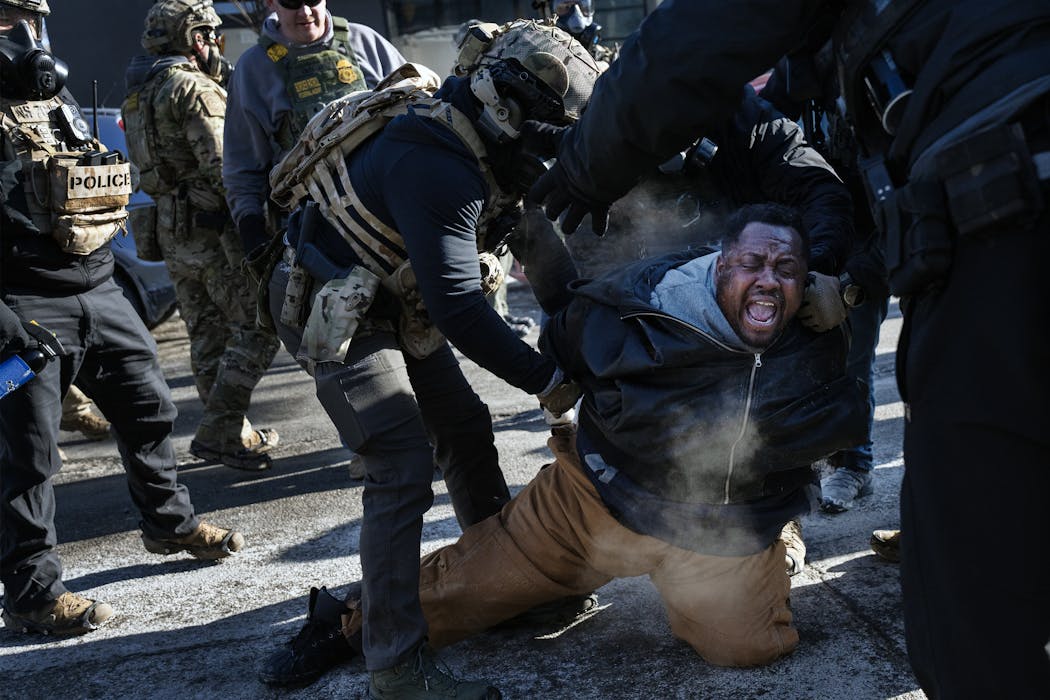
ICE officers and federal agents clash with protesters in south Minneapolis after Alex Pretti was fatally shot by federal agents on Jan. 24, 2026. Richard Tsong-Taatarii/The Minnesota Star Tribune

Forcibly entering homes without a judicial warrant. Arresting journalists who reported on protests. Defying dozens of federal orders. Killing U.S. citizens for noncompliance. Asking constitutionally protected observers this chilling question: “Have you not learned?”

This is daily life in Minnesota. Operation Metro Surge, ostensibly an immigration enforcement initiative, has become something more consequential: a constitutional stress test. Can constitutional protections withstand the actions of a federal government seemingly intent on aggressively violating the rule of law?

In Minneapolis, a city still reckoning with its own grim history of policing, the federal operation raises fundamental questions about law enforcement and the limits of executive power.

Legal scholars and civil rights advocates are especially worried about ongoing violations of the First, Second, Fourth and 10th amendments, as are other observers, including historians like us.

Catalog of violations

First Amendment concerns stem from reports that agents from ICE – described by some scholars as a paramilitary force – and the Border Patrol have deployed excessive force as well as advanced surveillance methods on suspects, observers and journalists. When enforcement activity impedes the rights to assemble, document and criticize government action, that chills those rights, and the consequences extend beyond any single demonstration. These rights are not peripheral to democracy. They are central to it.

Second Amendment issues erupted following the fatal shooting of a legally armed Alex Pretti in Minneapolis. Highly placed administration officials claimed Americans could not bring firearms to protests, despite a long-standing interpretation that in most states, including Minnesota, a person who was legally permitted to carry a firearm could bring it to such events. The assertion was in fact contrary to the Trump administration’s support for gun rights.

Thanks to the videos flooding social media, Fourth Amendment concerns are the most familiar. Allegations include entering homes without warrants, stopping, intimidating and seizing legal observers, and detaining suspects by virtue of their appearance or accent. Those are clear violations of the Fourth Amendment’s safeguards against unreasonable searches and seizures, which were adopted to prevent the exercise of arbitrary government power.

Finally, the 10th Amendment lies at the heart of Minnesota’s legal cases against the federal government.

One lawsuit contests the federal government’s refusal to allow the Minnesota Bureau of Criminal Apprehension to investigate the killings of Renee Good and Alex Pretti. Another challenges efforts to pressure local governments into assisting federal immigration enforcement. These disputes implicate federalism itself – the constitutional division of authority between states and the federal government that is the foundation of the American system.

The massive and rapid accumulation of these alleged constitutional violations – now working their way through the courts – in a single geographic locale is striking. So are the mass resignations from the state’s U.S. attorney’s office, which is responsible for representing the federal government in these cases.

And so is the deeper historical context.

A retreat from federal constitutional oversight

Starting in 1994, federal intervention became a powerful corrective whenever local police violated constitutional rights.

From Newark to New Orleans, federal oversight was not always welcomed, but it was frequently necessary to enforce equal protection and due process.

Federal oversight has been essential in enforcing civil rights when municipalities would not. Active monitoring of policing in those cities kept officers and administrators accountable and encouraged officers to follow constitutional standards. At its core, what experts call “constitutional policing” requires that government’s use of authority to ensure order be justified, limited and subject to oversight.

In that vein, after the 2020 murder of George Floyd by a Minneapolis policeman, the 2023 U.S. Department of Justice report on policing in Minneapolis identified questionable patterns and practices. Those problems included the “unreasonable” use of deadly force, racial profiling and retaliation against journalists. The Department of Justice’s proposed consent decree – grounded in constitutional policing – offered a way forward.

But in May 2025, the Department of Justice, under the leadership of President Donald Trump’s appointee Pam Bondi, withdrew the recommended agreement.

Seven months later, Operation Metro Surge deployed thousands of federal agents to Minnesota with a markedly different enforcement philosophy.

Indeed, the recent expansion of federal enforcement authority in Minnesota followed a retreat from federal constitutional oversight.

An excerpt from a court opinion asserting that ICE had violated more judicial orders in January 2026 than 'some federal agencies have violated in their entire existence.'
An excerpt from an opinion by Chief U.S. District Judge Patrick J. Schiltz asserts that ICE had violated more judicial orders in January 2026 than ‘some federal agencies have violated in their entire existence.’
courtlistener.com

Taking the handcuffs off

A presidential executive order, signed by Trump in late April 2025 and titled “Strengthening and Unleashing America’s Law Enforcement to Pursue Criminals and Protect Innocent Citizens,” pledged to remove what were described as “handcuffs” on police.

Soon thereafter, the administration deployed the National Guard to Los Angeles amid immigration protests.

Though a federal judge later rejected the legal rationale for that deployment, in August 2025, the president sent National Guard forces to Washington, D.C., purportedly to reduce crime. In September 2025, Trump described American cities as potential “training grounds” for the military to confront what he called the “enemy from within.”

Each episode reflects an increasingly expansive view of executive branch authority.

Whether Operation Metro Surge ultimately withstands judicial scrutiny remains to be seen. Numerous lawsuits continue to wind their way through the courts.

But the broader question is already clear: When, in the name of security, the executive branch directly challenges so many Bill of Rights protections at once, how much strain can the American legal system absorb? Will basic constitutional rights survive this moment?

What is unfolding in Minnesota is not simply a local enforcement story. It is a test of whether the Constitution as we know it will survive.

The Conversation

The authors do not work for, consult, own shares in or receive funding from any company or organization that would benefit from this article, and have disclosed no relevant affiliations beyond their academic appointment.

ref. ICE and Border Patrol in Minnesota − accused of violating 1st, 2nd, 4th and 10th amendment rights − are testing whether the Constitution can survive – https://theconversation.com/ice-and-border-patrol-in-minnesota-accused-of-violating-1st-2nd-4th-and-10th-amendment-rights-are-testing-whether-the-constitution-can-survive-274613

Congress has exercised minimal oversight over ICE, but that might change

Source: The Conversation – USA – By Claire Leavitt, Assistant Professor of Government, Smith College

President Donald Trump and Congress agreed to separate funding for the Department of Homeland Security from a larger spending bill that enables the federal government to continue operations. They now face a self-imposed deadline of Feb. 13, 2026, to negotiate potential changes to immigration enforcement.

The fact that funding for the department – and in particular Immigration and Customs Enforcement, or ICE – has become politically contentious represents a new turn on Capitol Hill.

Funding for ICE has increased substantially over the past year, with the number of its agents more than doubling.

On July 4, 2025, Trump signed a massive tax-and-spending package that increased annual funding for ICE from US$8 billion in 2024 to $28 billion in 2025.

During the first year of Trump’s second term, Republican majorities in the House and Senate have taken a hands-off approach to oversight of what is now the nation’s most highly funded law enforcement agency.

I am a professor of government who studies Congress and its oversight role. Since ICE’s funding increase, the Senate has held just one public hearing on ICE, according to my own unpublished data. Although the House has held a few routine oversight hearings of DHS, none have focused on ICE or Customs and Border Protection.

Traditional role for Congress

Congress holds longtime, well-established constitutional authority to oversee and investigate the executive branch and other political institutions. Having authorized funding for federal programs, it typically – if inconsistently – conducts substantial oversight to ensure its policies are being carried out successfully and as lawmakers originally intended.

Following the January 2026 killings of Renee Good and Alex Pretti in Minneapolis, Minnesota, members of Congress from both parties have called for investigations.

However, “investigations” is a broad term that encompasses several options. The Justice Department announced on Jan. 30, 2026, that it is pursuing a civil rights investigation into Pretti’s death. That same day, DHS announced that the FBI is leading the federal probe into his death, with assistance from ICE.

But Congress could also establish an independent, bipartisan commission to examine the killings and make recommendations for laws and regulations to prevent future deaths and ensure quick accountability. Some notable examples of congressional commissions include one that investigated the terrorist attacks of Sept. 11, 2001, and a 2010 commission that recommended $4 trillion worth of budget changes to address the national debt.

Or Congress could take the lead itself.

Rand Paul, the Republican chair of the primary oversight panel in the Senate, and New York Republican Rep. Andrew Garbarino, the chair of the House Homeland Security Committee, have asked top immigration officials to testify this month. But other congressional Republicans have remained vague about what shape the investigations should take and which branch of government should lead them.

Who’s in charge of oversight?

The debate over which branch of government should investigate government failures is a long-standing one.

Early in the republic’s history, under President George Washington, a federal militia suffered a massive defeat at the hands of Native American tribes at the Battle of Wabash in 1791. Congress was unsure of its constitutional authority to investigate the disastrous encounter: Did the separation-of-powers system prevent Congress from investigating another, independent branch of government? Or did the Constitution’s system of checks and balances imply that the Washington administration could not credibly investigate itself?

Ultimately, the House opted to establish its own investigative committee, and Washington, setting an important precedent, agreed to turn over requested information.

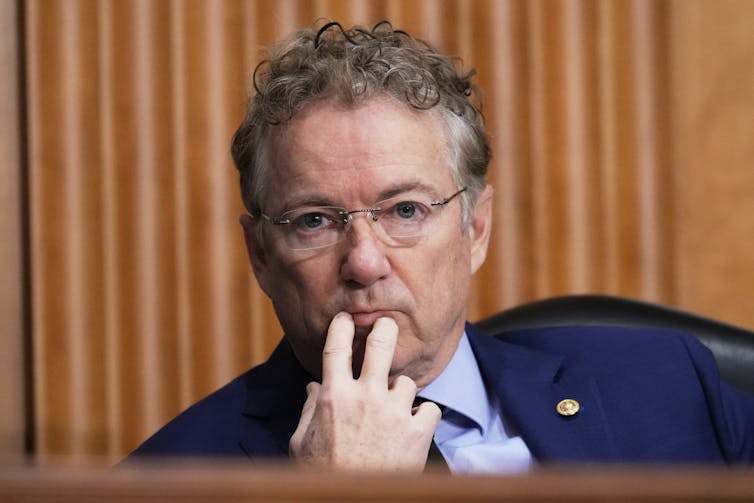
Sen. Rand Paul touches two fingers to his lips as he listens to someone testifying.
Republican members of Congress, including Kentucky Sen. Rand Paul, are calling for hearings about ICE.
AP Photo/J. Scott Applewhite

There are several benefits to Congress leading its own inquiries, whether in lieu of, or in addition to, federal agency investigations. For one, even highly combative committee hearings are valuable arenas for information gathering and processing, helping members of Congress thoroughly understand an issue and thus make informed and effective policy changes.

An in-depth committee investigation of the Minneapolis killings could make it more likely that new restrictions and oversight mechanisms are written into law.

Investigations can be bipartisan

Additionally, Congress’ subpoena power is a legally binding tool that enables committees to draw necessary information from the agencies they are investigating. This information, presented at hearings and in committee reports, becomes part of the historical record and serves as an important resource for future investigations both within and outside Congress, including scholarship.

For instance, the final reports of the House Select Committee to Investigate the January 6th Attack in 2022 and the House Committee on Benghazi in 2016 provide exhaustively detailed timelines of the respective attacks that do not exist anywhere else.

Republican-led investigations into the Minneapolis killings, and continued oversight of ICE and CBP, would also lend credibility to both the party and the independence of the legislative branch.

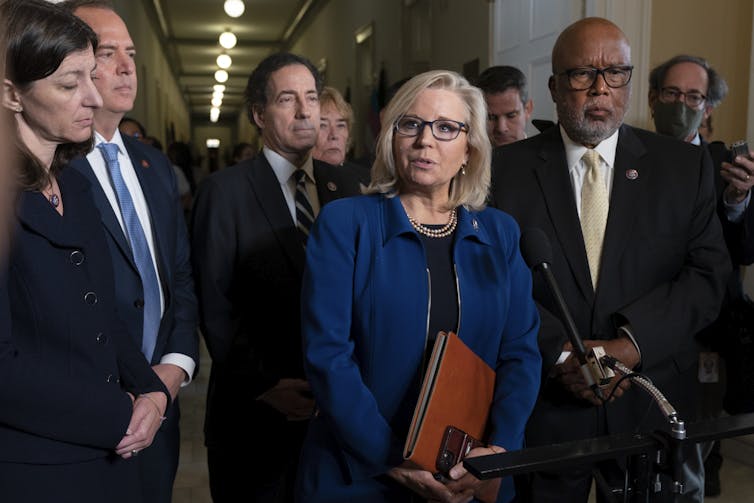
Liz Cheney, a former House Republican, speaks at a microphone alongside other Jan. 6 investigators.
High-profile hearings in the past, including the House investigation into the Jan. 6, 2021, assault on the Capitol, have shed light on events but not always resulted in consensus.
AP Photo/Jacquelyn Martin

Political scientists have found that committees are less likely to investigate the executive branch when the president is from their own party. However, significant bipartisan probes do occur even in a highly polarized era. In 2005, for instance, Virginia Republican Rep. Tom Davis launched an inquiry into the George W. Bush administration’s response to Hurricane Katrina, despite facing pushback from the White House.

More recently, in 2018, the Republican-controlled House Committee on Oversight and Government Reform investigated Republican Gov. Rick Snyder’s handling of the Flint water crisis in Michigan, earning praise from Democrats on the panel.

Risks of grandstanding

However, while Congress has investigative powers, it does not have any enforcement authority. Congress can recommend criminal charges after an investigation, but only the Justice Department can bring indictments.

There are also significant political risks to committee-led inquiries, particularly public hearings. Political scientists have found that investigations of the executive branch diminish the president’s approval rating.

Additionally, members of Congress often engage in performative outrage and grandstanding during public hearings, which tends to help individual members’ electoral prospects but does little to enhance collective public faith in Congress’ legitimacy or its ability to conduct independent and fact-based inquiries.

Given the continuing partisan divide over ICE and the agency’s increased presence in Minneapolis and other cities, it’s possible that congressional hearings could devolve into rancor and name-calling. However, public opinion polling has found that ICE has become a liability for Trump and the Republican Party.

With the 2026 midterm elections coming up, Republicans in Congress may not be able to afford to stay silent.

The Conversation

Claire Leavitt has received funding from the Project on Government Oversight (POGO) and the Levin Center for Oversight and Democracy.

ref. Congress has exercised minimal oversight over ICE, but that might change – https://theconversation.com/congress-has-exercised-minimal-oversight-over-ice-but-that-might-change-274396

‘Inoculation’ helps people spot political deepfakes, study finds

Source: The Conversation – USA – By Bingbing Zhang, Assistant Professor of Journalism and Mass Communication, University of Iowa

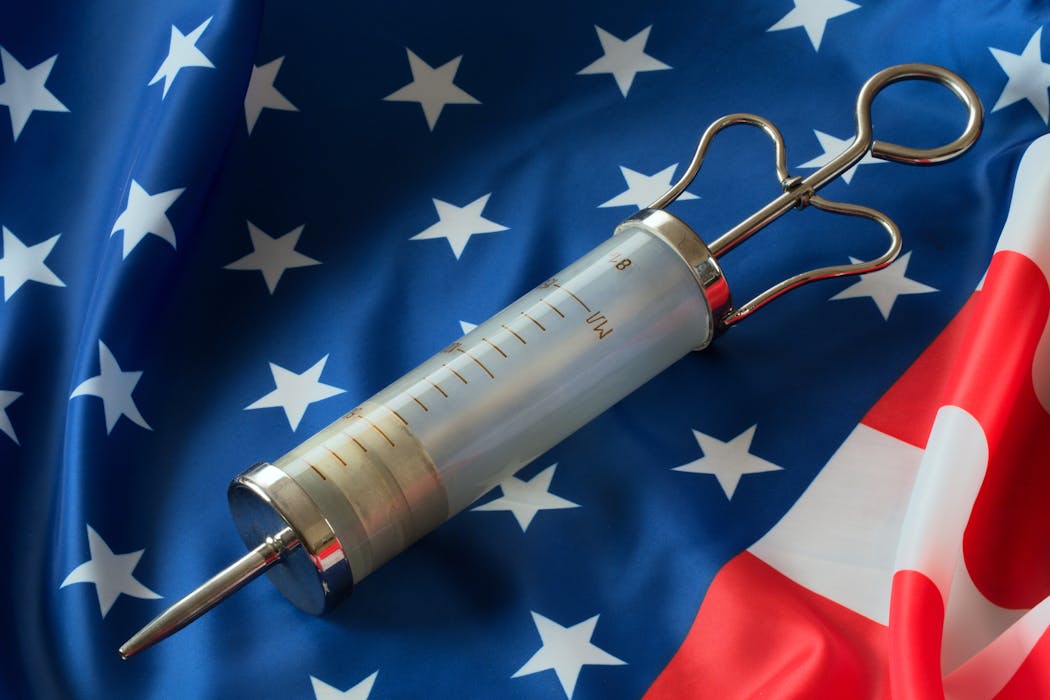
Can figurative inoculations ward off the scourge of political deepfakes? Canonmark/iStock via Getty Images

Informing people about political deepfakes through text-based information and interactive games both improve people’s ability to spot AI-generated video and audio that falsely depict politicians, according to a study my colleagues and I conducted.

Although researchers have focused primarily on advancing technologies for detecting deepfakes, there is also a need for approaches that address the potential audiences for political deepfakes. Deepfakes are becoming increasingly difficult to identify, verify and combat as artificial intelligence technology improves.

Is it possible to inoculate the public to detect deepfakes, thereby increasing their awareness before exposure? My recent research with fellow media studies researchers Sang Jung Kim and Alex Scott at the Visual Media Lab at the University of Iowa has found that inoculation messages can help people recognize deepfakes and even make people more willing to debunk them.

Inoculation theory proposes that psychological inoculation – analogous to getting a medical vaccination – can immunize people against persuasive attacks. The idea is that by explaining to people how deepfakes work, they become primed to recognize them when they encounter them.

In our experiment, we exposed one-third of participants to passive inoculation: traditional text-based warning messages about the threat and the characteristics of deepfakes. We exposed another third to active inoculation: an interactive game that challenged participants to identify deepfakes. The remaining third were given no inoculation.

Participants were then randomly shown either a deepfake video featuring Joe Biden making pro-abortion rights statements or a deepfake video featuring Donald Trump making anti-abortion rights statements. We found that both types of inoculation were effective in reducing the credibility participants gave to the deepfakes, while also increasing people’s awareness and intention to learn more about them.

Why it matters

Deepfakes are a serious threat to democracy because they use AI to create very realistic fake audio and video. These deepfakes can make politicians appear to say things they never actually said, which can damage public trust and cause people to believe false information. For example, some voters in New Hampshire received a phone call that sounded like Joe Biden, telling them not to vote in the state’s primary election.

This deepfake video of President Donald Trump, from a dataset of deepfake videos collected by the MIT Media Lab, was used in this study about helping people spot such AI-generated fakes.

Because AI technology is becoming more common, it is especially important to find ways to reduce the harmful effects of deepfakes. Recent research shows that labeling deepfakes with fact-checking statements is often not very effective, especially in political contexts. People tend to accept or reject fact-checks based on their existing political beliefs. In addition, false information often spreads faster than accurate information, making fact-checking too slow to fully stop the impact of false information.

As a result, researchers are increasingly calling for new ways to prepare people to resist misinformation in advance. Our research contributes to developing more effective strategies to help people resist AI-generated misinformation.

What other research is being done

Most research on inoculation against misinformation relies on passive media literacy approaches that mainly provide text-based messages. However, more recent studies show that active inoculation can be more effective. For example, online games that involve active participation have been shown to help people resist violent extremist messages.

In addition, most previous research has focused on protecting people from text-based misinformation. Our study instead examines inoculation against multimodal misinformation, such as deepfakes that combine video, audio and images. Although we expected active inoculation to work better for this type of misinformation, our findings show that both passive and active inoculation can help people cope with the threat of deepfakes.

What’s next

Our research shows that inoculation messages can help people recognize and resist deepfakes, but it is still unclear whether these effects last over time. In future studies, we plan to examine the long-term effect of inoculation messages.

We also aim to explore whether inoculation works in other areas beyond politics, including health. For example, how would people respond if a deepfake showed a fake doctor spreading health misinformation? Would earlier inoculation messages help people question and resist such content?

The Research Brief is a short take on interesting academic work.

The Conversation

Bingbing Zhang receives funding from the School of Journalism and Mass Communication at the University of Iowa.

ref. ‘Inoculation’ helps people spot political deepfakes, study finds – https://theconversation.com/inoculation-helps-people-spot-political-deepfakes-study-finds-273739

Reclaiming water from contaminated brine can increase water supply and reduce environmental harm

Source: The Conversation – USA (2) – By Mervin XuYang Lim, Ph.D. Student in Chemical Engineering, University of Arizona

The Hyperion Water Reclamation Plant in Los Angeles handles a massive amount of sewage and wastewater. Dean Musgrove/MediaNews Group/Los Angeles Daily News via Getty Images

The world is looking for more clean water. Intense storms and warmer weather have worsened droughts and reduced the amount of clean water underground and in rivers and lakes on the surface.

Under pressure to provide water for drinking and irrigation, people around the globe are trying to figure out how to save, conserve and reuse water in a variety of ways, including reusing treated sewage wastewater and removing valuable salts from seawater.

But for all the clean water they may produce, those processes, as well as water-intensive industries like mining, manufacturing and energy production, inevitably leave behind a type of liquid called brine: water that contains high concentrations of salt, metals and other contaminants. I’m working on getting the water out of that potential source, too.

The most recent available assessment of global brine production found that it is 25.2 billion gallons a day, enough to fill nearly 60,000 Olympic-sized swimming pools each day. That’s about one-twelfth of daily household water use in the U.S. However, that brine estimate is from 2019; in the years since, brine production is estimated to have increased due to the continued expansion of desalination plants.

That’s a lot of water, if it could be cleaned and made usable.

A short explanation of reverse osmosis, the leftover dirty water is known as brine.

How is brine disposed?

Today, most brine produced along the coastline is released into the ocean. Inland cities without this option typically leave brine in ponds to evaporate, blend it with other wastewater, or inject it into deep wells for disposal.

However, most of these methods require strict environmental protections and monitoring strategies to reduce harm to the environment.

For instance, the extremely high salt content in brine from desalination plants can kill fish or drive them away, as has happened increasingly since the 1980s off the coast of Bahrain.

Evaporation ponds require specialized liners to prevent the brine from leaching into the ground and polluting groundwater. And when all the water has evaporated, the remaining solids must be promptly removed to prevent them from blowing away as dust in the wind. This happens in nature, too: As the Great Salt Lake in Utah dries up, salty windblown dust has already contributed to significant air pollution, as recorded by the Utah Division of Air Quality.

Brine injected into the earth in Oklahoma, including into wells used for hydraulic fracking of oil and natural gas, was one of several factors that led to a 40-fold increase in earthquake activity in the five-year period from 2008 to 2013, as compared to the preceding 31 years. And wastewater has been documented to leak from the underground wells up to the surface as well.

A short video clip shows dust blowing over an area.
Plumes of dust rise from the bed of the Great Salt Lake in Utah in January 2025.
Utah Division of Air Quality

Emerging treatment technologies

Researchers like me are increasingly exploring brine’s potential not as waste but as a source of water – and of valuable materials, such as sodium, lithium, magnesium and calcium.

Currently, the most effective brine reclamation methods use heat and pressure to boil the water out of brine, capturing the water as vapor and leaving the metals and salts behind as solids. But those systems are expensive to build, energy-intensive to run and physically large.

Other treatment methods come with unique trade-offs. Electrodialysis uses electricity to pull salt and charged particles out of water through special membranes, separating cleaner water from a more concentrated salty stream. This process works best when the water is already relatively clean, because dirt, oils and minerals can quickly clog or damage the membranes, reducing the performance of the equipment.

Membrane distillation, in contrast, heats water so that only water vapor passes through a water-repelling membrane, leaving salts and other contaminants behind. While effective in principle, this approach can be slow, energy-intensive and expensive, limiting its use at larger scale.

A trailer containing a small water reclamation system.
Mervin XuYang Lim, CC BY-SA

A look at smaller, decentralized systems

Smaller systems can be effective, with lower initial costs and quicker start-up processes.

At the University of Arizona, I am leading the testing of a six-step brine reclamation system known as STREAM – for Separation, Treatment, Recovery via Electrochemistry and Membrane – to continuously reclaim municipal brine, which is salty water left over from sewage treatment.

The system combines conventional methods such as ultrafiltration, which removes particles and microbes using fine filters, and reverse osmosis, which removes dissolved salts by forcing water through a dense membrane, alongside an electrolytic cell – a method not typically employed in water treatment.

Our previous study showed that we can recover usable quantities of chemicals such as sodium hydroxide and hydrochloric acid at one-sixth the cost of purchasing them commercially. And our initial calculations indicated the integrated system can reclaim as much as 90% of the water, greatly reducing the volume of what remains to be disposed. The cleaned water in turn is suitable for drinking after final disinfection using ultraviolet or chlorine.

We are currently building a larger pilot system in Tucson for further study by researchers. We hope to learn if we can use this system to reclaim other sources of brine and study its efficacy in eliminating viruses and bacteria for human consumption.

We have partnered with other researchers from the University of Nevada Reno, the University of Southern California and the U.S. Army Corps of Engineers to help communities in the Southwest secure reliable water supplies by safely reusing municipal wastewater to serve everyday water use.

The Conversation

Mervin XuYang Lim receives funding under Cooperative Agreement Number W9132T-23-2-0001 with the U.S. Army Corps of Engineers, Engineer Research and Development Center, Construction Engineering Research Laboratory (USACE ERDC-CERL).

ref. Reclaiming water from contaminated brine can increase water supply and reduce environmental harm – https://theconversation.com/reclaiming-water-from-contaminated-brine-can-increase-water-supply-and-reduce-environmental-harm-272232

Schools are increasingly telling students they must put their phones away – Ohio’s example shows mixed results following new bans

Source: The Conversation – USA (2) – By Corinne Brion, Associate Professor in Educational Administration, University of Dayton

Schools with phone bans are often giving students the option of placing their devices in a locked case or a box. Hill Street Studios/iStock/Getty Images

Cellphones are everywhere – including, until recently, in schools.

Since 2023, 29 states, including New York, Vermont, Florida and Texas, have passed laws that require K-12 public schools to enforce bans or strict limits on students using their cellphones on campus.

Another 10 states have passed other measures that require local school districts to take some kind of action on cellphone usage.

Approximately 77% of public schools now forbid students from having their phones out during class – an increase from the 66% of schools that forbade students from using phones at school in 2015.

Schools across the country are finding different ways to enforce no-phone policies. Some schools have students lock their phones in pouches that only open at the end of the day. Others use simple classroom bins or lockers.

Some research shows that spending a lot of time looking at phones instead of people’s faces can make it harder for children and teenagers to get the basic human skills they need for developing and maintaining friendships and other relationships.

As a scholar of educational leadership, I believe that school is about more than just classes – it’s where young people learn how to get along with others. When phones are put away, students actually start looking at each other and talking again. School hallways and the lunchroom turn into spaces where students learn to resolve conflicts face-to-face and make human connections.

A teenage girl stands at a table holding a pouch near a group of other young people.
A high school senior shows how to unlock a magnetic pouch that holds her smartphone at University High School Charter in Los Angeles in March 2025.
Genaro Molina/Los Angeles Times via Getty Images

Putting phones away in Ohio

Ohio is an example of a state that has clamped down on students’ cellphone usage over the past 18 months.

In May 2024, Ohio went from suggesting some cellphone guidelines for different schools to adopt to requiring that all public districts limit students’ phone use during class. School districts could choose to allow phones at lunch or between classes.

Many schools began using lockable pouches, plastic bins or lockers to keep phones out of sight. They still needed to allow some students to have phones for medical reasons, like monitoring blood sugar on an app.

Ohio then adopted an even stricter cellphone use policy in 2025. This new law required all Ohio public school boards to adopt policies by Jan. 1, 2026, that prohibit phone use during the entire school day, including lunch and the time between classes.

A needed break

In the fall of 2025, I surveyed 13 Ohio public school principals from rural, urban and suburban districts. Principals reported that the partial phone bans increased students’ social interactions and reduced peer conflicts:

• 62% of principals described more verbal, face-to-face socializing during recess, at lunch time and between classes.

• 68% noted that students can stay on one task for more than 20 minutes without seeking a quick digital break.

• 72% observed a shift from heads-down scrolling to active conversation in common areas such as the cafeteria.

• 61% reported fewer online social conflicts spilling over into the classroom.

A tension for students

In late January 2026, I also surveyed and spoke with 18 Ohio high school students about the new phone bans in place at their schools as part of research that has not yet been published.

Their responses revealed a complex tension between understanding the need for the phone ban and feeling a significant loss of personal safety and autonomy.

A few students said they felt safe knowing a phone in the main office is available for emergencies.

Some students said they felt anxious about not being reachable if there is an emergency – like if a relative were in an accident, or if the younger siblings they care for required their help.

Finally, 13 out of 18 students argued that they should be learning the self-discipline required to balance technology with focus. Students said that phone bans made them feel as though they were children who could not make responsible decisions – rather than young adults preparing for professional environments.

Some students also said that not having their phones made it impossible to fill out college and scholarship applications during the school day, since many application systems require multifactor authentication and require phones to log in.

A young girl, as seen from the side, looks down at a dark pouch in a colorful hallway.
An eighth grader unlocks her cellphone from a pouch at Mark Twain Middle School in Alexandria, Va., in March 2025.
Jim Watson/AFP via Getty Images

Lessons from Ohio

Rules are more likely to be respected when students feel they have a voice in the boundaries that affect their daily lives. I think that school leaders could address students’ safety and security concerns in different ways, including by establishing a dedicated family emergency hotline that people can call.

Principals could designate supervised areas where more senior high school students can briefly use their phones for multifactor authentication. School leaders could also offer a specific time window for students to check messages on their phones, or an easy way for the school’s main office to deliver them messages from family.

While these insights from Ohio students and principals offer a helpful starting point, they are just one part of a much larger conversation.

More research is needed to see how these bans affect different types of schools and communities across multiple states. Because every district is different, what works in one town might cause unexpected challenges in another. By continuing to study these effects and listening to everyone involved, especially the students, researchers like myself can figure out how to keep classrooms focused and students interacting without making students feel less safe or less prepared for the adult world.

The Conversation

Corinne Brion does not work for, consult, own shares in or receive funding from any company or organization that would benefit from this article, and has disclosed no relevant affiliations beyond their academic appointment.

ref. Schools are increasingly telling students they must put their phones away – Ohio’s example shows mixed results following new bans – https://theconversation.com/schools-are-increasingly-telling-students-they-must-put-their-phones-away-ohios-example-shows-mixed-results-following-new-bans-274261