How hidden soil fungi ‘steal’ bacterial DNA to control the rain

Source: The Conversation – UK – By Diana R. Andrade-Linares, Postdoctoral Fellow in Microbial Ecology, University of Limerick

Lukas Jonaitis/Shutterstock

Tiny organisms on the ground – bacteria and fungi – have a “superpower” that allows them to reach up into the atmosphere and pull down the rain, according to a recent study.

To understand how a microbe can control a storm, we first have to look at how clouds become rain. High up in the atmosphere, water doesn’t always freeze at 0°C. Temperatures are normally much lower at cloud level but pure water can stay liquid down to a bone-chilling -40°C.

Most rain starts as ice. In the atmosphere, clouds are full of “supercooled” water – liquid that is colder than freezing but hasn’t turned to ice yet because it has nothing to hold onto.

For a cloud to turn into rain or snow, it needs a “seed”– a tiny particle for water molecules to grab onto so they can crystallise into ice, then fall from the clouds as rain. Dust, soot and salt – swept into the clouds by wind – can do this, but they aren’t very good at it. They usually require the temperature to drop significantly before they start working. This is where biology enters the frame.

Meet the ice-makers

For decades, scientists have known about ice-nucleating proteins (INpros) found in certain bacteria like Pseudomonas syringae. Bacteria travel from plant leaves into the clouds to trigger rain. They use special proteins to force water to freeze at temperatures as high as -2°C.

However, the recent discovery published in the journal Science Advances has revealed a new player in the climate game: fungal INpros. While bacteria keep their ice-making proteins tucked away on their “skin”, fungi (mainly Fusarium and Mortierella) secrete these proteins into the soil around them. Their structure makes these fungal proteins water soluble and smaller than the bacterial ones, and with a high ice seeding activity which makes them more effective cloud seeds.

Making it rain

This leads us to the bio-precipitation cycle. Imagine a forest floor covered in these fungi. As the wind kicks up, their microscopic ice-making proteins are launched into the clouds. Once there, they act as powerful “seeds”.

Mycelium is the vegetative body of a fungus, its root system. It’s made of fine, threadlike filaments called hyphae.
Fungal spores from the forest floor can get carried up to the clouds by the winds.
ABO PHOTOGRAPHY/Shutterstock

Even in relatively warm clouds (above -5°C), these fungal proteins can force water to crystallise into ice. As these ice crystals grow, they become heavy and fall. As they drop through warmer air, they melt and turn into rain.

This creates a loop:

  • fungi grow in the damp soil of a forest

  • proteins from the fungi are swept into the sky

  • rain is triggered by these proteins, watering the forest below

  • growth of more fungi is triggered by the rain, starting the cycle over again.

Unlike the Pseudomonas bacteria, which use ice to “attack” and damage crops to access their nutrients, these Mortierella fungi are peaceful plant partners. They aren’t looking to destroy. Instead, they secrete their ice-making proteins into the surrounding soil, which seems to create a protective shield from harsh conditions and a nutrient-rich environment that helps both the fungus and the plant flourish.

The new discovery about fungi is exciting because it shows that even organisms buried in the soil can influence the atmosphere, adding a new dimension to this ancient partnership between life and the sky.

It’s a missing piece in the puzzle of how life and the global climate shape one another. This ice-making ability probably gives the fungi a survival edge. They use ice to pump moisture toward their mycelia (a vast, underground web of tiny fungal threads), shield themselves from jagged frost damage and hitchhike through the clouds to reach new homes.

The evolutionary heist

The new research also uncovered how fungi of the Mortierellaceae family gained the ability to create ice. When the researchers studied the fungi’s genetic code, they found that these fungi didn’t evolve this trait on their own. Millions of years ago, they “borrowed” the genetic code for it from bacteria, through a process called horizontal gene transfer.

Think of it as a biological “copy and paste”. While most animals only inherit DNA from their parents, microbes can swap snippets of genetic code with their neighbours, giving them an instant evolutionary upgrade.

However, these fungi are much more efficient at making ice than the bacteria because the fungus secretes (sweats out – meaning they exist outside the fungal cell) these proteins, they can coat the environment around it and stay active in the soil after the fungus has moved on. These proteins are incredibly hardy. They can wash into streams, dry up into dust, and get swept into the sky by the wind.

Why this matters

This discovery could change how researchers view conservation. If we clear-cut a forest – stripping every tree away and leaving the land bare, we aren’t just losing trees. We might be breaking the biological engine that triggers regional rainfall.

As we face a changing climate with more frequent droughts, understanding these fungal INpros could be vital. We might one day use these natural, biodegradable proteins for “cloud seeding” to create rain.

Many countries (like the UAE, China and parts of the US) already have cloud-seeding programs to protect crops from frost. But this kind of cloud seeding relies on silver iodide – a heavy metal that can linger in the environment.

The fungal proteins offer a natural, biodegradable alternative. They could also protect crops from frost. By forcing ice to form early and smoothly, they release a tiny burst of heat that acts like a thermal blanket for the plant.

We could use them to make snow on ski slopes with less energy, create better-tasting frozen foods by preventing large ice crystals from damaging food cells, or even develop eco-friendly cooling systems that don’t rely on harsh chemical refrigerants.

The next time you’re caught in a sudden downpour, take a deep breath. That “smell of rain” might just be the scent of the these little organisms telling the clouds it’s time to let go.

The Conversation

Diana R. Andrade-Linares does not work for, consult, own shares in or receive funding from any company or organisation that would benefit from this article, and has disclosed no relevant affiliations beyond their academic appointment.

ref. How hidden soil fungi ‘steal’ bacterial DNA to control the rain – https://theconversation.com/how-hidden-soil-fungi-steal-bacterial-dna-to-control-the-rain-279618

Turning debt into forests: the finance tool making a comeback

Source: The Conversation – UK – By Alex Dryden, PhD Candidate in Economics, SOAS, University of London

There’s huge scope for debt-for-nature swaps to help protect forests in Indonesia. bumi.akasha/Shutterstock

In 2023, Ecuador struck an unusual deal. Instead of simply paying back its debts, it refinanced part of them on better terms and promised to spend the savings protecting the Galápagos Islands.

This type of transaction, known as a debt-for-nature swap, is often described as a “win-win”: lower debt costs for governments, and long-term funding for some of the world’s most fragile ecosystems.

Debt-for-nature swap transactions offer a range of benefits. Countries facing heavy debt burdens can reduce their liabilities, while bondholders are able to offload risky assets. At the same time, the financial saving is redirected into environmental projects, supporting vulnerable ecosystems.

These deals have been around since the late 1980s. Early swaps were typically small and led by environmental charities, which bought distressed debt cheaply and converted it into local funding for conservation. Through the late 1980s and early ’90s, there was a wave of enthusiasm for such deals, particularly in Latin America and Africa.


Read more:
Your essential guide to climate finance


That enthusiasm faded in the 2000s, as large-scale debt relief programmes reduced both the availability of distressed debt and the need for swaps. But in recent years, interest has returned. With banks now involved, today’s swaps can be far larger and more complex. Ecuador’s 2023 deal involved US$1.6 billion (£1.2 billion) of debt.

Since 1989, 169 debt-for-nature swap deals have been agreed, involving US$8 billion of debt being converted to fund environmental initiatives. But despite their appeal, they have not been universally popular.

Why Asia lags behind

Africa and Latin America have dominated these deals. By contrast, Asia has lagged behind, comprising just 13% of total global swaps. That’s surprising at first glance. Asia has an abundance of viable environmental projects, from vast biodiverse tropical forests in Malaysia to the carbon-storing mangroves of Indonesia and the threatened coral reefs in the Maldives.

So why have Asian economies not embraced debt-for-nature swaps?

During the peak of these swaps, many Asian economies had relatively little debt held in international markets, leaving less available to restructure. Borrowing was also comparatively cheap, reducing the incentive to pursue swaps.

Without a large amount of distressed, tradable debt, the financial mechanics that made swaps attractive and logistically viable in other regions were largely absent in Asia.

jamjar of coins with plant growing, green plants in background
When it comes to adoption of debt-for-nature swaps, Asia is lagging behind.
maeching chaiwongwatthana/Shutterstock

There were also political and institutional factors. Debt-for-nature swaps often involve foreign charities, foreign governments or international investors that influence how environmental funds are used within the country in question. In parts of Asia, concerns about sovereignty and external interference have made governments more cautious about such arrangements.

But today, that picture is changing. Across Asia, debt levels have risen sharply, particularly after the COVID pandemic. At the same time, more governments are borrowing through international bond markets, meaning a larger share of their debt is now held by private investors – and can, in principle, be bought back or restructured.

Potential candidates include Indonesia, Laos, Mongolia and the Maldives, where growing debt pressures combined with significant environmental assets provide the core ingredients required to justify effective swaps.

A tool gaining traction

Despite the resurgence in interest in debt-for-nature swaps, even the largest deals often only address a small share of total debt.

The latest structures can be complex and costly to arrange. There are also concerns about both national sovereignty and impinging on the rights of local communities, whose lives are often most affected by the transaction.

By trying to explicitly link debt relief to environmental outcomes, well-designed swaps can create dedicated, long-term funding streams for conservation. This can help protect ecosystems that support livelihoods, store carbon and buffer communities against climate-related consequences such as storms and rising sea levels.

As climate change accelerates and debt burdens rise, countries – including across Asia – are being squeezed between repaying creditors and protecting their future. Debt-for-nature swaps won’t solve either problem alone, but they can offer one of the few ways to tackle both issues at once.

The Conversation

Alex Dryden does not work for, consult, own shares in or receive funding from any company or organisation that would benefit from this article, and has disclosed no relevant affiliations beyond their academic appointment.

ref. Turning debt into forests: the finance tool making a comeback – https://theconversation.com/turning-debt-into-forests-the-finance-tool-making-a-comeback-278582

Algorithms don’t care: how AI worsens the double burden for Indonesia’s female gig workers

Source: The Conversation – Indonesia – By Suci Lestari Yuana, Lecturer at the Faculty of Social and Political Sciences, Universitas Gadjah Mada

Artificial intelligence is often celebrated as the future of work. It is efficient, innovative and neutral. Yet, for many women in Indonesia’s gig economy, AI feels like a source of mounting pressure.

In my recent research on female gig workers in Indonesia, I examine what I call AI colonialism. This term describes how colonial influence persists today through technology and digital systems that maintain control.

This concept captures how powerful actors use AI – often based in the Global North – to exploit workers in the Global South. Much like historical colonialism, this digital iteration relies on the extraction of data, labour and resources to cement unequal power relations.

In Indonesia, AI-driven platforms like ride-hailing and e-commerce draw on informal labour but push the risks and responsibilities back onto workers. But women pay the highest price because algorithms fail to recognise the realities of care work, safety concerns and social norms.

AI and the gendered restructuring of work

Indonesia’s labour market has long been defined by informality. Millions are working without formal contracts or social protections. Tech companies like Gojek, Grab, Maxim and Shopee didn’t formalise this workforce – they only digitised it.

Drivers are classified as partners rather than employees. This means no minimum wage, no sick pay and no maternity leave. Income is dictated entirely by completed tasks and algorithmic ratings.

For women, this structure collides with the so-called “double burden” since they are responsible for paid work and unpaid care.

Lia, a 33-year-old food delivery rider, wakes before sunrise to cook and get her children ready for school. It is only after she has cleared her domestic duties that she finally logs into the app.

“The system doesn’t know I have children,” she told me. “It only knows whether I am online.”

Platform algorithms reward constant, uninterrupted availability. Incentive schemes demand a specific number of trips within narrow time windows – a high bar for those with domestic ties.

If Lia logs off to pick up her children, she risks losing potential bonuses. If she reduces her hours due to menstrual pain or fatigue, her performance metrics drop.

Neoliberal capitalism relies on a massive amount of unpaid “invisible labour”, such as childcare and housework, but refuses to pay for it or provide a safety net for those who do it. Far from correcting this imbalance, AI systems make things worse.

When Cinthia, a female food delivery rider and a single mother of a one-year-old, fell ill and turned off her app for several days, she noticed fewer job offers upon returning. “It felt like the system punished me,” she said. “Now I’m afraid to stop working.”

The algorithm does not explicitly discriminate. However, it operates on the assumption of a worker without caregiving constraints – a norm that systematically disadvantages women.

Discrimination behind a ‘neutral’ interface

The digital economy often claims neutrality. But gender bias persists.

Yanti, a 43-year-old ride-hailing driver in Yogyakarta, regularly messages male passengers before pickup: “I am a woman driver. Is that okay?”

Many cancel immediately.

The app records cancellations. It does not record gender bias.

Because Yanti avoids working late at night for safety reasons, she misses out on rush-hour incentives. The system, however, doesn’t account for safety – it simply interprets her absence as lower productivity.

Scholars like [suspicious link removed] and Virginia Eubanks have pointed out that automated systems often mirror and amplify social inequalities rather than eliminate them.

In Indonesia’s platform economy, discrimination isn’t necessarily hard-coded. It is a byproduct of a design logic that favours efficiency over equity.

In India, women drivers also report earning less on average than their male counterparts, partly due to safety-driven choices regarding timing and route selection. The algorithm does not account for risk in its calculations. It only measures raw output.

Safety, surveillance and algorithmic discipline

For women drivers, safety is a constant negotiation.

Around 90% of the women in our focus group discussions chose food delivery because it felt safer than ride-hailing. Even so, harassment persists in delivery work.

Lia shared how a male colleague targeted her with inappropriate comments as they waited for orders. “It’s not only customers,” she said. “Sometimes it’s other drivers.”

During the COVID-19 pandemic, gig workers were labelled “essential”. Yet their income dropped dramatically by as much as 67% in early 2020. To cover the loss, many worked 13 or more hours per day.

Platforms maintained their rigid performance metrics throughout the crisis. Drivers who are forced to stop working due to illness often see their ratings decline. Health vulnerability was translated directly into an algorithmic penalty.

This reflects labour discipline through digital infrastructure: control shifting from foreman to code.

AI colonialism is more than just foreign ownership. It is about the way extractive logics are woven into everyday digital systems. Workers bear the burden of labour, data, time and risk – yet the platforms hold all the power over algorithmic governance.

Coping, solidarity and everyday resistance

Female gig workers have built dense networks of solidarity through WhatsApp and Telegram groups. They share information about policy changes, warn each other about unsafe customers and exchange strategies for navigating algorithmic shifts.

If an account becomes “gagu/silent” (receiving few orders), experienced drivers “warm it up” by temporarily boosting its activity. They lend money for fuel. They pool resources for vehicle repairs.

When someone faces harassment, others circulate the information quickly to protect fellow drivers. They visited the platform office together when a member was suspended.

Rather than waiting to be formally acknowledged as employees, these women build protection among themselves. This “solidarity over recognition” emerges from shared vulnerability as mothers, caregivers and workers in male-dominated spaces.

Their mutual aid turns care into a strategy and a form of “everyday resistance” – subtle acts that challenge dominant systems, while reflecting a distinctly feminist ethic of survival through relational solidarity.

Beyond innovation narratives

AI is not colonial by design. But when embedded in platform capitalism within unequal societies, it can reproduce colonial patterns of exploitation and loss of ownership.

If we are serious about building just digital futures, we must move beyond innovation narratives and listen to workers, especially women and vulnerable groups in the Global South.

Their stories are a vital reminder that behind every “efficient” algorithm is a human being navigating the delicate balance of survival, dignity and hope.

The Conversation

Suci Lestari Yuana menerima dana dari Hibah Penulisan Dosen, Fakultas Ilmu Sosial dan Ilmu Politik, Universitas Gadjah Mada

ref. Algorithms don’t care: how AI worsens the double burden for Indonesia’s female gig workers – https://theconversation.com/algorithms-dont-care-how-ai-worsens-the-double-burden-for-indonesias-female-gig-workers-279978

Another MP jumps to Carney’s Liberals, igniting concerns about the health of Canada’s democracy

Source: The Conversation – Canada – By Travis Leicher, Doctoral Student, Politlical Studies, Queen’s University, Ontario

Marilyn Gladu is the most recent MP to cross the floor to the Liberals, the fifth to do so since Mark Carney became prime minister a year ago.

As the Liberal government inches closer to a majority, its legitimacy is being called into question since it would not be based on voter preference.

While floor crossing is permissible within a Parliamentary system and has historical precedent, both public opinion and voter behaviour suggest it’s unpopular among Canadians. Why?

One common response is that floor crossing is undemocratic, which explains frequent calls for by-elections. But this charge isn’t necessarily warranted — it depends on context, including whether voters were primarily choosing a party or an individual candidate when they voted in the previous federal election.

Conservative Leader Pierre Poilievre recently posted on X: “The people in her [Gladu’s] community voted for our Conservative vision of a Canada … not for the costly Liberal government she has now joined.”

But this rhetoric rests on an unresolved empirical question: did voters in Sarnia-Lambton-Bkejwanong vote for the Conservative Party or for Gladu? It’s unclear. Political science research suggests that party loyalty doesn’t fully determine how people vote.

Interpretations and expectations

In the absence of local data on voters’ motivations, it’s more useful to consider two questions about the role of representation. First, what does it mean for someone to “represent” a constituency? Second, how should elected officials behave once in office?

In The Concept of Representation (1967), American political theorist Hannah Pitkin introduced a now-classic way of thinking about representation: descriptive, symbolic, formal and substantive.

Setting aside the first two, formal representation is about the rules that give politicians their authority and hold them accountable — like elections — while substantive representation asks a simpler question: Do they actually act in the interests of the people they represent?

From a formalistic perspective, any action a politician takes counts as representation as long as it falls within their authorized powers. In contrast, the substantive view holds that a representative is required to act as the voters themselves would act in the same situation.

Elections rest on an implicit expectation of substantive representation: representative democracy only works if elected officials make their constituents’ interests present through what they do. Without that, there’s no real reason to prefer one candidate over another and no clear basis for holding them accountable.

Still, there has been an ongoing debate about the expectation that representatives act as “trustees” or “delegates” once in office. The delegate model holds that representatives simply convey the preferences of their constituents, while the trustee model gives representatives the latitude to use their own judgement in pursuing constituents’ interests.

Taking initiative or betraying trust?

If representatives are meant to advance their constituents’ interests, is floor-crossing a necessary freedom to respond to changing circumstances rather than to adhere rigidly to a party platform? Or does it amount to a betrayal of the mandate voters expressed at the ballot box?

In November 2011, Parliament debated a private member’s bill tabled by NDP MP Mathieu Ravignat to amend the Parliament of Canada Act and require floor-crossers to resign, thereby triggering by-elections. Ravignat said the bill would “ensure that politicians are held accountable for the choice made by their constituents.”

But Conservative MP Michelle Rempel warned the bill “would seriously undermine the independence of members of this House … [and] would also impede members of Parliament in representing the interests of their constituents, which is one of the fundamental duties under our Constitution.”

This argument draws on the trustee versus delegate debate, which ultimately centres on how much independence representatives should exercise.

Because a pure delegate model sharply limits representatives’ discretion, critics of the trustee model often settle on some blended approach.

For example, the fourth president of the United States, James Madison, argued in his essay “Federalist No. 10” that representation should respond to public views. This delegate-style thinking reflected a flexible responsiveness intended as a safeguard against the tyranny of the majority that can arise when public interests are treated as uniform and easily determined.

British philosopher and politician Edmund Burke endorsed a pure trustee view, arguing in one famous speech: “Your representative owes you, not his industry only, but his judgment; and he betrays, instead of serving you, if he sacrifices it to your opinion.”

This view appeals to those who see political leadership as requiring a high degree of competence: representatives are elected to exercise informed judgment in the interests of their constituents, even when that judgment runs counter to public opinion.

Is floor crossing undemocratic?

The extent to which someone believes representatives should have independence influences whether they regard floor-crossing as a threat to democracy. But instead of catastrophizing about the danger floor-crossing poses to our democracy, Canadians should instead focus on how the electoral system shapes whether their expectations and understandings of representation are actually feasible in practice.

In doing so, they might accept floor-crossing but take issue with certain systemic features like party discipline, which makes floor-crossing one of the few available acts of defiance when a representative feels their party’s platform no longer serves their constituency.

Alternatively, Canadians may object to floor-crossing on the grounds that, given the many pre-existing barriers to representative independence, it further weakens the remaining role of party policy commitments as the main mechanism through which voters can anticipate and secure the policies that matter to them.

The Conversation

Travis Leicher does not work for, consult, own shares in or receive funding from any company or organisation that would benefit from this article, and has disclosed no relevant affiliations beyond their academic appointment.

ref. Another MP jumps to Carney’s Liberals, igniting concerns about the health of Canada’s democracy – https://theconversation.com/another-mp-jumps-to-carneys-liberals-igniting-concerns-about-the-health-of-canadas-democracy-280342

Want to talk comics? Today, that often means going online

Source: The Conversation – Canada – By J. Andrew Deman, Professor of English, University of Waterloo

Comics are more than a reading experience. They are a culture.

While reading a comic has traditionally been the centrepiece of that culture — with comics being the “social object” that binds and unites the culture, in the words of sociologist Jyri Engeström — the social experience doesn’t end when you put the comic down.

Comics culture has a storied history of conventions, shop conversations, swaps and sale events, collector exhibits and even academic courses on the subject.

And now we can add social media and the rise of webcomics — some of which even begin online, and then move to book format. So how do comic fans engage on Instagram and TikTok?

In a new media era, they share their comics experience with others online — debating, reflecting, recommending and enjoying.

As a scholar who specializes in comics media (graphic novels, comics, manga, and so on) and professional communications, I’m also interested in how we might add “learning” to that list since social media represents, arguably, the largest and most potent information dissemination network in human history. And when it comes to comics, there’s no shortage of things to discuss in this new media age.

Different eras of comics

Without social media, the previous “ages” or eras of English-language comics worked differently. The notion of different ages of comics evolved from discussion among fans, editors and scholars, and these include, as comics scholar Adrienne Resha explains: The Golden (1930s-50s), Silver (1950s-70s), Bronze (1970s-90s) and Modern (1990s-2010s) Ages.

These ages each have their own peculiarities, generic tendencies and political themes, but they can all be united by what Resha terms “corporate mandates and collector markets.”

Our current age of comics (for which Resha proposes the term “The Blue Age”) is one in which comics can be consumed through global digital platforms like Marvel Unlimited, Webtoons, Shonen Jump and so on, all without readers and fans ever purchasing a paper copy.

More importantly, it’s also an age in which comics fans form communities across social media platforms, allowing them to hold all manner of conversations with each other in order to express and enhance their experiences.

Respectful or toxic fan spaces?

These platforms create what new media expert Henry Jenkins defines as “affinity spaces” — places where readers and fans socialize while communally working through the meaning and importance of the social object (in this case, a comic) that they’ve all read.

While gathering around comics is longstanding and some dedicated comic-book shops persist despite shifts in the publishing industry, many readers now come together online.

The reputability of these online spaces is debatable, though, living as we do in an era of misinformation and disinformation. Online communities, just like real-life communities, can become toxic.

The Comicsgate scandal of 2017-18 that involved online backlash to gendered, racialized and cultural diversity in comics — in real spaces as well as comics storylines and representation — lead to widespread threats of violence.

But there is little doubt that the conversations fans are having about comics, and the affinity spaces surrounding them, are changing, with online conversations making up for losses of the traditional comic-book store.

As Resha notes: “The letters columns that once graced the back pages of comic books have been all but replaced and in some cases augmented by Twitter and, to a lesser degree, Tumblr and Facebook.”

Shaping comics culture

Powerhouse comics publishers have been quick to enter these affinity spaces. Marvel, DC and Image all joined Twitter, now called X, by 2008 in order to mediate and facilitate conversations about their products and outputs.

Comics artists have done the same. Many now have active followings of their social media accounts which allow them to promote their work, share works in progress and dialogue with their fans directly.

Social media has been able to draw fans, creators and publishers into a robust digital conversation that celebrates and shapes the art of comics as we know it.

Comics scholarship, public discussion

More recently, comics scholarship projects have sought to bring the academic consideration of comics as a medium into the public realm as well.

Such projects include education researcher Zachary Rondinelli’s “Welcome to Slumberland,” my own project “The Claremont Run” related to subverting gender in the X-Men or my co-project with Canadian communications scholar Anna Peppard, “Sequential Scholars.”

These projects, and others like them, allow readers the opportunity to peruse and consider university-level research on comics while they simultaneously weigh fan opinion, creator perspective and publisher mandate, all in the same network.

Informed attention and art circulation

This scholarly perspective adds a unique value to the conversation. In a 2023 article, literary studies researcher and critic Tim Lanzendörfer argues literary studies play an important role in how the public ascribes meaning to literature when scholars engage in public discussion.

The famous essay “A Habitable World” by author and comic scriptwriter Carter Scholz named some benefits of this process:

“So a commercial art form absolutely needs critical attention if it is to survive as an art. Otherwise, it gets its direction only from seeing what sells this month or this year; such observations are prone to error, impossible to interpret and worse than useless to the artist.”

His essay precedes the comic Music for Mechanics that he scripted, part of the acclaimed Love and Rockets series drawn by the Hernandez brothers.

Video about ‘Sequential Scholars.’

Sharing love of the medium online

If comics are going to survive and to thrive as an art form, embracing social media can create an enhanced and empowered comics culture, one that is informed by varied stakeholders — like fans, creators, publishers, educators, critics and scholars — interacting with each other and spreading the good word about comics, so to speak, collectively.

And this might be the power of The Blue Age of comics — to leverage the information-sharing potential of social media to create an online experience of shared affinity for comics that is visual, networked, accessible (convenient even) and informed. For researchers across fields, this could also mean thinking about leveraging the accessibility of comics to contribute to the public good.

If you haven’t read a comic in The Blue Age, or simply haven’t attempted to share your love of the medium online, now’s a good time to jump back in. It’s an entirely new experience.

The Conversation

J. Andrew Deman receives funding from SSHRC to study and post about comics online through “Sequential Scholars.”

ref. Want to talk comics? Today, that often means going online – https://theconversation.com/want-to-talk-comics-today-that-often-means-going-online-277151

Guns over people: Rising military spending is eroding quality of life around the world

Source: The Conversation – Canada – By Ruolz Ariste, Adjunct Professor, School of Public Policy and Administration, Carleton University

As Canada celebrates meeting the North Atlantic Treaty Organization (NATO) target of spending two per cent of GDP on defence, it’s important to remember this spending isn’t counted within the concept of what’s known as social GDP, an alternative metric focused on measuring a nation’s social development, well-being and sustainability rather than just monetary production.

Excessive military spending, in fact, can harm economic and social development, which raises concerns about NATO’s new five per cent target
by 2035, transitioning to 3.5 per cent by 2029.

GDP measures the total value of goods and services produced in an economy. It’s an accounting of economic activity, not a judgment of social value. Therefore, military expenditures are included in the GDP.

But the social GDP concept used in the United Nations Human Development Index (HDI) does not regard military spending as a positive contribution. In fact, such spending doesn’t contribute to the HDI at all, and represents significant costs to national economies.


Read more:
Are Canadians ready to ditch GDP as a key prosperity indicator?


Military spending erodes other investments

The current global environment is volatile and inequitable. While every country needs the ability to defend itself against another nation’s threats, that shouldn’t lead to states becoming more aggressive or defending themselves disproportionately or recklessly.

Military spending should not come at the cost of public investments in health, education, the environment or transportation, because it carries significant tangible and opportunity costs.

It’s clear in many countries around the world that military spending erodes and crowds out civilian spending.

The United States is a case in point. The second Donald Trump administration has been attacking countries with no regard for national or international law. The U.S.-Israeli war against Iran is the latest case in point.

While the Trump administration has increased military spending by about 13 per cent from 2025 levels to reach more than $1 trillion for the first time, it’s been cutting spending in areas specified as critical by the UN’S HDI.

The Trump administration wants massive cuts to civilian appropriations for 2026 — a 21 per cent reduction compared to 2025 — but U.S. congress has largely rejected those proposals. Nevertheless, approved 2026 funding for social programs doesn’t keep pace with inflation; it’s nearly two per cent below the 2025 level and seven per cent below 2020 levels after adjusting for inflation.

This has been also the case for Russia and Israel.

Canadian sacrifices

Canada certainly hasn’t waged war on any country and doesn’t have a strong military culture. But it’s not exempt from the “guns versus butter” funding challenge.

It reached the two per cent NATO target by increasing the Department of National Defence (DND) budget by $9 billion, counting defence-related spending across departments and shifting some programs to DND.

In the process, other federal departments are required to reduce their budgets by 15 per cent over a three-year period, though some temporary social programs have been maintained (school food program, Build Canada Homes office) or created (funding for Women and Gender Equality Canada). This may suggest a more moderate guns versus butter approach in Canada than in countries like the U.S., Russia and Israel.

However, with a new 3.5 per cent NATO target by 2029 and five per cent by 2035 that the Carney government has suggested it endorses, deeper cuts to social programs and bigger budget deficits are probably on the horizon.

The impact of war on well-being

As the war in Ukraine approached its fourth year, the number of casualties had reached 1.8 million (1.2 million in Russia and 600,000 in Ukraine). This includes as many as 465,000 deaths (325,000 in Russia and 140,000 in Ukraine).

Between Oct. 7, 2023 and Jan. 5, 2025 during the Israeli-Hamas war, there were 75,200 violent deaths and 8,540 deaths attributed to disease, lack of care and malnutrition.

The majority of deaths in Gaza have been women and children. Peacekeepers, journalists and medical personnel have also died.

In the Israel-Hezbollah war in Lebanon, more than 1,000 people have been killed; there have been 3,000 casualties.

War increases the ranks of displaced people as well. Close to 10 million Ukrainians have been displaced because of the conflict with Russia (3.7 million internally and 5.9 million refugees). This represents about a quarter of the total Ukrainian population, making it the largest displacement crisis in Europe since the Second World War.

At least two-thirds of Gaza’s population of 2.1 million people has been displaced due to war. They are sheltered in precarious conditions across approximately 1,000 displacement sites.

As for Lebanese, the war has already displaced nearly one million or close to 15 per cent of Lebanon’s total population.

Reconstruction costs

The costs of physical destruction and reconstruction are also part of war. Estimates suggest the total cost of reconstruction and recovery in Ukraine will be almost US$588 billion over the next decade, which is nearly three times the estimated nominal GDP of Ukraine for 2025.

A staggering 84 per cent of all structures in Gaza were destroyed or damaged during the war. That will require more than US$70 billion in reconstruction.

For the 14-month Israel-Hezbollah war (up to December 2024, so not including the series of attacks starting on March 2026), the World Bank estimates US$11 billion will be needed to rebuild Lebanon.

There are also direct and indirect costs incurred by the displaced.

Direct costs include loss of employment and income, increased cost of living in general and health-care costs in particular. Indirect costs involve poor mental health and long-term well‑being, loss of livelihoods and businesses, education disruption, poverty and criminality. These costs are massive, multi‑layered and long‑term, and they compound the aforementioned broader national economic losses.

Making aggressors pay

How can sharp increases in military spending be justified given their potentially catastrophic consequences? And how can the world shift the way it thinks about war?

When countries expand their military budgets or enter into conflict, the costs go far beyond equipment and munitions. One possible approach would be to establish an international mechanism requiring aggressor states to bear the full economic and human costs imposed on the countries they attack.

This could include estimating the loss of human life using measures such as the value of a statistical life — an economic tool that assigns a monetary value to risk and mortality — alongside reconstruction costs and broader economic damage. These combined costs could then be imposed on the aggressor.

Such a framework could help curb the arms race and discourage ever-increasing military spending. With NATO targets rising toward 3.5 or even five per cent of GDP, the risk of crowding out social investment grows. Reconsidering these targets could ultimately benefit societies around the world.

The Conversation

Ruolz Ariste does not work for, consult, own shares in or receive funding from any company or organisation that would benefit from this article, and has disclosed no relevant affiliations beyond their academic appointment.

ref. Guns over people: Rising military spending is eroding quality of life around the world – https://theconversation.com/guns-over-people-rising-military-spending-is-eroding-quality-of-life-around-the-world-279601

How to protect your hobbies in a culture that wants to exploit them

Source: The Conversation – Canada – By Aly Bailey, Assistant Professor in Recreation and Leisure Studies, University of Waterloo

What happens when our joyful activities become another way to make money? In an era defined by hustle culture and rising living costs, many people feel pressured to turn their hobbies into side-hustles.

The gig economy has made this monetization easier than ever. A growing share of work now takes place through short-term, flexible, remote and freelance contracts. Digital platforms like Uber, TaskRabbit, Rover, Skip The Dishes and Etsy make it simple for people to monetize their hobbies.

For some, these opportunities offer flexibility or a way to supplement income in an expensive economy. But they can also turn activities that once provided relaxation into yet another source of productivity.


Hobbies can bring joy, well-being and focus to our busy lives, but so many of us don’t have one. If you’re ready to replace scrolling with stitching, or hustle with horticulture, The Hobby Starter Kit (a new series from Quarter Life) will help you get going.


When a hobby becomes a job

I learned this first-hand when a hobby I loved became part of my livelihood. During graduate school, when I was barely making ends meet, I became a certified fitness instructor to earn money from activities I loved: yoga, running and weightlifting.

What I didn’t realize was that the joy I once found would quickly turn into burnout. I no longer exercised for fun; instead, it was a means to an end and my body grew exhausted. I was precariously employed by multiple employers and was driving across town at any hour of the day.

My experience reflects a broader cultural pressure to treat hyper-productivity as a virtue. Hustle culture celebrates long working hours, limited work-life balance and a relentless pursuit of money, job advancement and prestige.

Social media has amplified these norms.

Popularized hashtags like #Grindset, #ThankGodItsMonday and #HustleHard promote the idea that every skill or spare moment should be monetized — an outlook endorsed by billionaires like Elon Musk and Kim Kardashian.

Why hobbies matter for well-being

Hobbies play an important role in well-being because they provide repeated and ongoing joyful activity not tied to professional or financial incentives.

The COVID-19 pandemic illuminated how essential hobbies are for our health and well-being. During lockdowns and periods of social isolation, many people turned to hobbies to cope with stress, boredom and uncertainty.

There is no shortage of evidence about how hobbies contribute to personal development as well as mental and physical health.

A person sitting in Sukhasana yoga pose
Hobbies play an important role in well-being because they offer repeated, meaningful enjoyment not tied to professional or financial incentives.
(Pexels)

Activities that involve any type of exercise like powerlifting, for example, can improve blood pressure and reduce the risk of cardiovascular disease. Creative hobbies like crocheting, knitting, photography, music and scrapbooking can similarly boost health and well-being.

When passion turns into work

Many hobbies naturally lead to skill development. Over time, people gain expertise, build communities and develop transferable skills.

Because hobbies often generate valuable skills, it can be tempting to monetize them. Sociologist Robert A. Stebbins coined the term “serious leisure” to describe the pursuit of recreation, hobby or volunteer activities to find career satisfaction.

Serious leisure is distinct from “casual leisure,” which involves intrinsically rewarding short-lived joyful and pleasurable activity.

Turning a passion into income can sometimes be rewarding. But in today’s gig economy, monetizing hobbies is less about following one’s passion and more about financial growth or necessity.


Read more:
Gig platform workers need better health and well-being protections


Many people — particularly those in low- and middle-income brackets — are forced to string together multiple gigs to make ends meet. These jobs often come without permanence, benefits, paid leave or pension, and income is unpredictable.

Research also shows that racialized workers are over-represented in this type of precarious work, indicative of the many racial disparities that exist in labour.

As a result, for many people, monetizing hobbies is about economic survival amid endless structural barriers.

Rest as resistance to hustle culture

Growing awareness of these pressures and systemic injustices has sparked movements that challenge the expectation to constantly produce and perform.

One example is America performance artist Tricia Hersey’s Nap Ministry, which promotes rest as a form of resistance to grind culture, capitalism and white supremacy. Hersey argues that rest should be understood not as laziness, but as a fundamental human right that has historically been denied to many people, especially racialized communities.

Since the COVID-19 pandemic, people impacted by hustle culture have increasingly scrutinized the pressures to overwork. People want work-life balance, which includes more time for hobbies.

But maintaining that balance requires resisting the trap of making hobbies your work and sacrificing your joy.

Protecting your joy

Protecting your hobbies today often means setting intentional boundaries in a culture that constantly pushes (hyper)productivity.

If possible, resist the urge to turn your hobbies into work, or keep monetization minimal. Hobbies are sacred. They represent time away from labour, which is essential for well-being.

It is also worth being critical of tropes that promise more working hours will lead to greater financial success. The truth is that a large share of wealth comes from inheritance or structural advantages rather than individual effort. When people are exploited and overworked, it benefits the elite class more than anyone else.

Lastly, lean into rest as resistance. Rest can look different for everyone. For me, yoga has returned to being a respite from work rather than a job. For others it might be knitting, swimming in a lake or simply getting more sleep.

Whatever form it takes, protecting your joy matters in a culture that wants to exploit it.

The Conversation

Aly Bailey does not work for, consult, own shares in or receive funding from any company or organisation that would benefit from this article, and has disclosed no relevant affiliations beyond their academic appointment.

ref. How to protect your hobbies in a culture that wants to exploit them – https://theconversation.com/how-to-protect-your-hobbies-in-a-culture-that-wants-to-exploit-them-277817

Kenyans are encouraged to work abroad, but protection rights remain weak – new research

Source: The Conversation – Africa – By Jonathan Presley, Department of Political Science, University of Amsterdam

Labour migration from Kenya was oriented towards Africa, North America and Europe until the 1990s. Kenyans then started moving to the Gulf countries, such as Saudi Arabia, Kuwait, the United Arab Emirates and Oman. Most Kenyan labour migrants to the Gulf perform low-waged work, the women in domestic occupations and the men as security guards.

By 2025 over 300,000 Kenyans were working in three Gulf countries – Saudi Arabia, Qatar and the United Arab Emirates. A few thousand more were stationed in Oman, Bahrain and Kuwait.

The remittances sent to Kenya from workers abroad grew exponentially. In 1990 remittances totalled just under US$140 million, accounting for 1.6% of Kenya’s GDP. By 2024 this was US$5 billion, 4.2% of GDP.

Evidence of migrant workers suffering human rights abuses has remained a constant source of tension, however. Workers have reported forced labour, working excessive hours without rest in violation of contracts and labour standards, and restrictions on freedom of movement. Threats, humiliation, intimidation, isolation, and physical or sexual abuse have also been reported.

In the early 2010s the media began reporting distress calls from migrants. Nonprofit organisations also began putting pressure on the Kenyan government to act. The outcry led the government to impose a ban on migration to Gulf countries, including Saudi Arabia. It also extended its regulation of labour migration. The ban to Saudi Arabia was lifted in 2016 after a bilateral agreement was signed.


Read more:
250,000 Ethiopians migrate every year: what drives them and what needs to change


Yet distress cases continued. By late 2021 a report from the Kenyan Senate Committee on Labour and Social Welfare called for a renewed ban on migration.

As researchers we have worked on different aspects of migration for many years. We recently completed a project focusing on origin countries’ policies surrounding low-waged labour migration. In a recent paper we explored the case of Kenyan migration to Saudi Arabia. The study involved interviews with Kenyan stakeholders and analysis of policy documents, government statements and news reports. We looked at how Kenya balances an economic strategy of emigration with protection of its citizens from rights violations abroad.

Our findings were that the Kenyan government has prioritised increasing labour migration over protection of workers.

Re-engagement with Saudi Arabia

On assuming office in 2022, President William Ruto promised to battle Kenya’s high unemployment by creating a million jobs abroad for Kenyan workers. With a goal of raising annual remittances to US$10 billion, Kenya looked to Saudi Arabia to help achieve this. As the cabinet secretary for foreign affairs explained:

The Kingdom of Saudi Arabia wishes to get more Kenyans employed in their country and we will play our part as a government to ensure that more Kenyans can work and earn well working in Saudi Arabia.

A series of high level diplomatic meetings between Kenya and Saudi Arabia took place in the early months of the new government. Kenyan officials then presented Saudi Arabia as a safe destination for Kenyan workers.

As one of the people we spoke to explained:

The perception of Saudi Arabia as bad will change, we (the government) are the ones to change it.

The government insisted that rights abuses originated in Kenya. It blamed rogue Kenyan employment agencies, and promised actions aimed at improving and regulating labour migration out of Kenya.


Read more:
Half a million Ethiopian migrants have been deported from Saudi Arabia in 5 years – what they go through


In 2023 Kenya’s national assembly approved the National Policy on Labour Migration. Its aims included improving coordination of labour migration governance, promotion of foreign employment and protection of Kenyan migrant workers.

In 2024 the Ministry of Labour and Social Protection put in place airport screening checks to protect against document fraud. However, by 2025 many of the promised interventions had failed to materialise. These included safe houses in Saudi Arabia for workers seeking to escape abuse, and more labour attachés to monitor the implementation of bilateral agreements and handle complaints.

Taken at face value, the government’s insistence that recruitment practices in Kenya lie at the root of abuse would favour an increase in pre-departure training and better education for migrants about their rights. Yet, in late 2024, the Ministry of Labour and Social Protection announced it was reducing the amount of pre-departure training for labour migrants. And, despite frequent statements on signing Bilateral Labour Agreements, no new agreement with Saudi Arabia has been made public.

Income versus protection

Our analysis indicates that the Kenyan government’s reluctance to improve protection is driven by three things.

First, pressure exerted by Saudi Arabia. A report from a 2021 Senate investigation shows that Saudi officials pressured Kenyan officials to present a better public picture of working conditions in Saudi Arabia. The recent reductions in pre-departure training time seem to have come at the request of employers in Saudi Arabia.

Second, Kenya’s vulnerability to this pressure. Saudi Arabia represents the second largest source of remittances back to Kenya, hosts the largest Kenyan diaspora in the Gulf countries and shows openness to increasing the number of Kenyan workers.

Interviews indicated a prevailing view that putting too many protection measures in place would cause Kenya to lose job opportunities to workers from other countries such as Ethiopia. Moreover, the government’s insistence on increasing labour migration as a way to reduce unemployment may make Kenya susceptible to destination country demands for more limited rights protections.

Third, political interest in the recruitment sector. Many respondents pointed to the recruitment industry as a source of abuses such as contract substitution.

The Labour Migration Bill, which aims to regulate the recruitment industry, has been stalled since 2024. Aligned with information we received, a recent New York Times exposé revealed that regulation is hampered by the fact that many agencies are owned by high ranking politicians. This implies politicians have a financial stake in ongoing recruitment and minimal oversight.

Going forward

If the Kenyan government wishes to continue to encourage labour emigration, it should look for ways to combine this with protection. Improving its migration bureaucracy would allow Kenya to strengthen its negotiating position with destination countries while also improving protection.

A bureaucracy that weeds out bad recruitment agencies and has control over its labour migrant population – for example through credential checks, training and community outreach – is highly desirable for destination countries.

Better protection would also improve Kenya’s negotiating position by demonstrating that it will not make deals at any cost in order to meet campaign promises.

The Conversation

Evelyn Ersanilli received funding from the European Research Council under Grant ERC-2017-StG-760043 for this research.

Jonathan Presley does not work for, consult, own shares in or receive funding from any company or organisation that would benefit from this article, and has disclosed no relevant affiliations beyond their academic appointment.

ref. Kenyans are encouraged to work abroad, but protection rights remain weak – new research – https://theconversation.com/kenyans-are-encouraged-to-work-abroad-but-protection-rights-remain-weak-new-research-278802

Artemis II crew used modern photography to tell the visual story of their lunar journey – and update some classic Apollo images

Source: The Conversation – USA – By Jennifer Levasseur, Curator of the National Air and Space Museum, Smithsonian Institution

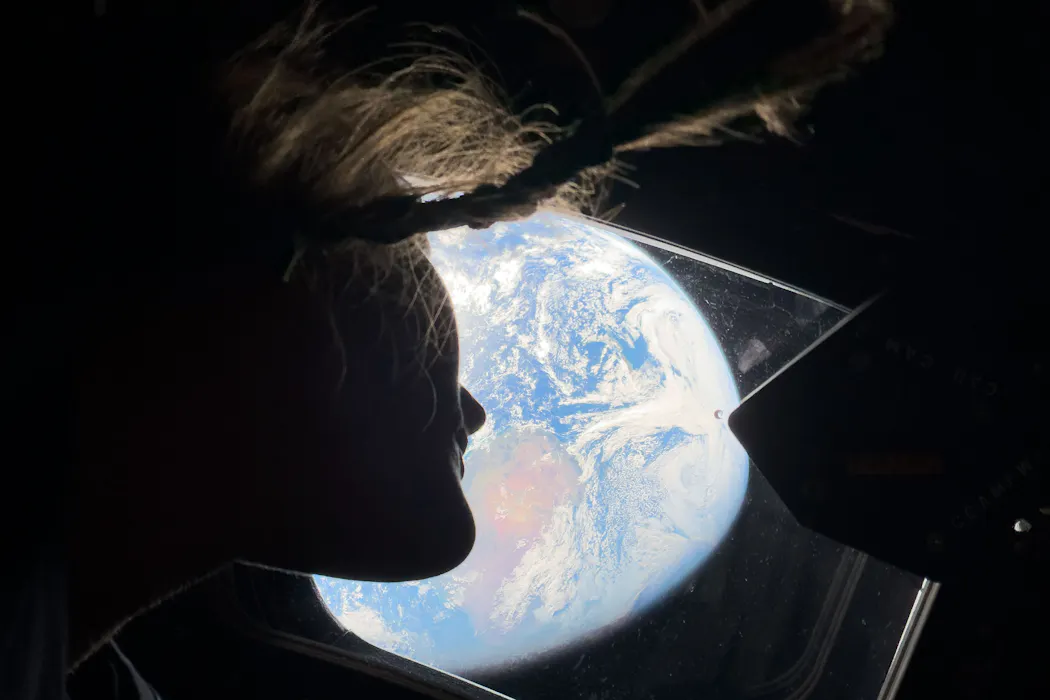
NASA astronaut Christina Koch gazes at Earth on April 2, 2026, taken with an iPhone 17 Pro Max. NASA

At this point in NASA’s human spaceflight story, researchers have a substantial amount of material – documents, artifacts and images – with which to tell the stories of past flights to space. But with NASA’s Artemis II mission around the Moon now in the books, we’re getting a refreshed look at space.

And the digital photographs transmitted back to Earth – even mid-mission – tell a modern story of the crew’s experience. Entire generations born after Apollo 17’s last close-up looks at the Moon in 1972 may hardly believe the reality of Artemis II in the age of AI-generated deep fakes. But this mission was real, and four humans can tell the tale of their adventure using the photographs safely stored on memory cards now in NASA’s hands.

As a space historian and curator well-versed in the visual culture of human spaceflight, I’ve long anticipated seeing the photographs of a return to the Moon.

Post-Apollo, images of space travel were characterized by launching space shuttles, Erector Set-like space stations and Mars rovers crossing a dusty landscape. While the Artemis II photos have timeless, classic elements similar to the Apollo photos, better photographic tools give them a clean, crisp vibe. Space travel now looks more like many people may imagine it’s supposed to look: grand, adventurous, audacious, sublime.

As part of Gen X, I have no personal memory of Apollo. Like many born after NASA’s first slate of lunar missions, my memories of space include visuals like the ill-fated Challenger launch; Mercury program astronaut John Glenn’s return to orbit in a space shuttle in 1998, at age 77; and seeing photos of deep space from the Hubble Space telescope. But these events didn’t include humans on or near the Moon, and many people around my age are thirsty for their own lunar memories to share.

Thanks to the internet and social media, which allow people to access images at a greater speed and volume than ever before, photographs from the Artemis II crew became almost instantly iconic. They were also compared to what came before, as they fit within a mental catalog of exploration photography that’s far older than humans’ earliest attempts at space travel.

An image showing the side of the Orion spacecraft, and the Moon in space, backlit in front of the Sun.
Artemis II astronauts managed to capture a solar eclipse from space on April 6, 2026. The Moon shadowed the Sun entirely, with just its corona visible.
NASA

Planning and taking photos

Artemis II crew members Reid Wiseman, Victor Glover, Christina Koch and Jeremy Hansen had weeks’ worth of photography training with a slew of Nikon digital cameras and iPhones. Taking photos with the device so many people have in their pockets is leaps and bounds beyond photography equipment used during Apollo 17 – even the 1960s-era 35mm camera.

NASA’s preference for using the Nikon D5 on the International Space Station has extended to Artemis II. This camera performs well, and NASA likes tried and true reliability when astronauts travel to space.

NASA took a decidedly different path when planning for images of the Moon with Artemis, compared to Apollo. First, the Orion spacecraft used on Artemis is bigger, and it has double the number of windows and cameras inside. Five of Orion’s six windows had live-streaming video cameras capturing the lunar flyby.

Because of their wide swing around the Moon at a distance greater than any Apollo flight, this crew could see more of the Moon in a single glance.

Artemis’ crew trained intensively with geologists and other scientists to be on the lookout for more prospective landing sites for future missions, craters and just interesting events or features. People watching live online could hear their descriptions of what they saw. The conversation between the astronauts on the Orion capsule and the Artemis Science Team was also broadcast.

Exciting new photos

Based on the launch date and the position of the Moon, the crew was prepared for unique angles like Earthset – similar to sunset – and a solar eclipse.

Two photos of the Earth, partially shadowed, hanging above the surface of the Moon.
The famous Earthrise photo from Apollo 8 shows Earth rising across the lunar horizon. Artemis II’s version, Earthset, shows it setting.
NASA

Earthrise – like sunrise – was made familiar by Apollo 8. But it wasn’t visible in the same way for Artemis II due to the Moon’s darkness in its current phase. So, while denied a chance to compare an Earthrise of today with that of 1968, another moment early in the mission provided what might be an even more spectacular visual alignment with memories of Apollo.

In 1972, as the crew of Apollo 17 began their journey to the Moon, geologist Harrison Schmitt captured a series of images of the fully lit disc of Earth at around five hours after the start of the mission. This photo became an icon within a series of iconic photographs of the Space Age, and probably the entire 20th century. It was even featured in Al Gore’s film “An Inconvenient Truth.”

Two photos of the entire Earth as shown from space.
Earth as seen from Apollo 17 in 1972, captured by Harrison Schmitt, and during Artemis II in 2026.
NASA

That was Earth 1972, and now we have Earth 2026 – both serving as documents of singular moments in Earth’s long history. This new photograph shows Earth – lit by the Moon’s glow, not the Sun, as with the Apollo 17 photo – in the black void of space, the thin sliver of our atmosphere shielding life, and generating polar aurorae.

Schmitt’s “Blue Marble” spent over five decades as one of the most-viewed photographs in history. And while people back on Earth saw the new Artemis version within hours of capture, it might get less public recognition in an age of photo manipulation and high-tech wizardry.

These first few images from Artemis II are just the tip of the imagery iceberg, though. Modern memory cards have a capacity that will allow the number of digital images from Artemis II to far surpass the nearly 4,000 photos captured during Apollo 17.

In the weeks and months to come, as mission images fill online databases, Artemis II’s significance as a fresh new vision for human space exploration will continue to grow, building on the lessons of Apollo.

The Conversation

Jennifer Levasseur does not work for, consult, own shares in or receive funding from any company or organization that would benefit from this article, and has disclosed no relevant affiliations beyond their academic appointment.

ref. Artemis II crew used modern photography to tell the visual story of their lunar journey – and update some classic Apollo images – https://theconversation.com/artemis-ii-crew-used-modern-photography-to-tell-the-visual-story-of-their-lunar-journey-and-update-some-classic-apollo-images-280341

4 ways the war in Iran has weakened the United States in the great power game

Source: The Conversation – USA – By Jeffrey Taliaferro, Professor of Political Science, Tufts University

China and Russia view the U.S. grand strategy as increasingly out of focus. AP Photo/Julia Demaree Nikhinson

“Never interrupt your enemy when he is making a mistake.”

Napoleon Bonaparte’s maxim may well have been in the minds of policymakers in Moscow and Beijing these past weeks, as the U.S. war in Iran dragged on. And now that a 14-day ceasefire between Tehran and Washington is in effect – with both sides claiming “victory” – Russian and Chinese leaders still have an opportunity to profit from what many see as America’s latest folly in the Middle East.

Throughout the weekslong conflict, China and Russia struck a delicate balance. Both declined to give Iran – seen to a varying degree as an ally of both nations – their full-throated support or sink any real costs into the conflict.

Instead, they opted for limited assistance in the form of small-scale intelligence and diplomatic support.

As a scholar of international security and great power politics I believe that is for good reason. Beijing and Moscow were fully aware that Iran could not “win” against the combined military might of the United States and Israel. Rather, Iran just needed to survive to serve the interests of Washington’s main geopolitical rivals.

Below are four ways in which the U.S. war in Iran has damaged Washington’s position in the great power rivalries of the 21st century.

1. Losing the influence war in the Middle East

As I explore in my book “Defending Frenemies,” the U.S. has long struggled to balance competing objectives in the Middle East. During the Cold War, this meant limiting the Soviet Union’s influence in the region, while contending with the development of nuclear weapons by two troublesome allies, Israel and Pakistan.

By the 2020s, the priorities in Washington were aimed at restricting the influence of the U.S.’s great power rivals – China and to a lesser degree Russia – in the Middle East.

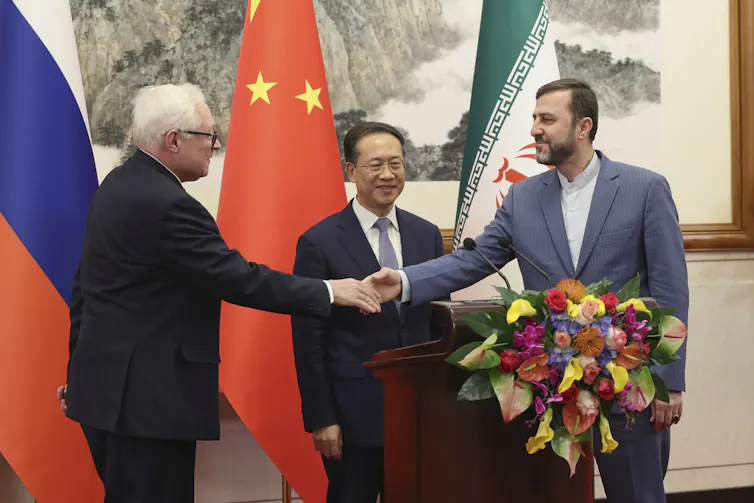
Three meet greet each other in diplomatic setting.
Russian, Chinese and Iranian diplomats have a confab in 2025 in Beijing.
Lintao Zhang/Pool Photo via AP

Yet under Presidents Xi Jinping and Vladimir Putin, China and Russia have sought to increase their footprint in the region through a variety of formal alliances and informal measures.

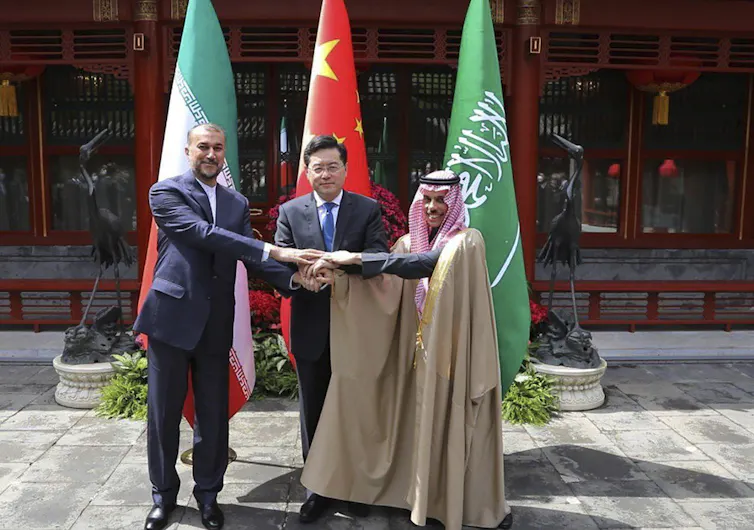
For Russia, this took the form of aligning with Iran, while also partnering with Tehran to prop up the now-ousted regime of President Bashar Assad during the Syrian civil war. Meanwhile, China increased its diplomatic profile in the Middle East, notably by acting as a mediator as Saudi Arabia and Iran restored diplomatic ties in 2023.

The irony of the latest Iran war is that it follows a period in which circumstances were unfavorable to Russian and Chinese aims of increasing their influence in the Middle East.

The fall of Assad in December 2024 deprived Russia of its one reliable ally in the region. And Trump’s May 2025 tour of the Gulf states, in which he secured major technology and economic deals with Saudi Arabia, the United Arab Emirates, Qatar and Bahrain, was aimed at countering China’s growing economic and diplomatic influence in those countries.

With Washington perceived as an increasingly unreliable protector, the Gulf states may seek greater security and economic cooperation elsewhere.

2. Taking US eyes off other strategic goals

In expanding military, diplomatic and economic ties in the Middle East, Russia and China over the past two decades were exploiting a desire by Washington to move its assets and attention away from the region following two costly wars in Iraq and Afghanistan.

Trump’s decision to wage war against Iran directly contradicts the national security strategy his administration released in November 2025. According to the strategy, the administration would prioritize the Western Hemisphere and the Indo-Pacific, while the Middle East’s importance “will recede.”

In co-launching a war in Tehran with Israel, without any prior consultation with Washington’s other allies, Trump has shown a complete disregard for their strategic and economic concerns. NATO, already riven by Trump’s repeated threats to the alliance and designs on Greenland, has now shown further signs of internal divisions.

That offers benefits for China and Russia, which have long sought to capitalize on cracks between America and its allies.

The irony, again, is that the war in Iran came as Trump’s vision of the U.S. as the hegemonic power in the Western Hemisphere was making advances. International law and legitimacy concerns aside, Washington had ousted a thorn in its side with Nicolás Maduro in Venezuela and replaced him with a more compliant leader.

3. Disproportionate economic fallout

Iran’s closure of the Strait of Hormuz, where some 20% of the world’s oil passes, was as predictable as it was destructive for U.S. interests.

But for Russia, this meant higher oil prices that boosted its war economy. It also led to the temporary but ongoing easing of U.S. sanctions, which has provided Moscow an indispensable lifeline after years of economic pressure over the war in Ukraine.

While a prolonged closure and extensive damage to oil and natural gas infrastructure in Iran and the Gulf states no doubt hurts China’s energy security and economy, these were risks Xi appears willing to accept, at least for a time.

And by building up a domestic oil reserve and diversifying energy sources to include solar, electric batteries and coal, China is far better positioned to weather a prolonged global energy crisis than the U.S. Indeed, Beijing has made strides in recent year to encourage domestic consumption as a source of economic growth, rather than be so reliant on global trade. That may have given China some protection during the global economic shock caused by the Iran war, as well as push the economy further down its own track.

The more the U.S. loses control over events in the strait, the more it loses influence in the region – especially as Iran appears to be placing restrictions on ships from unfriendly nations.

Three men greet during a diplomatic meeting.
China’s former foreign minister looks on as Iranian and Saudi diplomats shake hands during Beijing-mediated talks in 2023.
Iranian Foreign Ministry via AP

4. Loss of global leadership

Trump’s willingness to abandon talks to go to war, and the contradictory rhetoric he has employed throughout the Iran conflict, has weakened the perception of the U.S. as an honest broker.

That provides a massive soft power boost for Beijing. It was China that pressed Iran to accept the 14-day ceasefire proposal brokered by Pakistan. Indeed, China has slowly chipped away at America’s longtime status as global mediator of first resort.

Beijing has successfully mediated in the past between Iran and Saudi Arabia, and it attempted to do the same with Russia and Ukraine and Israel and the Palestinians.

In general, the Iran war adds weight to Beijing’s worldview that the U.S.-led liberal international order is over. Even if China benefited at some level from the war continuing, its decision to help broker the ceasefire shows that China is increasingly taking on the mantle of global leadership that the U.S. used to own.

And for Russia, the Iran war and the rupture between Trump and America’s NATO allies over their lack of support for it, shift world attention and U.S. involvement from the war in Ukraine.

The Conversation

Jeffrey Taliaferro does not work for, consult, own shares in or receive funding from any company or organization that would benefit from this article, and has disclosed no relevant affiliations beyond their academic appointment.

ref. 4 ways the war in Iran has weakened the United States in the great power game – https://theconversation.com/4-ways-the-war-in-iran-has-weakened-the-united-states-in-the-great-power-game-279069