Five tips to make your memory work more effectively

Source: The Conversation – UK – By Elva Arulchelvan, Lecturer in Psychology and PhD Researcher in Psychology and Neuroscience, Trinity College Dublin

ImageFlow/Shutterstock

As a researcher investigating how electric brain stimulation can improve people’s powers of recollection, I’m often asked how memory works – and what we can do to use it more effectively. Happily, decades of research have given us some clear answers to both questions.

Memory essentially operates in three stages, with different brain regions contributing to each one.

Sensory memory, which can last only milliseconds, registers raw information such as sights, sounds and smells. These are first processed by the brain’s five primary sensory cortices (visual cortex for sights, auditory cortex for sounds and so on).

Working (short-term) memory holds and manipulates a small amount of information over several seconds or more. Think of this as your brain’s mental workspace: the system that lets you do mental arithmetic, follow instructions and comprehend what you’re reading. So it mainly involves the prefrontal cortex – the front part of your brain that supports attention, decision-making and reasoning.

Finally, long-term memory stores information more permanently, from minutes to a lifetime. This includes both “explicit” memories (facts and life events) and “implicit” ones (skills, habits and emotional associations).

For long-term memories, the hippocampus and temporal lobes – located deep within the brain, around the sides of your head near your temples – contribute largely to memories involving facts or life events, while the amygdala (near the hippocampus), cerebellum (at the back of the brain) and basal ganglia (deep in the brain) process emotional or procedural memories.

Illustration of the parts of the brain involved in memory.

Anshuman Rath/Shutterstock

Working memory often acts as a conscious gateway to long-term memory – but it has its limits. In 1956, the American psychologist George Miller proposed that we can only hold about seven “chunks” of information in our working memory at any time.

While the exact number is debated to this day, the principle holds: working memory is limited. And that limitation can shape how effectively we learn and remember things.

But you can also get your memory working more effectively. Here are five easy steps for improving both your working and long-term memory.

1. Put your phone away

Smartphones reduce your working memory capacity. Even just having a phone nearby – no matter if it’s face down and on silent – can reduce performance on memory and reasoning tasks.

The reason is that part of your brain is still subtly monitoring it. Even resisting the urge to check notifications consumes mental resources – which is why researchers sometimes call smartphones a “brain drain”. The solution is simple: put your phone in another room when you need to focus. Out of sight really does free up mental capacity.

2. Stop your mind racing

Stress and anxiety can take up valuable mental space. When you’re worrying about something or are distracted by racing thoughts, part of your working memory is already in use.

Relaxation training and mindfulness practices can improve both working memory and academic performance, probably by reducing stress levels. And if meditation feels intimidating, try breathing techniques such as “cyclic sighing”. Inhale deeply through your nose, take a second shorter inhale, then slowly exhale through your mouth. Repeating this for five minutes can calm the nervous system and create better conditions for learning.

3. Get chunking

Everyone can expand their working memory using the technique of chunking – grouping information into meaningful units. In fact, you probably already do it to remember some phone numbers or lists of words – breaking long sequences into bite-size chunks that your brain can recall as a mini-group.

Video: National Geographic.

The same principles apply if you’re delivering a presentation, to help your audience remember your key points more effectively. Chunking would involve grouping ten case studies, say, into three or four themes, each with a short headline and single key takeaway.

Repeat this structure on each slide: one idea, a few supporting details, then move on. By organising information into meaningful patterns, you reduce cognitive load and make it more memorable.

4. Become a retriever

In the 19th century, German psychologist Hermann Ebbinghaus demonstrated how quickly we forget information after learning it. Within about 30 minutes, we lose roughly half of what we have learned, with much more fading over the next day. Ebbinghaus called this the forgetting curve. The light blue line on the chart below illustrates this.

The forgetting curve – and how to disrupt it

Chart showing how rest and retrieval reduces the rate of memory loss.

Elva Arulchelvan, CC BY-SA

However, there is a way of ensuring that more sinks in when you are trying to learn a lot of information in a short period of time: retrieval practice.

When preparing to give a talk or studying for an exam, rather than simply rereading your notes, keep testing how much you remember. Use flash cards, answer practice questions, or try explaining the material out loud without notes.

Memory works through associations. Each time you successfully retrieve information, you link the material to new prompts, examples and contexts. This builds more cues to accessing the information, and strengthens each memory pathway. Often when we “forget”, the memory isn’t gone – we just lack the right retrieval cue.

5. Give yourself a break

Research shows that memory is more effective when study or practice sessions are spread out, rather than massed together. If you are studying for an exam, build solid blocks of downtime into your revision schedule. The dark blue line on the chart above illustrates how spacing out your practice sessions can help you remember more information over time, by adjusting Ebbinghaus’s forgetting curve.

One study suggests leaving gaps between each revision session that equate to 10-20% of the time left until your exam or presentation. So, if your deadline is five days away and you do hours of revision a day, you should still take between a half and full day off in between sessions. In other words, don’t overdo it – you probably won’t see the rewards!

If you only remember one thing from this article about improving memory, make it this. Memory isn’t just about intelligence, it’s about strategy. Small changes in how you study or work can make a real difference in how well, and how long, you remember crucial information.

The Conversation

Elva Arulchelvan does not work for, consult, own shares in or receive funding from any company or organisation that would benefit from this article, and has disclosed no relevant affiliations beyond their academic appointment.

ref. Five tips to make your memory work more effectively – https://theconversation.com/five-tips-to-make-your-memory-work-more-effectively-280327

Feeling distracted? How hobbies can help you find ‘flow state’ and save your brain

Source: The Conversation – UK – By Valerie van Mulukom, Visiting Lecturer in Psychology, Coventry University

Raev Denis/Shutterstock

We live in what has been called the “distraction economy”: an environment full of triggers that are engineered to demand our attention at every turn. The result is often fragmented attention, loss of focus and sometimes even increased rumination and anxiety.

Becoming fully absorbed in an activity is rare. Think of a time a film was so engrossing that you didn’t reach for your phone – the film-watching experience was no doubt the better for it. You can actively seek out this experience, which is known as “flow”. Hobbies are a great way to find a flow state and make outside distractions – work emails, unread messages, breaking news and chores – disappear.

The concept of flow was developed by Hungarian-American psychologist Mihaly Csíkszentmihályi. In his seminal 1990 book on the topic, he describes flow as: “A state in which people are so involved in an activity that nothing else seems to matter; the experience is so enjoyable that people will continue to do it even at great cost, for the sheer sake of doing it.”


Hobbies can bring joy, wellbeing, and focus to our busy lives, but so many of us don’t have one. If you’re ready to replace scrolling with stitching, or hustle with horticulture, The Hobby Starter Kit (a new series from Quarter Life) will help you get going.


Reviews of neuroscientific evidence show that being in a flow state reduces mind wandering by suppressing brain activity in the so-called default mode network. This set of brain regions covers much of the self-referential processing we do, including our inner critic. Being able to “go with with flow” is thus directly related to not having such reflective or ruminative thoughts.

The reduction of the mind-wandering brain activation means there can be more efficient activation of attention networks. During a simulated car-racing task, researchers showed that objective mental effort and gaze focus were highest during flow conditions, even though participants reported the experience as more effortless. Flow doesn’t mean less attention – it means that attention is so efficiently allocated to the task that self-monitoring and distraction fall away.

However, flow is not the same as “hyperfocus”. In fact, they can be negatively correlated with each other. In a study with 85 college students with and without attention deficit hyperactivity disorder (ADHD), students with clinically significant ADHD symptoms reported higher hyperfocus, but lower flow on many measures. The key difference seems to lie in control: flow is directed and intentional, whereas hyperfocus tends to happen to you. But that raw capacity for absorption may be an asset – with the right conditions, like clear goals and a well-matched challenge, it could be channelled into genuine flow.

How to find your flow

Hobbies are a great mechanism for finding a flow state. Sports have been extensively researched as a flow-inducing activity. In a study of 188 junior tennis players, concentration on the task and sense of control were the two aspects of flow that most strongly predicted whether a player won or lost their match. However, it is not just about winning. A study with 413 young athletes aged 12-16, found that participants who were focused on effort and improvement, rather than winning, reported more flow.

Music is another rich domain for flow. In a survey of daily practice, 35 music students aged 12-18 indicated that concentration, emotion and clear goals were central to achieving flow. Eighty percent of the teenagers reported that being able to choose their own repertoire was a highly significant motivational factor.

Another study found that the balance between the challenge of a musical passage and the musician’s perceived skill consistently predicted the flow experience. Flow might also buffer against performance anxiety: when 27 student musicians were tracked over the course of a semester, it was found that when flow was at its highest, performance anxiety was at its lowest, and vice versa.

A young woman focuses on playing an electric piano
Playing music is a known source of flow.
Reshetnikov_art/Shutterstock

If neither sports nor music are your thing, you may want to consider games. In a project I recently ran with a student, we investigated flow during tabletop role-playing games such as Dungeons and Dragons, and compared it to video games. Being in a flow state was associated with greater satisfaction with social interactions with friends, in particular for those who played tabletop games.

For those who play video games, gaming was associated with high monotropic flow – being so absorbed it is difficult to quit playing. These findings align with other research showing that a flow state during gaming can be so absorbing it makes you go to bed later – something to consider before picking up a new hobby.

Another form of role-playing is theatre and drama. In my previous work, I found that acting students experience significantly more flow than psychology students when they imagine scenarios as fictional people (like Romeo and Juliet), but not when imagining scenarios as oneself or one’s best friend. This reflects the effects of developing a practised skill. And, staying in a flow state while acting might ultimately culminate in a high-level performance.

Committing to a hobby and finding your flow might not only help you reduce outside noise (work or social media distractions), but also your own internal noise, such as mind wandering or rumination. Becoming fully absorbed in an activity is rare in the world of distractions, but can pay off for your brain.

The Conversation

Valerie van Mulukom does not work for, consult, own shares in or receive funding from any company or organisation that would benefit from this article, and has disclosed no relevant affiliations beyond their academic appointment.

ref. Feeling distracted? How hobbies can help you find ‘flow state’ and save your brain – https://theconversation.com/feeling-distracted-how-hobbies-can-help-you-find-flow-state-and-save-your-brain-278738

Doctors can refuse to treat LGBTQ+ patients in several states – these religious exemption laws lead to drops in HIV testing

Source: The Conversation – USA (3) – By Nathaniel M. Tran, Assistant Professor of Health Policy and Administration, University of Illinois Chicago

Inclusive health care settings are essential to the well-being of LGBTQ+ patients. AP Photo/Phelan M. Ebenhack

An increasing number of U.S. states have passed laws that allow health care providers – including doctors, nurses and pharmacists – to refuse to treat patients based on their personal or religious beliefs. While these conscientious objection laws have long existed for issues such as abortion, their effects on LGBTQ+ people have not been well studied.

As of April 2026, 11 U.S. states have enacted conscientious objection laws specifically targeting LGBTQ+ people. As public health researchers who study the effects of public policies on the health of LGBTQ+ people, we wanted to examine how these laws have affected the roughly 1 in 5 LGBTQ+ Americans living in a state where a provider can legally refuse them care.

Specifically looking at sexual minorities, our research found that lesbian, gay, bisexual and queer adults living in states that passed conscientious objection laws were 28% less likely to report receiving a first-time HIV test, compared to peers in states without conscientious objection laws. These laws did not affect HIV testing rates for heterosexual adults.

Sign on wall listing New York's 'LGBTQ HEALTH CARE BILL OF RIGHTS'
Fear of discrimination can lead LGBTQ+ people to forgo essential health care.
Lindsey Nicholson/UCG/Universal Images Group via Getty Images

Similarly, LGBQ+ adults in affected states were 71% more likely to report being in fair or poor health after the laws passed, compared to those in states without the laws.

Measuring the harm

We analyzed data from the Centers for Disease Control and Prevention on the health outcomes of more than 109,000 lesbian, gay, bisexual, queer and heterosexual adults from 2016 to 2018. We focused on eight states, comparing two that enacted conscientious objection laws during that period (Illinois and Mississippi) and six that did not (Louisiana, Minnesota, Ohio, Texas, Wisconsin and Virginia).

To isolate the effect of the laws themselves, we compared changes in health outcomes among LGBQ+ and heterosexual adults living in states with or without religious exemptions to health care, both before and after the laws passed. Making all these comparisons at once allowed us to identify differences in health outcomes due to the laws rather than preexisting differences between states.

We found that conscientious objection laws were associated with significant harms to LGBQ+ adults, including a decline in HIV testing and a worsening of self-rated health.

Our findings highlight how laws permitting clinicians to refuse to provide health care to LGBQ+ patients deepen existing health disparities. Notably, conscientious objection laws are just one type of policy restricting LGBTQ+ people’s access to health care.

The Trump administration has slashed budgets for the federal Ryan White HIV/AIDS program and state-level AIDS drugs assistance programs, reducing the availability of HIV prevention and treatment services. States have also moved to restrict access to gender-affirming care for both minors and adults, despite its additional benefit of helping to reduce new HIV infections. Employers have successfully declined to provide insurance coverage of highly effective HIV prevention medications under religious freedom laws.

Marchers holding sign reading 'HEALTHCARE for EVERY BODY!' in rainbow coloring
Laws that pose LGBTQ+ rights as a matter of health equality may garner more support than economic or social equality.
Erik McGregor/LightRocket via Getty Images

Worsening disparities

LGBTQ+ people already face greater health challenges than their heterosexual peers, including higher rates of unmet health care needs and discrimination in medical settings.

HIV preexposure prophylaxis, or PrEP, can lower the risk of contracting HIV from sex by 99%. However, patients are required to receive an HIV test before PrEP can be prescribed. If providers are unwilling or unable to engage with LGBQ+ patients on their sexual health, people who could benefit most from HIV prevention tools, such as PrEP, may never receive them.

Moreover, since the risk of contracting HIV is closely linked to the social determinants of health, such as having safe and stable housing and employment, barriers to HIV testing could further widen health gaps.

Similarly, the worsening in self-rated health among LGBQ+ adults suggests that the cumulative effect of these laws on well-being is real and immediate. A person’s perception of their own health status is one of the strongest predictors of earlier death.

What can be done

Acknowledging the health consequences of conscientious objection laws could help policymakers and the public better understand their impact.

A 2026 national study found that Americans were more motivated to support policies that address LGBTQ+ inequality when these laws were framed as improving health inequality rather than economic inequality or sense of belonging. This finding suggests that people perceive health inequality as unjust and are less likely to blame LGBTQ+ individuals for those circumstances.

Health care systems can build more affirming environments that actively reassure LGBTQ+ patients will receive fair and equitable care. This can encourage more timely access to preventive services, such as vaccinations and cancer screenings.

For LGBTQ+ people, knowing your rights as a patient and seeking out LGBTQ+-affirming providers and community health centers can help mitigate some of the harms of restrictive laws.

The Conversation

Nathaniel M. Tran received funding from the National Institute on Aging. The content is solely the responsibility of the authors and does not necessarily represent the official views of the National Institutes of Health

Periwinkle Seljord-Solberg does not work for, consult, own shares in or receive funding from any company or organization that would benefit from this article, and has disclosed no relevant affiliations beyond their academic appointment.

ref. Doctors can refuse to treat LGBTQ+ patients in several states – these religious exemption laws lead to drops in HIV testing – https://theconversation.com/doctors-can-refuse-to-treat-lgbtq-patients-in-several-states-these-religious-exemption-laws-lead-to-drops-in-hiv-testing-277828

Tobacco is still one of the world’s top killers – here are the key obstacles to enacting generational smoking bans

Source: The Conversation – USA (3) – By Marie Helweg-Larsen, Professor of Psychology, Dickinson College

Cigarette display at a 7-Eleven convenience store in Miami, Fla., in July 2025. Jeffrey Greenberg/Universal Images Group via Getty Images

Smoking is really bad for you. Most people know that. Even smokers think smoking is bad for one’s health. But most people don’t know just how bad it is.

More people in the United States die every year from smoking than from alcohol, illegal drug use, car accidents, suicides and murders combined. Cigarette smoking costs an estimated US$240 billion annually in health care costs, which harm not only smokers but also nonsmokers, communities and the economy. Smoking is the top preventable cause of death and disease in the U.S. and worldwide.

The number of smokers in the U.S. has declined from 41% in 1944 to 11% in 2024. However, over 25 million Americans still smoke.

This drop is partly the result of many smoking laws enacted in the past 50 years. They include national bans on cigarette advertising on television and radio (1971), smoking on commercial flights (2000), sale of fruit- or candy-flavored cigarettes (2009), and sale of cigarettes to people ages 18 to 20 (2019). New policies might seem as strange or unfamiliar as these measures did at the time.

One potentially transformative idea – creating a tobacco-free generation – would build on these past laws. It would phase out smoking by banning it permanently for anyone born after a specific date. For example, a law could make it illegal for anyone under 21 to ever buy cigarettes, whereas people age 21 or older at the time would not be affected. The focus would be on tobacco sales, which already require age verification in the U.S., not on criminalizing tobacco use.

As a psychological scientist, I have studied for decades how people think about smoking. In my view, the key obstacle to creating future generations of nonsmokers is that people do not fully understand how dangerous smoking is and do not realize the formidable influence of the tobacco industry.

Creating a tobacco-free generation

The idea of creating a tobacco-free generation was first proposed by health researchers in 2010. In 2021 the town of Brookline, Massachusetts, became the first U.S. community to adopt it. Brookline’s ordinance prohibits tobacco and vape sales to anyone born on or after Jan. 1, 2000. It has survived a legal challenge and has been emulated in 22 more Massachusetts towns.

As of early 2026, Hawaii and Massachusetts are considering statewide tobacco-free generation bills. Abroad, the Maldives enacted the first countrywide ban in 2025.

Similar proposals have faced pushback elsewhere. In New Zealand, a ban was adopted in 2022 but repealed in 2024. The United Kingdom is considering a similar bill after an earlier version was scrapped due to a snap election.

Why people underestimate harm from cigarettes

It is hard to visualize what exactly it means that 480,000 people in the U.S. die from smoking every year or that each cigarette that you smoke shortens your life by 20 minutes. It is also easy to feel optimistically biased about one’s personal risk as a smoker and believe that others are more likely to become addicted or die prematurely.

Studies show that nonsmokers, former smokers and current smokers underestimate smoking risks. One likely reason is messaging by the tobacco industry, which claimed for decades that cigarettes were safe, even though tobacco industry scientists knew as early as 1953 that smoking caused lung cancer.

Another factor is glamorization of cigarettes in movies. Fully half of the top films released in 2024 showed tobacco imagery, typically of cigarettes. Research shows that adolescents and young adults who watch smoking in movies are more interested in taking up smoking.

Finally, smoking deaths may seem to be unremarkable because some of the illnesses that cigarette smoking causes, such as heart disease or cancer, are commonplace. And unlike deaths from drug overdoses, we do not always see the consequences of a lifetime of smoking.

Smoking imagery is widespread in popular culture and may be one driver of tobacco use, especially among young Americans.

What about freedom of choice?

A common argument against laws that regulate personal choices, such as whether to smoke or wear seat belts, is that people prize their autonomy and don’t like governments telling them how to live. This isn’t a new challenge for public health policies, which often restrict private citizens’ freedom to do as they wish.

People can be persuaded that community action should trump individual choice if a behavior, such as smoking cigarettes or driving while drunk, harms others who don’t engage in it. Many public health laws are designed to protect people who are innocent or vulnerable. For example, current smoking laws have been enacted in part to protect nonsmokers who are exposed to secondhand smoke, especially children. And smoking increases health care costs for everyone, not just smokers.

By preventing people in the U.S. who cannot legally buy cigarettes now from ever doing so, generational smoking bans balance the rights of current adult smokers against the major public health benefits of a phased smoking ban that will eventually end the smoking epidemic.

Arguments against generational smoking laws

The tobacco industry’s attempts to undermine tobacco health policies are well documented and follow a predictable pattern. For example, when the U.K. government considered a generational smoking policy in 2023, tobacco companies and their supporters argued that smoking was a minor problem, that individuals should be responsible for their own choices, and that a nationwide ban would lead to illegal behavior or hurt business profits.

In a 2025 study assessing how Belgian politicians viewed generational smoking bans, researchers heard similar arguments. Respondents across the political spectrum valued personal freedom and informed individual choice more highly than protecting children. The politicians also believed that young people could understand how smoking affected their health, and that raising awareness was more important than bans. These arguments aligned with tobacco industry positions.

However, research shows that young people hold many optimistic beliefs about smoking, especially with respect to the addictiveness of nicotine and the likelihood that they will avoid becoming lifelong smokers. Studies have also found that adolescents don’t know enough to make an informed choice to smoke. These findings matter because the tobacco industry routinely targets young people in an effort to create lifelong smokers.

The tobacco industry’s harm reduction approach frames e-cigarettes, also known as vapes, as a way to create a smoke-free future by transitioning smokers to other nicotine products. But research shows that the tobacco industry actively markets nicotine products such as vapes to young people to create a new generation of nicotine users.

Not a silver bullet

Curbing the use of an addictive product is challenging, and there are ways for young people to obtain cigarettes illegally, as they do now in places where cigarette buyers must be at least 21. Tactics include shopping at stores that don’t check IDs, having older friends buy cigarettes and purchasing cigarettes illegally online.

Tobacco-free generation policies aren’t a silver bullet. They work most effectively in conjunction with other measures, such as plain packaging; high prices; bans on displays, advertising and flavored products; smoking cessation support; and public health messages making clear that cigarettes are unsafe at any age.

Still, health experts and groups including the American Heart Association and the American College of Cardiology argue that creating a tobacco-free generation could dramatically reduce preventable deaths and secure a healthier future for today’s children and future generations. In my view, understanding the obstacles to change is a critical step toward achieving this goal.

The Conversation

Marie Helweg-Larsen has received funding from the National Institutes of Health.

ref. Tobacco is still one of the world’s top killers – here are the key obstacles to enacting generational smoking bans – https://theconversation.com/tobacco-is-still-one-of-the-worlds-top-killers-here-are-the-key-obstacles-to-enacting-generational-smoking-bans-278018

What declining vaccination rates mean for your family – and what you can do

Source: The Conversation – USA (3) – By Kar-Hai Chu, Associate Professor of Public Health, University of Pittsburgh

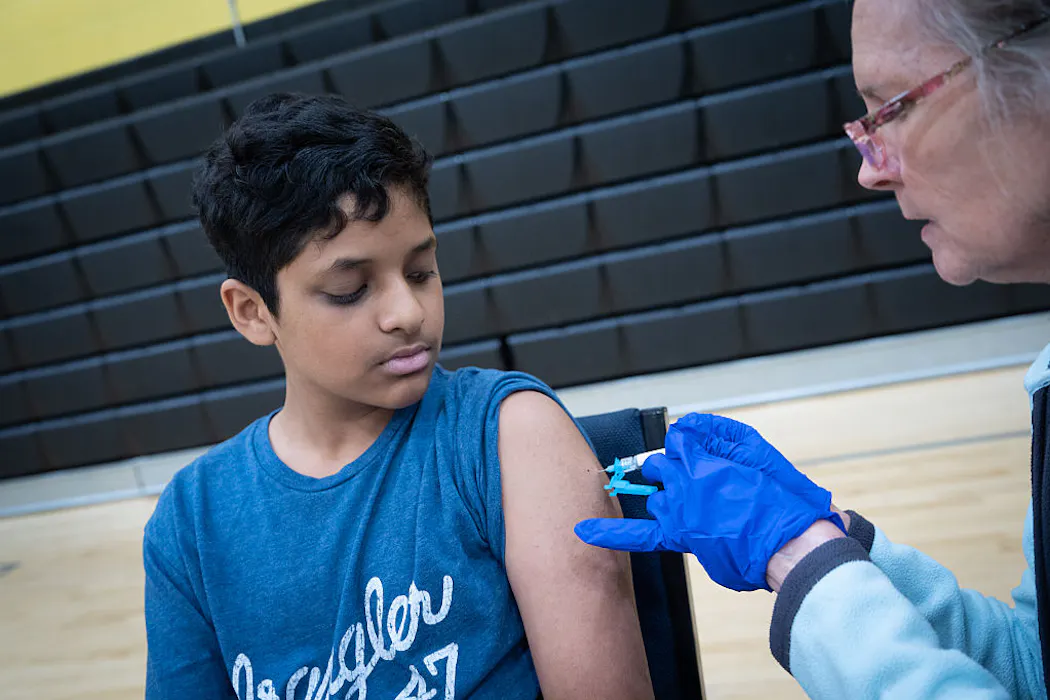
Unvaccinated individuals face 140 times higher risk of contracting measles. Sarah L. Voisin/The Washington Post via Getty Images

As the risk of measles remains an ongoing concern, herd immunity in Allegheny County, Pennsylvania, is already slipping. According to data obtained via The Washington Post in January 2026, 1 in 3 Allegheny County kindergartners were in a classroom too far below adequate vaccination coverage to stop a measles outbreak during the 2023-24 school year.

A professor from the University of Pittsburgh’s School of Public Health, Kar-Hai Chu, and a research program supervisor, Maggie Slavin, answered our questions about declining measles, mumps and rubella vaccination rates and what it means for the future of public health.

Private and parochial/religious schools in Allegheny County fall below the herd immunity threshold, while public schools tend not to. What explains that gap, and should it concern us?

Research shows the disparity between vaccination coverage in private and parochial/religious versus public schools is that private and parochial/religious schools tend to have higher rates of exemptions to vaccinations for moral and religious beliefs.

Local vaccination rates in Allegheny County schools are declining and are below the necessary level of vaccination coverage to stop the spread of measles: 95%. Between the 2023-24 and 2024-25 school years, public schools displayed an overall decline in coverage, whereas private and parochial/religious increased coverage between the two years, yet have greater variation in coverage across schools. Regardless of school type, children should have complete and updated vaccinations to protect themselves and the community. Even small dips in vaccination rates can lead to the spread of disease.

What are combination vaccines and how long have they been used?

Combination vaccines are single injections that protect against multiple, preventable diseases and have been used since the 1940s. They represent one of public health’s most successful interventions. Common examples include DTaP – for diphtheria, tetanus and pertussis – and MMR, for measles, mumps and rubella. The MMR vaccine has been licensed since 1971 and helped eliminate measles from the U.S. by 2000. It reduced cases by 80% within a decade of its introduction to society.

Why are some government officials calling to split these vaccines?

The U.S. officials calling to split combination vaccines cite unsubstantiated claims linking them to autism and concerns about too many vaccinations administered at once.

These claims contradict decades of scientific evidence that demonstrates the safety and efficacy of combination vaccines.

A panel of adults sit around a long table drenched in a blue tablecloth.
In June 2025, Health and Human Services Secretary Robert F. Kennedy Jr. dismissed all members of the CDC’s Advisory Committee on Immunization Practices.
Elijah Nouvelage/Stringer Collection via Getty News Images

Who determines vaccination recommendations in the US?

Since 1964, the Advisory Committee on Immunization Practices has provided evidence-based vaccination recommendations. The committee consists of volunteer medical and public health experts appointed by the secretary of Health and Human Services for staggered, four-year terms. These experts review scientific evidence throughout the year and update recommendations accordingly. States maintain authority to implement these recommendations as they see fit. Vaccination recommendations have been politicized under the current administration and are currently in a sort of limbo.

In June 2025, HHS Secretary Robert F. Kennedy Jr., who has a history of promoting anti-vaccination dissinformation, took the unprecedented step of firing all 17 committee members and appointing 12 new members with questionable qualifications and conflicts of interest. This could be considered a fundamental disruption to the evidence-based process that has protected public health for over 60 years.

The Pennsylvania Department of Health and Gov. Josh Shapiro have stated that they continue to endorse evidence-based vaccination guidelines from leading national medical associations, such as the American Academy of Pediatrics, American Academy of Family Physicians and American College of Obstetricians and Gynecologists.

What are the real-world consequences of vaccine misinformation and disinformation?

An example consequence is now visible: Measles is spreading again in the U.S. In 2025, there were 2,255 confirmed cases, which is nearly double the 2019 peak of 1,274 cases.

While there haven’t been any confirmed cases of measles in Allegheny County in 2026, there were confirmed measles cases in Lancaster County on Feb. 3, according to the Pennsylvania Department of Health, which determined the individuals were not vaccinated.

Another visible consequence of vaccination misinformation and disinformation is that unvaccinated people face 140 times higher risk of contracting measles. Over 90% of 2025 cases in the U.S. occurred in people who were unvaccinated or had unknown vaccine status.

Signs point toward measles testing near an emergency department.
The MMR vaccine was licensed in 1971 and helped eliminate measles from the U.S. by 2000.
Jan Sonnenmair/Stringer Collection via Getty News Images

When government officials become sources of misinformation, the threat multiplies exponentially. The World Health Organization identifies vaccine hesitancy as one of the biggest threats to global health.

What can be done to protect evidence-based vaccination policy?

The American Academy of Pediatrics emphasizes that state-level policies may offer greater responsiveness to local needs while maintaining evidence-based standards.

Stronger state policies play a key role in ensuring vaccine access. In Louisiana, for example, framing vaccination as a way to keep your neighbors safe has been used as an effective way to appeal to local communities. In South Dakota, advocates are reaching business owners by emphasizing the economic benefits of immunization. The state of Oregon created a financing model that allows providers and clinics to access vaccines with no upfront costs, then they reimburse the state once they have been paid by insurers.

People can support organizations that prioritize scientific evidence over anecdotes, demand transparency in policymaking and understand the difference between legitimate scientific debate and coordinated misinformation. These are crucial steps in protecting vaccine policies. The 2026 American Academy of Pediatrics guidelines have been deemed trustworthy by 12 health care organizations that represent over a million pediatric medical professionals.

The Conversation

Kar-Hai Chu receives funding from the NIH.

Maggie Slavin does not work for, consult, own shares in or receive funding from any company or organization that would benefit from this article, and has disclosed no relevant affiliations beyond their academic appointment.

ref. What declining vaccination rates mean for your family – and what you can do – https://theconversation.com/what-declining-vaccination-rates-mean-for-your-family-and-what-you-can-do-277469

Health care sticker shock has become the norm, but talking to your doctor about costs can help you rein it in

Source: The Conversation – USA (3) – By Helen Colby, Assistant Professor of Marketing, Indiana University

A doctor at the National Cancer Institute talks with a patient. National Cancer Institute on Unsplash, CC BY

As health care costs rise, patients aren’t just shouldering higher bills. They’re bearing more and more responsibility for getting information.

Americans are facing a health care affordability crunch on multiple fronts. In 2025, the Republican-controlled Congress approved a sweeping tax law that scaled back premium subsidies for Americans accessing care through the Affordable Care Act starting in 2026. As a result, millions on ACA plans now face much higher premiums, with many dropping out or expecting to drop out and risk going uninsured as premiums surge. By March 2026, about 1 in 10 people on ACA plans had dropped out, and that share is expected to rise.

Meanwhile, high-deductible insurance plans have become more common, requiring patients to pay thousands of dollars before coverage fully kicks in. The rise of those plans, along with surging drug prices and the growing share of Americans who are under- or uninsured, means that medical debt remains a leading source of financial strain.

Nearly half of U.S. adults now report difficulty affording health care. Together, these shifts are accelerating the “consumerization” of health care. Patients now have the ability to comparison shop, evaluate options and manage costs – but often without clear pricing. In this environment, knowing how to ask the right questions may be one of the most important tools patients have.

We are professors who study how perceptions of health care costs shape patients’ decisions about their care. Our research examines
how factors such as price-transparency regulations influence patient choices. Across our work, we consistently hear from patients about rising costs and how conversations about price with their providers too often never happen.

Why speaking up about cost matters

When one of us took our child to the doctor for pink eye, the pediatrician quickly sent a prescription for antibiotic drops to the pharmacy. At the pickup, the pharmacist dropped the news that the drops would cost more than US$300. A follow-up phone call to the doctor’s office, however, yielded important information: A generic version of the same medication offered the same treatment and the same results, but at a fraction of the price.

That quick phone call saved her a lot of money. It also raised a broader question: Why don’t more people have these conversations about cost? In fact, one study shows that cost conversations occur in only about 30% of medical visits.

These discussions aren’t just for medications. They can be crucial when a recommended procedure has multiple alternatives; when out-of-pocket costs might affect whether you follow through on care; or when a sudden medical bill could create financial strain. Speaking up about price can help patients stay healthier and avoid the all-too-common trade-off between medical care and household expenses.

The study mentioned above also found that doctors and patients identified ways to reduce out-of-pocket costs – such as switching to a generic drug or adjusting the timing of care – in nearly half of those cases. Importantly, these conversations were typically brief and did not compromise the quality of care, the researchers found.

Patients actually prefer doctors who bring up costs, other research has found. Still, most patients remain hesitant. While a majority say they want to discuss cost, only a minority actually do, often waiting until a bill arrives – often when it’s too late to consider alternatives. That’s why it’s important that consumers feel empowered to ask the right questions. Here are three that can help make care more affordable.

A close-up of a person's hands, with pen in one, going over a complicated medical billing form.
A patient works on a medical billing form.
Mael Balland on Unsplash., CC BY

Is there a generic or lower-cost alternative?

One of the simplest ways to reduce drug costs is to ask whether a less expensive option is available. Brand-name medications can cost significantly more than generics, even when they are equally effective. One industry survey estimated that 90% of all prescriptions filled in 2024 were generic or biosimilar, but these accounted for only 12% of drug spending.

In many cases, physicians can substitute a generic drug or recommend a similar treatment that achieves the same outcome at a lower price. And when no direct generic exists, there may be therapeutic alternatives worth considering. For example, if a brand-name eye drop or inhaler isn’t available in generic form, doctors can often prescribe a different medication in the same class that works just as well but costs far less. Research on physician–patient cost conversations shows that switching to lower-cost, clinically similar alternatives within the same drug class is a common strategy for reducing out-of-pocket spending without compromising care.

Is there any financial assistance available?

Some hospitals and large health systems have specific programs aimed at making care more affordable for lower-income patients. In many states, government programs address this same goal. These programs often offer discounts on care, but they can be complex to navigate and require significant paperwork. Many health care offices have staff who are knowledgeable about these programs and can help patients determine eligibility and sometimes even assist with applications, although the Trump administration has cut funding.

Patients can often find these programs through hospital or health system websites, which typically include financial assistance or “charity care” pages outlining eligibility and how to apply. State Medicaid offices and insurance marketplaces are also key entry points for coverage and subsidy programs. Nonprofit organizations and patient advocacy groups may also offer or list assistance tailored to specific conditions or medications.

It’s also important to remember that for prescription medications, what you’re quoted isn’t always the final price. Many medications come with options to reduce costs, including manufacturer coupons, copay assistance programs and patient assistance programs. Doctors’ offices and pharmacists may also know practical ways to save money, such as using a different pharmacy, switching to mail order or adjusting how a prescription is written. Asking about these options can uncover savings that aren’t immediately obvious.

What will this cost me, and are there other options?

Health care pricing is often opaque, and costs can vary widely depending on where and how care is delivered. Asking up front about your expected out-of-pocket cost can help you avoid surprises later.

This question also opens the door to alternatives. For example, patients may be able to choose a lower-cost imaging center, opt for outpatient rather than hospital-based care, or delay nonurgent services until insurance coverage improves.

Speaking up is part of taking care of your health

Health care decisions shouldn’t feel like a choice between your well-being and your wallet. A brief, honest conversation about cost can lead to more affordable and more sustainable care.

Physicians can’t address financial concerns they don’t hear about, and most want to help their patients access care they can realistically follow through on. As costs continue to shift toward the patient’s burden, asking these questions isn’t just helpful – it’s essential.

The next time you’re handed a prescription or a referral, remember: One simple question about price could make all the difference.

The Conversation

Deidre Popovich has received grant funding from BlueCross BlueShield of Texas and Providence Health.

Helen Colby does not work for, consult, own shares in or receive funding from any company or organization that would benefit from this article, and has disclosed no relevant affiliations beyond their academic appointment.

ref. Health care sticker shock has become the norm, but talking to your doctor about costs can help you rein it in – https://theconversation.com/health-care-sticker-shock-has-become-the-norm-but-talking-to-your-doctor-about-costs-can-help-you-rein-it-in-262990

Does marriage prevent cancer? And who benefits the most?

Source: The Conversation – UK – By Justin Stebbing, Professor of Biomedical Sciences, Anglia Ruskin University

Funda Demirkaya/Shutterstock.com

Marriage, it turns out, may come with a side‑effect no one puts in the vows: people who have been married seem less likely to develop cancer than those who have never married at all.

That is the provocative finding from a large new study that has raised interesting questions about what really keeps us healthy over a lifetime. If marriage shows up in the data as “protective”, is it love that matters, the piece of paper, or something much bigger hiding in the background?

In this analysis, researchers looked at cancer diagnoses in more than 4 million adults across 12 US states, representing a population of over 100 million people. They focused on cancers diagnosed after the age of 30 between 2015 and 2022 – a modern snapshot taken in an era when same‑sex marriage is legal nationwide, so marriage includes more people than ever.

Everyone was divided into two camps: those who were or had ever been married, including divorced and widowed people, and those who had never married at all. Around one in five adults landed in this never‑married group, a sizeable minority whose health has often been overlooked in traditional family‑centred research.

When the researchers compared the numbers, the gap was impossible to ignore. Men who had never married were about 70% more likely to develop cancer than men who had married at some point, while women who had never married were about 85% more likely to develop cancer than women who were or had been married.

More advantage to women

That last figure is especially notable, because many earlier studies suggested that men gained more from marriage than women. Here, women appear to gain at least as much, if not more. And the differences grew wider with age, especially after 50, when the consequences of decades of habits – smoking, diet, exercise, medical check‑ups, or the lack of them – finally rise to the surface.

The gap was not the same for every cancer, which is where the story becomes more revealing.

For anal cancer in men and cervical cancer in women – two diseases closely linked to infection with the sexually transmitted human papillomavirus (HPV) – the differences were enormous. Never‑married men had around five times the rate of anal cancer compared with men who had married.

Never‑married women had nearly three times the rate of cervical cancer. These are precisely the cancers where preventive tools already exist: HPV vaccination and regular screening to catch pre‑cancerous changes early.

The study’s authors suggest that being married may increase the chances that someone is nudged into attending those appointments, or into having more stable healthcare and insurance.

Elsewhere, the pattern echoed long‑known biological themes. Cancers such as endometrial and ovarian cancer were more common in never‑married women, which may reflect lower rates of childbearing, since pregnancy and childbirth alter hormone exposure in ways that can reduce risk, as research my team has undertaken shows.

By contrast, for cancers strongly influenced by organised screening – breast, prostate, thyroid – the differences by marital status were smaller. Screening levels the playing field, regardless of whether someone has a spouse reminding them about their appointments.

Even race played an unexpected part. Black men who had never married had the highest overall cancer rates in the study, yet married black men actually had lower cancer rates than married white men, hinting that marriage might be especially protective in some groups.

A woman undergoing breast cancer screening.
Screening levels the playing field.
illustrissima/Shutterstock.com

Nothing magical about marriage, per se

So does this mean marriage itself somehow protects people from cancer? The researchers are careful to say no. Their study shows a pattern, not proof that marriage is the cause.

The real question is whether marriage makes people healthier, or whether healthier, wealthier and better-supported people are simply more likely to get married in the first place. People facing serious mental illness, addiction, chronic illness or deep poverty may be less likely to marry, and those same struggles are also linked to a higher risk of cancer. In that sense, marriage may be less a cause than a sign of other advantages that begin long before anyone walks down the aisle.

There are other reasons to be cautious, too. The “ever married” group bundles together happily married people with those who are divorced or widowed, despite the fact that those experiences can look very different in practice. Meanwhile, the “never married” group includes people in long-term relationships who may receive much of the same support as married couples. The researchers also cannot fully account for differences in income, education or access to healthcare – all of which strongly shape cancer risk in their own right.

Even so, the study points to something important. People who are or have been married are more likely to have someone encouraging them to see a doctor, to share financial resources and health insurance, and to be less likely to smoke heavily or avoid medical care. Over many years, those small differences can add up, shaping the risks people carry and influencing which cancers eventually develop – and which never do.

If you have never married, none of this is a personal health verdict. What the study really underlines is the need to ensure that the quiet advantages so often bundled with marriage – social support, gentle “nagging” to seek help, easier access to healthcare – are not reserved only for those with wedding photos on the mantelpiece.

Single people, widowed people, those who live alone or outside traditional coupledom, may need more targeted support to get to screening, to be offered vaccinations like HPV, and to have their concerns taken seriously. As more people choose to stay single, or to build lives outside marriage, those questions will only become more urgent.

In the end, this study is less a love letter to marriage than a reminder that our bodies are shaped not just by genes and chance, but by the social structures we move through. The people who notice when we’re unwell, encourage us to book that test, and help determine whether we can afford to act on that advice may leave traces visible years later under a microscope. The deeper challenge for public health and policy is to deliver the benefits of connection, stability and access to care to everyone – including those who never say “I do.”

The Conversation

Justin Stebbing does not work for, consult, own shares in or receive funding from any company or organisation that would benefit from this article, and has disclosed no relevant affiliations beyond their academic appointment.

ref. Does marriage prevent cancer? And who benefits the most? – https://theconversation.com/does-marriage-prevent-cancer-and-who-benefits-the-most-280297

A surrealist fashionista, a Nazi fantasist and the return of Atwood’s Handmaids – what to see, read and watch this week

Source: The Conversation – UK – By Jane Wright, Commissioning Editor, Arts & Culture, The Conversation

In the bustling Aberdeenshire town of Braemar, close to the late Queen’s beloved Balmoral, there’s a rather chi-chi hotel called the Fife Arms. Originally a stout stone Victorian building for tweedy country types, it is now a fabulous art-filled mecca of maximalism, attracting celebrities and wealthy Londoners looking for a bit of Highland bling.

There’s a Freud in the lobby, a Picasso in the drawing room, and a winged stag in the dining room, but perhaps most interesting of all, there’s a cocktail bar called Elsa’s, named after Elsa Schiaparelli, the Italian fashion designer. With strong art deco vibes, accents of shocking pink and a menu of exquisite concoctions served in elegant stemmed glasses, Elsa’s has to be the coolest place for a martini north of Edinburgh.

I had heard of Schiaparelli, but the actual woman herself, I knew very little of. And what a woman! Now the V&A’s latest blockbuster exhibition, Schiaparelli: Fashion Becomes Art, brings to life the story of the designer who came to Paris at 23, and gave Coco Chanel a run for her money between the wars.

Where Chanel pursued simple elegance and minimalist style, Schiaparelli – a prominent surrealist alongside the likes of Man Ray and Salvador Dali – loved adornment, embellishment and trompe l’oeil designs. She was the first to create shoulder pads, use animal prints and employ unusual pocket placement. And of course, Schiaparelli is forever remembered as the woman who created “shocking pink”.

Designing fashion as a surrealist, her sculptural shapes and arresting details (the shoe hat, anyone?) were only for the most audacious women. When she retired to Tunisia in 1954, the house of Schiaparelli was no more. But in 2019, to great excitement, the name was revived under the direction of designer Daniel Roseberry who has restored Schiaparelli’s reputation for unpredictable daring. If you love fashion, this is a show you should not miss.

Resistance and rebellion

Two very different portrayals of resistance are on release this week. First, The Testaments is a TV adaptation of Margaret Atwood’s sequel to The Handmaid’s Tale which was turned into a TV drama in 2017 and ran for six seasons. The show quickly transcended its source material, our reviewer Debra Ferreday explains, “to become a feminist touchstone, inspiring a vivid visual and cultural language of resistance across politics, performance, music and the arts” – just as life in the US became an eerie echo of Atwood’s world.

In the Gilead of The Testaments, women still exist within an enforced patriarchal rape culture where Handmaids are reduced to brood mares. Here, violence masquerades as justice and entertainment, and control, order and cleanliness are paramount. But this world is not without hope as the young women find subversive ways to resist and rebel, finding solidarity, connection and even joy in likeminded souls.

My Undesirable Friends Part I is Julia Loktev’s extraordinary documentary about young journalists fighting to report the truth in Putin’s Russia. Filmed on her iPhone over four months in late 2021 and early 2022, Loktev follows the lives of her friends as they share their fears over the worsening political situation.

From concerns over increasing censorship to their horror at the invasion of Ukraine in February 2022, Loktev captures their earnest discussions of widespread abuses of power as the more democratic society they had hoped for slips away. But just like The Testaments, these young people find courage and resilience as the film examines how they can resist an oppressive state, stay safe – and know when it’s time to get out.

Horror real and imagined

For ten years architect Albert Speer was a friend and protege of Hitler, elevated to being in command of Germany’s military equipment throughout the war. His impressive orchestration of the Nuremberg rallies as architectural spectacle fed Hitler’s propaganda machine and contributed to Nazism’s dark mythology. And yet he somehow resisted being absorbed into it in same the way as Goebbels, Goring or Himmler, often viewed as a “good Nazi”.

This is down to the dedicated self-mythologising he embarked on after the war which many regarded as bare-faced lies, evasions and self delusion. Speer is now the subject of a masterful novel by Jean-Noël Orengo, which seeks to examine how Hitler’s courtier was able to so successfully rehabilitate his image, exploring important questions of Nazi memory, myth-making and moral reckoning.

My favourite kind of horror film is one that slowly builds an almost unbearable sense of dread and unease. This week’s Undertone sounds like it fits that bill perfectly. Evy is a young woman looking after her dying mother at home while co-hosting a podcast that explores supernatural phenomena.

A non-believer to her co-host Justin’s acceptance of the paranormal, Evy records in the middle of the night, as Justin lives in a different time zone. As the pair begin to explore a particularly disturbing case based on audio clips, Evy’s scepticism deserts her. The genius here is that the horror lies purely and intimately in sound. It is not a film, our reviewer warns, for the faint of heart.

The Conversation

ref. A surrealist fashionista, a Nazi fantasist and the return of Atwood’s Handmaids – what to see, read and watch this week – https://theconversation.com/a-surrealist-fashionista-a-nazi-fantasist-and-the-return-of-atwoods-handmaids-what-to-see-read-and-watch-this-week-280305

Bait sheds light on British-Pakistani mental health struggles rarely seen on screen

Source: The Conversation – UK – By Jolel Miah, Senior Lecturer, Health Psychology, University of Westminster

Riz Ahmed’s Bait is an exceptional piece of television. Not only for its satirical exploration of the entertainment industry, but for the psychological narrative running underneath it.

At its heart, the Prime Video series is a quietly devastating study of the pressures placed upon British‑Pakistani men. What appears to be an eccentric comedy about a struggling actor auditioning for James Bond soon reveals itself to be a nuanced portrayal of shame, internalised stigma and the early signs of psychosis.

The series follows Shah Latif (Ahmed), whose obsessive pursuit of validation becomes a catalyst for a psychological unravelling. Shah’s downward spiral is shaped by relentless scrutiny and the fear of not belonging. These themes resonate strongly with a growing body of research on psychosis in British‑Pakistani communities.

A 2024 study in The British Journal of Psychiatry found a significantly higher incidence of first‑episode psychosis among British‑Pakistanis, compared with the majority population.

The trailer for Bait.

This offers an important parallel to Bait. Shah’s sense of cultural drift, his distance from grounding community structures and his struggle to inhabit multiple identities all heighten his vulnerability.

The show does not name psychosis explicitly, but Shah experiences intrusive thoughts, escalating paranoia, fragmentation of self and delusions. This reflects real trajectories observed in early intervention services.

Racism and psychosis

One of the most incisive threads in the series is the portrayal of racial microaggressions that Shah absorbs without resistance. These include remarks about his “Britishness”, comments on his appearance, and the persistent insinuation that he exists outside the cultural centre.

Recent research has shown that racial discrimination is one of the strongest predictors of psychosis risk. It increases the likelihood of psychotic symptoms by 77%, with physical racial attacks multiplying the risk five-fold.

Shah’s encounters – ranging from subtle jabs to overt dismissal – operate cumulatively, shaping his internal monologue and eroding his self-esteem. The brilliance of Bait lies in how it embeds these aggressions into the comedic structure, illustrating the subtle normalisation of harm.

The series highlights the importance of family dynamics, a key but under-researched factor in understanding psychosis among South Asian Muslims in the UK. A 2009 study found that families often had to navigate stigma, concerns about privacy and honour, and tensions between medical models of illness and culturally rooted understandings of distress.

Shah’s relationship with his family shifts between warmth, expectation and pressure, reflecting this complexity. Family can act as both a source of support and a cause of psychological strain.

Research examining British-Pakistani Muslim views on mental health has found that cultural stigma, fear of public opinion, and uncertainty around religious explanations can delay people seeking help.

These dynamics are reflected in the silence running through Shah’s world. Mental health struggles are hinted at but never openly discussed, and Shah instinctively hides his distress behind humour and performance. This also reflects how many communities describe mental health in moral or spiritual terms, rather than psychological ones.

I recently explored these issues in a podcast conversation with Zenab Sabahat, a PhD researcher at the University of Bradford. Her research looks at access to, experiences of and outcomes for South Asian Muslim families receiving family interventions for psychosis. This work explores how cultural identity stress, stigma and mismatches between different models of care shape pathways into support.

Sabahat’s work reinforces what Bait illustrates narratively: that psychological distress among British-Pakistanis is closely linked to experiences of migration, racism, cultural belonging and intergenerational tension.

This reality also underpins the work of Our Minds Matter, the UK charity I co-founded to deliver culturally grounded mental health education and support in under-served communities. The organisation’s mission emphasises the need to address mental health through the lenses of culture, faith and community – approaches that mainstream services often overlook.

Early education, reducing stigma and building culturally sensitive support are essential for addressing the inequalities faced by communities like Shah’s.

The Our Minds Matter documentary.

Five years ago, our team produced a community-led documentary exploring psychosis. It highlighted the experiences of South Asian families and the urgent need for culturally coherent support structures. The challenges articulated in the documentary continue to be reflected in both academic research and people’s lived experiences today.

What Bait achieves is not simply representation but illumination. It exposes how psychological vulnerability can be fuelled by cultural dislocation, racialised exclusion, and the impossible expectation to excel while carrying generations of unspoken pressure.

Shah’s experiences – humorous, painful and increasingly fractured – mirror the mental health inequalities faced by British‑Pakistani communities, particularly men navigating contradictory identities and structural disadvantage.

The series invites viewers to see psychosis not as an isolated biomedical event, but as a response to accumulated pressures: family honour, societal scrutiny, cultural misrecognition and stigma that constrains emotional expression.

These pressures interact across biological, psychological and social frameworks, creating conditions in which psychosis risk becomes elevated. The show’s understated portrayal of this trajectory offers a culturally specific, psychologically accurate narrative rarely seen in British television.

In a media landscape where the mental health of British South Asian Muslims is often sensationalised or overlooked, Bait offers an important counternarrative. It shows that the intersections of identity, discrimination and cultural expectation are not abstract ideas but lived experiences that shape psychological wellbeing.

The show’s quiet strength lies in revealing these dynamics without being preachy – inviting audiences and practitioners to better understand how culture, racism and mental health intertwine.

The Conversation

Jolel Miah does not work for, consult, own shares in or receive funding from any company or organisation that would benefit from this article, and has disclosed no relevant affiliations beyond their academic appointment.

ref. Bait sheds light on British-Pakistani mental health struggles rarely seen on screen – https://theconversation.com/bait-sheds-light-on-british-pakistani-mental-health-struggles-rarely-seen-on-screen-280102

What can governments do when petrol prices rocket?

Source: The Conversation – UK – By Christoph Siemroth, Associate Professor (Senior Lecturer) in Economics, University of Essex

LSP EM/Shutterstock

The price of oil has changed a lot in the last few weeks. There have been dips as well as peaks, but generally, since the the start of the US-Israeli attacks on Iran at the end of February, the black stuff has been getting more expensive.

As a direct result, petrol and diesel prices in the UK have also rocketed.

Motorists have felt the steep rise on petrol station forecourts, while some fuel sellers have been accused of profiteering and ripping off customers. There have also been calls for the government to intervene to prevent costs from spiralling out of control.

But what can it actually do to bring petrol prices down?

One option might be to impose price caps, setting a legal limit on what motorists can be charged for a litre of fuel. But a major problem with this idea comes down to a lack of supply.

Taking the Strait of Hormuz as a perfect example, if fewer tankers from Kuwait and Qatar are getting through, that means there is less oil available. As stocks runs low, it is impossible for everyone to get the same amount of fuel at the same price as before.

If price caps were introduced (with the supplier taking on the full impact of the discount), the countries and firms with oil to sell would naturally shift their sales to countries willing to pay higher prices. So a price cap would probably lead to empty petrol pumps in the UK.

There have already been shortages in France, where one major fuel provider implemented its own price cap and was subsequently inundated with customers.

In contrast, high fuel prices may persuade households to cut down on consumption, which is helpful when there is less oil available. After all, people don’t switch from travelling by car to public transport (which is often less convenient) unless there is a good reason to do so. High fuel prices are a good reason.

Research suggests that in the UK, a 10% increase in petrol prices can lead to a reduction in demand of up to 5%. So, high prices are a way of adjusting consumption to cope with the lower supply.

Duty calls

In the longer term, households might invest in a way which reduces their dependence on future fossil fuel consumption. Maybe, instead of a big SUV, the next family car will be be smaller or electric.

In the short term, though, demand for petrol and diesel will remain. Not all commuting and travelling can be cancelled or postponed. People need to get to work, children need to go to school.

A more promising policy intervention could be temporary fuel duty discounts – reducing the proportion of fuel costs which ends up in the Treasury. Unlike with price caps, oil exporters’ incentives to sell in the UK are not diminished by reducing fuel duty. So fuel duty cuts wouldn’t cause supply issues.

The issue here is that fuel duty cuts reduce government revenue at a time when it is already seriously stretched. Fuel duty receipts account for almost 2% of UK government income.

Also, the measure is not very targeted. Wealthy households with multiple vehicles would benefit more than a single mother struggling to pay for petrol to get to work.

Making allowances

Another option, favoured by some economists, is based on one-off transfers of money from the state directly to some motorists.

Instead of fuel duty cuts, the government could pay out a fixed sum to those in particular need (much like the winter fuel allowance for heating bills). This could be paid to households under a certain income threshold that own a car.

When a similar transfer scheme for gas was implemented in Germany in 2022 after Russia shut off gas pipelines, firms and households received compensation based on past consumption. Germany was able to reduce its gas consumption by about 20% during that time.

Unlike a fuel duty cut, compensation does not change depending on the amount of fuel bought. So the incentive to cut down on fuel consumption wherever possible remains.

Indeed, households that leave the car at home will profit, as they keep the transfer. This is as it should be: households that use less fuel get rewarded, while those that need it still have some support.

Many economists like this proposal because it keeps prices as an accurate reflection of supply shortages, while providing targeted relief. Neither price caps nor fuel duty cuts achieve this.

The Conversation

Christoph Siemroth previously received funding from the UK Economic and Social Research Council.

ref. What can governments do when petrol prices rocket? – https://theconversation.com/what-can-governments-do-when-petrol-prices-rocket-280094