Quand l’UNESCO efface sans le vouloir la voix des « gens de la montagne » camerounais

Source: The Conversation – in French – By Melchisedek Chétima, Professor of African History, Université du Québec à Montréal (UQAM)

La récente inscription du paysage culturel de Diy-Giɗ-Biy (DGB) au patrimoine mondial de l’UNESCO marque une victoire historique pour le Cameroun, mais elle perpétue aussi un héritage colonial : ces ruines exceptionnelles continuent d’être désignées par un nom que les communautés locales rejettent.

Situé dans l’Extrême-Nord du pays, le site archéologique des Diy-Giɗ-Biy (se prononce « Dii-Guiɗ-Bii ») s’étend sur une vingtaine de kilomètres carrés et abrite seize monuments en pierre sèche répartis dans sept villages, au cœur d’une chaîne montagneuse que l’institution, et avant elle, la communauté des chercheurs dont je fais partie, désigne comme « monts Mandara ».

Son inscription sur la liste du patrimoine mondial a été saluée à juste titre comme une rare victoire pour les patrimoines matériels africains, trop longtemps marginalisés dans les grandes instances patrimoniales internationales. Pourtant, au-delà de l’apparente consécration, un débat de fond émerge : à qui appartient ce patrimoine ? Et pourquoi persiste-t-on à nommer les montagnes qui les abritent « monts Mandara », une appellation dans laquelle les locaux ne se reconnaissent pas ?

Professeur d’histoire africaine à l’Université du Québec à Montréal, mes travaux de recherche portent sur des thèmes variés tels que la culture matérielle, l’esclavage, ainsi que les dynamiques identitaires et politiques dans l’espace communément désigné sous le nom de « monts Mandara ». Mon approche allie l’étude des sources orales, écrites et archéologiques, ce qui me permet de proposer une compréhension fine et nuancée de cette région et de ses populations.

Des montagnes-refuges

Selon l’UNESCO, les DGB se distinguent par leur ancienneté (XIIe–XVIIe siècles) et leurs terrasses agricoles. Les populations locales les appellent Giy-Deδ-Bay (« ruine de la demeure du chef ») ou Diy-Giɗ-Biy (« l’œil du chef au-dessus »), termes qui reflètent leur dimension spirituelle et politique.

Mais en parlant de « monts Mandara », l’institution reconduit une méprise héritée de l’époque coloniale.

Le terme prend racine dans les récits européens du XVIIIe siècle, qui l’utilisaient pour désigner le royaume islamisé du Wandala ou Mandara, établi dans les plaines et prospérant grâce aux échanges commerciaux avec le Kanem-Bornu. Ce dernier, grand État sahélien et acteur majeur du commerce esclavagiste, a profondément marqué les dynamiques sociales et politiques de toute la région du bassin tchadien.

Longtemps vassal du Bornu, le Wandala s’est progressivement émancipé au XVIIIe siècle, en partie grâce à son islamisation, ce qui lui a permis de mener ses propres campagnes esclavagistes contre les groupes montagnards. Pour se protéger de ces raids, ces communautés se sont réfugiées dans les massifs, où elles ont développé des architectures défensives dont les Diy-Giɗ-Biy sont particulièrement révélateurs.

Cette dynamique de pouvoir entre le Wandala, le Bornu et les Montagnards s’inscrit dans une histoire plus ancienne. Sur sa mappemonde de 1459, Fra Mauro, moine italien réputé pour son expertise géographique, identifiait déjà les Wandala comme un groupe ethnique distinct.

Les Montagnards ne font donc pas partie du groupe Mandara. Ce dernier, sous l’influence du Bornu, les a en fait soumis à ses campagnes esclavagistes, établissant une relation de domination plutôt qu’une intégration politique ou culturelle. De plus, les Montagnards ne dénomment pas leurs massifs « monts-Mandara ». Ils s’auto-identifient littéralement comme « gens du rocher » – duw kunde en langue plata ou encore nda məndə dzaŋa en langue podokwo. Une telle auto-identification traduit un rapport intime à leurs montagnes et affirme une identité politique et culturelle distincte des populations musulmanes des plaines environnantes.

Dans un entretien récent que j’ai réalisé à Mokolo avec un chef mafa, celui-ci m’expliquait : « Nous ne sommes pas Mandara, nous sommes les enfants de la montagne, et les rochers font partie de notre existence en tant que peuple ».

La cartographie coloniale et ses héritages persistants

L’analyse proposée ici s’organise autour de deux dimensions. D’une part, elle examine comment l’imaginaire colonial continue de structurer notre perception du territoire. Les appellations coloniales comme « monts Mandara », employées par les administrateurs allemands puis britanniques et français, relevaient surtout de commodités classificatoires, ignorant la complexité sociale et culturelle des communautés montagnardes.

D’autre part, cette appellation produit une dépossession symbolique. De fait, inscrire le patrimoine des « gens de la montagne » sous un nom qui n’est pas le leur revient à effacer leurs voix. En reprenant cette terminologie, l’UNESCO, même involontairement, perpétue un cadre de lecture hérité de la colonisation et réduit la diversité des sociétés montagnardes à l’ombre d’un pouvoir étatique qui les avait jadis dominées.


Déjà des milliers d’abonnés à l’infolettre de La Conversation. Et vous ? Abonnez-vous gratuitement à notre infolettre pour mieux comprendre les grands enjeux contemporains.


Il convient de rappeler que les terrasses agricoles évoquées par l’UNESCO ne sont pas seulement des dispositifs fonctionnels d’aménagement du sol. Elles sont également porteuses de significations sociales et culturelles, en lien avec des systèmes de croyances où l’organisation de l’espace traduit une cosmologie de l’ordre et du dialogue constant entre les vivants et leurs ancêtres. Comme le fait remarquer l’archéologue canadien Scott MacEachern, les Diy-Giɗ-Biy s’insèrent dans un paysage déjà habité, cultivé, peut-être même ritualisé.

Leurs constructeurs maîtrisaient avec une grande expertise la technique de la pierre sèche. Tout porte ainsi à croire que ces sites sont le fruit d’un processus d’occupation, d’adaptation et d’élaboration proprement montagnard. Rien n’indique une origine issue des plaines.

La kirditude comme résistance

La reconnaissance internationale des Diy-Gid-Biy par l’UNESCO est certes importante, mais elle demeure partielle tant qu’elle ne respecte pas les termes choisis par les communautés pour s’autodésigner.

Dans ce contexte, de plus en plus de chercheurs et d’activistes locaux plaident pour l’adoption de l’appellation « monts Kirdi ». Historiquement, le terme kirdi, utilisé dans les récits des royaumes musulmans des plaines, portait une connotation péjorative d’infidèle, de non-musulman et d’esclave potentiel.

Toutefois, dans un processus de réappropriation décoloniale, les Montagnards ont transformé ce stigmate en instrument de résistance culturelle et de revendication politique. Ils ont notamment intégré le concept de « kirditude » du sociologue camerounais Jean-Marc Ela pour affirmer leur fierté d’un fond kirdi et défendre leur position face à l’exclusion et à la discrimination dont ils font l’objet dans l’espace politique régional et national.

Renommer les « monts Mandara » en « monts Kirdi » représenterait ainsi une véritable justice symbolique, en reconnaissant que le patrimoine est aussi un champ de luttes et de mémoire. Cela permettrait aux Montagnards de nommer leur propre monde, ce qui enrichirait notre compréhension collective de ce patrimoine vivant et pluriel que sont les DGB.

Rompre avec la neutralité coloniale du patrimoine

Au-delà d’une simple question d’étiquette, le débat sur la toponymie soulève des enjeux cruciaux de reconnaissance des droits épistémiques des peuples autochtones. Quelle valeur peut en effet avoir une politique de valorisation du patrimoine si elle continue de marginaliser la voix de ceux qui en sont les principaux acteurs ?

En maintenant l’usage du terme « monts Mandara », les institutions patrimoniales internationales risquent de perpétuer une mémoire dominante, issue de récits de pouvoirs externes, au détriment des histoires et réalités plurielles des peuples montagnards.

Par ailleurs, renommer les massifs ne signifie en aucun cas effacer l’histoire. Il s’agit au contraire de réhabiliter des récits jusqu’ici occultés. Le patrimoine mondial ne peut véritablement refléter son rôle que s’il devient le théâtre de luttes pour les récits marginalisés et pour les peuples dont la parole a été confisquée au profit de narrations dominantes.

La Conversation Canada

Melchisedek Chétima ne travaille pas, ne conseille pas, ne possède pas de parts, ne reçoit pas de fonds d’une organisation qui pourrait tirer profit de cet article, et n’a déclaré aucune autre affiliation que son organisme de recherche.

ref. Quand l’UNESCO efface sans le vouloir la voix des « gens de la montagne » camerounais – https://theconversation.com/quand-lunesco-efface-sans-le-vouloir-la-voix-des-gens-de-la-montagne-camerounais-262085

Pourquoi apprendre à cuisiner dès l’enfance est un outil de santé publique

Source: The Conversation – in French – By Nina Klioueva, Université de Montréal

Dans un monde dominé par les aliments ultra-transformés et le manque de temps, grandir sans savoir cuisiner n’est plus rare. Mais cette perte de savoir-faire n’est pas neutre : elle fragilise la santé, l’autonomie et même notre rapport collectif à l’alimentation.

Et si réapprendre à cuisiner devenait un choix de société ?

Depuis quelques décennies, les repas faits maison ont été peu à peu remplacés par des plats prêts-à-manger et des produits très transformés. Au Canada, plus de la moitié de ce que mangent les enfants et les adolescents vient de ces aliments ultra-transformés. Cette tendance a des effets directs sur la santé : plus de maladies chroniques comme le diabète de type 2, et une perte d’autonomie alimentaire, puisque cuisiner est parfois vu comme une option, et non comme une compétence de base.

Dans ce contexte, apprendre à cuisiner dès l’enfance n’est pas seulement un plaisir ou une tradition familiale. C’est un véritable outil de santé publique. Cuisiner aide à mieux comprendre comment faire des choix alimentaires pour soi et pour la planète, à prévenir certaines maladies et à développer une relation positive et durable avec la nourriture. En tant que nutritionnistes et chercheuses en nutrition, nous nous intéressons à la littératie alimentaire chez les adolescents et considérons ce sujet d’autant plus d’actualité face aux défis alimentaires contemporains.

La littératie alimentaire : plus que savoir cuisiner

Apprendre à cuisiner tôt ne se limite pas à acquérir une habileté pratique. C’est une porte d’entrée vers la littératie alimentaire, un ensemble de connaissances, de compétences et d’attitudes qui permettent de bien se repérer dans un monde alimentaire de plus en plus complexe. Elle développe aussi l’autonomie, la confiance et la motivation pour faire des choix qui favorisent la santé et le bien-être.

La littératie alimentaire, ce n’est pas seulement être capable de préparer un repas nutritif. C’est aussi célébrer et transmettre nos traditions culinaires, soutenir des systèmes alimentaires plus justes et durables, et développer une relation positive avec la nourriture.

Il est important de rappeler que savoir cuisiner ne suffit pas tout seul. La cuisine est un élément central, mais la littératie alimentaire est beaucoup plus large. Comme le soulignent les chercheuses Helen Anna Vidgen et Danielle Gallegos, de la Queensland University of Technology, en Australie, elle regroupe un ensemble de compétences liées entre elles : planifier ses repas, gérer un budget et réduire le gaspillage, choisir des aliments nutritifs et sécuritaires malgré le marketing, préparer des repas de base et adopter une alimentation équilibrée et culturellement signifiante.

Ainsi, cuisiner devient une porte d’entrée concrète vers plusieurs de ces dimensions. Quand un enfant met la main à la pâte, il n’apprend pas seulement des gestes techniques. Il apprend aussi à planifier, à s’organiser, à résoudre des problèmes réels et à réfléchir de façon critique à ce qu’il mange. Ces compétences, acquises petit à petit et adaptées à son âge, deviennent la base d’une autonomie alimentaire durable.

Des bénéfices observés dès le plus jeune âge

Les recherches montrent que les enfants qui participent à la préparation des repas mangent une portion supplémentaire de fruits et légumes, et consomment généralement une alimentation de meilleure qualité que ceux qui ne cuisinent pas.

Les habitudes alimentaires acquises tôt ont tendance à rester à l’âge adulte. Initier les enfants à la cuisine, c’est donc poser les bases de comportements qui protègent leur santé à long terme. Par exemple, le simple fait de cuisiner à la maison est lié à une alimentation moins riche en sucres ajoutés et en gras saturés, deux éléments directement associés aux maladies cardiovasculaires et au diabète de type 2.

Des enjeux d’équité en santé

Il faut aussi reconnaître que tout le monde n’a pas le même accès à la cuisine ou aux compétences culinaires. Certaines familles manquent de temps, d’espace ou de moyens financiers pour cuisiner. Dans ce contexte, l’éducation culinaire à l’école ou dans la communauté devient essentielle.

Des programmes comme Apprenti en Action ou Chefs en Action, des initiatives canadiennes via les milieux scolaires, ont montré qu’apprendre à cuisiner dans un cadre éducatif peut augmenter la confiance des jeunes, améliorer leurs connaissances en nutrition et les amener à adopter de meilleures habitudes alimentaires. Ces initiatives représentent une façon d’outiller les jeunes, surtout ceux qui viennent de milieux plus vulnérables, et de réduire les inégalités de santé.

Malheureusement, les programmes de cuisine et d’éducation alimentaire en milieu scolaire restent marginaux et tributaires de financements limités et instables, ce qui contribue à creuser encore les écarts sociaux et de santé. Parallèlement, le système alimentaire est dominé par des régimes industrialisés et des produits ultra-transformés, promus par de puissantes entreprises transnationales, alors que peu de politiques publiques canadiennes visent à améliorer les systèmes alimentaires et, par ricochet, les habitudes alimentaires.

Cette double dynamique accentue les inégalités : les jeunes issus de milieux moins favorisés disposent de moins d’occasions d’apprendre à cuisiner et de développer leur autonomie alimentaire, tout en étant plus exposés aux produits ultra-transformés.


Déjà des milliers d’abonnés à l’infolettre de La Conversation. Et vous ? Abonnez-vous aujourd’hui à notre infolettre pour mieux comprendre les grands enjeux contemporains.


Une compétence citoyenne

Enfin, il ne faut pas oublier la dimension sociale et culturelle de la cuisine. Apprendre à cuisiner, c’est aussi apprendre à partager, à transmettre des traditions, à découvrir d’autres cultures et à créer une relation positive avec l’alimentation. Pour un enfant, préparer un repas avec ses proches peut être une expérience valorisante, qui renforce les liens familiaux et la confiance en soi.

Au-delà des chiffres, cette transformation de nos habitudes alimentaires touche aussi notre culture et nos liens sociaux. Les recettes transmises de génération en génération disparaissent parfois, et avec elles, une partie de notre patrimoine culinaire. Par exemple, en Ontario, des écoles primaires qui ont introduit des ateliers de cuisine ont vu leurs élèves essayer de nouveaux légumes et en parler fièrement à leurs familles, montrant qu’un simple geste peut déclencher un réel changement.

La cuisine devient ainsi une compétence citoyenne, à la croisée de la santé, de l’éducation, de la culture et de l’environnement. Initier les enfants à ce savoir-faire, à la fois pratique et symbolique, c’est leur donner les outils pour se débrouiller dans un monde alimentaire complexe et, en même temps, contribuer à une société plus en santé et plus durable.

La Conversation Canada

Nina Klioueva a reçu des financements sous forme de bourse de maîtrise en recherche pour titulaires d’un diplôme professionnel – volet régulier du FRQ, ainsi qu’une Bourse d’études supérieures du Canada – maîtrise (BESC M) des IRSC.

Maude Perreault ne travaille pas, ne conseille pas, ne possède pas de parts, ne reçoit pas de fonds d’une organisation qui pourrait tirer profit de cet article, et n’a déclaré aucune autre affiliation que son organisme de recherche.

ref. Pourquoi apprendre à cuisiner dès l’enfance est un outil de santé publique – https://theconversation.com/pourquoi-apprendre-a-cuisiner-des-lenfance-est-un-outil-de-sante-publique-265942

How land restoration could address malnutrition among India’s Indigenous families

Source: The Conversation – UK – By Ipshita Basu, Associate professor (Reader) in Global Development and Politics, University of Westminster

When asked how she was doing during her second pregnancy, Neethu, 24, told us she felt worried and cautious. “The doctor said the baby is in a sensitive state,” said Neethu who is from the Irula community in Attappadi in Kerala, India, which lies in the biodiversity hotspot of the Western Ghats mountain range.

Neethu’s first child did not survive beyond a few weeks after birth. Between 2012 and 2021 there were 136 officially reported infant deaths in Attappadi (the actual number is expected to be much higher), where Adivasis (Indigenous people) make up an estimated 43% of the population. This is considered high in a state which has the lowest infant death rates in the country.

Although these deaths had a variety of causes, malnutrition is a well documented problem among Indigenous people in this region. And malnutrition more generally is known to contribute to infant mortality by affecting the health of pregnant or breastfeeding mothers and their children.

The Adivasi families we have spoken to in Attapadi firmly believe that these are avoidable deaths. And our research into long-term changes in Attappadi’s landscape confirmed that the loss of land owned by Adivasis has eroded traditional sources of nutrition.

The state government has responded to the issue of infant mortality and malnutrition through an extension of health and agriculture projects. The “tribal multispecialty hospital” in Kottathara in Attapadi, a specialised medical care facility launched in 2007, is a striking symbol of these efforts.

To ensure everyone has access to nutritious food, special provisions are made for the Adivasis. Field-level community health workers regularly visit pregnant and breastfeeding women. Representatives from the local government and volunteers work hard to ensure Adivasi women deliver their newborns in hospitals.

stone statue of mother feeding baby outside hospital
A statue welcoming patients to the Government Tribal Speciality Hospital highlights a 2018 award for the best taluk (district) hospital. It ends with a striking message: ‘Mother who is ready to feed her child at any time…a good mother’.
Sudeesh R.C., CC BY-NC-ND

However, the Adivasi residents of Attappadi are not convinced that this is going to resolve the matter. Maariyamma, an elderly Irula woman is a part of the local women’s collective that was formed in the mid 1990s for ecological regeneration and against alcohol trade in Attapadi. She firmly believes that these infant deaths have been caused by the historical curtailment of traditional millet farming, ecological destruction and the more recent land alienation.

Attappadi was exploited for timber since the early 19th century under colonial rule. Although the lands were claimed by an upper-caste, feudal landlord family, it stayed away in the plains, giving the Adivasis significant control over the land and forests.

The Irula, Muduga and Kurumba communities had farmed diverse varieties of millet in a shifting mode whereby patches of forests were slashed and burnt for farming and left fallow until they regenerated. The elderly respondents we spoke to pointed out that on the eastern slopes of the Attappadi hills, where rains are scarce, Adivasi families farmed enough millet in a season to last for the whole year.


Read more:
Young Indian farmers are turning to an ancient crop to fight water stress and climate change


Maariyamma fondly remembered old times: “There were hundreds of green leafy vegetable varieties in those days that kept us strong” she said, before breaking into an upbeat song that listed the names of villages and the greens they were known for.

The phase out of millet farming began in the mid-19th century, when the colonial forest department became anxious about conservation, resulting in increased checks on shifting cultivation. In postcolonial times, the widespread distribution of state-subsidised rice slowly started to change food habits. Meanwhile, millet cultivation received no financial state support.

millet growing green in field, close up
Millet growing at Attappadi In Kerala, India.
Krishnakumar. C/Shutterstock

This issue was compounded by two other developments: land alienation and ecological degradation. The arrival of settlers has resulted in many Adivasi communities losing lands. Several oorus (hamlets) lost over 3,000 acres over a span of three generations. This broke down their traditional governance system that managed food sovereignty, consisting of a mooppan (chief), mannukkaaran (soil manager), vandaari (treasurer) and kurunthala (rituals manager).

Reparation and regeneration

Several Adivasi households are now caught up in court cases over land ownership. In the late 2000s, a new wind energy farm sparked a land alienation controversy. A recent tourism boom in Attappadi exacerbates land encroachment by settlers and businessmen, backed by forged land documents.

As Maaran mooppan says, while the link might not be obvious, loss of land and infant deaths are closely connected. Adivasis now depend on cheap rice from fair price shops that have no nutritional value. His words resonate with the demands for food sovereignty being made by Indigenous people in several parts of the world. A 2023 study by the Indian Council of Medical Research pointed at the poor health of the Adivasis in Attappadi, but relegated land alienation (the loss of ownership and access to ancestral lands) as a passing concern in its conclusions.


Read more:
Thousands of babies needlessly die each year, but women’s groups can save many


The colonial and postcolonial intrusions by the state and settlers in Attappadi also resulted in deforestation and desertification. The state response in recent times was to initiate the Attappadi Hills Area Development Society, an organisation that divided Attappadi into watersheds and encouraged reforestation to raise the groundwater levels that were earlier depleted.

Although Adivasis nominally participated in this programme, it lacked a vision to ensure the restoration of Adivasis’ food and land sovereignty, producing short-term gains in access to water that were reversed when funding stopped in 2012.

A few recent attempts by the state government, such as the Millet Village initiative to revive millet farming, highlight the pitfalls of welfare interventions that do not address the land question. Though some Adivasi households participated in these initiatives, our respondents insist that the seeds are not native and that the products are aimed at urban consumers for whom millets are marketed as superfoods.

Neethu’s generation, several of whom we talked to and stayed with, display a complete aversion to millet-based meals and affinity towards processed foods, a habit developed in boarding schools where Adivasi children are taught in yet another state-sponsored model of engaging with the Adivasis.

This challenges the idea that Indigenous health can only be improved with increased medical care and highlights how the ecological destruction and loss of land and food sovereignty has affected the health of today’s population.

Ecological reparations involve directly addressing the historical relationship between colonialism and Indigenous health. Our research shows that a sustainable future requires listening to Indigenous peoples’ demands for food sovereignty as the key to improving health resilience.


Don’t have time to read about climate change as much as you’d like?

Get a weekly roundup in your inbox instead. Every Wednesday, The Conversation’s environment editor writes Imagine, a short email that goes a little deeper into just one climate issue. Join the 45,000+ readers who’ve subscribed so far.


The Conversation

Ipshita Basu receives funding from the British Academy on the Knowledge Frontiers grant project titled “Planetary Health and Relational Wellbeing: Investigating the Ecological and Health Dimensions of Adivasi Lifeworlds.”

Sudheesh R.C. receives funding from the British Academy on the Knowledge Frontiers grant project titled “Planetary Health and Relational Wellbeing: Investigating the Ecological and Health Dimensions of Adivasi Lifeworlds.”

ref. How land restoration could address malnutrition among India’s Indigenous families – https://theconversation.com/how-land-restoration-could-address-malnutrition-among-indias-indigenous-families-263297

Can Labour’s plan to fund deprived communities see off Reform? What the evidence shows

Source: The Conversation – UK – By Abigail Taylor, Research Fellow, City-Region Economic Development Institute (City-REDI), University of Birmingham

Sonicpuss/Shutterstock

More than a year after the UK government abandoned the phrase “levelling up”, it has now launched a fresh strategy to distribute funding to disadvantaged communities. The promise to these deprived areas is three-pronged: investment in community facilities, enhancing public spaces like parks, and revitalising town centres and high streets.

The “Pride in Place” programme will provide up to £5 billion over ten years to support around 250 communities. A further £150 million will be shared between around 95 places across England, Scotland and Wales through an associated impact fund.

The funding is aimed at building stronger, more empowered communities and enhancing physical infrastructure. It also forms part of the Labour government’s efforts to tackle the electoral threat posed by Reform UK in some of the country’s left-behind areas.

The programme is not a wholly new announcement. In its spending review earlier this year, the government announced that 25 trailblazer neighbourhoods would each receive up to £20 million over the next decade. This funding has now been rolled into the Pride in Place programme. For the additional 144 areas named recently, this will be new funding.

The programme is putting more decision-making power in local hands – and this is certainly a good thing. It includes proposals for facilities for young people, backed by a £66 million fund called #iwill as well as a £175 million Community Wealth Fund.

Another welcome aspect are plans to help communities share learning and best practice, and to empower them to drive change locally. For now though, there is little detail on how this will work.

What’s different about this fund is that it involves allocative rather than competitive funding. This means that there is no bidding or tender process. The plan to allocate funding directly to areas based on need is likely to be welcomed by councils that previously criticised competitive funding processes for being costly and time-consuming to apply for.


Read more:
The ‘levelling up’ bidding process wastes time and money – here’s how to improve it


Funding is allocated based on a ranking of neighbourhoods using indices that measure deprivation and community needs. The needs of some areas may have changed since the deprivation index was compiled but compared to the Levelling Up Fund, which was criticised for a lack of clarity, this selection process appears to be clearer and more robust.

Challenges and constraints

But the fund is disappointing in its scale and scope. Specifically, it appears to be focused on smaller-scale cosmetic improvements rather than larger-scale transformational change.

Compared to the New Deal for Communities (NDC) programme, which ran from 1998 to 2011 across the UK, funding for Pride in Place is small. The 39 area partnerships involved in NDC received an average of £50 million – equivalent to nearly £78 million today. By contrast, the highest award from the Pride in Place programme is £20 million.

And the aims of the NDC programme were broader than those of Pride in Place. When NDC was evaluated, litter and anti-social behaviour ranked highly among the issues that people wanted to see addressed. But the funding also supported holistic change by addressing the root causes of challenges such as creating jobs, improving education and training, action against crime, improving the environment and housing and social services.

It was measured against three place outcomes (crime, community, and housing and the physical environment) and three people-related outcomes (education, health and worklessness).

police tape with three uniformed officers in the background
Previous funds have invested in efforts to tackle crime.
Mr Doomits/Shutterstock

Today, it seems very unlikely that the new programme will offer substantial funding to develop training, education and housing given the sums involved. What’s more, the focus is on revitalising community spaces and boosting local pride rather than tackling inequality in housing or education. All these elements are crucial in driving change in disadvantaged neighbourhoods.

Research has emphasised the importance of long-term holistic funding in addressing regional inequalities in other countries. And a recent study that reviewed UK community and economic development programmes emphasised how important it is to create conditions for communities to harness their “agency and resources”.

But it is difficult to predict the impact of this fund on current or future Reform UK voters. Heading off the challenge from Nigel Farage’s party to Labour’s vote is likely to depend on how deeply the impact is seen and felt by voters at a local level.

This in turn depends on the scale and approach of the programme – things like holistic efforts to tackle social issues and a long-term commitment to the communities involved. This, together with events (the budget this autumn, for example), are likely to shape views both in terms of physical improvements to the areas involved and voters’ perceptions of being heard in policy decisions.

Research has found that constituencies that previously received levelling-up funding saw a lower Reform vote in the 2024 general election. This suggests that visible improvements may indeed erode some of the support for Reform.

But many of the planned projects may not bear fruit until after the next general election. So if the programme is to have a significant impact, it will be important that projects have a tangible impact promptly. Reducing litter, for example, could be a quick win.

The twin approaches of youth engagement and citizen participation are positive aspects of the Pride in Place programme. The sum of funding for developing community facilities is large. But at its core, the plan falls short in addressing economic disadvantages such as skills, employment and housing. Developing a more coherent strategy around these issues is vital if the government really wants to help voters feel pride in their communities.

The Conversation

Abigail Taylor has received funding from the Chartered Instiute of Public Policy and Accountancy (CIPFA) for research exploring success factors in how international city regions have made progress in addressing regional inequalities and how these factors map to the UK. Abigail has also received funding from CIPFA, the Daiwa Anglo-Japanese Foundation, the Great Britain Sasakawa Foundation and the Japan Foundation Endowment Committee for research examining how regional growth can be enabled outside of national capitals. It draws on lessons from two second cities: Birmingham in England and Osaka in Japan, and focuses on four critical issues: institutional conditions for growth, regional group formation, funding mechanisms, and monitoring and evaluation. Abigail is also a Co-Investigator on the ESRC, AHRC and UKRI funded Local Policy Innovation (LPIP) Hub.

Alice is the theme led for ‘Inclusive and Sustainable Local Economic Performance’ on the Local Policy Innovation Partnership Hub, funded by the ESRC, AHRC and UKRI. Alice is also currently on a part-time secondment to the Centre for Local Economic Strategies a charity focusing on the promotion of community wealth building for local economies.

Jason Lowther does not work for, consult, own shares in or receive funding from any company or organisation that would benefit from this article, and has disclosed no relevant affiliations beyond their academic appointment.

ref. Can Labour’s plan to fund deprived communities see off Reform? What the evidence shows – https://theconversation.com/can-labours-plan-to-fund-deprived-communities-see-off-reform-what-the-evidence-shows-266304

The mental toll of menopause – what women really feel

Source: The Conversation – UK – By Pooja Saini, Professor in Suicide and Self Harm Prevention, Liverpool John Moores University

Gladskikh Tatiana/Shutterstock.com

Hormonal changes during menopause can drive suicidal thoughts – a crisis that healthcare services have failed to recognise or adequately address. The devastating link is laid bare in research my colleagues and I conducted recently.

The study, which involved interviews with 42 women who experienced suicidal thoughts and behaviour during perimenopause or menopause, exposes a troubling pattern. Women in crisis are being prescribed antidepressants instead of hormone replacement therapy (HRT), despite clear menopause guidelines stating that antidepressants should not be a first-choice treatment for menopause-related low mood.

Over the past two decades, suicide rates have climbed among women in their mid-40s to mid-50s – precisely the age when most experience the menopausal transition. Yet the role of hormonal changes in this mental health crisis has been largely ignored.

Women in the study described feelings of profound hopelessness and entrapment. One participant said: “What’s the point in being alive? What purpose, what function do I have? I’ve got nothing left to give, nothing left to contribute. Why am I still here?”

The perimenopausal depression they described went beyond ordinary low mood, encompassing crushing fatigue, a sense of worthlessness and the feeling of being a burden to loved ones. Many questioned whether their lives had any remaining value or purpose.

A healthcare blind spot

The research revealed alarming gaps in medical knowledge and care. Women reported lengthy delays in receiving appropriate hormone replacement therapy (HRT) and frequent misdiagnoses. Many said their GPs lacked a basic understanding of how hormones affect mental health.

“There was zero knowledge about hormones,” one woman said of her GP. “They were doing their best with what they felt they knew, but they didn’t know anything about this subject whatsoever. It’s not on their assessments to ask about women’s menstrual cycles.”

Even when women explicitly requested hormone treatment, some were refused due to a rigid interpretation of clinical guidelines. Research shows that antidepressants are being prescribed disproportionately to women – a pattern that, in some cases reported in the study, worsened symptoms rather than relieved them.

Woman putting an HRT patch on her upper arm.
Women reported delays in receiving hormone replacement therapy.
Andrey Popov/Shutterstock.com

The hormonal upheaval of menopause doesn’t occur in isolation. In midlife, women often juggle caring responsibilities, career pressures and domestic demands. These are pressures that layer on to the biological changes they’re experiencing, creating an intense mix of physical and emotional strain.

Women are now widely recognised to be losing jobs, relationships and, in some cases, their capacity to make decisions due to menopausal symptoms. Mood swings, anxiety, brain fog, hot flushes and feelings of profound sadness can be debilitating. Yet, for many, these symptoms are dismissed or misunderstood.

This dismissal has deep historical roots. The outdated diagnosis of female “hysteria” – a misogynistic label used to pathologise women’s emotions – once justified treatments as extreme as asylum confinement and electroconvulsive therapy. The word may be gone, but its legacy endures in the way women’s hormonal suffering is still minimised as exaggeration or overreaction.

There are signs of change. In 2021, an independent UK government report made ten recommendations to support menopausal women in the workplace and beyond. And, in November 2024, clinical guidelines were updated to recommend psychological support for women experiencing early menopause.

But suicide risk for midlife women has not been adequately highlighted in menopause guidance – a gap that urgently needs addressing.

Many women in the study reported dramatic improvements in mental wellbeing and a reduction in suicidal thoughts after receiving timely HRT and support from healthcare professionals who actually listened. Some described their lives as becoming tolerable again after years of suffering.

Not all women will benefit from hormone replacement, but all deserve to have their hormones checked and to be offered treatment when appropriate. The choice should be theirs – informed, supported and taken seriously.

The silence around menopausal mental health has lasted too long. It’s time healthcare services recognised this crisis for what it is: a matter of life and death.

The Conversation

Pooja Saini is affiliated with NHS organisations, charities and non-for profit organisations.

ref. The mental toll of menopause – what women really feel – https://theconversation.com/the-mental-toll-of-menopause-what-women-really-feel-261982

One Battle Another: Sean Penn, Leonardo DiCaprio and Benicio Del Toro explore three visions of fatherhood

Source: The Conversation – UK – By Mark Gatto, Assistant Professor in Critical Organisation Studies, Northumbria University, Newcastle

Warning: this article contains spoilers.

In One Battle After Another, three characters (Bob Ferguson, Colonel Steven Lockjaw and Sergio St Carlos) represent three different models of fatherhood.

Fatherhood is a timely theme. The place of men in society is being debated and challenged by polarising figures from both sides of the political spectrum.

One side promotes a regressive vision of the patriarchal man harking back to ideals of fathers as dominant breadwinners and protectors. The other side argues for caring masculinity, involved fatherhood and men taking responsibility in their communities to break the cycle of intergenerational gender inequity.

This is a battle for hearts and minds, and such battles are rarely won with stats and figures. As the success of TV shows like Adolescence has demonstrated, there is nothing like a great story to cut through political stagnation and reach a wider audience.

One Battle After Another offers another opportunity to reflect on the past, present and future of fatherhood. This is established territory for director Paul Thomas Anderson, whose masterpiece There Will be Blood (2007) depicts the complex and dysfunctional relationship between Daniel Plainview (Daniel Day-Lewis) and his adopted son, H.W (Dillon Freasier). The gut-wrenching scenes of paternal abandonment in that film offer an enduring example of the all-too-familiar “absent father”.

The trailer for One Battle After Another.

Lockjaw: the absent father

The absent father is a culturally embedded version of masculinity present in many popular films, that has been experienced by generations of children. TV series like Mad Men (2007) have explored a simultaneously utopian and dystopian version of 1960s fathers as emotionally absent.

In One Battle After Another, actor Sean Penn’s visceral depiction of the aptly named Colonel Steven Lockjaw provides an extreme example of patriarchal fatherhood: absent yet casting a dreadful shadow over a family. Lockjaw is driven to bloody revenge in pursuit of his biological daughter, a daughter he has had no hand in raising.

We know from studies on absent fathers that such absence can have a lifelong effect on children. Lockjaw, with his bizarre behaviours and fawning pursuit of neo-Nazi recognition, offers an allegory for the current rise of alt-right masculinity as jarringly jingoistic and egoist.

Such satire is valuable but also aligns with existing critiques of the manosphere. We need only look to Elon Musk’s infamous hand gesture at the second inauguration of Donald Trump, and his later appearance with his son in the oval office to conjure similarly disturbing visuals of fatherhood. This film breaks newer ground with its depiction of flawed father involvement and the less researched community leadership.

Bob Ferguson: the involved father

Involved fatherhood has been researched for many decades. The triad of a dad’s interaction, availability and responsibility with and for their children is the core criteria.

With Leonardo DiCaprio’s Bob Ferguson, we are introduced to a relatable, “good enough” involved father. He is the product of state hostility to father involvement. Research has shown that the intent of fathers to be involved is often stifled by patriarchal gender norms and workplace stigma.

As an involved father, single dad Bob comfortably meets two of the three criteria – he is physically and emotionally engaged with his daughter, Willa (Chase Infiniti). His enduring presence is partial evidence of responsibility. However, we also see the deleterious impact his drug and alcohol abuse has had on his role as responsible caregiver. The roles have reversed for him and 16-year-old Willa. Bob’s version of involvement is symbolic of the father that cares and stays, but is flawed and unsupported.

Sergio St Carlos: the caring father

Finally, we come to Benicio del Toro’s, Sergio St Carlos, a Karate sensei, Willa’s teacher and father to the community. Offering a counternarrative to bombastic male leaders, Sergio calmly resists tyranny. As a leader, he might be interpreted as emblematic of the much-vaunted male role model, yet Sergio is also flawed. He drinks and drives, leaves much domestic care to his family and revels in his role as antagonist to the law. Yet, such flaws allow this caring father to feel recognisable, relatable and attainable.

Researchers have been writing about caring masculinities for years. Central to understanding this idea is the prioritisation of caring values of positive emotion, interdependence and relationality, and the rejection of domination.

In Sergio, we find a father who cares for his family and his community. Through him, we see a new depiction of fatherhood as the role of a caregiver and care receiver in harmony with his wider community.

Such admirable qualities may seem utopian and fantastical, yet these dads exist. Close to where I live, North East Young Dads and Lads offers a community lifeline to young dads: many later become support workers. One Battle After Another reminds us that community fathers can make a real difference.


Looking for something good? Cut through the noise with a carefully curated selection of the latest releases, live events and exhibitions, straight to your inbox every fortnight, on Fridays. Sign up here.


The Conversation

Mark Gatto received funding from BA Leverhulme from 2022-2024.
Mark Gatto is an Academic Board member for Working Families

ref. One Battle Another: Sean Penn, Leonardo DiCaprio and Benicio Del Toro explore three visions of fatherhood – https://theconversation.com/one-battle-another-sean-penn-leonardo-dicaprio-and-benicio-del-toro-explore-three-visions-of-fatherhood-266858

Nobel medicine prize: how a hidden army in your body keeps you alive – and could help treat cancer

Source: The Conversation – UK – By Justin Stebbing, Professor of Biomedical Sciences, Anglia Ruskin University

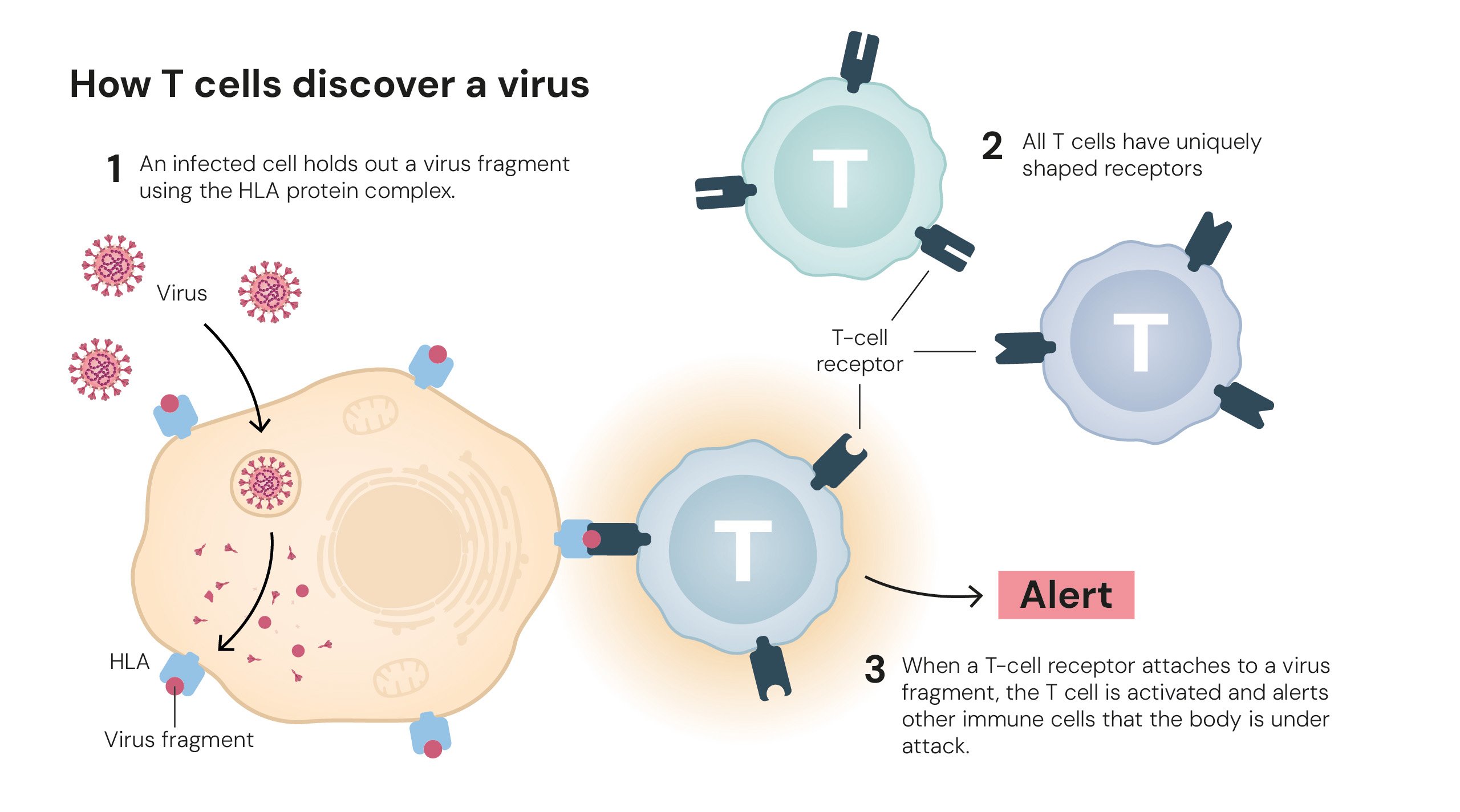
Regulatory T cells monitor other immune cells and ensure that our immune system tolerates our own tissues. © The Nobel Committee for Physiology or Medicine. Ill. Mattias Karlén, CC BY-NC

The 2025 Nobel prize in physiology or medicine celebrates a discovery that answers one of medicine’s most profound questions: how does the immune system know when to attack, and when to stand down?

Most of the time, our defences target dangerous infections and even cancers while leaving the body’s own tissues unharmed. But when that balance fails, the consequences can be devastating – from autoimmune diseases, where the immune system turns on healthy organs, to cancers, where it becomes too restrained to recognise and destroy tumour cells.


Read more:
Nobel prize awarded for discovery of immune system’s ‘security guards’


Three scientists – Mary E. Brunkow, Fred Ramsdell and Shimon Sakaguchi – uncovered how our bodies maintain this delicate control through a special class of immune cells called “regulatory T cells”. Their discovery revealed the immune system’s natural “brakes”: the internal mechanisms that prevent friendly fire but, in some cases, can also shield cancers from attack.

Understanding how these brakes work has already reshaped modern immunology. The same insight guiding new treatments for autoimmune diseases is now helping researchers fine tune cancer immunotherapies; adjusting the immune system’s restraint so it hits hard against tumours without turning against the body.


© The Nobel Committee for Physiology or Medicine. Ill. Mattias Karlén, CC BY-NC

The immune system works like a highly trained security force, patrolling every corner of the body to detect and destroy bacteria, viruses and rogue cells. But even the best security team can be dangerous without oversight.

Left unchecked, immune cells can mistakenly attack healthy tissue: the hallmark of autoimmune diseases such as type 1 diabetes or multiple sclerosis. And when the system becomes too cautious, it can overlook genuine threats, giving cancers the chance to grow unnoticed.

For decades, scientists thought most of this immune “training” happened early in life, inside an organ called the thymus: a small gland above the heart where young immune cells learn which targets to attack and which to ignore. Those that fail this test are eliminated before they can cause harm.

But in the 1990s, Japanese immunologist Shimon Sakaguchi discovered there was more to the story. Through experiments on mice, he identified a previously unknown type of immune cell called a “regulatory T cell”: the peacekeepers of the immune system. These cells don’t attack pathogens themselves.

Instead, they hold the rest of the immune army in check, preventing unnecessary destruction. When Sakaguchi removed these cells in laboratory animals, their immune systems spiralled out of control, launching attacks on healthy organs. His work showed that these peacekeeping cells are essential for preventing the body from waging war on itself.

A few years later, Mary Brunkow and Fred Ramsdell found the genetic switch that makes these peacekeepers possible. They discovered that a single mutation in a gene called Foxp3 could leave both mice and human babies vulnerable to a rare but devastating autoimmune disorder called IPEX syndrome. The Foxp3 gene acts as the “on switch” for producing regulatory T cells. Without it, the immune system loses its referees and chaos follows.

T helper and regulatory T cells

The immune system relies on many types of T cells. T helper cells act as team captains, directing other immune cells to respond to infections. Much of my own research has focused on how these cells behave in HIV infection, where their loss leaves the immune system defenceless. Regulatory T cells belong to this same family but serve the opposite role: they calm things down when the fight goes too far.


© The Nobel Committee for Physiology or Medicine. Ill. Mattias Karlén, CC BY-NC

These peacekeepers keep the immune defenders focused on real threats rather than friendly targets. When they fail, autoimmune diseases emerge. But when they work too well, they can suppress immune attacks on cancer, allowing tumours to hide and grow. Scientists are now learning how to fine-tune this balance: boosting the guards to control autoimmune disease, or easing the brakes so the body can fight back against cancer.

These discoveries have redefined how doctors think about immunity. Clinical trials are already testing therapies that expand regulatory T cells in people with arthritis, diabetes or after an organ transplant; helping the body to tolerate its own tissues.

In cancer treatment, the opposite approach is used: blocking or disabling these peacekeepers to unleash a stronger immune attack on tumours. This is the principle behind modern immunotherapies, which have already transformed outcomes for patients with melanoma, lung cancer and lymphoma.

Science that touches lives

The work of Brunkow, Ramsdell and Sakaguchi shows how basic science can lead to profound changes in medicine. Their discoveries help explain not just why the immune system sometimes goes wrong, but how it can be guided back into balance – a balance that could one day prevent autoimmune diseases, improve transplant survival and make cancer therapies both safer and more effective.

The Nobel committee’s decision this year recognises not only their scientific achievement, but also a vision of the immune system as something far more nuanced than an on-off switch. It’s a finely tuned orchestra and regulatory T cells are its conductors, ensuring the right notes are played at the right time, silencing those that might cause chaos.

By learning to adjust these biological “brakes” with precision, medicine is entering a new era. Treatments inspired by these discoveries are already improving lives and may, in time, transform how we prevent and treat disease across the spectrum, from autoimmunity to cancer.

The Conversation

Justin Stebbing does not work for, consult, own shares in or receive funding from any company or organisation that would benefit from this article, and has disclosed no relevant affiliations beyond their academic appointment.

ref. Nobel medicine prize: how a hidden army in your body keeps you alive – and could help treat cancer – https://theconversation.com/nobel-medicine-prize-how-a-hidden-army-in-your-body-keeps-you-alive-and-could-help-treat-cancer-266860

I research Tourette’s – I Swear is an unflinching yet empathetic portrait of life with this condition

Source: The Conversation – UK – By Melina Malli, Senior Research Fellow, Oxford Institute of Population Ageing, University of Oxford

I Swear is a biographical drama based on Scottish campaigner John Davidson’s experience of Tourette’s syndrome.

Spanning his teenage years to the present, it follows the first tics and their social fallout. It traces how Tourette’s syndrome – and the relationships and institutions around it – shape a life over decades.

Swearing forms part of Davidson’s experience — the film opens with an expletive-laden outburst at his MBE ceremony. But I Swear is careful to stress that coprolalia (involuntary swearing) affects only a small minority of people with Tourette’s. In doing so, it moves decisively beyond the sensationalising of symptoms that so often dominates media representation.

Davidson’s (Robert Aramayo) story begins in Galashiels, Scotland, in 1983, when he entered “big school”. At first, his tics are dismissed by teachers and classmates as little more than irritating, attention-seeking gestures. But gradually they become impossible to ignore – uncontrollable motor and vocal outbursts.

This shift strains Davidson’s relationship with his father (Steven Cree), who had pinned hopes on his son’s promise as a footballer. The dream of a professional career collapses, replaced by frustration and disappointment. The consequences ripple outward to physical punishment at school and mounting conflict at home.

The trailer for I Swear.

Thirteen years on, the story pivots towards transformation. After a long season of withdrawal – and the conviction that Tourette’s disqualified him from work and ordinary sociability – Davidson begins, tentatively, to reenter public life. The turn is scaffolded by allies. Dottie Achenbach (Maxine Peake), a forthright mental health nurse, and Tommy Trotter (Peter Mullan), the local hall caretaker, help him to forge kinship beyond his family.

More importantly, they establish that Davidson’s Tourette’s is not a moral fault requiring his apology. Recognising this recalibrates his trajectory, shifting him from enforced quiet to self-acceptance and, in time, advocacy.

Complicated people, complicated stories

I Swear frames Davidson’s experience through what sociologists call biographical disruption. That means the sudden onset of Tourette’s unsettled not only his sense of self but also the imagined trajectory of his life.

The film resists a simple, linear trajectory towards redemption and refuses to resolve into a straightforward tale of triumph. Instead, it foregrounds Davidson’s ongoing struggles, rooted not only in the tics themselves, which are painful, agonising and exhausting — but also in the ignorance and stigma that surround the condition.

This dual dimension of disability is captured well. Davidson’s tics cause him distress but the social response compounds and magnifies his suffering. Aramayo’s performance conveys the physicality of the tics with remarkable authenticity. Yet the greater harm often lies in his community’s refusal to recognise them as anything other than signs of deviance or madness.

Casting an actor who doesn’t have Tourette’s in the lead is a controversial decision, however. It reopens the debate over disability drag – a choice some critics argue sidelines disabled performers and reduces lived experience to surface technique.

In a few other ways, too, the film succumbs to familiar disability cinema tropes. The late reconciliation with Davidson’s mother, for example, though true to life, is framed with a Hollywood gloss that smooths conflict into catharsis.

Where the film feels most refreshing is in its refusal to cast Davidson as a saintly sufferer whose purpose is to inspire pity. Instead, he emerges as a three-dimensional character, capable of humour and resilience, but also of error and misjudgement. Davidson’s direct involvement (he is credited as an executive producer) anchors the film’s authenticity.

The tone also resists the solemn earnestness typical of disability dramas. It gives audiences permission to laugh with Davidson, not at him. Humour is more than comic relief – and it is never weaponised against the Tourette’s community. It functions as a means of deepening empathy, helping us to understand Davidson more fully and avoid unnecessary sensationalisation.

This refusal of solemnity sets the film apart from many disability dramas, allowing moments of levity to sit alongside the gravity of stigma and struggle. Alongside Davidson resilience, the film underscores the need for the infrastructures that make it durable: peer networks and affinity spaces where Tourette’s is unexceptional, and allies whose informed practice actively disrupts stigma.

Ultimately, I Swear is less about miraculous transformation than about the everyday struggle of a person to survive in a society that demands conformity. It is this honesty, rather than sentimentality, that makes the film worthwhile.


Looking for something good? Cut through the noise with a carefully curated selection of the latest releases, live events and exhibitions, straight to your inbox every fortnight, on Fridays. Sign up here.


The Conversation

Melina Malli does not work for, consult, own shares in or receive funding from any company or organisation that would benefit from this article, and has disclosed no relevant affiliations beyond their academic appointment.

ref. I research Tourette’s – I Swear is an unflinching yet empathetic portrait of life with this condition – https://theconversation.com/i-research-tourettes-i-swear-is-an-unflinching-yet-empathetic-portrait-of-life-with-this-condition-266284

As long as the cybercriminals’ business model works, companies are vulnerable to attack

Source: The Conversation – UK – By Ayman El Hajjar, Senior Lecturer & Head of the Cyber Security Research Group, University of Westminster

Tero Vesalainen/Shutterstock

When cybercriminals targeted the UK nursery chain Kido, it represented a disturbing new low for the hackers. They threatened to expose personal data about young children and their families, shocking parents and cybersecurity experts alike.

The Kido hack is far from an isolated incident. Cyberattacks have struck organisations across many sectors in the last year, disrupting businesses from retail to manufacturing.

These recurring attacks highlight an important reality – cybercrime has become a very profitable activity. While the official advice is not to pay hackers, the frequency of these attacks suggests that many companies do. They will want to avoid losing their data or having their business and reputation damaged. But most will never admit to paying up.

Whenever there is money involved, more criminals want to participate – which has led to cybercrime becoming an organised industry. Cybercrime has shifted from individual and uncoordinated group attacks to an established business model that generates revenue and mirrors genuine companies.

This model has its own supply chains, affiliates (for example, criminals who use the malware rather than developing it) and even customer support.

The cybercrime ecosystem has evolved to run using the “as-a-service” model. For legitimate businesses, this is an efficiency model that lets them pay to use something “as a service”, rather than purchasing it. Just as businesses use software or security as a service, criminals have mirrored this model into an similar underground economy of cybercrime.

In this underground market, hackers sell ready-made malware, rent out botnets (networks of infected devices), and run payment platforms. They even go as far as providing customer support and help pages for the criminals they serve.

Their customers may shop for ransomware as a service when looking to extort ransoms from victims. Others, looking to cause disruption rather than financial gain, rent botnets to conduct “denial of service” attacks that flood the victim’s systems with traffic and disables them.

In the cybercrime economy, criminals known as “initial access brokers” act as middlemen. These are skilled cybercriminals who break into systems, providing the initial access and selling it as a package for others to use.

The packages often include stolen data, usernames and passwords, or even direct access to compromised networks. This essentially opens the door for cybercriminals with fewer skills to compromise businesses.

Business is booming

This business model is not only thriving right now – it will also persist. That’s just simple economics – everyone involved in the “business” benefits. This includes the experienced hackers and malware developers who take their cut, the brokers selling bundled services and the service-hosting and payment-platform providers taking their share. It also includes the affiliate criminals carrying out attacks and collecting their profits.

This makes it low-risk and profitable, effectively the definition of a successful business. Societal attitudes towards hackers often glamorise them as genius outsiders, while hacking itself – particularly when large corporations are the target – can mistakenly be seen as a lesser crime.

But the truth is that when the cybercrime business model succeeds, it has a lasting impact on the wider economy. Trust in businesses in the UK and beyond is damaged.

The attacks on UK retailers such as M&S and Co-op were carried out using a cybercrime service called DragonForce. This is available for a fee, reportedly set at 20% of the ransom payment. In the case of M&S and Co-op, it caused major disruption to their operations, and millions of pounds in losses.

Meanwhile, the attack on the Jaguar Land Rover (JLR) caused production at the carmaker to be halted for weeks, resulting in a huge loss.


Read more:
Cyber-attackers slammed the brakes on Jaguar Land Rover’s manufacturing – here’s why the UK government should step in


The JLR attack caused a ripple effect on sales, deliveries, the workforce and smaller businesses in the supply chain. These companies may face bankruptcy if proceeds from the loan underwritten by the government do not reach them all.

To interrupt this recurrence of attacks, it’s vital to break the cybercriminals’ model by addressing the two fundamentals that make it successful.

First, businesses should stop paying the criminals. As long as they pay, criminals will try their luck. But it is reported that nearly 50% of companies do pay up. This is money that will fuel this crime and encourage the hackers.

Second, companies must build better resilience into their infrastructure and operations. While companies’ security has improved greatly, they are still not investing enough in things such as AI to improve their resilience to attack and their ability to keep operating (or at least to minimise disruption).

This was evident in the attacks on UK businesses. It took M&S four months to restore all of its services, while JLR’s production will not be at full capacity for several weeks.

Both Harrods and Co-op maintained operations during their incidents. This minimised interruptions, prevented large data losses and reduced the financial hit to the businesses.

Empty shelves in a co-op store behind a sign explaining that the chain is working through some technical challenges.
Co-op kept things running after its cyber attack, but the challenges were there for all to see.
Brian Minkoff/Shutterstock

There are no quick fixes, but there are steps businesses can take to make cybercrime less profitable for criminals and less disruptive for victims. The UK government is heading in the right direction with the Cyber Security and Resilience Bill and its consultations on ransomware payments.

But the real change must come from companies themselves. Without commitment, the strongest policy and legislation will remain words on paper. While prevention remains critical for a company, resilience if the worst happens is what really decides how much damage an attack can cause.

If companies can maintain operations and refuse to pay ransoms, cybercriminals lose their extortion power. And without that power there will be less profit and so less interest. But maybe most importantly, fewer families like those affected by the Kido attack will worry about their children’s data being held hostage.

The Conversation

Ayman El Hajjar does not work for, consult, own shares in or receive funding from any company or organisation that would benefit from this article, and has disclosed no relevant affiliations beyond their academic appointment.

ref. As long as the cybercriminals’ business model works, companies are vulnerable to attack – https://theconversation.com/as-long-as-the-cybercriminals-business-model-works-companies-are-vulnerable-to-attack-266521

Caught in Nepal’s protests, I witnessed how sport can bring people hope during times of crisis

Source: The Conversation – UK – By Ross Walker, Lecturer in Sports Management, University of Stirling

On September 8, the day before my holiday in Nepal was scheduled to end, police in the capital, Kathmandu, and other cities opened fire on young members of the public who were protesting against government corruption. At least 19 people were killed across Nepal that day, and over 300 more injured. Images of police brutality quickly spread throughout the country and internationally.

More people took to the streets the following morning to show their dissatisfaction with the government. My walk from the tourist area of Thamel in Kathmandu to Tribhuvan International Airport put me in the front lines of these protests.

The country descended into anarchy. Nepal’s parliament and the homes of several politicians were set alight, and 13,500 inmates escaped from prisons. For the best part of a day, the sky was filled with smoke and all I could hear was constant gunfire.

Protesters gathered at the airport to try to stop government officials fleeing the country. Alongside the smoke from burning buildings, this forced flights to be suspended indefinitely. With nowhere to go, I befriended some local people who helped me find somewhere to stay.

A plume of smoke rising from a street in Kathmandu.
For the best part of a day, the sky above Kathmandu was filled with smoke.
Ross Walker, CC BY-NC-ND

Next morning, heading back to my hotel in Thamel, we travelled through a local housing area. Between the buildings was a large, muddied patch of land with people of all ages playing football.

Throughout my time in Nepal, which also saw me travel to the Everest region in the country’s north-east, this was the most I had seen anyone playing sport in public. In general, public spaces seemed to be used for anything but sport, often becoming car parks during the day.

However, as the tensions escalated, I saw more people playing sport across the Kathmandu valley. Almost all of the Nepalis I spoke to suggested they were out enjoying sport because, after the protests and police crackdowns, people needed a purpose – something to fill them with joy, because the past 48 hours had been an expression of sadness.

For those who indulged, sport had become a beacon of hope during a time of uncertainty. Two of my most compelling memories were seeing people out on their morning run, and a local football team practising on a rural, mountainous pitch.

A grassroots football team practising on a rural pitch in Nepal.
A grassroots football team practising on a rural pitch in the Kathmandu valley.
Ross Walker, CC BY-NC-ND

The power of sport

Research, including my own, suggests that sport can play a role in improving the quality of life for people and communities – and even build the capabilities of entire nations. The power of sport as a tool for development and peace – especially during times of civil unrest, conflict and tension – has been evident for decades.

One famous example occurred during the first world war. Soldiers along the western front arranged unofficial ceasefires around Christmas 1914, five months after the hostilities had begun, before meeting in no man’s land to play football.

A more recent example can been found in war-torn South Sudan. The success of the men’s national basketball side, which qualified for the 2023 Basketball World Cup and 2024 Paris Olympics, has seen the country forge a new identity. South Sudan remains unstable, but basketball is now one of the country’s most celebrated exports.

The impact was highlighted by Luol Deng, a South Sudanese former professional basketball player, who told BBC Sport Africa ahead of the Olympics: “Since I was born, I have known nothing but conversations about war.” Yet now, he said, people in South Sudan can’t wait to tell you about basketball, even if they don’t play the game. “It’s a relief. Finally, we have something positive to say.”

During my extended stay in Kathmandu, I got to know a local gym owner and competitive bodybuilder, members of a Kathmandu boxing club, and several trekking guides. People also approached me in the street.

These conversations taught me about the passion and pride Nepalese people are starting to take in sport. At the Paris Paralympics, Palesha Goverdhan won a bronze medal in para-taekwondo – Nepal’s first ever Paralympic or Olympic medal.

Cricket is one of the fastest-emerging sports in Nepal. In 2024, its men’s team qualified for the T20 World Cup for only the second time, and they are currently playing the West Indies in a T20 series. In the new year, Kathmandu will host a 21-day qualifying tournament for the 2026 women’s T20 World Cup.

A group of Nepalese people clearing debris from a street in Kathmandu.
Nepalese people clearing a street in Kathmandu damaged during the demonstrations.
Ross Walker, CC BY-NC-ND

Some of the Nepalese people I spoke to fear that images of the protests will discourage people from visiting their country, which is heavily dependent on tourism. At a time when the Nepal’s future remains unclear, sport can unite the country and make a statement for its people on the world stage.

Not long ago, Nelson Mandela used the 1995 Rugby World Cup to help unite a divided post-apartheid South African nation. As the first president of South Africa, he famously wore the country’s green rugby jersey during the tournament. Mandela also delivered the trophy to the team’s captain, Francois Pienaar, after South Africa won the final.

These powerful symbols laid the foundation for the Rainbow Nation, the term now used to reflect South Africa’s diverse and multicultural society. The legacy of Mandela’s efforts remain evident, despite the various societal challenges South Africa continues to face.

Siya Kolisi became the first black captain of the South African rugby team in 2018, leading his nation to World Cup victory the following year. I hope that sport can, in a similar a way, help build a more united Nepal in the future.

The Conversation

Ross Walker does not work for, consult, own shares in or receive funding from any company or organisation that would benefit from this article, and has disclosed no relevant affiliations beyond their academic appointment.

ref. Caught in Nepal’s protests, I witnessed how sport can bring people hope during times of crisis – https://theconversation.com/caught-in-nepals-protests-i-witnessed-how-sport-can-bring-people-hope-during-times-of-crisis-263295