The Battleship Potemkin at 100: why Sergei Eisenstein’s powerful silent film remains unforgettable

Source: The Conversation – UK – By Dušan Radunović, Associate Professor/Director of Studies (Russian), Durham University

A landmark film in Russian cinema, Sergei Eisenstein’s The Battleship Potemkin may have first been shown in Moscow on December 24 1925, but its enduring appeal and relevance are evident in the many homages paid by film-makers in the century that followed. So what made this film, known for its cavalier treatment of historical events, one of the most influential historical films ever made?

The story of the making of the film provides some answers. Following the success of his 1924 debut Strike, Eisenstein was commissioned in March 1925 to make a film that would mark the 20th anniversary of Russia’s revolution in 1905. This widespread popular uprising was triggered by poor working conditions and social discontent swept through the Russian Empire, posing a challenge to imperial autocracy. The attempt failed but the memory lived on.

Originally titled The Year 1905, Eisenstein’s film was envisaged as part of a nationwide cycle of commemorative public events across the Soviet Union. The aim was to integrate the progressive parts of Russian history before the 1917 Revolution – in which the general strike of 1905 assumed central place – into the fabric of the new Soviet life afterwards.

The original screenplay envisioned the film as the dramatisation of ten notable, but unrelated, historical episodes from 1905: the Bloody Sunday massacre, the antisemitic pogroms and the mutiny on the imperial battleship Prince Potemkin, among others.

The famous Odessa steps scene from The Battleship Potemkin.

Filming the mutiny, recreating the history

The principal photography started in summer 1925, but yielded little success, after which the increasingly frustrated Eisenstein moved the crew to the southern port of Odessa. He decided to drop the loose episodic structure of the script and refocus the film on just one episode.

The new screenplay was solely based on the events of June 1905, when the sailors on the battleship Prince Potemkin, at the time docked near Odessa, rebelled against their officers after they were ordered to eat rotten meat infested with maggots.

The mutiny and the follow-up events in Odessa were now to be dramatised in five acts. The opening two acts and the closing fifth corresponded to the historical events: the sailors’ rebellion and their successful escape through the squadron of loyalist ships, respectively.

The two central parts of the film, which describe the solidarity of the people of Odessa with the mutineers, were written anew and were only loosely based on historical events. Curiously, over the century of the film’s reception, its reputation as a quintessential historical narrative rests mainly on these two acts. What accounts for that paradox?

The answer may lie in the central two episodes, particularly the fourth, with its poignant depiction of a massacre against unarmed civilians – including the famous scene of a baby in a runaway pram, bouncing down the steps – that imbue the film with powerful emotional resonance and grant it a sense of moral high ground.

Also, while almost entirely fictional, the famous Odessa Steps sequence integrates many of the historically grounded themes from the original screenplay, namely those of widespread antisemitism and oppression of the Tsarist authorities against its people.

These events are then emphatically visualised through Eisenstein’s idiosyncratic use of montage, in which reiterative patterns of the suffering of the innocent foreground the theme of the faceless brutality of the Tsarist oppressor. The film’s universal moral message is thus rendered in a form that is at once visceral and widely readable.

The Battleship Potemkin can be seen as an act of collective memory that sparks and manages an emotional reaction in the viewer, through which the past and the present are negotiated in a particular way. But, a century on, Eisenstein’s negotiation of the past, so insistent on establishing an emotional rapport with the viewer and recreating history, is inseparable from our own acts of remembrance and history-making.

From the vantage point of 2025, Eisenstein’s Potemkin, with its revolutionary idealism and the promise of a better society, has lost much of its appeal in the wake of the betrayal of the same ideals, from the Stalinist purges of the 1930s to the ongoing devastation of Ukraine. What contemporary viewers need is the revitalisation of the film’s original message in new, ever-changing contexts, urging resistance to power and oppression, and expressing solidarity with the marginalised and oppressed.

Echoes in modern film

It is fitting that this year saw the BFI (the British Film Institute) release a restored version of Battleship Potemkin, for the film has had such a profound and pervasive impact on western visual culture that many viewers may not realise how deeply its language is rooted in mainstream cinema.

How the famous Odessa steps scene has been imitated by Hollywood.

Alfred Hitchcock famously adopted Eisenstein’s rapid, chaotic editing techniques in the shower scene in Psycho (1960), where the horror emerges less from what is shown than from what is suggested through montage. He also makes an explicit nod to Eisenstein in the film’s second major killing, in which the murder takes place on the staircase of the Bates house.

This was a scenario later echoed in many films, including Tim Burton’s Batman (1989) by Jack Nicholson’s Joker. Nicholson himself had earlier enacted a violent confrontation on a staircase in Stanley Kubrick’s The Shining (1980), while Todd Phillips’s Joker (2019) would become emblematic for a controversial dance sequence on a flight of public steps.

William Friedkin’s The Exorcist (1973), likewise, appears to owe a stylistic debt to Eisenstein, with two pivotal deaths occurring at the base of a now-iconic Georgetown stairway. Terry Gilliam’s Brazil (1985) gestures toward Eisenstein in parody, but it is Brian De Palma’s The Untouchables (1987) that remains the most explicit homage to the Odessa step sequence, with its baby in a runaway pram scene, which places Eisenstein’s influence centrally at the heart of modern Hollywood cinema.


Looking for something good? Cut through the noise with a carefully curated selection of the latest releases, live events and exhibitions, straight to your inbox every fortnight, on Fridays. Sign up here.


The Conversation

The authors do not work for, consult, own shares in or receive funding from any company or organisation that would benefit from this article, and have disclosed no relevant affiliations beyond their academic appointment.

ref. The Battleship Potemkin at 100: why Sergei Eisenstein’s powerful silent film remains unforgettable – https://theconversation.com/the-battleship-potemkin-at-100-why-sergei-eisensteins-powerful-silent-film-remains-unforgettable-270133

Freedom for Christmas: the extraordinary journey of an enslaved woman to Britain

Source: The Conversation – UK – By Genevieve Johnson, Associate Lecturer in history, Newcastle University

A newly unveiled statue in North Shields is casting fresh light on the extraordinary life of Mary Ann Macham – a woman whose courage carried her from the brutality of slavery in the US state of Virginia to freedom on the banks of the River Tyne on Christmas Day, 1831.

With the help of a friend in Virginia who was enslaved to the harbour master, Macham (who was enslaved on a plantation) hid beneath a tree and in the forest for six weeks while men on horses and bloodhounds searched for her. She was then smuggled to the harbour, where the second mate of a ship stowed her away with the cargo.

After many weeks at sea, including a stop in the Netherlands, Macham reached Grimsby. There she was taken by road to North Shields and welcomed by two “Miss Spences” on Christmas Day.

The Spence family were Quakers and committed abolitionists who offered her refuge and support. Macham’s story, dictated to members of the Spence family, was later published in the Christmas 1950 issue of Tynemouth Parish. Her powerful account survives today, with the original text available through the African Lives in Northern England website.

A photo of a black woman in Victorian clothing
The only known photograph of Mary Ann Macham.
I Love North Shields

Macham lived in freedom in North Shields for the next 62 years. She worked in the Spence household and married a local man, James Blyth. Though her story is little known nationally, exhibitions about her have been held at the Old Low Light Museum in North Shields and the Discovery Museum in Newcastle. Local newspapers have told her story with pride and affection.

Macham’s story is an early example of a pattern which continued for most of the century, of Black American fugitives from slavery or anti-slavery activists coming to Britain and Ireland to work, lecture, publish and live.

Other figures such as Frederick Douglass, whose legal freedom was paid for by Quakers in Newcastle, and Moses Roper, who lectured far and wide, eventually settling for a time in Wales, are fairly well known. There are several possible explanations for why Macham’s story hasn’t had the same recognition.

First, there is still a distinct lack of attention paid to Black British history in general, particularly anything before Windrush, the ship that brought the first large group of Caribbean migrants to the UK in 1948. Second, Macham was not, as far as the records show, an abolitionist or anti-slavery activist in the traditional way of public lecturing, as Douglass was. She told her story knowing it would be shared, but otherwise it seems she used her freedom in Britain as simply that – freedom.

Where she lived is another possible explanation for the relative ignorance of her story. Less attention is paid to diverse histories in north-east England compared with, for example, London.

Why people came to Britain

Several factors made Britain attractive as a place of freedom. There was no legal chattel slavery in Britain and Ireland (though much continued in the British colonies), and the landmark Somerset v Stewart case of 1772 ruled that an enslaved person must be held to be free by virtue of their presence on British soil.

Fugitive and formerly enslaved people came consistently to Britain and Ireland throughout the 19th century. Arguably, nowhere were they more warmly received and, to an extent, understood than in the most industrialised, and therefore often most deprived, areas of the country, where workers made up a large portion of the population.

In the 19th century, the north-east was a thriving hub of anti-slavery activity, playing host to many Black abolitionists and playing an active part in publishing Black literature and facilitating freedom. Examples of this include the local Quaker sisters-in-law Anna and Ellen Richardson, who raised funds for the freedom of Frederick Douglass, and the Spence family, who welcomed Macham in North Shields and helped her start her new life.

Work on Black histories in the north-east include research by the local African Lives in Northern England Project and by Northumbria University’s Brian Ward, who published a book about Martin Luther King’s visit to Newcastle in 1967 and the wider historical context.

Many workers in industrialised places in Britain in the Victorian era – such as Manchester, the coal fields of Wales and the north-east of England – also claimed to feel “enslaved”. They saw parallels between their condition and that of the American slave, an idea perpetuated in contemporary literature such as Uncle Tom’s Cabin (1852).

Of course, the experience of a white, free workforce cannot realistically be compared with the life of those in chattel slavery. However, the feeling of oppression, capitalist exploitation, poverty and mutual support among struggling people meant that regions like the north-east were ideally placed to welcome those fleeing persecution and seeking refuge.

The sentiment that fostered a welcoming atmosphere in North Shields for Macham persists to this day. Following the exhibition about her at the Old Low Light Museum in 2019, £800 was raised through fundraising to lay a stone at her grave, which previously only held the name of her husband.

The stone was laid in 2020 by students from John Spence Community High School – named after the family who helped Macham. This and the statue stand as a lasting tribute to her courage, and the hearts of the community that welcomed her on Christmas Day in 1831 and continues to honour her.


Looking for something good? Cut through the noise with a carefully curated selection of the latest releases, live events and exhibitions, straight to your inbox every fortnight, on Fridays. Sign up here.


The Conversation

Genevieve Johnson does not work for, consult, own shares in or receive funding from any company or organisation that would benefit from this article, and has disclosed no relevant affiliations beyond their academic appointment.

ref. Freedom for Christmas: the extraordinary journey of an enslaved woman to Britain – https://theconversation.com/freedom-for-christmas-the-extraordinary-journey-of-an-enslaved-woman-to-britain-272099

A story about North Korea and Japan, an exhilarating political film and a funny spy thriller – the three best releases of 2025

Source: The Conversation – UK – By Anna Walker, Senior Arts + Culture Editor, The Conversation

In 2025, there was a lot of excellent art and culture to rave about.

Anora, a film about a sex worker who gets caught up in the world of a Russian oligarch’s son, won best picture at the Oscars. Nnena Kalu was the first disabled artist to win the coveted Turner Prize for her hypnotic multimedia work.

Yael van der Wouden’s The Safekeep, a tale about the ongoing fallout of the Holocaust in 1980s Holland, won the Women’s Prize For Fiction – a book that was loved by the arts team.

Heart Lamp, Banu Mushtaq’s short story collection about the everyday lives of women and girls in Muslim communities in southern India, won the International Booker. Flesh by David Szalay, an exploration of modern masculinity, won the Booker.

We consulted with our academic experts to whittle down the year’s cultural offering, presenting you with lists of the best books, films and albums. But here are the novels, movies, dramas and music that really left a lasting impression on the Something Good team.

Flashlight by Susan Choi

I’ve learned a lot about Korean history – and the trauma that still lingers – through literature.

This year, I read Han Kang’s We Do Not Part, a haunting indictment of the US-backed Jeju 4.3 massacre, and Yeji Y. Ham’s The Invisible Hotel, which examines inherited trauma through the Korean ritual of “washing bones”.

The book that stayed with me most, though, was Susan Choi’s Booker-shortlisted Flashlight.

Set in motion by the disappearance of Serk – a Korean man raised in Japan – on a Japanese beach in 1978, the novel traces how his life led to that moment, and the emotional fallout for his interracial American family. Moving from pre-war Japan to 1980s America, Flashlight is both an intimate family drama and a sweeping meditation on identity, imperialism and the hidden currents of history.

It recalls, and is a great companion to, Min Jin Lee’s seminal novel Pachinko in its exploration of Korean life in Japan and the lasting scars of post-war East Asia. Drawing on the real North Korean abductions along Japan’s coast in the 1970s, Flashlight is, as our reviewer Sojin Lim writes, “an ambitious, emotionally resonant work that rewards close reading”.

Honourable mentions

The epic work of musical fusion that is Lux, by Spanish singer-songwriter Rosalia.

The film Friendship is a surreal, absurd and surprisingly deep mediation on male mental health.

Fundamentally is a darkly funny novel about an academic forced to test her theories while running a UN programme to de-radicalise Islamic State brides. Nussaibah Younis draws on a decade of real-world experience peace-building in the Middle East.

Naomi Joseph, Arts and Culture editor

One Battle After Another

I have a bad habit of finishing my popcorn before the trailers have even ended. But during One Battle After Another, I barely touched it. I couldn’t risk drowning out a second of the dialogue with my munching.

This is Paul Thomas Anderson’s tenth film, and to my mind, his best yet. Leonardo DiCaprio plays Bob, a former member of the radical collective the French 75, now a permanently stoned single father. His daughter’s mother, Perfidia Beverly Hills (an astounding performance by Teyana Taylor), once led the group. After her arrest, she became a “rat”, cutting a deal with Lockjaw (an unrecognisable Sean Penn), the collective’s sworn enemy.

Anderson reveals the French 75’s past in jagged flashes: migrant holding cell breaks at the Mexican border and bank robberies to fund their activism, interspersed with the present-day lives of the revolutionaries, now scattered and on the run.

Watching One Battle After Another felt like splashing my face with ice water again and again. And forget about just 2025 – the much-talked-about car chase is one of the most electrifying moments I’ve experienced in a cinema ever.

Honourable mentions

Watching Severance season two I lost more hours than I care to admit trawling Reddit for Lumon theories.

Love in Exile by Shon Faye is a whip-smart and deeply researched book exploring love and self-worth.

Mayhem by Lady Gaga is camp, dark and gloriously theatrical.

Anna Walker, Senior Arts and Culture Editor

Slow Horses

I have to confess I am bereft ever since season five of Slow Horses ended. I waited dutifully for the new episode to drop every week (how terribly old-school – but the delayed gratification just made it even more delicious).

Every episode is a joy, mixing top-thrills espionage with top laughs. From the snooty idiot toffs in charge of MI5, to the bored office bantz and casual gun-slinging at Slough House (an arms-length office for demoted loser spies), all the real-world grimness is leavened by the japes, sarcasm and arm-punching that go on.

Best of all is the obnoxious Jackson Lamb and his unparalleled insults, grubby mac and two-thirds-gone bottle of whisky. (Sir) Gary Oldman is just superb – you can practically smell his stinky socks from your telly – and he never overplays it. That Lamb tries so very hard to hide the fact that he does actually care about his little band of MI5 misfits, just adds a layer of unexpected tenderness. There had better be a season six.

Honourable mentions

I saw Christmas Comes to Moominvalley, a magical festive show, this week with an entranced 11-year-old.

Patti Smith’s Horses at 50 is an extraordinary album by a trailblazing genius.

I read our review, then immediately bought the book, then watched the film Train Dreams. It’s one of those dreamy, ambiguous, richly visual films you can’t get out of your head afterwards, but the book haunts you more.

Jane Wright, Arts and Culture Commissioning Editor


This article features references to books that have been included for editorial reasons, and may contain links to bookshop.org. If you click on one of the links and go on to buy something from bookshop.org The Conversation UK may earn a commission.


Looking for something good? Cut through the noise with a carefully curated selection of the latest releases, live events and exhibitions, straight to your inbox every fortnight, on Fridays. Sign up here.


The Conversation

ref. A story about North Korea and Japan, an exhilarating political film and a funny spy thriller – the three best releases of 2025 – https://theconversation.com/a-story-about-north-korea-and-japan-an-exhilarating-political-film-and-a-funny-spy-thriller-the-three-best-releases-of-2025-272471

The Room in the Tower: the ‘real’ hautings that inspired this year’s BBC Ghost Story for Christmas adaptation

Source: The Conversation – UK – By Alice Vernon, Lecturer in Creative Writing and 19th-Century Literature, Aberystwyth University

This year’s BBC Ghost Story for Christmas is an adaptation of E. F. Benson’s 1912 tale of vampiric horror and haunted sleep, The Room in the Tower.

The unnamed narrator begins the story by relating a recurring nightmare he has suffered for 15 years. In the dream, he has been invited to the mansion of the Stone family. The dream begins pleasantly, with card games, cigarettes and light conversation. But it always takes a turn when the family’s fearsome matriarch, Mrs Stone, tells the narrator that he’ll now be shown to his room for the night – the titular room in the tower. Upon entering the room, he is overwhelmed with abject horror, and wakes up before he sees the object of his fear.

While visiting a friend one stormy summer’s day, the narrator finds himself at the very home he saw at least once a month in his dreams. Sure enough, he’s led to the room in the tower, where he finds a hideous portrait of the demonic Mrs Stone. The portrait is removed from the room at his request, but leaves curious bloodstains on the narrator and his friend’s hands. During the night, however, the narrator’s sleep is once again disturbed by the nightmare made manifest.

E. F. Benson in a suit, with a moustache
E. F. Benson ‘grew up with ghosts’.
The New York Public Library

Many ghost stories take place in bedrooms. One of the BBC’s first ghost stories adapted for television was M. R. James’ Oh Whistle, and I’ll Come to You, My Lad, which features a bumbling academic terrorised in his hotel room by a ghost quite literally wearing a bed sheet. Horror comes from a twisted reversal of what we expect to see and experience, and since the bed should be the place of utmost safety, it is ripe to be distorted into a place of existential dread.

Sleep, too, is a state of pure vulnerability. Those few breathless seconds after waking from a nightmare remind us just how defenceless we are. No tale of the supernatural from the early 20th century examines the way our troubled sleep can haunt us quite like The Room in the Tower.

Benson grew up with ghosts. His father, Edward Benson, was the archbishop of Canterbury. He was good friends with novelist Henry James, and allegedly told his son a spooky story he’d heard that James later turned into The Turn of the Screw (1898).

Benson’s mother was Mary Sidgwick, whose brother Henry was a founding member and first president of the Society for Psychical Research (SPR). The SPR’s aim was to investigate strange and paranormal phenomena, with particular interests in thought transference (or telepathy), visions and hallucinations, and ghosts and hauntings.

Begun in 1882, the SPR almost immediately set about collecting a massive amount of data under their Census of Hallucinations. They sent out a questionnaire to the public, and received thousands of responses over several years, some with fascinating anecdotes about being terrorised by ghosts and monsters in the middle of the night. The SPR compiled these in an issue of their periodical in 1894.

A man with a long white beard in a black and white photo
Henry Sidgwick, first president of the SPR in 1894.
WikiCommons

To read them in light of The Room of the Tower, it seems that Benson, too, knew what it feels like to be haunted by hallucinatory sleep disorders. Indeed, perhaps he even took direct influence from some of the anecdotes. The narrator in The Room in the Tower, being visited by a vampiric monster at the end of the story, describes himself as being “paralysed” – a typical sensation of sleep paralysis, which is often accompanied by a terrifying hallucination.

In Benson’s story, the narrator sees a “figure that leaned over the end of my bed”. In the SPR’s Census, a respondent referred to as Miss H. T. describes a horrifying visitation similar to the experience of Benson’s narrator. She wrote that she had seen the same figure three times, just as the narrator has the same nightmare over and over again. It would happen the same way every time; she would believe herself to be awake, and she would see a shimmer in the air that gradually solidified. Paralysed, she couldn’t move or scream to defend herself as the shape “took the form of mist and then developed into a dark veiled figure, which came nearer to me” and bent over the bed. Finally, the paralysis would lift, and the figure disappeared just as Miss H. T. threw her hands out towards it.

What both the Census and The Room in the Tower show is that ghosts don’t need to come from graveyards, gothic houses, or local legends. Often the most terrifying encounters, the experiences that prove most fruitful for ghost stories, are those our sleeping minds conjure up on the ethereal boundary between dreaming and waking.

The Room in the Tower will air on BBC One on Christmas Eve at 10pm, and will star Joanna Lumley as the terrifying Mrs Stone. For those of us prone to experience troubled sleep, it may well summon a nightmare of our own.


Looking for something good? Cut through the noise with a carefully curated selection of the latest releases, live events and exhibitions, straight to your inbox every fortnight, on Fridays. Sign up here.


This article features references to books that have been included for editorial reasons, and may contain links to bookshop.org. If you click on one of the links and go on to buy something from bookshop.org The Conversation UK may earn a commission.

The Conversation

Alice Vernon does not work for, consult, own shares in or receive funding from any company or organisation that would benefit from this article, and has disclosed no relevant affiliations beyond their academic appointment.

ref. The Room in the Tower: the ‘real’ hautings that inspired this year’s BBC Ghost Story for Christmas adaptation – https://theconversation.com/the-room-in-the-tower-the-real-hautings-that-inspired-this-years-bbc-ghost-story-for-christmas-adaptation-272309

Why so many young people in China are hugging trees

Source: The Conversation – UK – By Akanksha Awal, Lecturer, Social Anthropology, SOAS, University of London

Forest therapist Xinjun Yang enjoys tree hugging in Beijing. Xiaoyand, CC BY-NC-ND

In Beijing’s central district, trees are everywhere. In parks, along roadsides and in courtyards inside people’s houses. Many have only been planted in recent decades.

Others – with wide trunks – have been around for centuries and are cosy to touch: you can form an arm chain around them with a friend, trace your fingers along the bark or rest your ear on the trunk to listen to the inner workings of the tree. To hug a tree is an art. This ability does not come intuitively. It must be learned.

“Hugging trees is a way of having touch in one’s life,” Xiaoyang Wong, the leader of a forest therapy community in Beijing, told me. Wong is a 35-year-old former film editor who recently retrained as a forest therapist after the COVID pandemic left her feeling alone and isolated.

At first, many people feel awkward about hugging a tree, she told me. But in forest therapies, Wong encourages people to understand the tree’s many worlds by observing it at close quarters, watching the ants and other insects as they weave in and out of the grain of the bark.

Only after being curious about it and speaking with it, she encourages people to decide to touch or even hug it. I was a natural at tree hugging, she told me. I, however, had only learned how to hug a tree from watching other people do this supposedly silly practice in parks across the city.

In Beijing, most of the ancient trees are fenced in by the local government to protect them from damage; however, the newer ones are still available for people to touch and gather around.

Seeking relief

On weekends and even late at night, I discovered people – young and old, mothers and daughters, friends and lovers – hugging trees or resting their backs against a trunk while seeking relief from everyday stresses.

These stresses have compounded, especially after the COVID pandemic when loneliness and isolation became commonplace. Moreover, as many young women in China contest the idea of marriage, they seek friendships and new ways of pursuing a good life.

Trees, scholars argue, make young people feel “rooted” and “alive”. In my interviews with more than 25 young women and men as part of my ongoing research – which is yet to be published – I discovered that more women than men went to forest therapy, seeking both friendship with trees and other human beings.

In these therapies, Wong adapted the traditional forest bathing therapies with her own ideas to enhance people’s engagement. These include “plant enactment” where people could take on the name of their favourite tree, and be called by this name all day. She encouraged us, the participants in the therapy, to share a gesture that we associated with our chosen plant, one that described how we imagined the tree would move.

Wong was joined in these sessions by other women who too had given up the pursuit of high-pressure jobs, and had instead taken this part-time work to look after people, trees and plants in the city.

In one of these group sessions, a tree hugger, Florian Mo, expressed his frustration at not being able to find and sustain love in his life. He argued that a key problem with Chinese society was the stigmatisation of the pursuit of love at a young age.

He was 28 and reeling from a break-up. But for Mo, this was only because he had never learned how to love when he was a teenager. If he had done so, not only would he be a better partner today, as he shared with us, he would also be able to move on from his current heartbreak more easily.

For young people like Wong and Mo, trees emerged as spaces to explore themselves and connections to each other. And while the story of China’s urbanisation is often told through images of polluted air, water and soil, young people like Wong and Mo present an alternative narrative: that young Chinese generations seek to repair the urban environment by connecting with others while caring, nurturing and even hugging the trees with their friends and strangers.


Don’t have time to read about climate change as much as you’d like?

Get a weekly roundup in your inbox instead. Every Wednesday, The Conversation’s environment editor writes Imagine, a short email that goes a little deeper into just one climate issue. Join the 47,000+ readers who’ve subscribed so far.


The Conversation

Akanksha Awal receives funding from the ESRC, Leverhulme Trust, and St John’s College. I would like to thank Hangzhang Ding, an undergraduate at Peking University at the time, who accompanied me in the forest therapy session and provided translations throughout the day.

ref. Why so many young people in China are hugging trees – https://theconversation.com/why-so-many-young-people-in-china-are-hugging-trees-269832

Why returning to sport after childbirth is tougher than it looks for triathlete mothers

Source: The Conversation – UK – By Eleri Sian Jones, Lecturer in Sport Psychology, Bangor University

Today’s sporting landscape increasingly accepts that athleticism doesn’t end when motherhood begins. High-profile athletes such as middle-distance runner Faith Kipyegon and rugby player Abbie Ward have helped redefine what’s possible after giving birth.

But for most athletic mothers, the picture is far more complicated than the stories in the media suggest. Understanding those complexities is essential if women are to receive the support they need to thrive postpartum.

Triathlon, which is built on three disciplines demanding relentless training, adds an extra layer of challenge. Mastery isn’t achieved in one arena but across swimming, cycling and running. Each aspect carries its own technical and physical load.

For many women, this intersects with another critical moment. The peak performance age in triathlon often overlaps with the average age of childbirth. In the UK, most women have their first child at around 31. This is precisely when many endurance athletes are hitting their prime. When these timelines collide, returning to training and competition becomes especially complex.

Research my colleagues and I published earlier this year explored the postpartum experiences of ten triathlete mothers, from enthusiastic amateurs to world-class competitors. Their accounts reveal a largely invisible psychological journey, including shifting identities, guilt and resilience.

When expectations meet reality

Before giving birth, most of the women we interviewed expected their return to training to be straightforward. They thought they’d wait for medical clearance, rebuild gradually and carry on. But almost all described a divide between expectation and reality. Some assumed the “rules” of postpartum recovery wouldn’t apply to them, especially those used to high-performance environments.

The challenges weren’t just physical. Many were unprepared for how mentally draining early motherhood would be – the relentless tiredness, the emotional upheaval and the unpredictability of routines that made structured training challenging.

To cope, mothers became experts in efficiency, timing childcare handovers to the minute, squeezing in short but intense sessions and reshaping long-standing training habits to meet the new constraints of family life.

For many women in our study, triathlon wasn’t just a hobby, it was a core part of their identity. Motherhood enriched that identity but also complicated it. Some felt in limbo, unsure whether they could still call themselves athletes. Others found new meaning in training, seeing each hard session as evidence of strength gained rather than strength lost.

Triathletes competing in the cycling section of the sport on a road.
Triathletes competing in the cycling section of the sport.
Martin Good/Shutterstock

Motivation changed too. Some wanted to prove that athletic ambition doesn’t end with childbirth. Others leaned on training as an essential part of their wellbeing.

Every woman in our study encountered social pressures that shaped how they viewed their training. Guilt was ever-present – guilt for leaving children to train, guilt for not training enough, guilt for wanting something outside motherhood.

This was often tied to the “ethic of care”, which is the social expectation that mothers should put everyone else’s needs ahead of their own. Even within supportive relationships, many felt that childcare defaults to them and that their training was something that required justification.

Social media added another layer. While some drew inspiration from athlete-mothers online, many also recognised how curated these stories were. Rarely did they mention childcare support, financial resources or physical setbacks. Several mothers told us they hid their own struggles to avoid appearing negative or ungrateful.

Nearly all of the women we spoke to described exercise as central to their mental wellbeing. Several felt that continuing to be physically active made them better mothers. But training could also threaten their wellbeing. Reduced training time, physical fatigue and pressure to bounce back led some to feel frustrated. A few questioned whether it was worth continuing if they could never reach their previous performance level.

What needs to change

These stories highlight an urgent need for change across the sporting landscape. Return-to-sport pathways must be holistic, recognising psychological, identity-based and social factors, not just physical clearance. Coaches need better training on postpartum realities. Understanding emotional shifts, fluctuating motivation and identity loss could dramatically improve support for returning mothers.

Partners and families also have a role. Shared responsibility and acknowledgement of the invisible labour of motherhood are essential for sustainable training. And public narratives need greater honesty. More realistic accounts of postpartum recovery, especially on social media, could help challenge comparison culture and reduce stigma.

Triathlete mothers are challenging outdated assumptions about what women can achieve after childbirth. Their stories aren’t about superhuman feats but about navigating ambition, care and physical recovery in tandem.

Returning to sport after childbirth isn’t a simple comeback. It’s a reshaping of identity and a shifting of priorities. It’s time for the systems around them to catch up and provide support that allows these women not only to return, but to thrive.

The Conversation

Eleri Sian Jones does not work for, consult, own shares in or receive funding from any company or organisation that would benefit from this article, and has disclosed no relevant affiliations beyond their academic appointment.

ref. Why returning to sport after childbirth is tougher than it looks for triathlete mothers – https://theconversation.com/why-returning-to-sport-after-childbirth-is-tougher-than-it-looks-for-triathlete-mothers-271668

Is democracy always about truth? Why we may need to loosen our views to heal our divisions

Source: The Conversation – UK – By Frank Chouraqui, Senior University Lecturer in Philosophy, Leiden University

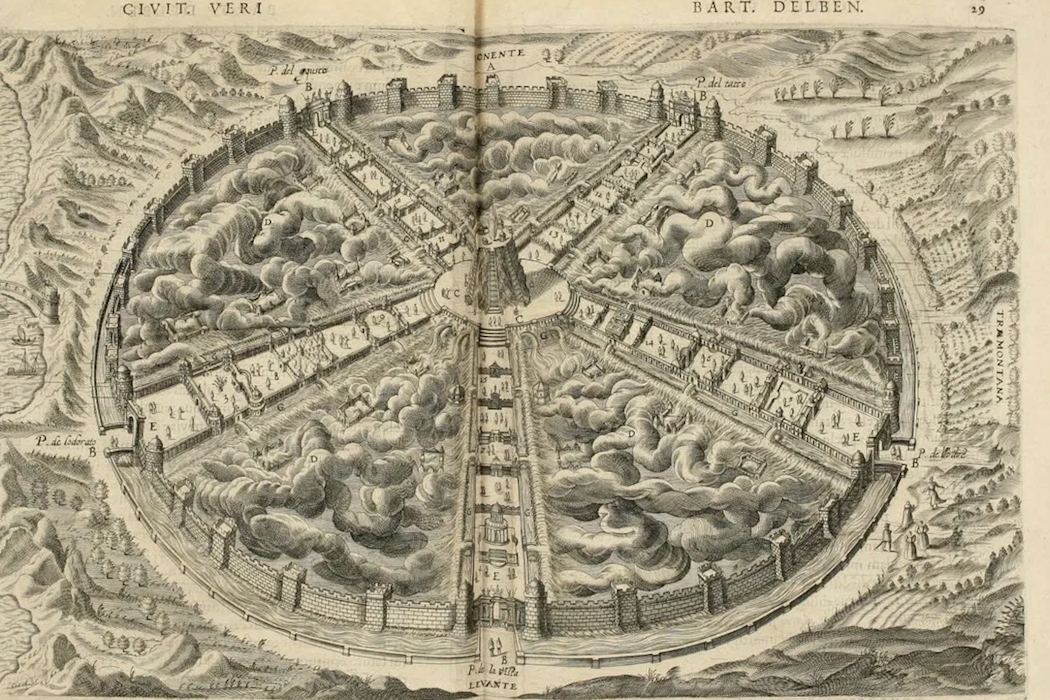
An illustration from an edition of Ambroise and Jérôme Drouart’s poem _Civitas Veri sive Morum_ (The City of Truth). University of Illinois

We find ourselves in the midst of a crisis of truth. Trust in public institutions of knowledge (schools, legacy media, universities and experts) are at an all-time low, and blatant liars are drawing political support around the world. It seems we collectively have ceased to care about the truth.

The nervousness of democrats before this epistemic crisis is partly based on a widespread assumption that the idea of democracy depends on the value of truth. But even this assumption has a cost. Sadly, the democratic tendency to overemphasise the value of truth enters into conflict with other democratic demands. This leads us into contradictions that become fodder for the enemies of open societies.

Philosophers have presented several arguments for this connection between truth and democracy. The most widespread is also the crudest: democracy stands for all the things we like, and truth is one of them.

But there are more sophisticated ways to make the point. The German philosopher Jürgen Habermas argues that a healthy democracy has a deliberative culture and deliberation requires “validity claims”. When we talk about politics, we must bother to try and make sure what we say is true.

Maria Ressa, a Filipino journalist and a Nobel peace prize laureate, similarly argues that democracy needs truth because: “Without facts, you can’t have truth. Without truth, you can’t have trust. Without all three, we have no shared reality, and democracy as we know it – and all meaningful human endeavours – are dead.”

But do we really need truth to share a reality? In practice, most of our experiences of shared realities are not involved in truth. Think of myths, neighbourly feeling, or the sense of community, perhaps even religion and certainly the ultimate shared reality: culture itself. It would be hard to argue that we share in our community’s cultural reality because our culture is true or because we believe it to be true.

Some might argue that democracy is bound to truth because the truth is somehow neutral. Of course, populist suspicion of experts is often couched in democratic language: the value of truth is meant to support a so-called tyranny of experts.

But a key point here is that experts who aim to tell the truth, unlike liars or post-truth populists, have to be accountable. They are subject to the rules of truth. Democracy is therefore potentially more bound to accountability than it necessarily is to truth.

‘Meaningful human endeavour’

Be that as it may, the problem remains that, as Ressa and Habermas themselves recognise, the point of democracy is to promote “meaningful human endeavours”. Democracy is in the business of building a world in which humans can live humanly. And this, crucially, cannot be delivered by truth alone.

A truly human life demands not only knowledge of facts about reality, but also a subjective understanding of the world and of one’s place in it. We often forget that although they often go together, these two requirements can also conflict with each other. This is because truth deals in facts while meanings deal in interpretations.

Understanding, unlike knowledge, is a matter of how we look at the world, of our thinking habits and of cultural constructs – chiefly identities, values and institutions. These things fulfil their function of making us feel at home in the world without making any claim to truth.

All too often, the democratic spirit disqualifies these things as prejudice and superstition. The champions of democratic truth would do well to remember that the world democracy tries to build is a world of meaningful human endeavour, not just dry knowledge and fact-finding.

Current events have illustrated that overlooking this has dire political consequences. The insistence on truth and devaluation of meaning has led to the well-known modern depression often described as a sense of alienation – a breaking of social, historical and traditional bonds with each other and with ourselves.

This alienation has provided a feeding ground for populists and anti-democrats, who present themselves as a corrective to the crisis of meaning. It is not for nothing that the recurring themes of contemporary populism are those of belonging, tradition, identity, origins and nostalgia.

We are experiencing a crisis of truth – but we are also confronting a crisis of meaning. When we overemphasise truth over and against meaning, we foster a sense of alienation and deliver the public into the hands of its enemies. We might instead recall that a commitment to truth is only one, very partial condition for a truly human life, among many others, and build our democracies accordingly.


Want more politics coverage from academic experts? Every week, we bring you informed analysis of developments in government and fact check the claims being made.

Sign up for our weekly politics newsletter, delivered every Friday.


This article contains references to books that have been included for editorial reasons, and this may include links to bookshop.org. If you click on one of the links and go on to buy something from bookshop.org The Conversation UK may earn a commission.

The Conversation

Frank Chouraqui is a non-active member of the Dutch political party Groenlinks-PvdA (center left)

ref. Is democracy always about truth? Why we may need to loosen our views to heal our divisions – https://theconversation.com/is-democracy-always-about-truth-why-we-may-need-to-loosen-our-views-to-heal-our-divisions-269038

A Wonderful Life is not a ‘feel good’ Christmas film – but it is incredibly therapeutic

Source: The Conversation – UK – By Alexander Sergeant, Lecturer in Digital Media Production, University of Westminster

Despite the reputation of It’s a Wonderful Life as a heartwarming Christmas classic, both its fans and detractors like to remind audiences that it’s no feel-good film. For at least two-thirds of its running time, it is essentially the story of a man’s suicide attempt.

We watch as kind-hearted George Bailey has his dreams quashed, his ambitions curtailed and his business ruined. Then it gets even worse. At about two hours in, we watch this poor, despairing man standing on a bridge outside his idyllic small town, crippled by anxiety, overwork, debt and depression, wishing that he had never been born.

The fact that It’s a Wonderful Life remains such a popular Christmas film despite this potentially upsetting subject matter highlights something worth remembering both at Christmas and any time of the year.

We live in an age where suicide remains the number one preventable cause of death for men under 50. Anxiety levels are rocketing among young people. The World Health Organization recently declared rising loneliness a global health threat. For increasing numbers of people, it is most certainly not feeling like a wonderful life.

Understandably, we want to do everything we can to help our fellow George Baileys. We try to think of ways to provide respite from suffering and distress, usually through some pleasant form of distraction. A well meaning boss might organise a mindfulness class on company time for their employees. A friend might take another friend to a wellness retreat.

All of this might work, temporarily at least. Finding space to relax and escape your worries is important, and cinema has provided that to so many people throughout its history. Yet, as many mental health experts will attest, distraction is not a long-term strategy for true wellbeing.

The more effective solution to suffering is to find a way of seeing the world differently. Replacing a negative narrative formed about life with a more positive one is not easily done, but it is possible. We might seek the advice of experts, consult privately with our friends or family, or read self-help books to assist us in this exercise. Or, we can go to the movies.

Alongside helping us to temporarily forget, cinema can help us to live. It’s a Wonderful Life is a great example of that.

As the film enters its final act, its most famous moment occurs. Just at the height of his despair, George is saved from jumping off the bridge by the arrival of a guardian angel named Clarence. At first, the angel distracts George, cracking a few jokes and forcing him to think about something other than his own perilous state. But then Clarence does something miraculous, showing George a vision of what the world would be like if he had never been born.

George is ultimately saved by this profound act of therapy. By showing a world without him, Clarence gives George not a magical solution to his problems, but an opportunity to see the events of his life differently.

Crucially, George gains three things as a result. He learns gratitude. By taking away his accomplishments and privileges, George is able to be reminded of them. He learns purpose. He sees that his life has not been a series of failings, but a series of actions that have helped to shape the world around him.

And he learns about the profound and meaningful connection he has with others around him. As the film’s climax emerges, we see those connections play out, and learn that life is troubling, messy, challenging, unfair, hard and unreliable. It is also utterly wonderful, exactly for that reason.

I’ve never liked “feel-good” films. I’m glad E.T. went home. I think Andy Dufresne shouldn’t have escaped from Shawshank prison. I don’t like it when Bill Murray stops reliving Groundhog Day. But I love It’s a Wonderful Life, not despite of its heartwarming capabilities but because of them.

For me, the film is not a distraction. It isn’t designed to make us feel better by distancing us from the hardship of life. Instead, it’s a profoundly therapeutic film about the hardship of life, one that remarkably finds a positive message that chimes with a lot of what we are finally beginning to learn about the basic principles that grounds human well-being.

Gratitude. Purpose. A sense of connection. These are things that will sustain us, at Christmas and throughout the years that follow. Cinema that profound isn’t just “feel-good”. It could be lifesaving.


Looking for something good? Cut through the noise with a carefully curated selection of the latest releases, live events and exhibitions, straight to your inbox every fortnight, on Fridays. Sign up here.


The Conversation

Alexander Sergeant does not work for, consult, own shares in or receive funding from any company or organisation that would benefit from this article, and has disclosed no relevant affiliations beyond their academic appointment.

ref. A Wonderful Life is not a ‘feel good’ Christmas film – but it is incredibly therapeutic – https://theconversation.com/a-wonderful-life-is-not-a-feel-good-christmas-film-but-it-is-incredibly-therapeutic-271806

We discovered an ancient ‘party boat’ in the waters of Alexandria – here’s what might have happened on board

Source: The Conversation – UK – By Damian Robinson, Director, Oxford Centre for Maritime Archaeology, University of Oxford

Beneath the shifting waters of Alexandria’s eastern harbour, on Egypt’s Mediterranean coast, lie the drowned remnants of a once-splendid city – ports, palaces and temples swallowed by the sea. Submerged by earthquakes and a rising sea level, these lost monuments have become the focus of survey and excavations by the European Institute for Underwater Archaeology, in conjunction with Egypt’s Ministry of Tourism and Antiquities.

Much of our recent work has centred around Antirhodos Island, revealing a temple to the ancient Egyptian goddess Isis which was renovated by Cleopatra VII, and the Timonium – a palace built by her partner, the Roman general Mark Antony.

The shipwrecks from the Royal Port of Antirhodos tell the story of how Alexandria changed from a place emphasising the great wealth and extravagance of the Ptolemaic dynasty to an economic powerhouse of the Roman world.

Our most recent excavations have revealed a shipwreck dating to the early Roman period. Buried beneath the sand were the remains of a thalamagos. This is a type of Nile yacht with a very colourful reputation in Roman literature as “party boats”. But the discovery of such a vessel in a busy commercial harbour was unusual. We asked ourselves: were we thinking about this wreck in the right way?

Discovering the ship

The wrecks in the Royal Port were discovered through a new high-resolution sonar survey of the seabed. This produced enormous quantities of data that was fed into a machine learning algorithm trained to recognise the “signatures” of shipwrecks. The initial results were promising, with excavations on targets generated by the algorithm revealing a small boat and a 30m-long merchant ship.

Together with a similar merchant ship found in the early years of the project, these finds illustrate the commercialisation of the Royal Port in the Roman period.

At the outset of the 2025 mission, we were confident the wreck was a merchant ship. But with each dive, new findings reshaped our understanding, gradually revealing a vessel unlike the one we thought we were investigating.

The wreck has many typical features of Roman Imperial shipbuilding, but the Greek graffiti carved into its planks suggests that it was built and repaired in Alexandria. And its shape is unlike the cargo vessels found elsewhere in the Royal Port. At around 28m long and 7m wide, the preserved remains indicated that we were working on a flat-bottomed boat with a relatively wide and boxy hull. The bow and stern were asymmetrical, giving sweeping curves to the extremities of the ship. But it lacked a mast step, suggesting that it was rowed. The wreck did not have the ideal shape or propulsion system of a seagoing freighter, making it something of a mystery.

In search of clues, we turned to the 500 or so fragments of Ptolemaic and Roman papyri (the material made from the pithy stem of a water plant that these civilisations used to write on) that document nautical subjects. About 200 of these name different types of river vessels, which were often referred to by the cargoes that they carried, from grain, wine and stone to manure and corpses.

One of the infrequently mentioned types of boat is the thalamagos or cabin boat. This kind of vessel is depicted on the Palestrina mosaic, a roughly contemporary landscape with the boat found in a temple outside Rome.

With its crescent shape and series of oars, the mosaic ship bears a striking similarity to the material remains from the Royal Port. While investigations into our wreck are just beginning, it seems that we have found a thalamegos – one of the infamous “party boats” of the Nile.

What happened on ancient party boats

The example on the Palestrina mosaic depicts a cabin boat being used to hunt hippopotami, a ritual associated with the Pharaohs of ancient Egypt. The link between this type of boat and royalty is heard in the philosopher Seneca’s dismissal of them as “the plaything of kings”.

While the Ptolemaic royal family did have Nile yachts, and even supersized versions of them, we can assume that vessels the size of ours would have been a common sight on the river. Indeed, the ancient geographer Strabo wrote about Alexandrians holding feasts aboard cabin boats in shady spots on the waterways around the city. He described them as part of the revelry and licentious behaviour associated with the public festivals at the nearby town of Canopus.

These Roman authors, however, were likely playing up the culture of luxury and excess of their recently defeated enemy’s court and the “degenerate” lifestyles of its people. To simply think about our thalamagos purely as a party boat would be to cherry pick racy Roman stories and fall for their propaganda.

The mundane detail of the administrative papyri reveals that thalamagoi were more than luxurious yachts. They could carry cargo and were also used to transport officials up and down the river. Consequently, the discovery of a cabin boat in a bustling commercial port is not entirely unexpected.

There is, however, another possibility. Our boat was found close to the temple of Isis and may even have been destroyed in the same seismic event that caused the collapse of this sanctuary. Was it a luxurious temple barge used during festivals such as the celebration of the Navigation of Isis?

This celebrated the “opening of the sea” following the winter season was one of the festivals that got Strabo so worked up about the behaviour of its participants. It was actually a festival to ensure the protection of the grain fleet upon which Rome relied to feed its hungry urban population. Strabo chose to overemphasise aspects of the event to suit the anti-Ptolemaic prejudices of his Roman audience.

Detailed post-excavation analysis on this wreck is now underway. We want to understand exactly what our ship looked like and how it performed on the Nile. There is also more work to be done in the library with the ancient texts. What’s for sure is that we’re only just starting to get to know the secrets of this thalamagos.


Looking for something good? Cut through the noise with a carefully curated selection of the latest releases, live events and exhibitions, straight to your inbox every fortnight, on Fridays. Sign up here.


The Conversation

Damian Robinson receives funding from the Hilti Foundation.

Franck Goddio receives funding from the Hilti Foundation.

ref. We discovered an ancient ‘party boat’ in the waters of Alexandria – here’s what might have happened on board – https://theconversation.com/we-discovered-an-ancient-party-boat-in-the-waters-of-alexandria-heres-what-might-have-happened-on-board-272133

How ChatGPT could change the face of advertising, without you even knowing about it

Source: The Conversation – UK – By Nessa Keddo, Senior Lecturer in Media, Diversity and Technology, King’s College London

Summit Art Creations/Shutterstock

Online adverts are sometimes so personal that they feel eerie. Even as a researcher in this area, I’m slightly startled when I get a message asking if my son still needs school shirts a few hours after browsing for clothes for my children.

Personal messaging is part of a strategy used by advertisers to build a more intense relationship with consumers. It often consists of pop-up adverts or follow-up emails reminding us of all the products we have looked at but not yet purchased.

This is a result of AI’s rapidly developing ability to automate the advertising content we are presented with. And that technology is only going to get more sophisticated.

OpenAI, for example, has hinted that advertising may soon be part of the company’s ChatGPT service (which now has 800 million weekly users). And this could really turbocharge the personal relationship with customers that big brands are desperate for.

ChatGPT already uses some advanced personalisation, making search recommendations based on a user’s search history, chats and other connected apps such as a calendar. So if you have a trip to Barcelona marked in your diary, it will provide you – unprompted – with recommendations of where to eat and what to do when you get there.

In October 2025, the company introduced ChatGPT Atlas, a search browser which can automate purchases. For instance, while you search for beach kit for your trip to Barcelona, it may ask: “Would you like me to create a pre-trip beach essentials list?” and then provide links to products for you to buy.

“Agent mode” takes this a step further. If a browser is open on the page of a swimsuit, a chat box will appear where you can ask specific questions. With the browser history saved, you can log back in and ask: “Can you find that swimsuit I was looking at last week and add it to the basket in a size 14?”

Another new feature (only in the US at the moment), “instant checkout”, is a partnership with Shopify and Etsy which allows users to browse and immediately purchase products without leaving the platform. Retailers pay a small fee on sales, which is how OpenAI monetises this service.

However, only around 2% of all ChatGPT searches are shopping-related, so other means of making money are necessary – which is where full-on incorporated advertising may come in.

One app, lots of ads?

OpenAI’s rapid growth requires heavy investment, and its chief financial officer, Sarah Friar, has said the company is “weighing up an ads model”, as well as recruiting advertising specialists from rivals Meta and Google.

But this will take some time to get right. Some ChatGPT users have already been critical of a shopping feature which they said made them feel like they were being sold to. Clearly a re-design is being considered, as the feature was temporarily removed in December 2025.

So there will continue to be experimentation into how AI can be part of what marketers call the “consumer journey” – the process customers go through before they end up buying something.

Person riding an upright vehicle being 'targeted' by an advert screen showing an alternative with the words 'try this'.
Targeted traveller.
Scharfsinn/Shutterstock

Some consumers prefer to use customer reviews and their own research or experience. Others appreciate AI recommendations, but studies suggest that overall, some sense of autonomy is essential for people to truly consider themselves happy customers. It has also been shown that audiences dislike aggressive “retargeting”, where they are continuously bombarded with the same adverts.

So the option of ChatGPT automatically providing product recommendations, summaries and even purchasing items on our behalf might seem very tempting to big brands. But most consumers will still prefer a sense of agency when it comes to spending their money.

This may be why advertisers will work on new ways to blur the lines – where internet search results are blended with undeclared brand messaging and product recommendations. This has long been the case on Chinese platforms such as WeChat, which includes e-commerce, gaming, messaging, calling and social networking – but with advertising at its core.

In fact, platforms in the west seem far behind their East Asian counterparts, where users can do most of their day-to-day tasks using just one app. In the future, a similarly centralised approach may be inevitable elsewhere – as will subliminal advertising, with the huge potential for data collection that a single multi-functional app can provide.

Ultimately, transparency will be minimal and advertising will be more difficult to recognise, which could be hard on vulnerable users – and not the kind of ethically responsible AI that many are hoping for.

The Conversation

Nessa Keddo has previously received funding from the AHRC.

ref. How ChatGPT could change the face of advertising, without you even knowing about it – https://theconversation.com/how-chatgpt-could-change-the-face-of-advertising-without-you-even-knowing-about-it-270330