La melodía del cariño, Gotas de lluvia o Felices por siempre: ¿cómo salir del laberinto de la fragmentación política en Perú?

Source: The Conversation – (in Spanish) – By Carmen Beatriz Fernández, Profesora de Comunicación Política en la UNAV, el IESA y Pforzheim, Universidad de Navarra

Keiko Fujimori lidera el recuento de votos en la primera vuelta de las elecciones presidenciales de Perú. Joel Salvador/Shutterstock

El panorama de los resultados preliminares en el Perú, con el escrutinio avanzando hacia tres cuartas partes de las actas, confirma una sospecha que ha sobrevolado toda la campaña: estamos ante un déjà vu institucional que agrava las heridas de 2021.

Con un récord histórico de 35 candidatos presidenciales, el elector peruano se ha visto forzado a navegar en un océano de siglas vacías y personalismos, donde la deliberación informada fue sustituida por ruido electoral. Los resultados anticipados de la primera vuelta confirman lo que las encuestas ya insinuaban: un sistema político sin partidos sólidos, difícil de predecir y que opera como un sistema caótico.

Al escribir estas líneas, a 48 horas de terminada la jornada del domingo, apenas se ha contabilizado el 75 % de la votación. Keiko Fujimori lidera con un 17 %, seguida de cerca por Rafael López Aliaga con 13 % –ambos de derechas–. Detrás, en una secuencia poco distinguible, aparecen Jorge Nieto, de centro izquierda (12 %); Roberto Sánchez Palomino, izquierdista afín al expresidente Pedro Castillo (10 %); Ricardo Belmont (10 %); Carlos Álvarez Loayza (8 %), y Alfonso López Chau (8 %). Siete candidatos en nueve puntos porcentuales.

Al otro extremo de la cola están otros 28 candidatos presidenciales, que se repartieron cerca del 20 % del electorado. El histórico APRA (Alianza Popular Revolucionaria Americana) apenas logró alcanzar el 1 %, mientras que 14 candidatos y sus partidos tuvieron votaciones tan exiguas que no alcanzaron el 0,5 %.

Los “New Kids on the Block”: partidos de temporada

Perú es el caso emblemático de la hiperfragmentación partidista. Los datos históricos revelan un patrón inquietante en Latinoamérica: en los años electorales o preelectorales surgen tres veces más partidos políticos que en periodos de calma institucional. Esta proliferación no responde a una vitalidad democrática, sino a una estrategia oportunista incentivada por el calendario electoral.

Haciendo referencia a la banda estadounidense de los 80 y 90 cuyo nombre traducido al español era “Los chicos nuevos del barrio”, estos New Kids on the Block son, en esencia, plataformas de campaña efímeras o flash parties que carecen de raigambre ideológica y solidez organizativa.

En el escrutinio peruano vemos como ejemplo el del humorista Carlos Álvarez Loayza (País para Todos), que capitalizó el fenómeno presentándose como el outsider que “viene de fuera” para captar el voto de sectores desencantados.

La relación de nombres de los partidos parece más una lista de música popular que una arquitectura institucional: el partido Obras de Ricardo Belmont, el País Para Todos de Loayza, Juntos por el Perú, Ahora Nación u otros como La melodía del cariño, Gotas de lluvia, La magia del encuentro, El aroma de la confianza, El tejido de la vida, Alcanzar el infinito, Amanecer de nuevo, El mapa de los sueños o Felices por siempre.

No nombran ideologías: evocan sensaciones. La dinámica es facilitada por la ciberpolítica, donde el uso de redes sociales permite a candidatos desconocidos articular apoyos masivos de forma veloz, pero con estructuras de “maletín” que difícilmente garantizan gobernabilidad.

Mariposas peruanas con aleteos impredecibles

“Es más fácil predecir las trayectorias de un péndulo doble que los resultados de las elecciones de Perú”, comentaba mi colega mexicano Arturo García-Portillo, un avezado consultor político. La metáfora del péndulo es ilustrativa, pues a diferencia de un péndulo simple y predecible por lo regular, el péndulo doble exhibe un comportamiento caótico: pequeñas diferencias en las condiciones iniciales generan trayectorias radicalmente distintas.

El célebre “efecto mariposa”, el aleteo de un evento menor –llámese debate, escándalo o video viral– puede desencadenar consecuencias finales desproporcionadas. Y no porque sea irracional el elector, sino porque está operando en un entorno de hiperfragmentación que multiplica las variables y reduce la capacidad de anticipación.

Cada candidato adicional no solo suma una opción, sino que introduce nuevas interacciones, nuevas transferencias potenciales de voto, nuevas trayectorias posibles.

Incluso el propio acto de votar pareció alinearse con esta lógica caótica. Además de la lentitud del conteo, ocurrió que en Lima quince locales de votación quedaron inoperativos por falta de material electoral, dejando a cerca de 66 000 ciudadanos, distribuidos en 211 mesas, sin poder ejercer su derecho.

La solución del árbitro electoral fue excepcional y polémica: extender la jornada 24 horas y permitir que esos electores votaran al día siguiente. Elección que, en los hechos, se partió en dos tiempos. Una escena difícil de imaginar en sistemas más institucionalizados: ciudadanos votando cuando los resultados ya eran, en gran medida, conocidos.

El tiempo electoral dejó de ser simultáneo. Con ello se alteró un principio básico en la competencia democrática y se erosionó la reputación institucional del árbitro electoral.

Lo menos malo

El llamado a la segunda vuelta es para el 7 de junio, cuando Keiko se enfrentaría al conservador López Aliaga, alias “Porky”, empresario que fue un medianamente exitoso alcalde de Lima. ¿Podrá ser la oportunidad de Keiko Fujimori en su cuarto intento?

Entre ambos candidatos suman 30 puntos, lo que indica que 7 de cada 10 peruanos no votaron por ninguno de ellos en primera vuelta. Exactamente igual que lo ocurrido en 2021.

Existe amplio espacio para negociaciones y alianzas, pero ante un escenario de tal volatilidad, en matemáticas electorales dos más dos rara vez suman cuatro. Ningún candidato puede garantizar la lealtad de sus votantes tras un apoyo para la segunda vuelta.

Un análisis preelectoral en redes sociales indicaba que mientras Keiko Fujimori lideraba en intención de voto, arrastraba un rechazo digital cercano al 46,96 %, mientras que López Aliaga tenía un rechazo del 27 %. Es decir, Keiko encabeza la competencia, pero también capitaliza el rechazo. Su presencia en segunda vuelta redefine la elección como dilema. Una vez más, y como ocurrió en 2021, el país se organizará en torno al “mal menor”.

Para que no vuelva a pasar

Si Perú aspira a romper este ciclo de inestabilidad, donde el parlamento termina siendo un mosaico de 10 o 15 facciones incapaces de sostener a un presidente o garantizar un mínimo de gobernabilidad, es imperativo repensar las reglas del juego electoral. La fragmentación del sistema de partidos es una dimensión ligada directamente a la forma en que se compite.

Reducir por la vía reglamentaria el número de partidos políticos es posible, en función de criterios de representatividad y bases electorales regionales. Otra propuesta hacia el futuro sería el transitar hacia un sistema de voto ranqueado o “votación suplementaria”. Sería relativamente fácil cambiar ligeramente el sistema electoral en ese sentido.

Funciona así. Si ningún candidato obtiene más del 50 % de los votos de primera opción, todos excepto los dos candidatos principales son eliminados y se les añaden los votos que hayan obtenido como segunda opción. Curiosamente, Perú ya aplica el voto preferencial en niveles legislativos, pero lo omite donde más se necesita: en la elección presidencial para garantizar una aceptabilidad más amplia del mandatario

El sistema puede ser muy fácil de llevar a la práctica, teniendo métodos automatizados o semiautomatizados de conteo. Como gran ventaja se ahorra la elección de segunda vuelta y la polarización artificial de la sociedad. Bajo esta lógica, el elector no elige una única opción, sino que ordena sus preferencias (primera, segunda, tercera opción). Esto alteraría radicalmente los incentivos de la comunicación política. Principalmente, encarece la agresión: atacar virulentamente a un adversario se vuelve irracional, ya que el candidato necesita ser la segunda o tercera opción de los seguidores de su rival para ganar.

Por otro lado, el método premia la moderación: obligaría a los actores a reconocer que el electorado no está dividido en bloques monolíticos, sino en una constelación de preferencias superpuestas. Así también se reduciría la polarización de la segunda vuelta: al agregar preferencias desde el inicio, se evita el enfrentamiento binario de odios y se premia el consenso.

Mientras el sistema premie el ruido, el Perú no elegirá a sus mejores opciones, sino a las más estridentes.

The Conversation

La autora es consultora política en DatastrategIA

ref. La melodía del cariño, Gotas de lluvia o Felices por siempre: ¿cómo salir del laberinto de la fragmentación política en Perú? – https://theconversation.com/la-melodia-del-carino-gotas-de-lluvia-o-felices-por-siempre-como-salir-del-laberinto-de-la-fragmentacion-politica-en-peru-280203

La banca social convierte al sector financiero en motor de sostenibilidad y bienestar colectivo

Source: The Conversation – (in Spanish) – By Yolanda Cotelo Ouréns, Profesora- Departamento de Economia, Universidade da Coruña

MAFPHOTOART8/Shutterstock

En un momento en que la ciudadanía observa con desconfianza al sistema financiero, marcado por crisis recurrentes, desigualdades sociales persistentes y el desafío climático, surge una pregunta clave: ¿puede la banca ponerse realmente al servicio de la sociedad?

Mi investigación doctoral sugiere que así es: hay un conjunto diverso de instituciones que demuestran que otra banca no solo es posible, sino que ya funciona.

A este conjunto lo denominamos banca social, un concepto que recoge modelos bancarios cuyo objetivo no se limita a maximizar beneficios, sino que incorpora de manera explícita objetivos ambientales, sociales y de gobernanza. Aunque no es una idea nueva, adquiere un significado renovado en un mundo que exige instrumentos financieros capaces de impulsar un desarrollo más sostenible e inclusivo.

Ahora bien, para comprender el potencial de la banca social es necesario mirar primero al funcionamiento del sistema financiero actual: entender por qué el modelo dominante resulta insuficiente, cómo se materializan estas alternativas y qué implicaciones tienen realmente para la vida cotidiana de la ciudadanía.

El papel activo de la banca

Durante décadas, la intermediación financiera se explicó casi en exclusiva desde una lógica técnica que concebía a los bancos como meros conectores entre ahorro e inversión. Según esta visión clásica, el dinero que una persona deposita en su cuenta –por ejemplo, María– se presta a otra –digamos, José–, que lo utiliza para financiar su propio proyecto.

Sin embargo, hoy en día los bancos no se limitan a mover el dinero de unas personas a otras. Un ejemplo sencillo: cuando un banco decide promover hipotecas con tipos de interés muy bajos o financiar masivamente proyectos inmobiliarios, no solo está “gestionando intercambios”, sino influyendo en el precio de la vivienda, en la expansión urbana y en las oportunidades económicas de miles de familias. Lo mismo ocurre cuando lanza fondos de inversión centrados en energías renovables o combustibles fósiles: esas decisiones favorecen el crecimiento de unas actividades frente a otras.

Todo ello pone de relieve, como muestran los trabajos en sociología económica y economía institucional, que las decisiones financieras no son neutras: moldean oportunidades, asignan riesgos y condicionan el rumbo de la economía real, contribuyendo a crear –o a destruir– no solo valor económico sino también social y ambiental. Ignorar estos efectos colectivos tiene costes reales, que se hicieron evidentes en la crisis financiera de 2007–2008, con la pérdida de viviendas, deterioro ambiental y un aumento de la inseguridad económica.

En este contexto, resulta fundamental preguntarse qué modelos bancarios asumen de forma explícita esta responsabilidad.

Crear valor

La banca social se refiere al conjunto de modelos bancarios que orientan sus decisiones a generar un impacto positivo en la sociedad, el medio ambiente y la economía. Sin embargo, uno de los principales obstáculos para comprender mejor este fenómeno es la pluralidad de denominaciones empleadas en el debate público. En este contexto aparecen términos como banca ética, banca alternativa, banca sostenible o banca basada en valores, utilizados a menudo de forma intercambiable y confusa.

Para trascender esta confusión terminológica resulta útil desplazar el foco desde las etiquetas declarativas hacia las prácticas concretas: no tanto cómo se definen estas entidades, sino cómo orientan efectivamente su actividad.

Tres caminos hacia una banca con impacto

A partir del análisis de distintas entidades financieras españolas, definimos tres grandes formas de integrar los objetivos ambientales, sociales y económicos:

  1. La vía de la inclusión financiera. En este caso, el propio modelo de negocio de la entidad está orientado a responder directamente a necesidades sociales concretas. Por ejemplo, ofreciendo crédito al consumo a personas con bajos ingresos. Este enfoque guarda similitudes con la tradición de las antiguas cajas de ahorro, centradas en la proximidad y la función social.

  2. La vía de la economía social. Aquí, el banco no actúa tanto como proveedor directo de crédito social, sino como intermediario que canaliza recursos hacia organizaciones especializadas en generar impacto social. Un ejemplo sería la financiación de entidades que conceden microcréditos o gestionan programas para colectivos vulnerables. Este modelo se asemeja más al funcionamiento de las cooperativas de crédito.

  3. La vía basada de la práctica bancaria. En este caso, el compromiso social y medioambiental se integra de forma sistemática en la operativa cotidiana del banco: en la evaluación de riesgos, en la política de inversión o en la relación con los clientes. No se trata de productos aislados, sino de una forma estructural de hacer banca en la que la sostenibilidad guía las decisiones del conjunto de la organización. En este sentido, es la vía más afín a la forma en que los bancos tradicionales pueden incorporar la sostenibilidad en su actividad.

Qué indican estos resultados

La banca social no es un conjunto de prácticas cosméticas ni un modelo homogéneo, sino un ecosistema diverso de instituciones que comparten principios comunes y los adaptan a su organización y su entorno.

Esta pluralidad es una fortaleza: permite que la sostenibilidad se materialice de formas distintas y viables a largo plazo, ajustadas a realidades locales y organizativas diferentes.

Al mismo tiempo, los resultados subrayan un mensaje clave para los responsables públicos: la sostenibilidad financiera no depende solo de las decisiones de los bancos, sino también del marco institucional en el que operan.

La importancia para la ciudadanía

Por lo tanto, la banca social no es un debate técnico reservado a especialistas. Afecta directamente a cuestiones que interesan a cualquier ciudadano. Cuando un banco evalúa un préstamo decide, en cierto modo, qué tipo de economía y de sociedad se está construyendo.

En un contexto marcado por la transición ecológica, las tensiones geopolíticas y la desigualdad creciente, avanzar hacia un sistema financiero más sostenible se convierte en una condición necesaria para afrontar los grandes retos colectivos. La banca social demuestra que esa transformación no solo es deseable, sino también posible.

The Conversation

Yolanda Cotelo Ouréns ha recibido fondos del Ministerio de Ciencia, Innovacion y Universidades y la Agencia Estatal de Investigacion para desarrollar esta línea de trabajo (PRE2020-093649; PID2019-106273RB-I00; PID2022-139315OB-I00).

ref. La banca social convierte al sector financiero en motor de sostenibilidad y bienestar colectivo – https://theconversation.com/la-banca-social-convierte-al-sector-financiero-en-motor-de-sostenibilidad-y-bienestar-colectivo-271430

El precio del petróleo que muestran los mercados financieros no es el que pagan las refinerías

Source: The Conversation – (in Spanish) – By Enrique Parra Iglesias, Profesor Titular de Universidad, Universidad de Alcalá

Westlight/Shutterstock

Cuando los medios anuncian que el petróleo cotiza a 96 dólares por barril están hablando de un contrato financiero negociado en una pantalla: el futuro llamado ICE Brent de primer mes (también Brent front-month o ticker B), que representa un compromiso de compra o venta para una entrega teórica en las semanas siguientes. Ese número es real pero está incompleto.

El precio que paga una refinería por un cargamento físico de crudo –los cientos de miles de barriles que llegan en un superpetrolero al puerto de Algeciras o al de Róterdam, por ejemplo– responde a una lógica distinta, construida sobre calidades del crudo, primas geográficas y las valoraciones diarias de dos empresas que casi nadie conoce fuera del sector: Platts y Argus, las dos agencias independientes que establecen los precios de referencia (benchmarks) para el petróleo físico y productos refinados.

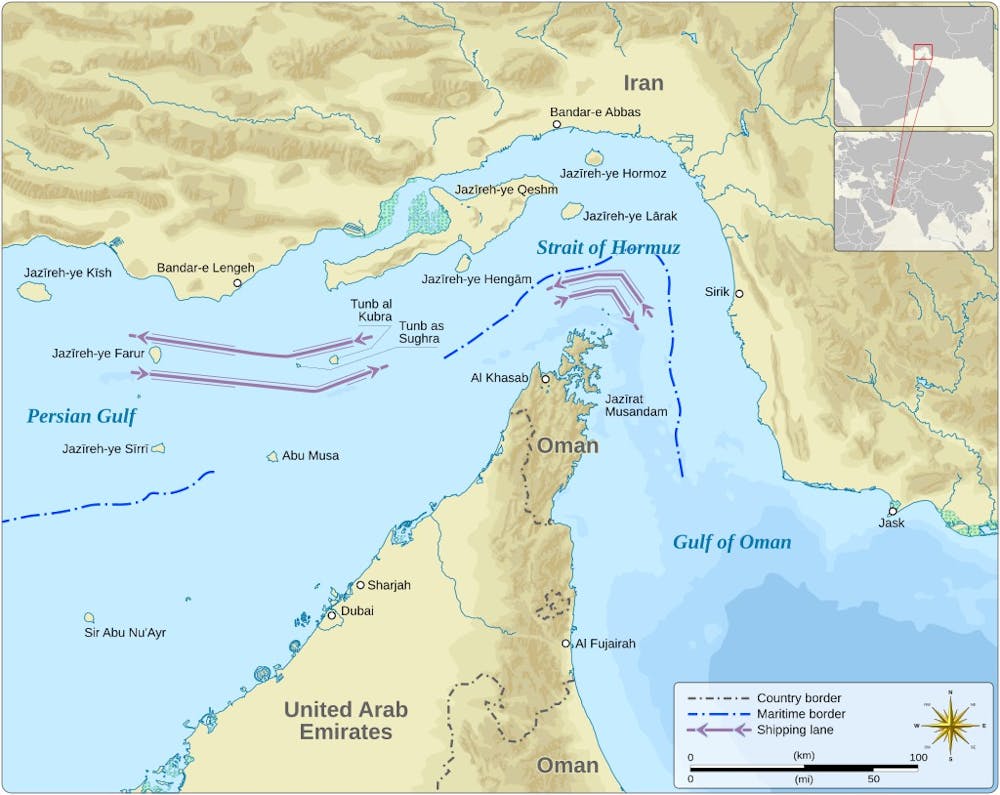
Esta distinción en los precios del crudo, habitualmente invisible para el gran público, importa especialmente ahora: la crisis en el estrecho de Ormuz ha abierto una brecha sin precedente entre el precio financiero y el precio físico del petróleo, con consecuencias directas para la inflación, los márgenes de refino y, en última instancia, el precio de la gasolina en los surtidores europeos.

Futuros y físico: dos mercados que hablan idiomas distintos

Los contratos de futuros sobre el crudo Brent cotizan en Intercontinental Exchange (ICE) Futures Europe, en Londres, el mercado de referencia global para la negociación de energía, gas natural, emisiones y materias primas agrícolas.

La función de estos contratos es doble: permiten a los productores y los compradores cubrirse del riesgo de volatilidad en los precios, y atraen a inversores financieros que aportan liquidez, aunque no tengan intención de tocar un solo barril. Cuando vence el contrato, la mayoría de estos acuerdos se liquidan en efectivo. Solo una fracción mínima acaba en entrega real.

El mercado físico, en cambio, es opaco por diseño. Las transacciones de cargamentos reales no son públicas. Por eso existe el Dated Brent: la valoración diaria que publican S&P Global Platts y Argus Media a partir de las transacciones reportadas por los propios operadores durante una ventana de media hora al cierre de la sesión londinense. Este número –y no el futuro del ICE– es el que aparece en los contratos de suministro de la mayoría de las refinerías del mundo, habitualmente expresado como “Dated Brent ± un diferencial en dólares por barril”.

La calidad como determinante del precio real

Ese diferencial depende fundamentalmente de la calidad del crudo, que depende de dos variables críticas: la densidad –medida en grados API, a mayor gradación menor densidad– y el contenido en azufre. Un crudo ligero y dulce (light & sweet, alto API, bajo azufre) produce más gasolina y diésel por barril con menor coste de procesamiento. Por eso cotiza con prima. En cambio, un crudo pesado y ácido (heavy & sour) requiere refinerías más sofisticadas y produce más fuelóleo, de menor valor: de ahí su descuento estructural.

El Brent del mar del Norte (38 API, 0,37 % azufre) es el crudo de referencia. El Arab Light saudí se negocia con apenas descuentos, mientras que los del petróleo Maya mexicano (22 API, 3 % azufre) pueden superar los 15 dólares por barril. Los del Merey venezolano son de más de 20 USD/bbl por su alta densidad y contenido de azufre.

El resultado es que el precio del petróleo del que hablan los titulares de los medios generalistas no es uno: es una familia de precios diferenciados por origen, calidad y logística. Una refinería que paga 79,50 dólares por un barril de Urals (el petróleo ruso de referencia) cuando el Brent cotiza a 82 no está comprando más barato: está pagando lo que vale ese crudo específico para su configuración de refino y sus condiciones de transporte.

Una excepción relevante: cuando los futuros sí entran en el precio físico

El mecanismo Dated Brent no es universal, aunque se aplica cerca del 60 % del crudo mundial. Un caso especialmente relevante es el del crudo Arab Light, producido por Saudi Aramco: su precio oficial de venta mensual (Official Selling Price u OSP) se fija con un diferencial (prima o descuento) sobre el precio establecido en los mercados de referencia, por regiones, y es anunciado mensualmente por la propia petrolera saudí.

Para Asia, el OSP de Aramco se referencia al precio promedio de los crudos de Dubái y Omán. Para EE. UU., utiliza el índice ASCI (Argus Sour Crude Index), basado en crudos del golfo de México. Diferentes regiones, estrategias de precios distintas para el mismo crudo, lo que explica por qué las disrupciones logísticas –como el cierre del estrecho de Ormuz– afectan de manera asimétrica a los compradores según su situación geográfica. La lógica de precios OSP + diferencial es universal, pero la referencia sobre la que se calcula ese diferencial, no.

La brecha abierta en Ormuz

El cierre efectivo del estrecho de Ormuz a causa de la guerra entre Estados Unidos-Israel e Irán ha convertido el mecanismo de precios petroleros en un asunto de primera plana. El 2 de abril de 2026, el Dated Brent alcanzó 141,36 dólares por barril –el nivel más alto desde 2008, según datos de S&P Global Platts–, mientras que el futuro ICE de junio cerraba a 109,03 dólares: una diferencia de más de 32 dólares entre el petróleo físico y el contrato financiero. El 8 de abril, el Dated Brent marcó un máximo histórico de 144,42 dólares. Dos días después, tras el anuncio de tregua entre EE. UU. e Irán, el precio del petróleo físico se situó en torno a 131 dólares mientras el papel cotizaba alrededor de los 96.

Esta divergencia, lejos de ser una anomalía técnica, tiene consecuencias macroeconómicas directas. Las refinerías europeas que compraron crudo físico en esos momentos pagaron 35 dólares más por barril de lo que sugieren los titulares financieros. Esa diferencia se trasladará a los precios de los combustibles con un retardo de semanas, no de meses.

Plataformas como Trading Economics.com muestran solo el precio del futuro ICE (y lo advierten en letra pequeña). La oficina de estadística y análisis del Departamento de Energía de EE. UU.(EIA) publica para el Brent europeo un spot price (el precio pactado para transacciones inmediatas) con varios días de retraso, no el Dated Brent. El diario económico Financial Times y la agencia Reuters distinguen ambos precios en sus secciones de materias primas, especialmente en momentos de tensión geopolítica o económica.

La valoración diaria del Dated Brent de Platts solo es accesible mediante suscripción de pago a S&P Global Commodity Insights, a través de su plataforma Platts Global Alert, o redistribuido, por ejemplo, vía la agencia económica Bloomberg.

Estas particularidades informativas explican en gran medida por qué el gran público confunde el precio del futuro con el precio físico real.

Una implicación para el debate público

La confusión entre el precio financiero y el precio físico del petróleo no es inocua. Cuando los responsables de política energética, los medios y el público observan los futuros ICE, y ven 96 dólares, están ignorando que las refinerías pagan 131 por el crudo físico.

Pero hay una segunda capa de confusión igualmente extendida: el precio de la gasolina, el gasóleo o el queroseno para el cliente (antes de impuestos) no depende del valor absoluto del Brent, sino del crack spread, que es la diferencia de precio entre el petróleo crudo y los productos refinados (es decir, su margen de beneficio) y es la cifra clave para la economía del refino. Una refinería puede pagar más por el crudo y ver cómo sus márgenes se amplían si el crack spread del diésel sube más deprisa (o viceversa).

En la crisis actual, los crack spreads de los destilados medios (gasóleo, queroseno) se han disparado de forma independiente al crudo: el gasóleo ha cotizado con primas del orden de 50 dólares sobre el Brent, y el queroseno de aviación ha superado los 200 dólares por barril, según datos de IATA, muy por encima de lo que justificaría solo el precio del crudo.

Entender estas diferencias –crudo, producto, crack spread– es condición necesaria para entender por qué los precios al consumidor (precio antes de impuestos, PAI) se mueven como lo hacen, y por qué la exposición real de la economía europea a la crisis en el Golfo es mucho mayor de lo que los indicadores financieros convencionales sugieren.

Distinguir el precio del papel y del barril no es un ejercicio académico: es una condición necesaria para interpretar correctamente el impacto de las crisis energéticas sobre la inflación, la competitividad industrial y el bienestar de los hogares.

The Conversation

Enrique Parra Iglesias no recibe salario, ni ejerce labores de consultoría, ni posee acciones, ni recibe financiación de ninguna compañía u organización que pueda obtener beneficio de este artículo, y ha declarado carecer de vínculos relevantes más allá del cargo académico citado.

ref. El precio del petróleo que muestran los mercados financieros no es el que pagan las refinerías – https://theconversation.com/el-precio-del-petroleo-que-muestran-los-mercados-financieros-no-es-el-que-pagan-las-refinerias-280524

Why is alcohol use declining in Canada?

Source: The Conversation – Canada – By Timothy Naimi, Director, Canadian Institute for Substance Use Research; Professor, Division of Medical Sciences, University of Victoria

Lately, there has been a lot of news about declining alcohol sales in North America, and speculation as to why that might be.

As director of the Canadian Institute for Substance Use Research at the University of Victoria, I consider this an important development and a topic worth exploring given its implications for health and society more broadly.

Is the decline real?

Based on alcohol sales data (which is more reliable than self-reported survey data), the decline appears to be real. According to Statistics Canada, per capita alcohol sales (the average amount sold per person aged 15 years and older) declined for the fourth consecutive year, from 8.3 litres of ethanol (roughly 487 standard drinks per year) in 2020-21 to 6.8 litres (399 standard drinks) in 2024-25, a rather dramatic decline of 18 per cent.

Alcohol sales have also declined recently in the United States, so this is not a Canada-only phenomenon.

Wine bottles on a shelf
The notion of purported benefits from moderate drinking, particularly of wine, has been largely debunked.
(Unsplash/Scott Warman)

Possible contributing factors

There are many possible contributors to consider, some of which overlap with one another:

  • Increasing health concerns? Increased concern about health effects of alcohol, including from socially “moderate” levels of use, may be contributing to reduced use and changing social norms.

    Scientifically, the notion of purported benefits from moderate drinking, particularly of wine, has been largely debunked. Canada’s Guidance on Alcohol and Health found increased risk of an alcohol-caused death at more than two drinks per week.

    The recent U.S. Surgeon General’s report on alcohol and cancer highlighted the growing recognition that alcohol is causally related to seven types of human cancer including cancers of the breast, colon, liver and esophagus. Interest in the sober-curious movement and participation in abstinence periods such as Dry January may partly reflect health concerns.

  • Inflation and affordability?
    Inflation has been relatively high in Canada over the past five years, and the affordability of staples like food has declined. Alcohol is a price-responsive good; most people purchase more of it when they have more disposable income, and less when they are trying to spend less.

  • Post-COVID normalization?
    Canadian alcohol consumption increased during the COVID-19 pandemic. Although the factors behind that increase are not fully understood, it is logical that consumption would decline with the waning of the pandemic. However, consumption has now fallen well below pre-COVID levels.

  • Immigration?
    In recent years, Canada has experienced a large influx of immigrants, many of whom come from countries with lower alcohol use than Canada, like India. While this would contribute to the decline in per-capita use (the average consumption among all people, including non-drinkers), total alcohol sales have also declined, indicating lower consumption among those who are not recent immigrants.

  • The rise of no- and low-alcohol products? There has been an explosion of no- and low-alcohol products, particularly for beer. But it’s unclear to what extent this category is replacing traditional alcohol sales versus adding to overall consumption. Stay tuned.

  • Cannabis substitution for alcohol? Research evidence about whether cannabis use is associated with more or less alcohol use (that is, whether people are using cannabis in addition to alcohol or using cannabis instead of alcohol) is mixed. But cannabis use has been increasing in Canada for some time, and even the 2018 legalization of cannabis for recreational use occurred during a time when alcohol sales were stable or increasing, so this is unlikely to be an important contributor.

  • Reduced use by youth? Although still common across North America, the prevalence of alcohol use among youth has declined over the past decade. Since drinking trajectories tend to persist with age, average consumption would decline over time as yesterday’s youth become a progressively larger share of the adult population.

  • Boycott of U.S. alcohol products? This is not a major contributor. The boycott of U.S. alcohol products came several years after alcohol sales began to decline. Furthermore, there are many non-U.S. product alternatives across all alcoholic beverage types and price ranges.

  • Increased use of GLP-1 agonist medications? The use of GLP-1 agonists such as Ozempic to treat obesity and diabetes has mushroomed. These medications are now used by approximately three million Canadians adults.

    In addition to reducing interest in eating, these medications also reduce interest in alcohol, and are being studied to treat alcohol use disorders. Although the population effect is not fully understood, their widespread use and impacts on consumption may be contributing to alcohol declines among middle-aged and older adults.

Possible impact of the decline

Over time, reductions in consumption should translate into gains for public health and savings for the health-care system and taxpayers, as alcohol-related costs exceed tax revenues. While reductions in alcohol sales adversely affect alcohol-related industries, reallocating dollars spent on alcohol benefits other sectors of the economy.

Ironically, adopting minimum pricing policies for alcohol could both improve public health and increase industry revenues by implementing what amounts to government-sponsored price collusion at the low end of the alcohol market, where profit margins are otherwise low.

Finally, although there has been a clear trend towards lower alcohol use in recent years, future sales may stabilize or reverse course. It remains to be seen whether the current trend is a long-term development or a fleeting one.

The Conversation

Timothy Naimi receives funding from:
BC government;
Health Canada;
SSHRC (Canadian federal government)

ref. Why is alcohol use declining in Canada? – https://theconversation.com/why-is-alcohol-use-declining-in-canada-277962

Canada is producing more graduates than ever — so why is it harder to find a job?

Source: The Conversation – Canada – By David J Finch, Professor, Innovation and Marketing, Mount Royal University; University of Calgary

Canada has a paradox at the heart of its labour market. The country leads the G7 for the most educated workforce and is producing more graduates than ever before. Yet for millions of young Canadians, the path from school to stable work has never been harder.

Between 2022 and 2025, vacancies for jobs requiring a bachelor’s degree and fewer than three years of experience fell by more than half.

About 40 per cent of Canadian graduates are underemployed, and youth unemployment reached 15 per cent in September 2025, more than double the adult rate and the highest in 15 years outside the pandemic.

The familiar diagnosis of a skills gap is not wrong, but it focuses on the wrong problem. The problem isn’t just skills; it’s that the system that converts learning into recognized workplace performance is broken.

Our new report, Entry-Level Employment: The Canary in Canada’s Labour Market Coal Mine, argues that the collapse of entry-level opportunities should not be viewed narrowly as an isolated challenge unique to a generation of young people.

It’s an early warning of broader challenges facing Canada’s labour market. To build a more productive economy, we must start by rebuilding the system that converts learning into recognized performance.

Eroding conversion infrastructure

Entry-level jobs were never just jobs. They were part of a larger system that converted learning into labour-market value. This system delivered four functions: skills were developed and refined under supervision, professional identities were formed, networks were built and capability became visible to employers.

For much of the 20th century, this risk was shared among government, individuals and employers. Governments and individuals funded education, and employers converted this education into workplace value. Employers were prepared to invest in employee development because the return on this investment was measured over decades of employee contribution.

Over the past 30 years, this conversion system deteriorated. The “hire and develop” model of the 20th century has given way to short-term, contract and gig work, which now represents up to one-quarter of Canada’s workforce.

Early research also suggests that the rapid expansion of remote and hybrid work during the COVID-19 pandemic is further diluting this conversion function.

The result is a shift of this conversion role from employers to individuals. As evidence, OECD countries, including Canada, now devote just 0.1 per cent of GDP to workforce training, the lowest level recorded.

Concurrently, over this period, post-secondary attainment in Canada has skyrocketed. However, expanding this educational supply, without scaling the corresponding conversion system, has only accelerated the widening of the conversation gap.

Employers aren’t irrational when they require “entry level” candidates with several years of experience. They are adapting to an absence of mechanisms that once allowed them to observe and develop emerging talent directly.

In the vacuum left by a weakening conversion system, they are left to rely on weak proxies of performance, such as academic credentials, school reputation or references. Each of these proxies reinforces systemic advantage, which locks many qualified new workers out of the very experiences that would let them demonstrate performance.

This is the distinction that matters: a skills gap points to missing qualifications; a conversion gap reflects a loss of system-wide ability to turn those qualifications into proven performance.

The canary in the coal mine

Just as the canary warned miners of invisible danger, the accelerating breakdown of the conversion system signals a risk not just for young people, but for the broader labour market.

Working lives now stretch across four or five decades and multiple employers, sectors and technologies. The World Economic Forum estimates that 39 per cent of current skill sets will be outdated within five years.

Converting learning into recognized performance is no longer limited to entry-level employment but is now an ongoing requirement across every job transition, technological shift or re-entry into work.

Yet the infrastructure supporting this conversion was built for an era of stable firms and linear careers. It no longer fits today’s increasingly dynamic labour market.

What needs to change

To rebuild our conversion capacity, our report identifies four priorities:

1. Rebuild structured entry-level pathways.

Structured conversion pathways must be expanded. Apprenticeships, graduate training programs and residencies must move beyond the trades and health care into all occupations. This restores employers as active partners in the conversion function rather than passive consumers of skills.

2. Embed continuous, work-integrated learning.

Continuous work-integrated learning must be expanded across career stages, with flexible opportunities designed to develop skills, generate observable performance, form professional relationships and appropriately share risk. The conversion gap is not a problem confined to the start of a career; it recurs at every transition, displacement and re-entry.

3. Rebalance risk and responsibility.

The legacy conversion system worked because the risk was shared by employers, government and individuals. The collapse of this system forces people to look for alternative conversion pathways to demonstrate performance, including unpaid internships or pursuing additional education.

These alternatives are not based on merit; they’re often rooted in financial capacity, which is a form of systemic privilege. The new conversion system must be designed to unlock the skills of all Canadians from the outset.

4. Build an open-recognition system.

We must develop open-recognition infrastructure. Open recognition establishes a harmonized system for verifying skills that are recognized across the full labour force, regardless of where or how they were developed. Without this, expanding the first three reforms becomes impossible.

The question is not whether Canadians have the education and skills to succeed. They do. The breakdown is converting this education and skills into recognized workplace performance.

Rebuilding the conversion system is how Canada renews productivity, widens opportunity and builds a workforce capable of meeting the demands of the decades ahead.

The Conversation

David Finch receives funding from the Alberta Centre for Labour Market Research. He is also the Director of The Productivity Project, a collaboration of Mount Royal University, the University of Calgary’s School of Public Policy, the Alberta Centre for Labour Market Research, and the LearningCITY Collective.

ref. Canada is producing more graduates than ever — so why is it harder to find a job? – https://theconversation.com/canada-is-producing-more-graduates-than-ever-so-why-is-it-harder-to-find-a-job-279178

Migrer « facilement » au Québec : le mythe à nuancer des privilèges français

Source: The Conversation – in French – By Capucine Coustere, Postdoctoral research fellow, Institute for Research on Migration and Society, Concordia University

Migrer au Québec en tant que ressortissant français est généralement présenté comme un parcours facilité. Accords privilégiés, mobilité encadrée, réseau institutionnel dense : tout semble indiquer une circulation fluide. Pourtant, derrière cette apparente simplicité, le système migratoire produit aussi des formes d’instabilité et de précarité auxquelles les Français n’échappent pas.


Les ressortissants français bénéficient d’un statut à part au Québec. Depuis 1965, la province a noué avec la France une relation « privilégié [e] » faite d’un réseau dense d’accords bilatéraux en matière économique, culturelle, éducative et de mobilité.

En effet, une trentaine d’entre eux visent à faciliter les migrations réciproques d’étude, de stage, de travail et d’installation. Par exemple, ils ont permis la création de l’Office franco-québécois pour la jeunesse, dédié aux mobilités des jeunes dans les deux territoires, facilitent la reconnaisses des diplômes, l’obtention d’un permis de conduire et l’accès à la RAMQ ou encore réduisent les frais de scolarité. Ils produisent donc pour leurs bénéficiaires un véritable privilège de nationalité.

Depuis plusieurs années, les Français forment la première nationalité parmi les nouveaux immigrants, comme les résidents temporaires au Québec, et leur nombre ne cesse de croître. Entre 2016 et 2021, la province a vu une hausse de 36 % de leurs arrivées avec la résidence permanente et de 86 % avec la résidence temporaire, selon les données combinées de Statistique Canada et du gouvernement du Québec.

Or, le statut de résidence temporaire est associé à des droits limités, variables selon le permis temporaire détenu, qui le rendent précarisant. Pour les personnes qui veulent rester, le passage à la résidence temporaire à la résidence permanente est possible, mais c’est un processus très complexe, sélectif, et précarisant.

Au Québec, il leur faut en effet passer un double processus administratif : être sélectionnés par la province, principalement via le Programme de l’expérience québécoise (PEQ), avant d’être admis par le gouvernement fédéral. Or, depuis 2019, le PEQ a connu de nombreuses réformes jusqu’à sa suppression en 2025 par le gouvernement de la Coalition avenir Québec. Les délais de traitement au fédéral ont également été particulièrement longs à partir de 2019 et durant la pandémie.

Dans ce contexte, est-il si facile pour les Français de migrer et de s’installer au Québec ? Je me suis penchée sur cette question à partir de données issues d’une recherche longitudinale qualitative menée entre 2019 et 2022 au Québec.


À lire aussi :
Étudiants français au Canada : entre l’aventure nord-américaine et les possibilités professionnelles, l’attrait d’un cursus moins hiérarchique


Une arrivée facile

Se rendre au Québec est généralement perçu comme facile. Beaucoup ont entendu parler de cette destination par des amis ou sur les réseaux sociaux. Ils bénéficient fréquemment de soutien à différentes étapes des démarches pour s’inscrire aux études, trouver un employeur ou obtenir un permis de résidence temporaire.

Grâce à leur nationalité, ils sont éligibles aux trois permis migratoires du programme Expérience internationale Canada dans des conditions avantageuses (par exemple, deux ans pour le permis vacances-travail et des quotas d’éligibilité élevés).

À l’arrivée, les conditions de séjour s’avèrent souvent bonnes pour ces Français. Aux études, ils ont droit à des frais de scolarité réduits (équivalents à ceux des Canadiens résidant hors Québec au baccalauréat et à ceux des Québécois à la maîtrise et au doctorat) et à la RAMQ (comme seulement 10 autres nationalités).

En emploi, la disponibilité du permis vacances-travail accroît leur chance d’avoir un permis de travail ouvert, permettant de changer librement d’employeur. Trouver un travail, un logement, tout apparaît donc facile pour la plupart.


À lire aussi :
Quand « du coup » devient « fait que » : comment se font les transferts linguistiques entre les Français et les Québécois


Un permis souvent peu flexible

Nuançons un petit peu. Beaucoup arrivent aussi avec un permis de travail fermé, qui empêche de changer d’employeur et produit des conditions de travail non libre. Les droits accessibles varient selon le type de permis. Par exemple, les personnes en visa vacances-travail n’ont pas droit à la RAMQ.

Mais en général, c’est lorsque les Français veulent rester au-delà du premier permis que la situation se gâte. La plupart des permis de travail ouverts ne sont pas renouvelables, imposant d’obtenir un permis de travail fermé. Plusieurs dans ce cas racontent avoir été traités différemment de leurs collègues québécois, notamment en matière d’avancement professionnel. L’employeur n’avait pas besoin de les inciter à rester, le permis les immobilisait déjà.

Tenter d’obtenir un nouveau permis comprend également son lot de risques. Par exemple, les démarches administratives impliquent généralement une étape provinciale et une étape fédérale, ce qui augmente les probabilités d’erreurs et les délais de traitement. Plusieurs se trouvent pour cette raison entre deux permis et perdent le droit à la RAMQ.

Pour celles et ceux qui veulent s’installer au Québec, s’ajoute à cela la difficile transition vers la résidence permanente. Bien sûr, les Français sont a priori mieux positionnés que la plupart des ressortissants d’autres pays pour être sélectionnés, notamment grâce à la maîtrise de la langue française. Toutefois, le processus de sélection, comme les longues démarches administratives, est complexe et précarisant. Fait a priori inattendu au regard des avantages que les accords procurent, plusieurs ont perdu leur statut de résidence et travaillé de manière irrégulière à un moment du processus à cause de la difficulté à naviguer ce complexe système migratoire.


À lire aussi :
L’immigration seule ne rétablira pas le poids démographique des francophones hors Québec


Déjà des milliers d’abonnés à l’infolettre de La Conversation. Et vous ? Abonnez-vous gratuitement à notre infolettre pour mieux comprendre les grands enjeux contemporains.


Un système migratoire précarisant

Alors, facile le processus migratoire pour les Français au Québec ? Un peu plus que pour les autres, mais pas tant.

La situation est sans doute plus compliquée encore depuis 2023. D’abord, obtenir la résidence permanente au Québec est très incertain, notamment avec la disparition du PEQ et la faible sélection de candidats dans le seul dispositif d’immigration économique restant, le Programme de sélection des travailleurs qualifiés (PSTQ).

Le programme favorise la maîtrise de la langue française, mais il est si sélectif, imprévisible et long, que les aspirants candidats qui le peuvent ont plutôt intérêt à déménager dans une autre province, où l’accès à la résidence permanente des francophones est favorisé.

Par ailleurs, depuis 2023, le gouvernement fédéral a réduit les cibles de la résidence temporaire. Cela rend d’autant plus difficile d’obtenir ou de renouveler un permis temporaire pour venir au Québec et y rester durant la transition vers la résidence permanente.

Ces réformes risquent de réduire l’attractivité du Québec pour les Français et d’augmenter les risques de précarisation et de départ indésiré de celles et ceux déjà sur place. Cette situation n’est pas unique, les personnes à statut temporaire au Québec sont très fortement impactées par ces réformes en général.

Est-ce donc la fin de « l’âge d’or » pour les Français dans la Belle Province ? Cela reste à voir, tant ils continuent à être avantagés pas les accords et la priorité donnée à la maîtrise de la langue française. Il est cependant certain qu’ils ne sont pas immunisés contre les effets restrictifs et précarisant du système migratoire québéco-canadien.

La Conversation Canada

La recherche servant de base à cet article a été financée par une bourse doctorale du Fond de recherche du Québec – Société et culture (FRQSC). Capucine Coustere détient une bourse postdoctorale du Fond de recherche du Québec – Société et culture (FRQSC) afin de la poursuivre. Elle est également chercheuse affiliée au projet Bridging Divides, au centre de recherche CELAT et au partenariat Voies vers la Prospérité.

ref. Migrer « facilement » au Québec : le mythe à nuancer des privilèges français – https://theconversation.com/migrer-facilement-au-quebec-le-mythe-a-nuancer-des-privileges-francais-279914

How ‘books for development’ campaigns reveal an unjust global order

Source: The Conversation – Canada – By Jody Mason, Associate Professor, Department of English, Carleton University

The gutting of the United States Agency for International Development (USAID) in 2025 has had catastrophic consequences,
including in South Sudan where amid ongoing war, an estimated 33 million people require humanitarian assistance.

The federal government in Canada has similarly slashed foreign aid in response to the economic fallout of U.S. President Donald Trump’s trade war.

International aid groups have met such policy decisions with regret.

This regret is understandable. At the same time, many Western powers avoid acknowledging that the broad liberal international consensus that emerged after the Second World War — and shaped modern development — was built on global inequality.

In Prime Minister Mark Carney’s 2026 speech to the World Economic Forum, he only tentatively alluded to disparities and inequalities when he acknowledged “the story of the international rules-based order was partially false … ”

In Books for Development: Canada In the Late Twentieth-Century World I argue that this “partially false” story helped to elaborate Canada’s late 20th-century image as both benevolent and innocent regarding internal colonialism.

Language of ‘development’

What social scientist Wolfgang Sachs has called the “age of development” emerged in the decade following the Second World War.

Scholars point to U.S. President Harry Truman’s 1949 inaugural address as a key moment in this post-Second World War history.

The speech referred to a U.S. obligation to make its scientific and industrial progress available for the “improvement and growth of underdeveloped areas.”

The classification of the world’s population into “developed” and “underdeveloped” came to shape the post-war order and its international institutions, such as the United Nations.

Critiques of developmentalism began to emerge in the 1960s from what was then called the “Third World.” In the context of the Structural Adjustment Programs after the economic crises of the late 1970s, post-development theorists such as Sachs and Gilbert Rist amplified this kind of criticism.

They argued that developmentalism was premised on related and false claims — that global inequalities were without cause and “underdeveloped” nations could catch up to their “developed” counterparts.

‘Developmentalism’ and books

In Books for Development, I examine how the book became a dominant symbol of the age of development through the efforts of the new international institutions, and the United Nations Education Scientific and Cultural Organization (UNESCO), in particular.

Orange book cover says Books for development and shows graphic image of books in a cirlce.
Books for Development: Canada in the Late Twentieth-Century World.
(McGill-Queen’s University Press)

This had implications both in Canadian foreign policy and in relationships with Indigenous Peoples in Canada.

In the context of post-Second World War development, books, though typically framed as “good,” nonetheless often played a harmful role.

In the post-war decades, UNESCO focused on literacy initiatives and improving global access to books, partly through its research on conditions in global publishing.

As Robert Escarpit reported in a 1982 study for UNESCO, “decolonization often stimulated book production less in the new nations than in the old colonizing countries.” The latter, he notes, now “had to meet the new demands from their former colonies for literacy campaigns or educational development.”

At their worst, book development programs undercut domestic publishing initiatives in newly independent nations in Africa, the Caribbean and elsewhere.

Canada’s role

Canada played a significant role in post-war development linked to the book.

The deep involvement of educationalist and liberal internationalist J.R. Kidd at UNESCO is a key element of this history.

As historian Kevin O’Sullivan has shown, Canadians drew on a longstanding book-centric Protestant missionary and service tradition to become leaders in the late 20th-century non-governmental organization (NGO) movement.

In addition to Kidd’s roles at UNESCO, he was also one of the founders of Canada’s first NGO, the Overseas Book Centre. Founded in 1959, this book donation program sent Canadian books to Global South nations.

Book donation schemes like those undertaken by the Overseas Book Centre undermined local book publishing initiatives in recipient nations. The organization’s self-assessments later confirmed this problem, and led to a reorientation of its efforts (and a renaming, in 1982, as the Canadian Organization for Development in Education).

Serving Canada’s interests

Kidd’s book- and literacy-related work often used UNESCO’s new international stage to argue for what he called Canada’s “special mission” in international development.

Canada was presented as a model and potential friend for newly decolonizing nations because of its recent experience as a colony of Britain (a status that changed with Confederation).

While historians of Canada’s post-war myth-making have pointed to the disingenuousness of claims that Canada was a “friend of the Third World,” these claims also served to make internal colonialism illegible on the international stage.

Adult literacy

Beginning in the later 1960s, Canada’s international development efforts began to shape NGO and government relations with Indigenous Peoples.

Developmentalist-influenced initiatives linked to books, literacy and education were focused on Indigenous communities. They were part of a longer history of consolidating settler liberal rule via education, exemplified most notoriously in Canada’s Residential School system.


Read more:
Why Canadians need two dramatic educational shifts to honour reconciliation


For instance, Canada’s longest running adult literacy program, Frontier College, began addressing its efforts to Indigenous Peoples at the end of the 1960s, when it began to ship magazines to schools run by the Department of Indian Affairs and Northern Development. The goal was to aid the department’s policy of integrating Indigenous Peoples into what it called “the Canadian way of life.”

‘The Fourth World’

Indigenous leaders, activists and writers such as as George Manuel (Secwépemc) responded to such initiatives by adapting Third World anti-imperialist revisions of developmentalist thought to their own settler colonial situation.

Manuel’s 1974 book, The Fourth World: An Indian Reality, co-authored with Michael Posluns, was published during Manuel’s tenure (1970-1976) as leader of the National Indian Brotherhood. The book positions economic development at the core of any possible political sovereignty:

“Self-government … without an economic base simply creates the economic colonialism we are witnessing throughout much of Asia and Africa today.”

For Manuel, this “economic base” would come from the land. As he observed, usurping the basis of traditional Indigenous economies — land — was the primary obstacle to contemporary economic development.

Structural conditions of injustice

The Fourth World extends this thinking to the National Indian Brotherhood’s 1972 policy paper, Indian Control of Indian Education. Change at the level of education, Manuel argued, would not be sufficient (even if it meant Nations could control hiring, curriculum and so on). He saw education as fundamentally tied to the question of economic development, which he understood to be contingent on a land base.

Like the broader development framework, the approach applied to Indigenous Nations after 1965 failed to name the structural conditions of injustice. It perpetuated the status quo and, viewed more negatively, it cloaked the very political and economic conditions that created it.


Read more:
Who benefits from ‘nation-building’ projects like Ksi Lisims?


Canada’s relationships with other nations, including Indigenous Nations, cannot be premised on what Carney called a “partially false” story.

The Conversation

Jody Mason receives funding from the Social Sciences and Humanities Research Council of Canada. She is a member of the New Democratic Party of Canada.

ref. How ‘books for development’ campaigns reveal an unjust global order – https://theconversation.com/how-books-for-development-campaigns-reveal-an-unjust-global-order-276594

The National Gallery’s £750m new wing has reignited London’s art turf war

Source: The Conversation – UK – By Jonathan Conlin, Professor of Modern History, University of Southampton

“When should painters become old masters?” Former National Gallery director Philip Hendy put that question to then Tate director John Rothenstein almost 70 years ago. Founded in 1897 as the National Gallery’s annexe for British Art, by the 1950s Tate had developed into a gallery of modern as well as British art. Rothenstein wanted it to emerge from its parent’s shadow. Any move towards independence, however, required agreement between the National Gallery and Tate on how to divide the collection they shared.

Now that same question, of where one collection ends and the other begins, is getting another airing. The National Gallery has announced the winner of a competition to design “Project Domani”, a £750 million expansion. A new building by architect firm Kengo Kuma and Associates will replace the 1960s office block that currently stands on Orange Street, behind the gallery’s Sainsbury Wing. According to the National Gallery, the annexe will allow Trafalgar Square to show the “continuum” of “the history of painting in the western tradition”.

That phrase, “the western tradition”, is itself something of a land grab. Until fairly recently the National Gallery was understood to be a collection of western European painting. In 2014, however, it paid £18.6 million for Men of the Docks, a painting by American artist George Bellows. Unlike his fellow countrymen John Singer Sargent and James McNeill Whistler, Bellows had never travelled to Europe and could not be considered an honorary Englishman.

According to the gallery, the purchase represented “a new direction in its acquisition policy”. They now sought to “represent paintings in the western European tradition, rather than solely those made by artists working in western Europe”. Men of the Docks dated to 1912, close to the chronological border between the National Gallery and Tate collections. For those fond of viewing London’s museums as a turf war, it was a shot across Tate’s bows.

Rather than fighting over this or that patch of art history, surely London’s museums can agree that all art is a “continuum”?


This article is part of our State of the Arts series. These articles tackle the challenges of the arts and heritage industry – and celebrate the wins, too.


“To me there will always be only one national collection,” noted Hendy in 1953, “and I don’t believe that carving it up in this rigid way is in anybody’s interest.”

Despite the gallery’s rhetoric of give-and-take, over the years Tate was repeatedly left feeling bruised, after being obliged to let the National Gallery take back British paintings that the Tate had come to consider its own. This included one of the highlights from the National Gallery’s Joseph Wright of Derby show: An Experiment on a Bird in the Air Pump was given to the National Gallery by the politician Edward Tyrrell in in 1863. The National Gallery later passed it to Tate, only to take it back in 1986.

The history of the gallery turf war

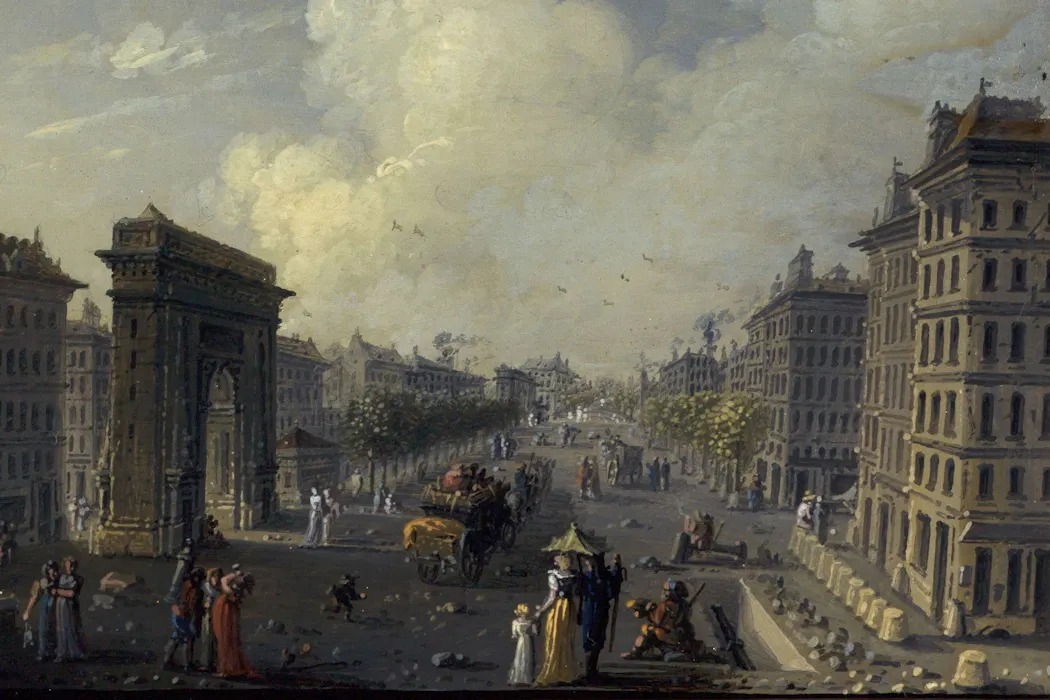
Under an influential model developed in late 19th-century Paris, the Musée du Luxembourg served as purgatory for modern French painters. After a decent interval, after any initial controversy as well as the artist had died, works that passed the test of time were promoted to the heaven of the Louvre.

For much of Tate’s history, it has been viewed as the Luxembourg to Trafalgar Square’s Louvre. In 1935, National Gallery director Kenneth Clark opposed the idea that Tate might achieve complete independence from his institution. It “would deprive us of the purgatorial function of the Tate”. It would also force Tate to decide whether it was a “National Gallery of British Art” or a “modern art gallery”.

Worse of all, Clark noted, if Tate did decide it was a modern art gallery, the two institutions would have to agree a historical date at which modern painters became old masters. In 1954, the National Gallery and Tate Act appeared to grant Tate the independence it craved, while ordaining that the two galleries should periodically consult each other about loans and transfers, in order to ensure that all paintings were “on view in the best context”.

The Tate Modern building
The Tate Modern opened in May 2000.
Mistervlad/Shutterstock

In 1957 Hendy suggested that all paintings “graduate” to Trafalgar Square when they reached their 100th birthday. Rothenstein refused such a rigid rule. The history of art was not “a regular and predictable process”, he insisted. As the “founding fathers of the modern movement”, Van Gogh, Cézanne and Seurat would have to remain at Tate, regardless of how much time had passed.

Under Nicholas Serota’s directorship Tate blossomed into a constellation of galleries in the 1990s. Tate Liverpool demonstrated how a contemporary art space could regenerate post-industrial cities. In 2016 Tate Modern opened its own, £220 million annexe. Meanwhile it seemed that the National Gallery was happy (Sainsbury Wing aside) to expand within its existing footprint.

If Project Domani treads on Tate toes, there will be repercussions. When New York’s Metropolitan Museum of Art announced the gift of Leonard Lauder’s collection of Cubist paintings in 2013 and later opened the Met Breuer as a temporary annexe for contemporary art, New York’s Whitney and Museum of Modern Art (MoMA) were concerned. Fearing that relationships with “their” funders, collectors and critics were under threat, the Metropolitan Museum of Art was told to keep their hands off their patch.

Compared to the Met Breuer’s Madison Avenue site, that of the National Gallery’s proposed new wing is low-profile. Architects Kengo Kuma and Associates say that their building will create a new pedestrian artery between Leicester and Trafalgar Squares. But similar assurances were made about the Sainsbury Wing, which opened over 30 years ago, so this might be equally impossible to deliver.

A new building will create space for temporary exhibitions and artist residencies, replacing the poky and unloved Sainsbury Wing basement and Sunley Room. Knitting three gallery buildings into a continuum, however, will be as difficult as finding a new answer to an old question, one that has always set the National Gallery and Tate at odds. When should painters become old masters?

The Conversation

Jonathan Conlin does not work for, consult, own shares in or receive funding from any company or organisation that would benefit from this article, and has disclosed no relevant affiliations beyond their academic appointment.

ref. The National Gallery’s £750m new wing has reignited London’s art turf war – https://theconversation.com/the-national-gallerys-750m-new-wing-has-reignited-londons-art-turf-war-280481

Could Viktor Orbán be back in 2030? Why Péter Magyar has a fight on his hands after landslide win

Source: The Conversation – UK – By Gerhard Schnyder, Professor of International Management & Political Economy, Loughborough University

The mood was jubilant among liberals and pro-Europeans in Hungary and beyond on April 13 as Péter Magyar led the Tisza party to a landslide election victory. His win ended the 16-year administration of Viktor Orbán’s pro-Russian Fidesz party. Given the high turnout and margin of victory, giving Tisza a two-thirds constitutional majority in parliament, the jubilant mood seems justified.

However, defeating Orbán will be a long-term project. While several centrist politicians around the world have successfully unseated governing far-right populists in recent years, fewer have been successful in keeping them at bay long term. Poland’s Donald Tusk and Joe Biden in the US are probably the most obvious examples of this struggle.

A major challenge for Magyar will be to undo the system Orbán has put in place over the past 16 years to exercise control over the country. A key component of that system is Fidesz’s extensive control over the media.

Research I have carried out alongside colleagues shows that, despite a semblance of pluralism, most Hungarian media outlets are now controlled by people close to Fidesz. The pro-Fidesz Central European Press and Media Foundation (Kesma) plays a particularly central role, controlling more than 500 national and local media outlets.

Here, the experience of Poland is informative. When Tusk’s centre-right Civic Coalition replaced the populist, right-wing Law and Justice (PiS) party as Poland’s governing coalition in December 2023, one of the first actions of the new government was to try and depoliticise public media.

In eight years of PiS government, Polish state media was accused of promoting the party’s policies and launched personal attacks on opposition figures, including Tusk. During a campaign rally months ahead of the election, Tusk said: “We will need exactly 24 hours to turn the PiS TV back into public TV. Take my word for it.”

And when in power, his government acted swiftly. It fired the supervisory boards of all three of Poland’s public media institutions – Polish Television, Polish Radio and the Polish Press Agency.

The PiS and its supporters quickly pushed back. PiS organised street protests and a sit-in at the public broadcaster, prompting the government to send in the police. This created an opportunity for PiS to denounce the new government’s action as an anti-democratic attack on the free press.

Mishandling the depoliticisation of the media was part of the Tusk government’s bad start to the post-populist era. At least partly as a result of this, PiS was able to regroup. In June 2025 it secured a big electoral win when PiS-backed Karol Nawrocki beat the governing party’s candidate, Rafał Trzaskowski, to the presidency.

Post-Orbánomics

Beyond the depoliticisation of captured public institutions – which include not only the media but also courts and parliament – the economic performance of Hungary’s post-populist government will be important. It is one thing to promise a brighter future; it is another to deliver it.

Here, the Biden administration provides a cautionary tale. According to American political scientist Paul Pierson, Biden’s economic programme was arguably the most ambitious democratic economic programme of investment and stimulus since the 1960s.

As a result, unemployment fell more quickly in the US than elsewhere after the COVID pandemic and, for the first time since the 1970s, wage inequality in the US decreased. Yet, during the 2024 presidential election campaign, the democrats were not able to take advantage of this success.

Instead, inflation largely caused by external factors such as post-pandemic supply chain disruptions and increasing energy prices became the key economic talking point. The usual authoritarian populist “culture wars” campaign did the rest to see US voters elect Donald Trump for a second term.

Magyar will face an equally daunting task when it comes to reforming the Hungarian economy. Since the end of socialism in the late 1980s, Hungary’s economic model has been strongly dependent on foreign direct investment (FDI).

It initially depended on inward investment from western Europe, in particular from Germany. Now it depends increasingly on investment from east Asia. The strong reliance on FDI has created what researchers have called a dependent market economy model of capitalism.

Orbán has sought to attract investment from China and South Korea into EV battery manufacturing. Due to, among other things, the massive water usage of EV battery plants, this part of “Orbánomics” is ecologically disastrous and highly unpopular among the Hungarian population. This led some observers to consider foreign EV battery investments as an electoral liability for Orbán.

In this context, Hungary’s post-socialist strategy of relying on FDI may have run its course. But developing an alternative economic strategy will be no easy task. Over the past decade or so, the EU has relaxed its traditionally hostile approach to industrial policy, giving member states more leeway to pursue industrial change.

So far, governments in eastern and central Europe have used this leeway to try and take back control over their domestic economies by reducing FDI dependence and driving out foreign companies from some industries. But this strategy has not helped to provide the economic growth and uplift in living standards that these countries need.

Magyar will need to surround himself with the right economic advisers to figure out what an alternative model that delivers on the promise of a more prosperous future for Hungarians could look like. If that fails, Orbán – with the help of his backers in Russia and the US – will try and regroup in opposition and possibly return in 2030 portraying Fidesz as the saviour of the Hungarian people.

The Conversation

Gerhard Schnyder receives funding from NORFACE under the “Democratic Governance in a Turbulent Age” programme for the project “Populist Backlash, Democratic Backsliding, and the Crisis of the Rule of Law in the European Union” (POPBACK project – popback.org)

ref. Could Viktor Orbán be back in 2030? Why Péter Magyar has a fight on his hands after landslide win – https://theconversation.com/could-viktor-orban-be-back-in-2030-why-peter-magyar-has-a-fight-on-his-hands-after-landslide-win-280604

Queen Elizabeth II: Her Life in Style – an unwavering sense of self expressed through fashion

Source: The Conversation – UK – By Hannah Rumball-Croft, Lecturer in Cultural Studies and Fashion Design, School of Arts, University of Westminster

As Britain’s longest‑reigning monarch, and one rarely out of the public eye since childhood, Queen Elizabeth II left behind a wardrobe so extensive and meticulously archived that the curators at Historic Royal Palaces have had an embarrassment of riches to draw upon for a new exhibition at the King’s Gallery in Buckingham Palace.

Queen Elizabeth II: Her Life in Style bills itself as the largest exhibition of the late monarch’s wardrobe ever mounted, and the scale alone is arresting. More than 300 items, many on public display for the first time, attempt a sartorial biography spanning every decade of a life that lasted almost a century.

The result is a masterclass in what the Royal Palaces do best: celebrations of the British monarchy – their pomp, pageantry and performativity – delivered through the medium of clothes. It also underscores why Her Life in Style, rather than in fashion, is such an apt title.

Queen Elizabeth II valued constancy, a deliberate contrast to the restless churn of high fashion. As a figure who embodied Britishness while standing on a global stage, her appearance had to resonate widely, and what read as high style in Britain could easily have seemed out of place in parts of the Commonwealth. In such a negotiation subtlety trumped bravura.

The Queen’s wardrobe reads like a roll call of British heritage makers: Molyneaux, Burberry, Hawes and Curtis, Kinloch Anderson, Bernard Weatherill Ltd, Philip Somerville, and Gieves Ltd. Norman Hartnell and Hardy Amies appear with predictable regularity, which will come as no surprise to anyone familiar with the Queen’s sartorial loyalties. But the exhibition also highlights the quieter and long-enduring relationships with tailors, dressmakers and milliners who helped craft her public image.

For example, her dresser Angela Kelly created a style for the Queen which she favoured in her later years. As an assistant dresser, then dresser and finally called designer, Kelly was intimately familiar with the Queen as a woman long before her sartorial interventions. But the exhibition seems to reveal more about the designers, who saw the dress as the main event, than about someone like Kelly, for whom the Queen herself was always the focus.

What emerges most strongly is the centrality of collaboration in the crafting of her style. The Queen was not a mannequin at the mercy of designers, but a woman who presided over her wardrobe with clear autonomy and a keen understanding of the symbolism her clothes carried.

Public service, personal style

The exhibition opens with a brisk chronological sweep from infancy to early adulthood. The transition from baby clothes to the military ensembles worn during her late teenage years make plain how abruptly she was thrust into public service.

Here, however, as is the case throughout, the curators favour the makers over the meaning. The garments are beautifully displayed, but the interpretive text often stops short of probing the “why” behind stylistic shifts and choices. For instance, the Queen’s later‑life preference for a straighter silhouette is asserted but not explored, a missed opportunity given the exhibition’s ambition to chart a life through her style.

The exhibition curation borrows liberally from recent V&A fashion blockbusters to great success. Most notably the double‑decker display technique used to kaleidoscopic effect in Gabrielle Chanel: Fashion Manifesto and the circular and tiered arrangements of Dior: Designer of Dreams. In Queen Elizabeth II: Her Life in Style a double-stacked rainbow wall of colour‑blocked coats and suits is visually striking but also underscores the sameness that defined the Queen’s wardrobe.

That said, individual garments indicate occasional moments when she embraced stylistic choices that felt markedly more daring, such as a First Nations jacket that she wore with an evening dress in 1970. The exhibition makes clear, however, that once her style was set in the 1950s, evolution was subtle and nuanced rather than flamboyant or bold.

Her sartorial consistency seems to have become a kind of representation of national reassurance: a stability of taste, of choice of makers, and silhouette across a near century of life defined by political and social change.

The contributions by Erdem Moralıoğlu, Richard Quinn and Christopher Kane, who have produced contemporary reimaginings of the Queen’s style, are well executed but ultimately redundant. Her fashionable legacy speaks loudly enough without reinterpretation.

Meanwhile navigation through the exhibition can be challenging. The King’s Gallery becomes a rabbit warren of narrow corridors and bottlenecks, exacerbated by the otherwise informative audio guide that slows foot traffic to a crawl. Still, the text panels are excellent – clear, concise, and often illuminating – and the overall display is both attractive and thoughtfully arranged.

The final room is a crescendo of encrusted and bejewelled gowns, which almost, but not quite, overwhelm the coronation dress. It is a fittingly theatrical conclusion, a reminder of the Queen’s ceremonial presence and the role fashion played in projecting it.

Even in death, she seems to transcend mortality here. Despite the diminutive stature of the mannequins proxying the royal body, her physical and ceremonial presence evoked through her luxurious couture gowns feels mighty.

The exhibition has arrived at a moment when an evocation of her popularity and a celebration of the British royals is needed for their brand now more than ever. Public appetite to celebrate the woman who represented an untarnished royalty – which now seems more remote than ever – is clearly voracious judging by the queue outside the exhibition. In this setting, even as the nation moves on, her reputation has settled into a rich and celebratory one.

Ultimately, the exhibition succeeds not simply because it dazzles, but because it reveals Queen Elizabeth’s harnessing of the soft power of clothing in shaping a public life. Through tweeds and tiaras, coats and coronation gowns, the exhibition charts a life defined by duty, diplomacy, and an unwavering sense of self, expressed always through fashion.

The Conversation

Hannah Rumball-Croft does not work for, consult, own shares in or receive funding from any company or organisation that would benefit from this article, and has disclosed no relevant affiliations beyond their academic appointment.

ref. Queen Elizabeth II: Her Life in Style – an unwavering sense of self expressed through fashion – https://theconversation.com/queen-elizabeth-ii-her-life-in-style-an-unwavering-sense-of-self-expressed-through-fashion-280541