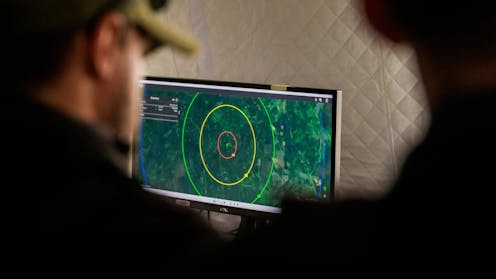
Du monde du silence au babillage des baleineaux, une plongée-conversation avec Olivier Adam

Source: The Conversation – in French – By Olivier Adam, Bioacousticien, Sorbonne Université
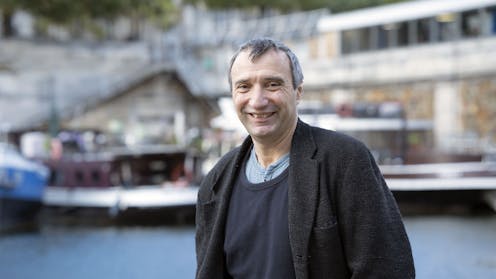
Olivier Adam est informaticien, spécialiste d’acoustique et de traitement du signal. Il suit les cétacés grâce à leurs vocalisations. Fourni par l’auteur

Olivier Adam, informaticien et professeur de traitement du signal à Sorbonne Université, a découvert les sons émis par les cétacés, lors d’une mission à Gibraltar, en 2003. C’était le début d’une passion au long cours. Il revient tout juste de Madagascar, où ses collègues et lui étudient les baleines à bosse. À cette occasion, il a raconté à Elsa Couderc, cheffe de rubrique Sciences et technologies à « The Conversation France », comment on apprend à mieux connaître ces animaux grâce aux surprenantes ondes sonores qu’ils émettent en permanence. Bienvenue dans un monde qui est tout sauf silencieux.


The Conversation : Vous êtes informaticien, à l’origine spécialiste d’acoustique et de traitement du signal. En entendant ces mots, on ne pense pas immédiatement à la vie sous-marine. Comment en êtes-vous venu à étudier les cétacés ?

Olivier Adam : Jusqu’en 2000, j’étudiais les pathologies du système auditif chez l’humain. On avait développé des outils informatiques permettant d’évaluer le fonctionnement de notre audition.

Puis, un jour, un collègue biologiste est revenu d’une conférence aux États-Unis, où les chercheurs avaient déjà commencé à collecter des sons de cétacés et à les analyser. Ce collègue, Christophe Guinet, voulait savoir à quelles profondeurs les cachalots descendaient au cours de leurs grandes plongées. Or, à l’époque, la seule manière de suivre ces animaux, c’était d’enregistrer leurs émissions sonores grâce à des hydrophones que l’on déployait en surface. Et il m’a demandé si je pouvais l’accompagner sur une mission : « On va faire des observations de cachalots en mai à Gibraltar, est-ce que tu veux venir ? » J’ai accepté. Là-bas, j’ai vu mon premier cachalot. Je l’ai enregistré et je ne m’en suis jamais remis. C’est quelque chose que je n’oublierai jamais. Ça a été un réel tournant pour moi, d’un point de vue personnel et scientifique.

Une baleine à bosse à Madagascar.
Olivier Adam, Fourni par l’auteur

T. C. : Qu’est-ce que vous avez entendu ?

O. A. : Ce sont des sons complètement improbables dans notre oreille humaine, très différents des sons qu’on entend dans notre vie quotidienne. C’est dingue, parce que c’est un tout autre monde, un monde sonore auquel on n’a pas accès d’habitude, qu’on ne connaît pas. Et il est tout sauf silencieux.

Cette première fois à Gibraltar, le cachalot est resté à la surface, immobile, en train de respirer intensément pendant cinq ou dix minutes, puis il fait un « canard » [l’animal lève la nageoire caudale pour débuter sa plongée] et, à partir de là, pour moi qui ne peux pas descendre physiquement à ces profondeurs abyssales, la seule façon de le suivre, c’était en l’écoutant (à l’époque, les balises n’existaient pas). Ce que j’ai fait, totalement immobile sur le bateau, mon casque audio vissé sur la tête, pendant les quarante-cinq minutes de son extraordinaire plongée. Puis il est remonté à la surface, et ce cycle a recommencé par une phase de respiration intense avant de repartir en plongée. Grâce aux enregistrements sonores, on pouvait reconstruire son activité, c’est-à-dire sa prospection de la masse d’eau devant lui à la recherche de nourriture, sa chasse dans la pénombre des profondeurs et les moments où il avait trouvé à manger. C’était saisissant et spectaculaire.

Les clics d’un cachalot.
Olivier Adam, Fourni par l’auteur1,4 Mo (download)

Il faut bien comprendre qu’en écoutant ces cétacés, on entre complètement dans leur monde, dans leur intimité. C’est ça qui est dingue : dès qu’ils descendent à quelques mètres, ils disparaissent, et la seule façon de rester en contact, c’est grâce à l’acoustique. On arrive à les accompagner et à les suivre, sans même avoir à plonger avec eux !

T. C. : Que pouvez-vous déduire des sons que vous enregistrez ?

O. A. : La première information qu’on en déduit est que si on les entend, c’est évidemment qu’ils sont présents. C’est très important, car une grande partie des cétacés est très discrète et ne s’approche pas des bateaux. Donc on ne les voit pas même quand ils viennent à la surface respirer. Par contre, on peut les entendre, et c’est cette détection de leurs émissions sonores qui témoigne de leur présence. Ensuite, on peut essayer de les localiser, et dire s’ils sont à proximité ou éloignés. Cette information est cruciale quand on veut décrire la fréquentation d’une zone d’intérêt, comme une aire marine protégée, ou les effets potentiels d’une activité anthropique en mer.

Les vocalisations d’une baleine boréale.
Olivier Adam, Fourni par l’auteur1,26 Mo (download)

Et puis il y a d’autres analyses que l’on peut mener à partir des enregistrements de leurs émissions sonores. On peut s’intéresser à leur langage, à leurs comportements, et finalement à leur société. Comment vivent-ils ensemble ? Quelles sont leurs interactions ? Ce sont de très belles questions scientifiques, tout à fait d’actualité aujourd’hui !

T. C. : Comment les cétacés perçoivent-ils le monde ?

O. A. : Ils ont les mêmes sens que nous. La vue, par exemple, car même si on s’imagine qu’il fait noir dans les grandes profondeurs, avec la bioluminescence [émanant de céphalopodes comme le calmar diaphane, ou de crevettes], il y a quand même quelques repères visuels.

De plus, près de la surface, les cétacés restent en contact et évoluent à proximité les uns des autres – c’est le sens du toucher. C’est même étonnant de les voir ainsi alors qu’ils ont l’immensité de l’océan à eux. Il faut croire que le vivre-ensemble est très important dans leur société.

Ensuite, il y a aussi le goût et l’odorat, mais probablement moins développés que pour les mammifères terrestres.

Pour la « perception magnétique », c’est plus compliqué. Il s’agit d’une hypothèse qui a été souvent avancée pour les grandes baleines afin d’expliquer leurs routes migratoires, mais sans que ce soit totalement démontré. Par contre, il y a eu des recherches sur les dauphins qui ont montré leur sensibilité au champ magnétique.

Mais il est clair que l’audition est fondamentale pour les cétacés. Ils ne peuvent tout simplement pas vivre avec un système auditif défaillant. En plus, les odontocètes [les cétacés à dents, comme les dauphins et les orques] ont une faculté supplémentaire : l’écholocalisation. Ils vont émettre des sons courts pour trouver leurs proies ou pour avoir des informations sur leur environnement immédiat. L’écholocalisation consiste à émettre des « clics » sonores, et à interpréter leurs rebonds acoustiques sur les obstacles autour d’eux – que ce soient des rochers, des bateaux, ou d’autres animaux. Grâce à ces échos, ils peuvent se repérer dans l’espace, savoir ce qu’il y a autour d’eux, si c’est immobile ou en mouvement…

groupe de dauphins sous l’eau
Des dauphins en groupe.
Olivier Adam, Fourni par l’auteur


À lire aussi :
À la découverte de l’univers sensoriel des dauphins et de leurs trois « super-sens »


Aujourd’hui, on essaye de comprendre si cette image acoustique leur apporte d’autres informations, par exemple, une texture, une sensation. Personnellement, je ne pense pas qu’il faille réduire l’écholocalisation à l’obtention d’une image mentale. Ce que je dis est certes très spéculatif, car je n’ai pas encore de preuve scientifique de cela, mais c’est mon intuition parce que les odontocètes émettent des clics en permanence, même lorsqu’ils sont assez proches pour voir complètement ce qu’ils sont en train d’écholocaliser. Pourquoi feraient-ils cela s’ils ont déjà un visuel très clair de ce qu’ils ont devant eux ? Du coup, je suis convaincu que la perception et l’interprétation qu’ils ont des échos leur procurent des informations et des ressentis qui vont bien au-delà d’une simple image.

T. C.  : Est-ce que vous pouvez reconnaître ces animaux à partir de leurs clics ?

O. A. : Les cachalots, oui – ils font des sons très spécifiques, très forts et souvent avec des rythmes particuliers. Ils se distinguent nettement des 90 autres espèces de cétacés.

Mais il faut comprendre que, si on connaît bien certaines de ces espèces car on les observe régulièrement, comme les baleines à bosse par exemple, il y en a d’autres que l’on ne voit presque jamais dans leur environnement naturel et que l’on découvre parce qu’un jour, un individu s’échoue sur une plage. Cela a été le cas, par exemple, au nord-ouest de Madagascar où un cachalot pygmée s’est échoué. Il mesurait moins de 4 mètres, comparé aux 15-18 mètres du grand cachalot, et on ne savait même pas que cette espèce était présente dans les eaux malgaches. En fait, il s’agit d’une espèce très furtive, donc très difficile à observer dans le milieu naturel. C’est la raison pour laquelle on a très peu d’information, que ce soit sur son mode de vie, son groupe social et sa production sonore. Donc, clairement, on ne connaît pas les émissions sonores de toutes les espèces de cétacés !

T. C. : Le son peut servir à plein de choses aux cétacés, et, comme vous le disiez, à avoir une vie sociale. On sait notamment que différents clans d’une même espèce ont des manières de s’exprimer différentes, n’ont pas le même langage. Comment apprend-on ce genre de choses ?

O. A. : Sur le langage, les premiers gros travaux datent des années 1960-1970 avec des études réalisées sur des dauphins en captivité. Les scientifiques essayaient d’évaluer leur intelligence, notamment en parlant avec eux, que ce soit en anglais ou grâce à des sifflements.

Quand on a voulu faire ces expérimentations dans le milieu naturel, cela a été beaucoup plus compliqué. Aujourd’hui, il y a des scientifiques, comme Denise Herzing ou Diana Reiss à New York, qui mènent ce type de recherche sur la structure sociétale des dauphins dans leur environnement naturel. Elles basent leurs travaux sur des observations visuelles et acoustiques, et c’est très compliqué du fait de la faible disponibilité des cétacés. J’ai moi-même essayé de travailler sur les dauphins en Guadeloupe et à La Réunion, mais cela demande de la patience et de l’obstination pour leur proposer une expérimentation, car il est très rare qu’ils restent suffisamment longtemps avec nous avant de repartir vivre leur vie.

En ce qui concerne ce qu’on pourrait appeler les « dialectes » de populations des baleines à bosse : les biologistes comparent leurs vocalisations depuis les années 1970. On a noté que leurs chants se transmettaient de génération en génération. Aussi, pour les groupes qui sont dans des hémisphères différents et, donc, qui ne peuvent pas s’entendre, elles vont émettre des vocalisations différentes. C’est pour cela qu’on parle de « dialectes régionaux ».

Les vocalisations d’une baleine à bosse.
Olivier Adam, Fourni par l’auteur1,54 Mo (download)

T. C. : Donc les baleines à bosse ne « parlent » pas le même dialecte, alors qu’elles possèdent toutes les mêmes capacités physiques pour produire des sons.

O. A. : Tout à fait. J’ai travaillé avec la chercheuse américaine Joy Reidenberg sur l’anatomie de leur système respiratoire, et nous avons décrit les différents éléments de leur générateur vocal. Et oui, c’est le même pour toutes les baleines à bosse, mâles et femelles. Même si, techniquement, il n’y a que les mâles qui chantent – les femelles vocalisent aussi, mais elles ne répètent pas des phrases plusieurs fois de suite, donc on ne parle pas de chant pour elles, mais de « sons sociaux ».

Concernant les dialectes, comme je le disais tout à l’heure, il est normal qu’elles ne partagent pas les mêmes vocalisations avec des baleines qui ne sont pas de la même population.

Par contre, il y a des exceptions à cette règle : on a remarqué quelques vocalisations qu’elles ont toutes en commun, par exemple des « woop » et des sons pulsés. Et ça, on ne sait pas pourquoi. Est-ce que ce sont les plus vieilles vocalisations de leur répertoire ? ou les plus faciles à émettre ? ou les plus intuitives ?

La chercheuse américaine Michelle Fournet [Université du New Hampshire] s’est intéressée à cette question. Elle a postulé que le « woop » correspondait à une sorte de signalement, comme un « bonjour ». Elle a testé son hypothèse en diffusant ce son dans l’eau, et il y a eu plein de baleines à proximité, qui ont répondu, à leur tour, en émettant cette même vocalisation. C’est intéressant ! On est aujourd’hui dans quelque chose d’entièrement spéculatif, mais c’est une nouvelle thématique qui est de plus en plus à la mode, le « playback ».

Avec mes collègues d[e l’Université d’]’Orsay et du Cerema [Centre d’études et d’expertise sur les risques, l’environnement, la mobilité et l’aménagement, du ministère de la transition écologique], je la pratique depuis deux ans maintenant. On enregistre des sons et, pour certains, on pense qu’ils ont une signification. On essaye comme cela d’avancer dans le dictionnaire des cétacés. C’est passionnant, mais pas très simple, car il faut pouvoir observer très finement les réactions des cétacés au moment même de la diffusion des sons que l’on veut tester.

Respiration en surface d’une baleine à bosse.
Olivier Adam, Fourni par l’auteur

Aussi, pour ne rien rater, nous sommes obligés de combiner des drones aériens, pour observer ce que les animaux font à la surface, et des balises électroniques que l’on ventouse sur leur dos et qui nous informent sur leurs mouvements quand on perd le contact avec eux en surface parce qu’ils descendent en plongée. Il s’agit d’expérimentations difficiles à mettre en œuvre et longues dans leur durée, mais qui sont nécessaires pour enregistrer leurs réactions et comprendre les effets de tel ou tel son.

T. C. : Est-ce qu’avec le « playback », le but est de créer des « dictionnaires » dans lesquels on aurait une correspondance entre un mot humain et un son animal ? Quel est le degré d’anthropomorphisme quand on parle de langage animal ?

O. A. : C’est compliqué, en fait. Dans les années 1970, on était partis sur l’idée « un son égale un mot » : on essayait de trouver à quel mot correspondait chaque son émis.

Aujourd’hui, on a un peu changé de concept. On regarde plutôt des phrases, parce que les baleines à bosse émettent leurs vocalisations dans un certain ordre, en séquences temporelles parfaitement organisées dans le temps, et elles les répètent dans ce même ordre.

Aussi, on s’interroge sur cette structure temporelle du fait que les vocalisations ne sont pas émises de façon aléatoire. On se demande également : « Si on enlève une vocalisation, est-ce que ça change la phrase, ou pas ? » C’est comme si on enlevait une note dans une partition de musique : est-ce que cela change complètement la mélodie ? Et probablement que, comme pour certaines notes, des vocalisations pourraient avoir un rôle plus important que d’autres dans la syntaxe mélodique du chant. Ce que je veux dire, c’est que peut-être que nous ne devrions pas considérer les vocalisations toutes de la même façon.

Et on pourrait aussi envisager une combinaison des deux, c’est-à-dire une signification particulière pour une vocalisation et une autre liée à l’ensemble de la phrase, c’est-à-dire finalement des choses plus complexes à imaginer et à déchiffrer.

Les scientifiques s’intéressent aussi à la communication interespèce, par exemple en diffusant des sons d’orques à d’autres espèces de cétacés. C’est ce que fait très bien la chercheuse Charlotte Curé [Cerema]. Et c’est super intéressant, car leurs réactions ne sont pas les mêmes ! Par exemple, les cachalots ont arrêté leur plongée pour remonter illico à la surface et voir ce qui se passait. Les globicéphales, qui sont de grands dauphins avec une tête arrondie et qui vivent toujours en grands groupes de plusieurs dizaines d’individus, quant à eux, sont venus au bateau… probablement pour vérifier s’il y avait à manger, car ils partagent les mêmes proies que les orques. Par contre, pour les baleines à bosse, c’était le contraire : elles se sont éloignées discrètement, sûrement pour se protéger de potentielles attaques…

Voilà où on en est aujourd’hui… Ces questions de langage, ça va prendre du temps.

T. C. : On comprend que ce sujet n’est pas facile. Quelles seraient les prochaines étapes pour avancer sur le langage des baleines ?

O. A. : Il y a plein de questions qui ne sont absolument pas résolues aujourd’hui ! Par exemple, on n’a toujours pas réussi à extraire la signature acoustique individuelle chez les baleines à bosse. Cela signifie qu’on ne sait pas reconnaître un individu à partir des sons qu’il émet. Pour ma part, je suis convaincu qu’elle existe et que ces cétacés s’identifient entre eux uniquement à partir de leurs émissions sonores !

Autre chose qu’on ne sait toujours pas, c’est s’il y a une « hiérarchie vocale » ? À partir du moment où on parle de groupes sociaux, on peut s’attendre à une certaine organisation avec des « leaders » ou des « influenceurs » – on pourrait imaginer que certains individus sont plus loquaces et imposent leurs vocalisations et leurs décisions. Si oui, qui sont-ils ? Sont-ils les plus vieux, les plus imposants, les plus rapides, ou tout le contraire ?

Pour les cachalots, on sait que c’est le cas : il y a des communautés d’une douzaine de femelles qui vivent ensemble toute leur vie. Ce sont des clans. Ces individus partagent des sons, s’alimentent dans les mêmes zones et élèvent leurs jeunes ensemble. Les rôles sociaux sont partagés. On distingue la matriarche, qui est la femelle plus vieille. On repère aussi les nounous qui s’occupent de tous les petits lorsque les autres adultes plongent pour s’alimenter.

Chez les orques, la structure sociale est différente. La mère garde ses petits tout au long de sa vie. Elle va leur transmettre son savoir, c’est-à-dire comment trouver les proies, les meilleures techniques de chasse et leur répertoire vocal. Cet apprentissage de génération en génération est juste exceptionnel. Il est essentiel pour leur survie et constitue la culture du groupe.

Chez les baleines à bosse en revanche, la société est plus ouverte. Les relations entre les adultes sont très souples, notamment pendant la période de reproduction, au cours de laquelle les mâles se reproduisent avec plusieurs femelles, et inversement. Par contre, il existe un lien particulièrement fort : celui qui relie la mère à son baleineau. Au cours de sa première année, ce dernier est totalement dépendant de sa mère, pour l’alimentation, pour les déplacements, pour sa protection.

vue du ciel
Une baleine à bosse et son baleineau.
Olivier Adam, Fourni par l’auteur

T. C. : Est-ce que les baleineaux « babillent » ?

O. A. : Oui, tout à fait. Les sons des baleineaux sont moins puissants, moins construits, moins cohérents – c’est assez mignon ! Nous avons montré qu’ils émettent des sons dès la première semaine après leur naissance – comme nos bébés.

En plus, ils naissent là où les mâles chantent, ce qui laisse croire que les baleineaux ont entendu ces chants puissants alors qu’ils étaient encore dans le ventre de leur mère.

Puis, au cours de leurs premières semaines de vie, ils vont apprendre à contrôler leur générateur vocal pour imiter les vocalisations des aînés et les reproduire tout au long de leur vie.

Deux baleines à bosse : le baleineau et sa mère.
Olivier Adam, Fourni par l’auteur319 ko (download)

Une de nos étudiants, Maevatiana Ratsimbazafindranahaka, qui a soutenu sa thèse en novembre 2023, a montré que les baleineaux réclament du lait à leur mère. Un peu comme s’ils chouinaient quand ils ont faim !

T. C. : Vous travaillez beaucoup sur les baleines à bosse à Madagascar… Encore cet été, vous étiez là-bas, et c’est de là que viennent les photos qui illustrent cet entretien. Comment ont évolué les choses depuis votre première mission sur l’île en 2007 ?

O. A. : Quand j’ai commencé à travailler sur les cétacés au début des années 2000, personne en France ne s’intéressait à leurs émissions sonores. En plus, le matériel pour enregistrer des sons en mer coûtait cher, donc il était difficilement accessible pour débuter.

C’est finalement auprès d’un laboratoire américain que j’ai pu récupérer mes premières données, mais cela a été aussi ma première déception : elles n’étaient pas d’assez bonne qualité pour être utilisées d’un point de vue scientifique. Il faut se rappeler que, contrairement à aujourd’hui, à l’époque, les gens ne partageaient pas leurs données très facilement.

Donc la seule solution était d’aller en mer pour faire moi-même mes enregistrements. C’était nouveau pour moi – j’étais très surpris que des biologistes passent des mois entiers au milieu de nulle part pour aller enregistrer des espèces non humaines, alors que moi, quand j’ai fait ma thèse en informatique, toutes les données que j’utilisais étaient accessibles très facilement sur Internet, il suffisait de les télécharger sur un serveur. En commençant ma recherche sur les cétacés et en travaillant avec des biologistes, je me suis rendu compte du temps, de l’énergie et de la patience qu’il faut pour observer le vivant.

chercheurs sur un bateau
Étudier les cétacés est un vrai travail d’équipe, tant de nombreuses compétences sont nécessaires.
Olivier Adam, Fourni par l’auteur

Je suis arrivé à Madagascar en 2007. Je n’avais jamais vu de baleines à bosse, je ne les avais jamais écoutées. Et là, ça a été un choc. Déjà parce que je me suis retrouvé dans une barque de six mètres de long, totalement ouverte aux intempéries, avec un petit moteur de 60 CV, et sans gilets de sauvetage… Au niveau sécurité, il faut reconnaître qu’on n’était pas complètement au point ! On allait en mer pour écouter des chants des journées entières. Je déployais un simple hydrophone du bateau et, pendant des heures, on les écoutait en direct. C’était complètement fou toute l’énergie acoustique qu’elles envoyaient à travers l’océan !

Par la suite, j’ai continué de travailler avec l’association Cétamada. Avec eux, on a fait des choses exceptionnelles. On a installé la première station acoustique pour enregistrer les chants tout au long de la saison. On a prélevé des échantillons de peau pour constituer la plus grande base génétique de l’océan Indien. On s’est aussi intéressés aux habitats, à la distribution géographique de ces baleines. On a ainsi montré qu’elles sont très mobiles pendant la période de reproduction, en se déplaçant dans tout l’océan Indien. Au cours d’une même saison, ce sont les mêmes individus que l’on voit à La Réunion, à Madagascar, aux Comores, et jusqu’à la côte africaine. Ce sont de vrais nomades. Et maintenant, comme je le disais précédemment, on travaille sur le playback.

T. C. : Aujourd’hui, vos bases de données acoustiques sont agrémentées d’autres types de données ?

O. A. : Oui, tout à fait, l’acoustique est une des méthodes. J’étais focalisé sur l’acoustique au début de ma carrière, je lui suis toujours, mais, maintenant, j’utilise aussi d’autres outils d’observation pour avoir une description la plus complète possible. Car il faut bien comprendre que chaque méthode a ses avantages et ses inconvénients. Elles sont complémentaires. Donc je recommande vraiment de ne pas hésiter à combiner les observations visuelles faites par des observateurs à bord des bateaux ou en utilisant un drone aérien, l’acoustique évidemment, et de faire aussi des prélèvements d’eau pour faire de l’ADN environnemental.

Mais il faut noter que toutes ces données n’ont pas ce caractère instantané qui nous permet de suivre, même a posteriori, ce que font les cétacés. Du coup, aujourd’hui, nous déployons aussi des balises électroniques que l’on ventouse sur le dos des cétacés. Elles sont équipées d’une caméra, d’un hydrophone et de différents capteurs qui nous permettent de savoir exactement ce qu’elles ont fait durant leurs plongées.

Malheureusement, ces balises ne restent attachées que quelques heures avant de se détacher par elle-même généralement du fait de la force hydrodynamique qui s’exerce quand la baleine se déplace. Connaître son activité pendant un temps si court est assez frustrant quand on sait qu’une baleine vit cent ans ! Idéalement, on aimerait bien suivre sa vie sur plusieurs années…

Île Sainte-Marie à Madagascar, en août 2025.
Olivier Adam, Fourni par l’auteur

Quoi qu’il en soit, les bases de données ont augmenté d’une façon incroyable. Au milieu des années 2010, il y a eu un réel basculement : on est passé d’une ère où on avait très peu de données à une ère où on en avait trop – c’est le big data des cétacés. Les hydrophones et les drones sont très accessibles, les smartphones s’emportent partout… on peut capter des données 24 heures sur 24, 7 jours sur 7.

Notre communauté scientifique s’organise pour développer des méthodes afin d’analyser les sons qu’on a mesurés et de ne pas les mettre à la poubelle faute de temps pour les analyser. Par exemple, je travaille aujourd’hui avec une doctorante, Lucie Jean-Labadye, informaticienne elle aussi, qui applique des méthodes d’intelligence artificielle et d’apprentissage profonds pour interpréter les enregistrements sous-marins.

T. C. : Justement, à quoi sert l’IA dans le cadre de vos travaux ?

O. A. : À deux choses. Tout d’abord, il s’agit de traiter ces grandes bases de données. En fait, pour la détection et la classification des événements sonores, les programmes que l’on a développés depuis les années 2000 étaient basés sur l’extraction de quelques caractéristiques acoustiques, comme les fréquences et les durées. Cela était suffisant lorsqu’on s’intéressait à certaines vocalisations, mais leurs performances se dégradaient avec la forte augmentation de la taille des bases de données. Pour faire simple, ces méthodes généralisent mal.

Or, aujourd’hui, on a besoin de méthodes qui permettent de traiter des grandes bases de données. L’IA nous aide à traiter massivement tous les enregistrements acoustiques, et donc à analyser les paysages sonores.

La deuxième raison de s’intéresser à l’IA, c’est que l’on peut se focaliser sur les détails. Pour classifier des vocalisations de baleines, il faut se fixer des critères et des seuils. Or cela s’avère vite très compliqué et fastidieux. Et souvent, au final, cela ne nous aide pas à mieux comprendre l’information, car on ne sait pas trop où elle est cachée.

Avec l’IA, on peut tester plein de critères différents et les appliquer à des centaines d’heures d’enregistrement. Cela permet de tester différentes solutions, de faire les choses plus rapidement et de mieux comprendre la signification de leur langage.

T. C. : Aujourd’hui, vous travaillez aussi sur les « paysages sonores sous-marins ». Qu’est-ce que c’est ? Pourquoi étudier ces paysages sonores ?

O. A. : Il est important de replacer ce que font les cétacés dans le contexte environnemental dans lequel ils évoluent. En particulier, on sait que les activités humaines ont des influences directes sur les écosystèmes marins. Et toutes nos activités sont bruyantes.

Donc, travailler sur les paysages sonores revient à savoir ce qui relève de notre présence en mer, à nous les humains, et de pouvoir caractériser cette pollution sonore. L’idée est donc de classer les événements sonores en trois catégories : la « biophonie » incluant les sons du vivant comme les chants de baleines, par exemple ; la « géophonie » qui rassemblent les sons de l’environnement, tels que la pluie ; et l’« anthropophonie », qui correspond à tous les sons issus des activités humaines.

Les enregistrements acoustiques nous donnent principalement les niveaux sonores et les bandes fréquentielles. En fonction des types de sons et de leur durée d’exposition, on peut en déduire les risques encourus par les cétacés. L’objectif est clairement d’avancer sur la conservation de l’océan et la protection des cétacés. Il est essentiel de tout faire pour mieux considérer l’océan et ses habitants. Et de soutenir des régulations de nos activités économiques pour protéger efficacement le milieu marin. C’est urgent, aujourd’hui.

De nombreux secrets demeurent encore sous la surface. À Madagascar, en août 2025.
Olivier Adam, Fourni par l’auteur

The Conversation

Olivier Adam ne travaille pas, ne conseille pas, ne possède pas de parts, ne reçoit pas de fonds d’une organisation qui pourrait tirer profit de cet article, et n’a déclaré aucune autre affiliation que son organisme de recherche.

ref. Du monde du silence au babillage des baleineaux, une plongée-conversation avec Olivier Adam – https://theconversation.com/du-monde-du-silence-au-babillage-des-baleineaux-une-plongee-conversation-avec-olivier-adam-262292

El desfile militar en China exhibe un nuevo orden mundial

Source: The Conversation – (in Spanish) – By Fernando Cvitanic, Docente de Relaciones Internacionales, Universidad de La Sabana

Después de la Guerra Fría, el mundo parecía encaminarse a un destino unipolar. No obstante, en la actualidad vemos cómo China demuestra que quiere volver a la configuración de un marco bipolar. Se trata de un orden internacional en el que solo dos superpotencias dominan y que, a partir de ahora, no estará sustentado en la dialéctica entre comunismo y capitalismo, sino por bloques construidos a partir del poderío económico y comercial.

El desfile en Pekín del 3 de septiembre para celebrar el fin de la Segunda Guerra Mundial en Asia, que se produjo tras la rendición formal de Japón, es una muestra de ello. La imagen que ha dejado para la historia esta parada militar incluye al líder Xi Jinping flanqueado por el presidente ruso, Vladímir Putin, y el mandatario coreano, Kim Jong Un. Los tres, al frente de una comitiva de representantes de otros 20 gobiernos y todo ello en medio de un despliegue espectacular, seguido por la atenta mirada de 50 000 espectadores congregados frente a la plaza Tiananmén, según cifras de medios estatales chinos, y retransmitido en directo.

El propósito y puesta en escena de este evento recordó al desfile militar que Moscú organizó en mayo de este mismo año para conmemorar la victoria sobre Alemania.

Mensaje para Estados Unidos

La exhibición, que partió desde la plaza Tiananmén de Pekin, sacó a relucir la artillería, armas láser, misiles antibuque, drones, bombarderos, todos de producción nacional y en servicio. Con ella, los chinos buscan instaurar una política de prestigio, mostrar arsenal, hacer propaganda y enviar un mensaje desafiante a los estadounidenses para decirles que no todo el mundo gira a su alrededor.

Otra manera en que lo hace es juntándose con otro país que, si bien no es rival de Estados Unidos ni por su economía ni por su tecnología, ha mostrado su agresividad y ambición expansionista al invadir Ucrania: Rusia.

La exposición pública de liderazgo y adhesión también favorece a Vladimir Putin. Con ella, demuestra a los estadounidenses que no está solo y que, a pesar de los bloqueos, cuenta con aliados que le han ayudado a mantener su economía, como son China, India y Turquía.

Lo anterior quedó también claro desde hace unos días, durante la cumbre OCS (Organización de Cooperación de Shanghái) que tuvo lugar en la localidad portuaria china de Tianjin el 31 de agosto y el 1 de septiembre. Ahí se esclareció una posible configuración geopolítica para una nueva guerra fría en el siglo XXI. En este lado de la partida se ubican países como China, Rusia, Kazajistán, Kirguistán, Tayikistán, Uzbekistán, India, Pakistán, Irán y Bielorrusia, la mayoría estados autoritarios.

La democracia no es el único modelo

Dicha configuración deja ver que Estados Unidos no va a poder imponer la democracia occidental. Hay otros modelos de gobierno que, a los ojos de Asia, han dado resultados.

Tanto Rusia como China quieren mostrarle los dientes a los estadounidenses y exponer que, en el plano geopolítico, hay nuevos reacomodos. Lo vimos con el acercamiento de India a China durante la cumbre, enemiga histórica por temas fronterizos, pero que hoy ve la necesidad de no quedar aislada de un bloque asiático que gana protagonismo.

A diferencia de lo sucedido en la edición anterior, la cumbre de Tianjin de este año, de una u otra manera, ha dejado pasar por alto las críticas a Putin y a la guerra de Ucrania. Algo que hace pensar en la posibilidad de que China pueda replicar el modelo de Rusia y lanzarse a por Taiwán.

La duda que queda es si Estados Unidos podría responder al conflicto ucraniano y a otro en Asia al tiempo, porque una intervención así involucraría a múltiples actores y podría llevar a un escenario similar al que se vivió en 1962 con la crisis de los misiles.

China, Rusia y las potencias emergentes

Aunque un conflicto de China con Taiwán sea poco probable, lo que sí es cierto es que el presidente chino, Xi Jinping, se ha consolidado como un líder estratégico, calculador y racional, que despliega una diplomacia activa en África y América Latina sin mayores cuestionamientos.

No es para menos. Su liderazgo representa el enorme peso demográfico y económico de China, ese socio poderoso al que nadie quiere enfrentar y que, para muchos países, representa un alivio frente a la presión estadounidense.

Esto ha llevado a que Estados Unidos deje de imponer el compás de la política internacional como lo hizo tras la Guerra Fría. En ese entonces se hablaba del “nuevo orden mundial”, el fin de la historia y la expansión de la democracia liberal.

Hoy, China, de la mano de sus aliados –cuyas poblaciones superan la suma de América y Europa–, reclama su lugar. En consecuencia, países de Europa, América Latina y África han buscado diversificar alianzas, al tropezar con un Gobierno estadounidense menos solidario, más enfocado en intereses propios, cálculos de costo-beneficio y negociaciones transaccionales.

El invitado volátil: Corea del Norte

Corea del Norte añade otro factor de inestabilidad. Con arsenal nuclear y un vínculo cada vez más estrecho con Pekín y Moscú, dificulta que Washington pase de las amenazas a la acción directa, pues cualquier error podría escalar a un conflicto de magnitudes globales.

En medio de este entramado, los equilibrios se negocian día a día y el mencionado “nuevo orden mundial” sigue tomando forma. Queda esperar cómo termina de perfilarse esa configuración y saber quiénes serán los “buenos” y los “malos” en el relato de cada uno.

Mientras, resurge por tercera vez en la historia el fantasma del mal acuñado Eje del Mal. La última vez que este espectro apareció fue invocado por George W. Bush para referirse a Irán, Irak y Corea del Norte.

The Conversation

Fernando Cvitanic no recibe salario, ni ejerce labores de consultoría, ni posee acciones, ni recibe financiación de ninguna compañía u organización que pueda obtener beneficio de este artículo, y ha declarado carecer de vínculos relevantes más allá del cargo académico citado.

ref. El desfile militar en China exhibe un nuevo orden mundial – https://theconversation.com/el-desfile-militar-en-china-exhibe-un-nuevo-orden-mundial-264446

Voces ucranianas (I): testimonios desde el exilio

Source: The Conversation – (in Spanish) – By Léna Georgeault, Directora del Grado en Relaciones Internacionales, Universidad Villanueva

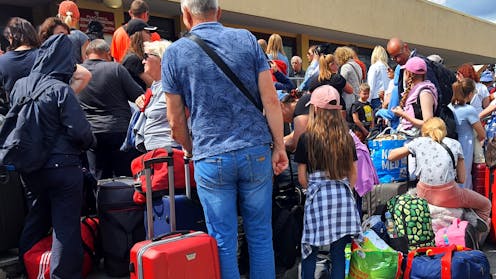
Refugiados ucranianos esperan el tren en la ciudad polaca de Przemysl en junio de 2022, en los primeros meses de la guerra. rospoint/Shutterstock

“Crucé la frontera legalmente”, me dice Theodor* nada más sentarse, con las manos firmes sobre la mesa. No lo sabía todavía, pero todas mis entrevistas con hombres ucranianos en Polonia empezarían así: con una justificación.

Theodor llegó a Breslavia (Polonia) para estudiar apenas unos días antes de la invasión rusa, en febrero de 2022. Me explica que quizás no hubiese sido posible unos meses después. Al principio de la guerra, los estudiantes internacionales aún podían salir del país. Luego se endurecieron las normas, al comprobarse un uso masivo –y a menudo fraudulento– de esa vía para evitar el servicio militar obligatorio. “Quizás te salvó Dios”, le dijo su padre.

Fue Oksana* quien nos puso en contacto. Trabaja en la sede polaca de la Universidad Católica de Ucrania, que me había invitado a participar en un evento sobre su experiencia de la docencia en tiempos de guerra: un testimonio de compromiso y resiliencia.

Oksana abandonó Ucrania hace unos meses con su hija para reunirse con su marido. Insinúa que su presencia en Polonia no es del todo legal, pero no piensan volver. Le parece inasumible: dos semanas de entrenamiento y al frente, sin salida, salvo en un ataúd. Algunos de sus amigos se ofrecieron voluntarios al comienzo de la guerra, convencidos de que sería cuestión de meses. Ninguno volvió.

Como Oksana y su familia, muchos ucranianos eligieron el exilio. En mayo de 2025, la ONU estimaba en un millón el número de refugiados ucranianos en Polonia, un país de 37 millones de habitantes. Pero esa cifra podría estar muy por debajo de la realidad: no todos los desplazados se registran oficialmente al llegar. Y, desde luego, no todos comparten la misma experiencia del exilio.

Natalia*, estudiante ucraniana, reconoce que su experiencia fue muy distinta a la de muchos de sus compatriotas. Siempre había soñado con estudiar en el extranjero, y llegó a Breslavia con una beca, el apoyo de su universidad y alojamiento asegurado desde el primer día. Pero sabe que su caso no es representativo: “Para otros es mucho más difícil. Han perdido su casa, cambian de país, tienen que aprender un idioma desde cero… y ellos no lo han elegido.”

Kinga y Oleg dan comida y refugio

Los migrantes más vulnerables son atendidos por Kinga y Oleg, de la asociación Nomada. Al principio de la guerra, interrumpieron su labor principal para atender la emergencia humanitaria, proporcionando comida, ropa y refugio. Desde mayo de 2022, retomaron sus actividades habituales: además de brindar asesoramiento legal, operan un espacio comunitario donde las personas migrantes se reúnen, reciben educación sobre violencia motivada por prejuicio y talleres formativos. “Cubrir tantos aspectos hace difícil explicar exactamente a qué nos dedicamos”, comenta Kinga, las manos envueltas alrededor de una taza estampada con el lema de Nomada: No human is illegal (“Ningún ser humano es ilegal”).

Una de las dificultades más inmediatas es encontrar alojamiento. En las ciudades, los escasos pisos disponibles suelen estar saturados: varias familias comparten un mismo espacio hacinado, sin intimidad. En las zonas rurales, los retos son distintos: faltan guarderías y acceso a atención médica, un problema especialmente grave para las madres solteras y los ancianos que huyen de la guerra.

Pero el mayor problema es la incertidumbre, que lo enreda todo. Oleg desliza con voz queda un comentario sobre la laxitud con que Polonia aplica la Directiva de Protección Temporal (2001/55/CE), activada por la Unión Europea en marzo de 2022 tras la invasión rusa. El estatuto de refugiado se concede por períodos breves, sin garantías de renovación.

Si Varsovia declara segura una región de Ucrania, quienes provienen de ella pueden perder su protección, aunque ya no tengan casa ni familia a la que regresar. Esta inseguridad jurídica se suma a la incógnita sobre la duración de la guerra, y deja a muchos en suspenso. Sin saber si lo provisional se volverá permanente, los refugiados ucranianos oscilan entre el deseo de volver y la necesidad de reconstruir una vida estable donde están.

Ante ese limbo identitario, Artem, fundador de la Fundación Ucrania, se declara abiertamente antiasimilación y antiguetos. Ni convertirse en polaco, ni quedarse al margen de la sociedad. Artem me confía que se crió en una familia “muy soviética”, una experiencia que le dejó una aversión persistente por la uniformidad forzada. “Antes tenía esa visión infantil, ingenua, de ciudadano del mundo”, dice con una sonrisa irónica.

Sentirse ucraniano en Polonia

Pero fue al mudarse a Polonia cuando empezó a sentirse profundamente ucraniano. Por eso se dedica desde hace once años, con su fundación, a cultivar esa identidad dentro de la comunidad, organizando en Breslavia eventos con figuras destacadas de la escena artística y cómica ucraniana.

Para Kinga, ese tipo de encuentros son esenciales: “Ves a varios miles de personas que son de tu país y te das cuenta de que realmente viven en la misma ciudad que tú, que podéis cantar las mismas canciones, divertiros juntos… y entonces ya no te sientes tan solo, ni tan desconectado”.

Para algunos, esa comunidad sirve para recrear un microcosmos ucraniano mientras esperan el regreso, como en el caso de Natalia. “Todo el tiempo quiero volver a Ucrania… Como en casa, en ningún sitio”, afirma con entusiasmo.

Para otros, es sólo el eco persistente de una vida que saben que no retomarán. Esa certeza parece ir calando poco a poco en Ivan*, cuya hija estudia en la Universidad de Breslavia. “Mi sueño es que quiera volver a Ucrania. Pero cuanto más tiempo pasa… menos posible me parece.”

Se hace el silencio en el semisótano, donde se nos ha hecho de noche mientras conversábamos. Un silencio largo y espeso en la oscuridad que habla de un legado que se disuelve, de la desconexión entre un padre y una hija que ya no hablan el mismo idioma. La distancia entre generaciones, esta vez, no se mide en años, sino en fronteras que ya no se cruzan.


Los nombres marcados con asterisco han sido modificados para proteger la identidad de las personas entrevistadas.


The Conversation

Léna Georgeault no recibe salario, ni ejerce labores de consultoría, ni posee acciones, ni recibe financiación de ninguna compañía u organización que pueda obtener beneficio de este artículo, y ha declarado carecer de vínculos relevantes más allá del cargo académico citado.

ref. Voces ucranianas (I): testimonios desde el exilio – https://theconversation.com/voces-ucranianas-i-testimonios-desde-el-exilio-259344

So-called ‘clutch’ athletes might be more hype than nerveless match-winners

Source: The Conversation – Global Perspectives – By Ger Post, Lecturer Neuroscience, PhD student collaborative reasoning, The University of Melbourne

With the AFL finals approaching, discussions about the league’s clutch players – those who excel under pressure – will soon appear in the media and be debated among fans.

Last year, Gold Coast captain Noah Anderson was ranked highest in a list of AFL clutch players, followed by more established names including the Western Bulldogs’ Tom Liberatore and Geelong’s Patrick Dangerfield.

But what does clutch really mean and is it possible for athletes to be “clutch”?

Noah Anderson enhanced his reputation as a so-called clutch player with a match-winning effort against Collingwood.

The power of labels and narratives

While most people struggle when the pressure rises – they may even “choke”, where they lose the ability to perform a skill in front of an audience – clutch players seem to excel in these circumstances.

They thrive when the heat is on and seem to save something special for these moments.

The label of being a clutch player is often shaped by stereotypical narratives of, as some media commentary has put it, “hardened, stubborn men” who will “take themselves to the next level through sheer guts and an iron will”.

In 2018, former Port Adelaide great and outspoken media pundit Kane Cornes earmarked Bulldogs champion Marcus Bontempelli as a clutch player:

The one player who I want with the ball in their hands, when the game is on the line is “The Bont”. For me, Marcus Bontempelli, is right now the best clutch performer in the competition.

More recently, Carlton’s Blake Acres was described as “intense, desperate and completely unwilling to give an inch” in the finals:

Acres was the big moment player, full of desperation, intensity and a relentless attack on the ball.

But are these players really clutch?

Blindspots and biases

These character sketches and rankings of clutch players mask many blind spots and biases in how the data are compiled and interpreted.

For example, the data tend to favour players who generate impact with eye-catching and easily measurable actions (such as Bontempelli, who often brilliantly takes marks and kicks goals) while undervaluing those who do the less glamorous grunt work that helps the rest of the team (such as Liberatore, who plays a more selfless role).

More importantly, the data don’t reflect whether a player actually improves under pressure (the definition of clutch).

In the case of Anderson, is he indeed performing better than others in the final quarters of tight games? Or is he just more talented than others and ranks higher in all quarters of games?

Or maybe he is better in the first three quarters of the game and then declines in the fourth quarter – yet he is he still better than the rest?

We don’t know solely from assessing his performances in final quarters.

Studies from other team sports including basketball, soccer and baseball cannot definitely prove players excel under pressure.

No one saves something special for when it’s needed most.

It seems more likely that clutch performances simply stick in our memories: game-deciding moments are more memorable than efforts that fail to seal victory.

There could be other reasons, too.

The power of opportunity

Statistics from many sports show even if athletes are involved in more goals or baskets when the game is on the line, it doesn’t necessarily mean they excel in these moments.

When late-game performances by basketball legends including LeBron James and Kobe Bryant were analysed, another option surfaced: clutch performers seem to be doing more instead of better in the last minutes of tight games.

Their scoring accuracy doesn’t improve in these moments (they miss, on average, just as much as most players) but they do get more scoring opportunities.

These opportunities are created by many involved, not in the least the teammates who pass the ball to the clutch player.

These teammates often follow the instructions from their coaches to get the clutch player in scoring position in the dying seconds.

Opponents can, unintentionally, assist by making more fouls on clutch players when the heat is on, giving them more free throws to seal the victory.

Finally, there are fans and pundits who label these players as the ones who should decide the game.

So to get more opportunities to decide a match, an athlete needs to build a reputation that they will take themselves “to the next level” when it matters most. Tattooing “CHOSEN1” on your back might help build these reputations, as LeBron James did.

Even better is when others talk about your confidence, hunger for victories, or hardened, stubborn competitiveness. This signals to fans, teammates and coaches that you are the one who should be getting the ball to decide the game.

More opportunities means more game-winning shots, which reinforces the idea you are a clutch player.

Being listed as one of the most clutch players of the competition might be the best assist an athlete can get to decide a final.

The Conversation

Ger Post does not work for, consult, own shares in or receive funding from any company or organisation that would benefit from this article, and has disclosed no relevant affiliations beyond their academic appointment.

ref. So-called ‘clutch’ athletes might be more hype than nerveless match-winners – https://theconversation.com/so-called-clutch-athletes-might-be-more-hype-than-nerveless-match-winners-263111

Not all processed foods are bad for you. Here’s what you can tell from reading the label

Source: The Conversation – Global Perspectives – By Clare Collins, Laureate Professor in Nutrition and Dietetics, University of Newcastle

If you follow wellness content on social media or in the news, you’ve probably heard that processed food is not just unhealthy, but can cause serious harm.

Eating a diet dominated by highly processed foods means you’re likely to consume more kilojoules than you need, and greater amounts of salt, sugar – as well as food additives.

But not all processed foods are equal, nor bad for you. Here’s what to look out for on food labels if you want to buy processed, but convenient, foods.

What do the processing categories mean?

Researchers use the Nova processed food classification system to group foods into four processing levels.

Group 1: Unprocessed or minimally processed foods are either in their natural state or have minimal processing. They’re basic foods you could eat straight away, such as vegetables and fruit, or foods that only need minimal processing to make them safe and palatable, such as eggs, meat, poultry, fish, oats, other grains, plain pasta, legumes, milk, plain yoghurt, ground herbs and spices, or nuts with shells.

Group 2: Processed culinary ingredients are derived from group 1. These are used in cooking to enhance flavour and texture, and include oils, sugar and honey.

Group 3: Processed foods are treated using traditional processing methods such as canning, bottling, fermenting, or salting to extend shelf life. These include canned fruits, tomato paste, cheese, salted fish, and breads with minimal ingredients. You could make these foods in a home kitchen.

Group 4: Ultra-processed foods are industrially produced with ingredients and additives not normally found in home kitchens, and have little, if any, group 1 items left intact. These foods are engineered to be hyper-palatable, meaning you can’t stop eating them, and have long shelf lives. Products include factory-made biscuits, snack foods, instant meals, frozen desserts, preserved meats, instant noodles, margarine, some breakfast cereals and sugar-sweetened drinks.

However, group 4 products vary greatly in their nutritional quality and the number and type of food additives used to manufacture them.

What’s the concern about eating lots of ultra-processed foods?

About 42% of Australians’ total energy intake comes from ultra-processed foods. These are relatively cheap and are energy-dense, but nutrient-poor. This means they can contain a lot of kilojules, salt and added sugars but are poor sources of nutrients the body needs such as vitamins, minerals and dietary fibre.

Studies have linked higher intakes of ultra-processed foods with poorer diet quality and worse health outcomes. A review of 122 observational studies found people with the highest intakes (compared with the lowest) were about 25% more likely to have had a decline in kidney function. They were 20% more likely to be overweight, or have obesity or diabetes, and were 40% more likely to have common mental health conditions such as depression.

However, a recent review highlighted that the health impact of these foods and drinks varies depending on their category. Products such as sugar-sweetened drinks can negatively affect health, while others – such as cereals with added vitamins and minerals and some dairy products – can be neutral or even protective.

Some level of food processing can improve food safety, extend shelf life and reduce food waste. This is likely to include the use of additives, such as emulsifiers, flavour enhancers, preservatives, food acids, colours and raising agents. Additives need to be approved by Food Standards Australia and New Zealand (FSANZ) after a safety assessment, with the lowest amount added to achieve the specific purpose in the food product.

A cheese board
Processed foods have different health risks and benefits.
Kyle Roxas/Getty Images

However, some adults and children eat a lot of ultra-processed foods. This means they have high intakes of food additives, in terms of total amount and different types.

Researchers have raised concerns about a potential link between high intakes and increased risks of some health conditions, ranging from mental health disorders to heart disease and metabolic disorders such as diabetes. The researchers called for transparent use of evidence to ensure public health messaging is kept up to date.

An observational study in more than 100,000 French adults also raised concerns about potential “cocktail” effects of food additive combinations. Although more research is needed, they found some additive combinations were associated with a higher risk for developing type 2 diabetes.

Finally, a recent review highlighted the potential for additives, particularly emulsifiers, to damage the gut lining and alter the balance of healthy versus unhealthy gut microbes. This could potentially increase the risk of developing inflammatory bowel conditions.

What processed foods should you choose?

It depends on how they’re made, the additives used, how often you eat them, and how much you have.

When choosing processed foods:

  1. Read the ingredient list on the food label. It tells you a lot about the level of processing and additives used. Look for products that contain minimal to no additives, and ingredients that could be found in a home kitchen. Note that additives could be listed by name or number.

  2. If there are a number of products in the same category, choose the one with more Health Stars as it will contain less salt, saturated fat and added sugars, compared to products with fewer Health Stars.

  3. Think about how often you eat the product. If you do eat it weekly or more often, spend more time comparing products before making a final choice.

While you might expect all Nova 3 processed foods to be healthier than Nova group 4 (ultra-processed), this isn’t always the case. Nova group 3 items don’t necessarily meet the nutrient criteria that deems them “healthy”. They could still contain excessive amounts of added salt, saturated fat or sugars.

For help to review the level of processing alongside the nutrient criteria, consider using an app such as Open Food Facts. This assigns food products a Nova group score, a nutrition score, and another to rate its impact on the environment.


Read more:
Ultra-processed foods might not be the real villain in our diets – here’s what our research found


The Conversation

Clare Collins AO is a Laureate Professor in Nutrition and Dietetics at the University of Newcastle, NSW and a Hunter Medical Research Institute (HMRI) affiliated researcher. She is a National Health and Medical Research Council (NHMRC) Leadership Fellow and has received research grants from NHMRC, ARC, MRFF, HMRI, Diabetes Australia, Heart Foundation, Bill and Melinda Gates Foundation, nib foundation, Rijk Zwaan Australia, WA Dept. Health, Meat and Livestock Australia, and Greater Charitable Foundation. She has consulted to SHINE Australia, Novo Nordisk, Quality Bakers, the Sax Institute, Dietitians Australia and the ABC. She was a team member conducting systematic reviews to inform the 2013 Australian Dietary Guidelines update, the Heart Foundation evidence reviews on meat and dietary patterns and was Co-Chair of the Guidelines Development Advisory Committee for Clinical Practice Guidelines for Treatment of Obesity 2025.

ref. Not all processed foods are bad for you. Here’s what you can tell from reading the label – https://theconversation.com/not-all-processed-foods-are-bad-for-you-heres-what-you-can-tell-from-reading-the-label-260818

Russia’s GPS interference: do I need to worry when flying?

Source: The Conversation – Global Perspectives – By Lucia McCallum, Senior Scientist in Geodesy, University of Tasmania

Gints Ivuskans / AFP via Getty Images

On Sunday, a plane carrying European Union chief Ursula von der Leyen was reportedly forced to land in Bulgaria using paper maps after its GPS navigation systems were jammed. Bulgarian authorities claim the jamming was deliberate Russian interference, though a Kremlin spokesperson told the Financial Times this was “incorrect”.

GPS interference is on the rise, so you might be wondering how it works. And can anything be done about it? And – perhaps most importantly – do you need to worry?

How does GPS jamming work?

The Global Positioning System (GPS) and other satellite navigation systems use radio signals from satellites to calculate position. To determine position, a GPS needs a direct line of sight to at least four satellites.

There are two ways to disrupt satellite navigation.

The first is jamming. This works by simply broadcasting high-intensity radio noise in the same frequency band used by the navigation satellites.

Jamming drowns out the satellite signal, like a person shouting loudly in your ear stops you hearing what someone is saying on the other side of the room. This appears to be what happened in Bulgaria.

The second way to interfere with satellite navigation is called spoofing, and it’s a little more elegant. Spoofing involves sending radio signals that pretend to be coming from the navigation satellites.

Where jamming stops the satellite navigation system from producing any location, spoofing tricks it into giving a false location – with potentially catastrophic results.

Are jamming and spoofing becoming more common?

Jamming and spoofing do appear to be growing more common, especially in conflict zones in the Middle East and Eastern Europe.

A clandestine Russian base near the Polish border is reportedly responsible for satnav interference in the Baltic region.

Ships in the Red Sea report frequent interference, likely from Houthi rebels in Yemen.

These increasingly common incidents highlight how vulnerable our reliance on satellite navigation makes us.

What can be done about interference?

The best response to interference is to have backup navigation options in place. The US-run GPS is the best known and most commonly used satellite navigation system, but there are others.

The EU runs a parallel system called Galileo, while Russia has one called GLONASS and China operates its own BeiDou satellites.

Each of these systems operates using slightly different radio frequencies. Some navigation systems can tune in to more than one set of satellites – so even if one is jammed, others may be available.

Galileo also has a “safety of life” feature, which allows users to detect spoofing. Australia’s in-development SouthPAN system will also offer a similar feature.

Another common feature of navigation systems is inertial sensing. This relies on sensors such as gyroscopes and barometers to directly detect movement and calculate position.

Most car navigation systems use inertial sensors to track location in cities or tunnels where there is no direct line of sight to satellites. Inertial sensing works well for short periods of time, but quickly becomes inaccurate and needs to be recalibrated by checking in with satellite systems.

Many researchers around the world are trying to develop new alternatives to satellite navigation using extremely precise sensors. One recent development uses tiny fluctuations in Earth’s magnetic field to detect position, for example.


Read more:
Quantum navigation could transform how we travel. So what is it, and how does it work?


Should you be worried about flying?

Everyday air passengers have no need to worry about jamming or spoofing. For one thing, it’s very rare – especially outside conflict zones.

For another, the aviation industry is highly regulated and extremely safe. Even where satellite navigation doesn’t work, there are backup options.

What all of us can take away from this latest incident is how dependent we have become on satellite navigation. What matters is that we have a diverse range of systems so we are not dependent on just one.

The Conversation

Lucia McCallum does not work for, consult, own shares in or receive funding from any company or organisation that would benefit from this article, and has disclosed no relevant affiliations beyond their academic appointment.

ref. Russia’s GPS interference: do I need to worry when flying? – https://theconversation.com/russias-gps-interference-do-i-need-to-worry-when-flying-264334

How Australia’s anti-immigration rallies were amplified online by the global far right

Source: The Conversation – Global Perspectives – By Callum Jones, Associate research fellow, Deakin University

Over the weekend, rallies were staged across various Australian cities under the branding “March for Australia”. The rallies, which were attended by avowed neo-Nazis and elected politicians alike, called for an end to mass migration.

These protests are not unique to Australia. Recently, the United Kingdom has seen its own wave of anti-migrant demonstrations in cities such as London, Bristol and Birmingham.

Despite claims by some that the Australian rallies were “hijacked” by the neo-Nazi National Socialist Network (NSN), they were deeply rooted in the far-right, white nationalist ideas of “remigration” and the Great Replacement theory.

An ABC investigation in the lead-up to the rallies found that “remigration” was listed on the organisers’ website as a key reason for marching, before later being deleted.

Significantly, the March for Australia rallies also received high-profile, online support from far-right figures overseas, including Alex Jones, Tommy Robinson, Jack Posobiec and Elon Musk.

Musk retweeted a post erroneously claiming 150,000 people took part in the rallies, while Jones retweeted a post claiming a crowd size of half a million.

For the rally organisers, public support from figures such as these greatly expands the reach of their message, and repositions them from isolated fringe events to vital parts of a global anti-immigration movement.

This is not the first time Musk has inserted himself in the domestic politics of a foreign country to bolster the far right. The tech billionaire notably gave his support to Germany’s far-right Alternative for Germany party in recent elections, describing it as the “best hope”“ for the country.

In recent days, he also posted the phrase ”remigration is the only way“ in response to a post about foreigners in the UK.

Remigration refers to the mass deportation of non-white immigrants to their so-called countries of origin.

It is an ideological cornerstone of ”identitarianism“, a European far-right movement centred on preserving white European identities. These are perceived to be under attack by immigration, globalisation and multiculturalism.

Global growth of the far right

This online support for March for Australia underscores the growing transnational links among far-right movements.

These movements increasingly see themselves as united by shared concerns over the defence of so-called “Western Civilisation”, opposition to mass immigration, the preservation of white identity, and beliefs in conspiratorial narratives such as the Great Replacement theory.

And this transnational growth wouldn’t be possible without the proliferation of social media in recent years.

In Australia, for example, research shows how “indispensable” mainstream social media platforms have been in the development of anti-Islamic far-right movements such as the United Patriots Front, going back to the 2010s.

The far right also capitalises on virality and humour to extend the dissemination of their ideology online. In particular, this is done through memes.

Research has found, for example, that one particularly prominent transnational far-right meme, Pepe the Frog, has been localised for an Australian audience through the addition of a Ned Kelly mask.

Research also shows how international slogans travel across borders. US President Donald Trump’s “Make America Great Again” mantra, for instance, has been adapted into a distinctly local form for Australians: “Make Australia Grouse Again”.

The online space makes it easier for extreme views and rhetoric to permeate into mainstream political discourse, as well.

When elements of the far right get removed from mainstream social media platforms— a process known as “deplatforming” — they often find a new home on alternative platforms such as Telegram. Research shows they now host a range of Australian neo-Nazi groups.

It’s noteworthy that many of the key figures lending support for March for Australia, including Robinson and Jones, were previously deplatformed from Twitter before Musk acquired the company and reinstated them.

Social media has also allowed neo-Nazis such as Tom Sewell, who is essentially persona non grata in Australian mainstream media, to build a large and highly influential profile among international far-right audiences.

With Musk’s vows to defend “free speech” on X, and Mark Zuckerberg’s dramatic shift in Meta’s approach to content moderation, the mainstream social media environment is becoming even more hospitable to far-right movements. This is a worrying trend.

For the Australian far right, the support of figures such as Musk and Robinson signals an opportunity to increase their mobilising potential. It could also lead to the transnational exchange of information, resources and tactical support.

As the far right becomes increasingly emboldened, mainstreamed and normalised, we should expect to see more public and increasingly violent demonstrations across Australian cities – and support for these among a global audience online.

The Conversation

Kurt Sengul has received funding from the NSW Government’s Countering Violent Extremism (CVE) and Social Cohesion Research Program.

Callum Jones does not work for, consult, own shares in or receive funding from any company or organisation that would benefit from this article, and has disclosed no relevant affiliations beyond their academic appointment.

ref. How Australia’s anti-immigration rallies were amplified online by the global far right – https://theconversation.com/how-australias-anti-immigration-rallies-were-amplified-online-by-the-global-far-right-264269

What are ShinyHunters, the hackers that attacked Google? Should we all be worried?

Source: The Conversation – Global Perspectives – By Jennifer Medbury, Lecturer in Intelligence and Security, Edith Cowan University

Cyber crime group ShinyHunters has received global attention after Google urged 2.5 billion users to tighten their security following a data breach via Salesforce, a customer management platform.

Unlike data breaches where hackers directly break into databases holding valuable information, ShinyHunters – and several other groups – have recently targeted major companies through voice-based social engineering (also known as “vishing”, short for voice phishing).

Social engineering is when a person is tricked or manipulated into providing information or performing actions that they wouldn’t normally do.

In this case, to get access to protected systems, a criminal would pose as a member of the target company’s IT helpdesk and convince an employee to share passwords and/or multi-factor authentication codes. Although vishing is not a new tactic, the use of deepfakes and generative artificial intelligence to clone voices is making this type of social engineering harder to detect.

Just this year, companies such as Qantas, Pandora, Adidas, Chanel, Tiffany & Co. and Cisco have all been targeted using similar tactics, with millions of users affected.

Who, or what, are ShinyHunters?

ShinyHunters first emerged in 2020 and claims to have successfully attacked 91 victims so far. The group is primarily after money, but has also been willing to cause reputational damage to their victims. In 2021, ShinyHunters announced they were selling data stolen from 73 million AT&T customers.

ShinyHunters has previously targeted companies through vulnerabilities within cloud applications and website databases. By targeting customer management providers such as Salesforce, cyber criminals can gain access to rich data sets from multiple clients in one attack.

The use of social engineering techniques is considered a relatively new tactic for ShinyHunters. This change in approach has been attributed to their links with other similar groups.

In mid-August, ShinyHunters posted on Telegram they have been working with known threat actors Scattered Spider and Lapsus$ to target companies such as Salesforce and Allianz Life. The channel was taken down by Telegram within days of being launched. The group publicly released Allianz Life’s Salesforce data, which included 2.8 million data records relating to individual customers and corporate partners.

Scattered Lapsus$ Hunters, the newly rebranded group, recently advertised they had started providing ransomware as a service. This means they will launch ransomware attacks on behalf of other groups willing to pay them.

They claim their service is better than what’s being offered by other cyber crime groups such as LockBit and Dragonforce. Rather than negotiating directly with victims, the group often publishes public extortion messages.

Who are all these cyber criminals? There’s likely a significant overlap of membership between ShinyHunters, Scattered Spider and Lapsus$. All these groups are international, with members operating on the dark web from various parts of the world.

Adding to the confusion, each group is known by multiple names. For example, Scattered Spider has been known as UNC3944, Scatter Swine, Oktapus, Octo Tempest, Storm-0875 and Muddled Libra.

How can we protect ourselves from vishing?

As everyday users and customers of large tech companies, there’s little we can do in the face of organised cyber crime groups. Keeping yourself personally safe from scams means staying constantly vigilant.

Social engineering tactics can be highly effective because they prey on human emotions and the desire to trust and to be helpful.

But companies can also be proactive about reducing the risk of being targeted by vishing tactics.

Organisations can build awareness of these tactics and build scenario-based training into employee education programs. They can also use additional verification methods, such as on-camera checks where an employee shows a corporate badge or government-issued ID, or by asking questions that cannot easily be answered with information found online.

Finally, organisations can strengthen security by using authenticator apps that require phishing-resistant multi-factor authentication such as number matching or geo-verification. Number matching requires a person to enter numbers from the identity platform into the authenticator app to
approve the authentication request. Geo-verification uses a person’s physical location as an additional authentication factor.

The Conversation

Jennifer Medbury does not work for, consult, own shares in or receive funding from any company or organisation that would benefit from this article, and has disclosed no relevant affiliations beyond their academic appointment.

ref. What are ShinyHunters, the hackers that attacked Google? Should we all be worried? – https://theconversation.com/what-are-shinyhunters-the-hackers-that-attacked-google-should-we-all-be-worried-264271

What happens if I eat too much protein?

Source: The Conversation – Global Perspectives – By Margaret Murray, Senior Lecturer, Nutrition, Swinburne University of Technology

lakshmiprasad S/Getty Images

The hype around protein intake doesn’t seem to be going away.

Social media is full of people urging you to eat more protein, including via supplements such as protein shakes. Food companies have also started highlighting protein content on food packages to promote sales.

But is all the extra protein giving us any benefit – and can you have too much protein?

Protein’s important – but many eat more than they need

Eating enough protein is important. It helps form muscle tissue, enzymes and hormones and it plays a role in immune function. It can also give you energy.

Australia’s healthy eating guidelines, penned by experts and backed by government, recommend we get 15–25% of our daily energy needs from protein.

The recommended daily intake of protein for adults is 0.84 grams per kilogram of body weight for men and 0.75 grams per kilogram of body weight for women

This is about 76 grams per day for a 90 kilogram man or 53 grams per day for a 70 kilogram woman. (It’s a bit more if you’re over 70 or a child, though).

Most Australian adults are already eating plenty of protein.

Even so, many people still go out of their way to add even more protein to their diet.

For people working to increase muscle mass through resistance training, such as lifting weights, a protein intake up to 1.6 grams per kilogram of body weight per day (that’s 144 grams a day for a 90 kilogram person) can help with increasing muscle strength and size.

But research shows there is no additional muscle gain benefit from eating any more than that.

For most of us, there’s no benefit in consuming protein above the recommended level.

In fact, having too much protein can cause problems.

A family eats prawns and poultry at dinner.
For most of us, there’s no benefit in consuming protein above the recommended level.
Photo by Angela Roma/Pexels

What happens when I eat too much protein?

Excess protein is not all simply excreted from the body in urine or faeces. It stays in the body and has various effects.

Protein is a source of energy, so eating more protein means taking in more energy.

When we consume more energy than we need, our body converts any excess into fatty tissue for storage.

There are some health conditions where excess protein intake should be avoided. For example, people with chronic kidney disease should closely monitor their protein intake, under the supervision of a dietitian, to avoid damage to the kidneys.

There is also a condition called protein poisoning, which is where you eat too many proteins without getting enough fats, carbohydrates and other nutrients.

It’s also known as “rabbit starvation”, a term often linked to early 20th century explorer Vilhjalmur Stefansson, in reference to the fact that those who subsisted on a diet of mainly rabbits (which are famously lean) quickly fell dangerously ill.

Where you get your protein from matters

We can get protein in our diets from plant sources (such as beans, lentils, wholegrains) and animal sources (such as eggs, dairy, meat or fish).

A high intake of protein from animal sources has been associated with an increased risk of premature death among older Australians (especially death from cancer).

High animal protein intake is also associated with increased risk of type 2 diabetes.

On the other hand, consuming more plant sources of protein is associated with:

Many animal sources of protein are also relatively high in fat, particularly saturated fat.

A high intake of saturated fat contributes to increased risk of chronic diseases such as heart disease. Many Australians already eat more saturated fat than we need.

Many plant sources of protein, however, are also sources of dietary fibre, which most Australians don’t get enough of.

Having more dietary fibre helps reduce the risk of chronic diseases (such as heart disease) and supports gut health.

Striking a balance

Overall, where you get protein from – and having a balance between animal and plant sources – is more important than simply just trying to add ever more protein to your diet.

Protein, fats and carbohydrates all work together to keep your body healthy and the engine running smoothly.

We need all of these macro nutrients, along with vitamins and minerals, in the right proportions to support our health.

The Conversation

Margaret Murray does not work for, consult, own shares in or receive funding from any company or organisation that would benefit from this article, and has disclosed no relevant affiliations beyond their academic appointment.

ref. What happens if I eat too much protein? – https://theconversation.com/what-happens-if-i-eat-too-much-protein-261849

What’s behind the rioting in Indonesia? And will the much-loathed political elite back down?

Source: The Conversation – Global Perspectives – By Tim Lindsey, Malcolm Smith Professor of Asian Law and Director of the Centre for Indonesian Law, Islam and Society, The University of Melbourne

For many Indonesians, the violent riots currently wracking Jakarta and other cities across the archipelago are eerily reminiscent of the riots of 1998 that accompanied the fall of former dictator Soeharto and his New Order regime after three decades in power.

As in 1998, demonstrators have targeted the legislative complex and “fat cat” politicians they see as neglecting and even impoverishing them. Rioters are also vandalising the homes of politicians and stripping them of luxury goods.

Also striking is the behaviour of the security forces. While there are widespread reports of violence by police, some members of the military are said to have been standing by and not stopping the looting. In one case, they even handed out drinks and cash to rioters.

Again, this reminds many of the involvement of the military in the 1998 riots, when soldiers harshly cracked down on protesters, but were also accused of facilitating rioting and looting. Current President Prabowo Subianto, then a senior army general, was dismissed after being allegedly implicated in these events, particularly in the forced disappearances of democracy activists.

The situation in Jakarta is not yet as serious as it was in 1998, but the presence of thousands of violent rioters targeting the rich and powerful is still a nightmare for Indonesia’s oligarchic elite. Mass protests are one of the few things that give them pause – and sometimes even force them to back down.

This is why those protests can also be vulnerable to manipulation by members of that same elite: they hope to weaponise public fury against each other.

But there is much more to these events than just elite rivalry.

Political perks and public pain

In recent years, huge protests calling on legislators to abandon plans to pass a repressive new criminal code or gut the once-respected Anti-Corruption Commission have failed. But this has only added to a backlog of grievances against politicians. On Independence Day on August 17, some protesters even flew pirate flags below the national flag. Officials called this act “treason”.

The current street protests began spontaneously a week later on August 25, with people calling for the dissolution of the national legislature (known by the acronym DPR). Protesters were enraged that legislators had granted themselves lavish new monthly housing allowances of approximately A$4,700, which the deputy speaker claimed was still not enough, even though many politicians already earn more than $9,000 per month (and some more than $21,000), tax free.

The angry public response was understandable, given the minimum wage in Jakarta is just $500 per month. There is deep resentment in Indonesia of politicians, who are seen as corrupt, lazy and out of touch.

The growing budget hole created by Prabowo’s costly signature projects means many basic social services have been slashed since he was sworn in last October, including health, education and local government funding. The ranks of the poor are growing and the middle class is shrinking. Both segments of society are hurting.

Unsurprisingly, the demonstrators demanded the legislators’ new housing allowances be cancelled, along with other perks such as overseas junkets. Lawmakers responded arrogantly, with one even calling the protesters “the dumbest people in the world”.

The demonstrations were relatively calm at first. Then, on August 28, a 21-year-old motorcycle taxi driver, Affan Kurniawan, who happened to be making a delivery near the protests, was run over and killed by a police vehicle.

The symbolism could hardly be starker. A precarious gig economy worker struggling to support his parents on a pittance crushed by an armoured vehicle driven by the police, popularly seen as corrupt and oppressive agents of the political elite. It seemed to encapsulate the issue at the heart of the demonstrations – elite greed and lack of concern for the “little people”.

Motorbike taxi associations and many other community groups quickly organised, demanding police be held accountable. The protests then grew outside Jakarta police headquarters and spread rapidly across Indonesia. Rioters targeted police stations, government buildings, and bus and train stations.

Looting and even arson attacks followed, resulting in numerous regional legislatures being destroyed. There have been at least seven deaths so far.

Prabowo now says he is listening to protesters’ grievances and the DPR will cancel the legislator allowances. It remains to be seen if that ever happens and whether it will last, given it’s in Prabowo’s interests to keep lawmakers’ pockets full.

Reflecting his military past and “strongman” self-image, the president has also said the protesters are committing treason and terrorism. He has called on police to act against them with “determination”.

Conspiracy theories running wild

These events are clearly a threat to some members of the elite, but there is no doubt they offer opportunities to others.

Some protesters believe the different responses of the police and the army – longstanding rivals for status, funds and influence – reflect their competing political allegiances.

Prabowo, a former Special Forces commander, is said to be backed by the army, while the police chief, Listyo Sigit Prabowo (no relation), is loyal to former president Joko “Jokowi” Widodo, who appointed him. Jokowi also presided over huge growth in police budgets and numbers while in office.

While Prabowo won last year’s presidential election thanks to an alliance he formed with Jokowi, the two now seem locked in a struggle for power.

Some critics suggest it would suit Prabowo for the police to be the villains in the current protests, as that would weaken Jokowi. Army inaction (or even provocation or support for the rioting) helps achieve that. The ultimate aim, they suggest, might even be to disband the national police and make it a subordinate branch of the military, as it was under Soeharto.

In 1998, Prabowo was allegedly involved in manipulating the rioting in Jakarta in a failed effort to win power. Many Indonesians believe a similar high-stakes scheme today is not beyond him.

Whether or not this is true, conspiracy theories are running wild. It’s certainly possible the elite would try to meddle in events in the streets, even if details are likely to remain murky.

But it’s equally apparent the protests are a genuine outburst of long-simmering grievances against the political elite, guided by grassroots civil society organisations. Unfortunately, these groups have not yet been able to articulate the clear set of political demands that could create a more unified movement out of the street protests, as happened in 1998.

How will Prabowo respond?

Will the elite back down? They did in 1998. Then, the rioting forced the New Order elite to purge themselves of their more toxic members (such as Soeharto and, for a while, his then son-in-law, Prabowo) and reconfigure as nominal Reformasi democrats.

But that does not look likely this time – at least not yet. Although Indonesia has been a constitutional democracy since 1999, real political authority is still firmly in the hands of a relatively small, entrenched, oligarchic elite.

They have learned to win elections and control the political process so effectively there is no meaningful political party opposition at all. This has created an increasingly undemocratic ruling coalition that has its own savage internal fights (such as those between Jokowi and Prabowo), but has proved extraordinarily resilient and resistant to external pressure.

While many rich and powerful oligarchs fear Prabowo’s innate authoritarianism, the current crisis is probably not enough to force a split with him.

Indeed, Prabowo may even be able to use his response to the riots to further consolidate his power. Some suggest he may even impose martial law if they continue.

And this means that once the current unrest dies down (and that may take a while), and Prabowo and his inner circle feel sufficiently in control again, a harsh crackdown on civil society critics and protest leaders is a very real possibility.

The Conversation

Tim Lindsey receives funding from the Australian Research Council.

ref. What’s behind the rioting in Indonesia? And will the much-loathed political elite back down? – https://theconversation.com/whats-behind-the-rioting-in-indonesia-and-will-the-much-loathed-political-elite-back-down-264470