El rey Lear y la sucesión en los negocios familiares

Source: The Conversation – (in Spanish) – By Santiago Iñiguez de Onzoño, Presidente IE University, IE University
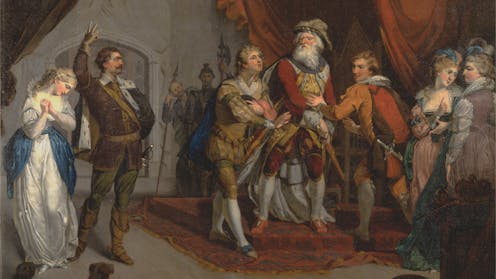
Rawpixel.com/Shutterstock

Un patriarca anciano y dispuesto a retirarse reúne a sus hijos para anunciarles la distribución de su legado, fruto de años de trabajo y sacrificio. Después de una vida de esfuerzos planea transferir sus negocios a sus descendientes, convencido de que no solo mantendrán su legado, sino que también lo llevarán a nuevas alturas.

En su mente, esta decisión es una extensión natural de sus propios valores: respeto por la tradición, equidad y un sentido de deber hacia su familia. Sin embargo, comete una suposición crucial: cree que sus hijos comparten su visión y que aceptarán gustosamente lo que él ha dispuesto para ellos.

Para su sorpresa y consternación, una de sus hijas rechaza la herencia y, en lugar de aceptar la transferencia de los negocios, decide quedarse a cuidar de su padre enfermo. Atónito por su rechazo, el patriarca reacciona con furia y, en un ataque de despecho, le arrebata todo y la expulsa de la finca familiar.

Sucesiones: una tragedia shakesperiana

Así comienza “El rey Lear”, una de las tragedias más grandes de William Shakespeare. Sin embargo, este escenario dramático no se limita al teatro. De hecho, dinámicas similares ocurren con más frecuencia de lo que uno podría imaginar durante la planificación de la sucesión en muchas empresas familiares.

Cuando leí por primera vez me pareció desconcertante la reacción del rey Lear ante el rechazo de su hija Cordelia a recibir su parte del legado. ¿Cómo un padre podía malinterpretar tan completamente las intenciones de su hija? La generosidad desinteresada de Cordelia es confundida con ingratitud, un error que pone en marcha una cadena de eventos trágicos que llevan a la desesperación y caída de Lear.

Sus otras dos hijas, que simulaban mostrarle amor y respeto, lo abandonan cuando las necesita, dejándolo en la miseria y la soledad. Curiosamente, este tipo de malentendido no es infrecuente en el mundo de los negocios familiares. Un fundador puede ver el rechazo de un hijo de incorporarse al negocio familiar como una ofensa, un signo de deslealtad o de ingratitud.

Comprensión y respeto

Recuerdo a un joven que, tras concluir su posgrado en administración de empresas, decidió seguir una carrera en consultoría en lugar de unirse a la empresa familiar. Su padre no solo se opuso ferozmente a su elección sino que también trató de sabotearla disuadiendo a sus posibles empleadores.

En ese momento, no pude evitar pensar en cuánto reflejaba ese comportamiento el trágico error de Lear. El padre creía que actuaba en el mejor interés de su hijo, tal como Lear pensaba que dividir su reino era una sabia decisión. En ambos casos, la falta de conocimiento y comprensión de los deseos y aspiraciones de la siguiente generación condujo a un conflicto amargo y provocó daños a largo plazo.

La cuestión central en estas historias es que la sucesión no es solo una transacción de propiedad o de poder. Es más bien una transición profunda que requiere una comprensión y respeto profundos de las necesidades y aspiraciones de los miembros de la familia involucrados.

Las nociones de propiedad y gestión se confunden con demasiada frecuencia en los negocios familiares. Si bien traspasar el patrimonio familiar puede parecer una acción lógica, la verdadera pregunta es si la siguiente generación está lista –o incluso dispuesta– para asumir las responsabilidades que esto conlleva.

Idealmente, los herederos deben tener la autonomía suficiente para decidir si quieren combinar la propiedad con un rol activo en la gestión, o si prefieren dejar que dirijan el negocio otras personas, más competentes o interesadas. De manera similar, puede ser invaluable para la segunda y tercera generación de la familia ganar experiencia fuera del negocio familiar antes de tomar las riendas del mismo.

El bufón, consejero del rey

En “El rey Lear”, una de las figuras más llamativas es la del bufón, que se atreve a decir las verdades que nadie más osa decir. No se anda con rodeos y no le importa ofender al rey. Él es el único que ve las acciones equivocadas de Lear y señala la necedad de sus decisiones. Y aunque Lear escucha al bufón, está demasiado cegado por su propio orgullo y rabia como para hacerle caso.

De muchas maneras, el bufón funciona como el tipo de consejero que los grandes líderes –ya sean reyes o directores generales– deberían tener a su lado y que harían bien en escuchar. En la época de Lear, solo un bufón podía hablar a un rey con franqueza y sin miedo a represalias.

Afortunadamente, las organizaciones se han vuelto más abiertas y democráticas. Ya no es necesario que los consejeros finjan ser tontos para expresar lo que piensan. Aunque se podría argumentar que sigue siendo igual de raro tener el coraje necesario para decir a los poderosos las verdades incómodas.

Diálogo abierto y escucha activa

En la sucesión de las empresas familiares –como en la historia del rey Lear– es crucial evitar el error de suponer que la siguiente generación comparte automáticamente los mismos objetivos, valores y visión propios.

Así como la mala interpretación de Lear de las intenciones de Cordelia llevó a un desenlace catastrófico, no entablar un diálogo abierto y honesto con los herederos también puede conducir a relaciones rotas y al eventual colapso de un negocio familiar.

La lección aquí es simple pero poderosa: la planificación de la sucesión requiere más que simples documentos legales o transacciones financieras: se necesita inteligencia emocional, empatía y humildad para comprender los deseos y las aspiraciones de la siguiente generación.

Se sea un rey o un fundador de negocios, es vital recordar que el futuro del legado no va a depender solo de los deseos propios sino también de la disposición de los sucesores a llevarlo adelante, a su manera.


Una versión de este artículo se publicó en LinkedIn.

The Conversation

Santiago Iñiguez de Onzoño no recibe salario, ni ejerce labores de consultoría, ni posee acciones, ni recibe financiación de ninguna compañía u organización que pueda obtener beneficio de este artículo, y ha declarado carecer de vínculos relevantes más allá del cargo académico citado.

ref. El rey Lear y la sucesión en los negocios familiares – https://theconversation.com/el-rey-lear-y-la-sucesion-en-los-negocios-familiares-264240

Qué nos dicen las coquinas del Guadiana y el Guadalquivir sobre los microplásticos

Source: The Conversation – (in Spanish) – By Íñigo Donázar Aramendía, Investigador postdoctoral biología marina, Universidad de Cádiz

_Scrobicularia plana_ o coquina de fango. Saxifraga/ Fitis Sytske Dijksen, CC BY-NC-SA

La almeja Scrobicularia plana, conocida comúnmente como coquina de fango, es un molusco bivalvo de concha ovalada y frágil, de color grisáceo, y largos sifones, con los que se alimenta filtrando partículas del agua y del sedimento. Esta especie, muy apreciada en nuestra gastronomía, vive enterrada en los sedimentos blandos de marismas y estuarios –zonas de transición entre ríos y océanos, donde tienden a acumularse diversos contaminantes, incluidos los microplásticos–.

En un estudio colaborativo entre la Estación Biológica de Doñana, la Universidad de Sevilla y la Universidad de Roma III, nos propusimos investigar la presencia de microplásticos en esta especie, en los estuarios de los ríos Guadiana y Guadalquivir.

Coquina al microscopio

Primero, recogimos ejemplares en distintos puntos de ambos estuarios, desde la desembocadura hasta zonas más interiores. En el laboratorio, los tejidos blandos de las almejas fueron digeridos con una solución de peróxido de hidrógeno, que permite eliminar la materia orgánica sin dañar las partículas de plástico. El material resultante se filtró y se examinó al microscopio para identificar las partículas en función de su forma, color y tamaño.

Posteriormente, una parte de estas partículas se analizó mediante espectroscopía infrarroja (micro-FTIR), una técnica que permite confirmar con precisión su composición química y distinguir entre plásticos sintéticos, fibras de celulosa tratada u otros materiales.

Para garantizar la fiabilidad del análisis, se aplicaron protocolos de control de calidad que minimizaron posibles contaminaciones durante el procesamiento de las muestras.

Los resultados revelaron que, pese a las diferencias en la presión humana entre los estuarios del Guadiana y del Guadalquivir, las concentraciones de microplásticos en los bivalvos fueron similares.

Contaminación de largo alcance

Nuestro hallazgo sugiere que factores naturales, como la dinámica del agua por mareas o corrientes (hidrodinamismo) y las variaciones estacionales, podrían influir en el transporte y la acumulación de estos contaminantes, más allá de las fuentes locales.

Además, no se observó un gradiente claro en la contaminación de microplásticos a lo largo del curso de los estuarios, lo que indica que la proximidad a focos puntuales de contaminación no basta para explicar su distribución; es esencial considerar también los procesos naturales de dispersión y sedimentación.

Fallos en el tratamiento de aguas residuales

La mayoría de los microplásticos encontrados en ambos estuarios eran fibras oscuras, probablemente derivadas del lavado de ropa y de una deficiente filtración en las plantas de tratamiento de aguas residuales. Este tipo de microplásticos es especialmente abundante en ambientes acuáticos, ya que, por su forma y composición, tienden a flotar con mayor facilidad que otras partículas.

No obstante, los análisis sí revelaron diferencias en la composición de polímeros de microplásticos entre estuarios, siendo el tereftalato de polietileno (PET) y la celulosa pigmentada –presente en papeles y cartones, especialmente para embalajes y productos de higiene– más frecuentes en el Guadiana.

A pesar de estas diferencias, ambos estuarios presentaban contaminantes comunes como PET, celulosa, celofán, PVC, poliamidas y acrílicos, lo que refuerza la idea de una contaminación generalizada por estos materiales.

Almejas más grandes, menos contaminadas

Otro hallazgo relevante del estudio es que los individuos de menor tamaño contenían, en promedio, más partículas de microplásticos que los ejemplares más grandes. Esto sugiere que, a medida que crecen, las almejas podrían desarrollar mecanismos más eficaces para expulsar o evitar la acumulación de estas partículas.

El estudio demuestra que Scrobicularia plana, además de ser un reconocido bioindicador de contaminación por metales pesados, también podría desempeñar un papel clave en la detección de microplásticos en estos entornos. Debido a sus hábitos alimenticios y de vida, esta almeja podría reflejar condiciones ambientales tanto de la columna de agua como del sedimento, lo que la convierte en una herramienta especialmente útil para evaluar la contaminación.

Evaluar el riesgo para la salud

Es fundamental evaluar la acumulación de microplásticos en esta y en otras especies de bivalvos a largo plazo, no solo por su valor como bioindicadores, sino también por su posible papel como vectores de contaminantes hacia otros niveles tróficos, incluido el ser humano.

La coquina se recolecta habitualmente para el consumo. Por ello, resulta crucial investigar en mayor profundidad hasta qué punto los microplásticos pueden transferirse a lo largo de la cadena alimentaria y, con ellos, los contaminantes que pueden estar asociados. Más allá de los efectos directos sobre los organismos, la presencia de estos materiales podría alterar el equilibrio de las redes tróficas y favorecer procesos de biomagnificación, con potenciales consecuencias para la salud ambiental y humana.

The Conversation

Íñigo Donázar Aramendía no recibe salario, ni ejerce labores de consultoría, ni posee acciones, ni recibe financiación de ninguna compañía u organización que pueda obtener beneficio de este artículo, y ha declarado carecer de vínculos relevantes más allá del cargo académico citado.

ref. Qué nos dicen las coquinas del Guadiana y el Guadalquivir sobre los microplásticos – https://theconversation.com/que-nos-dicen-las-coquinas-del-guadiana-y-el-guadalquivir-sobre-los-microplasticos-262483

Voces ucranianas (I): testimonios desde exilio

Source: The Conversation – (in Spanish) – By Léna Georgeault, Directora del Grado en Relaciones Internacionales, Universidad Villanueva

Refugiados ucranianos esperan el tren en la ciudad polaca de Przemysl en junio de 2022, en los primeros meses de la guerra. rospoint/Shutterstock

“Crucé la frontera legalmente”, me dice Theodor* nada más sentarse, con las manos firmes sobre la mesa. No lo sabía todavía, pero todas mis entrevistas con hombres ucranianos en Polonia empezarían así: con una justificación.

Theodor llegó a Breslavia (Polonia) para estudiar apenas unos días antes de la invasión rusa, en febrero de 2022. Me explica que quizás no hubiese sido posible unos meses después. Al principio de la guerra, los estudiantes internacionales aún podían salir del país. Luego se endurecieron las normas, al comprobarse un uso masivo –y a menudo fraudulento– de esa vía para evitar el servicio militar obligatorio. “Quizás te salvó Dios”, le dijo su padre.

Fue Oksana* quien nos puso en contacto. Trabaja en la sede polaca de la Universidad Católica de Ucrania, que me había invitado a participar en un evento sobre su experiencia de la docencia en tiempos de guerra: un testimonio de compromiso y resiliencia.

Oksana abandonó Ucrania hace unos meses con su hija para reunirse con su marido. Insinúa que su presencia en Polonia no es del todo legal, pero no piensan volver. Le parece inasumible: dos semanas de entrenamiento y al frente, sin salida, salvo en un ataúd. Algunos de sus amigos se ofrecieron voluntarios al comienzo de la guerra, convencidos de que sería cuestión de meses. Ninguno volvió.

Como Oksana y su familia, muchos ucranianos eligieron el exilio. En mayo de 2025, la ONU estimaba en un millón el número de refugiados ucranianos en Polonia, un país de 37 millones de habitantes. Pero esa cifra podría estar muy por debajo de la realidad: no todos los desplazados se registran oficialmente al llegar. Y, desde luego, no todos comparten la misma experiencia del exilio.

Natalia*, estudiante ucraniana, reconoce que su experiencia fue muy distinta a la de muchos de sus compatriotas. Siempre había soñado con estudiar en el extranjero, y llegó a Breslavia con una beca, el apoyo de su universidad y alojamiento asegurado desde el primer día. Pero sabe que su caso no es representativo: “Para otros es mucho más difícil. Han perdido su casa, cambian de país, tienen que aprender un idioma desde cero… y ellos no lo han elegido.”

Kinga y Oleg dan comida y refugio

Los migrantes más vulnerables son atendidos por Kinga y Oleg, de la asociación Nomada. Al principio de la guerra, interrumpieron su labor principal para atender la emergencia humanitaria, proporcionando comida, ropa y refugio. Desde mayo de 2022, retomaron sus actividades habituales: además de brindar asesoramiento legal, operan un espacio comunitario donde las personas migrantes se reúnen, reciben educación sobre violencia motivada por prejuicio y talleres formativos. “Cubrir tantos aspectos hace difícil explicar exactamente a qué nos dedicamos”, comenta Kinga, las manos envueltas alrededor de una taza estampada con el lema de Nomada: No human is illegal (“Ningún ser humano es ilegal”).

Una de las dificultades más inmediatas es encontrar alojamiento. En las ciudades, los escasos pisos disponibles suelen estar saturados: varias familias comparten un mismo espacio hacinado, sin intimidad. En las zonas rurales, los retos son distintos: faltan guarderías y acceso a atención médica, un problema especialmente grave para las madres solteras y los ancianos que huyen de la guerra.

Pero el mayor problema es la incertidumbre, que lo enreda todo. Oleg desliza con voz queda un comentario sobre la laxitud con que Polonia aplica la Directiva de Protección Temporal (2001/55/CE), activada por la Unión Europea en marzo de 2022 tras la invasión rusa. El estatuto de refugiado se concede por períodos breves, sin garantías de renovación.

Si Varsovia declara segura una región de Ucrania, quienes provienen de ella pueden perder su protección, aunque ya no tengan casa ni familia a la que regresar. Esta inseguridad jurídica se suma a la incógnita sobre la duración de la guerra, y deja a muchos en suspenso. Sin saber si lo provisional se volverá permanente, los refugiados ucranianos oscilan entre el deseo de volver y la necesidad de reconstruir una vida estable donde están.

Ante ese limbo identitario, Artem, fundador de la Fundación Ucrania, se declara abiertamente antiasimilación y antiguetos. Ni convertirse en polaco, ni quedarse al margen de la sociedad. Artem me confía que se crió en una familia “muy soviética”, una experiencia que le dejó una aversión persistente por la uniformidad forzada. “Antes tenía esa visión infantil, ingenua, de ciudadano del mundo”, dice con una sonrisa irónica.

Sentirse ucraniano en Polonia

Pero fue al mudarse a Polonia cuando empezó a sentirse profundamente ucraniano. Por eso se dedica desde hace once años, con su fundación, a cultivar esa identidad dentro de la comunidad, organizando en Breslavia eventos con figuras destacadas de la escena artística y cómica ucraniana.

Para Kinga, ese tipo de encuentros son esenciales: “Ves a varios miles de personas que son de tu país y te das cuenta de que realmente viven en la misma ciudad que tú, que podéis cantar las mismas canciones, divertiros juntos… y entonces ya no te sientes tan solo, ni tan desconectado”.

Para algunos, esa comunidad sirve para recrear un microcosmos ucraniano mientras esperan el regreso, como en el caso de Natalia. “Todo el tiempo quiero volver a Ucrania… Como en casa, en ningún sitio”, afirma con entusiasmo.

Para otros, es sólo el eco persistente de una vida que saben que no retomarán. Esa certeza parece ir calando poco a poco en Ivan*, cuya hija estudia en la Universidad de Breslavia. “Mi sueño es que quiera volver a Ucrania. Pero cuanto más tiempo pasa… menos posible me parece.”

Se hace el silencio en el semisótano, donde se nos ha hecho de noche mientras conversábamos. Un silencio largo y espeso en la oscuridad que habla de un legado que se disuelve, de la desconexión entre un padre y una hija que ya no hablan el mismo idioma. La distancia entre generaciones, esta vez, no se mide en años, sino en fronteras que ya no se cruzan.


Los nombres marcados con asterisco han sido modificados para proteger la identidad de las personas entrevistadas.


The Conversation

Léna Georgeault no recibe salario, ni ejerce labores de consultoría, ni posee acciones, ni recibe financiación de ninguna compañía u organización que pueda obtener beneficio de este artículo, y ha declarado carecer de vínculos relevantes más allá del cargo académico citado.

ref. Voces ucranianas (I): testimonios desde exilio – https://theconversation.com/voces-ucranianas-i-testimonios-desde-exilio-259344

El cautiverio de Miguel de Cervantes en Argel: muchos mitos y pocas realidades

Source: The Conversation – (in Spanish) – By José Manuel Lucía Megías, Catedrático de Filología Románica, Universidad Complutense de Madrid

Julio Peña interpreta a Miguel de Cervantes en la última pelicula de Alejandro Amenábar, ‘El cautivo’, que narra los años que el autor pasó en Argel. FilmAffinity

Miguel de Cervantes fue un desconocido para sus contemporáneos, como la mayoría de los escritores de lo que conocemos como Siglo de Oro –en realidad, los siglos XVI y XVII, en los que la Monarquía Hispánica marcó el ritmo de su tiempo en la política, la economía, la ciencia y el arte–.

Cervantes no contó con un discípulo que al año siguiente de su muerte glosara de manera entusiasta su vida y su obra (como Lope de Vega y Pérez de Montalbán). Ni tampoco con un académico italiano que decidiera recordar los hechos gracias a un sobrino (como Quevedo y Pablo Antonio de Tarsia). Hubo que esperar más de un siglo después de su muerte para tener una primera biografía, la de Gregorio Mayans y Siscar al inicio de la edición inglesa del Quijote, publicada en Londres en 1738.

Y esos más de cien años que pasaron entre el fallecimiento del escritor y el relato de Mayans y Siscar, escrito sin conocer ningunos de los cientos de documentos de la época que han llegado hasta nosotros, explican muchos de los tópicos que aún hoy perduran en nuestro imaginario sobre la vida de Cervantes.

Si a esto le sumamos la visión romántica de los siglos XVIII y XIX, que ha impuesto la imagen de un Cervantes heroico y ejemplar, autor de la más grande obra literaria en lengua española, encabezada y casi limitada al Quijote, tenemos los ingredientes necesarios para aderezar el banquete de las ficciones alrededor de uno de los autores (y humanos) más complejos e interesantes del Siglo de Oro.

Y sin duda, los cinco años en que estuvo cautivo en Argel son uno de los episodios que han dado lugar a más mitos. ¿Por qué razón? Antes de adentrarnos en ellos –aprovechando el estreno de El cautivo, el último filme de Alejandro Amenábar–, es necesario conocer un poco más el Argel del siglo XVI, muy alejado de la imagen de la cárcel de alta seguridad que muchos se imaginan.

Tráiler de El cautivo, la nueva película de Alejandro Amenábar basada en los cinco años que Cervantes pasó en Argel.

Un error habitual: confundir los corsarios con los piratas

Miguel de Cervantes estuvo cautivo (es decir, raptado hasta se pagara su rescate) en Argel un lustro. Con 28 años se embarcó en Nápoles, en septiembre de 1575, y días después de hacerlo su nave fue capturada por corsarios argelinos delante de las costas catalanas. Como tantos otros miles y miles de cautivos por estos años, a partir de entonces su vida dependió del dinero y de su capacidad de conseguirlo.

Cuando hablamos de corsarios argelinos tenemos que olvidarnos de la imagen romántica del pirata, con su parche en un ojo, el loro en el hombro o una pata de palo, que ha terminado por triunfar gracias a las películas de Hollywood. Frente al pirata, cuya única ley es su deseo, el corso es un sistema económico cuidado hasta en sus más pequeños detalles. Los corsarios más famosos (y los que ahora nos interesan) son los argelinos.

El corso fue habitual en todo el Mediterráneo de la época –incluso en las costas cristianas–. Se basaba en el secuestro de personas por las que se pedía un rescate. En este sistema todo estaba reglamentado, desde los porcentajes de las ganancias (una parte para el rey de Argel, otra para el capitán, otras para los marineros, etc.) hasta el precio del rescate de los raptados, que pasaban a ser cautivos.

Pintura de Miguel de Cervantes frente a un hombre poderoso de Argel.
Cervantes en Argel, cuadro original de Antonio Muñoz Degrain, que se conserva en la Biblioteca Nacional de Madrid.
Hemeroteca Digital/Revista ‘La Esfera’

Y ese rescate marcaba su futuro: el de los más pobres (cautivos de almacén, que se ocupaban de las tareas necesarias para mantener Argel, desde ser galeotes a jardineros, albañiles o criados) y el de los “hombres graves”, por los que se pedían entre 300 y 500 escudos de oro, una pequeña fortuna para la época. Los primeros eran tratados como esclavos por sus amos; los segundos, como “objetos de lujo”, a los que había que preservar con vida, pues el rescate era la ganancia.

Miguel de Cervantes y su hermano Rodrigo, ambos soldados de los tercios italianos, consiguieron ser considerados “hombres graves”. Su precio fue de 500 y 300 ducados respectivamente.

Argel en el siglo XVI: una visión falsa en el tiempo

Para muchos, Argel, la ciudad en la que estuvo Cervantes con otros miles de cautivos, es lo más parecido a una cárcel de alta seguridad en el Mediterráneo.

Nada más lejos de la realidad. En el siglo XVI, Argel era una de las ciudades más cosmopolitas de todo el Mediterráneo. Su gobierno dependía de Estambul, siendo uno de los más codiciados por las cuantiosas ganancias que podían conseguir sus gobernadores.

Era asimismo una de las urbes más pobladas y, sobre todo, una de las más ricas, necesitada de productos de lujo y primera supervivencia. A su puerto no solo llegaban los barcos de los corsarios argelinos, sino también los de cientos de mercaderes de toda Europa y Estambul para ofrecer sus productos y poder hacer negocio. El dinero de los rescates terminaba siendo una fuente esencial para mantener la economía de la Europa cristiana.

Grabado de Argel realizado por Georg Braun en 1576.
Biblioteca Digital Hispánica, CC BY

¿De dónde procede esa imagen negativa, carcelaria, de sadismo de sus reyes y de atropello a los cristianos, que se ha convertido en un mito de mármol a lo largo de los siglos?

La fuente fundamental para conocer el trato recibido por los cristianos cautivos en Argel es la que conocemos como “literatura de cautivos”. En ella sobresale la obra de Antonio de Sosa, compañero del cautiverio de Miguel de Cervantes, Topografía e historia general de Argel, publicada en 1612.

La finalidad de estas historias era conmover al lector europeo para que ayudase con limosnas para la redención de los cautivos. Por ello ofrecen un relato desgarrador de sus vidas en tierras argelinas, teniendo que luchar contra dos grandes peligros: el reniego y la sodomía. Es decir, con la posibilidad de participar de la vida social otomana, en la que un esclavo podía llegar a convertirse en rey (así le sucedió a Hazán Bajá el veneciano, rey de Argel desde 1577 a 1580), y en la que las costumbres y posibilidades sexuales, en especial el amor entre hombres, podían disfrutarse a la luz del día.

Portada del libro Cervantes íntimo, con un dibujo de un hombre con barba, bigote, lechuguilla y pecho descubierto.
Portada de Cervantes íntimo, biografía del autor escrita por José Manuel Lucía, que se adentra en los mitos sobre los años del cautiverio de Cervantes en Argel.
Penguin Libros

Es en este contexto de movilidad social, de libertad sexual, de oportunidades económicas –siempre que uno renegara de la religión católica–, en una de las ciudades más cosmopolitas del Mediterráneo, donde hemos de situar los cinco años como cautivo de Miguel de Cervantes.

Cinco años en los que convivió con otra cultura, otra religión, otras costumbres… Y en los que demostró, una vez más, su capacidad para inventarse, para sobrevivir, para convertir sus experiencias biográficas en una particular visión del mundo, que luego supo plasmar en sus obras literarias, más allá y más acá del Quijote.

El Argel del cautiverio de Cervantes es un universo por desentrañar y por descubrir. Y lo es más allá de los brochazos míticos que se han impuesto en los últimos siglos, alentados por un mojigato siglo XIX y por una dictadura franquista de corte nacional-católica.


¿Quiere recibir más artículos como este? Suscríbase a Suplemento Cultural y reciba la actualidad cultural y una selección de los mejores artículos de historia, literatura, cine, arte o música, seleccionados por nuestra editora de Cultura Claudia Lorenzo.


The Conversation

José Manuel Lucía Megías no recibe salario, ni ejerce labores de consultoría, ni posee acciones, ni recibe financiación de ninguna compañía u organización que pueda obtener beneficio de este artículo, y ha declarado carecer de vínculos relevantes más allá del cargo académico citado.

ref. El cautiverio de Miguel de Cervantes en Argel: muchos mitos y pocas realidades – https://theconversation.com/el-cautiverio-de-miguel-de-cervantes-en-argel-muchos-mitos-y-pocas-realidades-261913

Reluctance to reach out to old friends is a common experience, but reconnecting can pay off

Source: The Conversation – Canada – By Kristina K. Castaneto, Ph.D. Candidate in Social Psychology, Simon Fraser University

Picture this: One day while drinking your morning coffee, you are reminded of a friend from your past. You have not spoken to this person in some time, but you remember them fondly and wonder how they are doing. You pick up your phone and start typing a message to say “hello!” only to delete the message before hitting send. Has something like this ever happened to you? If so, you are not alone.

Past research in our lab found that up to 90 per cent of people report having an “old friend” — a friend they care about but with whom they have lost touch. And while most people say they would like to reconnect with an old friend, only about 30 per cent are willing to send a message, even with favourable circumstances, such as when the relationship did not end on bad terms, people think their friend wants to hear from them or people have their old friend’s contact information.

This reluctance to reach out to old friends is puzzling because a large body of research demonstrates that social relationships are a strong predictor of health and happiness. Indeed, having a larger and more diverse social network is associated with greater well-being.

Writing notes

So what makes it more likely for someone to reach out to an old friend?

In our new research, we investigated this question in two ways. First, we examined what people express in a “reaching out” note to an old friend, and whether some content can predict which notes are sent. For instance, are people more likely to send a note with a greater focus on the past, present or future?

To find out, we analyzed more than 850 reaching-out notes that we had collected in prior studies. Importantly, all participants wrote their note with a specific old friend in mind and were given the opportunity to send their note, but participants could choose to opt out. This allowed us to investigate whether notes that were sent included different types of content compared to the notes that were not sent.

Each note was coded on over 20 theoretically relevant dimensions such as the length of the note, emotion and the presence or absence of personal memories. Specifically, 12 of these dimensions were analyzed by a computer software called Linguistic Inquiry Word Count (LIWC) that can easily and objectively capture information like word count, time-orientation (past, present or future) and the amount of positive and negative emotion.

In addition, a team of trained human coders evaluated each note. The human coding team focused on 13 more subjective and complex topics which can sometimes be hard for computers to grasp, including whether the author shared specific memories involving their old friend or whether the author took responsibility for the fading friendship.

a man looks at his smartphone
Reaching out to an old friend may help strengthen social networks.
(Sarah Brown/Unsplash), CC BY

Revealing information

After all of this, we still weren’t able to predict which notes were more likely to be sent. But our substantial coding efforts revealed many interesting things about the content of reaching out notes. For instance, messages to old friends were often positive and focused on the present.

We used statistical regression analyses to look at the relationships between the various note features and reaching out behaviour — only six were statistically significant. However, these significant relationships were were small and inconsistent across our two participant samples.

This suggests that the content of a reaching-out note may not predict who chooses to send their message and who does not.

Who reaches out

With little insight gleaned from the content of the reaching-out notes, we pivoted our focus to ask: Who is most likely to reach out to an old friend?

To explore this question, we recruited 312 participants on campus and in public spaces around the city to complete a survey. The questionnaire began by asking participants to identify an old friend. This old friend was someone who the participants cared about but had not spoken to for a long time, who they believed would want to hear from them and someone for whom they had contact information.

Then, participants answered a number of questions about themselves, including items about their happiness, loneliness, personality, friendship satisfaction and friendship beliefs.

Near the end of the survey, we asked participants if they were willing to reach out to their old friend, and then we gave them two minutes to draft a short note to the friend they previously identified. After the two minutes had ended, we asked participants if they sent their message to their old friend.

Similar to past research, 34.2 per cent of participants chose to reach out. And while some of the personality dimensions and other variables predicted how willing participants said they would be to reach out to an old friend, only one variable — “friendship resiliency” — predicted whether people sent their message to their old friend.

The concept of friendship resiliency refers to the belief that friendships can remain even after long periods of low interaction and is now something we are studying in our lab.

two older men hug
Friendship resiliency is the belief that friendships can remain, even after long periods of low interaction.
(Erika Giraud/Unsplash), CC BY

Take the leap

If the thought of an old friend crosses your mind again, don’t get too caught up on crafting the perfect message — just reach out!

For example, you could reach out when a cafe is playing a song that you both used to enjoy or you see a meme that reminds you of them, or just to say a simple “Hey, it’s been too long! How are you?”

Our findings illustrate that reluctance to reach out to old friends is not experienced by one type of person, nor do reaching-out notes that are sent follow one type of script.

Hesitancy to reach out to an old friend is a common experience, suggesting that most people may be capable of reaching out if they are willing to take the leap to do so. Realizing this could encourage people to feel like they are capable of making the first move to reconnect.

The Conversation

The authors do not work for, consult, own shares in or receive funding from any company or organisation that would benefit from this article, and have disclosed no relevant affiliations beyond their academic appointment.

ref. Reluctance to reach out to old friends is a common experience, but reconnecting can pay off – https://theconversation.com/reluctance-to-reach-out-to-old-friends-is-a-common-experience-but-reconnecting-can-pay-off-263079

New gun law protections target domestic violence, but real prevention must start earlier

Source: The Conversation – Canada – By Eden Hoffer, PhD Candidate, Faculty of Information and Media Studies & Faculty of Health Sciences, Western University

In Canada, having a gun in the home is one of the strongest predictors that intimate partner violence (IPV) will turn fatal.

Among intimate partner homicides, 62 per cent of cases involved shotguns and rifles, many of which were legally owned.

It’s clear that reforms to Canadian firearm laws are much needed. Victims of IPV are five times more likely to be killed in cases where a violent partner has access to a gun. Those numbers are even higher when the victim is a racialized woman or lives in a rural area.


Read more:
The latest mass shooting in Sault Ste. Marie highlights Ontario’s epidemic of gender-based violence


Bill C-21

Recognizing the lethal role firearms can play in IPV cases, the Canadian government has included specific measures in Bill C-21, its 2023 overhaul of firearm legislation, to expand restrictions and prohibitions related to IPV, family violence, gender-based violence and domestic violence.

These measures include “red flag” emergency prohibition orders, which allow courts to immediately remove firearms from anyone who may be a danger to themselves or others. Initial orders last up to 30 days, though courts can extend them if needed.

Additionally, since March 2025, officials known as chief firearms officers have been authorized to issue temporary licence suspensions for up to 30 days if an individual is considered a potential risk of harm, including in cases of domestic violence. During this suspension, they can keep their firearms, but cannot use, buy or import them.

While these amendments are a step in the right direction, they must be part of a broader, systemic shift in policy, practice and societal attitudes. Without comprehensive legislative and societal reforms to address IPV, the measures in Bill C-21 risk being little more than a bandage on a gaping wound.

Here are three reasons why Bill C-21’s firearm measures are necessary but will not be sufficient in ending the scourge of IPV:

1. IPV is already a crime

In Canada, IPV has long been criminalized under existing Criminal Code provisions, such as assault and assault with a weapon. Since the mid- to late 1980s, these offences have been primarily addressed through mandatory charging and “no-drop” prosecution policies, which aim to ensure IPV cases are pushed through the legal system — from charging to prosecution — so that perpetrators are brought to justice.

Nevertheless, IPV remains widespread in Canada, with police-reported incidents rising slightly in recent years and evidence indicating that criminalization alone has limited effectiveness in preventing abuse.

This suggests that simply adding new criminal consequences for IPV may have a little impact, because criminalization alone does not address the underlying causes or contributors to violence.

To truly tackle IPV, it must be recognized not only as a crime, but as a human rights violation, public health issue and deeply embedded societal problem.

2. IPV is significantly under-reported

It’s estimated about 80 per cent of spousal violence incidents in Canada are never reported to police.

This is often due to survivors’ fears of increased abuse from their partners if they report it, concerns about not being believed, awareness of the stigma IPV survivors often face, feelings of shame or a lack of trust in police.

As a result, many instances of IPV may never come to the attention of authorities, meaning the legal safeguards provided by Bill C-21 wouldn’t be triggered.

3. Other weapons will likely be used

Without broader reforms and supports, removing a perpetrator’s firearm or restricting access may not prevent fatal violence.

Proactive, systemic interventions that help survivors safely escape abuse before it escalates. Otherwise, even with firearm restrictions in place, perpetrators may obtain firearms illegally or resort to other lethal methods, such as strangulation, using blunt force or stabbing.

What to do?

Proactive policy and practice responses to IPV must reflect its severity and systemic nature, including the cyclical and escalating patterns that often characterize relationships marked by patterns of violence and control.

These reforms should include recognizing femicide as a distinct offence under the Criminal Code rather than treating it as murder or manslaughter.

Canada’s response should also be strengthened by formally acknowledging IPV as a national crisis, reflecting the urgency of the issue. Some provinces, such as Nova Scotia and New Brunswick, along with dozens of municipalities in Ontario, have taken the additional necessary step of declaring IPV an epidemic.

Additionally, survivors require trauma- and violence-informed supports, along with increased public awareness and sustained funding for critical services.

These include assistance navigating the legal system, access to safe and affordable housing, and financial support that enables survivors to leave abusive relationships before the violence escalates to a fatal level.

Crucially, policy reform and the creation of new policies in response to IPV must also address the heightened risk period following separation when women who have experienced IPV are especially vulnerable.

Research shows that women face a 75 per cent increase in violence when attempting to leave an abusive relationship — and remain at elevated risk for up to two years afterward.

This underscores the urgent need for long-term, adequately resourced social support systems that consistently prioritize survivor safety and well-being — not only at the point where violence may claim lives.

The Conversation

Eden Hoffer does not work for, consult, own shares in or receive funding from any company or organisation that would benefit from this article, and has disclosed no relevant affiliations beyond their academic appointment.

ref. New gun law protections target domestic violence, but real prevention must start earlier – https://theconversation.com/new-gun-law-protections-target-domestic-violence-but-real-prevention-must-start-earlier-263390

Baltic states have torn down their Soviet past following Ukraine war – a photo essay

Source: The Conversation – UK – By Kristina van Kuyck, PhD Candidate in the School of History and Geography, Dublin City University

As I was photographing Soviet-era monuments in the Lithuanian port city of Klaipėda in May 2022, I heard a woman shout at me: “You are a young Nazi who wants to remove and destroy everything”. She was triggered by my presence, taking notes around the monuments and carrying a couple of professional-looking cameras.

I was in the middle of a research trip to document Soviet monuments in the Baltic states. The past few years had seen some former Soviet bloc countries debate the future of these monuments, many of which were originally erected to mark the role of Soviet forces in the second world war.

Russia’s full-scale invasion of Ukraine, which began earlier in 2022, had accelerated these debates in Lithuania, Latvia and Estonia. The debates were not new – questions about the presence of Soviet-era monuments had surfaced for decades. But concrete actions to remove them had been rare due to divided opinions over their meaning.

For many people in the Baltic states, Soviet-era monuments embodied occupation and served as reminders of repression imposed by a foreign regime. Yet for others, especially within ethnic Russian communities, they continued to represent Soviet wartime victories and functioned as sites of commemoration. Legal restrictions also prevented their removal, as many monuments were formally protected by law.

These monuments, once largely unquestioned features of the public space, were now being reevaluated against the backdrop of a new war and growing geopolitical tensions. And, as Russia’s aggression in Ukraine continued, the debates over the fate of these monuments intensified. This culminated in direct action.

The first actions often began with acts of vandalism. Monuments, including one in Ukmergė, Lithuania, which had been unveiled in 1982 to mark the 60th anniversary of the Soviet Union, were defaced. They were frequently covered in blue and yellow paint, reflecting the scale of public anger at the war and solidarity with Ukraine.

These spontaneous interventions were soon followed by more formal, centralised action. Local municipalities held meetings to discuss relocating monuments, while some took steps to remove them altogether.

Lithuania’s parliament passed a so-called desovietisation law in late 2022. This banned the commemoration or representation of people, symbols and information promoting totalitarian or authoritarian regimes and their ideologies. Latvia’s parliament also passed a law providing for the dismantling of sites glorifying Soviet and Nazi regimes.

Where decision-making stalled and legal restrictions prevented official action, local communities often took matters into their own hands. In some cases, such as in the Lituanian city of Telšiai, Soviet war memorials were covered with garbage bags. This deprived them of their symbolic presence without physically removing them.

Public opinion on the removal of monuments was far from uniform. A 2022 survey revealed that 50% of the Lithuanian population supported the removal of Soviet monuments (21% “fully support” and 29% “rather agree”), while 35% opposed it. Nevertheless, Soviet monuments rapidly disappeared from public spaces in the Baltic states following Russia’s invasion, leaving a visible mark on the urban landscape.

Documenting these monuments in 2022 proved challenging as removals were progressing at a rapid pace. In some cases, monuments were taken down without prior public notice to avoid disruption. Sometimes, I arrived at sites just too late. One of the first memorials to fall in Latvia was located in the south-eastern city of Jēkabpils, which I reached when dismantling was already underway.

In a few of the more high-profile cases, such as the monument in the Latvian capital Riga – to the Liberators of Soviet Latvia and Riga from German Fascist Invaders – sites were fenced off and monitored by police.

Three years on

Visiting the same sites in the summer of 2025, I observed several patterns in the changing urban landscape. Some former monument sites still bore traces of the Soviet legacy, leaving noticeable voids in the public space. In Ukmergė, for example, the monument itself had been removed, but the surrounding site remained largely untouched. In Narva, an Estonian border city, the obelisk topped with a five-pointed star had been taken down. This left only an empty plinth as a silent reminder of what once stood there.

Such cases are common in peripheral towns, where removals often occurred without follow-up plans or allocated funds for redevelopment.

Even after removal, some former sites continued to serve as places of memory for local Russian-speaking communities. In Vilnius, the capital of Lithuania, a monument comprised of six granite statues of Soviet soldiers was taken down in late December 2022.

Yet the site still provides space for commemorations, with a lit candle and a wreath placed where the monument once stood. The statues have been relocated to Grūtas Park, a Soviet sculpture park in Lithuania, where they are placed in the parking lot with a lantern symbolising an eternal flame.

Other former Soviet-era monument sites reveal striking transformations. A park in Pärnu, south-western Estonia, and a public square in Daugavpils, south-eastern Latvia, now show no visible traces of the monuments that once occupied a space in the urban landscape there.

I had to return twice, circling the park in Pärnu, before I could recognise the spot where I had photographed the monument three years earlier. These monuments have slipped into a silent oblivion.

Many of the Soviet-era monuments were originally placed within military cemeteries where Soviet soldiers were buried. Usually, these cemeteries were maintained by Russian embassies. However, with the monuments gone – and their role as visual propaganda erased – many of the sites have been left neglected. Their upkeep is faltering alongside their symbolic power.

The war in Ukraine has triggered striking changes in the urban landscape across the Baltic states. These changes reveal not a uniform story of erasure but rather a fragmented landscape of memory.

My photographs show how some places are marked by absences, others are inscribed with different meanings, and many have fallen into neglect.

The Conversation

Kristina van Kuyck receives funding from the Irish Research Council Government of Ireland Postgraduate Scholarship
Project ID: GOIPG/2023/3686

ref. Baltic states have torn down their Soviet past following Ukraine war – a photo essay – https://theconversation.com/baltic-states-have-torn-down-their-soviet-past-following-ukraine-war-a-photo-essay-263468

In the Salish Sea, tensions surrounding killer whales and salmon are about more than just fishing

Source: The Conversation – Canada – By Lauren Eckert, Postdoctoral research fellow, Centre for Indigenous Fisheries, University of British Columbia

In the waters of the Salish Sea, endangered southern resident killer whales and the struggling Chinook salmon they depend on are at the centre of one of Canada’s most visible conservation conflicts.

Since 2019, Canada’s Department of Fisheries and Oceans (DFO) has implemented area-based restrictions on Chinook fishing and other protective measures to safeguard the killer whales and their primary food source. These measures include area-based recreational fishing closures, interim sanctuary zones and voluntary seasonal vessel slowdown areas.

These prescriptions have stoked tensions, particularly between two groups often cast as distinct and opposed: recreational fishers and conservationists. The issue has spilled beyond local waters, surfacing on national media and even influencing fishery debates in Alaska.

Conflicts like this one aren’t unique. They surround — and can influence — many modern environmental, social and policy decisions. At their best, conflicts can bring attention to unmet community needs, spark dialogue and repair fractured relationships. But misunderstood or mishandled, they can harden divisions that stymie evidence-based decision-making, deepening distrust.

Too often in North America, default management approaches inflame such conflict rather than resolve it. But new collaborative research colleagues and I have conducted suggests pathways to transform conflict surrounding killer whale protection and Chinook fishing — and may offer broader insight for effectively managing conflicts around conservation efforts.

Our research

We surveyed more than 700 British Columbians, many of whom self-identified as either recreational fishers or conservationists. What we learned from participants has challenged dominant conflict narratives: nearly one-third of those who identified primarily as conservationists also identified as anglers, and almost half of anglers also identified as conservationists.

In other words, many of the people involved in this conflict occupy both sides of public debates, and bear multifaceted identities as they relate to whales, salmon and policy.

Yet public and political discourse about environmental management often reduces conflict to binary opposing opinions: do we support temporary recreational fishing restrictions to protect killer whales, or do we oppose them?

Humans — and conflicts — are not that simple, and treating them as such may be destructive to people, communities, policies and marine ecosystems.

Decades of research show, for instance, that conflicts are shaped not just by opinions, but by deeply rooted psychological characteristics, including identities, beliefs and values. These aspects of conflict are not trivial; they are central to how people make sense of their world, their relationships, and themselves.

We used surveys to measure beliefs, opinions and identity affiliations to assess not only opinions on killer whales and salmon management, but also the identities and beliefs beneath them.

What we found

We found that both anglers and those supporting conservation strongly tied their sense of self and well-being to the environment, as well as to their chosen identity groups (recreational fishers or conservationists). Despite disagreements, both groups valued salmon and whales — and both expressed frustration with DFO’s current management approaches.

We also identified the deeper roots of conflict between participants. Recreational fishers and conservationists differed in what they believed the fundamental priority of environmental management should be.

Conservationist respondents were more likely to emphasize protecting species regardless of their utility to humans, while recreational fishers expressed mixed views. Some agreed with that stance but others felt environmental management should prioritize species that benefit people directly or strike a balance between conservation and use.

One of our most striking findings came from comparing survey responses with social media commentary. When people responded to our survey, they tended to share their views with minimal inflammatory language. In contrast, data we extracted from Facebook discussions about the same issues contained far more hostile sentiments. Online, we saw more frequent expressions of anger, distrust, victimization and even violent rhetoric.

This isn’t surprising. Substantial research has identified that social media can amplify emotional responses, reward polarization and reduce the social cost of hostility. This finding indicates a potential negative feedback loop: when media and online discourse reduce complex conflicts to binary arguments, they risk entrenching people in “us versus them” stances.

Transforming conflict

Given these insights, we propose a fundamental reorientation of how DFO and other managers approach such conflict. Rather than treating conflicts as problems to be managed through superficial consultations or short-term negotiations, decision-makers must address their roots.

This means adopting transformative approaches to addressing conflict: acknowledging deeper social roots of conflict, investing in long-term dialogue and relationship-building and creating space for mutual understanding even without consensus. Research shows it is much easier to find solutions when stakeholders feel seen, included and mutually-respected.

These solutions require time, resources, trained mediators and a commitment to engage with emotional and identity-based dimensions of conflict. They also offer something that current approaches have not: the possibility of durable, locally supported solutions, improved trust and collaboration.

Visualization of conflict and transformation in the case of SRKW and Chinook management in the Salish Sea. An iceberg represents the levels-of-conflict, with visible and below-the-surface (more deeply rooted) elements of conflict identified.
(Author provided)

Conflict transformation approaches have proven effective in ameliorating entrenched conflicts between stakeholders over cougar management in the United States, elephant management in Mozambique and elsewhere.

As climate change, habitat degradation and species decline intensify, so will conflicts over environmental decisions. These conflicts may appear to be about salmon, whales or other species, but many of them are ultimately about people: their livelihoods, values, relationships, identities and visions for the future.

Accordingly, we need to stop treating conflict as an inconvenience to be managed or avoided. Instead, policymakers can leverage complex, entrenched conflicts as opportunities to identify the deeper roots of what’s at stake and create dialogue and decision-making frameworks that acknowledge people’s lived realities while building the trust needed for coexistence.

The Conversation

Lauren Eckert has previously been affiliated with Raincoast Conservation Foundation. This research was supported by a Canada Vanier Graduate Scholarship and a Raincoast Conservation Fellowship.

ref. In the Salish Sea, tensions surrounding killer whales and salmon are about more than just fishing – https://theconversation.com/in-the-salish-sea-tensions-surrounding-killer-whales-and-salmon-are-about-more-than-just-fishing-263524

Bilingualism possible in people with rare genetic condition that normally limits speech

Source: The Conversation – UK – By Rebecca Day, PhD Candidate in Bilingualism (Linguistics), Bangor University

shutterstock Vitalii Vodolazskyi/Shutterstock

Rett syndrome is a rare neurological condition that disrupts physical and linguistic development, affecting around one in 10,000 women and even fewer men. For decades, researchers assumed that people with the condition, many of whom lose speech during early childhood, were confined to a limited range of cognitive and linguistic abilities.

But in Wales, where many families are bilingual and speak both English and Welsh at home, our recent case study showed that access to two languages can help the linguistic growth of someone with the speech-limiting developmental condition Rett syndrome.

Rett syndrome is caused by a random genetic mutation in the MECP2 gene on the X chromosome in most cases. It usually manifests in early childhood, with most people showing typical development before a loss of skills at around 18 months of age. This process, known as “regression”, can lead to a loss of speech, mobility and the ability to use hands purposefully.

There are different variants of Rett syndrome. People with the preserved speech variant may keep the ability to produce speech after regression, develop speech after regression, or develop speech without experiencing regression.

As well as movement and language difficulties, Rett syndrome can also cause scoliosis (curvature of the spine), seizures, irregular heart rhythm, digestive issues and breathing problems. The severity of symptoms varies widely from person to person.

To communicate, many rely on methods such as body language, communication books, symbol charts, or high-tech devices to express themselves. These tools and techniques, known as augmentative and alternative communication, may replace or supplement speech.

While these strategies can be transformative, guidelines on communication methods for Rett syndrome have been based on research involving monolingual people. Until now, the possibility of bilingualism in people with Rett syndrome had not been formally explored.

Early researchers assumed that people with Rett syndrome would be limited to a cognitive ability of an 18-month-old, since this is the point where many experience a regression in skills. Recent research has started to show that this is not the case, with studies concluding that people with Rett syndrome show a range of cognitive abilities.

Bilingualism

In Wales, where 17.8% of the population speaks Welsh, bilingualism is a way of life for many families. Research has consistently shown that growing up with two languages benefits cognitive and linguistic development. For example, bilingual children often demonstrate more efficient thinking skills compared to their monolingual peers.

But parents of children with developmental conditions, like Rett syndrome, are sometimes advised to stick to one language. It often stems from a belief that bilingual exposure might hinder progress or cause confusion. This belief persists despite growing evidence to the contrary.

Studies involving children with other developmental conditions, such as Down’s syndrome, have shown that bilingualism is achievable and does not negatively affect cognitive or linguistic abilities. Moreover, depriving a child from a bilingual family of one of their languages can have social and cultural consequences, cutting them off from a vital part of their identity and community.

Chain of figurines connected by white lines.
Language is a gateway to connection, culture and identity.
Andrii Yalanskyi/Shutterstock

Prior to our research, there had been no studies focusing on bilingual development in Rett syndrome. Families had shared accounts indicating that many people with Rett syndrome are growing up in bilingual environments. Some research has explored parental perspectives on bilingualism in Rett syndrome, providing valuable insights into the cultural considerations of bilingualism.

Without research documenting language development itself, though, we had no evidence to show what is possible, or how to best support a bilingual person with Rett syndrome.

Our study focused on a teenage girl with the preserved speech variant of Rett syndrome. She had been exposed to both English and Welsh from birth. Using parental questionnaires, standardised tests and vocabulary diaries, we tracked her understanding and production of words in both languages over three years.

We found she could understand and produce words in both English and Welsh. Her vocabulary in both languages also expanded over time. This challenges long-held assumptions about the linguistic limitations of Rett syndrome. It also opens the door to new possibilities for supporting bilingualism in similar cases.


Read more:
Why being bilingual can open doors for children with developmental disabilities, not close them


We are preparing to publish further findings that reinforce these results and explore how bilingualism can be supported in people with Rett syndrome. Future research will be crucial to developing evidence-based recommendations for bilingual language development. This may help to ensure that every person with Rett syndrome has the opportunity to reach their full potential.

Language is more than a tool for communication. It’s a gateway to connection, culture and identity. For people with Rett syndrome, the ability to engage with multiple languages can enrich their lives and strengthen their bonds with their families and communities. Our study is a small but important step towards understanding and supporting this potential.

The Conversation

Rebecca Day works with the charity Rett UK. She has received funding from the Economic and Social Research Council’s Welsh Graduate School for the Social Sciences.

Eirini Sanoudaki and Sarah Cooper do not work for, consult, own shares in or receive funding from any company or organisation that would benefit from this article, and have disclosed no relevant affiliations beyond their academic appointment.

ref. Bilingualism possible in people with rare genetic condition that normally limits speech – https://theconversation.com/bilingualism-possible-in-people-with-rare-genetic-condition-that-normally-limits-speech-244858

Different day, same problems? Why it’s a bad idea to rush into solutions for tricky work issues

Source: The Conversation – UK – By Poornika Ananth, Assistant Professor in Strategy and Organisations, School of Management, University of Bath

Nicoleta Ionescu/Shutterstock

Regardless of how you spent the final days of summer, the return to work can mean coming face to face once again with any sticky problems you pushed aside previously. Now though, they’re looming and demanding fresh solutions.

This may be a good time to try something different. Whatever the nature of the problems that come with your job – production or staffing issues, a difficult product launch or disgruntled customers – instead of focusing all your efforts on coming up with solutions, it may be helpful to spend some time understanding the problems better.

As Albert Einstein is quoted as saying: “If I had an hour to solve a problem, I’d spend 55 minutes thinking about the problem and five minutes thinking about solutions.” But why is it so important not to simply jump to quick solutions?

Similarly, scholars who have studied problem-solving have found that workplace problems can be complex and ill-defined, and their underlying causes can be difficult to determine at first glance. In these circumstances, the solutions we develop are based on surface-level understanding or assumptions. As such, they may do little to address the true problem – and could even create new issues further down the line.

For instance, if you are struggling with a tricky product launch, it might look like the issue is a flaw in the item. But in reality the problem could be weak distribution or poor marketing reach. Clearly, focusing on the product design in this case is unlikely to resolve the issue.

To get through this, it is important to develop a more thorough understanding of the problem. This is known in management studies as a “problem representation” – that is, a simplified model of the problem, including the symptoms that characterise it as well as the root causes that explain it.

My colleagues and I have reviewed the literature on problem representations. Our research, published in the Journal of Management, has found key insights about how best they can iron out problems in the workplace.

Take your time

The first and most important insight is that representing complex problems is not a one-time event, but a process that involves three distinct but overlapping steps. The first step is “problem finding”, which involves recognising early or obvious symptoms that point to the existence of a problem. This could be missing a production deadline or a sales target, for example.

The second step is “problem framing”, which involves looking out for and identifying other related symptoms. During this step you may find that in addition to missing your production deadlines your colleagues have also been working more overtime. Or it could be that you are missing sales targets despite positive reactions from focus group tests of the product. To get this more comprehensive picture you will probably need the perspectives of people at various levels of the organisation.

The final stage is “problem formulating”, which is where you work out the root causes that underlie and explain the symptoms. Here workers need to truly understand why they arose in the first place. The key is to ensure that the root causes really do represent the spectrum of symptoms. This may help you understand, for instance, that production issues are due to problems with a new part. Alternatively, a sales issue could be because the marketing channels are not reaching the right consumers.

Our review also found that a problem representation can help with solving the issue in more than one way. Crucially, getting to the root causes can give rise to solutions that target the problem more effectively and completely. It can also enhance the creativity behind problem-solving by getting people to break away from obvious, surface-level answers.

An additional benefit that we uncovered in our review is that developing a problem representation can help with implementing the solutions. We found that there are two reasons for this.

group of bored, inattentive colleagues in a work meeting.
Make sure disengaged colleagues don’t derail the process.
fizkes/Shutterstock

First, there may be fewer snags or glitches that arise during implementation if the solution is more considered, and more relevant to the problem. Second, people may be more invested in implementing the solution if they have taken the time to consider the problem and believe that the solution can address it for them in the long term.

But our review also revealed that representing a problem can be a challenging process, fraught with traps and issues of its own. These could be participants not properly understanding the process, cognitive biases – particularly solution bias (the tendency to jump to solutions) – and bad actors who claim to be engaged in the process but end up derailing it.

However, if done well, this process can really help you tackle problems and develop and implement genuinely useful solutions. And this approach can help with problems at all kinds of workplaces and in all kinds of roles.

The Conversation

Poornika Ananth does not work for, consult, own shares in or receive funding from any company or organisation that would benefit from this article, and has disclosed no relevant affiliations beyond their academic appointment.

ref. Different day, same problems? Why it’s a bad idea to rush into solutions for tricky work issues – https://theconversation.com/different-day-same-problems-why-its-a-bad-idea-to-rush-into-solutions-for-tricky-work-issues-264090