Philly’s Puerto Rican Day Parade embodies strength of the mainland’s second-largest Boricua community

Source: The Conversation – USA (2) – By Héctor M. Varela Rios, Assistant Professor of Theology, Villanova University

The annual parade is an expression of love for both Puerto Rico and Philadelphia. Photo courtesy of VISIT PHILADELPHIA®

Picture this: Puerto Rican flags, referred to as “la monoestrellada” – the “one-starred” – everywhere you look. The smell of alcapurrias – if you can find them! – and other savory fritters wafting through the air. The rhythms of salsa or Bad Bunny’s trap reggaetón blasting out of speakers. Almost everybody speaking some version of “españinglés,” or Spanglish.

Philadelphia’s annual Puerto Rican Day Parade is chaotic, loud and hard not to love.

On Sunday, Sept. 28, 2025, Boricuas from across the city will converge on the Benjamin Franklin Parkway to celebrate their heritage and traditions with music, dance, floats, food and general revelry. Boricuas is how Puerto Ricans often refer to themselves, as the island was called Borikén by the Indigenous Taínos before the Spaniards arrived in 1493.

I am Puerto Rican, island-born and raised. I currently live in Philadelphia and teach theology and Latin American studies at Villanova University. I call myself a “diasporican” in contrast to what I would call “islandricans,” or Puerto Ricans who live on the island.

For me and many other diasporicans, being Puerto Rican embodies mixed feelings, or ambivalence, about identity and history. For example, I am both Boricua and Latino, de allá y de aquí. I grew up colonized yet now live in the colonizing country. I think in two languages. I eat arroz, habichuelas y carne guisada and also hamburgers. I like Guns N’ Roses and Calle 13. I perform my Puerto-Ricanness in myriad ways.

Puerto Rican identity is complicated

Parades are public demonstrations of community identity.

In the Puerto Rican Day Parade, symbols and traditions are used to communicate what being Puerto Rican is and means, be it islander or diasporic, historical or contemporary, and traditional or alternative. But these symbols and traditions are open to interpretation.

Waving la monoestrellada can mean pride in Puerto Rican culture and history. Or value and respect for the island as a U.S. territory. Or even a call for independence from the U.S. Meanwhile, parade dancers perform Indigenous, Spanish and Afro Caribbean dances for what is ostensibly a singular ethnicity.

Being Puerto Rican means different things to different people while being strictly policed by those same people.

For example, Boricuas are often bilingual, yet their proficiency in Spanish and English can be used to measure just how Puerto Rican they are. On the one hand, Spanish is the most common language spoken at home for islandricans, yet English is more prevalent among diasporicans. On the other hand, speaking Spanish with a gringo accent could mark you as an outsider on the island, while not speaking English at all could be seen as backward in the diaspora.

It’s complicated.

The power of ‘arraigo’

Cultural anthropologist Yarimar Bonilla captured this ambivalence in her July 20, 2025, op-ed in the Puerto Rican newspaper El Nuevo Día.

Bonilla discusses Bad Bunny’s 30-date concert residency in Puerto Rico. Bad Bunny chose the island for his shows, adjusted dates and pricing to favor islandricans, and art-directed the concert to highlight Puerto Rican history and culture.

“[The concert] is not simply an unprecedented artistic achievement; it is also a political statement,” Bonilla writes. “Arraigo (rootedness) is not what binds [Puerto Ricans], but what empowers us.” Another version of the op-ed was published in English in The New York Times on Aug. 3, 2025.

According to Bonilla, Bad Bunny’s concert series can be interpreted as “a gesture of love” – love for Puerto Rico, no matter where you are, and for all Puerto Ricans, no matter how they are.

Man in beige clothes and hunting cap sings while surrounded by circle of men wearing straw hats and some playing drums
Bad Bunny performs during the opening night of his No Me Quiero Ir De Aqui (I Don’t Want to Leave Here) residency in San Juan.
Kevin Mazur via Getty Images

Empowerment in spite of mixed feelings

Puerto Ricans have been a vibrant presence in Philadelphia for more than a century.

According to U.S. Census Bureau data, a little over half of all Latinos in the city are Puerto Rican. Indeed, Philly is home to the second-largest Puerto Rican community outside Puerto Rico, after New York City. Philly diasporicans certainly are a proud local bastion of Latin identity, and the parade is an outpouring of civic love via flags, music, dance and food.

And yet, diasporican arraigo also demonstrates precarity. Just look at poverty, violence and health and housing inequities that have long afflicted Fairhill and West Kensington, two adjacent and heavily Puerto Rican neighborhoods in North Philadelphia.

In a world marked by migration and disparate allegiances to empire, identity must also embrace uncertainty. Islandrican becomes diasporican, vice versa and back again. Cultural traditions shift, and the relationship to political power doesn’t stay still.

Historically, the U.S.’s treatment of Puerto Ricans both on the island and in the diaspora has fluctuated. On the one hand, it has been significantly helpful, as when island economic conditions improved through U.S. intervention after World War II, although those improvements came at a significant cost to local farming. On the other hand, it has been outright abusive, as when researchers unethically tested birth control pills on the island in the 1950s, or when the federal government undertook a slow and mismanaged response after Hurricane Maria devastated Puerto Rico in 2017.

The parade, then, demonstrates a rootedness that is complex and plural, entangled with shifting identities and complicated histories. It is a gesture of a love that straddles comfort and grief. Is not love like that always, with mixed feelings?

As a recent diasporican, I am still working through how to best express my love for my community and the city. I am a proud Boricua, arraigado (rooted) in the island and in Philly. And you will find me among the throngs attending the 2025 parade, wearing my one-starred beret, eating an alcapurria and dancing salsa quite awfully.

Read more of our stories about Philadelphia.

The Conversation

Héctor M. Varela Rios does not work for, consult, own shares in or receive funding from any company or organization that would benefit from this article, and has disclosed no relevant affiliations beyond their academic appointment.

ref. Philly’s Puerto Rican Day Parade embodies strength of the mainland’s second-largest Boricua community – https://theconversation.com/phillys-puerto-rican-day-parade-embodies-strength-of-the-mainlands-second-largest-boricua-community-261993

Inutiles, polluants… faut-il interdire les filtres de cigarettes ?

Source: The Conversation – in French – By Jonathan Livingstone-Banks, Lecturer & Senior Researcher in Evidence-Based Healthcare, University of Oxford

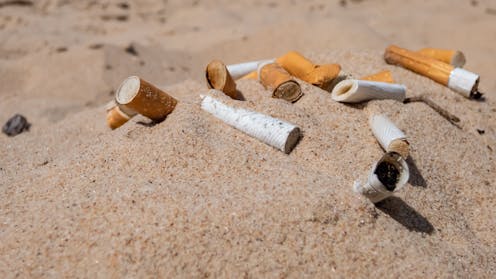
Chaque année, dans le monde, 4 500 milliards de mégots sont jetés dans la rue et dans la nature. Kristine Rad/Shutterstock

On les croit protecteurs, mais ils ne minimisent en rien les dommages du tabac. Les filtres des cigarettes auraient même potentiellement des effets nocifs pour la santé, en plus, bien sûr, d’être une immense source de pollution.


Les filtres à cigarette ont commencé à inonder le marché dans les années 1950, officiellement pour rendre le tabagisme moins nocif. Face à l’inquiétude croissante du public concernant le cancer du poumon et d’autres maladies liées au tabagisme, l’industrie du tabac a réagi non pas en rendant les cigarettes plus sûres, mais en les faisant paraître plus sûres. Les filtres étaient l’innovation parfaite, non pas pour la santé, mais pour les relations publiques.

Plus de soixante-dix ans plus tard, nous savons en effet que les filtres ne réduisent pas les risques. En réalité, ils peuvent même aggraver certains risques. En adoucissant la fumée et en facilitant son inhalation profonde, les filtres peuvent, de fait, augmenter le risque de cancer du poumon. Au début des années 1950, un type de filtre très populaire contenait même de l’amiante. Malgré cela, la plupart des fumeurs d’aujourd’hui continuent de croire que les filtres rendent les cigarettes plus sûres.

Au-delà des risques pour la santé, les filtres de cigarettes sont aussi une catastrophe pour l’environnement. Ils sont faits d’un plastique appelé « acétate de cellulose ». Ils ne se dégradent pas naturellement, mais se désagrègent en microplastiques qui polluent nos rivières et nos océans.

Et ils sont nombreux. Les mégots de cigarette sont les déchets les plus répandus sur la planète. On estime que 4,5 billions (soit 4 500 milliards) sont jetés chaque année, et environ 800 000 tonnes de ces déchets plastiques se retrouvent dans l’environnement annuellement. Alors que, à travers le monde, de nombreuses législations ont restreint l’utilisation d’autres plastiques à usage unique, tels que les bouteilles, les sacs et les pailles, les filtres de cigarettes ont largement échappé à cette réglementation.

Sous pression, certaines entreprises de tabac commercialisent désormais des filtres dits « biodégradables », fabriqués à partir de nouveaux matériaux. Mais il s’agit là d’une fausse solution. Même ces filtres n’offrent aucun avantage pour la santé et continuent de polluer les écosystèmes. Ils servent les intérêts de l’industrie du tabac, en créant une illusion de responsabilité environnementale tout en entretenant la fausse perception que les filtres eux-mêmes sont inoffensifs ou nécessaires.

Interdire pour dissiper les illusions

Les filtres de cigarettes font ainsi partie des plastiques à usage unique les plus nocifs encore en circulation dans le monde. Et contrairement à de nombreux autres polluants, ils ne remplissent aucune fonction essentielle. Or la Convention-cadre de l’Organisation mondiale de la santé (OMS) pour la lutte antitabac déconseille déjà les mesures qui entretiennent l’idée d’une réduction des risques, et les filtres de cigarettes entrent clairement dans cette catégorie.

L’interdiction des filtres de cigarettes permettrait de dissiper l’illusion de sécurité qu’ils véhiculent. Elle pourrait également réduire la prévalence du tabagisme, car les cigarettes non filtrées sont généralement plus âpres et moins agréables au goût. Une telle mesure, enfin, éliminerait également l’une des sources les plus répandues de pollution plastique, évitant ainsi la production de centaines de milliers de tonnes de déchets plastiques chaque année.

Si nous pouvons interdire les pailles en plastique, comme les pays membres de l’Union européenne l’ont fait en 2021, nous pouvons certainement interdire les filtres de cigarettes. En fait, cela a déjà été fait. Le comté de Santa Cruz (Californie) a voté en faveur de l’interdiction des filtres à cigarette en 2024.

Des personnes ramassent des déchets sur une plage. L’une d’elles tient une poignée de pailles en plastique
Les pailles en plastique sont interdites, alors pourquoi pas les filtres des cigarettes ?
David Pereiras/Shutterstock

Il est grand temps de lui emboîter le pas, alors que la pollution plastique est dans l’esprit de tout le monde, après la tenue, en août dernier, à Genève (Suisse), d’un sommet où les dirigeants mondiaux ont tâché de négocier ce qui pourrait devenir le premier traité juridiquement contraignant des Nations unies traitant de la pollution plastique, de la production à l’élimination. Le projet de traité constitue une occasion rare de s’attaquer aux causes profondes des déchets plastiques à l’échelle mondiale.

Le projet actuel du traité mentionne les filtres de cigarettes. Ils sont évoqués dans l’annexe X, une catégorie qui concerne les restrictions volontaires ou obligatoires, ce qui laisse la possibilité de continuer à les utiliser, y compris les filtres dits « écologiques », et n’impose pas leur élimination totale. Si tous les filtres de cigarettes (et pas seulement ceux en plastique) étaient répertoriés dans l’annexe Y, ils seraient soumis à une interdiction totale et obligatoire.

Les négociations du mois d’août n’ont pas permis d’aboutir à un accord final, et elles se poursuivront à une date ultérieure, ce qui signifie qu’il est encore temps d’agir.

Des groupes de défense de la santé et de l’environnement, notamment l’Organisation mondiale de la santé, Action on Smoking and Health et Stop Tobacco Pollution Alliance, réclament des engagements fermes en matière de filtres de cigarettes. Qu’est-ce qui pourrait être plus ferme qu’une interdiction pure et simple ?

Certes, la prohibition des filtres ne mettra pas fin au tabagisme du jour au lendemain et n’éliminera pas la pollution plastique. Mais ce serait une mesure significative et symbolique pour aligner les objectifs environnementaux et sanitaires. Elle permettrait de retirer du marché un produit nocif et trompeur, de réduire la pollution et de rendre les cigarettes plus honnêtes.

The Conversation

Jonathan Livingstone-Banks a reçu des financements du US National Institutes of Health (NIH), du National Institute for Health and Care Research (NIHR) et du Cancer Research UK (CRUK).

Jamie Hartmann-Boyce a reçu des financements de groupes impliqués dans la lutte contre le tabagisme, notamment Truth Initiative, Cancer Research UK et la Food and Drug Administration américaine.

ref. Inutiles, polluants… faut-il interdire les filtres de cigarettes ? – https://theconversation.com/inutiles-polluants-faut-il-interdire-les-filtres-de-cigarettes-264618

How cancer misinformation exploits the way we think

Source: The Conversation – UK – By Andy Levy, Reader in Psychology, Edge Hill University

Lenar Nigmatullin/Shutterstock.com

When TV personality Danielle Lloyd was diagnosed with melanoma earlier this year, she faced not only the anxiety of cancer treatment but also a disturbing reality: influencers spreading dangerous misinformation about sun protection.

After having a suspicious mole removed and awaiting results from a second biopsy, the 41-year-old has become an outspoken critic of social media personalities who lie to their followers about sunscreen products.

Cancer misinformation can have serious consequences, such as leading people to delay or even avoid life-saving treatments, and eroding trust in medical professionals.

Misinformation spreads easily because it taps into people’s emotions and reasoning about health. When faced with a cancer diagnosis, fear, confusion and a desire for control can drive people to seek remedies that offer hope – even if that hope comes from sources that don’t use credible evidence.

Misinformation often offers simple, comforting answers, while real medicine is complex, uncertain and sometimes difficult to accept. Fake cancer claims can feel convincing because they seem to eliminate the uncertainty about whether treatment will work, or if the cancer will return.

Social media platforms can amplify false cancer messages, making them appear more credible or popular than they actually are. This is compounded by the role of influencers and unqualified practitioners, who often profit from promoting pseudoscience.

Message framing plays a significant role in the spread of cancer misinformation. Studies show that we respond more to messages focused on what we might lose rather than what we could gain. This happens because of loss aversion – our psychological tendency to fear losses more than we value equivalent gains.

Cancer messages that highlight potential losses – such as health, comfort or life itself – feel more urgent, personal and motivating than those focusing on potential gains, like improved survival or better quality of life.

Cancer misinformation that emphasises scary losses can be especially persuasive because it taps directly into people’s fears. False claims warning about dangerous side-effects of treatments, hidden risks or conspiracies suggesting doctors want to harm patients strike a deep emotional chord. This makes people more likely to believe and share these messages, even when untrue.

For instance, misinformation claiming that chemotherapy doesn’t cure cancer – and instead causes it to spread and shortens your life – can trigger fear and resistance to treatment.

In contrast, truthful messages stating that chemotherapy can have side-effects, but it greatly increases your chance of survival, may seem less frightening and, sometimes, less compelling because they focus on potential gains rather than losses.

Cancer is an emotionally charged and high-stakes diagnosis. Loss-framed misinformation spreads quickly and can influence decisions that can put people at risk. Even when presented with correct medical information, the emotional weight of loss-informed cancer misinformation can override rational thought.

The psychological principle that bad is stronger than good (also called “negativity bias”) explains why cancer misinformation that triggers fear or anxiety often sticks more than hopeful, fact-based messages. Negative information simply has a bigger impact on how we think and feel in times of uncertainty.

Prebunking

One effective way to help people avoid falling victim to cancer misinformation is through prebunking. This approach involves teaching people how to spot and resist false or misleading messages before they take hold.

In particular, it focuses on exposing the tactics people use to deceive or scare others, so they’re easier to recognise and dismiss when encountered.

The tactics people can learn to look out for – and prebunk – include fear-mongering, where messages exaggerate risks to induce anxiety, or promises of miraculous cures lacking scientific evidence and misleading statistics that distort facts to support false claims.


Read more:
Can a game stop vaccine misinformation? This one just might


By being aware of these common techniques, people with cancer can become more vigilant and sceptical when they encounter suspicious information online, on social media, or through word of mouth.

Research suggests that when people understand the strategies behind misinformation, they are less likely to accept false claims at face value. This increased awareness empowers them to pause, question and seek reliable advice before making important decisions about their health.

Prebunking explained.

In the end, prebunking can help people with cancer stay protected against misinformation. It allows them to navigate through the emotionally charged cancer claims out there and make smarter, safer choices.

Scientist Carl Sagan said it best: “Extraordinary claims require extraordinary evidence.” It’s a straightforward idea, but a powerful one — especially when it comes to pushing back against cancer misinformation.

Sagan’s quote is a reminder to slow down, think critically and ask for solid evidence — especially when cancer information sounds unbelievable, too perfect, or just plain alarming.

The Conversation

Andy Levy does not work for, consult, own shares in or receive funding from any company or organisation that would benefit from this article, and has disclosed no relevant affiliations beyond their academic appointment.

ref. How cancer misinformation exploits the way we think – https://theconversation.com/how-cancer-misinformation-exploits-the-way-we-think-260236

George Washington’s worries are coming true

Source: The Conversation – USA – By Robert A. Strong, Emeritus Professor of Politics, Washington and Lee University; Senior Fellow, Miller Center, University of Virginia

President George Washington warned in his farewell address about partisanship, sectionalism, excessive public debt, ambitious leaders and a poorly informed public. Mike Rosiana/iStock via Getty Images Plus

The United States will celebrate the 250th anniversary of the Declaration of Independence, the country’s founding document, in 2026. Twenty years later, America will celebrate the 250th anniversary of President George Washington’s Farewell Address, which was published on Sept. 19, 1796.

The two documents are the bookends of the American Revolution. That revolution began with the inspirational language of Thomas Jefferson, who wrote much of the Declaration of Independence; it ended with somber warnings from Washington, the nation’s first president.

After chairing the Constitutional Convention in Philadelphia and serving eight years as president, Washington announced in a newspaper essay that he would not seek another term and would return to his home in Mount Vernon. The essay was later known as the “Farewell Address.”

Washington began his essay by observing that “choice and prudence invite me to quit the political scene” while “patriotism does not forbid it.” The new nation would be fine without his continued service.

But Washington’s confidence in the general health of the union was tempered by his worries about dangers that lay ahead – worries that seem startlingly contemporary and relevant 229 years later.

A yellowed newspaper page from 1796 that contains George Washington's Farewell Address.
George Washington’s Farewell Address printed in the Virginia Herald with this introduction: ‘The importance of the following Address has induced us to lay it before our Readers; as early as possible, for their gratification.’
Courtesy of The Mount Vernon Ladies’ Association, CC BY

Focus on the domestic

Washington’s Farewell Address is famous for the admonitions “to steer clear of permanent alliances” and to resist the temptation to “entangle our peace and prosperity in the toils of European ambition.”

Important as those warnings are, they are not the main topic of Washington’s message.

During the four decades that I have taught the Farewell Address in classes on American government, I have urged my students to set aside the familiar issues of foreign policy and isolationism and to read the address for what it says about the domestic challenges confronting America.

Those challenges included partisanship, parochialism, excessive public debt, ambitious leaders who could come to power playing off our differences, and a poorly informed public who might sacrifice their own liberties to find relief from divisive politics.

Washington’s address lacks Jefferson’s idealism about equality and inalienable rights. Instead, it offers the realistic assessment that Americans are sometimes foolish and make costly political mistakes.

Rule by ‘ambitious, and unprincipled men’

Partisanship is the primary problem for the American republic, according to Washington.

“It serves always to distract the public councils and enfeeble the public administration,” he wrote. Partisanship “agitates the community with ill founded jealousies and false alarms, kindles the animosity of one part against another, foments occasionally riot and insurrection” and can open “the door to foreign influence and corruption.”

Though political parties, Washington observes, “may now and then answer popular ends,” they can also become “potent engines by which cunning, ambitious, and unprincipled men will be enabled to subvert the power of the people and to usurp for themselves the reins of government, destroying afterwards the very engines which have lifted them to unjust dominion.”

Washington’s fear that partisanship could lead to destruction of the Constitution and to the rule of “ambitious, and unprincipled men” was so important to him that he felt compelled to repeat the warning more than once in the Farewell Address.

A man in old-fashioned clothing, standing on a pedestal surrounded by elegant sculptures and images.
Portrait of George Washington standing on a pedestal holding his Farewell Address in his right hand, 1798.
From the New York Public Library, photo by Smith Collection/Gado/Getty Images

Politicians’ ‘elevation on the ruins of public liberty’

The second time Washington takes it up, he says that “the disorders and miseries” of partisanship may “gradually incline the minds of men to seek security and repose in the absolute power of an individual.”

Sooner or later, he writes, “the chief of some prevailing faction, more able or more fortunate than his competitors, turns this disposition to the purposes of his own elevation on the ruins of public liberty.”

So why not outlaw parties and rein in the dangers of partisanship?

Washington observes that this is not possible. The spirit of party “is inseparable from our nature, having its root in the strongest passions of the human mind.”

Americans naturally collect themselves into groups, factions, interests and parties because that’s what human beings do. It’s easier to be connected to local communities, states or regions of the country than to a large and diverse nation; even though that large and diverse nation is, by Washington’s assessment, essential to the security and success of all.

The central problem in American politics is not a matter of devious leaders, foreign intrigue or sectional rivalries — things that will always exist.

The problem, Washington warned, lies with the people.

Excesses of partisanship

By their nature, people divide themselves into groups and then, if not careful, find those divisions used and abused by individual leaders, foreign interests and “artful and enterprising” minorities.

Political parties are dangerous, but can’t be eliminated. According to some people, Washington observes, the competition between parties might serve as a check on the powers of government.

“Within certain limits,” Washington acknowledges, “this is probably true.” But even if the battles between political parties sometimes have a useful purpose, Washington worried about the excesses of partisanship.

Partisanship is like “a fire not to be quenched, it demands a uniform vigilance to prevent its bursting into a flame, lest instead of warming it should consume.”

Where is America today? Warmed by the fires of partisanship or consumed by the bursting of flames? George Washington suggested that provocative question more than two centuries ago on Sept. 19, 1796. It’s still worth asking.

The Conversation

Robert A. Strong does not work for, consult, own shares in or receive funding from any company or organization that would benefit from this article, and has disclosed no relevant affiliations beyond their academic appointment.

ref. George Washington’s worries are coming true – https://theconversation.com/george-washingtons-worries-are-coming-true-263240

Boosting timber harvesting in national forests while cutting public oversight won’t solve America’s wildfire problem

Source: The Conversation – USA (2) – By Courtney Schultz, Professor of Forest and Natural Resource Policy, Colorado State University

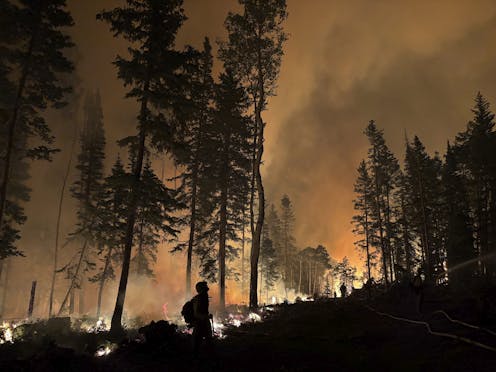
Firefighters work to get a forest fire near Monroe, Utah, under control on July 24, 2025. Hurricane Valley Fire District via AP

The western United States is facing another destructive wildfire season, with more acres burned in Colorado alone in 2025 than in the past four years combined. If global warming continues on its current trajectory, the amount of forest area burned each year could double or even triple by midcentury.

In other words, more fire is coming, more often.

As U.S. forests burn, Congress and federal agencies are asking an important question: What role should federal land management play in reducing fire risk?

About two-thirds of forest land in the western U.S. is publicly owned, with the majority of it managed by federal agencies such as the U.S. Forest Service and Bureau of Land Management. These public lands are treasured for recreation, wildlife habitat, timber production and open space. They are also where many of today’s largest fires burn.

A map showing forests and other lands shows much of the western U.S. forest land is public, while most of that in the East is privately owned.
Forest ownership in the United States.
Mark D. Nelson, Greg C. Liknes, and Brett J. Butler/U.S. Forest Service

Historically, lightning- and human-ignited fires kept forests less dense and reduced forest litter and undergrowth that can easily burn. While some controlled burning continues today, the violent displacement of Native people, criminalization of Indigenous fire stewardship and more than a century of federal fire suppression have largely removed fire as a critical ecological process in fire-prone forests, leaving fuel to accumulate.

When those forests burn today, the result is often hotter and more severe fires that elude any attempt at control. And rising global temperatures are raising the risk.

Several of the current federal proposals for managing fire risk focus on increasing timber harvesting on federal lands as a solution. They also propose speeding up approvals for those projects by limiting environmental reviews and public oversight.

As experts in fire science and policy, we see some useful ideas in the proposed solutions, but also reasons for concern.

While cutting trees can help reduce the severity of future fires, it has to include thinning in the right places to make a difference. Without oversight and public involvement, increasing logging could skip areas with low-value trees that need thinning and miss opportunities for more effective fire risk-reduction work.

Harvesting timber to reduce fire risk

President Donald Trump cited wildfire risk in his March 2025 executive order calling for “an immediate expansion of American timber production.” And the U.S. Forest Service followed with a commitment to increase timber sales on federal land by 25% over the next four years.

Trump, federal officials and members of Congress who are advancing legislation such as the Fix Our Forests Act have also called for speeding up approval of timber-harvesting projects by reducing public comment periods on proposals, limiting environmental analyses of the plans and curtailing the ability of groups to sue to block or change the projects in court.

Tall stacks of logs left beside a road after a forest thinning project in the Arizona mountains.
Stacks of logs from a forest-thinning project in the Coconino National Forest of northern Arizona in 2020 wait to be processed for firewood.
AP Photo/Paul Davenport

These proposals are often framed as pragmatic solutions to clear the way for action to reduce fire risk faster. The urgency is real, and this argument can seem intuitive. No one wants burdensome processes to stand in the way of reducing wildfire damage. But it’s important to take a hard look at the problem and real solutions.

Environmental reviews aren’t the problem

Research shows that environmental reviews are rarely the main barrier to forest projects aimed at reducing fire risk.

The bigger obstacles are the shrinking of the federal forest workforce over the past two decades, the low commercial value of the small trees and brush that need to be removed, and the lack of contractors, processing facilities and markets for low-value wood.

Data from the U.S. Forest Service supports these conclusions.

Between 2005 and 2018, over 82% of the U.S. Forest Service’s land management projects were approved using categorical exclusions. Categorical exclusions allow agencies to skip environmental assessments and are the fastest and least burdensome form of National Environmental Policy Act, or NEPA, review, with limited analysis or opportunity for public involvement.

Less than 1% of the projects were challenged in court, and most of those challenges targeted the largest and most complex projects, where public oversight and analysis are critical to getting it right on the ground, such as large mining operations or forest management projects that would cover hundreds of thousands of acres.

An analysis of the bulk of U.S. Forest Service land management projects between 2009 and 2021 found that complying with NEPA took between 7% and 21% of the projects’ timelines, often shorter than the timelines for issuing contracts.

Some degree of planning, intergovernmental coordination and public involvement must happen before starting a fuel-reduction project to know where the work is appropriate and necessary.

Why reviews and public oversight matter

What would be lost if environmental-analysis and public-involvement requirements were curtailed?

Oversight helps ensure that projects happen where they are needed to reduce fire risk. Without that, political and economic pressures can lead to more forest thinning in locations where there are mills and valuable timber – rather than in the areas where wildfire risk is higher but the trees aren’t as valuable.

Firefighters in gear and helmets feed brush into a portable woodchipper in the woods.
U.S. Forest Service crew members put branches into a wood chipper in the Tahoe National Forest near Downieville, Calif., in June 2023. Forest thinning can help reduce the risks of destructive fires.
AP Photo/Godofredo A. Vásquez

Environmental review and public comment are among the few tools communities have to shape fire-mitigation projects.

These processes also ensure that the work doesn’t stop at federal boundaries. And they help partners, such as community organizations, state agencies and local fire departments, plan and work together.

Oversight doesn’t just protect the environment — it enables funding and partnerships, safeguards communities and builds shared ownership of adapting to fire.

Solutions that work

So, what can Congress and the federal government do to reduce fire risk to communities? The answer starts with investing in forest management and projects that can reduce fire risk.

Joint projects involving communities and state, tribal and local agencies, like those under the Collaborative Forest Landscape Restoration Program, build partnerships to reduce fire risk across large landscapes and lower the risk of fire spreading to homes and federal wildlands. The Good Neighbor Authority, created in 2001, enables federal agencies to contract with states, counties and tribes to provide forest management work on federal lands.

Yet federal funding for state, tribal and private forest management is on the chopping block. Wildfire risk and the capacity to address the challenge are going in opposite directions.

A firefighter carries a long tree branch. The air is smoky behind the crew.
Firefighters of the Inyo Hotshots team clear brush as the Garnet Fire burns on Aug. 26, 2025, in Fresno County, Calif. When brush and dead wood build up, fires have more fuel to burn hotter and be more destructive and harder to control.
AP Photo/Ethan Swope

The Wildland Fire Mitigation and Management Commission, a bipartisan group of fire professionals, scientists, tribes, land managers and local officials, recently released recommendations for improving fire management that call for greater funding and collaboration at all levels to reduce the fire risk. The report emphasizes the importance of proactive solutions driven by local communities, shared decision-making and better use of prescribed fire. Achieving these goals will require sustained collaboration across jurisdictions and sectors, with communities engaged as full partners in the process.

Forest and fire management are complex jobs. It is reasonable to yearn for quick solutions to the wildfire crisis, but it’s important that any fixes lead to lasting progress. Deregulation and disinvestment may ultimately exacerbate wildfire risk.

The Conversation

Courtney Schultz received funding from the US Forest Service, Joint Fire Science Program, and National Science Foundation for her research on US forest policy

Forrest Fleischman received funding from the US National Science Foundation and the US Forest Service for his research on national forest policy.

Tony Cheng receives funding appropriated through the Southwest Forest Health and Wildfire Prevention Act administered by the from the US Forest Service and the National Science Foundation for applied research on forest and wildfire resiliency. In addition to his university faculty appointment, he is a senior fellow with the Pinchot Institute for Conservation.

ref. Boosting timber harvesting in national forests while cutting public oversight won’t solve America’s wildfire problem – https://theconversation.com/boosting-timber-harvesting-in-national-forests-while-cutting-public-oversight-wont-solve-americas-wildfire-problem-264097

Complying with Trump administration’s attack on DEI could get employers into legal trouble

Source: The Conversation – USA (2) – By Deborah Widiss, Professor of Law and John F. Kimberling Chair, Indiana University

Discrimination is illegal in the U.S. Afif Ahsan/Stock via Getty Images Plus

Since returning to office, President Donald Trump and his administration have waged a war on diversity, equity and inclusion efforts, including those of private businesses across the country.

Trump fired the first shot on Jan. 21, 2025 – his first full day back in office – when he signed an executive order that denounced DEI as “immoral” and “illegal discrimination.” The order claimed that, under such policies, “hardworking Americans” were being “shut out of opportunities because of their race or sex.”

A week later, Trump dismissed two Democratic commissioners of the Equal Employment Opportunity Commission, the federal agency that helps enforce workplace antidiscrimination laws. Because these officials were forced out years before their terms expired, their firing was arguably illegal. But it allowed Trump to dramatically shift the commission’s focus.

Andrea Lucas, named by Trump to be the agency’s acting chair, quickly announced a commitment to what she described as “rooting out unlawful DEI-motivated race and sex discrimination.”

Since then, there’s been a steady drumbeat of anti-DEI statements from the administration and its supporters. But these proclamations fail to explain what is illegal about so-called “illegal DEI.” As professors and workplace law experts, we recognize that companies may have trouble distinguishing political rhetoric from legal obligations. That’s why we recently co-founded The Legal DEI Project, a free resource providing clear information on DEI policies and practices and the law.

Chilling effect

The Trump administration’s statements about DEI are generally broad in scope and short on details, leading to an overall chilling effect on private businesses.

For example, one of Trump’s executive orders suggests, without evidence, that corporations and other large employers have replaced a commitment to “hard work” with an “unlawful, corrosive, and pernicious identity-based spoils system.” It then instructs federal agencies to compile lists of the businesses and other institutions they believe are the “most egregious and discriminatory DEI practitioners” and pursue compliance investigations against them.

Some employers have responded to this threat by aggressively slashing their programs and personnel dedicated to ensuring fairness at work. That reaction is understandable. But it is also deeply mistaken, as many tried-and-true practices that effectively reduce workplace discrimination are getting caught in a dragnet of anti-DEI fever.

Employers who act rashly by simply abandoning all efforts related to diversity and inclusion may actually increase rather than decrease their risk of being sued by workers who believe they have experienced discrimination – the overwhelming majority of whom are members of racial minority groups rather than white workers.

Employers could also miss out on the benefits that can flow from diverse workforces, such as higher profits, innovation and creativity.

DEI isn’t illegal, but discrimination is

DEI is a generic, umbrella term used to describe organizational efforts to treat all people fairly. While such initiatives have been around for decades, the DEI label became common only in the past decade as the Black Lives Matter and #MeToo movements highlighted pervasive discrimination and inequality in U.S. society.

The term, however, has no legal meaning. DEI is instead a collection of aspirational objectives used as corporate or institutional branding, which Trump has turned into a straw man by repeatedly condemning what he alleges is “illegal DEI.”

Workplaces are governed by antidiscrimination laws. Those laws prohibit employers from making hiring or other personnel decisions based on workers’ protected characteristics such as race, sex or religion, just as they did before DEI programs became popular.

This means that employers generally cannot implement preferences for, or limit opportunities to, employees based on these traits. If DEI programs include improper preferences, those preferences were illegal before Trump took office. They should be discontinued.

Importantly, U.S. employment law requires employers to do more than just punish individual employees who make biased decisions or harass co-workers. Employers must also, at a minimum, take proactive steps to prevent harassment and reasonably accommodate workers with qualifying disabilities, pregnancy-related limitations and religious needs.

Employers must also make sure that workplace policies, such as how duties are assigned and how pay is set, are fair and unbiased.

A black and white photo of President Lyndon B. Johnson signing a document surrounded by many men.
President Lyndon B. Johnson signs the Civil Rights Act into law on July 2, 1964, while many people, including the Rev. Martin Luther King Jr., stand behind him and observe.
LBJ Library photo by Cecil Stoughton

Congress, not the president, creates laws

Multiple laws enacted by Congress, from the 1964 Civil Rights Act to the 2022 Pregnant Workers Fairness Act, and decades of court decisions interpreting those laws, have established the rules that govern the workplace today. The Trump administration has no authority to single-handedly change these laws – or the regulations implementing them – just by issuing executive orders.

What those orders primarily do is set presidential agendas. Presidents use them to direct some actions of the federal government and its contractors, but executive orders do not directly apply to most private companies, nonprofits or other nongovernmental employers.

Although the EEOC may follow Trump’s directives, it cannot change or ignore federal laws. In fact, recent EEOC actions – such as spontaneously demanding information from law firms about their diversity initiatives – that arguably exceed its authority are being challenged in court.

Employees, not the government, file most complaints

When employers attempt to conform to the Trump administration’s political goals by removing any guardrails they’ve put in place to prevent discrimination, they put themselves at greater legal risk. That is because most discrimination lawsuits are brought by employees, not the federal government.

On average, individual employees file 60,000 to 90,000 EEOC charges annually and tens of thousands of lawsuits arising from those charges in federal and state court. By comparison, the EEOC has brought fewer than 150 cases annually in recent years.

While the EEOC’s attack on DEI programs may encourage more white workers to file discrimination claims, the data shows that most actionable discrimination continues to be experienced by women and members of racial minority groups, not by white people.

And that problem is likely to be exacerbated by employers dismantling their DEI programs.

Not a zero-sum game

Just as employing a diverse workforce is perfectly legal, so too is taking action to value diverse perspectives and leadership.

Adopting inclusive recruitment strategies, structuring decision-making practices to be more objective, and assessing job descriptions to focus on tasks and qualifications can all help reduce the influence of racial, gender, religious or other biases in hiring and promotion. Offering training and mentoring, providing support to meet the needs of all workers, and creating environments that promote excellence and belonging can ensure equal access to opportunities for all employees.

Adopting such human resource practices also makes good business sense. When properly executed, they reduce the risk of workplace discrimination lawsuits and liability by flagging any potential discrimination and allowing employers to proactively address it.

Antidiscrimination law has always required employers to judge all workers fairly and on the basis of their merit. Making changes that aim to reduce bias against some employees is not an act of discrimination against white men or others who do not belong to a group that has historically experienced discrimination.

Those changes instead help employers comply with antidiscrimination laws – the same laws that have governed U.S. workplaces for over 60 years and continue to do so today.

The Conversation

Deborah Widiss serves on advisory boards for the Indiana Community Action Poverty Institute.

Rachel Arnow Richman receives funding from the University of Florida for academic research purposes.

Stephanie Bornstein and Tristin Green do not work for, consult, own shares in or receive funding from any company or organization that would benefit from this article, and have disclosed no relevant affiliations beyond their academic appointment.

ref. Complying with Trump administration’s attack on DEI could get employers into legal trouble – https://theconversation.com/complying-with-trump-administrations-attack-on-dei-could-get-employers-into-legal-trouble-262915

50 years ago, NASA sent 2 spacecraft to search for life on Mars – the Viking missions’ findings are still discussed today

Source: The Conversation – USA – By Joel S. Levine, Research Professor of Applied Science, William & Mary

NASA’s Viking landers were the first spacecraft to successfully touch down on the surface of Mars. NASA/JPL-Caltech via AP

Finding life beyond the Earth would be a major scientific discovery with significant implications for all areas of science and human thought. Yet, only one direct search for extraterrestrial life has ever been conducted.

A poster showing the Viking craft parachuting to the Martian surface.
The Viking missions landed on the Martian surface using parachutes. This diagram shows each stage the spacecraft went through as they landed.
NASA

The NASA Viking spacecraft, which landed on Mars, conducted this search in the summer of 1976. Viking consisted of two twin orbiters and landers, with experimental chambers in the landers to conduct three biology experiments.

Over the past half-century, the measurements made during the Viking biology experiments have been the subject of many discussions, analyses and speculation. Today, scientists are still discussing the results of these experiments in an attempt to answer the age-old question of whether there is life beyond the Earth.

The year 2025 marks 50 years since the two spacecraft launched, three weeks apart. These landers achieved humankind’s first two successful soft landings of operational and functioning spacecraft on the surface of another planet.

I’m an atmospheric scientist who worked on the Viking missions in the 1970s at the NASA Langley Research Center, the laboratory that developed and managed the highly successful Viking missions. The Viking missions’ scientific discoveries painted a new picture of Mars’ atmosphere, surface and planetary history.

The Viking 1 lander reached the surface of Mars after being ejected from a spacecraft and deploying a parachute.

Launching and landing the Viking spacecraft

The two Viking spacecraft both consisted of an orbiter and a lander. Viking 1 entered Mars’ orbit on June 19, 1976, and successfully landed on the surface on July 20, 1976, which was also the seventh anniversary of the first human Moon landing. Viking 2 followed, landing on Sept. 3, 1976, at a site farther to the northwest.

Viking wasn’t just looking for life.

These crafts contained equipment to take pictures; map heat energy, wind and weather; study the chemical composition of the surface, dust and atmosphere; and collect and analyze soil samples.

Measurements that Viking took of the atmosphere suggested that Mars used to have a much denser atmosphere but over time lost it. It also observed that the wind picks up tiny dust particles, blowing them into the atmosphere. This process colors the planet’s sky permanently pink.

A diagram of the Viking landers, with each instrument labeled.
All the instruments found on the Viking landers.
NASA

The Viking landers also discovered that at any location on Mars, the atmosphere’s surface pressure varies seasonally. The planet has frozen north and south poles, like on Earth. At the Martian poles in summer, the frozen carbon dioxide sublimates – transforming from a frozen solid to a gas – and then at the winter pole condenses back into a frozen solid.

That process, unique to Mars, affects the atmospheric pressure by changing how much carbon dioxide is in gas form instead of solid form over the planet’s surface.

Biology experiments

Each of the three Viking biology experiments brought a soil sample from the Martian surface into a sterilized test chamber and exposed the sample to a different nutrient under different atmospheric conditions.

Researchers wanted to find out whether the soil contained microorganisms, so they monitored how the atmosphere in the chamber changed. Metabolic processes – like breathing – from organisms consuming the nutrient would change the chemical composition of the chamber’s atmosphere.

Depending on the experiment, the nutrient contained either carbon, carbon dioxide or carbon monoxide – all of which were radioactive. With radioactive samples, researchers could track the level of radioactivity in the chamber to see if metabolic reactions in the soil samples were raising or lowering it.

For all three experiments, the researchers could use radio commands to heat up the test chamber, which was still inside the Viking spacecraft on Mars. This would destroy any potential microorganisms in the soil and stop the production of any gases they were creating metabolically.

In the first experiment, called the carbon assimilation experiment or the pyrolytic release experiment, the researchers simulated the Martian atmosphere in one of Viking’s test chambers. They filled the chamber with gases such as carbon dioxide and carbon monoxide and made these gases radioactive to see how the atmosphere changed from interactions with the soil sample.

In the second experiment, The labeled release experiment, researchers directly injected the soil sample with a nutrient containing radioactive carbon. They monitored the experimental chamber for radioactive carbon dioxide and measured the level of radioactive carbon dioxide after injecting the soil samples. In this experiment, the investigators saw results that could have come from a biological source.

A diagram showing the three experiments in sealed chambers.
The three biology experiments involved putting soil samples in sealed chambers with nutrients and seeing what happened to the atmosphere in each chamber.
NASA

The third experiment, the gas exchange experiment, filled the chamber with helium, which doesn’t react with anything. They exposed the soil to different types of nutrients. Some had been incubating in wet conditions, others in humid conditions and others still in dry conditions.

Again they monitored the chamber for potential metabolically produced gases. When the soil samples touched the wet nutrient, the humidity immediately caused some changes in the chamber’s chemical environment. Most of these changes were just caused by the water evaporating.

In one case, superoxides in the soil, which are O₂ molecules that have taken on an extra electron, reacted with water. Other changes had to do with oxygen molecules in the soil breaking down. All of these changed the atmosphere in the chamber but likely wouldn’t have been caused by microorganisms.

The researchers repeated this experiment by resetting the chamber’s atmosphere and adding in fresh nutrients, but they didn’t change the soil sample. This time, the soil released only carbon dioxide into the chamber, which likely came from the organic materials in the nutrient they added breaking down.

The results from this third experiment led the researchers to conclude that there likely weren’t microorganisms in the soil. But together, the results from the three experiments weren’t exactly straightforward.

Only the labeled release experiment results suggested a biological source for the observed results. The carbon assimilation experiment and the gas exchange experiment suggested that nonbiological or inorganic chemical reactions caused the observed results.

Lead researchers on the project concluded that there was no unambiguous discovery of life by the Viking landers, but it cannot be completely ruled out.

The front page of the New York Times, with a headline reading 'viking robot sets down safely on Mars and sends back pictures of rocky plain' with a picture of a rocky plain.
The Viking mission was a major scientific and engineering success. On July 21, 1976, the day after the successful Viking 1 landing on the surface of Mars, The New York Times published the first photograph of Mars taken by the Viking Lander on its front page, covering all eight columns of the newspaper.
The New York Times

The molecular analysis experiment

Unlike the biology experiments, which experimented on soil samples, another Viking experiment, the molecular analysis experiment, directly searched the Martian surface for organic matter. Organic materials are carbon compounds bonded with hydrogen, oxygen or nitrogen that come either directly or indirectly from living organisms.

To everyone’s surprise, this experiment did not detect any organic compounds on the surface of Mars. Researchers had known for years that meteorites containing organic materials had hit Mars repeatedly throughout its history, so to find none at all seemed strange.

Some scientists theorized that Martian soil might contain a compound that quickly converts any organic material on the surface to carbon dioxide. A compound like this would have evaporated any evidence before scientific instruments had the chance to find it.

In 2008, decades after this finding, NASA found a compound that may be doing just that. Their Phoenix lander detected high concentrations of a compound called perchlorate in the soil.

When perchlorate is heated – as it was in the Viking molecular analysis experiment – it can chemically destroy organic compounds, and scientists figured it’s the likely culprit behind the strange result from the molecular analysis experiment.

A small, low to the ground spacecraft with an antenna disk pointing upwards, resting on a rocky surface.
The Viking 1 lander, pictured in a Mars simulation laboratory.
AP Photo

A new model for life on Mars

Scientists are still using the findings from these experiments today. Recently, Steven A. Benner, the director of the Foundation for Applied Molecular Evolution, developed a new model for present-day life on Mars based on the three Viking biology experiments’ measurements.

His model predicts that microorganisms could have used the radioactive carbon nutrient in the experiment chamber to create their own food, releasing radioactive carbon dioxide in the process. It also suggests that at night, microorganisms could be absorbing oxygen and expelling carbon dioxide. That could explain the oxygen released from the Mars soil sample when moistened.

The Benner model suggests that there could be living microorganisms on the surface of Mars, but future research and measurements will need to confirm this very intriguing possibility.

The Conversation

Dr. Joel S. Levine is a consultant and subject matter expert for the NASA Engineering and Safety Center in the areas of space and planetary environments. Dr. Levine worked for NASA from 1970 to 2011 and worked on the Viking Mission to Mars, the subject of this article. Dr. Levine was appointed Mars Scout Program Scientist in the Mars Exploration Program, NASA Headquarters and appointed co-chair of the NASA panel on the Human Exploration of Mars Science Analysis Group (HEM-SAG), planning for the first human mission to Mars.

ref. 50 years ago, NASA sent 2 spacecraft to search for life on Mars – the Viking missions’ findings are still discussed today – https://theconversation.com/50-years-ago-nasa-sent-2-spacecraft-to-search-for-life-on-mars-the-viking-missions-findings-are-still-discussed-today-262186

When you’re caught between ‘yes’ and ‘no,’ here’s why ‘maybe’ isn’t the way to go

Source: The Conversation – USA (2) – By Julian Givi, Assistant Professor of Marketing, West Virginia University

Yes, no, maybe so? cundra/iStock via Getty Images

Say you win a radio sweepstakes giving you two tickets to a sold-out concert the upcoming weekend. You eagerly text your friend and ask if they’d like to join.

Their response? “Maybe.”

Your mood immediately turns. You feel slighted rather than joyous as you’re left in limbo: Now you need to wait for your waffling friend to make a decision before you can figure out your plans for the concert.

I’m a consumer psychologist who has studied social decision-making for over a decade. And if you’ve experienced anything like the above anecdote, I can tell you that you’re not alone. People responding “maybe” to invitations is a common yet irksome aspect of social life. Recently, my co-authors and I published a series of studies examining what goes on in people’s heads when they aren’t sure whether to accept an invitation.

Leaving your options open

Social invitations can be a delicate dance, and people often misread what someone extending an invite wants to hear.

We consistently found that people overestimate an inviter’s likelihood of preferring a “maybe” over a “no.” Moreover, they fail to realize how much more disrespected people feel when they receive a “maybe” in response to their invitation.

Another pattern emerged: The more someone incorrectly assumed that a host preferred a tentative response, the more likely they were to respond with a “maybe” themselves.

Naturally, we wanted to figure out why this awkward dynamic plays out. We found that it’s largely due to something called “motivated reasoning.” Motivated reasoning occurs when a person interprets information in a biased way to arrive at a conclusion that aligns with their own wishes.

In other words, invitees convince themselves that inviters want to hear “maybe” instead of “no,” because a “maybe” is better for the invitee, allowing them to leave their options open. Saying “no” right off the bat eliminates one’s options and opens the door for FOMO, or fear of missing out, to emerge.

Just say ‘no’

That said, there were certain situations that made people more comfortable saying “no” to an invite.

In one study, we had recipients of an invitation put themselves in the shoes of the person extending the invite. This made them more likely to realize that they’d probably prefer a definitive answer. That is, it seemed to prevent motivated reasoning from emerging.

In another study, we had participants get invited to do something they didn’t want to do. We found that motivated reasoning then became irrelevant: They had no desire to keep their options open, so they were more likely to assume that a “no” was preferable to a “maybe.”

Interestingly, while invitations are a widespread aspect of social life, social scientists have only recently started studying them. For example, a 2024 study found that people tend to overestimate the negative consequences of saying “no” to invitations. They think it will upset, anger and disappoint inviters more than is the case. This could also be part of the reason that many people fail to realize that someone extending an invitation prefers a “no” to a “maybe.” Other research has explored whether people respond better to some reasons for declining an invite over others: saying you’re too busy, not great; saying you don’t have enough money to make it work, much better.

While navigating social situations can be tricky, our work suggests that being direct and definitive is sometimes best.

It might reduce your options. But it’ll keep those who invited you from being left in limbo – and maybe they’ll still think of you when the next concert comes to town.

The Conversation

Julian Givi does not work for, consult, own shares in or receive funding from any company or organization that would benefit from this article, and has disclosed no relevant affiliations beyond their academic appointment.

ref. When you’re caught between ‘yes’ and ‘no,’ here’s why ‘maybe’ isn’t the way to go – https://theconversation.com/when-youre-caught-between-yes-and-no-heres-why-maybe-isnt-the-way-to-go-263407

Alzheimer’s disease: new three-minute test can spot memory issues – here’s how it works and what it can tell you

Source: The Conversation – UK – By Eleftheria Kodosaki, Research Fellow in Neuroimmunology, UCL

The Fastball EEG test measures how the brain responds to images flashed on a screen. Dmytro Zinkevych/ Shutterstock

A new test could help to diagnose memory issues associated with Alzheimer’s disease in as little as three minutes. According to recently published findings the test, called the Fastball EEG test, may one day help doctors flag people who need further checks for Alzheimer’s disease without the need for unnecessary waits or time-consuming procedures.

Alzheimer’s disease affects millions of people worldwide. It’s a progressive condition, in which brain cells are slowly damaged and die – leading to memory loss, confusion and difficulties with thinking and daily tasks.

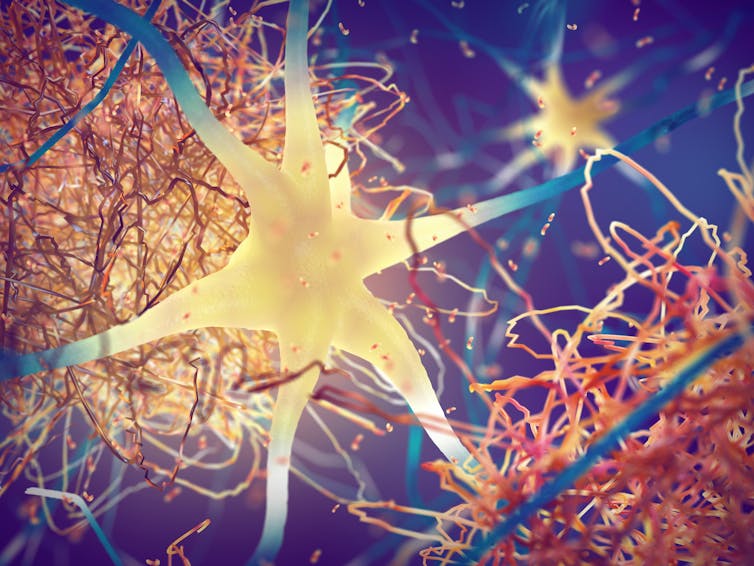
The disease process begins long before symptoms manifest. Proteins called amyloid and tau gradually build up in the brain, forming plaques and tangles that interfere with communication between nerve cells. By the time memory problems are significant enough for diagnosis, much of the damage has already been done.

It’s important to note that the signs of Alzheimer’s disease and symptoms don’t develop similarly in all patients. This means the amount of amyloid plaques and tau tangles a person has in their brain doesn’t always match the severity of the disease.

In addition, the amount of plaques and tangles can only be estimated via imaging or blood tests. These factors make Alzheimer’s disease difficult to diagnose and predict how it will progress. This is why researchers are keen to develop tests that can spot signs of the disease earlier.

Traditionally, diagnosis has relied on cognitive screening tests, where a doctor asks a patient to remember words, copy drawings or complete problem-solving tasks. These tools are effective, but take time and require trained staff. They may also be stressful for the patients and can be influenced by factors such as a person’s education level, their language skills or test-related performance anxiety.

More advanced diagnostic options, including brain scans and laboratory analysis of cerebrospinal fluid (a fluid which protects the brain and spinal cord), can indicate the presence of Alzheimer’s disease in the brain. But these tests are expensive and invasive.

But the Fastball EEG test uses a different approach.

Instead of asking patients to actively recall or solve problems, it measures how the brain responds to images flashed on a screen. Participants first see a set of eight pictures, which they’re asked to name but not memorise.

Then, during the test, hundreds of images are shown in quick succession – around three per second. Every fifth image is one of the eight previously shown. The EEG headset records the brain’s electrical activity, picking up tiny signals that reveal whether the brain recognises these familiar images.

In healthy people, the recognition response is clear. But in people with mild cognitive impairment (problems with thinking, memory or problem-solving which often precedes Alzheimer’s disease) and especially those with memory issues, the response is weaker.

To understand the test’s suitability, researchers recruited 106 participants to their study. This included 54 healthy adults and 52 people with mild cognitive impairment (MCI). Among the latter group, some had memory-specific problems (amnestic MCI), while others had difficulties unrelated to memory – such as problems with attention (non-amnestic MCI).

A digital drawing depicting amyloid and tau forming tangles and plaques around a nerve cell in the brain.
The build-up of amyloid-beta and tau disrupt communication between the brain’s nerve cells.
nobeastsofierce/ Shutterstock

The researchers found that the Fastball test was sensitive enough to distinguish between these groups. Those with amnestic MCI showed significantly reduced brain responses to the familiar images compared to healthy adults and those with non-amnestic MCI. In other words, the test quickly identified the kind of memory impairment most closely linked to early Alzheimer’s.

They then repeated the test a year later. Some of the participants who’d only had mild cognitive impairment in the first test had progressed to either Alzheimer’s disease dementia or another type of dementia, called vascular dementia, which manifests in symptoms similar to Alzheimer’s.

The researchers also asked the participants who developed dementia to perform the standard cognitive tests currently used to diagnose Alzheimer’s. These participants showed no or little difference in this test, which means the test wasn’t sensitive enough to detect the transition from mild cognitive impairment to dementia. But with the Fastball test, the participants performed marginally worse than they had previously.

However, of the 42 participants with mild cognitive impairment who repeated the Fastball test a year later, only eight had transitioned to dementia. So, although the results are very promising in illustrating the test’s accuracy, they should be interpreted with caution as they’re based on a small number of people.

The future of diagnosis

Crucially, the test is fast – lasting only three minutes. It also doesn’t rely on the participant’s effort, mood or test-taking ability, which can influence cognitive test results. It can also be done at home or in a GP’s office, which might reduce anxiety for patients and make it easier to reach a larger group of people.

However, the study did not include other conditions where memory impairment is also present – such as depression or thyroid problems – so it cannot be used as a standalone diagnostic tool for Alzheimer’s disease. Future studies in more diverse populations which take these other conditions into account will be needed to better understand the test’s strengths, limitations and potential.

Other tests, which are currently in development, may be better for diagnosing Alzheimer’s disease specifically. For example, blood tests could transform Alzheimer’s diagnosis once they’re more widely rolled out.


Read more:
Alzheimer’s disease blood tests: here’s what they look for, and what they can tell you about your risk


These measure proteins linked to Alzheimer’s and can give a snapshot of disease processes happening in the brain. Some tests currently being studied would only require a finger-prick of blood. If they prove to be accurate, this could mean patients could do these tests at home and mail them in for analysis.

Tools such as the Fastball test and blood tests could help shift the focus of Alzheimer’s care from late diagnosis to early intervention. By identifying people at risk of the disease years earlier, doctors could recommend lifestyle changes, monitor patients more closely or provide them with appropriate therapies earlier, while they can still make the most difference.

The Conversation

Eleftheria Kodosaki does not work for, consult, own shares in or receive funding from any company or organisation that would benefit from this article, and has disclosed no relevant affiliations beyond their academic appointment.

ref. Alzheimer’s disease: new three-minute test can spot memory issues – here’s how it works and what it can tell you – https://theconversation.com/alzheimers-disease-new-three-minute-test-can-spot-memory-issues-heres-how-it-works-and-what-it-can-tell-you-264519

Why building nature-centric housing involves a mindset shift

Source: The Conversation – UK – By Tom Oliver, Professor of Applied Ecology, University of Reading

The Italian city of Milan’s vertical forest. Ivan Kurmyshov/Shutterstock

How do you build 1.5 million new homes in five years without destroying nature? Housing is unaffordabe for most people, so the UK government plans to build as many homes as possible, as soon as possible. Assuming this brings house prices down (which isn’t a given), how can it be done without harming wildlife and worsening climate change?

The UK is already one of the most nature-depleted countries in the world. According to UK government reports, nature loss drives a loss of benefits to humans, leading to increased risks of flooding, food insecurity, disease and pollution. Nature loss already contributes significantly to the declining physical and mental health of the UK population, with nature poverty varying markedly between postcodes.

In my research as an ecologist, I study how urban planning can be nature-centric. Being sensitive to the history of a place when designing housing, asking what other beings already have their homes there and how people can live alongside them, puts humans on par with other species, rather than objectifying them as lifeless “assets”.

No longer seeing humans as the centre of everything is a worldview shift that’s recognised by organisations such as the UN and the European Environment Agency as essential for a sustainable civilisation. It might seem radical, but when existing approaches aren’t working, you need to change tack.

Even with current environmental regulations, the UK government is failing to meet its own targets for restoring wildlife and providing clean water and air. It remains on track for just nine out of 43 environmental commitments. Environmental protection policies and their implementation are failing.

Take, for example, the concept of biodiversity net gain. This policy outlines how much habitat needs to be “restored” in exchange for developers destroying nature to build homes. Yet the promised nature restorations rarely happen.

Doubling down on this approach, under new planning-system reforms to quickly build new homes, the government is enabling developers to pool promised habitat “units” and restore them elsewhere.

But simply destroying nature in one place and rebuilding it elsewhere isn’t the answer. Not least because ecosystems (such as the complex interactions between soil fungi, plants and insects) take decades to mature. Plus, people living in new homes in areas where nature has been cleared will experience fewer health benefits.

close up shot of plants growing all over surface of tower block
Plants grow on every surface of Milan’s vertical forest tower block.
MC MEDIASTUDIO/Shutterstock

Instead of treating nature something as separate from us, like a property we have a right to destroy, we can reassess our relationship to it. Nature as being an intrinsic part of us is a more scientifically accurate worldview, as well as essential for protecting it.

Last year, an international science body produced a report ratified by 147 governments, including the UK. The conclusion identified the main causes of global biodiversity loss as the disconnection from and domination over nature, the concentration of power and wealth, plus the prioritisation of short-term, individual and material gains. That report, along with many others, states the need for “fundamental system-wide shifts in views, structures and practices”.

Scaling up eco-homes

Many nature-centric housing solutions already exist in Brazil, Italy and the Netherlands. The challenge is how to build them at scale, while adapting them to the nature in a local region. Housing design and surrounding areas can be tailored to help regionally rare animals like otters, certain bats as well as amphibians, insects and plants.

I recently led a workshop with experts from law, urban planning, architecture, garden design and housing policy, and they agreed that the technical expertise to build such homes already exists. What is missing, they said, is the deeper mindset shift needed to bring about such an ambitious programme of social change.

The key challenge is to expand our imaginations for how we can live more in harmony with other species and build political courage for such housing. Building these homes may take longer than the government’s five-year target, but anything less will continue to drive the loss of nature on which our health and prosperity depends.

Research my colleagues and I conducted shows that promoting this nature-centric shift in worldviews must become a top priority. It goes beyond just the housing sector and relates to the design of our businesses, governance and education systems.

Without a change in underlying attitudes, environmental regulations are simply rules that get ignored, hence the poor state of our rivers and the loss of our nations plants and wildlife.

We cannot build 1.5 million homes with a casual attitude to trashing nature in the process. The real solutions to the housing crisis go beyond bricks and mortar and rules about where to put them. We need to rebuild our care and responsibility to the natural world, acknowledging nature as something we humans are deeply part of, instead of apart from.

More effective institutions and legal innovations (such as giving rights to nature) then follow from that. To solve the housing crisis in ways that are genuinely sustainable requires a shift in mindset as a prerequisite for housing development.


Don’t have time to read about climate change as much as you’d like?

Get a weekly roundup in your inbox instead. Every Wednesday, The Conversation’s environment editor writes Imagine, a short email that goes a little deeper into just one climate issue. Join the 45,000+ readers who’ve subscribed so far.


The Conversation

Tom Oliver has received research funding from BBSRC, NERC, Natural England and VKRF for developing climate adaptation plans for humans and other species, and for critically investigating ‘nature-centric’ governance approaches. He was affiliated with Defra as a senior scientific fellow on their Systems Research Programme, with the Government Office for Science working on long-term risks to the UK, and spent four years with the European Environment Agency on their scientific committee. He currently sits on the Food Standards Agency science council and Office for Environmental Protection expert college. He is author of The Self Delusion: The Surprising Science of Our Connection To Each Other and the Natural World, published by Weidenfeld and Nicholson, and the forthcoming book The Nature Delusion: Why We Can’t Fix The World Without Fixing Ourselves, published by Bristol University Press.

ref. Why building nature-centric housing involves a mindset shift – https://theconversation.com/why-building-nature-centric-housing-involves-a-mindset-shift-261995