Depuis la fin du XX<sup>e</sup> siècle, la pratique du tarot tend à se tourner vers le développement personnel.StayGoldDesignCo/Shutterstock
En 2026, les tarologues sont devenus influenceurs à l’ère du tout-numérique. Ces nouveaux entrepreneurs doivent maîtriser la communication numérique et les attentes de leurs clients en termes de développement personnel. Témoignage de la stratégie de plusieurs tarologues sur le réseau social Instagram.
D’après un sondage Ifop de 2022, 29 % des Français déclarent croire à la cartomancie. Les chiffres financiers l’attestent. Le marché des cartes de tarot est en pleine expansion, estimé à 515 millions d’euros en 2024 et à un milliard d’euros d’ici 2033.
De nombreuses personnes consultent un tarologue davantage pour mieux gérer leurs émotions et développer leurs capacités à réaliser des objectifs personnels et professionnels que pour connaître leur avenir. Ces objectifs s’inscrivent dans une logique de développement personnel, comme le montre ce compte Instagram.
Notre étude cherche à comprendre la stratégie de marketing digital des tarologues et leur rapport au marché du développement personnel. Elle est issue de l’observation régulière de dix comptes Instagram de tarologues sur une période de six mois, complétée par cinq entretiens.
Perspective divinatoire et développement personnel
Alors, l’utilisation du tarot dans une perspective divinatoire a-t-elle totalement disparu ? À étudier les réseaux sociaux des tarologues, ces derniers continuent à proposer leurs services de divination, cette façon de prédire l’avenir par l’interprétation de certains phénomènes sur demande. Les contenus en lien avec la magie et l’ésotérisme sont toujours légion.
En 2024, notre étude montre que le langage des tarologues s’inscrit dans la recherche de bien-être émotionnel et de l’amélioration de l’estime de soi. Cela ne doit rien au hasard. Le réseau social Instagram est caractérisé par un vocabulaire tourné vers l’action, l’expression de valeurs individuelles et les compétences émotionnelles : « focus », « énergies », « travail sur soi », « être aligné », « fluide », « transformation », « changement », etc.
Le tarot apparaît comme un outil permettant d’identifier des points de résistance et de se (re)mettre en mouvement.
« Le tarot dit quelque chose, mais c’est à la personne de continuer sa vie et de prendre ses décisions, elle doit agir, sinon il se ne passera rien », souligne Emily, tarologue.
La notion de « libre arbitre », souvent mentionnée, met en valeur la responsabilité du client qui doit être prêt à faire des efforts pour obtenir des résultats : « Le tarot te donne une longueur d’avance pour prendre la direction qui te convient », explique Will. Et d’après Leena : « Il y a un côté mindset, tu as tiré une carte qui t’invite à voir ta journée sous un jour positif, comme ça même si tu ne te sens pas super bien le matin, ça va te motiver à passer une bonne journée malgré tout. »
Recherche de visibilité
L’insertion des tarologues dans le monde numérique passe par le suivi des usages des réseaux sociaux et la compréhension de leur fonctionnement. L’influence de l’algorithme qui, par ses changements réguliers, modifie les règles du jeu. Sandrine, tarologue interviewée dans notre étude, constate que « l’algorithme ne met en valeur que les reels ».
Les grandes tendances impactent la façon de catégoriser les services proposés par le tarologue via la formulation de la bio, le choix des photos ou la manière de monter les vidéos. D’après la psychologue Listhiane Pereira Ribeiro et l’anthropologue Candice Vidal e Souza, les pratiques de tirage de cartes sont influencées par les codes de l’entrepreneuriat numérique.
Leena, tarologue, adapte ses choix de publication aux différents formats : « Je vais créer plus de proximité en stories et plus d’information dans les posts. »
Les outils proposés – stories, reels, emojis, recours à des plateformes telles que Canva – permettent d’adapter les publications aux habitudes du public tout en essayant de retenir son attention. Will, tarologue, explique que « quelque chose de long n’a en général pas d’impact ».
Les stories à la une sont utilisées pour publier des contenus stratégiques qui doivent rester permanents : l’histoire du tarologue, les prestations proposées, les tarifs, les témoignages, etc. Inversement, les stories classiques sont utilisées pour lancer des événements promotionnels. Exemple : « Jusqu’à ce soir 22 heures, deux questions pour 10 euros », ou « Pour vous, qui est le Bateleur ? »
Le Magicien – ou le Bateleur dans le tarot de Marseille – traduit le passage de l’idée à la réalité. Emzzi/Shutterstock
Le Bateleur, parfois appelé le Magicien, est la première carte du tarot de Marseille. Elle représente un jeune homme debout devant une table recouverte de différents objets, dont la symbolique oriente vers tous les potentiels et vers les nouveaux départs.
La difficulté reste de capter un public à la fois peu disponible et soumis à des offres similaires concurrentes. Au-delà de l’utilisation adaptée des formats existants, la clé réside dans l’authenticité perçue de la personne du tarologue et de ce qu’il propose.
« Il y a une sorte d’uniformité sur Instagram. Tous les dimanches soir, tu as l’énergie de la semaine, les “guidances” de la semaine… Il faut essayer de sortir de ça », explique Will.
L’utilisation des outils contribue à rendre ludique le rapport aux cartes, à travers leur mise en scène sur le réseau. Les cartes elles-mêmes par leur esthétique qui varie suivant le style du jeu (gothique, antique, tarot de Marseille traditionnel, humoristique, etc.) contribuent à la communication visuelle. Elles peuvent être mises en valeur par la couleur du fond, certains objets apparents sur la photo, etc. Certains tarologues adoptent une vision relativement humoristique du tarot, permettant de le dédramatiser.
J’ai interviewé des tarologues dans le cadre de la recherche ayant donné lieu à un article dont ma proposition pour The Conversation est issue. Certaines citations des ces entretiens apparaissent dans le texte.
L’intelligence artificielle remet profondément en cause la raison d’être des médias et leur modèle d’affaires. Leur survie pourrait passer par une rapide réflexion sur ce qui fait leur cœur de métier, à l’image de la politique suivie par le New York Times. Au risque de sombrer dans des offres très low cost ou de devenir des fournisseurs des géants de l’IA.
Trois ans après l’irruption de ChatGPT, les médias cherchent comment se positionner vis-à-vis de l’intelligence artificielle (IA) générative. Avec les précédentes vagues de numérisation (Web, plateformes sociales), les entreprises de médias ont dû faire face à une baisse d’audience ou à des problèmes de distribution de leurs contenus. L’arrivée de l’IA pose une question beaucoup plus existentielle à ces entreprises : celle de la pérennité à très court terme de leur modèle d’affaires, soit la façon dont l’entreprise opère et crée de la valeur pour ses parties prenantes.
Déstabilisés, les médias abordent cette nouvelle phase dans une position affaiblie. Faiblesse économique avec des pertes massives d’audiences, qui se traduisent pour certains par une chute des recettes publicitaires et d’abonnés. WPP, la principale agence mondiale de publicité, prévoit que les recettes publicitaires sur les plateformes (Instagram, TikTok, YouTube, etc.) de contenus générés par les utilisateurs dépassent en 2025 les recettes des médias historiques. Seuls 11 % des Français sont abonnés à un média en ligne en 2025.
La valeur du journalisme discutée
À cela s’ajoute un affaiblissement du rôle institutionnel des médias historiques. La confiance dans les médias connaît une érosion continue, particulièrement marquée en France. Seuls 29 % des Français ont confiance dans les médias contre 38 % en 2015, ce qui place la France au 41e rang mondial de l’indice de confiance analysé par le Reuters Institute dans son digital report].
Dans cette situation difficile, les enjeux de l’IA peuvent apparaître différents pour la radio, la télévision et la presse. Clonage de voix, génération automatisée de vidéo, avatar (présentateur), génération automatique d’articles, chaque famille de médias doit relever ses propres défis. Mais la transformation des médias historiques en plateformes multimédias produisant des contenus dans des formats toujours plus nombreux (vidéo, podcast, article vocalisé, transcription de vidéo, sous-titrage) leur forge un destin commun face à l’IA.
Si, pour l’heure, les médias ont pour la plupart évité de repenser leur modèle d’affaires dans la phase de numérisation précédente, le déploiement des infrastructures cognitives, l’arrivée des moteurs de réponses (answer engine) remplaçant les moteurs de recherche (search engine), leur impose de le repenser entièrement sous peine de disparation.
Choisir un modèle low cost
Comme de nombreux marchés, les médias font face à l’irruption d’un modèle low cost que l’IA générative rend de plus en plus possible en compressant les coûts de plusieurs maillons de la chaîne de valeur. Génération de titres, édition d’articles, production d’images et de vidéos, doublage, traduction multilingue, sous-titrage, indexation automatisée, le champ d’applications de l’IA générative est très large et offre de substantielles sources de réduction de coûts. Dans ce modèle low cost, l’IA est déployée sur les processus internes, sur les fonctions de production de l’information (back-office) sans être utilisée directement dans la relation directe avec l’audience.
Par ailleurs, les usages croissants des outils conversationnels fondés sur l’IA, comme ChatGPT, devraient conduire à modifier profondément la construction des audiences numériques. Le modèle actuel repose très largement sur les flux générés par les grandes plateformes, à commencer par Google. Le passage d’un moteur de recherches (search engine Google) à un moteur de réponses (answer engine, ChatGPT) pourrait réduire fortement le trafic vers les sites des médias, les utilisateurs se contentant de la réponse des outils d’IA. La captation par les producteurs d’IA d’une part substantielle des recettes de médias historiques les affaiblirait à nouveau.
Dans ce monde nouveau du « zéro clic », les acteurs de l’IA réintermédient la relation entre les médias et les audiences. Cette position pourrait les amener à développer une offre publicitaire qui produirait une nouvelle baisse des recettes des médias. Dans un tel environnement, les médias se trouveraient dans la position de fournisseur des acteurs de l’IA. Les médias peuvent proposer des données d’entraînement des modèles d’IA grâce à leurs archives indexées et des données fraîches dont les modèles d’IA sont dépourvus par définition.
L’enjeu pour les entreprises du secteur est alors de négocier au mieux la valeur des contenus fournis. Mais le rapport de force n’est pas forcément en faveur des médias et risque de conduire à des accords de licence peu rémunérateurs, l’information étant vue comme une commodité – une matière première – par les acteurs de l’IA.
Certifier et labelliser l’information
Afin d’augmenter la valeur de ces contenus, les médias pourraient les certifier comme provenant d’un média labellisé JTI (Journalism Trust Initiative) (1), si tant est que traçabilité et certification soient valorisées par les utilisateurs, justifiant une rémunération supérieure. Compte tenu de la faible confiance accordée aux médias, on peut douter de leur capacité à imposer un tel modèle de valeur aux producteurs d’IA.
Dans ce modèle business-to-business-to-consumer (B2B2C) de producteur certifié, dans lequel les médias produiraient des contenus en marque blanche, la valeur de leur marque risque de s’éroder. Ce modèle n’est donc guère souhaitable à long terme. En effet, il est hautement probable qu’il se combine au modèle low cost afin de maintenir des coûts de production d’autant plus faibles que les producteurs d’IA chercheront à obtenir des prix plus bas. Détenant la relation avec le consommateur final, ils pourront aisément mettre en concurrence les différents médias.
Un nouveau modèle ?
Être un des fournisseurs des producteurs d’IA ne pouvant suffire à garantir la pérennité des médias à long terme, repenser la proposition de valeur des médias est donc essentiel. Si le cœur de celle-ci doit rester la fourniture d’une information fiable et/ou d’une expérience de divertissement riche et unique, les médias cherchent depuis plusieurs années à enrichir cette proposition de valeur par des diversifications d’activités, qui n’ont pas abouti pour le moment à des offres distinctes à même d’assurer le développement et la pérennité des médias.
Le développement des agents d’IA crée de nouvelles expériences pour les utilisateurs. Davantage conversationnelles, elles nécessitent d’adapter l’offre proposée. Autrement dit, les médias devront franchir le pas de l’utilisation de l’IA dans l’interaction avec les audiences.
Cette véritable mutation devrait être l’occasion de repenser l’offre en termes de services. La transformation numérique est la généralisation d’une tendance plus vaste de transformation des produits en services, dont les médias se sont tenus éloignés jusqu’à aujourd’hui. Ce mouvement déplace le cœur de la création de valeur de l’échange vers l’usage. La valeur n’est plus tant dans la transaction et le transfert vers le client d’un produit (le journal, le film, l’article, etc.) que dans l’usage que le client en fera. Dans l’espace numérique, cet usage peut être approché, géré, développé grâce aux données produites par les dispositifs qui soutiennent ses services.
Le « New York Times », exemplaire ?
Le cas du New York Times illustre bien cette logique servicielle. Après avoir acquis plusieurs acteurs (WireCutter, 2016, The Athletic, Wordle 2022), le New York Times a cessé de promouvoir l’offre dite « news-only » dans ses campagnes marketing et pousse systématiquement l’accès via l’offre groupée News + Games + Cooking + Wirecutter + The Athletic + Audio.
En 2025, la refonte de l’application mobile fait de l’offre groupée la porte d’entrée unique d’un ensemble Read-Play-Swipe où l’on accède indifféremment aux articles, aux rubriques jeux, cuisine et audio. Chaque verticale proposée est conçue autour d’usages concrets : s’informer, se détendre, préparer à manger, choisir un produit, suivre son club, remplir un temps mort.
Cette offre multiservice repose sur plusieurs tâches de la vie quotidienne. La logique n’est plus seulement « le journal du jour », mais une disponibilité permanente de services d’actualités : push personnalisés, dossiers, explications pédagogiques (explainers, chronologies), alertes thématiques. L’abonné à l’offre groupée est en relation quasi permanente avec la marque via des usages variés tout au long de la journée, ce qui augmente son engagement et facilite la rétention des clients.
Dans cette logique de servicisation, le New York Times vend de moins en moins un produit (un PDF, un numéro) et de plus en plus un flux continu d’aides pour comprendre le monde, accessible partout, synchronisé entre web, app et audio. Les jeux servent de porte d’entrée vers l’offre groupée. Les nouveaux abonnés arrivant par ce canal sont ensuite orientés vers les autres services. Les jeux fonctionnent comme un service de fidélisation. Quand l’actualité est déprimante, ils offrent un usage positif et stable, qui protège la relation d’abonnement. On est typiquement dans une logique de valeur d’usage. Le consommateur ne paie pas pour « avoir des grilles de mots croisés ou de sudoku », mais pour un moment quotidien de détente intellectuelle, ritualisé.
Nouveaux liens avec le client
NYT Cooking fonctionne comme une application de service culinaire, pour répondre quotidiennement à la question « Qu’est-ce qu’on mange ce soir ? » Là encore, la valeur n’est plus seulement informative (lire des recettes). Elle est aussi pratique en proposant des outils d’aides à la planification des repas, la gestion du temps, l’inspiration. Surtout, le service s’intègre dans la routine familiale. Le New York Times a même signé un partenariat avec le service de livraison de courses Instacart pour les abonnés du service NYT Cooking.
France Culture, 2025.
Wirecutter est, quant à lui, un service d’aide à la décision (choisir un aspirateur, un smartphone, un matelas), une sorte de « conseiller personnel » plutôt qu’une rubrique consommation classique. Pour le New York Times, c’est une source de revenus diversifiés (affiliation) et un moyen de couvrir une autre dimension de la vie quotidienne, complémentaire de l’information et du divertissement.
The Athletic est un service de suivi sportif, organisé par club, ligue, compétition, avec analyses et podcasts qui captent des abonnés dont le besoin est davantage de « suivre [s]on équipe/[s]on sport » que l’actualité générale. C’est un service pour passionnés. Désormais, le quotidien offre un ensemble de contenus, notifications, podcasts, analyses autour d’une communauté de fans.
Un actif insuffisamment inexploité : les archives
Ce cas de servicisation d’un média se décline pour d’autres, comme la presse locale. Des services centrés sur la ville, le territoire, sont envisageables y compris le suivi fin de la démocratie locale grâce aux données ouvertes.
La presse magazine peut dans la logique de Wirecutter du New York Times bâtir des services de coaching sur de nombreux sujets dont elle a l’expertise nécessaire. Cette logique servicielle permet aux médias d’être un moteur de réponses (answer engine) et de rivaliser grâce à leurs expertises avec des services d’IA.
Dans cette perspective, les actifs accumulés (archives) retrouvent de la valeur. Articulés avec les compétences journalistiques, elles constituent la base d’un avantage concurrentiel face aux IA conversationnels en fournissant des réponses fiables, documentées et articulées. Il n’en demeure pas moins que cette transformation profonde du modèle de média est une source de tensions au sein des médias et appelle à un véritable aggiornamento culturel.
Ne pas répéter les erreurs du passé nécessite de dépasser des logiques de stratégies individuelles qui ne garantissent pas la pérennité à long terme. À cet égard, les tentatives d’actions collectives, comme la mutualisation des inventaires publicitaires, la création d’un identifiant unique pour les médias à des fins publicitaires, les négociations avec les grandes plateformes numériques, montrent bien que les médias n’ont pas réussi jusqu’ici à se coaliser de façon efficace face aux enjeux communs.
La situation appelle à l’abandon de telles postures tant l’avenir apparaît sombre. Il est urgent de dépasser les antagonismes pour bâtir un espace numérique informationnel et faire émerger de nouveaux modèles d’affaires pérennes.
Source: The Conversation – Canada – By Brian McQuinn, Co-Director of the Centre for Artificial Intelligence, Data, and Conflict and Associate Professor, International Studies, University of Regina
Over the past year, we’ve spent considerable time in the region and have been struck by a shift: leaders no longer talk about whether there will be war in the Baltics, but how to prepare for it.
This was echoed recently in a speech by NATO Secretary General Mark Rutte at the Munich Security Conference:
“I fear that too many are quietly complacent, and too many don’t feel the urgency…We must all accept that we must act to defend our way of life, now. Russia has become even more brazen, reckless, and ruthless towards NATO, and towards Ukraine.”
More than irritants
In 2024, more than 600 weather balloons and 200 drones were flown into Lithuania’s airspace from Belarus, Russia’s ally, forcing repeated temporary closures of Lithuania’s two major airports and causing millions of dollars in disruption.
This undermines Europe’s defences and shifts political power toward Russia. This strategy has shown results, with pro-Russian parties elected this year in Georgia and the Czech Republic.
Disinformation campaigns
Russian disinformation has long sought to deny Ukraine’s right to exist as a sovereign state. In preparation for war with Europe, Russia is increasingly questioning the independence and legitimacy of Latvia, Lithuania and Estonia.
If Baltic leaders are right, and it’s only a matter time until there’s an open war with Russia, Canadians will be on the front lines from the beginning.
Canada’s NATO commitments also mean that an attack on any of these countries will be treated as an attack on Canada.
Historically, Canada and Europe have relied on American military guarantees, but it seems highly unlikely U.S. President Donald Trump would come to the aid of Latvia and declare war on Putin. Canada and its European allies are likely on their own.
Baltic leaders are demonstrating that preparedness is not provocation but the surest path to deterrence and reassurance. We asked Estonian Prime Minister Kristen Michal what this means in practice.
He told us:
“Estonia is prepared for different threats. We know that the pressure from Russia goes beyond the military. It also includes vandalism, sabotage, airspace violations, balloons threatening aviation, cyberattacks and ongoing information campaigns — not only against Estonia, but against all allies, no matter how near or distant, including Canada.
“That’s why our approach is broad. As a NATO ally, we invest in shared defence and deterrence — five per cent of GDP starting next year. We also focus on building a strong economy and attracting investment, like the Canadian Neo Performance Materials plant in eastern Estonia. We protect our information space and work to make sure our society is resilient and ready to deal with any kind of crisis — whether it comes from aggressor states, from nature or from climate change. We are not afraid; we are prepared.”
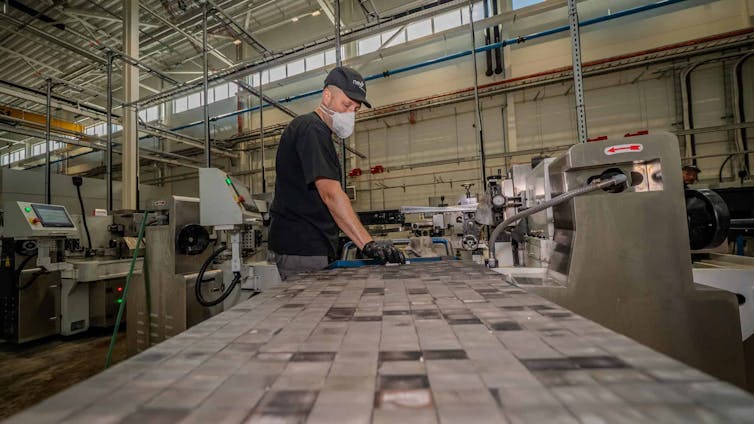
A worker handles magnets during pre-assembly at the Neo Performance Materials plant in Estonia in 2025. (Neo Performance Materials, Inc.)
Preparing for war
Baltic societies offer Canada a clear blueprint for countering Russian coercion, preparing for crisis and building resilience without surrendering democratic values.
We believe that the urgency declared by the NATO secretary general needs to be better understood in Canada, so it can, like its Baltic allies, prepare the Canadian economy, society and military for what is looking increasingly like an inevitability: war with Russia.
Brian McQuinn is the co-Director of the Centre for Artificial Intelligence, Data, and Conflict. The centre has received funding from SSHRC, CIFAR, DND, and Facebook (now Meta).
Marcus Kolga is the founder of DisinfoWatch and a Senior Fellow at the Raoul Wallenberg Centre for Human Rights, Macdonald-Laurier Institute and the CDA Institute.
Source: The Conversation – Canada – By Alexandre Hudon, Medical psychiatrist, clinician-researcher and clinical assistant professor in the department of psychiatry and addictology, Université de Montréal
Artificial intelligence is increasingly woven into everyday life, from chatbots that offer companionship to algorithms that shape what we see online. But as generative AI (genAI) becomes more conversational, immersive and emotionally responsive, clinicians are beginning to ask a difficult question: can genAI exacerbate or even trigger psychosis in vulnerable people?
For a small but significant group — people with psychotic disorders or those at high risk — their interactions with genAI may be far more complicated and dangerous, which raises urgent questions for clinicians.
How AI becomes part of delusional belief systems
“AI psychosis” is not a formal psychiatric diagnosis. Rather, it’s an emerging shorthand used by clinicians and researchers to describe psychotic symptoms that are shaped, intensified or structured around interactions with AI systems.
Psychosis is strongly associated with aberrant salience, which is the tendency to assign excessive meaning to neutral events. Conversational AI systems, by design, generate responsive, coherent and context-aware language. For someone experiencing emerging psychosis, this can feel uncannily validating.
While this is harmless for most users, it can unintentionally reinforce distorted interpretations in people with impaired reality testing — the process of telling the difference between internal thoughts and imagination and objective, external reality.
There is also evidence that social isolation and loneliness increase psychosis risk. GenAI companions may reduce loneliness in the short term, but they can also displace human relationships.
This is particularly the case for individuals already withdrawing from social contact. This dynamic has parallels with earlier concerns about excessive internet use and mental health, but the conversational depth of modern genAI is qualitatively different.
What research tells us, and what remains unclear
At present, there is no evidence that AI causes psychosis outright.
Research on social media algorithms has already demonstrated how automated systems can amplify extreme beliefs through reinforcement loops. AI chat systems may pose similar risks if guardrails are insufficient.
It’s important to note that most AI developers do not design systems with severe mental illness in mind. Safety mechanisms tend to focus on self-harm or violence, not psychosis. This leaves a gap between mental health knowledge and AI deployment.
Just as certain medications or substances are riskier for people with psychotic disorders, certain forms of AI interaction may require caution.
Clinicians are beginning to encounter AI-related content in delusions, but few clinical guidelines address how to assess or manage this. Should therapists ask about genAI use the same way they ask about substance use? Should AI systems detect and de-escalate psychotic ideation rather than engaging it?
There are also ethical questions for developers. If an AI system appears empathic and authoritative, does it carry a duty of care? And who is responsible when a system unintentionally reinforces a delusion?
Bridging AI design and mental health care
AI is not going away. The task now is to integrate mental health expertise into AI design, develop clinical literacy around AI-related experiences and ensure that vulnerable users are not unintentionally harmed.
This will require collaboration between clinicians, researchers, ethicists and technologists. It will also require resisting hype (both utopian and dystopian) in favour of evidence-based discussion.
As AI becomes more human-like, the question that follows is how can we protect those most vulnerable to its influence?
Psychosis has always adapted to the cultural tools of its time. AI is simply the newest mirror with which the mind tries to make sense of itself. Our responsibility as a society is to ensure that this mirror does not distort reality for those least able to correct it.
Alexandre Hudon does not work for, consult, own shares in or receive funding from any company or organisation that would benefit from this article, and has disclosed no relevant affiliations beyond their academic appointment.
In 2024, the most recent year for which we have data, an estimated 1 million immigrants from Venezuela lived in the United States. According to the U.S. Census Bureau’s American Community Survey, these Venezuelans constitute about 2% of the total immigrant population.
We are demographers – social scientists who specialize in understanding the changing U.S. population, including changes due to immigration.
With all the coverage of Venezuela in the U.S. news right now, we were interested in looking at the data to learn about this group of immigrants and where they live.
By the numbers
Notably, Venezuelan immigrants have lived in the United States for barely 10 years on average, considerably less than the nearly 23-year average for the total immigrant population. More than half of Venezuelan immigrants report arriving in the U.S. in the past five years, coinciding with the highly disputed 2018 Venezuelan election in which Nicolas Maduro retained power.
Data from the Office of Homeland Security Statistics illuminates this difference, pointing to recent dramatic growth in the Venezuelan population in the U.S. Annual counts of Venezuelans obtaining legal permanent residence permits, commonly called green cards, have more than doubled since 2018. Moreover, the number of green cards going to Venezuelans has increased 600% since 1999, when Venezuela’s previous autocratic leader, Hugo Chavez, took power.
A large number of Venezuelans living in the U.S. arrived within the past five years under temporary protected status. In 2021, just 21,000 Venezuelans were in the U.S. with this status. By the end of 2025, more than 600,000 Venezuelan immigrants had been granted this status, making them the largest nationality with temporary protected status. Of that number, more than 200,000 were living in Florida.
At the same time, the number of refugees and asylum-seekers has also spiked dramatically in recent years. More than 5,000 Venezuelans were granted these statuses in 2023.
In 2023 – the most recent year of data – fewer than 20,000 Venezuelans received green cards, making up less than 2% of all newly granted permanent resident permits. For comparison, over 180,000 green cards were granted to Mexican immigrants in that year.
While there is no reliable data on undocumented immigrants by nationality, the Office of Homeland Security Statistics reports that the federal government removed just 488 Venezuelans from the country in 2022 – a tiny fraction of all reported removals. This suggests to us that most Venezuelans living in the United States have legal status. However, there is no available data yet on removals during the second Trump administration.
At the same time, the share of Venezuelan immigrants who are U.S. citizens is relatively small. Data from the 2024 American Community Survey shows that just a quarter have become citizens, compared to over half of immigrants overall. Because U.S. law requires many green card holders to reside in the U.S. for at least five years before applying for citizenship, this difference likely reflects the fact that most Venezuelans arrived recently.
A highly concentrated population
Venezuelans stand out from other immigrant groups with respect to where they settle after arriving in the United States. The 2024 American Community Survey data indicates that 40% of Venezuelan immigrants live in Florida.
Indeed, Florida Gov. Ron DeSantis has asked the state’s Department of Justice to press additional charges against Maduro, claiming that Maduro’s policies are responsible for an outsize population of Venezuelan immigrants in Florida. DeSantis also claims Maduro has encouraged gang activity and drug running in the Sunshine State.
The state of Texas constitutes a distant second, home to 18% of Venezuelan immigrants.
Zooming in geographically, Venezuelans are highly concentrated in just a few cities nationally, with the Miami-Fort Lauderdale, Orlando, Houston, Dallas and New York City metro areas home to the majority of this population.
Like many recently arrived immigrant groups, Venezuelans in the United States tend to be low income. The 2024 American Community Survey tells us that 18% live in poverty, which is nearly double the national average of 10.4%. In addition, 6.9% of adults are unemployed, and 19% lack health insurance of any kind. However, 82% of Venezuelan immigrants speak at least some English, and 44% of adults have a college degree.
But when or whether that will be possible is unclear. Maduro may be gone, but his administration remains in power, which may make mass migration back to Venezuela difficult.
However, the U.S. government is encouraging Venezuelans to return home. Secretary of Homeland Security Kristi Noem revoked TPS status for more than 500,000 Venezuelan immigrants in October 2025, effectively immediately. At this point, it has not been reinstated.
Where the 1 million Venezuelan immigrants in the U.S. who hold various statuses may go next remains unclear. Florida in particular is likely to feel the impact of whatever comes next, given its large population of affected immigrants.
The authors do not work for, consult, own shares in or receive funding from any company or organization that would benefit from this article, and have disclosed no relevant affiliations beyond their academic appointment.
The plaintiffs in both cases claim that these laws violate their Second Amendment rights. As a close observer of the Supreme Court, I suspect the rulings will split. The court will likely strike down the limitation on concealed carry and uphold the law denying gun rights to drug users.
The question is how can Americans know which limits are constitutional and which are not.
In 2022, the Supreme Court answered that question in a ruling, New York State Rifle & Pistol Association v. Bruen, that struck down several states’ limitations on issuing what’s called “concealed carry” licenses. That ruling set a new standard for defining the boundaries on a constitutional right: if the right was allowed at the time of America’s founding and the early republic.
In the view of originalists, who see the meaning of the U.S. Constitution and the subsequent amendments as fixed by the understanding of its authors and ratifiers, the Second Amendment recognizes a preexisting individual right of self-protection. That self-protection right can be restricted but not removed. It can be limited but not eliminated.
In the Bruen ruling, Justice Clarence Thomas wrote that current laws must be “consistent with the Nation’s historical tradition of firearm regulation.” The appropriate method, he wrote, is to examine “how and why” the regulation functions, and see if the same kinds of laws were accepted by the founders.
If so, the current laws in question are legitimate limits to the right. If not, they are unconstitutional infringements.
The first test of the new standard for a constitutional regulation came in the United States v. Rahimi case in 2024. The court upheld the federal law criminalizing gun possession by someone subject to a domestic violence restraining order.
The court examined the historical record and found several examples of laws removing firearms from people who threatened others. The record revealed established law in four states at the time of the founding that fit the same general reason and mechanism as the current federal regulation targeting domestic abusers.
Concealed carry
On Jan. 20, the court will hear arguments in Wolford v. Lopez about what the historical record reveals regarding limitations on carrying concealed firearms in public.
After the Bruen decision, Hawaii and a few other states enacted laws restricting citizens from bringing a licensed firearm on private property held open to the public unless the owner gives permission. Usually that is accomplished by posting “clear and conspicuous signage at the entrance.”
The plaintiffs, Jason and Alison Wolford, argue that the Hawaii ban makes it “impossible as a practical matter to carry a firearm.” Most establishments will not post any sign, meaning it would be a criminal offense to conduct normal errands such as entering a grocery store or shop.
Hawaii Gov. Josh Green signs gun control legislation in Honolulu on June 2, 2023. The law prohibits people from taking guns to a wide range of places, including beaches, hospitals, bars and movie theaters. AP Photo/Audrey McAvoy, File
The U.S. Court of Appeals for the 9th Circuit in 2024 upheld the Hawaii law on the grounds that a 1771 New Jersey law and an 1865 Louisiana law are historical “dead ringers” for the Hawaii law. The court found that those laws meet the requirement of “an established tradition” limiting citizens from carrying firearms onto private property without consent.
The standard the court has set is not to find any one or two similar laws that were not struck down as unconstitutional. Instead, the standard is to demonstrate a clear pattern of a recognized form of accepted regulation. If the law existed for only a short period of time, in a limited geography, or for reasons we would now see as unacceptable, this does not demonstrate a tradition of legitimate legal limitation.
The Louisiana law enacted immediately after the Civil War was part of the Black Codes designed to keep firearms out of the hands of freed slaves. The law was not intended to be enforced against whites but had the clear intent to restrict the civil rights of freedmen. The plaintiffs argue that it is wrong to cite an openly racist post-Civil War regulation as a justification for contemporary law.
Todd Yukutake, a director of the Hawaii Firearms Coalition, stretches before exercising in a beach park in Honolulu on June 29, 2023. The coalition sued to block a Hawaii law that prohibits carrying guns in sensitive locations, including parks and beaches. AP Photo/Jennifer Sinco Kelleher
The court is likely to agree. The majority of the court will likely rule that these laws are exceptions and not a legitimate pattern of historical regulation.
The legal scholar Neal Katyal describes the objections to these two examples as “flyspecking” – nitpicking small details.
But the historical analogies have clear flaws. If the majority follows the doctrine laid out in Bruen and Rahimi over the past few years, the court will strike down the Hawaii law.
Drug use
The second challenge to gun regulations will be heard in March.
United States v. Hemani addresses the federal law criminalizing firearm possession by anyone “who is an unlawful user” or “addicted to any controlled substance.”
Ali Hemani argues that his prosecution is unconstitutional because U.S. tradition only disarms citizens who are currently drunk or high, not alcohol abusers or addicts who may be clearheaded at other times.
History does not seem to be on Hemani’s side. While illicit drugs such as cocaine or heroin were largely unknown at the time of the nation’s founding, drunkenness was common and alcohol consumption was dramatic.
An amicus brief submitted for the case by a group of Colonial historians argues that “at the Founding, alcohol consumption, unlike drug use, was commonplace, and the Founders were aware of the risk that alcohol could cause a lapse in judgment.”
More importantly, the historians argue that “numerous laws disarmed those under the influence, recognizing that alcohol, which impedes judgment and self-control, is a dangerous combination with guns.”
These laws also applied to habitual drunkards, the mentally ill and others determined to be dangerous to the public.
Given the conservative leanings of the current court, it seems likely that the majority will find these historical laws on alcohol and guns to be close enough in purpose and method to uphold the current federal law on drugs and guns.
These two rulings may come down at the end of term in June 2026, when the most controversial cases tend to be announced. The court’s historical focus seems likely to yield nuanced results, striking down some regulations and upholding others.
Perhaps most importantly, we will see what the historical emphasis reveals about the balance between the constitutional right to self-defense and the collective power to ensure public safety.
Morgan Marietta does not work for, consult, own shares in or receive funding from any company or organization that would benefit from this article, and has disclosed no relevant affiliations beyond their academic appointment.
Eileen Higgins won a historic victory in December. She became the first woman ever elected mayor of Miami, as well as its first Democratic mayor since 1997.
Although the stakes in the city’s Dec. 9, 2025, runoff election were high, interest was not − 4 in 5 registered voters stayed home.
Low turnout is common in municipal elections across the country. While much of the nation’s political attention stays focused on Washington, the leaders who control the nation’s streets, schools and neighborhoods are typically chosen by a small fraction of citizens.
Although many Americans can identify their U.S. senators or members of Congress, far fewer can name even one of their local elected officials, such as a city council member. To cite one example, a North Carolina study, found that 86% of state residents could not identify their own elected leaders, including local government officials.
Turnout in local elections regularly falls below 20%, often leaving critical decisions in the hands of small, unrepresentative groups, creating an electorate that’s disproportionately white, elderly and affluent.
My research as a political scientist suggests an overlooked factor explains why some people engage with their communities while others tune out: local patriotism, or how they feel about their town.
The power of local patriotism
For my book “Patriotism and Citizenship,” I commissioned a nationally representative survey of 500 Americans. We asked a simple question: How do you feel about the town you live in? Those who responded could choose from five options, ranging from “hate it” to “love it.”
About half said they “liked” their town, 20% loved it, but a full quarter expressed no positive feelings whatsoever; 3% said they outright “hated” where they lived.
Such attitudes have real-world effects. Even after accounting for factors such as age, education, income and general interest in politics, loving one’s town strongly predicted participation in local politics.
People who loved their town were more likely to attend city council meetings, contact local officials, volunteer for campaigns and discuss local issues with friends. The same pattern held for civic participation – from volunteering with community groups to organizing neighborhood cleanups.
Local patriotism also correlated strongly with trust in local government.
Determining the stakes
To test whether these feelings actually change civic behavior, I ran two experiments.
Participants were first asked to identify the biggest problem facing their town. Some mentioned traffic congestion, others cited crime or homelessness. Then came the test: Would they donate $1 they’d earned for taking the survey to help solve that problem?
In the first experiment, one group was asked “Thinking about feelings of love or hate toward your town, would you like to donate this $1 to help your town solve the problem that you just listed above?” The other group received no such prompt about their feelings and was just asked to donate to solve the problem.
The results were striking. Among those primed to consider their feelings about their town, 18% gave away their payment. In the control group, just 3% donated – a sixfold difference.
A second experiment replicated this finding. When people were prompted to think about loving their town, 8% donated. Even asking them to consider feelings of hate led 5% to give. But in the control group with no emotional prompt? No one donated.
Why this matters for democracy
Local patriotism appears to address a fundamental puzzle in political science: why anyone participates in local politics at all. The time and effort required almost always exceed any tangible benefit an individual would receive.
Because election turnout was low, Eileen Higgins was elected mayor of Miami by just a small fraction of residents. Lynne Sladky/AP
But when people care deeply about their community, the calculation changes. The emotional reward of helping a place you love becomes a plus. The sacrifice feels worthwhile not because it will definitely make a difference, but because you’re investing in something that matters to you.
This has important implications. The positive feelings people have toward their community translate directly into civic engagement, without the risk of increasing negative feelings such as jingoism or xenophobia.
For local leaders frustrated by low turnout and apathy, the message is clear: Before asking residents to show up, give them reasons to care. Build pride of place, and engagement will follow.
The good news is that local attachment isn’t fixed. My experiments showed that simply prompting people to think about their feelings toward their town could motivate civic action.
A few ways to foster local patriotism
Here are some strategies that can help foster local patriotism:
• Create civic rituals: Regular community events, from farmers markets to fireworks, build emotional ties to place.
• Celebrate iconic places: Whether it’s a waterfall, clock tower or mountain view, promote the landmarks that symbolize your community. These shared images give residents a common point of pride and visual shorthand for what makes their town special.
Holding local events such as farmers markets can foster a sense of community, increasing residents’ sense of attachment to their town. Thomas Barwick/DigitalVision via Getty Images
• Bring children to community events and have them participate in local organizations: Parents who take their kids to town festivals, parades and events, or sign them up for youth art and sports programs, aren’t just keeping them entertained. They’re building the next generation’s emotional connection to place and creating civic habits that can last a lifetime.
The evidence shows that emotional connection to community is a powerful but largely untapped resource for strengthening democracy from the ground up.
Sean Richey does not work for, consult, own shares in or receive funding from any company or organization that would benefit from this article, and has disclosed no relevant affiliations beyond their academic appointment.
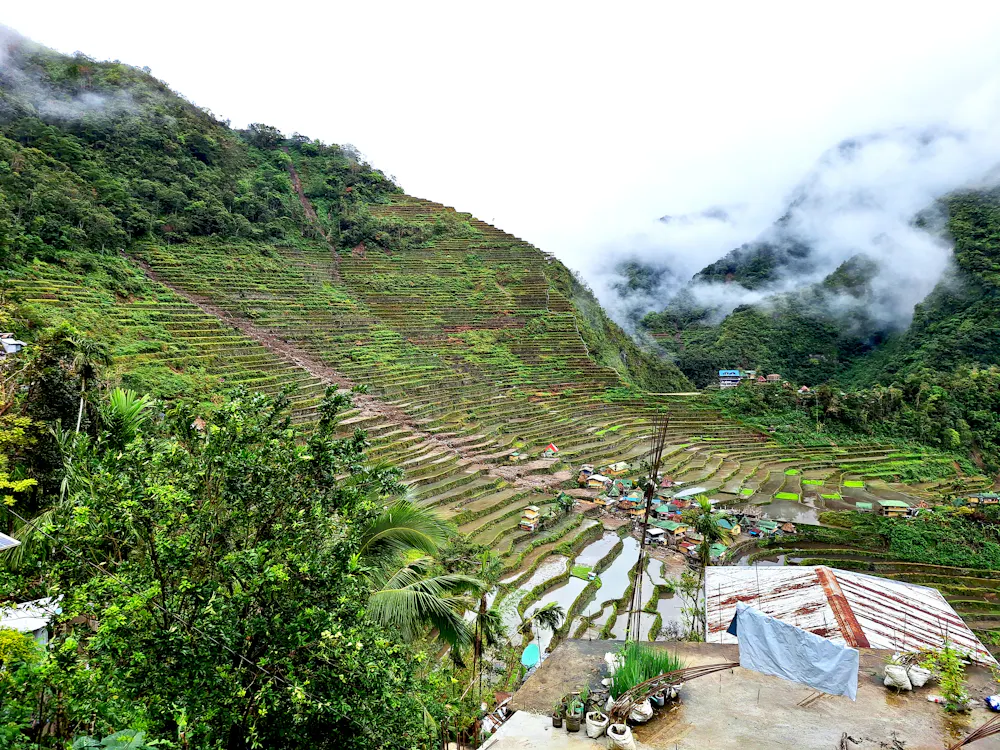
Farmers during harvest season in Batad, Ifugao, Philippines.Paul Connor and the Ifugao Archaeological Project, CC BY
Indigenous communities have lived with changes to the climate for centuries. Their adaptations over those many years are based on their close observation of weather, water, soils and seasonal change, and they have been refined through generations of learning.
That knowledge, though developed deep in the past, is increasingly useful in the modern world. As global temperatures rise, climate pressures are intensifying, with longer dry spells, stronger storms and more erratic rainfall. Terrace systems reflect Indigenous peoples’ long experience of living with environmental uncertainty in specific places and historical contexts. They offer ways of thinking about risk and long-term land use based on observation and intergenerational learning.
My research focuses on one particular strategy for adapting to a changing climate: terrace agriculture. It’s found in mountainous regions worldwide, where people have reshaped steep slopes into level steps that slow runoff and allow water to infiltrate the soil.
By slowing water without blocking its flow, terraces reduce erosion, keeping soil where crops can grow and preserving the moisture they need. They require constant maintenance, which leaves traces in the landscape, such as accumulated repair layers and sediment deposits associated with crops. I study those traces to learn how communities responded to environmental stress over time. The walls and soils are not only fertile agricultural land but also archives of adaptation, documenting past decisions about water, labor and crops.
Ifugao terraces and adaptation to wet and dry years
I have worked as an anthropological archaeologist in the Ifugao rice terraces of the northern Philippines for nearly two decades. These landscapes are often described as ancient and unchanging, but archaeological and historical research shows that most were constructed around the 17th century, during a period of political and economic pressure linked to Spanish colonial expansion. Highland communities modified their landscapes, expanded settlement and shifted rice farming to higher elevations, reconfiguring their societies to protect themselves.
The Batad Rice Terraces in Ifugao are arranged in an amphitheater-like form and are recognized as part of a UNESCO World Heritage listing. Paul Connor and the Ifugao Archaeological Project, CC BY
Rainfall in the Cordillera, the region where the terraces are located, varies widely. In some valleys, more than 6 feet (2 meters) of rain fall per year, while higher elevations commonly receive closer to 13 feet (4 meters). In both settings, rain comes down in short, intense downpours. Without intervention, water flows off the steep slopes in torrents, rapidly stripping away soil.
Terraces help avoid erosion by capturing rainfall on each level and allowing it to infiltrate gradually. Measurements contrasting terraced fields with nearby nonterraced soils find the terraces retain significantly more moisture – often 15% to 30% higher, and in some cases substantially more – than sloping fields. This increased moisture availability helps crops endure short dry spells between storms.
Crop choice is another example of adaptation. Ifugao farmers maintain multiple rice varieties suited to different microenvironments. One locally recognized group of traditional rice varieties, collectively referred to as Tinawon, is widely cultivated. The different farmer-selected tinawon varieties are adapted to varying elevations, temperatures and moisture conditions. Some perform better in cooler and wetter areas, while others tolerate shallow soils or brief dry periods.
Farmers also read subtle environmental signals. When we talk with farmers, they describe year-to-year changes, such as springs flowing more slowly than usual in late winter and increased earthworm activity before the rains. These observations guide decisions about when to adjust terrace features – such as reinforcing walls, clearing canals or modifying water gates – or when to shift planting dates in response to delayed rains or shorter wet seasons. Over generations, these adaptations have allowed farmers to continue to grow crops despite difficult periods of flooding or drought.
Today, climate stress interacts with economic pressure. Major typhoons in 2018and 2022 brought intense rainfall that damaged terraces across the Cordillera.
A landslide during the peak of a super typhoon on Nov. 10, 2025, damaged the Batad Rice Terraces. Courtesy of Rae Macapagal, CC BY
In the past, farmers responded to storm damage by adjusting water flow within irrigation canals and field-to-field outlet channels, and by staggering planting dates so that shared irrigation systems were not stressed all at once.
Today, fewer workers and a modernizing economy mean that government support has become increasingly important to sustain these systems, particularly funding for terrace and irrigation repair and programs that support farmer participation. Even so, these systems continue to show how coordinated water management and crop diversity can reduce risk under variable climates.
Climate history written into Moroccan terraces
New research in Morocco, which I’m working on with the Université Internationale de Rabat, focuses on terrace systems in the Anti-Atlas Mountains, where intermittent heavy rains and recurring droughts motivated people to build terraces to slow runoff and keep water in the soil.
Many of these terraces remained active from their construction in the late 16th to 17th centuries until the 20th century, when out-migration reduced the local labor force needed for routine maintenance.
Terraces in the town of Aouguenz, in Morocco’s Chtouka Aït Baha Province, show that nearly every slope that can be worked has been terraced, an example of long-term environmental modification. E.J. Hernandez, CC BY
Even partially abandoned terraces record past responses to climate changes. Stone walls and leveled platforms demonstrate how people slowed runoff and retained moisture in dry environments. Collapsed edges and eroded channels mark episodes of heavy rainfall. Channel layouts and their alignment with terrace walls and natural terrain indicate how scarce water was directed toward priority fields.
These physical traces correspond with well-documented drought cycles in Morocco, including multiyear dry periods in recent decades that have reduced reservoir levels and lowered groundwater tables. Former terraced landscapes show how earlier communities coped with similar pressures.
A fortified agadir (communal granary) is built on a rocky promontory and used for storing grain and valuables. Stephen Acabado, CC BY
Crop selection was central to adaptation throughout the period when terraces were actively maintained, and it continues to shape farming decisions today. Farmers in Morocco relied heavily on drought-tolerant barley, which can germinate with limited moisture and mature before peak summer heat.
Research on barley varieties from North Africa and similar arid environments shows that these traditional variants can still produce a majority of their usual yields during severe droughts, while high-yield modern varieties, bred for irrigated or well-watered conditions and shorter growing cycles, often experience sharp yield declines or crop failure under the same conditions.
A terrace system lies seasonally fallow in Morocco’s Anti-Atlas Mountains, where long-standing land-use practices are now shifting toward cash crops such as onions and beans. M. Yakal, CC BY
In oral histories and interviews, elders in these regions recalled collective maintenance practices, including annual cleaning of channels and coordinated planting after the first dependable rains. Communities adapted to the changing climate together, coordinating efforts and activities.
Lessons across continents
Although the Philippines and Morocco have different climates and histories, their terrace systems demonstrate common principles. In both regions, people focused on capturing water and minimizing the risk of soil loss or crop failure.
Aerial views show aspects of the highland ecology of Morocco. Video courtesy of Anass Marzouki, UIR.
At the same time, terraces show limits. As labor availability declines because younger generations leave rural areas for cities or overseas work, and economic priorities shift toward wage labor and other nonagricultural livelihoods, even basic maintenance becomes difficult.
These cases show that Indigenous strategies for living with climate uncertainty are often shaped by long-term observation and cooperation. They do not provide simple solutions or universal models, but they do demonstrate the value of designing systems that spread risk and prioritize durability over short-term efficiency.
Stephen Acabado receives funding from the Henry Luce Foundation.
Personal experiences can help foster a sense of belonging for aspiring scientists from underrepresented backgrounds.kali9/E+ via Getty Images
Lived experiences shape how science is conducted. This matters because who gets to speak for science steers which problems are prioritized, how evidence is translated into practice and who ultimately benefits from scientific advances. For researchers whose communities have not historically been represented in science – including many people of color, LGBTQ+ and first-generation scientists – identity is intertwined with how they engage in and share their work.
As researcherswho ourselvesbelong to communities that have been underrepresented in science, we work with scientists from marginalized backgrounds to study how they navigate STEM – science, technology, engineering and math – spaces. What happens when sharing science with the public is treated as relationship-building rather than a one-way transfer of information? We want to understand the role that identity plays in building community in science.
We found that broadening the ways scientists work with the public can bolster trust in science, expand who feels they belong in STEM spaces and ensure that science is working in service of community needs.
STEM spaces as an obstacle course
Science communication involves bridging knowledge gaps between scientists and the broader community. Traditionally, researchers do it through public lectures, media interviews, press releases, social media posts or outreach events designed to explain science in simpler terms. The goals of these activities are often to correct misconceptions, increase scientific literacy and encourage the general public to trust scientific institutions.
However, science communication can look different for researchers from marginalized backgrounds. For these scientists, the ways they engage with the public often focus on identity and belonging. The researchers we interviewed spoke about hosting bilingual workshops with local families, creating comics about climate change with Indigenous youth and starting podcasts where scientists of color share their pathways into STEM.
Instead of disseminating science information through traditional methods that leave little room for dialogue, these researchers seek to bring science back to their communities. This is in part because scientists from historically marginalized backgrounds often face hostile environments in STEM, including discrimination, stereotypes about their competence, isolation and a lack of representation in their fields. Many of the researchers we talked to described feeling pressure to hide aspects of their identities, being seen as the token minority, or having to constantly prove they belong. These experiences reflect well-documented structural barriers in STEM that shape who feels welcome and supported in scientific environments.
We wanted to see if a broader definition of science communication that incorporates identity as an asset can expand who feels welcomed in scientific spaces, strengthen trust between scientists and communities, and ensure scientific knowledge is shared in culturally relevant and accessible ways.
Our team set out to create training spaces for researchers from communities that have been historically marginalized in science. Since 2018, we have been facilitating ReclaimingSTEM workshops both in-person and online, where over 700 participants have been encouraged to explore the intersections of their identities and science through interactive modules, small-group activities and community-building discussions.
Expanding what counts as science communication is essential for it to be effective. This is particularly relevant for scientists whose work and identities call for approaches grounded in community connection, cultural relevance and reciprocity. In our workshops, we broadly defined science communication as community engagement about science that could be both formal and informal, including through media, art, music, podcasts and outreach in schools, among others.
Some participants drew on their audience’s cultural backgrounds when sharing their research. One participant described explaining biologicalpatternformation by connecting it to familiar artistic traditions in her community, such as the geometric and floral designs used in henna. Using imagery that her audience recognized helped make the scientific concepts more relatable and encouraged deeper engagement.
Rather than portray science as something neutral or emotionless, participants infused empathy and feeling into their community engagement. For example, one scientist shared with us that his experiences of exclusion as a multiracial gay man shaped how he approached his interactions. These feelings helped him be more patient, understanding and attentive when others struggled to grasp scientific ideas. By drawing on his own sense of not belonging, he aimed to create an environment where people could connect emotionally to his research and feel supported in the learning process.
Participants found it important to incorporate their identities into their communication styles. For some, this meant not assimilating into the dominant norms of science spaces and instead authentically expressing their identities to be a role model to others. For example, one participant explained that openly identifying as disabled helped normalize that experience for others.
Many felt a deep sense of responsibility to have their science engagement be of service to their communities. One scientist who identified as a Black woman said she often thinks about how her research may affect people of color, and how to communicate her findings in ways that everyone can understand and benefit from.
While the participants of our workshop had a variety of goals when it came to science communication, a common thread was their desire to build a sense of belonging in STEM.
Centering the perspectives and identities of marginalized researchers would make science communication training programs more inclusive and responsive to community needs. For example, some participants described tailoring their science outreach to audiences with limited English proficiency, particularly within immigrant communities. Others emphasized communicating science in culturally relevant ways to ensure information is accessible to people in their home communities. Several also expressed a desire to create welcoming and inclusive spaces where their communities could see themselves represented and supported in STEM.
One scientist who identified as a disabled woman shared that accessibility and inclusivity shape her language and the information she communicates. Rather than talking about her research, she said, her goal has been more about sharing the so-called hidden curriculum for success: the unwritten norms, strategies and knowledge key to secure opportunities, and thrive in STEM.
Identity for science communication
Identity is central to how scientists navigate STEM spaces and how they communicate science to the audiences and communities they serve.
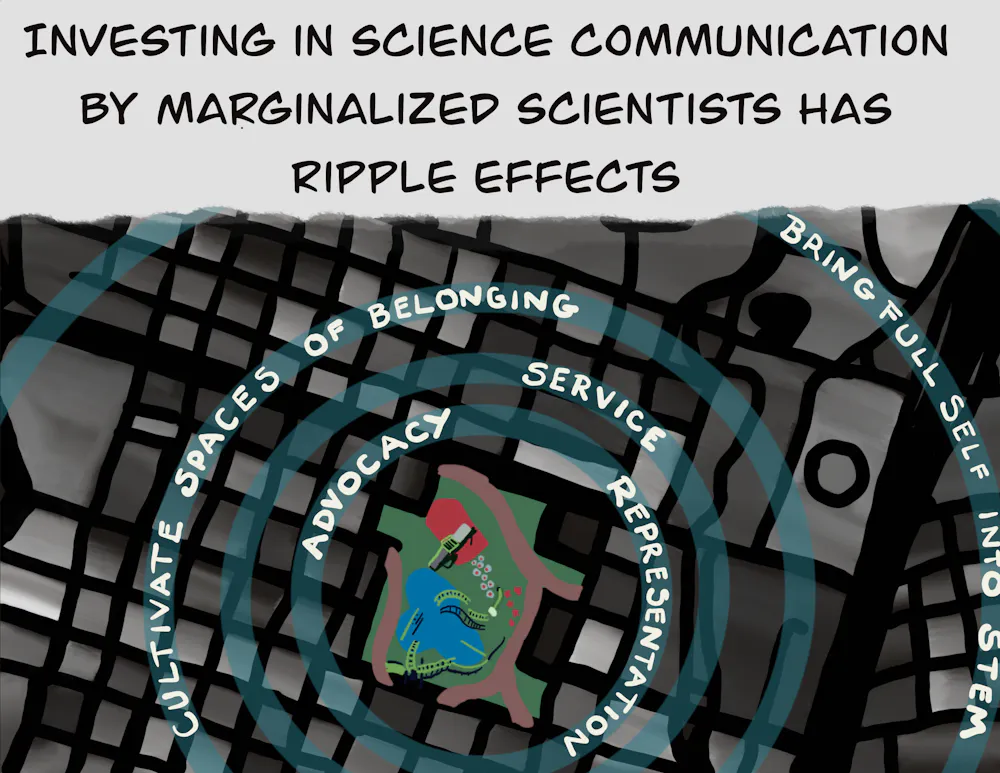
For many scientists from marginalized backgrounds, the goal of science communication is to advocate, serve and create change in their communities. The participants in our study called for a more inclusive vision of science communication: one grounded in identity, storytelling, community and justice. In the hands of marginalized scientists, science communication becomes a tool for resistance, healing and transformation. These shifts foster belonging, challenge dominant norms and reimagine STEM as a space where everyone can thrive.
Helping scientists bring their whole selves into how they choose to communicate can strengthen trust, improve accessibility and foster belonging. We believe redesigning science communication to reflect the full diversity of those doing science can help build a more just and inclusive scientific future.
Evelyn Valdez-Ward is executive director of ReclaimingSTEM Institute.
Nic Bennett is a volunteer board member of Reclaiming STEM and People’s Science Network.
Robert N. Ulrich is the Associate Director of the ReclaimingSTEM Institute.
Source: The Conversation – USA (2) – By Aaron Coy Moulton, Associate Professor of Latin American History, Stephen F. Austin State University
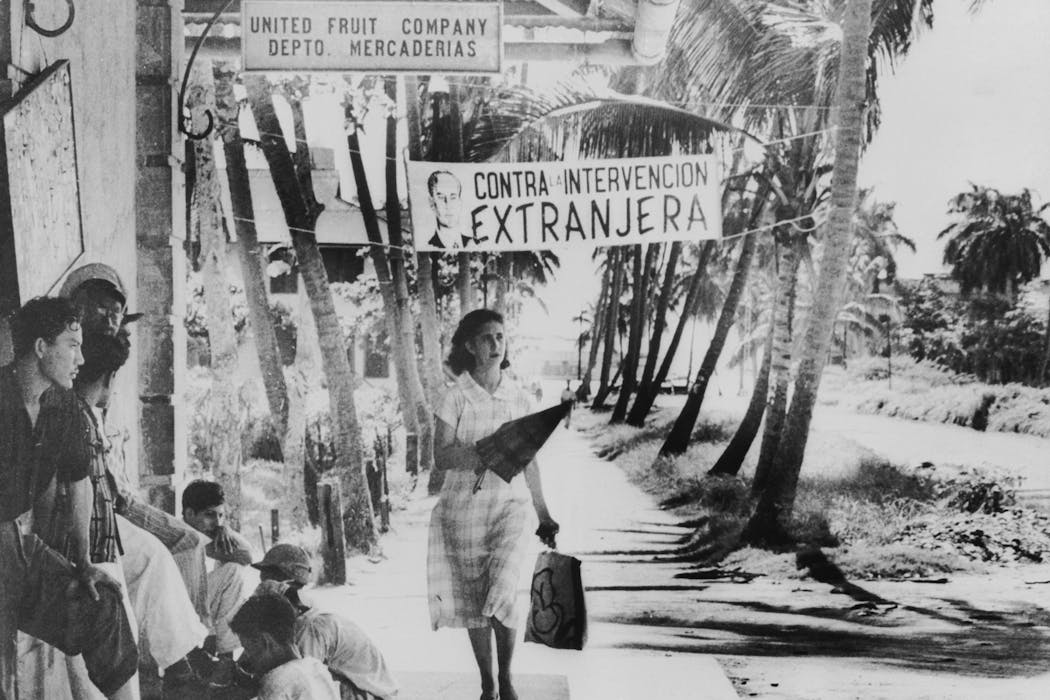
A woman walks past a banner that says ‘against foreign intervention,’ in Spanish, in Guatemala in 1954.Bettmann/Getty Images
In the aftermath of the U.S. military strike that seized Venezuelan President Nicolás Maduro on Jan. 3, 2026, the Trump administration has emphasized its desire for unfettered access to Venezuela’s oil more than conventional foreign policy objectives, such as combating drug trafficking or bolstering democracy and regional stability.
During his first news conference after the operation, President Donald Trump claimed oil companies would play an important role and that the oil revenue would help fund any further intervention in Venezuela.
Soon after, “Fox & Friends” hosts asked Trump about this prediction.
As a historian of U.S.-Latin American relations, I’m not surprised that oil or any other commodity is playing a role in U.S. policy toward the region. What has taken me aback, though, is the Trump administration’s openness about how much oil is driving its policies toward Venezuela.
As I’ve detailed in my 2026 book, “Caribbean Blood Pacts: Guatemala and the Cold War Struggle for Freedom,” U.S. military intervention in Latin America has largely been covert. And when the U.S. orchestrated the coup that ousted Guatemala’s democratically elected president in 1954, the U.S. covered up the role that economic considerations played in that operation.
A powerful ‘octopus’
By the early 1950s, Guatemala had become a top source for the bananas Americans consumed, as it remains today.
The United Fruit Company owned over 550,000 acres of Guatemalan land, largely thanks to its deals with previous dictatorships. These holdings required the intense labor of impoverished farmworkers who were often forced from their traditional lands. Their pay was rarely stable, and they faced periodic layoffs and wage cuts.
The company’s seemingly unlimited clout in the countries where it operated gave rise to the stereotype of Central American nations as “banana republics.”
United Fruit included the Chiquita brand of bananas that it widely advertised, including with this commercial produced in the 1940s.
Guatemala’s democratic revolution
In Guatemala, a country historically marked by extreme inequality, a broad coalition formed in 1944 to overthrow its repressive dictatorship in a popular uprising. Inspired by the anti-fascistideals of World War II, the coalition sought to make the nation more democratic and its economy more fair.
After decades of repression, the nation’s new leaders offered many Guatemalans their first taste of democracy. Under Juan José Arévalo, who was democratically elected and held office from 1945-1951, the government established new government benefits and a labor code that made it legal to form and join unions and established eight-hour workdays.
He was succeeded in 1951 by Jacobo Árbenz, another democratically elected president.
Under Árbenz, Guatemala implemented a land reform program in 1952 that gave landless farmworkers their own undeveloped plots. Guatemala’s government asserted that these policies would build a more equitable society for Guatemala’s impoverished, Indigenous majority.
In Guatemala, United Fruit sought to enlist the U.S. government in its fight against the elected government’s policies. While its executives did complain that Guatemala’s reforms hurt its financial investments and labor costs, they also cast any interference in its operations as part of a broader communist plot.
United Fruit executives began to meet with officials in the Truman administration as early as 1945. Despite the support of sympathetic ambassadors, the U.S. government apparently wouldn’t intervene directly in Guatemala’s affairs.
The company turned to Congress.
It hired the lobbyists Thomas Corcoran and Robert La Follette Jr., a former senator, for their political connections.
Right away, Corcoran and La Follette lobbied Republicans and Democrats in both chambers against Guatemala’s policies – not as threats to United Fruit’s business interests but as part of a communist plot to destroy capitalism and the United States.
The banana company’s efforts bore fruit in February 1949, when multiple members of Congress denounced Guatemala’s labor reforms as communist.
Sen. Claude Pepper called the labor code “obviously intentionally discriminatory against this American company” and “a machine gun aimed at the head of this American company.”
That operation began in 1953, when the Eisenhower administration authorized the Central Intelligence Agency to unleash a psychological warfare campaign that manipulated Guatemala’s own military to overthrow its democratically elected government.
CIA agents bribed members of Guatemala’s military. Anti-communist radio broadcasts and religious pronouncements about communist designs to destroy the nation’s Catholic church spread throughout the country.
Meanwhile, the U.S. armed anti-government organizations inside Guatemala and in neighboring countries to further undermine the Árbenz government’s morale.
And United Fruit enlisted public relations pioneer Edward Bernays to spread propaganda, not in Guatemala but in the United States. Bernays provided U.S. journalists with reports and texts that portrayed the Central American nation as a Soviet puppet.
These materials, including a film titled “Why the Kremlin Hates Bananas,” circulated thanks to sympathetic media outlets and members of Congress.
United Fruit’s quest to oust Guatemala’s democratically elected government got a boost from this anti-communist propaganda film.
Destroying the revolution
Ultimately, the record shows, the CIA’s efforts prompted military officers to depose their elected leaders and install a more pro-U.S. regime led by Carlos Castillo Armas.
Military regimes ruled Guatemala for decades after this coup.
One dictator after another brutally repressed their opponents and fostered a climate of fear. Those conditions contributed to waves of emigration, including countless refugees, as well as some members of transnational gangs.
Blowback for bananas
To shore up its claims that what happened in Guatemala had nothing to do with bananas, exactly as the company’s propaganda insisted, the Eisenhower administration authorized an antitrust suit against United Fruit that had been temporarily halted during the operation so as not to cast further attention on the company.
This would be the first in a series of setbacks that would break up United Fruit by the mid-1980s. After a series of mergers, acquisitions and spinoffs, the only constant would be the ubiquitous Miss Chiquita logo stuck to the bananas the company sells.
And, according to many foreign policy experts, Guatemala has never recovered from the destruction of its democratic experiment due to corporate pressure.
Aaron Coy Moulton’s research received funding from the Truman Library Institute, Phi Alpha Theta, the Society for Historians of American Foreign Relations, the Roosevelt Institute, the Eisenhower Foundation, the Massachusetts Historical Society, the Bentley Historical Library, the American Philosophical Society, the Dirksen Congressional Center, the Hoover Presidential Foundation, and the Frances S. Summersell Center for the Study of the South.