Family time: how to survive – and even thrive – over the holidays

Source: The Conversation – Africa – By Nicolette V Roman, SARChI: Human Capabilities, Social Cohesion and the Family, University of the Western Cape

Photo by Any Lane, Pexels, CC BY

At the end of the year, many families reunite to enjoy time together. These times can be happy, yet sometimes they reveal tensions, unsatisfied needs and difficult relationships. The reality is that being together does not necessarily mean you are connected. Families can be both joyful and anguished or distressed at the same time.

These contradictions are brought into focus during festive periods. They show just how strong the ties of a family are, and remind us that family life is not just a social structure but a continuous practice of connecting and caring.

In our work at the Centre of Interdisciplinary Studies of Children, Families and Society at the University of the Western Cape in South Africa, we pose what seems on the surface a very simple question: what do families do to not only survive, but thrive together?

We find repeated themes in our research: families thrive (or do well) when trust is fostered, when care is given and when all members feel they belong.

Family cohesion enables individuals to feel safe and connected. It is not about being perfect or agreeing always, but being able to trust and get along with each other.

We’ve found that more unified families can:

  • communicate openly

  • adapt to change

  • support each other in the trials of life.

These virtues are not something to be assumed. An example is trust, which is not automatic. It is constructed gradually, by respecting each other, the consistency of a present caregiver, the fairness of shared tasks, the assurance that a person’s voice is heard.

In cases where trust breaks down, families tend to say that they feel uncertain, or even unsafe, in their own homes. Yet when trust is strong, it creates the invisible thread which helps families to survive change.

Our studies show that disagreement can coexist with closeness, provided families have ways to repair relationships after tension. One parent in our research said it best:

We fight, we cry, but we still sit together for supper.

That small act of sitting together is part of the work of care that holds families intact.

South African families

South African families and households are diverse in their structures: nuclear, single-parent, multigenerational, child-headed or based on emotional connection and choice. That’s the result of cultural richness as well as the heritage of apartheid, which disturbed traditional family life through forced migration, labour relations and systemic marginalisation.


Read more:
Policies in South Africa must stop ignoring families’ daily realities


In our qualitative research in urban communities, families mixed both traditional values and contemporary realities. Grandmothers are usually key figures in caregiving and young people contribute meaningfully to family and household life. But families face significant pressures. Many struggle to meet basic needs, like shelter and food, as well as intangible needs like love, respect and understanding. Family cohesion may be eroded when these needs are not met.

Unmet needs also reflect what we call “bad care”. By that we mean not getting care, or getting inadequate care.

The impact of bad care on people is among the most interesting things that we discovered during our research. It occurs when care-giving responsibilities are not shared equally, when intangible needs are not met or when family members can’t talk to each other. The consequences of unmet intangible needs are usually quite powerful.

For example, a grandmother may make sure her grandchildren are fed, dressed and safe every day. But if her desire for love, connection, or relaxation is not met, she may feel like no one cares about her or that she is being taken for granted. As one grandmother described it, being “the glue” that kept the family together meant her personal needs for rest, emotional support, or simply being cared for were overlooked.


Read more:
Older South Africans need better support and basic services — and so do their caregivers


Some families expect their younger members (daughters in particular) to take care of other people, even if they are not prepared or haven’t consented. In our study, one interviewee said that since the death of her grandmother, she was supposed to be the one who would keep the family together though she did not consider herself ready. Her personal needs such as being heard, respected and given space to grieve were placed on hold.

A care-giver who feels as though no one is noticing or supporting them might end up feeling depressed, angry, or burned out. They might not ask for help, for fear of being judged or rejected. One woman said she never talked to her family about her concerns since they “have their own problems” and “don’t want to listen”. This silence, which can be caused by pride, fear, or a lack of trust, can hurt relationships and make people feel even more alone.

Bad care also refers to being given care that is not responsive to all the needs of a family member. Families who only consider aspects like food, shelter and money might lose sight of emotional and spiritual needs. And as those are not fulfilled, the emotional fabric of the family starts to fall apart.

During the holidays, these family behaviours tend to get worse. Being back under one roof brings out disparities in money, values, or hopes. Adult children come home with fresh experiences, parents remember the sacrifices they made, and grandparents hope their traditions will live on.

Care becomes the language that connects people of all ages in this mix. It can be said in words, like when people talk, laugh, or say they’re sorry. It often happens softly, like when people share a meal made with love, offer to help, or take a moment to listen.

Care is not seasonal. It is every day and intentional. The family is not a luxury; it is the pillar of wellbeing. Once the decorations are packed away and the noise fades, what remains are the relationships we have tended.

The Conversation

Nicolette V Roman receives funding from National Research Foundation (NRF), Social Sciences Research Council – African Peace Network.

ref. Family time: how to survive – and even thrive – over the holidays – https://theconversation.com/family-time-how-to-survive-and-even-thrive-over-the-holidays-269035

Managing conflict between baboons and people: what’s worked – and what hasn’t

Source: The Conversation – Africa – By Shirley C. Strum, Professor of the Graduate Division, School of Social Sciences and Emerita, Department of Anthropology, University of California, San Diego

Conflict between humans and baboons can tear communities apart. Shirley C. Strum has studied wild olive baboons in Kenya for more than 50 years. In that time she’s come to understand the species intimately. In this article she argues that humans have taken from nature (without asking) for too long. And that now it’s time for us to rethink this relationship.

What have you learnt about baboon behaviour and habits over the past 51 years?

During my studies I have found that baboons are smart and sophisticated, and they need each other to be successful because of an unwritten “golden rule” – “do unto others as you would have them do unto you”.


Read more:
Baboon bonds: new study reveals that friendships make up for a bad start in life


Baboons aren’t yet endangered, because they adapt to new human environments. Part of this adaptability includes flexible primate hands (not trunks or hooves), primate intelligence, and the combined knowledge of their social group.

My research over the decades has provided a great deal of evidence of this.

As far as conflict with wildlife is concerned, you can’t ignore the growth in human population everywhere. In 1972, when I started my research, Kenya’s population was 12 million. Now it is pushing 60 million people.

This rate of population growth means more land is used for infrastructure and food. Development has converted wildlife areas into rural, suburban and urban human environments over the last 50 years.

As a result, human-wildlife conflict has increased. In Kenya, most wildlife exists in parks, reserves and surrounding areas. Kenya Wildlife Service recorded 10,000 episodes in these areas in 2024.

My research demonstrated that the cost of raiding has to outweigh the benefits for the baboons. Once tasted, human foods, including field crops, are ideal. Baboons are a special case of conflict because they can outsmart most humans. And baboons can be very destructive when they lose their fear of humans as they have in some parts of Cape Town, South Africa.

How can baboons be stopped from raiding farms and homes?

This depends on both the context and the history of baboon troops in the area.

The best solution to resolving conflicts is to prevent them. Changing human behaviours is difficult. And preventing bad baboon behaviour – like raiding human foods – is easier than trying to change baboon behaviours once they occur.

But this is an increasingly rare opportunity today because of the humanisation of the landscape.

What approaches have been tried and which ones have been successful?

The Gilgil Baboon Project – after translocation it became the Uaso Ngiro Baboon Project – started on a 45,000 acre (18,000 hectare) cattle ranch with more wildlife than cattle. We tried many control techniques, old (guarding and chasing) and new (playback of baboon alarm calls, leopard scats and lithium chloride taste aversion).

The ranch was then sold to Gikuyu Embu Meru Association, which distributed land to its members. Baboons began enjoying the new foods, raiding crops regularly.

Research demonstrated that the costs of raiding had to outweigh the benefits for baboon to stop raiding. It might surprise you that baboons do not eat human food out of spite but because of deep evolutionary imperatives. Their foraging aim is always to get the most nutrition for the least expenditure of energy.

Once tasted, human foods are special. They are large packages of easy to digest fare, the equivalent of baboon fast food. This makes baboons very difficult to control given the benefit of eating human food.

Some observations about solutions.

Boundaries: To prevent baboons raiding, you must draw a line beyond which baboons cannot go and reinforce it frequently and consistently. Given how much a baboon has to gain, she or he can devote plenty of time to waiting for the right moment.

Because of the growth of human population, many places already have baboon raiders. In this case, fields must be guarded by people all the time, homestead doors and windows can’t be left open (unless window bars prevent baboons of any size getting in) and many other human time-consuming and costly coping behaviours have to be used to control baboon raiding.


Read more:
Fast, cheap calories may make city birds fat and sick


Remember, to control raiding the cost must exceed the benefit. You have to use up baboon time, forcing them to look for other things to eat. But harming a baboon doesn’t work unless it is directly linked to the raiding and in full view of the rest of the group.

If the baboon habit of eating human food has become a “tradition”, it is difficult to extinguish.

Translocation: If you have enough money and time, translocating the baboons might be an alternative. Translocation means moving them to a new place in their historical range. I pioneered translocation for primates in 1984 when I moved three troops from Kekopey Ranch near Gilgil, Kenya to a place where crops couldn’t grow, the Eastern Laikipia Plateau in Kenya.

Today, however, there are very few places left where baboons can’t get into trouble.

Killing: The final option is to remove the baboons. I call it “killing” because fancy names don’t hide the reality. However, it isn’t as easy as it sounds. You first need to understand baboons. Second, the baboons can’t be killed by a helicopter gunship or even professional hunters. They are too wily. Killing a whole baboon group has its challenges. Even if you succeed (which I doubt), removing one group from a population means another troop will soon take its place.

These are hard choices that I don’t take lightly. It is one thing to view wildlife from the safety of your home or vehicle but another to have baboons steal your food, take your livestock, or decimate your crops.

What needs to change?

Human views about baboons have changed over the last 50 years from positive to negative. Today, social media is rife with conflict between baboons and humans in southern Africa. Nature is real, but our ideas about nature are cultural and based on our experiences and attitudes.

We are faced with a difficult dilemma: humans cause the problem but wild creatures pay the price. Conflict between baboons and humans won’t change unless human behaviour and attitudes change.

Dr Strum has a new book published by Johns Hopkins University Press: Echoes of Our Origins: Baboons, Humans and Nature. It is available on Amazon US and Amazon UK.

The Conversation

Shirley C. Strum does not work for, consult, own shares in or receive funding from any company or organisation that would benefit from this article, and has disclosed no relevant affiliations beyond their academic appointment.

ref. Managing conflict between baboons and people: what’s worked – and what hasn’t – https://theconversation.com/managing-conflict-between-baboons-and-people-whats-worked-and-what-hasnt-264821

Kidnapping for ransom in the Sahel: analysis of 24 years of data shows a new trend

Source: The Conversation – Africa (2) – By Alexander M. Laskaris, Visiting Scholar, University of Florida

Kidnapping for ransom has a long history in the west African Sahel. In 1979, a rebel group led by Chad’s future president Hissène Habré kidnapped a French archaeologist and a German medical doctor in the north of the country. The kidnappers asked for the release of political prisoners, among other demands.

Over the decades kidnapping became an industry in the Sahel. Governments were willing to pay financial and political ransoms even if they denied it publicly. This industry fuelled the expansion of jihadist groups from Algeria to the Sahel (south of the Sahara) between the early 2000s and mid-2010s. The most spectacular of these kidnappings was the abduction of 32 European tourists in 2003. It was carried out by the Salafist Group for Preaching and Combat in the Algerian Sahara. A €5 million ransom was reportedly paid for the hostages.

Using conflict data from the Armed Conflict Location and Event Data Project, we examined the evolution of abductions and forced disappearances in 17 west African countries over the last 24 years. We are scholars with personal experience as a former ambassador to Chad and Guinea and a geographer.

We analysed nearly 58,000 violent events. These events have caused the death of more than 201,000 people from January 2000 through June 2024.

Our findings suggest that the kidnapping industry has experienced a major shift. We discovered that most of the victims of kidnappings for ransom were westerners until the end of the 2010s. Since then violent extremist organisations have turned to local civilians. Both western and local hostages represent lucrative resources that ultimately fuel insurgencies in the west African Sahel.

A lucrative industry

Armed groups have learned that seizing a western hostage is a low-risk and high-reward proposition. It leads to financial gain and political accommodation. The exact amount of money paid is difficult to assess due to the opacity of the negotiations and the number of intermediaries involved. An estimated US$125 million was paid by European countries to liberate hostages captured by al-Qaida and its affiliates in this region from 2008 to 2014.

These resources have fuelled the international development, training and arms purchases of armed groups. For example, in October 2025, the United Arab Emirates allegedly paid a US$50 million ransom. They also allegedly delivered military hardware to al-Qaida-affiliated militants for the release of Emirati hostages in Mali.

The revenues generated from ransom payments have facilitated the development of alliances between militant groups and local leaders. They have also made the recruitment of young combatants from Mali, Niger, Mauritania and Burkina Faso easier for extremist organisations, by offering significant financial incentives.

As security expert Wolfram Lacher explains, kidnapping for ransom was the most important factor behind the growth of al-Qaida in the Islamic Maghreb in northern Mali.

The common perception is that when a westerner is taken hostage in the Sahel, a mighty military apparatus is deployed to rescue them. However, there is little to suggest that western military pressure on terrorist or criminal networks contributes to hostage recovery. Indeed, the most likely outcome of an armed rescue operation has proven to be the death of the hostage. Most of the time, the reason for their release has been ransom and concessions negotiated by local partners.

Local civilians increasingly targeted

In the last decade, the number of foreigners living or travelling in the Sahel has plummeted. Due to terrorism and political unrest, travel to the region is strongly discouraged by western countries.

Jihadist militants have therefore turned to local targets and started abducting a growing number of civilians from the region. Our report reveals that abductions and forced disappearances have experienced a twenty-fold increase since Jama’at Nusrat al-Islam wal-Muslimin (JNIM) was formed in 2017.

Kidnappings tend to occur both along major transport corridors and in rural areas. There, jihadist groups have implemented a predatory economy based on looting and ransoming civilians. In the central Sahel, this kidnapping economy has spread to most rural areas. This includes the south of the Wagadou forest in Mali to the W National Park at the border between Burkina Faso, Benin and Niger.

The brutal local economics of kidnap for ransom is also vibrant in the Lake Chad region. Although the kidnapping of westerners is, on a per capita basis, far more lucrative in the Sahel, these groups are doing a brisk business of kidnapping civilians, as shown on the map below.

In late November 2025, for example, more than 300 children were kidnapped by unidentified gunmen in a Catholic school in western Nigeria. Our analysis shows that about a third of these events involve abductions of girls and women.

Civilians are usually released unharmed shortly after their motorbikes, food items, phones and animals have been taken, or ransom has been paid.

Should ransoms be paid?

The question of whether hostage situations should be resolved by paying a ransom depends on the parties involved.

For Sahelian governments, acceding to ransom demands weakens their political position and provides material support for those who threaten them. The same applies to foreigners in the Sahel – relief workers, missionaries, business people, tourists – for whom every ransom paid makes their position more precarious.

For western governments responsive to family, media and political pressure, however, bringing hostages home via ransom is always the easiest solution. Media coverage focuses on joyful reunions, not moral hazard.

In the United States, the 2020 Robert Levinson Hostage Recovery and Hostage-Taking Accountability Act reorganised the internal hostage response capacity of the government. By streamlining the process by which accommodations are made to the kidnappers, the act established clear lines of authority, while giving families both better support and access to decision-makers.

Left unresolved is the tension between the prohibition on paying ransom to terrorist organisations and the reality that, for kidnapping victims and their families, the best response is to pay. Given the vastness of the Sahel and the lack of any effective security response, caving to ransom demands is the best hope for a successful resolution.

We should not criticise families for demanding action from their governments, for acceding to terrorist organisations’ ransom demands, or for rejoicing when hostages are liberated. At the same time, however, one should also not be afraid to state the obvious: their joy leads inevitably to another westerner’s or African’s trauma.

The Conversation

The opinions and characterizations in this piece are those of the author and do not necessarily represent those of the U.S. government.

Olivier Walther receives funding from the OECD Sahel and West Africa Club.

ref. Kidnapping for ransom in the Sahel: analysis of 24 years of data shows a new trend – https://theconversation.com/kidnapping-for-ransom-in-the-sahel-analysis-of-24-years-of-data-shows-a-new-trend-270714

The surprising theology inside today’s Advent calendars

Source: The Conversation – Canada – By Matthew Robert Anderson, Adjunct professor, Theological Studies, Concordia University

It would be easy to conclude that Advent calendars — usually with 25 compartments that reveal a treat, image or scripture, used to count down the days from Dec. 1 to Christmas Eve — represent just another way Christmas is ruined by commercialization. They’ve strayed far from their beginnings as devotional aids for 19th-century German Lutheran families.

Far from only featuring little numbered flaps to open on each December day, these calendars are now hot-ticket items. They highlight everything from beer to beard oil, and Lego to luxury silk. But have they completely lost their way?

As I pointed out recently on CBC’s The Cost of Living, I don’t believe so.

From devotional tool to consumerist gift

The first commercially printed Advent calendars, created by German publisher Gerhard Lang at the dawn of the 1900s, had paper windows that tore away to reveal Bible verses and art depicting the Nativity, the story of the birth of Jesus arising from the gospels of Luke (2:1-20) and Matthew (2:1-12).

By the mid-20th century, Advent calendars had spread to England and North America. Some versions began to include toys or chocolates and to downplay Christian themes.

Now, a full century after those first printed versions, Advent calendars have evolved into a dizzying array of “must-have” seasonal gifts that, at the top end, can include caviar, cocktails and even cut diamonds. In response, some emphasize homemade, reusable Advent calendars, while villages and neighbourhoods experiment with becoming “living” Advent calendars — local tourist draws — unveiling volunteer window displays each successive day of December.

Yet no matter how non-religious they may appear, as a scholar studying the origins of Christianity, I see ancient meanings of Advent still reflected in two characteristics of today’s calendars: a stoking of expectation and a purpose-filled sense of time.

The power of stoking expectations

Anticipation is what drives the appeal of every Advent calendar. The child’s or adult’s question — “What’s behind the next window?” — echoes the original Latin term adventus, meaning coming or arrival. To the query: “What is the world so eagerly awaiting in the season of Advent?” the church’s answer has historically been: the coming of Christ.

But it’s complicated. What even many Christians may not realize is that the coming of Christ — which the season of Advent was originally designed to mark — is the Second Coming, known as the “Parousia.

Anticipation of this dates to the very beginning, with Paul and the first followers. The oldest complete Christian writing, 1 Thessalonians, buzzes with a kind of Advent expectation. It agonizes over Christ’s delayed return to end the march of time, abolish death and establish a new, justice-and-peace-filled reign of God over the Earth.

It’s not exactly children’s calendar material. For one thing, this Jesus was expected not as a meek and mild baby, but by at least some as a vengeful “end times” judge (2 Thessalonians 1:7-10).

In churches that still mark Advent, the readings of the first two Sundays are given over to a sense of “end times,” and “ultimate meaning” with themes of watchfulness and preparation.

Counting down to the final Window

The other ancient characteristic of even the most secular calendar is its focus on purpose-filled time and a “big day.” There would be no Advent calendar without the largest box or window, the one representing Christmas and holding the best Lego piece, chocolate, wine or picture.

When Advent first began to be marked in fourth-century Roman Gaul (modern-day France), it was meant to be a penitential season of preparation like Lent, culminating in baptism on the day of Epiphany. In the sixth century, Pope Gregory the Great shortened the season and focused it more tightly on Christmas.

Every Advent calendar, even those made with simple chalk marks in 19th-century Germany, starts with a “now,” builds energy and anticipation through a series of “not yet” days, and climaxes with a “finally” — a long-awaited Christmas Day conclusion. From the simplest hand-drawn chart to the Buy Canadian Okanagan Craft Distillery Advent Whisky Calendar, there must be a division of time building toward a climax.

Although the liturgical church year followed by mainline Christian churches, including Catholics, Anglicans, Lutherans, the United Church and the Orthodox, is cyclical, the season of Advent itself is resolutely linear.

A ‘taster’ of hope and transformation

It was only after its end-of-the-world emphasis that Advent became focused on the more socially acceptable and less eschatologically embarrassing Nativity stories. But the old themes stubbornly hold on in readings from Isaiah that reflect the hopes of ancient Israelites for a day when “the wolf shall live with the lamb, the leopard shall lie down with the kid, the calf and the lion and the fatling together, and a little child shall lead them (Isaiah 11:6).”

Here is another family resemblance between today’s Advent calendars and the ancient Mediterranean. Some companies hype their calendars as “teasers” or “tasters” for their full product lines.

In a similar way, Advent’s ultimate goal is to act as a “taster” for a world where justice is finally done, the poor can eat their fill and peace reigns supreme.

The Conversation

Matthew Robert Anderson does not work for, consult, own shares in or receive funding from any company or organisation that would benefit from this article, and has disclosed no relevant affiliations beyond their academic appointment.

ref. The surprising theology inside today’s Advent calendars – https://theconversation.com/the-surprising-theology-inside-todays-advent-calendars-270761

‘Are you married?’ Why doctors ask invasive questions during treatment

Source: The Conversation – USA (3) – By Jill Inderstrodt, Assistant Professor of Health Policy and Management, Indiana University

The demographic data collected at doctor’s visits is useful to medical researchers. MoMo Productions/DigitalVision via Getty Images

It’s a rare occasion when my worlds of biomedical informatics and serialized lesbian melodrama fandom collide.

But that’s exactly what happened earlier this summer when two of my favorite actresses appeared on a popular podcast. I was excited to hear them talk about their new book and their history of working together, so I was confused but delighted when their conversation took a turn toward my area of expertise – electronic health records.

One actress noted that on a recent trip to the optometrist, she was asked about her ethnicity. “And I was like, what difference does it make?” she said.

The host chimed in with her experience of being asked similarly personal questions before a mammogram. “Like, it doesn’t matter if I’m married or not. It doesn’t matter if I’m white or Asian, you know?” she remarked.

Listening to the host and actresses question a process that, to me, seems straightforward and purposeful served as a stark reminder of the chasm that often exists between how researchers like me use patient data and a patient’s actual experience of clinical data collection.

For those of us who use demographic data collected during health care encounters to conduct research and design interventions, it does matter whether patients answer their doctor’s demographic questions. But as a patient myself, I can see how these questions might seem unnecessary and even invasive.

So it may help to understand why your doctors collect this data, how researchers use it and what medical discoveries might be possible when we know more about who patients are.

patient sitting on table looks at doctor filling out form on clipboard
Your doctor’s questions might sometimes seem arbitrary and invasive.
Natalia Gdovskaia/Moment via Getty Images

Why your data matters

When you answer the demographic questions your doctor logs in your electronic health record, you’re doing more than disclosing personal information. You’re adding one small piece to a giant puzzle of data that allows researchers like me to see a bigger picture.

Your health information can help us understand who gets sick and why. It might even be used to design real health interventions.

As a researcher focused on improving health and health care for moms and their babies, I consider myself lucky to live in Indiana, a state with one of the nation’s most comprehensive health information exchanges. These exchanges are interconnected networks of hospital system electronic health record databases from all over the state that allow researchers like me to learn about how individuals and groups experience health and medical care.

For example, my colleagues and I in the Indiana University Better AI for a Strong Rural Maternal and Child Health Environment Lab use this data to train machine learning models that predict preeclampsia, a life-threatening condition of high blood pressure during pregnancy, before a mom gets really sick.

We could use only clinical data: diagnoses, labs and vital readings like blood pressure that contribute to the outcome of preeclampsia. But for conditions like preeclampsia, Black moms are diagnosed at higher rates than their white counterparts. Research shows that race and racism can be major contributing factors to this disparity.

In order to predict preeclampsia accurately and use these predictions to help doctors monitor, diagnose and treat the condition, my team needs to factor in other information that can illuminate these different outcomes, called social determinants of health.

Social determinants of health are the parts of ourselves and our environments that drive our health status. Race itself isn’t a social determinant of health, but racism is. This includes structural racism, like a ZIP code’s history of school segregation or redlining. If available, we also include information you might have given at your doctor’s visit, like if you haven’t had enough food to eat in the past month, or if you have a history of intimate partner violence or homelessness.

Because there is more variation within races than between them, race alone actually tells us very little. Including social determinants of health in our datasets provides added context as to how you move about the world, what resources you have access to and how your environment might shape your health.

Social determinants of health are the environmental and social conditions that can affect the health of individuals and communities.

Putting the pieces together

This is why your cardiologist asks about your marital status. Your response might help researchers understand why single moms are more likely to have cardiovascular disease than their married counterparts. And telling your optometrist your race is one of the only ways to learn what role race might play in patients using weight loss drugs experiencing vision loss.

Other researchers have used data from electronic records to determine how many people in a geographic area or of a certain demographic group have diabetes, to predict dementia and even to track gum disease.

During the COVID-19 pandemic, researchers used data from electronic health records to determine what types of people were getting sick. They investigated COVID-19 patients’ race, geography and insurance status. Researchers continue to use this data to track long COVID, a condition that health professionals still don’t completely understand.

Honoring patient privacy

Of course, these health information exchanges are careful about how and with whom they share patient data. The data is tailored to the needs of the study and shared in compliance with the Health Insurance Portability and Accountability Act, or HIPAA.

For instance, for my most recent preeclampsia study, the health care system sent a dataset that contained limited pieces of personal information, like the baby’s birth date, the mom’s birth date – since we often need to know how old she was when she gave birth – and their ZIP code so we can see trends in preeclampsia across geographic areas.

The data wasn’t allowed out of the health system’s virtual private network, so the data remains within our firewall. This ensures that the data remains safe. And all of this must be approved by our university’s institutional review board, a rigorous process that ensures our research can’t harm participants.

Improving health care for everyone – including you

All of this research drives innovation and serves as a basis for the programs, protocols and policies that improve health – from you as an individual all the way to the national and even global level.

Your doctor can use the information you provide to recommend services or therapies for you. For instance, if your doctor finds out through check-in questioning that you haven’t had enough food in the past month, they can refer you to a nutrition program, sometimes run by the hospital system itself. If you were married at your last appointment but now list your marital status as “separated,” your doctor can check in with you to see if you need any additional mental health or social services.

While it’s normal for these personal questions to feel a little uncomfortable, it helps to remember that there is a good reason your doctor is asking them. Your data can help move medical research forward.

The Conversation

Jill Inderstrodt receives funding from US Centers for Disease Control and Prevention and National Institutes of Health.

ref. ‘Are you married?’ Why doctors ask invasive questions during treatment – https://theconversation.com/are-you-married-why-doctors-ask-invasive-questions-during-treatment-268268

How one Florida program reduced preterm births – and how it could serve as a model for other communities

Source: The Conversation – USA (3) – By Loveline Chizobam Phillips, Ph.D. Candidate, George Mason University

Preterm birth is the second-leading cause of infant deaths. Pressmaster/iStock via Getty Images Plus

One in 10 babies in the U.S. – nearly 374,000 infants – were born preterm in 2023, meaning before 37 weeks of pregnancy. More than 15% were very preterm, meaning they were born before 32 weeks. A full-term pregnancy lasts 40 weeks.

Florida’s rate is slightly higher, at about 1 in 9 babies born preterm. In an average week, 456 of the 4,257 babies born in the state will be preterm, and 75 of those will be very preterm.

According to the March of Dimes, preterm birth and low birthweight-related health complications cause 37.5% of infant deaths nationwide. This makes preterm birth the second-leading cause of infant deaths, after birth defects. Preterm babies who survive infancy are susceptible to health complications later in life, including cerebral palsy and learning disabilities.

Preterm and low-birthweight babies – those weighing less than 5.5 pounds (2,500 grams) – are far more likely to go to the neonatal intensive care unit, or NICU. Very preterm infants tend to have the longest NICU stays, averaging around 43 days.

Beyond the emotional toll this takes on a family, preterm births and their resulting health complications carry substantial financial costs. The average NICU admission in 2021 cost around US$71,000. And economists estimated the lifetime societal cost of all preterm babies born in 2016, from birth to subsequent disability care, at $25.2 billion.

We are a public policy Ph.D. student and public policy researcher focusing on health policy and population health outcomes.

Recently, we were sifting through the data on preterm and low birthweight rates in the U.S., in search of places that are doing better than average at preventing preterm births. And that is what we found in the Central Hillsborough Healthy Start program, which serves a cluster of Tampa ZIP codes with roughly 177,000 residents.

In 2008, this program published records showing 30% lower preterm and low-birthweight rates among families at highest risk. Peer-reviewed evaluations link participation in the program to substantial reductions in preterm and low-birthweight outcomes.

These remarkable improvements remained consistent through 2020.

When we looked at what this program is doing, we found a set of practices that can serve as a model for other counties in Florida and around the U.S. to lower preterm birth rates, saving money and, more importantly, lives.

Screening for risk factors

The program does early screening for risk factors of preterm birth using Florida’s Healthy Start prenatal risk screen at the pregnant person’s first prenatal visit. This screening has been proven to correctly flag a good share of higher-risk pregnancies, while avoiding many false alarms, helping scarce services reach families who need them most.

This is key, because the risk of preterm birth isn’t spread out evenly across all pregnancies. The neighborhoods that Central Hillsborough Healthy Start serves include many young, Black, unmarried, low-income families that are eligible for Medicaid. All of these factors place them at high risk for preterm birth.

Early screening allows the Healthy Start program to identify mothers at highest risk and tailor its resources to assist them.

Measuring against the rest of the state

The Florida Healthy Start prenatal risk screen is available throughout the state. Florida created Healthy Start in 1991 precisely to reduce infant deaths and low birthweight through universal prenatal and infant risk screening, community coalitions and coordinated services.

While Florida’s preterm birth rate in 2023, the most recent year for which there is data, was 10.7%, Hillsborough County tracked slightly below the U.S. average of 10.4% at about 10.2% of the county’s 16,900 births.

That difference may seem small, but it represents 85 fewer preterm babies in Hillsborough County, and at the average rate of $71,000 per NICU admission, that’s about $6 million in hospital spending avoided in a single year.

Two nurses look at an infant lying in an incubator.
Infants born preterm must remain in the NICU until their organs develop enough to keep them alive without medical support.
andresr/E+ via Getty Images

In addition, statewide, 14.8% of Black infants were born preterm in 2023, slightly higher than the 14.65% average across the U.S. In Hillsborough County in the same year, it was 13.9%.

Among pregnant women without a partner, participation reduced very preterm births by 52% and halved the rate of very low-birthweight babies – that is, babies weighing less than 3.3 pounds (1,500 grams).

Obese mothers in the program had a 61% lower chance of extremely preterm birth, which means birth before 28 weeks of pregnancy, than comparable women elsewhere in Florida. Even exposure to air pollution, a known risk factor for preterm birth, was less harmful among women in the program.

So what has Central Hillsborough Healthy Start been doing differently?

The Central Hillsborough Healthy Start model

The model used by Central Hillsborough Healthy Start is practical and straightforward.

After early screening, nurses make home visits and help coordinate patient care for mothers in the program.

Central Hillsborough Healthy Start also provides prenatal education, depression screening and programs to help pregnant mothers improve their health and decrease harmful practices such as smoking or substance abuse. These programs are critical, because obesity, diabetes, hypertension and smoking during pregnancy are significant risk factors for preterm births.

The program also helps to connect patients to resources they may need during and after pregnancy by making personal introductions to community partners such as women and infant resource specialists in women, infants and children, or WIC, clinics.

Healthy Start workers also connect patients to interconception care for healthy birth spacing between pregnancies, which can help prevent future preterm births. Studies show that more than 30% of U.S. mothers who give birth preterm conceived their baby less than 18 months after having their previous child.

The Healthy Start staff use Florida’s coordinated intake and referral approach to track referrals and follow up across partners. This is vital to helping the program’s staff see who has been contacted, which services were delivered and whether referrals took place. They can then follow up if necessary.

Stability and sustainability

Central Hillsborough Healthy Start operates through a local nonprofit, REACHUP Inc., in partnership with the University of South Florida and the Hillsborough Healthy Start Coalition.

Its funding comes primarily from the federal government through the Health Resources and Services Administration’s national Healthy Start program. The program’s current federal funding extends into 2029. But proposed changes to the federal budget threaten to eliminate this funding altogether.

The program’s budget is supplemented by local partners, including Hillsborough County, which helps sustain operations despite federal uncertainty.

Locally, the Hillsborough coalition’s portfolio includes programs that work together like one team, sharing information so families keep getting help even when one grant ends. These partnerships with local community organizations allow the program to remain stable.

A model for others

Looking at the data, we believe Central Hillsborough Healthy Start has succeeded by using the same basic approach for everyone, then customizing. Everyone gets screened early and set up with nurse visits. Then, its adds what each family needs so that support fits real life.

The Central Hillsborough story shows that health disparities are not inevitable. And this model can serve as a feasible blueprint for other communities. With early identification, consistent support and sustained investment, the outcomes for mothers and babies can improve dramatically.

Read more stories from The Conversation focused on Florida.

The Conversation

The authors do not work for, consult, own shares in or receive funding from any company or organization that would benefit from this article, and have disclosed no relevant affiliations beyond their academic appointment.

ref. How one Florida program reduced preterm births – and how it could serve as a model for other communities – https://theconversation.com/how-one-florida-program-reduced-preterm-births-and-how-it-could-serve-as-a-model-for-other-communities-268058

Busting brain myths: The evolving story of menopause hormone therapy and cognitive health

Source: The Conversation – Canada – By Zahinoor Ismail, Professor, Cumming School of Medicine, University of Calgary

In the early 2000s, a major women’s health study — Women’s Health Initiative (WHI) — made headlines. As an ongoing study launched in the ‘90s, the WHI asked: could menopause hormone therapy (MHT), used to ease menopause symptoms, also protect against serious health problems in later life?

A smaller arm, the WHI Memory Study (WHIMS), focused on brain health in women without dementia.

When results were released in 2002, they were shocking. Women on MHT were more likely — not less — to develop heart disease, stroke, breast cancer and dementia. Doctors quickly advised against MHT, prescriptions plummeted, and for years, MHT nearly disappeared from the conversation.

But the story the findings told at the time was incomplete. The WHI findings weren’t wrong; they revealed real risks. But in the years since, researchers have re-examined the WHI data — not only the brain findings, but also the heart, stroke and cancer results — to better understand when, why and how MHT should be used. Today, experts agree that for many women who start MHT around menopause and don’t have medical reasons to avoid it, the benefits outweigh the risks, and MHT can be safely prescribed to manage menopause symptoms.

Still, several myths about MHT have persisted, including misperceptions about how it affects brain aging.

Let’s bust a few of the biggest myths about MHT and brain health.

Myth 1: MHT raises the risk of dementia for all women

According to WHIMS, women who started MHT at 65 years or older were more likely to develop dementia than those who did not. But most women start MHT much earlier, typically in their 40s or 50s around menopause.

And timing is important to MHT.

Researchers describe this as the critical window hypothesis: starting MHT around menopause may support brain health, while starting years later may increase risk of cognitive decline and dementia. WHIMS didn’t test this “window” — most participants were long past menopause and no longer had menopause symptoms. So the results don’t show the effects of MHT when used at the right age, for the right reasons (experiencing menopause symptoms).

Recent studies show a mixed picture: some women who start MHT near menopause may see brain benefits in later life, like better memory and fewer dementia-related changes. Others see little difference in cognition and dementia risk — but not worse outcomes.

However, starting MHT much later, such as in your 70s or even more than five years after menopause, may link to greater tau protein build-up, which is a marker of Alzheimer disease.

In short, MHT isn’t automatically bad for the brain, but its effects may depend on when it’s started and what kind is used.

Myth 2: All MHT affects the brain the same way

When people hear “MHT” (formerly known as hormone replacement therapy or HRT), they may picture one standard treatment. But MHT comes in many forms, and these differences may matter. In WHIMS, women took conjugated equine estrogen pills and medroxyprogesterone acetate if they had a uterus. This combination was once the standard treatment, but is now rarely used.

Today, 17-beta estradiol, (a type of estrogen), is more common and linked to brain benefits and lower risk of cognitive decline.

Those with a uterus also take progestogens to reduce uterine cancer risk. Progestogens may support brain health, but could also blunt estrogen’s protective effects, including its role in the growth, maintenance and function of brain cells that support memory and thinking. Clearly, both hormone type and combination matter.

Delivery methods of MHT — which are available as pills, patches, gels, creams, sprays or vaginal rings — also matters because each is processed differently.

Oral pills pass through the liver and can increase risk of blood clots and high blood pressure, which can affect brain health by slowing blood flow and increasing stroke risk.

Patches and gels, absorbed through the skin, can carry lower risks by avoiding the liver.

The bottom line is that not all MHTs are created equal. But even with the right form and timing, can MHT prevent dementia?

Myth 3: WHIMS showed that MHT can prevent dementia

Somewhere along the way, MHT was recast from a treatment for menopause symptoms into a supposed defence against dementia. This misconception traces back to WHIMS, which asked whether MHT could reduce dementia risk.

But risk reduction isn’t prevention. WHIMS did not test whether MHT prevents dementia, and because the study enrolled women long after menopause, the results don’t show what happens when MHT is used during the menopause transition. Even so, the findings were often taken to support broader claims about MHT and brain health, even though MHT was never designed to prevent dementia or serve as a stand-alone strategy for lowering dementia risk.

And not everyone needs or should take MHT. Some women breeze through menopause; others struggle. MHT isn’t one-size-fits-all.

But why do some women have symptoms and others don’t? New research suggests menopause symptoms themselves may offer clues about brain health, possibly reflecting the brain’s sensitivity to falling estrogen. Since estrogen supports memory, thinking and mood, more symptoms might signal greater vulnerability to brain aging.

And it’s not just the symptoms — it’s their impact on daily life. When night sweats interrupt sleep or mood changes strain relationships, stress and fatigue may further tax the brain.

In short, MHT isn’t a magic shield against dementia. But for those who struggle and can safely take MHT, managing menopause symptoms may support current well-being and future brain health.

The next chapter for MHT

WHIMS marked an important first chapter in the MHT story, but the science is still unfolding.

Researchers are now asking: when is the best time to start MHT? Which hormones matter most? Who benefits, and why?

Menopause is personal. For some, MHT brings relief and better quality of life. It’s not a guaranteed defence against dementia. But for the right person, at the right time, MHT may support healthy brain aging — an encouraging sign for the next generation entering midlife with more knowledge and support than ever before.

Want to be part of this evolving story? Consider joining Canadian studies like CAN-PROTECT or BAMBI, which explore how MHT and menopause experiences shape brain aging.

The Conversation

Zahinoor Ismail receives funding from the Canadian Institutes of Health Research and Gordie Howe CARES.

Jasper Crockford receives funding from the Canadian Institutes of Health Research, Alberta SPOR Support Unit, Canadian Federation of University Women, Vascular Training Platform, and Brain Health Care Canada.

Maryam Ghahremani does not work for, consult, own shares in or receive funding from any company or organisation that would benefit from this article, and has disclosed no relevant affiliations beyond their academic appointment.

ref. Busting brain myths: The evolving story of menopause hormone therapy and cognitive health – https://theconversation.com/busting-brain-myths-the-evolving-story-of-menopause-hormone-therapy-and-cognitive-health-266855

Tariffs 101: What they are, who pays them, and why they matter now

Source: The Conversation – USA (2) – By Kent Jones, Professor Emeritus, Economics, Babson College

The U.S. Supreme Court is currently reviewing a case to determine whether President Donald Trump’s global tariffs are legal.

Until recently, tariffs rarely made headlines. Yet today, they play a major role in U.S. economic policy, affecting the prices of everything from groceries to autos to holiday gifts, as well as the outlook for unemployment, inflation and even recession.

I’m an economist who studies trade policy, and I’ve found that many people have questions about tariffs. This primer explains what they are, what effects they have, and why governments impose them.

What are tariffs, and who pays them?

Tariffs are taxes on imports of goods, usually for purposes of protecting particular domestic industries from import competition. When an American business imports goods, U.S. Customs and Border Protection sends it a tariff bill that the company must pay before the merchandise can enter the country.

Because tariffs raise costs for U.S. importers, those companies usually pass the expense on to their customers by raising prices. Sometimes, importers choose to absorb part of the tariff’s cost so consumers don’t switch to more affordable competing products. However, firms with low profit margins may risk going out of business if they do that for very long. In general, the longer tariffs are in place, the more likely companies are to pass the costs on to customers.

Importers can also ask foreign suppliers to absorb some of the tariff cost by lowering their export price. But exporters don’t have an incentive to do that if they can sell to other countries at a higher price.

Studies of Trump’s 2025 tariffs suggest that U.S. consumers and importers are already paying the price, with little evidence that foreign suppliers have borne any of the burden. After six months of the tariffs, importers are absorbing as much as 80% of the cost, which suggests that they believe the tariffs will be temporary. If the Supreme Court allows the Trump tariffs to continue, the burden on consumers will likely increase.

While tariffs apply only to imports, they tend to indirectly boost the prices of domestically produced goods, too. That’s because tariffs reduce demand for imports, which in turn increases the demand for substitutes. This allows domestic producers to raise their prices as well.

A brief history of tariffs

The U.S. Constitution assigns all tariff- and tax-making power to Congress. Early in U.S. history, tariffs were used to finance the federal government. Especially after the Civil War, when U.S. manufacturing was growing rapidly, tariffs were used to shield U.S. industries from foreign competition.

The introduction of the individual income tax in 1913 displaced tariffs as the main source of U.S. tax revenue. The last major U.S. tariff law was the Smoot-Hawley Tariff Act of 1930, which established an average tariff rate of 20% on all imports by 1933.

Those tariffs sparked foreign retaliation and a global trade war during the Great Depression. After World War II, the U.S. led the formation of the General Agreement on Tariffs and Trade, or GATT, which promoted tariff reduction policies as the key to economic stability and growth. As a result, global average tariff rates dropped from around 40% in 1947 to 3.5% in 2024. The U.S. average tariff rate fell to 2.5% that year, while about 60% of all U.S. imports entered duty-free.

While Congress is officially responsible for tariffs, it can delegate emergency tariff power to the president for quick action as long as constitutional boundaries are followed. The current Supreme Court case involves Trump’s use of the International Emergency Economic Powers Act, or IEEPA, to unilaterally change all U.S. general tariff rates and duration, country by country, by executive order. The controversy stems from the claim that Trump has overstepped his constitutional authority granted by that act, which does not mention tariffs or specifically authorize the president to impose them.

The pros and cons of tariffs

In my view, though, the bigger question is whether tariffs are good or bad policy. The disastrous experience of the tariff war during the Great Depression led to a broad global consensus favoring freer trade and lower tariffs. Research in economics and political science tends to back up this view, although tariffs have never disappeared as a policy tool, particularly for developing countries with limited sources of tax revenue and the desire to protect their fledgling industries from imports.

Yet Trump has resurrected tariffs not only as a protectionist device, but also as a source of government revenue for the world’s largest economy. In fact, Trump insists that tariffs can replace individual income taxes, a view contested by most economists.

Most of Trump’s tariffs have a protectionist purpose: to favor domestic industries by raising import prices and shifting demand to domestically produced goods. The aim is to increase domestic output and employment in tariff-protected industries, whose success is presumably more valuable to the economy than the open market allows. The success of this approach depends on labor, capital and long-term investment flowing into protected sectors in ways that improve their efficiency, growth and employment.

Critics argue that tariffs come with trade-offs: Favoring one set of industries necessarily disfavors others, and it raises prices for consumers. Manipulating prices and demand results in market inefficiency, as the U.S. economy produces more goods that are less efficiently made and fewer that are more efficiently made. In addition, U.S. tariffs have already resulted in foreign retaliatory trade actions, damaging U.S. exporters.

Trump’s tariffs also carry an uncertainty cost because he is constantly threatening, changing, canceling and reinstating them. Companies and financiers tend to invest in protected industries only if tariff levels are predictable. But Trump’s negotiating strategy has involved numerous reversals and new threats, making it difficult for investors to calculate the value of those commitments. One study estimates that such uncertainty has actually reduced U.S. investment by 4.4% in 2025.

A major, if underappreciated, cost of Trump’s tariffs is that they have violated U.S. global trade agreements and GATT rules on nondiscrimination and tariff-binding. This has made the U.S. a less reliable trading partner. The U.S. had previously championed this system, which brought stability and cooperation to global trade relations. Now that the U.S. is conducting trade policy through unilateral tariff hikes and antagonistic rhetoric, its trading partners are already beginning to look for new, more stable and growing trade relationships.

So what’s next? Trump has vowed to use other emergency tariff measures if the Supreme Court strikes down his IEEPA tariffs. So as long as Congress is unwilling to step in, it’s likely that an aggressive U.S. tariff regime will continue, regardless of the court’s judgment. That means public awareness of tariffs ⁠– and of who pays them and what they change ⁠– will remain crucial for understanding the direction of the U.S. economy.

The Conversation

Kent Jones does not work for, consult, own shares in or receive funding from any company or organization that would benefit from this article, and has disclosed no relevant affiliations beyond their academic appointment.

ref. Tariffs 101: What they are, who pays them, and why they matter now – https://theconversation.com/tariffs-101-what-they-are-who-pays-them-and-why-they-matter-now-271576

Time banks could ease the burden of elder care and promote connection

Source: The Conversation – USA (2) – By Chao Guo, Professor of Nonprofit Management, University of Pennsylvania

Older people may need help getting the hang of using technology. Maskot/GettyImages

Long-term care for older people is challenging for everyone. The costs are high and the quality of care is unpredictable at best, often falling short.

The U.S. health care system is so hard to navigate that experts can find it aggravating. Even when people who need help with activities of daily living – a list that includes getting dressed, preparing meals and bathing – receive the care they need, they may still experience social isolation. And it can take a relentless emotional toll on caretakers, be they family members or trained professionals.

We are researchers of government, business and nonprofits. Together, we are seeking innovative solutions to pressing social problems such as the aging population and the growing need for long-term care.

In our ongoing research, we’re exploring a promising concept that could potentially ease some of these burdens: time banking, a community-based mutual aid system that treats everyone’s time as equally valuable.

A global demographic shift

By 2050, 1 in 6 people around the world will be over 65, up from 1 in 11 in 2019, the United Nations projects. By the late 2070s, older adults could outnumber children under 18 for the first time in human history.

Caring for a growing number of older people with a shrinking number of younger people is expensive and complicated. A 2022 Kaiser Family Foundation survey found that 90% of respondents could not afford the estimated US$100,000 annual cost of nursing home care, and even the roughly $60,000 cost of in-home assistance was beyond the reach for most U.S. families.

These high costs are compounded by a growing shortage of professional caregivers. The U.S. Bureau of Labor Statistics estimates that nearly 9 million new direct-care workers, such as nursing assistants, home health aides and personal care aides, will be needed in the next decade to care for the people who will need their services.

Yet a 2023 survey by the American Health Care Association found that 77% of nursing homes face staffing shortages, and 95% report difficulty hiring.

A large group of older people gathers.
The share of people over 65 is growing quickly around the world.
kei_gokei/iStock via Getty Images Plus

Time banking origins

Time banking emerged in Japan in 1973 through the work of Teruko Mizushima, a housewife who became a social activist. It was later popularized in the United States by Edgar Cahn, a lawyer who dedicated his life to making society more fair.

The idea is simple: One hour of help equals one time credit, regardless of the task or its market value.

Members earn time credits by assisting others. The options are endless, but here are some examples: They can drive someone to an appointment, prepare a meal or teach basic skills, such as how to knit or change a tire. After they’ve earned credits, participants can spend them when they need support themselves. So, if you dedicated a total of 60 hours helping others, you could then redeem 60 hours at a future date in the form of someone caring for you.

Mizushima’s Volunteer Labor Bank in Osaka, the world’s first time bank, used a time-based complementary currency known as “love currency,” which members could save for later use or transfer to their relatives.

Hour Exchange Portland, one of the longest-running time banks in the U.S., is a system where neighbors have traded services using time credits for nearly three decades. It’s among hundreds of time banks operating in the country.

Resonating with the realities of aging

We have designed our research to facilitate a comparative investigation of time-banking practices across countries and regions. In the past two years, we have conducted interviews and convened focus groups with dozens of time bank participants and adults who were either middle-aged or over 65 in the U.S. and China.

Our findings suggest that time banking might be particularly helpful in solving three problems associated with aging that conventional systems fail to address: the affordability of care, the scope of care, and social isolation.

First, as the cost of paid care rises, time credits offer a new way to obtain basic assistance without spending more money. For many families, the ability to pay with their time instead of their money could make caring for their loved ones more affordable.

Time banking also brings visibility to types of labor that market-based systems routinely overlook or undercompensate: emotional support, companionship, help with small daily routines, and patient explanations for how new technologies work. These forms of care are rarely paid for, yet they are central to maintaining independence and dignity.

Perhaps more importantly, time banking fosters connections because it doesn’t simply reward transactions. Instead, it assigns value to many kinds of human interactions.

Our interviews indicated that services are exchanged through a wide range of activities: practicing calligraphy with someone else, teaching Tai Chi, reading aloud to someone who is visually impaired, or checking in with a neighbor to remind them to take their medication.

These exchanges are less about specialized skills and more about showing up for one another. They broaden the caregiving ecosystem and remind older adults that they remain essential members of their communities.

As we learned, when older adults engage in time banking, they feel seen, useful and woven into the fabric of community life.

An older woman bends over as she vacuums her carpet.
Some basic chores get harder to handle as you age.
Iuliia Burmistrova/Moment via Getty Images

A path forward

Creating time banks that can make it easier for families to handle their elder care responsibilities would require meeting numerous challenges.

Some are inherent in time banks. For example, it’s hard to sustain high levels of participation, meet the diverse needs of a time bank’s members, reduce the risks of some members exploiting the system, and pay for administrative costs.

Other challenges are more specific to elder care. For example, it might not be feasible to maintain reciprocity among members, as those who are frail tend to be on the receiving end of time-banked services and can’t easily give back.

But by analyzing the pros and cons of various designs, our research team hopes to develop a time-banking model tailored to elder care.

The Conversation

The authors do not work for, consult, own shares in or receive funding from any company or organization that would benefit from this article, and have disclosed no relevant affiliations beyond their academic appointment.

ref. Time banks could ease the burden of elder care and promote connection – https://theconversation.com/time-banks-could-ease-the-burden-of-elder-care-and-promote-connection-264541

The dystopian Pottersville in ‘It’s a Wonderful Life’ is starting to feel less like fiction

Source: The Conversation – USA (2) – By Nora Gilbert, Professor of Literary and Film Studies, University of North Texas

To many Americans, George Bailey’s dystopian nightmare is disquietingly familiar. Paramount

Along with millions of others, I’ll soon be taking 2 hours and 10 minutes out of my busy holiday schedule to sit down and watch a movie I’ve seen countless times before: Frank Capra’sIt’s a Wonderful Life,” which tells the story of a man’s existential crisis one Christmas Eve in the fictional town of Bedford Falls.

There are lots of reasons why this eight-decade-old film still resonates, from its nostalgic pleasures to its cultural critiques.

But when I watch it this year, the sequence where Bedford Falls transforms into the dark and dystopian “Pottersville” will resonate the most.

In the film, protagonist George Bailey, who’s played by Jimmy Stewart, is on the brink of suicide. He seems to have achieved the hallmarks of the American dream: He’s taken over his father’s loan business, married the love of his life and fathered four excessively adorable children. But George feels stifled and beaten down. His Uncle Billy has misplaced US$8,000 of the company’s money, and the town’s resident tyrant, Mr. Potter, is using the mishap to try to ruin George, who’s his last remaining business competitor.

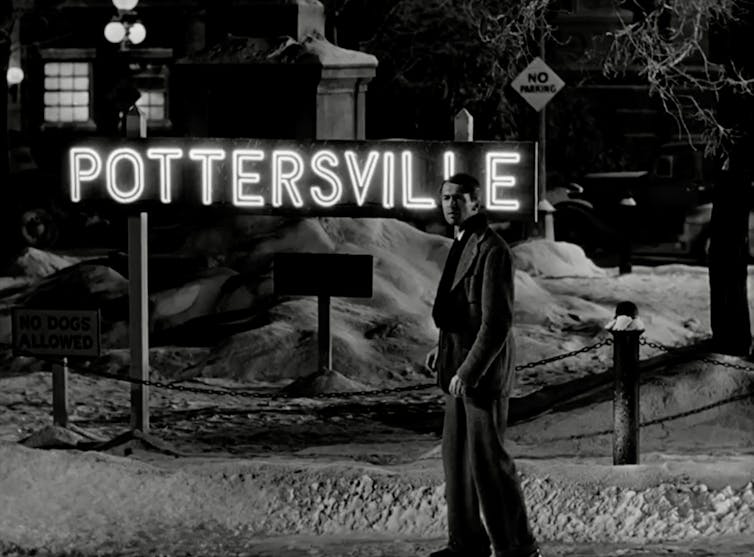
An angel named Clarence is tasked with pulling George back from the brink. To stop him from attempting suicide, Clarence decides to show George what life would have been like if he’d never been born. In this alternate reality, Bedford Falls is called Pottersville, a place Mr. Potter runs as a ruthless banker and slumlord.

Movie still of young man walking through a dark, snowy town and passing by a bright sign reading 'Pottersville.'
Pottersville, the dark, dystopian version of Bedford Falls, is a place characterized by vice and moral decay.
Paramount

Having previously written about “It’s a Wonderful Life” in my book on literary and film censorship, I can’t help but see parallels between Pottersville and the U.S. today.

Think about it:

In Pottersville, one man hoards all the financial profits and political power.

In Pottersville, greed, corruption and cynicism reign supreme.

In Pottersville, hard-working immigrants like Giuseppe Martini who were able to build a life and run a business in Bedford Falls have vanished.

In Pottersville, homeless addicts like Mr. Gower and nonconformist “pixies” like Clarence are scorned and ostracized, then booted out of the local watering hole.

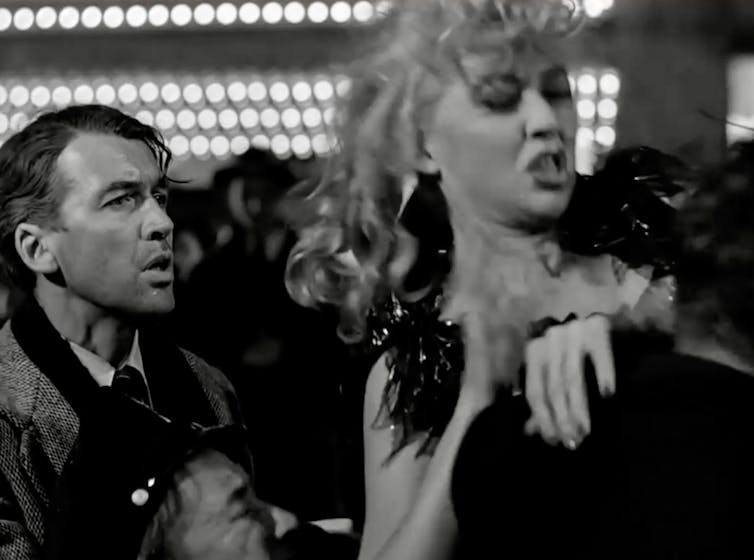
In Pottersville, cops arrest people like Violet Bick while they’re at work and haul them away, kicking and screaming.

Black-and-white movie still of a young women being dragged away by the police as a worried young man looks on.
Violet Bick gets dragged away by the Pottersville police as George looks on.
Paramount

But what horrifies George the most about Pottersville is how desensitized the people living in it seem to be to its harshness and cruelty – how they treat him like he’s the crazy, deranged one for wanting and expecting things to be different and better.

This is what the current political moment feels like to me. There are days when the latest headlines feel so jarringly unprecedented that I find myself thinking, “Can this be happening? Can this be real?”

If you think these comparisons are a bit of a stretch, consider when “It’s a Wonderful Life” was made, and the frame of mind Capra was in when he made it.

Frank Capra, anti-fascist

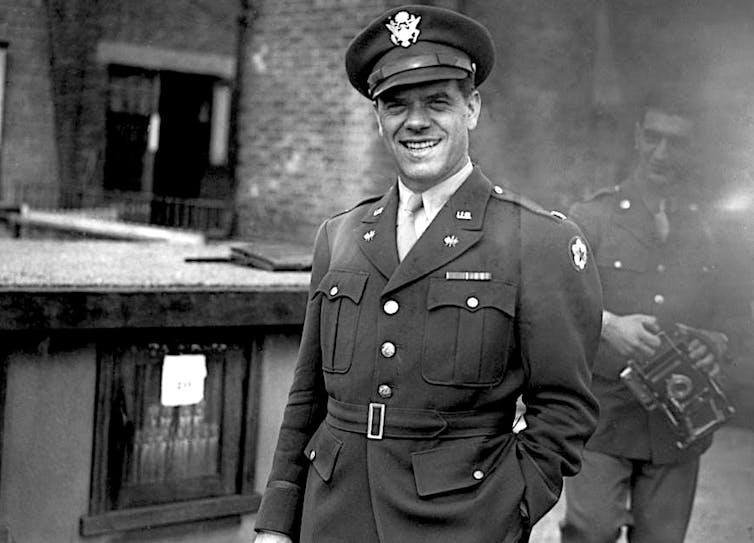
In 1946, Capra was just returning to Hollywood filmmaking after serving for four years in the U.S. Army, where the Office of War Information had tasked him with producing a series of documentary films about World War II and the lead-up to it. Even though Capra hadn’t been on the front lines, he’d been immersed in the sounds and images of war for years on end, and he had become acutely familiar with Germany, Italy and Japan’s respective rises to fascism.

Young man posing and smiling while wearing a military uniform.
Frank Capra served in the U.S. Army during World War II.
Keystone/Hulton Archive via Getty Images

When deciding on his first postwar film, Capra recalled in his autobiography that he specifically “knew one thing – it would not be about war.” Instead, he chose to adapt a short story by Philip Van Doren Stern, “The Greatest Gift,” that Stern had originally sent to friends and family as a Christmas card in 1943.

Stern’s story is certainly not about war. But it’s not exactly about Christmas, either.

As Stern writes in his opening lines:

“The little town straggling up the hill was bright with colored Christmas lights. But George Pratt did not see them. He was leaning over the railing of the iron bridge, staring down moodily at the black water.”

The protagonist contemplates suicide because he’s “sick of everything” in the small-town “mudhole” he’s stuck in – until, that is, a “strange little man” gives him the chance to see what life would be like if he’d never been born.

It was Capra and his team of screenwriters who added the sinister Henry F. Potter to Stern’s short, simple tale. The Potter subplot encapsulates the film’s most trenchant, still-resonant themes: the unfairness of socioeconomic injustices; the pervasiveness of corporate and political corruption; the threat of monopolized power; the need for affordable housing.

These themes had, of course, run through many of Capra’s prewar films as well: “Mr. Deeds Goes to Town,” “You Can’t Take It with You”“Meet John Doe” and “Mr. Smith Goes to Washington,” the last of which also starred Jimmy Stewart.

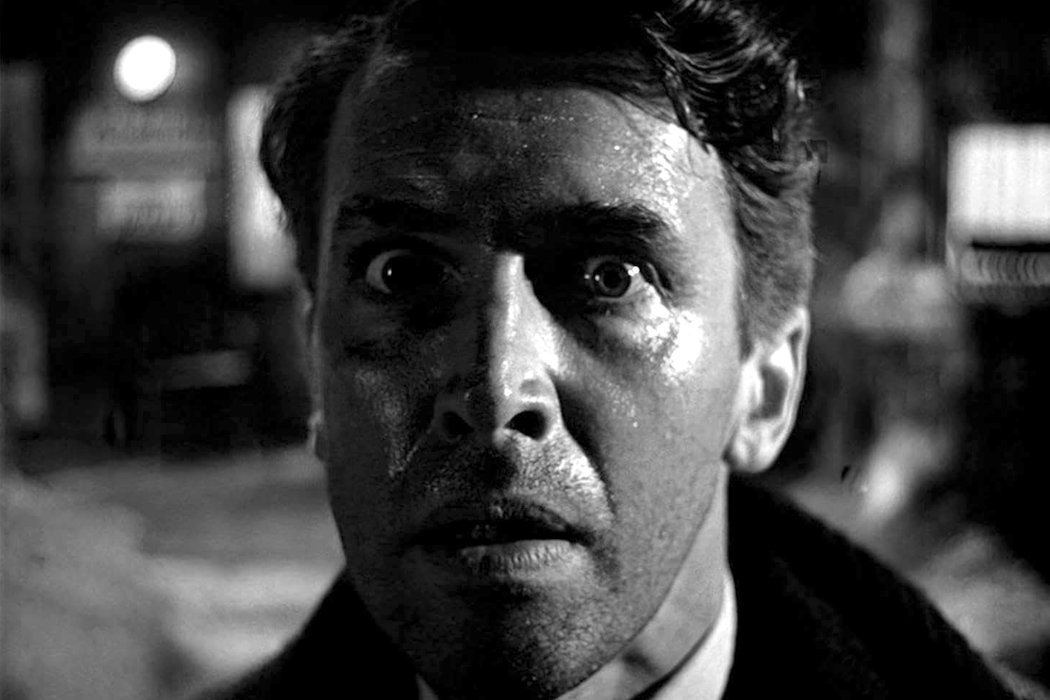
But they take on a different kind of weight in “It’s a Wonderful Life” – a weight that’s especially visible on the weathered face of Stewart, who himself had just returned from a harrowing four-year tour of duty as a fighter pilot in Europe.

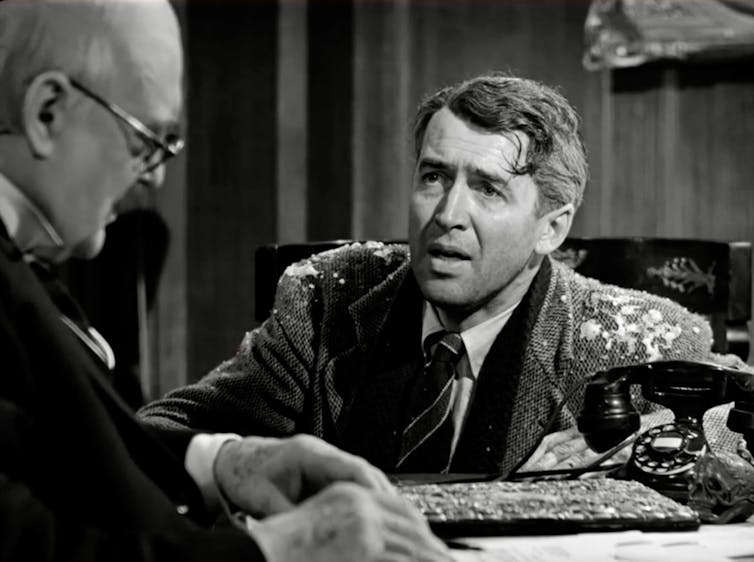
The idealistic vigor with which Stewart had fought crooked politicians and oligarchs as Mr. Smith is replaced by the bitterness, exhaustion, frustration and desperation with which he battles against Mr. Potter as George Bailey.

Black-and-white movie still of a distraught man with snow on his jacket.
George Bailey feels helpless in the face of corruption and cruelty.
Paramount

Life after Pottersville

By the time George has begged and pleaded his way out of Pottersville, the lost $8,000 is no longer top of mind. He’s mainly just relieved to find Bedford Falls as he had left it, warts and all.

And yet, the Bedford Falls that George returns to isn’t quite the same as the one he left behind.

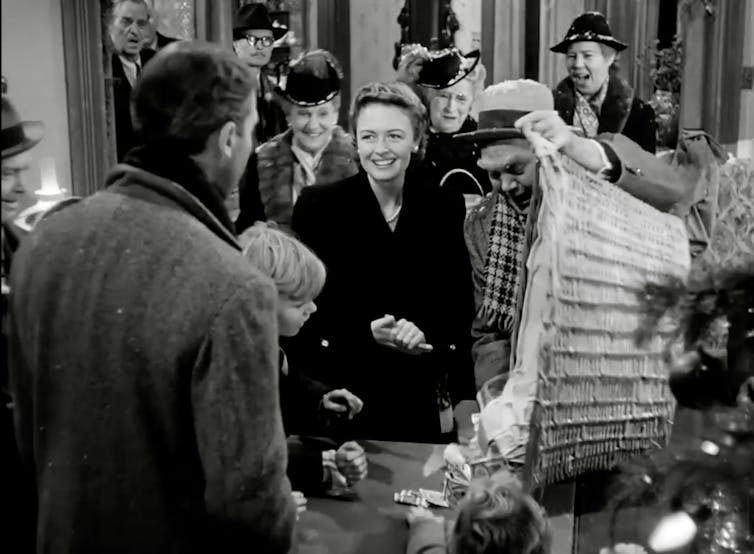
In this Bedford Falls, the community rallies together to figure out a way to recoup George’s missing money. Their pre-digital version of a GoFundMe page saves George from what he’d feared most: bankruptcy, scandal and prison.

And even though his wife, Mary, tries to attribute this sudden wave of collectivist, activist energy to some sort of divine intervention – “George, it’s a miracle; it’s a miracle!” – Uncle Billy points out that it really came about through more earthly organizing means: “Mary did it, George; Mary did it! She told some people you were in trouble, and they scattered all over town collecting money!”

A group of smiling people dump a large basket of cash on a desk.
The residents of Bedford Falls come together to save George from financial ruin.
Paramount

But the question of whether George actually wins his battle against Potter is a murky one.

While the typical Capra protagonist triumphs by defeating vice and exposing subterfuge, George never even realizes that Potter is the one who got hold of his money and tried to ruin his life. Potter is never held accountable for his crimes.

On the other hand, George is able to learn, from his time in Pottersville, what a crucial role he plays in his community. George’s victory over Potter, then, lies not in some grand final act of retribution, but in the incremental ways he has stood up to Potter throughout his life: not capitulating to Potter’s bullying or intimidation tactics; speaking truth to power; and running a community-centered business rather than one guided by greed and exploitation.

In recent months, there have been similar acts of protest, large and small, in the form of rallies, boycotts, immigrant aid efforts, subscription cancellations, food bank donations and more.

That doesn’t mean the U.S. has made it out of Pottersville, however.

Each day, more head-spinning headlines appear, whether they’re about masked agents terrorizing immigrant communities, the dismantling of anti-corruption oversights, the consolidation of executive power or the naked display of political grift.

Zuzu’s petals are still missing. Clarence still hasn’t gotten his wings.

But this holiday season, I’m hoping it will feel helpfully cathartic to go with George Bailey, for the umpteenth time, through the dark abyss of his dystopian nightmare – and come out with him, stronger and wiser, on the other side.

The Conversation

Nora Gilbert does not work for, consult, own shares in or receive funding from any company or organization that would benefit from this article, and has disclosed no relevant affiliations beyond their academic appointment.

ref. The dystopian Pottersville in ‘It’s a Wonderful Life’ is starting to feel less like fiction – https://theconversation.com/the-dystopian-pottersville-in-its-a-wonderful-life-is-starting-to-feel-less-like-fiction-270759